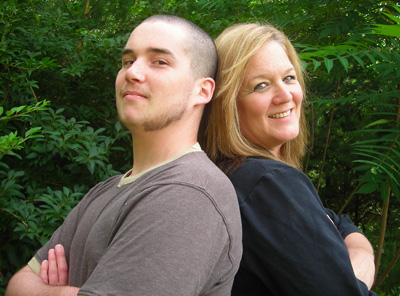
Karen Osborne, a mother, wife, and insurance manager in Myrtle Beach, South Carolina, found herself taking on a new role — caregiver — when her father’s health began to fail. It was a time in her life marked by middle-of-the-night phone calls and emergency room visits. When her father passed away in 2007, Osborne turned her attention to her mother who suffers chronic health problems of her own, including fibromyalgia, arthritis, and osteoporosis. “You just accept the situation,” Osborne says. “Just like what a parent would do for their child.” In keeping her mom’s medical appointments, Osborne sacrificed her own doctor visits. A root canal procedure recommended a year ago still has not been attended to.
The National Alliance for Caregiving estimates at least 44 million Americans provide critical care to friends and loved ones with debilitating illnesses. What’s more, some 80 percent of all care received by older Americans is provided by a family member. Medical advances, shorter hospital stays, and an increase in home-care technology means more families are shouldering care burdens and for longer periods of time.
Some caregivers reach a breaking point. Others reach a turning point. For Osborne, witnessing her parents’ ailments was a wake-up call to prevent the same thing from happening to her. While caring for her mom and dad, she sacrificed a lot, but she drew the line at workouts at the gym. “This caregiver situation made me speculate on my own future. That’s why I make the gym such a priority. Seeing my mother’s physical situation makes me really want to avoid the same fate as best I can.”
Turns out that exercise may not only be a hedge against future health risks, it might be a therapeutic way to cope with the current situation. At least that’s what researchers in the College of Nursing at Rush University Medical Center in Chicago, Illinois, are trying to determine. The school has embarked on a study to evaluate the potential benefits of incorporating a physical activity program into the daily lives of caregivers, specifically those tending to Alzheimer’s patients. Caryn Etkin, Ph.D., study co-investigator, says Alzheimer’s is even more perilous to a caregiver’s health “because of the duration of the disease and severity of impairments that individuals have. We’re trying to help caregivers deal with the stress and burden of caregiving through physical activity.”
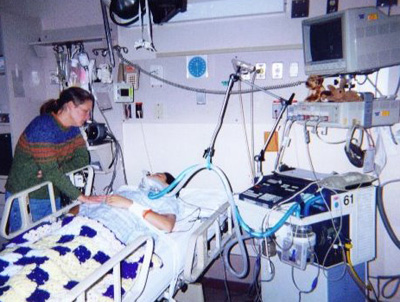
Photo courtesy of Dixie Coskie
The Rush University study is part of an increased focus on the plight of caregivers. They may be the “second victims,” but they’re no longer silent victims. They’re organizing and advocating, joining support groups, logging onto online forums, and blogging about their experiences. “Until recently, caregivers were invisible, but that’s not the case today,” says Suzanne Mintz, caregiver to her husband, who suffers from multiple sclerosis. She is also the co-founder, with Cindy Fowler, of the National Family Caregivers Association.
Dixie Fremont-Smith Coskie of Upton, Massachusetts, found herself experiencing a mysterious illness not long after her thrust-upon role as caregiver. In 2001 her son Paul, just shy of his 14th birthday, was hit by a car while riding his bicycle and suffered traumatic brain injury.
Six months after her son’s accident, just as he was getting back on his feet, Coskie began suffering severe joint and muscle pain. After a series of tests, Coskie was diagnosed with post-traumatic stress syndrome as a result of her “reliving the accident” and something called thoracic outlet syndrome, a disorder that occurs when blood vessels or nerves become compressed. Neither was life threatening. “I felt like God was giving me some of my son’s pain so he could get better, and I could take it on for him a little bit. It was kind of silly in that respect, but I would have done anything to get my son better.”
These days Coskie is eager to help other caregivers learn from her experience and recommends finding “reprieves along the way,” if only to remove yourself from the
situation for a while. When others ask how they can help, “have a list ready, instead of having to make others guess.”
And most of all, be kind to yourself. “Know that you … are the silent hero.”
Time Out for Caregivers
Sleep: Get enough of it.
Exercise: Even if it’s in small chunks.
Safeguard Your Health: Schedule doctor’s visits and routine exams such as mammograms. “Prevention is really important. If you think something is wrong, check it out because it could get a whole lot worse,” says Suzanne Mintz of the National Family Caregivers Association.
Breathe Easy: Try meditation, yoga, or deep breathing as a form of relaxation.
Seek Out Resources: Start with th National Alliance for Caregiving (caregiving.org) and National Family Caregivers Association (nfcacares.org).
Become a Saturday Evening Post member and enjoy unlimited access. Subscribe now