<?xml version="1.0" encoding="UTF-8"?>
<rss version="2.0"
	xmlns:content="http://purl.org/rss/1.0/modules/content/"
	xmlns:wfw="http://wellformedweb.org/CommentAPI/"
	xmlns:dc="http://purl.org/dc/elements/1.1/"
	xmlns:atom="http://www.w3.org/2005/Atom"
	xmlns:sy="http://purl.org/rss/1.0/modules/syndication/"
	xmlns:slash="http://purl.org/rss/1.0/modules/slash/"
	>

<channel>
	<title>The Saturday Evening Post &#187; William Jeanes</title>
	<atom:link href="http://www.saturdayeveningpost.com/author/william-jeanes/feed" rel="self" type="application/rss+xml" />
	<link>http://www.saturdayeveningpost.com</link>
	<description>Home of The Saturday Evening Post</description>
	<lastBuildDate>Thu, 23 May 2013 20:18:52 +0000</lastBuildDate>
	<language>en-US</language>
	<sy:updatePeriod>hourly</sy:updatePeriod>
	<sy:updateFrequency>1</sy:updateFrequency>
	<generator>http://wordpress.org/?v=3.5</generator>
		<item>
		<title>E Pluribus Trivia</title>
		<link>http://www.saturdayeveningpost.com/2013/02/19/in-the-magazine/trends-and-opinions/vice-presidents-trivia.html?utm_source=rss&#038;utm_medium=rss&#038;utm_campaign=vice-presidents-trivia</link>
		<comments>http://www.saturdayeveningpost.com/2013/02/19/in-the-magazine/trends-and-opinions/vice-presidents-trivia.html#comments</comments>
		<pubDate>Tue, 19 Feb 2013 13:00:56 +0000</pubDate>
		<dc:creator>William Jeanes</dc:creator>
				<category><![CDATA[Trends & Opinions]]></category>
		<category><![CDATA[Government]]></category>
		<category><![CDATA[Politics]]></category>
		<category><![CDATA[vice presidents]]></category>

		<guid isPermaLink="false">http://www.saturdayeveningpost.com/?p=82001</guid>
		<description><![CDATA[<p>Odd and fascinating facts about our vice presidents.</p><p><a href="http://www.saturdayeveningpost.com/2013/02/19/in-the-magazine/trends-and-opinions/vice-presidents-trivia.html">E Pluribus Trivia</a>

<a href="http://www.saturdayeveningpost.com">The Saturday Evening Post</a></p>]]></description>
				<content:encoded><![CDATA[<p><a href="http://www.saturdayeveningpost.com/?attachment_id=81793" rel="attachment wp-att-81793"><img src="http://www.saturdayeveningpost.com/wp-content/uploads/satevepost/WorstVPs_TeddyRooseveltrb.jpg" alt="Teddy Roosevelt" width="350" class="alignright size-full wp-image-81793" /></a></p>
<p>Nine of our 47 <a href="http://www.saturdayeveningpost.com/?p=79784">vice presidents</a> inherited the presidency—eight from a president’s death and one because <a href="http://www.saturdayeveningpost.com/2012/11/06/in-the-magazine/trends-and-opinions/nixon.html">President Richard Nixon</a> quit. Seven vice presidents died in office. Two vice presidents resigned: John C. Calhoun to go to the Senate, and Spiro Agnew to go into hiding. </p>
<p><strong>George Clinton</strong> was the first of seven vice presidents to die in office (1812). The second was Elbridge Gerry (1814), who gave his name to the notorious and ongoing practice of gerrymandering—creating misshapen voting districts to ensure your party’s victory. Both served under James Madison, president from 1809 to 1817. </p>
<p><strong>Richard Mentor Johnson</strong>, V.P. under Martin Van Buren (1837–1841), rose to political prominence partly on his reputation for having personally killed Shawnee Chief Tecumseh in the war of 1812. His reputation came undone in subsequent years when word got out that his common-law wife, with whom he had two daughters, was the light-skinned slave Julia Chinn. She died in the cholera epidemic of 1833, and her existence was conveniently swept under the rug during his period serving as V.P. For the record, Johnson educated and deeded property to his two daughters. </p>
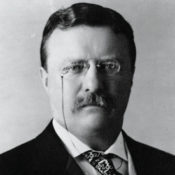
<p><strong>Theodore Roosevelt</strong> found the job of presiding over the Senate so tedious that he often slept at his desk. He famously said of his senatorial charges, &#8220;When they call the roll in the Senate, the Senators do not know whether to answer &#8216;Present&#8217; or &#8216;Guilty.&#8217;&#8221;</p>
<p><strong>Charles G. Dawes</strong> is the sole vice president to write a hit song. His 1912 “Melody in A Major” later had words added and became “It’s All in the Game.” Tommy Edwards took the song to number one in 1958, seven years after Dawes’s death.</p>
<p>Not until <strong>Alben Barkley</strong> in 1949 was the vice president called “The Veep,” a term coined by a young Barkley relative. It was noted by the Oxford English Dictionary in 1949 and has passed into common usage.</p>
<p><a href="http://www.saturdayeveningpost.com/2013/02/19/in-the-magazine/trends-and-opinions/vice-presidents-trivia.html">E Pluribus Trivia</a>

<a href="http://www.saturdayeveningpost.com">The Saturday Evening Post</a></p>]]></content:encoded>
			<wfw:commentRss>http://www.saturdayeveningpost.com/2013/02/19/in-the-magazine/trends-and-opinions/vice-presidents-trivia.html/feed</wfw:commentRss>
		<slash:comments>0</slash:comments>
		</item>
		<item>
		<title>The Worst 10 1/2* Vice Presidents</title>
		<link>http://www.saturdayeveningpost.com/2013/02/19/in-the-magazine/trends-and-opinions/worst-vice-presidents.html?utm_source=rss&#038;utm_medium=rss&#038;utm_campaign=worst-vice-presidents</link>
		<comments>http://www.saturdayeveningpost.com/2013/02/19/in-the-magazine/trends-and-opinions/worst-vice-presidents.html#comments</comments>
		<pubDate>Tue, 19 Feb 2013 13:00:05 +0000</pubDate>
		<dc:creator>William Jeanes</dc:creator>
				<category><![CDATA[Trends & Opinions]]></category>
		<category><![CDATA[Government]]></category>
		<category><![CDATA[Politics]]></category>
		<category><![CDATA[vice presidents]]></category>

		<guid isPermaLink="false">http://www.saturdayeveningpost.com/?p=79784</guid>
		<description><![CDATA[<p>A selective view of some who were No. 2 in more ways than one. </p><p><a href="http://www.saturdayeveningpost.com/2013/02/19/in-the-magazine/trends-and-opinions/worst-vice-presidents.html">The Worst 10 1/2* Vice Presidents</a>

<a href="http://www.saturdayeveningpost.com">The Saturday Evening Post</a></p>]]></description>
				<content:encoded><![CDATA[<p>What do Thomas Jefferson, Theodore Roosevelt, Hannibal Hamlin, and Millard Fillmore have in common? All are former <a href="http://www.saturdayeveningpost.com/?p=82001">vice presidents of the United States</a>. Two are on Mount Rushmore; two are not.</p>
<p>Forty-seven men have occupied the office of vice president, and while they were in there, they did little other than serve as presiding officer of the Senate, their only constitutional mandate. </p>
<p>Vice presidents were chosen more for perceived vote-getting abilities than because of genuine credentials as public servants—which many had. Even so, an aura of veiled weirdness has hovered over the office for more than two centuries. </p>
<p>In 1788, the U.S. held its first presidential election under a flawed system: The man with the most electoral votes got to be president, and the man finishing second became vice president. President John Adams, elected following Washington in 1796, and Vice President Thomas Jefferson detested each other. Imagine George W. Bush with Al Gore as vice president or an Obama-Romney administration, and you’ll understand.</p>
<p>In 1800, Jefferson and Adams faced off—the first time two former vice presidents mutually sought the presidency. But Adams finished third while Jefferson and Aaron Burr tied with 73 votes each. Burr had agreed in advance to serve as Jefferson’s vice president, and that’s how things ultimately worked out. </p>
<p>Jefferson’s near-disaster led to the passage of the 12th Amendment, which required electors to cast separate votes for the two offices. This spared us, up to a point, acrimony between the two top office holders. Since the first vice president was elected in 1788, a motley of murderers, traitors, bribe takers, and outright crooks have paraded through the vice presidency. What’s more, during the 224 years between 1788 and 2012, the office has stood vacant on 18 occasions for a total of almost 38 years.</p>
<p>The nation survived not only those 18 vacancies but also the 10 and one-half vice presidents we examine below. </p>
<div class="product-info-block">
<a href="http://www.saturdayeveningpost.com/?attachment_id=81783" rel="attachment wp-att-81783"><img src="http://www.saturdayeveningpost.com/wp-content/uploads/satevepost/WorstVPs_AaronBurrrb.jpg" alt="Vice President Aaron Burr" width="150" class="alignleft size-full wp-image-81783" /></a></p>
<h2>Aaron Burr</h2>
<p><strong>(1801-1805)</strong></p>
<p>Our third vice president, Aaron Burr of New York, set the tone of lunacy that so often defines the office. Burr killed Secretary of the Treasury Alexander Hamilton in an illegal duel and got himself charged with murder in both New York and New Jersey. After leaving office, shady land deals in the western wilderness got him charged with treason. He was never convicted of either crime.<br />
<div style="clear:both;"><!--this is a clear div--></div>
</div>
<div class="product-info-block">
<a href="http://www.saturdayeveningpost.com/?attachment_id=81788" rel="attachment wp-att-81788"><img src="http://www.saturdayeveningpost.com/wp-content/uploads/satevepost/WorstVPs_JohnTylerrb.jpg" alt="Vice President John Tyler" width="150" class="alignleft size-full wp-image-81788" /></a></p>
<h2>John Tyler*</h2>
<p><strong>(1841)</strong></p>
<p>How do you get one-half of a vice president? John Tyler of Virginia did it this way. He was the “too” of the 1840 campaign slogan, “Tippecanoe and Tyler Too.” The “Tippecanoe” half of the ticket was William Henry Harrison who spoke for three hours at his rainy inauguration, caught pneumonia, and died 31 days later, making Tyler our shortest-serving vice president. </p>
<p>Incredibly, though the Constitution provided for a vice president, it did not state expressly that the vice president would assume the office of president following a chief executive’s death. A quick-acting Congress rectified this … in 1967.</p>
<p>Before even being elevated to the presidency, Tyler signaled his lack of interest in his elected position. In fact, immediately after Harrison’s inauguration, Tyler left Washington and didn’t return until he was summoned at the president’s death. On his return, Tyler resisted congressional attempts to name him “temporary” or “acting” president and served almost a full term as a no-asterisk president. In that post, however, he was unremarkable and historians have called him weak. He so alienated his party that he was denied its nomination for the election of 1844.<br />
<div style="clear:both;"><!--this is a clear div--></div>
</div>
<p><a href="http://www.saturdayeveningpost.com/2013/02/19/in-the-magazine/trends-and-opinions/worst-vice-presidents.html">The Worst 10 1/2* Vice Presidents</a>

<a href="http://www.saturdayeveningpost.com">The Saturday Evening Post</a></p>]]></content:encoded>
			<wfw:commentRss>http://www.saturdayeveningpost.com/2013/02/19/in-the-magazine/trends-and-opinions/worst-vice-presidents.html/feed</wfw:commentRss>
		<slash:comments>0</slash:comments>
		</item>
		<item>
		<title>Aw, Shoot!</title>
		<link>http://www.saturdayeveningpost.com/2012/04/26/humor/aw-shoot.html?utm_source=rss&#038;utm_medium=rss&#038;utm_campaign=aw-shoot</link>
		<comments>http://www.saturdayeveningpost.com/2012/04/26/humor/aw-shoot.html#comments</comments>
		<pubDate>Thu, 26 Apr 2012 13:30:28 +0000</pubDate>
		<dc:creator>William Jeanes</dc:creator>
				<category><![CDATA[Humor]]></category>
		<category><![CDATA[advertisements]]></category>
		<category><![CDATA[commercials]]></category>
		<category><![CDATA[Elvis Presley]]></category>
		<category><![CDATA[Television]]></category>

		<guid isPermaLink="false">http://www.saturdayeveningpost.com/?p=50779</guid>
		<description><![CDATA[<p>When TV commercials drive you around the bend, you may be tempted to take a lesson from Elvis.</p><p><a href="http://www.saturdayeveningpost.com/2012/04/26/humor/aw-shoot.html">Aw, Shoot!</a>

<a href="http://www.saturdayeveningpost.com">The Saturday Evening Post</a></p>]]></description>
				<content:encoded><![CDATA[<p>The first TV commercial in the U.S. aired on July 1, 1941, and not six months later Japanese air and naval forces destroyed Pearl Harbor. Coincidence? I’m not sure. But that first commercial began the march to a world where 20 minutes of commercials per televised hour has become common.</p>
<p>Some cable networks air so many commercials in a half-hour slot that shows require heavy editing just to fit. Watching a rerun of Leave It to Beaver or Curb Your Enthusiasm on a commercial channel is an exercise in filling in the blanks. Wait? Who was that guy? Why are they mad at him?</p>
<p>If TV advertising were water, we’d all drown before The Today Show signed off. Yet we’ve somehow survived only to learn that those who covet our coin have put some new cartridges in their clip. They’re called “secondary events”—basically they are nothing less than electronic tumors superimposed digitally on the show as it’s broadcast. </p>
<p>Computer-generated events can be as simple as a trademark that occupies the screen’s lower righthand corner. These are sometimes called “logo bugs,” and a great many networks use them in the apparent belief that we’re too stupid to know which channel we’re watching. </p>
<p>A secondary event can also be a complicated visual message promoting an upcoming show or some other happening. It can occupy a quarter of your viewing area for 10 seconds or longer. The other evening, I recorded a Law &#038; Order re-run on TNT. The next morning I counted its secondary events, a lonely exercise but one worth doing. If you’re a masochist.</p>
<p>The primary advertising hit in five bursts: at 4, 13, 23, 38, 50, and 59 minutes into the show. The five breaks contained a total of 42 commercials of varying lengths and amounted to 22 minutes of viewing, leaving Jack McCoy and the New York legal system only 38 minutes to convict the accused. </p>
<p>During most of the hour, the TNT logo bug squatted in my screen’s lower right corner. Twice, a promotional message for season premieres materialized at the bug’s immediate left and remained there for an average of eight minutes. </p>
<p>On eight occasions, a silent secondary event swept from left to right across the screen. Counting the sporadic appearances of the logo bug as a single happening, I had to watch no fewer than 12 secondary events.</p>
<p>Having worked at three national ad agencies, I quite understand advertising’s role in a free market. But enough is enough. And then some. If I behave like an obedient consumer and sit through 42 commercials in an hour, I have given the marketers sufficient opportunity. </p>
<p>Neither Elvis Presley nor I ever worked as a TV critic, but now that I’ve written this piece, we share non-professional credits in the field. As an amateur critic, Elvis was superb; when a program displeased him, he was known to fire a large-caliber handgun at his TV set. Describing one such incident, an Elvis sidekick wrote, “He just put down his breakfast, drew a gun, blew the TV out, and said, ‘That’ll be enough of that [expletive].’”</p>
<p>So far, I’ve restrained myself from going the Elvis route. </p>
<p><a href="http://www.saturdayeveningpost.com/2012/04/26/humor/aw-shoot.html">Aw, Shoot!</a>

<a href="http://www.saturdayeveningpost.com">The Saturday Evening Post</a></p>]]></content:encoded>
			<wfw:commentRss>http://www.saturdayeveningpost.com/2012/04/26/humor/aw-shoot.html/feed</wfw:commentRss>
		<slash:comments>0</slash:comments>
		</item>
		<item>
		<title>Hang That Tree Ornament and the Merchant Who Sold It to You</title>
		<link>http://www.saturdayeveningpost.com/2011/12/19/humor/hang-that-ornament.html?utm_source=rss&#038;utm_medium=rss&#038;utm_campaign=hang-that-ornament</link>
		<comments>http://www.saturdayeveningpost.com/2011/12/19/humor/hang-that-ornament.html#comments</comments>
		<pubDate>Mon, 19 Dec 2011 14:00:14 +0000</pubDate>
		<dc:creator>William Jeanes</dc:creator>
				<category><![CDATA[Humor]]></category>
		<category><![CDATA[Lighter Side]]></category>
		<category><![CDATA[Christmas]]></category>
		<category><![CDATA[decorating]]></category>
		<category><![CDATA[Holidays]]></category>
		<category><![CDATA[ornaments]]></category>
		<category><![CDATA[WWII]]></category>

		<guid isPermaLink="false">http://www.saturdayeveningpost.com/?p=40696</guid>
		<description><![CDATA[<p>Decorating the Christmas tree sure has come a long way—and hundreds of dollars—since 1942.</p><p><a href="http://www.saturdayeveningpost.com/2011/12/19/humor/hang-that-ornament.html">Hang That Tree Ornament and the Merchant Who Sold It to You</a>

<a href="http://www.saturdayeveningpost.com">The Saturday Evening Post</a></p>]]></description>
				<content:encoded><![CDATA[<p>My earliest warm recollections are of Christmas trees, and the difference between today’s tree decorations and those we had in 1942 Mississippi is bigger than a January Visa bill. Christmas decorations are less tasteful and traditional than they once were, but as Americans we’re proud to know they cost ten times as much.</p>
<p>Christmas accessories during the 1940s cost virtually nothing. Our tree-topping star was a cardboard cutout covered with wrinkled tinfoil. It looked loopy on the tree, but it was ours. My grandmother made it. Thank God she was a homemaker and not a surgeon.</p>
<p>Our lopsided star lived in a box with the other decorations: strings of lights, tinfoil icicles removed each year and saved for next Christmas, limp strings of tired tinsel, and colorful glass balls that would break if you glared at them. A handful of angels, stars, and Santas completed the cache.</p>
<p>My grandmother’s house was neither rich nor poor, and it also contained my grandfather (called Pop), my grandmother (called Mom), one aunt, my younger first cousin, and me.</p>
<p>Despite wartime dislocations, we had Christmas. And we decorated for it.</p>
<p>During the second week of December, Pop gathered up available family members and hauled us out into the country to saw down a tree, usually a six-foot cedar. We never used pine trees because they dried out and the needles fell off. The same was, of course, true of cedars, but somehow that subject never came up.</p>
<p>Once the tree was home, Pop nailed two boards to its trunk for a stand, Mom chose its best side, and decorating began. My cousin was two, and I was four, which made us less help and more trouble than a pair of Labradors. We could step on a bulb or two, but that was about it.</p>
<p>We wrapped the tree with strings of lights that were wired in series, meaning that if one bulb failed, they all went out. You had to unscrew each bulb and try a new one. When the string lighted back up, you knew you’d found the bad bulb. Our timeworn tinsel and recycled icicles went on the tree followed by ornaments. Pop ended the tree ceremony with his annual near-fall into the tree as he tried to position the star. Then someone plugged our festive firetrap into the wall, and magic lit the room.</p>
<p>We were ready for Christmas, and we’d got that way inexpensively—a word you use when you don’t want to say cheap. The total investment in decorations, beginning with the free tree, might have reached $20.00—a lavish sum spread out over no telling how many years.</p>
<p>Decorating today is an ornament of a different color. I Googled “Christmas decorations for sale” and looked at what’s available in modern Yuletide festoonery.</p>
<p>The trees are all artificial, and I guarantee they don’t smell like Christmas. A six-footer will cost you over $200.00. For $599.99 you can get a flocked version that hints at having been snowed on.</p>
<p>Traditional ornaments and tinsel ropes remain surprising bargains. Target offers 50 red balls for a giveaway $15.00, billing them shatterproof. Target must sell exclusively to childless homes.</p>
<p>One merchant, with “Recession Busting Prices,” has strings of lights for under $10.00. That’s so cheap you worry that Underwriters Laboratories may be asleep at the switch. But the same merchant also sells a giant pre-lighted artificial outdoor tree for a whimper-inducing $9,999.99. Pop would have sold the house for that.</p>
<p>For $13.99, you can have an 18-inch wreath for the door—a lighted “country twig” creation that looks like a white wire brush for your electric drill. A two-pack of artificial pine wreaths sells for as much as $169.99. But here’s the horrible part: the things come in colors beginning with traditional green and deteriorating to sky blue, sea foam green, and chartreuse.</p>
<p>It doesn’t end there. There’s a Santa suit with a 70-inch waistline, a foam-rubber Santa Claus beer cozy, personalized tree ornaments in birthstone colors, and enough Elvis ornaments to tacky-up Las Vegas.</p>
<p>There are also websites that help you make your own ornaments, but the first one I looked into announced it was going to teach me to make non-edible ornaments out of cookie dough. How much fun could that be?</p>
<p>Merry Christmas.</p>
<p><a href="http://www.saturdayeveningpost.com/2011/12/19/humor/hang-that-ornament.html">Hang That Tree Ornament and the Merchant Who Sold It to You</a>

<a href="http://www.saturdayeveningpost.com">The Saturday Evening Post</a></p>]]></content:encoded>
			<wfw:commentRss>http://www.saturdayeveningpost.com/2011/12/19/humor/hang-that-ornament.html/feed</wfw:commentRss>
		<slash:comments>1</slash:comments>
		</item>
		<item>
		<title>Celebrating America’s 125-Year Love Affair with Cars</title>
		<link>http://www.saturdayeveningpost.com/2011/06/22/in-the-magazine/trends-and-opinions/american-cars.html?utm_source=rss&#038;utm_medium=rss&#038;utm_campaign=american-cars</link>
		<comments>http://www.saturdayeveningpost.com/2011/06/22/in-the-magazine/trends-and-opinions/american-cars.html#comments</comments>
		<pubDate>Wed, 22 Jun 2011 19:16:42 +0000</pubDate>
		<dc:creator>William Jeanes</dc:creator>
				<category><![CDATA[Trends & Opinions]]></category>

		<guid isPermaLink="false">http://www.saturdayeveningpost.com/?p=34306</guid>
		<description><![CDATA[<p>Cars are like clothing. Life would go on without them, but it wouldn’t be the same. To someone like me, who has always believed that anything worth doing is worth doing to excess, it seems only right that we live in a nation with more cars than drivers. A preponderance of Americans agrees with me, [...]</p><p><a href="http://www.saturdayeveningpost.com/2011/06/22/in-the-magazine/trends-and-opinions/american-cars.html">Celebrating America’s 125-Year Love Affair with Cars</a>

<a href="http://www.saturdayeveningpost.com">The Saturday Evening Post</a></p>]]></description>
				<content:encoded><![CDATA[<p>Cars are like clothing. Life would go on without them, but it wouldn’t be the same. To someone like me, who has always believed that anything worth doing is worth doing to excess, it seems only right that we live in a nation with more cars than drivers. A preponderance of Americans agrees with me, which is why we as a country have carried on a 125-year love affair with the automobile. It’s been a love-hate relationship on occasion (think traffic jams, accidents, noise), but overall, it has been an enduring and fascinating one.</p>
<p>In the 1880s, the continental United States wasn’t even united. California, Oregon, and Nevada were states, but separated from their eastern counterparts by nine territories that would ultimately become 10 states. There were not yet cars, but the Industrial Revolution was well under way. The country had more than 160,000 miles of railroad tracks by 1890. That’s almost four times the length of today’s Interstate highway system. But if you wanted to travel where you wanted and when you wanted, you were relegated to the horse. Or the mule.</p>
<p>Conventional 19th century wisdom held that a man on horseback could cover about 20 miles a day without harming his mount. If you lived in rural America, you were unlikely to see much of the country that lay beyond your horse’s range in your lifetime. And such things as emergency medical service, Domino’s Pizza delivery, the Roto-Rooter Man, and the Avon Lady were not even dreams. Had they been, they still would have had to wait for the automobile. The automobile proved to be nothing less than the device that freed every American from the tyranny of geography and the loneliness of isolation.</p>
<h3>How It All Started</h3>
<p>The average American, if he thinks about early automotive history at all, knows that Henry Ford invented the Model T, that there was a song involving Lucille and an Oldsmobile, that tires lasted about two hours, and that you risked being considered daft if you drove a “horseless carriage.” After all, why would anyone want to swap placid old Dobbin, whose only wish was for some oats and hay a couple of times a day, for a smoke-belching, unreliable creation that not only frightened birds and little children, but also ceased working at frequent intervals? Anyone who aspired to be an early adopter of the thing was at best a person of questionable judgment and at worst deranged.</p>
<p>If you insist on seeing a birth certificate for the automobile, look not to American ingenuity, but the European kind. We start with German patent DRP No. 37435 issued on January 29, 1886, to Karl Benz. The generally accepted birth year, however, is 1885, the year Benz actually built his first gasoline-powered three-wheeler. All of which means that this is either the 125th or 126th anniversary of the car.</p>
<p>To show you that there’s nothing altogether new under the sun, what became known as the Benz Patent Motorwagen had rack-and-pinion steering and a glove compartment. But no cup holders.</p>
<p><div id="attachment_34338" class="wp-caption alignright" style="width: 260px"><a href="http://www.saturdayeveningpost.com/wp-content/uploads/satevepost/lipstick.jpg"><img class="size-full wp-image-34338" title="lipstick" src="http://www.saturdayeveningpost.com/wp-content/uploads/satevepost/lipstick.jpg" alt="" width="250" height="340" /></a><p class="wp-caption-text">Adding some lipstick with a little help from the car.</p></div></p>
<p>We are lucky that Benz got as far as he did. His first manufacturing business failed; his second was an unwelcome association between him, a photographer, and a cheese merchant. He and his business partner Gottlieb Daimler remained in the automobile business, however, and in 1926 merged to form what became Daimler-Benz and later Daimler. More than 100,000 patents ultimately contributed to the creation of what we know as the automobile, and among the important automotive pioneers in America were the Duryea brothers. From 1893 to 1896, Charles and Frank Duryea of Chicopee, Massachusetts, built America’s first standardized and series-produced automobile, 13 of them. Alas, the brothers moved the company to Peoria, Illinois, squabbled, and ultimately went their separate ways. Frank remained in Massachusetts and, with the Stevens Arms and Tool Company, built a car called the Stevens-Duryea until 1927.</p>
<p>In 1900, in Europe, Ferdinand Porsche, in addition to insisting that his name be pronounced POR-shuh and not Porsche, produced a remarkable automobile. It was battery powered with four electric motors, one at each wheel. Shortly afterward, he patented the Mixte, or Mixture, which had a gasoline engine driving through a dynamo to power electric motors at the wheels. Sound familiar? It should, because it was essentially a hybrid. And it happened 111 years ago.</p>
<p>In Michigan, which would become the seat of the American car industry, Ransom E. Olds expanded on the Duryea brothers’ feeble run at mass production. He, not Henry Ford, established the first true assembly line and used it to build a tiller-steered car known as the “curved dash” Oldsmobile. By 1902 he was pumping 2,500 cars out the door, and this rose to 5,000 Oldsmobiles by 1904. To put these sales in perspective, Benz sold 572 vehicles in 1899.</p>
<p>This set the stage for Henry Ford, his refined and expanded assembly line, and the Model T. Henry Ford’s first automobile was not the Model T, but the Quadricycle, an open, gasoline-fueled, four-wheel, tiller-steered contraption with a seating capacity of two. On June 4, 1896, when he was ready to test his creation, built in a shed behind his home on Bagley Avenue in Detroit, Ford had to remove a wall because the Quadricycle would not fit through the shed’s door.</p>
<p>That was the bad news. The good news was that the Quadricycle worked and led to the formation of the Henry Ford Company and later the Ford Motor Company.<br />
In 1908 Henry Ford brought out the Model T, the car that would put America on wheels. It cost $850 and sold 10,000 units its first year. Four years later, Ford reduced the price to $575. By 1916 some 55 percent of the world’s automobiles were Model Ts, a record that was never equaled. By the time Model T production ceased in 1927, more than 15 million of the cars had been sold. An astonishing number of Model Ts are still with us, and there would be more had World War II scrap drives not consumed thousands of them.</p>
<h3>The Race Is On</h3>
<p>Mankind being what it is, the invention of the car led almost immediately to the invention of competition, especially for the land-speed record (1911 marks the first running of the Indianapolis 500). Early land-speed record cars, like ships, were given names. And the first goal they pursued was a speed in excess of 100 kilometers per hour (62.5 mph). The first man to accomplish this was a Belgian gentleman racer named Camille Jenatzy.</p>
<p>Known as the Red Devil because of his beard and the ferocity of his driving style, Jenatzy drove a battery-powered electric car—<em>La Jamais Contente</em>, French for “The Never Satisfied.” In 1899 he drove it at the astonishing speed of more than 105 kilometers an hour (65 mph). In addition to fast driving, Jenatzy also liked fast living. In December 1913, he hosted a hunting party on his estate and drank just enough at cocktail hour to think it would be amusing to remove a bearskin rug from the parlor and use it to impersonate a bear.</p>
<p>Jenatzy, draped in bearskin, was crouched behind some bushes snuffling and grunting like a bear, when the editor of the <em>Belgian Star</em> shot and killed him. Auto executives have never quite trusted journalists since.</p>
<p>In 1901 the first Grand Prix race, at Pau in France, was won with an average speed of 46 miles per hour. Seventy years later, Peter Gethin won the Italian Grand Prix, averaging over 150 mph. Today, Grand Prix racers routinely top 200 mph.</p>
<p>Meanwhile, in Cleveland, Ohio, automaker Alexander Winton was the first to install steering wheels in cars, all previously steered by tiller-like devices. In 1901, prior to a match race against Henry Ford, Winton gave Ford the design for his steering wheel. Ford beat him. For the next 110 years, racing teams have been reluctant to share with the competition.</p>
<p>Cars continued to improve, but highways remained significant problems. Roads in America’s outback were awful arteries barely suited for a horse and buggy, much less for motoring. In 1912 a visionary entrepreneur, Carl Fisher, set out to change that. Fisher envisioned a cross-country gravel highway to be called the Coast-to-Coast Rock Highway. Local governments would provide labor and equipment, and the business community the materials. Motorists would be able to drive from New York to San Francisco to attend the 1915 Panama-Pacific Exposition.</p>
<p>For his cross-country road project, Fisher would attract two allies who realized what this could mean to the fledgling auto industry—Frank Seiberling, president of Goodyear, and Henry Joy, the boss at Packard. Joy suggested the project be renamed the Lincoln Highway.</p>
<p>As you might suppose, the project bogged down over the politics of choosing a route, but by the early 1920s, the Lincoln Highway existed and ran, at some point during its history, through 14 states.</p>
<p>Planning for what would become today’s Interstate Highway system began in 1938, but building it did not get under way in earnest until 1956. Today, more than 46,000 miles of interstate connect our cities. By 1972 cars were traveling Los Angeles freeways at an average speed of 60 miles an hour. By 1982, the average had dropped to 17 miles per hour. Today, discouraged experts have given up calculating freeway speeds.</p>
<h3>The Evolution of the Modern-Day Auto</h3>
<p>Until 1911 all cars powered by internal combustion engines were cranked by hand, an act of necessity that could break an arm. Charles Kettering introduced the electric starter on 1911 Cadillacs; now even small women and little boys could operate an automobile.</p>
<p>The year 1923 saw the first powered windshield washers on many cars; manual wipers were first invented by a woman in 1903. Also in 1923, a radio was offered as an option for the first time. The radio was not invented by a woman, but in 1924 alone, women inventors came up with 173 devices for automobiles.<br />
In 1924 Walter P. Chrysler introduced the first car bearing his name at the New York Auto Show. In 1927 Ford Model A production began, and so did the sales race between Ford and Chevrolet that would last for decades.</p>
<p>The year 1937 saw the formal establishment of what would become Volkswagen. The so-called “People’s Car,” a pet idea of Adolf Hitler, was designed by Ferdinand Porsche and owed a great deal of its configuration to the Czech-built Tatra, a streamlined rear-engine car of the period. The People’s Car became the Kubelwagen, the German Army’s Jeep equivalent during World War II, but returned to civilian use after the war as the Volkswagen Beetle.</p>
<p><div id="attachment_34342" class="wp-caption alignleft" style="width: 260px"><a href="http://www.saturdayeveningpost.com/wp-content/uploads/satevepost/cars3.jpg"><img class="size-full wp-image-34342" title="cars3" src="http://www.saturdayeveningpost.com/wp-content/uploads/satevepost/cars3.jpg" alt="" width="250" height="184" /></a><p class="wp-caption-text">Things you couldn&#39;t do before cars were invented such as taking the gang for an impromptu clambake.</p></div></p>
<p>Buick introduced the first electric turn signals in 1938. Seventy-three years later, a surprising number of drivers have been seen using them. During the World War II years, American production switched to military vehicles and aircraft, and one of history’s most famous vehicles, the Jeep, went on sale to the government. Like the Beetle, it would become vastly popular with consumers after the war.</p>
<p>By the late ’40s, GM had long been operating under the leadership dictates of Alfred P. Sloan, who originated the “move-up” strategy that could take you from a Chevrolet to a Cadillac with stops along the way at Pontiac, Oldsmobile, and Buick. Unless you were a doctor, in which case you had to stop at Buick. Sloan also invented the annual model changeover, which cost stockholders and car buyers alike enough money to buy Saudi Arabia.</p>
<p>In 1948 Ford introduced the first F-series pickup. Today, the F-series has been the best-selling vehicle in the United States for 34 consecutive years. You still cannot see over them at a traffic light, a quality they share with the ubiquitous sport utility vehicles (SUVs). The SUV, by the way, is older than you think it is. Most automotive pundits credit Jeep with the first one, the all-metal, two-wheel-drive station wagon that appeared in 1946. If you are of the school that believes a true SUV has four-wheel drive, then the 1947 Jeep station wagon gets the nod. They sold in limited quantities.</p>
<p>The first tailfins, brainchild of GM styling chief Harley Earl, appeared in 1948 and set off a “mine are bigger than yours” styling war between GM and Chrysler that lasted until the early 1960s and lent true meaning to the phrase &#8220;wretched excess.&#8221;</p>
<h3>Rolling into the Future</h3>
<p>You know most of what happened after tailfins. Technical advancement after technical advancement came along—arguably culminating in the cup holder. We’ve seen a lot: fuel injection, remote rearview mirrors, electronic engine control, antilock brakes, and so on. A new car now costs the average consumer more than 50 percent of his or her household income (up from 33 percent in 1974), but you can’t have everything.</p>
<p>Cars today are better than anyone ever thought they could be. Diesels don’t rattle or smell anymore. Onboard GPS systems can help you find a hotel or a Starbucks when you’re traveling. Cars are safer and sounder—and they last for years, as do the payments.</p>
<p>Tires, one of the weak points in early automobile travel, now last 50,000 miles with ease. One unsung pioneer in this progress was Benjamin Franklin Goodrich who started the company bearing his name in 1880. B. F. gets credit for the first U.S.-made radial tire, the first “run flat” tire, the first synthetic rubber tire, and the first “space saver” spare. In 1988, B. F. Goodrich, as the firm was by then known, left tire-making to others and is now an aerospace company. The BFG brand is owned by Michelin.</p>
<p>The tailfin’s disappearance in the mid-1960s coincided almost exactly with the appearance of the Ford Mustang. Introduced in 1964 at the New York World’s Fair, the Mustang was the first affordable sporty car available to men with a midlife crisis.</p>
<p>Another affordable car, the Volkswagen Beetle, became a bestseller in the U.S. around this time but was anything but flashy. Almost a half-century later, the Mustang not only survives, but flourishes. The original Beetle is gone, but before it left, it managed to outsell the Model T. More than 21 million customers bought Beetles.<br />
The 1970s saw the OPEC oil embargo, the hated 55-mph national speed limit, and automobiles so uninspired that it’s a wonder the housing industry didn’t quit building garages.</p>
<p>The Japanese auto industry took note, and before you could say “Banzai!” they were a major factor in the U.S. market. By the 1980s, Hondas and Toyotas were regulars on the lists of bestselling cars. A popular perception held that American automakers played golf and office politics while their Japanese counterparts worked at building better cars. That was true except for the golf part; the Japanese are obsessed with the game.</p>
<p>The U.S. industry produced the first minivan in 1983, and not long after, the SUV became the thing for moms and dads to drive because kids didn’t want to be seen in a minivan. The station wagon reappeared in the 1990s, but we now call it a crossover. The hybrid is back, and so is the electric car. Maybe they’ll work this time around.<br />
The love affair between Americans and their cars has lasted for more than a century. Like most affairs of the heart, those years have produced triumph, tragedy, creativity, innovation, and a not insignificant dose of laughter and lunacy.</p>
<p>That is likely to continue. Certainly one hopes that the laughter and lunacy do not disappear entirely.</p>
<p>
<a href='http://www.saturdayeveningpost.com/2011/06/22/in-the-magazine/trends-and-opinions/american-cars.html/attachment/19560707' title='Fork in the Road - George Hughes'><img width="150" height="150" src="http://www.saturdayeveningpost.com/wp-content/uploads/satevepost/19560707-200x200.jpg" class="attachment-thumbnail" alt="Fork in the Road - George Hughes" /></a>
<a href='http://www.saturdayeveningpost.com/2011/06/22/in-the-magazine/trends-and-opinions/american-cars.html/attachment/1950_0520' title='Working on the Jalopy - Stevan Dohanos'><img width="150" height="150" src="http://www.saturdayeveningpost.com/wp-content/uploads/satevepost/1950_0520-200x200.jpg" class="attachment-thumbnail" alt="Working on the Jalopy - Stevan Dohanos" /></a>
<a href='http://www.saturdayeveningpost.com/2011/06/22/in-the-magazine/trends-and-opinions/american-cars.html/attachment/19520105' title='Woman in Showroom - M. Coburn Whitmore'><img width="150" height="150" src="http://www.saturdayeveningpost.com/wp-content/uploads/satevepost/19520105-200x200.jpg" class="attachment-thumbnail" alt="Woman in Showroom - M. Coburn Whitmore" /></a>
<a href='http://www.saturdayeveningpost.com/2011/06/22/in-the-magazine/trends-and-opinions/american-cars.html/attachment/19330107' title='Moonlit Car Ride - Eugene Iverd'><img width="150" height="150" src="http://www.saturdayeveningpost.com/wp-content/uploads/satevepost/19330107-200x200.jpg" class="attachment-thumbnail" alt="Moonlit Car Ride - Eugene Iverd" /></a>
<a href='http://www.saturdayeveningpost.com/2011/06/22/in-the-magazine/trends-and-opinions/american-cars.html/attachment/19581115' title='Checking it Out - Kurt Ard'><img width="150" height="150" src="http://www.saturdayeveningpost.com/wp-content/uploads/satevepost/19581115-200x200.jpg" class="attachment-thumbnail" alt="Checking it Out - Kurt Ard" /></a>
<a href='http://www.saturdayeveningpost.com/2011/06/22/in-the-magazine/trends-and-opinions/american-cars.html/attachment/19560428' title='Traffic Jam - Earl Mayan'><img width="150" height="150" src="http://www.saturdayeveningpost.com/wp-content/uploads/satevepost/19560428-200x200.jpg" class="attachment-thumbnail" alt="Traffic Jam - Earl Mayan" /></a>
<a href='http://www.saturdayeveningpost.com/2011/06/22/in-the-magazine/trends-and-opinions/american-cars.html/attachment/19401207' title='Rainy Drive - Emery Clarke'><img width="150" height="150" src="http://www.saturdayeveningpost.com/wp-content/uploads/satevepost/19401207-200x200.jpg" class="attachment-thumbnail" alt="Rainy Drive - Emery Clarke" /></a>
<a href='http://www.saturdayeveningpost.com/2011/06/22/in-the-magazine/trends-and-opinions/american-cars.html/attachment/19371204' title='Photo Opportunity - Michael Dolas'><img width="150" height="150" src="http://www.saturdayeveningpost.com/wp-content/uploads/satevepost/19371204-200x200.jpg" class="attachment-thumbnail" alt="Photo Opportunity - Michael Dolas" /></a>
<a href='http://www.saturdayeveningpost.com/2011/06/22/in-the-magazine/trends-and-opinions/american-cars.html/attachment/01_04_1919' title='Lady Driver - William Ellis'><img width="150" height="150" src="http://www.saturdayeveningpost.com/wp-content/uploads/satevepost/01_04_1919-200x200.jpg" class="attachment-thumbnail" alt="Lady Driver - William Ellis" /></a>
</p>
<p><a href="http://www.saturdayeveningpost.com/2011/06/22/in-the-magazine/trends-and-opinions/american-cars.html">Celebrating America’s 125-Year Love Affair with Cars</a>

<a href="http://www.saturdayeveningpost.com">The Saturday Evening Post</a></p>]]></content:encoded>
			<wfw:commentRss>http://www.saturdayeveningpost.com/2011/06/22/in-the-magazine/trends-and-opinions/american-cars.html/feed</wfw:commentRss>
		<slash:comments>1</slash:comments>
		</item>
	</channel>
</rss>