“I know we read the same manuscript,” I said, “but you read it wrong. She didn’t commit suicide.”
Detective Cruz set down his coffee cup to avoid breaking the handle.
“I didn’t come for your theories, Mrs. Carter, and I sure as hell ain’t here for a poetry lesson. I just wanna know what she was like. You must have spoken to her recently. Did she suggest anything about this being her last book?”
“I could tell you every detail of the project she was planning, but I won’t. Everything you need to know you’re up the wrong creek is on that page.”
I pushed the manuscript over again — about a hundred binder clipped pages lovingly crafted on a typewriter. The cover bore the title “Je te plumerai” in Ursula Penleric’s looping script. As Ursula’s longtime editor, I’d been waiting to receive the manuscript, though not in these circumstances.
Cruz pushed the pile back.
“Look, I haven’t read a poem since high school English class,” he said. “I can’t deal with metaphors and layered meanings. I’m all about facts — and the facts say Penleric crushed up a bottle of sleeping pills and had one last cup of tea.”
“There’s nothing more solid and real than diction. Here, I’ll make it easy for you.”
I removed the clip, pulled out two sheets with the practiced sleight of a magician, and placed them in front of Cruz. He glowered at the leftmost sheet, which had opened Penleric’s final collection.
Mockingbird (A Triptych) — Clotho
Fate’s strands choke me at the river
where the mockingbird drowned. Feathers
sunken, beak splayed, stench stronger than
a burial can hide. Return
every summer to the bank, wish
every moment for whispers gone.
Thoughts dark enough run water red,
birdsong brings vomit, the earth hides
years of nightmares in unmarked graves.
A song climbs beyond this heaven,
a steady staccato rap with
enough strength the world awakens.
“Lovely,” Cruz grimaced. “If I didn’t know Penleric was a retired professor, I’d be liable to put her on a watchlist. I’m more convinced she had suicidal thoughts.”
“Then you’re not paying attention. What about the other poem?”
He snatched it and held it in front of his face. This page came from the middle.
Mockingbird (A Triptych) — Lachesis
Confined in sick sheets, the reaper
visits, their eyes don’t recognize
the birds they ripped from the blue sky.
Rewards won dissolve in each palm,
leaving a fragile bone-brittle
life and gruesome scissors which can
crucify violence. Outside
clouds fly, shadows shift, the thread spins,
ushering the end of measured time,
but leaving with regrets would kill
- A narrow leather band can
nail down the mockingbird-killer.
He slammed the page down like it was a suspect he held by the neck.
“I’m sure you must have been proud of her. Now, if you wouldn’t mind getting to your point?”
“I really don’t know how to make it clearer,” I said.
“I know you think I’m some meathead, but I do read a lot. I just prefer authors who say what they want to say in plain language — none of this dancing around the issue and spending paragraphs on the weather to impress stuck-up critics.”
“You’d rather read about cops busting heads.”
“You watch too much television,” Cruz said.
I kept my eyes fixed, letting him get the full brunt of an exhausted glare, then jabbed the title with a sharp nail.
“How about a vocab lesson? What’s this word?”
Cruz scratched his head. “Trip-taich?”
“Trip-tick. It’s an artistic term, used for paintings arranged in panels with a central piece and two wings on the side.”
“Like a science fair poster.”
I frowned. If I read a manuscript that attempted a simile like that, I’d slash my red pen through it in a heartbeat.
“Essentially. The point is, every triptych comes in threes, but we only have two.”
“So Penleric turned in an unfinished manuscript?” Cruz said. “Maybe that’s an artistic statement. She left you wanting more.”
“No, Ursula was a Modernist. She wouldn’t have left such a huge blank in her collection. And there’s more.”
I pulled back the poems and fanned out the other pages, laying them over their approximate locations in Je te plumerai.
“The entire structure of the collection aches for a third Mockingbird poem. First, there’s the names: Clotho and Lachesis. Those are names of the Moirai — the Greek Fates. However, the last name, Atropos, is missing. Considering the position of the other Mockingbird poems at the beginning and middle, there should have been a third one called Atropos right at the end.”
“What does that have to do with her committing suicide?”
“Ursula wouldn’t kill herself with her book unfinished. You might suspect someone killed her before the manuscript was done, but I doubt it. For one thing, she told me I could expect the manuscript for proofing within the week, which means it must have been done. Even if it wasn’t, I suspect she wrote the entire Mockingbird Triptych in one go and slotted them where they belonged later. Somehow, that poem disappeared, and I want to know why.”
“You think her killer stole the last poem from her manuscript? I’m sorry, Mrs. Carter, but no one on this planet wants to read a poem so bad as to kill for it.”
“More likely there was something in that poem they didn’t want getting out. It’s steeped in metaphor, but I think Ursula’s triptych is talking about a crime, and it could have ended with a big accusation.”
“If that’s true, she should have reported it to us. Why hide it in her poem?”
“Ever since her retirement, Ursula has been more isolated. Living in these mountains is great if you want to get away from other people, but not if you want to be away from folks in your own home. Perhaps she didn’t have concrete evidence aside from her own word and was afraid of being silenced if she spoke too boldly. Seems she was right.”
I thought of the last time I’d seen Ursula in person, for a retirement party. Her health was already failing then, and she did her celebrating holed up in a pile of blankets. Her retirement was spent looking through the window, the mountains outside a kaleidoscope of wonders that fueled her lifelong passion for poetry. However, I knew firsthand from her work she saw horrors there as well.
Cruz held out his hands and leaned away from the table.
“Maybe you’re onto something. I’ll investigate this a little more. But I can’t make an accusation on an absence of evidence, no matter how much you believe it was there.”
“Then do what you do best. Find the killer using your skillset and tear that poem from their hands.”
“I suspect if that poem ever existed, it’s a pile of ash now. Still, I’ll try. Let me know if you think of anything else that could help.”
Cruz finally left, his feet pounding across the house’s wooden floor. A cold breath blew through the room as the door opened and shut. I returned the pages to their original stack and donned my reading glasses. The book could still be published even in its unfinished state, though I hoped to recover the missing poem first.
I didn’t feel comfortable making edits with Ursula gone, but I picked up my red pen anyway. These were Ursula’s last words, and I had a feeling something else was hiding between the verses.
* * *
The funeral was that Saturday. My husband elected not to go; he’d been begging for a chance to chase bucks with our dog Cliff all month. When I stepped into the old Baptist church, I was lost in a sea of white faces, some of which seemed uncertain why I was there. The truth was I probably knew Ursula better than many of her distant relatives, especially those who always left her books unread on their coffee tables.
As the ritual proceeded, I tried to imagine the details Ursula would have latched onto if she could see through the coffin and write a poem in dust. The stained-glass windows shepherding the procession. The pastor in robes black as sin. Emotions buried deep, deep, deeper still. The silencing of a voice carried a cosmic tragedy that rarely received the respect it deserved.
Cruz didn’t show until her body was in the ground. He appeared at the top of a slope, surrounded by the morning sun and flanked by two officers. They stepped into the graveyard, intercepting Ursula’s children as they weaved between the stones.
“What are you doing here?” Rocky Penleric said, removing his sunglasses. “Surely your job is done now.”
“We’ve reexamined the evidence,” Cruz said. “And we’re treating this as a homicide investigation.”
“Mom was killed?” Rebecca Davis wrinkled her nose as if head-deep in manure. “By who?”
“I was hoping y’all could help with that. Who all had access to the house?”
Michael Penleric fidgeted with his tie, his head jerking back and forth like a bird. I saw a mottled black scar like teeth marks on his hand.
“After Dad died, it was just the three of us who had keys, but Rebecca was the one taking care of her.”
“I hope you’re not implying something,” Rebecca said.
“I’m just being honest! You can hardly expect a man like me to lie to an officer.”
None of the three had followed in Ursula’s footsteps. Seeing them together, it was hard to believe they were siblings. Rocky had become a big-shot TV producer out west and returned with the tailored suits and expensive rings to prove it. Rebecca had stuck around at the university with Ursula, in the Archeology Department instead of English, and she seemed molded out of the dirt she excavated. As for Michael, he represented us in North Carolina’s State Senate, though I couldn’t tell you what district with how the region had been gerrymandered to hell and back.
“I understand y’all were in town when she died?” Cruz asked.
“Her 80th birthday was coming up,” Michael said, nodding. “I have a house about fifteen minutes from hers, and I let Rocky sleep on the couch.”
“Rather undignified, I might add,” Rocky sighed. “I still have an ache in my back.”
“It’s a damn shame.” Rebecca kicked the ground. “I really don’t see why someone would kill a harmless poet like her.”
I creeped over the brown grass, unable to hide my curiosity, but Cruz caught my eye.
“Run along, Mrs. Carter. You ain’t needed here.”
“Don’t mind me.” I nodded and approached the group. “I just haven’t had a chance to express my condolences to the family yet.”
“Thank you,” Rocky said. “But if you don’t mind, who are you?”
“I’m Maleah Carter, Ursula’s editor.” I shook Rocky’s hand. “I reckon I met your siblings at her retirement party.”
“So you’re the one I can blame for her never making the jump to fiction,” Rocky said. “A poet’s adaptation rights are a lousy inheritance.”
“Y’all can hash that out later,” Cruz said. “As I was saying — who was responsible for preparing Ursula’s meals? I hear she was mostly bedridden.”
“You think she was poisoned?” Rebecca asked.
“Those sleeping pills had to get in her system somehow.”
“Fine, I fixed her meals and brewed her tea. However, the day she died was the same day Michael and Rocky arrived. They came to visit for an hour, and I left her food unattended.”
“What are you implying?” Michael hissed.
“If Mom was murdered, we’re all in the same boat.”
Cruz fell silent and clenched his fist. The other officers furiously took notes, but I could tell neither seemed confident about the information. I cleared my throat.
“If you don’t mind my asking, did your mother ever have a traumatic experience involving a river?”
“Excuse me?” Michael stammered. Cruz and Rebecca copied his stare, though Rocky paid no attention.
“I’ve been taking her collections off the wall and flipping through them — even going back to her old chapbooks — and I noticed something. Most poets use rivers as a metaphor for change or natural beauty. Others acknowledge their destructive potential. However, in Ursula’s poems, rivers were always tied to violence. It’s the same in the manuscript she just finished. She had nothing good to say about rivers.”
“If there was anything like that, she never mentioned it to us.” Michael scratched his chin, his thin frame folding in on itself. “She didn’t even grow up near a river.”
“I have a hunch it was something that happened while y’all were alive.”
“Then I’m at a loss. We’ve had family members die as much as anyone, but only of natural causes.”
Michael flashed an honest smile, but I supposed he might be good at faking that. Rocky seemed unconcerned, but I spotted a trace of fear in Rebecca’s eyes — there and gone, like the flash of a wing.
“That’s enough, Mrs. Carter,” Cruz said. “I don’t pretend to know anything about your job, so how about staying out of mine?”
He moved with his officers to surround the siblings. They spoke in quiet tones, drowned out by a murder of crows cackling above. I shook my head and drifted through the graveyard, finding myself at Ursula’s grave. She lay at my feet, perfectly parallel to her husband.
I eyed the letters in her name, carved stark in the stone as if stamped with a typewriter. I reckoned Cruz was wrong. Ursula Penleric had written the entire story of her life on paper, which meant the story of her death was laid beside it. Who else but an editor could unravel that?
* * *
As I left the car later that day, I heard the faint song of a mockingbird. I always felt a kinship with them, with their voice cobbled together from other tones excised from the air with a red pen.
Ursula’s house was at the end of a winding one-lane road and built from hardwood slats. A porch on two sides of the house looked on an unbroken view of a blanket of trees sweeping across the valley. The most amazing thing about the place was that it belonged to someone who lived there full-time.
Rebecca opened the door as I walked up the steps, having heard my arrival. She wore brown overalls, her hair in a ponytail. Dirt was packed under her nails from countless digs.
“Good afternoon, Mrs. Carter.” She peered over my shoulder. “What brings you here?”
“I was hoping to look around Ursula’s room. The manuscript I received from the police seems incomplete, so I’m wondering if a few pages slipped into a cranny somewhere.”
“I haven’t seen anything, but feel free to look around.”
Rebecca stepped aside, and I entered. The house had been bustling last time I visited, but now the open floor plan looked isolated and lonely. You could stand in the den and see the kitchen, scan the walls covered in photos, and gaze out the windows across all creation, but you’d barely spot a sign of life.
Rocky was in the corner packing up bric-a-brac. He glanced up as I entered and then returned to his task, his gaze gliding over me.
“What happens to this house with Ursula gone?” I said.
“She left it to Rocky,” Rebecca said, fiddling with the straps on her overalls. “Mom always hated how far out he moved, so that was her last bid to keep him around. But Rocky said he’ll sell it to me for cheap. I’ll be glad to move out of the old pile by the highway where I’ve spent the last twenty years.”
“At least it’s in good hands. Now, where’s Ursula’s study?”
“Rocky can show you.”
He sighed and turned, his back still slightly bent, looking like a freshly awakened vampire.
“Sure, not like I’m doing anything. If you knew how much money I gave up to come here, you’d both faint.”
Rebecca tilted her head, sniffing loudly. “You have a dog?”
“Yeah, a German short-haired pointer named Cliff. He’s hunting with my husband today.”
I reached for my phone, but Rebecca had already brushed past and entered the kitchen. She grabbed an onion from the fridge, swiped carrots off a cutting board on the counter, and chopped away with sharp, practiced movements. Perhaps her mother had been the hospitable one.
“Ignore her.” Rocky appeared in front of me, back straight and light glittering off his rings. “She’s not a dog person, but I wouldn’t mind seeing any pictures you’ve got. We just bought a mastiff…”
We chatted about our pets as Rocky showed me to Ursula’s study and opened the door. It was a bibliophile’s paradise, with two walls dedicated to bookshelves with printings going back decades. The shelf nearest her desk was filled with poets, from classics like Walt Whitman and Robert Frost to slim chapbooks released within the last few years. She had a full run of collections from her longtime colleague in the English department, Ron Rash.
“Quite the collection,” I said.
“If you see something you want, take it.” Rocky’s wide frame in the door blocked me in. “It won’t do me any good.”
Her desk supported a typewriter surrounded by sheets of paper and a small laptop teetering over the edge. The room had morphed into a bedroom as her condition worsened. A cot was shoved against one wall next to a nightstand bearing a curled magazine and a glasses case.
I stood behind Ursula Penleric’s desk, placing my hand on the back of her chair. I imagined her seated there even as aches carved up her joints, wrestling with lines and words on sheets of paper before stamping them onto the manuscript in indelible ink. I tried to picture what she was thinking when she composed those last lines.
Right at eye level for Ursula while she was writing was a framed portrait of a sheepdog in a field of wildflowers. Miraculously, it looked straight at the camera, its long hair jutting in all directions as if it had kissed a leaf blower. The picture was old, its colors faded and muted like I was looking in a rippling pond.
Rebecca appeared at the door, her eyes red and brimming with tears. She nudged Rocky aside and raised her hands, covered in flakes of onion skin.
“Excuse me, sorry,” she sniffed. “I wanted to say, I’m not sure what you’ll find here. The police thoroughly searched it, even taking each book off the wall and digging through her laptop. If there’s missing pages, it means she probably hadn’t finished — ”
“Was this your dog, Rocky?”
They peered at the picture.
“That was ours from when we were kids. I still can’t look at sheepdogs the same way. He died rather suddenly.”
“I don’t suppose he drowned?”
“That’s hardly relevant.” Rebecca’s wet eyes locked onto mine. “Mom had gotten old, and she’d started to live in the past. That dog was a reminder of when we were young and Dad was alive, but it was just that — a pretty picture.”
I turned away from her and approached the bed. I placed my hand on the cold sheets, scanning the surface until I spotted the magazine. Lifting it, I turned to the page Ursula had left face-down. It was a cryptic crossword, forever unfinished.
“She worked on those every morning with breakfast,” Rebecca said. “I guess they reminded her of what she enjoyed about poetry, transforming words into new configurations.”
I felt something tugging at my brain, so I looked closer. Each of the clues had a straightforward component along with a wordplay one, usually relying on anagrams, homophones, or double definitions — sometimes weirder stuff like spoonerisms. The practice had a lot in common with poetry.
I heard brief snatches of the mockingbird’s song through the window, and it hit me like a flash. I dropped the magazine and brushed past the siblings. I’d given up on the missing poem, but I might not need it at all. Ursula knew what might happen if she wrote that manuscript, and she had taken it into account.
I left without a goodbye and climbed into my car. I grabbed the two Mockingbird poems from the passenger seat and scanned them again, looking for anything that could be read in multiple ways.
When I found it, the whole world shined in brilliant clarity. I called Detective Cruz.
* * *
One year after the arrest, Je te plumerai was published. It became Ursula Penleric’s biggest success by far, owing to a marketing campaign that shouldered the story of her murder and the ensuing investigation. Though none of the money would go to her and many of the buyers didn’t care what she’d written, I tried not to be cynical. The exposure drove purchases of her old collections.
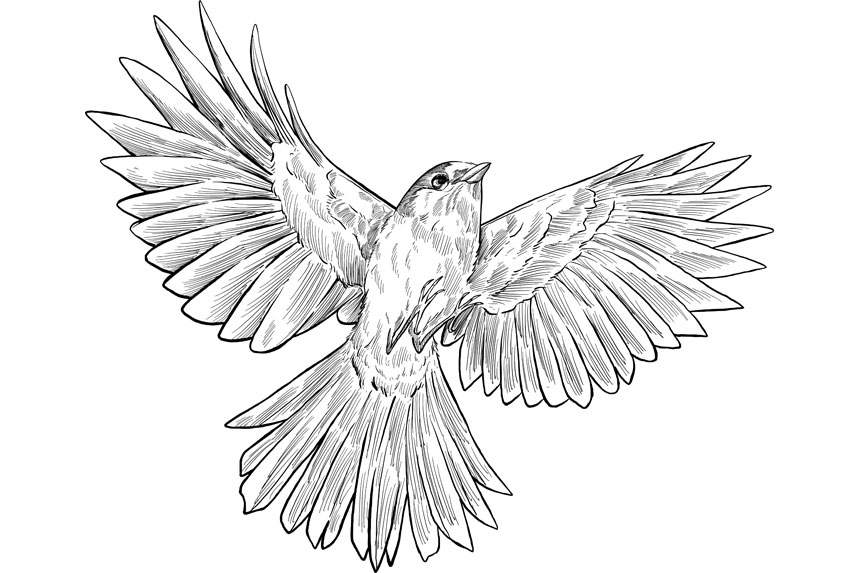
I stood at the lectern in Sylva’s City Lights Bookstore with the thin volume in my hand. The cover was minimalist: a sketch of a dead mockingbird with wings spread wide. The seats were filled with locals, students, and journalists, here to see me tell the story of the arrest for the first time as part of a small-scale book tour. Even Cruz stood by the wall, arms crossed. I hoped I’d find time to discuss the poems.
I set down the book and raised the microphone.
“The second I received the manuscript, I knew Ursula had been murdered, likely by one of her children. They had poisoned her and taken the third poem in the Mockingbird Triptych, which named them explicitly. However, they made one mistake — as had I.”
The bookstore’s black-and-white cat wandered into the room. Unlike my audience, who watched in rapt attention, he only tolerated the proceedings.
“Hopefully, you’ve already picked up your copy of Je te plumerai. If so, you have a brief chance to use the remaining Mockingbird poems to identify the killer yourself.”
I raised my voice to combat the sound of flipping pages.
“The killer didn’t pay attention to Ursula’s poetry until they learned she intended to publish an accusation. They silenced her and went through the manuscript, removing the poem that explicitly mentioned their crime. They should have removed the other triptychs as well, but they couldn’t be sure Ursula hadn’t already mentioned them to someone. The killer erred on removing less to evade notice.
“However, Ursula counted on this. She placed an obvious clue in the last poem, so the killer would ignore the clues in the other two. As a result, their name is hidden plain as day in the books y’all are holding.”
Someone raised a hand and asked, “But why not tell someone? Why go to all this trouble?”
“Ursula was isolated and couldn’t escape her killer. But honestly, I don’t think she anticipated getting murdered. Her concern was that her child would retrieve her manuscript from the mailbox and remove the offending poem. Her clue, then, would identify who was responsible. However, the killer took their secret more seriously than she anticipated.”
I opened my copy of the book and turned to the first poem — “Clotho.”
“While you work on the killer’s name, let’s talk about that secret. Ursula mentions it outright: killing a mockingbird in a river. But later, she describes this bird’s song as a ‘steady staccato rap.’ Hardly how I’d describe a beautiful melody. Obviously, the bird is a metaphor.
“In the literary world, mockingbirds only mean one thing — a reference to Harper Lee’s To Kill a Mockingbird, where it represents a harmless victim of violence. She’s accusing her child of killing something harmless — but what?
“Take a look at ‘Lachesis’ now.” I paused as my audience flipped through their books. “The one explicit clue she provides is a ‘narrow leather band.’ When you consider that Ursula once owned a dog who drowned, the connection is obvious. The leather band is a collar, and ‘staccato raps’ is a clear description of a barking dog. Ursula was accusing someone of killing her pet.”
The guests mumbled among themselves. The cat climbed onto the only empty chair and perched smugly, secure in his nine lives.
“But how did you know who did it?” someone shouted.
“What prompted me was finding Ursula’s cryptic crossword and trying to apply similar principles to the poems. It became clear when I looked for homophones.”
The crowd dived into their books again but quickly came up empty. I shook my head and pushed up my reading glasses, staring at the page.
“What you’re looking for are words that sound like numbers. Can anyone find the number one?”
A teenager near the front raised her hand.
“Like ‘won’? In line 4 of ‘Lachesis.’”
“Exactly,” I smiled. “Ursula hid numbers throughout the poems. If you put those lines in order and read the first letters, the killer’s name appears.”
The crowd turned to each other, jabbering like crows.
“Oh, and this line has ‘to.’ The one below it has ‘for’!”
“But what about three? There’s no word that sounds like that.”
“That’s why you have to read the poems aloud,” I said. “She hid those numbers between two words, so they appear if you blend them together — like a mockingbird making its song.”
“I see it! In Line 10 of ‘Lachesis,’ it says ‘with regrets’. With-regrets, wi-three-grets!”
They quickly found the others. Cruci-five-iolence, six-sheets, thi-seven. All the strange word choices Ursula had put in. Finally, we arranged the lines in order by the numbers they contained.
REBECCA.
“The evidence was right in front of me when I visited Ursula’s home. Rebecca Davis immediately smelled the dog hair on my clothes, but instead of taking interest, she started chopping onions. That was a calculated move. She needed a reason for her eyes to get irritated in the next few minutes, other than the allergy she was hiding. She did whatever she could to point me away from the pet.”
“But why would she kill her own dog?” someone asked.
I smiled faintly. “Every poem must allow for multiple interpretations.”
The presentation ended soon afterward. The bookstore had signed copies of Ursula’s other collections, but there would be no signings of Je te plumerai. I stood near the exit, shaking hands as the group left. A familiar man in a suit hung in the back of the line, nearly tripping on the cat as he approached.
“I enjoyed your speech, Mrs. Carter,” Micheal said.
“Call me Maleah.” I shook the Congressman’s hand. “And that’s good to hear, since I sure ain’t used to it. I would have thought you already knew the story inside and out.”
“Sure, but it’s interesting to hear from an outsider’s perspective.” He scratched his hair, which stuck up like a pile of twigs. “It helps me understand what my sister was so afraid of — the way these people talk about her, having never met that awful dog.”
“I noticed that scar on your hand.”
Michael clenched the injured fist. “Mom never believed us, and Dad was gone by then. She thought it was a stray and made me get tested for rabies. When the dog drowned, I didn’t ask questions. Maybe Rebecca was fighting back, or maybe she was thinking of Rocky. He was so young then; that dog could have killed him.”
“He was so young, he didn’t remember the dog for what it was.”
“He would have taken Ursula’s side, especially with how she described the dog,” he said. “Which meant Rebecca wouldn’t get that house, and probably I wouldn’t either. I shouldn’t have gone to Raleigh. Leaving Rebecca alone with Mom hanging that over her head every day. It’s no wonder she snapped.”
“And with Ursula dying, she realized something about that dog’s leash. She was living in the past, always looking back with a pretty font — never seeing the reality.”
“I guess that’s why your publishers won’t let you tell the full story,” Michael shook his head. “They can’t have their author looking like an imperfect human instead of an innocent victim. I’d ask you to call this tour off, if only for my career, but you’re right … let everyone have their interpretations.”
Michael thanked me and left, still staring at the cover of the book. Cruz walked out, thinking I wouldn’t notice the paperback romance tucked under his arm. Rocky was back in California, commissioning a biographical drama about Ursula’s death. Even the cat was gone, leaving me surrounded only by stalwart books.
I opened what remained of my friend’s last collection. I thought I’d known her through these words, but it was only at a distance. To her family, these poems weren’t gospel. They were ugly reminders of the parts of Ursula only they saw.
It was those words I loved, but now only reality remained. The Atropos poem was never recovered, Rebecca having burned it in her stove. However, she had sent me the torn half of a sheet of paper shortly after her arrest.
“This used to be the book’s epigraph,” she wrote in her letter. “It was a quote from some old poet named Rebecca S. Nichols. Obviously, I wasn’t going to leave that in, but somehow, I expected things would turn out like this. We could never stand in the way of the story Mom wanted to tell. I kept the other half for you.”
I turned to the beginning of the book, where Ursula Penleric’s hand-scrawled dedication had been preserved exactly as it was written on the torn page.
“To Maleah,” it said. “For hearing my voice, when not even I could.”
Become a Saturday Evening Post member and enjoy unlimited access. Subscribe now