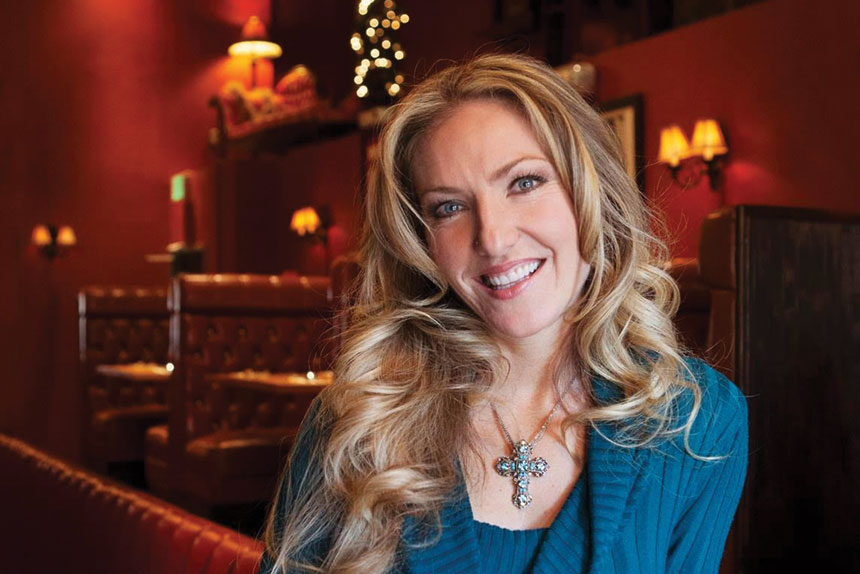
The restaurant is in San Francisco, but the vibe is Harlem Renaissance. Chandeliers sparkle high above red velvet booths. Swinging musicians play jazz. And yet it’s not the Old Skool Cafe’s time machine elegance that most stands out, or even its superb soul food cuisine. It’s the youthful faces. The servers in fedoras and red satin shirts are all age 16-22. So are the bussers, dishwashers, and cooks; the managers, musicians, and hosts.
This is not an ordinary restaurant. Old Skool Cafe is a faith-based, nonprofit violence-prevention program for formerly incarcerated and foster care youth. Founded by corrections-officer-turned-life-changing-restaurateur Teresa Goines, the supper club steers youths away from a cycle of gangs and jail by teaching them job skills (and life skills), nurturing their talents, and building their self-esteem. Goines fills numerous roles — CEO, mentor, counselor, unofficial mom — and showers love on young people battered by years of neglect.
“These are beautiful human beings who have been through more trauma in their young, teenage years than most people will experience in an entire life,” Goines says. “We are helping them see that they matter, they’re special, they’re wanted, they’re brilliant. So many of these young people say, ‘I want to know that I’m not a mistake,’ because a lot of them, that’s what they’ve heard. I want them to know they are loved.”
The results are impressive. In 2024 alone, the restaurant employed 144 youth and provided over 15,000 hours of training. The recidivism rate for Old Skool Cafe participants is 14 percent; the national rate is around 70 percent. Goines’s work has been recognized nationally, from CNN to ABC News, and in 2025, the Cafe received a $350,000 grant in Chick-fil-A’s 2025 True Inspiration Awards.
Goines never foresaw a career as a restaurant-running social entrepreneur. A native of Tucson, Arizona, she majored in psychology at Westmont College in Santa Barbara, California, and planned on earning a doctorate. But after a senior-year internship with a probation program, she instead became a corrections officer in a Santa Barbara County juvenile hall — and heard young people’s stories about their lifelong struggles with trauma and abuse.
“I did a lot of crying on the way home most nights,” she says.
One 15-year-old boy revealed that he had become a drug runner for his dad at age three. His drug-dealing father would hand him a bag and he would take it to a neighbor’s house.
“That’s one of his earliest memories — and it’s your dad,” says Goines. “I remember hearing his story, this sweet, tenderhearted kid, and I thought, he’s just doing what he knows. And now we’re going to lock him up for his whole adolescence and who knows after that. He’s never been given a true opportunity to be a kid and to be told you’re amazing, you’re talented, you’re wanted, you’re loved. That young man was a breaking point for me. I thought, we’ve got to provide these kids a different opportunity.”
Gangs serve a social function in at-risk communities, offering family, belonging, and income. After jail, teens need to make money, but nobody hires them — which leads them back to the gangs. But Goines had an idea. What if you created a place that hired young people who were leaving jail? That gave them a paycheck and experience? Food service seemed like a logical fit. As a one-time waitress herself, she knew it offered highly transferrable job skills. And San Francisco, where she now lived, was a foodie city with plentiful jobs (and decent wages) in restaurants and hotels.
“A lot of chefs and owners and managers often started as a busser or dishwasher, so I loved that it had an upward mobility opportunity that didn’t require an education,” she says. “And you could have tattoos. A lot of the things that would ‘X’ our youth out of jobs seem to work in the restaurant industry.”
But she doubted herself. The problem seemed overwhelming. She was just one person. Finally, after months of pondering and praying — “It tugged at my heart every night,” she says — she launched the Old Skool Cafe in 2004 out of her home, focusing on life skills workshops, restaurant training, networking, and mentoring. Two years later, Old Skool hosted its first gala. That led to dinner salons at Goines’s house, catering opportunities, and events with guest chefs.
In 2010, she obtained a space for a restaurant. As a novice restaurateur, the learning curve was immense. On opening night in 2012, they ran out of food.
“We had a full house, we were packed, we got press, but we didn’t know quite how to budget and plan,” she recalls with a laugh. “We were slow getting stuff out and the POS [point-of-sale system] got unplugged. We had customers that were ‘hangry.’”
These days the restaurant is a smooth-running soul food machine known for its fried chicken. One of her favorites dishes is a family recipe from one of her teens: a West African peanut butter stew (sweet potato, braised greens, and vegetables in coconut milk, served with jasmine rice). Equally popular is the restaurant’s stylish Jazz Age feel.
“Our youth of color are not taught a lot of positive history,” she says. “Most of them knew about the Harlem Renaissance, so I thought, what if we bring that era to life?”
Old Skool differs from other violence-reduction and job-skills programs, and not just because teens wear zoot suits and sing Sinatra. They earn money. They receive opportunities (including a three-month externship program with other restaurants). And they regain their humanity, slowly dismantling their emotional defenses.
Before coming to Old Skool, Leonard Ferguson, a server, felt constant anger, and used drugs and booze to cope with his pain. Working with Goines changed him, as it has changed others. Young people develop coping skills to manage emotions while interacting with colleagues and the occasional rude customer. Old Skool also has partnerships to provide stable housing and treat mental health issues.
“We’re not just giving you a job,” says Goines. “We’re looking at the whole person, their spirit, their soul, their emotions, their finances, their physical health.”
That support never stops. Samantha Luevano was 11 when she met Goines in a gang intervention program and later worked at the Old Skool program in Goines’s home. Goines continues to mentor Luevano, who is now a loving mother, a hair stylist, and an entrepreneur who has even written a children’s book.
“She’s so thoughtful and caring,” Luevano says. “When you don’t have a lot of that at your house, it’s nice to have someone in your corner like that.”
Goines wants to expand the Old Skool program nationally over the next five years, and she has spoken with representatives from other cities. The work can be exhausting, she admits, but young people still fuel her passion.
“This is the hardest thing I’ve ever done,” she says. “It took eight years to get this out of my home and start the restaurant. I’d gone through my savings and retirement. But then, on the days when I was like, ‘I don’t know that I have anything left,’ a young person would call out of the blue and say, ‘I just wanted to tell you I love you.’”
That’s the recipe for success. She nourishes them, they nourish her. The ultimate soul food.
Ken Budd has written for The Washington Post Magazine, The Atlantic, and many more. He is the author of the award-winning memoir The Voluntourist and a host of the literary podcast Upstart Crow.
This article is featured in the November/December 2025 issue of The Saturday Evening Post. Subscribe to the magazine for more art, inspiring stories, fiction, humor, and features from our archives.
Become a Saturday Evening Post member and enjoy unlimited access. Subscribe now