Whenever my father drops by for a visit, I can expect some combination of four things: unsolicited dating advice, biting political commentary, outrageous tales from his glory days, and unrelenting criticisms of my yard.
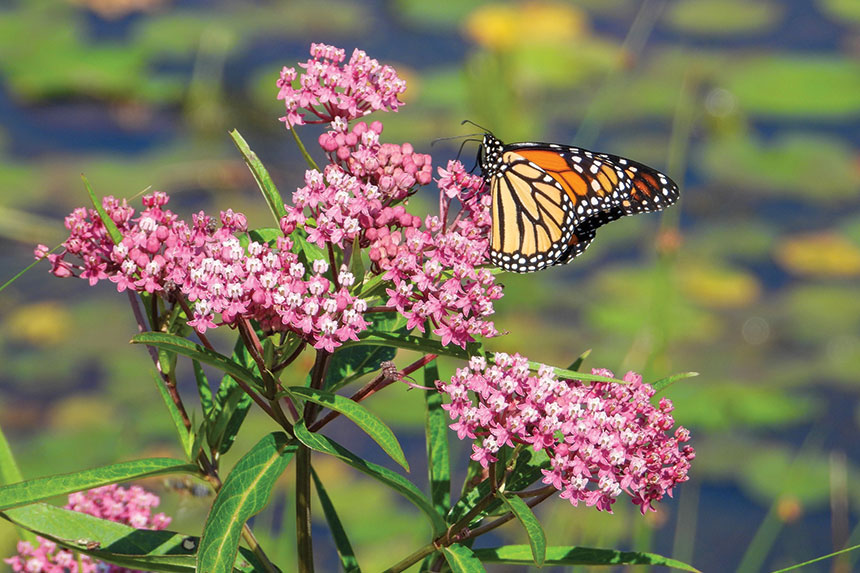
If you drive by his well-kept condo, his traditional preferences are evident — until something catches your eye. Among the non-native daylilies, zinnias, hostas, and dwarf boxwoods is something colorful, something wild; to the untrained eye, it might look out of place amid his neighbors’ sanitized, contractor-grade flora, though the opposite is true. These striking oddities are native plants, plants that have adapted to the local environment for centuries. The sweet black-eyed Susans and common milkweed came from my yard, where I grow over 100 native species in an act of suburban subversion.
The presence of native plants in my father’s sensible garden is a bellwether of wider trends: It’s 2026, and native plants are having a moment. At the same time, however, while native plants are infiltrating the mainstream, misunderstandings are common. This past fall, a friend of mine received a weed citation for her yard; the “weeds” in question were beautiful native prairie species she worked hard to cultivate in place of a traditional lawn. Because they were taller than 12 inches, they were lumped in with the local definition of “High Grass and Weeds.” I directed her to the local Land Stewardship web page, where property owners can register their yards with their city’s Native Plant Program. She (and I daresay the citation issuer) was unaware of such a program, but until they become more commonplace, registering a planting with city government (where available) might be what’s needed to safeguard native species.
In our present era, nowhere on Earth has been untouched by human actions: Oceans are warming and acidifying, wetlands are disappearing, and microplastics have been found in Antarctic snow. We are in the midst of a biodiversity crisis, where diversity within and among species and ecosystems is declining as extinction becomes a real and present threat.
In the face of such sobering data, it’s easy to become disheartened and feel powerless. However, those of us with yards, gardens, balconies, or patios can practice responsible stewardship of the Earth by taking a simple step: planting native plants. Doing so increases the resilience of our local food web, eliminates the need for chemicals and excessive water, and supports biodiversity and ecosystem services. Let’s make 2026 the Year of the Native Plant.
Mary Margaret Moffett is an ecologist and Advanced Indiana Master Naturalist.
This article is featured in the January/February 2026 issue of The Saturday Evening Post. Subscribe to the magazine for more art, inspiring stories, fiction, humor, and features from our archives.
Become a Saturday Evening Post member and enjoy unlimited access. Subscribe now

Comments
What a great article. I hope to see a future feature from you on this site. I was glad to read here the legitimate native prairie species your friend worked hard to cultivate has been saved after all, after being deemed a “weed”; probably by a nosy busybody HOA member. Not all are like that, but all it takes is one, as we know!
I live in a condo, but it’s upstairs, so no small yard like the downstairs units. Still, I want to look into getting some native plants I can have indoors. Not to replace the fun lava lamps and 1:18 diecast cars like my bronze ’73 Mach I, but to have something natural and beautiful to enrich the interior in a different way it needs, and I want.
Your last two paragraphs say so much, and add to the Post’s ongoing concern for the environment, including cover stories on our polar bears in jeopardy, and our melting glaciers. I’m going to my local ‘mom & pop’ nursery (The Green Thumb) this week to get started. Thank you, Mary.