From the Miracle on Ice hockey game in 1980 to Franco Harris’s 1972 Immaculate Reception to the Serena slam, sports in the U.S. have long signified what it means to be “All-American.” Today, we are seeing a generational shift in what being an American means, not only in sports, but also in culture and politics. The growing interest in the game of soccer embodies this shift: It’s a sport that is both a global juggernaut and a game with diverse, working-class roots.
As the United States gears up to host the men’s FIFA World Cup for the second time in history, the myth lingers that Americans don’t have a passion for the sport. While it’s true that baseball may be “America’s pastime” and football runs through our veins, America has deep roots in soccer.
Mark Washo, a founding partner of Freedom Sports Entertainment, a sport marketing agency, and managing director of Flower City Union, a professional team in the National Premier Soccer League in Rochester, New York, has been involved with American soccer since 1994, when America first hosted the World Cup.
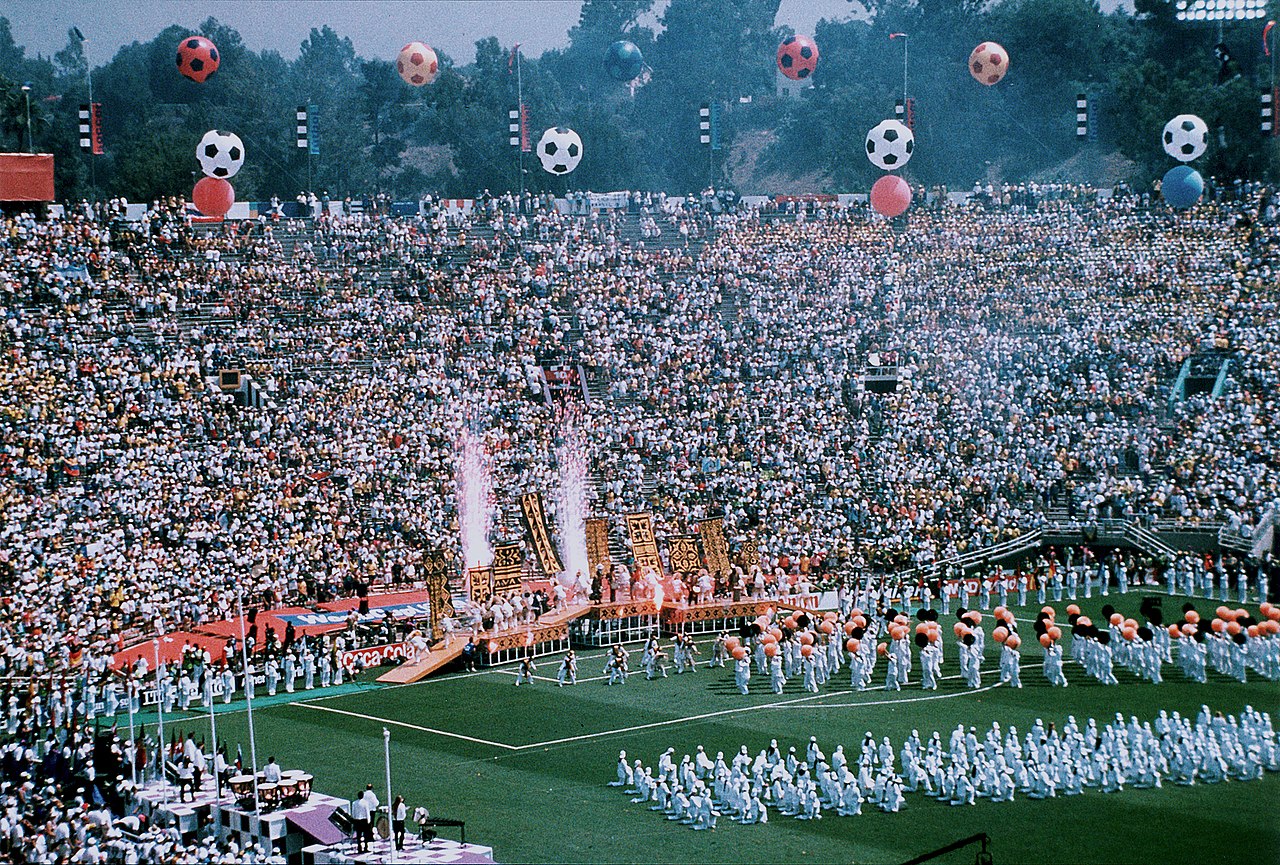
“I think what’s interesting being involved as long as I have is [observing] what would be called the ‘four-year World Cup cycle bump’,” says Washo. “Every four years when the World Cup happens, there seems to be an increase in soccer [interest].”
But it’s not just the World Cup that has made Americans interested in soccer. He explains that Americans have begun integrating soccer into everyday culture. One reason, he believes, is increased access to the Premier League and other foreign leagues through streaming services and broadcast networks. He also explains the rise of e-sports has made Sony PlayStation’s FIFA video game very popular among younger generations.
According to Washo, other aspects of pop culture, such as the highly rated Ted Lasso TV series and well established hometown clubs in places like Seattle, Portland, and Charlotte have contributed to America’s increased interest in the sport.
Youth soccer has also contributed to the ubiquity of the sport. When US Youth Soccer, the largest member of the United States Soccer Federation, opened in 1974, it had about 100,000 registered players. Today, that number has skyrocketed to about three million.
Investment in the sport has also grown significantly in recent years. More than 25 million Americans tuned into the men’s World Cup final in 2022 between Argentina and France. According to ESPN, the final outranked game five of the World Series that year, which was the most watched of the six baseball games. New York City allocated almost $800 million toward its own soccer stadium, which is set to open in 2027, and Major League Soccer (MLS) experienced a 13 percent sponsorship boost when superstar Lionel Messi signed with Inter Miami in 2024.
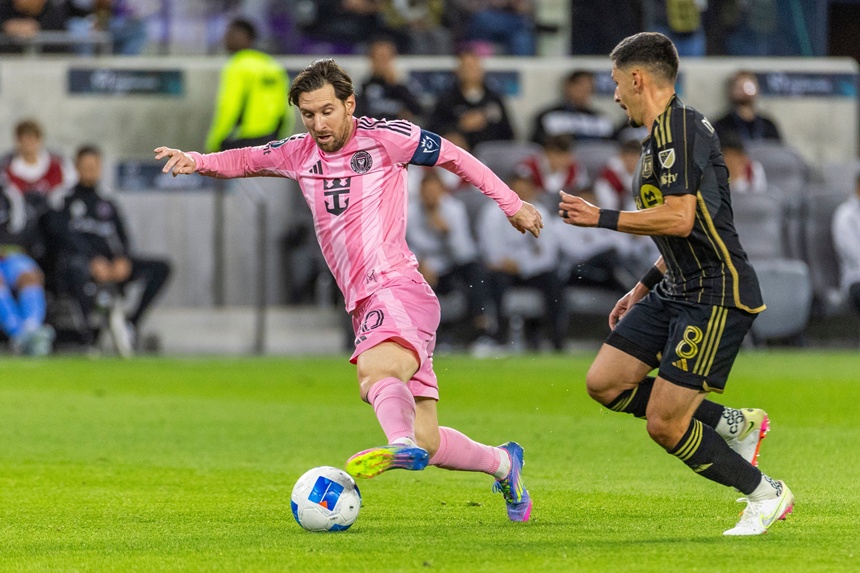
“I think at some point soccer is going to become the number one sport in the U.S.,” says Kevin Tenjo, Brooklyn FC Women’s General Manager. “I am 100 percent convinced of that — that’s how impactful the game is right now.”
A former New York Cosmos player with a Colombian background, Tenjo explains that the sport has evolved drastically over the years. “If you go outside to the parks, you see everyone playing soccer,” he says. “You didn’t see that years ago, maybe other sports like basketball, baseball, American football, but now everyone wants to play soccer.”
This soccer juggernaut didn’t sprout from nothing. America has real soccer history.
Dr. Kevin Tallec Marston, the president of Society for American Soccer History, explains the sport’s 160-year timeline in the United States.
In the 1860s, printed rules for the game first appeared, allowing Americans to understand how the sport was played in the United Kingdom, where the modern version had originated. Elite colleges took up the game, but they each played by their own rules, with some versions looking more like rugby than soccer. Eventually, Harvard, Yale, and Princeton agreed on the same set of rules for a game that ended up looking more like American football than soccer.
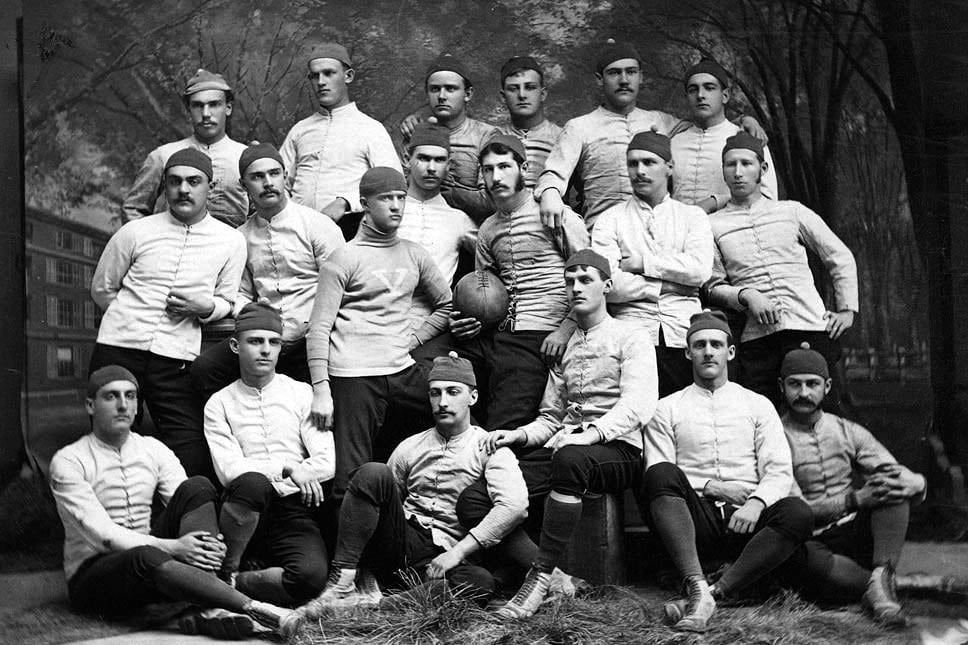
“There was a moment where it could have gone one way or the other,” said Dr. Tallec Marston. “The universities could have chosen to play a kicking game and [we] could have wound up closer to the other side of the Atlantic.”
Soccer continued through the tail end of the 19th century by means of immigration and industrialization. Many Anglo-Saxon immigrants worked in factories across the northeast where they created factory and ethnic teams.

In 1911, the American Amateur Football Association was created and joined the Fédération Internationale de Football Association (FIFA) in 1914, and was later called the United States Soccer Football Association.
Up until the 1920s, many international players continued to settle in the United States to play. However, when the Johnson-Reed Act of 1924 passed, severely limiting the number of immigrants allowed in the U.S., migration came to a crashing halt, slowing the rate of soccer development in the country, according to Tallec Marston.
During this time, soccer developed into a recreational working-class sport, in which intramural participation was prominent. During the early 20th century, there were hotbeds of soccer activity scattered across the country, notably in St. Louis.

“The immigrant thread of the history of soccer is one that has always been part of the historical tapestry,” says Tallec Marston. He explains that while soccer tradition began with immigrants of primarily British, Irish, and German roots, it continued to evolve over the years.
Through the 1930s, Italian immigrants began a soccer club in western Pennsylvania. A very niche social club was formed, in which immigrants concentrated from a particular town called Avella settled into an industrial area where they found mining and railroad jobs. They created social and sports clubs, and their youth soccer team eventually won the National Junior Challenge Cup in 1939 and 1940, according to Tallec Marston.
In recent years, the same pattern can be found among Latinos. “It is something that colors the youth soccer landscape a great deal,” said Tallec Marston. “It is an amazing tapestry, but the fact that you have great media coverage of soccer in Spanish language media in the U.S. today is no different to the great coverage given to soccer in foreign language newspapers in the United States over much of the 20th century.” He explained that proof of soccer culture can be found through foreign language archives, coverage that didn’t particularly exist in mainstream media at the time.

In 1966, the World Cup was televised in the U.S. for the first time. This allowed the sport to gain immense traction, as soccer entered American homes. In 1975, Brazilian legend Pelé, signed with the New York Cosmos. According to Tallec Marston, Henry Kissinger becomes a major advocate for U.S. soccer. “All of a sudden, Pelé is invited to the White House [and] you have this elevation of the sport into the public’s consciousness.”
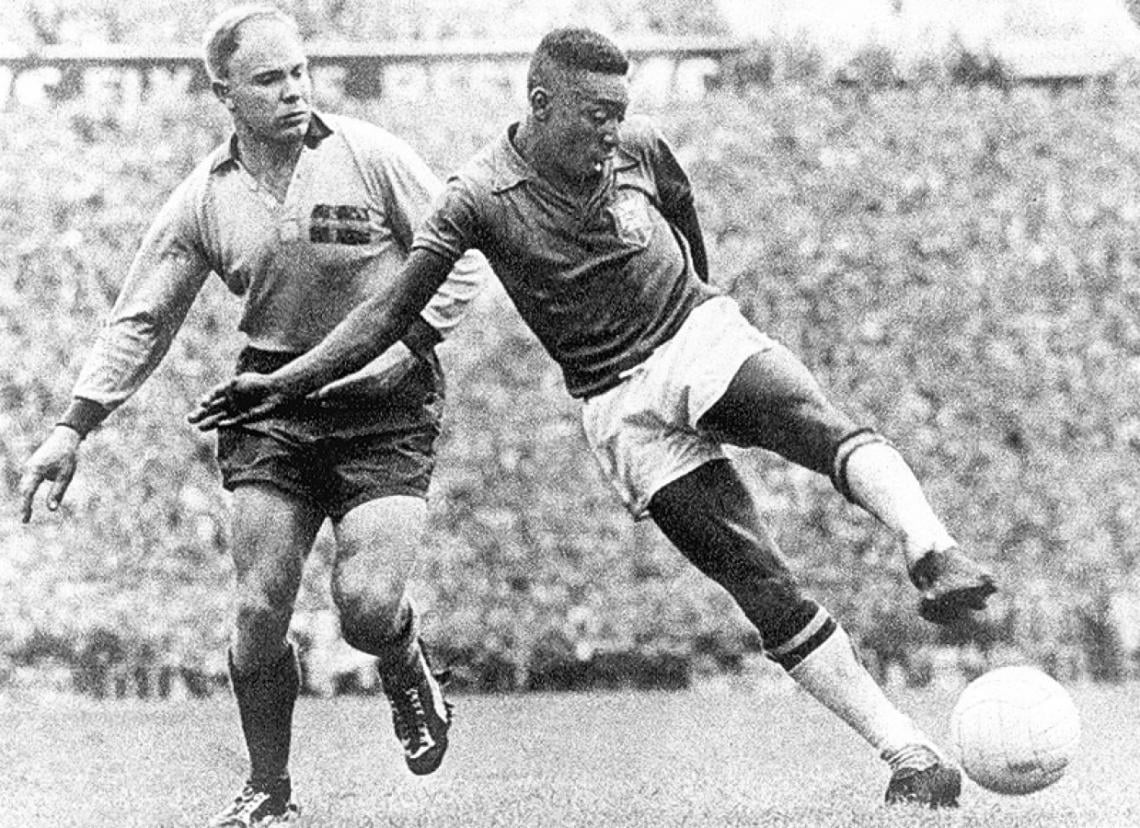
At this point in the ’70s, a mom-and-dad grassroots soccer movement began in the suburbs, kicking off the youth soccer phenomenon. Parents started clubs and associations, involving parks and recreation departments to increase soccer equipment and infrastructure in public spaces. Communities started to assemble soccer camps, providing young people with the opportunity to spend their days (and sometimes nights) away practicing the game. “There is this huge transformation in the way that the game is viewed, and part of that is also due to the fact that the game can be played by everyone in the 1970s,” explained Tallec Marston, “And that means girls.”

Title IX, which prohibits discrimination based on sex in education programs and activities, paved the way for women’s soccer to thrive. Within ten years, the U.S went from about 25 colleges playing women’s soccer to over 2,000. “You have this huge demographic boom of young people playing and the game becomes a legitimate cultural practice,” says Tallec Marston.
The sentiment that soccer is not an American sport and the stereotype that the sport won’t reach new heights was an obstacle that Washo and his colleagues faced during the early years of the MLS. “We used to hear that almost all the time, no matter where we went,” says Washo. “But I think that’s becoming less prevalent now.
“When people go into those stadiums and they experience the passion, I think those myths quickly disappear.”
Become a Saturday Evening Post member and enjoy unlimited access. Subscribe now