Post Covers in the Era of Downton Abbey
We’re just as excited as you are about the return of Downton Abbey tonight, and while we may not have chronicled the lives of Downton’s famous blue-blooded family (they are, after all, fictional) we were around at the turn of the century to capture the essence of the period on our covers.
These 30 vintage illustrations from the 20s to 1930 show the posh taste in fashion and style that you’ve likely seen Lady Mary and Lady Edith wearing on the show. (We think some of these models even look a bit like the ladies of Downton!)
To purchase a few of these illustrations and other covers from The Saturday Evening Post, click here.
August 7, 1920
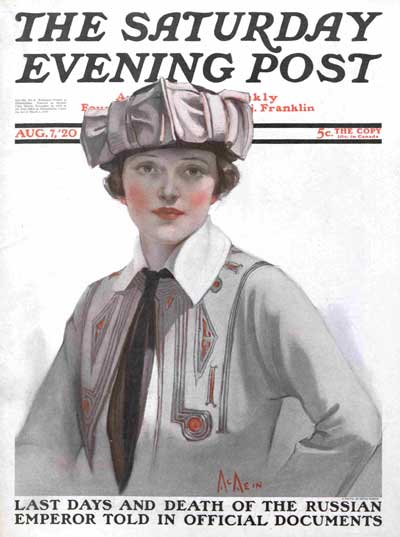
September 11, 1920
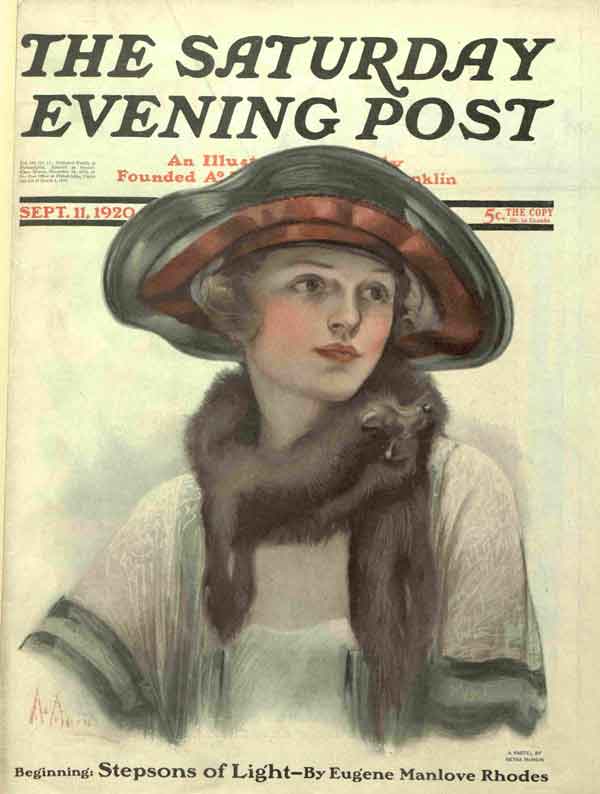
November 13, 1920
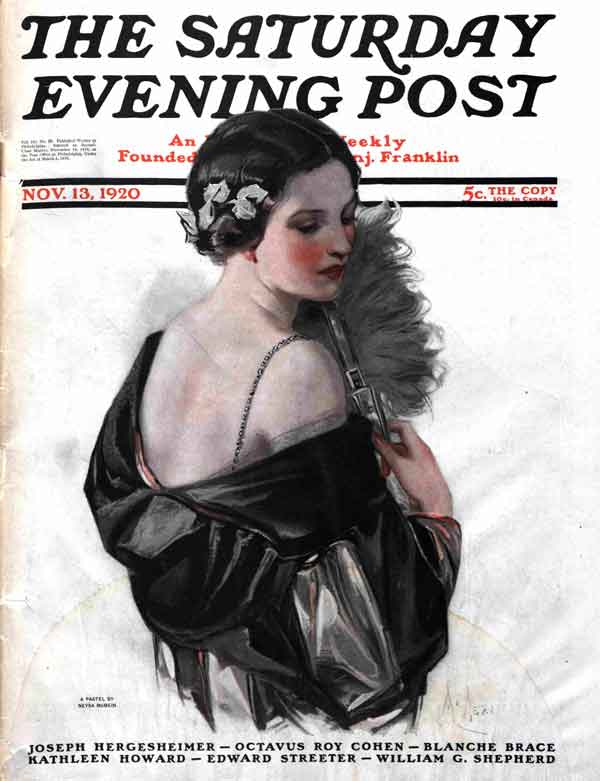
May 21, 1921
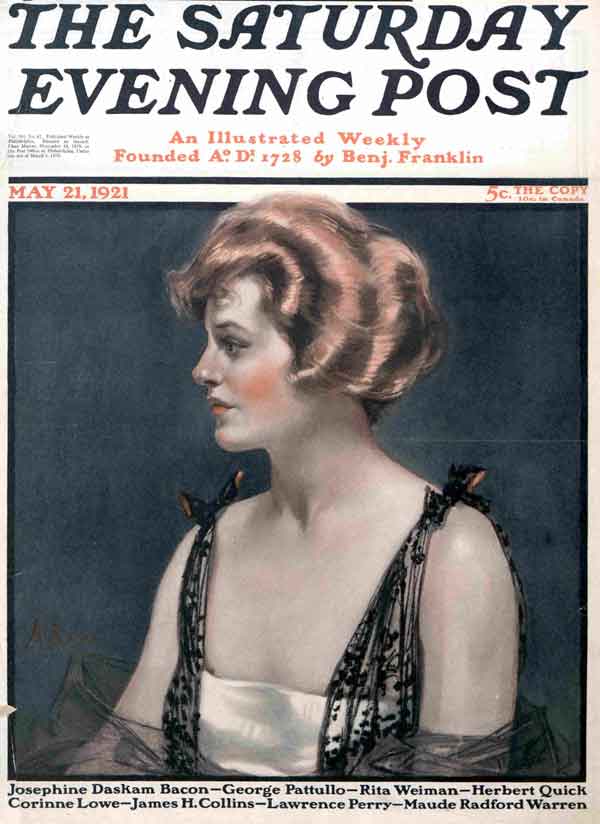
June 18, 1921
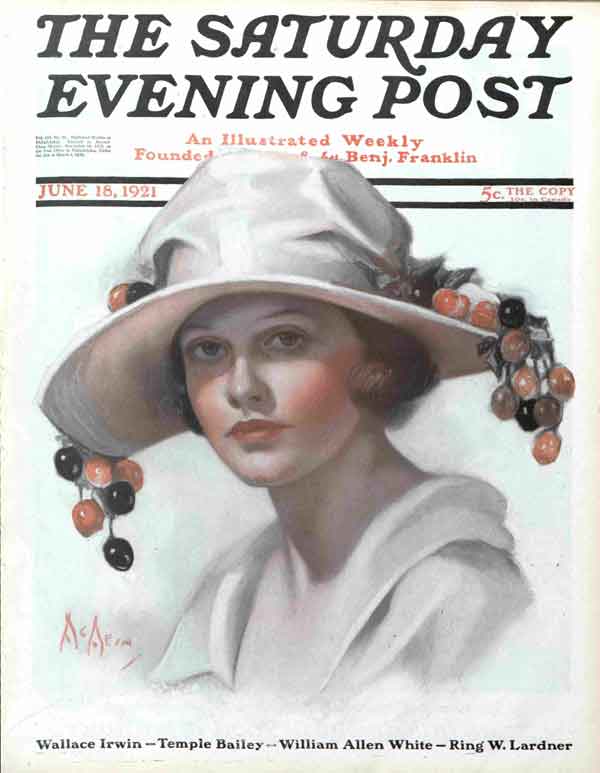
July 16, 1921
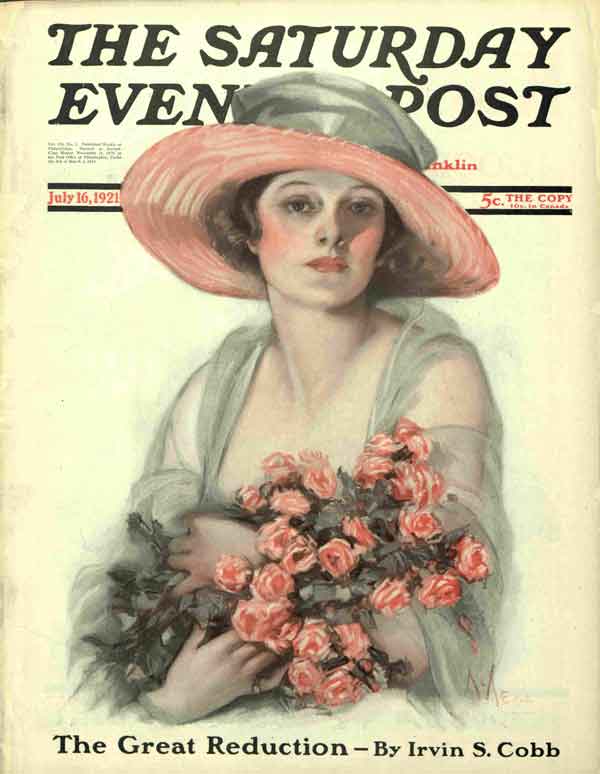
February 4, 1922
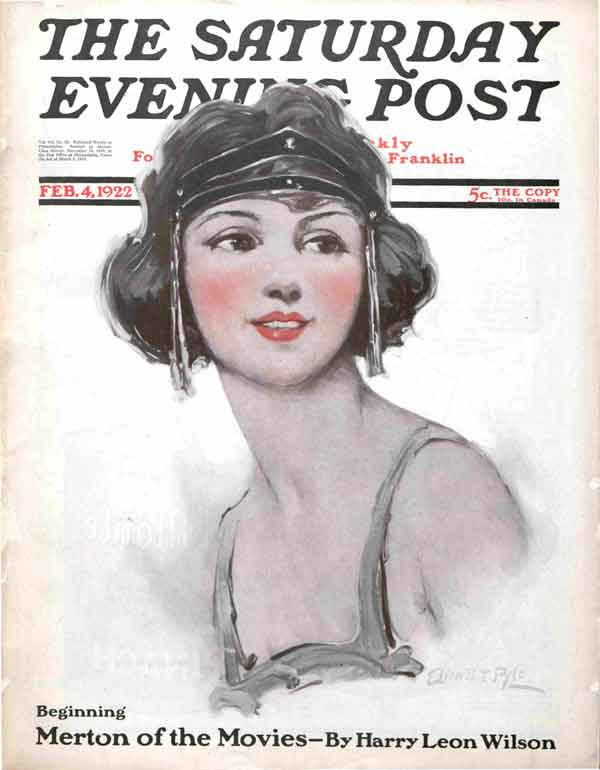
April 22, 1922
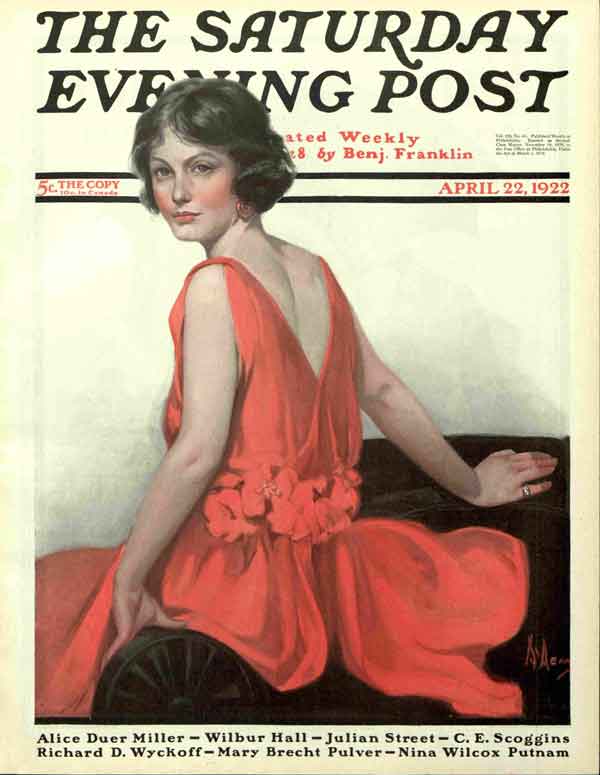
May 27, 1922
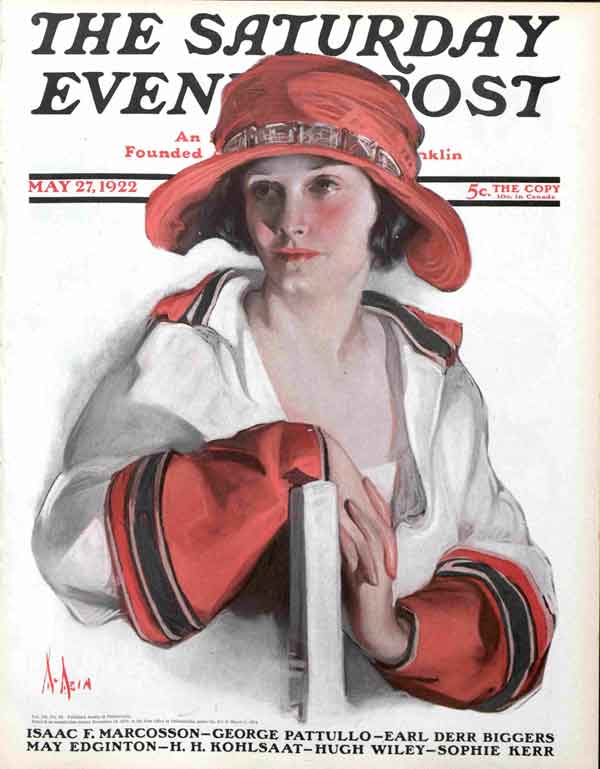
July 8, 1922
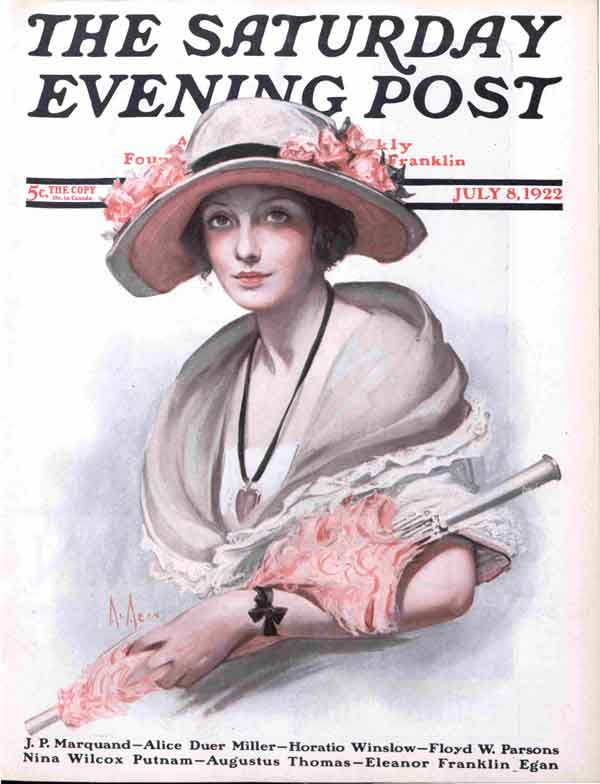
March 3, 1923
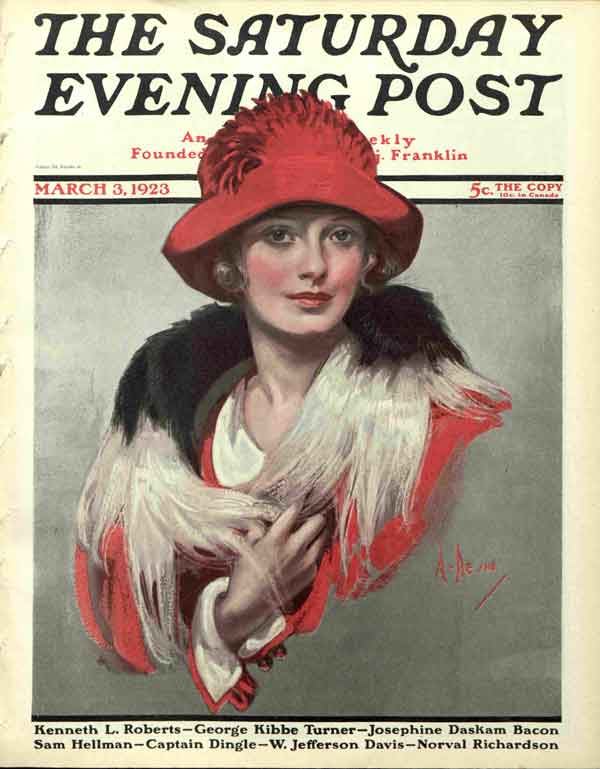
March 24, 1923
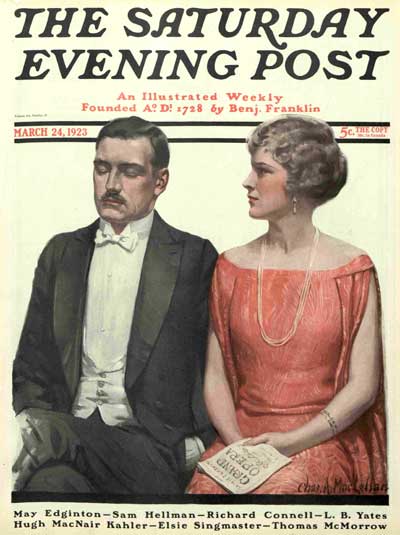
May 5, 1923
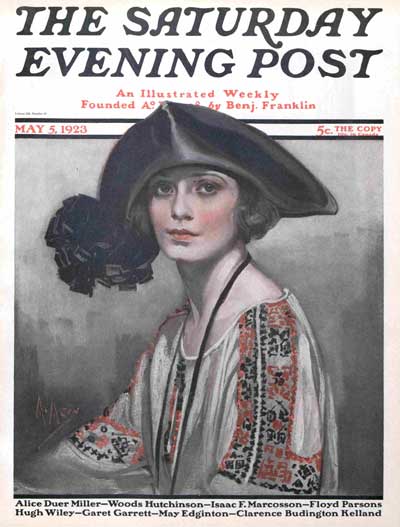
July 21, 1923
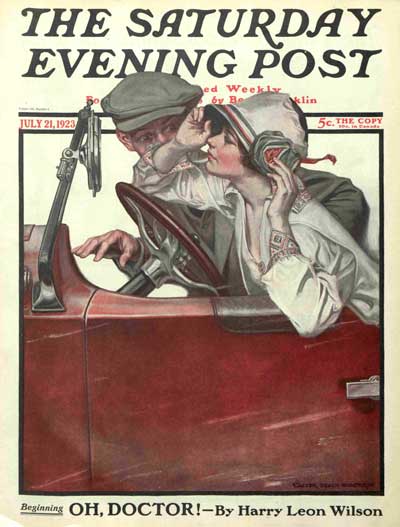
January 19, 1924
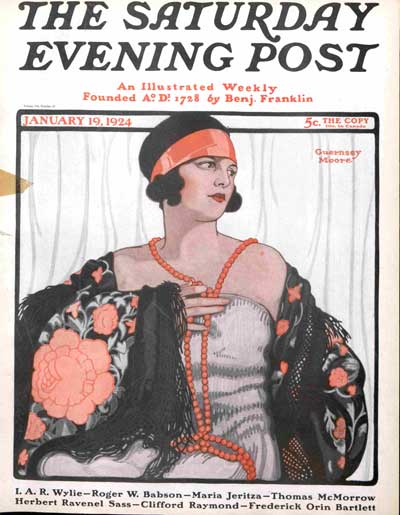
May 24, 1924
January 24, 1925
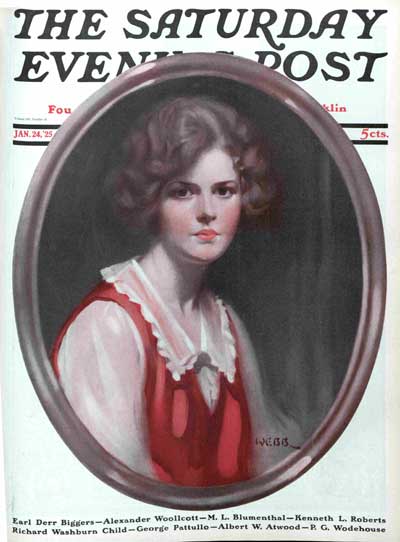
March 21, 1925
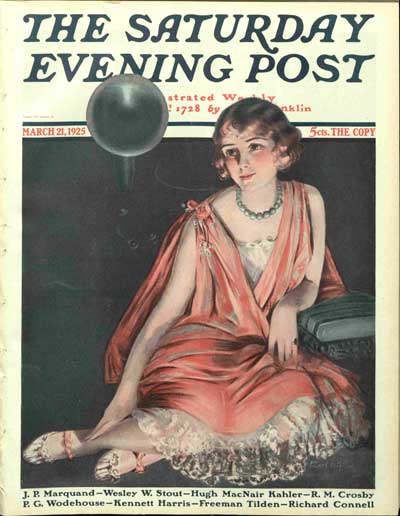
July 18, 1925
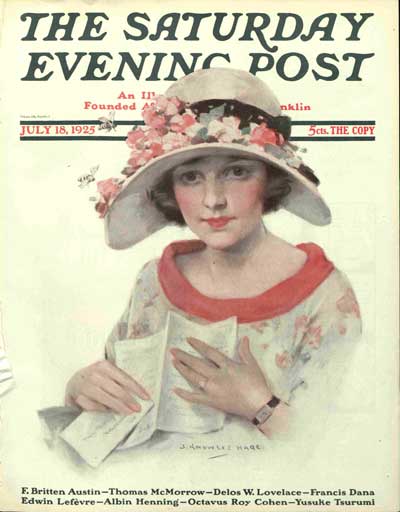
August 15, 1925
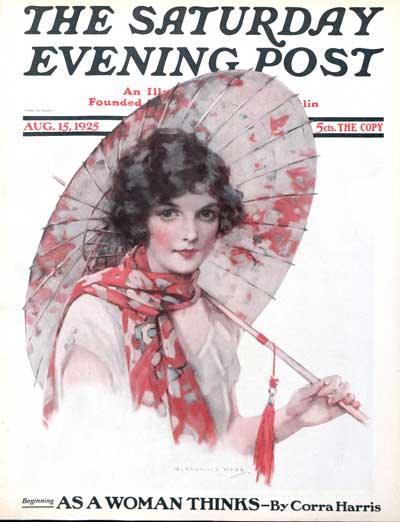
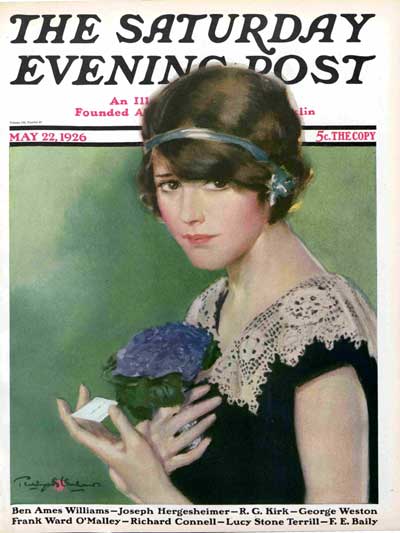
May 22, 1926
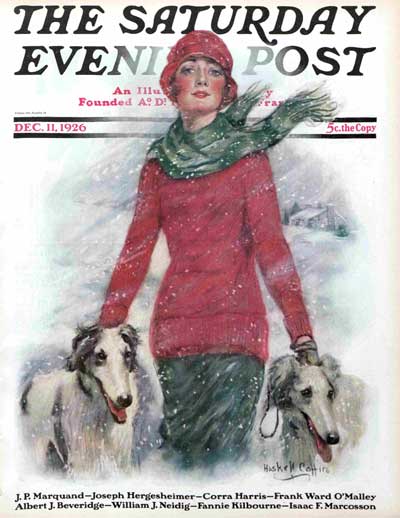
December 11, 1926
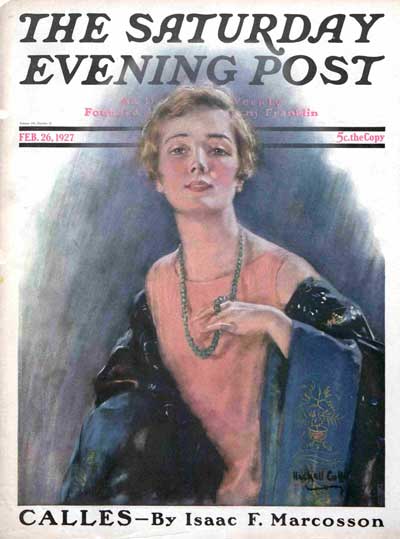
February 26, 1927
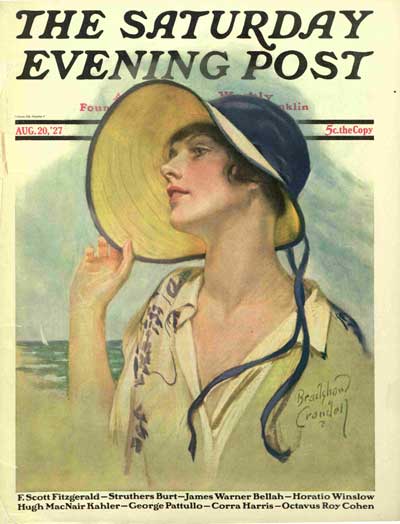
August 20, 1927
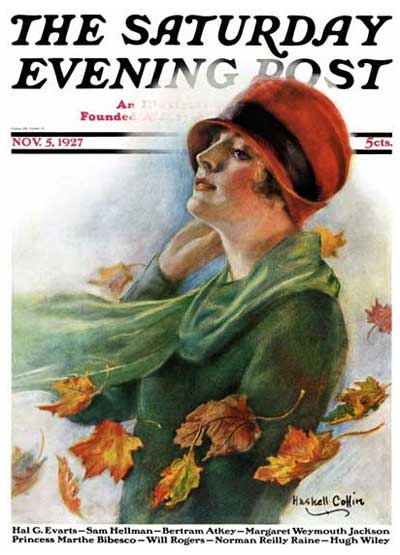
November 5, 1927
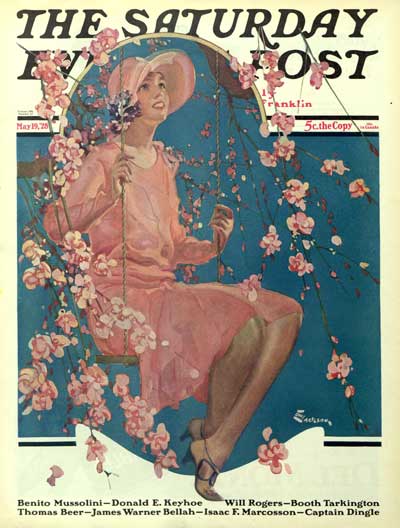
May 19, 1928
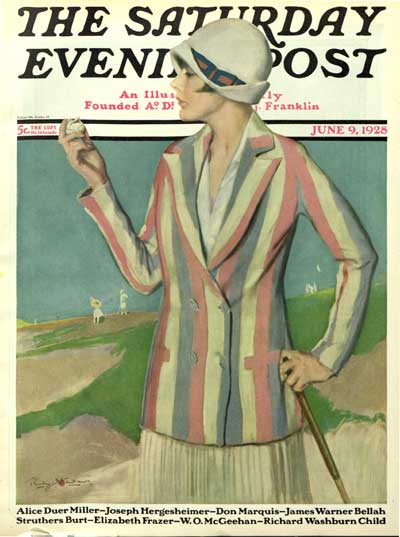
June 9, 1928
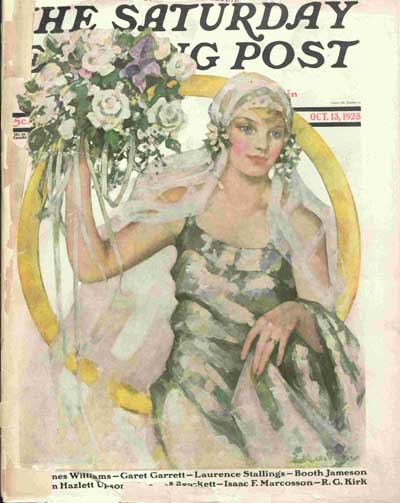
October 13, 1928
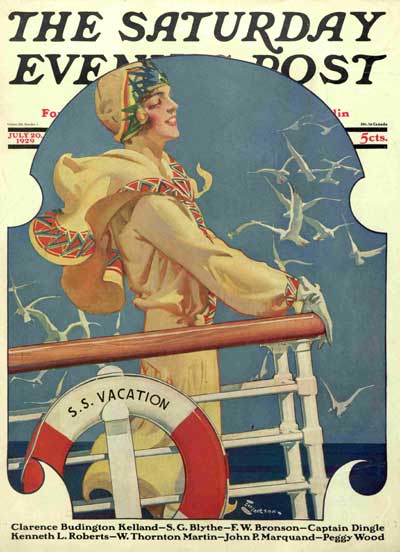
July 20, 1929
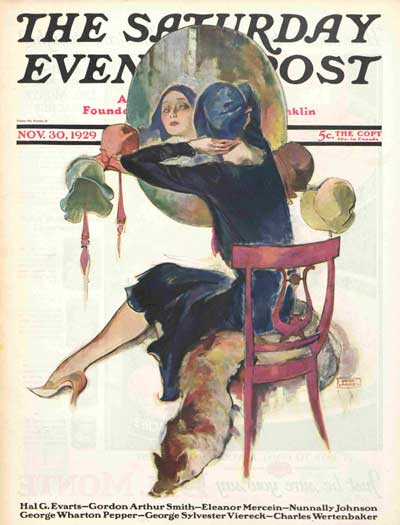
November 30, 1929
Don’t miss our exclusive interview with actress and Downton Abbey guest star Shirley MacLaine! To read the article, click here.
Why Did Henry Ford Double His Minimum Wage?
In 1914, Henry Ford made a big announcement that shocked the country. It caused the financial editor at The New York Times to stagger into the newsroom and ask his staff in a stunned whisper, “He’s crazy, isn’t he? Don’t you think he’s crazy?”
That morning, Ford would begin paying his employees $5.00 a day, over twice the average wage for automakers in 1914.
In addition, he was reducing the work day from 9 hours to 8 hours, a significant drop from the 60-hour work week that was the standard in American manufacturing.
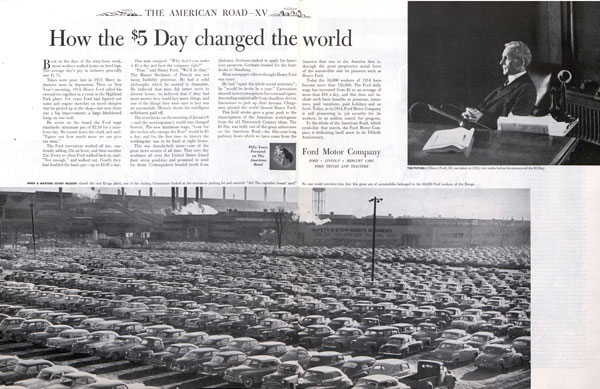
According to an article (above) in the Post sponsored by the automaker, Ford arrived at the new wage scale during a meeting with his managers.
He wrote on the board the Ford wage standards: minimum pay of $2.34 for a nine-hour day. He tossed down the chalk and said: “Figure out how much more we can give our men.”
The Ford executives worked all day, cautiously adding 25¢ an hour, and then another 25¢. Every so often Ford walked back in, said: “Not enough,” and walked out.
Finally they had doubled the basic pay—up to $4.80 a day. One man snapped, “Why don’t you make it $5 a day and bust the company right?”
“Fine,” said Henry Ford. “We’ll do that.”
A young reporter from the Times travelled to Detroit to learn more about this revolutionary move. His name was Edward Peter Garrett, but he wrote under the name Garet Garrett, which was how Post readers knew him when he was the magazine’s financial writer between 1922 and 1942.
Arriving in Detroit, Garrett found the city’s manufacturers panicking and predicting various disasters. The higher wages would cause other employers to leave the city, they said. Carmakers who remained and tried to match Ford’s wages would go bankrupt. Ford employees would be “demoralized by this sudden affluence,” and, of course, Ford Motor Company would soon be bankrupt.
Fortunately, Garrett was able to get an audience with Henry Ford and, over the course of two days, discuss the company’s revolutionary changes. He wrote of his extended interview with Ford in a 1952 book, The Wild Wheel. He recalled asking Ford why he raised wages when every other manufacturer was trying to reduce wages to the lowest acceptable figure. Ford believed he was buying higher quality work from all his employees. “If the floor sweeper’s heart is in his job he can save us five dollars a day by picking up small tools instead of sweeping them out.”
Higher wages were necessary, Ford realized, to retain workers who could handle the pressure and the monotony of his assembly line. In January of 1914, his continuous-motion system reduced the time to build a car from 12 and a half hours to 93 minutes. But the pace and repetitiveness of the jobs was so demanding, many workers found themselves unable to withstand it for eight hours a day, no matter how much they were paid.
But Ford had an even bigger reason for raising his wages, which he noted in a 1926 book, Today and Tomorrow. It’s as a challenging a statement today as it as 100 years ago. “The owner, the employees, and the buying public are all one and the same, and unless an industry can so manage itself as to keep wages high and prices low it destroys itself, for otherwise it limits the number of its customers. One’s own employees ought to be one’s own best customers.”
It might have been just another of Ford’s wild ideas, except that it proved successful. In 1914, the company sold 308,000 of its Model Ts—more than all other carmakers combined. By 1915, sales had climbed to 501,000. By 1920, Ford was selling a million cars a year.
“We increased the buying power of our own people, and they increased the buying power of other people, and so on and on,” Ford wrote. “It is this thought of enlarging buying power by paying high wages and selling at low prices that is behind the prosperity of this country.”
In 1919, Ford raised his minimum wage again, this time to $6.00 a day. Again, the wage hike produced higher production numbers. Ford told Garrett, “The payment of five dollars a day for an eight-hour day was one of the finest cost-cutting moves we ever made, and the six-dollar-a-day wage is cheaper than the five. How far this will go we do not know.”
He learned how far in 1929. In the aftermath of the stock market crash, he raised wages to $7.00 a day, hoping it would spark an economic recovery. But this time, it didn’t work. Orders fell, production slowed, hours were reduced. But Ford didn’t blame the workers for the sluggish economy. The fault lay in business leaders who were “continually putting the profit motive over what he called the wage motive.” Ford told Garrett, “When business thought only of profit for the owners ‘instead of providing goods for all,’ then it frequently broke down.”
While it worked, though, Ford’s $5.00-a-day policy helped the company achieve record profits. It made its cars affordable to its workers (who could purchase a Model T with four months’ wages.) It helped put 15 million Americans behind the wheel of an automobile. And it set a standard for wages that, despite all the predictions of doom for the Ford Motor Company, every other car company eventually adopted.
Hospice Girl Friday | ‘The Power of Compassion’
Devra Lee Fishman’s dear friend and college roommate, Leslie, died from breast cancer one month shy of her 46th birthday after a four-year battle with the disease. Being with Leslie and her family at the end of her life inspired Devra to help care for others who are terminally ill. Each week, she documents her experiences volunteering at her local hospice in her blog, Hospice Girl Friday.
In addition to the nine private patient rooms in my hospice there is a large living room that is separated from the administrative area by half-walls that corral off the space. The volunteer desk is closest to the sofas where hospice staff often meet with family members to discuss patient status and care. I overhear those difficult conversations when I am at the desk and I always wonder how the doctors, nurses, and social workers learned to compassionately deliver the kind of news that no one ever wants to receive.
Last week Peggy Barre was in room 11. Seventy-five years old. Kidney cancer. She had come to the in-patient unit from home care the previous evening because her family noticed she could not get comfortable. When I arrived, the nurse asked me to sit with Mrs. Barre, who kept trying to get out of bed. “Sometimes it takes a little while for a new patient to settle in. Mrs. Barre’s husband is on his way, so we’re hoping she will calm down when he gets here,” the nurse explained.
The nurse walked into the room with me and introduced me to Mrs. Barre, who had one foot hanging over the side of the bed and was trying to push herself up off of the mattress. Her eyes were open wide as though she was looking at a frightening faraway ghost, and she did not acknowledge me when I spoke. Her anxiety and anguish were typical symptoms of terminal restlessness, a type of delirium that is fairly common in dying patients. Trying to get out of bed and pulling out oxygen tubes or IV ports are the most common symptoms I’d seen as a hospice volunteer, telltale signs that death is imminent.
Sitting with Mrs. Barre I was reminded of how my friend Leslie kept throwing off her bedclothes toward the end of her life and in a final burst of energy opened her eyes and demanded “Get me out of here, Devra.” At the time I had not heard of terminal restlessness and simply believed her beautiful, buoyant soul was trying to get out of her diseased body. As she pulled off her oxygen tube I got as close as I could and responded. “Leslie,” I said, “I am trying to help you get out of here. We all want to help you get out of here,” I said, looking around the room at her family. “Please, you are free to go.” I wanted to assure her–and myself–that we were all supportive of her need to leave. And we were, because by then cancer had won the battle and we all wanted Leslie’s suffering to end.
I held Mrs. Barre’s hand as she relaxed against the pillows for a few moments, and then popped up with a start over and over again. Each time her facial expression pulled back tighter and tighter. I was lifting her left leg back up onto the bed when her husband and daughter came into the room.
“She’s been very restless, like she has someplace to go,” I said. “I’ve been trying to keep her from getting out of bed.” I stood up to make room for them to get closer to Mrs. Barre, and then I quietly went back to my desk. A few minutes later Mr. Barre came out of the room to talk to the doctor who was already waiting for him on one of the sofas.
“Your wife seems very agitated,” she said. “She has been thrashing around a lot and her body is full of tension, particularly in her face. Did you notice how frightened she looks with her mouth pulled back tight and her eyes open wide and unfocused?”
Mr. Barre nodded quietly then said, “She was fine up until last night. What happened?”
“With late-stage cancer, symptoms can change abruptly,” the doctor explained, making direct eye contact with Mr. Barre. “The pain and anxiety medications that we have been using are no longer working to keep your wife comfortable.”
“So what do we do now?” Mr. Barre asked.
The doctor sat forward, took Mr. Barre’s hand and said, “Your wife’s symptoms indicate to me that she is suffering from terminal restlessness, an emotional and physical struggle we see in some patients as they transition. Given the tense, fearful look on her face and the way she is constantly startled and trying to get out of bed, I think the kindest thing we can do for your wife right now is sedate her.”
Mr. Barre started to cry. After a few moments he asked, “If we do that, will she ever come back?”
“No, she won’t,” the doctor explained, still holding Mr. Barre’s hand. “But her disease is at the very end stage so she is not going to come back either way, which is why I believe sedating her is the kindest thing we can do.” The doctor repeated her recommendation to make sure Mr. Barre understood. They sat quietly for a few more moments and then the doctor suggested Mr. Barre discuss the option with his daughter before making the decision.
We expect that once a patient commits to hospice care (or is committed to it by a loved one), death will be peaceful and the journey comfortable. After all, that is the very premise of hospice. Mr. Barre was not prepared to make any further ‘final’ decisions beyond choosing hospice care. Very few people are. I have never had to make that decision for myself or for someone I love, but when the time comes–and the time will come–I hope to have a reasonable, compassionate doctor like the one in my hospice to guide me through what could be a very difficult process.
Previous post: The Things I Never Knew Next post: The Loner
Vegan, Reduced Sodium Kimchi Recipe
Fermentation gives bread, cheeses, vinegar, and many other foods their flavorful complexity. The result of benevolent, enzyme-producing microbes that help break down foods, fermentation may also make what we eat more digestible and nurture the good bacteria in our gut.
Marrying the home-preserving trend with an interest in spicy food, I want to share what I learned from Lauryn Chun, who taught me to make the red-hot, surprisingly flavorful kimchi—Korean pickled cabbage—her mother serves at Jang Mo Jip, her restaurant in Garden Grove, California.
Making kimchi is surprisingly easy; it’s ready in as little as three days. If you have never cooked with kimchi, Soba Noodles with Kimchi is a good start. Use it as a condiment and a seasoning. Try kimchi in grilled cheese sandwiches and scrambled eggs, too.
To reduce sodium and make my kimchi vegan, I omit the fish sauce traditionally used. To learn more about kimchi-making and to see other recipes, check out The Kimchi Cookbook: 60 Traditional and Modern Ways to Make and Eat Kimchi
Kimchi
(Makes 16 servings, yields 1 quart)

Ingredients
- 1 head (1½ pounds) napa cabbage
- 2 tablespoons kosher salt
- 4 scallions, green part only, cut into 2-inch pieces
- 2 ½ tablespoons red chile pepper flakes
- ¼ cup very thinly sliced onion
- 2 teaspoons minced garlic
- 1 teaspoon grated ginger
- 1 teaspoon sugar
Directions
- Cut cabbage vertically into 8 wedges. Cut each wedge crosswise into 2-by-1-inch pieces. Place cabbage in large stainless steel, glass, or other nonreactive bowl. Add salt. Sliding hands down sides of bowl, lift and squeeze handfuls of cabbage, pile them on top and repeat until cabbage is wet and slightly wilted, 3-4 minutes. Set aside for 50 minutes.
- Transfer cabbage to large colander and place under cold running water for 1 minute, stirring cabbage to rinse thoroughly. Drain cabbage for 30 minutes. Transfer cabbage to large bowl and add scallions, chile flakes, and onion. On cutting board, combine garlic, ginger, and sugar. Using side of heavy knife, press and smear, then scrape together and chop mixture. Repeat 3-4 times to make coarse paste. Let paste stand for 15 minutes. Add paste to cabbage mixture and use sturdy fork to mix until contents of bowl are well combined.
- Using back of stainless steel spoon, pack mixture into 1-quart glass canning jar, leaving 1 ½-inch space at top. There will be some small air bubbles in jar. Add ¼ cup water to bowl, swirl to collect any remaining seasoning, then pour liquid into jar. Screw on jar lid, set jar in bowl, and let stand at room temperature (65-70°F) for 3 days. (Some liquid may come out.)
- After 3 days, when you open jar, top of kimchi may look foamy or have little bubbles; this indicates fermentation has taken place. If kimchi smells unpleasant or looks slimy, then discard and start over. In refrigerator, kimchi will keep several months, continuing to ferment slowly.
Nutrition Facts
Per Serving (4 tablespoons or ¼ cup)
Calories: 8
Total fat: 0 g
Saturated fat: 0 g
Carbohydrate: 1.48 g
Fiber: 0.4 g
Protein: 0.59 g
Sodium: 234 mg
Soba Noodles with Kimchi
This recipe features kimchi, a red-hot Korean-pickled cabbage, which you can buy at most Asian grocery stores or which you can make yourself.
Soba Noodles with Kimchi
(Makes 2 servings)

Ingredients
- 4 ounces soba noodles, 100% buckwheat*
- 2 teaspoons roasted sesame oil
- 1 cup chopped steamed spinach
- ½ cup chopped kimchi
- ⅓ cup low-sodium vegetable broth
- 1 tablespoon toasted sesame seeds
- 2 lemon wedges, if desired
Directions
- Cook soba noodles according to package directions. Drain in colander, then rinse noodles under cold running water. Drain well and divide soba between 2 pasta bowls.
- Add half sesame oil to each bowl and toss to coat soba. Top each bowl with half spinach, kimchi, and broth, tossing to combine. Sprinkle on seeds, add lemon wedges, if using, and serve.
*100% buckwheat soba noodles are whole grain. Other soba noodles may be a blend of buckwheat and wheat flour with varying amounts of dietary fiber and sodium.
Nutrition Facts
Per Serving (Nutrient analysis is based on 2 ounces of 100% buckwheat soba noodles with 3 grams fiber and 5 milligrams sodium.)
Calories: 294
Total fat: 8 g
Saturated fat: 1 g
Carbohydrate: 49 g
Fiber: 6 g
Protein: 10 g
Sodium: 327 mg
by Lauryn Chun.Foreign Customs on New Year’s Eve
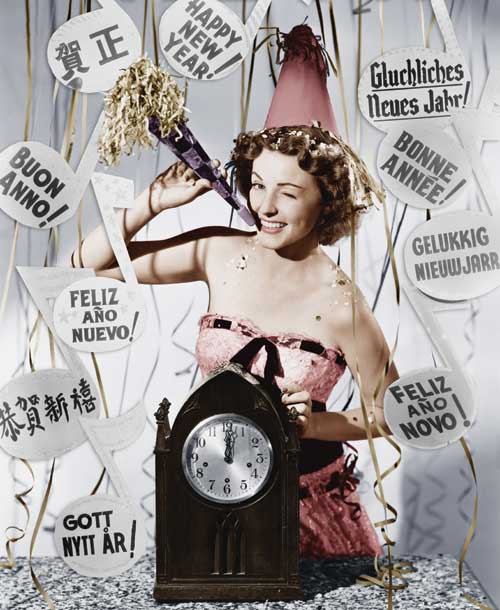
For the past dozen years, our family has welcomed the new year at our friends’ house. They belong to the Quaker meeting that I pastor, and are on their best behavior. I’d hate to think what would happen if I weren’t there to keep things under control. We cheat at board games, watch old episodes of Johnny Carson, play ping-pong, discretely gossip about people who aren’t there, and overeat. At the stroke of midnight, we blow horns, throw confetti on one another, then leave before we’re pressed into service to clean up the mess we’ve made.
When our children were small, we stayed home and slept through that golden moment. We would stir at midnight when the teenagers next door set off firecrackers, then fall back to sleep. When our children went to school and discovered their friends stayed up past midnight, the going to bed early stopped, and we had to look around for somewhere to go. Several churches in our town have New Year’s Eve parties, but that felt too much like work. If I were a mechanic, I wouldn’t want to welcome the new year underneath a car. We were looking for something mildly decadent, but not so naughty it would get me fired, so we jumped at the chance to attend our friends’ party, throw confetti, gossip, and toss back a stiff apple cider at the appointed hour.
I assumed most people in the world celebrated the new year the way Americans do, but they don’t. In Belgium, children write nice letters to their parents and read them aloud. I don’t know who started that practice, but I bet it wasn’t a kid. That sounds like an adult’s idea. People in France give presents to one another. A kid dreamed up that custom; I guarantee it. In Germany, people drop a lump of hot lead into cold water to see what shape it makes. They believe the resulting shape reveals their future. For instance, if the lead assumes the shape of a bullet, it means someone is going to shoot you. But if the chunk of lead looks like France or Poland, it means you’ll be invaded by Germans. I could never live in India, where on New Year’s Eve they’re expected to finish any uncompleted work. My life is a train of unfinished tasks, one railcar after another of half-finished efforts, with no caboose in sight.
Hungarians make effigies called “Jack Straws,” then burn them at midnight. The effigies symbolize everything bad that happened the previous year, so burning them wipes the slate clean. Theoretically, it’s supposed to bring them good luck in the upcoming year, though it never does since they always have to make effigies the next New Year’s Eve. If you have to continually repeat a tradition meant to ensure good luck, it means it doesn’t work.
In Scotland they clean their homes. My father’s family is from Scotland, but I must be adopted because I wouldn’t dream of cleaning my house on New Year’s Eve. I think my birth parents were from Australia, where they welcome the new year camping on the beach.
This is our first New Year’s with the kids grown and gone. People arch their eyebrows and say, “Oh, you can finally whoop it up.” But Quakers aren’t known for their whooping. We’re good for a whoop or two, then settle down pretty quickly.
When I was little, I would take a bath, put on my pajamas, lie on the living room floor with my brothers and sister, and watch Guy Lombardo at the Waldorf Astoria Hotel in New York City. My dad would light a fire in the fireplace, and my mom would make popcorn. We were each allowed one bottle of Coke. The glass ball would drop in Times Square. Mr. New Year’s Eve, Guy Lombardo himself, would pick up his baton and the Royal Canadians would swing into action with Auld Lang Syne. My father would grow misty-eyed.
“If we were still in Scotland,” he would say, “we’d be cleaning the house right now.”
Hospice Girl Friday | ‘The Things I Never Knew’
Devra Lee Fishman’s dear friend and college roommate, Leslie, died from breast cancer one month shy of her 46th birthday after a four-year battle with the disease. Being with Leslie and her family at the end of her life inspired Devra to help care for others who are terminally ill. Each week, she documents her experiences volunteering at her local hospice in her blog, Hospice Girl Friday.
Recently my husband and I attended the funeral of Frank, a former community band mate of ours who died from brain cancer earlier this year. Frank’s wife also plays in the band and the four of us would often chat as we walked to our cars after our weekly rehearsals. We weren’t close friends and never saw each other socially outside of band, but after I saw Frank struggle to walk into rehearsal one evening I reached out to Betty and offered to come over to sit with Frank while she ran errands or just took a break from her 24/7 caregiving. Frank dozed the entire time my husband, Jim, and I sat with him but woke up to say goodbye just as we were leaving. Frank passed away the following week. He was 64.
Frank retired after 20 years in the navy and wanted to be inurned in Arlington National Cemetery, the hallowed and hauntingly beautiful burial ground a few miles from where we live. Because of his rank, Frank was sent off with full military honors that included an escort platoon, a colors team, a military band, and a horse-drawn caisson that carried Frank to his final resting place. Jim and I were honored to be there and surprised by what we learned about Frank’s life and legacy from his eulogists.
We knew Frank was a submariner, but we did not know that he retired as a commander. After he retired, he worked with a defense agency to create training and tools currently used by soldiers fighting today’s wars. We also knew that that he and Betty liked to tell stories, but we did not know that they once won the National Storytelling Network’s Oracle Award. And we did not know that Frank was in the process of writing several stories of his own before cancer robbed him of his words, and that Tom Clancy had dedicated one of his blockbuster books to him.
Jim and I were silent as our motorcade slowly traveled from the chapel to Frank’s final resting place. The air was unseasonably warm; the sky threatened to rain, but never did. I watched the clouds race by as though they were reminding us how quickly time goes. Then Jim voiced what I had been thinking.
“I wish I talked to Frank more than I did at band rehearsal.”
“Me too,” I said.
“I don’t know why I didn’t,” my husband said. “I would have loved to talk to him about his military career.”
“And I wish I had gone to hear him perform with his storytelling troupe,” I said.
“Why didn’t we?” my husband asked.
As Jim’s question hung in the air between, us I thought about the time–soon after I became a hospice volunteer–that I read an obituary of a long-term patient. A nurse had clipped it out of the paper and tacked it to the bulletin board in our conference room. The patient lived in our hospice for several months, but I never knew that she was once a college professor, or that she played the piano and was a gourmet cook. Of course the nurse already knew that about the patient because they talked on a daily basis and, more importantly, the nurse cared enough to ask.
Back then I preferred to keep my distance from the patients I met because I was still coping with the pain of losing my dear friend Leslie and did not want to get close to anyone I knew I would have to mourn before long. Also, since most patients stayed in our hospice unit for only a few days before they went home or passed away, I had rationalized that there was not enough time to forge any kind of meaningful relationship. Sometimes my fear of grief still causes me to think and act like that.
With Frank, however, there were plenty of opportunities, and I regret that I decided long ago that other than band, he and I had nothing in common, so I kept my distance. I use that rationalization too often to mitigate loss, grief, and pain–the inevitable payoffs that come from investing emotionally in personal relationships.
As a hospice volunteer, I am reminded every week how fleeting this life is–something I thought I knew and knew better than many others. But as I rode in Frank’s funeral procession, grateful for what I learned about him that day, I wished I hadn’t taken this long to realize that getting to know someone like Frank, or any of my hospice patients, would only enrich my life no matter how little we might have in common or how much time we might have together.
Regret never fades, but in the long run, the memories of shared experiences and stories outlive any grief. I know that now. Frank knew that because he believed in the value of a good story. I learned at his funeral that he also believed there is an appropriate Gilbert & Sullivan quote for every occasion–something else I wish I had known about him. Betty chose this perfectly apt one from The Yeoman of the Guard to end Frank’s memorial service:
Is life a boon?
If so, it must befall
That Death, whene’er he call,
Must call too soon.
Rest in peace, my friend.
Previous post: A Case for Comfort Animals Next post: The Power of Compassion
Rainbow Trout with Oranges and Tomatoes
Rainbow trout, also known as golden trout, is actually part of the salmon family. Its tender flesh has a delicious, mild, and nutty taste. Pairing it with a vibrant tomato and orange sauce enhances its natural wholesome flavor. This beautiful dish is served on a bed of whole-wheat couscous, but you can easily substitute brown rice or quinoa.
Note: When buying fish, don’t be misguided by the term “fresh.” Ask your purveyor for their definition of fresh. If buying fillets, look for gaps in the flesh because that’s a sign fish may not be fresh. Likewise, any discoloration, such as brown or yellow edges, is a sign to avoid it. If buying whole fish to fillet at home, look for firm, shiny flesh. It should bounce back when you touch it. Trust your nose: a strong fishy smell may mean it’s too old. Eyes should be clear, not cloudy. And gills should be pink or red and wet, not slimy or dry.
Rainbow Trout with Oranges and Tomatoes
(Makes 4 servings)

Ingredients
- 1 cup whole-wheat couscous
- 2 medium oranges
- 2 tablespoons extra-virgin olive oil, divided
- 4 rainbow trout fillets, about 1 pound
- Salt and freshly ground black pepper
- 4 cloves garlic, thinly sliced
- 1 tablespoon finely chopped ginger root
- 2 cups cherry tomatoes, halved
- 4 green onions, thinly sliced, including stems
Directions
- Cook couscous per package directions. Peel oranges and trim off white pith. Over small bowl, separate oranges into sections and cut each section in half, while catching any juice. Set aside.
- In large skillet, heat 1 tablespoon oil over medium heat. Cook fillets until opaque, about 2 minutes per side or until done. Season to taste with salt and pepper, transfer to plate and cover with foil to keep warm.
- Use remaining oil and sauté garlic and ginger until light brown, about 2 minutes. Add tomatoes and stir gently and occasionally until tomatoes start to break down, about 3–4 minutes. Add oranges and any juice and gently toss to heat through.
- On four individual serving plates, make bed of couscous. Carefully lay a fillet on top and spoon tomato and orange mixture over fillet. Garnish with green onion and serve immediately.
Nutrition Facts
Per Serving
Calories: 406
Total fat: 11 g
Saturated fat: 2 g
Carbohydrate: 47 g
Fiber: 5 g
Protein: 29 g
Sodium: 48 mg
The Trouble with the Real Mary Poppins
© SEPS 2013
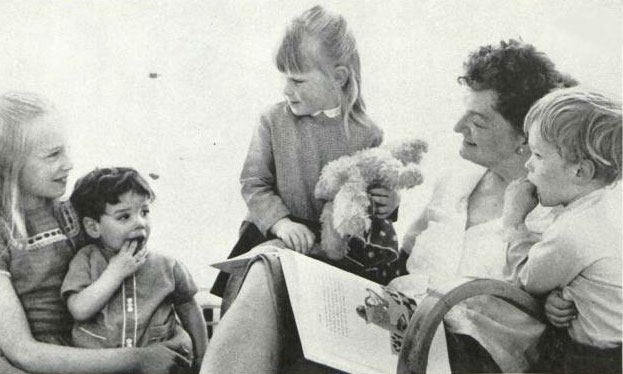
Entrepreneur and theme park magician Walt Disney was accustomed to difficulty; he’d overcome innumerable hurdles as he created his movies and his theme parks. But, as the upcoming movie Saving Mr. Banks (starring Tom Hanks and Emma Thompson) shows, he was unprepared for the challenge of working with P.L. Travers.
Disney should have known from the start that adapting Mary Poppins to the screen would be an uphill battle. He had already spent 20 years trying to buy the movie rights from Travers, the author of the popular children’s book. Travers resisted all offers until, on the brink of bankruptcy, she relented with great reluctance. She flew to Hollywood to consult with Disney, and that’s when the trouble began in earnest.
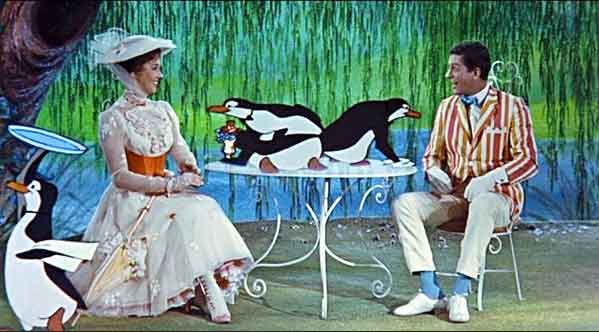
Travers didn’t like the music. She heartily disliked the animated penguins. She raised countless objections to the script, and even protested the use of the color red in the film. Nor did she approve of the casting; she suggested the male lead should not go to Dick Van Dyke, but to a British actor like Laurence Olivier or Richard Burton. Her objections continued all through the production. Disney didn’t even invite her to the premier for fear she would make a scene.
Travers’ biggest objection to the film was the way Disney portrayed Mary Poppins. In the movie, the magical nanny played by Julie Andrews is a sweet, gentle, and cheerful lady. In contrast, the character in Travers books was definitely not cheerful. Instead, as Travers’ biographer puts it, Mary Poppins was “tart and sharp, rude, plain and vain.”
Disney couldn’t have known that Travers was so protective of the character because she identified with her: “Mary Poppins is the story of my life,” she later told an interviewer. And Disney couldn’t have known the sad beginnings of Travers’ writing career; how Mary Poppins was born in the imagination of a destitute young girl living in a small town in Australia.
The year was 1913, and Pamela Travers’ alcoholic father, who had lost his job as a bank manager, had just died of influenza. Stricken by grief and sudden poverty, Travers’ mother left her children and attempted to drown herself.
Just seven years old, Travers found herself alone with her two younger sisters, listening to the monsoon rain drumming on the roof. Out of nowhere, the idea for a story came to her. She brought her sisters to the fire and there, as they huddled under a blanket, she spun them a story of a flying white horse whose hooves they could hear stamping on the tin roof above.
She also came up with stories about a magical nanny, giving her a name that she had found written into an old book: “M. Poppins.”
As a young woman, Travers began writing down her Poppins stories, and published her first book in 1934. Over the years, she added eight more titles to the series.
She also wrote adult non-fiction, including an article about her children’s books that appeared in the Post in 1964. In “Where Did She Come From? Why Did She Go?” she made no reference to her bleak girlhood, or the sad genesis of Mary Poppins. There is no hint of the woman who later told The New York Times, “Sorrow lies like a heartbeat behind everything I have written.” Nor is there any suggestion of the bitterness she was feeling about Disney’s version of her book.
In the Post article, Travers responded to the many fans who wondered how she came up with the idea for Mary Poppins. Travers never knew how to answer that question; she felt that her character had simply arrived, fully formed. It was easier, she wrote, to think that Mary Poppins had thought her up. “All I know is that without a word of explanation, a character…came in search of an author,” she added. “And the one she picked on, for whatever incomprehensible reason, was glad, surprised and grateful.”
But she acknowledged that the stories came from her life. For any writer, she believed, the material was always the author, “or the child hidden within her, perhaps, or the memories of her own youth, which are never far away.”
Consequently, her books always contained bits of autobiography. “Every story has something out of my own experience. Several record my dreary childhood penance of ‘going for a walk.’ But against that is set the blissful, forgiving moment at bedtime when I suddenly felt so very good.” In her books, she worked to recapture the sense of dread and delight that epitomized childhood for her.
Yet she insisted that she never wrote juvenile literature. “For me there is no such thing as a book for children. If it is true, it is true for everyone.” A writer, she believed, could never aim at a particular audience without becoming lost. Quoting Beatrix Potter, the author of Peter Rabbit, she stated, “I write to please myself. And so does everyone else.”
Travers felt that children wanted more than simple plots and happy endings—they were the ingredients put into children’s books to please adults. Children wanted stories that fit their experiences. Life, to them, was often confusing and frustrating, and they couldn’t be satisfied with tidy little tales. “What child enjoys being written down to?” she asked.
It’s interesting to speculate on what sort of movie Mary Poppins would be if Pamela Travers had been given creative control. Maybe she might have even secured Elizabeth Taylor and Richard Burton for the two leading roles. It would have been an unusual movie, but it wouldn’t have been as entertaining as the film Disney ultimately produced, which had removed so much of Travers’ original character.
Hospice Girl Friday | ‘A Case for Comfort Animals’
Devra Lee Fishman’s dear friend and college roommate, Leslie, died from breast cancer one month shy of her 46th birthday after a four-year battle with the disease. Being with Leslie and her family at the end of her life inspired Devra to help care for others who are terminally ill. Each week, she documents her experiences volunteering at her local hospice in her blog, Hospice Girl Friday.
My brother and sister-in-law are raising Hazel, a six-month old black Lab, for the Guide Dog Foundation. Part of her early training involves socializing her in as many public settings as possible, so I asked if I could take Hazel to the hospice with me. My brother was confident Hazel would easily transition from carefree puppy to serious ‘working’ dog when she had on her yellow training vest, but I wondered how she would respond to the smells, sounds, and sights of the hospice and how the people there would respond to her.
As soon as Hazel and I walked into the hospice I introduced her to the staff. They greeted Hazel with wide smiles and high, breathy voices like they were talking to an adorable toddler.
“How are the patients today?” I asked.
“The woman in room two is a pickle,” the doctor replied, rubbing Hazel’s neck.
“A pickle?”
The doctor looked up. “You know, sometimes sweet and sometimes sour?”
“And today?”
“Sour,” the doctor replied. “She has been cranky with all of us. We were just talking about what else we might try.”
One of the nurses said, “She’s eating her breakfast now, but when she’s done do you think she could meet Hazel? Apparently she had three dogs when she was younger so Hazel might cheer her up.”
I did not plan to take Hazel to visit patients yet, but since the nurse asked I said, “Sure, just let me know when.”
I sat down at the desk and looked at the census. The ‘pickle’ was Dr. Ellen Kaye. 89 years old. Cardiovascular Disease.
Twenty minutes later the nurse approached me. “Dr. Kaye is ready and very excited,” she said.
I took hold of Hazel’s leash and told her we were going to meet Dr. Kaye. Hazel walked next to me with her head high and determined, like she knew this was important. I knocked on the door of room two and walked in. Dr. Kaye was sitting straight up in a chair next to the window with her hands flat on her lap and her eyes open wide, full of expectation. Her full-length bathrobe matched Hazel’s glossy black coat. Hazel started to tug me forward so I reminded her she was working. Hazel sat down next to Dr. Kaye and looked up at her as if to say ‘It’s okay, you can pet me now.’
Dr. Kaye leaned forward and stroked Hazel’s head.
“Your nurse said you had Weimaraners,” I said to get us started.
“Yes, three,” she said. “My dogs were the first to come over from Germany after WWII ended. They followed me everywhere. They do that, you know, Weimaraners.”
Dr. Kaye kept petting Hazel and looked up at me as she talked about her career, her many homes, and her travels. She told me her husband died of cancer almost 50 years ago and that she has lived alone ever since. She wished she could have a dog, but she knew she would not be able to take proper care of one. The whole time we talked Dr. Kaye’s eyes were bright and focused, her face animated. Occasionally she would pause to catch her breath, but other than that I could not detect any signs that her heart was failing. Nor did I see any of the sour pickle the doctor had described.
I have seen family members bring in patients’ dogs to visit, and I have always been aware of the many ways dogs can help calm and comfort people who are going through some sort of trauma. This was the first time I witnessed it first hand. I wondered how the nurse knew this might happen.
“I am sorry to interrupt,” I heard the doctor said from the doorway, “but I need to do a quick exam.” I glanced at the clock. Dr. Kaye and I had been talking for over forty-five minutes.
“Okay,” I said. Then I turned to Dr. Kaye. “Hazel and I will be here until noon. Ring your call bell if you’d like us to come back for another visit.”
“Thank you, dear,” she said. Then she smiled and leaned down to kiss the top of Hazel’s head.
The doctor found me as soon as she left Dr. Kaye’s room. “Devra, what you and Hazel did for Mrs. Kaye worked better than everything else we’ve tried. I had no idea how she would react, but her physical and mental demeanor brightened, which made it easier for us to take care of her. Thank you so much.” Then she looked down at Hazel and said, “Thank you, too, Hazel.”
Hazel locked eyes with the doctor, sat up a little straighter and wagged her tail, already looking like the professional service dog she is destined to become.
Every week I marvel at the way the hospice staff take care of their patients. I see them worry when traditional methods and medications are not effective, so I was happy to be a part of this week’s success story, especially since I originally thought going to the hospice would simply be good training for Hazel. The nurses seemed to think that Hazel could help some of the more difficult patients, and their instincts turned out to be right. Once again I drove home grateful for the privilege to watch them do anything and everything they could to make our hospice patients comfortable.
Previous post: Putting The Patient First Next post: The Things I Never Knew
2014 Great American Fiction Contest Winners
We’re pleased to announce Linda Davis as the winner of our 2014 Great American Fiction Contest! Read her prize-winning story, “The War at Home,” and stories from our five runners-up below.
To purchase the collection Best Short Stories from The Saturday Evening Post Great American Fiction Contest: 2014, which includes 13 additional stories not available online, click here.
Click here to enter the 2015 Great American Fiction Contest
Winner:

‘The War at Home’
By Linda Davis
A single mom struggles with school politics and a rebellious preteen in this complex portrait of a family at a crossroads.
Bio: Before focusing on her own stories, Davis worked at Harper’s Magazine and as a story editor for Wildwood Enterprises—Robert Redford’s production company. Though a finalist for many awards, Davis says, “This is the first time I’ve won.” Her work has been published in The Literary Review, Gemini Magazine, and Tattoo Highway. Her essay, “This House,” was published in the anthology, Morning Coffee and Other Stories: Mothering Children with Special Needs.
Runners-Up:

‘This Elegant Ruin’
By Erin Bartels
Garrison Knight commands his orchestra with power and grace until a musician’s strike and his attraction to a young violinist combine to threaten his orderly world.
Bio: Bartels—“a copywriter by day, a novelist at night”—worked for a book publisher for 12 years. In January 2013, she embarked on a personal goal of writing one short story each month: “This Elegant Ruin” was her March story. Bartels is currently working on a novel, as well as a non-fiction e-book that she will release in spring 2014.

‘Auld Lang Syne’
By Stephen G. Eoannou
The discovery of a windfall in the backseat of a cab on Christmas Eve triggers an ethical conundrum. But the driver’s chance encounter with three strangers leads to an unexpected decision.
Bio: A runner-up in our 2013 Great American Fiction Contest for his short story “The Wolf Boy of Forest Lawn,” Eoannou is also a two-time Pushcart Award nominee and a finalist for the Santa Fe Writers Project Literary Award. His fiction has appeared in Rosebud and The MacGuffin among other literary journals. His first short story collection, Muscle Cars, will be published in spring 2015.
‘The Answer Box’
By Morgan Hunt
A young mother, bolstered by unwavering love for her children, struggles with the isolation and stigma of divorce during the 1960s.
Bio: Hunt is the author of the Tess Camillo mystery series, which won a Best Books Award in 2008 from U.S. Book News and a National Indie Excellence Award. She has published poetry and non-fiction in various outlets including Writer’s Digest.
‘The Talent Scout’
By Christine Venzon
In promoting a talented young street musician from New Orleans, a gallery curator rediscovers her own artistic ambitions.
Bio: A veteran freelance writer, Venzon spent 10 years writing high school family and consumer science books for Glencoe/McGraw-Hill. Her fiction and non-fiction has been published in national magazines, including St. Anthony Messenger and The Christian Science Monitor. Venzon won the 2010 Highlights for Children fiction contest and was nominated for the Pushcart Prize in 2011.

‘Twelve Miles, 48 Stops’
By Robert Steven Williams
For Davida and Granny Jack, life in the projects is a daily challenge. With her father’s pending release from prison, Davida plans an escape from the war-torn neighborhood and family ties that both alienate and sustain.
Bio: In 2013, Williams released his first novel, My Year as a Clown, which won the Silver Medal for popular fiction in the 2013 Independent Publisher Book Awards. A finalist in the Raymond Carver Short Story Contest, Williams is now working on a second novel, as well as a documentary about F. Scott Fitzgerald.
Click here to see the winners from the 2013 Great American Fiction Contest.
2013 Great American Fiction Contest Winner and Runners-Up
We’re pleased to announce Lucy Jane Bledsoe as the winner of our 2013 Great American Fiction Contest! Read her prize-winning story, “Wolf,” and stories from our six runners-up below.
To purchase the collection Best Short Stories from The Saturday Evening Post Great American Fiction Contest: 2013, which includes the winning short story, 5 stories from our runners-up, and 6 additional stories not available online, visit shopthepost.com.
Click here to enter the 2015 Great American Fiction Contest
Winner:

‘Wolf’
By Lucy Jane Bledsoe
As Jim tries to identify with the Yellowstone wolf trackers, both he and his wife have an awakening that changes their lives forever.
Bio: Lucy Jane Bledsoe has authored four novels and six children’s books, and her work has appeared in literary magazines. Awards include the California Arts & Letters Fiction Prize, the 2009 Sherwood Anderson Prize for Fiction, and a California Arts Council Fellowship.
Runners-Up:

‘The Decline and Fall’
By P.J. Devlin
At 88, Gloria is in decline and needs some help managing her daily chores. Enter Helen, her Meals-on-Wheels driver, who quickly makes herself indispensable but has mischief on her mind.
Bio: P.J. Devlin lives in Fairfax, Virginia. Her fiction has appeared in literary magazines.
‘The Wolf Boy of Forest Lawn’
By Stephen G. Eoannou
After a young boy goes missing, his teacher and classmates learn a lesson about myths, education, and the danger of secret agendas.
Bio: Stephen G. Eoannou lives in Buffalo, New York. His work has appeared in literary magazines.

‘Surface Tension’
By Andrew Hamilton
Isolated by the domestication of his family household, a desperate husband initiates a series of self-destructive acts in an attempt to rediscover the relationships he once knew with his wife and daughter.
Bio: Andrew Hamilton lives in Lookout Mtn., Tennessee. His poetry has appeared in literary magazines.

‘The Battle of the Pewhasset Pie Palace’
By Cynthia McGean
All Big Rosco has going for him is his love for Loretta, his big ears, and a windmill-tilting spirit worthy of Don Quixote. Is that enough to save the Pewhasset Pie Palace from the clutches of the villainous Taco Charlie and the destructive power of The World Famous Twelve Flags Amusement Park and Arcade Extravaganza?
Bio: Cynthia J. McGean is a teacher and award-winning writer (Writer’s Digest, Ogle, and more) who is currently working on two novels.

‘A Corner Room at the Y’
By Marvin Pletzke
Milvey is a loner. Each time he enters the world to compete, he does something to derail himself. Believing in oneself is not always an option. Seems that some people just aren’t meant to be where they find themselves.
Bio: Marvin Pletzke is an established playwright living in Malden on Hudson, New York. This is his first short story published by a national magazine.

‘The Conch Shell’
By Caroline Sposto
Told through the voice of a resilient 5-year-old, a middle-class white family in the segregated South strives for stability despite the mother’s confinement in an iron lung.
Bio: Caroline Sposto lives in Memphis, Tennessee. Her work has appeared in literary magazines and anthologies.
Click here to see the winners from the 2014 Great American Fiction Contest.
Gingersnap Cookies with Lemon Icing
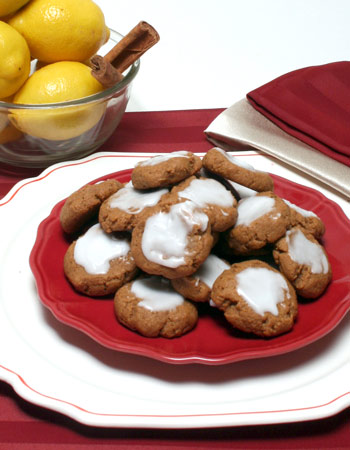
Shortening is the ultimate determining factor in gingersnap texture. A stick of nondairy shortening gives them serious snap. The one I use contains no trans-fats or additives; it is a blend of oils. For me, a cookie’s crunch matters as much as its flavor. But if chewy cookies are your thing, read on.
Use a nondairy soft spread for a softer result. Cookies come out of the oven crispish, but turn chewy after they sit overnight. If you want softer snaps, know that the batter will be too soft to shape into balls. It needs to be dropped from a spoon onto your baking sheet.
Both shortenings make cookies with the same warm, zingy flavor, so bake them to please your preference. And either way, the cookies keep for a week and are great for sharing at holiday cookie swaps. (To make them look especially festive, sprinkle a pinch of red, green, or multicolor sugar onto the wet frosting.)
Gingersnap with Lemon Icing
(Makes 24 cookies)
Ingredients
- ¾ cup unbleached all-purpose flour
- ½ cup whole-wheat pastry flour
- ½ teaspoon baking soda
- 1 ¼ teaspoons ground ginger
- ½ teaspoon ground cinnamon
- ⅛ teaspoon freshly ground black pepper
- ¼ teaspoon salt
- ⅓ cup dairy-free buttery shortening sticks
- ½ cup sugar, plus 2 tablespoons
- 2 tablespoons unsulphured molasses
- 1 large egg white
- ⅓ cup confectioners’ sugar
- 2 teaspoons fresh lemon juice
Directions
- Preheat oven to 350°F.
- In mixing bowl, whisk together both flours, baking soda, ginger, cinnamon, pepper, and salt.
- In another bowl, use electric mixer on medium-high speed to beat shortening sticks with ½ cup sugar for 2 minutes. Add molasses and egg white and beat for 3 minutes. Set mixer on low speed and mix in dry ingredients just to combine–leaving white streaks is better than overmixing. Batter will form soft ball.
- Place remaining 2 tablespoons sugar in wide, shallow bowl. Pinch off about 1 tablespoon batter and roll it between your palms, forming 1″ ball. Place ball in bowl with sugar and roll to coat it, and then place on light-colored, ungreased baking sheet. Discard leftover sugar. Repeat, spacing balls 2″ apart. Using back of glass, press to flatten each ball into 1 ⅓” disk.
- Bake cookies for 10 minutes. For glaze: In small bowl, combine confectioners’ sugar with lemon juice, mixing until sugar is completely dissolved.
- When cookies are done, immediately transfer with spatula to wire cooling racks. Using tip of knife, spread ¼ teaspoon glaze on top of each warm cookie. Cool completely. Store in cookie tin for up to 1 week.
Nutrition Facts
Per Serving (1 cookie)
Calories: 75
Total fat: 3 g
Saturated fat: 1 g
Carbohydrate: 12 g
Fiber: <1 g
Protein: 1 g
Sodium: 80 mg
Minibooks

S
troll into a bookstore looking for a hardcover—something meaty to keep you occupied for a few weeks—and chances are that almost immediately you’ll be assaulted by carefully positioned displays of Hobbit dolls, Duck Dynasty flashlights, and Conehead Zombie vinyl figures. (Is there nowhere in America to escape our zany culture?) A nanosecond later, if things go according to plan, your attention will be commandeered by tables stacked high with scores of adorably teensy books. So…amusing.
Bam! The store has got you for an additional purchase.
Itty-bitty books are big. Retailers love them because they sell, well, like snacks. Shoppers devour them because they are clever, inexpensive (around nine bucks), and make great gifts. Which is why you can spot them practically everywhere, in venues as improbable as furniture showrooms and art galleries.
Likely the first of these bantam-size books to throw a heavyweight punch was The Worst-Case Scenario Survival Handbook, published in 1999. Since then, scores of companies have delivered an endless li’l library—everything from The Artistic Cat to Useless Information to 50 Things You’re Not Supposed to Know (as in Carl Sagan was an avid pot-smoker). Most of these are under four inches square. Many are barely half that size, veritable teacup pups compared to the Great Danes of traditional literature.
“It’s so hard to sell real books that bookstores are trying to find things that will be impulse buys,” says Bronwen Hruska, publisher of Soho Press, which is in the business of delivering full-size fiction. “The problem with these little books is that you can sometimes read everything in them before you reach the cash register.” Well, sure, there is that.
Still, there’s no getting round the fact that pipsqueak guides, lists, jokes, and devotionals play a useful role in our lives. The world is basically inscrutable today, and so anything that either distills or clarifies its essence seems priceless. Small wonder that a hit in this category can mean sales of more than 500,000 copies, which is a remarkable number in the publishing business.
And despite their often whimsical nature, some of the titles are weighty, at least by content. Bo Press, whose works are truly miniature (and thus more pricey), has published serious short fiction by an author in Tasmania. One might ask, what about the writers, who labor over works they know will never be reviewed? Melissa Heckscher, a California freelancer who specializes in minibooks (the one that got her started was Be Safe! Simple Strategies for Death-Free Living), points to one redeeming factor: “This could be a primary income if you wrote two books a year—and if you don’t need to own a house on the beach.”
Movie Review: The Hobbit: The Desolation of Smaug
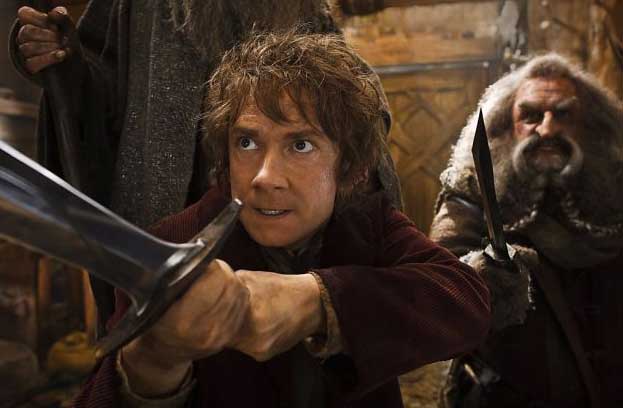
After long wait, The Hobbit: The Desolation of Smaug, the second part of Peter Jackson’s trilogy is finally in theaters. And, for the most part, the mega-budget sequel lived up to the hype.
First, the positives: It would be very easy for a director of less talent to fail at making his or her actors achieve serious performances when adapting Tolkien. Peter Jackson, on the other hand, seemed to coax stellar performances all around from his large ensemble of actors. Particularly noteworthy was Sir Ian McKellen, who portrayed Gandalf with gravitas and authority while still making some of his shortcomings believable and relatable to an audience who grew accustomed to his character’s power in the first threeThe Lord of the Rings films.
Orlando Bloom’s return to Middle Earth was also done in an effective and enjoyable way. Since the film serves as a prequel to previous The Lord of the Rings movies, the veteran actor needed–and was able to–portray a much less mature version of his character, Legolas. Martin Freeman was able to expertly walk the line in his role as Bilbo, a complicated character always in flux, striving to do the right thing yet slowly succumbing to the corrupt power of the ring.
While the performances were great, there are some issues I take umbrage with. The first three Rings films captured audiences with phenomenal prosthetics and practical special effects, bringing to life the vast armies of Middle Earth, etc, so it was disappointing to see a reliance on computer generated imagery for the orcs in this film. CGI can be effectively used in many ways, and Peter Jackson is a pioneer in this arena, but the rendering of his orcs in this film pales in comparison to the quality of the CGI used for the dragon Smaug (voiced by Benedict Cumberbatch). The overly smooth, computerized skin takes the audience out of the movie, and makes it hard to get back into the mythical world.
Additionally, some of the action scenes seemed to have been directed with a future franchise of theme-park rides in mind, more reminiscent of the infamous fourth Indiana Jones movie than the flawlessly crafted scenes from Lord of the Rings: The Two Towers.
All in all, the film is definitely worth seeing. As always, Peter Jackson has made the film accessible for those who have not read the books in deference to the films, while still leaving plenty of Easter eggs for fans of Tolkien’s original writings. At nearly 3 hours, the film can feel slow at times, but the action sequences and continuation of the story pull viewers through to the end. I would give it 4 out of 5 stars.
3 Questions for Robert Redford

The actor talks with West Coast editor Jeanne Wolf on what compels some of us to hang tough in the face of adversity while others simply give up.
Robert Redford seems only to improve with age. The 77-year-old Hollywood superstar’s classically handsome profile has taken on a rugged and weathered look that remains as sexy as his smile and easy laugh, and his screen presence is no less alluring than it was in Butch Cassidy and the Sundance Kid. In his recently opened film, All Is Lost, Redford plays a man stuck alone in a storm on a small sailboat with no help in sight. The storm sequences were physically daunting, but, though stunt men were standing by, Redford insisted on putting himself in the midst of the storm-tossed action. The hard work didn’t end when the camera stopped rolling: director J.C. Chandor recalled watching from his hotel balcony as the famed actor/director methodically swam laps in the pool after a particularly punishing day of work.
Jeanne Wolf: Your role in All Is Lost is wall-to-wall intensity. That’s a lot to ask of yourself. Was that part of the attraction for you?
Robert Redford: Yes. It took a lot of effort both psychologically and physically, and I like that. I like the challenge. You knew they would work to make that storm as real as can be. And that meant I’d go through it and see what happens. There was also a great sense of aloneness on the set even with a film crew. I think the audience will feel and relate to that aloneness. The pureness of it is a powerful element. I did worry because movies now are so full of action and special effects that we were almost daring the audience to come along. But this is a time in America when a lot of people feel lost.
JW: How the audience reacts is central to your view of the success of a film, isn’t it?
RR: Yes. That’s why I like a film that ends with a question, or really, when a question goes on throughout the story. The question for the audience is always “What would I do if I was faced with those circumstances?” All Is Lost asks the audience to think, Could I last? Could I stick with it? Some people give up when life gets unbearably difficult. Some people just say, “That’s it.” And they die; they stop because there’s no point in going on. I like to think I’d never give up. I’d hold on as long as I could. I don’t know where that comes from. I don’t know if it comes from birth, what you bring to the world on your own. I just know that for me there have been a lot of times in my life where it seemed a good idea to stop or to quit. Whether it was ego–I don’t know what it was–but I said, “No. I’m going to keep moving. I’m going to try to make this thing happen.”
JW: Your character in the course of his battle for survival totes up his regrets. In a sense, I think it’s harder sometimes to total up what you don’t regret: What you’re happy for. What you’re grateful for.
RR: I guess it depends on your heritage. If you come from a dark family like I do, you don’t think that way. You just think about regret. It’s funny. I don’t know that I’ve ever stopped to count my blessings. I guess I’m afraid that if I start counting my blessings, they’ll disappear. I’m very proud of what I’ve done. But once you finish your work, it leaves you. You give it over and it belongs to the audience, one way or another. People keep asking me about awards, and I just don’t think that way. That doesn’t come to my mind. What comes to my mind is not standing on the top. I like the climb up. To me, that’s the exciting part. I’d just as soon be always climbing.