“Spotlight” by Michael Foster
It was not my idea of the way to do this picture. It was an upstairs-office idea, and I tried to block it. For the girl’s sake, though I couldn’t let her know it.
Al’s office is one of the most dream like places in America, and it’s better if you’ve had a good solid breakfast. I had one that morning, at a table beside the unearthly blue swimming pool on the hotel grounds. I sat there looking at the fantastically tall palm trees in California morning light, and thinking about snowy afternoons along Broadway.
When I drove the sun-drenched miles to the studio and went up to Al’s office, we went straight into argument. Al was talking picture values, and so was I. But I was thinking silently of Andrea.
Al’s idea was for me to take Andrea to the little forgotten town in the middle South where her family had lived for a hundred years. It would be a typical Hollywood expedition, with the cast and a technical crew and equipment. To make location shots — some of the outdoor scenes of the picture. Using people of the town as extras, for background. Ordinarily, I’d have shrugged, Sure, why not? because this picture is a very American sort of story, and is set, mostly, in just such a locale. But I had an inkling of what we might run into in that drowsy little hill town.
So I argued that we could do the whole thing on the sound stages here, including as much of a town as the scenes needed, for probably less money and a lot less trouble. Also, that I could direct it better that way.
“But look, Jake,” Al said. “Hometown girl comes home to make her first big starring picture. Can’t you see it?” Al thought it was a smash idea. “The publicity department is all set to roll,” he said.
“But she wasn’t born there. She was born in Billings, Montana,” I said.
He waved it aside. “That was just an accident of show business. The old family town is our dish. Her folks came from there, didn’t they?”
“Her mother came from there,” I said gently. “Andrea’s never been near the place. Andrea’s just Broadway.”
“Some of her folks still live down there, don’t they?”
“They’re all dead. Maybe a few scattered cousins left. I don’t know.”
“Hometown. We got a publicity department. All the better she’s never been back there. It makes this the time she comes home — home!”
Al’s office — dreamlike. You can get a little dizzy sometimes.
And for once, I thought grimly, with about eight words I could have made everything still dizzier. With a touch of nightmare. I could have told AL why Andrea shouldn’t go to that town. But that would have been to expose a background — of searing scandal, of tragedy — which Andrea herself had never heard about nor even dreamed of. And I figured it would damage the girl just at the start of this first big picture of her own. How much it would damage her, I couldn’t even estimate. The story that I knew was enough to scare any producer in Hollywood. It put me in a bad jam, and I didn’t see any solution. Except the sound stages.
Fighting to protect Andrea any way I could — from the past, and for her future — I practically snarled, “Let’s quit being silly, Al. I don’t want to see a good picture I direct all corned up with a lot of publicity-department half-dishonesties!”
“What’s the matter with you all of a sudden? Jake, I’m telling you the way it’s going to be. That’s the word.”
“But, Al, the fact remains, she’s never even seen the place.”
“She comes home as a star, to the little town her mother ran away from to go on the stage. Think of that! Just think of that, Jake!”
“But, Al ——”
“We’re going to make this picture an American classic,” Al said coldly. “It’s going to be authentic in every detail.”
When a producer says that, you look reverent and shut up.
I got up and stood looking out a window, sick with worry for Andrea. But since I was afraid to be honest, I had to take this as the lesser gamble of two evils. I had to rationalize a bad situation by hoping against hope that I might be wrong about what we would find in that town. In the studio street outside Sound Stage 8 a bunch of people were standing, girls in hoop skirts and young men in powder-blue swallowtail coats and white beaver hats, sweating in the sun. Willie was finishing a big musical. When Al got through talking to me about my expedition, I went downstairs, and Andrea was waiting for me in my office.
My office is a practical place. Andrea looked very decorative in a shadowy blue linen dress with a wide white formal collar. The tailored hang of the skirt gravely suggested that she had lovely long legs of youth and swiftness, and also a great deal of money now. She stood in the middle of the room with her fists jammed into the deep slash pockets, looking with delicate brows of laughter at my stormy face. We had been waifs of show business together, back yonder in the poor days when we were kids, and we had not forgotten. She was ready to go, so we went on out and got into my car and headed toward the beach for lunch. On the way, I told her that we had to make that lousy junketing location trip.
“But, Jake, dear,” she said, “I think it’s kind of wonderful. In an odd sort of way, I’ve got a deep thrill about it. I know you leer, but it means something — well, something basic and very quiet to me. I’ve sometimes thought of going there, just to go, alone.”
I had a bad, cold feeling at the pit of my stomach. “Lot of trouble and confusion,” I muttered. “You told Al too darn much.”
“I told him only what mother always told me when I was little,” she said. “I — wish she were still here, to go with us.”
I didn’t say anything. I had known her mother on Broadway.
Another mile, and Andrea was looking at me wonderingly.
“Andrea,” I said suddenly, “before we go, will you marry me?”
It was a block before Andrea said, “How curious! Why before we go?”
“No why,” I said, “except that I’m asking you to marry me. I —–”
“This doesn’t sound quite right for a proposal, somehow,” Andrea said. “Jake, what is it?”
This was my day of futility. My producer, and now my star.
“I don’t mean to be awkward,” I said. ‘Honey, it’s just that I —–”
She motioned me to silence. I guess because she sensed that all of a sudden I was motivated by something she did not understand.
“Jake, let’s keep on believing each other, at least,” she said. “So the answer is no.”
“Andrea.”
“It would be no. anyway, you funny thing. You smoothly nonmarrying fellow. I’ve heard too much about you, these last few years. So we won’t talk about it anymore. I’ve always been the kid sister. Remember?”
She put a hand quietly on mine on the steering wheel. After quite a while, she took it away again. In the open convertible, her hair, filled with light, sometimes blew about her face, and once it blew almost straight out behind, like wings to her profile.
But Andrea was dressed with great dignity the day we all rode in a day coach back into the hills toward that town. A gray pin-striped suit of New York distinction; and her hair was brushed to softly burnished smoothness, like cool Old-English gold. Day coach. We could have hired cars and trucks in the state capital. But Andrea wanted to come home the way her mother had left, years ago. It was more than just an actress’s superstition; she was strangely wistful about it, as if it were a sort of gentle pilgrimage. On the back trail of her mother’s life — a girl, now lost in time, named Meg. Andrea said she did not want us to arrive like a motorized African safari or like a rout of gypsies. And I said, “O.K., O.K.., my dear.” I was afraid it wouldn’t make much difference how we arrived.
Anyway, here we were. Actors and actresses and resigned-eyed technical men, watching rusty-streaked limestone bluffs and patches of autumn woods and a lazy little river go by in whipping tatters of coal smoke.
With Andrea sitting beside me on stiff and cindery red plush, I could sense her growing tension. Once I saw her fingers ever so slightly shaky with her compact, as we got deeper into the hills and the town came nearer. I knew she hoped to find there some real echo of her mother. And I — staring with hard eyes at the dismal scenery, I was sure she would.
When we got there we saw people waiting on the platform of the depot. Andrea hung back for a minute, suddenly timid, fumbling with her violet gloves, looking at me with wide and silent eyes. From the platform I turned to help her down, but she didn’t see my upreached hand. She was gazing out at the town and the broken blue hills beyond.
But the people of the town were all staring at Andrea now. Not quite the way they would stare at any other top actress. The younger ones with a strange nudging and whispering curiosity, the old people with eyes as splintery as the depot platform. My worst fears were confirmed.
Our big, hooded equipment was coming out of the baggage car. From forty years ago, a museum-piece hotel hack was backed up to the platform in the deep dust. It was greeny-black, with gilt lettering: Planters Hotel. We all filed decorously up the worn wooden back step and into the hack, like filing into a police-patrol wagon, and sat facing one another in two long rows. On the way to the hotel I thought about using this hack in the picture, but I couldn’t. Al would say it was just something I had dragged in for atmosphere. Al would say it wasn’t authentic.
At the hotel desk, Andrea bent her head to sign in the old register. The clerk stared at her with the same open curiosity, not quite veiled insolence. Andrea glanced up and encountered that raw crudeness, and I have never seen a more bewildered human face than hers. And then the clerk noticed me and I looked at his flat, bilious eyes for an appreciable time. Silently.
In my room 1 unstrapped my bag and got out a bottle of Scotch. With the glass from the bathroom I sat on the edge of the brass bedstead and had a stiff drink, looking at a dusty window.
I had known Andrea’s mother when I was a very young rehearsal pianist in a second-rate booking office in an old building just off Broadway. Meg was still a pretty woman, but tired and beginning to fade a little, and not an awfully good actress. I knew vaguely that she had a young daughter in school. My loose and tiny old piano was in a bare room where the people of the road could work up their acts if they had no other place, and I remember the afternoon Meg laughed. I remember the gray January light, and the snow slush on the sidewalks outside. Meg was poor and frightened, and she suddenly stopped in mid-phrase and buried her face in her hands in laughter. The wrong kind of laughter.
I had some black coffee sent up from the joint below, went into Sid Salmen’s office because I knew he was gone, got his private bottle out of his bottom desk drawer and laced a cup good and strong. And with the cup in her hand and a little color coming back into her face, Meg talked to me. Maybe because I was so young, only a nameless kid of Broadway, and knew for myself how strange and how tough people and the breaks could be. Meg told me near enough to everything that day: and a lot of it was about her girlhood in that remote town among the hills, beside a lazy river.
“I can never go back,” she said. “I wouldn’t let my little Andrea know for anything. I would die first. And I think I would kill anyone who tried to tell her. Jake, promise me.”
“Sure,” I said. “Sure. I promise.”
The well-laced coffee had warmed her, and after a while she gave me a quick, startled glance, as if she knew she had said too much, and 1 turned back to the keyboard and we went on with her routine. A rehearsal pianist hears them come and hears them go. But other evenings that winter, Meg asked me to supper in their furnished room; the first time, I think, to pay me back for Sid Salmen’s whisky, but after that because she was a motherly woman and I had no home and no folks of my own. And in that shabby room, over the cluttered kind of supper table that people of the road know, I have seen Andrea give her mother such a clear and shining look of belief as maybe many a better woman never sees on the face of a child.
When Sid Salmen booked her out for four months on the road, playing a comedy and singing act in highway spots through the West, Meg had to leave Andrea to board with a family in Brooklyn. She asked me if I would keep an occasional eye on young Andrea — I was only nineteen myself, but I guess she had no one else to ask — so sometimes on Saturday afternoons I would take the subway over to Brooklyn with a sack of caramels in my pocket.
Andrea, at fourteen, had a way I shall never forget of coming down the high stone steps of the moldy brick-front where she boarded. She would poise at the top, and then come down in a series of swoops, with clatters of her scuffed old school shoes. A creature of springtime and of light. The final long swoop would land her on the sidewalk, and after that we would usually walk to a little neighborhood park and sit on a bench.
Out on the road somewhere, the rakish slant of Meg’s hat was meeting the weather of places like Spokane and North Platte and Broken Bow. She lived years enough to see Andrea on Broadway.
Sitting there in that crummy hotel room with a tepid Scotch and water, I watched the blue of the hills deepen beyond Meg’s town, and the river darken in twilight. Until the grown-up Andrea came along the hall.
The next day we started to work. We were cost-figured at twenty-eight thousand a day, and it was only the second time I’d ever had Andrea in a picture of mine. To start off with, I had picked a short sequence on the main street, a scene between Andrea and Jim Latigan, our leading man. We got a block of the street roped off, leaving a small crowd at each end of the block gawping at our setup of equipment. My assistant directors had hired some of the people of the town as extras, for passers-by; and also a slovenly knot of sidewalk loafers. There were about a dozen of these, a bunch of the town’s no-goods, just what we wanted. Ralph, one of the assistant directors, told them all they had to do was to act natural, but not spit.
We started a silent run-through for timing. But they knew that none of the equipment was working yet, and as Andrea came on along the sidewalk to meet Jim Latigan, an old poolroom lout answered something to a heavy, boar-shouldered yahoo we had hired off a farm truck. Unfortunately, the crowd noises had died away, so his rasping voice carried. They had all probably passed around a raw bottle in the alley back of the poolroom. The old guy had a dirty-looking stubble of gray on his lean jaws.
He pulled the back of his hand across his mouth and said, “Yeah, it was her mother. Some would say she was a fast number around here. And I served my slow twelve years in the pen because of it. She left town by night, but I’d already left in handcuffs. And a leg iron.”
He fumbled with a limp little bag of tobacco and a brown cigarette paper, but the tobacco shakingly spilled and he threw the paper fluttering to the sidewalk and turned bitterly away. But not to go. You could see he needed the eight dollars we were going to pay him.
A thick snigger came from the heavy shouldered man, and he eyed Andrea knowingly up and down. As Andrea passed me she looked as if she had taken a blow across the face. I guess that in the comparative silence most of the others had heard it, too, and the old loser from the poolroom suddenly looked sickly defiant, realizing the same thing.
I called him over to me. “Get off the set,” I said as evenly as I could.
“This is not your set,” he snarled thinly. “This is our sidewalk.”
There was a stir and mumble among the other loafers, some of them eased off to one side, out of the way, but I was left facing a half dozen opaque stares from bitter, failure-stained eyes. And then Jim Latigan was crowding up close behind my shoulder. For once, it was pleasant to remember the times he had made the gossip columns for his famous free-swinging brawls in Hollywood and New York. My two young assistant directors came in fast and smoothly, though startled-white around the lips; and by the time they got there, the cameramen and the soundmen — all the technical crew — had left their setups and were drifting nearer. It was like what you’ve read about — the old circus and carnival days when the immemorial cry of “Hey, rube!” brought the toughs of the show running to do battle with the toughs of the town. But I — my hands were weak with pity. Because I knew.
For a minute it looked ugly, and then the regular and ordinary men of this town who were to act as passers-by were closing in around us, leaving the women at a distance, and I saw one woman timidly pat Andrea’s shoulder.
A citizen with a craggy, humorous, Early-American face — I found out later that he was the local hardware dealer — reached out a substantial hand to tap the old gray poolroom lounger.
“We’ll have no trouble here,” he said genially. “You, Rufe! You get away from here, like the man says!”
Rufe hesitated, and then pushed his way through the silent people and went off alone, a shambling, tragic exit.
“Thanks,” I said, and the hardwareman nodded. One glance at Andrea’s white face and I called, “All right, everybody in their places again! We’re going to be shooting this time!”
I figured we could always retake later on, if we had to. But Andrea played it fiercely, dry-eyed. And Jim Latigan very gentle. It was swell for the picture. We couldn’t have done quite that with any number of rehearsals. 1 took advantage and shifted one scene in the sequence so they played their close-up and dialogue in front of the bunch of no-good loafers — those still sullen, slack faces in the background of a tense, half-whispered scene. And that was good for the picture too.
Andrea came to my room that evening. She slipped in quietly and closed the door behind her and stood there looking at me. I was marking my copy of the script for the next day’s work, and with a slow effort I raised my eyes from the rickety hotel-room table and looked at Andrea. Still quietly, still holding my eyes with hers, she walked, and sat down on the edge of the bed.
And after a while, that low husky voice. Which sometimes with beautiful monotony and sometimes with passion can tear the roots out of a sound track. But now she said so little. And it tore the roots out of me.
“Jake! Jake, dear?”
“Hello, kid.”
“Jake, is it true?”
I shoved the script aside and got up. I fixed her a bathroom glass of Scotch and water, and she reached out one hand and took it, and I was remembering the little paper sacks of caramels. She took one swallow and then she handed the glass back to me, quite courteously, and turned sidewise and put her face down on my pillow. Her shoulders shook only ever so slightly, and she made no sound.
So I told her, because now I had to, as Meg had told me in a bare rehearsal room long ago; and it was the hardest thing I have ever had to do, in a life filled with things that haven’t come easy.
I had so little to go on, trying to tell Andrea about her mother. So frail a charity — and I had been so young when I knew her. But I had to make Andrea believe, as I think I truly believe, that Meg was not a loose woman, nor an easy one, but she was a born gambler of her life.
Two men of the town had had a fight over her, and one man had killed. An April night in the woods; after a rain, Meg had said carefully. When, I imagine, the dogwood blooms would be like large, uncertain stars among the boughs, and the shy, piercing smells of the wet and growing earth. But there could have been nothing dim or dreamlike about a stab of dirty orange flame from a gun in the hand of — I remembered the name, and I should have done the hiring of the extras myself today — in the hand of Rufe Willoughby. Young and black-browed then; staring down at the body of an older man lying on last autumn’s fallen leaves. Rufe, slowly opening his hand, letting the revolver fall to the ground. And blood is black by new moonlight, and the one wavering scream of a girl would echo forever in those woods for the people of that town.
Rufe got off with second degree, because of an element of self-defense. After the trial, Meg ran away from the town on the night train with a necktie-and-novelty-jewelry drummer. But she divorced him sometime during her first vaudeville years, and Andrea’s father was a song-and dance man from the English music halls, who abandoned Meg and the child in a Pittsburgh rooming house and vanished toward Australia. Maybe somewhere he is still playing, but I don’t think so, because with Andrea’s stardom we’d have heard. Thinking about those people, and looking down at Andrea’s shining head, I stopped trying to explain anything and harshly poured myself a quarter glass of Scotch.
Andrea didn’t take her face from the pillow, but she wiggled the little finger of one hand as if to say “Hello” and “Thank you,” and I touched it lightly with my own fingertip.
“You’ve known it all along?” she said. You’ve always known it?”
“Yes, Andrea.”
“Oh. And that’s — why you asked me to marry you—–” Her voice was muffled because she still didn’t move her face. “So hurriedly. Before Al made you bring me here. You thought maybe you could protect me better if you were my husband. Oh, Jake!” After a long time, she added tonelessly, “But thank you, anyway.”
The Scotch was sticky and unwarming in my throat; it was like trying to swallow the remembrance of smooth mistakes I’ve made in my life, as an easy bachelor in show business. Which, this bitter night, with one girl, had left me the most too-late guy who ever looked silently into the bottom of an empty glass.
And I should have so meager a charity for Meg, whose mistakes were not smooth? Who once, with her last year’s weathered hat sort of gallantly askew, had stared into the bottom of a coffee cup?
With a heavier finger, I only touched Andrea’s hand again, and said, “Look, kid; this picture is for the sound stages. Let’s clear out of this town now. This is all too damned much for you. Me included.”
“We’ll stay,” she said.
“I’ll phone Al,” I said, “and tell him just enough. Not too much. Hardly anything He’ll agree. Because I’ll lay it mostly on myself, and on that basis I can talk plenty tough. I’ll tell him it’s either my way or I’ll blow the job.”
Andrea turned her face on the pillow, and was watching my face with slitted gray eyes. She sat up.
“We stay,” she said.
So we did. They were iron days, under the soft blue of the autumn hills, in the sunlit dust of a hostile town. Every outdoor scene she played was played before he eyes of that town. And those close-lipped people saw a fine and suddenly maturing artist quietly at work. I had to be wearily remote and too curt, to keep our whole company from overplaying to her — our Hollywood people, to a man and to a woman, were backing Andrea. They knew, and they honored what they were seeing.
The old women and old men of the town — those who had been neighbors of Meg’s family — still had hard and disbelieving faces. They remembered Meg, and this was her daughter. Yet, as the days of work went on, I began to notice a difference in the younger ones and the substantial middle-aged. It was nothing ever said, nor any real gesture made; it was a new and quiet way that they were aware of Andrea, especially the way the housewives and young mothers of the town followed Andrea with their eyes, and sometimes the shadow of a smile unconsciously on the lips. Of all the town, it was these women who saw first, and proudly, the woman that Andrea is.
One afternoon Andrea came walking toward me where I was sitting with a cigarette, in the dust and the sun among the cameras and the sound equipment.
“Jake,” she said in a curious voice, and then she told me that a committee of four women had come to her on the set; and they had come to ask us all to the Harvest Home festival of the town and the countryside. In the basement of the Methodist Church, next Friday. All of us were invited, but they had come to Andrea. “They were almost shy,” she said in wonder. “They asked me if maybe I’d sing a little something. Just anything, they said. From one of the shows I’ve been in.”
“Are you going to?” I said, thinking of the unthawing faces of the old.
“Jake, I’m going to sing them our big song from this picture,” she said. “It will be the first time people will ever hear it, and I want it to be that way. Please, Jake. May I?”
“Well,” I said, “but how about orchestra? We’ve got no —–”
“That’s for a sound stage when we get back. For this, I want country music,” she said. “I want the music of these hills.”
“Well,” I said, and watching her face I was already beginning to think on a wild maybe-so gamble, “if you’re going to simplify, Andrea, always simplify utterly. One guitar. But a good one. I’ll have Larry Danos flown from Hollywood and —–”
She shook her head. “Country music,” she said.
I got up and we walked down the block and into the store and talked to our friend the hardware dealer. I told him what Andrea wanted. The hardwareman looked at us both for a long time. That strange silence lengthened.
“Get Rufe Willoughby,” he said slowly. “It’s all he’s good for. But he’s the best around here at the guitar, howbeit he’s a loafer and a bum. All the years since, he’s been no good. But I’ll ask him, if you should wish. It — well, it would help him in the eyes of the town.”
But now he was looking straight at Andrea alone.
I began, “No, I won’t have that — and if I know Rufe, he won’t do it.”
But Andrea said quietly, “Yes. He will. Send him. If he’s the best.”
So Rufe from the poolroom knocked on my door that evening, and he was carrying a very old guitar. He had on a blue serge suit, and new tan shoes which squeaked. Andrea turned from the window.
Rufe didn’t say anything, but he swallowed heavily, staring only at me, to avoid Andrea’s clear gaze. I motioned him in and closed the door, and Rufe became the third one of us who had sat unhappily on the edge of that brass bedstead with a Scotch and water in the hand.
“I’m not sure about any of this,” he mumbled, his eyes fixed glassily on his guitar where he had leaned it against the wall. “I’m no great shakes at the sight reading of music, Miss Andrea, but given time for the study of it — and if in some way I can be of—–”
“Never mind, Rufe. Listen,” Andrea said, and softly began singing.
With the third phrase of her low, beautifully casual voice, Rufe reached a big mitt for his guitar. Hesitantly, chording, losing it for a beat and then chording again, Rufe began to follow; and by the end the guitar was singing, too, as simply and as naturally, and Rufe’s eyes looking up at Andrea were not the eyes that a poolroom ever saw. But maybe his cell—–
“All right, Rufe; now here’s the music,” Andrea said, and handed him the score that Gregor Jones had written for her, for this picture.
“Nice tone your guitar has,” I said.
“It was my father’s,” Rufe said with a strange, grave dignity. “And a long way back of that, before him, in time.”
He put it down on the bed beside him, and said carefully, “Your mother — when I knew Meg, she had the gift of laughter. Sort of breaking in the throat. With you, it’s song. Even when you’re only speaking. It pleasures me to hear it. I —–”
With the bottle in my hand, I reached for his glass, but he shook his head. He got up with his guitar and walked out of the room with the pages of music under his arm.
The Harvest Home was something that people like us have never had, but when our bunch from Hollywood came in, I think a little timidly, the town as timidly made us welcome. The basement of the church had been decorated with the fruits and the grains of the earth and with the autumn leaves of the hills. It was a time of tall talk and mountain fiddles and long trestle tables waiting for the food of country kitchens. Backyard ham and buttermilk biscuits and brown mountain honey; and another good summer past.
I’d had a hunch all along, so, with the serious help of the minister, who was gently old in human generations and 1 think secretly amused at my stratagems, I had some sound equipment hidden, even from Andrea, in a back storage room of the church basement, with the back corridor blocked off by a screen of cornstalks and grapes and beech leaves.
And when, in a deepening silence, the night of the Harvest Home, Andrea, with her fists in her gray jacket pockets, sang for them, I knew that I had guessed right about the way of this song. The minister knew it, too, and gave me a most unscholarly wink, and then suddenly turned his face away.
Because Andrea, walking a couple of steps nervously to one side, and then back again, watching all the silent faces, would never sing it so well again. As she was singing it now, to a back-hills guitar, in big and tune-wise hands. And I — I had the most expert sound technicians in the world catching this — this one time of this song. In that storage room. Making a sound track. I saw Andrea glance once at the watch-size black microphone, hanging above her by its v of dark small wires. But she thought it was only for the church basement hall, only for — well, for the people she was singing to:
All the good songs have been written,
A thousand songs,
A thousand streets,
A thousand years.
Of song——
And Rufe with his head bowed over his worn guitar. When we were back in Hollywood, we would make the interior scenes on the stages. And Andrea would sing again, to big, expensive background music. For the sake of the visual shots. But for the scene where Andrea sings this song, in the finished picture we would trim off that sound track with its symphonic music and throw it away, and we would dub this one in, the way Andrea was singing it now:
“I walk in the country dust
And see your footprint
Like a quarter note ———-”
For our purposes I already knew that this was better than anything we could do on a sound stage with a muted orchestra. I would see to it that Rufe and his unseen guitar got a line of billing on the screen — to him, immortal — and I think that all his days now will be different. This song would be played by orchestras enough in years to come. But Rufe had played it first.
It was nearly midnight when Andrea and I walked alone back toward the hotel. At the far end of the street a young hunter’s moon was setting over the rough dark ridges. The thing that was still in my ears, thinking of that moon hanging over the California coast out yonder across the continent, was the uncanny rustling silence of nearly a whole town rising to its feet in a church basement. I remembered that silence more than the strangely hushed applause when the last note of the song had died away, more than Andrea’s gesture beckoning Rufe to get up and stand beside her.
At an uneven place on the sidewalk, Andrea’s sleeve brushed mine and she said, “I didn’t know it would be like this, Jake.”
“Neither did I. I guess we’ve both found out a lot,” I said.
On the corner ahead, under a dim burning street light, we saw for a moment three people walking on the fallen leaves. The hardwareman and his wife, and Rufe. The woman touched Rufe’s arm and said something, and Rufe looked down at her to answer. I guess it was the first time in years that a decent woman had walked at his side in friendship.
And, for a moment, 1 thought of the work ahead, and I quietly wished that I could be here to see the faces of the town when the first great orchestral chords opened the picture on the screen of the Riverside Theater, across the street from the hotel. About seventy minutes through the picture, and the screen would dissolve slowly into the scene where Andrea, alone in twilight, sings that song. A deeply shadowed scene, and Andrea would have sung it on a sound stage with a full studio orchestra out of sight off the set. After that, my crew and I would have done our switching of our sound tracks — putting in the song as Andrea had sung it this autumn night. I wanted to see the faces of the town when they heard that lonely guitar again.
“What did you mean, Jake? That you’ve found out a lot too?”
“Well, about you. I’ve watched you here in this town. For what you are. Beyond Broadway. Beyond the sound stages.”
“I’ve seen you, too, Jake. Beyond Broadway. But just what are you trying to say now?”
I looked at her quickly. She didn’t turn her face. For that minute, I had only her profile to guess by.
“I know I muffed my lines when I asked you to marry me,” I said. “I’ve chewed out good actors for less. And made them do their lines over again.”
“And I muffed my answers, I think. May I do mine over again? Because this time I know you mean it.”
A while later, walking up the creaky stairs of the hotel, I said, “I’ll have to tell Al. We wouldn’t want him to hear it from somebody else. I’ll tell him we’re going to be married as soon as we get back to the Coast.”
“No,” Andrea said. “I think I’d like for us to be married here. In that church. How about Monday?”
The night clerk was watching us from below, so all I could say for the next few steps was “Well, I’d better tell Al right away.”
In my room, waiting for Al’s home phone across the continent to ring, I watched Andrea, leaning in the open doorway. And she was watching my still startled face, with her mouth forming a slow smile.
“So you don’t really know much about women, after all,” she said protectingly. “But that’s all right, dear. Just give me time.”
When Al sleepily picked up his bedside phone, I told him hurriedly and he said, “Fine. I’ll be there. I’ll catch a plane this morning.”
He took a minute to think something over, then went on: “I told you it was a smash idea, boy. What a picture! Think of it, Jake! Just think of it! That little town among the hills is swept up into big time. Because a girl named Meg had to beat it out of there in tragedy and scandal, and because another girl came back.”
I swallowed once, and found my voice. “What?”
I heard Al give a low, uncertain laugh before he said, “Sure, Jake. I know all about Meg. I knew it all along. The guy I sent to scout the town photographically came home here with the whole story. But I didn’t dare tell you and Andrea… Now be still, Jake! I knew she is an artist, and it wouldn’t make any difference. I knew she would come through. And that you would, too. Jake. I said I wanted this picture authentic. And the rushes I’ve seen, from the cans flown out here, are the beginning of a real American classic, son, and a great — woman.”
“Al,” I said. “I’m going to —–”
“No, all you’re going to do is explain to Andrea that I wasn’t really a heel to send her there. Because there’s another thing,” Al said slowly. “Jake, she was bound to find out anyway, sooner or later. Better for her to find it out with your protection, and mine. I’ll be seeing you. Jake.”
I put the phone down softly and turned to Andrea. Al’s office — dreamlike.
“What is it?” Andrea asked.
“I’ll tell you in the morning,” I said. “After breakfast.”
Russia’s Fake News Is Nothing New
When the Post reported on Russia’s intelligence services back in 1967, the KGB’s “Department D” did not get a lot of attention. It was the height of the Cold War (the Berlin Wall had gone up only a few years earlier) and the Soviet Secret Services posed deadly threats to the West. But today “Department D” has a new relevance.
The letter “D” stood for dezinformatsiya, a word coined by Soviet premier Josef Stalin to describe a policy of generating “fake news.” The department’s mission, according to the CIA, was to “defame and discredit” the United States by planting false or misleading articles about America in the media. Each year the department turned out over 350 derogatory news items, designed to “isolate and destroy” the United States.
Dr. Jim Ludes, who recently completed a study on Russian disinformation for the Pell Center, says that back in 1967, the Russians were exploiting racial unrest in America. They planted stories in American papers claiming Martin Luther King was a collaborator and an “Uncle Tom” because they thought his push for unity would strengthen America. After he was assassinated, they used the press to stoke resentment in the black community over his death.
Fifty years later, the old KGB is gone, replaced by the FSB, which does much of the same work and answers solely to President Vladimir Putin, an ex-KGB officer. But as American intelligence organizations have reported, some form of “Department D” is still very much alive.
According to Dr. Yuval Weber of the Daniel Morgan Graduate School of National Security in Washington, D.C., Department D is run by people like Yevgeny Prigozhin, a Putin confidante who ran a “Department of Provocations” — essentially a troll farm used to spread divisive and inflammatory stories before the 2016 presidential election. Weber says, “They engage in those sorts of activities without being official members of government, and if they’re successful can seek quasi-legitimate advertising contracts to cover disinfo operations. If they’re unsuccessful, they move on. It’s like a start-up culture in a sense.”
Russian disinformation, according to New York Times reporter Neil MacFarquhar, has one fundamental goal: “undermine the official version of events — even the very idea that there is a true version of events — and foster a kind of policy paralysis.”
Russia has aimed a torrent of misinformation at the U.S. that has deepened political divisions within our country—and many others — through the creation of fake accounts and the deployment of bots. Russian disinformation has also been at the center of controversy as President Trump and some of his political allies downplay the extent of Russian mischief and interference in our political life.
The openness that characterizes U.S. society has helped the Russians. David Darrow, associate professor of Russian history at the University of Dayton, says, “Our open institutions — our free press and free market … make us stronger, but they pose risks, and the Russians have been quick to exploit them.”
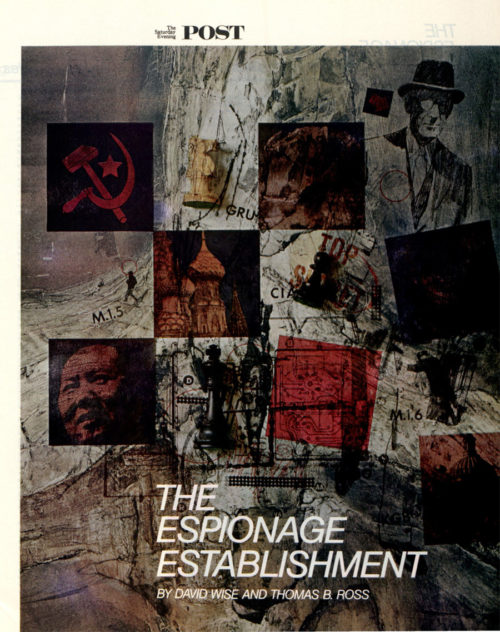
Featured image: Illustration from the “The Espionage Establishment” by David Wise and Thomas B. Ross from the October 21, 1967, issue of the Post.
Bob Hope Jokes about Bob Hope
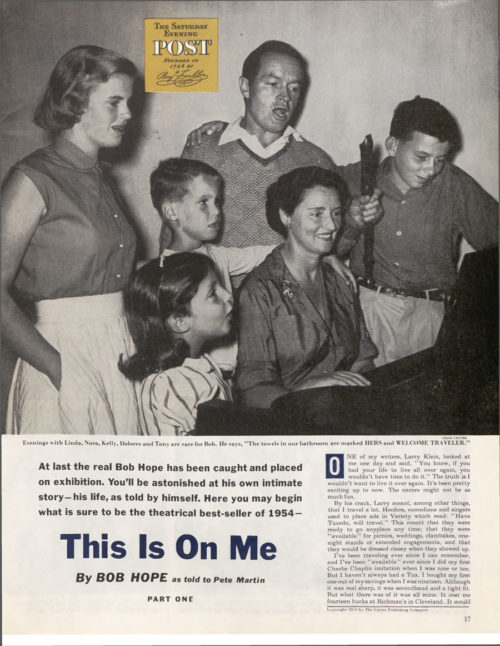
Adapted from a series by Pete Martin that ran in 9 parts from February 13, 1954 through April 10, 1954 in The Saturday Evening Post.
This article and other features about the stars of Tinseltown can be found in the Post’s Special Collector’s Edition, The Golden Age of Hollywood. This edition can be ordered here.
One of my writers, Larry Klein, looked at me one day and said, “You know, if you had your life to live all over again, you wouldn’t have time to do it.” The truth is I wouldn’t want to live it over again. It’s been pretty exciting up to now. The encore might not be as much fun.
By his crack, Larry meant, among other things, that I travel a lot. Hoofers, comedians and singers used to place ads in Variety that read: “Have Tuxedo, will travel.” This meant that they were ready to go anyplace any time; that they were available for a variety of engagements, and that they would be dressed classy when they showed up. I’ve been traveling ever since I can remember, and I’ve been available since I did my first Charlie Chaplin imitation when I was 9 or 10. But I haven’t always had a tux. I bought my first one out of my savings when I was 19. Although it was real sharp, it was secondhand and a tight fit. But what there was of it was all mine. It cost me 14 bucks at Richman’s in Cleveland. It would cost more than that now just to have it let out enough at the seams.
And I’m still traveling. My wife, Dolores, complains that I’m always taking off without giving her warning. I’ll say this for Dolores: No one can handle being married to a traveling-salesman type better than she. She’s very sweet about my absences. In fact, the towels in our bathroom are marked HERS and WELCOME TRAVELER. But when she gets a certain look in her eye, I take her on my next trip.
Last year the Friars threw a testimonial dinner for me in New York. During the evening several tributes were paid to me as a show-business pro. It was nice to hear all that flattery. I was glad Dolores was there to hear it too. Up to then, she’d thought I was a pilot for United Air Lines.
Another memory that floats into my head involves Joe E. Lewis, the nightclub genius. Once when I was in Chicago, I dropped in at a night spot, the Chez Paree, to catch Joe’s last show. I was too late for that, but I saw Dottie Lamour sitting at a table, and I sat beside her. A woman walked over to the table, took my chin in her hand and turned my face toward another woman she’d left back at her table.
“This is it, Julie,” she said, handling my head as if it were a cabbage. Dottie and I laughed so hard we almost fell under the table. The woman didn’t say, “Pardon me.” She just walked over and used me for demonstration purposes. She’d probably said to her friend, “There’s Bob Hope over there,” and her friend said, “I don’t believe it.” So she walked over, took my head and twirled it around to prove her point.
When I’d pulled myself together, I asked her, “Where do you get your material, honey? It’s great.”
“I listen to you every Monday night,” she said. I stopped laughing. I’d been on Tuesdays for four years.
Taking the memories as they pop into my mind brings up one of my first bookings for the William Morris office at the Chicago Palace. Because of a joke I did with Louise Troxell, I had a little trouble there. She walked on and said, “You’re very attractive,” and I said, “Yes, I come from a very brave family. My brother slapped Al Capone in the face.” This was during the time when Capone reigned as the czar of Cicero, a Chicago suburb.
Louise said, “Your brother slapped A1 Capone in the face?”
“Yes,” I said.
“I’d like to shake his hand,” she said.
“We’re not going to dig him up just for that,” I said. I did it during my first show, and it got a laugh.
But the manager, Frank Smith, came up to me afterward and said, “If you’re wise, you’ll take that joke out.”
“Why?” I asked.
“The boys come down here from Cicero on Saturday nights,” he said. “They’re liable not to like it. And if they don’t like it, I feel sorry for you.”
“Oh, I don’t think they’ll mind,” I said. So I kept it in that Saturday night. I was living at the Bismarck Hotel, and on Sunday morning the phone rang.
A low, gruff-type voice asked, “Is this Bob Hope?”
I said, “Yes.” This voice—its the only voice I’ve ever heard with a flat nose— asked, “Are you the one who’s doing that joke about Al Capone?”
“Yes,” I said. “Why?”
“Do us a favor,” the voice said. “Take it out.”
“Who’s this?” I asked.
“Just one of the boys,” the voice said. “Take it out. We’ll be around to thank you for it.”
“Yes, sir,” I said. “It’ll be out.” I never found out who’d called me, but to reach the Palace stage entrance I had to walk through a long, dark alleyway. A couple of actors had been held up in that alley, and it was a lonely place, especially if you were having a difference of opinion with the mob. I didn’t want to make that walk with that on my mind, so I replaced Al Capone with Jack Dempsey—“Slap Jack Dempsey in the face … we’re not going to dig him up just for that”—and it scored just as well.
A ROYAL AUDIENCE
Now here’s a story that fits into the “high points of my life” department.
In 1947, Dolores and I were invited to London to attend the showing of the annual command- performance film for King George VI and his wife, Queen Elizabeth. For me the high point of the expedition was the chance to kick the conversational gong around with the King.
Norman Siegel, who was then head of West Coast publicity at Paramount, chaperoned the tour. When Dolores and I boarded the plane in California, Jean Hersholt came to the airport and gave me a book to present to Princess Elizabeth, the gracious and high-hearted lady who’s now Queen of England. The book contained autographed photographs of every important Hollywood movie star. But when I arrived in England, Princess Elizabeth was in Scotland on her honeymoon, so the whole deal was temporarily lost sight of.
After the command performance, we visitors went into a room just off the foyer in the Odeon Theater to pay our respects to their majesties. Just then Norman Siegel came in and asked, “Where’s that book of autographed photographs? They’re waiting for it.”
After a frantic search, it was found in the manager’s office. I ran upstairs with it, handed it to Princess Margaret, said, “I think you’ll enjoy this,” and began to show her the photos.
The King watched me leaf through it; then slipped me the royal needle. “Look at him,” he said; “rushing to get to his own picture.”
I said, “Why not? It’s the prettiest.”
He grinned; then asked, “Is Bing’s autograph there too?”
“Yes,” I said. “ But he doesn’t write. He just made three X’s.”
“Three X’s?” the King asked.
“He has a middle name,” I said.
We kidded back and forth, and the next day headlines in the DAILY EXPRESS said: THE KING AD LIBS WITH BOB HOPE. That’s the only time I ever had a king work as straight man for me.
Still other great memories come from my family. Dolores has a wise and loving touch with our children. I’m lost in admiration of the job she has done with them, and with the job she’s done keeping me in line. A lot of children whose fathers are in show business grow up too precocious, too wise, too fresh, too unfunny. That’s not true of our four. Dolores sees to that. She also sees to it that they’re having a devout rearing. One day our neighbor, Mrs. Dailey, overheard our littlest one, Kelly, ask our next youngest, Nora, “Is everybody in the world Catholic?”
“Yes,” Nora said, “everybody but daddy. He’s a comedian.”
I was both surprised and pleased when I heard that. I have no trouble convincing them that I’m their daddy, but sometimes I have trouble convincing them that I’m a comedian.
 This article and other features about the stars of Tinseltown can be found in the Post’s Special Collector’s Edition, The Golden Age of Hollywood. This edition can be ordered here.
The Vault: Anniversary of a Revolution

In 1917, the Post had correspondents in Moscow and St. Petersburg. At the beginning of the Russian Revolution, Americans hoped it would bring democracy and stability to the nation, but they soon saw their hopes dim for the nation and its people. Here is just a taste of how the Post reported on what it saw happening in Russia.
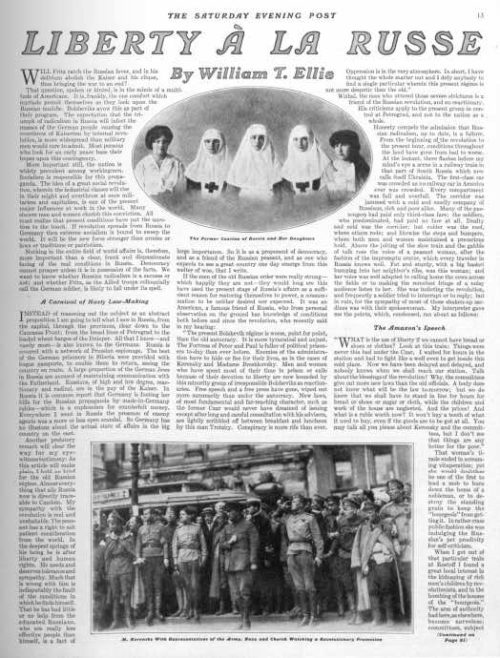
From “Liberty a la Russe” by William T. Ellis, February 23, 1918:
My sympathy with the revolution is real and unshakable. The peasant has a right to ask patient consideration from the world. In the deepest springs of his being he is after liberty and human rights.
[But] honesty compels the admission that Russian radicalism, up to date, is a failure. From the beginning of the revolution to the present hour, conditions throughout the land have gone from bad to worse. With food abundant in spots, people in other parts of Russia are today starving. While wood in immeasurable quantities is found at short distances from the great cities, people have perished of cold.
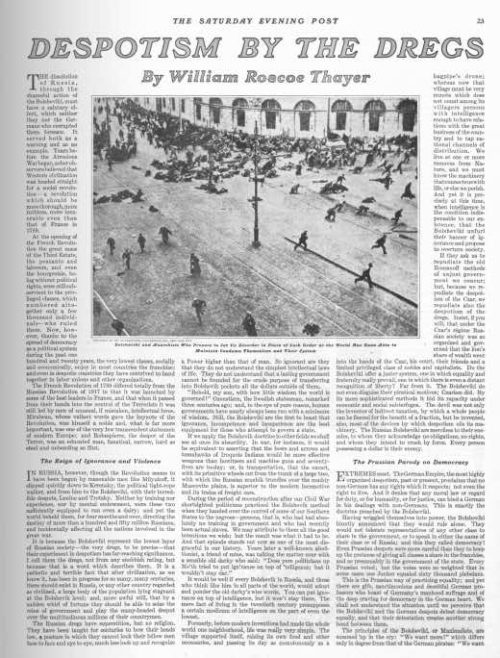
From “Despotism by the Dregs” by William Roscoe Thayer, May 4, 1918:
Neither by training nor experience, nor by mental endowment, were [Lenin and Trotsky] sufficiently equipped to run even a dairy; and yet the world beheld them directing the destiny of more than 150 million Russians.
Having wriggled themselves into power, the Bolsheviks bluntly announced that they would rule alone. They would not tolerate representatives of any other class to share in the government, or to speak in either the name of their class or of Russia; and this they called democracy!
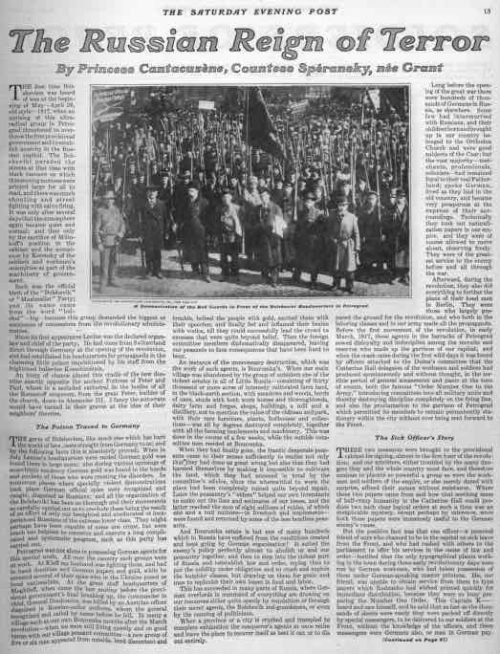
Here, Princess Cantacuzene, Countess Speransky — formerly Julia Dent Grant, granddaughter of President Ulysses S. Grant — recalls the Bolsheviks’ rise to power in “The Russian Reign of Terror,” April 26, 1919:
By July 1917, the Bolshevik Party had gathered to itself all the discontented elements in the great cities and all the army’s rebellious spirits, and there was strength behind it enough to frighten [provisional leader] Kerensky and force him to give way.
Step by step they carried out a fixed program. [Russians] of the lower strata, who were so ignorant they could neither read nor write, naturally wanted all those things which were dangled before their blinking eyes, so immediately they fell an easy prey to Bolshevik machinations.
They who had gone through the terrific years of war, who were very needy — in the north, especially — of both fuel and food, believed at once the false prophets who offered them shining gold and provisions, and above all, vodka, of which they had not tasted for three long years. And then beyond all this, the newcomers promised there should be a paradise on Earth.
Anyone who disagreed with the new scheme of life must either flee the country or give way, unless he cared to be shot if noticed. Remaining alive meant making oneself as small as possible on all occasions or paying with one’s life for attracting undue attention.
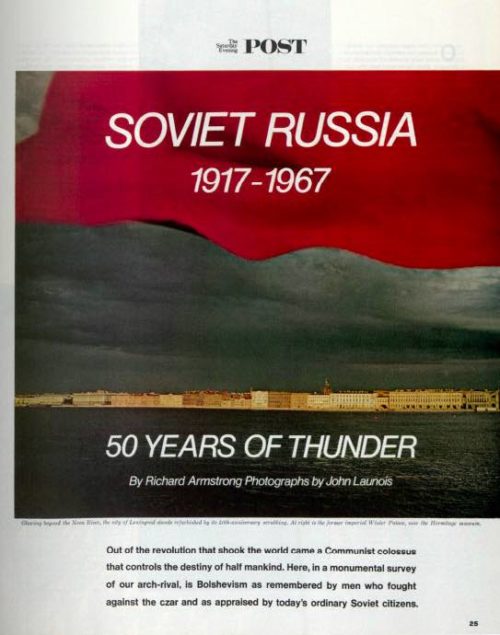
In the decades that followed the Russian Revolution, Post editors criticized the Soviet government for what it saw as its ruthless hold on power, its merciless treatment of Russians, and its export of violent revolution throughout the world. This excerpt from Richard Armstrong’s “Soviet Russia 1917–1967: 50 Years of Thunder,” published on November 4, 1967, is just one example:
On this 50th anniversary, there is a restless stirring in Russia. Not for “Land, Peace, and Bread,” the original Bolshevik slogan. The Russians have that by now. The stirring is for freedom — for freedom of the press most of all. The Soviets, under Khrushchev, took the lid off Soviet society. It is doubtful they will ever get it back on.
An abridged version of this article is featured in the November/December 2017 issue of The Saturday Evening Post. Subscribe to the magazine for more art, inspiring stories, fiction, humor, and features from our archives.
News of the Week: 86 Candies, 50 Years of ‘On the Road,’ and Norman Lloyd at 103
No Zagnut?
It’s four days after Halloween and you probably have some candy left over. I bought Reese’s Peanut Butter Cups and Almond Joys this year, even though trick-or-treaters haven’t come to my place since the late ’90s.
The former just happens to be the No. 1 Halloween candy, according to this list compiled by the website FiveThirtyEight, known for their election polls and political analysis. No. 2 was the miniature version of the Reese’s Peanut Butter Cup, which seems like a rather unfair advantage for Reese’s. Twix, Kit Kat, and Snickers round out the top five. Junior Mints are at No. 25, Baby Ruth is at No. 27, and a quarter (thrown into the mix just to see if money is more important than candy) beat out Twizzlers and Werther’s Originals. Coming in dead last? Good & Plenty. Kids today just don’t appreciate pill-shaped licorice candy from the 1890s.
Maybe Twix would have won if it had visited Wisconsin and Michigan.
On the Road
No, not the Jack Kerouac novel — the CBS News segment started by Charles Kuralt in 1967. Steve Hartman does it now, and he did this 50th-anniversary tribute to Kuralt and the big van he used to travel around the country.
The Dickinson Pumpkin
Every now and then, a big food controversy arises. We’ve seen the yams vs. sweet potato debate, the Great Green Pea Scandal of 2015, and this year we have CheeseburgerGate. Now comes another one, just in time for Thanksgiving and Christmas.
It seems that the cans of “100% pumpkin” you see on supermarket shelves may, in fact, include meat from something called a Dickinson pumpkin, which is really a type of squash. That’s right, all these years you’ve probably been making your pumpkin pie with squash. But wait! It might not be as much of a scandal as people think, because the FDA says that it’s actually okay if cans of pumpkin are sometimes made with squash or a mixture of pumpkin and squash.
Which is a relief, because “squash pie” just doesn’t sound as appetizing.
Katie Who?
Everybody knows the lyrics to the baseball song “Take Me Out to the Ball Game,” often sung during the seventh-inning stretch, right? But you probably don’t know all the lyrics.
The song, written by Jack Norworth in 1908, was actually about a young woman named Katie who wants to go to a baseball game, even though it was mostly men who went to games back then. There’s actually an opening line from the song that nobody ever sings and most people don’t even know about, but CBS News has all the details.
The next time you go to a ball game you can sing the line and confuse your friends and all the strangers around you. Hey, did you say Katie? Who’s Katie?
Happy 103rd Birthday, Norman Lloyd!
Norman Lloyd is an actor and director you may know from St. Elsewhere (he played Dr. Auschlander) and as the bad guy who falls from the Statue of Liberty in Alfred Hitchcock’s terrific 1942 thriller Saboteur. He’s also a big baseball fan. When he was 11 he saw Babe Ruth play in the 1926 World Series and, amazingly, he also went to this year’s World Series to see the Dodgers play the Astros!
He’s there! Norman Lloyd, who attended World Series Game 1 in 1926, is at Game 2 in 2017! https://t.co/SHbcaKkBHV pic.twitter.com/3kBbUUUBEi
— Keith Olbermann (@KeithOlbermann) October 26, 2017
He turns 103 next Wednesday, and his new TV series, Fly, premieres next year.
Dead Celebrities Make More Money Than You Do
You could probably have guessed that Michael Jackson made a lot of money this past year ($75 million), but I bet you can’t guess who No. 2 on the list is. Come on, guess. Forbes has the 2017 list of the celebrities no longer with us who still make a lot of money, and No. 2 genuinely surprised me.
No, it’s not Peanuts creator Charles Schulz, nor is it Elvis Presley. They come in at No. 3 and 4, respectively. Musician Bob Marley is No. 5, and Tom Petty, who just passed away a few weeks ago, is No. 6.
Seriously, before you click this link to see the whole list, try to guess who No. 2 is. Betcha a Zagnut you can’t.
This Week in History
Stock Market Crashes (October 29, 1929)
It’s referred to as “Black Tuesday,” but it actually started a week before on “Black Thursday.” The financial disaster, of course, led to the Great Depression.
Assassination Attempt on President Truman (November 1, 1950)
Two members of the Puerto Rican Nationalist Party tried to shoot Truman at the Blair House, where the Truman family was staying while the White House was being renovated.
This Week in Saturday Evening Post History: Clock Repairman (November 3, 1945)
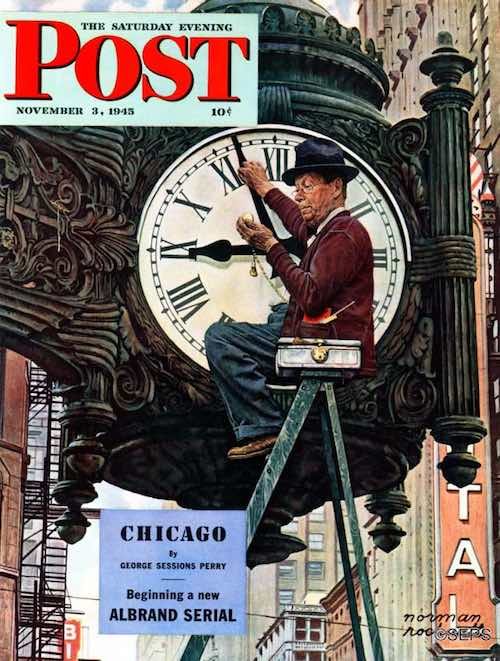
Norman Rockwell
November 3, 1945
Maybe this cover by Norman Rockwell can serve as a reminder that you have to turn back your clocks one hour before you go to bed on Saturday night.
Today Is National Sandwich Day
Parade has a list of the sandwich places that have special deals today, including Subway, Capriotti, QuickChek, and Firehouse. I’d like to highlight one particular sandwich. It was the favorite of writer and actress Peg Lynch, the woman who pretty much created the sitcom with shows like Ethel and Albert and The Couple Next Door. I don’t know if it’s something I’d want to try (I’m not a big mayo guy), but I think you should test it and report back to us.
- 2 slices Arnold white bread, toasted and buttered
- iceberg lettuce
- smooth peanut butter
- Miracle Whip
Put sandwich together, cut off crusts, cut into four triangles, and enjoy!
Next Week’s Holidays and Events
Guy Fawkes Day (November 5)
Fawkes is known as one of the biggest villains in British history. You may know his face as the mask many people wear when they’re doing something they don’t to be known for, as seen in the graphic novel and film version of V for Vendetta.
General Election Day (November 7)
Here’s a list of some of the important federal, state, and local elections that are happening on Tuesday.
Letter of Complaint
Mr. O’Neil called Jim into his office and told him to sit down. Then, Mr. O’Neil shut the door and returned to his big desk. He sat in the padded leather chair behind it and ignored Jim, looking instead at a paper he lifted from the desk top.
Jim waited patiently for the boss man to speak. He had no idea why he had been called in; it worried him, although he knew that he had done nothing wrong.
After several minutes, Mr. O’Neil looked up, unsmiling, and kind of wiggled the paper at Jim. “Do you know what this is, Myers?” he asked.
Jim shook his head. “No,” he said.
“Well, it’s not good, I’ll tell you that. We run a good company here: Our product is good and our service is good. That’s our reputation. I’ve worked my whole life to make sure that the O’Neil Fence Company is a name to respect.” He looked at Jim in an unusually unfriendly way.
“Yes, sir,” agreed Jim, wondering what was going on.
Mr. O’Neil told him. “This,” he said, shaking the paper again, “is a letter of complaint! This lady, Mrs. Walters, says you and Brian put in a lousy fence around her yard and part of it collapsed and some big dog got in and killed her little dog! Sounds like she’s going to sue me. It’s a mess!”
Jim thought back over his last few months of putting up fences and remembered Mrs. Walters. Wow! She was going to sue? A friendly old lady, living way out in the country in a nice little house with fields all around it. She’d seemed like such a nice lady and happy with the job he and Brian Gorse had done for her. He even remembered her little dog, a little rat terrier. Now it was dead? Nothing made sense to him.
“She seemed pleased with the fence. Four-foot high chain link, two gates. It was sturdy, should still be up.”
“Well, it’s not, according to this letter. You’d better read this, Jim. I’ll be going to check the damage. Maybe offer to redo the fence. The dog, that’s not fixable. Too bad. She sounds real upset.”
Jim took the letter and read:
25 Sycamore Lane
Pomroy, Mo 65203
August 19, 2017
Raymond O’Neil
O’Neil Fence Company
3110 W. Stratton Road
Redden, Mo 65201
Dear Mr. O’Neil:
I am writing to tell you that the fence those two young men of yours put up in my yard didn’t last long. I am so disappointed.
Yesterday, that big Pit bull came right through it and killed my little dog Frisky. The fence didn’t stop what happened at all. Frisky didn’t have a chance.
I don’t like the idea of going to court. Money won’t bring Frisky back, but I’ll need money to fix things, won’t I? I just don’t know how much, so we need to talk, you and I.
Sincerely,
Loretta Walter
“It sure does sound bad,” agreed Jim, “but that fence was put up strong like all the ones we do. I don’t see how some dog, pit bull or not, could knock it over.”
“Well,” said Mr. O’Neil, “I’m going to have to talk to this lady. She sounds real riled up, and I ought to send a lawyer, probably, but I’m going to talk to her myself; try to smooth things over.”
“Yes, sir,” nodded Jim, thinking about the fence: good strong posts set in cement. He couldn’t see it falling over.
“And you’re coming with me.”
“Is that a good idea?”
“You’re the main one putting it up. You were in charge. You’re the she’s probably mad at. You’re coming.”
The way from Redden to the tiny town of Pomroy took them along winding two-lane roads through some of the prettiest farmland around. Mrs. Walter’s house was on the far outskirts of the town. It had a long, gravel driveway and a collection of little garden statues, ducks and windmills and rabbits, in the front yard.
Jim remembered driving out here with Brian, rolls of fencing in the truck bed. He knew his boss was a fair man and liked him, but he also knew that something like this, a customer complaint, could cost him his job.
Mrs. Walter, tiny and cherub-cheeked like a little Mrs. Santa Claus, answered the door. Her thick eyeglasses made her eyes look enormous and startled.
“Oh, come in, gentlemen,” she said. “I guess you need to verify the damage.” She led them through her tiny living room to the back door. Frisky’s little round pillow still sat on the floor near the TV.
They walked into the backyard where the four-foot chain link that had stretched across the backside of the yard lay in the grass, mangled and snarled. The side fencing still stood, but lopsidedly.
“Oh, my gosh,” whispered Jim, shocked by what he saw. “What kind of monster dog from hell did this?”
Mrs. Walter looked at him strangely. “Dog? What dog? I told Mr. O’Neil in my letter that Mr. Pit’s gigantic bull got loose and plowed into my yard. He stepped on poor little Frisky! It was horrible! Mr. Pit ought to pay for fixing the fence, but he’s a real disagreeable man and says he will countersue because Frisky was barking through the fence! I don’t want to mess around forever in court if I don’t have to! I miss my Frisky so much, and my sister’s Cockapoo just had puppies. She wants to give me one, so I need a fence as soon as possible.” Turning to Mr. O’Neil, she asked, “Now how much money are we talking about, to get this thing fixed? I know it’s going to cost me a lot, so I might have to pay you in installments, but I really want my fence back up, nice and straight, like it was. I can’t wait on Mr. Pit to do the right thing.”
“Ma’am,” said Mr. O’Neil, “We’re going to fix your fence for free.”
100 Years Ago: The First Americans Killed in World War I
On the night of November 3, 1917, German soldiers raided a trench in the French sector of the Western Front. However, this particular section of the trenches was held by American troops. There was intense fighting as the Germans surprised the Americans. When the fight was over, the Germans took 12 American soldiers back to their lines for interrogation. They left three Americans dead. In the year and nine days that remained of the war, those first American combat deaths would be followed by another 53,000, as well as 63,000 non-combat deaths, mostly from the influenza epidemic that swept through the trenches.
George Pattullo, one of The Post’s war correspondents, reported on the deaths, and their comrades’ reaction to it. His December 29, 1917 article, “The First Raid,” is a rare, full account of what happened that night in northeastern France.
Despite the American losses, Pattullo was optimistic. The doughboys had stood their ground, he reported, refused to abandon wounded comrades, and fought back fiercely. Now, American soldiers who had been homesick and bored were eager to strike back at the Germans.
He wrote, “The raid of November third, small though it was, has welded the men of the First Division as no amount of training and discipline could do. The boys who came back from those trenches are a hundred per cent better soldiers than before they went. So are all their comrades.”
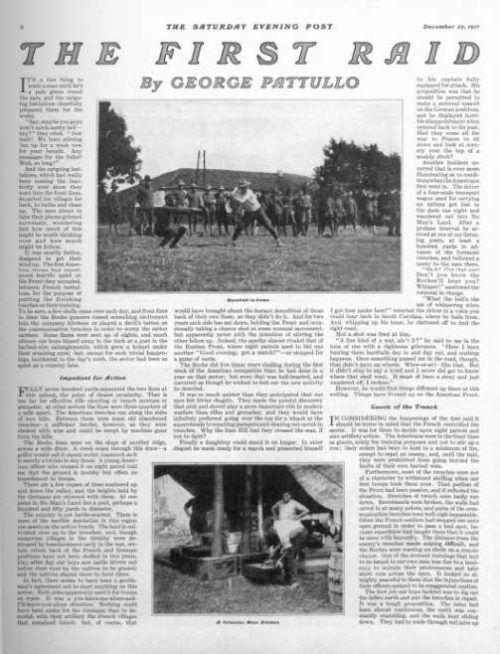
Featured image: Library of Congress
What If They Held a Halloween and Nobody Came?

It’s November 1, and I’m feeling a little down today, just a little off. It’s not a huge thing, and I’m not like, depressed, or anything, but I just feel like a person who missed a party he wasn’t planning to go to anyway, but still felt sorry he missed it.

Yesterday was Halloween, and I bought a bunch of candy for the little freeloaders who normally swarm on such an occasion. The candy is untouched. No one showed. No spaced out babies dolled up with wings or a kitty suit; no avaricious 6 year olds in home-made dragon outfits; no pop-culturally relevant Manafort impersonators in jailbird stripes; not even a single over-the-age, trick-or-treating teen who just wants the candy and has made only the barest attempt to impersonate a costume-wearer – maybe a drawn-on mustache or a scarf over the head.

I miss all those moochers. In some ways, I also feel a bit responsible – as though I accidentally put out a negative stay-away vibe that blocked our house from the internal sensors that kids (and their parents) use to direct them to the most generous candy-distro houses. Of course, the real reason is that I live in a 50 plus community. Kids don’t live here! Duh! But outsiders could still come in though, right?
So what do you do with a bunch of candy that you don’t want. Or, rather, that you do want, but no really you don’t. I took it back to the market.

That made me feel lousy all over again. Here was this store that had put on a massive display of candy, even discounting some of it, for the big national holiday that is Halloween. And here was this consumer, me, returning it a day late after its value had plummeted. I had violated the store’s trust, is what it felt like. Took their candy out on loan for the possibility of a rapacious attack by young costumed candi-vores. Then brought it back for a full refund.
The young woman at the service desk did not seem at all hostile at my taking advantage of the store’s liberal return policy. “No one came,” I said sheepishly as I dumped my bags of unopened “snack size” munchables on the counter.
“No one came to my house either,” she said, and she told me she lives across the street from a school. I idly wondered if it was possible trick or treating didn’t take place this year? But of course it did. It was everywhere.

I got a text from my friend Larry in Indianapolis with a picture of his front yard all gussied up, awaiting the rampaging hordes. I got pictures of my grandchildren out on the town. My grandson Sam, who is ten, started out as Trump, and ended up as a New Jersey Devil (get it?). My granddaughter Sarah, 13, was a shadow hunter based on a book series.
So, the party was held everywhere else but here it seems. Around here, it was just another day.
Paul Newman Wanted More Than Blue Eyes
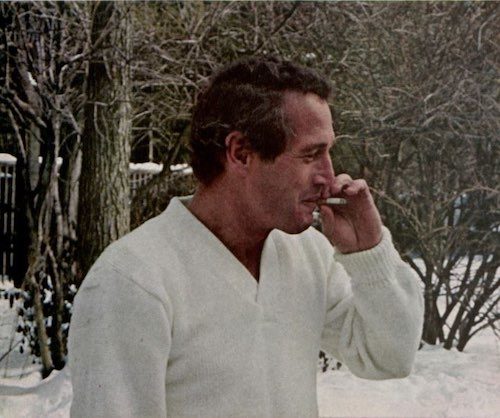
Paul Newman played countless roles throughout his life: actor, director, racecar driver, and even salad dressing maker. His acting career was distinguished by his handsome looks and “method” style. His role as prison escapee Luke Jackson debuted 50 years ago today in Cool Hand Luke, the chain gang drama in which “failure to communicate” drives an impenetrable wedge between nonconformist Luke and the Florida prison system.
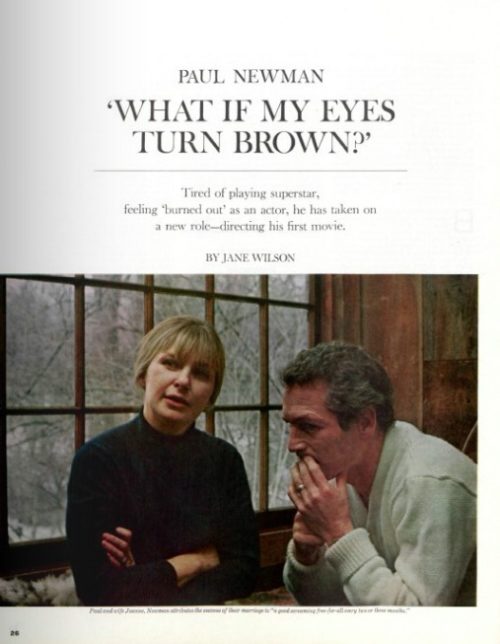
Newman earned an Oscar nomination for his work in Cool Hand Luke, and it gave him the freedom to attempt a role behind the camera. Though he was famous for his undeniable attractiveness, it bugged Newman that his good looks might be interpreted as the source of his star power. “If blue eyes are what it’s all about, and not the accumulation of my work as a professional actor, I may as well turn in my union card right now and go into gardening,” he told writer Jane Wilson when she interviewed Newman for the 1968 Post story “What If My Eyes Turn Brown?”
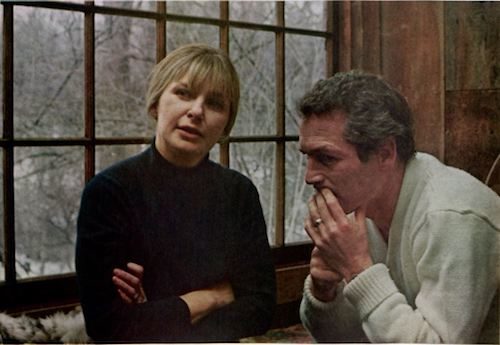
At the time of the interview, Newman was on set filming his directorial debut, Rachel, Rachel, fresh from the success of Cool Hand Luke. Despite his reputation as a box office shoo-in, Newman claimed a degree of self-consciousness about his skills as an actor, which may explain his desire to prove himself worthy as a filmmaker: “It has something to do with the way you feel when you wake up in the morning. One day you say to yourself, ‘My work is impeccable. There’s nothing I can’t do. Molière, Shakespeare — you name it!’ But next morning you think, ‘The work I am doing is childish. It is scaled to adulation and financial return, and that return is out of all proportion to my contribution. It’s silly, it’s stupid, it has nothing whatever to do with being an adult.’”
A host of nominations and wins from the Academy and Cannes Film Festival — spread across six decades — tells a different story about Newman’s lifelong contributions to cinema. Though his name may always be synonymous with physical comeliness, Newman’s versatility and uncompromising creative drive have been widely recognized.
The Art of the Post: William A. Smith —The Artist Behind Enemy Lines
The Saturday Evening Post has always taken pride in the authenticity of its illustrations. Before the age of television, readers across the country learned about the history and customs of foreign lands from those colorful pictures. Even Hollywood movie studios relied on illustrations in the Post when designing costumes and backdrops.
Illustrators worked hard to achieve that authenticity, but none of them achieved it the way William A. Smith did.
Smith was often called upon to illustrate stories about Asia. He seemed to have a special knack for the people and culture.
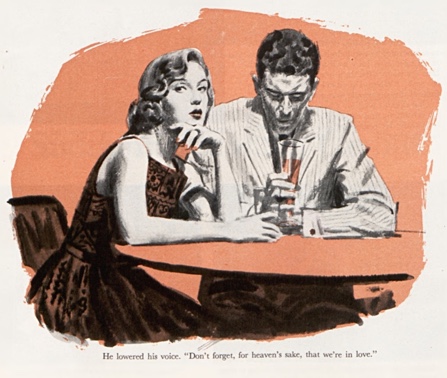
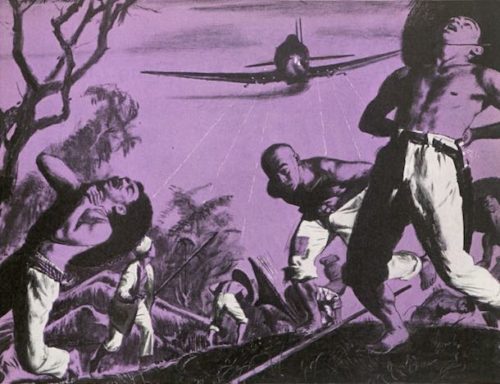
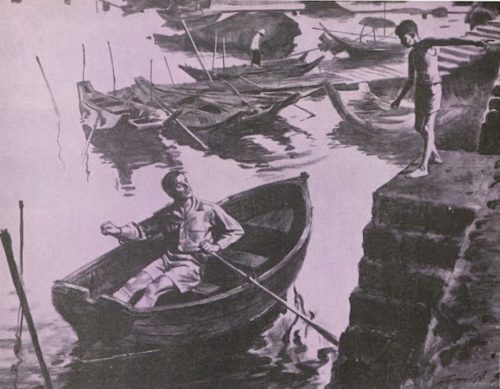
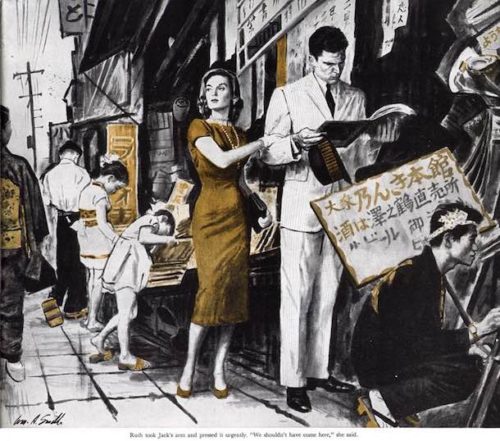
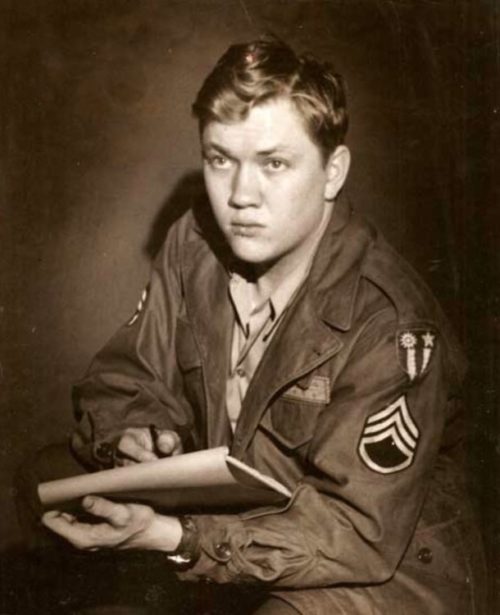
What readers didn’t realize was that Smith learned about Asia firsthand by serving behind the lines during World War II for the Office of Strategic Services (OSS), the predecessor to the CIA. He served in China for the duration of the war, often traveling clandestinely around the country.
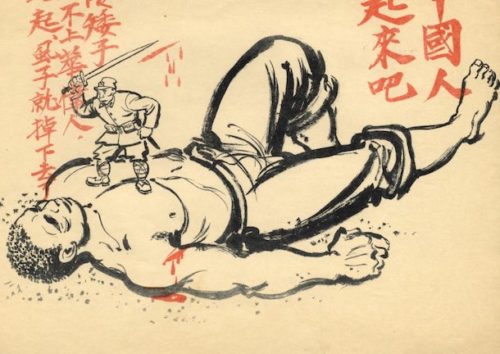
One of Smith’s roles as an artist for OSS was to create a series of propaganda drawings to support the Chinese in their war with the Japanese invaders.
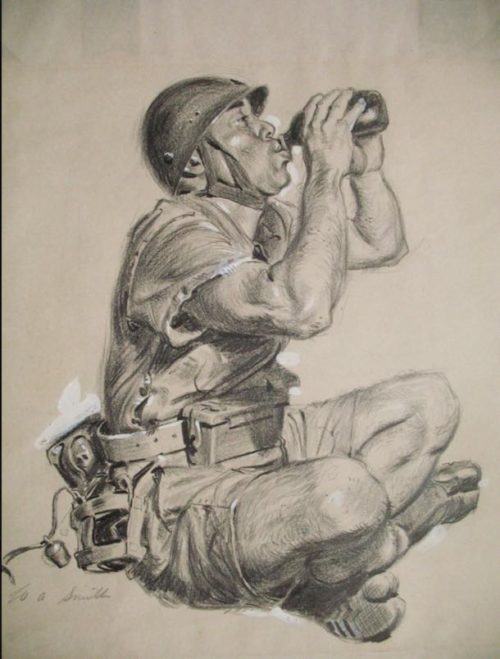
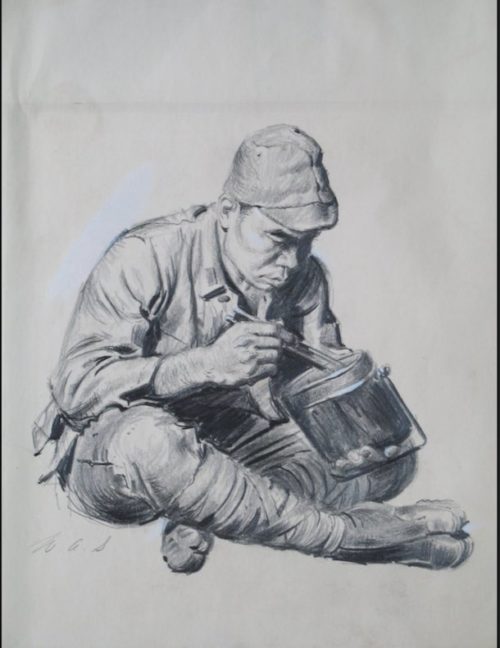
He also spent time working in Weihsien prison, a POW camp operated by the Japanese in Shantung Province, China, during World War II. The prison held 1,500 civilians — British, American, Belgian, and Italian — for over two years before it was liberated. Smith sharpened his skills sketching the Japanese guards there.
Smith described how the OSS helped capture the prison from the Japanese:
Only one Chinese was permitted inside the high brick wall. He was a dirty and stupid acting coolie whose job was to remove the pails of refuse from the latrines. Japanese would have no part of this job. Actually, he was an OSS agent and his access to the prison made it possible for the prisoners to communicate with the outside. … The other internees were most surprised when, after the Camp had been taken by the Americans, the same Chinese walked through the gates in a Western-type business suit.
Smith made hundreds of drawings in Asia, filling sketchbook after sketchbook with images of the people and their customs and of children playing in the streets. He learned their language and made many friends.
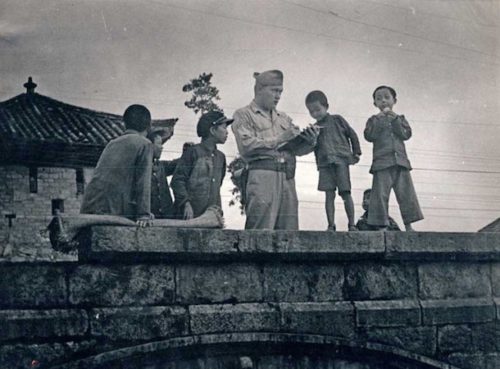
He grew to love the Far East and established lasting relationships with the artistic community there. He later traveled repeatedly to Japan and filled dozens of sketchbooks with drawings of Japanese culture. Unlike the harsh propaganda pictures he created during the war, his later drawings were exquisitely sensitive and appreciative of cultural differences.
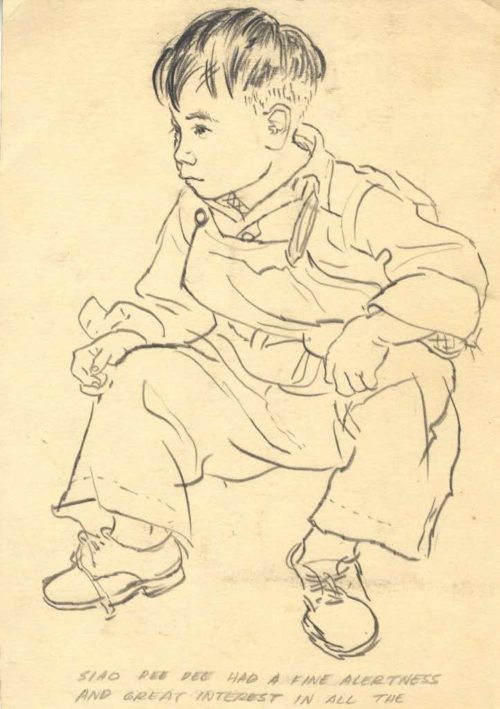
After the war, Smith went on to become a highly successful award-winning artist who worked regularly for the Post and other top publications of his day. He illustrated books for famous authors who wrote about the Far East, such as Pearl Buck and James Michener. His work was acquired by the Metropolitan Museum of Art, the National Portrait Gallery, and the Library of Congress.
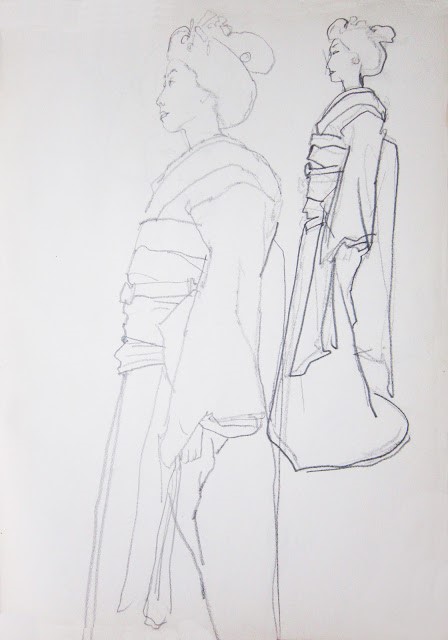

Millions of readers of the Post saw his work, but most never knew that he earned his authenticity the hard way.
North Country Girl: Chapter 24 — Boyfriend and Girlfriends
For more about Gay Haubner’s life in the North Country, read the other chapters in her serialized memoir. The Post will publish a new segment each week.
My friend Mary Ann Stuart was even more excited than I was at my landing a boy. “You like Steve, right? He’s cute. I think he’s cute, not as cute as Dave, but cute. I think he likes you a lot.” This was all we talked about as we walked from her house to the Deeps, where we spread our towels on a flat rock and rubbed baby oil on each other’s backs. Dave and Steve extracted themselves from a clutch of Cathedral High boys and came and sat with us. My life was complete. A boy liked me. We were SteveandGay, one of the acknowledged couples of the Deeps.
We started leaving the Deeps while the sun was still high, eager to get back to Mary Ann’s dimly-lit cabin, each day spending less time watching other boys make harrowing jumps into the river, and more time paired off, Mary Ann and Dave doing who knows what in her bedroom, Steve and I entwined on the couch, WEBC on the radio, playing that summer’s top 40. One afternoon, “Sunshine of Your Love” came on, and I could feel Steve shift his weight on me, pushing me deep down on the sofa and releasing another layer of dust. At the same time, his right hand cupped my bikini-enclosed breast. Without thinking, I grabbed the offending hand and pulled it off. Steve yanked his hand out of mine and stuck it back on my chest. We repeated this a few times before he sat up and asked “Why?” I couldn’t answer, “Because that’s what I think I’m supposed to do,” which was the truth. I said, “I don’t want to” and made a show of draping my shirt over what were my obviously irresistible breasts.
Steve looked down at the floor, then got up, banged on Mary Ann’s door, and shouted “Dave! I gotta go!” I had landed and lost a boyfriend in less than a week.
When Mary Ann and I got to the Deeps the next day, there was Steve. Talking to another girl. He did not so much as look my way the entire day. I wanted to pull my towel over my head or throw myself on top of that deadly refrigerator.
“What happened?” asked Mary Ann. “I thought he liked you.” She was horrified that I had lost my first boyfriend because he was trying to cop a feel. “Why didn’t you let him?” Mary Ann scolded me. “I don’t know,” I wailed, on the verge of adding to my public humiliation by bursting into tears. But what could I do now? I couldn’t go over to Steve and tell him I changed my mind, he could touch my breast if he wanted to. Mary Ann and I wracked our brains trying to figure out something to tell Dave to tell Steve that would give me a second chance. But it was too late. The next day at the Deeps, I got to watch Steve put his arm around his new girl, her mouth wide with laughter as she gazed adoringly at him. Mary Ann scooped up our stuff and hustled me back to her house, where I had a good cry until Dave showed up and I trudged home alone.
I didn’t go back to the Deeps that summer. I still hung out at Mary Ann’s house when Dave wasn’t around, which was more and more as summer tilted towards fall and the start of football practice. Mary Ann had begun to cool on Dave when he showed up sporting a Johnny Unitas buzzcut. A new boy began hanging out at Mary Ann’s. John Bean was sixteen and had a car and money from his job at the Canal Drive-in, down on Duluth’s tatty lakefront. Dave, stuck on the playing fields of Cathedral High School, was history. I spent the rest of my time with Mary Ann listening to how much she loved John Bean up until the day her father put her on a plane to Florida.
I confessed the whole sordid story of getting dumped by Steve to Cindy Moreland, who was a sympathetic ear and insisted that I had done the right thing, not letting a boy touch me there. I wasn’t so sure.
Cindy was in the midst of an audacious plan: a back to school boy-girl party. Neither Cindy nor I had ever been invited to a boy-girl party, although we had heard of raucous ninth-grade goings-on at houses where the parents were away for the weekend. There were rumors of beer drinking and couples sneaking off to dark bedrooms; at one out-of-control party at the home of one of the most popular girls, Michelle Messier, the door to the refrigerator somehow got torn off and Michelle was grounded for the rest of her life.
Unfortunately, at Cindy’s party her parents were watching TV upstairs while a dozen of us kids sat around her basement, sipped cokes, burned our mouths with Jeno’s pizza rolls, and listened to records, until someone turned down the music and started a mildly exciting game of Truth or Dare.

Cindy had decided that my glasses were too weird and off-putting and I shouldn’t wear them at her party, especially because she had invited boys from Ordean, the other junior high, boys who didn’t know of our reputation as non-starters. Without my glasses I could barely make out Cindy’s face and everyone else at the party was an indistinguishable blur. I worried that if I had to pee I wouldn’t be able to find my way upstairs to the bathroom.
As I put down my giant glass of Coke, I heard my name and rashly called out “Dare!” I was dared to go into a closet and kiss Brad McCarthy, whoever he was. One of the blurs stood up, took my hand, and let me off somewhere. A door shut and we were in the pitch black, kissing. I didn’t get too excited, as I had no idea who Brad McCarthy was or what he looked like. At least by this point thanks to Steve LaFlamme I was an experienced kisser. Brad was not, and after enduring a few moments of his slobbering on my face, I said, “We should go back” and fumbled for the doorknob. I sat down next to Cindy, who gave me an odd look, and wiped something off my face with a pizza-stained napkin.
And now came the great day, the first day of high school. I had given up on the hope of miraculously transforming myself into anything but me, yet I still spent hours trying on outfits before I decided to make my East High debut in a cute floral printed baby blue minidress with open sleeves that tied at the wrist in dainty white ribbon bows. Thanks Mom. I gathered up the required huge fabric-covered navy binder filled with lined paper and colored acetate dividers, lots of sharpened pencils, a fistful of pens, and a slide rule. The backpack still had not been invented.
While I had been looking for love at the Deeps, my family had moved into 101 Hawthorne Road, a stately five-bedroom house one block from the high school, so it took but a minute for me to walk to East, leaving childhood behind, ready to start my new life as a full-fledged teenager. I plunged into the cacophonous halls of East, twice the size of my junior high, with thirteen hundred kids streaming in all directions, one-third unbelievably cool Seniors, one third stuck-in-the-middle Juniors, and one-third us nervous Sophomores, who were all anxiously piping up “Hi! Hi! Hi!” to anyone who looked vaguely familiar.

I had advanced classes in math, English, and history, and in each one I was greeted by my old fellow smarty-pants from elementary school, Nancy Erman, as if I were a long-lost sister, a bond forged back when we had combed our troll dolls’ hair together, moved little cars full of peg people around in the Game of Life, and smeared cream cheese and Welch’s jelly on white bread. Nancy had progressed in junior high to Queen Bee status, and had her own coterie of popular girls. She had a generous spirit and insisted that I was one of her gang, and suddenly, as if I had been touched by a fairy godmother’s wand, I was a member of the cool girls.

First I had to deal with an unforeseen and unfortunate predicament. As Nancy scooched over at the cafeteria table to make room for me, I felt a tap on my shoulder and turned to see a boy whose face was peeling away. I blinked, looked away, and tried to sit down as quickly as possible. From behind I heard, “I didn’t recognize you with your glasses. It’s me, Brad McCarthy.” Brad had severe psoriasis, his skin was patches of red and white, with flecks sheering off from his eye lids and lips and landing on his shirt. Nancy, who would have nicely shaken hands with a leper, looked up, smiled and chirped, “Hi Brad!” before going back to her sandwich. I wondered what it was that Cindy had wiped from my face, and took myself off to the girls bathroom, with Brad yelling behind, “Gay! Gay! I thought we could…”
I spent my first week of high school hiding behind doors and running into the bathroom before Brad got the message and left me alone, although he did give me the hangdog look every time we passed in the hall for the next three years. I was not that desperate, even though Nancy and most of the other girls in my new circle had boyfriends.
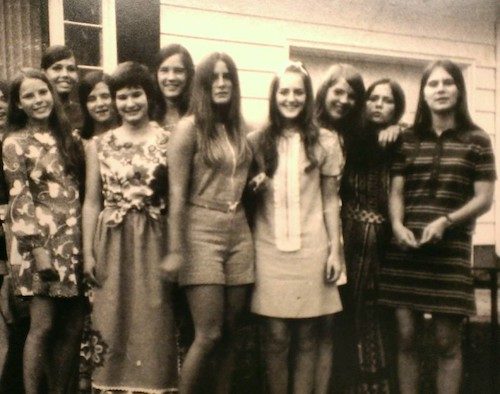
My magical transformation had happened, just when I had given up believing. I was finally one of the popular girls. We called ourselves T.H.E. Gang and were as loyal to each other as the Foreign Legion, the Musketeers, or the U.S. Marines. Nancy was our leader, tall, smiley, freckly and friendly to even the most outcast of our fellow students. Teachers and parents adored her. Nancy’s closest friend was Paula Rivers, The Pretty One, with the face of a Disney heroine, a heart-melting smile, and long Breck blonde hair.
You did not have to be pretty to be in our gang, as evidenced by my acceptance, with my weirdly thick glasses and hair that had decided to go from mousy blonde to rat brown. You could have a beaky, bumpy nose or be as plump as Mama Cass. It didn’t matter what you looked like as long as you were quick to laugh, brave, eager to drink until you were legless, and steadfastly loyal; if you were willing to lie to cover up your friend’s whereabouts (“Yes Mrs. Haubner, Gay spent the night at my house.”), and showed up on the spot when needed, ready to help a girlfriend organize her pants so she could squat and pee in the snow.
These girls taught me how to be a friend and how to accept friendship, always with a whole heart, and I have expected and received nothing less from all the women in my life who have chosen to call me pal.
Tucked under Nancy’s wing I was escorted into this band of sisters, acknowledged as The Smart One, even by Nancy, who still bested me in math. Wendi Carlson was The Crazy One, who set her underpants on fire lighting farts and was the first girl in Duluth history to hop on the ladder of a moving train, ending her short, drunken ride with a tumble that left just a few bits of gravel embedded in her knees. I loved Wendi, even though her mother banned me from their house after I shouldered the blame for the scorched undies Wendi had thoughtlessly tossed in the clothes hamper. I was happy to do that far, far better thing, as Wendi was on the verge of being grounded until graduation, due to previous misdeeds.
In our gang there was none of the catty, petty behavior girl cliques are famous for. There were hysterical giggling fits and shared tears over duplicitous boyfriends. We borrowed clothes and forgot to bring them back. We played hairdresser, and took turns botching up each other’s hair, starting with Wendi using pinking shears to trim my bangs and ending with a hair coloring disaster: instead of the sun-streaked locks shown on the box of dye, Betsy Strauss ended up with big polka dots of orangey blonde in her hair. There were also matching splotches on several of my mother’s white towels. At parties we held back each other’s hair while we puked out bright orange Tango, a disgusting pre-mixed screwdriver, then scrubbed our faces with clean Minnesota snow before going back inside. We even pierced each other’s ears, using an ice cube, a potato, and a sewing needle sterilized in a wooden match for three seconds, which is why my earrings are crooked.
We slept over en masse at my home, taking over the empty bedrooms on the third floor, or at Nancy’s, whose elderly parents went to bed reliably at seven. We gorged on take out cheeseburgers and fries from the London Inn and swapped secrets and confessions until the last girl passed out in her sleeping bag. Best of all, at any home that was temporarily parent-free on a Friday or Saturday night, there were those illicit boy-girl parties I had only heard of, fueled by Tang, Boone’s Farm, sickly sweet booze siphoned off by Linda Lewis from her parents’ extensive and untouched collection of Bols after-dinner drinks, and for the boys, cans of Fitger’s beer Paula spirited away from the back room of her dad’s liquor store. Eventually all the lights would be turned off in the basement or the rec room and couples would disappear into dark corners. I sipped water-downed cream de cacao, put records on the hi-fi, and waited for a boy to sit next to me, until I gave up and went home, well before my curfew of ten o’clock, alone, drunk, and utterly happy.
Elementary Rules of the Detective Story
In 1887, Arthur Conan Doyle unwittingly changed world literature. At the time, he was a struggling doctor, trying to build a practice and make a little money on the side. When his novel, A Study in Scarlet, was published, he launched the modern detective genre and set the standard that mystery stories follow to this day.
Conan Doyle of course had a long, rich career as a mystery writer. He even wrote several stories that debuted in The Saturday Evening Post, including “The End of Devil Hawker,” published in 1930.
For those who wish to follow in Conan Doyle’s footsteps, in 1920, Ronald Knox wrote these rules for a group of mystery writers to help them avoid plot tricks and clichés.
- 1. The criminal must be someone mentioned in the early part of the story, but must not be anyone whose thoughts the reader has been allowed to follow.
- 2. All supernatural or preternatural agencies are ruled out as a matter of course.
- 3. Not more than one secret room or passage is allowable.
- 4. No hitherto undiscovered poisons may be used, nor any appliance which will need a long scientific explanation at the end.
- 5. No Chinaman must figure in the story.
- 6. No accident must ever help the detective, nor must he ever have an unaccountable intuition which proves to be right.
- 7. The detective must not himself commit the crime.
- 8. The detective must not light on any clues which are not instantly produced for the inspection of the reader.
- 9. The stupid friend of the detective, the Watson, must not conceal any thoughts which pass through his mind; his intelligence must be slightly, but very slightly, below that of the average reader.
- 10. Twin brothers, and doubles generally, must not appear unless we have been duly prepared for them.
In 1931, another British mystery writer added a few more rules of “respectable” mystery writing. In “Crime Fiction According to Hoyle,” Valentine Williams — another mystery writer — emphasizes that readers want a well-paced plot that is plausible, suspenseful, and finishes with a surprise.
The Best Movies to Watch This Fall
Noted film critic Bill Newcott, creator of AARP’s “Movies for Grownups,” offers his picks for the coming season.
Murder on the Orient Express (Nov. 10)
Kenneth Branagh (who also directs) stars as Hercule Poirot in the second big-screen version of Agatha Christie’s classic. When a train passenger (Johnny Depp) is killed in his compartment, Poirot gets to work probing an all-star cast of suspects, including Michelle Pfeiffer, Willem Dafoe, Penelope Cruz, and Judi Dench.
Darkest Hour (Nov. 22)
For those who complained that Christopher Nolan’s summer blockbuster Dunkirk failed to give sufficient context for Britain’s defining event at the outset of World War II, here comes Darkest Hour, the compellingly human story of how Winston Churchill summoned his country’s resolve when all seemed lost.
Gary Oldman gives the performance of the year — and perhaps of his life — as Churchill, thrust into the position of prime minster at the very moment Hitler is absorbing all of Europe under the Nazi banner. Alcoholic, physically frail, and haunted by his disastrous military experience in World War I, he’s a guy who dreamed of being prime minister his whole life … only not under such dire circumstances.
No sooner has Churchill moved into 10 Downing Street than virtually the entire British army finds itself stranded on a beach in Dunkirk, just across the English Channel but out of reach of transport ships, which are being relentlessly bombed by German planes. Besides facing external threats, Churchill is almost immediately undermined by outgoing prime minister Neville Chamberlain (Marigold Hotel co-star Ronald Pickup) and the weaselly Lord Halifax (Game of Throne’s Stephen Dillane), who has designs of his own on the prime minister’s office. These two desperately want to negotiate with Hitler and are more than willing to hand over Europe if he’ll just keep his mitts off Dear Old Blighty.
Oldman’s Churchill, battling depression and personal demons, barely has the strength to summon his own courage, much less instill it in his countrymen. But in a truly enchanting — and, I’d guess, wholly fanciful — scene, he finds himself riding a crowded London underground train where, to his utter astonishment, he finds the brave words of ordinary folks inspiring him to do the right thing.
The greatness of immortal leaders, Darkest Hour tells us, is generated not from within themselves, but from the wisdom and vision of those they lead. A powerful lesson for Winnie, and one worth remembering 77 years later.
The Current War (Nov. 24)
How’s this for a crackerjack movie idea: Thomas Edison goes to war with George Westinghouse over how best to deliver electricity to the masses: AC or DC.
What, you’re not at this moment frantically dialing Fandango to reserve your tickets? Well, it’s surprising how much mileage writer Michael Mitnick (TV’s Vinyl) and director Alfonso Gomez-Rejon (Me and Earl and the Dying Girl) get from the premise — and how compelling Benedict Cumberbatch (Edison) and Michael Shannon (Westinghouse) are in their roles.
Every schoolkid knows (or should know) the story of how Edison experimented with thousands of possible filaments for his light bulb before hitting on the one that could burn for hundreds of hours. But getting light bulbs into America’s homes was one thing; pushing the necessary electricity through wires into every U.S. neighborhood was quite another. Edison’s preferred direct current system required transformers every couple of miles, but was so safe you could press your hand to a bare wire and not get shocked; Westinghouse’s alternating current could travel hundreds of miles but, if handled without insulation, would cause instantaneous death.
And so the drama unfolds, the two men feuding from afar, sniping at each other in the press, secretly envying each other’s unique elements of genius. Cumberbatch’s Edison has the boyish charm that endeared the inventor to America, masking an all-consuming ambition. As a Westinghouse, Shannon presents a guy who is more businessman than visionary, a gentleman appalled by his rival’s dirty play (Edison convinces the State of New York to execute a prisoner via AC current and then goes about declaring that the man had been “Westinghoused”).
If you’re wondering who won the AC-DC debate, be my guest and stick a finger in the nearest wall socket. For a gentler and more appealing charge, experience the enlightening history of The Current War.
The Shape of Water (Dec. 8)
Imagine E.T., only instead of outer space, the alien is from beneath the sea, and instead of a little boy named Elliot, the hero is a mute middle-age cleaning woman named Elisa, and instead of hiding in a closet, the alien stays in Elisa’s full bathtub.
As in E.T., the alien is the subject of a U.S. government search that is likely to end in his death and dissection. Unlike E.T., there’s quite a bit of nudity and just a smidge of alien-human sex.
Those are the ingredients of Guillermo del Toro’s The Shape of Water, at once a nearly beat-for-beat remake of Steven Spielberg’s 1982 classic and also a uniquely grown-up fable of forbidden love, high adventure, and magical images. From the opening shot — Elisa’s dream of living underwater, her apartment furniture bobbing about as if the place were a submerged Titanic stateroom — del Toro immerses us in his unique brand of Fantasyland… forbidding and irresistible, dangerous and delightful.
Sally Hawkins (Maudie), ratcheting up her Adorable Quotient to DEFCON 1, stars as Elisa, a meek and mute laborer who operates a bucket and mop at a top-secret government research laboratory along with her adoring partner Zelda (Octavia Spencer). Behind one heavily fortified sliding door, they encounter a most unusual research subject: a Creature from the Black Lagoon-type character with whom Elisa strikes up a tentative after-hours friendship.
It’s not much of a relationship at first, just some informal sharing of hard-boiled eggs. But soon they’re conversing in sign language and listening to Benny Goodman records together, and when Elisa learns that a cruel-hearted military scientist (Michael Shannon) is planning to cut the critter open to see what makes him tick, she engineers a brave and daring escape plan.
Once Beauty and the Beast are alone in that apartment, well, that’s when the similarities to E.T. take a momentary leave of absence.
Shannon, whose performances here and in The Current War embody his startling versatility, plays the heavy with Big Bad Wolf ferocity, his performance tempered by some revealing glimpses of his unhappy home life. Richard Jenkins, always a welcome sight, turns up as Elisa’s artist neighbor, a struggling illustrator whose own tentative search for affection inevitably ends in cold rejection. The two men’s hollow lives add to the poignancy of the film, infusing it with a sense of yearning, a melancholy Elisa just might be able to break through with her most unusual love.
Visionary as always, del Toro (Pan’s Labyrinth, Hellboy) brings his uniquely Mexican celebration of the fantastic and grotesque to bear in The Shape of Water. Next up: His take on that darkest of fairy tales, Pinocchio. I can’t wait.
Star Wars: The Last Jedi (Dec. 15)
When we glimpsed Luke Skywalker at the end of 2015’s The Force Awakens — 32 years after his previous appearance in Return of the Jedi — he was just sort of standing around atop a cliff. We’re guessing Luke (Mark Hamill) will have a lot more to do in this follow-up, including, we hope, a reunion with his sister, Princess Leia (played by the late Carrie Fisher in her final role).
This article is featured in the November/December 2017 issue of The Saturday Evening Post. Subscribe to the magazine for more art, inspiring stories, fiction, humor, and features from our archives.
Follow Bill Newcott at saturdayeveningpost.com/movies or at his website, moviesfortherestofus.com.
9 Least Popular Halloween Costumes
Whether trick-or-treating, attending a boozy party, or escaping psychopathic murderers in the woods, everyone loves dressing in costume for Halloween. Here are the costumes that no one is wearing.
1. Elsa
That’s right, Elsa von Freytag-Loringhoven, the turn-of-the-century German-American Dadaist writer and artist! Trick-or-treaters haven’t yet caught on to the possibility of portraying the woman who may have been responsible for Marcel Duchamp’s “Fountain” sculpture. Perhaps she is still ahead of her time.
2. Baby Tax Attorney
Isn’t she cute? And a real wiz on the capital gains tax. Animals are a clear favorite costume choice for babies, but there is a lot of uncharted costume territory in the government and financial sectors.
3. Blockbuster Employee
Brick-and-mortar locations for movie rentals might as well be an enchanted fairyland these days. The teenage movie critic/cashier was an antiquated role in the media industry that could evoke incredulous stares from Generation Z members dressed as fidget spinners.

4. A Wholesome Clown
No sharp teeth, no maniacal grin; just a goofy jester who makes people laugh and doesn’t eat them. Is that so much to ask for?
5. The Creature from the Blue Lagoon
What could be creepier than Randal Kleiser’s 1980 film about marooned romance between two coming-of-age cousins?
6. Baby Chayote Squash
These firm Latin American fruits are excellent in stir fry, but maybe less desirable as an infant costume. The fist-sized, green squash is admittedly less iconic than a jack-o’-lantern, but it’s an easier costume than Baby Baby Kale.
7. Dog Lady Gaga
Dressing up your pooch as the eccentric pop sensation herself is an understandable goal, but nearly impossible. Gaga’s signature headpieces and delicate lace are too intricate for canine wear, and we all know how the meat dress goes over.
8. ’80s Costume
Who could forget the iconic fashion of the 1880s? Most people, apparently. The bustles and morning coats of the Gilded Age are rumored to be making a comeback. As if!
9. Sexy Blobfish
The “World’s Ugliest Animal,” according to CNN, is a deep-sea sac of loose skin with a bulbous nose called a blobfish. It’s a cross between Squidward and a failed jello mold. It would take a Halloween miracle to make this formless fish attractive.
Joan Crawford and the Job of Keeping at the Top
Originally published June 17, 1933
Actress Joan Crawford knew the workings of Hollywood inside and out – and she put that knowledge to good use throughout her career. In this first person account, she explained what it took to get to the top in Hollywood.
There are plenty of hazards in getting to the top, or in staying there. In fact, the higher you rise, the more is expected of you. Mistakes are less readily overlooked or forgiven, even though your work depends largely upon the cooperation of others, such as studio executives, directors, editors, writers and the rest.
That being the case, what do I see as I look back, survey my present foothold on the film peaks and peer ahead? My chief feeling about it is one of astonishment, tinged with unbelief, in spite of the driving ambition to make good; and speaking of ambition, I honestly believe that there is no limit to success. I do not believe that any artistic person, any truly creative person, is limited any more than true ambition is limited. I was once asked, “Now that you have realized your ambitions, Miss Crawford, what next?” I answered, “A new ambition.” For when one goal is realized, a new one is ahead.
As I look back over my own career, I see a succession of these changing goals.
The danger of being “typed” by the producers, which, in turn, fixes you irrevocably in the public eye, is one of the haunting fears that an actor must meet and conquer — if it is to be conquered — with cool judgment and common sense. As you may recall, my initial success was in the role of a dancing girl, ultramodern, seeking a good time and having it. I am grateful to that character, for she brought me good luck and success; but I began to feel that if I were pigeonholed too carefully, I would soon be forgotten.
Was I able to do something besides that dancing girl with whom I had become identified on the screen? I thought I was. ere was pent up inside me a great urge to do dramatic roles. I sought advice but believed my own heart, and I finally begged to be allowed to try a real emotional role. It was, perhaps, the most critical moment in my career. If I failed in my attempt, I had nothing to blame but my own impetuousness, and I would lose what audiences I had as that modern girl.
Shivering inwardly — I always do that; I die a thousand deaths a day from timidity and indecision — I began to make Paid. I remember that every time when I stepped away from the camera after having done a big scene, I searched the faces of the cameramen and electricians, hoping for their approval. Once, I remember, I finished a very dificult scene. No one said whether I did well or not. They all started busying themselves with preparations for the next shot. I stood there a moment in despair, and then something impelled me to look up. High above me was the electrician who handles the overhead lights. He nodded to me and, with his lips, formed the words, “Good girl, Joan.” And I knew I had done well.
From that time on, my style in acting underwent revolutionary changes through a step, a leap — sometimes a bad fall taught most — in such plays as Possessed, Grand Hotel and Letty Lynton. It was a thrilling progression, exhausting every resource I had and drawing upon new ones that I had never had the opportunity to use. As I look back now in critical examination, I can hardly believe that the girl who did the Taxi Dancer was the same person who played Letty Lynton. Of course I was young and malleable, for it seems to me that I have been recreated, in a sense, both physically and mentally.
Kaleidoscopic as Hollywood must be in most things; it is rigidly fixed in a few that are vitally important for a star to know and act upon correctly. As an example, a screen star must be a voluntary prisoner in Hollywood in the pursuit and maintenance of her success. She dare not leave her confines for more than a few weeks at a time, unless she wishes to run the risk of returning to find herself forgotten. Time and again I have seen stars try to come back, only to be met with failure. Actually, I have had one real honest-to-goodness vacation in four years.
Another fixed Hollywood principle is that a star cannot afford to be more than half right in a studio quarrel. And half right can be too much! Differences must be arbitrated if the star, right or wrong, wishes to survive. If you win a battle against your studio against its will, where are you if the studio decides to keep you off the screen?
I am emphasizing this side of the human problem that affects all of us, more or less, in every activity, because it is peculiarly poignant in Hollywood, where to make a bad picture is a mistake of the first magnitude, and where, though it may be the result of other hands than your own and factors beyond your control, a star must be prepared and willing to accept the brunt of the fiasco. Mistakes are heartbreaking to a star, because the margin of safety is so slight.
Outside of actual working hours before the cameras, I find it expedient and necessary to give most of my waking time to keeping up with the job. These details are threefold. Let me give you an idea of the various side issues and obligations that must be met if an actress is to keep her place.
Though many actresses — I among them — do not pick their own stories for filming, we should never let up in the search for suitable ones. So novels must occupy a considerable percentage of leisure time. We know the importance of a good vehicle, and whenever I come upon what I think a possibility, I bring it to the attention of the studio. Even if it isn’t right for me, it may prove just right for someone else, although I may not like to relinquish my find.
Because it is necessary for a woman star to be abreast, if not a jump ahead, of the constantly changing modes, it is part of the many-sided job to scan all the fashion magazines, and if I come across the picture of a model that I like, no matter how advanced at the moment, to send for it on approval. A friend in New York helps me to get quick action on the fashion front. This, of course, is for my personal wardrobe. My picture clothes are in the capable and artistic hands of a marvelous designer.
Then there is the everlasting hair arrangement to consider and experiment with. I watch for new coiffures and try them out. I know how important a woman’s hair is, and I think an actress should have the coiffure take on fresh lines and values in each character she plays. The smallest physical adjuncts created for a role lend to it a zest that your audience is quick to appreciate. Men may not know the why — for of the new appeal, but the women do every time.
Further Considerations
Physical exercise, correct diet, sufficient sleep are all to be taken into account, and they are more often than not difficult to achieve when you are on the set from 8 o’clock in the morning until 6 at night and have to put in the hours after 6 in studying a scene for the next day and in having your hair done. And if you have days between pictures—which means that you are theoretically free to relax or do what you please—in all likelihood you have settings for gowns to be worn in the next picture, interviews with newspaper and magazine people, dancing lessons for a picture in the offing, and a ton of overdue correspondence to read and answer.
The fans are a dynamic influence — and a highly valued one. The public makes or breaks. And in a star’s life there are two publics to please — the public that goes to see her on the screen and the public that insists on physical contact when she is off the screen and one of the crowd. These two publics are interchangeable to some degree, but the approach to them is entirely different. And they are equally important. Living in the public eye is part of your stardom, and if you really want a private life, you should not have tried to be a star.
Yet I also know that nothing in the world could compensate me for losing my place in them. The stress and strain are terrific, but the fascination and joy of work in films have no parallel comparison in my life.
This article and other features about the stars of Tinseltown can be found in the Post’s Special Collector’s Edition, The Golden Age of Hollywood. This edition can be ordered here.
Are Grand Juries Fair?
Grand juries are playing a large role in special counsel Robert Mueller’s investigations into Russian meddling in the 2016 presidential elections, recently handing down sealed indictments against former Trump campaign chairman Paul Manafort and his associate Rick Gates.
The United States is one of only a handful of nations to still use grand juries. Nearly every other nation that once used them has abandoned the practice. They have shifted the functions of a grand jury — which decides whether or not to prosecute a case — to other offices in their legal systems.
But grand juries are still important in America. The Fifth Amendment requires federal courts to use grand juries before prosecuting “capital, or otherwise infamous crime.”
In 1974 and 1975, following the grand jury investigation into Watergate, the role of grand juries was debated in The Saturday Evening Post.
In “The Grand Jury vs. You,” historian David Rothman argued that the indictment process should be in the hands of judges, and not grand juries. Rothman objected to grand juries’ secrecy, as well as the jury members’ ignorance of the law as it pertained to the cases they were being asked to judge.
Six months after Rothman’s article appeared, Lloyd E. Moore defended the system in his article, “The Grand Jury Is You.” Moore pointed out several unique benefits of the grand jury system. For instance, if a grand jury votes not to proceed with prosecution, the subject of the inquiry might never even know he or she was being investigated. Just as important, the suspect’s family, neighbors, and employers wouldn’t know either. Another benefit he noted is the grand jury’s ability to follow their inquiries to their conclusion, despite obstruction from government officials as high up as the president.