The War That Made Us Who We Are

This article and other stories of the Civil War can be found in the Post’s Special Collector’s Edition, The Saturday Evening Post: Untold Stories of the Civil War.
—This account appeared in the March/April 2011 issue of The Saturday Evening Post.
The war fought by Americans against Americans on American soil, for four excruciating years is still the deadliest war in American history. More than 600,000 fighting men were killed, some of them brothers in arms against brothers, and uncounted civilians died. It was a war over nothing less than whether to preserve or end the United States of America.
Most armed conflicts are about territory. This one was about ideas. The war would put an end to slavery. It would also create, if painfully, a cohesive single republic — more united than it had ever been before. In fact, the Civil War transformed the United States from a plural noun to a singular one. Before, you would say the United States “are.” Ever since the war, we say the United States “is.”
War became inevitable in December 1860, when South Carolina declared that it would no longer be a part of the United States. Abraham Lincoln had just been elected president, and the Southern states were convinced he would immediately outlaw slavery, on which their economy depended. They resolved to leave the Union rather than have their way of life overthrown. In February 1861, South Carolina and five other states announced that they were now the Confederate States of America. U.S. Army forces had to retreat to Fort Sumter, a granite fortification in the harbor of Charleston. When the forces refused to leave Fort Sumter, state militiamen waited, wore them down by preventing supplies from getting through, and then opened artillery fire on them. The bombardment lasted for 33 hours, until 4,000 shots and shells set Fort Sumter on fire. Finally, the U.S. flag came down, and the Fort surrendered.
No one imagined how long and devastating the war would be. The first big battle was fought in July 1861, at Bull Run in Virginia, near Washington, D.C., where Union troops attacked Confederate forces in hopes of putting a quick end to the conflict. The Confederates withstood the assault and then counterattacked, and the battle turned into a rout of the Union forces. Many hundreds on both sides were killed, and thousands more were injured. Americans began to see what a long nightmare they had trapped themselves in.
For more than a year after that, Southern troops won victory after victory under a brilliant general, Robert E. Lee, while Lincoln was disappointed by one irresolute Union general after another. One of the first big wins for the North was at The Battle of Antietam, in September 1862. The day it was fought remains the bloodiest day in American his- tory, with 23,000 casualties. Antietam turned a corner for the Union by stopping a northward advance by Lee’s army, and that victory gave Lincoln the confidence to issue the preliminary Emancipation Proclamation. On September 22, 1862, he made the sweeping, revolutionary announcement that all slaves in Confederate states would be free as of the following January 1.
Since the Proclamation applied only in states the federal government had no control over, it didn’t really free any- one except in a few Union-occupied parts of Confederate territory. But it told the world — and the captive blacks of the American South — that the war was not simply about preserving the Union. It was undeniably about slavery.
The war dragged on, with both sides more determined than ever after the Emancipation Proclamation. A turning point was reached in early July 1863, when Confeder- ate troops that had invaded the North were turned back in the epochal three-day battle in Gettysburg, Pennsylvania, while in Mississippi, Union forces took control of the city of Vicksburg, freeing the Mississippi River from the Con- federacy. As President Lincoln put it, “The father of waters again goes unvexed to the sea.” That fall he delivered his great speech at the battlefield in Gettysburg, where 170,000 soldiers had clashed and 7,500 had been killed, saying “that we here highly resolve that these dead shall not have died in vain — that this nation, under God, shall have a new birth of freedom — and that government of the people, by the people, and for the people shall not perish from the earth.”
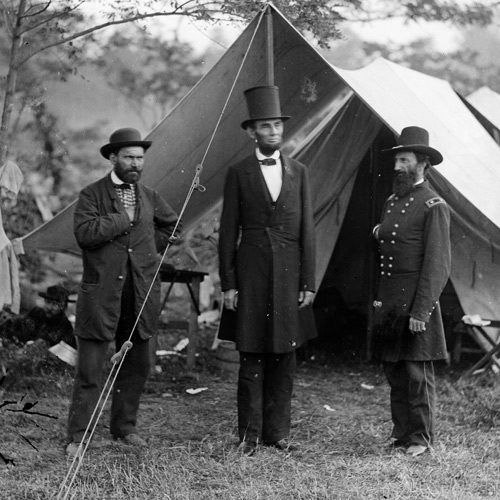
Many thousands more were yet to die, though. Lincoln finally found the commanding general he had been looking for in Ulysses S. Grant, and Grant pursued a relentless war of attrition against Robert E. Lee’s Army of Northern Virginia, while General William T. Sherman cut a crippling swath through Georgia, devastating the heart of the deep South. The war dragged on until April 1865, when Robert E. Lee surrendered to Grant at Appomattox Court House, Virginia. Just a week later, President Lincoln was assassinated by an enraged Confederate sympathizer, John Wilkes Booth.
The wounds left by the war did not quickly or easily heal. Reconstruction, a bitterly opposed attempt by the North to remake the South, lasted until 1877 and ultimately failed.
The Civil War brought an end to slavery and reunited the nation, but the pain of reconciling the differences, many of which began with the birth of the republic, lingers still. The war made our motto true E pluribus unum — from many, one — but the work of making us one is never complete.
The Career that Fear Built: Hedda Hopper Ruled the Gossip Business
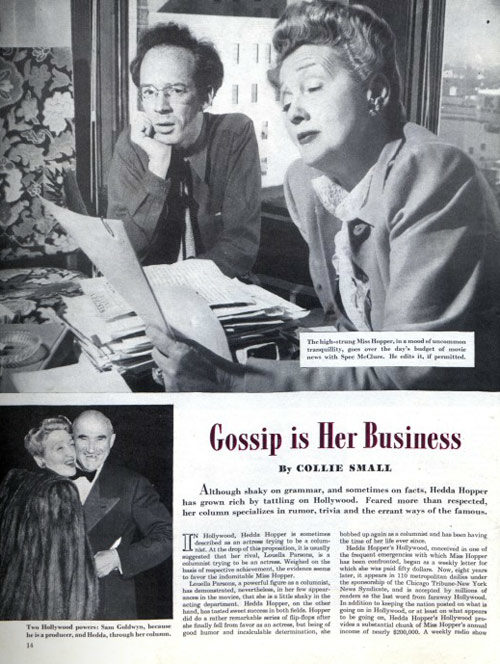
On National Gossip Day, we look at one of the most notorious Hollywood gossips, Hedda Hopper. You wouldn’t know it from this 1947 profile of Hopper, “Gossip Is Her Business,” but her business involved a lot more than just gossip.
Hopper was a formidable power in Hollywood for 27 years. Through her highly popular column, she could ruin stars’ careers and kill movies she didn’t like. Beyond critiquing actors’ performances, she would dissect their private lives, holding up their affairs, marriages, politics, or sexual orientation to criticism. She showed a special disregard for blacks, gays, and Democrats.
She could as easily make a career as end one, however. She revived the sagging career of Joan Crawford in the 1940s and might have helped her win an Oscar.
Movie stars found her helpful, so long as they gave her first notice of their weddings, pregnancies, or career moves. Those who didn’t notify Hedda before the rest of the world were dealt with harshly. One star, for example, announced her pregnancy to Hopper and rival columnist Louella Parsons at the same time. Hopper retaliated by never mentioning her name again (which is why you have probably never heard of Joan Evans).
Readers took her opinions seriously. Ingrid Bergman told Hopper she was not pregnant from an adulterous liaison with a film director. She then told Louella Parsons that she was, in fact, expecting. Furious at being deceived and not getting the scoop, Hopper got her revenge through scathing criticism of Bergman, whom she had formerly promoted. Her outrage was so inspiring that Bergman was denounced on the floor of the Senate as “a horrible example of womanhood,” and a “powerful influence for evil.”
Hopper also cooperated with the red-baiting purge of communist sympathizers in Hollywood. She suspected several stars, writers, and studio executives of communist leanings, and she gave these names to Congressional investigators, helping to destroy even more careers.
Most stars avoided her unless they had some news to offer. Some stars were grateful to Hedda because she was a source of priceless publicity for them. Others simply played along with her, avoiding her wrath. And others acted out their anger over what she wrote about them. Joan Bennett sent her a skunk on Valentine’s Day. Spencer Tracy publicly kicked her backside for gossiping about him and Katherine Hepburn. Joseph Cotton pulled her chair out from under her as she was sitting down at a fancy ball. The other guests, many of whom had been Hopper’s victims, toasted him with champagne. The next morning, he received dozens of floral bouquets from others in the entertainment business who lacked his nerve.
They might have despised her, but they read her, along with the 35 million Americans across the country who followed her column. Bob Hope said of Hopper’s and Parsons’ columns, ““They were the first thing we looked at every morning.”
Hopper knew she how damaging her column could be, and she knew what many thought of her. But she reveled in the reputation. She called herself “the bitch of the world,” and referred to her Beverly Hills mansion as “the house that fear built.”
Her death in 1966 marked the end of what many call the “golden age of Hollywood.” But it also marked the end of an era when one woman had so much power —for good and bad — in the industry.
It Was a Good Day: Yo! MTV Raps Turns 30
Thirty years ago on August 6th, MTV changed the face of music for a second time. Yo! MTV Raps would bring rap and hip-hop culture to a mainstream (let’s face it: white) audience. Overnight, kids around the country became aware of acts and styles that they’d never heard of before, and that new reach reverberated in terms of record sales and an explosion in popularity for the music and its makers. The show became a platform that elevated artists and gave a new window into the culture of black America.
In the seven years since its debut in 1981, MTV had weathered criticism about the lack of airtime for black artists. While Michael Jackson helped facilitate a breakthrough with the success of “Thriller,” enabling his sister Janet, Prince, and others to follow, MTV was still slow to add much in the way of hip-hop to the regular rotation. The rise of Run DMC and their iconic team-up with Aerosmith on their 1985 cover of “Walk This Way” opened more doors, as did the success of acts like LL Cool J and the Beastie Boys. Yet, there was no consistent MTV house for rap and hip-hop culture like MTV had for metal with Heavy Metal Mania (which launched in 1985, segueing into Headbangers Ball in 1987) or “college rock” aka alternative with 120 Minutes (which debuted in 1986).
Run-DMC and Aerosmith made history with Walk This Way in 1985.
Erik B. & Rakim’s Follow the Leader was the first video played in the pilot episode.
An “Ed Lover Dance” montage from a Yo! MTV Raps highlights segment.
Ice Cube’s 1993 hit “It Was A Good Day” is one of many songs to directly reference Yo! MTV Raps in the lyrics.
Healthy Weight, Healthy Mind: How to Create Good Goals
We are pleased to bring you this regular column by Dr. David Creel, a licensed psychologist, certified clinical exercise physiologist and registered dietitian. He is also credentialed as a certified diabetes educator and the author of A Size That Fits: Lose Weight and Keep it off, One Thought at a Time (NorLightsPress, 2017).
Do you have a weight loss question for Dr. Creel? Email him at [email protected]. He may answer your question in a future column.
People I counsel are usually seeing me because they haven’t been able to achieve their goals for weight and health. Many of them are successful in other areas of their lives. At work, they create objectives, manage budgets, and delegate work to get results. Goal setting is easy for them in their roles as teachers, accountants, and sales associates. Even those who aren’t paid for their work, such as the stay-at-home moms and dads, are often amazingly good at organizing their lives when it comes to grocery shopping, getting the kids to and from various events, paying bills, cleaning house, preparing meals, and volunteering for community organizations. I’ve worked with physicians, nurses, and veterinarians who preserve life when they accomplish their goals, and business owners and executives whose work supports thousands of people.
Many of these folks are efficient, well-oiled machines when it comes to getting things done. They’ve learned to set realistic short-term and long-term goals and the results are impressive. But when health goals are at stake, it’s often a totally different story. The machine becomes clunky in one area of their lives and out of sync in another.
Where do they go wrong? Their intentions are nonspecific, unrealistic, poorly thought out, or rehashed from past unmet goals.
Many of my patients refuse to continue setting nutrition or fitness-related goals. Their attitude is, “Why would I set a goal I know I won’t achieve? Then I’ll feel even worse!” They exist between a rock and a hard place, knowing goals are important, but also knowing the pain of failure.
I often ask clients what they’d tell their children, grandkids or other young people about goals. “Would you tell them to forget about goals because you’ll only disappoint yourself when you don’t achieve them?”
That question usually evokes a blank stare followed by a nervous smile. “No, I guess not.”
“So what would you say?” The responses to this question have several themes:
- Goals are important.
- They help us clarify where we want to go and how we can get there.
- Achieving goals is rewarding in and of itself.
- Not achieving goals can provide lessons on how to set better goals.
- Setting goals can motivate us into action.
- Goals can help us separate essential things from all the rest.
In the early 1980s, George T. Doran, a corporate consultant, coined the acronym S.M.A.R.T. for effective goal setting. Since then, educators have adapted the term to meet their needs for different disciplines. I borrowed George’s ideas to help clients remember the importance of weight-related goals.
B SMART
This acronym is easy to remember and the letters stand for the following:
B=Behavior (make sure your goals are about behavior, not just outcomes such as weight)
S=Specific (what, when, and where)
M=Measurable (calories, servings of vegetables, miles walked, steps, minutes of exercise, etc.)
A=Achievable (goals are realistic even when unexpected events occur)
R=Reason (why is this important?)
T=Time Frame (what is the length of the goal—one day, a week, a month?)
And The Reason Is?
When we set weight-related goals, they should have meaning and a clear reason for existing. I end most of my sessions with a goal setting exercise by asking the patient to tell me what he or she wants to achieve before our next meeting together. Sometimes people tell me what I want to hear, just to end our session. An attitude of “Let me set these goals so I can get out of here,” isn’t helpful to either of us. The goal is selected, but it doesn’t have meaning.
Neither is it helpful when someone chooses a goal that’s important to someone else or because of feeling obligated. You probably won’t be successful if you set a goal because a psychologist, doctor, minister, or family member twisted your arm.
Before you set a goal, ask, “Why is this goal important to me?” Write the answer in specific terms. By specific, I mean avoid grand, general statements such as, “I want to be healthy,” or “I want to improve my quality of life.” Those are not specific reasons to eat better or lose weight, and they don’t spur you to action. I once heard a speaker discuss this topic and his technique was so effective that I’ve been using it for twenty years. Here’s an example:
When my patient, Barbara, announced she wanted to set the goal of tracking food in a food journal, I asked, “Why is this important to you?”
“Because tracking my food helps me pay attention to what I’m eating.”
“Why is it important for you to pay attention to your eating?”
“Because it helps me lose weight.”
“So you can what?”
“So I can be healthier.”
“So you can what?”
“So I can live longer and have a better quality of life.”
“Live longer for what?”
“To see my grandkids graduate from high school.”
“Anything else?”
“I have a lot of things I still want to do.”
“Like what?”
“I want to travel to Europe with my husband after I retire and I want to hike the Grand Canyon someday. I want to ride bikes with my youngest grandkids and my future grandkids.
“What else?”
“I just want to feel better.”
“Why does that matter to you?”
“Well, I won’t have to take as much medicine and I’ll have energy to do more things.”
“Can you give me more examples?”
“When I feel better, I like to read and learn about new things. I enjoy work more, I laugh more, and my life is extra meaningful. When I feel bad it’s all about me. I want to rest; I just barely get through the day. It’s easier to enjoy almost everything when I have more energy and less pain.”
The point of this exercise is to distill the reasons for our goals into smaller and more specific ideas. These new, small- scale goals are meaningful, and even joyful. In the above example, Barbara’s food journal is tied to quality time with her grandkids, enjoying her job, laughing, and hiking the Grand Canyon. When the rubber hits the road, these factors offer greater motivation than simply telling herself that keeping a food journal will help her lose weight and get healthier. Visualizing all the things she wants to do drives her to accomplish her goal.
In the next article, we’ll review each of these B SMART points individually.
News of the Week: Goodbye Candy Hearts, NASA Turns 60, and Alex Trebek Might Quit Jeopardy!
Heartless?
There are many things in this world we think we can count on. The sun will rise in the east. The checkout line we choose at the supermarket will move the slowest. Adam Sandler will make bad movies. We also know that every Valentine’s Day we’ll see those pastel-colored candy hearts with messages on them.
But that might not be the case anymore.
NECCO, which stands for the New England Confectionary Company, was the oldest continuously operated candy company in the U.S. I say was because it suddenly closed down last week, without any notice, leaving 230 employees without jobs. The company was sold to an unnamed candy company, and the new company hasn’t said whether they’re going to continue candy production. Some employees have actually filed a lawsuit. The NECCO website was still available until very recently, but it seems to have been taken offline.
The company also made NECCO Wafers, a candy I remember from my childhood that is always unfairly maligned. Sure, the black licorice ones were gross — black licorice candy is always gross — but there was something satisfying about having the others melt on your tongue. The company also made Clark Bars, the Sky Bar, Squirrel Nut Zippers, and Mary Janes, my mom’s favorite candy, and for that fact alone I’d like to see the new company rehire all of the employees and continue to make all of the candies. I don’t understand why they wouldn’t want to.
Space News
This past week could have been dubbed “Space Week” because there was so much space-related news that I couldn’t keep track of it all. There was the story about NASA’s new spacecraft TESS that is searching for new planets; the news that NASA doesn’t have anything for astronauts to wear if they go back to the moon; and the story about the first eight NASA astronauts that will be flying on Space X and Boeing space missions (hopefully they’ll have something to wear).
And if all that wasn’t enough, it’s also NASA’s 60th anniversary, and the agency made a special video to celebrate the milestone.
Jones, Morris, Hoffman, Thome, Trammell, and Guerrero
That’s not the name of a law firm; it’s the list of the men inducted into the National Baseball Hall of Fame and Museum in Cooperstown, New York, this past week.
If you’re already wondering who’s going to be on the 2019 ballot, MLB.com has posted its list of potential inductees. You’ll probably see Mariano Rivera but not Roger Clemens or Barry Bonds.
The Answer Is: Who Is Alex Trebek?
I have two questions about this story. The first one is: Why did Alex Trebek give an interview to TMZ’s Harvey Levin, of all people? Trebek told Levin that his contract is up in 2020 and there’s less than a 50/50 chance he’ll actually continue (he’ll be 80). He does offer two suggestions on who should replace him, though. (There was a rumor a few years ago that Matt Lauer might replace Trebek … but that’s not going to happen.)
Oh, the second question I have is this: Since the exclamation point is an official part of the Jeopardy! title, does that mean I need to put an extra exclamation point at the end of the title if the story is exciting or shocking? Like this: “Alex Trebek Might Leave Jeopardy!!”
These are the things that keep me up at night.
WWII Time Capsule Found
Mike Wimberley needs your help.
Wimberley is a contractor who was working on a home in Cleveland when he found a World War II–era time capsule. It was buried by a soldier named Richard Silagy and includes Silagy’s family pictures, his hat, and even an M14 shell.
Wimberley wants to return the time capsule to Silagy’s family. If he can find them, that is. That’s where you come in. Are you related to Silagy or know anyone who is? Wimberley searched on Facebook but so far hasn’t had any luck.
The Ice Cream Man
How long have you been at your job? I don’t know you personally, but I’m going to guess it hasn’t been seven decades.
That’s how long 81-year-old Allan Ganz of Peabody, Massachusetts, has been selling ice cream. Yup, he started when he was just 10, driving around in the ice cream truck with his dad, who also did it for many years. He says he might sell the truck after this summer, but would like to continue to work for the new owner one day a week. After all, selling ice cream is the best job ever.
I think the real story here is that he has listened to that ice cream truck song for 71 years and hasn’t gone mad.
RIP Patrick Williams, Bill Loud, Judith Appelbaum, and Doug Grindstaff
Patrick Williams was a prolific composer for movies and TV shows, including The Mary Tyler Moore Show, The Bob Newhart Show, Columbo, Lou Grant, and too many others to mention here. He died last week at the age of 79.
Bill Loud and his family were the stars of one of the first reality shows, PBS’s An American Family. The show was both praised and criticized for its depiction of a real family that always had cameras filming them. He died last week at the age of 97.
Judith Appelbaum wrote one of the classic how-to books for writers, 1978’s How to Get Happily Published. It was the first book I read about becoming a writer. She also wrote for The New York Times Book Review and was managing editor for Publisher’s Weekly. She died last week at the age of 78.
Doug Grindstaff was one of the people who came up with all of the sounds on Star Trek, including the transporter, the phasers, and even the doors opening on the Enterprise. He died last month at the age of 87.
This Week in History
First U.S. Patent Issued (July 31, 1790)
The first patent was issued to a man named Samuel Hopkins, who invented an improvement “in the making of Pot ash and Pearl ash by a new Apparatus and Process.” I don’t know what that is either.
MTV Is Launched (August 1, 1981)
The very first video shown was, appropriately enough, “Video Killed the Radio Star” by the Buggles.
This Week in Saturday Evening Post History: Dripping Cones (July 29, 1944)
Dripping Cones
July 29, 1944;
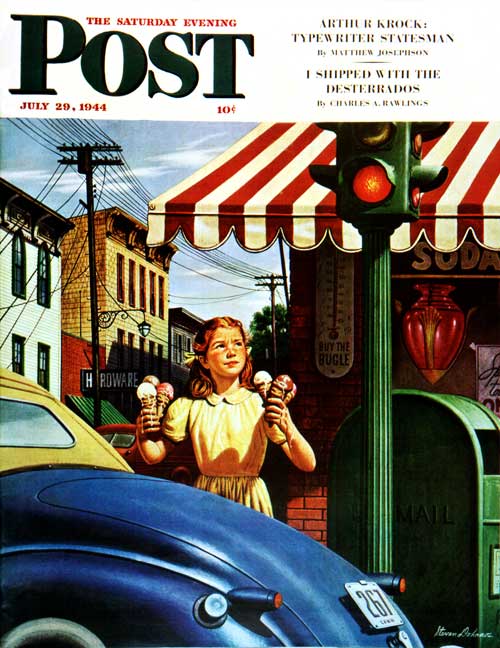
I don’t know why the little girl in this Stevan Dohanos cover thinks she can carry six ice cream cones and get them to her friends across the street before they melt or slip out of her hands. It might make for a fun video game, though — sort of an ice cream–oriented version of Frogger.
Today Is National Watermelon Day
Watermelon is one of those foods that I love but can’t eat any other form of. Meaning, I had a glass of watermelon juice one time and I thought it was rather unenjoyable, even though I’ll eat pieces of watermelon all day long (see also: peas and pea soup).
But I might be up for recipes that don’t change the form of watermelon too drastically, like this Watermelon Salad with Feta and Mint or this Watermelon Fire & Ice Salsa.
And if you don’t like watermelon in any form whatsoever, then get out your knife and make one into a keg, a football helmet, or even a shark.
Next Week’s Holidays and Events
Sneak Some Zucchini onto Your Neighbor’s Porch Day (August 8)
I mentioned this last week, and it really is one of the stranger food holidays. It’s a way of getting rid of the massive amounts of zucchini that are grown this time of year. The best time to do it is at night when your neighbor is asleep.
Book Lovers Day (August 9)
If you have any zucchini left after the above celebration, you might as well combine that holiday with Book Lovers Day and buy the cookbook What the #@)*! Am I Going to Do with All These Zucchini???
Pinocchio Dies, Bambi Gets Shot, and Other Surprising Changes to Disney Movies
Every piece of art starts somewhere. Inspiration can be easily found in original thought, personal experiences, or in older works. It’s not a surprise that a large percentage of films (more than 55% as recently as 2015) began as books and fewer still began as poems. When you have a studio with as long and varied a history as Disney, you’re bound to discover that ideas occasionally come from very unlikely places and with some startling plot developments. With this week’s release of Christopher Robin, itself a new twist on an old series based on books, we look at a few of the more surprising story changes that it took to get some of your favorite Disney films on the screen.
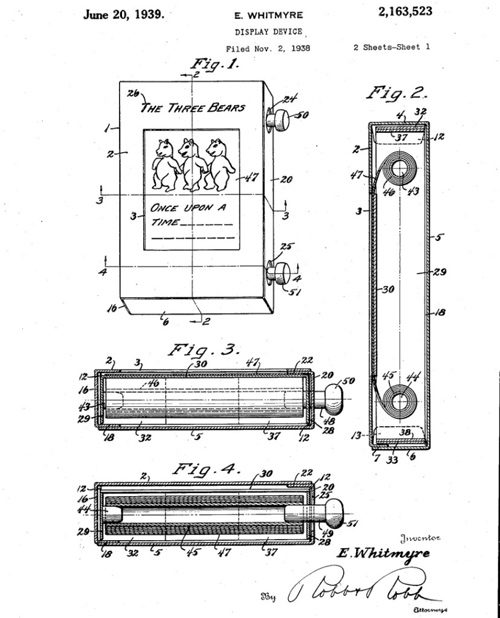
Dumbo Started as a Toy and Book Concept
Dumbo began life as toy and book combo, a prototype called a Roll-A-Book where one would scroll up and down to read the pages. The story was by Helen Aberson with art by Harold Pearl. The marketing department brought the piece to Walt Disney; he skipped the device and went right to the story, buying the rights. Disney’s story department made some changes, including switching out Dumbo’s bird companion for Timothy Mouse. The movie also grew as it went; originally intended to be a short, it expanded as Disney realized its potential. He wasn’t wrong; released in 1940, Dumbo turned out to be the studio’s biggest box office hit of that decade.

Bambi Gets Shot
Two years after Dumbo, Disney released their adaptation of Felix Salten’s novel, Bambi: A Life in the Woods. The Austrian novel published in 1923 and was widely praised, especially for the current of environmentalism that runs through it. The book also has a larger cast of deer and some heavier themes. While Bambi’s mother meets her familiar fate, Novel Bambi also has a cousin named Gobo that dies. In a way, his death is even more tragic, as he was captured and raised by people for a time, only to die when he approaches a hunter under the misconception that humans were now safe. Bambi himself takes a bullet at one point, but survives after being rescued by his father, the Old Prince. On a different note, the book was banned in Nazi Germany under the belief that the relationship between man and deer was an allegory for the treatment of Jews (Salten was Jewish). Max Schuster of Simon & Schuster published the book in the United States and later helped Salten escape Germany; furthermore, he introduced the author to Disney, facilitating the adaptation.
Pinocchio Died by Hanging
Carlo Collodi wrote The Adventures of Pinocchio in Italy in serial form in 1881 and 1882, then published the collection as a book in 1883. Pinocchio was a real jerk. He starts kicking Geppetto before the old man is even done carving him. Soon after, a talking cricket tries to warn Pinocchio about bad behavior, but the animated puppet kills it with a hammer (to be fair, that was an accident). The wooden miscreant goes on to commit several other misdeeds before the Cat and the Fox hang him at the end of the fifteenth chapter. Collodi’s editor talked him into changing the ending, and the writer would compose 20 further chapters, including the puppet’s resurrection by the Fairy with Turquoise Hair, and his eventual transformation into a real boy. When Disney picked up the rights, a wide variety of changes were made to soften the tale. Nevertheless, The Adventures of Pinocchio, bad behavior and all, remains the most translated Italian novel.
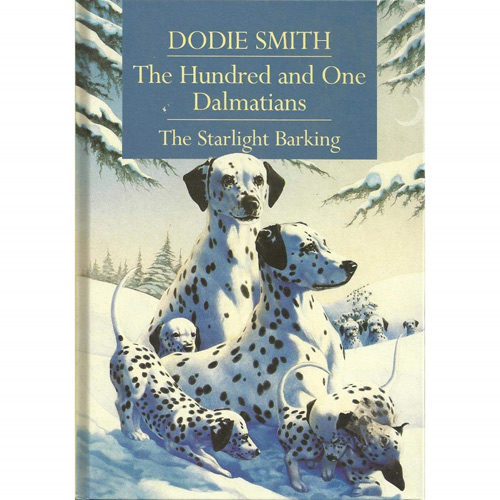
101 Dalmatians Met Aliens
Dodie Smith’s 1956 novel The Hundred and One Dalmatians (or The Great Dog Robbery) would seem fairly familiar in most respects. You have Cruella de Vil, you have the same basic plot, and you have other animals, including a sheepdog, involved in the rescue. The biggest divergence is that there are four adult dogs; Pongo and Missis are the parents of the first 15 stolen puppies, and Prince and Perdita are the parents of a number of other missing puppies. For simplicity’s sake, the film script composited the two dog couples and changed human owner Roger from an accountant to a songwriter. That’s all basic adaptation stuff. What makes the origin here so notable is the reason that Disney never adapted the sequel; frankly, it’s weird. Named The Starlight Barking, the novel deals with humanity being placed under slumber by Sirius, Lord of the Dog Star, an alien canine that has come to warn the animal population that they need to escape Earth before nuclear war begins. We are not kidding. Put into the role of spokesdog, Pongo decides that the dogs should remain with their humans on Earth. Having typed that, we kind of want to see that now.
Hey, Why Don’t We Start with the Second Book?
1985’s The Black Cauldron is frequently considered a low point for the animation studio. Intensely disliked by fans of the source novels and a box office loser for the studio, it generally gets praise only for the score by Elmer Bernstein and its early successful use of computer-generated graphics in some scenes. Part of the story problem hinges on the fact that the film is the adaptation of the second book in a much-loved series, The Chronicles of Prydain by Lloyd Alexander. By all accounts, development was a mess from acquisition of the film rights on up until release, with numerous directors, designers, and animators entering and exiting the project, characters being constantly redesigned, and whole chunks of story being excised. One of the animators who had his designs tossed out was Tim Burton. What remains is a blending of the plot of the first two novels in the series with many important characters and villains omitted, while the characters that remained were largely rendered as more child-like and, well, goofy. The Horned King, an amalgam of two novel villains, stands out as a great design, as do the zombie-like Cauldron-born, but the clashing tones just make it more susceptible to criticism.
Fantasia Got Bigger Than Goethe
Fantasia is now regarded as one of Disney’s finest achievements. In the ’40s, it was considered a box office flop. That’s ironic considered it came into being as an attempt to save a budget. Previously, the “Sorcerer’s Apprentice” segment was intended to be a short, an adaptation of the poem by Johann Wolfgang von Goethe, the author of Faust. As work commenced, the budget kept getting bigger, despite conductor Leopold Stokowski volunteering to work for nothing, owing to his enthusiasm for the project. As costs ballooned, Walt Disney envisioned animating a whole concert, rather than one piece, and marketing it as an experimental venture marrying the best of classical music with the best of animation. And while the initial release struggled to make money in 1941, in part due to World War II cutting off distribution in Europe, the film’s reputation has grown and the budget earned back many times over from re-releases, soundtrack sales, and the ongoing marketing of merchandise based on Mickey’s Sorcerer’s Apprentice appearance.
Lady, Meet Tramp
Joe Grant, one of Disney’s story developers, originally suggested a story based on his own Springer Spaniel named Lady; Lady, it seems, acted jealous around the new baby at home. Walt liked the idea in general, but not the original treatments for it. In 1945, Walt read a story in Cosmopolitan called “Happy Dan the Cynical Dog” and realized that Ward Greene’s story of a wisecracking mutt could work with Grant’s Lady. Walt bought the “Happy” rights from Greene. The combined story would go through a number of revisions over the years; in fact, Grant left Disney in 1949, six years before the movie would be released. In a clever tie-in, Disney hired Greene to write the novelization of the film.
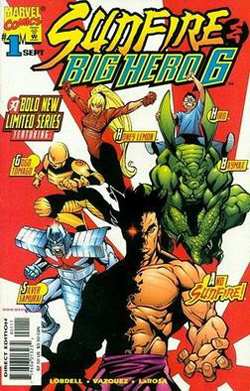
Big Hero 6 Comes from the X-Men Universe
Disney’s Big Hero 6 opened to critical acclaim and huge box office in 2014, earning over $650 million worldwide and capturing the Academy Award for Best Animated Feature. What a lot of people don’t know is that Big Hero 6 is an obscure Marvel super-hero team created by the Man of Action writer collective that got their start in an issue of Alpha Flight. Alpha Flight is Marvel’s team of Canadian super-heroes, originally introduced in X-Men #120 in 1979. In a 1998 issue of Alpha Flight, the characters team up with a group of Japanese heroes to stop a threat in Japan. In addition to new characters GoGo Tomago, Honey Lemon, Baymax, and Hiro Takachiho, the roster includes former X-Men member Sunfire and his cousin, the sometime-hero/sometime-X-Men-antagonist Silver Samurai. They soon spun off into their own mini-series as well as team-ups with other heroes, like Spider-Man. After Disney acquired Marvel in 2009, they began to actively develop a number of properties, including Big Hero 6. With Sunfire and Silver Samurai falling under Fox’s license to use the X-Men characters, the Disney film would opt to use two other Big Hero 6 allies/members from the comics in their place: Wasabi No Ginger and Fred (aka Fredzilla). The rest is animation and Oscar history.
Top 10 Reads for Late Summer
Every month, Amazon staffers sift through hundreds of new books searching for gems. Here’s what Amazon editor Chris Schluep chose especially for Post readers.
Fiction
The Middleman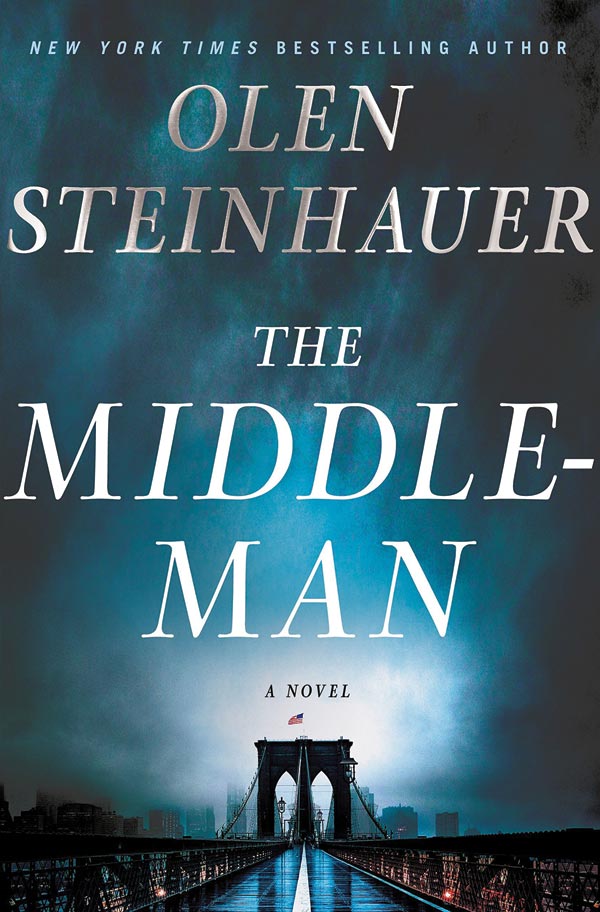
by Olen Steinhauer
A sweeping espionage thriller by the best-selling author, covering all sides of a domestic terrorist group, from their converts to the FBI agents investigating them.
Minotaur Books
If You Leave Me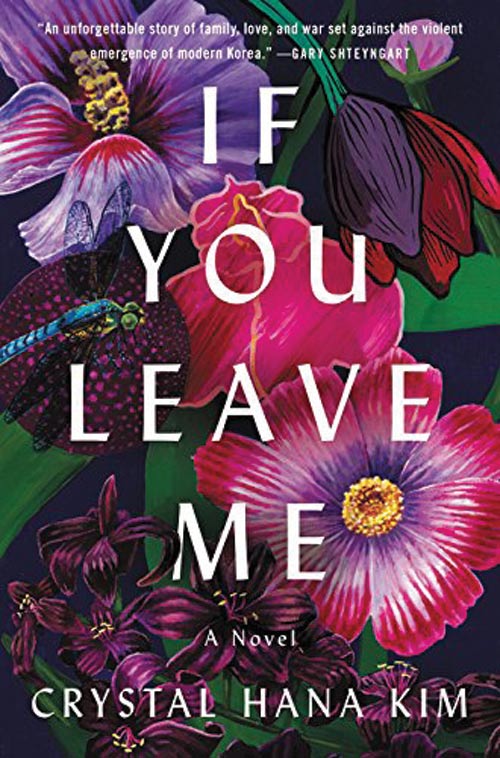
by Crystal Hana Kim
A literary saga of two ill-fated lovers in Korea and the heartbreaking choices they’re forced to make in the years surrounding a civil war that still haunts us today.
William Morrow
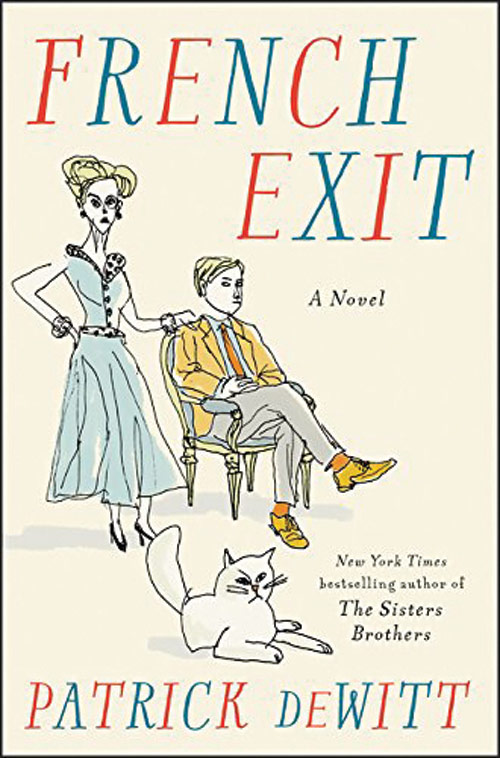 French Exit
by Patrick deWitt
The celebrated The Sisters Brothers author brings us another darkly comic novel, this time about a wealthy widow and her adult son who flee New York in the wake of scandal.
Ecco
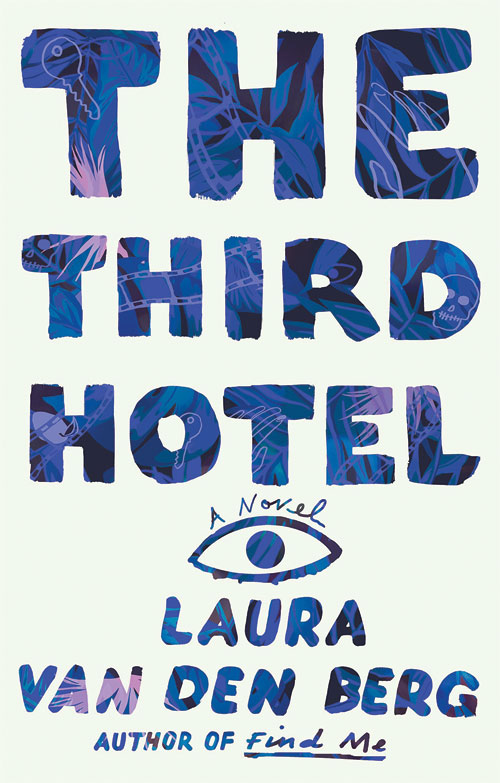 The Third Hotel
by Laura van den Berg
A woman travels to Cuba and discovers her husband there wearing a white linen suit she’s never seen before — and he’s supposed to be dead.
Farrar, Straus and Giroux
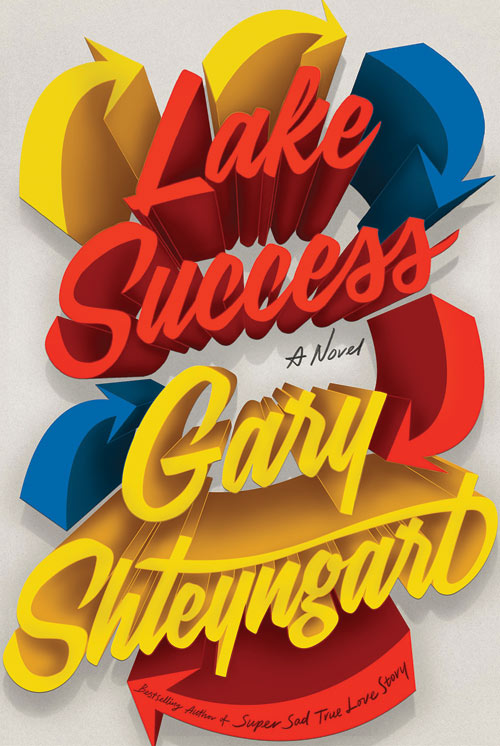 Lake Success
by Gary Shteyngart
A deluded hedge-fund manager leaves billions behind in search of a simpler, more romantic life with his college sweetheart. Spoiler alert: There’s a good chance he won’t find it.
Random House
Nonfiction
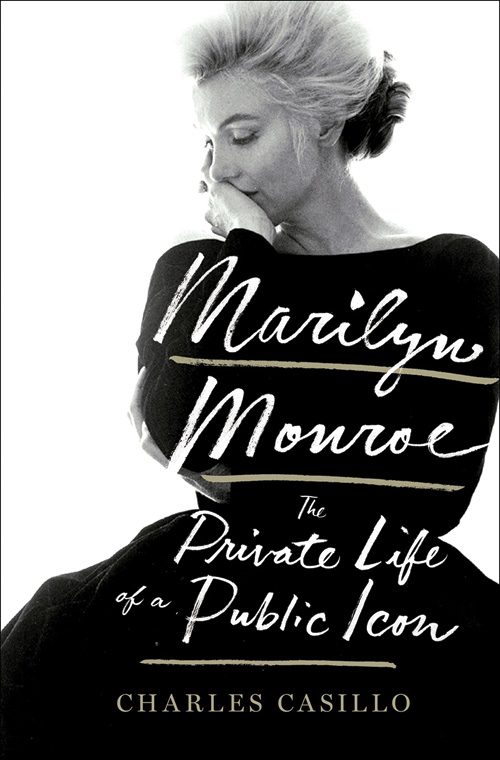 Marilyn Monroe: The Private Life of a Public Icon
by Charles Casillo
A warts-and-all portrait of the complex woman who rose out of an abusive childhood, dealt with bipolar disorder, and turned herself into a bewitching, maddening, brilliant yet flawed star.
St. Martin’s Press
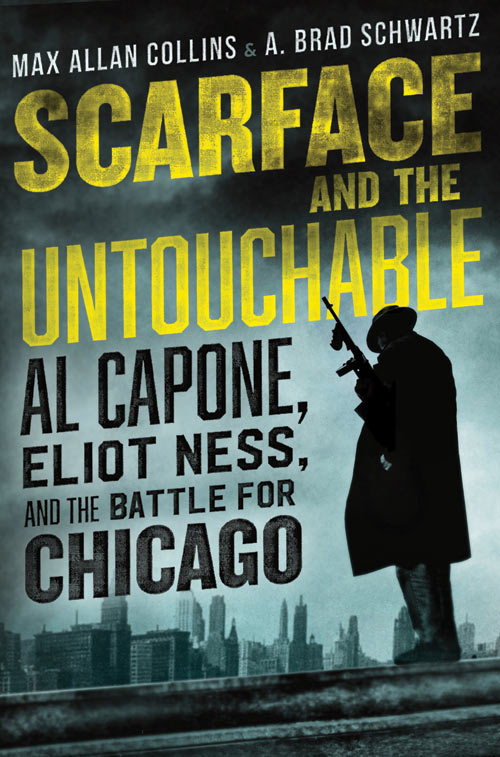 Scarface and the Untouchable: Al Capone, Eliot Ness, and the Battle for Chicago
by Max Allan Collins and A. Brad Schwartz
The Road to Perdition author teams with an acclaimed young historian in a dual portrait of the gangster and the legendary Prohibition agent.
William Morrow
 The Great American Read: The Book of Books
This book profiles America’s 100 favorite novels, providing a snapshot of each one’s social relevance, film or television adaptations, other books and writings by the author, and little-known facts.
Black Dog & Leventhal
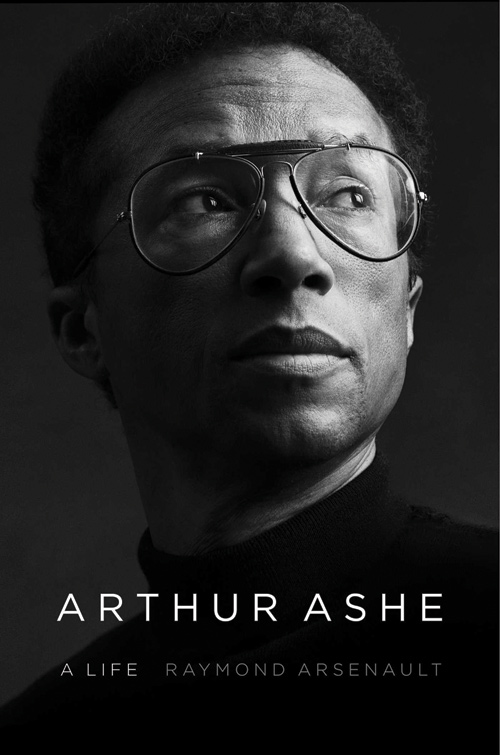 Arthur Ashe: A Life
by Raymond Arsenault
The first comprehensive, authoritative biography of “the Jackie Robinson of men’s tennis,” who, after breaking the color barrier, went on to become an influential civil rights activist and public intellectual.
Simon & Schuster
 ATTENTION: Dispatches from a Land of Distraction
by Joshua Cohen
One of Granta magazine’s Best of Young American Novelists arrives with his first collection of nonfiction, the culmination of two decades of writing and thought about life in the digital age.
Random House
This article is featured in the July/August 2018 issue of The Saturday Evening Post. Subscribe to the magazine for more art, inspiring stories, fiction, humor, and features from our archives.
The Rise and Fall of Working Women
“Title seven is an unrealistic law.” That’s what an unnamed male corporate executive claimed 50 years ago to a Post reporter when asked about hiring and promoting more women. In 1968, the Civil Rights Act had been federal law for four years, but the tangible results of Title VII’s prohibition of employment discrimination were not cutting it for women workers.
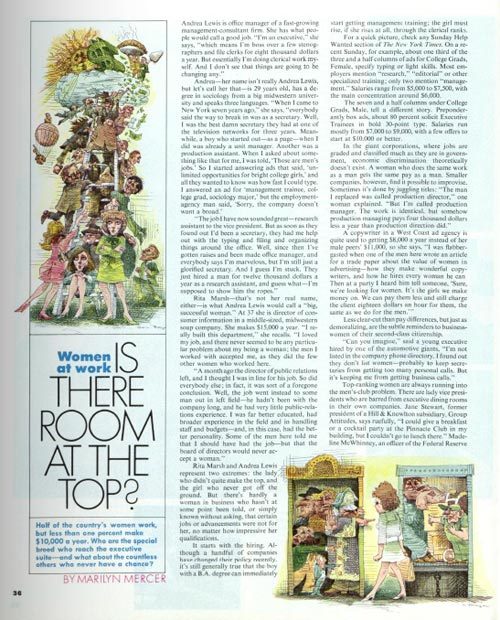
Of the 2,200,000 American earners of more than $10,000 a year in 1968, only 2.5 percent were women, according to Marilyn Mercer’s “Is There Room at the Top?,” published in this magazine. The reasons for the disparity were thought to be systemic and, perhaps, insurmountable. They included outright discrimination, subtle biases, and even a lack of ambition from women themselves.
Mercer found that while almost half of American women were working, they were finding it difficult to advance their careers the same way men could. “Full integration of women into business would mean, ultimately, changing some of our most deep-rooted ideas about sexual roles,” she opined, “And this is something that has never happened before in the civilized — or uncivilized — world.”
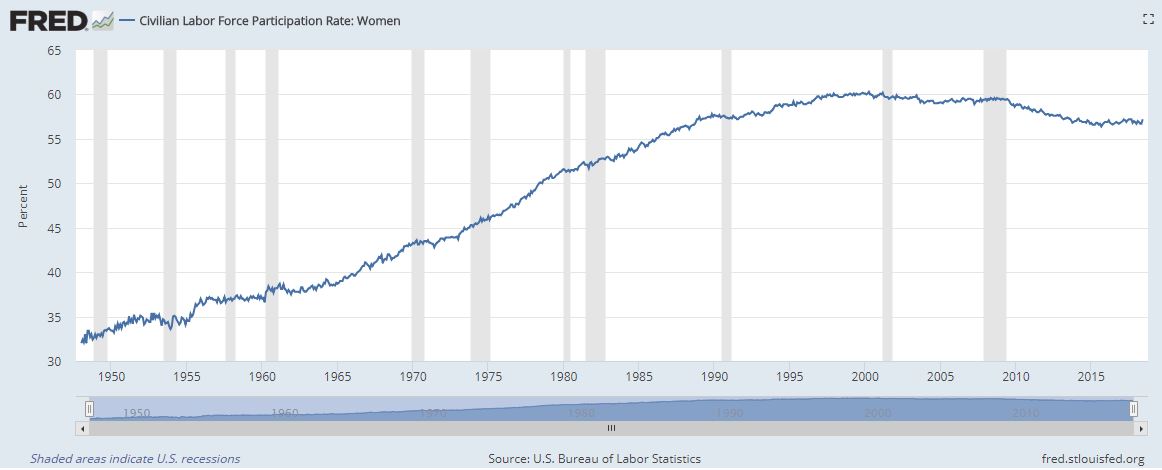
Throughout the decades to come, more and more women joined the white-collar workforce each year. The 1980s and ’90s were characterized by powerful women, from Margaret Thatcher and Oprah Winfrey to fictional women like Murphy Brown and Tess McGill in Working Girl. A cultural urgency for equality saw women donning power suits and going to work. The female labor force participation rate rose to 60 percent by the end of the ’90s, having started at around 30 percent after World War II.
Starting in 2000, however, the tides changed. The percentage of women in the labor force began to drop, and the numbers are now down to that of 1990. The reasons for the lapse in working women aren’t clear, since men have seen the same trend for years. An aging population, an economic recession, and rising enrollment in secondary and postsecondary education could all be factors, according to an economic brief from the Federal Reserve Bank of Richmond. The gender wage gap has also remained stagnant, instead of narrowing as it did in those years of growth.
Women in the U.S. have been taking more management positions. Most of the 4.5 million management positions created since 1980 have gone to women, but those gains have been concentrated in fields focused on people as opposed to production. Even more alarming is that as women claim the majority of any management field (like health services, education, and human resources), the gender wage gap of that field increases. The opposite effect occurred in 1980. In the makeup of CEOs and public administrators, the percentage of women has increased only one percent, and, just this year, the number of female CEOs in the Fortune 500 dropped by 25 percent.
The current obstacles to women workers in America are frequently discussed (sexual harassment, lack of paid maternity leave, unconscious bias), and — though a decades-long reexamining of gender roles has led to some progress — there still exists a more than 20 percent wage gap between men’s and women’s earnings.
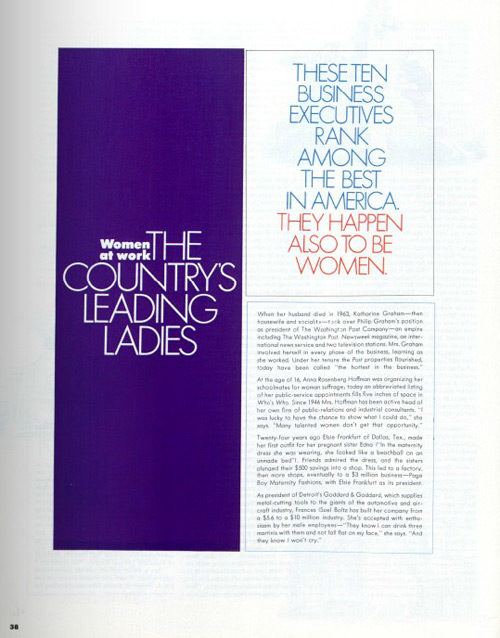
Mercer’s 1968 look at gender inequality is a deep dive into the sexual psychology behind the American workplace at a time of cultural upheaval and The Feminine Mystique. Despite the disappointing state of female labor, the Post writer found plenty of women executives to celebrate. Katharine Graham had been leading The Washington Post Company for years with excellent results, and Sue Boltz had grown the Detroit industrial firm Goddard & Goddard by millions. In the current era of similar watershed women’s movements and gender revolution, Mercer’s work illuminates the fight for employment equality reaching back over 50 years.
North Country Girl: Chapter 63 — Chocolate, Bars, and Bears
For more about Gay Haubner’s life in the North Country, read the other chapters in her serialized memoir.
My tenure as secretary to Kathy Keeton, publisher of Viva and associate publisher of Penthouse, had been a wild mouse of a ride. The man who hired me tried to coerce me into sex, I had been an ignominious failure as a fake Penthouse Pet, and now I had attained almost human status in Miss Keeton’s eyes by finding and returning a $50,000 bauble her jeweler had dropped in her office’s white shag carpet.
There were few beings Miss Keeton deigned to speak to civilly: Bob Guccione, Pets, Viva ́s art director Rowan, her jeweler, the Rhodesian Ridgebacks, and advertisers, existing and prospective. For everyone else, Miss Keeton had perfected a look and attitude that relegated them to the status of bad waiters, or even bad busboys. If you were a mere editor, she had the ability to speak to the air in front of you while simultaneously staring through you.
But for the first time Kathy looked in my direction when she tossed off her demands and occasionally said please and thank you as if she might mean it. A few days following the affair of the missing tennis bracelet, she popped her head into my cubicle.
“Gay. I recall that you had some writing in your background. Would you be interested in doing an article for Viva?”
This reward for the return of the bracelet was almost as good as the diamond stud earrings I had been hoping for.
“Oh yes, Miss Keeton! I’d love to!” I gushed, praying that the assignment would not be something like “How to Find Your Own G-Spot” or “Are You Bi-Curious?” or any other supposedly erotic claptrap that would lower me even further in the eyes of Viva’s editorial staff.
The article I was to write was not about sex. It was about the next best thing: chocolate.
Viva’s advertising department was desperate to have something in the magazine they could tote around to media buyers at ad agencies that said “Look! No more penises! We’re not hardcore porn, just a regular woman’s magazine!” The delusional saleswomen wanted Viva to run an article on chocolate, in the hope that they could lure Nestlé or Hershey’s into the magazine. They convinced Kathy, who dropped into the next editorial meeting to strongly suggest that a story on “The Joy of Chocolate” be published ASAP. The editors, equally delusional in their belief that they were independent, balked at such froufrou subject matter appearing in their magazine. My sole ally, managing editor Debby Dichter, hinted to Miss Keeton that I would probably love to write the piece.
But the idea for an article for chocolate had banged around Kathy’s head too long, and had morphed into something else entirely, something consistent with Kathy’s belief that the Viva readers were all versions of her.
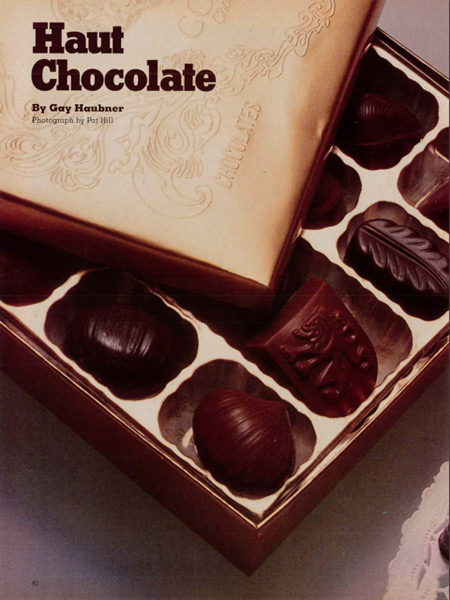
“Gay, don’t include any rubbish, no Godiva, ghastly stuff. I want only the top end, the most exclusive purveyors of chocolate.” I had my title: “Haut Chocolate.”
This writing assignment made me happy, but it did not make me any new friends. Viva’s editors, who tended to be politically to the left of Castro and who were never quite on my side to begin with, hated having the ad staff dictate what articles should run in the magazine. The fact that I was writing this puff piece — Miss Keeton’s secretary! — made it even worse.
What made up for my pariah status was the discovery that when you work for a magazine, you get free stuff.
All it took was a few phone calls and I had boxes and boxes of beautifully crafted and utterly delicious truffles and pralines from Teuscher and Neuchatel and other European chocolatiers messengered to me. I made a small uptick in my reputation by personally delivering each box to a different Viva editor. Then I called and requested more gift-wrapped boxes of chocolates to photograph for the article.
I did not fare as well with the ad saleswomen. Beverly Wardale, the alpha female of that wolf pack, showed up at an editorial meeting shaking the layouts of my article.
“What the bloody hell is this?” she demanded. “These companies don’t advertise! You can’t even buy these bloomin’ chocs anywhere except Fifth Avenue and Switzerland!” The editors all cut their eyes at Kathy, and Beverly, realizing that the article had Kathy’s chocolaty fingerprints all over it, departed in a huff, tossing the pages behind her.
***
I had been at Viva long enough to accumulate a week’s paid vacation, but I had not accumulated the money to pay for a trip anywhere, unless it was via subway. My artist boyfriend, Michael and I were pretty much living on my $12,500 secretarial salary. The monthly check he received for his illustrations in Esquire magazine went right back out the door in the form of child support for his two kids back in Chicago.
Michael was starting to get illustration assignments from astute art directors who recognized his uncanny ability to capture personality in his portraits. He did not draw caricatures; he drew character. Michael’s genius was his ability to express in a few black lines and a charcoal wash the inner person. Michael could see, wanted to see, below the skin, past the face one presents to the world, and he looked with equal parts of empathy and curiosity.
Michael approached everyone with a wide open heart and whip-smart intelligence. He wanted to know what made them tick, what they liked, what motivated them. He was able to find common ground with anyone: he could talk sports, art, music, books, and movies, and was always more interested in your opinion than his own. I never introduced him to a single person who did not want to be his friend.
Both Viva and Penthouse were too slick, too air-brushed to have any use for Michael’s intellectual style of drawing. I dragged him and his portfolio up there anyway, and had him meet as many of the staff as I could buttonhole in a loop about the office. Michael’s charm turned out to be more effective in redeeming my reputation than a $100 box of truffles.
Even Viva’s editor, Gini, regarded me with a less jaundiced eye after she met Michael. Her own boyfriend, Bill Plympton, was also a cartoonist and illustrator, although a considerably more successful one than Michael.
My first friend at Viva, Debby Dichter, had long been a fan; she may have had a small crush on Michael. One night at dinner, Michael confessed to her, “I feel terrible” (he did, Michael was really really good at guilt) “that I can’t afford to take Gay on a vacation. She deserves it,” and he looked at me as if I were the moon and the stars.
Although I had mentioned our lack of funds to Debby on the few occasions it was my turn to complain about something, to please Michael Debby now sprang into action.
“My family has a house on Cape Cod, in Wellfleet. You could use it. It wouldn’t cost you anything.”
Michael and I set off in a borrowed car to a borrowed house, which turned out to be the perfect Cape Codder: an elegant two-story modern home, all glass and wood, set on a thickly treed lot, no neighbors in sight. I was thrilled, as was Michael, until it started to get dark.
Michael peered into the crepuscular forest and shuddered.
“There’s nobody around. What do you think is out there?”
“Owls, sleeping chipmunks…”
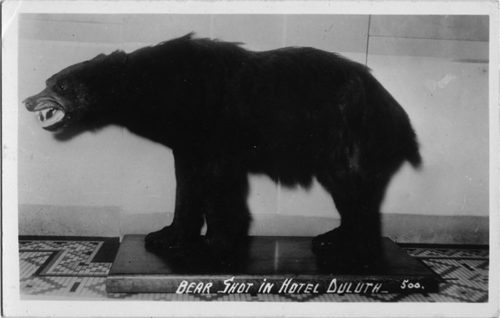
“Bears?” asked Michael. Up till now, to Michael a bear meant a burly man wearing a football helmet (or his young baseball playing relative, a Chicago Cub). I had grown up in a town that was a regular commute for bears; the classy Hotel Duluth had The Black Bear Lounge, as one had once wandered through the lobby, a bear in search of a beer in a bar.
“Michael, the closest bear is probably in the Boston zoo.”
“There are other big animals though,” worried Michael, as dusk erased the space between the trees, leaving only a few birches glowing like skinny ghosts. “Like ah, moose…moose and…”
“And squirrel?” I said in my best Boris Badenov voice. It didn’t help. Michael turned on every light in the house, including the garage and the back door. The master bedroom, with its big windows and woodsy view, was on the ground floor, too close to marauding squirrels; we slept in the attic, sharing a twin bed under the gleam of a Tinkerbell nightlight.
Michael was much happier in Provincetown, with its paved streets, stores, restaurants we couldn’t afford, art galleries that were not yet open for the season, and bars. He especially liked one bar that offered a 10:00 a.m. happy hour to accommodate the fishing crews. We ended up spending most of the day in that bar, a day I had planned on visiting the famous Cape Cod dunes, my goal a pilgrimage to the primitive (no electricity, no running water) shacks where Norman Mailer, Jackson Pollock, Eugene O’Neill, and Tennessee Williams had created masterpieces. Michael had agreed to this plan, but it was now almost three o’clock and I had reached my tolerance for day drinking.

We arrived at the dunes at the exact moment when the western light casts a weird spell over the lunar landscape, flinging deep violet shadows across that treeless spit of land, flattening everything out, and warping perspective; it was like being in a real-live Mystery Spot. We could see one shack on top of a nearby dune; after a half-hour trudge through the sand, the shack actually seemed farther away.
Michael turned around. The only sign of which direction we had come from were our footprints, slowly filling in with sand.
“We’re lost!” Michael freaked out. Outside of that gray, dilapidated cabin, which was either a block or a mile away, there were no man-made objects in sight.
I could not take this seriously. “At least there’s no bears,” I ribbed him. Michael looked at me as if I were a heartless monster who had lured him to this death trap.
“C’mon Michael, you have got to be kidding.” He wasn’t. “Cape Cod is like a mile wide here. It’s impossible to get lost, we walk one way and we hit the sea, the other and we hit Highway 6.”
“Or we could just walk in circles till we die.” I gave up, took Michael’s hand and, turning our backs to the setting sun, we returned to the parking lot and then on Michael’s insistence, back to the Fisherman’s Arms. He desperately needed a drink.

By the end of the week, Michael had spent so much time in that bar that he was practically an honorary fisherman, having charmed even the crabby old lobstermen. He justified his bar tab by the fact that when I came to pick him up after my solo visit to the Pilgrim Spring or retracing Thoreau’s Cape Cod walks or bird-watching at the kettle ponds, he was not allowed to leave without a flounder or haddock or pair of lobsters for our dinner. I gave a silent thanks to the gay waiters at Arnie’s back in Chicago for teaching the lowly coat check girl how to bone a Dover Sole and crack open a lobster.
Celebrate Spider-Man Day: 8 Wacky Wall-Crawler Facts
Happy Spider-Man Day, True Believers! What’s that? You’ve never heard of Spider-Man Day? That’s the day set aside to commemorate all things Peter Parker, aka the Amazing Spider-Man. Since his first appearance in Amazing Fantasy #15 (cover-dated August, 1962) at the hands of Stan Lee and Steve Ditko, the character has achieved worldwide popularity and acclaim, becoming a star of comics, animation, toys, and film. Since we have the great power of the press, it is our great responsibility to celebrate him. Granted, editorial can’t decide if he’s a threat or a menace, so we’ll take the offbeat path and cover eight of the more unusual facts about your friendly neighborhood hero.
1. He Once Fought Crime with a Bag on His Head
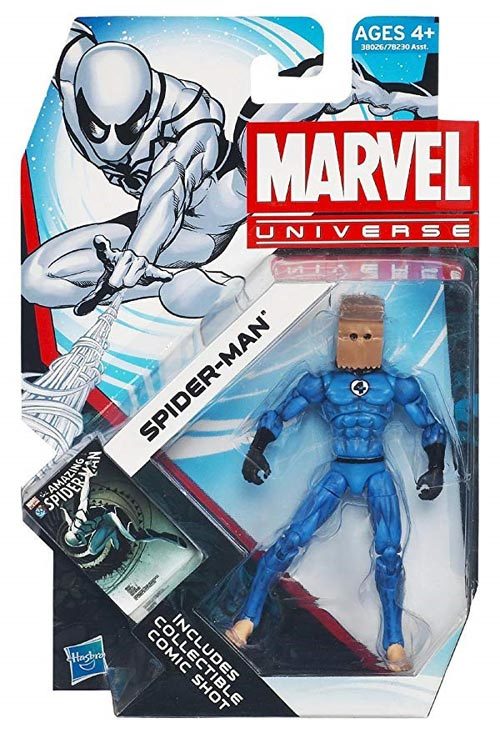
In Amazing Spider-Man #258 (written by Tom DeFalco with art by Ron Frenz and Joe Rubenstein) from 1984, Spider-Man was contending with the growing menace of the alien costume he acquired during the Secret Wars event. With the help of the Fantastic Four, Spidey managed to get the costume off and under containment at the FF’s Baxter Building. Mr. Fantastic loaned Spidey a spare FF costume so he could get home, but Peter still needed to cover his face. Enter the Human Torch, who provided Spider-Man with a . . . paper bag with eye holes. This might have been fine in the short term, but Spider-Man ran across a shoot-out between police and criminals and dropped in to help out. Of course, there was press nearby and the super-hero swung away super-embarrassed.
2. His Costume Came to Life
Going back to that alien costume, it turned out that in Secret Wars #8, Spider-Man had accidentally set free an alien symbiote that had approximated the look of a black costume. He began to wear the outfit, but felt it influencing his actions. Though Spider-Man did free himself from the alien, it wasn’t done with him yet. Eventually, the symbiote would find and bond with Peter Parker’s photographer rival Eddie Brock. The lethal pairing would become the villain known as Venom. Over time, Venom has gone through many permutations and host bodies, sometimes acting heroically and sometimes acting as pure evil. Regardless, the character became wildly popular and will be featured in its own feature film, Venom, later this year.
Trailer for the Sony film Venom, 2018.
3. There’s a Spider-Man in Every Reality
Comic books LOVE the Multiverse Theory. That’s the concept that we live in but one of an infinite number of universes. In comics, the trend generally dictates that each universe contains different versions of our heroes; in some cases they’re villains, in some they’re radically different. The Spider-Verse event, primarily written by Dan Slott, pitted the Spider-Men (and Women) of a number realities against Spidey’s old nemesis Morlun and his family, The Inheritors, who wanted to hunt down and feed on the powers of the spider-heroes. Among the alternate Parkers that joined the fun were Ultimate Spider-Man Miles Morales, Spider-Gwen (from a reality where Peter’s doomed girlfriend Gwen Stacy became a spider-hero), Spider-Man U.K., Cyborg Spider-Man, Spider-Punk (yes, a punk rock version of the web-slinger), and the much-loved anthropomorphic hero, Peter Porker, the Spectacular Spider-Ham.
4. He Thought He Was His Own Clone
What’s crazier than multiple Spider-Men? Multiple CLONE Spider-Men! In the mid-’70s, the Jackal (created by Gerry Conway and Ross Andru) began a campaign of terror against Spider-Man because he blamed the hero for the death of Gwen Stacy. Part of his plan involved creating a clone. Many years later, in the ’90s, the clone re-emerged. The clone, now using the name Ben Reilly, and Peter became convinced that they’d switched places and that BEN was the real Peter while Peter was the clone. The Clone Saga became the source of huge fan controversy that was only (partially) resolved when Ben died in a battle with the Green Goblin and underwent clone degeneration, revealing that Peter had been the genuine article all along. However, we also found out that Ben wasn’t the only clone, and currently, two clones of Peter (Ben, using the alias Scarlet Spider, and Kaine) also operate in the Marvel Comics universe.
5. His Parents Were Secret Agents
Richard Parker and Mary Fitzpatrick met at work. Only their jobs were at the C.I.A. The two agents fell in love, married, and operated as a team. On one mission, they rescued a Canadian agent that would turn out to be the man named Logan (or Wolverine, if you prefer). When their son Peter was born, Richard and Mary would leave him with Richard’s older brother Ben and Ben’s wife May. One day, Richard and Mary went off to face the Red Skull, and they never returned. As such, Peter was raised by Uncle Ben and Aunt May; he wouldn’t discover the truth about them until years later, a story chronicled in Amazing Spider Man Annual #5 from 1968.
6. Doctor Octopus Took Over His Body
Doc Ock was dying! But like a lot of creatures, a dying Doc Ock is a dangerous Doc Ock. The evil genius figured out a way to switch minds with Spider-Man so that the hero was trapped in the dying body. However, Peter had the last laugh; while fighting an out-of-control Octobot, Doctor Octopus (as Spider-Man) is forced to relive Peter’s memories of loss and heroism. Realizing that he should be a better person, Doc Ock saves the day as Peter Parker dies in this body. Doctor Octopus, still upholding the ruse that he’s Spider-Man, vows to become a superior Spider-Man, a better man and hero than Peter could be. Eventually, it’s revealed that Peter’s mind is still alive inside his own body. During a crucial moment where his love Anna Marie is in danger, Doc Ock allows Spider-Man to retake control of his body to save her, admitting that Peter Parker was the superior Spider-Man all along.
7. An Automatic Camera Did His Job
No clones, possessed bodies, multiple Spider-people or alien costumes here. We just think it’s funny that Peter Parker made a living for years as a photographer by using an automatic camera to take pictures of himself in action for money. In a super-hero universe filled with billionaires like Tony Stark, scientists like Reed Richards, or even occasional taxi drivers (one of Moon Knight’s personalities; long story), making money off of a camera setting seems like a fairly hilarious occupation.
8. The Spider Bit Someone Else
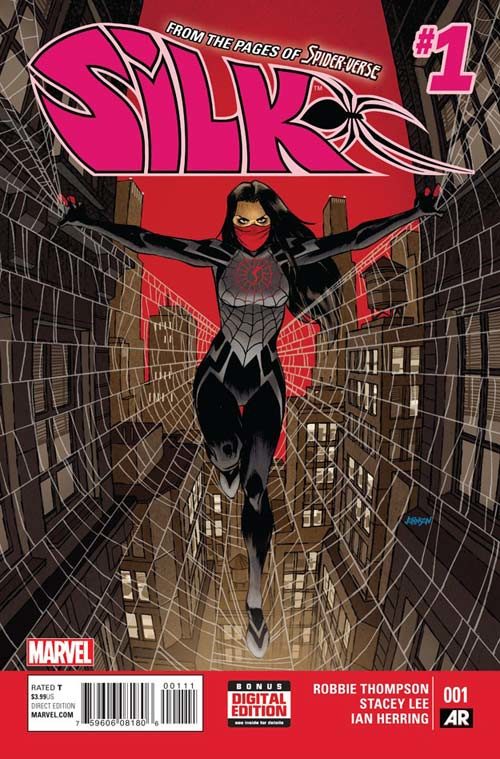
We all know that Peter Parker got his powers after being bitten by a radioactive spider. Did you know that the spider lived long enough to bite someone else? That someone was Cindy Moon, another young student. Cindy was trained by sometime spider-character mentor Ezekiel, and he locked her in a bunker for safety when the threat of Morlun first appeared. Unfortunately, she was in there for years until Spider-Man found out the truth and freed her; at that point, she adopted the heroic identity of Silk. Even more unfortunately, her freedom is what attracted the attention of the Inheritors, kicking off the events of the Spider-Verse above. These days, Cindy is a trainee in S.H.I.E.L.D. academy and adventures alongside Peter and other heroes.
There you go, hero fans! Those are some of the strange tales that surround your favorite web-head. And we didn’t even mention the time that his wife traded their marriage to a demon to save Aunt May! As they say, there’s always next year.
Escaping the Facebook Bubble
Following revelations that Facebook sold private data to third-party app developers earlier this year, #deletefacebook became a thing and, for the first time ever, more daily U.S. users were quitting than joining. I found this amusing, since I had quit over a year ago. I didn’t quit because I objected to Mark Zuckerberg’s siphoning off personal data. That didn’t surprise me in the least. How else did people think Facebook became a $500 billion company? I quit for entirely personal reasons.
I had become addicted.
I like to think of myself as a successful humor columnist. And I used to earn a modest living selling my work to name-brand magazines. Then the editors I had cultivated over the years started getting replaced by humans born when some of my current undergarments were manufactured. These millennials had their own favorite writers from websites with ultra-trendy if nonsensical names like Boing Boing, Gizmodo, TorrentFreak. I was getting a lot more rejections than acceptances. Then even the rejections stopped.
But it didn’t depress me. Because when I powered up the computer every day to see nothing of interest in incoming email, I could cheer myself up by clicking on Facebook. Because among the 10 billion or however many Facebook members existed somewhere in the world, there were always a few who remembered my writing — people I could count on to “like” posts daring to reminisce about the Monkees and Monty Python movies. These were sweet people just as dismayed by what was happening to mainstream media and popular culture as I was. Sometimes, more than 300 people engaged with my posts. This was validation: I was still a successful writer.
My audience was out there. I could see their “likes” and “loves” and “LOLs.” But in reality, they were people who read what I wrote just because I happened to be the best thing — or the first thing — on their Facebook newsfeed at that moment. And they didn’t have to pay me a cent to read it. I had unwittingly become a full-fledged member of the Facebook sales force, helping to sell ad space with my copy and getting paid nothing in return.
Yet I hadn’t noticed because Facebook’s developers are paid well to maximize its addictive value. The social network is exquisitely designed to keep its users chained to the screen and involved as long as psychologically possible — and longer — to give each of us the perfectly tailored fantasy of staying completely in touch with the current events and the people we want to know about in the precise way we want to know about them.
Facebook can be anything we feel is lacking in our own personal lives. To conservatives, it’s the Rosetta Stone for translating liberal distortions of the truth. To liberals, it’s for clearing up the conservative distortions. To insurance salesmen, it’s a cocktail party where people are fascinated by their sales pitches.
I was in the bubble like so many others. Then one day, I was on the beach with my 6-year-old daughter, staring at my phone instead of watching her. I was reading half-baked opinions about Donald Trump by some guy I met on vacation in 2008. And I missed her first-ever handstand. The infuriating reality of how I was wasting my time hit me in a flash. I was liberated.
Well, not yet. I still had some major detoxing to do. Saying goodbye on Facebook isn’t easy.
I was shocked by how many Facebook friends begged me not to quit when I announced I would. Many were people I’d never heard from before. Some were familiar names I had “friended” because I respected their work but had no idea they ever saw my stuff until they told me how much my posts meant to them.
Many of them seemed equally addicted to the Facebook experience. And they didn’t want to lose a fellow addict. “But what about the networking value?!” one guy asked. Networking is one of the very powerful lures of Facebook. But in reality, nothing amazingly good ever came out of my Facebook decade. It never landed me a real job, or a book contract, or even a single freelance assignment. It only seemed like it always would — not unlike the elusive jackpot you always imagine with every slot pull. A ton of useless “U da man!”s was my biggest payout.
To some “friends,” it was as if I had posted a suicide note and was leaning out of my high-rise bedroom window. To me, it was more like being in a crack den and theirs were voices trying to convince me that cleaning up and leaving was a bad idea.
But I jumped. I deactivated my account and deleted my phone app. And the timing couldn’t have been better because I had previously made plans that same weekend to visit a cabin up in the woods with no cell service owned by a buddy who had never joined Facebook. “Why do you need to be validated to be happy?” he asked when I described my separation anxiety. “Why is it so important to your self-identity for strangers to read your words and laugh? Isn’t it more important to be a present father than a popular writer?”
The first 24 hours of any addiction withdrawal is always the worst. Every time something funny happened, I died inside not sharing it.
But I was off the grid. Even if I hadn’t deactivated Facebook, I wouldn’t have been able to access it. And as the weekend wore on, Facebook detox turned into rehabilitation as we played guitar, drank Coors Light, and watched North By Northwest with our families.
A week later, not using Facebook felt as natural as being abused by it had been. Two weeks in, I started seeing some major improvements in my life.
Instead of learning what my former college roommate eats for breakfast, I walked my daughter to school without once checking my phone. Instead of “aww”-ing at a former co-worker’s puppy climbing stairs, I admired how beautiful my wife looked in real life.
Every now and then, I’d get a text or email from someone only just noticing my absence, someone asking “how do I get in touch with you?” without realizing that they just had. (One sent a message to my wife, worried that I had died.)
There was a brief Facebook backlash to my exit, but it was a sarcastic one that made me laugh. A childhood friend started a group called “We Never Liked Corey Anyway,” adding my wife to the group to be sure I’d know about it.
My favorite post in that group was: “Can you imagine how huge of an ego boost this group would be to him?!”
It actually was, and that’s part of why I belong in real life, not on Facebook.
Since writing this piece, the author has found a full-time job that requires his presence on Facebook. He swears he spends no more than an hour a day on the site, and it’s all strictly business.
This article is featured in the July/August 2018 issue of The Saturday Evening Post. Subscribe to the magazine for more art, inspiring stories, fiction, humor, and features from our archives.
“The Undecided Blonde” by Timothy Fuller
Summer is for steamy romance. Our new series of classic fiction from the 1940s and ’50s features sexy intrigue from the archives for all of your beach reading needs. In “The Undecided Blonde,” Hannah is surprised when her past lover Hank, a playwright, turns up to reignite their romance. Her new man, Tom, isn’t so keen on the idea. The 1955 short romance by Timothy Fuller features a classic love triangle with Hollywood types in a small town.
The town of Santuxit, Massachusetts, was just as quaint as Purdy expected. There was a tiny park with old white houses crowded up around it and an ancient church at one end. It was snowing, and each vista was like a Christmas card before they went arty.
Purdy pulled into an early-colonial gas station in the center of town and was surprised that the pumps weren’t finished in knotty pine.
“Say, Mac,” he asked the attendant, “which way to the chowder factory?”
“Yonder,” said the man. “Quarter mile out on the Nubbin Road.”
So Purdy took the Nubbin Road and, sure enough, there was the factory. It had once been a railroad station, but now there was a sign in antique letters reading: The Chowder Works.
“Crickey,” said Purdy.
He’d make this the shortest interview on record just grab the facts and be back in Boston by dinnertime. The place was open, aromatic, neat and, so he thought, empty. It wasn’t until he looked through the grilled window of what had once been the ticket office that he saw the blonde on the cot in there. She was on her back with one arm thrown over her eyes but despite this obstruction the total effect was promising. The chin was good, the lips generous, and what he could see of the nose was upturned. Although Purdy ranked jeans with middy blouses as unimaginative female attire, this pair was well filled and, below, the ankles were nicely fashioned. Also she hadn’t followed the current trend of hacking off her locks with dull shears. Her hair was the color of copy paper left a day in the sun, and it was long, soft and intelligently curled at the end.
Why rouse her, Purdy asked himself. She would then talk, and no talk from a girl whose career was chowder making in an abandoned coastal-railway station could amount to anything. Purdy knew For months now he’d authored that popular newspaper series entitled Your Enterprising Neighbors and few of the neighbors, once away from their enterprise, had proved swift with their dialogue True the twelve-year-old who manufactured seat covers for English bicycles out of imported tartan and the little old lady who knitted bottle socks in your favorite college colors had been full of worldly wisdom, but from the dreamers in between — the gadget and toy makers, the bird fanciers and animal trainers, the jelly brewers and herb gardeners, the clothing designers and all the strange highway entrepreneurs — frankly nothing of interest or value.
On the other hand, Purdy reflected, resting his elbows on the ledge outside the ticket window, this doll might not even work here. His information gave the proprietors of the chowder pitch as two ex-New York City typists who had fallen in love with the area while vacationing the previous summer. This girl looked far too young and unjaded to be a party to any such bucolic deal.
As usual when contemplating a new girl, Purdy allowed his imagination to roam at will. Let’s say it’s low tide, he assumed. The typists are out on the flats in their hip boots, digging tomorrow’s clams, and the blonde here is a niece of one of them. She’s half a year out of Yale Dramatic School and is on for the winter to live frugally and finish writing her play. She’s been up all night with the third act and is worn out and depressed. More than anything else right now she needs advice and encouragement. When she wakes up we’ll seek out some quiet local bar and —
“Hello, Hank,” said the girl, and sat up.
Only the eyes were familiar. They were green, and he was certain at one time in his past he had looked deeply into them, but no bell sounded.
“Madam,” he said, bowing, “you have me at a disadvantage.”
She advanced, laughing, to the grille. “This is your life, Henry Purdy,” she said. “It is June and we are dancing. You are twenty-one and full of great plans for yourself. You will have three hit plays running on Broadway and then you will return to claim me as your bride. I am fourteen and almost believe you. We are in Miles River, Indiana, where you are best man at my brother’s wedding.”
“Hannah Willoughby,” he said, awed. “For it was she.”
“The same.”
He rattled the grille, but it was immovable. “Come out of there, Hannah Willoughby. I desire to kiss you.”
“A splendid idea,” she said, and hurried around through the door.
But he didn’t kiss her. He shook her hand and patted her shoulder, because she was no longer fourteen and she was Horace Willoughby’s kid sister and Purdy had his code.
“Don’t tell me you’re mixed up in this clambake, Hannah,” he pleaded. “The letter I got was signed by a Carlotta something.”
“My former partner. She thought we could use the publicity. But Carlotta went back to New York ten days ago. Claimed she was getting cabin fever. She was sleeping in the baggage room, and it has no window, so — ”
“You live here?”
With her thumb she indicated the ticket office. “Tw o windows. Inside and out.”
“Does Horace know? Won’t he send you fare to get back home?”
“This is a nice little racket, Hank,” she informed him, bridling. “Right now I ‘m clearing fifty dollars a week.”
“Gad,” he said. “And Carlotta gave up her share in this? She must be out of her head.”
Her chin went out, and with it her fine full lower lip. She looked as if she might readily sock him.
“I jest, Hannah,” he said quickly. “ That is Purdy’s way when confronted with imponderables. Believe me, I ‘m an expert in these undertakings, kid, and yours looks sound enough. Sloth alone can keep you from rolling in riches.”
She was mollified. She led him happily around the pots and pans, explaining the intricacies of the plant’s operation. It appeared that she and Carlotta had stumbled upon the fact that no real, fully flavored, old-fashioned clam chowder was commercially available. The catch, they’d discovered, lay in the nature of chowder itself. To be right, it had to be fresh. Why not, they’d reasoned, make up a concentrate of the essential ingredients, lacking only scalded milk, and deliver it fresh to institutions like schools, colleges, hospitals, clubs —-
“Take schools alone, Hank,” she said, with fire now in her wild green eyes. “You’ve heard of the hot-lunch program? Do you realize that within a radius of forty miles of where we now stand there’s at least a hundred thousand school children who must be fed something at noon five days a week?”
“I t’s shocking,” he admitted. “Do you feed all of them all by yourself?”
“Oh, I don’t do it alone. Mrs. Pina comes in mornings to help with the potato dicing, and Charley Shaw shucks clams and drives the truck. We haven’t really touched the potential market, Hank. This could be big!”
He nodded sadly. She was an excellent girl, marred only by the eternal dream of easy wealth. But he had a nice gimmick for his story: Hoosier shows Yankees way to make clam chowder.
“Do you know quahogs?” she asked, holding out a large brown mollusk for his inspection. “ They’re the big brother of littleneck and cherry-stone clams. They live to be thirty years old. The Latin name is Venus mercenaria.”
“A very pretty name,” he said. “A pretty name for you perhaps. Do you ever get out of here? Do you ever have fun?”
“Fun,” she said, and sighed. “That’s you, isn’t it? The fun-loving Purdy. Hankus comicus. Yes, I have fun, Hank. For one thing, I ‘m getting married next month.”
He felt a short, inexplicable spasm in the pit of his stomach, but at once it was gone. All pretty girls grew up and got married. It was in the nature of things. In time, no doubt, he’d get married himself.
“Well, that’s fine, Hannah. Congratulations. Is it anyone we know?”
“His name is Tom Burnett. He’s a veterinarian here. You could meet him, but he’s gone to a meeting in Worcester to read a paper tonight on wood ticks. They get on dogs, you know, and Tom is working on a permanent repellent.”
Purdy couldn’t help himself. “My,” he said, shaking his head. “And there I was thinking you might not be having fun!”
“Very amusing,” she said, and smiled. “ I was about to ask you to stay and eat some lobster with me because there’s something I want to talk to you seriously about, but if ——-”
“Hannah,” he said, “ if there’s something you want to be serious about, I promise to stay and eat your lobster. Is there anything we might need to go with it? Beer, wine, whisky, brandy?”
“I don’t drink,” she said, but he shot her a stricken look and she giggled in spite of herself. “Ordinarily, that is. Oh, Hank, it is good to see you again, and it’s a long cold winter. I’ll write you a list.”
He took her list and found a remarkable store that carried newspapers, drugs, hardware, groceries and a splendid selection of grain and malt beverages. It was run by a laconic character actor in a hard straw hat who thawed a bit under Purdy’s final extravagant purchase of a pint of cognac.
“Tell me,” Purdy asked casually, as he counted his meager change, “who’s the best veterinarian here in town?”
“Doc Burnett.”
“Good, steady man, is he?”
“None steadier. Tom’s been at it now for more’n thirty years.”
Purdy reeled. Thirty years! Why, the man must be nearing sixty, and Hannah, Horace Willoughby’s sister, planned to marry this ancient!
It was all too clear how the match had transpired. Hannah, lonely, far from home, fatigued by her effort to maintain her precarious enterprise, had been carried away by the promise of security and an easy, well-ordered existence with the stolid doctor. It happened every day. Venus mercenaria, indeed.
Driving slowly back through the snow to the factory, Purdy probed deeply into his conscience. Am I, he demanded, old Horace’s little sister’s keeper? What right might I have, if such were possible, to throw a wrench into this mishmash? Do I have a duty here? Or should I keep silent, eat my fill of lobster and slink guiltily away?
He arrived back at the station in a state of flux. In his absence, Hannah had changed her clothes. She had selected a pink blouse, a flaring black satin skirt and golden ballet slippers. She had also combed out her long yellow hair, brightened her mouth and anointed herself liberally with an exotic perfume. The total effect, when she pirouetted for his inspection, was sufficiently charged to cause Purdy to avert his eyes. Clinking with his supplies, he crossed to the counter.
“Hannah, child,” he said, “this serious talk you proposed. Let’s get on with it.”
“O.K . But promise me one thing. Hank. Don’t get sore.”
He laughed easily. “You’ll find I compare favorably in composure with jolly old Saint Nick.”
“Very well, then. Hank, you’re twenty-seven years old; right?”
“Right.”
“You’re bright, witty and talented.”
“All three. Also generous, kind “
“Hank, how many plays have you written?”
He was in the act of removing a bottle by its neck from a paper bag, and now saw his knuckles gleam white. With masterly control, he lowered the bottle gently to the counter and released it.
“To give you a rough total, dear,” he said, “none.”
“You were always going to, weren’t you?”
“A childish whim,” he said easily. “A passing adolescent fancy.”
“Hank,” she said relentlessly, “you’re a liar.”
He was, he felt, equal to the challenge. “ I trust you’re aware, Miss Willoughby, that lobsters are readily procurable all along this coast. Even now some local Boniface is awaiting my custom. I don’t have to take this obloquy from you, a mere chit of a chowder maker.”
“Oh, Hank!” she said and clapped her hands. “Don’t you see? You even talk like a play! You can do it, Hank! All you need is free time, a quiet place to work with no distractions, and a steady income coming in each week! That’s all!”
“Aren’t you forgetting paper and pencils?” he asked, and laughed hollowly. “Those I might be able to supply.”
“You don’t understand,” she said. “Hank, I want you to have this!”
He frowned. Her hands were at her sides and he was at a loss as to precisely what she was offering him. “This?”
“Yes. The chowder works.” Her right hand now waved vaguely at the pots and pans. “Charley and Mrs. Pina could do most of the work, and all you’d have to do is supervise it. Even if you didn’t want to expand, you’d have enough coming in every week and — ”
“Hannah,” he said carefully, “ I am deeply moved.”
A work stool was handy and he drew it up.
She swallowed and her eyes went misty, turning them a shade toward blue. “Well, you were Hod’s roommate in college, and you were nice to me at the wedding, and I want to see you get ahead.”
As ye sow, Purdy thought, so shall ye reap. But he didn’t say it. In the first place, this was no time for another joke, and in the second, he had no great trust in his voice. That this wonderful girl should be pledged to a doddering quack —
“Anyway,” she said, “Tom doesn’t want me to work after we’re married, so you’d better have it.”
Tom, Purdy thought suddenly, won’t be in a position to make such highhanded decisions much longer. Old Tom doesn’t know it, but he’s about through.
It would take time, of course, and plenty of skill. He could hardly hope to lay more than a groundwork this first evening. Tonight would be devoted to brief exploratory maneuvers. After all, he knew next to nothing about this girl, and success would require a complete dossier of her innermost self. Obviously, loyalty meant much to her, hence she’d not lightly abandon this rustic V.M.D.
“Well, partner,” he said, getting up from the stool, “let’s at least have a drink while we talk it over.”
“I feel like one,” she said eagerly. “Hank, this is swell!”
He smiled. Drink, carefully apportioned, could be a handy tool.
“Bourbon?” he inquired casually. On the rocks?”
“Whatever you say.”
Up to and including the lobster, it went very well. Rarely, Purdy had to admit, had he been in better form. He amused her with anecdotes from his college days with Hod, touched modestly on his experiences in Korea, and shocked her mildly with some aspects of his present Bohemian existence on Beacon Hill. In general, the format was meant to instill confidence in himself as a fundamentally sound human being, while doubts grew as to the scope, color and excitement that would be hers, wed to the aged vet.
But while he was preparing two generous cafe diables, Hannah flung an arm about his neck and kissed his cheek.
“Careful, doll,” he said, sensing no danger. “This coffee is hot and the brandy dear.”
“Oh, the heck with that,” she said, and kissed him again, nearer the mouth.
He abandoned his drink making, disengaged her arm and looked clinically into her eyes. Both of them appeared to focus normally.
“Venus, baby,” he asked with some concern, “how do you feel? You’re not getting crocked on me?”
“Hankus pankus,” she said happily, “ I ‘ve only had two little drinks, and that was before supper. I just feel good, is all. Maybe I have a wee touch of cabin fever. What do you think?”
This possibility had not occurred to him. It-might well be the answer, and if so, it required delicate handling. He wanted her to have no remorse following this night’s session. It would be well for him to remember that this presently gay girl was also capable of conducting a going chowder concern, and for her to suspect, in the morning, that he’d taken any advantage would be ruinous.
“You know something?” she asked, and crinkled her nose at him. “You broke a promise to me. When you first got here you said if I came out of the ticket office you’d kiss me.”
“True,” he admitted. This much, properly executed, could do no harm. He extended his arms. “Advance, Hannah Willoughby.”
“Catch me,” she proposed, and went up on her toes.
Very well, he thought, this lighthearted mood is excellent.
She led him a merry chase, indeed. Here a frying pan clattered to the floor, there a pile of cartons toppled. At last, panting, he cornered her by the baggage-room door. She struggled briefly; then went limp and tipped up her chin.
He achieved, Purdy felt, just the right balance between comedy and lust. It was a token, really. No remorse could properly ensue.
“Old Hankus,” she said and her eyes were fading once again into blue. “You’re not so comicus, after all.”
“Honey,” he said nervously, “I think it’s time you told me a bit more about your Doctor Burnett.”
He retired to his stool, but she followed and sat on his lap.
“You’d like him,” she said, and touched his right cheek. “You’ve got lipstick all over.”
He ignored this diversion. “But what’s he like?”
“Oh, he’s New England, I guess.” She put her head on his shoulder, and the perfume of her hair was strong upon him. “Steady, straightforward. He was a nine-letter man at Cornell.”
That would account for his vigor, Purdy mused. Still in those days the competition was less.
“Did you win your letter in college, Hankus?” she asked, and nuzzled his neck.
It was then that a great white light flashed on in Purdy’s mind. She had no intention at all of marrying this Burnett. The vet was a decoy, a ruse, to arouse his jealousy. From the moment he stepped into this chowder mill she’d been playing him for all she was worth. What a rube he’d been to fall for it.
But why? What could she want from him? Marriage, of course. They all wanted that. Oh, there might have been a lingering romantic notion left over from Horace’s wedding day, but he was here on trial. She was looking him over. Why, she had actually sent for him. Carlotta might have written that letter to the paper, but you could bet it was little old scheming Hannah, who put her up to it.
Well, Purdy, what now? A moment ago ‘ you were prepared to marry her, weren’t you ? Desired to, didn’t you?
But the situation is quite different, he argued. Before, we were more or less faced with a crisis here. Now cooler heads can prevail. Are you really ready for marriage? For all its problems and responsibilities? You’re young, boy. Twenty-seven is nothing.
Well, we’ll cross that little bridge when we come to it, he decided sagely. Meanwhile
“Why, yes,” he said, moving her head into a kissable position. “I won my letter in this.”
He kissed her truly and well.
“Now, Hank!” she gasped, twisting away. “Let’s keep this comicus, shall we? Remember, I —-”
This time, as a variation, he kissed her well and truly. She socked him. It was a glancing blow, but it brought water to his eyes.
“I ‘m sorry, Hank. I guess it’s my fault, but I didn’t think you’d do anything — like that. We were having fun and—-”
“Oh, come now, Miss Willoughby.” He grinned at her, holding both her hands.
“No, really, Hank. Let me go. I — oh, golly Moses!”
He followed her eyes to the door and saw it open to admit a small cloud of snow and one large young man in a hunting cap and red-checked woolen jacket.
“Tom,” Hannah whispered. “Why aren’t you in Worcester?”
Purdy froze, but apparently. the man’s eyes were still dazzled by the light.
“They have fourteen inches of snow already west of Boston,” he said. “They canceled the meeting.”
“What about your office hours?” she asked desperately.
“Dad’s taking over tonight. I thought I’d just drop by.” Dad, Purdy thought, old Dad Burnett, the best veterinarian in town. By now, the eyes of the young, the real, Doc Burnett had grown accustomed to the light. Slowly, painstakingly, he detailed the mass of damaging evidence. The bottles, the toppled cartons, Hannah’s tousled hair, Hannah’s lipstick on Purdy’s face.
In a way, Purdy had to hand it to him. They didn’t come any straighter than young Tom Burnett.
“Beat it,” the doctor said.
Purdy couldn’t recall ever having encountered a more massive vet. Clearly, two courses lay open to him: he could go quietly in one piece, or violently in several. He stood up, still undecided.
“This is Hank Purdy, Tom,” Hannah said wildly. “He was my brother Horace’s roommate in college. He — he’s lots of fun!”
It was this line of defense that decided Purdy. For far too long now he’d been lots of fun.
“I believe I’ll stay,” he said, meeting Burnett’s steely eye. “Shall we settle it in here or do you want to step outside, doctor?”
“Outside,” said Tom, obviously a man well accustomed to lightning decisions of this nature.
“Right,” said Purdy. “Take off your mackinaw.”
There was something almost tragic in the manner in which Burnett divested himself of his outer garment. How slowly each arm came out of the coat, how careful the folding, how deadly the light dropping of the cap. He’ll clobber me, Purdy thought. But he stepped outside.
The snow fell, the light was poor and the footing insecure. Let it be swiftly done, Purdy prayed; let one blow decide it.
It did. Burnett closed in, arms cocked, and Purdy shot out his right fist. He felt a stabbing pain along his arm, and saw the hulking form collapse at his feet. Burnett lay as though dead.
I’ve killed him, Purdy thought. The fellow’s foot must have slipped and he fell into my fist, but it’ll be manslaughter at least.
He dropped to his knees and rubbed snow feverishly on the face of the inert body. Miraculously the eyelids flickered.
“Nice punch,” said young Tom Burnett. He worked his chin with his hand. “Fractured again. Never should fight. They warned me. You win, Purdy.”
Suddenly, for Purdy, this chance victory was soured by remorse.
“Doc,” Purdy said, “you misread the picture in there. Hannah’s true blue. I played on her loneliness, plied her with liquor——”
“What’s done is done,” said Burnett. “Such things can’t be mended.”
“Give me a moment to say good-by to her,” Purdy pleaded. “ I ‘ll make things right for both of you.”
He stood up and hurried back to the door. It opened for him and he narrowly missed falling flat on the floor.
“Oh, Hank,” Hannah said. “He hurt you.”
“He may have broken my hand,” Purdy admitted, regaining his balance. “Hannah, listen to me. You’ve got a great guy out there. Go to him now. He needs your sympathy.”
“But, Hank —”
“I ‘m going to run along now, baby. We had our laughs, and the lobster was fine. Give my best to Hod when you write.”
“But, Hank — ”
He brought his undamaged hand to his lips and blew her a kiss. “So long, Venus. You’re the best.”
“The play, Hank. Won’t you —”
He smiled wryly and reached out and rumpled her hair. “ I’ll write that play, kid. I’ll send you tickets for the opening night.”
He lounged for a moment against the door. He felt great. He felt like Gary Cooper in the last scene of a socially significant Western drama. He only wished he had a cigarette drooping from his lip.
She socked him again. This time it was harder, and it staggered him.
“Oh, what a faker you are!” she railed. “Six years ago you said the same thing — and what happened? Nothing! Go on! Get out of here! Beat it!” She was weeping.
He put his arms around her. He kissed her forehead, her nose and both damp eyes. It was all very curious. He saw that Burnett had silently entered, retrieved his cap and coat and as silently departed.
“Oh, Hank, darling,” she sobbed, “I didn’t really mean that! I don’t care if you ever write a play or not! I don’t! I guess I don’t know what I do want!”
“I know,” he said, feeling wise beyond his years. “ It’s sometimes hard to tell.”
“Tom is so nice,” she sniffed, “but honestly he’s not much fun. Not like you. Promise me you’ll always go on having fun.”
“I can manage that,” he told her. “With you I’m a cinch.”
“Then you’ll stay and take over the chowder business?”
“I’m taking everything over. The works.”
“Oh, Hankus,” she sighed. “That’s lovely.”
It truly was.
The Rockwell Files: Best Job Ever
Rockwell’s inspiration for this August 22, 1953, cover illustration grew out of stories his son Peter told of working a soda counter one summer. Peter even posed as the young man when Dad painted the scene. When his father showed him the final product, Peter didn’t like it. He claimed he “wasn’t that goofy looking.”
In an earlier draft of the illustration, the counter was more crowded. A gentleman’s balding head was visible in the foreground, and a mother and son sat at the far end of the counter. But Rockwell removed them so he could draw viewers’ attention to the mid-canvas drama, where a boy and three girls stare at each other across a counter with rapt attention.
As always, Rockwell adds numerous masterful details, like the reflection of the sugar dispenser in the napkin holder, the grated floor that would prevent slipping on spills, and the vintage Wurlitzer jukebox just visible at the right edge. And that man in the corner? We can pretty easily guess what he’s thinking: Hot fudge! Ice cream! Girls! Why weren’t there summer jobs like this when I was young?
This article is featured in the July/August 2018 issue of The Saturday Evening Post. Subscribe to the magazine for more art, inspiring stories, fiction, humor, and features from our archives.
Your Weekly Checkup: Is Air Pollution Affecting Your Health?
“Your Weekly Checkup” is our online column by Dr. Douglas Zipes, an internationally acclaimed cardiologist, professor, author, inventor, and authority on pacing and electrophysiology. Dr. Zipes is also a contributor to The Saturday Evening Post print magazine. Subscribe to receive thoughtful articles, new fiction, health and wellness advice, and gems from our archive.
Order Dr. Zipes’ new book, Damn the Naysayers: A Doctor’s Memoir.
Information collected by the World Health Organization (WHO) from 4,300 cities in 108 countries indicates that 9 out of 10 people breathe air that contains high levels of pollutants, which are responsible for 7 million deaths annually. The pollutants are a complex mixture of solid and liquid droplets containing sulfates, nitrates, carbon, and other toxins that are inhaled into the lungs with each breath.
Outdoor air pollution contains thousands of components derived primarily from cars, industry, power generation, and home heating using oil, coal, or wood. Such pollutants can lead to health problems including asthma, chronic obstructive pulmonary disease, lung cancer, blood clots, strokes, inflammation, and heart disease, mainly coronary artery disease.
Pollution concentrations often vary during the day, depending on weather conditions such as wind direction and speed, temperature, and sunlight that affect chemical reactions that produce toxins such as ozone. Traffic-related pollutants, like ultrafine particles and soot, often peak during the morning and evening rush hours, causing high exposure for commuters.
Even though people in most Western societies spend about 90% of their time indoors, predominantly in their own homes, outdoor air pollution infiltrates buildings, and most of the exposure typically occurs indoors. The problem is especially prominent when solid fuels are used for cooking and heating, or from cigarette smoking in the home.
More than 80% of the world’s population lives in areas in which particulate matter reaches or is above thresholds recommended by the World Health Organization. The WHO data show that U.S. cities on the polluted list include Los Angeles, Bakersfield, Napa, Calexico and Fresno, California; Indianapolis and Gary, Indiana; Louisville, Kentucky; and St. Louis, Missouri. More than 40% of the world’s population does not have access to clean cooking technology or lighting, making travel to cities like Peshawar and Rawalpindi, Pakistan; Varanasi and Kanpur, India; Cairo, Egypt; and Al Jubail, Saudi Arabia risky from an air pollution perspective. Cleaner air can be found in some cities in Arizona, Wyoming, Colorado, Alaska, and Hawaii.
What Can We Do about Air Pollution?
Fortunately, air pollution is a modifiable condition that can be reduced by replacing driving with walking, biking, or taking public transportation. For outdoor joggers, exposure to high levels of air pollution does not reduce the benefits of physical activity on both the incidence and the recurrence of heart attacks. Individuals at risk, such as those with heart problems or the elderly, can stay inside when air pollution levels are high. Installing filtration equipment in the home ventilation system can also reduce exposure.
Finally, we need to urge our politicians to develop standards for environmental risk factors such as air pollution and pass laws to protect us from these health risks.
It’s 50 Years of Franklin, Charlie Brown!
He never kicked that football. His baseball team was historically terrible. He got nothing but rocks for Trick-or-Treating. And he was not a noted director of Christmas pageants. Yet Charlie Brown can count one absolute triumph on his resume. Fifty years ago today, Charlie Brown made a friend. That friend, Franklin, broke barriers, infuriated segments of the readership, and remains a radical statement from a tumultuous time. Why? Franklin was the first African-American character in Peanuts.
Franklin’s origins began in a series of correspondence between Peanuts creator Charles M. Schulz and a school teacher from California named Harriet Glickman in the spring of 1968. Schulz by that time was well established, achieving fame with Peanuts in the years since its launch in 1950; The Saturday Evening Post visited him in 1957, taking a look at the comics’ popularity and merchandising strength. The strip had caught notice not only for its humor and Schulz’s seemingly simple but sophisticated art, but for the creator’s injection of philosophy and social awareness.
Glickman, a mother of three, first wrote Schulz in April of 1968 after considering what positive actions people could take in society following the death of Martin Luther King, Jr. earlier that month. She asked Schulz to consider adding African-American children to the cast, noting herself that it might be a difficult proposition considering the tenor of many institutions, including newspapers, syndication interests, and advertisers. Schulz responded that he and other cartoonists would love to, but was primarily concerned that he might seem “patronizing to our Negro friends.”
Glickman and Schulz continued to write, with Glickman offering to solicit the opinion of other parents and Schulz weighing his options. By July 1st, he’d written Glickman and told her to keep an eye out for the July 31st strip. That would be the day that Charlie Brown met a new friend on the beach. That friend turned out to be Franklin.
Charlie Brown first meets Franklin while searching for a lost beach ball. Franklin finds it and returns it, and the pair teams up to build a sandcastle. It was simple, sweet, and completely radical. In an interview collected in the book Charles M. Schulz: Conversations, Schulz recalled a “southern editor” who wrote him and said, “I don’t mind you having a black character, but please don’t show them in school together.” Schulz ignored him. In fact, Franklin would later be shown in school, seated in most classroom shots in front of Peppermint Patty.
Schulz recounted some further negative reactions in an interview with Michael Barrier in 1988. Schulz said, “I finally put Franklin in, and there was one strip where Charlie Brown and Franklin had been playing on the beach, and Franklin said, ‘Well, it’s been nice being with you, come on over to my house some time.’ Again, they didn’t like that.” Schulz also recalled a discussion with Larry Rutman, who at the time ran King Features Syndicate (which distributed Peanuts to newspapers). Schulz said, “I remember telling Larry at the time about Franklin—he wanted me to change it, and we talked about it for a long while on the phone, and I finally sighed and said, “Well, Larry, let’s put it this way: Either you print it just the way I draw it or I quit. How’s that?”
Schulz seemed mindful that Franklin would be acting as a sort of representative character. Of all the cast, he’s probably the nicest to Charlie Brown, outside of Linus, and is generally depicted as warm and fair. Schulz seemed to do his best to avoid making the character a stereotype, and even lent him some extra depth and topicality by indicating that Franklin’s father was serving in Vietnam.
Franklin went on to appear regularly in the strip and in media spin-offs. His first animated appearance came in the 1972 movie, Snoopy, Come Home. He would pop up in many specials (notably in A Charlie Brown Thanksgiving in 1973) and subsequent TV series and films; he was among the characters to appear in the most recent big-screen adaptation, The Peanuts Movie, in 2015.
Over time, a number of people would recall the positive impact that Franklin had on them. Chief among them may be Jump Start cartoonist Robb Armstrong. In an interview with Renee Montagne for NPR’s Weekend Edition, Armstrong related that he already wanted to be a cartoonist, and then Franklin appeared, allowing him to see someone that looked like him. Years later, Armstrong would send Schulz a copy of his comic strip featuring a Snoopy gag, and it sparked a friendship between the two. Later, Franklin would be given the last name Armstrong (in animation; his last name never appeared in print) as a tribute to their bond.
It’s true that Franklin lacked some of the defining eccentricities of other cast members, but that didn’t stop his inclusion from being quietly revolutionary. Franklin would inspire people like Armstrong, endure as a character, and gently nudge young readers toward the notion that, as Martin Luther King Jr. famously said, the content of your character is more important than the color of your skin.
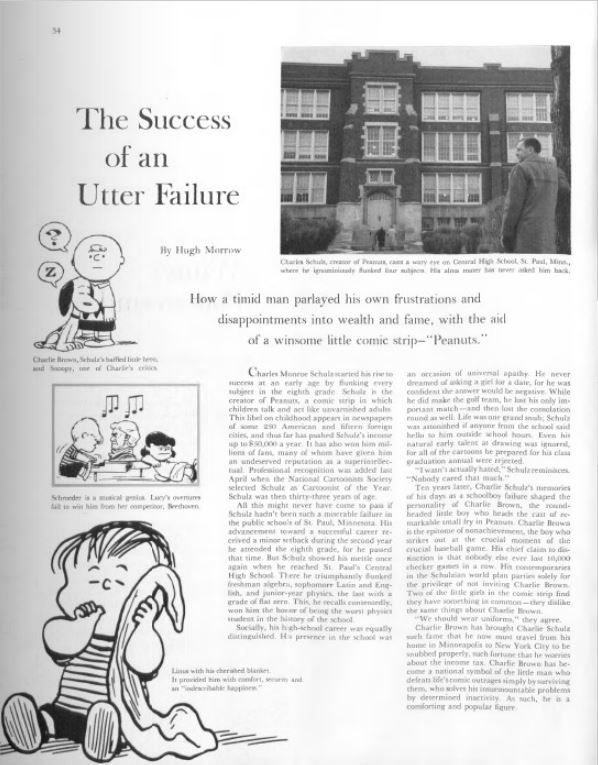
Healthy Weight, Healthy Mind: Writing It Down Can Help Improve Your Progress
We are pleased to bring you this regular column by Dr. David Creel, a licensed psychologist, certified clinical exercise physiologist and registered dietitian. He is also credentialed as a certified diabetes educator and the author of A Size That Fits: Lose Weight and Keep it off, One Thought at a Time (NorLightsPress, 2017).
Do you have a weight loss question for Dr. Creel? Email him at [email protected]. He may answer your question in a future column.
As you work on changing your thoughts and “friending” yourself, creating a Thought Log with the ABCDE format will help you analyze events in your life and track progress. You might dedicate a special journal just for this exercise.
- When something upsets you, jot down the activating event (A), dysfunctional beliefs (B), and emotional consequences (C) of your thoughts.
- Consider what thinking category causes you to feel bad (all or nothing thinking, emotional reasoning, etc.).
- Now you can dispute (D) the thought and replace it with a kinder, factual, probable, and useful perspective.
- Finally, you can evaluate (E) how strongly you felt the initial emotion. Perhaps in the beginning you felt frustrated at an intensity of 90 on a scale of 1 to 100.
- Record the new rating of frustration (1 to 100) after you begin thinking differently.
You may not like keeping a journal with this much structure, and that’s okay. But I do recommend you take time to evaluate how this information affects your life.
Sit down with paper and pen, or at your computer, and write about which fallacies of thought have kept you from losing weight and sustaining that weight loss. You don’t need to write a novel. Don’t worry about spelling or grammar and feel free to use bullet points instead of sentences.
I suggest you start with writing how the environment and your thinking influenced you to regain weight in the past. Suppose you gained weight after a combination of events — you hurt your foot in October, followed by the stress and social events of the holidays, and then you felt discouraged and gave up. What if you changed your interpretation of those events — your thoughts and beliefs? Would the story have a different ending?
Write about how you could have changed the environment to ensure better success. Then try writing how you could change your thoughts if you couldn’t change the environment. How could this situation end with a better outcome? While you’re at it, write about several of those possible good outcomes. This will show you how changing your thoughts could lead to much better results.
This writing exercise will be like a dress rehearsal for similar challenges in the future. Instead of falling into the same traps as before, you’ve prepared yourself to respond in a healthier way. As with anything you practice the right way, you’ll soon develop thinking skills and new confidence to overcome future challenges to maintaining a healthy weight.