Ty Cobb’s Secret Admirer
This article and other features about baseball can be found in the Post’s Special Collector’s Edition, Baseball: The Glory Years. This edition can be ordered here.
In the summer of 1904, the youthful sports editor of the Atlanta Journal began receiving an interminable series of telegrams from some anonymous correspondent in Anniston, Alabama, about a local ballplayer named Ty Cobb.
“Cobb clouted a home run and two singles this afternoon — a real comer … ” “Big gun in Anniston attack was Cobb …” “Although hitless, Cobb stole two bases today …” “Cobb, Cobb, Cobb … ”
The sports editor kept throwing these wires in the wastebasket, but finally his resistance broke down. He hopped a train to Anniston, to judge for himself whether this busher really was, by any chance, a phenomenon in the rough.
What he saw convinced him completely. The young Anniston out elder collected five hits in five times at bat, and stole home to assure his team victory. The sports editor headed for the local telegraph office, and put himself on record with a 300-word dispatch to his paper:
“Ty Cobb was a comet with a fiery tail this afternoon. He blazed the Annistons to victory with his booming bat and his fleet base running. Here is a young man who someday may make his mark in the baseball world … ”
This story, ironically, never got into the paper. The sports editor’s assistant, thinking it was just another outburst from Cobb’s unknown Boswell, killed it when it reached the Atlanta Journal office.
However, with the sports editor now sold to the hilt on Cobb, the wires from Anniston began breaking into print with regularity. Cobb’s fame spread through Dixie. Augusta, which had previously discarded Cobb, signed him up again. Late in the 1905 season he moved up to Detroit and, of course, went on to establish himself as the mightiest ballplayer of them all.
The youthful sports editor also reached the heights. He still looks back with pride on his early discovery of Cobb. Today he is the dean of all sports writers, Grantland Rice.
As for Cobb, he remembers those brief 1904 items more vividly than any of the long screeds which have been written about him since. He should. The anonymous Anniston correspondent who sent them in was Cobb himself.
— “Cobb’s Progress” by Ernie Harwell, Sept. 12, 1942
Writing Limericks: A How-To and a History
In the weeks following the publication of each new issue of The Saturday Evening Post, we receive more than 300 entries to our Limerick Laughs contest. Most of them are well-written, some of them are outstanding, but far too many of them aren’t really limericks.
So we put together this post to help both budding and flowering poets understand what a limerick is, how to write good one, and where the form even came from.
When you’re ready to put your poetry prowess to the test, you can enter our latest Limerick Laughs contest here — for a chance to win $25 and publication in the Post.
Your favorite mag’s on a mission
To inspire your poem submission
Of five lines in length
With rhymes of some strength —
The best ones can win a commission!
Limericks: A How-To Guide
There are four guidelines that you should follow to write a good limerick. Although they do allow some leeway for the creative mind, the farther you stray from these guidelines, the less limerick-like your finished poem will be.
First, its length: A limerick is always five lines long. There’s very little wiggle room here.
Second, its rhyme scheme: A limerick always has an AABBA rhyme scheme, meaning that the first, second, and fifth lines end in a shared rhyme, as do the third and fourth. Some authors flirt with the format by swapping those letters around, but at best, these are variations on the limerick structure. For all intents and purposes, if it’s not AABBA, it’s not a limerick.
Here’s an example. Since The Saturday Evening Post is a family magazine, please refrain from mentally conjuring (or, more importantly, commenting on) the more vulgar version of this classic limerick:
There once was a man from Nantucket
Who kept all his cash in a bucket.
But his daughter, named Nan,
Ran away with a man
And as for the bucket, Nantucket.
You can clearly see the rhyme scheme in this example, but let’s talk about rhythm and meter, the third guideline. Although the number of syllables contained in each line varies from one limerick to another, a good guideline is to have 7-10 syllables in lines 1, 2, and 5, and 5-7 syllables in lines 3 and 4. Above all else, though, the lengths should be consistent among rhyming lines. And in nearly every case, “A” lines are longer than “B” lines.
Limericks generally use an anapestic metric foot, which is the snooty-English-teacher way of saying it uses a repeating rhythm of two unstressed syllables followed by a stressed syllable. In a limerick, the first, second, and fifth lines each hold three stressed syllables, and the third and fourth lines each contain two stressed syllables.
Clear as mud? Let’s take another gander at the man from Nantucket. Notice which syllables have harder beats than the rest:
There ONCE was a MAN from NanTUCKet
Who KEPT all his CASH in a BUCKet.
But his DAUGHter, named NAN,
Ran aWAY with a MAN
And AS for the BUCKet, NanTUCKet.
Because of that last syllable in Nantucket and bucket, these lines aren’t perfectly anapestic, but notice that the rhythm — the arrangement of stressed and unstressed syllables — is identical in the lines that rhyme. This consistency, along with the rhyme scheme, is what holds a good limerick together.
The final and loosest rule of limerick writing is its silly subject matter. Humor and wordplay almost always work their way into a good limerick. Often disregarded as the amateur poet’s training-wheel exercise, the limerick prioritizes a spritely wit and cartoonish joy over the lovelorn yearning of the sonnet or the emotional roller coaster (and length) of the Romantic epic. Your limerick doesn’t necessarily have to be funny, but if it’s not, you might have missed the point.
A Brief History of Limericks
So who made themselves the Kings and Queens of Poetry and invented all these rules? The name limerick was first formally recorded as the name of the five-line poem just two years before the beginning of the 20th century, when it appeared in the New English Dictionary. Our brightest poetry historians believe the name originated from the town or county of Limerick, Ireland, in reference to a popular nonsense song that included the phrase “Will (or won’t) you come to Limerick?” An 1880 New Brunswick newspaper ran a five-line rhyming poem about a young rustic named Mallory who drew a small salary; it was to be sung to the well-known tune of the aforementioned nonsense, for the first time connecting the Limerick name and the form. But the format itself is much older.
Edward Lear is often, and incorrectly, called the father of the limerick for his appropriately titled 1846 collection of illustrated short poems, A Book of Nonsense. These poems are easily recognized by their tendency to center on a “somebody” from “somewhere,” usually ending the first and fifth lines with the same location word. Undoubtedly, Lear was essential in popularizing the form. However, the actual invention of the limerick lies yet further back in time.
In 1943, Robert Herbert, a librarian from Limerick, reported on the namesake poem’s earliest origins. He credits the “Poets of the Maigue,” a group of Gaelic minstrels, with the form’s creation midway through the 18th century. These merrymakers were known to improvise limericks as a sporting event in the form of poetic insults. Here we have a sample zinger from one of the minstrels, translated to English by James Clarence Mangan:
I sell the best Brandy and Sherry
To make all my customers merry,
But at times their finances
Run short as it chances,
And then I feel very sad, very.
Okay, so these minstrels probably didn’t send anyone home in tears. Put these minstrels in a modern rap battle and they’ll come shamed, and not only because of their funny hats.
Searching any earlier in the poetry history books leads us deeper into ambiguity and speculation. Some attribute the first limericks to soldiers coming home from the War of Spanish Succession (1701–1714), others to William Shakespeare (1564–1616) or even Thomas Aquinas (1225–1274). But whenever the limerick was truly born, it retains its playful and humorous spirit.
Nowadays, we at The Saturday Evening Post like to think we’ve helped keep that spirit alive. Twentieth-century “Post Scripts” within our pages offered an array of jokes, lyrics, and poetry, including limericks, which touched on subjects ranging from classic literature to space travel to workaday problems. Check out this goofy number from 1903 by Carolyn Wells:
A scholarly person named Finck
Went mad in the effort to think
Which were graver misplaced,
To dip pen in his paste,
Or dip his paste-brush in the ink.
In 1979, the Post brought back the competitive side of poetry with “Can You Name This Picture?” which asked readers to send in either a snappy one-liner caption or their most whimsical limerick. The contest has been a staple of the magazine for almost 40 years running, albeit under a different name today; in 1992, the rules were amended to a limericks-only contest, and the Limerick Laughs have been rolling in ever since.
In closing, I leave you with a little dandy I wrote for a school assignment when I was 9:
A spider web caught a fly.
The fly began to cry.
The spider came out
But said with a shout,
“Eat you? I’d rather die.”
Think you can do better? The safe bet is, yes, you can, but you still have to prove it: In every issue, we provide a new picture to spark your creativity and dare you to write a great limerick. So dust off that rhyming dictionary, polish up your puns, check out our latest limerick contest, and send us your best. Our mailbox is waiting.
The Guggenheim: An Assessment of Wright’s Masterwork
On a blue afternoon toward the end of October in 1959, a number of notables gathered at 1071 Fifth Avenue in the city of New York. They were met to dedicate the Solomon R. Guggenheim Museum. Aside from a motor salesroom on Park Avenue, this mass of concrete was the city’s only example of work by the world’s most famous architect, Frank Lloyd Wright. Therefore its opening was an occasion for oratory, and thousands of citizens waited behind barricades while the men of distinction sounded off. The mercifully short speeches ended by 2 p.m., and the patient public shuffled in to view the wonders of the Guggenheim.
The visitors saw an enormous circular room, 75 feet high, topped by a dome of geometrically patterned glass. Around and above them a gently graded ramp rose for seven stories, its walls affording exhibition space for 120 pictures from the museum’s collection of contemporary art. Places to sit and rest the feet tormented by the ramp’s hard marble flooring were scarcer than teetotalers at a brew master’s ball. Few of the visitors complained of this discomfort, or of anxiety that might be caused by the lowness of the parapets around the looming void between the ledges, for all knew that something fundamental and astounding was here. Instead of strolling from room to room, as in every museum hitherto known to man, they were “enjoying an experience in the continuity of space.”
As they flowed downward and outward, the visitors exclaimed: “Thrilling!” “Grand!” “An indescribable joy!” Among professional critics, the enthusiasm was equally great. … The New York Herald Tribune summed it up by reporting that the Guggenheim had “turned out to be the most beautiful building in America.”
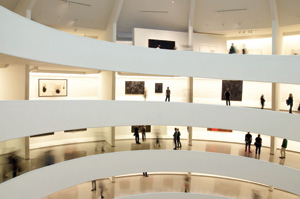
Shutterstock
There were those who disapproved. These objectors called Wright’s work a washing machine, a marshmallow, a cupcake, a corkscrew, an imitation beehive, and an inverted oatmeal dish.
A bystander paraphrased Kipling by murmuring, “It’s ugly — but is it art?” And the New York Mirror published an editorial titled “THE MONSTROSITY,” calling on the Guggenheims to “prove their love for New York by tearing the thing down.”
Amid the controversial publicity surrounding the dedication of the Guggenheim, one thing was clear — Frank Lloyd Wright had achieved fame beyond any American artist. In fact, he was one of the most renowned Americans in any line of work, recognized as promptly as a champion athlete or a television star. People got to their feet when he entered a room, as though before royalty. And, his stock answer to the question, “Which do you consider the greatest of your buildings?”
“The next one,” Wright would reply with a twinkle. “Always the next one.”
—“Frank Lloyd Wright: Defiant Genius” by Finis Farr, January 1961.
Read the full five-part series at saturdayeveningpost.com/wright.
This article is featured in the May/June 2017 issue of The Saturday Evening Post. Subscribe to the magazine for more art, inspiring stories, fiction, humor, and features from our archives.
News of the Week: Cursive Problems, Movie Violence, and 95 Years of The Velveteen Rabbit
It was a week where we saw the spin stop for Bill O’Reilly and an asteroid spinning way too close to the Earth for comfort. Here are some other things that happened this week …
Student Gets in Trouble for … Writing Her Name?
There are many ways you can get in trouble while sitting in a classroom. You could be talking, chewing gum, not paying attention, things like that. Oh, apparently you can also get in trouble for practicing the dying art of writing your name in cursive.
That’s what appears to have happened to a 7-year-old girl in Kansas. Her mom’s friend posted a picture on Facebook that shows a test the girl took in school, complete with a reprimand in red ink to the student, saying “Stop writing your name in cursive. You have had several warnings.”
I’d love to hear how this rule came about or if it’s just a rule in this particular teacher’s class. Have all schools in this area abandoned the teaching of cursive writing and demand that students write in all block letters or type their name on a keyboard? Maybe the teacher is younger and never learned cursive writing and doesn’t like reading it? I’m half-kidding with that last explanation, but I’m also half-serious.
The Facebook poster says that the teacher may have been upset because other students in the class haven’t learned how to write in cursive yet. Though that’s an odd thing to be worried about. It’s not like the student wrote the entire paper in cursive, it’s just her name (and it’s legible).
The teacher hasn’t responded to this publicly yet. Stay tuned.
Dick Van Dyke on Screen Violence and What It’s Doing to Our Kids
I remember being around 21 years old when Tipper Gore wanted to put warning labels and ratings on everything. As a young guy working at a music magazine and singing in bands, I just shook my head at what she and others wanted to do with free speech. I saw it as overreach and needless and maybe even dangerous. Now over 30 years later, I see myself siding more and more with her.
And Dick Van Dyke! Of course, he’s the star of my favorite TV show of all time, so I’m probably going to agree with what he says a lot anyway. But in this interview with The Guardian, Van Dyke shares the view I now have. He’s horrified by the violence in movies and video games, and he hates how kids “idolize it as a romantic way of life.” He’s terrified that it’s only going to get worse, and he worries about what his grandkids and future generations will have to face. He also says that if Walt Disney were around today, he would be speaking out against it too.
By the way, Van Dyke is still going strong at 91. He’s had recent roles on The Middle and the Night at the Museum movies and will make an appearance in next year’s Mary Poppins Returns (not as Bert but as Mr. Dawes).
RIP Clifton James, Allan Holdsworth, Joan See, Bud Wiser, Trish Vradenburg, Emma Morano
Clifton James was a veteran actor who appeared in many films, including Cool Hand Luke, Experiment in Terror, and Silver Streak, but he will be remembered most for his appearances as southern sheriff J.W. Pepper in two Roger Moore James Bond films, Live and Let Die and The Man with the Golden Gun. He also appeared in TV shows like The Phil Silvers Show, Gunsmoke, Route 66, Dallas, and Murder, She Wrote. He served in World War II and received two Purple Hearts, a Silver Star, and a Bronze Star. James died Saturday at the age of 96.
Allan Holdsworth was a progressive rock guitar god who played in bands like UK, Soft Machine, and Gong. He also played with Stanley Clarke and Bill Bruford and released several solo albums. He died Sunday at the age of 70. Holdsworth’s family set up a GoFundMe page to help pay for funeral costs but closed it down after only three days because donations quickly exceeded what they were expecting, which is really nice to see.
You probably won’t know the name Joan See, but you saw her in more than 300 TV commercials over the years, for every product imaginable. She also started an acting school in 1979 to help other actors get jobs in commercials and other TV shows and films. She passed away earlier this month at the age of 83.
Bernard “Bud” Wiser was a writer on several shows, including All in the Family, Rhoda, Growing Pains, The New Lassie, and Brooklyn Bridge, as well as a producer on One Day at a Time, Who’s the Boss?, and The New Lassie. He died Sunday at the age of 87.
Trish Vradenburg was a TV writer too, penning scripts for such shows as Designing Women, Kate & Allie, Family Ties, and Everything’s Relative. She died Monday at the age of 70.
Emma Morano lived in Italy and was the oldest person in the world. She died Saturday at the age of 117, which means she was born in 1899!
New Jackie Robinson Statue
Seventy years after Jackie Robinson broke the color barrier in Major League Baseball, the Los Angeles Dodgers unveiled a new statue of the baseball legend. It’s a well-designed statue, showing Robinson sliding as he steals home. The statue was unveiled last Saturday, when every player wore Robinson’s number 42 for the day.
Robinson had better luck in statues than some other sports figures have had recently. At least they fixed Lucy.
95 Years of The Velveteen Rabbit
There’s an episode of Friends where Chandler falls in love with Joey’s girlfriend Kathy. Chandler buys her a first-edition copy of The Velveteen Rabbit because it was her favorite book as a child, but he decides to give it to Joey so he can give it to her. Kathy knows it came from Chandler, though, because when Joey gives it to her he says, “I got you this because I know you like rabbits and I know you like cheese.”
I have to admit I’ve never read The Velveteen Rabbit. It’s one of those classic books that just didn’t cross my path when I was a kid. But to celebrate its 95th anniversary, I (and you!) can read it for free at the Internet Archive.
This Week in History
Walter Cronkite Becomes CBS News Anchor (April 16, 1962)
The iconic newsman joined CBS in 1950, and 55 years ago this week, he succeeded Douglas Edwards as the anchor of The CBS Evening News. He remained in the chair until 1981, when Dan Rather took over.
James Doolittle’s Raid on Tokyo (April 18, 1942)
There’s only one man still alive from the group that bombed Japan on that raid, Richard Cole, and he attended the 75th anniversary celebration this week.
This Week in SEP History: “Date with the Television” (April 21, 1956)
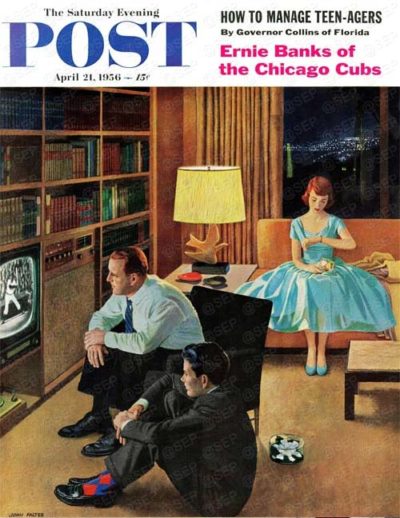
This John Falter cover rings true to me. Well, except for the “having a date” part. But I spent several years as a kid and teen sitting on the living room floor watching the big Magnavox television we had.
Earth Day
Tomorrow is Earth Day, and I was surfing the web looking for recipes that might reflect what the day is all about. I found this slideshow at Bon Appétit that includes 23 green recipes. At first I thought they were recipes that would have organic ingredients or were from local farms, but it’s actually a list of foods that are, well, green. The list includes this Ligurian Pesto with Spaghetti, this Three Pea Chicken Salad, and a drink called The Green Machine, which includes Granny Smith apples, cucumbers, spinach, and fresh mint.
Thankfully, there’s no kale in there. Kale is soooo 2016.
Next Week’s Holidays and Events
Take Our Daughters and Sons to Work Day (April 27)
This used to be just “Take Your Daughters to Work Day,” but several years ago, it was expanded to include boys. But I’ve always wondered: what if you work from home?
Babe Ruth Day (April 27)
As this piece from our special collector’s edition Baseball: The Glory Years shows, the Sultan of Swat had a compassionate side too.
Arbor Day (April 28)
The official site of the National Arbor Day Foundation has info on what you can do to celebrate the importance of trees.
A Realistic Airplane
Felix drew a picture of an airplane on the back of a yellow envelope marked “Final Notification.” He sketched the cockpit while his grandma wheezed on the other end of the phone. It was the first aviation drawing he’d created in his nine years of life where he’d gotten the angle right so that the wings didn’t look like disproportional stubs. He was nearing mastery, and he felt the chill of brilliance sneaking through his fingers and up into his throat. He would have told his grandma if the phone speaker hadn’t been so full of gasping, choke, and then thunk. Felix dotted a few last rivets on the airplane’s shell. It was a P-66 Vanguard fighter plane, an old one, a beauty, like the one he’d seen in the book at school called Wings of War.
He handed the phone to his dad when his grandma stopped talking. He wasn’t sure she was dead, but he had an idea, a picture in his head — charred bodies strewn in ditches in black-and-white photos, like the photographs in the book at school called Victory at Great Expense. He decided he might draw a corpse someday, since the airplane had turned out so well. He pushed the envelope on which he’d drawn the plane toward his dad, who was shouting into the receiver. His dad slammed down the phone, picked it back up, and punched the numbers 9-1-1. Felix knew those numbers were for emergencies only. He’d learned that in a booklet at school featuring a husky dog wearing a beret that shook his paw remonstratively at a pack of snickering wolves. The booklet was called Crying Wolf and Real Emergencies. Felix avoided dialing numbers as much as possible for this very reason. He feared his fingers might slip and accidentally dial 9-1-1, and then he’d go to jail and never own a husky.
His dad shouted into the phone. His fingers tightened around the envelope featuring Felix’s excellently drawn airplane, crinkling the nose and whirring propeller. His dad didn’t look at it, but when he finally did, Felix knew he’d be impressed, would forget all about Mrs. Murdock’s Social Butterflies Bar Graph that had shown up in the mailbox last week along with a batch of red and yellow envelopes stamped “Notice.” On the graph, all the kids in Felix’s class were represented by pastel rectangles. But Felix was crimson. He didn’t like the color that was like the envelopes his dad swore at and were too dark to draw on. He didn’t like that his rectangle was the stubbiest. He wasn’t stupid because he could read everything and he remembered everything and he finished his Mad Minute Math problems either first or second after Wilson Betts. And he didn’t like the way Mrs. Murdock described him: Felix keeps to himself, sometimes hides his head in his flip-top desk, where he stashes half-eaten tuna sandwiches. The other kids hold their noses and call him Fishy Felix. His dad had pulled the note away before he could read the rest. But he’d only hid his head in his flip-top desk four times. And he hid tuna sandwiches because he might get hungry between lunch and the end of school. It was a matter of saving, like his dad said. When you have enough saved, nothing can hurt you.
They’d beat the ambulance to Grandma’s, Felix’s dad bet. Felix was already wearing his coat because it was October and his dad saved by keeping the heat off. The TV screen turned to snow and fizz last month, and last week the lights stopped, even his nightlight shaped like a princess. He hated that princess, wished she was a P-66 bomber, but he missed her pink light. Maybe the princess looked like his mom. Maybe his mom was nothing like that. He’d grown out of imagining his mom as a princess or astronaut or professional wrestler. Grown out of that like his dad had grown out of his job at Burger King. His dad could do better than a hairnet and minimum wage and he had to. Felix agreed completely with the concept of unrecognized potential. Felix would fix airplanes, like his dad who fixed cars, who’d fixed their Cutlass’ shot starter three days ago. Without his skill, the car wouldn’t have started up so beautifully, his dad said, so that they could rush to Grandma’s house and help. Helping family was most important.
“I love your grandma, Felix. You can tell by the way I’m crying. See.” His dad took a hand from the steering wheel, wiped his cheek, and then brushed a wet warmth against Felix’s hand. “It’s okay for a guy to cry sometimes. Remember how to be sad. Whatever happens with Grandma is okay. It’s okay to feel any way you want.”
Felix dried his wet hand inside his pocket. He wanted to tell his dad how he’d figured out that crying didn’t fix anything. That might make his dad feel better to know it didn’t help to feel bad. But he also knew how much he hated when teachers told him how he should feel. So Felix concentrated, closed his eyes and traced lines against his eyelids. The corpse drawing was shaping perfectly in his mind. He just needed some blank paper to draw on.
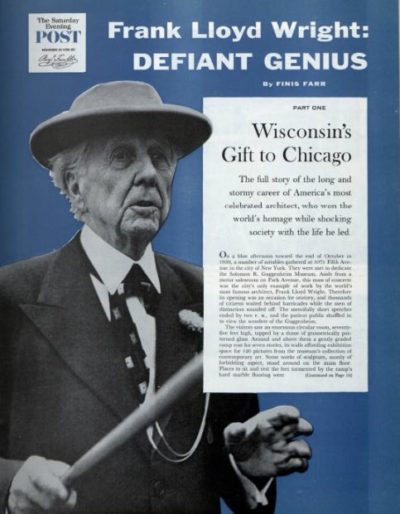
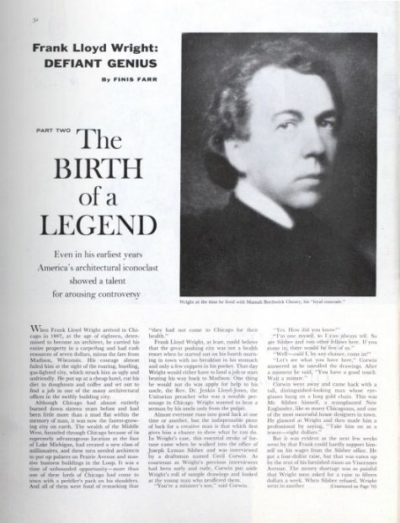
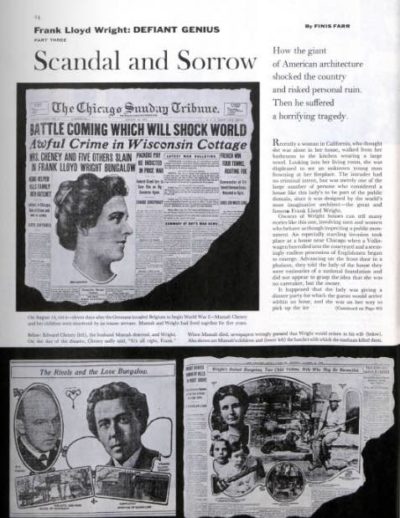
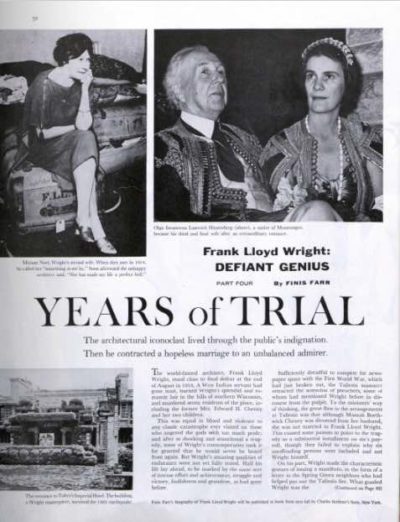
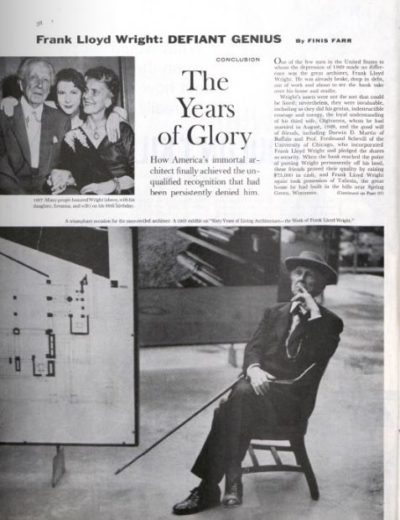
Frank Lloyd Wright: Defiant Genius
In 1961, the Post published a five-part series on Frank Lloyd Wright. The series takes an in-depth look at Wright’s brilliant architecture, stormy home life, and many idiosyncrasies, both real and apocryphal.
9 Places to Relive American History
These U.S. travel destinations tell the nation’s story through preservation, research, and reenactment. From prehistory to modern times, this is a bucket list for American history buffs.
Hovenweep

Built by ancestral Puebloans between A.D. 1200 and 1300, the towers of Hovenweep are a fascinating display of early masonry located at the border of Colorado and Utah, about 25 miles from the Four Corners. Hiking trails in the park offer views of the ruins as well as the canyons surrounding the Cajon Mesa. Hovenweep’s remoteness also yields brilliant stargazing opportunities from the onsite tent camp.
https://www.nps.gov/hove/index.htm
Minute Man Park

A wealth of American history lies in this National Historic Park that stretches from Concord to Lexington, Massachusetts. The five-mile Battle Road Trail leads visitors through various sites of the first battle of the American Revolution, and at the North Bridge you can relive “the shot heard ’round the world.” The Wayside, a preserved Colonial home, housed authors Louisa May Alcott, Nathaniel Hawthorne, and Margaret Sidney throughout the 19th century, and Henry David Thoreau’s Walden Pond is located just south of the site.
https://www.nps.gov/mima/index.htm
Hamilton Grange

Alexander Hamilton’s Harlem home was moved twice before landing in its current spot in Saint Nicholas Park in Manhattan. The controversial Founding Father completed the home in 1802 on his 32-acre estate in upper Manhattan. Hamilton Grange tells the story of Hamilton’s self-made career and influential vision of industry. The recent restoration of the mansion was completed, inside and out, to replicate Alexander Hamilton’s original furnishings and landscaping.
https://www.nps.gov/hagr/index.htm
Homestead National Monument
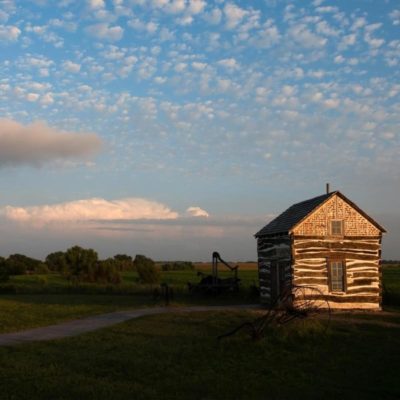
Abraham Lincoln’s Homestead Act of 1862 provided 270 million acres of free land to Americans eager to start a life out West. The Homestead National Monument was established by Franklin D. Roosevelt in southeast Nebraska to commemorate the impact of Lincoln’s law on the economic and cultural development of the West. The site features 211 acres of prairie and woodlands preserved to represent the plains before settlement. You can tour an 1867 cabin and the Freeman School, a one-room schoolhouse that served students from 1872 to 1967.
https://www.nps.gov/home/index.htm
Manassas National Battlefield Park
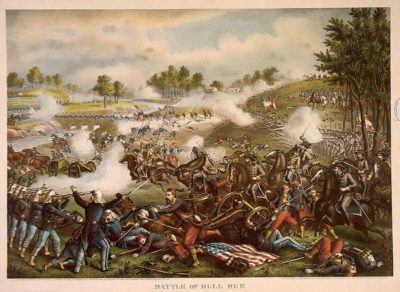
The First Battle of Bull Run, the start of the Civil War, took place on the well-preserved grounds of Manassas National Battlefield Park. Civil War history buffs can experience reenactments and cannon-firing at this site just 25 miles from Washington D.C. Antietam, Harpers Ferry, and Fredericksburg battlefields are a short drive from Manassas as well.
https://www.nps.gov/mana/index.htm
Henry Ford Museum
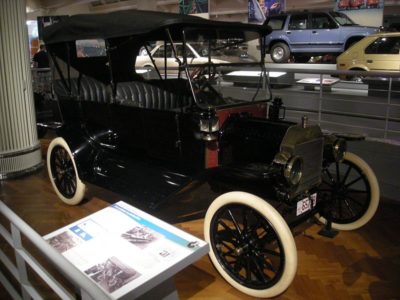
The largest museum complex in the country houses a plethora of artifacts from American history, particularly from the Industrial Revolution. Thomas Edison’s laboratory, JFK’s presidential limousine, and the bus on which Rosa Parks took a stand all reside at the museum’s campus in Dearborn, Michigan. Most notable is the museum’s collection of cars that spans the history of automobiles in the United States.
New Orleans Jazz National Historical Park

Located in Louis Armstrong Park just blocks away from the French Quarter, the New Orleans Jazz National Historical Park is a new kind of national park that offers programs and tours to educate visitors on the birthplace of jazz. Rangers guide groups through jazz walks of the city as well as interactive demonstrations. The park also offers free concerts at a venue in the French Quarter.
https://www.nps.gov/jazz/index.htm
Birmingham Civil Rights Institute
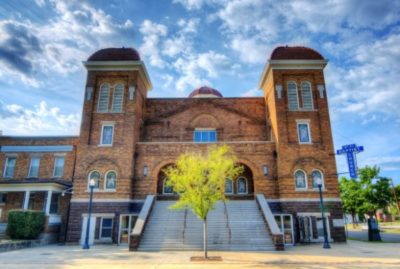
The BCRI strives to act as a “living memorial” to the civil rights story of Birmingham, Alabama. Dramatic and interactive exhibits depict the civil rights movement in Birmingham as a necessity for understanding present and future human rights, as well as the past. The museum is situated in downtown Birmingham, close to other key sites from the Birmingham movement.
http://www.bcri.org/index.html
USS Midway

From 1945 to 1992 the USS Midway was an active aircraft carrier, but now the vessel rests in San Diego as a museum ship. Guided tours, flight simulators, and 29 restored aircraft from World War II, the Korean War, the Vietnam War, and Operation Desert Storm are aboard the massive carrier.
How the 1967 Montreal Expo Imagined the Future (Hint: It Involved Computers)
 When it came to the future, people had a lot to be excited about in 1967. New trends in the arts and in technology — particularly computers — promised to make life more rewarding and interesting.
A lot of those changes would be on display in Montreal when Expo 67 opened during the Summer of Love.
When Post reporter Anne Chamberlain visited in mid-winter, Expo 67 was just starting to rise from an island in the St. Lawrence Seaway. Every day, trucks hauled more dirt onto the island to build the 1,000-acre park where 60 countries would eventually create their exhibits.
Post readers got a preview of the strange new buildings in the April 22, 1967, issue of the Post. In “Expo 67: The Big Blast Up North,” Chamberlain told of the massive effort required to build the next world exposition. The telephone system alone, for example, required 5,300 phones be installed along with 55,000 miles of new wire and cable.
Fortunately, computers helped to direct the construction. Even before spring temperatures had thawed the Expo grounds for heavy construction, programmers had fed 250,000 IBM cards into computers and generated 192 miles of reports.
Construction proceeded even though the Exposition was expected to lose money. Backers hoped to recoup the losses by commercializing the Expo buildings afterward. In fact, Expo 67 proved to be the most successful World’s Fair of the 20th century, losing only $210 million.
Before it closed in October, it had welcomed 50 million visitors — not a bad turnout for a country whose entire population was only 20 million.
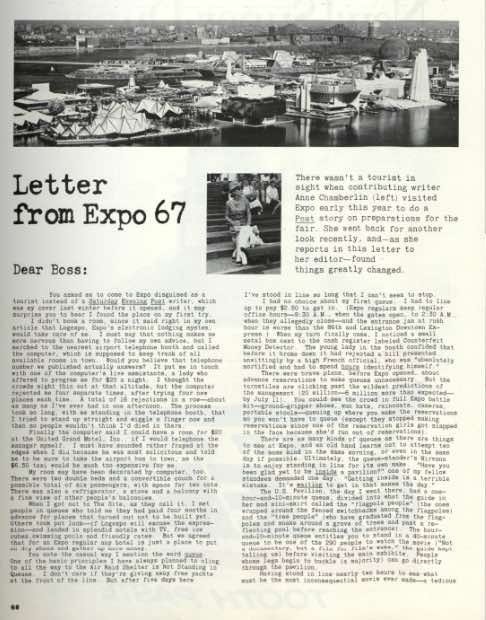
In August, Anne Chamberlain returned to Montreal and then reported her experiences as an Expo 67 visitor in our August 26, 1967, issue. One of the first things to impress her was the use of computers. One actually helped her find a hotel room — after a long wait.
The other, at the IBM exhibit, gave mathematics lessons to visitors. (“GOOD,” said the machine, “YOU HAVE JUST COMMUNICATED WITH THE COMPUTER.”)
She was even more impressed by the lines. At the U.S. exhibit, she had to wait in line 70 minutes to enter. The Russian exhibit’s line was much shorter, and there were many vacant chairs inside. Visitors were willing to read posters about Soviet fertilizer production and thoughts on Lenin while they gratefully rested their feet. A much longer line led to the Cuban exhibit. There, visitors might stand in line for two-and-a-half hours to eat at the Cuban restaurant.
The mother of all lines, she concluded, was for the Czech exhibit, where the line stretched back so far that visitors who joined the line didn’t even know what they were waiting for.
A World’s Fair has been held every few years since 1851, when the first of these events took place in London’s Crystal Palace. Except for a wartime halt between 1940 and 1949, there has never been more than a six-year gap between these events. The next World’s Fair opens June 10, 2017, in Kazakhstan. Its theme will be “Future Energy,” and it hopes to encourage conversation about finding safe, sustainable energy for all while reducing carbon dioxide emissions. In spite of America’s ongoing internal debates on this topic, the U.S. will be represented.
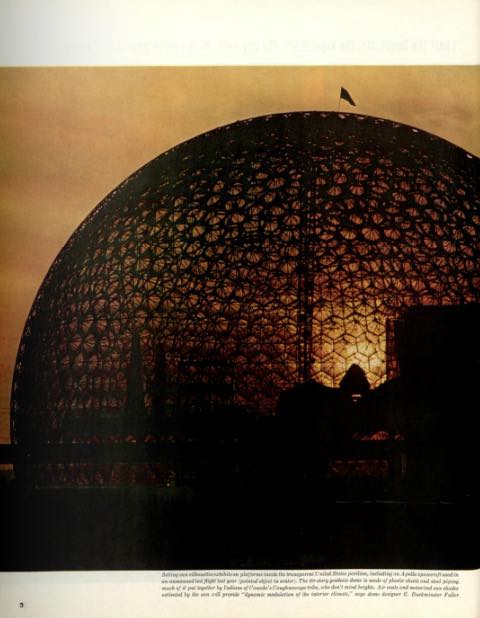
Featured image: The 1967 Montreal Expo (Laurent Bélanger, Wikimedia Commons via Creative Commons Attribution-Share Alike 3.0 Unported license)
The Art of the Post: Coby Whitmore Illustrates a New Era of “Boy Meets Girl”
American tastes changed dramatically after World War II. Reunited couples were eager to make up for lost time. A country freed from fears, stresses, and rationing turned its attention to homes, cars, fashionable clothing, hair styles, and above all, relationships. These stark changes are especially apparent when we look at the popular illustrations of the day.
The escapist pictures and stories that the country craved during the Depression — romantic tales of South Seas adventures or knights in armor — disappeared from magazines.
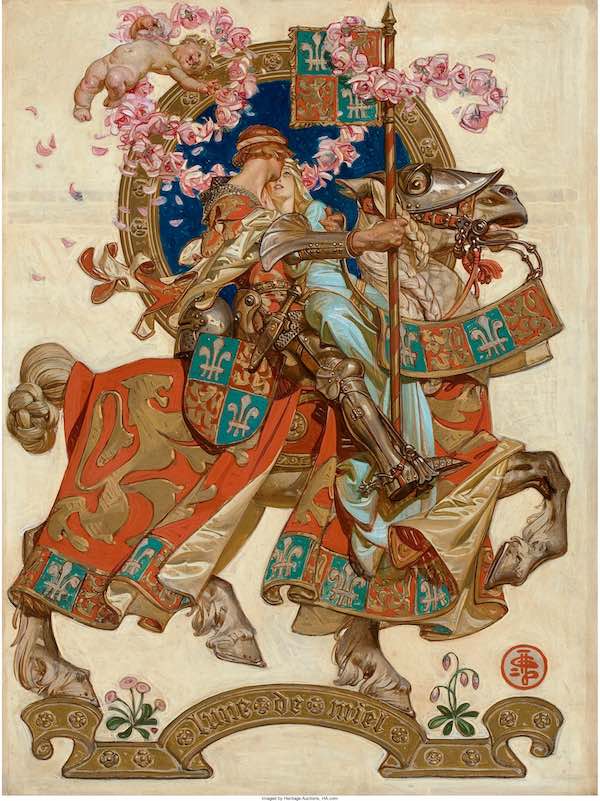

As illustrator Al Parker wrote in The Illustrator in America 1880-1980, “The need to escape was already waning and, with it, escapist art.” Young housewives and mothers (the primary readership of magazine fiction) now wanted to see girls finding true love with the boy next door. Young men, relieved that they had survived the war, enjoyed car ads illustrating peacetime lifestyles rather than reliable mechanical parts.
Parker recounted what it was like to be an illustrator in those days, “depicting an idealized world, peopled with handsome men and gorgeous women, bedecked in their best in the most fashionable of settings. … At the end of the war, the illustrator strutted amidst a pageant of plenty. Advertising budgets had skyrocketed and magazines bulged with fiction, providing work for all who painted in the style of the innovators.”
Magazines became larger and more colorful to show these pictures. In contrast to pre-war illustrations, which often included complex scenes and detailed backgrounds, the new illustrations often favored close-ups of the faces of heroes and heroines against a plain white or flat-colored background to eliminate unwanted clutter. Black cocktail dresses contrasted against bright white backgrounds showed off the shapes of young women enjoying themselves in the new prosperity. Sports cars and cocktail parties made bold background props, but the illustrations almost always centered on a stylishly dressed modern American woman.
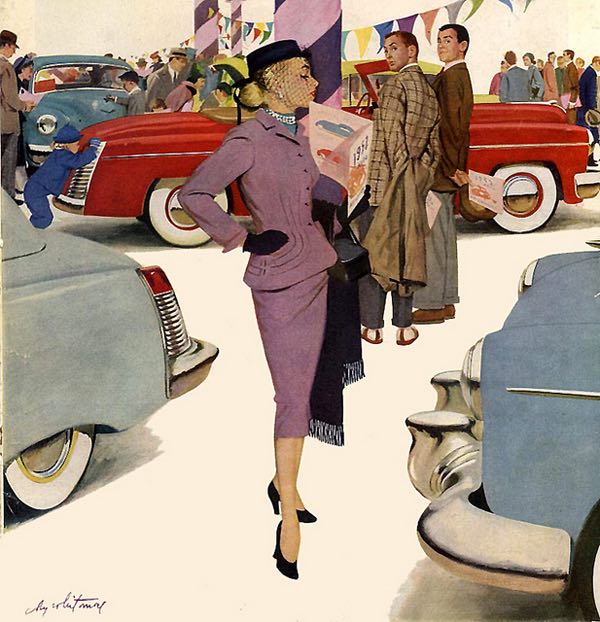
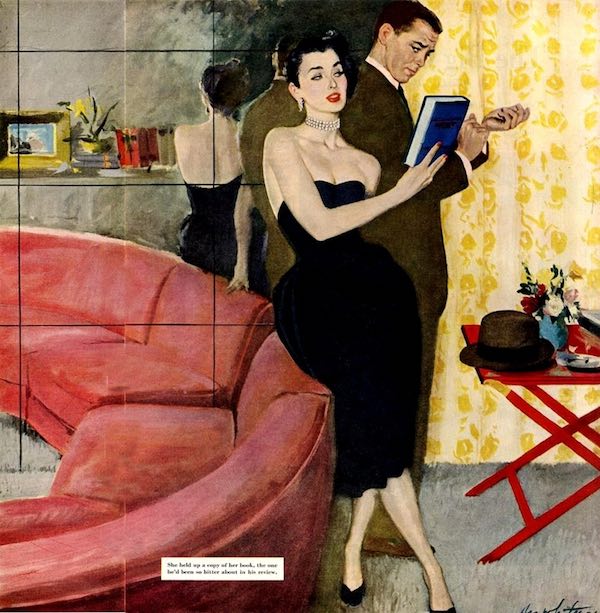
This explosion of pent-up demand created steady employment for legions of talented young illustrators with a knack for stylish images of young love and domestic relationships. The leading illustrators of this style included Joe de Mers, Jon Whitcomb, Al Parker, Andy Virgil, Joe Bowler, and Mike Ludlow. Many other artists came and went and are little remembered today. But no one topped the great Coby Whitmore when it came to illustrating the relationships the public was so eager to see. As art historian Walt Reed noted in The Illustrator in America 1880-1980, “probably no other illustrator has been so inventive over so long a time in doing variations on the theme of boy meets girl.”
Whitmore was born in Dayton, Ohio, and moved to Chicago to work as an apprentice in an art studio by day while studying at the Art Institute of Chicago at night. His first real art job was working for the Chicago Herald Examiner. He later moved to Cincinnati, where he worked for a few years developing his style before finally moving to New York. There he began winning illustration assignments from national magazines such as The Saturday Evening Post, Redbook, Cosmopolitan, McCall’s, Ladies’ Home Journal, and Good Housekeeping.
Whitmore had the perfect disposition for painting in the new, snazzy style. He described his three primary interests in life as “racing cars, illustrating, and smart clothes on good looking women.”
What made Whitmore stand out from the crowd while so many of his peers were quickly forgotten?
Like the other illustrators, Whitmore mastered anatomy and color theory and learned to make the most of his tools — including gouache, casein, and designer paints. But Whitmore went far beyond the basics. Unlike many of his peers, Whitmore gave design and composition high priority in his illustrations. He used photographs of his models for reference the way other illustrators did, but while others slavishly copied the photographs, Whitmore always did his best to bring “fine art” elegance, class, and imagination to his subject matter. It didn’t matter that the stories he illustrated were sometimes corny or melodramatic; Whitmore was heavily influenced by French fine artists Bonnard and Vuillard, and he tried to elevate his illustrations to their level. When many of his peers began to lapse into formulaic solutions to their repeated assignments to draw another “pretty girl,” Whitmore always seemed to find a fresh and imaginative approach.
A picture is worth a thousand words, so let’s look at some samples of what made Whitmore great:
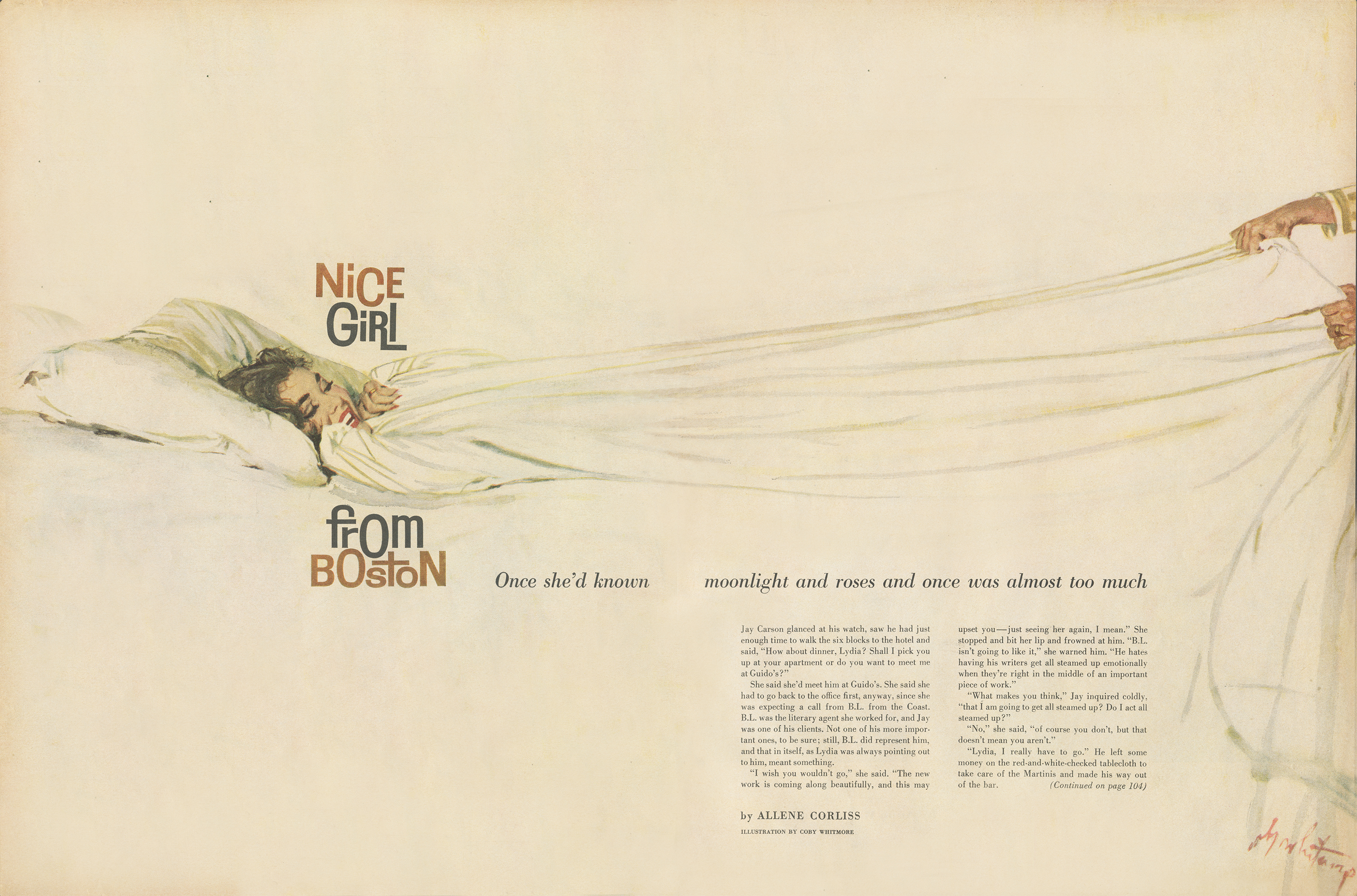
Note in this painting of “Nice Girl from Boston,” Whitmore has simplified the picture down to its essence. Instead of all the heavy detail and realism that would normally be required to fill two large pages, Whitmore charmed his audience by implying a fun, sexy relationship.
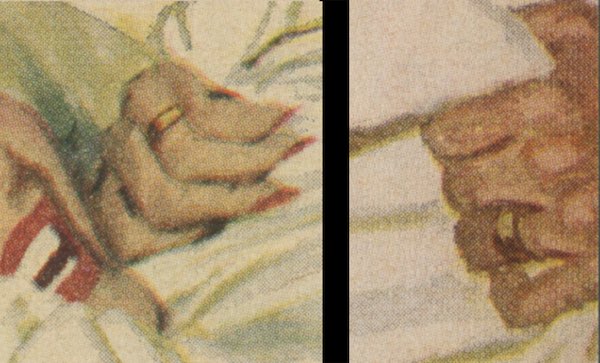
Note one crucial detail that could not be omitted: They are both wearing wedding rings. Without that detail, Whitmore’s painting would likely have been rejected.
In this next illustration of a young couple in a rowboat, Whitmore painted in a much looser style than the Norman Rockwell style that dominated the pre-war years.
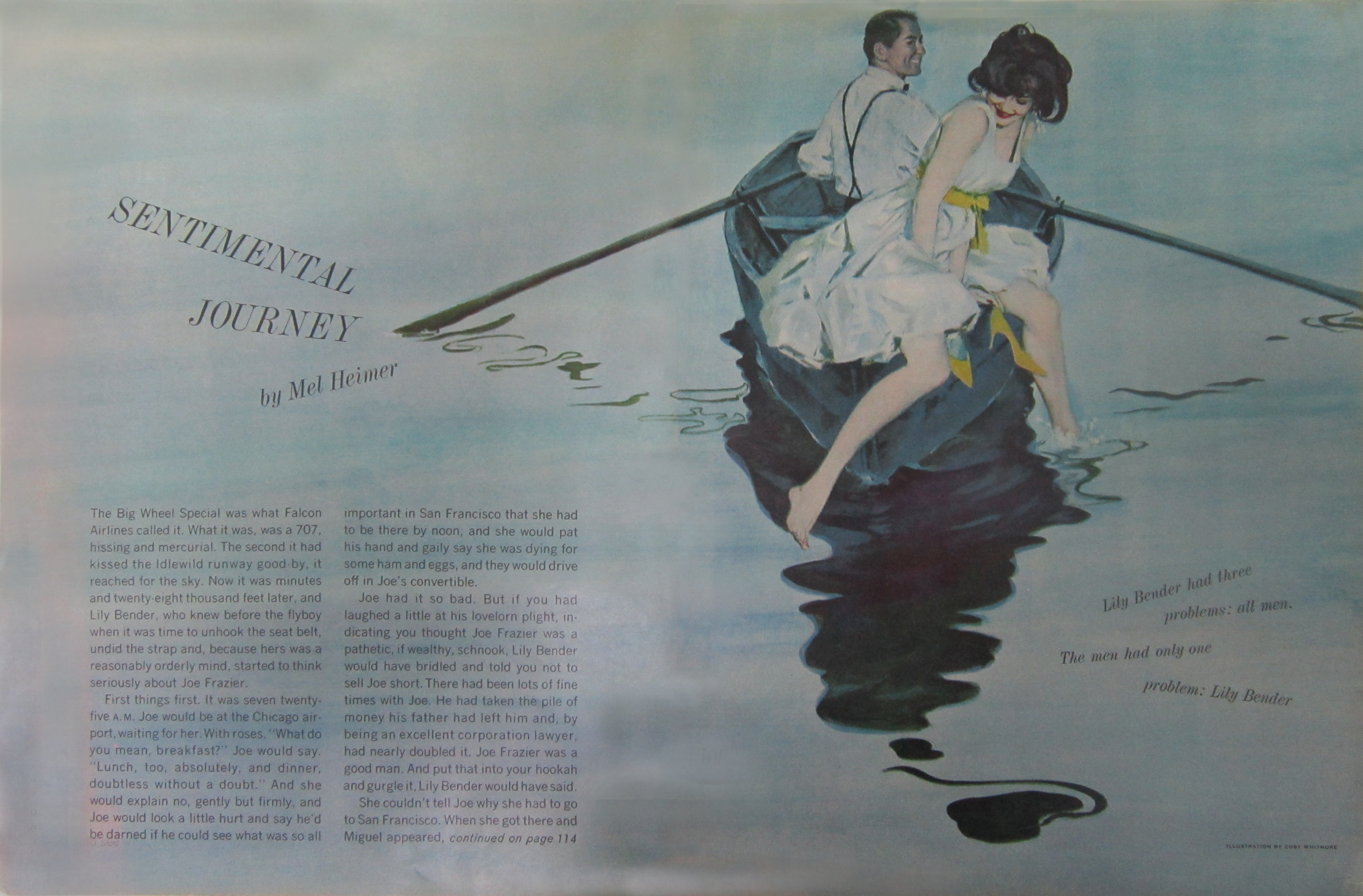
In particular, see how the ripples in the lake form abstract designs.

Whitmore was a contemporary of abstract painters such as Jackson Pollock and Adolph Gottlieb, and he paid attention to their innovations. Despite his own realism, those ripples in the lake showed that Whitmore was able to abstract with the best of them.
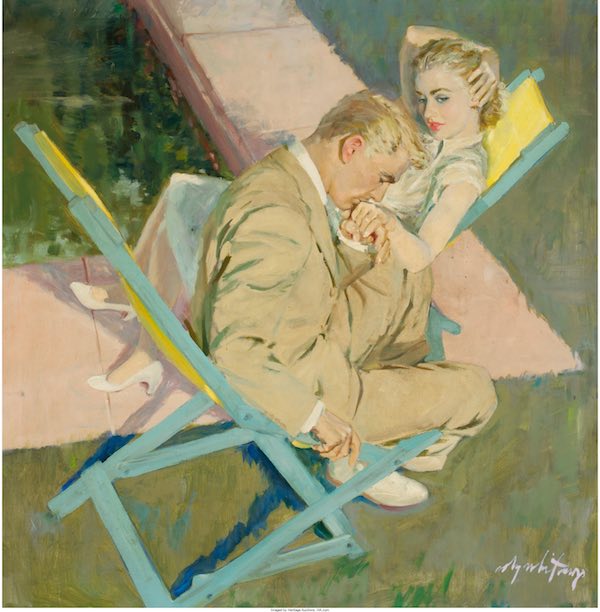
In this final example, Whitmore uses an unusual angle and the creative placement of couples to make an attention-grabbing design.
You can see more examples of Whitmore’s work on the Post’s web site: here is an analysis of his illustrations and the artist’s profile.
Chef Curtis Stone’s Spring Fling
Spring is one of the most exciting changes of seasons. Emerging from cold weather, people begin to get out and about again. As a chef, I practically live at the farmers market, chatting with growers about the best produce on offer for the week and taking advantage of the bounty of fresh fruits and vegetables.
Early spring peas fresh from a local grower seem to taste sweeter than any available later in the year. When wild garlic leaves become available, I add the herb to everything from salads to mashed potatoes. In March, I go mad for asparagus that floods our markets. I like to steam the spear in a bamboo steamer. First, I flavor the water with ginger, garlic, and Chinese cooking wine, and then allow steam to permeate the asparagus.
There is nothing better than getting together with friends and enjoying a light flavor-filled meal gathered around the table. That’s what spring is all about. Angel Hair Pasta with Clams, Radishes, and Spinach is my healthy version of spaghetti with clams (spaghetti alle vongole). By limiting the pasta and increasing the vegetables, the dish not only tastes great but looks great too. After a visit to the farmers market, I can’t wait to whip up Quick-Braised Spring Vegetables — featuring peas, fava beans, asparagus, and baby spinach. It’s a testament to the season.

Photo by Quentin Bacon
Angel Hair Pasta with Clams, Radishes, and Spinach
(Makes 4 servings)
8 ounces whole-wheat angel hair pasta
1/4 cup extra-virgin olive oil, plus more for serving
2 pounds Manila or littleneck clams, scrubbed
1/3 cup finely chopped shallots
6 garlic cloves, finely chopped Zest of 1 lemon, removed in wide strips with a vegetable peeler
1 fresh or dried bay leaf
1/2 teaspoon red pepper flakes
1 cup dry white wine Kosher salt and freshly ground black pepper
3 ounces fresh baby spinach (about 4 cups loosely packed)
4 large radishes, cut into small matchstick-size strips (about 1/2 cup)
2 scallions (white and green parts), thinly sliced on the diagonal
Bring large pot of salted water to boil over high heat. Stir pasta into boiling water and cook, stirring often to keep strands separated, for about 2 minutes or until tender but still firm to bite. Scoop out and reserve ½ cup of pasta cooking water. Drain pasta.
Meanwhile, heat large heavy skillet over high heat. Add 1 tablespoon olive oil, add clams, and cook for 1 minute. Stir in shallots, garlic, lemon zest, bay leaf, and red pepper flakes. Add wine, cover, and cook for about 2 minutes, or until clams open. Using tongs, transfer clams to large bowl and cover to keep warm.
Simmer clam-wine broth until reduced by about one-fourth, about 2 minutes (pasta will absorb a lot of liquid, so don’t reduce too much). Stir in remaining 3 tablespoons olive oil and season with salt and pepper. Reduce heat to low.
Add pasta to skillet and toss to coat with liquid. Add clams and any accumulated juices in bowl to pasta. Add spinach and half of radishes and toss, adding enough of reserved pasta water to make a light sauce.
Using tongs, divide pasta and clams among four wide pasta bowls or place them in one large shallow serving bowl. Pour in broth. Drizzle olive oil over each serving and sprinkle with scallions and remaining radishes. Discard lemon zest and bay leaf and serve immediately.
Per serving
Calories: 419
Total Fat: 15 g
Saturated Fat: 2 g
Sodium: 236 mg
Carbohydrate: 51 g
Fiber: 9 g
Protein: 14 g
Diabetic Exchanges: 3 ½ starch, ½ vegetable, ½ lean meat, 3 fat
Quick-Braised Spring Vegetables

Photo by Ray Kachatorian
(Makes 6 servings)
1 spring onion or 4 scallions, trimmed and sliced
2 garlic cloves, finely chopped
3 tablespoons olive oil
3 tablespoons low-sodium chicken broth or water
8 ounces asparagus, woody ends trimmed, stalks cut into 1 1/2-inch pieces
1 cup shelled fresh fava beans (from about 1 pound pods), peeled (see Note), or sugar snap peas, trimmed and halved crosswise
1 cup shelled fresh English peas (from about 1 pound peas in the pod)
1/2 head escarole, torn into bite-size pieces (about 2 cups)
3 cups loosely packed baby spinach leaves
1/2 cup loosely packed fresh basil leaves
1 tablespoon grated lemon zest
1 tablespoon fresh lemon juice Kosher salt
1 tablespoon finely chopped fresh chives
Small chunk of Parmesan cheese, for grating
In large heavy skillet, combine spring onion, garlic, oil, and broth and bring to simmer over medium heat. Cover and cook for about 2 minutes, or until spring onion softens slightly.
Add asparagus, fava beans, and peas and sauté for about 2 minutes, or until beans and peas are heated through. Add escarole, spinach, and basil and sauté for about 2 minutes, or until escarole wilts and asparagus is crisp-tender.
Stir in lemon zest and juice. Season to taste with salt. Transfer to serving platter. Sprinkle with chives, grate Parmesan over, and serve immediately.
NOTE: Fava beans have an inedible pod and an outer skin that is edible only when beans are very young. To prepare fava beans, remove beans from pods. Next, bring large pot of water to boil.
Add beans and cook for 30 seconds. Immediately transfer beans to bowl of ice water. When chilled, drain beans and, using your fingers or small knife, peel outer skins from beans.
Per serving
Calories: 144
Total Fat: 8 g
Saturated Fat: 1 g
Sodium: 340 mg
Carbohydrate: 13 g
Fiber: 5 g
Protein: 6 g
Diabetic Exchanges: ½ starch, ½ vegetable, 2 fat
Excerpted from Good Food, Good Life by Curtis Stone. Copyright © 2015 by Curtis Stone. Excerpted by permission of Ballantine Books, a division of Random House LLC. All rights reserved. No part of this excerpt may be reproduced or printed without permission in writing from the publisher.
This article is featured in the March/April 2017 issue of The Saturday Evening Post. Subscribe to the magazine for more art, inspiring stories, fiction, humor, and features from our archives.
“Weekend in Town” by Dawn Powell
Helen often said that the reason she and Eva could live together so successfully was that they were such opposites. They wore different-size clothes, had different friends, came from opposite ends of the country, and kept rigorously aloof from dangerous confidences. Helen had an advertising job with a wholesale textile company, and Eva ran a customers’ service for a household-appliance company. Neither job paid over five thousand a year but there was loads of gravy.
“I could never pay my way socially on my salary,” Helen often said, “but with the gravy that comes with the job I can give as much as I get.”
And it was true that no one could regard either Helen or Eva as that taxing responsibility, “an extra girl,” for these extra girls were loaded with theater tickets, sample clothes, decorative novelties, and cut-rate opportunities in all sorts of lines. Both girls were clever enough to be much younger-looking and handsomer in their thirties than they had ever been in their first bloom. That bloom had been polished off by a few years of hometown marriages, a disappointment to both, but as Helen said, at least they’d gotten that off the books and now they could really enjoy life, knowing they weren’t missing anything.
Ed, Helen’s ex, still popped up occasionally. She liked Ed, as she told Eva, but a girl working in New York simply had to have a man she could take places, and you couldn’t take Ed. Ed never had the right clothes and he would never do one thing for her, such as changing his shirt, getting a haircut, let alone opening a door. If she took him someplace to meet some abstract designer (for Helen liked to keep up) Ed would say loudly, “Give me Al Capp.” If she took him to a really swank affair, Ed would be sure to nail some dowager with “Can you stand something a little off-color I just heard?” No, you just had to regard Ed as a kind of sweet old barn-dog you couldn’t have around your nice friends or he ruined everything.
Eva had had a husband once, too, but she never said much about Walt except that somebody ought to tell young girls not to be in such a hurry to marry the high school football captain. Walt’s idea of looking out for her had been to get her a typing job in his uncle’s office upstate, and his idea of a birthday present was to give her her choice between buying enough paint for her to paint their summer cottage or ten bushels of tomatoes to make his favorite chili. On a trial separation trip to New York she had time to think about what she could have if she stayed in the city and what she was in for if she went back. She met Helen, who was in the same fix, and worked out a plan. Both girls had refrained from final divorce legalities so as to protect themselves, as they said, from making fools of themselves again. Apparently the husbands were reasonable enough about the break-up — maybe relieved to have these ambitious women off their backs.
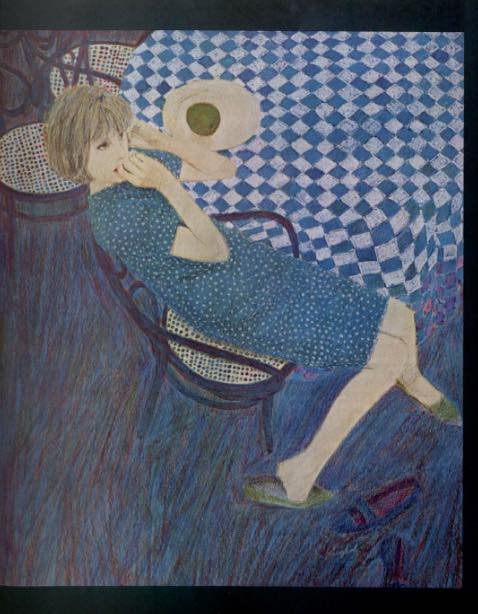
The girls got good jobs and had a really charming apartment overlooking a garden on West Twelfth Street. It was fixed up like a decorator’s dream with “gravy” — the latest in sample fabrics that came to Helen and the newest in gadgets that came to Eva. They had a standing deal for using the apartment on alternate nights, which they did occasionally for little dinners, but mostly they loved to lament that they were asked out so much they never had a chance to enjoy their home. They followed a strictly “hands-off” policy regarding each other’s friends, but every so often they had a joint cocktail bash, with waiters, bar and canapes sent in from Longchamps. It was a good way of sewing up all the new men they encountered in their rounds, thus building up insurance against that humiliation, a dateless night.
In no time at all they were real New York career girls making every minute count. They loved collecting new men and vied with each other in finding prizes outside their business worlds. “I’ve got the most marvelous new man!” one would exclaim. “He’s in the theater — no, ducky, not an actor, a kind of producer or director.” Fortunately their tastes did not conflict. Helen liked tall men with good enough wardrobes to escort her to her fashion shows and openings, and Eva was inclined to like them cute with a collegiate or cafe playboy flavor. They were both cautious of getting involved in anything that would ruin their perfect setup, and though they had no idea just how far the other went in male friendships, they counted on their mutual conviction that affairs were messy, unprofitable, and a handicap in social progress. They never went anywhere as girls together, as they didn’t want to give even each other the impression that the supply of escorts was running short.
But more than anything else they adored couples! Each found the most attractive couples and these, too, they kept carefully to themselves, comparing notes freely, however, with each other on the babies, marital problems and joys of their favorite pairs. They seemed to collect all these young marriages as if they were extensions of their own blighted marriages, and their cool dismissal of their own early ties made them all the more dewily romantic about these others. The couples usually lived in Connecticut or Long Island or Bucks County and loved coming to parties in town, especially in Greenwich Village, which was so different. In summer the couples had shore and mountain places with gay weekends, and Helen and Eva matched invitations against each other, each saying aloofly over the phone to her suitor, “Oh, not Friday or Saturday, darling, because I’m never in town weekends.”
For weekend gifts Helen would select something smart from her sample drawer of French baby dresses or Italian beachwear. Eva would dip in her gravy trunk for some marvy new gadget that opened up into something else that did something or other cute, like popping olives into cocktail glasses. Then they exchanged when the necessities of their respective hosts demanded it. Everyone was always glad to see them, and the girls enjoyed being popular with husbands, wives and kiddies alike. On Mondays they compared weekends, confiding the private problems of their hosts more intimately than they ever did their own. They romanticized their adopted families until Helen’s Carrolls, Keefers and Browns figured in Eva’s dreams the way Eva’s Marlowes, Kings and Duffs did in Helen’s. The girls usually took the man’s side in discussing little family quarrels because they agreed that a young husband had a lot to deal with.
Browns, Marlowes, Keefers — never let it be said the girls were not in demand! And wherever they went the friends of the friends liked them, too, and insisted on sharing them.
“I’ve half-promised the Carrolls this weekend,” Helen would sigh, “but the Taylors insist on giving a terrific party for me so what can I do? You’re going somewhere, of course, Eva?”
Of course, of course! It was merely a matter of choosing. But the fact was that by the end of their fourth summer together Eva was wishing in her inmost soul that she dared slow down. Her job was more exacting than Helen’s and she didn’t have those southern cruises in winter that were a pleasant feature of Helen’s job. She wished she could turn her gravy into cash and just loaf a month on her mother’s farm upstate. But Helen was accumulating gayer and cuter couples all the time and Eva couldn’t be left behind. The show of snapshots on their walls marked their progress — lithe, bronzed fellows in beach or riding clothes flashing porcelain smiles, the absolutely heavenly man from the Social Register invited for Helen at her last weekend (she was taking him to the fashion lunch at the Plaza), the divinely clever columnist the Kings had invited for Eva, the adorable twins of Helen’s newest friends on their ponies, the Westport crowd at the Marlowes’ cookout, laughing at Eva’s chef getup, and many other gay picnic groups with Helen or Eva in the middle all wearing funny hats.
On the hottest Friday in August the girls had gotten off early from their jobs and had run into each other in front of Penn Station by coincidence. Helen was going to visit some perfect darlings who had a place in Jersey outside New Brunswick, but honestly it was so hot she wished she’d accepted one of her beach invitations instead. Not that it wasn’t a sweet place and the kids were so proud of their little brook, fixed up with the fancy garden furniture and parasols Eva had traded Helen for some of her fashion samples.
“They’re really cute, you know, having all of us sit around in bathing suits oiling each other’s backs just as if we could take a swan dive into a terrific pool,” Helen said. “It’s only deep enough to wade and then the mosquitoes get you, but it’s such fun. I couldn’t find any new loot to take them this time, so I had to dig down for a bottle of Scotch. Silly when they buy it by the case. What are you taking your people?”
“A decorating handbook that came in the office,” Eva said. “The Kings don’t read, of course, but they like a ten-dollar book lying around the cabana. I promised the Duffs the new mixer that came in the office. Wonderful getting out of the city, isn’t it?”
“Lucky us!” agreed Helen with a parting wave.
As Eva started for the Long Island station, Helen called out to her, “Did you lock the porch windows when you left this morning?” and Eva reassured her with a nod. But the minute Helen had disappeared in the crowd Eva stood still, struck with misgivings. Had she really locked the windows? Prowlers could easily get up from the garden court below, and Helen would never forgive such carelessness. Uneasily Eva looked at the station clock. She would have to miss the express and take the later train, that was all there was to it. She would worry every minute unless she checked.
There was no trouble in getting a cab out of the station back downtown. In spite of the sweltering day, the weekend mass exodus made the deserted city seem cooler and wonderfully peaceful after the station mob. At Twelfth Street Eva thoughtlessly paid off the cab instead of keeping it waiting, and so had to take her bag upstairs. As she unlocked the door of the cool, quiet living room she couldn’t help wishing she were coming home from her weekend instead of having it ahead of her. The windows were safely locked, but she opened them now to catch the delicious little breeze ruffling the ailanthus in the garden below. She stood for a moment looking around the artfully arranged little bedroom with its twin beds, twin dressers, twin night tables, twin mirrors, gay screens, and she thought how rarely it happened that two women could live so pleasantly and comfortably, but remain impersonal. Maybe that was the right basis for marriage, too, with each person always presenting his company manners to the other.
Looking at her own bed, Eva suddenly realized how dead-tired she was and how wonderful it would be to just take off her clothes and sink into a softly scented tub. The wish came true almost without her making a decision. Lying in the tub, dreamily humming with the radio she had turned on, Eva thought that the nicest thing about sharing an apartment with another lonely business girl was getting the place to yourself once in a while. And the nicest thing about being invited to the country for weekends — and here she quite shocked herself — was that you didn’t have to go!
Eva’s lips curled into a smile at the tempting idea. She emerged from the bath and lay down to ponder what excuse she could give the Kings. They were such an attractive couple with such cute children and they had such gay friends and were always so glad to see her. She wouldn’t want to risk not being invited again. But even while she was telling herself she must dress and hurry to the station, her overpowering need for sleep overcame her. The telephone ringing furiously dragged her back from heavenly oblivion, and as she sleepily reached for the receiver she saw by the little dresser clock that it was eight o’clock, long past the time she was due at the Kings’!
“Eva, what in the world happened to you?” It was Nora King, and the anger in her voice startled Eva into being wide awake. “Are you all right — why aren’t you out here?”
“I’m all right, Nora. I just missed the Express and then — I guess it’s so late now I’ll not be able to get out at all. I — “
“Not come out at all! But my dear girl, I told you what we had planned! Dozens of people coming in tomorrow for cocktails and supper and if I’d dreamed you weren’t coming I wouldn’t have invited everybody because you know the maid always goes in town weekends and I can’t manage the kids and the party all alone. Darling, you’ve just got to take the first train out tomorrow morning.”
The peremptory note in her voice made Eva stubborn, much to her own surprise. She searched wildly in her mind for a really good excuse that would not lay her open to cajoling or bullying. There was one good thing about having a husband, you could always blame any change of plans on the man and nobody questioned it. Why not dust off poor old Walter?
“I can’t make it, Nora. You see” — Eva drew a deep breath — “my husband got in town unexpectedly and we have to settle some matters that have come up.”
“But he isn’t your husband anymore, Eva! He has no right to barge in on your weekend!” Nora’s indignation ended in a wail, “And you promised to show me how to make chili on Sunday and Frank’s already bought tons of tomatoes! Oh, Eva, I don’t see how you could leave me in such a mess!”
She had forgotten all about the chili promise, and that should have made her feel guilty, only Nora sounded as if Eva’s first duty was to make chili for Frank King as if he were her own husband. You would have thought from Nora’s tone that she had been hired for the weekend instead of invited, Eva reflected with budding anger, that Nora regarded going over some very important papers with an ex-husband (even if it was a lie) as less important than helping her entertain neighbors. Nora’s unfair attitude gave Eva strength to hold out against further wheedling, and after she hung up the receiver Eva sat thoughtfully for several minutes.
It had been a long time since she had had the chance to just sit quietly and think about herself, and it was like getting acquainted with a stranger. She thought about the Kings and the other couples and the marvelous extra men who never needed to do anything but lend their priceless presence, whereas an extra girl had to give and do twice as much as a couple to make up for being an extra girl. She thought of how hard she worked to be liked without ever asking herself whether it was worth it or what it was leading to. She thought about Helen, who had more or less set the pace for their way of living, and she thought about Helen’s friends, and how she and Helen chose friends as if they were furniture, not because they liked them really but because they fitted out their life without overcrowding or jarring the decorative scheme. When anyone got too personal he was gently eased out. She thought about the future and how long she and Helen could go on and on like this. Presently she made herself a corned beef sandwich and took it on a tray with a bottle of beer to the cozy little porch. She sat in the dark looking down in the garden, where guests of the people downstairs were having their coffee and highballs. About this time, she thought, she would have been helping Nora clean up and put the kids to bed.
It was fun lounging about the apartment after getting up late on Saturday. She tinkered with her clothes, and it astonished her that she was luxuriating in Helen’s absence as if Teacher’s back was turned. Helen wouldn’t guess that she went to a movie all alone at the Sheridan and that she had had only one phone call, that an invitation to dinner not from some divine new man but from the persistent guy in her office who was getting too serious to be fun, so she had preferred egg salad alone on her back porch. The mere words “dateless Saturday night” scared her, but how wonderful it was not to have to make any effort! Now would be about the time the Kings would have invited the last of the cocktail guests to stay for dinner and if she were out there, Eva thought, she would be in the kitchen knocking herself out making the fish chowder Frank liked, mixing the salad that the Kings always said only Eva could make. Later she and one of the men would clean up while Frank made highballs and Nora got out the cards and chips for poker. Wherever she went she was like one of the family (especially since the help always got weekends off). She felt tired out just thinking about it, and by ten o’clock she was fast asleep in bed.
It was barely four o’clock on Sunday afternoon when Eva heard the key in the lock as she was shampooing her hair. She felt as guilty as if she had been caught trying on Helen’s clothes (which of course were not her style or size anyway), and she was annoyed with herself and with Helen for making her feel that way.
“Eva! Don’t tell me you had to come in early too!” Helen set her bag down and came out on the porch. “Leaving that wonderful beach!”
“It is a fine beach,” Eva agreed, “but I’m always so busy cooking or mixing drinks for their seemingly endless raft of company that I hardly ever get near the beach. I stayed in town and rested. . . .”
“I wish I had,” Helen said. “I just gave up being chewed by gnats in the brook and sent myself a telegram to come home — after I’d made the curtains like I’d promised.”
“It struck me that I work twice as hard making a go of other people’s marriages and homes than I ever did for my own,” Eva said.
“Funny, I was thinking the same thing, Helen mused. “But nobody else thinks so. They think they’re being nice to a poor single girl.”
Helen had taken off her Shantung suit and shoes and slipped into housecoat and slippers. She sat down in the porch swing (courtesy of Eva) and lit a cigarette.
“I guess the heat must have got me, too, this weekend,” she reflected. “The men went fishing and didn’t get back in time to fix the barbecue, so Ellen and I had to do that. Seems they’d taken along all the liquor, too, including my Scotch, so the rest of us had to take beer, warm at that. John was tight and kept reciting Gunga Din and telling dirty jokes till I thought, Good Heavens, he’s twice as bad as Ed. That reminded me that today would be Ed’s birthday and we always call each other up on our birthdays so I wired myself to come in. He hasn’t called?”
He hadn’t, Eva said, but even as she spoke the phone rang and Helen went inside. Eva could not overhear what she was saying, but she did note that Helen’s tone was not the patient, weary, kind one she usually used in putting off overtures from her Ex.
“He’s just landed at La Guardia,” Helen said, coming out again. “He’s taken a job in the New York office, of all things, and I thought I might as well have dinner with him since it’s his birthday. I only hope he has on a clean shirt.”
“So long as it isn’t hanging out over his trousers,” Eva giggled, but Helen did not laugh.
“Good heavens, Ed’s not the sporting type,” she said, and then she smiled with a preoccupied air. “Know what he said? Sorta sweet, honestly. He said. ‘Helen, guess what, I wear bow ties now like you used to want me to.’”
“That is sweet,” Eva agreed.
“I’m mad now that I took that batch of Italian neckties out to Jim Carroll,” Helen went on. “Ed might like them.”
Eva had finished drying her hair, and was combing it into place. “I’m meeting my date outside,” she said. “You could have Ed come here where he could relax. Does he know where he’s going to live?”
“Somebody’s given him a place in Great Neck,” Helen answered. “It sounds like a good idea, considering Ed’s not the city type. I’ll probably have to fix it up for him. Honestly, when I think of all that loot I’ve been passing around when Ed could use it so well right now! I was looking around the Carrolls’ place and I thought Good Heavens, I’ve practically furnished their house and dressed the kids as well.”
“I know,” Eva nodded. “Look, I can get you lots of stuff free or wholesale when you find out what Ed needs.”
“Fine,” Helen exclaimed. She hesitated a moment, so embarrassed that Eva could almost guess what she wanted to say. “Of course, I’m not considering going back with Ed for one minute, only he does keep after me, and sometimes when I see all these other husbands so much worse than Ed and now that both of us are older and more understanding — ”
“I know, I know,” Eva interrupted hastily when Helen faltered.
“What I mean is — ” Helen went on awkwardly “ — well, supposing I should decide, well, I wouldn’t want to leave you out on a limb.”
“Why, Helen, don’t give me a thought,” Eva reassured her. “I could swing the apartment alone, and you could use it whenever you and Ed want to go to parties in the Village or stay in town.”
“We’d want you to come out to Great Neck weekends,” Helen said, beginning to glow happily. “You’d be one of the family.”
“Marvelous,” Eva cried, and hurried with her dressing. As soon as she got out she’d call up the man she’d turned down last night, for if she was to live alone maybe she’d need somebody serious. She felt an odd mixture of relief and dismay that whatever problem she had feared from the future was here right now while there was still time to cope with it. She took a last look in the mirror, and over her shoulder saw that Helen still was looking at her anxiously.
“Goodness, Helen, we knew at the start that we couldn’t go on like this forever,” Eva exclaimed with a gay laugh. “You know what opposites we are. And you might as well be doing things for Ed as for other people’s husbands. That reminds me. You say it’s Ed’s birthday. . .”
She pulled open her closet door and found a cardboard box with a wholesale number on it. She offered it to Helen, beaming. “All husbands just love this,” she said. “You hold it this way and it measures the vermouth, then you turn it around and it pops cherries into the Manhattans!”
The First Hero of World War II: 75 Years Ago
 Seventy-five years ago today, America launched the first of its World War II military operations that would ultimately lead to victory three years later.
After the attack at Pearl Harbor in 1941, America was in desperate need of heroes. Four months had passed since our Navy had been caught by the surprise attack, and the U.S. had yet to strike back at Japan. It would be months before our G.I.s would confront either Japanese or German troops and take the initiative in the war.
Fortunately, a hero emerged in April 1942, when Americans learned that the U.S. had struck a blow against the Japanese empire in downtown Tokyo. The hero was the man who’d led the mission: General Jimmy Doolittle.
President Roosevelt had been calling for some military action to boost the country’s morale and show America’s determination not to let the Pearl Harbor attack go unanswered. A successful retaliation, he reasoned, would also erode Japanese confidence in their government. The U.S. developed a plan to bomb Tokyo with 16 modified B-25 bombers launched from an aircraft carrier. It was a risky mission: none of the pilots had ever taken off from an aircraft carrier before, and there was no telling what sort of air defense the crews would face when entering Japan.
This news reel from 1942 shows footage of preparations for and aftermath of the Doolittle Raid. Castle Films. From the Pare Lorentz Center at the Franklin D. Roosevelt Presidential Library and Museum.
Now the element of surprise was gone. Doolittle’s fliers were still 170 miles from their launch point. It would take another 10 more hours before they could reach a point from which the planes could fly to Tokyo and return — 10 hours that would give the Japanese plenty of time to launch their fighter defenses.
Doolittle decided to start the mission. His crews would hit the target and, instead of vainly trying to return to the carrier, would keep flying west to China. There, they would try to find friendly air fields, or crash land, or simply have their crews bail out.
The 16 U.S. bombers entered Japanese air space around noon and dropped bombs on Tokyo and five other cities.
With Japan behind them, the crews were still not out of danger. One bomber, short of fuel, landed in Soviet Russia, and its crew was imprisoned. Two went down in the sea and were picked up by the Japanese. The crews were held as prisoners, and three officers were executed by the Japanese for “war crimes.”
Doolittle and the rest of the crews made it to China, where they were helped by civilians and soldiers back to Allied forces.
The damage of the Doolittle raid was, in military terms, light, though they destroyed oil tanks, a steel mill, power plants, and an aircraft carrier under construction.
Yet the mission was a success in two regards. Americans’ pride in their armed forces was restored, and Japanese faith in their military took a hit. Like the Germans, the Japanese had been assured by their leaders that they would never be bombed. And now the Americans were striking the homeland in broad daylight.
There was a third outcome that had broad consequences. Eager to prevent any more air attacks, the Japanese military decided to capture the Midway Atoll to prevent it from becoming an air base for U.S. bombers. This led to the pivotal battle of Midway, a decisive, hard-won victory for America.
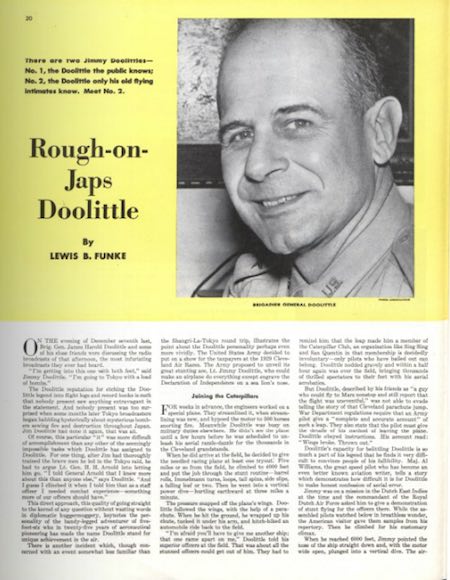
“Rough-On-Japs Doolittle” by Lewis B. Funke presents Jimmy Doolittle as the hero America needed. What emerges from the story is a man who embodies all the qualities we want in heroes: modesty, fearlessness, intelligence, and a sense of humor.
On Going to Bed Angry
I have a bone to pick with psychologists or marriage counselors or whatever you want to call them who advise couples never to go to bed angry. Don’t let things fester is their logic. Attack all disputes immediately. Work the little things out before they become big things.
Let’s say you and your better half were out to an office party, and she reveals when you get home that, in her opinion, you devoted a little too much attention to Ms. Smith, that long-legged, er, tramp (her word) from accounting. You, the accused, feel it was an innocent conversation, and are also tired and wish nothing more than to sleep. But the aggrieved party is wide awake and accusing and wants to work this out. Tonight.
According to the experts, tired or not, you should splash your face with cold water and patiently listen to the full catalogue of your transgressions. Failing to address the matter at hand could create a small rift in your relationship, they say. Further problems will turn the minor rift into a major rent. And then, one day, that rent bill is gonna come due.
The problem with this theory is that problems can’t be solved unless both parties are in the mood to solve them. If you’re not really ready to “have a talk” at that particular moment, the conversation isn’t going to be productive.
My experience is that after a good night’s sleep, whichever one of you was ticked off will have a clearer perspective on the whole messy business. After all, was it really such a big deal? Maybe you were making sure Ms. Smith had properly filed the papers for your annual bonus, which you were going to use to take your wife on that vacation you’d both been talking about. Or maybe you were flirting a little bit. Either way, you can work it out in the light of day.
To be clear, I’m not saying you should sweep problems under the rug. In fact, it’s important, when marriage disputes arise late at night, to make a firm promise to your partner that you’ll address the situation fully. And soon. But not tonight.
Get some sleep!
—Jorge Jetsohn
*“Contrariwise,” continued Tweedledee, “if it was so, it might be; and if it were so, it would be; but as it isn’t, it ain’t. That’s logic.”
This article is featured in the May/June 2017 issue of The Saturday Evening Post. Subscribe to the magazine for more art, inspiring stories, fiction, humor, and features from our archives.
Babe Ruth’s Compassion
This article and other features about baseball can be found in the Post’s Special Collector’s Edition, Baseball: The Glory Years. This edition can be ordered here.
In Vicksburg one rainy morning about 8 o’clock an aged, bewhiskered man with wet clothing and muddy feet came into the lobby of the hotel.
At the desk he asked for Babe Ruth. He was given the number of Ruth’s room on the second door at the head of the steps. That hotel had not yet surrendered to the idea of visitors’ having to be announced. A few minutes later Ruth, in bed, heard a rap at his door. He grunted and got up. In night clothes and with hair tousled, the Babe went to the door.
“I’m sorry to disturb you like this, Mr. Ruth,” the old gentleman apologized, “but I have come to ask of you a great favor.”
“What is it, old-timer?” asked Ruth, somewhat puzzled, but immediately sympathetic. “Sit down.”
“Mr. Ruth,” the stranger explained, “I want to get you to sign this baseball. It’s for a little boy out in the country — very sick. He may not get well. Ever since last fall, when we heard that the Yankees were coming here to play a game, the little fellow has looked forward to seeing you. Now that he knows that he can’t get out of bed, his mother thinks the disappointment has made him worse. She is very much distressed. I figured out that it would help some if I could get you to sign this ball. That would at least comfort him for a while.”
“Where is the little fellow?” asked Ruth.
“He lives out in the country about 12 miles. It was quite a trip for me, too, with all this rain and bad roads.”
“Sure, I’ll sign two or three balls for him,” declared Ruth. “Not only that, but I’ll take them to him. Let’s go!”
As the astonished old gentleman looked on, Ruth called for a bellboy, ordered a big touring car, and began to get dressed. Two hours later he arrived at the little boy’s home. The mother, instantly recognizing Ruth, could hardly believe her eyes. Without any preliminary conversation, she led the Babe immediately to the little fellow’s bedroom.
At the expression on the little boy’s face, as he raised up in bed, the mother burst into tears.
“He’s been delirious,” she said, “and he thinks he’s dreaming.”
“No, mamma,” spoke the boy. “It’s Babe Ruth himself, isn’t it?”
Ruth went over and sat on the side of the bed. Taking three baseballs from his pocket, he began signing them, all the while talking to the little fellow, as a pal, about the game. He asked about the boy’s own ball club and made several suggestions as to how they should play next summer. It was the happiest moment of that boy’s life.
“He’ll get well, all right,” Ruth said to the mother, in the presence of the little fellow, “and this summer he’ll be out there hitting that baseball as hard as any of them.”
Nobody knew of this incident — that is, nobody in our party — until we were aboard the train en route to Jackson that night. The writer of this happened to pick up a local afternoon paper, and on the front page found the story as just related, evidently told to the editor by the old gentleman.
“Certainly it’s true,” said Ruth, when asked about it. “That’s as little as anybody could do, isn’t it?”
All of us took the clipping and telegraphed it word for word to the papers we represented. Ruth felt a little hurt, and so did we, two or three weeks later, when a cynical paragraph in a distant newspaper referred to this incident as another bit of Ruth publicity.
—“And Along Came Ruth” (4-part series) by Bozeman Bulger, November–December 1931
Spring Cleaning Survival Guide
This past Christmas, my wife suggested we give one another an “experience” instead of a gift. She said for her experience she wanted to go somewhere warm where she could hear the ocean. So I took her to Walmart and had her sit in a beach chair in the gardening department while I held a conch shell to her ear.
As for my experience, I knew immediately what I wanted: help cleaning my office, which I hadn’t done in two years because I’d been researching a book and didn’t want to mess up my filing system. But I was heading down the home stretch and thought I could risk a little cleanliness and order. So one morning, as winter was waning, my wife spent nine hours filling five 39-gallon trash bags with junk and hauling them to the curb for Ray the garbage man to carry away. She also took two boxes of books to the library for their annual book sale after I checked to make sure I hadn’t written my name in any of the more salacious ones. Ministers in small towns have to take all kinds of precautions against scandal.
With my office squared away, my wife set her sights on the rest of the house, as she does every spring. She began with the basement. I could hear her down there, muttering to herself, vacuuming the spider webs, yelling up the stairs to see what I wanted done with the projector my grandpa Hank left me. It no longer works — the bulb is burned out — but just as soon as I throw it away, I’ll come across the light bulb it needs and be sorry I pitched it.
“Keep it,” I yelled down the stairs.
“Can we get rid of the Ping-Pong table?” she asked.
We hadn’t played Ping-Pong in years, but whenever our basement floods, it’s awful handy to be able to stack things on the Ping-Pong table so they don’t get wet, so I shouted down to her to keep it.
She yelled back that she needed my help.
I had feared it would come to that, so had a plan, which was to act like I hadn’t heard her, sneak out to the car, and drive to the hardware store to see if they had a bulb for the projector, which they didn’t, but when I was there I remembered my grandpa had also left me a broken hammer, so I told Charlie the hardware man I needed a new handle, then told him the old joke about a man who owns Abe Lincoln’s axe, whose handle had been replaced three times and the head twice. Charlie laughed, even though I suspect he’d heard that joke a hundred times.
I stopped at the Dairy Queen for an ice cream cone, wanting to give my wife ample time to finish cleaning the basement, it being rude to interrupt people when they’re in the middle of something important.
The next day she started cleaning the kitchen, emptying the refrigerator and washing the shelves. My wife is funny about her kitchen. She doesn’t want me anywhere near it when she’s working in there, so I didn’t offer to help, not wanting to annoy her. It’s that kind of thoughtfulness that has made our 33-year marriage so strong.
“I’m going to clean the garage while you work in the kitchen,” I said. But the garage wasn’t all that dirty, so I went out to our screen house and took a nap in the hammock instead. If you’ve ever tried sleeping in a hammock, you know it’s not the easiest thing in the world to do, and I was only able to keep at it for a few hours before waking up, by which time I was hungry for lunch, so I went inside to ask my wife what she was feeding me, and that’s how, I explained to Charlie the hardware man the next day, my grandpa’s hammer got broken again.
Philip Gulley is a Quaker pastor and the author of 22 books, including the Harmony and Hope series featuring Sam Gardner.
This article is featured in the May/June 2017 issue of The Saturday Evening Post. Subscribe to the magazine for more art, inspiring stories, fiction, humor, and features from our archives.
Frank Lloyd Wright’s Long and Stormy Career
Two springs after the Civil War ended — and exactly 150 years ago on June 8, 1867 — Frank Lloyd Wright, one of this country’s most original forces of nature, was born to an eccentric minister father and schoolteacher mother in pastoral Wisconsin. Few clues, other than, possibly, his affinity for playing with building blocks, could have foretold his future as an iconoclast who would help shape and even define modern society.
Frank Lloyd Wright is considered, in the eyes of many, the most consequential American architect of the 20th century. But while Wright’s influence can be seen all around us, notes Russell Davidson, past president of the American Institute of Architects, it’s easy to forget how influential he is. Consider this: buildings that emphasize open floor plans featuring large glass picture windows pulling in natural light and fronting views of the outdoors; fireplaces anchoring common areas where families gather; backyards treated as sanctuaries; horizontal roof pitches allowing more sky to pour in; even radiant heating. All these are design elements developed by Wright and his creative teams or inspired by his dictum that the features of a building must be in harmony with the rhythms of daily human life.
Nearly 92 years after his birth, on April 9, 1959, Wright was laid to rest in a modest grave not far from his compound in Spring Green, Wisconsin. Called Taliesin, a Welsh name meaning “shining brow,” it is a perfect example of Wright’s belief that buildings be seen as organic extensions of their natural settings.
There is no monumental tombstone to commemorate him. Only a modest protruding rock accompanied by an epitaph that reads, “Love of an idea is the love of God.” And, in fact, as we explain below, Wright’s body is no longer there.
In all, Wright had direct involvement with plans for more than 1,000 structures of various kinds, including houses, offices, churches, hotels, schools, museums, college buildings, a national park pavilion, and a high-rise — many of those remaining now designated as national landmarks.
It’s only fitting that The Saturday Evening Post should mark Wright’s remembrance. The Post featured Wright’s work on several occasions over the seven decades of his career (for an excerpt, see “Wright’s Masterwork”). Make no mistake, Frank Lloyd Wright flaunted a gargantuan ego and often came across as a scold to lesser architectural lights. His trademark eccentricity — being sharp-witted, opinionated, always dapperly dressed with trademark hat and walking stick — evoked an air of dandyism. And yet those closest to him say there was a softer, playful, self-deprecating interior who yearned for validation.
Wright identified as a pastoral Midwesterner who craved contact with the outdoors. Famously, he once observed, “Study nature, love nature, stay close to nature. It will never fail you.”
As a young draftsman-in-training in Wisconsin, he knew that he needed to prove himself in the big city. He arrived in bustling Chicago 16 years after the disastrous Great Fire of 1871. The need to rebuild produced a boom in demand for architects. The volume of work that accompanied reconstruction, and the growing professional class choosing to live in nearby suburbs, became an impetus for reflection about the function of homes and the essence of community.
Wright fell under the tutelage of architect Louis Sullivan, 11 years his senior and a fellow genius destined to be remembered as the “father of modernism.” Sullivan was already laying the foundation for a new emerging visual language, what we now know as the Prairie style. The home, to them, wasn’t merely a place of shelter and sleep but a vessel to stimulate the mind.
The Prairie style’s distinctive features are lower-slung, horizontally aligned structures honoring the open, often treeless expanse of the Midwestern prairie. An essay by Kimberly Elman Zarecor, associate professor of architecture at Iowa State University, elaborates on this philosophy: “Organic architecture involves a respect for the properties of the materials — you don’t twist steel into a flower — and a respect for the harmonious relationship between the form/design and the function of the building (for example, Wright rejected the idea of making a bank look like a Greek temple). Organic architecture is also an attempt to integrate the spaces into a coherent whole: a marriage between the site and the structure and a union between the context and the structure.”
To put it another way, “Wright had a highly developed way of making the building feel like it was part of its site, rather than placed on top of its site,” Davidson explains.
Central to Wright’s sensibility was echoing patterns and forms found in nature. Such fidelity did not always extend to human relationships. Thrice married, he was the father of eight children by different partners. “Despite the womanizing angle that some stories have taken, Wright was an early feminist,” notes Timothy Totten, who’s studied Wright for more than 25 years and whose “Night with Wright” presentations help to spread his enthusiasm for the great architect. “He believed in equality for women in his studio — more than 100 women served in his practice as apprentices and architects during his career — and the great love of his life, Mamah Borthwick.”

Courtesy Taliesen Preservation.
Borthwick was the wife of Wright’s neighbor, and the two had a well-publicized affair. Abandoning their spouses, they ran off to Europe together, later resettling at Taliesin in Wisconsin, which Wright built for her. But Taliesin, a place of profound bliss and exaltation for Wright, would become a source of unspeakable pain. On August 15, 1914, while Wright was in Chicago on business, Borthwick and six others — including her two children — were murdered by a deranged, disgruntled servant who killed them with an ax and set fire to the building. Borthwick’s death sent Wright tumbling into a depression. Many thought his best days were behind him, and for the next decade, demand for his services went into decline. But “Wright had an uncanny ability to reinvent himself through his work and find new inspiration,” Davidson says.
In rebounding to create some of his greatest works, Wright also benefited from a prodigious amount of luck, adds Totten, “a trait he shares with quite a few of the grand movers of the last century, from Einstein to Steve Jobs, in that he was born at the right time and refused to be deterred by setbacks. The revolution in modern architecture of the late 19th century, coupled with serendipitous engineering advancements of the early 20th century, meant he could push architecture the way he did.”
In many respects, the resurrections that occurred at Taliesin can be viewed in hindsight as a metaphor of Wright’s own path, which played out in two more acts. This is most evident, Davidson notes, in the progression of thinking that can be seen from his early works to his most famous midlife masterpiece, Fallingwater, and his grand finale completed in his last year of life, the incomparable Solomon R. Guggenheim Museum. Designed in 1935, Fallingwater, a residence created for the Kaufmann family in southwestern Pennsylvania, famously incorporated the path of a stream and natural waterfall into its building envelope. Audacious in Wright’s own time and even today, the site plan allows the cascade to course through the living spaces.
Owning a Wright home was — and still is — a prestigious thing; being able to claim him as a friend caused clients to swoon. “He was devilishly charming and had a generally bright, sunshiny disposition most times; how else to explain all the clients who willingly gave significant resources for him to build projects that pushed them beyond their own comfort zone?” Totten asks.
“Wright had ideals about the way he thought people should live and work,” Totten continues. “It makes sense that so many clients spoke about their homes and, in some cases, their offices as if they were other members of the family. Because he listened to clients and anticipated their needs, his built projects just seem to ‘fit them perfectly’ and made them feel a greater sense of intimate connection.”
Still, working with Wright was not easy. He was a stickler for detail, and despised having to compromise. As he once wisecracked, “The physician can bury his mistakes, but the architect can only advise his client to plant vines.”
There’s the story of an exchange between Wright and a client, Harold Price Sr., who was building a second project with the great man. Price showed up at an Easter party wearing a new bright-blue sport coat. Seeing it, Wright reportedly said, “Harold, how have I left you enough money to buy a new suit?”
Indeed, no one ever accused Wright of sensitivity to the feelings of others. He famously dismissed Ernest Hemingway, who had questioned a Wrightian conception for the Grand Canal in Venice, as nothing more than “a voice from the jungle.” He remarked that Daniel H. Burnham, chief designer of the Chicago lakefront, “would have been equally great in the hat, cap, or shoe business.” He described the prestigious French-Swiss architect Le Corbusier as “only a painter — and not a very good one.”
Explaining himself in a TV interview, Wright claimed that he preferred “honest arrogance” to “hypocritical humility.”

Courtesy The Western Pennsylvania Conservancy
Arrogance doesn’t build allies. And, as a proponent of the “sole genius” approach to his profession, notes Davidson, he gave little or no credit to his many collaborators. “This self-permission to be arrogant has unfortunately tainted the view of many architects and is still the reason that the public believes that many architects are not relevant to their ordinary lives,” Davidson says.
For all his egotism, Wright had a soft spot for working people. He believed everyone deserved to have tasteful, functional living spaces affordable to their means. Davidson recalls, as a teenager, helping a friend deliver newspapers in a neighborhood designed by Wright near Pleasantville in the Hudson River Valley. The community, known as “Usonia Homes,” was his rebuttal to the cookie-cutter developments then sprouting up in postwar America for its emerging middle class. The homes in the development were modest but functional and featured aspects of his organic design — flat roofs, kitchens that doubled as work spaces, dining rooms with built-in seats and tables, and living rooms with fireplaces where families could gather in cozy comfort.
The Guggenheim Museum is thought by many to be Wright’s capstone, yet it caused controversy and epic resistance from traditionalists. Wright wanted to push museum design to a new level and push museum administrators out of their comfort zones. He aggressively fired back at critics who claimed that the Guggenheim plan was a monument to himself. “On the contrary,” he said, “it was to make the building and the painting an uninterrupted, beautiful symphony such as never existed in the World of Art before.”

The Guggenheim remains a New York landmark to this day, hugely popular with tourists and native New Yorkers alike. The National Park Service says that among all of the Wright properties in its inventory, the Guggenheim “represents the culmination of a lifetime of evolution of Wright’s ideas about ‘organic architecture.’”
Wright died just a few months before the Guggenheim’s opening in autumn 1959 to huge fanfare – and plenty of controversy. Seems the perennial iconoclast found a way to continue being the center of attention, even in death.
More attention would follow more than 25 years later when, near the end of her life, Wright’s third wife, Olgivanna, surprised the world by announcing it was her husband’s intention to be cremated. Despite a furor of protest, and against the wishes of his children from his first marriage, his body was exhumed from its resting place at Taliesin and duly cremated. The ashes were moved to Arizona and placed in a shrine with hers.
It doesn’t matter, of course, where Wright is buried; it’s his surviving buildings, all around us, that stand the test of time. In their shadows and light, it is said, you can still feel his soul and spirit.
Todd Wilkinson has been writing about art, nature, and the West for nearly 30 years. For more, visit toddwilkinsonwriter.com.
This article is featured in the May/June 2017 issue of The Saturday Evening Post. Subscribe to the magazine for more art, inspiring stories, fiction, humor, and features from our archives.