Philosopher John Stuart Mill dedicated his book, On Liberty, to his wife, writing: “to the beloved and deplored memory of her who was the inspirer, and in part the author, of all that is best in my writings.” He’s not the only writer whose spouse played a significant role in his success. Some of the most beloved and acclaimed male writers had help from their wives when writing, and while some of them acknowledged those contributions, others let their spouses remain unappreciated. These women inspired, edited, typed, translated, or even partially wrote many influential works, but their names rarely appeared on the cover alongside their husbands’.
Zelda Fitzgerald

F. Scott Fitzgerald was one of the most successful and well-known writers of his time; his wife, Zelda, was less commercially and critically successful with her only novel, Save Me the Waltz. However, she likely played a bigger role in her husband’s success than he might have let on. F. Scott Fitzgerald based many of his characters on Zelda, even allegedly writing his character Rosalind Connage in This Side of Paradise to incorporate aspects of Zelda’s personality and experiences. He also lifted chunks of her diary and incorporated some of her ideas into his work. After the publication of F. Scott Fitzgerald’s first novel, This Side of Paradise, Zelda wrote: “I recognized a portion of an old diary of mine which mysteriously disappeared shortly after my marriage, and, also, scraps of letters which, though considerably edited, sound to me vaguely familiar.” Parts of The Great Gatsby also have similarities to Zelda Fitzgerald’s journal and spoken words, most notable Daisy Buchanan’s line — one of the most recognizable lines in American literature because of how it encapsulates women’s limited role in 1920s society: “I hope she’ll be a fool — that’s the best thing a girl can be in this world, a beautiful little fool.” Zelda had said after giving birth to their daughter, Scottie Fitzgerald, “I hope it’s beautiful and a fool—a beautiful little fool.”
Olivia Langdon Clemens
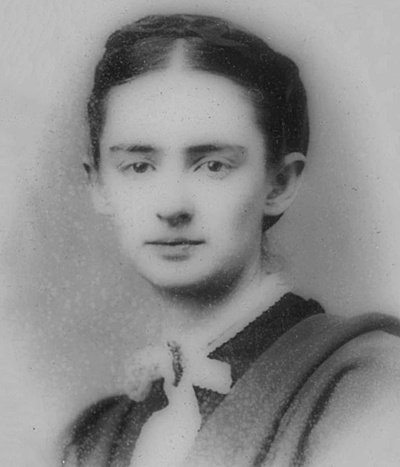
Mark Twain’s wife, Olivia Langdon Clemens, played a significant role in his work — both in his fiction and journalism. Biographer Laura Skandera-Trombley wrote in her book Mark Twain in the Company of Women. “When Clemens was introduced to her on December 31, 1867, he met a woman far better educated than he was.” — and he knew it. Twain often left pages of his manuscript by her bedside for her to proofread and edit. Skandera-Trombley also considers Clemens to be the reason Twain’s work became more accessible to a female audience. While Twain was often unpolished and humorous in his prose, Clemens encouraged him to take his work more seriously, and he always gave her credit for her contributions. Twain wrote, “I never wrote a serious word until after I married Mrs. Clemens. She is solely responsible — to her should go the credit — for any influence my subsequent work should exert.”
Sophia Tolstaya

Sophia Tolstaya was the copyist of her husband’s most successful novel, War and Peace, copying and editing the novel seven times. However, their arguments became more intense over the years, and while they never divorced, he abruptly left her out of anger at the age of 82. not only copied her husband’s work, but was also a writer herself, but her work was suppressed by Russian authorities during the Soviet era because they thought her criticism of Tolstoy would tarnish his reputation.
Anna Grigoryevna Dostoevskaya

When Fyodor Dostoevsky was looking for a stenographer to help him complete his novel The Gambler, Anna Grigoryevna Snitkina’s professor recommended her to him. Despite having a tight deadline, the two were able to complete the book — and fell in love in the process. She later became his financial advisor and got him to give up gambling.
Véra Nabokov

Besides being Vladimir Nabokov’s wife, Véra Nabokov was also his typist, editor, and literary agent. She supported their family by working as a secretary and translator and remained one of her husband’s biggest supporters, driving him where he needed to go, sitting in his lectures, and stopping him from burning what became his most acclaimed work, Lolita. Véra’s biographer, Stacy Schiff, states that one day, “[Véra] stepped outside to find her husband had set a fire… and was beginning to feed his papers to it. Appalled, she fished the few sheets she could from the flames” and announced that they were going to keep the manuscript. Nabokov certainly appreciated his wife’s role as his first reader, biggest supporter, and firmest critic, dedicating all his works to her. In her late 80s and after her husband’s death, she also translated his novel Pale Fire into Russian.
Tabitha King
In On Writing: A Memoir of the Craft, Stephen King advises every writer to have one ideal reader whose taste they tailor their work to and whose feedback they use when revising. For him, it is his wife, Tabitha King. While an unknown Stephen was writing full time and trying to get published in the early 1970s, his wife worked extra shifts at Dunkin’ Donuts to support their family financially. Stephen initially tossed the first three pages of his manuscript for Carrie in the trash, lacking confidence in its quality. He didn’t think he had enough knowledge to write Carrie, a novel about a high school girl and her struggles, realistically. Not only did Tabitha discover the pages in the trash and read them, but she also encouraged him to finish the novel and offered help with the female perspective he believed he lacked. Ever since, Tabitha has always been the first to read his work, both as his critic and as his dedicated supporter.
These are only six women whose contributions to literature often go unrecognized. Behind many successful male novelists are women who helped them achieve that success, some acknowledged and some unappreciated. These women were more than just partners, wives, mothers, sisters, daughters, and friends; they were also typists, editors, literary agents, advisors, supporters, critics, and muses for the writers we know, love, and praise today.
Become a Saturday Evening Post member and enjoy unlimited access. Subscribe now





Comments
Well, other than Zelda Fitzgerald, I hadn’t heard of any of these women. Numbers 3, 4 and 5 not at all. I’m glad Olivia Clemens got at least some of the credit she deserved, even if it wasn’t all of it. Same with Tabitha King. The last paragraph does sum it up perfectly. Hopefully more women will be given the credit they deserve, and if the reverse is true, that also.
Getting back to the Fitzgerald’s, he and she had a lot of problems. Both seemed like very difficult people to live with, and he seemed like a condescending, stuck-up elitist. Thanks to them though, we do have ‘The Great Gatsby’ novel, and the two films. They’ve largely helped give the ’20s the VERY glamorous image they retain to this day, whether it was true or not. Indeed, unless otherwise specified, “The ’20s” still mean the 1920’s.