Is there a terrorist sleeper cell in your back? Depending on your age and vaccination history, the answer may be yes.
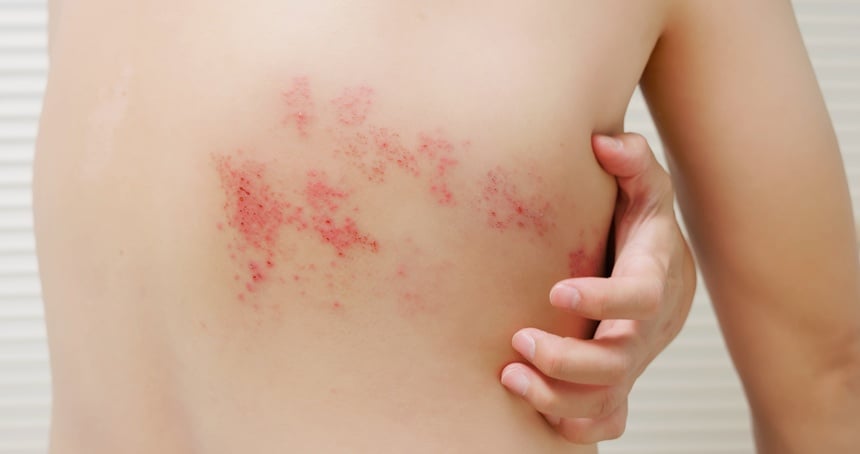
Chances are, you know someone who has suffered from a shingles infection. Shingles is extremely common, as approximately one in three Americans will develop shingles in their lifetime. This disease presents as a painful blistering rash with a one-sided band-shaped distribution. Roughly one in six people with shingles will suffer long-lasting severe pain known as postherpetic neuralgia (PHN).
Why is shingles like a terrorist cell? Well, it’s one of the best-known viruses that can silently lurk within the body for a lifetime. The varicella-zoster virus, VZV for short, infects lymphatic cells and nerve cells in the human body and is extremely contagious. This virus is named after the two common diseases that it causes: varicella (chickenpox) and zoster (shingles). Chickenpox is an acute illness that typically happens prior to age 15. Shingles is a re-infection, meaning it can only occur after you’ve already had chickenpox, typically occurring after age 50. This means that the virus commonly stays dormant for 35 years or more!
So, let’s start from the beginning.
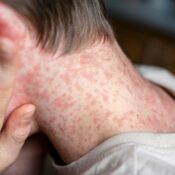
Prior to widespread vaccination, nearly everyone on Earth suffered a chickenpox infection at some point in their lives – usually in childhood but sometimes as an adult. The symptoms of chickenpox include blistering skin rash, itching, pain, fever, headache, sore throat, cough, fatigue, and malaise. Most infections are mild, but chickenpox can cause life-threatening complications like secondary bacterial infections, pneumonia, and eye or brain infections. Chickenpox is more likely to cause severe illness in adults, especially pregnant women.
Unlike cowpox, which literally comes from cows, chickenpox has nothing to do with poultry. It’s believed that the English word “chickenpox” comes from the French “chiche-pois,” meaning chickpea, or the Old English “gigan,” meaning “to itch.”
Acute chickenpox illness almost always resolves within 2-4 weeks, and the immune system produces antibodies that can last a lifetime. It is extremely rare for the same person to suffer chickenpox more than once.
That said, the immune response doesn’t completely eradicate the VZV virus. Once a person is infected, they will have detectable viral DNA in their nerve tissue for the rest of their lives. This most commonly affects the dorsal root ganglia of the spine. If the immune response is weakened for any reason, VZV can break out and spread along the dorsal spinal nerve distribution. The stereotypical band-like pattern of shingles follows the exact shape of one nerve root.
In recent years, we’ve seen evidence that the zoster virus can cause more than just itching and pain. After all, VZV can infect nerve cells all over the body and brain. Varicella-zoster meningitis or encephalitis can occur with or without the typical shingles rash. Disseminated varicella is a potentially fatal multi-organ infection that can occur in newborns, pregnant women, and immunocompromised people.
What can we do to stop varicella-zoster infections? Well, there are highly effective vaccines against both. The varicella vaccine has been approved in the U.S. since 1995, and may be combined with measles, mumps, and rubella in the MMRV vaccine. Current CDC recommendations are for a two-dose series with the first dose at 12-15 months age, and the second at 4-6 years of age.
Since the late 2000s, more than 90 percent of U.S. children have had evidence of varicella vaccination, and this has resulted in a drastic decrease in chickenpox infections. There is even early evidence of decreased shingles incidence among adolescents and young adults.
In older populations, the shingles vaccine has been proven to greatly decrease the incidence and severity of shingles infection. And there is early evidence that shingles vaccination can improve other health outcomes: An April 2025 study showed that Welsh individuals vaccinated for shingles had a lower risk of dementia, and a May 2025 study showed that South Koreans vaccinated for shingles had a lower risk of cardiovascular disease.
The current U.S. guidelines are for a two-dose series of shingles vaccine for adults 50 years and older or adults 19 years and older who have a weakened immune system.
So, if you are at least 50 years old, or if you have a medical condition that may weaken your immune system, ask your primary care doctor about shingles vaccination.
Don’t let the microscopic terrorists win!
Become a Saturday Evening Post member and enjoy unlimited access. Subscribe now