The Grand Ole Opry has long been a keystone of country music. First aired to Nashville listeners in 1925, its audiences — and the nationwide market for country and western music — grew undeterred for decades.
But then along came rock ’n’ roll. “Elvis made Heartbreak Hotel …, and all those rock songs came along and country music took a nose dive like nobody’s business,” said Buddy Killen, then-executive vice president of a Nashville publishing house called Tree Music, in 1966. Under the pressure of the popularity of rock’n’roll, many country radio stations folded or changed formats.
But not the Opry.
In the mid-20th century, the Grand Ole Opry was a radio show, yes. But it was also a venue that brought the greats of country and western together. And it was an incubator of the country stars of the future. And to the musicians whose livelihoods depended on country, gospel, and bluegrass, it was the rock that stood steadfast and weathered the fickle winds of popular taste.
And thanks to the Grand Ole Opry, along with the development of what is known as The Nashville Sound, country music by the mid-1960s was growing once more. Ousting Chicago, Nashville became the third-busiest recording center in the United States, after New York City and Hollywood — a position it holds to this day.
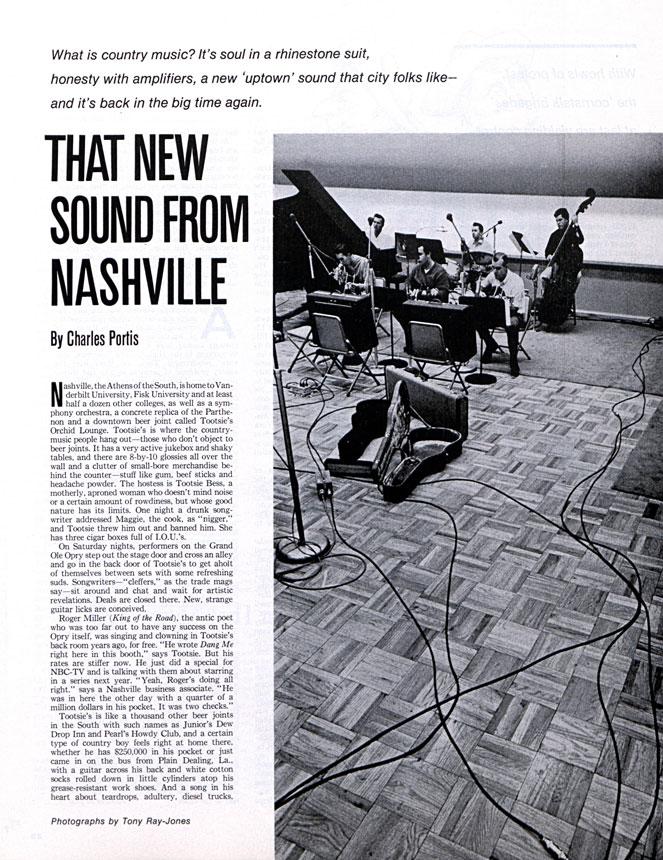
Charles Portis captured this buzz and bustle for Saturday Evening Post readers in “That New Sound from Nashville” for the February 12, 1966, issue.
Become a Saturday Evening Post member and enjoy unlimited access. Subscribe now