Here at The Saturday Evening Post, we know a thing or two about documenting big events across the decades. We saw the Civil War and the completion of the Transcontinental Railroad. We’ve seen historical milemarkers like emancipation, suffrage, and Obergefell v. Hodges. And each time the calendar turns, we, like all of you, are wondering what will be the next era-defining event. With that in mind, we’re taking a look at the events that have defined each decade in the United States since 1900. You may have your own take, and we encourage you to share and engage in (friendly) debate.
You can read Part 1 here.
1930s: The Great Depression
Learn how the Post experienced and covered the events of the Depression and World War II
The event that would define the 1930s was already percolating in 1929. Economic slowdowns, stock market crashes, and eventual unemployment highs of around 25 percent by 1933 had the U.S. (and world) economy spiraling. During the first few years of the decade, around one-third of all farmers in the States lost their land, and an equal percentage of banks had failed. The government resisted most calls for taking a direct role in trying to turn things around, and their few attempts at solutions, like the Smoot-Hawley Tariff Act, made things worse. The situation led to the election of Franklin Delano Roosevelt. Unlike his predecessor, Herbert Hoover, FDR dove into a wide range of rescue efforts in his New Deal; the programs created millions of jobs and made a staggering number of improvements in the country, including the building of Lincoln Tunnel and 6,000 new schools. Though things began to improve in the U.S. in the middle of the decade, the deteriorated conditions in Germany allowed Adolf Hitler to seize power. Ironically, it was the beginning of World War II on September 1, 1939, that signaled the end of the Depression, as the economies of many countries were adrenalized by the war effort.
1940s: Pearl Harbor

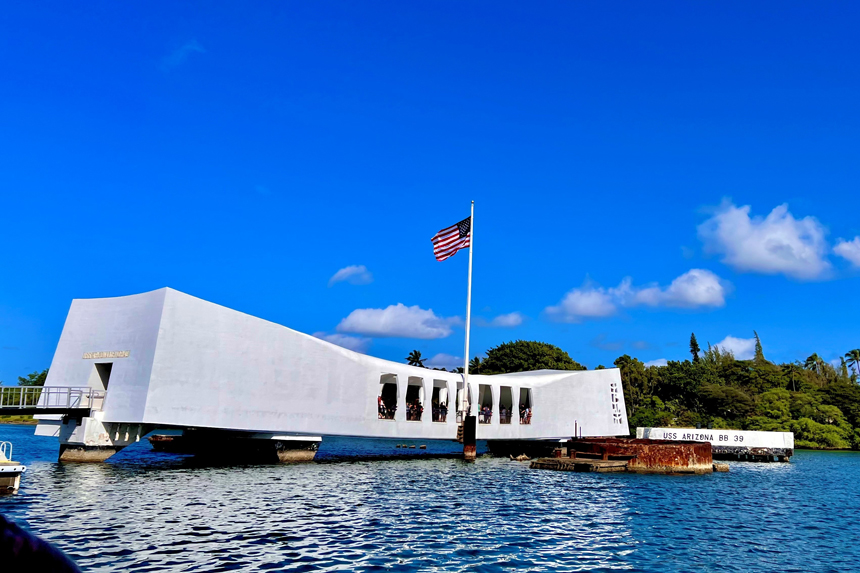
The United States tried to maintain a non-interventionist policy during the early years of World War I. While the nation did offer aid to Great Britain, France, and Russia, U.S. troops did not enter the fray until 1917. When World War II broke out in 1939, the U.S. again attempted to stay out of it. That lasted until December 7, 1941, when Japanese forces struck the United States Pacific Fleet’s base at Pearl Harbor on Oahu, Hawaii. More than 2,400 Americans died and more than 1,100 were wounded; 16 vessels were seriously damaged or sunk, and 180 planes were obliterated. Remarkably, none of the aircraft carriers stationed at Pearl Harbor were in harbor that morning and therefore escaped damage. By the next day, the United States and the U.K. had declared war on Japan, with Italy and Germany declaring war on the two allies in return; the U.S. responded with their own declarations of war on Germany and Italy. U.S. involvement in World War II would eventually change the course of the war. After striking back against Japan with the Doolittle Raid of April 1942, the United States first engaged the Axis Powers at sea and in Africa. In June of 1944, Allied forces landed in France. The war in Europe was over by April of 1945, and Japan surrendered after the U.S. dropped two atomic bombs on the country in August of 1945. U.S. involvement in World War II not only delivered the economy from a decade of stagnation, but set the country as a global superpower and a leader of the free world.
For a first-person account of the events of Pearl Harbor by Lt. Clarence E. Dickinson, read “Pearl Harbor Remembered: I Fly for Vengeance,” originally published in The Saturday Evening Post in 1942.
1950s: The Golden Age of Television
The Post takes a closer look at the Golden Age.
Whether it’s the printing press, the radio, or the internet, any new system of mass communication can shift society in unexpected ways. Although television had been available for a few years in various markets, the 1950s marked an expansion of TV ownership so vast that it became the dominant medium (somewhat amusingly in retrospect, the Post at the time thought TV was a fad. Oops). Approximately six million TVs were in use in the States in 1950; by the end of the 1950s, over 50 million had been sold (that represented roughly 90% of the homes in the country). The era from the late 1940s through 1960 is frequently referred to as the Golden Age of Television primarily because of the amount of cultural programming, almost entirely delivered live. In 1951, I Love Lucy began its run; for four of its six seasons, it was the most-watched show in the United States (during the other two seasons, it was the second and third most-watched). TV affected the way that people received their news, entertainment, and sporting events, and it became a central hub of family activity.
Elvis performs “Ready Teddy” (Uploaded to YouTube by The Ed Sullivan Show)
One of the viewing spikes of the decade came on September 9, 1956, when Elvis Presley made his first appearance on The Ed Sullivan Show; it was reported that over 82 percent of all TVs were tuned in to Elvis performing “Don’t Be Cruel,” “Love Me Tender,” and Little Richard’s “Ready Teddy.”
Become a Saturday Evening Post member and enjoy unlimited access. Subscribe now


Comments
This is an excellent summation of 3 very important decades. I appreciate the links and videos selected here too. Lucille Ball certainly helped sell A LOT of television sets, didn’t she?! I have to wonder if in the later seasons when her show was 2nd and 3rd in the ratings, if the number one show wasn’t also a Desilu production?
Thanks to the benefits of flawless playback and enduring internet interest, I frequently made an additional $29,618 at home. I actually earned $29,164 with my ideal home income. By employing, Nowadays, anyone
may simply make extra money online
Tab On My Name