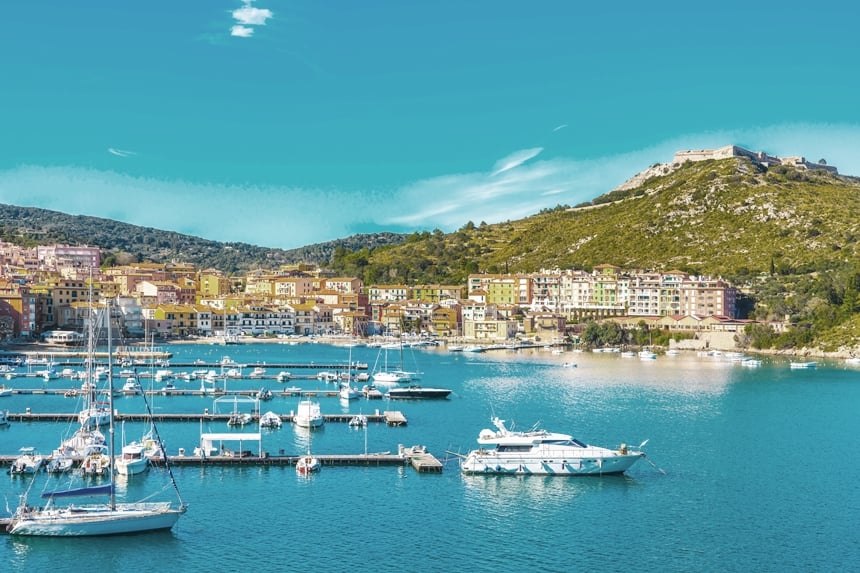
The long, sandy beach rivals any in the South of France. The mountain roads — winding, climbing, and plunging toward the sea — are treacherously worthy of Monaco. The hill-embraced medieval fishing towns could be lifted from the legendary Cinque Terre. The mountaintop fortresses echo the sentinels of Spain. The island-dotted sunsets could be postcards from Greece.
What’s more, not one of these world-class wonders is more than a half-hour drive from the other, situated as they are on compact, 23-square mile Monte Argentario, a patch of paradise that also happens to be an easy 90-minute highway drive from Rome’s Fiumicino Airport.

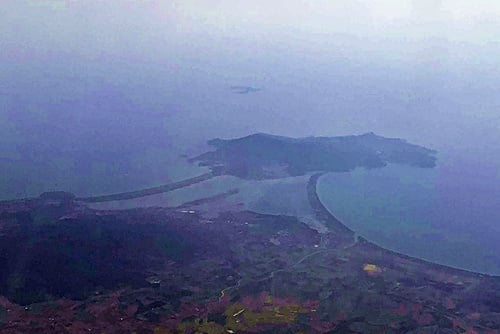
Seen on a map, or from above, you’d swear Monte Argentario was an island floating just off Italy’s western coastline, at the southeasternmost tip of Tuscany. But look closer, and you’ll see it is connected to the mainland by two impossibly slender arcs of land, between which spreads a shallow, vaguely trapezoidal lagoon. So the place is, strictly speaking, a peninsula.
Don’t let the technicalities of geography discourage you, though. For all practical purposes, Monte Argentario is an island. And if you go at the right time of year, it can be your private island. During the summer, Italians stream across those spindly land bridges to escape the crush of international tourists. But in spring and early fall, it is possible to have the waterfronts of the two towns — Porto Ercole and Porto Santo Stefano — nearly to yourself. And you might even drive the narrow roads surmounting the island’s peaks while barely encountering anyone coming in the opposite direction.
The Towns
For my week on Monte Argentario, I settled in the smaller of the island’s two towns, Porto Ercole (Port Hercules). The oldest buildings here date back to the 1200s, and from the start the place faced threats from pirates, resulting in a flurry of fort building on the surrounding hills. There are a few hotels right near the town center; I opted for the A Point Porto Ercole, a 15-minute stroll from the waterfront that offers a sweeping view from its rooftop pool and restaurant (plus free, ample parking). There are 65 rooms in the hotel. This week, it seems they’ve booked five, and lined us all up on the third floor, facing the sea.
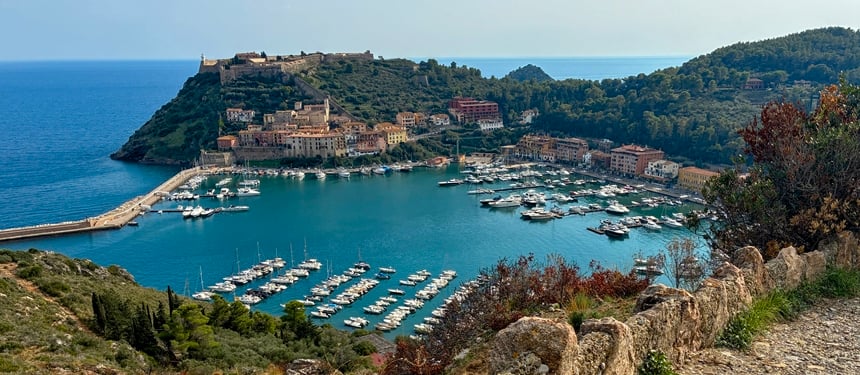
The crescent-shaped waterfront, approached through a low archway, is lined with fashionable boutiques and open-air restaurants where, unlike in Italy’s tourist centers, you’ll hear little English spoken. (The merchants and food servers are more than willing, through gestures and hand-written notes, to accommodate a friendly foreigner, and in the off-season I don’t feel like I’m keeping them from other customers.) It’s a wonderful spot to catch the sun rising over the Italian mainland and listen to the song of awakening sea birds. Fishermen crouch on the near-empty pier, untangling and mending their nets with calloused hands before heading out to sea for the day.
My favorite walk in Porto Ercole takes me beyond the shops, past the fishing boats, and out along the concrete breakwater that extends halfway into the bay. The water catches the sun like a sea of diamonds, the gulls wheel above with a cheerful screech. On this slow fall morning, out here it’s just me and a statue of Jesus, blessing the fishermen as they chug by.
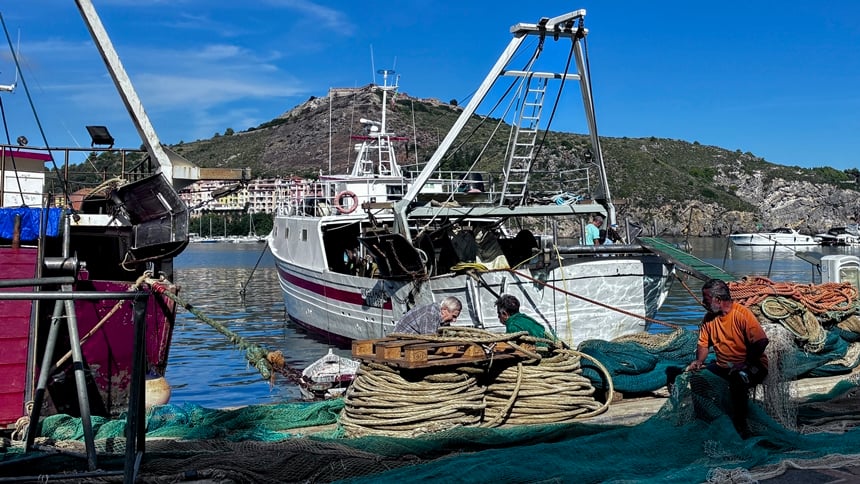
On the north side of Monte Argentario is the larger town of Porto Santo Stefano, where fishermen have likewise trod the narrow, stone-paved streets since the Middle Ages, enduring repeated pirate attacks until Spaniards built the imposing Fortezza Spagnola, looming on a hill behind the old town.
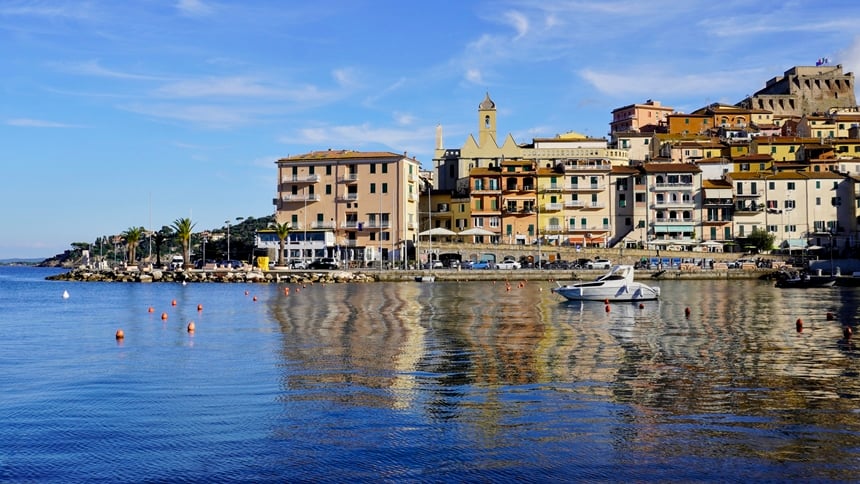
Busier and more cosmopolitan than Porto Ercole, Porto Santo Stefano is a mandatory stop if you plan take the hour-long ferry ride to the island of Giglio — 90 percent uninhabited — teeming with some 700 botanical species and the rare Tyrrhenian painted frog (often confused with the similar Corsican painted frog, so don’t be fooled!). The island is solid granite, and has been inhabited, fittingly, since the stone age.

The Forts
Monte Argentario has forts the way Los Angeles has donut shops: You can hardly turn in any direction without seeing at least one, and maybe more. There are 19 in all, built by the Spanish some 700 years ago. They crouch, large and small, on virtually every prominent mountaintop, both near the shore and inland. Fort Stella, a near-perfectly preserved 16th century watchtower on one of Monte Argentario’s highest peaks, invites visitors — although maybe not in the slow season, as I found the driveway gate closed. Others are always closed to the public: In recent decades, local officials have discovered the best way to preserve those crumbling structures is to lease them out as private residences.
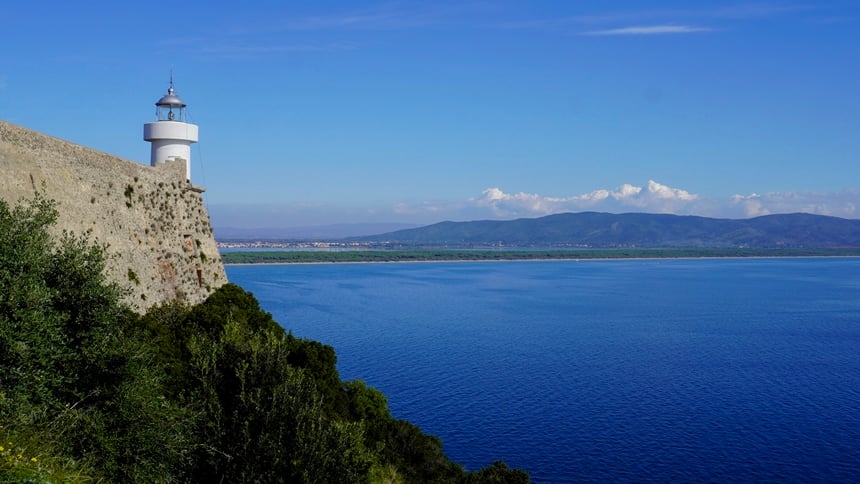
Two such citadels are Fort Filippo and Fort La Rocca, flanking the harbor of Porto Ercole and reachable by foot and narrow road. You can still walk around their fortified walls, though, marveling at the precision engineering and letting your mind be boggled by the notion of workers lugging all these stones to heights exceeding 600 feet above sea level. Walk right up to the gate and peer through the portcullis — but do resist pushing the doorbells of the residents.
The Beach
There’s not a building in sight, not a snack stand to be found, along most of the 3 ½-mile expanse of Feniglia Beach, located in a national nature preserve. Feniglia is on the southern side of Monte Argentario’s lower land bridge, and is so long and undeveloped you can usually find a solitary spot, even in high season.
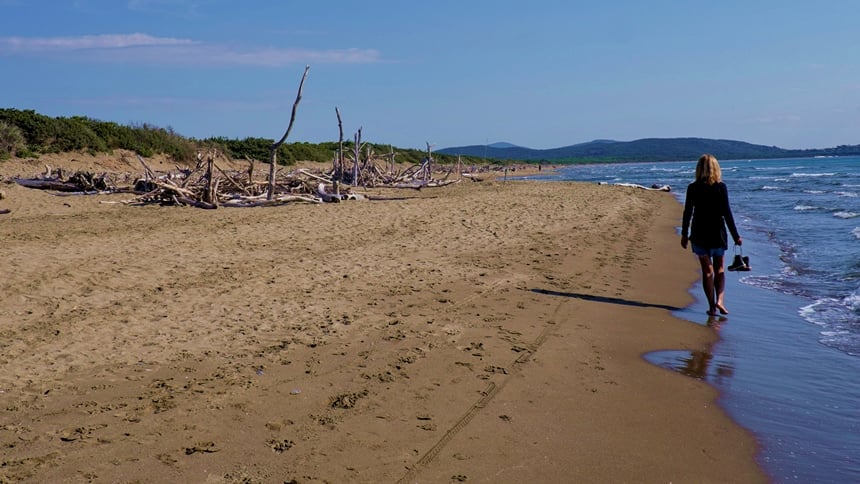
Walking the beach in fall, though, with the sun relatively low in the sky and the water still warm enough to slosh around in (you can wade out 50 feet or more and still have dry knees), I need to squint to make out the closest fellow human. That’s not to say the beach is empty: The same Mediterranean winds that created this glorious sand spit in the first place also push ashore tons of white, bone-like driftwood. Here and there, now-gone beach lovers have fashioned rustic shelters from the stuff, some of them remarkably large. I can’t help but think about the little impromptu artistic flourishes I’ve seen this week — the explosively colorful murals on alley walls, the ridiculously ornate water fountains, the fanciful doorways — and wonder, “Do the Italians ever stop being creative?”
The Food
Dining in and around Monte Argentario is a leisurely affair, but be warned: This is emphatically the Italian countryside, where everything — and I mean everything — shuts down around 1 or 2 p.m. and reopens for dinner as late as 7:30 p.m. Honestly, how Italians can feast on their cuisine that late in the day and go to sleep at a reasonable hour is beyond me. I did find one truly wonderful waterfront pizza spot that reopens around 5: Grano, owned by a Roman chef and his Los Angeles-born wife. The crust is flaky but crispy, light as air but more than sturdy enough to support a mountain of mushrooms.
One note: If seafood is not your thing, be prepared to find perhaps one or two non-fishy items on any given menu. On the other hand, if fried eel or tagliatelle with sea urchin float your boat, you won’t want to leave before trying everything on a typical menu.
The Mainland
There’s very little reason to leave Monte Argentario — driving its roads, walking its beach, and soaking in its history will more than fill your dance card for a week. But I strongly suggest you set one day aside to venture about a half-hour away to Capalbio, a tiny hilltop enclave that is, to my mind, Italy’s single most well-preserved, compact, and easily traversed medieval town.
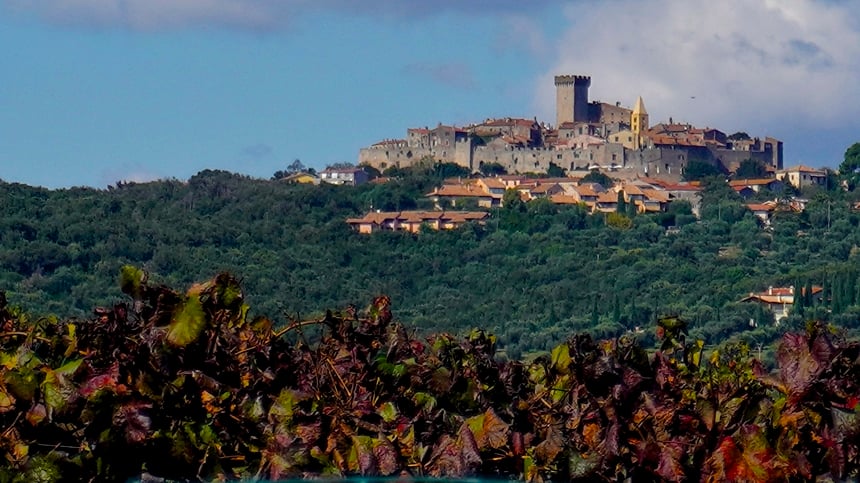
Most of the country’s old towns retain much of their character behind their ancient walls, but in the ensuing centuries development has expanded their margins, with homes and businesses tumbling down their slopes — usually morphing into modern towns and cities.
For better or for worse, Capalbio fell into disuse in the modern age, virtually ignored by the outside world. Only in recent decades have a number of enterprising restaurateurs rehabilitated the place, opening top-tier eateries in old homes and within the city walls. In fact, Capalbio may have the highest concentration of gourmet restaurants in Italy. The dark, narrow streets — all but empty in the off-season — climb to the hilltop, where stands the 1,000-year-old Church of San Nicola, home to some of Italy’s most treasured medieval frescoes.
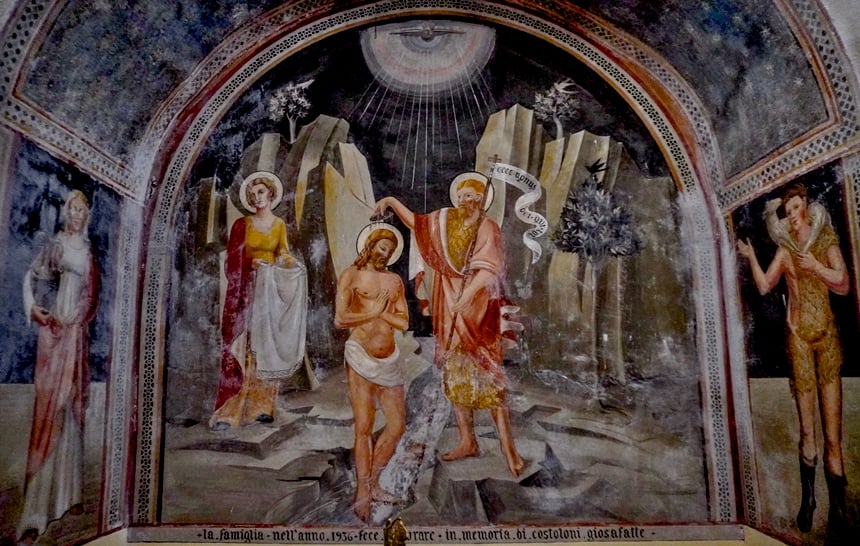
Stop at one of Capalbio’s landmark wineries for a quick, essentially private tasting — the Società Agricola Il Ponte winery, on a hillside across a low valley from Capalbio, offers a wonderfully floral wine made from Ansonica grapes, grown almost nowhere else. Then prepare yourself for the grand finale: the spectacularly colorful, wonderfully weird walk-through art installation known as The Tarot Garden.
Created over a 20-year period by the late French-American artist Niki de Saint Phalle and opened in 1998, the garden ostensibly illustrates the fanciful figures traditionally found on Tarot cards. But the otherworldly nature of de Sainte Phalle’s work — inspired partly by Barcelona’s Gaudi cathedral, partly by Los Angeles’s Watts Towers — forges a magical, alternate universe Disney vibe unmatched on the planet.
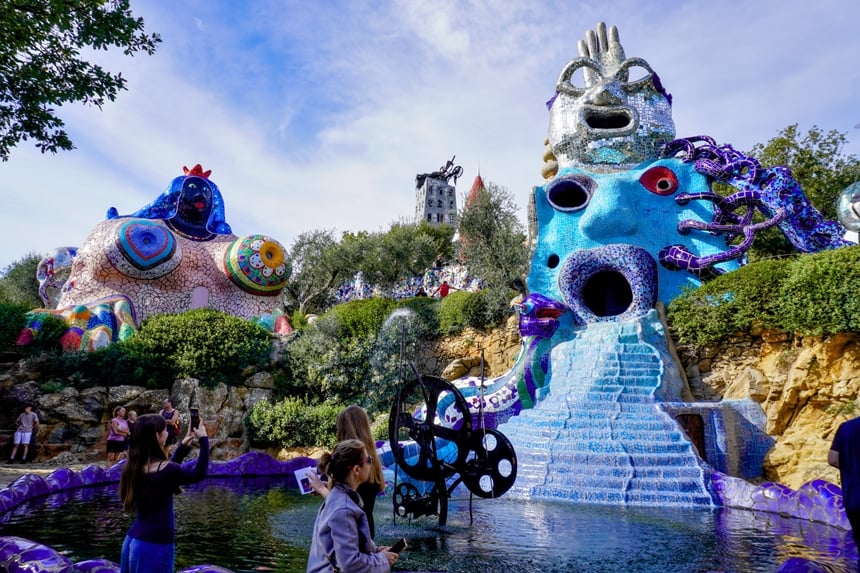
I happened upon Tarot Garden on October 15, the last day it’s open each year, so there was a last-minute rush. Even so, the place limits the number of visitors each day — be sure to buy tickets online before you go.
Sunset
By the time I’m driving back to Monte Argentario, the sun has already dipped below its slopes. I stop just before reaching the narrow causeway that leads to the mountain and pull over in the parking area of Orbetello, a mainland town that serves as Argentario’s gateway.
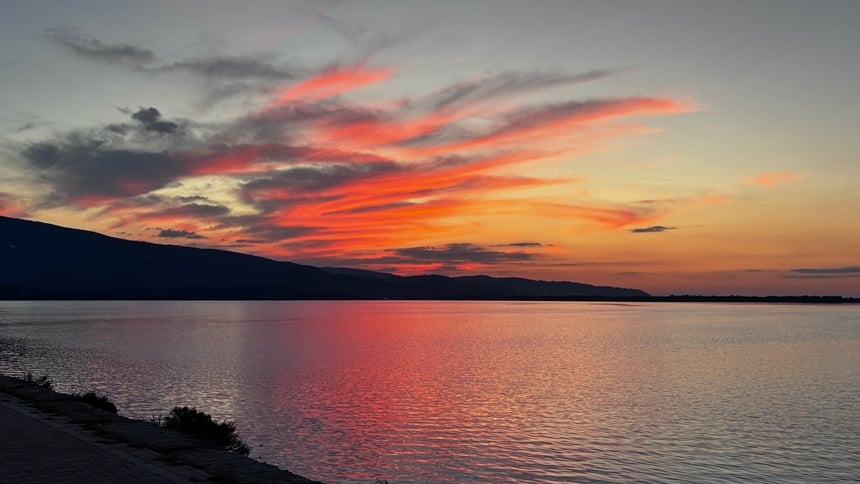
Before me rises Monte Argentario, silhouetted against a pink and blue fantasia of wispy clouds and Mediterranean sky. I glance around. The parking lot is two-thirds empty; the causeway ahead is seemingly abandoned.
I will be back. And I will make sure it’s when Monte Argentario once more belongs to me alone.
Become a Saturday Evening Post member and enjoy unlimited access. Subscribe now





Comments
I wonder, is Monte Argentario at all wheelchair accessible? It sounds marvellous!