When the Pennsylvania Horticultural Society debuted its flower exhibition in 1829, the public was awed by a lineup of impressive plant specimens, including one never before seen by American gardeners: a brilliant red poinsettia, direct from its native Mexico.
Nearly 200 years later, the Philadelphia Flower Show continues to captivate attendees with displays of rare plant species and dramatic arrangements of familiar varieties. The event is the oldest such exhibition in North America, and it ranks as one of the largest and most prestigious in the world. In celebration of America’s 250th anniversary, the show’s 2026 gathering reflects on the nation’s horticultural history with the theme Rooted: Origins of American Gardening.
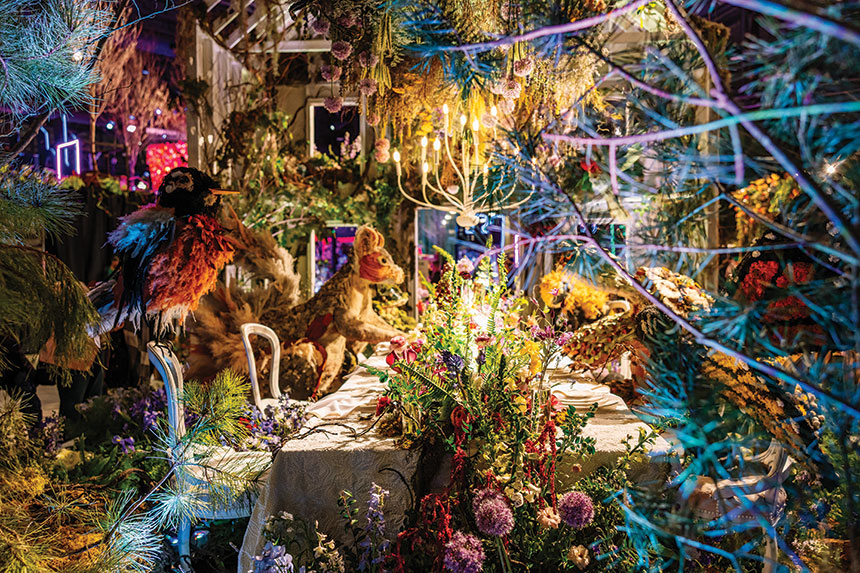
Towering floral arches, vine-draped sculptures, trickling water features, even live butterflies take center stage at the Philadelphia Flower Show, which spans approximately 13 acres in Philadelphia’s Pennsylvania Convention Center. Whether designers make use of armloads of common daisies, bouquets of exotic orchids, pots of miniature jewel-toned roses, or wispy grasses and sprawling ornamental bushes — or all the above — the show’s botanical creations can only be described as works of art.
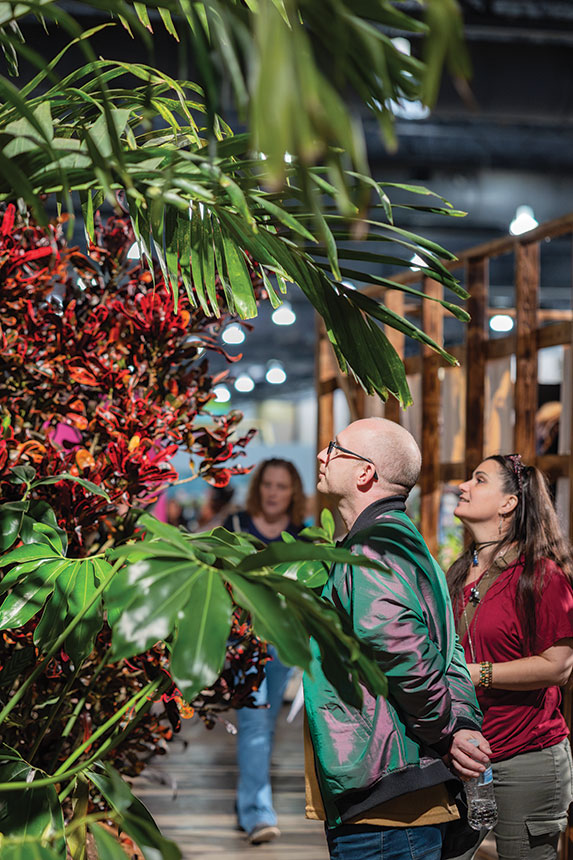
“I was surprised by the magnitude of the Philadelphia Flower Show,” says Rosemarie Wilson of Raleigh, North Carolina, who attended the show for the first time in 2025. “The smells, the colors, the creativity, the spectacle. You walk into the convention center, and you’re immediately presented with a million cut flowers. It’s hard to describe just how big, how amazing, this show is.”
JoAnn Greco moved to Philadelphia in 1991 and has attended the flower show nearly every year since arriving. Greco loves the show’s entrance, which she says is always grand, eye-catching, and fantastical for its tendency to combine flowers that would never appear side-by-side in the real world. But she more typically gravitates toward the smaller pieces.
“I love seeing the entries in the plant competitions,” says Greco. “Potted geraniums, potted roses, jewelry made of botanical pieces, each with the judge’s notes on them.” She finds the amateur entries as compelling as those created by professional designers.
“It’s interesting to see what earned this one a blue ribbon as opposed to that one,” says Greco, “and then decide for yourself whether you agree with the judges.”
Both women emphasize the value of a flower show visit even for those who aren’t gardeners themselves, and both speak of the joy of visiting the event in late February.
“Outdoors, it’s still winter in Philadelphia that time of year,” says Wilson. While the sky may be gray and dreary outdoors, the atmosphere inside is anything but. “It really is good for the soul to see all those flowers in bloom,” she says.
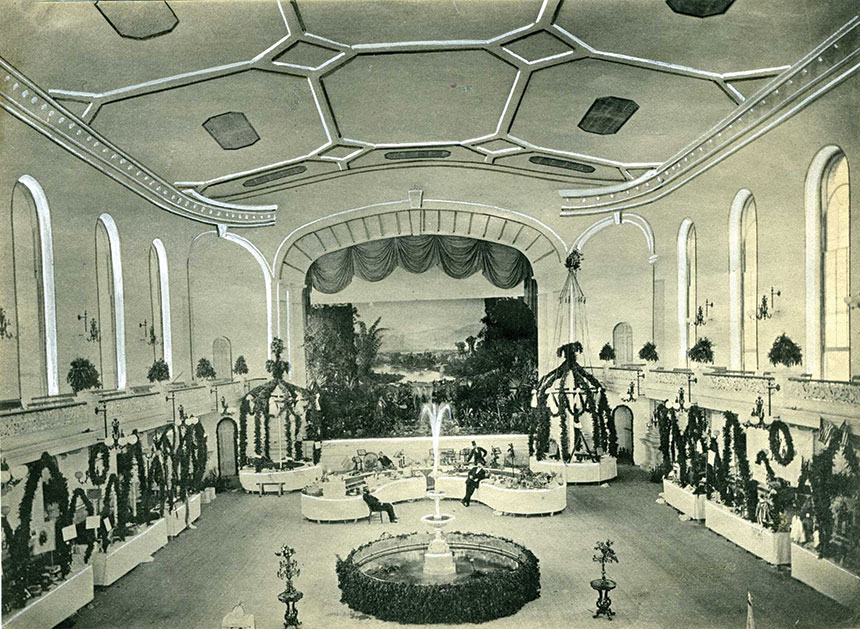
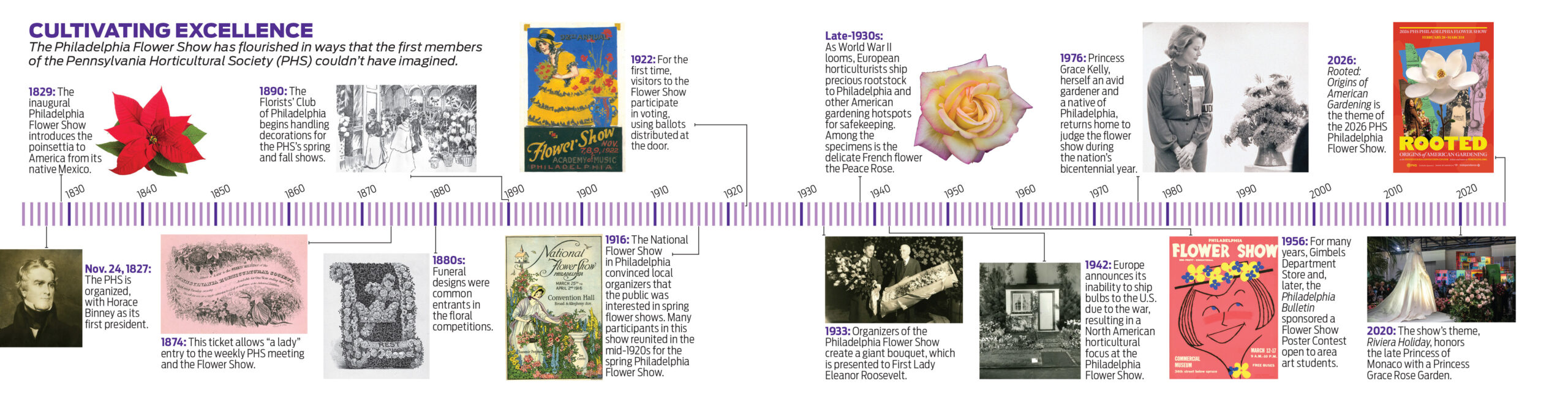
The Philadelphia Flower Show traces its roots to November 1827, when 53 prominent Philadelphians joined to form the Pennsylvania Horticultural Society.
Being the green thumbs they were, members couldn’t refrain from taking their favorite potted plants to their monthly meetings. Beloved foliage specimens, heady, perfumed flowers, and oddball vegetable varieties regularly accompanied the society members to their gatherings.
It’s likely the members brought their burning gardening questions to the meetings, too: Why is this plant drooping? What’s causing my fern to drop its leaves? What’s the best way to propagate this vine, and how do I combat a persistent case of powdery mildew?
Two years after their inaugural meeting, the plant enthusiasts decided to open their botanical show-and-tell to the public, marking the first presentation of the Philadelphia Flower Show. Except for a few years’ gap during World War II, the show has continued ever since and has grown almost exponentially. In contrast to the one-day shows of the 19th century, today’s Philadelphia Flower Show, still a project of the Pennsylvania Horticultural Society, takes place over nine days, drawing some 250,000 attendees annually. Most visitors hail from the Boston/Washington, D.C., corridor, but show organizers expect attendees from all 50 U.S. states and from abroad.
In 2026, as the show considers American history and the tradition of American gardening, the theme Rooted: Origins of American Gardening will examine established cultivating practices in the U.S., the evolution of gardening methods, and the ways in which horticulture has shaped — and been shaped by — other cultures.
Award-winning floral and landscape designers are expected to create large-scale installations that reflect the Rooted theme. In addition, the Philadelphia Flower Show will continue its long-standing practice of holding expert and amateur plant competitions, horticultural lectures, botanical craft-making workshops, gardening-themed children’s activities, and a large marketplace where attendees can purchase seeds, plants, gardening accessories, and clothing.
Gardening is an integral part of the American story, according to Seth Pearsoll, vice president and creative director of the Philadelphia Flower Show. In fact, the list of early American statesmen who were also avid gardeners is long and includes such heavyweights as George Washington, Thomas Jefferson, John Adams, James Madison, and Benjamin Franklin, the last himself a Philadelphian.
“A lot of people in that time had their own cideries, particularly in this region,” says Pearsoll. “And to create cider, you need fruit. So yes, those early Americans were big gardeners, cultivating both ornamental and kitchen gardens.”
Highlighting that origin story now, at this landmark in American history, only makes sense to the Pennsylvania Horticultural Society. But flower show organizers hope that attendees will consider the botanical backstories not merely of America’s political forebears, but of those within their own families.
“Gardens aren’t just made,” declares the Pennsylvania Horticultural Society website. “They’re passed down through generations, carried across oceans, lifetimes, and lands. Every seed carries a story.”
Those stories are personal, says Pearsoll. We all have memories tied to plants, whether through the nostalgia of a grandparent’s garden, a family recipe that revolves around freshly picked backyard herbs and vegetables, a mother’s love of cut flowers on the kitchen table, or the heritage traditions that shape how we plant, grow, and gather.
“My family are farmers from western Kansas, so I’ve got a long tradition of people working the land,” Pearsoll says when asked about his origin story. “But my earliest memory of gardening is of my mom working in the backyard garden that she had.” Pearsoll describes his mother’s garden as having undulating borders with space enough for kitchen vegetables on one side and flowers on the other. He remembers the latter bursting with brilliantly colored lilies in the summer.
“It was a little plot of paradise,” he says.
The members of the Pennsylvania Horticultural Society believe that every American has their own gardening story, each as important to the weaving of the American fabric as its historical or political narrative. And the Society hopes that a visit to the Philadelphia Flower Show will spark attendees’ memories and foster conversations about the impact of those gardens on their lives.

When Philadelphia’s botanists gathered to form a horticultural society in the 1820s, they did so in part to share their love of plants with like-minded individuals. But their stated intention was to further the health and well-being of Greater Philadelphia through the creation of parks and green spaces.
That founding principle remains central to today’s Pennsylvania Horticultural Society, which utilizes proceeds from the Philadelphia Flower Show — its largest fundraiser — to improve life for residents of the city.
Projects spearheaded by the Pennsylvania Horticultural Society include the provision of organic growing supplies, tools, and gardening know-how to volunteers in more than 170 community and urban gardens. The organization funds and oversees the planting of more than 3,000 trees each year and has helped to transform more than 12,000 vacant lots into city parks through the removal of trash and the planting of grass and other foliage.
The society has also installed rain barrels and rain gardens for more than 6,000 Philadelphia residents. And members offer horticultural and landscape management training and employment opportunities for those interested in green careers.
“The Philadelphia Flower Show is entertaining,” says Pearsoll. “But it kicks off 365 days of doing great work with gardens and trees and plants. That work is also a part of the Pennsylvania Horticultural Society story.”
And chances are that those urban greening projects — what Pearsoll refers to as “garden goodness” — will find their way into a new generation’s horticultural origin stories.
To Go: The Philadelphia Flower Show takes place February 28 to March 8 at the Pennsylvania Convention Center. Tickets start at $43 for weekday entrance and go up to $100 for a multi-day pass. To learn more, contact the Pennsylvania Horticultural Society at phsonline.org.
Amy S. Eckert is a freelance travel writer, author, and photographer whose work has appeared in numerous publications, including National Geographic Traveler, AARP, AFARM, and the Chicago Tribune. For more, visit amyeckert.com.
This article is featured in the January/February 2026 issue of The Saturday Evening Post. Subscribe to the magazine for more art, inspiring stories, fiction, humor, and features from our archives.
Become a Saturday Evening Post member and enjoy unlimited access. Subscribe now