At the Tommy Bartlett Exploratory in Wisconsin Dells, WI, you can lift a car with a pulley, frizz out your hair by touching a Tesla coil, and make colorful plastic balls float on cushions of air. Cool, but pretty standard stuff when it comes to kid-friendly science museums.
Still, there’s one exhibit here that you will absolutely, positively never find anywhere else on Planet Earth: This is the only place where you can climb aboard a genuine Soviet-era space station.
We’re not talking about a very good replica here. Tommy Bartlett’s Mir space station is a fully functional vehicle that, once upon a time, could have been strapped to the top of a Russian Proton rocket, hurled into orbit, and occupied by a crew of space-faring humans.
It’s the sort of thing you might expect to find at the Smithsonian’s National Air and Space Museum, or a wing of Chicago’s Griffin Museum of Science and Industry. But no, this priceless relic of the U.S./Soviet Space Race sits in a low-slung museum across the street from a Subway sandwich shop and next door to a decidedly modest double-decked motel.
And it’s here because a guy wanted to buy a car.
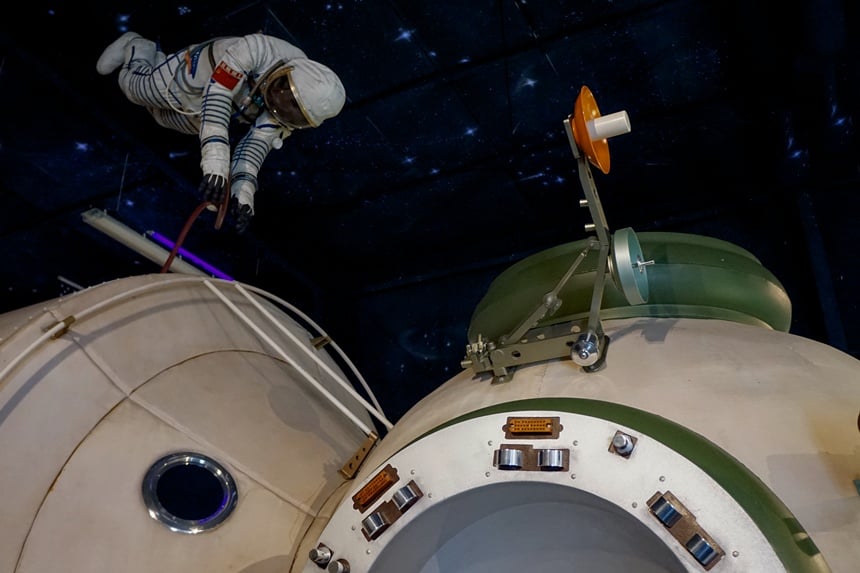
A flock of 8-year-olds is fluttering about my feet as I enter this long, low building that stands behind the main building of Tommy Bartlett’s Exploratory. As my eyes adjust to the darkness, I’m struck by the hulking, weirdly incongruous presence of Mir lying on its side, its 44-foot-long body disappearing into the distance. Above the spacecraft hovers a space-walking replica Russian astronaut, tethered to the mother ship.
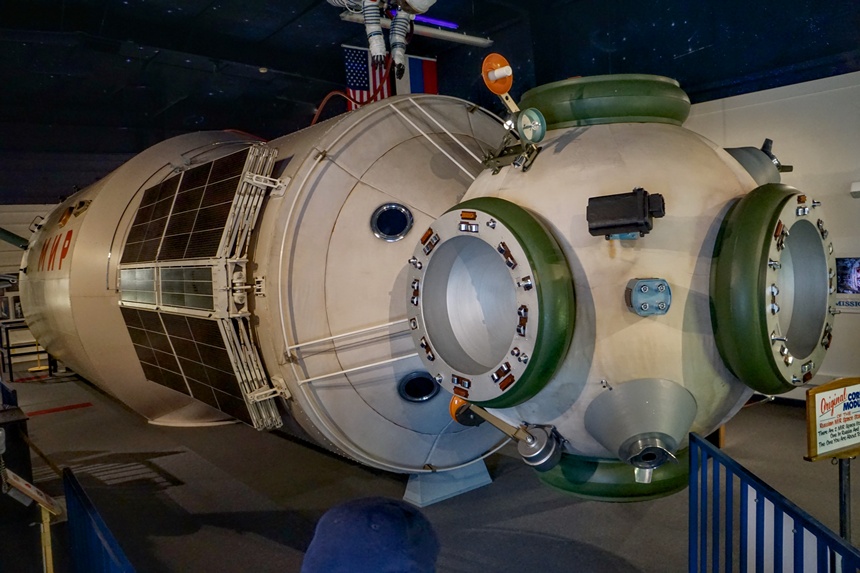
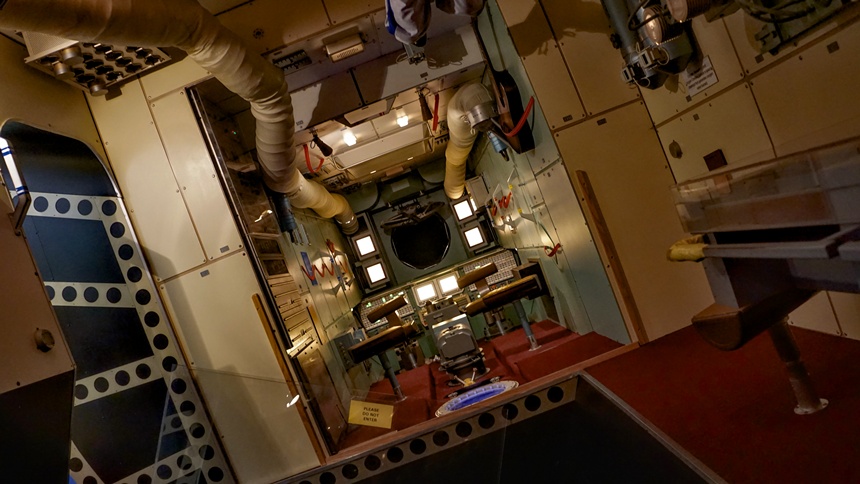
This is one of three Mir stations built by the Soviets (the other survivor remains stashed somewhere in a Russian warehouse). I step inside an entrance cut in the side of the Mir module. The floor tilts at an odd angle, offering a disorienting, funhouse version of weightlessness. At the front of this school bus-sized space spreads the main console dotted with scores of illuminated buttons, all of them labeled in Russian. Above the panel looms a passage-sized porthole leading to a chamber with five ports, each of which would have led to a separate component, to be launched into service at a later date.
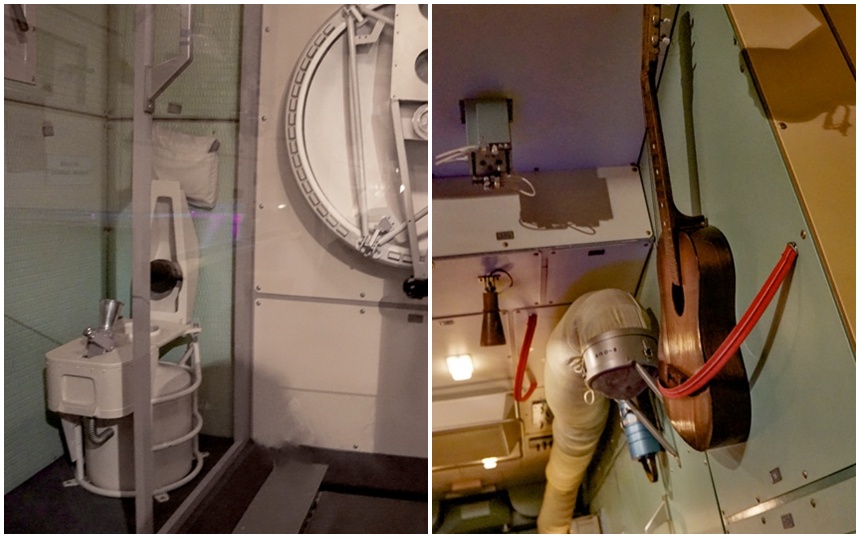
To the rear sits a vaguely self-explanatory orbital toilet. And on the right wall hangs a rustic guitar – original equipment, intended for in-flight entertainment.
From a 21st century vantage point, the then-cutting-edge Mir — launched in 1986 — seems quaintly analog: The padded seats resemble the stools you might have found at the counter of a mid-20th century Howard Johnson’s. The intercom boxes are reminiscent of those at a clunky drive-in theater. The floor-based viewing window, emphatically bolted into place, could be out of a steampunk Jules Verne movie.
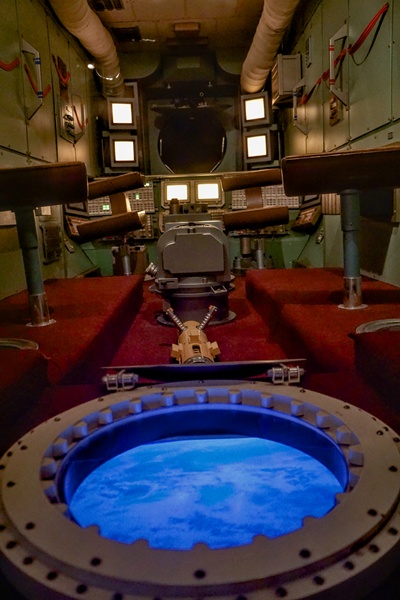
All of this seems to be lost on the young kids now frolicking around me. Sure, they think Mir is cool. But they have no idea just how cool.
Tommy Bartlett wasn’t looking to buy a historic piece of space hardware. A leading figure in the Wisconsin Dells tourism industry, Bartlett had already been a beloved 1940s Chicago radio host when he launched his touring “Tommy Bartlett Water Ski & Jumping Boat Thrill Show.” The permanent, in-town version of the show was performed on Wisconsin Dells’ Lake Delton from 1953 until COVID-19 forced its closure in 2020.
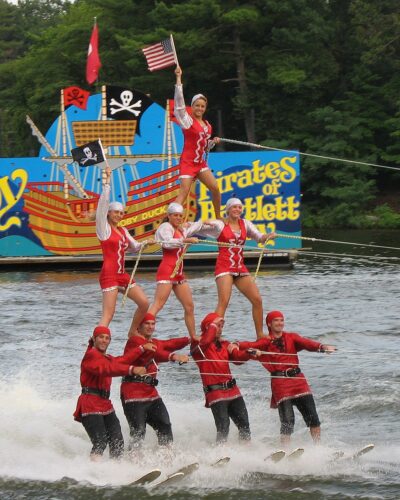
In 1982 Bartlett and his business partner, Tom Diehl, opened the museum on the same property as their ski-and-boat show. Bartlett was the company’s visionary; Diehl was in charge of day-to-day operations, which included negotiating the prices of vintage cars for Bartlett’s collection.
“This all got started when I got in touch with a guy who had a car that Tommy wanted,” Diehl told me in 2021. “Tommy didn’t buy the car, but the guy happened to ask if we’d be interested in buying one of the three original Mir space stations.”
This was in the mid-1990s, when Russia’s economy was reeling from the breakup of the Soviet Union.
“The Mir was in some sort of government museum at the time, but they were selling everything over there, just trying to raise some money,” Diehl recalled.
Posted near the museum’s Mir is a photograph of 83-year-old Tommy Bartlett, resplendent in a white cowboy hat, standing with the seven Russian space scientists who accompanied the craft to Wisconsin and supervised its reassembly. The date was May 1, 1997. Bartlett died just over a year later.
“I’m glad he lived to see it,” said Diehl.
Diehl, who inherited the business from Bartlett, died three years after we spoke, in 2024. The museum was sold to Ripley’s Believe it or Not! World Entertainment, which plans to resurrect the boat-and-ski thrill show Bartlett and Diehl produced for 67 years.
No matter who owns the place, it’s clear that the 140-ton Mir isn’t going anywhere.
Become a Saturday Evening Post member and enjoy unlimited access. Subscribe now


Comments
Bill, this isn’t the first time you have uncovered a gem of an article. Only you could have found the Mir space station in a small town in middle America. Ending up as part of the deal with Ripley’s Believe It or Not feels like poetic justice. Worth a trip to Wisconsin in my humble opinion. Thanks for the tour!
This is such an interesting article. I would not mind making a trip up north to visit this space station myself. What a great educational opportunity for kids of all ages. History is worth preserving. This is such an example.