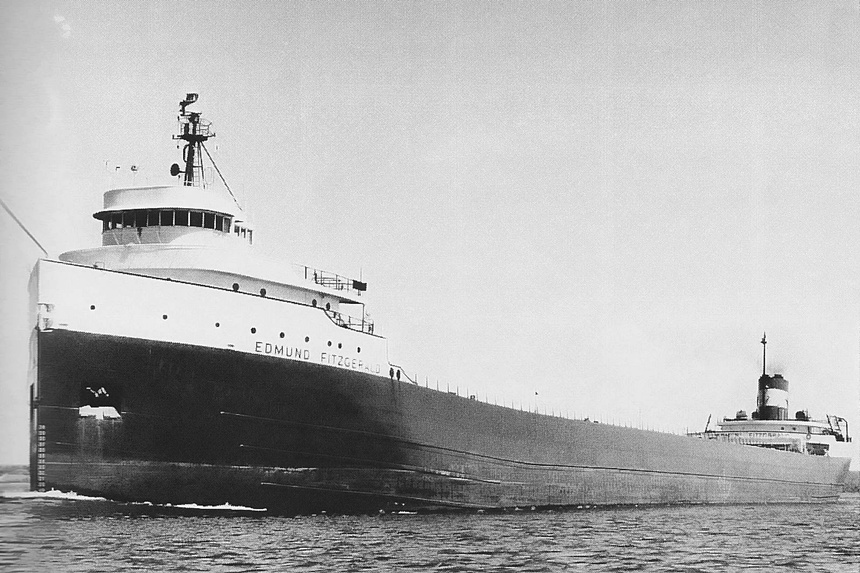
On November 10, 1975, The SS Edmund Fitzgerald sank to the bottom of Lake Superior during a terrible storm, losing all 29 men on board. She remains the largest ship to have ever sunk in the Great Lakes.
No one is certain what sank it. The enormous freighter had come through similar storms before. A phenomenon known as the “three sisters” — a quick succession of three rogue waves, of increasing size — is one theory as to what took down the Edmund Fitzgerald. The Edmund Fitzgerald could also have been damaged when it hit Six Fathom Shoal near Caribou Island early in the voyage. Others have suggested that water had poured in through hatchways that hadn’t been fully closed.
The uncertainty of the ship’s fate and the game of speculation have added to the public’s fascination with this tragedy. Given all the attention the Edmund Fitzgerald has received over the years, you might think it was the only famous shipwreck on the Great Lakes.
In fact, it is just one of at least 6,000 ships that lie on the bottom of the five lakes. And its crew of 29 are only a small part of the 30,000 people who have lost their lives on those waters.
The lakes are far more than what vacationers see from their shores in summer. This enormous inland sea holds almost a fourth of the world’s fresh surface water, enough to bury the 48 states in over nine feet of water. The waters can be treacherous to navigators, especially in November. In 1913, for example, 11 ships sank in the lakes in just three November days.
Lake Superior, which claimed the Edmund Fitzgerald, might seem especially fearsome, with its cold waters ringed by dark forests and blasted by freezing Canadian winds. But the dubious honor of the most dangerous lake goes to Lake Michigan. It holds the most shipwrecks, including the remains of the first European ship on its water: the Griffon of France, which sank in 1679.
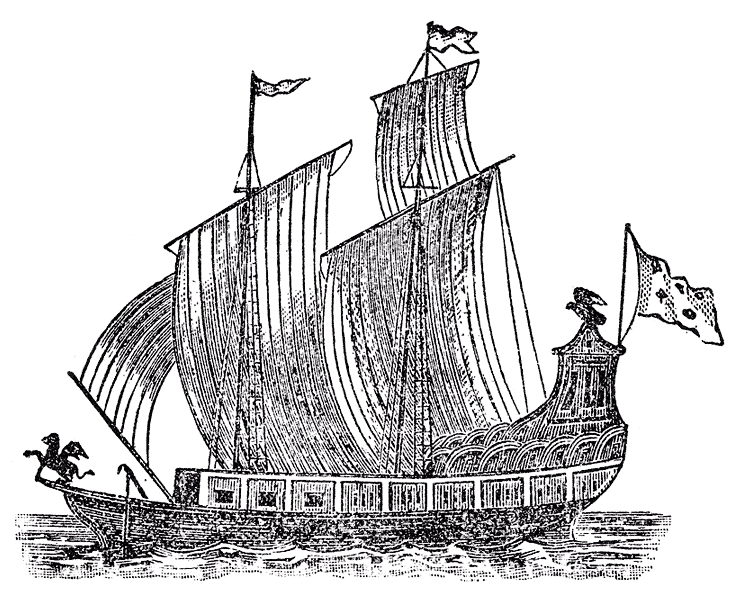
Long before the Edmund Fitzgerald sank, the public had been intrigued by the sinking of the Griffon and other Great Lakes disasters.
There was the Rouse Simmons, a three-masted schooner that was loaded down with 5,500 Christmas trees. It was more than the ship could safely carry, especially with a storm building on Lake Michigan. The schooner sailed from Manistique, Michigan to Chicago on November 23, 1912. That afternoon, a wave washed two of the crew and many of the trees on deck overboard. Ice began forming on the trees that remained on deck. The captain decided to head toward a safe harbor.
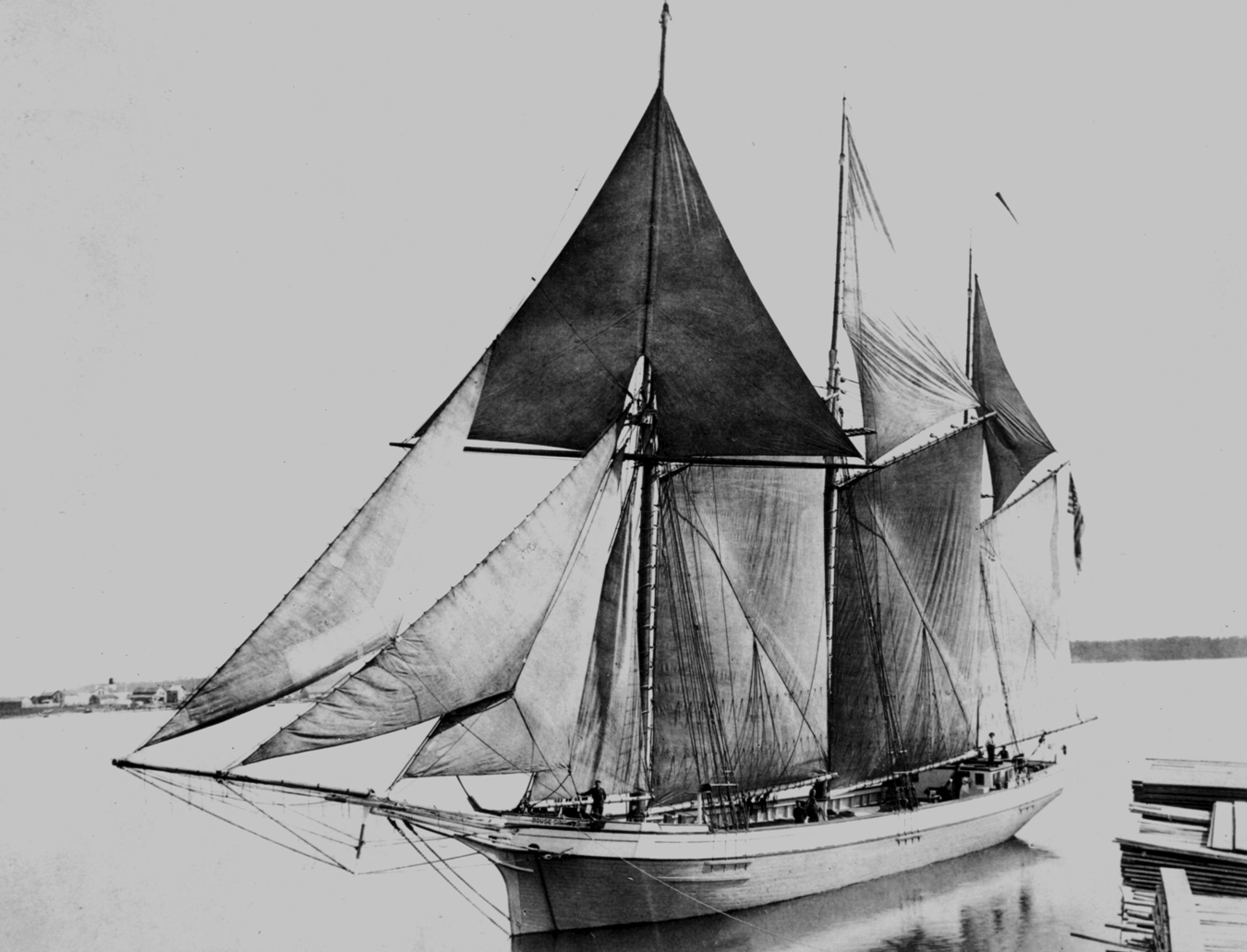
A life-saving station in northern Wisconsin saw the ship riding low in the water and signaling distress. A power boat was sent to give assistance but it couldn’t find the Rouse Simmons or any of its 17 passengers. Its disappearance was made more poignant by the Christmas trees that continued to float up on the Michigan shores, and the captain’s wallet, which was found in a fisherman’s net 12 years later.
The Rouse Simmons was one of four ships sunk on that day.
Another Great Lakes legend involves the schooner Bavaria. The ship was being towed in 1889 when she broke free during a storm. The Bavaria ran aground on Galloo Island, where she was soon found by a passing ship. The crew hailed the Bavaria but got no reply.
Sailors boarded her and found the ship in good order. A loaf of bread was cooling in the oven. A can of tomatoes had recently been opened. The captain’s bed had been made. There was no indication of a struggle or distress. Life preservers were still stored on deck. One of the lifeboats had been lowered and was floating nearby, upside down.
The Bavaria was still seaworthy. There was no reason to abandon ship. But the eight-man crew had vanished, and no bodies were found.
Officials speculated that some crew members, perhaps even the captain, had been washed overboard and other crew members had taken the lifeboat to rescue the crewmates in the water, but were lost in the storm. But why would the cook have joined them?
Passenger ships have also met watery fates on the Great Lakes. Just before midnight on September 7, 1860, an elegant sidewheel steamboat named the Lady Elgin left Chicago bound for Milwaukee. The almost 400 passengers on the steamer were returning from a long day’s outing. A storm with gale force winds had reduced visibility so much that the Lady Elgin unintentionally drew close to a schooner filled with lumber. When a wave hit the schooner, its lumber shifted, causing the boat to run into the passenger steamboat. A hole was punched in the side of the Lady Elgin below the water line. Within twenty minutes, the ship broke apart.

This all happened within three miles of the shore of Highland Park, Illinois, but the storm swept everything south and into rougher waters.
Only three lifeboats were able to get away from the ship with passengers. Other survivors clung to parts of the wreckage. Many who made it to the shore were pulled under by breakers. Three hundred perished.
The lakes’ deadly reputation doesn’t rest solely on its storms. In 1915, the passenger ship Eastland was docked in Chicago. Employees of Western Electric were boarding for a company picnic on the Indiana shore.
The Eastland had been having problems with instability. It had often listed dangerously, especially when boarding passengers congregated on one side of the deck. Recent modifications had made the Eastland even more unstable. The builder has added more lifeboats and replaced wooden decks with concrete, making the ship even more top-heavy.
That morning, as the ship cast off, it was loaded to capacity — 2,572 passengers. Suddenly, it rolled to port and came to rest on the lake bottom, 20 feet below. Many of the passengers were trapped below deck, or crushed by falling furniture. Over 850 people died, making this the worst disaster in the Lake’s history.

In contrast, the death toll of the Edmund Fitzgerald was slight — just 29 crew members. But it wasn’t just the fatalities that made this shipwreck memorable. It was the loss of what had been the largest and best-known freighter on the Great Lakes.
Launched in 1958, it became the first ship to carry over a million tons of iron ore. Like the RMS Titanic, the Edmund Fitzgerald was unusually large, and its size was assumed to denote endurance and unsinkability.
On its last voyage, it was bringing low-grade iron rock from Wisconsin to Detroit. As it departed at 2:30 p.m. on November 9, gale warnings were issued.
Another freighter, the Arthur M. Anderson, was travelling about ten miles behind the Edmund Fitzgerald through the same storm. Captain Cooper on the Anderson reported winds gusting up to 70 knots, with 25-foot waves.
At 6:55, the Anderson crew felt an enormous wave strike the stern and wash over the entire ship, pushing its bow under water. It rose up to be hit by another gigantic wave. Again the bow of the ship emerged from the water. Captain Anderson saw the waves moving on ahead to where he knew the Fitzgerald was.
Captain McSorley on the Fitzgerald radioed that his ship was listing, he was taking on water, and both his pumps were busily emptying the water from his hold. But at 7:00 p.m., he radioed, “I’m holding my own.”
Anderson could see the Fitzgerald on his radar. Occasionally waves would rise so high that they interrupted the signal. The Fitzgerald would disappear from the screen but reappear as the wave passed. At 7:15, the Fitzgerald again vanished from the screen but this time didn’t reappear. The crew of the Anderson followed the course of the Fitzgerald and saw lifeboats on the water, but no sign of the ship or its crew of 29.
It was bitterly ironic that Captain McSorley had planned to make this his last trip. He was going to retire after the Fitzgerald docked in Detroit.
A memorial ceremony for the boat and its crew will be held on November 10, 2025, at the Split Rock Lighthouse at Two Harbors, Minnesota. Over 2,000 people have registered to attend.
You can watch the ceremony live at these addresses.
https://www.facebook.com/splitrocklighthouse/
https://www.youtube.com/@minnesotahistory
Become a Saturday Evening Post member and enjoy unlimited access. Subscribe now


Comments
Dear Editor:
My fahter’s good friend was a 2nd officer on board an RCN Corvette during WW-2, when they received an SOS from a tanker in the convoy at the far east-end.
They rushed to rescue the crew.
It was not torpedoed, but, somehow got sideways to the waves and was taking on water quickly.
The Corvette banged several times, but, got about 80% of the crew off safely….the Corvette lost her port-side lifeboats and davits smashed.
Later, in Londonderry, comparing barometer readings from other Corvettes, it was determined that the convoy had been chased by an Atlantic hurricane.
The hurricane had caught the slow sailing tanker with its rogue waves.
The Fitzgerald sad story sounds as if she got sideways to high/rogue waves.
Still sad.
Sincerely.
Gord Young – Peterboro Ontario [still on in the 51st State]
Stories like this needs to be told over and over again and included in history classes. In the rural South, we never heard the story of the Edmund Fitzgerald until it was broadcast (not very often) over the local radio stations.