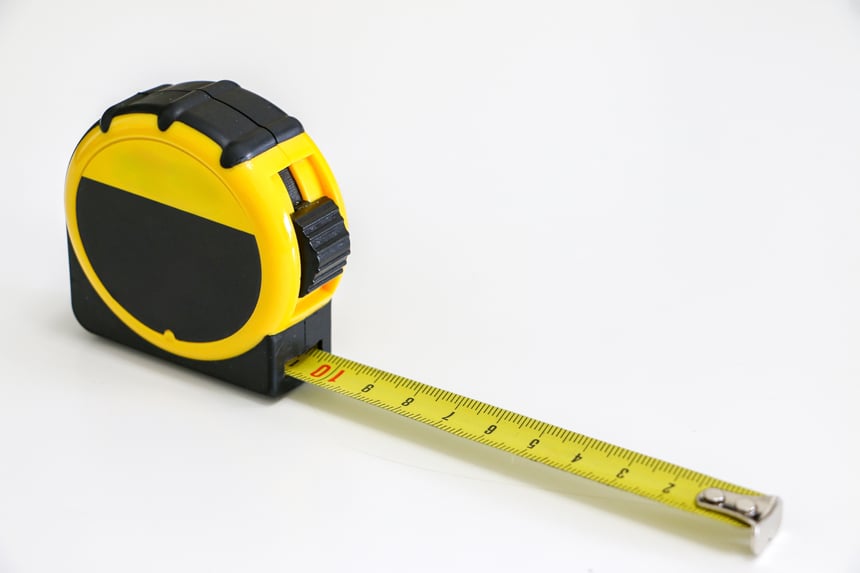
We use pounds, inches, degrees, and other common units of measurement every day. There are, however, other units for more specific situations. Can you match the following units of measurement with the things they measure?
1. Galileo
2. Gill
3. Hoppus Square Foot
4. Ligne
5. Mickey
6. Pascal
7. Scoville
a. Computer Mouse Movement
b. Hot Pepper Heat
c. Gravitational Acceleration
d. Liquid Volume
e. Pressure
f. Usable Part of a Log
g. Watch Movement
Answers:
1) c
2) d
3) f
4) g
5) a
6) e
7) b
This article is featured in the November/December 2025 issue of The Saturday Evening Post. Subscribe to the magazine for more art, inspiring stories, fiction, humor, and features from our archives.
Become a Saturday Evening Post member and enjoy unlimited access. Subscribe now


Comments
SMIDGEN. Small, little, tiny, bit, amount of something my grandmother used in her kitchen. She had her resources for any product requiring such, always producing tasty meals.
Richard: There are a lot of weird and interesting units of measurement, some of them theoretical. I stuck to the more practical though lesser-known ones that people actually use in their disciplines, leaving out things like the Smoot, the beard second, the banana-equivalent dose, and one of my favorites, the Helen, a measure of beauty. According to legend, Helen had a face that could launch a thousand ships; that amount of beauty = 1 Helen. The microHelen, then, is the beauty required to launch just one ship.
How could you have omitted the smoot from your list of unusual units of measure? In 1958, the Harvard Bridge in Cambridge, MA, was measured by laying down Oliver R. Smoot, Jr, Massachusetts Institute of Technology class of 1962, end-to-end repeatedly, with a mark painted every 10 smoots. The resulting measure was 364.4 smoots plus an ear. (One smoot is 5 feet 7 inches.) Mr Smoot went on to serve as president of the American National Standards Institute (ANSI) and, later, the of International Standards Organization (ISO).
These had me stumped from the magazine a few weeks ago, and still do, except for #5.
I correctly figured computer mouse movement first, but also considered watch movement having had a Mickey Mouse watch at one time.