
The hard facts of the Japanese attack on Pearl Harbor on December 7, 1941, are firmly etched in America’s psyche: 2,403 U.S. personnel dead, including 68 civilians, and 19 American warships and 328 planes damaged or destroyed. The unprovoked 75-minute air assault immediately plunged the United States into World War II.
Forgotten by many today are the first American planes to come in contact with the Japanese fighters: small, unarmed civilian aircraft used for sightseeing or flight training in the sky over Oahu. Some pilots found themselves in the enemy’s crosshairs, while others were simply ignored. All were terrified. Two of the civilian planes never made it back.
“From everything we know, it is believed there were seven civilian aircraft directly impacted by the Japanese invasion,” reports Scott Mensen, a docent at the Pearl Harbor Aviation Museum. “That includes a Hawaiian Airlines DC-3 scheduled that morning for an inter-island flight to Maui.”
All of the civilian planes took off from John Rodgers Airport, the sole civilian airport on Oahu, and home to three flight training schools that trained civilian pilots as part of the government’s Civilian Flight Training Program, as well as rented planes for excursions. On the morning of December 7, 1941, all three services were busy, despite the early hour.
In the air that morning was pilot Tommy Tomberlin, with student pilot James Duncan. Tomberlin and Duncan were the first to encounter the Japanese fighters. At 7:52, according to Tomberlin’s logbook, Japanese bullets stitched the aircraft’s rear fuselage and vertical stabilizer. Tomberlin grabbed the controls and went into a descending left bank toward the ocean, nimbly changing directions to evade his pursuers, notes writer Stephen Harding in “First Planes Down at Pearl.” For several minutes, two additional Japanese fighters fired at Tomberlin’s plane, but caused no further damage before peeling off to rejoin their squadron. Flying just above the ocean waves, Tomberlin made his way through the challenging Pali Pass in the Koʻolau Mountains back to John Rodgers Airport.
“The Japanese flight leader was very upset with the two pilots for breaking off, because they had a task to do,” Mensen says. “Tomberlin was a target of opportunity, but the fact that they dove down after him was considered very unprofessional. Tomberlin did a very good job of evading the Japanese pilots, because obviously their aircraft were faster, more maneuverable, and they were armed. Tomberlin did some wild flying that morning.”
Pilot Marguerite Gambo and her student Ray Oderwald found themselves in a similar predicament. Approaching the Pali Pass from the southeast, Gambo’s plane was suddenly surrounded by Japanese fighters as they pulled up from a strafing run. As her plane was violently buffeted by turbulence, Gambo at first thought the planes were American aircraft on a practice run – until she saw black smoke rising from the ground below. Hyper-focused on their mission and likely sensing she posed no threat, the Japanese ignored Gambo’s plane, allowing her to hastily return to John Rodgers Airport, Harding writes.
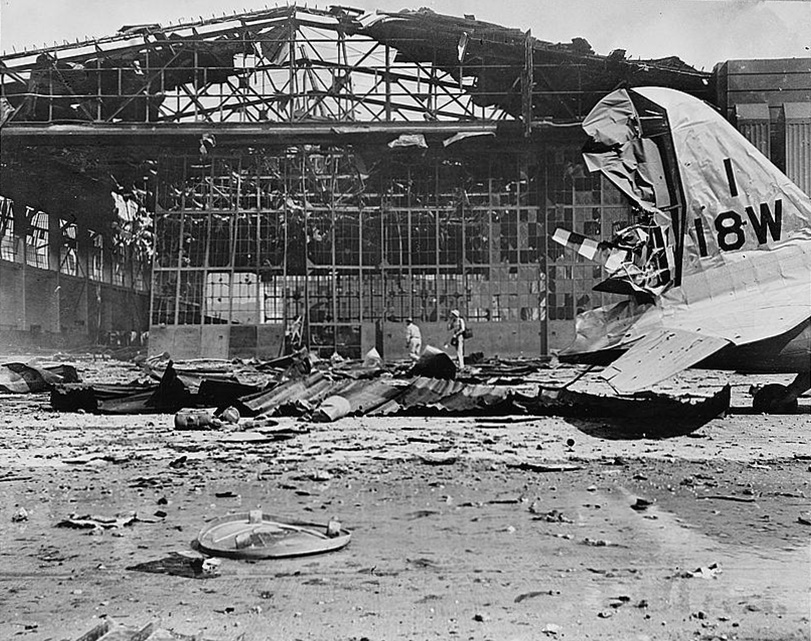
On the ground, there was only chaos as the Japanese continued to bomb and strafe the Army Air Corps’ Hickam Field, which was perilously close to John Rodgers Airport.
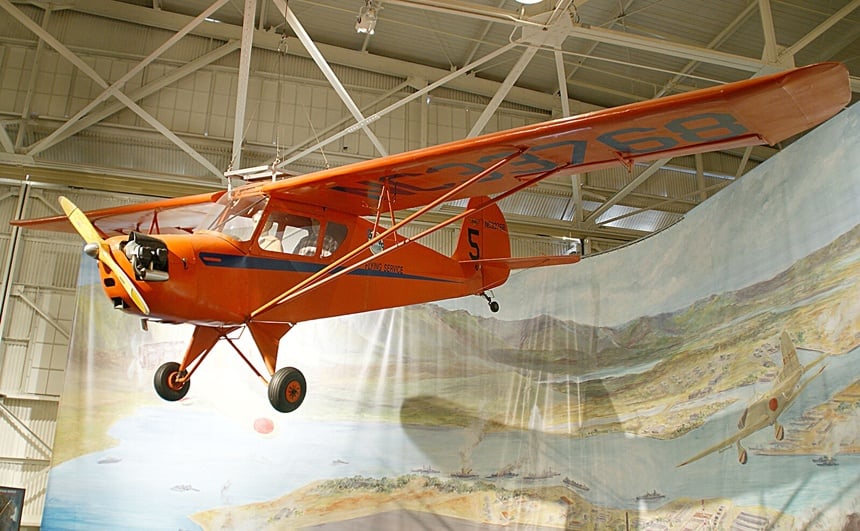
The sky was thick with enemy aircraft, but attorney Roy Vitousek, flying at 800 feet with his 17-year-old son Martin in the rear seat, was oblivious as he lined his plane up for a landing. Suddenly Martin noticed what he thought were American P-40s. Roy saw the Rising Sun symbol on their wings and knew better. He immediately pulled the Aeronca into a steep climb and headed out to sea. Two Japanese rear gunners fired at the plane as they passed, but didn’t strike it, and Vitousek was able to circle out at sea until he could land safely.
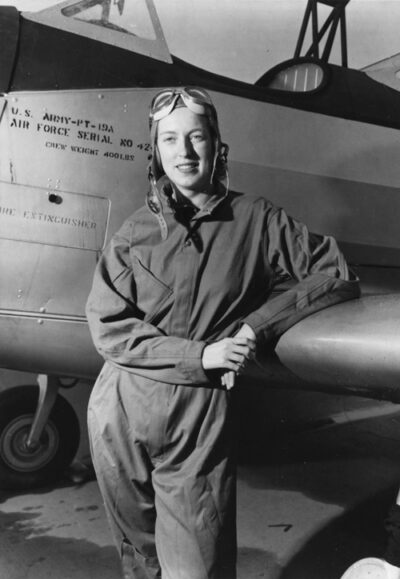
Meanwhile, pilot Cornelia Fort with student Ernest Suomala were approaching John Rodgers Airport from the southeast when Fort looked to her left and saw a military plane coming in from a higher altitude. Certain the aircraft would clear her plane with ease, Fort instructed Suomala to begin a turn. Then she saw a different military plane heading straight at them. Grabbing the controls, Fort pulled her plane into a hard climb. It was then that she noticed the Rising Sun symbol, as well as smoke plumes rising from Pearl Harbor. “The air was not the place for our little baby airplane,” Fort wrote later. She landed as quickly as she could, watching tiny dust plumes rise as Japanese bullets strafed the ground in front of her plane. Fort and Suomala raced inside the terminal declaring “The Japs are attacking!,” only to be met with laughter.

The laughter stopped with news that Bob Tyce, co-owner of K-T Flying Service, had been struck in the head by an enemy bullet as he and his wife, Edna, stood in front of the K-T hangar. He was killed instantly, though Edna was unhurt. In that moment, Bob Tyce became the first American civilian to be killed during World War II.
The attack continued as Japanese fighters strafed a Hawaiian Airlines DC-3 passenger plane preparing to depart. The plane was struck several times, damaging the left wing, cockpit, and both engines, Harding reports, but the passengers and crew were able deplane safely. In a bizarre moment of synchronicity, a Japanese Zero fighter plane fired upon the burning plane as it passed over, causing a fire extinguisher to explode and dousing the blaze.
Among the first in the air that day were two Piper Cubs from K-T Flying Service, rented by 20-year-old Sgt. Henry C. Blackwell and 21-year-old Cpl. Clyde C. Brown, members of the California National Guard’s 251st Coast Artillery Regiment. Sgt. Warren D. Rassmussen was along for the ride, notes Harding.
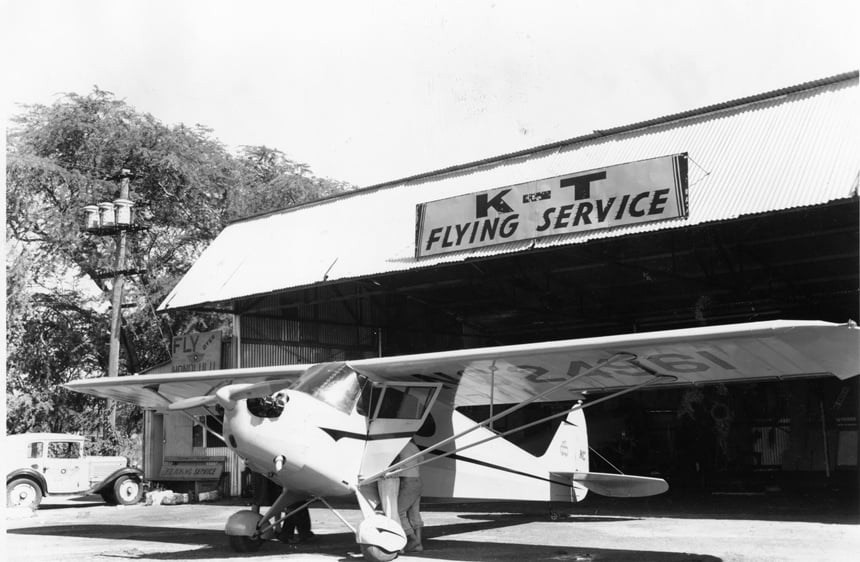
The Piper Cubs flew toward Diamond Head before heading west toward Camp Malakole, the soldiers’ home base. The fate of the three men was witnessed by Navy Machinists’ Mate 1st Class Norman Rapue, who was serving aboard the tugboat YT-153. Rapue watched in horror as the two Piper Cubs were set upon by Japanese planes as they flew offshore near Fort Weaver. In an account reported in the Honolulu Star-Bulletin, Rapue said, “They didn’t have a chance. Both were cruising about two and a half miles off-shore at about 500 feet altitude when seven Japanese planes swooped down from a higher altitude and those of us on the tug heard the rat-tat-tat of machines guns. One of the (civilian) planes plummeted straight down into the ocean while the other circled for a moment then plunged down.” Rapue later modified his account, though the basic facts remained. Search planes found no trace of the Piper Cubs or their occupants.
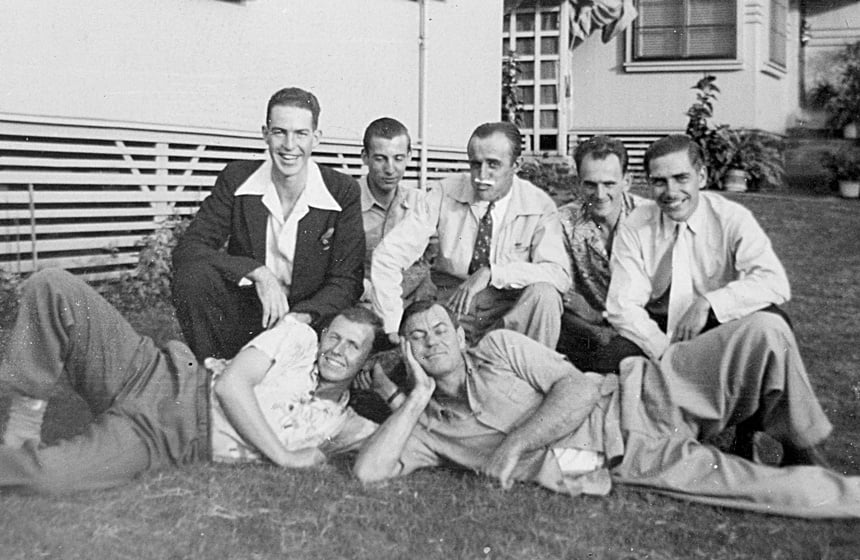
The remarkable experiences of the civilian pilots that day were quickly overshadowed by the larger events at Pearl Harbor. One important consequence was the grounding of civilian aircraft in Hawaii over the course of the war. Marguerite Gambo married during the war, and reopened her flight school following the Japanese surrender in August 1945. Cornelia Fort also remained in aviation, moving to the mainland where she became one of the first female pilots selected for the Women’s Auxiliary Ferrying Service. She was killed in March 1943 while delivering a plane to an Army base in Texas.
Become a Saturday Evening Post member and enjoy unlimited access. Subscribe now


Comments
These brave, patriotic men and women selflessly put their lives on the line for this country, and need to be recognized for that much more than they have been.