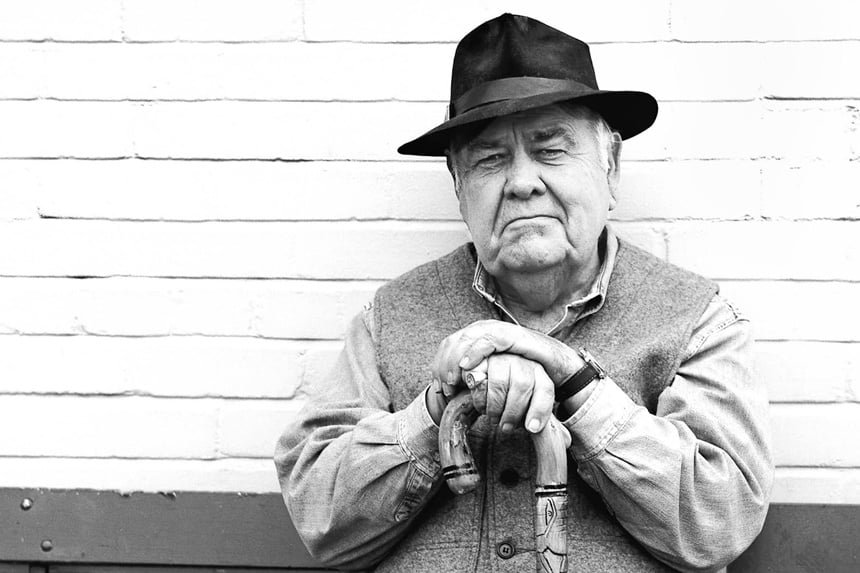
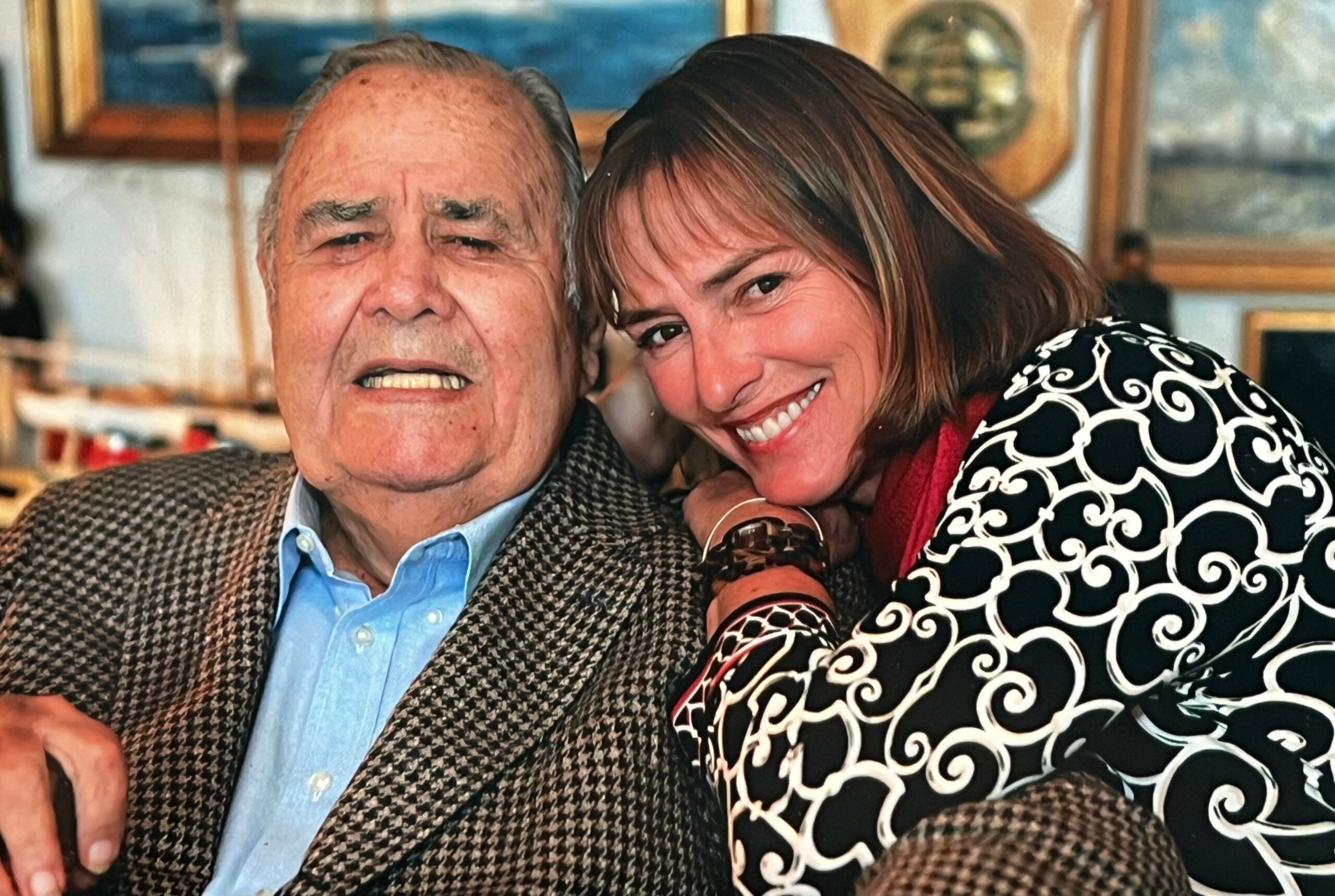
On Nov. 11, 2025, Lucinda Winters, daughter of actor and comedian Jonathan Winters, hosted a distinguished group of her father’s dearest friends, colleagues, and acolytes on Zoom to mark what would have been his 100th birthday — and to celebrate his legacy as one of comedy’s foundational figures.
Her words at her father’s 2013 memorial service: “All my dad ever wanted was to be loved, and you are all here.”
Many fathers delight in making their children laugh with silly voices and funny faces. Hers happened to be Jonathan Winters — the man Richard Pryor is said to have called the funniest comedian in the world — making her and her older brother a privileged audience.
“Maude Frickert was my favorite character of his,” she says. “But he always cracked me up when he physically embodied an animal like a strutting rooster or a hissing cat complete with sound effects.”
Jonathan Winters (as Maude Frickert) with Dean Martin (Uploaded to YouTube by William Stevens)
Growing up, Lucinda gradually noticed that her father was different from other fathers. At school functions, dads would gravitate toward him, often ignoring their own children. He might stroll through their hometown of Montecito wearing a Civil War-era coat. In a closet hung the dress he wore as Maude Frickert — a discovery she once shared with a fifth-grade friend. Her mother affectionately called him “the village idiot” and teased him for “giving shows for free.” Her father, she said, loved attention and loved making people laugh.
But it wasn’t until she visited the set of It’s a Mad Mad Mad Mad World, his breakout film role, that she fully grasped “that Daddy did something different from most other fathers.”
He also did something different from most of the other comedians of his era. Jonathan Winters was among a new generation of comic artists — including Lenny Bruce, Mort Sahl, Shelley Berman, Woody Allen, Bob Newhart, Mike Nichols, and Elaine May — who broke from groaners about airline food and mothers-in-law to mine their material from the real world and their own attitudes and neuroses. They wrote their own material.
Time magazine labeled them “sick comics.” But Jonathan was not pointedly political like Sahl, nor did he work blue like Bruce or address such sensitive topics as adultery or sex like Nichols and May. As Variety observed in 1961, he was “more universally acceptable than any of the current New Comics.”
Says Lucinda, “My dad never liked to use profane language. He was from the Midwest, and he also figured it’s been done, and I think he always wanted to do things that hadn’t been done.”
Winters’s characters and routines were shaped from improvisation. Early in his career, he had a pre-dawn radio show. Rather than finding guests at that ungodly hour, he made up characters and interviewed them as himself.
“He was a keen observer of life and ordinary people who crossed his path,” Lucinda says. “He had an affinity for accents and uncanny sound effects. He used to tell me, ‘I’m a conduit—God has a great sense of humor.’”
Winters never achieved EGOT status, but he was a GEM — he won a Grammy, an Emmy, and the Mark Twain Prize for American Humor. While never cast as a leading man in feature films, he stole his scenes in World, the Cold War-era comedy The Russians are Coming! The Russians Are Coming!, and The Loved One.
“A Game of Pool,” a classic episode of The Twilight Zone, was a dramatic departure in which Winters starred as “Fats” Brown, a deceased pool legend summoned from heaven by up-and-comer Jack Klugman, who bets his life he can beat him.
A scene from the Twilight Zone episode, “A Game of Pool” (Uploaded to YouTube by The Twilight Zone)
But it was his appearances on variety shows such as Omnibus, The Tonight Show, The Dean Martin Show, and The Ed Sullivan Show that established him as an artist who created and populated a comic universe all his own. In this representative clip, he brilliantly improvises several scenarios using a stick as a prop.
Jonathan Winters with Jack Paar, 1964 (Uploaded to YouTube by Aladdinjaz)
Winters believed that “we are only on this planet for a short visit, so we should make the visit worthwhile,” Lucinda says. “He wanted to bring people together and make them a little happier.”
This drive — to entertain and to receive attention — may have stemmed from his fraught relationship with his stern parents, who offered their only son little encouragement or nurturing. When Winters returned home to Dayton, Ohio from World War II, he discovered that all of his toys and belongings had been given away. When he asked his mother why, she said, “How were we to know you’d survive the war?”
“A lot of comedians develop their gifts through darkness,” his daughter says. “Finding an audience is a form of survival. My father was very hurt, and he started creating characters and voices as an outlet to occupy his time.” (He was also a prolific painter. He pursued being a cartoonist before becoming a comedian, and even sold a cartoon to The Saturday Evening Post.)
As someone who created his own comic world, Winters was drawn to kindred gonzo spirits. He admired Peter Sellers, many Saturday Night Live cast members, and Jim Carrey, his daughter recalls. Robin Williams was his closest comic descendent, and Winters enjoyed a career renaissance in 1981 when he joined the cast of Mork & Mindy as the couple’s aging-backwards son.
One hundred years on, Winters’s name is still mentioned reverently, but not only in comedy circles. To this day, Lucinda says, someone may share an anecdote about a memorable encounter with her father, like the one about how he got on a bus and rode a few blocks, entertaining riders along the way. But he didn’t feel the need to always be “on,” she said. “I run into people who tell me that my father was so kind and sweet and talked to them for an hour.”
Words spoken by “Fats” Brown in “A Game of Pool” apply to Jonathan: “Dead? Not really. As long as people talk about you, you’re not really dead. As long as they speak your name, you continue. A legend doesn’t die just because the man dies.”
Lucinda Winters and her brother Jay had to share their father with the rest of the world. But unlike Jonathan, they shared a loving relationship with their father. She says, “There is an honor being related to somebody with such an incredible gift — someone who made the world a better place.”
Become a Saturday Evening Post member and enjoy unlimited access. Subscribe now



Comments
Oh Maude Frickert, How we laughed. He had the ability to just make you Happy, he was there. And then there was Tic Tac Do (sp) , when they called on him, you knew it was going to be Fun. Thank you for this collection, & reminders of when things were Fun.
When I was a teen, I joined the Columbia Record Club. One of the first albums I selected was “The Wonderful World of Jonathan Winters”. I listened to it repeatedly over the years and anytime he appeared on TV or in a movie I watched. He brought a lot of laughter to the world. Richard Pryor was correct: he WAS the funniest man in the world.
Jonathan Winters was a great talent and funny when comedy was funny and clean. I remember fondly his commercials for ice creme bars. (forgot the brand, I think it was for Good Humour).
Thanks for this special feature on Jonathan Winters, and the enclosed videos showing at least 3 different sides of his talent. Upon returning home from World War II, finding out his mother had given away all of toys and belongings had to have really hurt. It was hurtful to read that happened.
He turned life’s pains into what would become comedy gold. I also liked seeing his serious side, as in ‘The Twilight Zone’ here with Jack Klugman. If Jonathan had only (or mainly) just done serious acting, I think he still would have been very successful, but am glad he leaned into his first love of comedy.