Scratches, scrapes, coughs, and colds — we all get them. And with few exceptions, our bodies fix themselves in a relatively short time: Minor wounds will close on their own, and coughs eventually go away. Sure, sometimes we may need stitches or antibiotics, but for the most part, our immune systems make us well when things go awry.
The same thing happens to trees when they get sick – their “treemune systems” kick in. Trees actively protect themselves with some pretty cool and impressive tricks. They even have ways of telling their neighbors when a new bug is going around. But we’ve all seen trees full of rot or defoliated by bugs, so we know their defenses aren’t perfect. Here’s how “treemunity” works and why it sometimes fails.
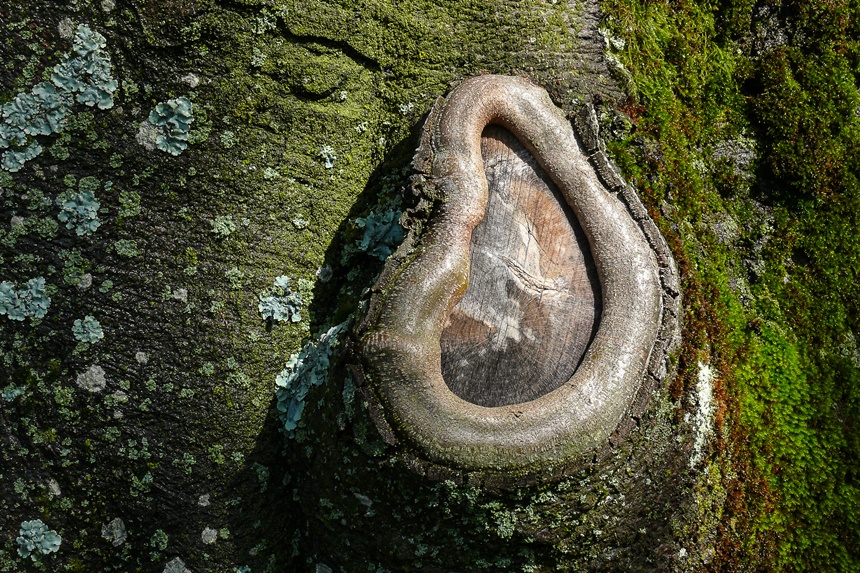
When we cut a tree limb, we don’t see any response until weeks or months later when new tissue (woundwood or callus) begins forming at the edges of the cut. If the tree is healthy, it adds new callus each year until the wound closes. However, trees actually begin to respond to a wound right away, internally. This inside protection is the real story. In fact, wound closure, sometimes called “healing over,” has very little bearing on whether or not decay sets in after an injury.
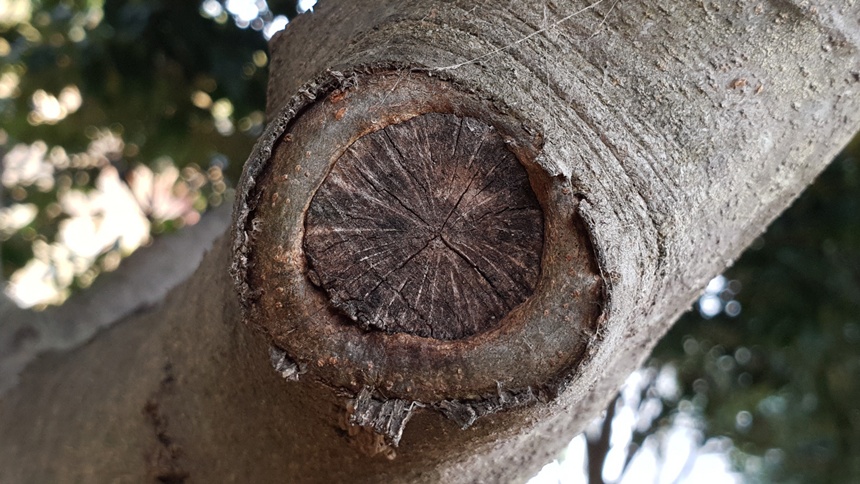
Thanks to the late Dr. Alex Shigo, a researcher with the U.S. Forest Service for three decades, we know a lot more about the way trees protect themselves than we did before about 1980. He discovered that when a tree is injured, it converts part of its stored sugars into antimicrobial compounds. These are transported to where they’re needed and used to make protective walls on all three sides of a wound internally. When the tree closes the wound on the outside, that effectively becomes a fourth wall. Shigo dubbed this hidden response the “compartmentalization of decay in trees,” or CODIT.
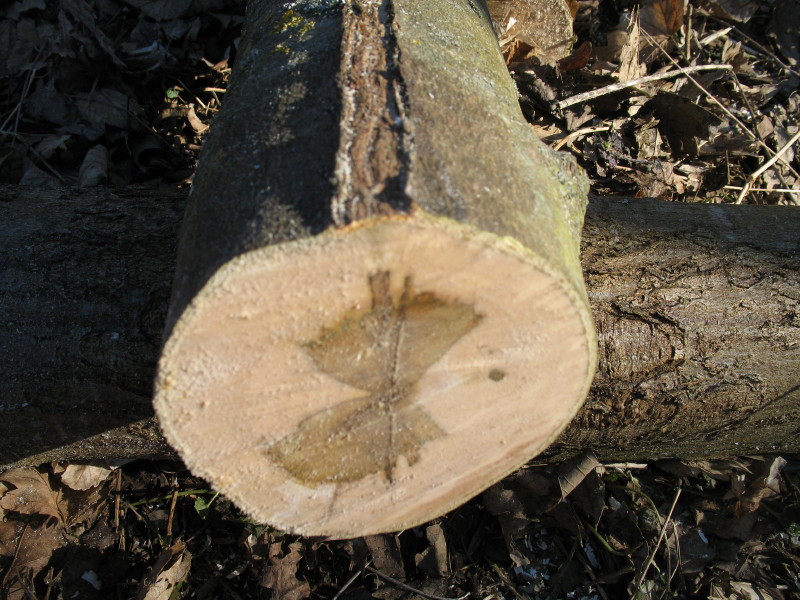
The four different chemical walls are clearly visible, though only after death (of the tree, I mean), because you have to slice open the trunk to see them. The first wall seals shut the water-conductive tubes above and below an injury in a horizontal plane. The next wall is a semicircular arc that follows part of an annual ring just inside the wound. The third wall is radial, isolating damage on either side in two planes that begin just under the bark and meet at the center of the trunk. The fourth and strongest wall is chemically superior new wood that is laid down after an injury. This includes subsequent years’ trunk growth, as well as callus tissue at the wound site.
While compartmentalization keeps decay locked inside the wall boundaries, it also stops the flow of water and nutrients near a wound, creating a detour of sorts. But as live tissue covers a wound, it lays down new vascular tissue, letting water and such to flow just outside the wound area. In that sense, wound closure is important.
Unfortunately, closure won’t stop fungal decay. The extent of internal rot, if any, that happens after a tree is wounded depends how strong its walls are. That in turn is a function of species, tree health, and wound size.
Slower growing trees such as hard maple and white oak typically make the strongest walls. Trees with intermediate growth rates like red oak and red maple generate modest CODIT responses. Fast-growing species like poplars and willows barely manage any walls, perhaps figuring they can outgrow the decay agents.

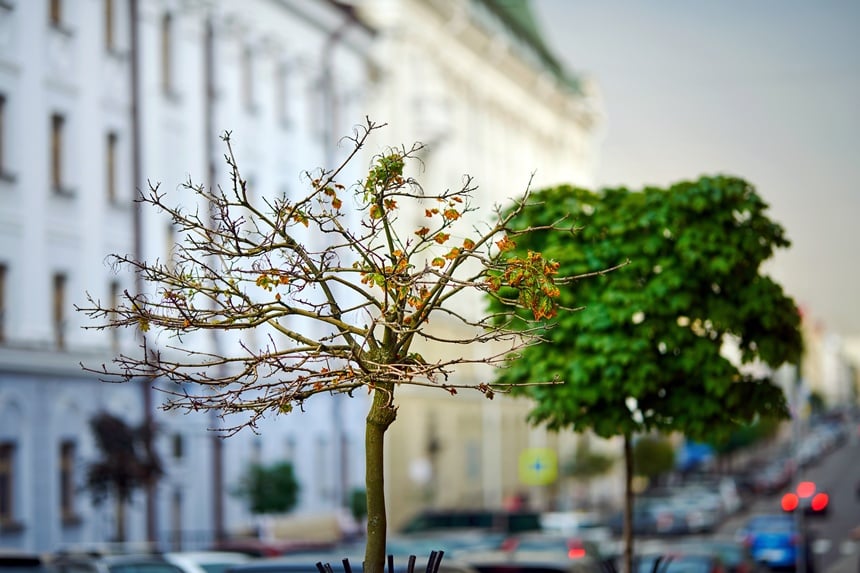
Tree vitality is also important. We know when we are run-down, we’re a lot more vulnerable to getting sick, and it takes us longer to get over a bug. Even a hard maple won’t be able to form strong chemical barriers if it has suffered grave root injuries or soil compaction due to construction, has been defoliated by pests, or has been drought-stressed. Street trees have tough lives, faced with reflected heat from cars and roads, limited root space, and in northern states, road salt.
The size of a wound is also critical. A tree with a species advantage and in perfect health is still no match for a catastrophic wound. This is defined as an injury that encompasses a third or more of its circumference.
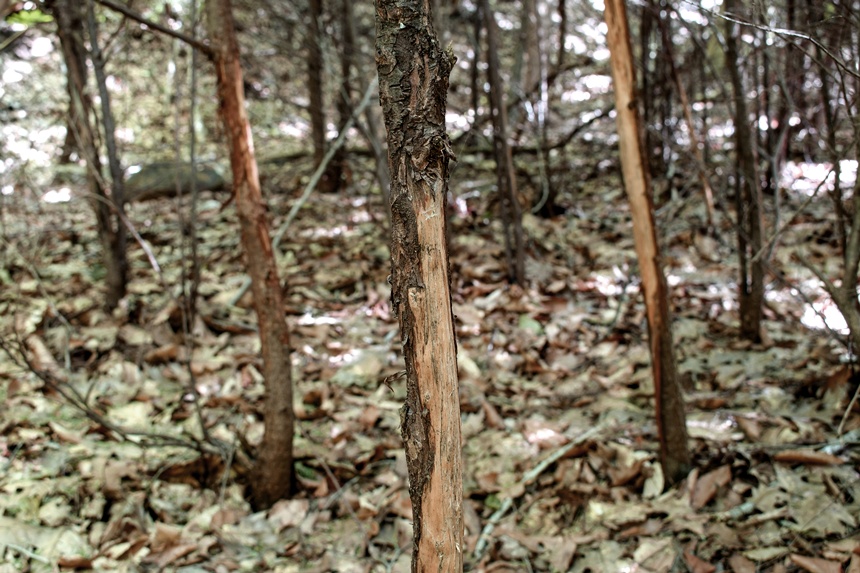
Sometimes a roll of callus tissue or “lip” near the bottom of a wound will catch and hold rainwater. Intuitively this seems bad. I mean, lumber that’s left in the rain starts to rot fairly soon, but if kept dry it lasts indefinitely. However, while fungi need some moisture to thrive, saturated wood inhibits fungal growth. Saturated conditions favor anaerobic bacteria, which don’t harm trees, yet stop fungal growth.
Although we’re quick (and correct) to bandage our own wounds, it hurts trees to cover their wounds. In his field trials, Dr. Shigo clearly showed that painting, tarring or otherwise covering a tree wound often hastens decay, and in the best cases, does nothing. If a wound is exposed to the elements, it can at least dry out sometimes. But a wound dressing traps moisture underneath it.
Now we get to the part where neighbors gossip about the latest bug that’s going around. And with trees, “bug” is literal. Trees use their internal chemistry sets to make compounds known to scientists as “Bad Tasting Stuff” to repel them (insects, not scientists). The chemicals aren’t perfect, as some defoliators like spongy moth (formerly Gypsy moth) caterpillars seem impervious to them.

Apparently, trees can signal one another when a new pest has arrived on the scene, communicating through the “wood-wide-web” of root grafts as well as beneficial soil fungi called mycorrhizae, thread-like fungi that jack themselves into tree roots and take a small amount of starch from the tree. In return, mycorrhizae greatly enhance trees’ ability to absorb water and nutrients, and they carry chemical messages about pests and diseases. Airborne chemicals also carry trees’ messages about threats. This way, trees get a heads-up about a coming pest and can prepare defensive chemicals tailored to that pest.
Help maximize your tree’s “immune system” by watering during dry spells, mulching out to the dripline, and by keeping vehicles off the root zone. In return, your tree will help keep you in optimal health by offering shade and beauty.
Become a Saturday Evening Post member and enjoy unlimited access. Subscribe now



Comments
Having cut & pruned many trees and bushes in my lifetime trees can sprout back when completely cut unless you treat the stumps with a salty solution or brush killer. Limbs pruned can sprout multiple limbs that if not pruned back can result in messes to clean up later.