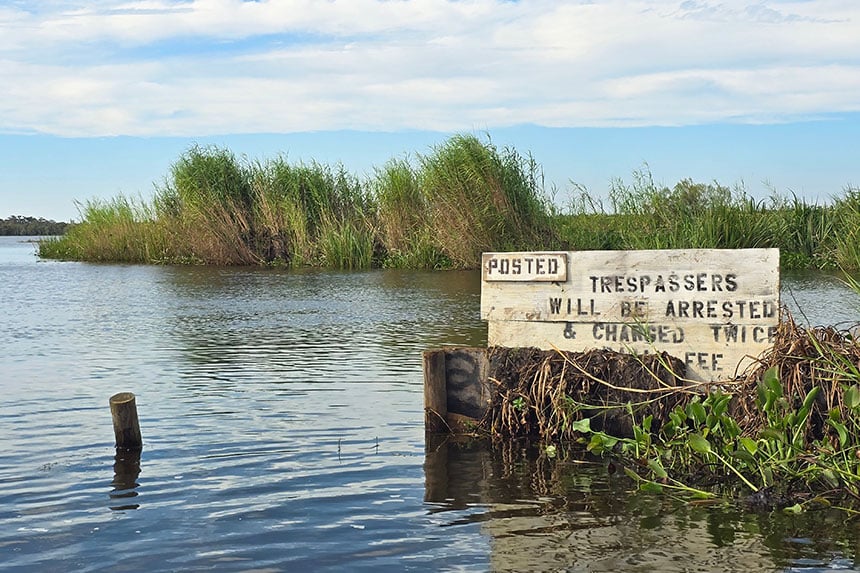
The two men looked at the island from the mainland, where it was safe.
“He ain’t really gonna do it, is he?” asked Mort Sumpter, town councilman, referring to one Jack Planter, owner of Buck Island, sitting out there in Lake Champlain like a moored barge with a house and a few maple trees on it that made it look festive in autumn.
“Says he’s seceding,” said Mayor Junior Bishop. “Sent me a declaration.”
The Mayor handed a paper with a fancy border on it, twining vines, to Sumpter.
From Buck Island, formerly of Vermont
To Wit:
I, Jack Planter, being of sound mind, do solemnly declare that the whole town can go to blazes, and do hereby declare my island an independent nation, so stick that in your pipe and smoke it. Anybody who says different can lump it.
Buck Island is now The Republic of Gondwana.
Jack Planter, President
“Harley Edison notarized it,” said the Mayor. “I recognize his vine border. Guess that makes it official.”
“Harley thinks he’s funny.”
“Couldn’t pass it up. I hear Jack commissioned Debbie Dorfman to sew him a flag. Gondwana. Wonder where he got that?”
“He’s nuts, you know.”
“Harley?”
“Jack. He can call himself Canada, it don’t mean anything. There’s no legal force in it. We had a Civil War, and look what good that did. We’re still 50 states. What’s eating him, anyway?”
“Says he needs to be free, whatever that means,” said the mayor. “I told him he’s free as a lark. Then he says, ‘Larks don’t pay property tax.’”
“Figures, he’s out in the middle of the lake, so’s he’s not attached to the town, that it?”
“Looks like. He’s got a shotgun.”
“He’ll shoot his own ass off. Go talk to him, Junior. You’re the blessed mayor.”
“He’s not really bothering anybody. Besides, I don’t want to get my ass shot off.”
“He’s violating the law. Arrest him.”
“For what? Man can live on an island, be private.”
“But if he don’t pay his property tax …”
“That won’t come up for three months. We’ll deal with it then.”
Sumpter harrumphed. “He makes us look foolish,” he griped. “Republic of Gondwana. Don’t think the news media wouldn’t glom on to a story like that. It could go national. Why are you laughing?”
The mayor said, “Mort, you hit the nail on the head. Wouldn’t that be advertisement? Bring tourists to our town? Let him be Gondwana. This could bring in some revenue. Hell, I’ll call WPXJ myself. They’re always looking for a good story.”
“Ain’t nothing good going to come out of it,” said Mort Sumpter, and spat on the beach.
* * *
“What do you think of it?” Debbie Dorfman, owner of Sew What?, asked her customer. He was in town to pick up his flag, and a few supplies, such as Maxwell House coffee, the only kind he drank, and a box of shotgun shells. He scrutinized Debbie’s work and grunted.
“Didn’t think you’d do it,” he said.
“I got my rebellious side,” said Debbie.
The flag showed a pair of legs, a rump, and trousers pulled down over said legs.
Wilder’s Notch, Vermont, population 1,502, or 1,501 now that Jack had showed his hinder to the rest of the town, was not a vacation spot. Tourists mostly visited Burlington, or the ski resort in Stowe, dropping by on occasion to buy $21 half-gallon cans of Vermont maple syrup, and take a gander at a genuine American small town.
“Small time,” Mort Sumpter liked to say.
Jack hoisted his new flag over the east gable of his house, an old two-story colonial with a widow’s walk and a long front porch where Jack could watch the lake for loons and loonies, as he put it, the birds being welcome, the nuts — like those hippy trespassers fishing for mermaids, stoned as Mount Mansfield, who high-tailed it when he showed them his Purdy 12-gauge, and good riddance to them — not. A shotgun had a sobering effect.
When the news team stopped by on Thursday, just one day after he raised his ensign, he was in the kitchen, fixing fried perch he’d caught earlier when he took his rowboat out on the lake. Someone was knocking on his front door. Harley sometimes stopped by on Friday to shoot the breeze and drink beer, but that wasn’t Harley’s knock. Harley used his fist like a gavel; this knocker used his knuckles. Rappity-tappity.
It turned out to be a woman, dressed in a conservative gray pantsuit, a pretty blonde with dangly earrings, holding a microphone up to his face as soon as he opened the door. A shaggy-haired guy with a $7,000 Black Magic video camera perched on his shoulder was filming him. Without so much as a “Do you mind?”
“I’m Mary Forthright,” said the reporter, “from WPXJ of Burlington. We’d like to interview you, Mr. Planter.” Isn’t that great? her smile flashed.
He turned to fetch his Purdy, but the news people mistook this for an invitation to come in, and in they came.
“We’re talking to Jack Planter,” said the perky news reporter into the camera, “the self-proclaimed president of … Gondwana?” She smiled. She could take a joke as well as the next person. “What made you break off from Wilder’s Notch?”
“And Vermont, and the whole U.S. of A,” Jack replied from the vicinity of his hall closet, where he kept his shotgun.
“Is this a political protest?” Mary lost the smile and looked serious.
Brandishing his weapon, Jack came around the corner, motioning toward the front door.
“Don’t call me,” he said. “I won’t call you.”
Before they could cajole the interviewee into telling his interesting story, WPXJ’s finest were quickly escorted to the runabout that had dropped them off. The boat belonged to Junior Bishop. So that’s how it was going to be. Junior waved to him as they motored off for the dock on Shore Drive on the town side of the lake. The shaggy cameraman was getting some good footage of Jack standing there holding his shotgun, looking like what he was, the town kook. He got a good shot of the flag, too, hanging from the gable, unfurled in the breeze, mooning the whole damn lake.
* * *
The story ran during prime time. Junior Bishop helpfully filled in the details for the media, mentioning Gondwana and Jack Planter’s rebel stance. The interview had been a flash in the pan, but Jack’s aggressive actions, chasing them off the island at gunpoint, made up for it.
Then it started. The stampede.
People came from Burlington to visit the Notch, which had hitherto ducked under the tourist radar. Harley made up some Where the Hell Is Wilder’s Notch? bumper stickers at his print shop, and Lucille Clark’s bakery sold cakes with Gondwana written in frosting on them, a little candy man holding a shotgun sitting on top like a wedding cake. Shotgun wedding. The Darling Diner served a Gondwana Special (meatloaf with a little flag stuck in it, swimming in gravy as watery as the lake); businesses from Vermont Crafts to the Grand Union (or Grand Disunion, in honor of the secession) savored respectable profits.
Cars from Plattsburgh, New York, and Adams, Massachusetts, ousted local residents from scarce parking spots. Boats plied Lake Champlain like a small armada, including Mayor Bishop’s runabout, carrying Mary Forthright and her unshaven and unshorn cameraman for another try at talking to the president of Gondwana, who stood on his widow’s walk, brandishing his shotgun like John Wayne at the Alamo. Jack had posted border signs around the island, warning the lookie-loos and would-be trespassers that this was sovereign territory.
“Gawd damn it,” said Jack, when he saw the evening news, “it’s on CNN.”
The whole point had been to keep to himself, back into his hermit crab shell, and come out when he felt like it, or ran out of coffee. The last thing he wanted was a spotlight on him.
He was going to have to erect an electric fence around the whole island. People knocked on his door at all hours, peeked in his windows. It made you want to spit. Privacy was all he wanted. They’d raised the property tax; that galled him. But it was his personal liberty that most concerned him. He got along well enough with his neighbors, as long as there was a lake between him and the town. He’d thought his fellow townsfolk, being Vermonters, would understand the idea of good fences making good neighbors. To each his own. You go your way, I’ll go mine. He’d declared himself a nation because the fancy had taken him. Raising his flag like the marines at Okinawa. He owned the island; it wasn’t like he’d captured it. But there was a certain satisfaction in thumbing your nose at the authorities.
He considered creating an anthem: “Gondwana, my Gondwana, you’re small but you’re wiry. Gondwana, the gem of Champlain.” And then something unprintable. Well, nowadays you’d be hard-pressed to find anything somebody wouldn’t print. Moral collapse, that’s what it was. Then again, he should probably keep quiet; don’t give them anything they could print. Or film.
The stunt had backfired. A retiring soul such as himself needed his alone time. He considered putting an “Out of Business” sign on the beach. Should just keep mum and pay up, he thought. But he was constitutionally disinclined to keep his bazoo shut.
* * *
Mayor Bishop, watching the news with Mort Sumpter, congratulated himself on his business savvy.
“Jack’s good for the economy,” he said.
“He’s requiring passports, you know,” said Sumpter. “For people who want to visit his country. Harley paid ten bucks. Offered to design his own currency for him, by God. If that isn’t counterfeiting, I’ll eat the paper it’s printed on.”
The mayor laughed. “He’s becoming a celebrity. It must gall him.”
“It’s his own fault. Nobody was bothering him before he raised that flag. Isn’t there an ordinance about displaying pornographic material in public? Or at least in broad daylight.”
“You can’t see anything until you get close to the island,” said the mayor. “People are taking pictures, no doubt sending them to friends. You’d have to go out of your way to get a gander at it. Looks sort of like a peach to me. If a peach was a few shades paler, and wore trousers.”
“Well, you need to get your eyes checked. It looks like what it is to me. He should at least get a ticket for public indecency.”
“He wouldn’t pay it. Probably declare sovereign rights or diplomatic immunity. Say it was a bum rap.”
“It ain’t funny, Junior. It’s just embarrassing.”
“Your trouble, Mort, is, you can’t take a joke. But the joke is on Jack. Wilder’s Notch is in the history books now. We’re not just a sleepy little town nobody’s ever heard of. Where’s your civic pride?”
“I got as much pride as the next man. Doesn’t mean I have to agree with this Gondwana guff. We might’s well be on one o’ them TV shows where people fall down a lot and look stupid.”
“Don’t worry about it, Mort. It’ll blow over quick enough. Enjoy it while it lasts.”
* * *
The quiet little rebellion in Vermont was into its third week. The former Buck Island, named for a deer that swam over in 1956 to eat apples fallen off the single apple tree — majestic, full-antlered, made into a logo on cans of Sweet Life syrup (a product of Wilder’s Notch, Vermont, in case you should forget where you got it) — hadn’t seen a deer since the commotion began. The deer were missed. The tourists were threatened with the law.
Sheriff Boyd Freemont pleaded lack of facilities to house that many violators.
“Sell tickets,” the sheriff suggested.
The President of Gondwana considered hiring security guards, but that defeated the whole point of being a loner. The irony was not lost on him. He needed people to keep people out.
Jack Planter and Gondwana had captured the nation. Gondwana was a symbol of freedom, good old American gumption, an example to the malcontents, people with chips on their shoulders, pranksters, and downright nuts declaring their homesteads, and in one case a used tire yard, independent states. Personal flags in the tradition of Gondwana waved over private houses and even in a public park. The fad wasn’t fading.
He could cash in on it, as Sheriff Wiseacre suggested, but he was comfortably situated. His Uncle George had left him a tidy sum from his lumber business, and he’d purchased Buck Island, alone out there in the lake, except for the occasional deer; perfect for a Robinson Crusoe existence, if Crusoe had access to civilization when he needed it. It was Junior Bishop who started all this. Thought he was funny. Funny like a fox. The council, too, who had the gall to raise his property tax. The flag showed what he thought of tyranny. He could afford to pay it, but that wasn’t the point. It was extortion. He thought of that movie Braveheart: “Freeeeedom!” He considered painting his face blue, but that would only add fuel to the fire.
He had to have his groceries delivered, to keep out of the limelight. His hair was looking a little long because he couldn’t cross the water to get to Roscoe’s Barbershop without some yahoo spotting him, or visit Doc Brennan for booster shots against whatever all those island peepers might be carrying. Through the telescope poking out of his upstairs bedroom window he watched the mainland, spying license plates from Delaware, for Pete’s sake, and Pennsylvania. He’d had to show his shotgun to a dozen tourists, snapping pics and filming him, with no expectation of getting shot. He should have at least wounded one of them. That idiot with the pot belly wearing a baseball cap that read GONDWANA would have done. Debbie was cleaning up.
He wasn’t going to be a dog and pony show. And he wasn’t going to back down, either. If he kept mum, stayed hidden, eventually the public’s short attention span would find a new novelty to gawk over. Don’t poke a beehive and you won’t get stung. Boats swarmed around his sanctuary. Dozens of them.
Landmines, he thought. That’s what I need.
* * *
Six weeks into what he was beginning to think of as the siege, Jack had taken to throwing the cherry bombs he used to ward off crows that robbed his little garden at the inconsiderate SOBs who violated his private beach. It worked for a while, but new batches of Gondwana seekers, like a second wave of soldiers storming the beach at Normandy, took their place.
He was still on TV. News anchors waved miniature versions of his flag. Wasn’t that a copyright violation? Not to mention in violation of network standards? He had become a symbol.
The quiet life. That’s all he ever wanted. Harley brought a six-pack of Coors over, and they watched a Celtics game while they talked about a postage stamp.
“I figure,” said Harley, “we can print up stamps with a picture of Buck Island, and Gondwana underneath.” He spread his hands for emphasis. “It’d be a collector’s item, I’ll bet. I talked to Nat at the post office. He thought I could do some post cards, too.”
“Debbie Dorfman wants to be an ambassador to Gondwana,” said Jack. “Hell, I was just mad when I sent that proclamation to Junior. Never expected all this foofaraw.”
“What you need is a couple of rottweilers,” said Harley.
“Can’t abide dog poop,” said Jack. “Besides, they’d scare away the deer.”
“The tourists are doing that.”
“I guess you think I should throw in the towel.”
“Not me. I’m making money off this.”
“Well, I’m not surrendering. I got my principles.”
“And you’re as stubborn as a badger. Maybe you should try a little public relations. Smooth the waters. Give a couple tours. Do some gladhanding.”
“Harley, you’ve known me for 20 years. Can you see me gladhanding anybody?”
“You got a point there. You might have to move. There’s a small island farther north, across from Plattsburg. You’d have to build a house on it, but you can afford it.”
“I planted my feet and my flag on this ground,” said Jack, “and here I’ll stay.”
“You won’t lack for company,” said Harley ironically.
* * *
October came in a fall of leaves that carpeted the ground like a trap laid for leaf peepers, eager to drink in the ambience of a sleepy New England town. Wilder’s Notch had a small share of the autumn colors trade, usually, but the Notch was famous now. The covered bridge over the Sanskutuck River rattled with SUVs and Mini Coopers alike, testing its 200-year-old timbers. Trout were being pulled out of the river faster than Charlie Barrow, the game warden, could check for fishing licenses. The season had been fairly rainy, but Charlie headed off campfires, as a precaution against a forest fire. Larson’s Woods sprouted tents. The scent of woodsmoke, thick as a London fog, drove Charlie crazy.
The quiet life, thought Mayor Bishop. The attractions of fall compounded the lure of Gondwana. Well, he’d beaten the drum for it, hadn’t he? Only a few locals would have known about Jack’s little stunt if he hadn’t gotten it into his head to turn the tables and play a little joke of his own. A money-maker and a town promoter, but it had its side effects.
Traffic on Main Street was in a perpetual snarl. The Mayfair Hotel was booked solid, leaving angry travelers to look for lodging in private homes. Harley sold passports to Gondwana, but Jack refused entry to “foreigners.” Car accidents, vandalism (someone spray-painted the bronze statue of town founder Noah Wilder in the town square), drunks, fights, and pet accidents on the sidewalks (when people couldn’t be bothered to walk their animals in Wilder’s Park) disrupted life in what had once been Mort Sumpter’s small-time America.
After the robbery at Kaufman’s Dry Cleaning, a town meeting was convened in Liberty Hall. Three hoodlums had broken into the till, making off with $382.72.
“They were pros,” said Sheriff Freemont, moving around so that his leather holster creaked like a warning. Truth was, he just liked the sound of it. “The crime rate has gone up 200 percent. My jail is full of pickpockets, vandals, a car thief, and there’s no telling if a bank robbery is on the horizon. The streets are so crowded, it looks like we’re hosting the Macy’s Day parade.”
The bank robbery conjecture notwithstanding, Wilder’s Notch wasn’t as safe as it used to be. There were assaults, shoplifting, and trespassing, not just on Gondwana, either. Mort Sumpter spoke up. “I told you,” he said, giving Mayor Bishop a pointed look. “It’s getting out of hand. So long as Jack is allowed to play president of his cockamamie country, we’re going to have trouble.”
Heads nodded in unison. Butts scooched uncomfortably on the wooden benches as concerned citizens talked among themselves, gaveled to silence by Mayor Bishop.
“I called Jack,” he said, “but he’s a clam on the issue. He hates the crowds, but he won’t withdraw his withdrawal, as it were, from the town.”
“I seen that flag o’ his on the BBC news,” said Mort Sumpter. “Even the limeys know about it. We’re at capacity as it is. Something’s got to be done about it.”
“Unless Jack volunteers to come back to the fold,” said Mayor Bishop, “there’s really nothing we can do.”
“What if he shoots somebody?” asked Mort, chin out.
“Well,” said the mayor, “then we’d arrest him. In the meantime, we’ll just have to ride it out.”
* * *
Another month and there would be snow, which should slow down the visitors, but in Mayor Bishop’s “meantime” the town played host to a host of curiosity seekers who brought their wallets, and Mort’s “trouble,” along with them.
Jack discharged his shotgun from the upstairs window, aiming wide. Invaders, as he called them, scattered, but they weren’t deterred. He wasn’t taking Junior’s calls, so the mayor sent him emails. Like a diplomatic exchange. It was like fighting a war. That’s it, the thought struck him as he reloaded his Purdy 12-gauge and let fly with both barrels, the buckshot peppering the Adirondack chair on the front lawn.
Harley called him pigheaded, and maybe he was, but a man had to stand by his beliefs, and he believed he’d been wronged. The council believed he was in violation, but no amount of statutes gave them the right to hold his island in ransom. “They’re holding everybody else,” Harley told him. That was their own fault, he’d retorted, for not standing up for their rights.
He liked New Hampshire’s state motto: Live Free or Die. Had a nice ring to it. When Billy Dorfman, Debbie’s son, delivered his groceries, with a howdy from his mom, Jack gave the boy a five-dollar tip and a note to go with it.
“Deliver this to Mayor Bishop,” he said, as if Billy were his personal courier and spy. Billy read the note, said, “You want some tea to throw into Lake Champlain? We don’t have a harbor.”
Smart aleck.
* * *
Mayor Bishop read the note.
Mort read the note.
The whole town council read the note.
“Is he kidding?” Mort wanted to know.
From Jack Planter, President of Gondwana, to the Honorable Junior Bishop.
The die is cast. In these troubled times there is only one thing to do. I am declaring war on Wilder’s Notch. Wait until the media gets ahold of that one. Unless, of course, you are open to negotiations about the issue at hand. Let me know through official channels. In writing.
Respectfully yours,
Jack Planter
“The son of a bitch is crazy,” said Mort.
The town council was of the same opinion.
They sat at the long council table, the radiator clanking as the heater kicked in. Maureen Hampton, the town librarian, hauling out her vocabulary, declared that Jack’s actions would start a conflagration.
“Well,” said the mayor, “it’s not like the bombing of Dresden, but it’s going to make things worse, that’s for sure.”
“Makes it worse for him, too,” said Mort. “He thinks he’s being disturbed now, wait till he springs this. He’ll never get any peace again.”
“That’s it,” said the mayor.
“What’s it?” said Mort.
* * *
Mayor Bishop made a couple of phone calls, then sent an email to Jack, addressing it to President Jack Planter of Gondwana.
* * *
The delegation consisted of the mayor; Mort Sumpter; Sheriff Boyd Freemont and a deputy, Newton Ford, freshly graduated from Bennington College; and news reporter Mary Forthright, of WPXJ, accompanied by her cameraman, Rich. They were concerned that Jack would show them his shotgun again, but Mayor Bishop told them not to worry.
“He knows you’re coming. To film the armistice.”
Rich, the cameraman, hefted his Black Magic video camera, filming the upcoming island, once just part of the scenery, now no man’s land, and the cabin cruiser with partying beer drinkers toasting the hero of Buck Island. Excuse me. Gondwana.
* * *
Jack wore his best suit, a tweed, with a maroon tie that he had last donned when he took Mabel Kaufman out for a fish fry on St. Patrick’s Day. (He may have been a hermit, but he wasn’t a monk.) His jazz oxfords gleamed, his hair was brilliantined, and he held a cane with a brass handle, which he used when his gout acted up; the symbol of his office. At least as of now, in honor of the delegation Mayor Bishop was sending to — ha! — surrender.
“We can’t fight you” had been the mayor’s stance. They were ready to talk terms. To settle. The mayor’s exact words were, “We’re going to settle this.”
The war idea was, of course, a shot in the dark. The threat of it going public had done the trick. He’d seen the chaos in town; laughed like hell at the mess that had boomeranged on old Junior. They could both share the blame, but who asked him to go to the news people? Mayor Bishop was a wily politician, but now the tables were turned.
When he heard the knock on the door, shave and a haircut, two bits, he thought it was Harley, but through the peephole he saw the official entourage. He was ready to receive them. He couldn’t say that about most visitors.
He’d even brewed up some Maxwell House to serve for the occasion, and set out a plate of banana nut muffins left over from his last grocery delivery.
“Come in,” he said formally, opening the door to his guests.
Those news snoops he’d chased off before were filming him. The show’s over, he thought. He’d rehearsed a gracious victory speech that had the tones of an obituary. The farewell address of the president of the phantom country that was about to fade into the past.
Everyone came into the house, solemn, not saying anything. He motioned for them to sit, but nobody moved.
Sheriff Freemont had come along, with that fresh-faced Newton, just out of college, looking stern. Then the sheriff nodded at his deputy, who took out a pair of handcuffs and clamped them on Jack’s wrists.
“You’re under arrest,” said Sheriff Freemont.
“What for?” Jack demanded.
“Disturbing the peace,” said Mayor Bishop.
* * *
The jail was right out of Mayberry, looking as homey as a place of detainment could get, if you ignored the barred cells.
“You can’t hold me,” said Jack. He would have gripped the bars, or run a tin cup over them, but he wasn’t in a cell. Newton had removed the handcuffs, which were just a show of force anyway. Jack sat across from the sheriff’s desk, staring defiantly at Mayor Bishop. WPXJ’s team stood by, Shaggy shrugging his camera up on his shoulder. Why were they still here? he wondered.
“We’d like to talk to you, Jack,” said Mayor Bishop, all folksy. “As you are aware, we have a situation here that is not benefiting either one of us. We need to settle this before it gets worse. We want you to lower your flag, on camera, and declare you’re rejoining Wilder’s Notch.”
That’s why the news was here.
“You could have said that back on the island,” said Jack.
“Well,” said the mayor, “we needed to get your attention.”
“Threaten me, you mean. What do I get out of it? Tit for tat.”
“Peace of mind,” said the mayor, holding out the thought like an olive branch.
“That puts me back to square one,” said Jack. “Forget it.”
“If you don’t go along,” said Mort Sumpter, “we’re going to appropriate your land.”
“You can’t do that!” Jack fumed.
“We can if you don’t pay your taxes,” Mort rejoined.
Jack gave a so-be-it nod.
“Okay, I’ll go on camera,” he said, “and tell everybody and his uncle I’m at war with Wilder’s Notch. We’ll be drowning in a tidal wave of tourists. There’ll be a media circus. WPXJ won’t be the only news snoops around here.”
“The town will be ruined,” said Mayor Bishop. They could hardly keep up with the interest the world was already showing them. “What can I do? My hands are tied.”
“The town council is as stubborn as you are,” said Mort Sumpter. “They won’t let you off the hook for refusing to pay your fair share. It could start a precedent.”
“Live free or die,” said Jack, and stood up as if he were about to give a speech.
Mary Forthright switched on her microphone. Rich, the cameraman, started filming.
Sheriff Freemont hitched up his belt, which gave a satisfying leathery squeak, and warned Jack that he would be charged with reckless endangerment, assault with a deadly weapon, inciting to riot, and mayhem if he didn’t cooperate. They’d brought him to the jail for intimidation purposes.
“That will keep you out of circulation long enough for things to cool down,” said the sheriff — if they’d left the news people behind. The camera was still rolling.
“You stubborn mule!” said Mort, motioning for the cameraman to stop shooting. Mayor Bishop advanced on Jack as he started to speak.
“Mr. and Mrs. America,” said Jack, “I, Jack Planter, president of the sovereign nation of Gondwana, declare that I am — ”
— dissolving Gondwana,” the mayor cut in, reaching around Jack’s shoulders, “to become the permanent caretaker of the Buck Island Wildlife Sanctuary, recently granted historic — tax exempt — landmark status. Right, Mort?”
“Closed to visitors,” said Jack, and smiled for the camera.
* * *
Wilder’s Notch, population 1,502 once more, settled down like a sleeper under a quilt as winter arrived. It had become famous enough to bring in regular tourists, but nobody was stepping on anybody’s toes since the mayor invoked emergency measure SOT — Save Our Town. Made up off the top of his head. Mort was still mad about it.
From the top of the house on Buck Island, a rude flag still flew.
“Thought he’d burned it,” said Mort Sumpter, watching the deer on the island eating fallen apples with Mayor Bishop from the quiet beach on the town side of the lake.
Become a Saturday Evening Post member and enjoy unlimited access. Subscribe now

Comments
Great compelling story, the kind you don’t want to put down once you begin reading because you can’t wait to see how it ends and see if it matched your expectations for the ending. I loved the characters, who were believable and interesting. I liked the setup and the ensuing irony (Jack wanted personal privacy but instead got national news coverage). My favorite part was the ending, with a resolution that made sense and all parties seemed satisfied with it. Hoping there’s going to be a sequel to see what Jack tries next.
What unfolds here is probably the wildest thing that’s happened in Wilder’s Notch in a long time, or ever. This story somehow makes the implausible, plausible even if it seems far-fetched. After years of these being ‘blue’ states after all, I’m glad the trouble caused wasn’t any worse!
Your descriptive, conversational writing style where a lot’s going on at once, is still easy to follow, making it a very enjoyable read. The title at first, had me thinking of either the American flag, or one depicting the town. Instead we have neither. Considering the wonderful oddity of the whole thing, of course it made perfect sense. Thank you.