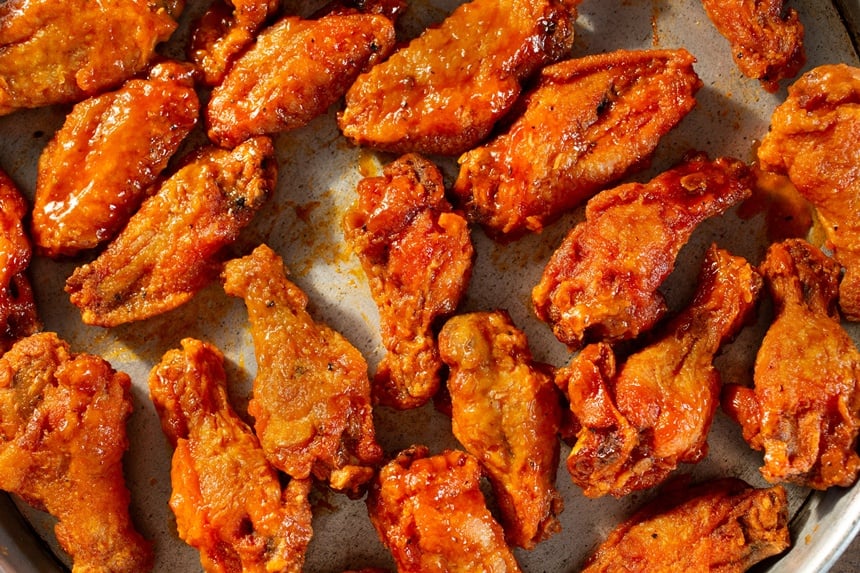
There’s a feeling when your fingertips are soaked in sticky sauce, your smile is smothered in the same, a plate half-full of a tiny pile of poultry bones in front of you in a packed restaurant with dear friends. It feels like a spell.
For decades, chicken wings have carried a certain enchantment. It’s a dish that has created its own unique culture in each state and seems to not only have staying power but also continues to grow and evolve within communities.
Like any good story, we must start at the beginning. Dr. Stacy Zuelly, Clinical Associate Professor of Animal Sciences, explains, “A chicken whole wing is made up of three parts, starting from closest to the body: drumette (humerus), flat/wingette (radius and ulna), and the tip (many bones, including the metacarpals). When you order wings, you get drumettes and flats. Because of the composition of the wing, the ratio of fat to lean is different than chicken breast, resulting in a more flavorful eating experience.”
Because they were often tossed aside for meatier parts, chicken wings themselves have always been on the menu when it comes to global cuisine. While the way we see wings today is distinct, there are many dishes throughout history that have used these tiny bits of bird. But the chicken wing in the States has its own unique history.
The style we are used to today is often attributed to their culinary birthplace in Buffalo, New York, though there is still some controversy as to who the rightful “grandparent” of the modern wing is. In 1966, Black restaurateur John Young acquired a license for his Buffalo restaurant, Wings and Things, which offered chicken wings with Mumbo sauce, or what we now call Buffalo sauce.
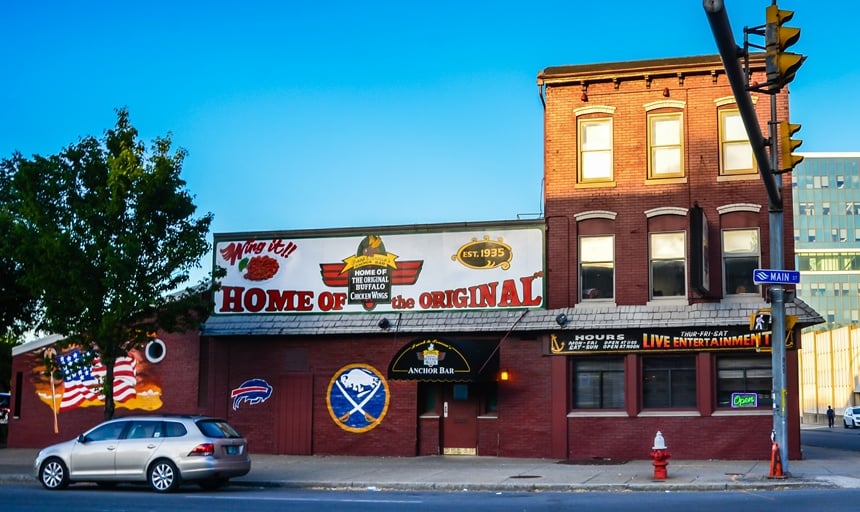
At about the same time, Frank and Teressa Bellissimo, who owned the Anchor Bar about a mile away from Young’s establishment (where sides of celery and blue cheese were offered), also started serving wings. At one point the Bellissimos were credited for the creation of the entree, but historians now attribute the invention to Young.
Of course this savory meal didn’t just stay where it was conceived: It grew. And what, may you ask, was the motivating factor in this growth? Affordable late night eats and football. Bars could turn what would have been scraps into food that tasted delicious with beer for a closing-time crowd. That combination of beer and wings presented an opportunity on those sacred Sundays of televised football. Soon, establishments offered game-day-deals that became a hit not just in Buffalo, but all of America.
Wings took hold in Washington, D.C. once Wings and Things established a restaurant there the late 1960s. In Washington, D.C., Mumbo sauce became essential to wing culture, but more importantly, the city’s Black culture; chicken wings were an affordable meat option and also available as carry-out.
Tasty wings, with its connection to Buffalo, beer, and football, continued to spread across the country.
Growing up in the Chicagoland area, which popularized its own style of wings in the 1970s-’80s, my memories of wings hold strong. All of us high schoolers would sit around a high-top table at Buffalo Wild Wings (founded in Columbus, Ohio, by Buffalo expats) with large carbonated beverages and paper baskets of Spicy Garlic Sauce, Blazin’ Knockout Sauce, and of course, Lemon Pepper. One of our school’s dearly beloved defensive linemen, Jack, would be telling a gross-out joke mid-bite while others were laughing, crying, or walking away from the table, all the while throwing down licked-clean bones.
Today, the wing does not stand alone in its Buffalo form. The Korean Chicken Wing is also a go-to order in the Windy City. Chicago restaurant owner Hsing-Tseng Kao saw an opportunity to bring his cultural flavors to the cheap, and often tossed aside cuts to create something new. He thought, why not make an entire traditional dish just from wings? Naturally, they were a hit and continue their popularity to this day.
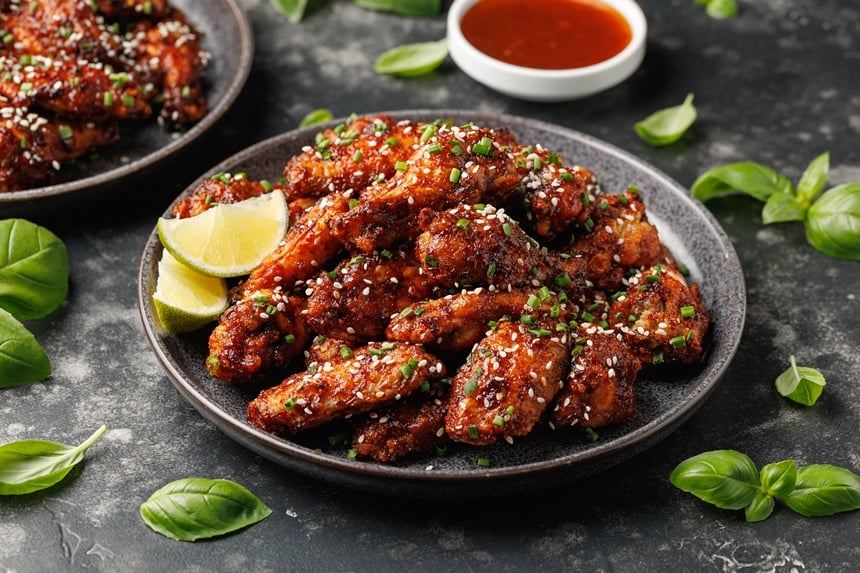
Taking a distinctive flavor profile beyond its original form didn’t stop in Chicago but journeyed to Atlanta as well. The origins of this southern metropolis’s rise as a hotspot for lemon pepper-flavored flats and drums (with flats preferred) are unclear; however, this lack of certainty does not lessen its cultural impact. In Atlanta Magazine, city councilwoman Keisha Lance Bottoms says, “Lemon pepper wings are Atlanta.” In fact, it is so important to the people of the Peach State that lawmakers have proposed making it the official state flavor.
How Strip Clubs and Hip-Hop Fueled Atlanta’s Lemon-Pepper Wing Obsession (Uploaded to YouTube by First We Feast) Contains nudity, profanity
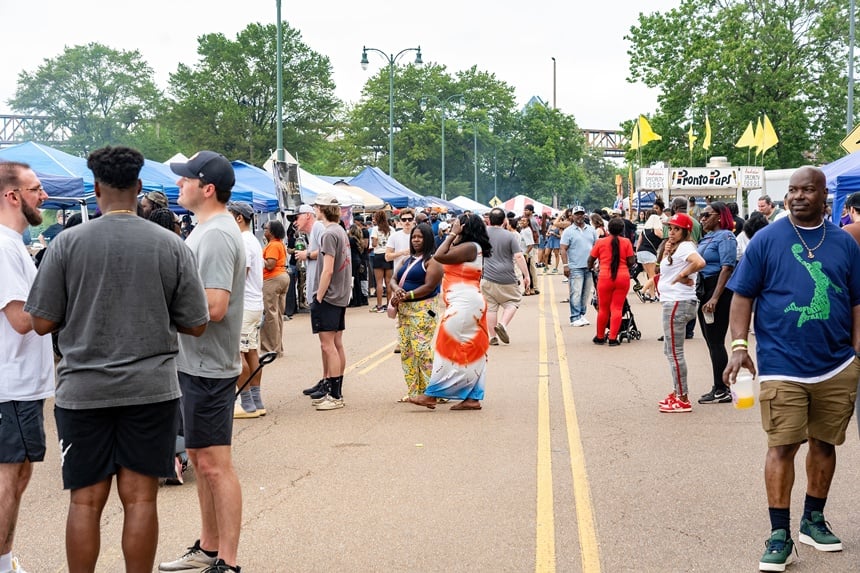
You can’t discuss distinctive flavors without noting the passion that surrounds Memphis, Tennessee’s hot chicken. In 1990, David and Leticia Boyd of D’bo’s Hot Wings & More were dedicated to bringing wings to their beloved city. Not only did it become a staple cuisine, but Memphis has also become home to the World Championship Hot Wing Contest and Festival, bringing together folks from not only all over the country but also internationally to celebrate the deep-fried delicacy; not to mention helping charity Ronald McDonald House. This community growth through sauce can be found in various super-hot recipe renditions across many states.
San Francisco, Miami, and Denver are a few other places that have distinct wing recipes and the social culture that goes along with it. And regions in Connecticut and Delaware also have their own wing style, not just for flavor but for fun. It’s not just about enjoying the tiny bits of edible bird; it’s also about the varying styles of sauces influenced by different communities and cultures.
A shredded paper napkin, stained wet wipes, maybe even perhaps a broken pair of wooden chopsticks, if you’re lucky, will litter your table along with the energetic conversation of your loved ones. All food has this power, including your game treats and late-night eats.
Become a Saturday Evening Post member and enjoy unlimited access. Subscribe now