When Megan Smolenyak was in sixth grade in Oxon Hill, Maryland, her teacher, Miss Berkowitz, assigned what seemed like a simple exercise: Go home and ask your parents where your ancestors came from. The next day, she pinned each surname to a giant world map tacked to the classroom wall.
When Smolenyak’s name was placed on the Soviet Union — alone in that vast expanse — the ten-year-old paused. Great Britain was crowded with pushpins. Ireland also held a large cluster. But her family stood solitary, marooned in a geopolitical nemesis. In that moment, the pins became a question: Where did we all come from?
A simple classroom exercise sparked a curiosity that never let go.
Today, Smolenyak is one of the country’s most recognized genealogists — an author, researcher, and historical detective whose work has shaped television projects, rewritten immigration history, and helped restore the names of soldiers long listed as missing. She is the author of six books and has received the National Genealogical Society’s Award of Merit. She credits Miss Berkowitz for the spark.
“It’s entirely her fault,” she says, laughing.
Smolenyak, however, is modest about her accomplishments, describing herself simply as a “history detective,” drawn to unanswered questions and long-buried truths. And, she adds, each life experience drew her to what has become “an addictive passion.”
As an Army brat, she grew up moving constantly, learning to read new landscapes and adjust quickly. Libraries became anchors. Records became puzzles.
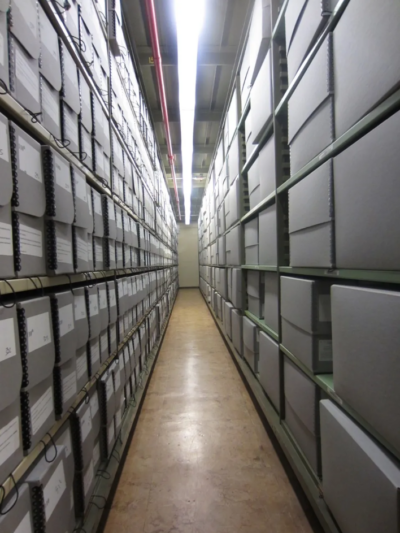
“When I turned sixteen,” she recalls, “while everyone else wanted a driver’s permit, I was just happy I could finally get into the National Archives in D.C. on my own.”
The National Archives — home to the Declaration of Independence, the Constitution, and the Bill of Rights — also preserves billions of records: census data, military files, immigration and naturalization papers, maps, photographs, and more. As a young, self-taught researcher, Smolenyak began exploring her own family, such as finding the passenger arrival record of her great-grandfather Peter Smolenyak, and learning the rhythms and frustrations of collecting data, along with the quiet thrill of piecing together fragments to solve larger historical puzzles.
She did not begin as a professional genealogist. After college, she entered management consulting, helping organizations untangle messy systems. The skillset translated seamlessly: Analyze incomplete data, find patterns across disconnected sources, build a narrative strong enough to hold.
The work kept her constantly on the move. “I was gone nine months out of the year,” she recalls. “And inadvertently, I built an international network.” At the time, she had no idea that friendships formed and contacts made overseas would later shape her career.
A chance encounter with PBS led to her work on on Ancestors, a public television project launched in 2000. The series explored genealogy and family history and marked the first PBS production to feature Smolenyak as a lead researcher. While working on the series, she uncovered so many compelling stories that she asked permission to turn them into a book. She secured an agent and landed a publishing deal. “I lucked into so many things,” she says. But luck would have little to do with what followed, or with what she considers her most important work.
In 1973, a fire at the National Personnel Records Center in St. Louis destroyed millions of military personnel files. Entire service histories vanished. Decades later, the consequences lingered with soldiers still missing and families without answers.
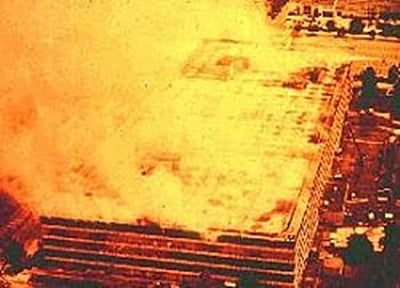
The military turned to genealogists. Smolenyak became one of them.
For more than 25 years, she has worked on nearly 1,800 identification cases involving soldiers from World War I, World War II, Korea, and Southeast Asia. The work began with fragments — partial records, census notations, faded correspondence — and, if successful, ended with something simple and profound: a name restored to a body.
“The Army work has been a great training ground,” she says. “Reuniting families with loved ones they never expected to see again — that never gets old.”
Some of Smolenyak’s most lasting moments don’t happen on television or in print. They happen in phone calls. Sometimes, the person on the other end doesn’t even know they have someone to be found.
“A World War I American soldier was found in France,” Smolenyak explains. “He was an Irish immigrant who served with the U.S. Army. I found his American descendants and his family in Ireland.” A great-nephew, learning for the first time that he had an uncle who had sailed away to war and never returned, was both astonished and deeply moved. He stood at Arlington National Cemetery for the memorial, while relatives traveled from Ireland to witness, at last, the homecoming that had never come.
Other cases are more complicated.
“I once had to convince an elderly man that he had a brother who died in World War II,” she recalls. The two men shared a father who had concealed an affair; the half-brothers were born six months apart. The surviving brother had grown old without knowing he had lost someone. The truth required documentation — and emotional persuasion.
In the end, the extended family gathered at the memorial service together, absorbing a history that had been hidden for decades.
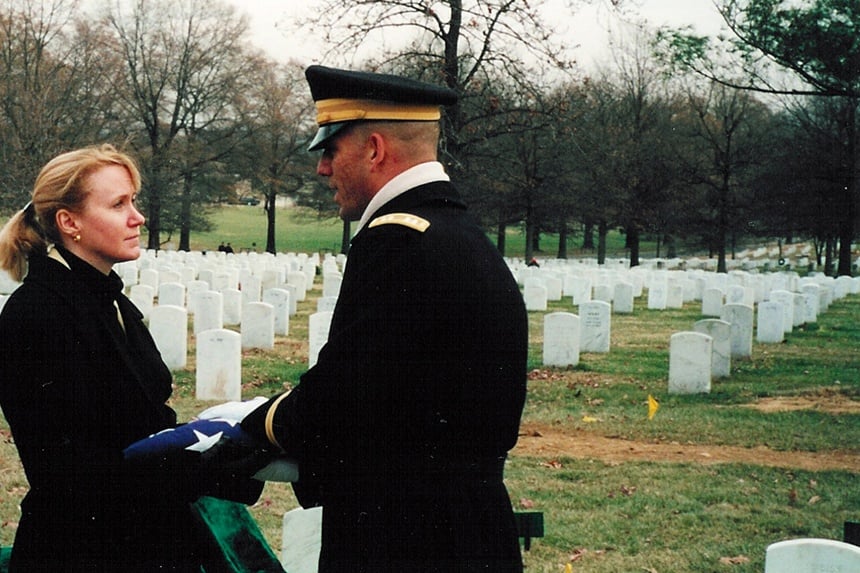
One case that lingers is Captain Lawrence E. Dickson, a World War II pilot and the first Tuskegee Airman to be accounted for after years listed as missing. “It was a doozy finding his family,” she says. His wife was still alive. At the ceremony, her daughter received the folded American flag. “She was overwhelmed,” Smolenyak says quietly. “And so very happy he was identified.”
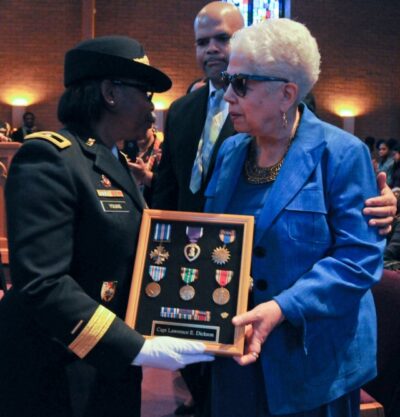
These are not tidy discoveries. They reopen family stories. They rearrange timelines. They expose secrets. But they also close circles.
Smolenyak was also an early advocate of DNA testing in genealogical research, long before companies like 23andMe and Ancestry made it mainstream. She faced skepticism at first. “People scoffed,” she says. “They thought it was impractical and unreliable. I realized it would be a great tool for adopted children who wanted to find birth parents.” Today, she is recognized as an early champion of DNA, helping move it into mainstream forensic genealogy and enabling researchers to solve cold cases and uncover hidden family connections.
Her most recent book, The Quest for Annie Moore of Ellis Island (2024), corrects a long-standing historical error. On January 1, 1892, 17-year-old Annie Moore of Ireland became the first immigrant processed at Ellis Island, a port that would see more than 12 million pass through by 1954. But Moore’s identity had been misassigned for decades. Smolenyak traced the authentic lineage, restoring the real story.
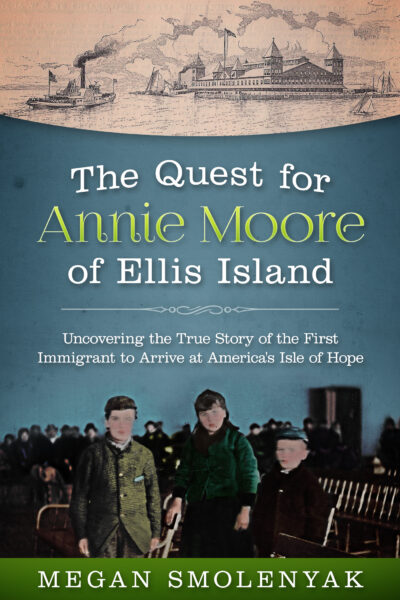
“I felt compelled to share it,” she says. “It’s rare to see a child making history.”
In the book, Smolenyak shows readers her investigative process and the painstaking verification required to piece together even small clues. “I wanted people to see how messy research is; how much you need to know to raise red flags. And just when you think you’ve seen it all, family dynamics always throw curveballs.” The result is a book so immersive that readers don’t just learn about turn-of-the-century immigration — they follow the twisting path of evidence, doubt, and discovery that brings a long-forgotten life back into view.
The research took 22 years.
Once you discover something that wasn’t known before, she explains, the work becomes addictive. “Research is like preparing for a performance at Carnegie Hall,” she says. “Practice, practice, practice.”
Before digitization, she recalls, you could wander archives freely. “It felt like Indiana Jones.” But what stayed with her was not the adventure—it was the discipline. “There is no finish line,” she says. “Only the next question.”
Smolenyak’s current projects include a Canadian American World War I nurse and many other historical cases. Above all, she remains committed to reuniting deceased soldiers with their families. But recently, she turned her lens inward.
The pushpin in the Soviet Union, it turns out, was wrong.
After decades restoring other people’s histories, Smolenyak traced her own. Her mother’s side proved fully Irish. Her father’s line led to the Rusyns — an East Slavic people long marginalized and scattered across shifting borders.
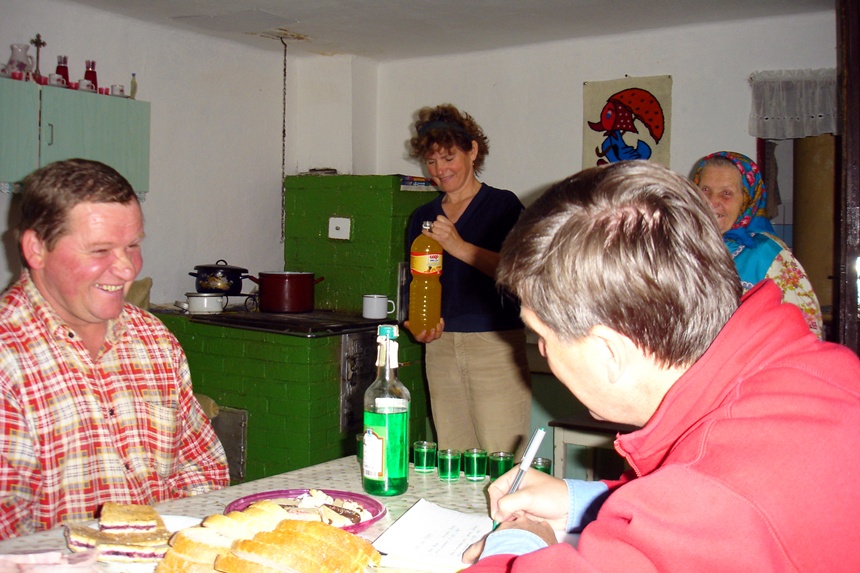
For Smolenyak, genealogy has never been about ancestry as ornament. It is about accountability — about asking who was misfiled, who was overlooked, who disappeared into archival silence. It is resistance against forgetting.
In classrooms, in cemeteries, in families who answer the phone not knowing what they are about to learn, her work carries the same quiet insistence: No one disappears if someone keeps looking.
Become a Saturday Evening Post member and enjoy unlimited access. Subscribe now



Comments
love the stories -history
My Grandmother Katherina Zakel married a Paul Baisch (Beisch) in SD. Grandmother was born in Sibu Romania. Yes, I did visit Sibu. Loved it. 1907 Katherina came to USA to join family. The family came to US to work & own a farm in Webster SD. It took 5 years to save the Money for Katherina (16) & brother George Zakel (age 11)to join family in SD. Before the ship reached Ellis Island they were forced to give up money to there Uncle Ziner who was also on ship. Landing at ellis island left the brother & sister pennyless. Telagram sent to father Mike Zakel in SD. Train travel to SD for Grandma Katherina a big eye opener. Father upset with loss of money. Forced Grandma Kate to marry a old farmer. She bore him 8 children and left for SD for ORegon. told by grandaughter Patricia “Currier”
Thank you for keeping your mother’s good works alive in the memories, Astrid! And Mark, I couldn’t agree more.
Thank you Megan Smolenyak for never stopping your amazing hard work finding missing men & women! My mother Alfhild Ingebjorg Fjelle Gundersen started her research in the early 1950’s for missing Norwegian people and I wish I had a complete count of how many women, men & children she located all the way back to the early Viking age! She died at age 97 years in Oslo, Norway! Thank you Megan for inspiring me to write a book about her life for my family, my 4 adult children, 2 son in laws & 1 daughter in law & 7 grandchildren! I have followed your amazing work through all these years & just want to thank you for teaching us never to give up! Respectfully Astrid Bjørg Gundersen Croce Willis
Christina, what a wonderful story of research and discovery culminating in the recovery of lost people in history. Your story drew me into the real detective work needed to solve many of these people mysteries. This article is a good example of why research by editors of the SEP continues to uncover areas of importance and relevance for their readers. Your article was excellent and well written. Please submit more of your work so we can again be amazed and entertained.