“What is an oyster if not the perfect food?”
– Anthony Bourdain, A Cook’s Tour: Global Adventures in Extreme Cuisines
On a date night in Indianapolis, seated at the bar of a tiki spot called Strange Bird, we were served oysters with a side of made-in-house horseradish sorbet. It was unexpected, a little strange — but exactly right. That small twist felt like a fitting introduction to the story of oysters in America: familiar, adaptable, and constantly reinventing themselves from coast to coast. America’s long love affair with oysters is a saucy one. Though humans have eaten this particular shellfish for thousands of years, their tale is one of abundance, overexploitation, collapse, and reinvention.
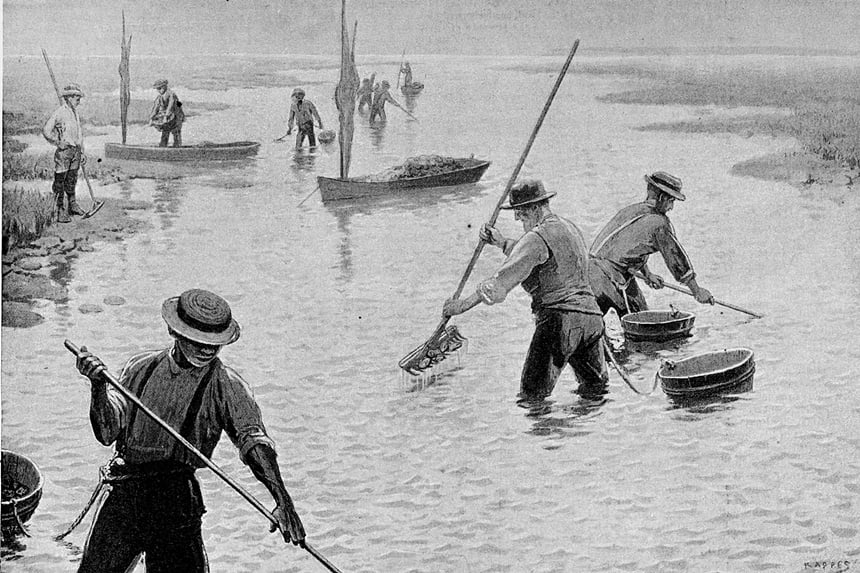
In early accounts, Indigenous communities such as the Lenape sustainably harvested oysters, particularly in the Chesapeake Bay, one of the largest oyster-producing bodies of water in the United States. Once the colonists started to arrive — particularly the British, where this delicacy was fashionable among high society — they quickly overharvested the Bay. But ultimately, it saved them from starvation in this new land they found themselves in.
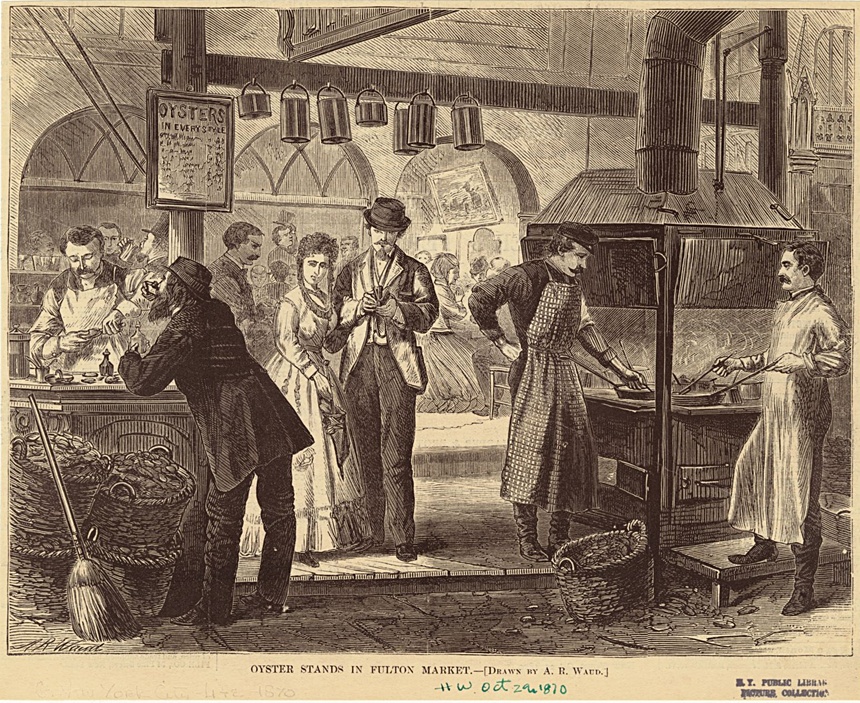
Oysters crossed class lines and were eaten in taverns, on street corners, and in fine dining rooms alike. Stephen Nepa, a historian at Penn State Abington, told Philadelphia’s WHYY about our founding government meetings: “It really begins in the taverns and the coffee houses and the chatter on the streets….What we would today call water-cooler politics, but in this case it could be politics discussed around oyster stalls.”
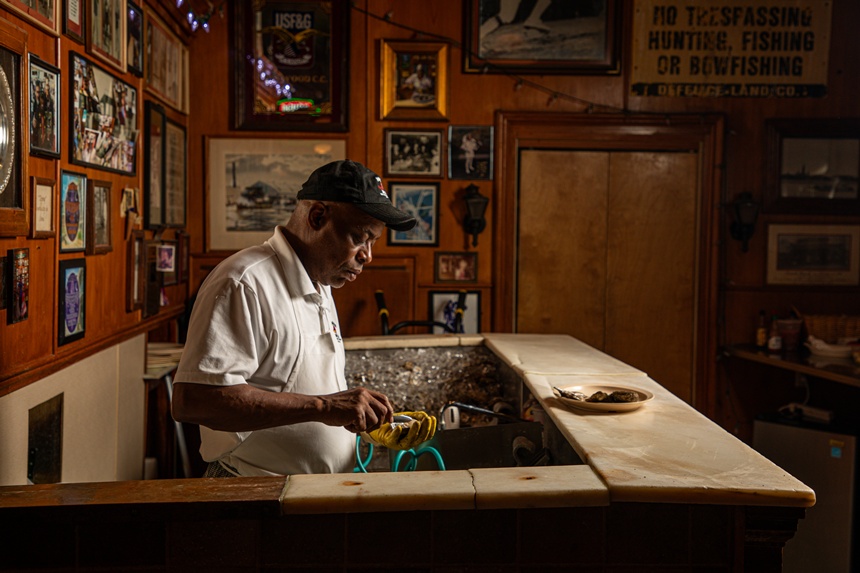
That culture of conversation hasn’t disappeared — it’s simply shifted settings. For example, in New Orleans, Louisiana, at the famous Pascal’s Manale, the proprietor, Dickie Brennan, says, “Sitting down at the oyster bar, you’re always going to strike up a conversation with your shucker, because they’re doing something that takes a little time. And oyster shuckers are great storytellers in New Orleans!”
Until the 1800s, oysters were harvested and eaten locally because they don’t keep well once removed from their shells — they’re alive until shucked. As a result, they rarely traveled far. Advances in preservation and transportation transformed the industry. In her research into the oyster industry, Mari Isa explains:
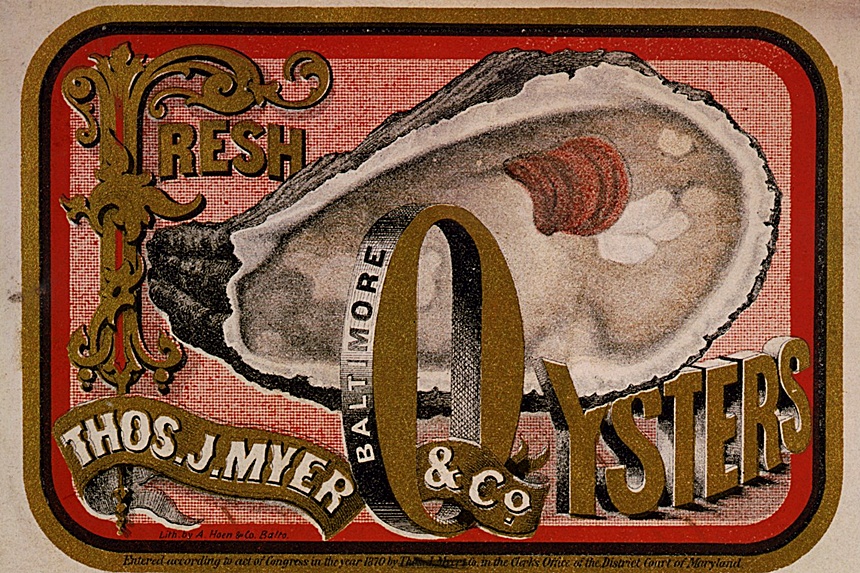
Newly built railways connected the coast with inland cities and made it possible to ship oysters further west. Canning technology made its way to the U.S. in the early 1800s. By the 1840s, oyster canning became a booming business in coastal cities such as Baltimore. Canned oysters and fresh oysters packed in ice were shipped inland to Cincinnati, Cleveland, Detroit, Chicago, St. Louis, and other Midwest cities.
One result is that oysters are no longer seasonal. James Karst with Coalition for the Restoration of Coastal Louisiana (CLCR) puts it like this: “That’s really a thing of the past. Not a myth per se, but in the era of modern refrigeration, oysters are safe to eat year-round. Sometimes they are saltier in the colder months, but they are really tasty year-round.”
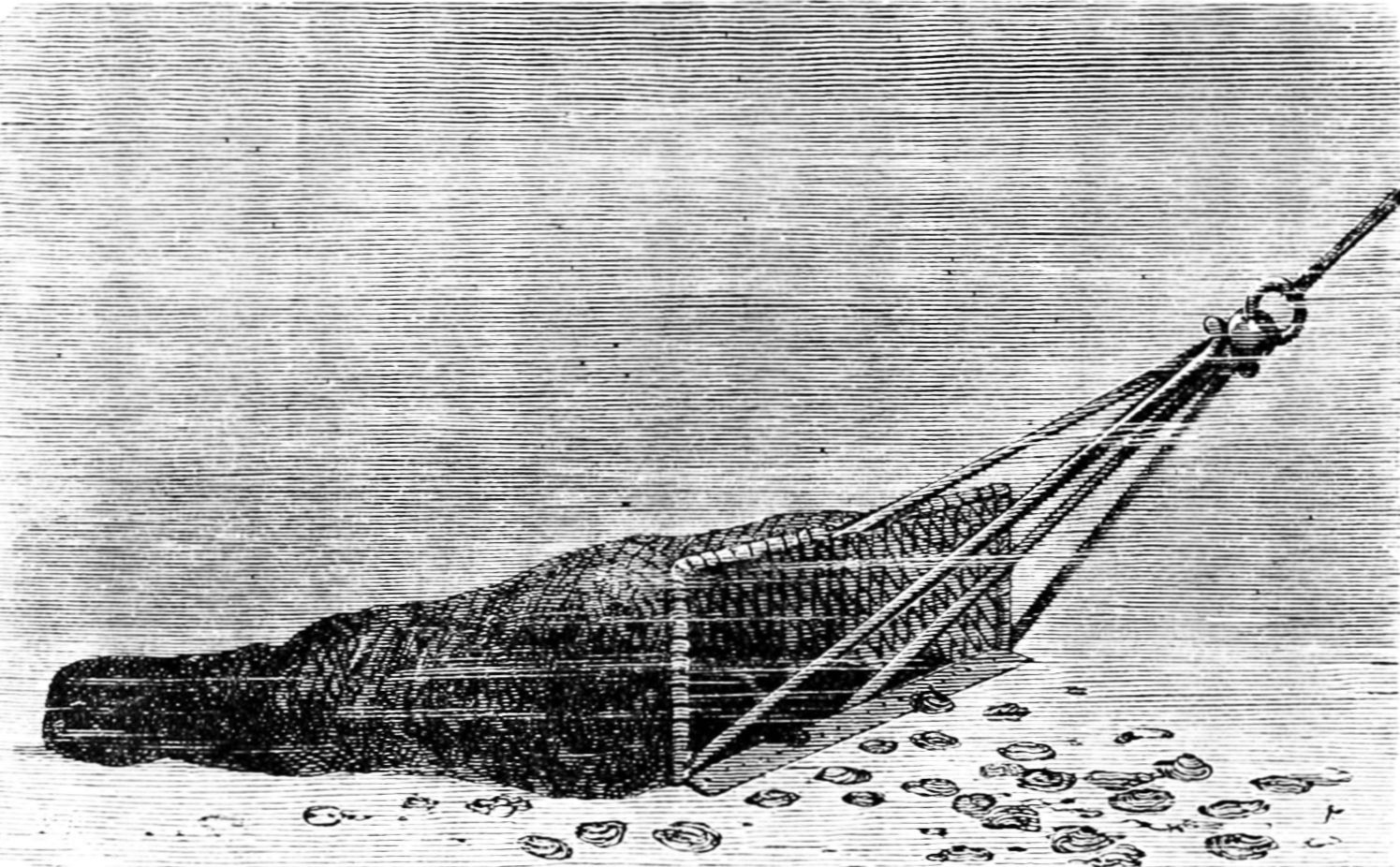
According to Isa, harvesting methods advanced in the 19th century and oysters were no longer gathered solely by hand or with tongs. Fishermen began using dredges — iron mesh bags dragged along the ocean floor — making it possible to collect oysters in far greater quantities. Between 1880 and 1910, annual yields soared to as much as 160 million pounds.
With this abundance, oyster became as popular as ever, showing up in cookbooks, restaurant menu specials, and even specialty dishware. Oysters were served deep-fried, baked, smoked, and smothered in all kinds of sauces. NOAA“their status as a tasty source of protein, vitamins, and minerals led to years of overharvesting,” as well as challenges from disease and habitat degradation.
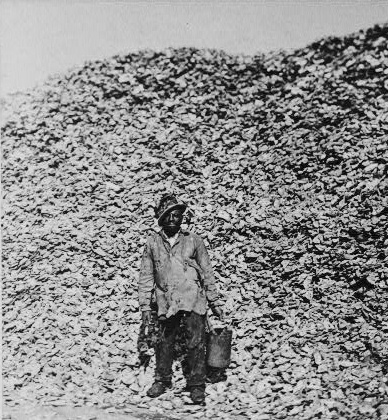
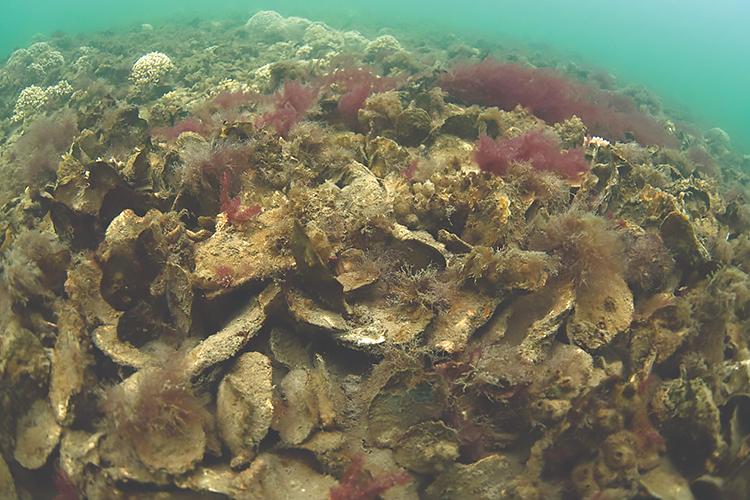
Unfortunately, the decades of continuous overharvesting of oysters took its toll. The Chesapeake Bay Program says that overharvesting removed huge volumes of oysters from the bay that led to the demise of reefs, destroying oyster beds and causing them to be easily buried by sediment. Disease also played its part. According to the University of Maryland’s Center for Environmental Science, two oyster diseases, dermo and MSX, thrive during drought periods when salinity in the bay increase. Meanwhile, pollutants were contaminating oyster beds. For instance, typhoid outbreaks in Chicago in 1924 were linked to oysters contaminated by sewage. At the same time, Prohibition shuttered the saloons and bars that had long sustained oyster consumption, dealing the industry yet another hit. It was official: The half shell had lost its charm, and the American public moved on to other sea creatures on their dinner plates.
Today, oysters are making a comeback. It started with the proliferation of the oyster dining experience like late night menus and $1 oyster happy hours at East Coast bars in the mid-’90s; you will still find many takes today. Brennan says, “Specialty oysters are having a moment, and younger diners are discovering local boutique oyster farms and selling those out. Accompaniments are more elevated – not the usual cocktail sauce but things like satsuma mignonette.” Oysters are once again becoming a social dining experience.
This resurgence is now closely tied to environmental stewardship. Organizations are working to cultivate healthier oyster populations by restoring and improving their habitats. NOAA Fisheries, for example, is leading some of the world’s largest oyster restoration efforts through reef rebuilding. As Karst of the CLCR explains, “Disasters like the Deepwater Horizon oil spill took Louisiana oysters off the market. And coastal land loss has changed where oysters can survive….Farmed oysters illustrated that the industry is adapting to changing conditions.” Brennan adds, “There are times when the state has to test the water due to an oil spill or freshwater interference, that can keep them off the menu for a few days while the state runs water quality tests.” Together, these realities point toward a new balance between safety, sustainability, and affordability.
In New York City, there’s a little bit of time left in the day here at the famed Grand Central Oyster Bar & Restaurant. Sitting here, I think of a very short story, “Oyster” by Emily Raboteau that is set at this very spot; the deep revelations she has while looking into an oyster. A reminder that oysters have always carried more meaning than their size suggests. Or, as Brennan puts it, “The hope is for people to understand the delicacy of an oyster.”
Become a Saturday Evening Post member and enjoy unlimited access. Subscribe now



Comments
Great article! Thank you for this history of one of my very favorite foods. I eat oysters at least 3-4 times a month. I also am also addicted to clams. One of the downsides of living in central Alabama ( as opposed to my home state of Ohio) is that it’s darn near impossible to get big steamers.