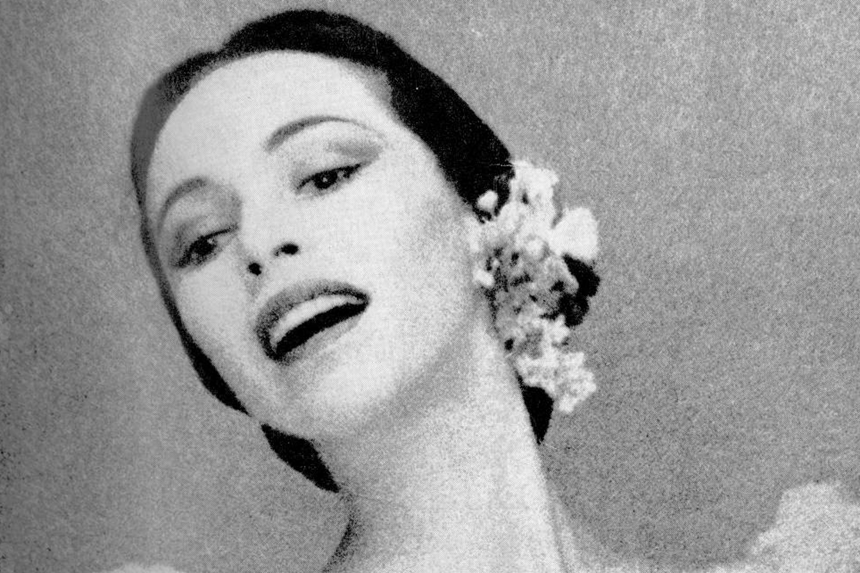
“Balanchine was a poet and I was his muse.”
–Maria Tallchief: America’s Prima Ballerina
As an accomplished pianist, 12-year-old Maria Tallchief thought she was destined for the concert stage. That changed when mother enrolled her in dance lessons with the famous choreographer Bronislava Nijinska . “Madame Nijinsky’s personality and her unwavering devotion to her art, helped me understand that ballet was what I wanted to do,” Tallchief recalled in her autobiography, Maria Tallchief: America’s Prima Ballerina.
In 1942 at the age of 17, Tallchief, who was known as Betty Marie, traveled to New York and joined the Ballet Russe de Monte Carlo. Soon afterwards her teacher Nijinska arrived to choreograph Chopin Concerto and assigned her as understudy to prima ballerina Nathalie Krassovska. Agnes de Mille, who was then choreographing Rodeo, or the Courting at Burnt Ranch for the company, suggested Tallchief should Russianize her name to Tallchieva. The young dancer refused. “Tallchief was my name, and I was proud of it,” she said in defense of her Native American roots, but agreed to stop using “Betty” and known as Maria Tallchief.
When Krassovska abruptly left the Ballet Russe in New York, Tallchief was cast in her place. “Unprepared, I was numb with terror,” she said. Nevertheless, New York Times dance critic John Martin praised her “stunning” performance and “easy brilliance.” The following year Tallchief became a soloist in the company’s Le Beau Danube and the Ancient Russia ballets.
By the spring of 1944, Ballet Russe had hired George Balanchine to choreograph dancers for the Broadway musical Song of Norway. “When I saw what he had done, I was astonished. Everything seemed so simple yet perfect: An elegant ballet fell into place before my eyes. The musicality of the man was magical,” she said of Balanchine, according to the Washington Post. Balanchine, who was equally impressed with Tallchief, later cast her as in Ballet Imperial, which starred ballerina Mary Ellen Moylan. “I nearly fainted. I couldn’t get over it,” said Tallchief in her autobiography.
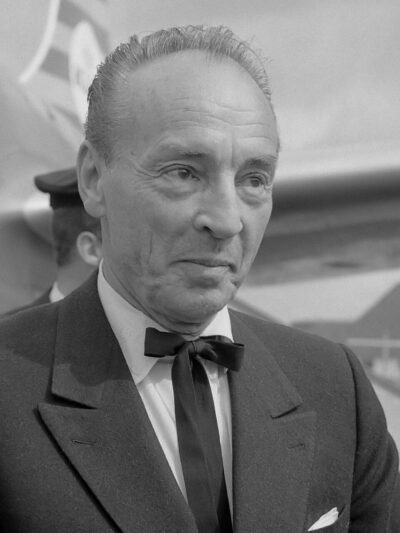
In 1946, Balanchine, 44, asked 21-year-old Tallchief to marry him. They married on August 16, and Balanchine began training Tallchief to become a star. Under his direction, she lost ten pounds, learned how to hold her chest high, and kept her back straight and her feet arched. “My body seemed to be going through a metamorphosis,” she said. Her husband also cast her in technically difficult roles like Coquette in Night Shadow.
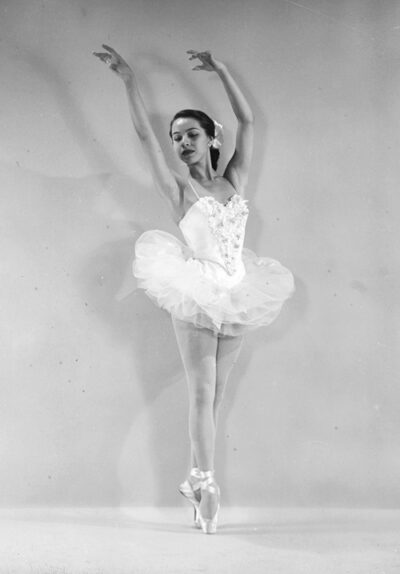
In 1948, Balanchine had been working as a guest choreographer at the Paris Opera, and Tallchief joined him there, according to Mr. B: George Balanchine’s 20th Century. When a lead dancer dropped out of the ballet Apollo just before opening night, Tallchief had to quickly learn the role. The French were not only awed by her performance but also by her Native American roots. “The daughter of the great Indian chief dances at the Opera,” announced one of the headlines.
After the couple’s return to the States in 1948, Balanchine cast his wife in starring roles in the newly created New York City Ballet. As impresario Lincoln Kirstein observed, Balanchine’s ingenuity and perfectionism “revolutionized ballet” with its emphasis on athleticism, speed and aggressive dancing. The most sensational example of his technique was Tallchief’s performance in The Firebird. Her first duet with Francisco Monción brought a “touchdown roar” according to Time magazine.” The Firebird established Tallchief as America’s first prima ballerina.
Maria Tallchief in The Firebird (Uploaded to YouTube by Neryssa Paige)
But success came at a steep price. “Work took precedence over everything and our marriage reflected it. Passion and romance didn’t play a big role in our married life. We saved our emotion for the classroom,” Tallchief said, but added that George was “a warm, affectionate, loving husband.”
To outsiders her life looked successful and glamorous, but that was far from the truth. “We were successful but I was so worn out, I never had the time to bask in the glory. Sometimes happiness was getting out of the studio early enough so that Sammy’s Delicatessen would still be open,” she said in her autobiography.
After the New York City Ballet returned from a London tour, Tallchief and Balanchine announced their separation. They parted amicably and filed for an annulment on the grounds that Balanchine did not want children. In reality, he was in love with another young ballerina, “Tanny” or Tanaquil LeClercq, whom he later wed and cast in starring roles. Tallchief also wed in 1952, but the marriage was short-lived.
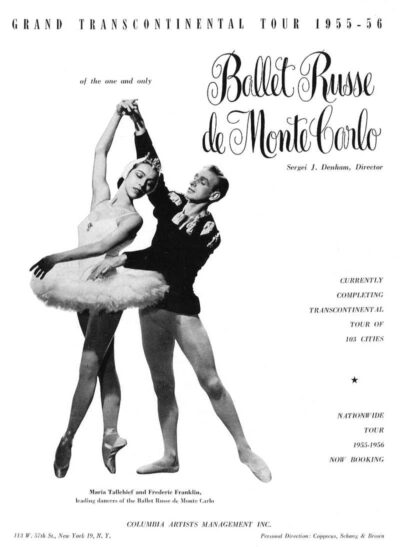
Three years later, Tallchief met Chicago businessman Henry D. “Buzz” Paschen Jr., and married him in June of 1956. In contrast to Balanchine’s solemnity, Paschen was “very happy, outgoing, and knew nothing about ballet,” which Tallchief added she found very refreshing. In 1958, after dancing the starring role in Balanchine’s Gounod Symphony, she took a leave of absence to have a baby with Paschen.
Even after her marriages, Balanchine continued working closely with Tallchief. In 1954, her appearance as the Sugar Plum Fairy in his new interpretation of The Nutcracker was so well received that it became the New York City Ballet’s traditional Christmas event. Among her other outstanding roles was Swan Queen in Swan Lake, Eurydice in Orpheus, and the soloist in Prodigal Son. Allegra Kent, a young dancer in the company who later become a star, recalled admiring Tallchief: “Her foot curled as the music curled, and then it extended as the sounds elongated. She moved quickly and then slowed down so that the endings matched perfectly….She had in iron will inside….She was a silent song.”
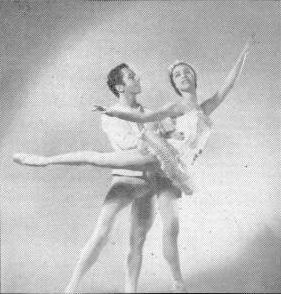
Tallchief performed with the New York City Ballet until February 1960 but also appeared with the Chicago Opera Ballet, the San Francisco Ballet, the Royal Danish Ballet, and the Hamburg Ballet. In 1965 when the 40-year-old ballerina retired from the stage, she settled in Chicago to join her husband. A dedicated advocate for American ballet, Tallchief became the ballet director of the Lyric Opera of Chicago, founded the Lyric Opera’s Ballet School, and in 1981 established the Chicago Ballet.
In 1997 Tallchief wrote in her autobiography that in her retirement she enjoyed living surrounded by nature. There she found it possible to “place the concerns of the ballet in the proper perspective and to appreciate the glory and wonder of my years with George, the phenomenal search for perfection that marked each of our days.”
Honors
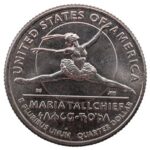
- Maria Tallchief was inducted into the National Women’s Hall of Fame in 1996.
- In 1999, Tallchief was awarded the American National Medal of Artsby the National Endowment of the Arts.
- In 2023 Tallchief was also honored on an American Women quarter.
Become a Saturday Evening Post member and enjoy unlimited access. Subscribe now



.jpg)


Comments
Thank you Nancy, for this insightful deep-dive into Maria Tallchief’s career and life otherwise. She has an absolutely mesmerizing, magical quality she brings to ballet that takes you into a completely different place and space visually and mentally, that truly is out of this world.
Watching the enclosed video from the beginning, I found her to be equally charming and beautiful during the interview portion that had she chosen to, been a successful model. She worked hard and deserved the honors she received. As a guy who knows very little about ballet aside from the ’66 song ‘Pretty Ballerina’ by Left Banke, I’m definitely much more enlightened now.