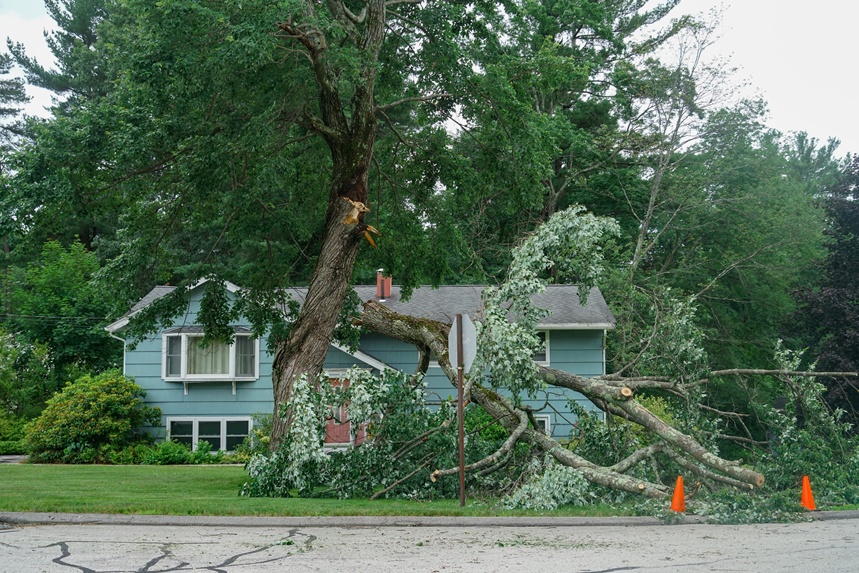
I don’t know if nursery rhymes are different now, but many of the ones I grew up with were creepy. It was hard to sleep after a bedtime story about “four and twenty blackbirds baked in a pie” that sprang to life and pecked a woman’s nose off, or some old woman who lived in a shoe and beat her kids before putting them to bed.
What really got me was the one where a baby gets left in a cradle “on the tree top” and falls when a tree limb breaks. I kept waiting for the verse where Child Protective Services takes the parents away for negligence. I’ve since learned a few things about the cradle-in-a-tree scenario. One is that the story has deep roots in Haudenosaunee (Iroquois) and other Native American cultures.
My old friend Joe Bruchac, an Abenaki storyteller and author, told me that a traditional Abenaki-language lullaby that has a baby rocking in a tree (but no tragic ending) could be the basis for the nursery rhyme. It was common in many Native American cultures, especially the Haudenosaunee, for a mother to strap her infant into a cradle board, the original baby backpack, which was then secured to a trunk or low branch while she tended crops or did other work. This gave the child an adult-eye perspective on the world and kept the child within view.
The other thing I learned is that limb breakage is often preventable, and we can take steps to minimize future storm damage to our trees. As an ISA Certified Arborist since 1996, I admit that no one can predict breakage with certainty. However, a trained eye can spot many potential failures. It’s easier to evaluate the structure of deciduous trees from late fall through early spring while the leaves are off, but a good arborist can gauge the hazard potential of the trees at any time of year.
A key factor in predicting limb breakage is the angle where branches meet the trunk. Although it may seem counterintuitive, the more upright a branch is in relation to the tree, the more likely it will split off during a storm, because there is nothing but bark between the branch and trunk on the “uphill” side of the juncture. But branches that meet the trunk close to 90 degrees (horizontal) have sound wood on all sides of the attachment points, and are far less prone to breakage.
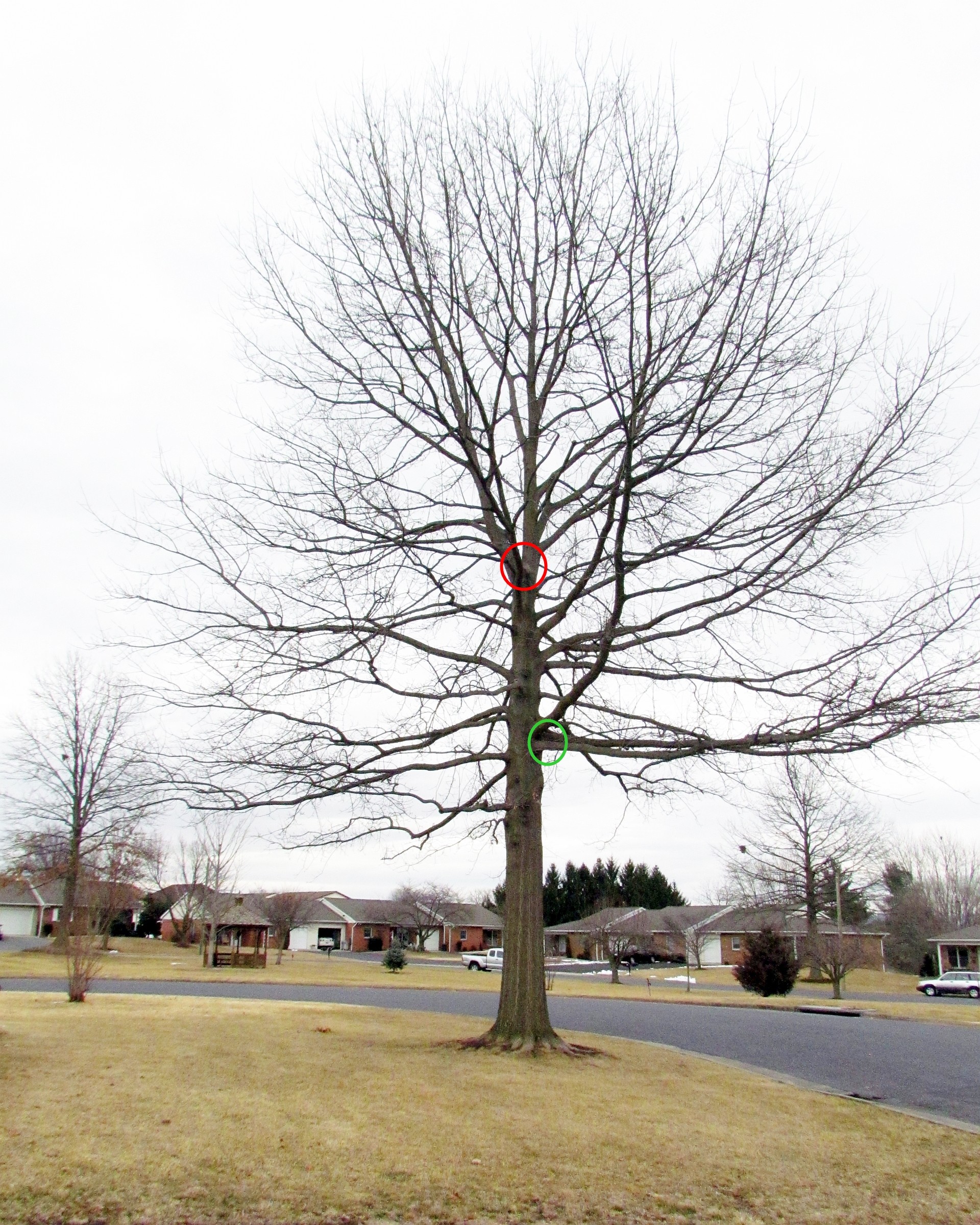
Selective pruning, particularly when trees are young, can favor strong branches and cull out many weak ones. Proper pruning will also remove dead, damaged, diseased, or crossing branches, all of which are more apt to break in strong wind.
But limbs are not the only places a tree can break. If a tree has more than one main trunk, called codominant trunks, they can fail at the trunk-to-trunk union. This is catastrophic for the tree, rendering it hazardous. Needless to say, such failures often result in property damage. Codominant trunks are often weakly attached to one another, as they typically meet at tight angles with only bark (called bark inclusion), and no wood, between them. The good news is that most weak unions can be strengthened with the right kind of supports.
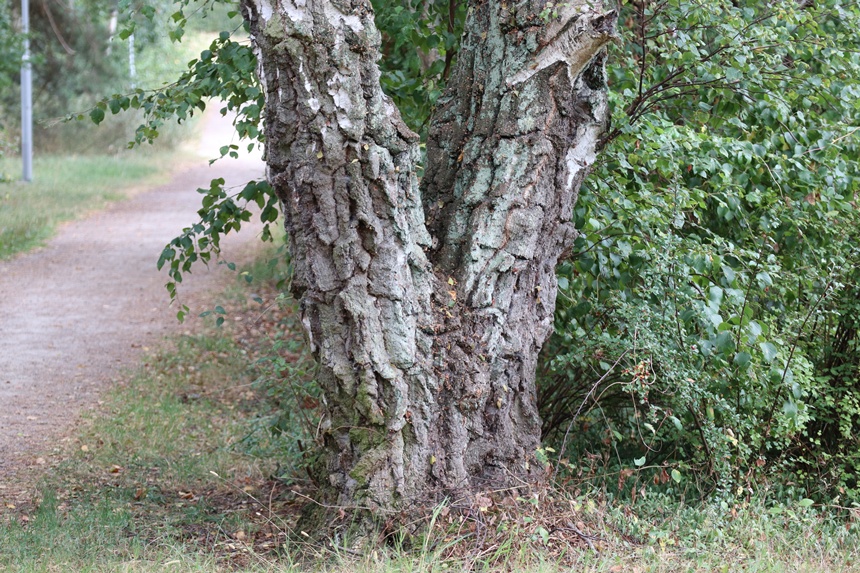
Weak codominant trunks are easy to find once you know what to look for. One of the clearest signs a pair of ears on a fork. I should explain. Trees are “self-optimizing;” that is, they respond to weakness by adding tissue to shore-up the situation. The weaker a union, the more a tree adds wood, in this case outward from the trunk in an “ear” or “clam shell” shape.Another sign is a seam or crack running down the trunk from the union. A crack on both sides of the trunk implies a far weaker union than a single seam. Decay is an important clue as well, but it is not always evident. Conks (shelf fungi) and woodpecker activity indicate serious rot inside.
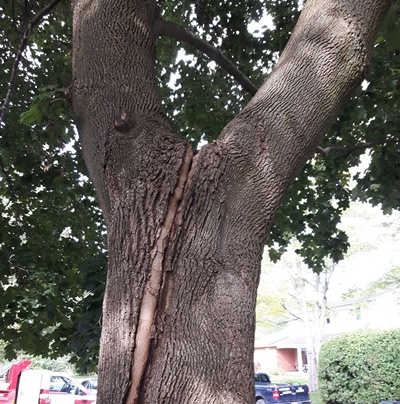
Finding one of these clues is enough to warrant professional advice, but if you see more than one sign, make it soon. So long as a tree is in generally good condition, even the weakest union can usually be stabilized with a cable brace installed two-thirds to three-quarters of the way from the union to the tree top.
When I became an arborist, all cable braces were galvanized steel, but since then the use of synthetic cables has grown. Although there are cases where steel cables are best, the synthetic cable systems let a tree move more naturally in the wind, often employing rubber shock absorbers along their length. Trunk movement is desirable because it stimulates the tree to make stronger wood. Special brace rods are sometimes used at the union itself in conjunction with a cable brace.
Every component in a cable system is load-rated and sized differently for each situation. With all due respect to the capable do-it-yourself folks out there, the wrong cable system is worse than no cable at all. Cabling should only be done by someone familiar with something called the American National Standards Institute (ANSI) A300 standard for cable bracing. This is an important point, as not all tree care professionals provide cabling as a service or know about the ANSI standards. Because a mature shade tree is irreplaceable in one lifetime, and because it’s kind of inconvenient to have a large portion of one “drop in” on you suddenly, I think cabling, when needed, is worth the investment.
The take-home message is that in a lot of cases, breakage-prone limbs and trunks can be identified ahead of time, and pruned or cabled to help prevent failure. And that infants should probably not be left unattended in trees, or exposed to creepy nursery rhymes.
Become a Saturday Evening Post member and enjoy unlimited access. Subscribe now



Comments
You are very welcome! Thank you for caring about trees.
I really appreciate this article. I have lots of trees and have worked with the same arborist for years. I respect him and feel comfortable that I have my trees taken care of. There is a lot of great points in this writing. Thank u!