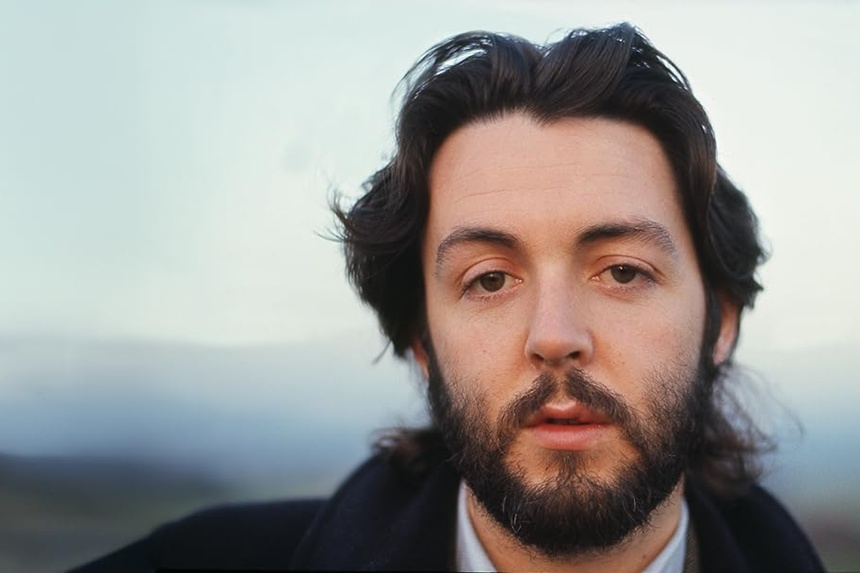
Man on the Run
⭐️ ⭐️ ⭐️ ⭐️
Rating: R
Run Time: 1 hour 55 minutes
Stars: Paul McCartney, Linda McCartney, Denny Laine
Director: Morgan Neville
Streaming on Prime
Nearly 60 years after he was unfairly blamed for the breakup of The Beatles, Paul McCartney is still explaining himself. But so long as his apologia is accompanied by generous helpings of some of the snappiest pop music of the past century, I’m good with that.
Even as I sit here reflecting on McCartney’s new Prime documentary, Man on the Run, I am spinning my vintage vinyl copy of Wings Greatest. And I’ll confess, the infectious licks of “Silly Love Songs,” the ridiculous urgency of “Live and Let Die,” the unabashed sappiness of “My Love” are triggering in me copious levels of dopamine, no doubt leading me to look ever more fondly upon this two-hour, highly curated glimpse of what it was like for McCartney, in 1970, to suddenly realize he was no longer The Cute Beatle (For the uninitiated, John was The Smart Beatle, George was The Quiet Beatle, and Ringo was The Funny Beatle).
The reinvention of Paul McCartney did not go smoothly. The film traces his unmoored months at his Scottish farmhouse, a glorified hut where his wife, Linda, fretted for his mental and physical health. There, he recorded his first solo album on a home tape recorder. McCartney sold well but was considered hopelessly sub-Beatle (although one track, “Maybe I’m Amazed” remains one of his crowning compositions).
Narrating his story, McCartney recalls how he sought to recapture the magic of a rock band dynamic by starting a new outfit that he called Wings. It is the long and twisting saga of that band’s formulation, devolution, rebirth, and frequent reformulation that occupies much of the film’s length (in barely 10 years, the band had 10 official members — only the McCartneys and lead guitarist Denny Laine were there from start to finish).
Of course, there was no way for Wings to sharpen its identity in obscurity, as The Beatles had done in Liverpool and Hamburg. So, the boys and girl boarded a bus and cruised around the British countryside, stopping at college student centers and asking if they could perform a few numbers (the answer was always, unsurprisingly, yes). Among the sweetest moments in the film are band members recalling how each night, after having charged the college kids small change to get in, Wings would gather around a table and split the proceeds (McCartney marvels that, after a decade of having all his finances being handled by accountants, it was the first time he’d actually seen cash money from a gig).
Oscar-winning documentarian Morgan Neville (20 Feet from Stardom) dips way into the film and music archives to help McCartney tell his story, and tell it his way. The movie makes clear (and provides contemporary clips as the receipts) that John Lennon had already left The Beatles months before Paul announced he was out. As for their very public feud, which found Paul suing his ex-bandmates to dissolve their decade-long partnership, whatever momentary bitterness flared up at the time is here written off as brothers engaged in a tiff — and again, Neville supports that perspective with lots of post-Beatle moments in which the lads speak fondly of each other and even recount stories of their behind-the-scenes get-togethers.
Even with McCartney’s production company running things, though, there are some episodes Man on the Run can’t gloss over, and the film faces them head-on. A surprising amount of time is dedicated to Paul elevating his photographer wife, Linda, to a full-fledged Wings band member, despite the uncomfortable reality that she was not a musician or a very good singer. Paul rather unconvincingly defends Linda’s singing prowess (his words are overlaid with a particularly egregious vocal performance from his wife). It’s Linda herself, in an archival recording, who comes closer to the truth: “We love each other,” she says, and that is probably reason enough.
More cringeworthy (and thus a brave inclusion) is a clip of Paul, cornered on a sidewalk, facing questions about the murder of Lennon, which had happened mere hours earlier. His face a blank, his voice flat, McCartney mumbles a few cursory words before ducking into a waiting car. Fans were appalled by Paul’s seeming lack of emotion. But the film turns to Lennon’s son, Sean, to explain that his honorary uncle was suffering from overwhelming shock; that he was trying to process the tragedy even as he was being asked to describe his feelings.
At 82, the writer and co-writer of the most-covered song catalog in history owes no one any explanations for anything. The charm of Man on the Run is, despite that, he feels compelled to put down that bass guitar, brush back that mop of hair, and explain why he still believes in yesterday.
Become a Saturday Evening Post member and enjoy unlimited access. Subscribe now
Comments
Very interesting admission from Paul that he needed to rethink what he wanted to do with his life after his album, his first without The Beatles was not good. This upset him to no end. The time he took to think things through is eye opening. Good film.