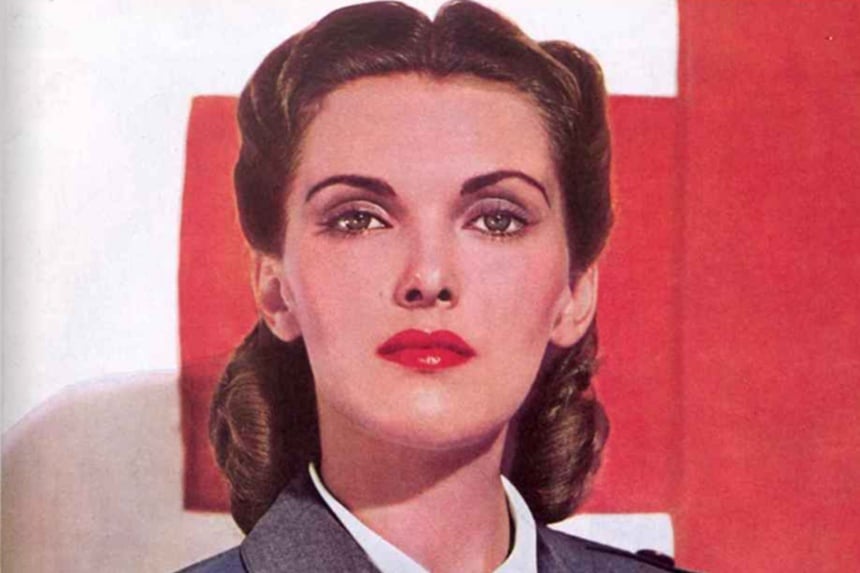
With multiple shades and formulas and a global market value of over $17 billion, lipstick is perhaps one of the most popular beauty accessories in the world. However, lipstick is more than just an accessible means to upgrade one’s appearance. Its history is mired in politics, from being a controversial and even improper product to becoming a symbol of freedom, democracy, and power, especially during times of war and economic crisis.
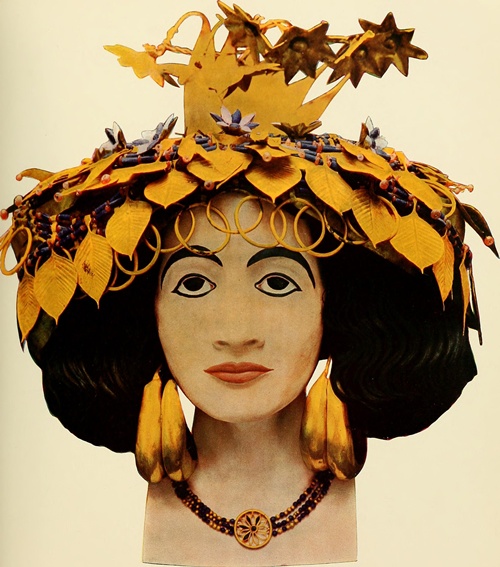
As one of the oldest beauty products in the world, the practice of coloring the lips goes back to Ancient Egypt, when Queen Puabi of ancient Ur wore a mix of white lead and red rocks around 3500 BCE. In the Roman empire, both men and women dyed their lips red to indicate social status.
But the popularity of red lipstick, and makeup in general, declined across Europe during the Medieval period when it became associated with deviancy and sex workers.
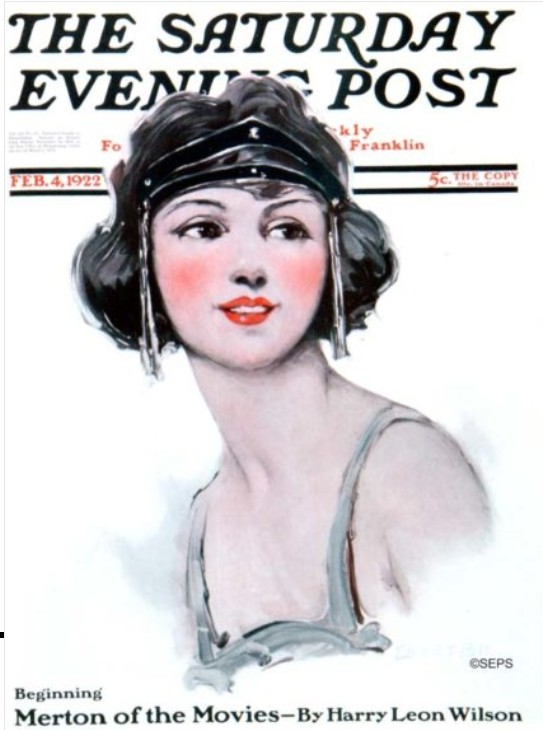
It was only at the beginning of the 20th century, with the rise of the flapper, that lipstick entered the mainstream. With the growing visibility of women in the public sphere, drawing attention by painting your face and lips was no longer seen as “impolite” but as a feminist statement of power. Red lips conveyed boldness, health, and modernity, as young women proudly wore it to claim their independence.
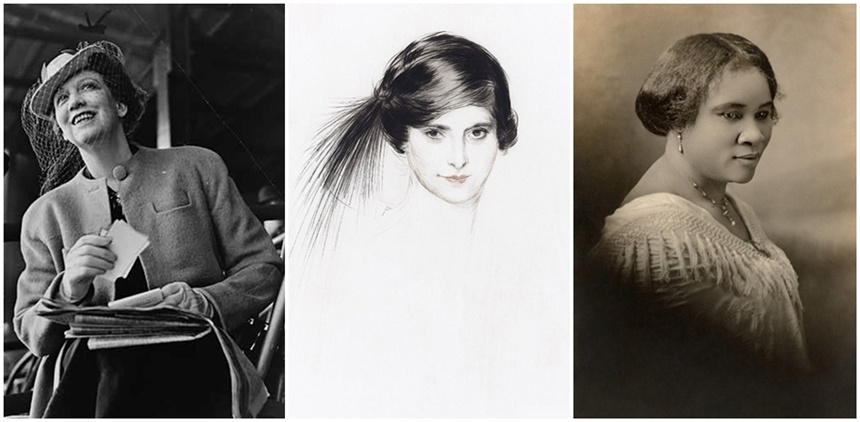
The growing demand for lipstick proved to be a lucrative route for immigrant and minority women to gain economic success. Florence Nightingale Graham, a poor immigrant from rural Canada, and Chaja Rubinstein, a Jewish immigrant from Poland, built their beauty empires by inventing themselves as Elizabeth Arden and Helena Rubinstein. Sarah Breedlove, likewise, who was born in 1867 to formerly enslaved parents, became a millionaire selling cosmetics as Madame C. J. Walker.
But it was World War II that really made red lipstick an icon. Although the disruption of supply chains from Europe and Asia and the allocation of raw material to military use threatened the cosmetics industry, red lips remained a national interest. “Queer things would naturally happen when the American woman’s instinct to be attractive collides with a thoughtless world’s insistence on fighting a war,” warned The Saturday Evening Post in 1941.
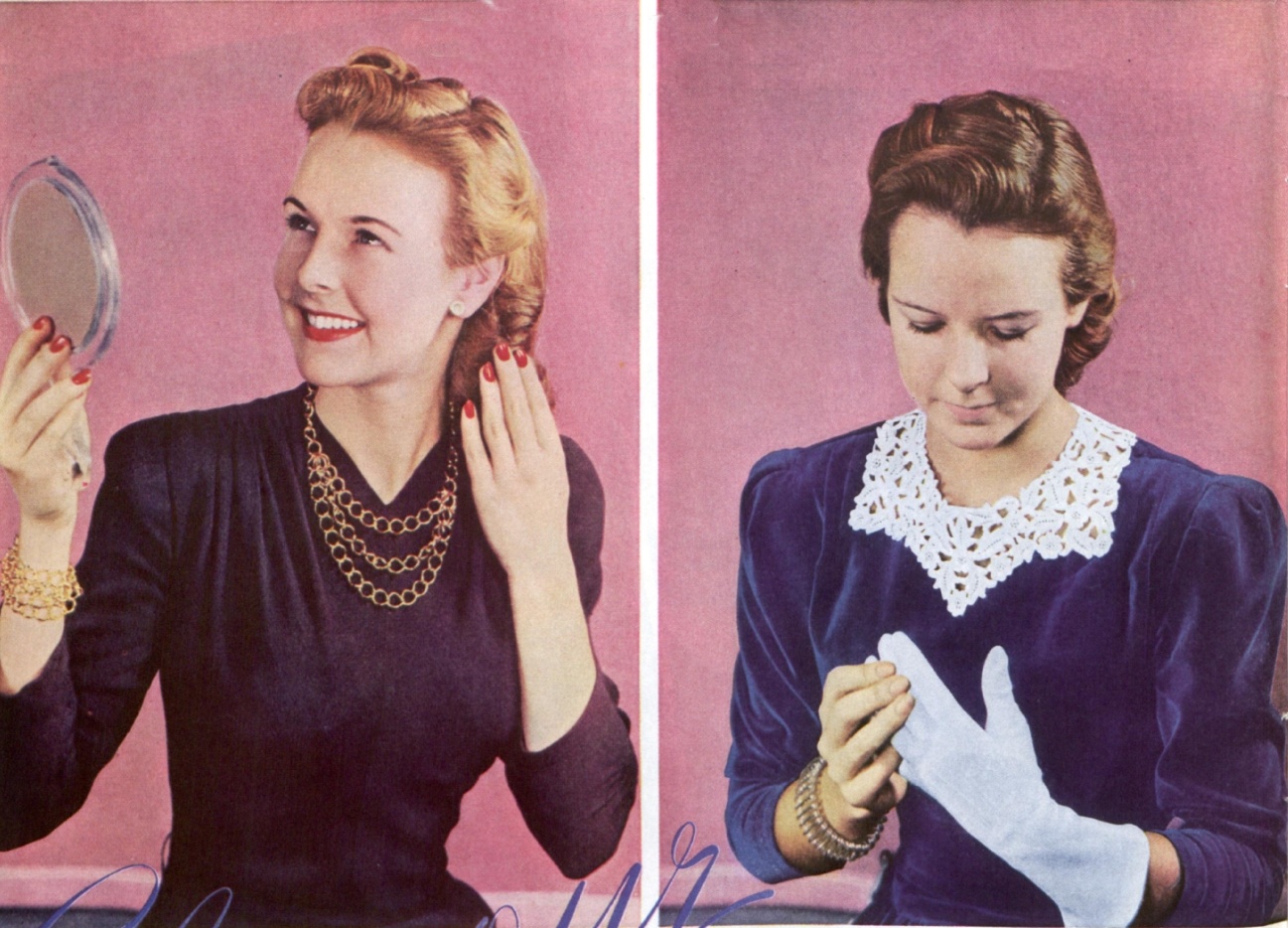
Unlike stockings, girdles, and hairpins, lipstick was not rationed during the war, despite containing dyes and petrochemicals. While women were encouraged to recycle the brass lipstick containers, a metal critical to bullet manufacturing, lipstick itself was designated as a “critical commodity.” Revlon lipstick, for example, began to be packaged in plastic and eventually paper, but other brands adopted a more military look, designing their containers to look like bullets.
Lipstick was deemed essential by the War Production Board not only for women’s well-being but also for the overall national morale and to the allies’ ability to win the war. “It’s Patriotic to Be Pretty!” announced a November 1942 ad in Cosmopolitan, encouraging women not to abandon their beauty routine. “Don’t feel guilty when you buy cosmetics and toilet goods. It’s every woman’s duty to look as pretty as she can.”
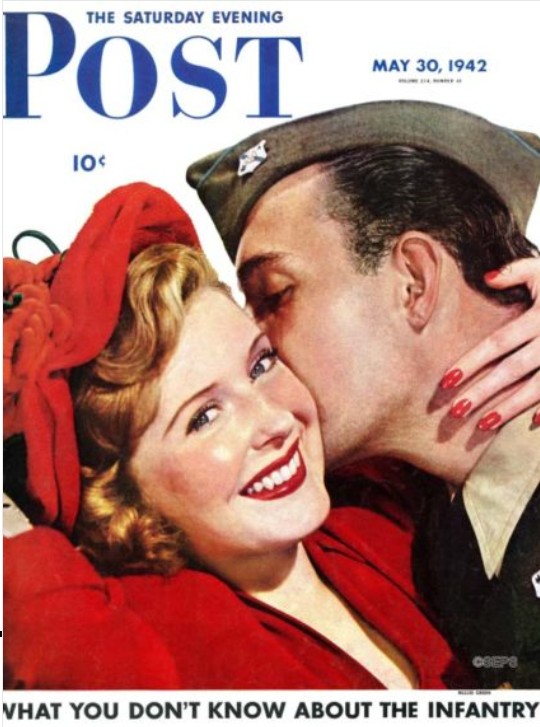
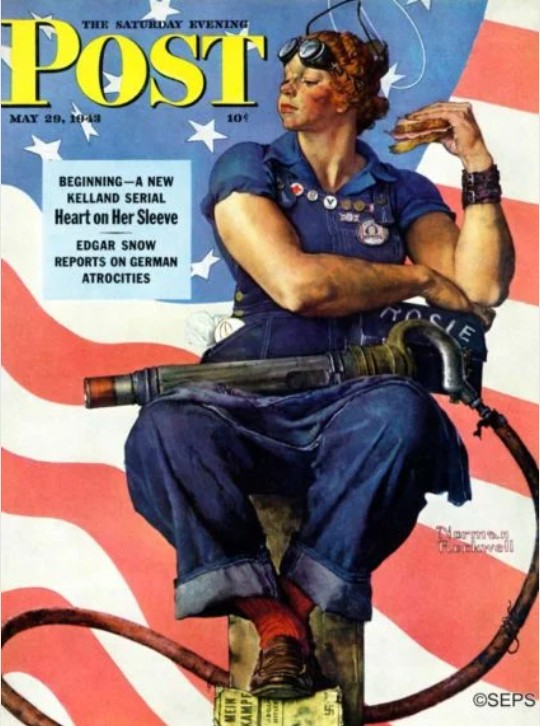
As more and more women enlisted to the war effort, either as volunteers at the Women’s Army Corps (WAC) or as factory workers, they were often barred from wearing heels, frills, and jewelry due to safety reasons. Donning lipstick thus became a way to express their femininity and sexual appeal, even while wearing uniforms, slacks, or overalls. An ad by Tangee argued that “it’s a reflection of the free democratic way of life that you have succeeded in keeping your femininity — even though you are doing a man’s work!” Although welders were prohibited from wearing lipstick, fearing they would trap dust from metal fillings, Norman Rockwell’s Rosie the Riveter clearly exhibited plush red lips.
Bright red in particular became a desirable color. Given that the Nazi regime abhorred makeup, donning red lipstick was seen as a civil act of resistance. For American women, who had more access to cosmetics during the war than their European counterparts, red lipstick became part of their fighting strategy. In an article appearing in The Saturday Evening Post, Elizabeth Arden revealed her “war face” which included bright-red colored lips, in a shade she christened as “Victory Red.”
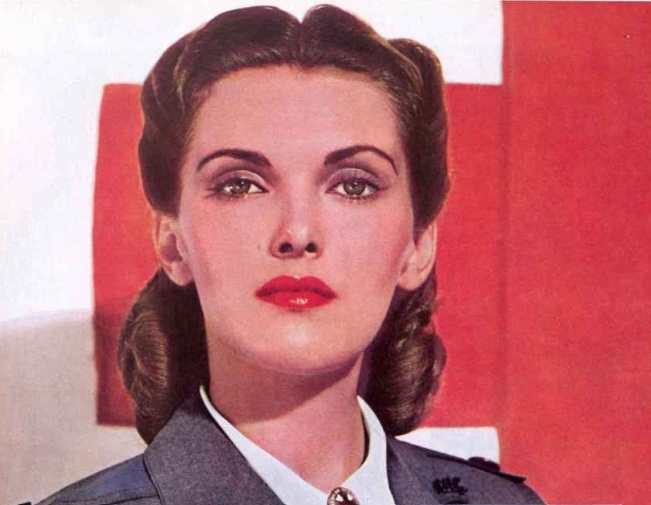
In 1942, Arden came out with a shade she called “Montezuma,” inspired by the color of the hat cord, scarf, and chevrons of the Marines women’s uniforms. Yet as the war kept on, the names themselves were mobilized in the fight. Victory Red was joined by Lois Philippe’s “Patriot Red,” and Helena Rubinstein’s “Regiment Red,” which became the official lipstick issued to women in the WAC.
While lipstick did not win the war, the emphasis it got and its repackaging as a symbol of patriotic pride made it a must-have item in any woman’s purse. Along with ideas of freedom and democracy, beauty — and the right of every woman to feel good about her appearance — became a cause worth fighting for.
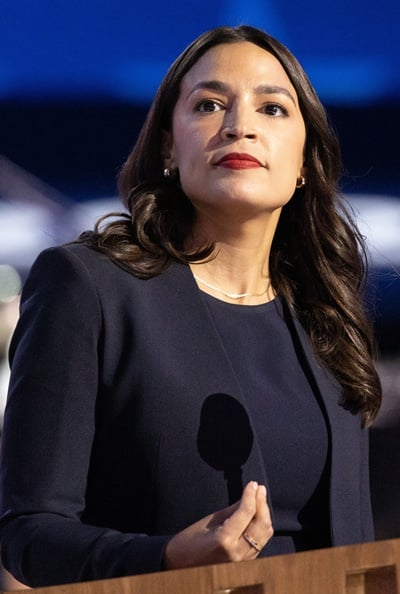
The power of the red lipstick, as well as its political significance, would continue to reverberate long after the allied forces declared victory. Most recently, Congresswoman Alexandria Ocasio-Cortez also made bright red lipstick part of her image. Like the women during World War II, Ocasio-Cortez uses it to evoke ideas of power, democracy, and independence. Her shade, however, is called “Game Changer.”
Become a Saturday Evening Post member and enjoy unlimited access. Subscribe now


_(14580924750).jpg)
_cropped.jpg)

Comments
Dear editor:
Your article on red lipstick failed to mention that women who wore lipstick of A N Y shade were not allowed to use it , or even have a tube of it in pocket-n-purse as the Nazis would quickly decide that this woman/women were with the resistance groups get arrested and/or shot. Hmmm happy those guys were.
The essential definition of anti-feminists.
Sincerely.
Gord Young Peterboro Canada [still not in the 51st state]
Of all the beautiful, smart and intelligent women we have in our country today why would you include AOC in such a historical article about lipstick?