
Nothing in Americans’ lives has changed more dramatically than their life expectancy.
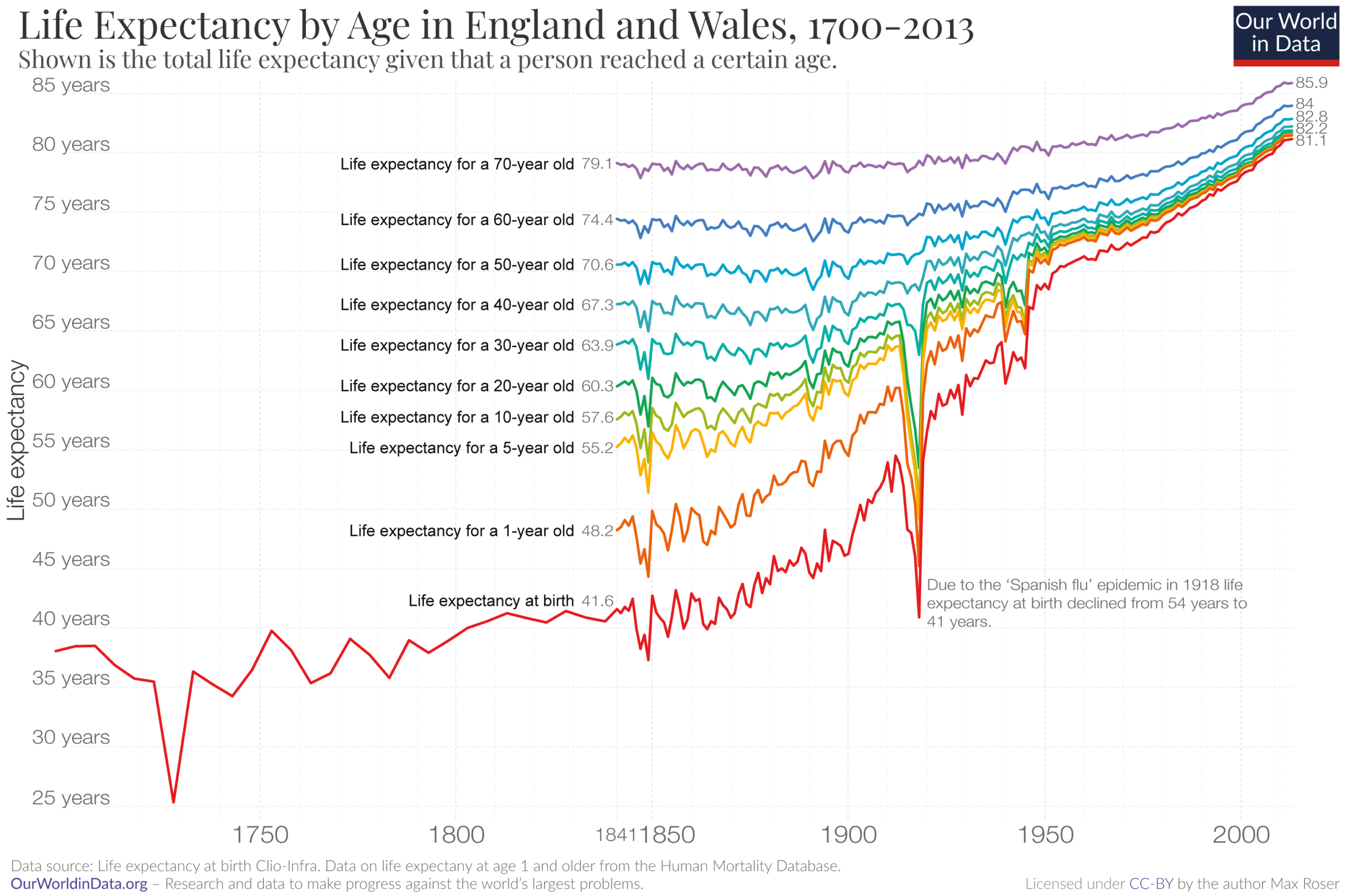
When this nation was formed 250 years ago, the average American lifespan was just 36 years. Certainly there were people older than this average in 1776. Benjamin Franklin was in his sixties during the American Revolution, and Thomas Jefferson built the University of Virginia in his 70s.
What kept the average life expectancy low was the high death rate among children. Ten to thirty percent of them died during their first year of life.
As neonatal care improved, average life expectancy began climbing. But lifespans didn’t just increase for infants. The expected lifespan lengthened for people in all age groups. Starting in 1900, when the average was 47 years, Americans’ lifespans began extending significantly as doctors gained an understanding of how to control disease.
Surgery became safer as surgeons employed sterile technique. Food was prepared in more sanitary conditions. Indoor plumbing helped reduce germs in households. And employers slowly phased out some of their deadlier jobs.
By the year 2020, America’s average life expectancy had reached 73 years. When Covid struck, the average fell back to 72, but has increased yearly since then. Today, it has reached 79 years and five months.
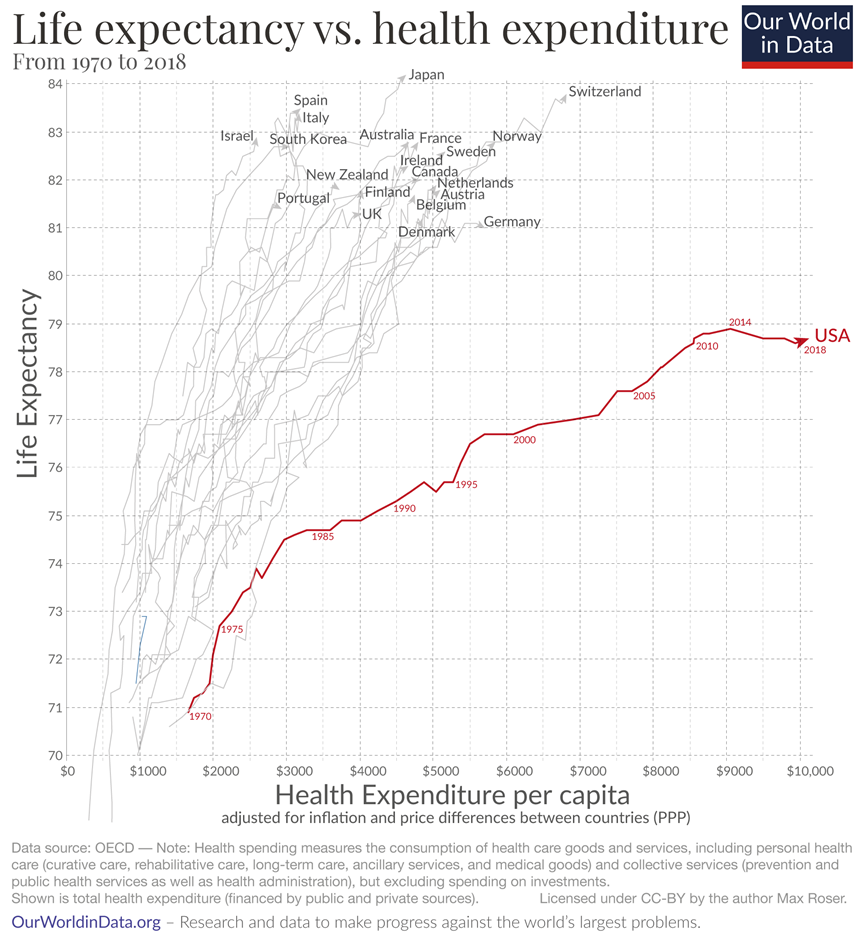
Despite the recent uptick, American increases in longevity are not keeping up with the rest of the world. The world’s life expectancy is predicted add another five years by 2050. China is anticipating an 89-year life span by 2050. But the U.S. life expectancy will have climbed no farther than 80 by that year.
Our average lifespan is already well behind other developed nations. Researchers point to our obesity, physical inactivity, alcohol and drug abuse, tobacco use, homicide, and suicide, not to mention many Americans’ lack of adequate medical care.
Still, our current 79-year lifespan is considerably long by historic standards. It’s certainly more than the biblical “three score years and ten” (70) of Psalm 90, long considered the span of a lifetime. It’s a lifetime that our grandparents and great-grandparents could only dream of.
Some scientists now say life could continue to lengthen. Thanks to a woman in Arles, France, we know it’s possible for a human to reach their 120th birthday.
But how many people will reach this age?
We’ve been able to lengthen our lives by defeating, or controlling, serious illnesses. But scientists have been unable to halt the aging process that wears out our organs, muscles, bones, and nerves. An article in Nature Aging notes that scientists haven’t slowed down the signs of aging: frailty, dementia, heart disease, and sensory impairment.
Even countries with the longest life expectancies have seen their progress in extending life slowing down. Scientists think that 85 years will be the highest number that average life expectancy will reach. In Hong Kong, which has the world’s longest-lived population, researchers have determined that only 12.8 percent of girls and 4.4 percent of boys are expected to reach 100 years of age.

Yet there is much talk about more people reaching their 100th birthday. It may seem more likely because we hear more often about people hitting 100. In 2020, the United Nations determined there were 573,000 centenarians living in the world — more than 20 times the number from 1970.
But despite the apparent rise in the number of centenarians, the chances of a 65-year-old man reaching 100 is just 3 percent. For women it’s 6 percent. Women and men currently at age 25 will have a 10 percent and 6 percent chance, respectively, of reaching this goal.
While may not see our own centennials, the good news is that the old age we do experience will be a lot healthier than it was for our ancestors. Americans have slowed the pace of their aging by reducing obesity, quitting smoking, curtailing their drinking, and getting regular exercise. Laura Carstensen, a professor at the Stanford Center on Longevity, predicts Americans will change how they live their senior years. Rather than extending our old age, we’re lengthening our middle age.
Become a Saturday Evening Post member and enjoy unlimited access. Subscribe now



Comments
What a great article and personally I feel like my granddaughter’s generation (she’s aged 14) could reach a 85-90 year life expectancy. The only drawback I might see might be stress-related due to a high-paced, ever-changing technological world. I do believe stress and maybe being unable to handle it properly can lead to an early passing. For me, it definitely contributed to my heart attack at age 48. It was a major factor to my ex-father-in-law’s early passing at age 47. For him, he had to deal with his domineering spouse (FTR my ex-mother-in-law was a real bitch who thrived on controlling everyone around her.) and his demanding job as a grocery wholesales representative where it was not uncommon to see him working weekends planning his stops for the following week and spending as much as 300 miles a day working 12 hour days on the road. Anyway he was a good guy who deserved better.
So my message here is stress kills unless you have it under control and know how to deal with it putting it in its place on a daily basis. Even the greatest medical advances can’t control stress. That’s up to you. Stay active physically & mentally. Exercise. Surround yourself with positive friends who enjoy the things in life with you. Dance like you’ve never before. Who cares if anyone is watching? You certainly shouldn’t. Sing like you’ve never before. Who cares if no one likes your song or your singing? Your heart certainly will. Teach children lessons in life they can take with them and apply for the rest of their lives. Be positive and be a positive, upbeat influence for others. In summation: “Don’t Worry. Be Happy.”