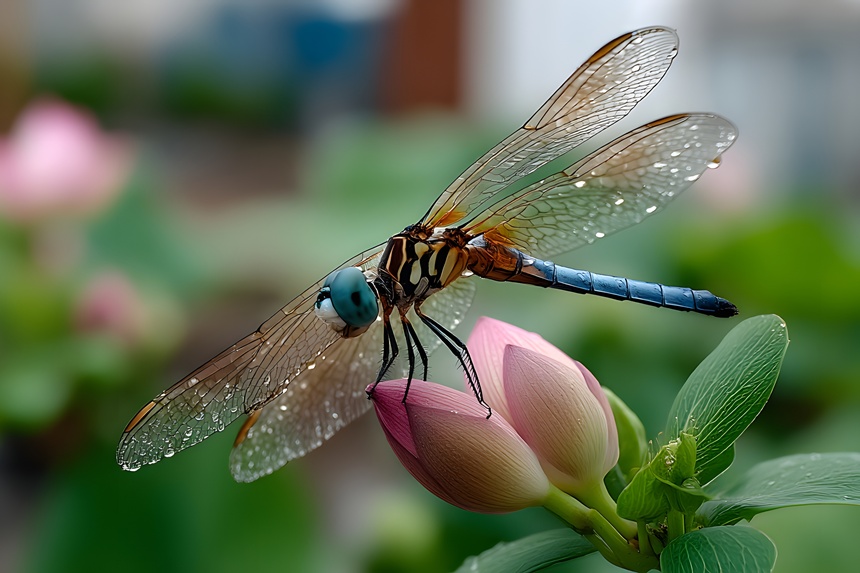
The sudden appearance, en masse, of meat-eating, airborne insects with wingspans up to six inches across does not sound like welcome news. Because usually when the topic is bugs and descriptions range from “invasion” to “infestation,” it applies to bad actors: locust swarms that can decimate farm crops, cockroaches that can overrun our living spaces, spongy-moth caterpillars that strip forests of leaves and needles – the list of troublemakers is long.
However, damsels and dragons are exceptions. Damselflies and dragonflies, carnivorous insects in the order Odonata, date back more than 300 million years. Found worldwide on all continents except Antarctica, both insects eat literally tons of black flies, mosquitoes, and deer flies each year, which accounts for their status as “good guys.” In the U.S., we have an estimated 450 species of damsels and dragons. As a kid I was told that it is good fortune if one lands on you, but the luck is probably that they terrify biting insects.
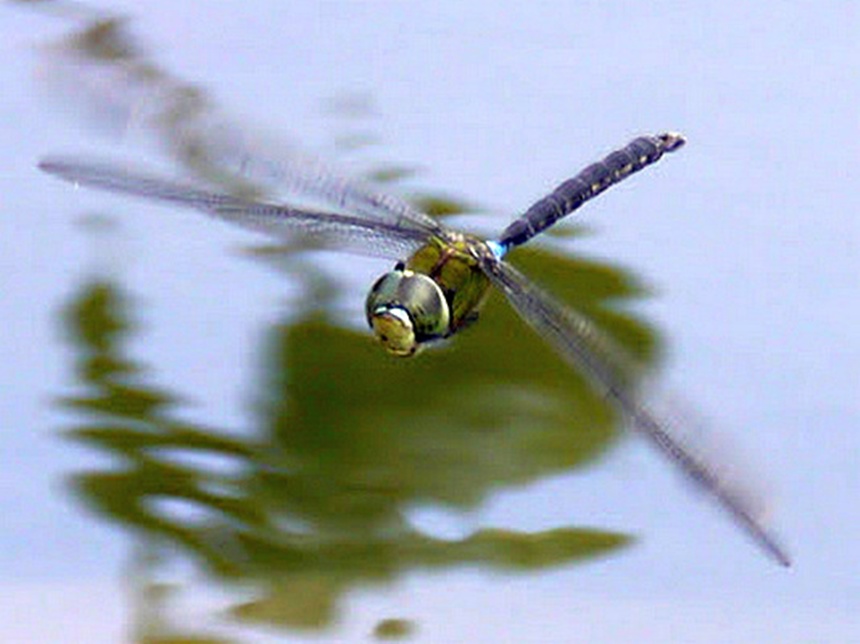
Dragonflies, powerful fliers, can be so large they can look like a bird at first glance. The largest species in the U.S. is the Giant Hawaiian darner, which has a wingspan of five to six inches across. At rest, dragonflies keep their wings outstretched, and a line of them basking in the sun make me think of planes queuing up on a taxiway. A dragonfly’s front pair of wings is longer than its two hind wings, which is one way to tell them from damselflies.
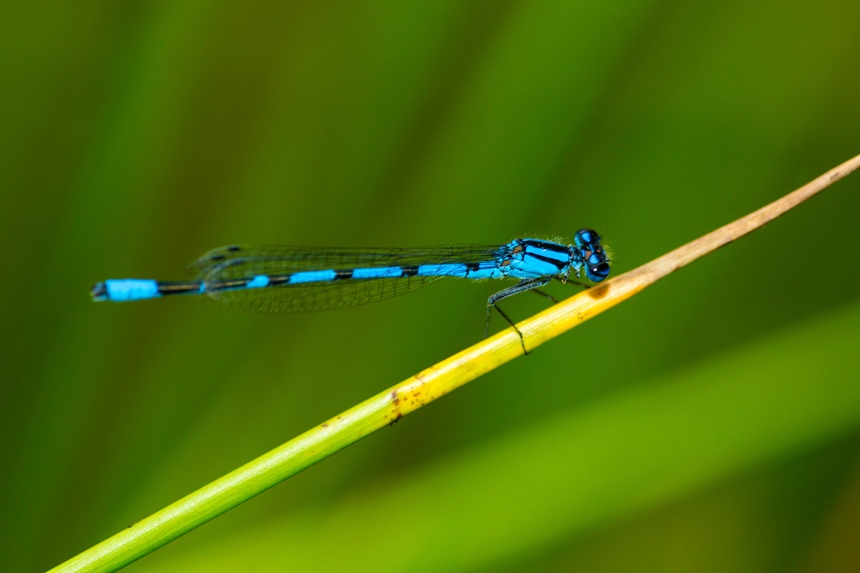
Damselflies are more slender than dragons, and in damsel-like fashion, fold their wings primly along their bodies while at rest. Although many dragons are colorful, damsels tend to outshine them with bright, iridescent “gowns.” In some areas, damselflies are called darning needles, and even the scientific literature is full of poetic damselfly names such as “beautiful demoiselle,” “variable dancer” and other descriptive titles.
While dragonflies and damselflies have global distribution, I think that they are more American than apple pie. Only Vermont has adopted the apple pie as its official state food, but Alaska, Nevada, and Washington have designated either a dragonfly or a damselfly as their state insect.
The reason that so many damsels and/or dragons can appear at once is that they often have a mass emergence from a given body of water, based on temperature. It surprised me to learn that they spend most of their life – from one to three years – as an aquatic form called a nymph, a fierce predator of the larval stages of mosquitoes, horse flies, and deer flies, all of which develop underwater. Although adult dragonflies and damselflies eat lots of black fly adults on the wing, most black flies develop in fast-running water that isn’t favored by odonates.
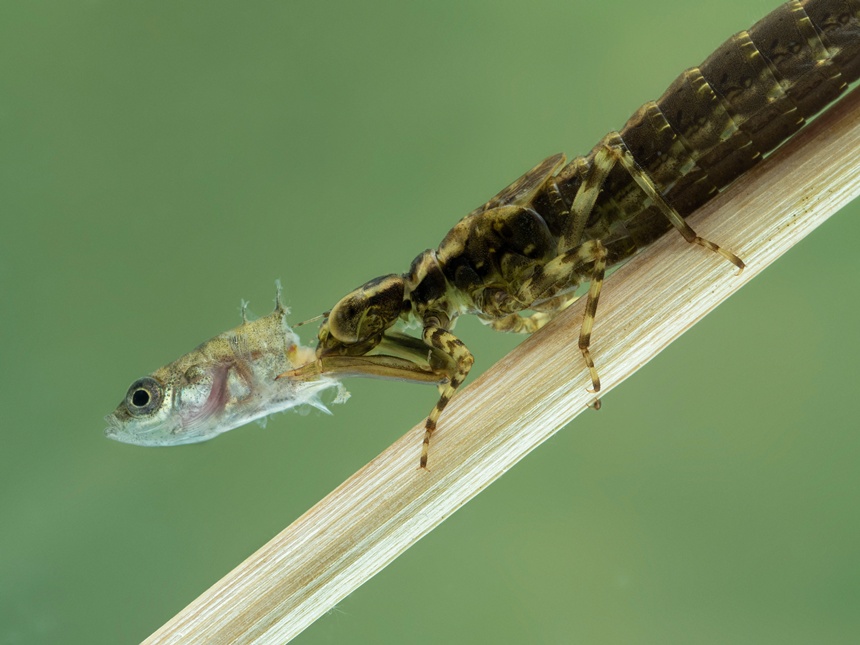
Damsels and dragons lay their eggs right in the water or on vegetation near the edges of streams, rivers or ponds. The juveniles, called nymphs, are monster-like with little resemblance to their parents. You can get a sense of what their choppers look like if you watch the movie Alien. When magnified, you can see the primary jaws of dragon and damselflies open to reveal a second, and in some species a third, set of hinged jaw-like palps. The only detail missing is Sigourney Weaver.
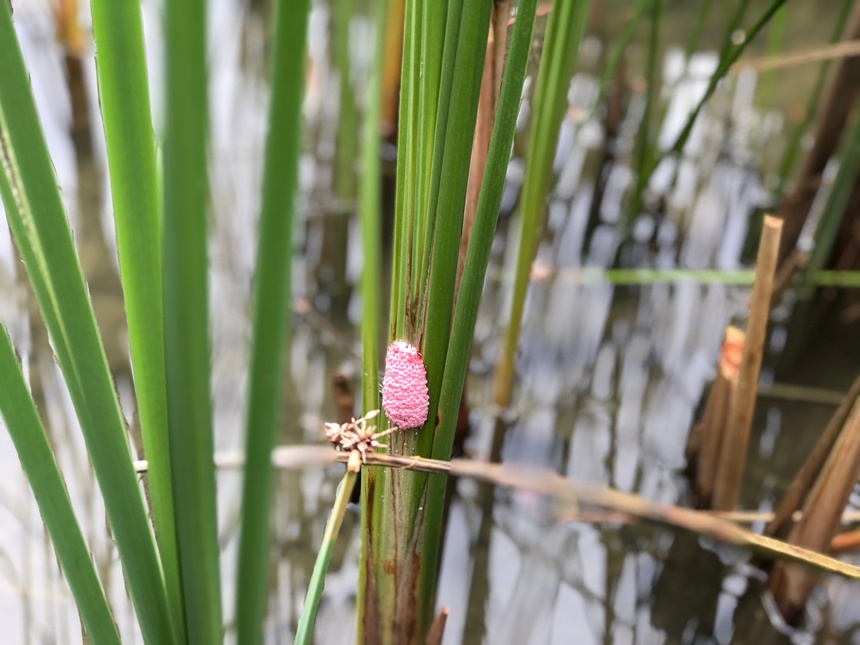
Damsel and dragon nymphs spend between one and three years underwater where they gobble the soft grub-like larvae of deer flies and horse flies hiding in the mud. They also munch on ’skeeter larvae near the surface, growing larger each year. Depending on the species, a dragonfly nymph can be as long as the width of your hand. Nymphs don’t pupate like caterpillars, flies, and most other insects do. They mature through what’s called incomplete metamorphosis, drastically changing their body form without entering a pupal stage. When dragons and damsels are full-grown nymphs, they crawl from the water, anchor their “toenails” or tarsal claws into a handy log or boat dock, and open their skin along the center of their backs.
A dragonfly metamorphizing from a nymph (Uploaded to YouTube by Smithsonian Channel)
Outdoing any sci-fi film, a graceful dragon or damsel metamorphoses from its monster-skin. After drying its new wings in the sun for a while, these killing machines fly off to eat pests, and also to mate in a precise and complex choreography. Fortunately, dragonfly and damselfly populations are not at risk, even though plenty are killed on vehicle grilles each year.
It is impressive enough that a fat, striped monarch caterpillar sews itself into a gold-flecked membrane, dissolves into green soup, and emerges two weeks later as a regal butterfly. Dragonflies, though, change within a matter of hours from a water-dwelling creature with gills into an air-gulping high-performance biplane. It’s like having a carp unzip its skin and step out as a bald eagle.
Because it is triggered by temperature, this extreme makeover happens to a particular dragonfly or damselfly species in a given pond nearly all at once. They emerge within a day or two of their age-peers, making it seem as though they materialized out of thin air, or were dropped as a group out of a plane. Some species emerge in early spring, while others have different schedules. Some even mature in the fall.
For many years I was the horticulture and natural-resources educator for Cornell Cooperative Extension (part of the nationwide Extension system) of St. Lawrence County in northern New York State. Right after the first really big odonate emergence of the year, often in late spring, I would inevitably get some calls and emails from folks who were convinced that New York State, or sometimes Cooperative Extension, had released a plane-load of dragons and/or damsels to control biting insects.
I loved that job but left it to be with my Canadian wife full-time, moving to Canada in 2019. It turns out that some Canadians also think a benevolent agency releases dragonflies each year. A retired Ministry of Natural Resources biologist told me that he gave up trying to explain the real reason to people, and simply took credit, saying something like he was happy to help. Wish I had thought of that.
Become a Saturday Evening Post member and enjoy unlimited access. Subscribe now



Comments
What an incredible feature, Paul. I’m not a fan of regular flies, but these dragons and damsels are beautiful and fascinating exceptions. The Bluet damselfly especially. What a shade of blue, and that it’s in sections like that. Still, I think they’re all best appreciated right here.
Good catch! It’s been fixed.
It’s A bald eagle, not AN bald eagle.