Since the dawn of Hollywood, watching for impending box office bombs has been something of a spectator sport. Whether it’s wild rumors or mother nature playing havoc with sets or just plain overspending, we’re fascinated by what seems like a disaster in the making. However, some movies that seemed doomed to fail not only emerged as good, solid films, but landmarks in movie history.
Jaws (1975)
Jaws trailer (Uploaded to YouTube by Rotten Tomatoes Classic Trailers)
Steven Spielberg’s Jaws broke ground (or is it waves?) by being the first major motion picture to film on the actual ocean. That bold step turned out to be an enormous pain. Aside from ongoing mechanical problems with the sharks built for the production, the unpredictable nature of the ocean caused filming delays and budget overruns. The original shooting schedule target of 55 days turned into 159 days. Even Spielberg thought his career was doomed. However, the delays allowed for the script to be refined, and Spielberg worked around the malfunctioning sharks by limiting how much time “Jaws” was seen on screen, a decision which had an enormous impact on inflating the tension. Though many prognosticators saw doom for the difficult project, it was so successful that it ushered in the age of the summer blockbuster.
Titanic (1997)
One of the major rules of Hollywood at this point should be: Don’t bet against James Cameron. From 1984 to 1994, he had a stunning run that included The Terminator, Aliens, The Abyss, Terminator 2: Judgment Day, and True Lies. Despite all of that, there was doubt surrounding Titanic. Some of that centered on the difficulty of shooting with water (something Cameron experienced with The Abyss), and some was the hyperfocus that the media placed on the very large budget. So large, in fact, at $200 million, that 20th Century Fox partnered with Paramount Pictures to share the burden. Some critics predicted that the film was going to be a costly boondoggle. And then it opened as a worldwide phenomenon, eventually pulling in over $2 billion and earning 14 Academy Award nominations; it won 11, including Best Picture, Best Director, and Best Original Song for Celine Dion’s omnipresent “My Heart Will Go On.”
The Godfather (1972)
The Godfather ran into all kinds of obstacles on the way to the big screen. Paramount approached several directors who passed because they feared they would be romanticizing the mafia. Sergio Leone simply opted to make his own crime film (Once Upon a Time in America). But the studio finally locked in with Francis Ford Coppola. However, the shoot was not all sunshine and roses. Fights over budgets, scheduling, and even how much Coppola was shooting each day were the norm. Finally, studio exec Robert Evans intervened, allowing Coppola to fire both the editor and assistant director that were at the center of several clashes. By the time that the movie was finished, Coppola delivered an Oscar-winning American classic.
John Wick (2014)
John Wick trailer (Uploaded by Rotten Tomatoes Trailers)
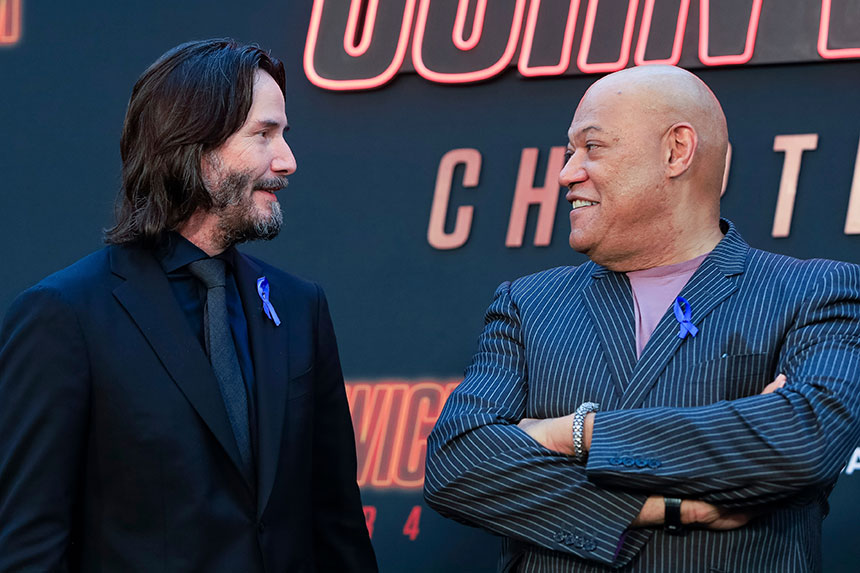
No one outside of the creators and craftspeople who put together John Wick thought that it was going to be a hit. Star Keanu Reeves was seen as a weak box office draw, and co-directors Chad Stahelski and David Leitch were dismissed by some because they were rookie helmers from a stunt background. After being passed over by other studios, Lionsgate Films picked up distribution. Unexpectedly, Wick opened with a bang, and word of mouth fed its rapid ascent. After that, it was multiplication; the first film made four times its budget, the first sequel doubled the take of the original, the third film nearly doubled that, and the fourth Wick made $100 million more than the third.
Pirates of the Caribbean: The Curse of the Black Pearl (2003)
The notion seemed silly on two fronts: Pirate films after the 1940s had a history of tanking at the box office; and the very idea of a major motion picture based on a theme park ride was preposterous. It was considered a big risk for Disney, given its $140 million budget. Word on the inside was that Johnny Depp’s performance was, well, weird. And yet, when the first trailer dropped, featuring a mix of humor and horror with Depp in full Captain Jack Sparrow mode, buzz built. The film ended up netting over $654 million at the box office and set off a string of sequels.
Gone with the Wind and The Wizard of Oz (1939)
Books have been written about the crazy production stories behind both GWTW and TWOO, but possibly the craziest thing is that both films were (mostly) directed by the same person. Victor Fleming came on board Oz to steer the ship and had to leave early to rescue Wind. Oz famously had many issues, including Buddy Ebsen’s withdrawal from the Tin Man role after the make-up made him sick and Margaret Hamilton’s severe burns during an errant effects scene that forced her off the set for weeks. Prognosticators eyeing the two MGM productions thought that disaster was in the offing. Wind, however, was a box office juggernaut upon release, and Oz emerged as one of the most beloved family films of all time. The lesson remains that making any art of value is frequently messy.
Snow White and the Seven Dwarfs (1937)
Critics called it “Walt’s Folley.” The very notion that someone would make a feature-length animated film and expect the audience to sit for it was widely derided when Walt Disney announced his ambition to make Snow White. However, all the naysayers were silenced when the instant classic lit up the screen. Walt proved that not only would audiences sit for feature-length animation, but that they would do it in larger and larger numbers over the decades.
And One More . . .
Fifty years ago in March, filming got underway for a risky project in Tunisia. The director had one hit under his belt, as well as one weird arty, experimental thing. The studio considered the project something of a longshot, and much of the cast didn’t really understand the script. From the beginning, the production was plagued by weather delays and important props that wouldn’t work. When the filming shifted to Britain, the crew often clashed with the director over work times and his seemingly odd way of doing things. By the time that principal photography was done, the director was mortified that the special effects team he had assembled barely had any usable stuff. He had to reorganize the department and drive the crew to get everything done. The first assembly cut was a mess, so the director had to get three editors, including his own wife, onto the assignment to make a coherently structured piece. Facing cost overruns, the studio reluctantly gave another million dollars to get the movie finished. Nobody behind the scenes really got it until they saw the first scene with completed effects and music. The seemingly doomed project didn’t just resonate with audiences; it became a cultural phenomenon. The name of that movie with the $11 million budget? Star Wars.
The original Star Wars trailer (Uploaded to YouTube by The ReDiscovered Future)
Become a Saturday Evening Post member and enjoy unlimited access. Subscribe now