April showers bring May flowers, but in my world, May also heralds Gemini season: a reminder that holding multiple truths builds character. That mindset comes in handy when evaluating No Mow May, which urges homeowners to skip the mower in the name of pollinator conservation. The concept is appealing, accessible, and well-meaning. It’s also more complicated than the yard signs suggest.
Originally launched in the U.K., No Mow May entered the U.S. through Appleton, Wisconsin — where some of the earliest and most influential supportive research was later retracted, highlighting how quickly catchy slogans can outpace evidence. That tension makes No Mow May worth examining, not as a win or failure, but as a case study of good intentions meeting ecological reality.
At face value, the idea is easy to love. Research supports the basic premise: A 2018 study of suburban Massachusetts lawns found that less mowing increased the presence of flowers and bees, particularly in early spring. Importantly, the biggest gains did not come from abandoning mowing altogether, but from mowing less often — a “lazy lawnmower” approach that favors moderation over extremes.
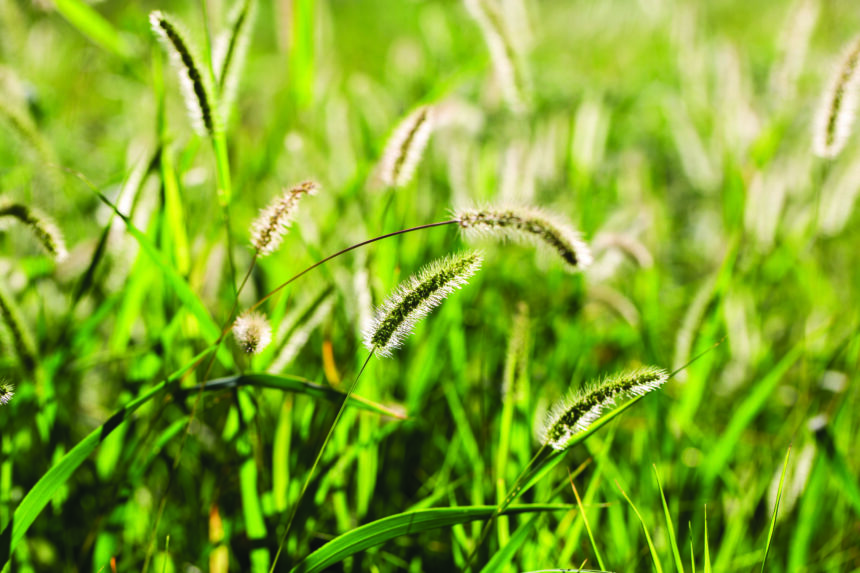
What often goes unasked is what is blooming, an important distinction if the goal is lasting habitat rather than a short burst of spring forage. In typical American yards, reduced mowing generally reveals a familiar mix of hardy, non-native species adapted to turfgrass systems.
More recent research has raised concerns that broad social campaigns like No Mow May can flatten this complexity, prioritizing visibility and participation without necessarily improving ecological function. A 2024 turfgrass study evaluated No Mow May not as a biological panacea, but as a social movement and found that while such efforts can shift norms and spark participation, they do not reliably translate into higher-quality habitat.
In other words, No Mow May excels at awareness. As a habitat strategy, it’s limited. By focusing on when lawns are mowed rather than what they are made of, such well-meaning movements risk reinforcing turfgrass systems that seem pollinator-friendly without providing the structure insects need.
The limits of that approach are not just theoretical. In Superior, Wisconsin, city leaders formally embraced No Mow May in 2022, only to revise the policy after residents and officials wrestled with what it looked like on the ground after a wet, early spring. By 2025, the city had transitioned toward a more flexible “Slow Mow Spring,” trading a blanket pause on mowing for a moderated model. The change did not reject the science so much as refine it, echoing the research. In practice, Superior’s pivot reflects a broader lesson: when conservation slogans meet real neighborhoods, nuance tends to follow.
Entomologist Doug Tallamy has long argued that the most effective shift is not skipping a month of mowing but shrinking lawns and replacing turf with native plants that support insects throughout their life cycles. That philosophy embraces nuance rather than absolutes, and is one I have adopted in my own yard.
Part of my yard goes completely unmowed: My side yard hosts my “Sedge Sanctuary,” a low-growing mix of native sedge species, wild strawberries, and Virginia creeper that only works because the turfgrass was removed and replaced intentionally. Other areas have been converted to native plantings. The rest of the yard? I mow it — even in May — and I enjoy it. In fact, mowing on June 1 has become an annual birthday tradition for me.
With No Mow May, holding multiple truths turns out to be the point. Conservation does not have to mean neglect, and care does not have to look the same everywhere. Oftentimes, the best backyard is one designed to need less mowing — and one where mowing is still a choice.
—Mary Margaret Moffett is an ecologist and Advanced Indiana Master Naturalist
This article is featured in the May/June 2026 issue of The Saturday Evening Post. Subscribe to the magazine for more art, inspiring stories, fiction, humor, and features from our archives.
Become a Saturday Evening Post member and enjoy unlimited access. Subscribe now