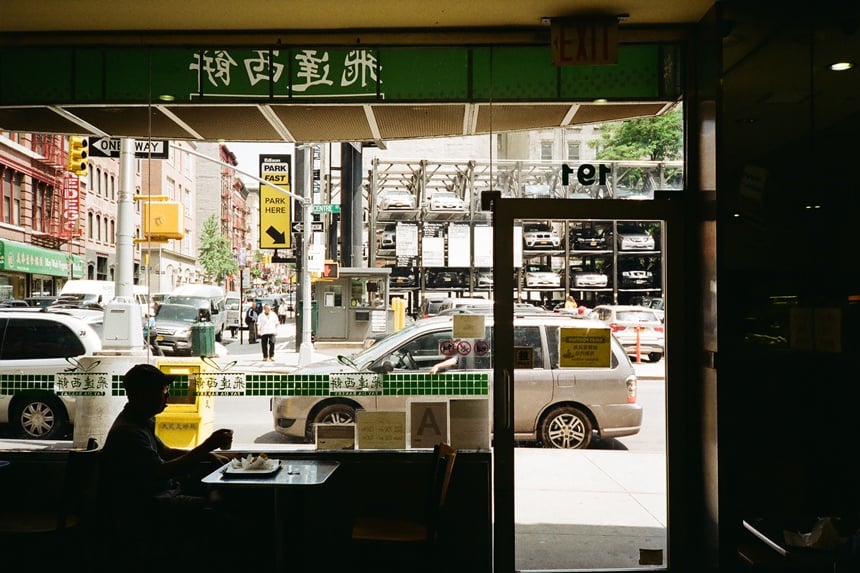
Growing up, I would frequently visit Manhattan’s Chinatown with my family to collect an assortment of bao, or buns — good for an on-the-go breakfast or savory snack. One sweltering July afternoon, while waiting outside for my dad to finish choosing which pastries caught his eye, my sister grabbed me by the hand and bolted down the sidewalk. Weaving through fruit hagglers and leisurely tourists, I was transfixed by the passing storefronts — an array of pawnshops, hair salons, dessert shops, and boutiques, each owned and operated by a local Chinese family.
As we got lost in the bustling downtown streets, my heart swelled with pride and contentment. Chinatown, situated at the intersection of Chinese and American culture, melded together disparate worlds; ones I grew up feeling sandwiched between as a second-generation Chinese immigrant.
Today, these neighborhoods, home to generations of Chinese Americans, are known as sites of community engagement, mutual aid, and heritage preservation. They are pockets of wisdom and culture where many Chinese Americans find comfort and support. Scholars Michael Liu and Kim Geron recount the familiar Chinatown origin story in their 2008 article “Changing Neighborhood: Ethnic Enclaves and the Struggle for Social Justice”: Chinatowns as “centers where new immigrants lived and worked together, shared resources, built social and political organizations, and nurtured distinctive social and cultural lives.”
But, having known the environment my father and his family entered when moving to North America, I knew the Chinatowns that exist today were the products of hardship. Chinese communities were restricted to the very streets where our nation’s Chinatowns are found today. Though later these enclaves evolved into prominent cultural centers, its beginnings stemmed from both community and confinement.
It was on the American brig Eagle that the first Chinese immigrants docked in the San Francisco Bay. A trio of impoverished silk merchants fled Guangdong in 1848 to escape the Taiping Rebellion, one of the bloodiest civil wars in human history, resulting in over 20 million deaths. China’s domestic circumstances, which also included the Opium Wars and the Punti-Hakka Clan Wars, prompted an exodus among struggling Chinese civilians. These earliest Chinese immigrants weren’t searching for economic prosperity, but for survival.
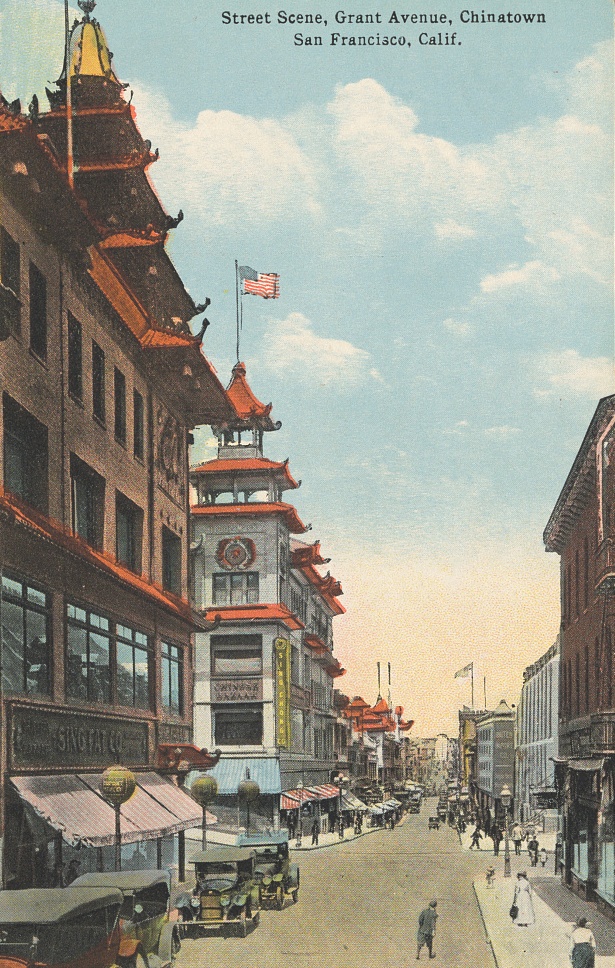
America had yet to become a popular destination for migrants; at least until gold appeared the following year in a river near Sutter’s Mill, a hundred miles south of San Francisco.
News of Gam Saan — “gold mountain” in Cantonese — quickly reached Guangdong, exciting other struggling peasants that dreamt of starting anew. And soon, a budding Chinese population appeared along America’s West Coast. Not all arrived, however, to participate in the gold rush. Those looking to flee domestic strife were willing to take on any work, with many joining the mining, construction, and agricultural industries. The daily service sector, including hotels and restaurants, sought to rebuild their unskilled labor force (after many quit in search of gold) with Chinese migrants. Language barriers also forced immigrants to create work for themselves, building a thriving economy helmed by Chinese businessowners.
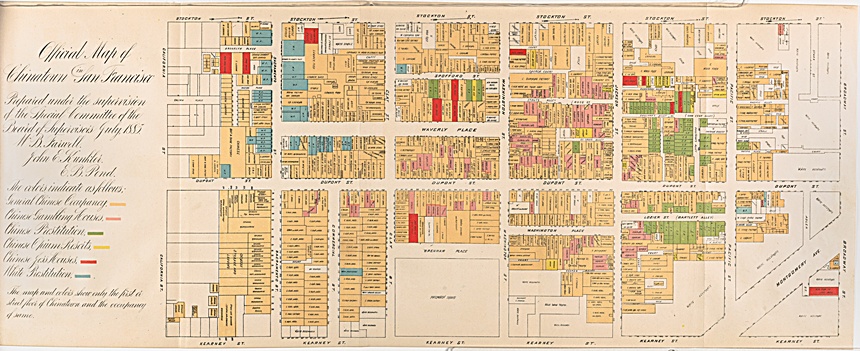
Soon, however, Chinese workers were whisked off to head a new task. America was to embark on its largest infrastructure project yet, the Transcontinental Railroad. The Central Pacific Railroad Company (CPRR), responsible for the railway’s western leg, struggled with building its labor force after a failed advertising campaign managed to bring in only a few interested local workers.
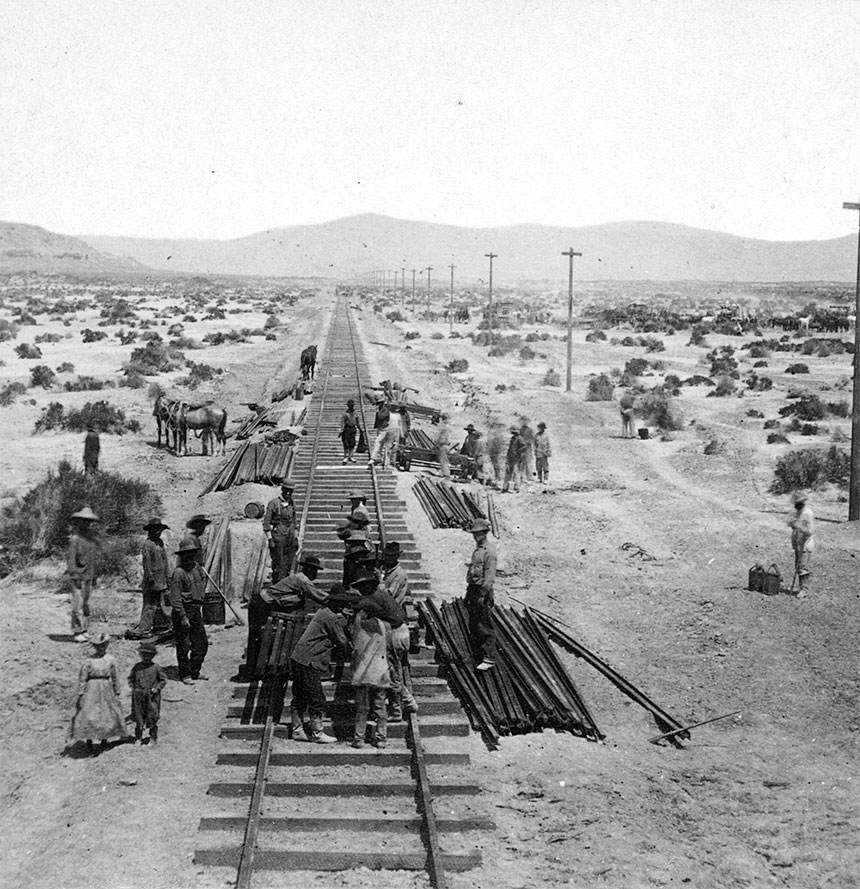
As an experiment, the CPRR turned to the Chinese population, testing how they’d be able to withstand long hours and physical hardship. After a test run using 50 Chinese workers proved successful, Charles Crocker, director of the CPRR, urged the company to invest in Chinese recruitment from the mainland. “They worked themselves into our favor to such an extent that if we found we were in a hurry for a job of work, it was better to put Chinese on at once,” he stated.
At its height, Chinese immigrants comprised 90 percent of the Central Pacific Railroad labor force, enduring the most physically demanding and dangerous duties, such as blasting tunnels through the Sierra Nevadas. Despite risking their lives at every waking moment, these workers were paid 30 percent, sometimes up to 50 percent, less than their white colleagues, and with virtually no workplace protections.
Throughout the six-year construction period, from 1863 to 1869, an estimated 15,000 Chinese workers toiled along the western railway. And though up to 1,200 Chinese died on route, the CPRR kept no records of their deaths. Only after the railway’s completion did huiguan (Chinese civic and regional associations) retrieve the discarded bodies, shipping their exhumed remains back to China.
All the while, immigrants continued pouring into the Bay by the thousands. San Francisco’s first Chinatown, named “Little Canton,” was notably a “contested terrain” where power struggles “to define and reinforce notions of American and Chinese culture” transpired, according to historian K. Scott Wong.
As the Chinese population boomed, so did anti-Chinese attitudes. At first, locals feared the unknown. These newcomers with their distinct customs, fashion, and religious practices appeared to disrupt the foundations of American life. Dubbed “the Yellow Peril,” such anxieties furthered the belief that Chinese immigrant communities would be unable to assimilate into American culture. Though it began along the West Coast, the anti-Chinese movement spread nationwide.
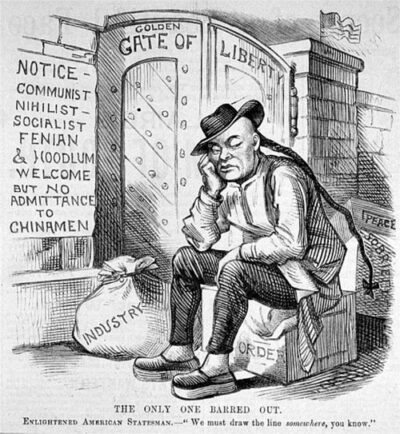
Less than 20 years later, the Chinese Exclusion Act of 1882 marked the culmination of Sinophobia in America. Predicated on an anti-immigration argument we still hear today — that Chinese workers were stealing white jobs — the act established a ten-year ban on all Chinese laborers throughout the country. It was the first federal law of its kind to prohibit entry of an ethnic group into the United States.
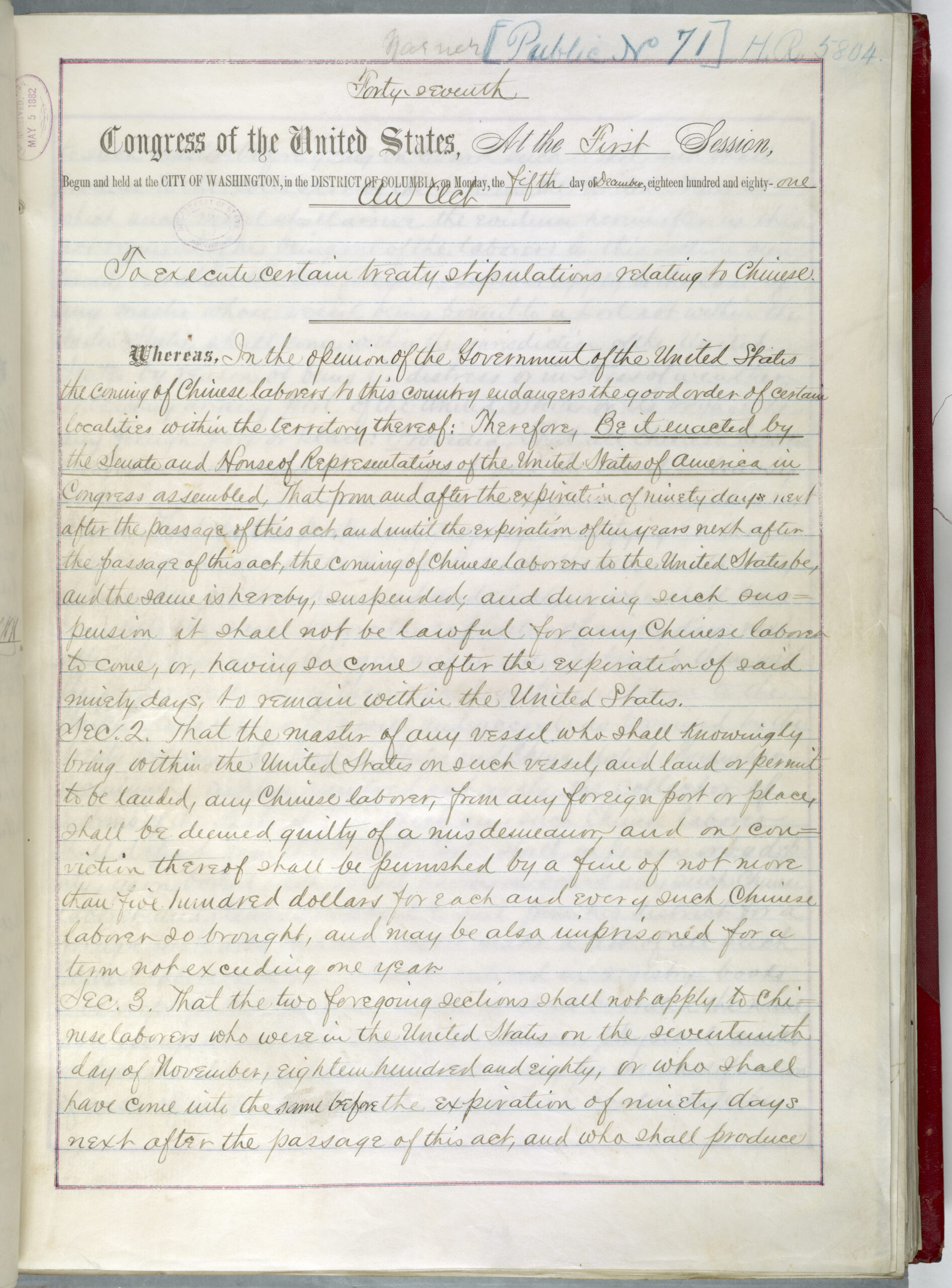
But what of the Chinese communities already in the country? Left with no choice, these residents were the target of discriminatory legislation, the same policies responsible for creating the Chinatowns we see today.
Immediately after passage of the Chinese Exclusion Act, San Francisco’s first city planning commission began exploiting zoning policies, housing regulations, and labor laws to restrict the mobility of Chinese Americans. After grueling 12-hour shifts, Chinese workers would return to their cramped accommodations in the city’s most undesirable districts — allowed only to live in apartments located at the center of heavy industry or areas previously ridden with gang violence, disease, and poverty.
“The underlying use of zoning to segregate people and income levels is undeniable. It was part of the original intent,” Amit Ghosh, former director of the San Francisco Planning Department, once said. Zoning codes were by far the most common tool used in regulating the urban space, mobilized to protect white affluent neighborhoods by permitting only single-family housing that Chinese residents could not afford. Chinese-led businesses, such as laundromats, were zoned out of single-family neighborhoods; the only areas where these communities could survive were the (now) Chinatown regions.
If a Chinese family wanted to move out of Chinatown, they were denied from owning, and even renting, property in predominantly white areas. And even while they remained in Chinatown, Chinese San Franciscans faced the 1870 Cubic Air Ordinance, which mandated at least 500 cubic feet per individual in lodging. Though applied citywide, it targeted Chinese populations, found most often in overcrowded living arrangements. If eradicating the Chinese population was the goal, this ordinance succeeded. In the following years, law enforcement arrested and imprisoned hundreds of Chinese residents in county jails. Single-family zoning codes and the Cubic Air Ordinance worked together to create the perfect storm: zoning ensured that Chinese families were not allowed to purchase their own homes, causing them to live in tight quarters, which were then made illegal.
“The whole point of this law was to criminalize Chinese poverty,” said Devin McCutchen, a historian versed on the San Francisco Planning Department, in an interview with Fast Company. The Cubic Air Ordinance also operated alongside building regulations and licensing systems that barred laundry facilities from residential neighborhoods and forced much of the Chinese population onto land dedicated for industrial use.
Early zoning laws further dictated how urban re-development was approached in San Francisco, with wealthy neighborhoods able to lobby against major infrastructure projects. Urban planning initiatives of the 1960s referred to Chinese-occupied areas as “blighted,” justifying widespread eviction. Developers later faced minimal boundaries in proposing the construction of high-rise apartment buildings or major infrastructure projects, such as the Interstate Highway System, that ripped Chinese neighborhoods apart.
Spatial restrictions, however, were not limited to geographical boundaries. “Chinese immigrants also were barred from most industries,” Braden Goyette of the Huffington Post remarked, explaining that labor discrimination restricted Chinese immigrants from being able to make a living outside of Chinatown.
What occurred in San Francisco was applied to nearly every Chinatown across the nation. Chinese populations were segregated into overcrowded Chinatowns, which municipal governments neglected, resulting in underkept facilities and public spaces. This worked to reinforce “true American identity,” one that was clean, odorless, and safe.
But to make the case that the Chinatowns that exist today were entirely outwardly orchestrated is a mistake. Professor Myles Zhang at the University of Michigan clarifies: “The division in Chinatown is not ‘apartheid’ in the strict sense.” Although Chinatown’s physical borders were the outcome of discriminatory legislation, Chinese residents determined what the neighborhood meant to them by striking and protesting anti-Chinese violence.
Chinese immigrant communities reveled in their shared language and social norms, resisting assimilation into American society. In keeping tradition alive, these neighborhoods helped future generations, many of which felt sandwiched between white American society and their Chinese upbringing, understand their cultural heritage. “They continue to serve an important social function as gateways and homes to new immigrants, as guardians of art, history and heritage, and as a refuge from discrimination,” Maurice Berger of The New York Times argues.
But would a discussion of Chinatown be relevant if there were no efforts being taken to erase them? What today’s gentrification proves is that these political agendas have never gone away but instead have evolved into more discreet, monstrous forms.
The point of recounting Chinatown’s origin story is not to reiterate the history of anti-Chinese racism in America. It is to show that no matter how many obstacles the Chinese American community has faced, their identity had been defined through contestation against an imposed order. Though its borders have been defined for them, Chinatown exists as a relic of past struggle, from its sloped rooftops, covered porches, and paifang (the Cantonese term for “archway”). It is in these spaces where generations of Chinese Americans forged networks of mutual aid to thrive during economic, political, and cultural hardship.
And today, Chinatown’s social and economic impacts extend far beyond its borders. It’s these neighborhoods that enabled Chinese American communities to build social power in this country, emboldening second generation immigrants, like myself, to feel proud of our cultural heritage. When I see the Chinatown Tenants Union in New York rally against rent increases and illegal evictions; activist art collective Chinatown Art Brigade host public art demonstrations; or Chinese for Affirmative Action uplift small and local businesses, I see a fight for Chinatown’s autonomy.
As if frozen in time, Chinatown preserves something that is notably disappearing in America: individuality. Perhaps the battle against gentrification can be assuaged if we continue to recount the histories that have shaped, and still shape, outcomes in one of our nation’s oldest ethnic communities.
Manu Karuka, assistant professor of American Studies at Barnard College, stresses the impact history continues to have on our lives. “The work of history is crucial for us to understand how U.S. society developed, how people have tried to transform it, and what worked or failed,” he says. “The stories we tell about the past can play crucial functions in how we understand identity: who we identify with, and who we identify against.”
Become a Saturday Evening Post member and enjoy unlimited access. Subscribe now


.jpg)
