Movies for the Rest of Us with Bill Newcott: Timeless Monster Personal Insights
People think of movie monsters as brainless, brutal, well…monsters. But there are important life lessons to learn from our frightening film friends.
See all Movies for the Rest of Us.
Review: Dolemite Is My Name — Movies for the Rest of Us with Bill Newcott
Dolemite Is My Name
⭐ ⭐ ⭐ ⭐
Run Time: 1 hour 51 minutes
Rating: R
Stars: Eddie Murphy, Wesley Snipes, Keegan-Michael Key, Mike Epps, Luenelle
Writers: Scott Alexander, Larry Karaszewski
Director: Craig Brewer
Did you forget that Eddie Murphy is a comic genius? I know I did.
The years have dimmed the memory of Murphy’s angry, ingenious Axel Foley in Beverly Hills Cop; his fast-talking foil to Nick Nolte in 48 Hours; his crazy quilt of characters in Coming to America.
It’s been over a decade since Murphy last starred in a straight-up comedy (and he should never have made that one, the awful Norbit). During that creative drought, he’s muddled through a couple of lame family heart-warmers and voiced that annoying Shrek donkey a kabillion times.
Now comes Dolemite Is My Name, with Murphy in a role he was born to play: A former X-rated standup comic who decides, with no training or experience, he wants to become a movie star.
Welcome home, Eddie. All is forgiven.
On paper, Dolemite Is My Name is a screen bio of a real guy: Rudy Ray Moore, who, before he became the king of blacksploitation films in the 1970s, released a super-successful series of comedy albums, the contents of which made Redd Foxx sound like Mr. Rogers’ warm-up act.
Seriously, I don’t think we could repeat a single one of Moore’s jokes here. As Moore, Murphy is even more freewheelingly obscene, mind-numbingly scatological, and transcendentally crass than he was in his Eddie Murphy: Raw days. Yet as he traces Moore’s single-minded ambition to succeed — from strip clubs to Hollywood — Murphy exudes the same subversive sweetness that endeared him to Saturday Night Live audiences 40 years ago.
Murphy’s Moore is no scattershot comic. He’s an artist from the start, tape recording homeless black men in Los Angeles alleys and adapting not only their stories, but also their rhyming cadences and their gloriously vulgar word pictures. He places it all in the mouth of a character he creates: an ostentatious, cane-wielding pimp named Dolemite. There are those who say Moore was the father of rap — and Snoop Dogg, in a cameo role, more or less confirms it.
One day in 1974, after suffering through Billy Wilder’s lame remake of The Front Page, Moore has an inspiration: Why not adapt his Dolemite standup character to the big screen? Sure, he’s had no experience acting. Of course he doesn’t know anybody in the movie business. And naturally Dolemite’s unapologetically urban black character could never find an audience west of Chicago or east of Inglewood. Still, those challenges serve only to galvanize Moore’s determination.
In many ways, Dolemite Is My Name owes its cheery effervescence to Frank Oz’s 1999 comedy Bowfinger. Steve Martin stars in that one as a clueless, talentless film director who surrounds himself with a cluster of lovable misfits — including a meek, bespectacled gofer (played by Murphy) whose brother happens to be an egotistical, paranoid action star (also Murphy). Here, Murphy wraps qualities of both those characters into one guy, creating, perhaps, the richest persona he’s ever tackled.
As played by Murphy, Moore the man is emphatically not Dolemite the caricature: The moment he leaves the stage, or the director yells “cut,” Moore drops his loudmouthed mannerisms and reverts to the kind-hearted, deferential sweetheart who endears himself to friends and business partners alike. Director Craig Brewer (Hustle & Flow, TV’s Empire) has surrounded Murphy with an appealing cast: the serious playwright who gets roped into writing Moore’s schlocky Kung Fu epic (Keegan-Michael Key), the fledgling director whose claim to fame is playing an elevator operator in Rosemary’s Baby (Wesley Snipes), the plus-size actress who can’t believe she’s landed a major role in any kind of movie (Da’Vine Joy Randolph).
Writers Scott Alexander and Larry Karaszewski have made a career of celebrating the outcasts of American culture (Ed Wood, The People vs. Larry Flynt, the Andy Kaufman biopic Man on the Moon), and here, once again, they find in Moore that unique brand of dignity found only in the defiantly undignified.
“Why can’t you be like that nice young Bill Cosby fellow?” Moore’s worried aunt (Luenell) asks. “He’s so polite.”
That’s the story of Rudy Ray Moore in a nutshell: It’s better to be authentic. And that’s a lesson Eddie Murphy seems to have learned, as well.
Dolemite is My Name is in theaters until October 25, then begins streaming on Netflix.
Featured image: Photo by Francois Duhamel
Review: Judy — Movies for the Rest of Us with Bill Newcott
Judy
⭐ ⭐ ⭐ ⭐
Rating: PG-13
Run Time: 1 hour 58 minutes
Stars: Renée Zellweger, Michael Gambon, Rufus Sewell
Writer: Peter Quilter
Director: Rupert Goold
On its lavishly produced and lovingly crafted surface, Judy is about the last months of Judy Garland’s life — specifically her triumphant yet troubled series of sold-out concerts in London, barely six months before her 1969 death of a drug overdose.
But there’s also a persistent subtext to every frame: This is emphatically a movie about Renée Zellweger playing Judy Garland, reclaiming the mantle of “serious actor” that marked Zellweger for greatness nearly two decades ago, when in three consecutive years she was nominated for three Oscars and won one.
To which I can only add: Mission Accomplished. Zellweger mesmerizes as the singer, capturing that doe-eyed stare, the endearingly awkward mannerisms, the black hole of neediness that seemed to suck at Judy’s life force as surely as did the amphetamines and barbiturates that coursed through her system from her earliest days as a child star.
But for any movie musical biography like Judy, there’s a built-in pitfall: At some point, someone has to decide whether to let the star do the singing or have them lip sync a recording, either of the original artist or a passable sound-alike. Zellweger bravely opts for the former, and it’s been reported she trained for months to come as close as possible to recreating Garland’s unique vocal qualities.
Commendable, but in this case a course that was doomed from the start. After all, if anyone else could sing like Judy Garland, they’d be selling out the Palace Theatre for 27 straight nights. I suppose no one really knows if it was the drugs or the booze or the crippling insecurities that did it, but Garland’s late-life singing style was inimitable: Invariably hitting the right note, then warbling a half-step above and below it — barely in control yet ultimately in command — before settling back at the exact spot where she started. Zellweger can’t do it, nor could anyone else. For Judy it was organic, like breathing.
Still, because Zellweger comes to the role with such naked determination, the musical numbers in Judy remain beyond compelling. Director Rupert Goold fills the screen with Zellweger’s face, putting every lopsided smile and nervous sideways glance under his camera’s electron microscope.
Goold happens to be one of England’s leading directors of Shakespeare plays, and he puts the experience to good use, painting Judy as a tragic figure on a scale with Lady Macbeth. The script by Peter Quilter — loosely based on his stage play End of the Rainbow — populates Judy’s last days with a diverse cast of characters real and imagined. Michael Gambon, his voice rumbling with the sound of distant thunder, is touching as the London producer willing to take a chance on the irresponsible singer. Rufus Sewell brings unexpected compassion to the role of Judy’s third husband, Sid Luft. (The film takes some chronological liberties regarding Judy’s five hubbies, but, really, who’s counting? I doubt Judy was.)
Most memorable is a gay couple (Andy Nyman and Phil Dunster) who ask for Judy’s autograph after a London performance — and end up bringing the lonely star home for scrambled eggs. The setup for that encounter seems hokey, but it leads to an early-morning reverie that seems to offer a glimpse at the off-guard Judy; the one who could, at least occasionally, focus on someone other than herself.
It’s the film’s one and only Get Happy moment, and like Judy herself, Judy could have used more of those.
Featured image: Renee Zellweger as Judy Garland in the film Judy. Photo credit: David Hindley Courtesy of LD Entertainment and Roadside Attractions
Review: Downton Abbey — Movies for the Rest of Us with Bill Newcott
Downton Abbey
⭐ ⭐ ⭐ ⭐
Rating: PG-13
Run Time: 2 hours 2 minutes
Stars: Hugh Bonneville, Elizabeth McGovern, Maggie Smith, Jim Carter
Writer: Julian Fellowes
Director: Michael Engler
Few TV series end as utterly satisfactorily as did Downton Abbey three years ago: The righteous were rewarded, the scoundrels were either put down or redeemed, the titular estate seemed poised to thrive in the uncertain years ahead.
So as much as I loved the show, I found reports that creator/writer Julian Fellowes had come up with a big-screen sequel somewhat underwhelming. Downton Abbey was pretty perfect. What could he do for an encore?
The answer: Don’t change a thing. And that, for a die-hard Downton Abbey fan, is the best possible news.
Downton Abbey the movie is not so much an encore as a seamless continuation of Downton Abbey the TV series. Aside from the fact that this time around the screen is bigger and the popcorn tastes better, everything else seems exactly as it should be.
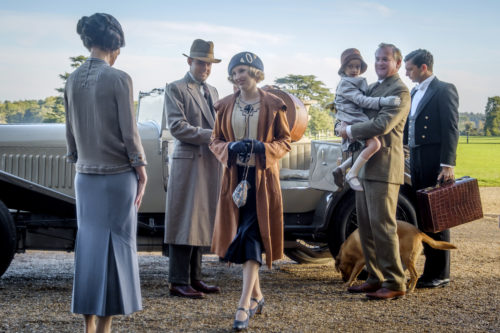
As the film opens, it is 1927 — barely a year after the final TV episode. Britain is still recovering from the trauma of the Great War, and in an apparent attempt to buck up everyone’s spirit, King George V and Queen Mary are embarking on a nationwide tour.
Credit: Jaap Buitendijk / Focus Features
In the film’s opening minutes, a letter arrives: The Royal entourage will be making an overnight stop at Downton Abbey.
And there you have it: that’s the plot. Houseguests.
Downstairs, the staff is aquiver with planning menus and jockeying for positions of responsibility. But soon the King’s bullheaded butler shows up and informs them their services will not be needed: the Royal staff will take over the house.
Of course, we know what he doesn’t know: That the stoic manager Mrs. Hughes (Phyllis Logan), the feisty cook Mrs. Patmore (Lesley Nicol) and take-no-prisoners head butler Mr. Barrow (Robert James-Collier) are not to be trifled with.
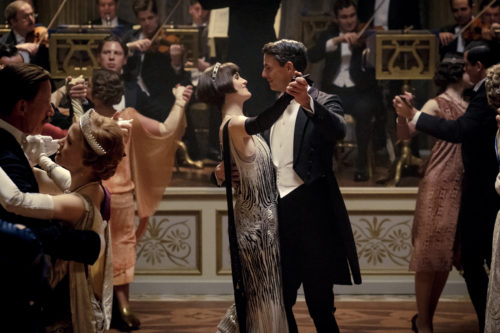
Upstairs, the family barely contains its excitement beneath their stiff-upper-lip posturing.
Credit: Jaap Buitendijk / Focus Features
“Are you excited?” the lady of the house (Elizabeth McGovern, with that dentist receptionist smile) asks her stuffy-but-lovable husband (Hugh Bonneville, starchy as a bag of potatoes).
“Would it be common to admit it?” he deadpans.
The original series ended each season with what producers called a “Christmas Special,” in which all the loose ends from the previous eight episodes were improbably tied together: murder charges were dropped, interpersonal conflicts were resolved, the Upstairs nobility were reminded once again of how the Downstairs folk were really just extended family members.
Here, that season-long structure is telescoped into a two-hour window. At times it seems like a tight squeeze, but the payoffs are handsome.
Happily for fans, echoes of previous scandals and traumas continue to reverberate through the abbey’s stone halls. Barrow, still coming to terms with his homosexuality, finds himself in a dangerously compromising position — only to be rescued by an unlikely ally. Mr. Carson, the retired butler (Jim Carter), is cajoled back into service for the Royal visit, much to Barrow’s chagrin. And while the Dowager Countess Violet (the indispensible Maggie Smith) continues her sniping contests with frenemy Isobel (Penelope Wilton), she has found a new target for her verbal barbs: Queen Mary’s Lady-in-Waiting (Imelda Staunton), a relative who she’s convinced is stealing her son’s inheritance.
That these and other storylines entangle each other until the narrative becomes as dense as a hedgerow matters not. Downton Abbey is a reunion in the best sense: Nearly two dozen characters, all of whom found varying levels of affection in the hearts of millions of devoted viewers worldwide, each get a welcome moment in the spotlight; some to say apparent goodbyes, others to leave tantalizing hints of yet another return as the clouds of the Second World War gather on the Hampshire horizon.
Happily, rough-edged gentleman’s gentleman Mr. Bates (Brendan Coyle) and his sweet wife Anna (Joanne Froggat) — both of whom barely escaped the gallows for murders during the show’s run — are spared further drama this time around. And there’s even a hint of long-overdue happiness for handsome, perpetually heartbroken Tom Branson (Allen Leech). We’ve felt sorry for Tom ever since the family’s youngest daughter died in childbirth, leaving him a widower lo these many years ago. But near the final fade-out, on a Downton Abbey balcony, he finds new hope for the future.
It’s one of the sweetest moments in a film that manages to hit one sweet spot after another.
Featured image: Jim Carter stars as Charles Carson in DOWNTON ABBEY, a Focus Features release. Credit: Jaap Buitendijk / Focus Features
Review: The Goldfinch — Movies for the Rest of Us with Bill Newcott
The Goldfinch
⭐ ⭐ ⭐ ⭐
Rating: R
Run Time: 2 hours 29 minutes
Stars: Finn Wolfhard, Nicole Kidman, Ansel Elgort, Luke Wilson
Writer: Peter Straughan (based on Donna Tartt’s novel)
Director: John Crowley
As he did in his previous film, Brooklyn, director John Crowley has made a very quiet film about explosive emotions.
In this case Crowley also throws in a literal explosion, although he manages to depict even that catastrophe in his trademark muted manner. It is this thoughtful restraint that makes The Goldfinch as much a work of art as the painting at its center.
Theodore Decker (Oakes Fegley of Pete’s Dragon) is a boy with problems that seem straight out of David Copperfield: His father abandons his mother, whose death Theodore witnesses in a terrorist explosion at New York’s Metropolitan Museum of Art. Young Theodore is taken in, for a time, by a loving and wealthy Manhattan family, but soon he is claimed by his ne’er-do-well dad, who is clearly more interested in cashing in on the boy’s inheritance than in making up for lost parenting time. Soon Theodore is a street urchin, on the run from his father’s pummeling fists, and he ends up living above the workshop of a kindly antique dealer.
Then there is that goldfinch. In the calamitous aftermath of the explosion, Theodore absentmindedly tucks under his arm a slightly damaged art work — a priceless painting of a goldfinch, created by a treasured Dutch master.
That painting — a physical link between Theodore and his dead mother — follows the boy through childhood, stashed under his bed, unnoticed by the grownups who come and go through his life.
And a crazy quilt of characters they are: There’s the dewy-eyed Earth mother who takes him in (Nicole Kidman, irresistible as always), that scoundrel dad (beady-eyed Luke Wilson), his eye candy wife (Sarah Paulson), and the sweet natured antique dealer (Westworld’s masterfully understated Jeffrey Wright). Other characters we first meet as children, then again as young adults after Theodore has grown up, where he is played by winsomely handsome Ansel Elgort.
That’s quite a swirl of characters, almost all of whom are so finely defined they at times jockey for too much of our attention. But director Crowley and his screenwriter Peter Straughan (Tinker Tailor Soldier Spy — another quiet movie masterpiece) keep our focus and affection on Theodore. Even when we discover some less than savory things about the young man in the later stages, we are more than happy to forgive him, because we understand him so well.
Featured Image: Photo Courtesy of Warner Bros.
Review: Linda Ronstadt: The Sound of My Voice — Movies for the Rest of Us with Bill Newcott
Linda Ronstadt: The Sound of My Voice
⭐ ⭐ ⭐ ⭐
Rating: PG-13
Run Time: 1 hour 35 minutes
Stars: Linda Ronstadt, Dolly Parton, Bonnie Raitt, Emmylou Harris, Aaron Neville
Directors: Rob Epstein, Jeffrey Friedman
For 35 precious years, the world reveled in the lilt of Linda Ronstadt’s voice — and then it was gone. This tuneful, sometimes melancholy documentary is packed with classic performances, adoring testimonies, and intimate home movie moments, but you can’t walk away without the sense that although Ronstadt’s career ended too soon, no amount of success would have given the infinitely insecure singer peace of mind.
The saddest list in modern music is that of those whose voices were stilled too soon by death: Buddy Holly, Harry Chapin, Janis Joplin, Otis Redding, and the rest. Nearly as sobering is the chronicle of voices robbed from still-living performers in their prime: Harry Nilsson, Julie Andrews…and Ronstadt, who has not performed in more than a decade due to Parkinson’s disease.
Although she can’t sing anymore, Ronstadt provides a spirited narrative to this documentary following her childhood, early struggles, and skyrocket to fame.
The singer’s insights — and those of many of her collaborators and friends including Dolly Parton, Bonnie Raitt, Emmylou Harris and Aaron Neville — are incisive and revealing. But happily, directors Rob Epstein and Jeffrey Friedman wisely let Ronstadt’s music do most of the talking, offering generous portions of performances rare and immortal.
You don’t reach the level of stardom Ronstadt did without a white-hot fire of blind ambition, and although the film paints a portrait of an artist hell-bent on success, it’s also clear she was also forever doubtful of her own abilities.
Not that she ever backed off from taking a chance. The rock-and-roll diva astonished Broadway audiences when she trilled her way through Gilbert and Sullivan’s Pirates of Penzance. And recording industry bigwigs warned she’d be throwing her career away if she insisted on releasing an album of classic Mexican songs. Ronstadt, whose father was part Mexican, did it anyway. The resulting double-platinum album became the biggest-selling non-English language album in U.S. history.
Telling the story of her darkest days, Ronstadt recalls the bewilderment she felt when, in the early 2000s, she started losing her voice. In 2011 she was diagnosed with Parkinson’s. As a result, she said, “I cannot sing a note.”
As if offering us a small reward for sticking with her through the story of her highs and lows, in a profoundly moving coda Ronstadt joins a nephew and cousin — a bit haltingly but beautifully, still — in singing a Mexican folk song.
“This isn’t really singing,” she protests softly. But there’s more to singing than hitting the notes.
Featured image: Photo Courtesy of Greenwich Entertainment
Seriously Good Films: Fiddler, Midnight Traveler, The Current War
Fiddler: A Miracle of Miracles (August 23)

Fiddler on the Roof has been performed somewhere on the planet every single day since it opened on September 22, 1964. As if to prove that claim, director Max Lewkowicz travels the world to film casts belting out Fiddler standards like “Tradition” and “Sunrise, Sunset.” Best of all, he sits down with octogenarian Israeli star Topol, who played Tevye in the 1971 film. Lewkowicz also interviews Broadway legend Joel Grey, who directed the all-Yiddish version of Fiddler now selling out in New York.
Midnight Traveler (September 18)

Afghan film director Hassan Fazili had a choice: Face certain death from the Taliban, which had put a price on his head, or escape his native country with his wife and two young daughters. He chose the latter, and with nothing but some smartphone cameras he created this intensely personal, sometimes harrowing account of the family sneaking across borders, lurching across open fields, and sleeping in freezing forests as they try to make their way to safety — if an uncertain future — in Europe.
The Current War (October 4)
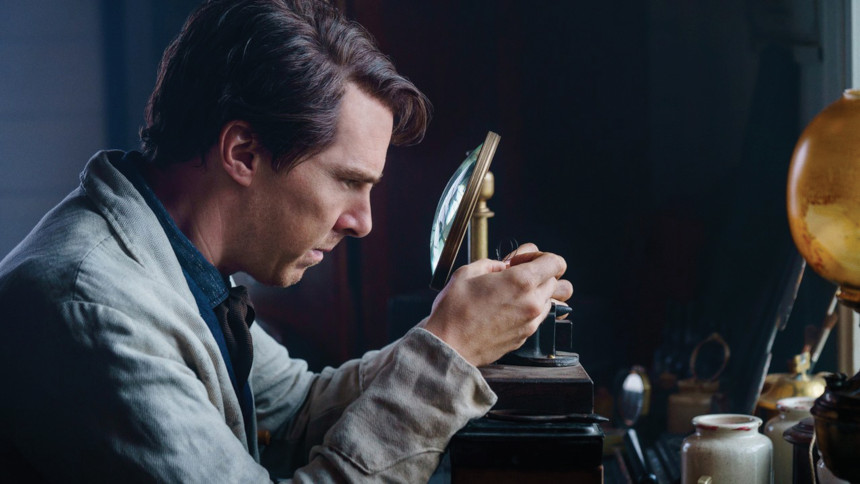
Held back from release for nearly two years after its original production company went belly-up, this enthralling historical drama about a titanic face-off between Thomas Edison (Benedict Cumberbatch) and George Westinghouse (Michael Shannon) is well worth the wait. The stars are compelling as the ingenious inventors who, in the late 1800s, battled over how best to deliver electricity to the masses. As feuding moguls, Cumberbatch and Shannon offer a pleasantly charged history lesson.
For biweekly video reviews of the latest films, go to saturdayeveningpost.com/movies or check out Bill Newcott’s website, moviesfortherestofus.com.
Featured image: Thunder Road Pictures.
This article is featured in the September/October 2019 issue of The Saturday Evening Post. Subscribe to the magazine for more art, inspiring stories, fiction, humor, and features from our archives.
Movies for the Rest of Us with Bill Newcott: Apocalypse Now…and Then: An Interview with Francis Ford Coppola
Forty years ago this month, Apocalypse Now burst into theaters. With the release of Apocalypse Now Final Cut set for August 15, Bill Newcott talks with Francis Ford Coppola about his thoughts on directors’ cuts, how movies are like jumping beans, and who gave The Godfather a bad review.
See all Movies for the Rest of Us.
Featured image: Apocalypse Now Final Cut (Zoetrope Studios/Lionsgate)
Movies for the Rest of Us with Bill Newcott: Quentin Tarantino’s Once Upon a Time in Hollywood
Quentin Tarantino revisits 1969 Tinseltown in his sprawling new film, Once Upon a Time in Hollywood, a riveting documentary peels back the secret life of 60 Minutes legend Mike Wallace, plus our annual homage to Shark Week!
Movies for the Rest of Us with Bill Newcott: The Greatest Movie Dads Ever
Bill Newcott chats with Dwier Brown, the actor who played Kevin Costner’s ball playing pop in Field of Dreams, on the 30th anniversary of this iconic movie. He also looks at the most memorable dads of the big screen.
Movies for the Rest of Us with Bill Newcott: Elton John’s Rocketman
Bill Newcott reviews Rocketman and takes a musical voyage through Elton John’s big screen career. He also reviews four other films, including Mouthpiece, Alec Baldwin in Framing John DeLorean, a documentary about a woman who has just too many birds, For the Birds, and Denys Arcand’s drama, The Fall of the American Empire.
Seriously Good Films to Watch This Month
Charlie Says (May 10)

Director Mary Harron (I Shot Andy Warhol) has found a surprisingly relevant way to revisit the grisly Tate/LaBianca murders 50 years later: Through the eyes of the women Charles Manson coerced into carrying out the slaughter. Set three years after the murders, the film follows a grad student (Nurse Jackie’s Merritt Wever) assigned to teach women’s studies classes to three of Manson’s former acolytes who are still blindly devoted to “Charlie” (Doctor Who‘s Matt Smith). The instructor is determined to open their eyes, even if it means dooming them to a lifetime of crippling guilt.
All Is True (May 10)
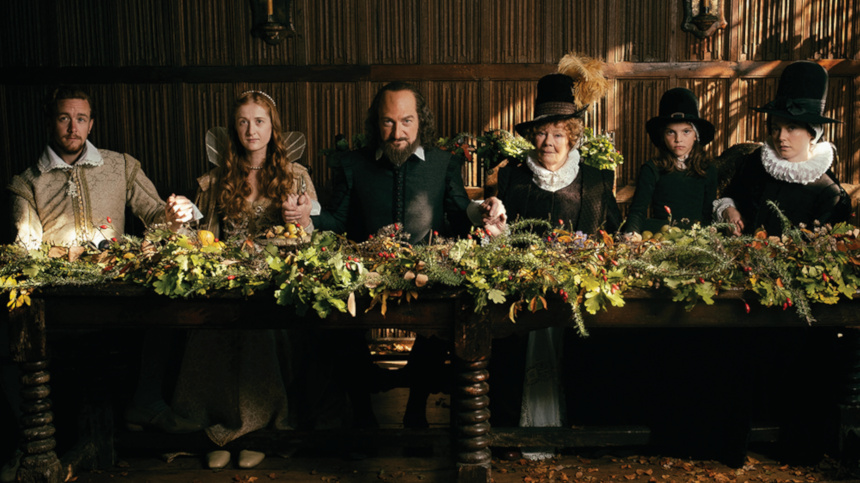
Director/star Kenneth Branagh engages in heavy speculation about William Shakespeare’s final days. We find 51-year-old Will (Branagh) puttering in his garden in 1616, turning away admirers and grieving over the long-ago death of his young son Hamnet. His two grown daughters (Kathryn Wilder and Lydia Wilson) are not much comfort to him — nor is his long-suffering wife, Anne (Judi Dench). Branagh walks us through the story with the patience of a gardener pointing out his favorite flowers — in this case a series of sterling performances, especially by Ian McKellen as an old friend who drops by to trade recitations of Will’s sonnets. All Is True may not be true, but as the Bard’s words roll off these masters’ tongues, Shakespeare’s genius is unmistakable.
Aniara (May 17)
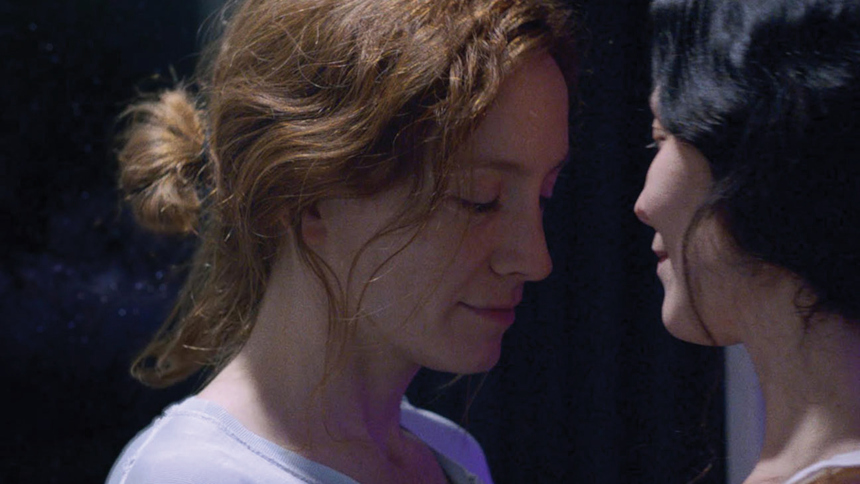
The story of a massive Mars-bound spaceship thrown off course is a haunting and harrowing meditation on the course of civilization. Swedish co-writers/co-directors Pella Kagerman and Hugo Lilja set their story on Aniara — the ultimate cruise ship — where passengers alternate between gorging at all-you-can-eat restaurants and shopping at high-end boutiques. Even after disaster strikes, that instinct for accumulation dies hard: The passengers, beyond any hope of rescue, continue to consume the ship’s limited resources. It’s a one-way trip, of course, ending on a note that there’s always hope for life — if not necessarily life from Earth.
For biweekly video reviews of the latest films, go to saturdayeveningpost.com/movies or check out Bill Newcott’s website, moviesfortherestofus.com.
This article is featured in the May/June 2019 issue of The Saturday Evening Post. Subscribe to the magazine for more art, inspiring stories, fiction, humor, and features from our archives.
Movies for the Rest of Us with Bill Newcott: Remembering Notre Dame Cathedral’s Greatest Film Appearances
The Star of This is Us plays a desperate mom with an urgent prayer, Boris Karloff returns as Dr. Frankenstein, and we remember Notre Dame Cathedral’s greatest movie moments.
Movies for the Rest of Us with Bill Newcott: Jordan Peele’s “Us”
If you like your “state of American society” movies with a side of “scare the Dickens out of you,” then you’ll love Jordan Peele’s new horror movie, Us. Bill Newcott also reviews Nancy Drew and The Hidden Staircase, and sits down for a chat with its director, Katt Shea. Also reviewed: Fanboy and Dragged Across Concrete.
Movies for the Rest of Us with Bill Newcott: Movies Made on Catalina Island
Can you name a movie made on Catalina Island? Bill Newcott shares some of his favorites. He also reviews the latest releases, including Gloria Bell starring Julianne Moore, Greta with Isabelle Huppert and Chloë Grace Moretz, and the must-see documentary Apollo 11.
Seriously Good Films to Watch this Spring
Greta (March 1)
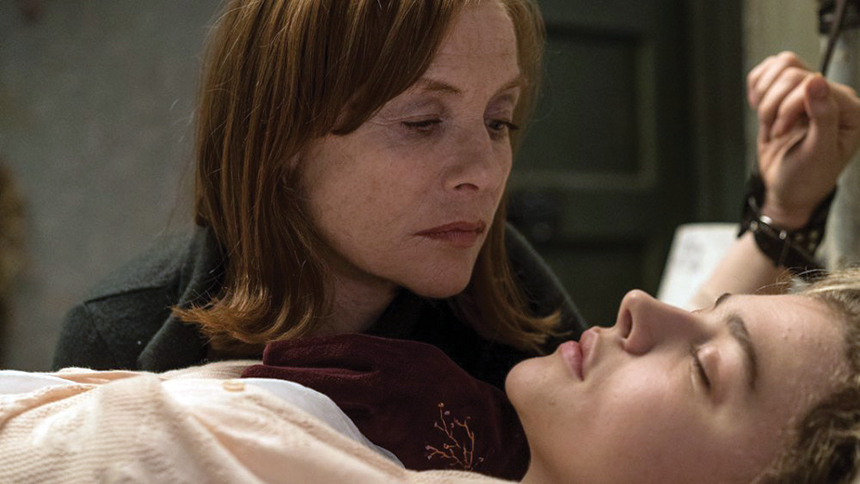
Writer/director Neil Jordan (The Crying Game) concocts a good old-fashioned twisty, terrifying thriller involving the seemingly sweet “old lady” Greta (Isabelle Huppert) who becomes obsessed with a young Manhattan woman (Chloë Grace Moretz). Jordan winks at the audience from the start: Even when the pair is enjoying a sweet intergenerational friendship, each time Greta appears, the director telegraphs the menace with startling musical stings. Discerning viewers would ordinarily be annoyed by the flashing warning lights, but in Jordan’s hands they’re all part of the fun.
Gloria Bell (March 8)

Julianne Moore is fantastic in a seamless Americanization of the 2013 Oscar-nominated Chilean film Gloria. Writer/director Sebastián Lelio (A Fantastic Woman) follows lonely Gloria as she looks for love in a sterile L.A. She meets an eligible bachelor (John Turturro) who seems to check off every box on her wish list — until she realizes he’s under the thumbs of his grown, irresponsible daughters. We share Gloria’s growing exasperation — and want to stand up and cheer when she administers one of the greatest comeuppances in screen history. Every supporting player is first-rate, especially Holland Taylor as Gloria’s mom, Rita Wilson as her best pal, Brad Garrett as her put-upon ex, and Sean Astin in a wordless cameo as a Vegas high roller.
Breakthrough (April 17)
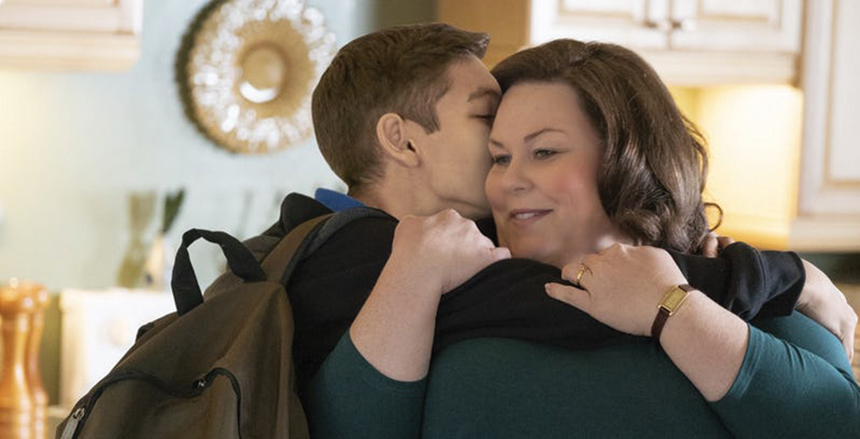
Emmy-nominated This Is Us star Chrissy Metz proves her big-screen acting chops in this powerful drama based on a true story. She plays Joyce Smith, a Missouri mom whose teen son (Marcel Ruiz of the One Day at a Time reboot) falls through a frozen lake, is fished out 15 minutes later, and still has no pulse over an hour after the accident. Mom’s anguished prayer sparks a blip on the ER heart monitor, and pretty soon even the boy’s doctor (Dennis Haysbert) is using the M word. Director Roxann Dawson, whose work includes episodes of House of Cards and The Americans, draws a poignant picture of a family driven by faith but not immune to the pain of crises.
For biweekly video reviews of the latest films, go to saturdayeveningpost.com/movies or check out Bill Newcott’s website, moviesfortherestofus.com.
This article is featured in the March/April 2019 issue of The Saturday Evening Post. Subscribe to the magazine for more art, inspiring stories, fiction, humor, and features from our archives.