The World War II Struggle That Time Forgot
As a child in the New Jersey suburbs in the 1970s, I grew up hearing harrowing tales of the Holocaust, often while playing in the backyards of the grandchildren of survivors. In the summer, glimpses of numbered tattoos peeked from loose clothing, permanent proof of what this generation had gone through, sometimes leading to reluctant conversations against the watery backdrop of sprinklers, iced tea, and swimming pools.
I was raised in a non-Jewish family in a largely Jewish suburban neighborhood. Come December, our house was among the few on the street with a Christmas tree. The holiday season was when our Polish-born uncle Eddie, who had married into the family via my aunt RoseAnn, would come to visit. He too had stories of the Nazis. The most vivid was his escape from a work camp by hiding inside the wheel carriage of a departing train.
Even with his brush with the Nazis, I think we dismissed his stories because we knew they were not Jewish tales; they lacked the gravity of the stories our neighbors’ grandparents told. Nothing in our schoolbooks backed up his description of the Polish experience during World War II.
The stories stopped when I was 12, the year my uncle divorced my aunt. Though I would see him briefly at my aunt’s and my father’s funerals, 34 years would pass before I would spend any serious time with him, this time in his hometown of Warsaw.
My uncle and I share the same birthday, and as he aged, I decided I would try to use the day to reconnect by calling him. The journalist in me, having covered horrific events in today’s wars in Iraq and Afghanistan, also wanted to sort out his time under the Nazis, always knowing there was more to it than what he told us. My uncle was a teenager when the war ended, and, at 86, he is among the youngest of those still able to recall a period rapidly slipping out of living memory.
When I called my uncle on our shared birthday in early 2014, mentioning I wanted to formally record his life in Poland, he told me he would soon be back in Warsaw “for the 70th anniversary of the uprising.”
He added, “The government is inviting me to come and be honored for being in the resistance.” I thought for sure my uncle had gone senile. The Warsaw Ghetto Uprising was in 1943, and the 70th anniversary commemorations had come and gone. My uncle went on to describe something I had never heard of before: the Warsaw Uprising of 1944, in which he fought as part of the underground resistance.
No, my uncle was not senile. I was simply undereducated. The Warsaw Uprising — when the entire capital rose up against the Nazis, resulting in the destruction of 85 percent of the city — was simply not something Americans are taught. It is instead the 1943 Warsaw Ghetto Uprising that we learn about in our schoolbooks and via broadcasts like Holocaust and movies like The Pianist.
I was newly proud of my estranged uncle, and I vowed to travel to Poland with him, to hear the stories where they happened, rather than in a New Jersey living room. Not only had he escaped the Nazis, but he had also fought against them in Poland’s resistance, or Armia Krajowa.
Last summer, in Warsaw, at the sites and memorials where contemporary Polish politicians celebrated Eddie and his surviving compatriots [see “Freedom Fighters”], my uncle’s stories began to align into proper sequence. He is one of perhaps 3,000 surviving Polish resistance fighters, about 700 of whom live outside of Poland. While he now goes by Edward Sutton, his Polish name is Edward Sucholski. His resistance code name was Czarny, or Black. One story my uncle told me was of a shootout on Brzozowa Street near Warsaw’s Old Town close to the Vistula River, at some point on August 31, 1944. From a second-story window, he and another resistance fighter battled German soldiers who were in the basement of a nearby building. Few resistance soldiers had weapons, but my uncle had a Schmeisser, an automatic pistol. My uncle said he and the other fighter were fighting from the second floor of what was called the professor’s house, an assembly site for the resistance. “I was shooting from 200 feet away, but I never knew if I killed anyone.”
He and the other fighter retreated. My uncle remembers fleeing along the Vistula into a sewer with other fighters, Germans throwing grenades in after them. He told me, “After that I couldn’t hear for a couple of days from the explosions.” Inside the sewers, there were masses of people, sloshing through the water. “We were just so many of us,” he said, adding, “we were lucky we came out alive.” He made his way to the Kampinos Forest, where he gave up his gun to another resistance fighter.
After the uprising had been put down, my uncle surrendered and was loaded into a cattle wagon, under the watchful gaze of “a German soldier on each rooftop with a machine gun,” he said. Dachau was his first stop, yet he downplayed this, saying he and his father were there only a week “for sorting” before moving to another work camp in Germany. My step-aunt Teresa who came with us explained, “When you came in to the camp, you went one of two ways: either up the chimney or to work. Thanks God, Eddie went to work.”
It was how he, his brother, and his father survived.
They escaped on Christmas Eve, 1944. “We lied on the beams of the train, trying to make ourselves as invisible as possible,” he said.
I wondered if the date was chosen with the knowledge that the Germans would be drunk. Instead, he said, “No, it was snowing, so we knew they wouldn’t take the trouble to look for us.”
My uncle didn’t make it back to Poland. The train only got him to Augsburg, near Munich, ironically close to Dachau where he had first arrived. There, he and his father pretended to be displaced German Poles. After the Americans liberated this part of Germany, he went to Italy, joining the Polish army there, and later was sent to the United Kingdom. After the war, he had the option to relocate to Palestine, a surprise to me as he is not Jewish, but young Catholic Poles were relocating to orphanages there. In 1951 he finally found true freedom here in the United States, arriving via an El Al flight from London to New York’s Idlewild Airport, now known as JFK.
The intermingling of Jews and Catholics was apparent as we visited his street, inside of what had once been the Jewish ghetto. The Chinese Embassy now sits over his long gone childhood home on Franciszkanska Street, near the ghetto dividing line. Warsaw was almost 40 percent Jewish then, but “they took the Jews away from us, we weren’t allowed to live with them,” my uncle said, including his first girlfriend, Rifka, whose fate he does not know. He lifted his hands above his head, curling his fingers into balls, and twisted them back and forth, saying, “They built a 10-foot wall around them and covered it with barbed wire.” Though he had revisited Poland many times, he had not returned to his street since 1944.
 Why is their historical struggle shrouded in such darkness? Pawel Ukielski, the vice director of the Warsaw Uprising Museum, blamed a variety of circumstances. “The Warsaw Uprising was not convenient for anybody to talk about for a long time,” he said, explaining that the Russians — expected to come to the assistance of the resistance fighters — instead camped outside of Warsaw, allowing the Germans to destroy the Polish capital. Their cold calculation was that a devastated country would be easier to occupy at the end of the war. Western Europe and the United States don’t come out much better in this story; they also refused to recognize the exiled Polish government after the war, since the Allied plan was to cede what was left of Poland to the Soviets.
Today, the importance of remembrance has finally trumped the silence over collective guilt. “We are proud that Warsaw was the city of two uprisings. Both of them were unique,” said Ukielski. “We know what happened to Warsaw during the Second World War. It lost almost half of its pre-war population. It lost the whole Jewish population. It was a great loss, a loss of part of our identity. So this is not the question that one such loss should be better known or worse known, we want both of them to be known all over the world.”
I have found, after spending time with my uncle in Warsaw who lived to see both uprisings, that I too know them both better than I ever would have before.
Editor’s note: Portions of this article were previously published in Tablet magazine.
Click here to read a true story from the Post archives about the heroic warriors of the Polish underground.
—
Michael Luongo’s “The World War II Struggle That Time Forgot” won a 2015 North American Travel Journalists Association Gold Prize.
Behind Enemy Lines
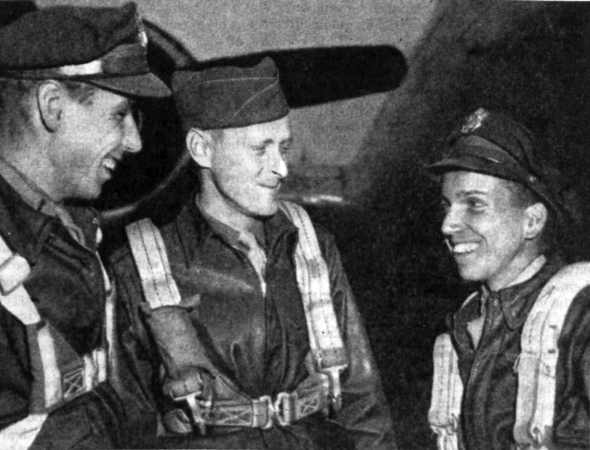
For years, American soldiers had heard about the courageous fight the Polish underground was waging against Nazi invaders in their native land. The stories became legend. But the fact that a highly organized Polish army battled daily at the back of the Wehrmacht never really crystallized, never came alive for U.S. soldiers, until the following story emerged in The Saturday Evening Post.
LONDON December 30, 1944 — “We took off at dawn on June 21, 1944, bombed our target in Germany and proceeded toward Russia,” said Lt. Louis R. Hernandez, 23, pilot of the downed bomber, as he began the narrative of the mission. “As we headed for Brest Litovsk, we saw four Messerschmitt 109s dart out of the clouds. Four more fighters came out of the same cloud bank and attacked us with fury, poking a huge hole in the wing between the Number One and Number Two engines. This caused the ship to plunge into a sudden dive. I promptly rang the alarm bell — the signal to bail out. I don’t remember anything after that until I regained consciousness in a rye field near a farmhouse. Three young Polish girls were holding me in their arms, trying to carry me.”
The plane’s engineer, Sergeant Anthony R. Hutchinson, 32, picked up the story: “When I landed, several men dressed like American farmers were coming toward me. I hollered, ‘American, America!’ They replied, ‘Comrade, comrade!’ They hugged me and kissed me. I was rushed to the nearest farmhouse where I was served up with scrambled eggs, black bread, cheese, and a very thick, sweet honey wine. I was very nervous. I didn’t feel much like eating, for fear the Germans were close by. But the Poles urged me to eat. They rolled cigarettes for me. When I got through gulping the food down, I asked, ‘Where are the nearest Russian troops?’ They indicated, with gestures, that the Russians were still some distance away.
“About this time, several girls carried Lt. Hernandez into the same house. He had been cut and was bleeding about the face. The girls washed and bandaged his cuts. He said it was best to get out of this spot as soon as possible, since our plane had crashed about 100 yards away and many people seemed to be gathering in the vicinity. The farmers bundled us in blankets and carried us out to a patch of tall grain. They indicated that we should lie there and wait.”
The two fliers lay there about a half hour when a 40-year-old man appeared on a bicycle.
“It sure was a relief to hear him speak English,” Hutchinson continued. “He identified himself as ‘Liniowiec,’ which I learned later means ‘Dreadnaught.’ He told us he was the quartermaster officer for this unit of the 34th Infantry Regiment, Polish underground army. Before the war, he had been a wealthy owner of a chain of movie houses in Warsaw.
“Dreadnaught said the Germans were already searching for us and that we had better leave with him quickly. A horse and wagon seemed to appear like magic. An underground doctor dressed Hernandez’s wounds after we got into the wagon. We stopped to change horses and wagons twice, but we always kept close to the forest. When we finally got to a village where some underground troops were quartered, to our delight, five others of our crew appeared.”
The reunited airmen soon met the district underground leader in an obscure farmhouse near the forest. Dreadnaught introduced the man as Commander Zenon. “He spoke to us that first night. With Dreadnaught as interpreter,” recalled Lt. Alfred R. Lea, 25, the plane’s navigator. “He gave his pledge that we would be captured by the Germans only after every Pole in the underground-army unit assigned in that district was killed.”
In the early hours of June 23, orders were issued to move out of the hideout. The airmen were placed in a horse-drawn cart, while 200 resistance fighters, some on horses and others on bicycles, deployed around them as escort. The troopers carried heavy water-cooled machine guns, German-made rifles and machine pistols and grenades.
“We traveled until 8 a.m. — some five hours,” Lea said. “The Poles moved without fear, since they knew the whereabouts of German troops all the time. They impressed us as a genuine military organization and as well disciplined as any unit in the field.”
For the next week, Zenon’s followers and the airmen moved from village to village, always by night, and hid by day. On June 30, the underground troops had their first battle with the Germans.
“We had started to eat when a dispatch rider on a bicycle gave us our first alarm,” remembers Hutchinson. We made a dash for the nearest rye field, hugging the ground. The Gestapo fired at us as Zenon, Dreadnaught, and two Polish troopers joined our party. Zenon then jumped up to give us cover and with his tommy gun — a German Spandau — fired several volleys. Both Lea and I saw him kill four Germans. A fifth tumbled down. The rest beat a hasty retreat.This respite gave us time to find better concealment. We dashed through a potato field into a nearby forest and waited. All the Polish troops assembled here, too, as if by a prearranged signal. The Germans returned — about 500 of them. A pitched battle took place, with the 200 Poles defending us. The Germans, armed with light field guns, machine guns, and one tank, encircled us. They were firing point-blank into the wooded area. The fight lasted for five hours before the Germans retreated, leaving 48 killed and many wounded.”
On July 4 came one of the biggest surprises for the seven airmen. Hutchinson said, “We got up early and found the 300 troops polishing their guns and boots, cleaning their uniforms and scrubbing down their horses. They kept this up for about six hours. We asked what it was all about, but got no satisfactory reply. Finally, Zenon called us to a makeshift reviewing stand. Through Dreadnaught, he explained they were helping us celebrate American Independence Day and added, ‘Come, watch the parade.’ The whole show lasted five minutes, including a short speech by Zenon. Dreadnaught translated the speech to us later. Zenon said that Poland is seeking the same kind of independence that America was enjoying.
 “That parade made a lasting impression on all of us. They were just trying to give us a little hunk of home — and to do it, they risked surprise by the Germans, always nearby.”
They spent seven days in hiding. During the next nine days, the band moved through as many villages. All the time, they could see German aircraft overhead. Several more times, they fought skirmishes with the Germans, and the American Airmen took part in the fighting.
The new Russian offensive, which started on June 24, was moving westward across Poland swiftly. The Germans were suffering catastrophic losses as they retreated. The American airmen could hear clearly the booming of heavy artillery from the direction of the Russian front on July 24.
“Soviet relief arrived late in the afternoon of July 27,” Lea said. “[At Soviet field HQ, where the airmen were taken on the 28th,] there took place the oddest transaction we Americans ever experienced. The Russian colonel made out a receipt for ‘delivery of seven American airmen’ to him, signed the receipt, turned the original over to Zenon and kept the duplicate. Then each of us had to sign the same receipt in duplicate, to confirm the delivery, adding our serial numbers. Zenon said he would deliver the receipt to the Polish underground HQ in Warsaw. Zenon stayed with us for another day, leaving Dreadnaught with us to the end. We surely hated to see Zenon go. But, on July 29, early, he came to us, said he was departing and saluted. We tried to tell him how much we owed to him, but he merely replied, ‘It was my duty. We all fight for the same end, comrades all.’
“Our last day in Poland was on July 30. Dreadnaught remained with us until, from a secret airbase, we flew to an American field in Russia. Dreadnaught exchanged salutes, shook hands, and we left. We saw him standing there. He seemed dejected. I know we were.”
In the debriefing that followed, the airmen marveled at the thorough efficiency of the underground organization and its ingenious methods in resisting and thwarting the Germans. The seven concluded their story by saying: “If we worked all our lives for the Poles, regardless of the dangers and hazards involved, we should never be able to repay what they did for us.”
— Excerpted from “Seven Fighting Guests of the Polish Underground,” December 30, 1944
Accompanying pieces from the July/August 2015 issue:
“The World War II Struggle That Time Forgot” by Michael Luongo
“Freedom Fighters” by Michael Luongo
Freedom Fighters
These brave men and women who participated in the Warsaw Uprising are today proud U.S. citizens. The battle they fought for freedom in 1944 against the Nazi war machine had for years been relegated to the dustbin of history. But in 2014, their sacrifice and courage was finally recognized in a state-sponsored ceremony in Warsaw. Returning to the city they had fought to save, they shared their stories with the Post in order that their children, grandchildren, and great-grandchildren would know of the value they place on freedom.
George W. Kielak
Las Vegas, Nevada
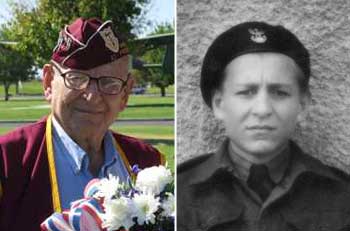
Age: 85
Resistance code name: Orzel (Eagle)
When the Germans came: “Everything that we were used to as expected as normal, penalty was death. Help to the Jewish people. Penalty for death. Even if a slice of bread.”
The Uprising: When he swore his allegiance to the resistance, “I came home to my mother, and I was not sure her reaction, and I told her. She said, ‘They will kill you, they will kill you,’ and that meant to me her approval.”
Close call: As an ammunition carrier, he had a gun that did not actually work, but looked impressive: “I was at a barricade in front of the cathedral. Suddenly, I saw a German in front of me. Both of us jumped behind the big pillar in the cathedral, he from one side, I from the other.” The German tossed a grenade at him, but it didn’t explode. George pulled out his gun. “I told the German to put his hands up, and he was shaking like gelatin.”
Liberation: He was captured when the resistance failed. He was freed from Stalag VIJ, a German prison camp near Cologne on April 17, 1945. George remembers feeling “excitement and disappointment and jealousy,” adding, “American coming for Americans, British for the British, and the French could walk to their country.” He could not return to Poland, now ruled by Soviets who were killing Polish resistance members.
Today: “Freedom doesn’t come free. You have to earn it.”
Krystyna Chciuk
San Francisco, California
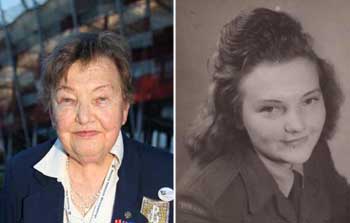
Photo (left) by Michael Luongo. Courtesy Krystyna Chciuk
Age: 88
Resistance code name: Sonia
The Uprising: At 15, she secretly followed her older cousins into a building and hid while a priest administered an oath of allegiance to the gathering. When he discovered her, she announced, “It is too late Father, because I already took an oath with everybody.” While the priest fretted over what to do, “a voice came from the dark, a woman’s voice, ‘I will take her.’ And that is how I joined.”
Surrender: The most sad, tremendous moment was when I had to give up my gun. The men were trying to kill themselves, and we had to talk them out of it.” They were placed into cattle cars — “50 people in one wagon, we could not stand or sit”— and sent to German work camps.
Today: Krystyna said her experience is a reminder to “treasure your freedoms. Don’t be so complacent about your freedoms here. America is the best country, and hopefully we are far away from harm’s way. But freedom you have to fight for. You have to teach your children to guard it and fight for it every day.”
Mark Rudnicki
Sacramento, California
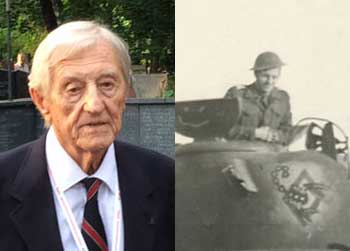
Courtesy Mark Rudnicki
Age: 92
Resistance code name: Emir (Prince)
The Uprising: Mark and a small band of resistance fighters took over Warsaw’s telephone exchange, one of the city’s tallest buildings. “Once we got inside, the Germans were throwing hand grenades and shooting.” They won the building floor by bloody floor, and Mark and a friend “ran to the top of the building and took the German flag down,” putting the Polish one in its place.
Surrender: At war’s end, he made his way from Germany to Italy and finally the U.S. in 1952.
Today: Six million Poles lost their lives in the war; “Three million were Catholics and 3 million were Jewish. We wanted freedom, and before the war Poland had freedom of religions.”
Christine Stamper
Newport Beach, California
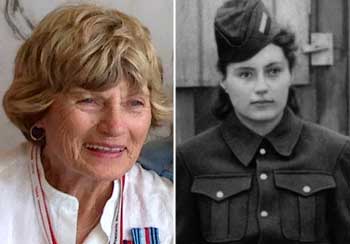
Courtesy Christine Stamper
Age: 86
Resistance code name: Krystyna II
Invasion: Just 11 when the Nazis first came, Christine lived in the center of Warsaw. “The change was immediate, like from night and day,” she said, with rules forbidding radio and gun ownership and establishing curfews. She recalls segregated street cars, Germans in front, Poles in back.
The Uprising: It was forbidden to go to school, so she attended an underground one. One day in 1944, her school’s block was surrounded by Germans. The situation seemed hopeless, but “somebody knew there was a way to get into the storm drain,” Christine said. She and 88 insurgents crawled underground nearly 8 hours, emerging in cabbage fields in territory controlled by the Germans.
Today: “You do anything for freedom, and you don’t know what you would do until you lose it.”
Bill and Lili Biega
Monroe, New Jersey
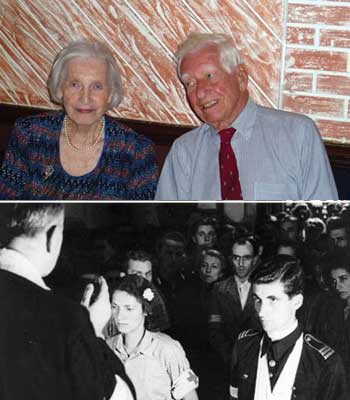
Top Photo: Courtesy Bill and Lili Biega. Bottom Photo: © Uprising Museum
Age: 92 and 91
Resistance code names: Palak (Collector) and Jarmuz (Parsley)
The Uprising: Bill had been wounded by machine-gun fire. He met Lili at a field hospital where she trained young women as medics. Love blossomed quickly, and they married on August 13, 1944, an event filmed by the resistance’s propaganda team. Their wedding became famous among resistance fighters and is often reenacted during commemorations.
Surrender: Bill and Lili were transported to the German POW camp Stalag IV-B Zeithain, where they were allowed to remain together. When the war ended, Bill became a Polish liaison officer to United States Armed Forces occupying southwest Germany. The family made its way to England, finally reaching the U.S. on January 2, 1951.
Today: Bill wants others to know “the importance of standing firm for your beliefs.”
Accompanying articles from the July/August 2015 issue:
“The World War II Struggle That Time Forgot” by Michael Luongo
“Behind Enemy Lines” from the Post archive
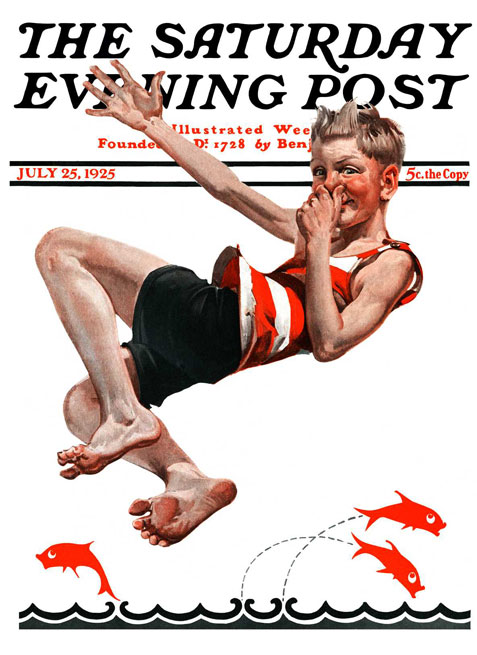
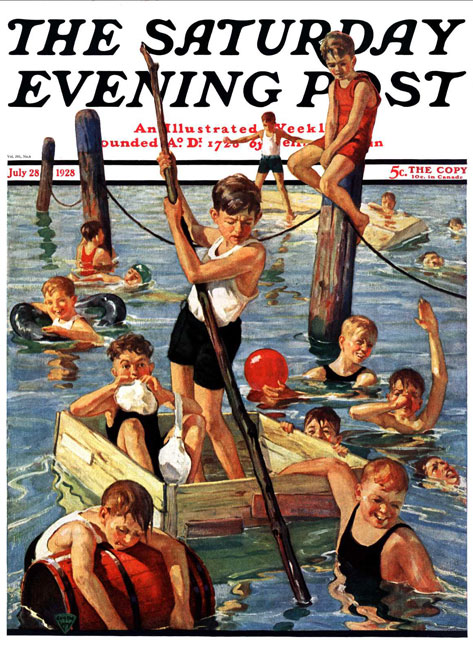
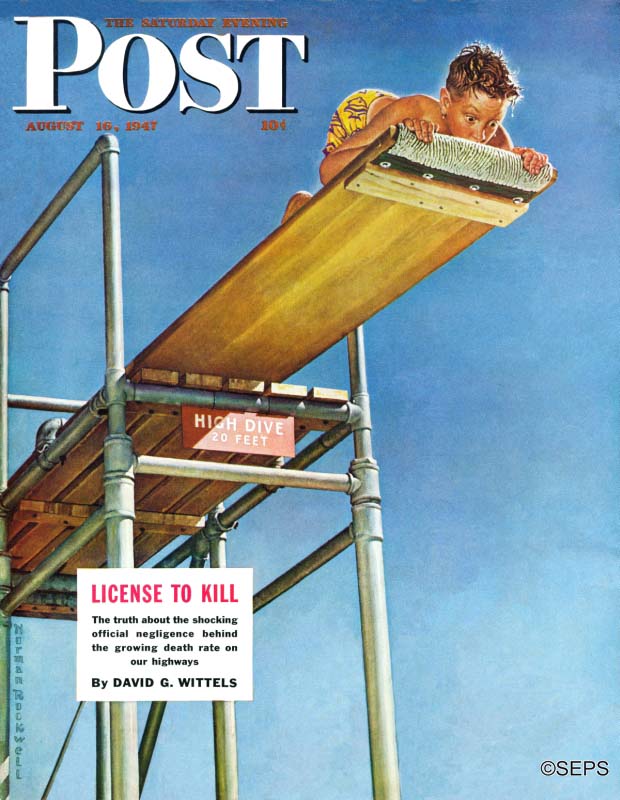
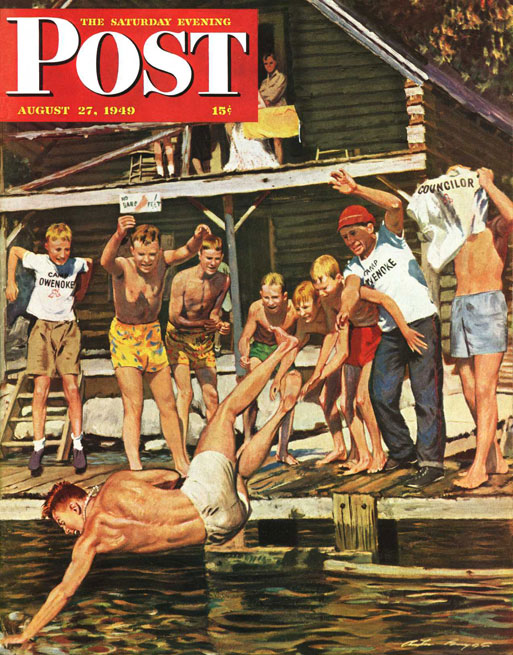
Taking a Swim
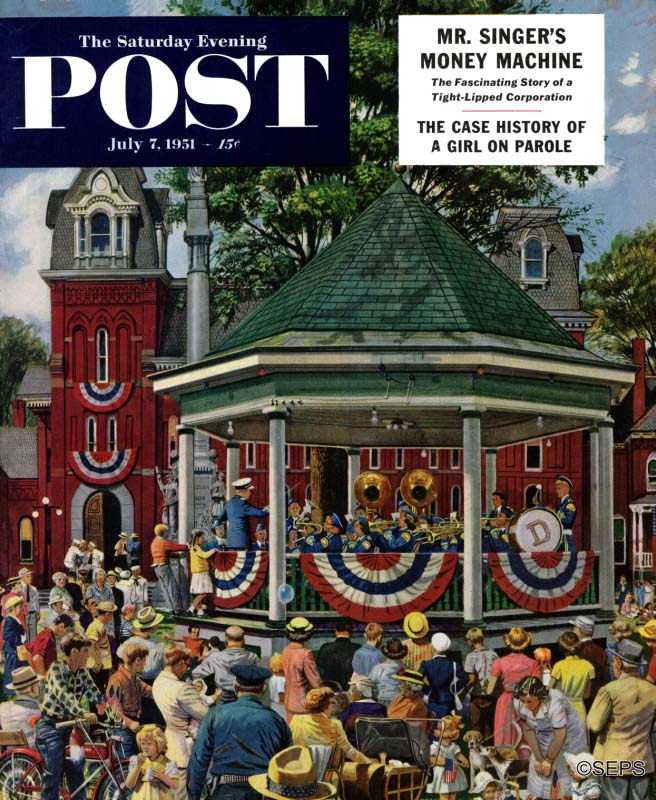
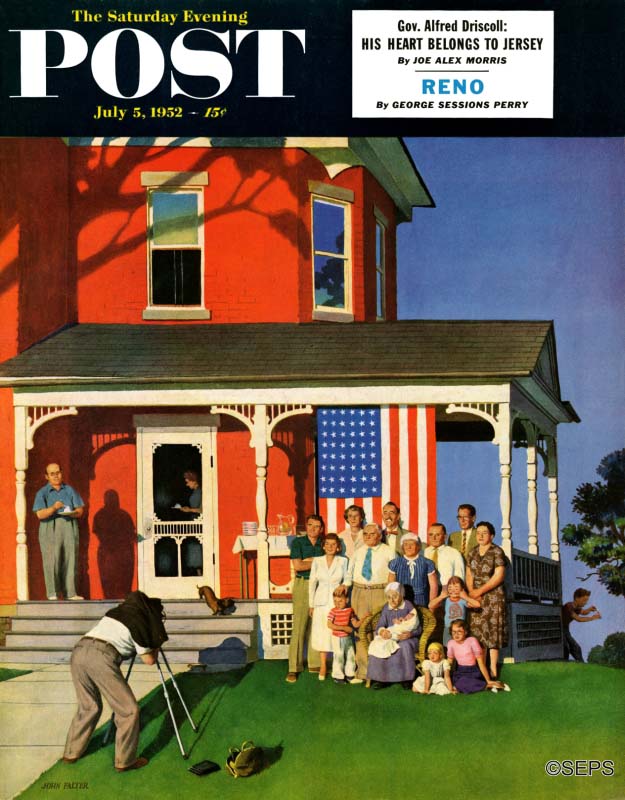
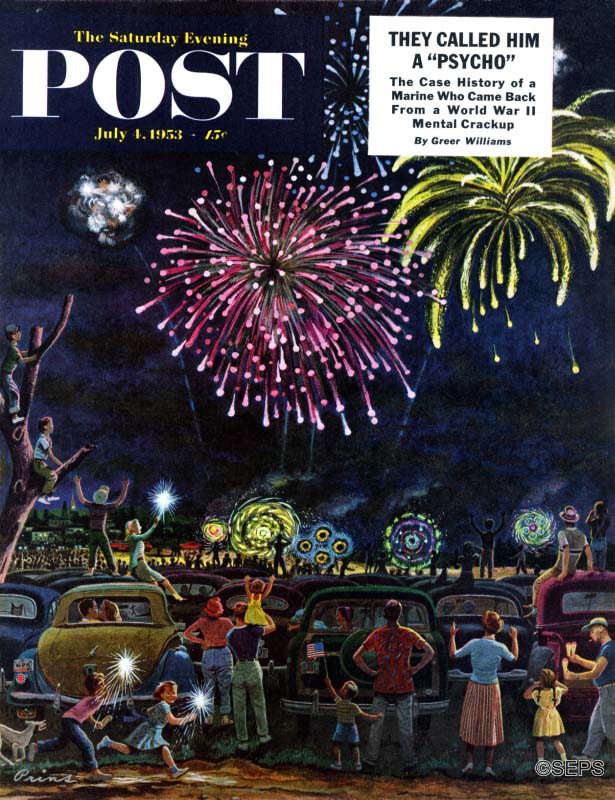
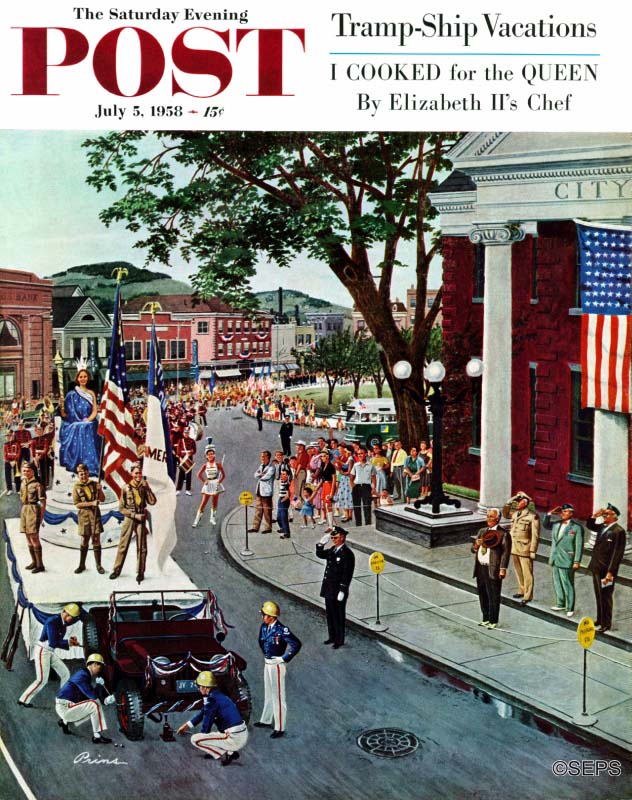
Many things have changed over the years, but one thing about summer has stayed constant — it is hot. And summer’s heat draws kids and adults alike to the water. Whether it’s a vacationer’s plunge into a lake or a child’s first dive in the neighborhood pool, these Post covers celebrate the refreshing days of swimming in the summer.
Swimming on the covers of The Saturday Evening Post (click on the covers to see larger image):








News of the Week: Jimmy Fallon’s Hand, Jack Carter, and Jiggery-Pokery
Jimmy Fallon Hurts Hand
The picture below is the aftermath of Tonight Show host Jimmy Fallon’s unfortunate accident last Friday. Fallon fell in his kitchen and while trying to grab something to steady himself caught his ring on a table and almost ripped his finger off.
Tweeting with one hand. pic.twitter.com/1Yyp8Nl5eR
— jimmy fallon (@jimmyfallon) June 26, 2015
The accident forced Fallon to skip the taping of his show that night, but thankfully he is on vacation this week and can rest. Expect the whole story when he returns Monday, along with a new wacky segment that centers on his hand, probably called Talk to the Hand or something similar.
RIP, Jack Carter
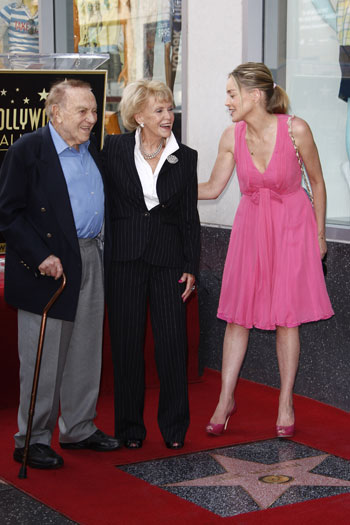
I’ve talked to a few people who thought that veteran comedian Jack Carter had actually died a while ago, but he was still going strong in his 90s. He had roles on such recent shows as Parks and Recreation, iCarly, Shameless, Rules of Engagement, and Family Guy. He seems to have at least one guest-starring role on every single show that has ever been on television, starting in the early 1950s, and was a veteran of the stand-up circuit for decades. He was really of the old school and there aren’t many like him left now. Carter passed away of respiratory failure at the age of 93 in Beverly Hills.
Comedy historian Kliph Nesteroff has a series of fantastic interviews with Carter that you’re going to want to read if you’re a fan of classic comedy and the behind-the-scenes nitty-gritty of show business. Start here and then read the other parts listed in the right-hand menu.
Jiggery-Pokery?
Regardless of where you stand on the recent SCOTUS ruling on the Affordable Care Act, you have to admit that Justice Antonin Scalia’s dissent is pretty entertaining. Besides being more creative and blunt than you might expect in a legal opinion, you also get words like “jiggery-pokery.”
What’s that? It means deceitful or dishonest manipulation or humbug. (Humbug is another word that we should use more.) Name developer and copywriter Nancy Friedman has a detailed explanation of the phrase and where it came from on her entertaining site. She also explains what Scalia meant when he used the phrase “pure applesauce.”
Other words we should use more: “snowbroth” and “brabble”. Definitely brabble, since it describes what a lot of people do on social media and in comment sections these days.
The Big 5-0

Fifty years old is one of the big milestones, right? What’s bigger? One hundred I guess, if you’re lucky to get that far and be honored by Willard Scott and Smuckers. One of the things turning 50 this year is me (and no, I can’t believe it).
Here are some other things turning 50 in 2015 that you might want to celebrate:
- The Pillsbury Doughboy
- SpaghettiOs
- Honeycomb Cereal
- The Sound of Music
- Days of Our Lives
- A Charlie Brown Christmas
- Chris Rock
- Medicare
Merman: The Next Big Hair Color?

Metro U.K. seems to think that the Aquaman-esque merman color is going to sweep the United Kingdom if not the world! Three things. One, I didn’t even know that “merman” was a color. Two, I didn’t know that the man-bun was so popular it had to be “replaced.” And three, no, it’s not the next big thing, unless you are someone between the ages of 18 and 24, go to clubs every Friday and Saturday night, and you’re also sporting a tattoo. As for the rest of us, we’re just going to stay over here with our boring brown and black and blond hair. And some of us, ahem, will go with our skin color.
TV Land Has a New Logo
If you’re a big fan of classic television like I am you probably don’t watch TV Land as much as you used to. Sure, there are still some classic shows on the network, but they’ve really moved away from what they once were. Now they seem to be focused on more recent sitcoms, original shows, and for some reason 27 episodes of Family Feud every day. And that’s why you’ll find me watching MeTV instead of TV Land.
The network has unveiled a new logo. There’s a reason for the change. According to Kim Rosenblum, a VP at the channel, “The majority of our audience in prime time and weekends are now Gen Xers — vibrant, working adults who grew up on MTV and edgier shows. … They demand and deserve a brand that is more connected to where they are today. They are layered and complicated, and their idea of escape is to lean in and go deep.”
Zzzzzzzzzzzz. Oh, I’m sorry, I dozed off there for a second. I don’t even know if what she says is 100 percent true. I’m Generation X and I don’t watch the shows they’re talking about. I actually watch the shows that they’re attributing to boomers (The Dick Van Dyke Show, The Andy Griffith Show, I Love Lucy, and other shows from the ’50s and ’60s). Run shows like that and I’ll watch. I don’t need “edgy” anymore.
The old logo, the one with “TV Land” inside an old TV set, is still going to be used during the day, when some of the older shows still run (even if they are giant blocks of Gilligan’s Island and Three’s Company). The daytime lineup will now be called “Classic TV Land,” which I guess makes the nighttime lineup TV Land New Coke.
In other TV Land news, they also did this. I’m not a fan of the show, but boy has this gotten silly.
July Is National Ice Cream Month and National Pickle Month

Finally, a food holiday that makes sense. Of course National Ice Cream Day is in July, when the summer is in full gear and the heat increases. Pickles? I guess they’re a summer thing too, as you’re having them with sandwiches and potato chips and all the other things you’ll be eating at the beach or a cookout this weekend.
Oh, and if you think there’s no way that you could combine National Ice Cream Month and National Pickle Month into one recipe, well, you’d be wrong. And if you make that, let us know how it turns out.
Upcoming Events and Anniversaries
The modern bikini is introduced (July 5, 1946)
There might not be too much to a bikini but the Wikipedia page for it is long and detailed.
Hoover Dam construction begins (July 7, 1930)
The official site has information if you’re thinking of visiting, along with a detailed history.
President Zachary Taylor dies (July 9, 1850)
The 12th president died after a July 4 celebration, though historians differ on what exactly killed him.
Scopes Monkey Trial begins (July 10, 1925)
SEP Archives Director Jeff Nilsson explains what happened to John Scopes, the teacher who became the “Monkey-Trial Man.”
Vice President Aaron Burr kills Alexander Hamilton (July 11, 1804)
Maybe that’s why The Saturday Evening Post named him one of the 10 1/2 worst vice presidents.
The Debt and Death of Thomas Jefferson
The news in the July 8, 1826, issue of the Post must have seemed incredible: “the immortal author of the Declaration of Independence, Thomas Jefferson, Esq. expired at his seat, at Monticello, on the fourth of July, at 10 minutes before 1 o’clock.”
It scarcely seemed possible that 83-year-old Jefferson had lived just long enough to reach the 50th anniversary of America’s independence.
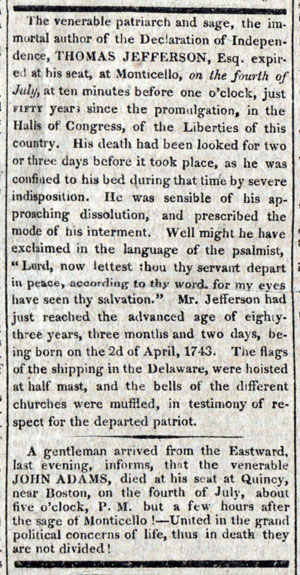
While readers were taking in this news, they would have been astounded to read in the next column: “A gentleman arrived from the Eastward, last evening, informs us that the venerable John Adams died at his seat at Quincy, near Boston, on the fourth of July, about 5 o’clock p.m., but a few hours after the sage of Monticello! United in the grand political concerns of life, thus in death they are not divided!”
The report continued, “On the morning of the Jubilee, he awoke at the ringing of the bells and the firing of cannon; the servant who watched with him said, ‘Do you know, Sir, what day it is?’
“‘O yes!’ he replied, ‘it is the glorious 4th of July — God bless you all.’”
Just an hour before his death, visitors asked him for a toast, which they could give that evening. He said, “I will give you ‘Independence forever.’”
A woman present asked him if he wished to add anything.
He answered, “Not a syllable.”
At his death, John Adams was able to bequeath land and books to start a school in his town of Quincy, Massachusetts. Years before, he had faced financial ruin when his London bank collapsed. Fortunately, his son, John Quincy Adams, came to his rescue by selling one of his houses and cashing in several investments. By his action, he left his father free of debt and still in possession of 275 acres of land.
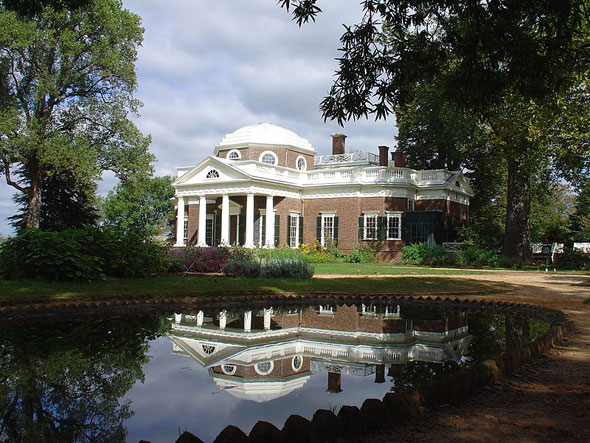
(Courtesy Wikimedia Commons)
Down in Monticello, the end for Thomas Jefferson wasn’t as serene. Readers of the Post knew that Jefferson had spent his final months trying to free his estate from debt before he died. According to Thomas Jefferson Randolph, his grandson, the former president’s debts exceeded $100,000.
Jefferson had struggled with debt most of his life. To some degree, he was responsible for his financial troubles. He loved good living and he’d spent a fortune building and furnishing his mansion, Monticello. And, as he admitted to grandson Randolph, he hadn’t been skillful manager of his estate.
But he’d also been hurt by “the unfortunate fluctuations in the value of our money, and the continued depression of farming business.” Jefferson’s income was closely tied to those of his neighbors, since he was a creditor was well as debtor. When a poor growing season kept neighboring planters from repaying their loans to him, Jefferson would sink deeper into debt.
Some of his debtors had repaid his loan in Continental currency, but once America had become independent, the British merchants to whom Jefferson owed money would no longer accept these dollars in payment.
Jefferson had also been saddled with a sizeable debt inherited from his father-in-law. And in 1817, a friend asked Jefferson to endorse notes to repay a $20,000 debt. The friend died without clearing the debt, and that amount fell to Jefferson.
Many of the Founding Fathers had similar money troubles; George Washington and James Monroe died in debt. So did Alexander Hamilton, who was so poor that mourners at his funeral had to pass around a hat to gather the cash needed to bury him.
The social leaders of the new country might have been land-rich — Washington, for example, owned over 35,000 acres — but with few cash buyers of land, they had trouble applying their wealth to their debt.
Jefferson realized that, unless he cleared his debts, his daughter would have to follow his path, continually fighting for financial independence. Creditors had refrained from hounding Jefferson for repayment, out of respect for one of the nation’s architects. But they might not be as considerate to his daughter.
Desperate to raise money, Jefferson hit upon a unique solution. He and his grandson, Randolph, would run a lottery. The winner would gain title to Jefferson’s lands, including his beloved Monticello, which he had built over the course of 56 years. It was appraised at $71,000 ($1.5 million today.)
In April, the Post reported, “Messrs. Yates and McIntyre [of New York city] have the management of Mr. Jefferson’s lottery. There are 11480 chances at $10 each. The books for subscription were opened at Washington on Saturday, and it is said the tickets will be ready for delivery in a very short time.”
Jefferson was pleased to learn the country’s initial response to his scheme was generally positive. Yates and McIntyre had even agreed to run the lottery without charging a fee. Furthermore, the Post reported, “Lottery brokers are to sell the tickets without profit.” One Baltimore citizen had begun urging his fellow citizens to buy tickets and then burn them on July 4th , enabling Jefferson to pay off his debts and keep his property.
But then, several prominent citizens in New York proposed that Jefferson abandon the lottery. They said they would launch a fundraising campaign that would pay his debts without his losing his lands. Jefferson agreed.
But the campaign raised only $16,500 before it was ended. Jefferson asked that the lottery be revived. But now the initial enthusiasm had faded. Ticket sales were disappointing.
Fortunately, Jefferson died without knowing that his scheme wouldn’t work. He had only heard news of broad support from across the nation. He could now look back on his life with contentment. In a letter to his grandson, reproduced in the Post, he wrote that he had no reason to complain about his money worries, “as these misfortunes have been held back for my last days, when few remain to me. I duly acknowledge that I have gone through a long life, with fewer circumstances of affliction than are the lot of most men. Uninterrupted health, [sufficient money] for every reasonable want, usefulness to my fellow-citizens, a good portion of their esteem, no complaint against the world, which has sufficiently honored me, and, above all, a family which has blessed me by their reflection, and never by their conduct given me a moment’s pain. And, should this my last request be granted, I may yet close, with a cloudless sun, a long and serene day of life.”
After his death, lottery ticket sales fell sharply; Americans weren’t as enthusiastic to help Jefferson’s heir. And now several states were raising objections to the scheme. By 1828, Randolph conceded the project had failed.
Jefferson’s estate, and debt, were inherited by his daughter, Martha Washington Jefferson Randolph. She soon began selling off the estate. She was forced to sell Monticello in 1831. She also sold the 130 slaves still held on the estate.
A Stitch in Time
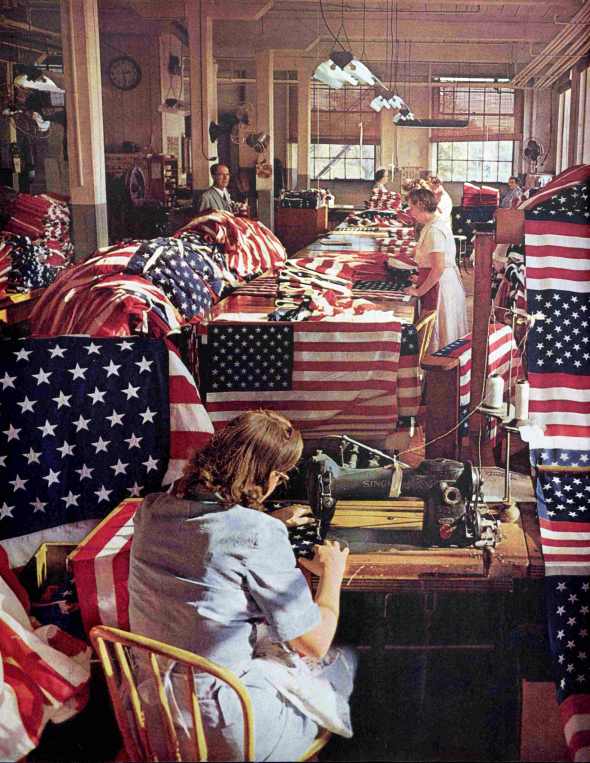 Stars in their eyes: Seamstresses rush to complete the new 50-star flag in 1960.
(Photo by Larry Keighley, © SEPS)
One more month and the proud new 50-star flags you see being sewn together by the busy Betsy Rosses at left will become officially ensigns of the United States. It has been a hard two years on manufacturers such as the Dettra Flag Company of Oaks, Pennsylvania.
After 47 years of an unchanging 48-star design, two newcomer states forced the rearrangement of the flag’s union, or starred blue field, twice within a year. On the double change-over, Dettra lost about $150,000 in canceled orders and unsalable inventory. The short-lived 49-star flag started the biggest boom the flag business had ever known. This boom collapsed utterly when Hawaii’s admission to the Union was voted by Congress in March 1959.
However, when President Eisenhower announced on August 21 which 50-star design was to be used, the boom revived, and by the Fourth of July Dettra will have made 2 million bright new banners — twice as many as it ever made before in a single year, and about 40 percent of the year’s total for the country.
Article originally published as “Faces of America: (4×5) + (5×6) = 50” in The Saturday Evening Post, June 4, 1960
Opinion of the Boss
On her first Friday at Skye Publishing, Alyssa Martin intended to avoid making any more mistakes. But while working during her lunch hour, she couldn’t resist peeking at her emails. She spotted a subject line help from her new friend Courtney, opened the message, and read:
I feel like the stupidest here.
Please send me your words of cheer.
Obviously their boss, Mr. Bingem, had belittled Courtney. Alyssa, a recent college grad, knew how that felt. She’d cringed, and he’d roared about a terrible mistake that shut down computers. He’d snapped at typos she hadn’t noticed, and he’d growled about a few minutes of lateness. Only Courtney had given instructions patiently.
Having finished proofreading sales statistics twice, Alyssa decided she could afford a few minutes to console her friend. The hall outside her beige cubicle was quiet, no one in sight. To a passerby she might look businesslike, wearing a navy suit and button earrings, focusing on a computer screen. Only her necklace of shells looked as creative as what a higher-up wore in the editorial department she aspired to. She typed:
The boss is the stupidest here.
Feeling hungry, she bit into her peppery tuna sandwich, then continued:
He makes his staff feel like a mite
And upsets us with his sneer.
When she touched the mouse and thought, smiling, of sending Mr. Bingem up in a kite, her screen turned icy blue and warned, Your message has been sent. She jerked her hands away, letting the mouse clatter to the floor, and slid her wheeled chair back from the desk. Only Courtney should get the message, she thought, although she suspected the computer of a mischievous streak. As she rummaged in a drawer for instructions about unsending, Courtney rushed into the cubicle, wearing a cherry suit and carnation perfume, her silver earrings and ponytail swinging, stilettoes clicking.
“There’s a disaster,” Courtney announced.
“What?” Alyssa asked, her shoulders stiffening.
“I just learned from Joan, our emails went to everyone on our floor, and that includes, I’m sorry to tell you, Mr. Bingem.”
For a moment Alyssa couldn’t take in what she’d heard. “It went to Bingem?”
“Yes, do you know how to unsend? I might be able to.”
“Oh, please do.” Alyssa was surprised that her throat tensed and her voice squeaked.
Courtney tapped commands on the computer, and the screen replied, That function is not available. Alyssa phoned the tech squad, heard a nasal recorded voice, and pleaded for help fast.
“Not in? They take a long lunch. It’s probably too late to unsend.” Courtney glanced at the little, framed photos and the potted philodendron that now seemed a temporary effort at making the cubicle homey. “Don’t get so upset. Just think, you could find a job that you’ll like a lot better than this one.”
Another job — where? Alyssa had tried for four months to land anything in publishing. When she’d told her parents about the opportunity at Skye, her mom had beamed and hugged her, pleased and proud.
“My parents want to save for retirement, and I want a job where I can get promoted to children’s books, and this is the only one with even a chance. Could you try again to unsend?”
Courtney made another effort, stood back, and talked fast, bobbing her head, her earrings jingling. “If you could hack into his computer — look into his files for his password or, here’s an idea, disguise your voice and leave him a message that he’s needed immediately at home.”
The suggestions became a blur. Courtney waved a hand where her ring finger sparkled; she expected to move to another city, another company, and happiness in six months. For Alyssa a mistake could end her career hopes. No promotion to editorial, not even a job.
Needing to rally her thoughts into a plan, she said with a flicker of annoyance at the friend whose email had started this disaster, “Let’s be careful.” They must quell their panic, breathe slowly. “I’ll send an email telling people not to open our last emails.” Alyssa’s hand shook when she picked up her mouse and slid it. The cursor refused to budge on the screen. Her stomach felt like when an airplane hit turbulence. The screen showed 12:47, scant time left before Bingem’s usual time to return from lunch.
Courtney scrunched her face and chewed her lower lip. “The subject line help will get his attention, and he could’ve read our emails already, the way he goes walking around with his smartphone. You’ll need a believable excuse.”
A pain worsened in Alyssa’s stomach. “I’ll say that I didn’t mean it, it’s a jest that I messed.”
“And tell him that he’s the best, but he’s not a good sport type that’d take a joke, although he actually used to seem like a human being and he even smiled sometimes before that mean old Mr. Winters joined the company. Bingem’s in his worst moods after they’re together.”
“Do you know if Winters was on our floor today?” Alyssa asked.
“I didn’t see him yet although he usually comes prowling around on Fridays.”
“Maybe Bingem’s secretaries would delete our emails.” Hope floundered up.
“She wouldn’t dare touch anything of his unless —” Courtney’s face brightened. “She might ask his permission to remove yours because, let’s say it’s too personal about you. She’s a helpful, friendly type, so we could ask her.”
“Thank you for that idea! Let’s go now and hope she’s there.”
They found J.R. Bingem’s door locked and waited beside it, expecting his secretary to return before him. Soon other employees hurried by, returning from lunch. At 12:55 Courtney whispered, “I’ll go and explain to all our coworkers to ignore our emails.” She fled, and Alyssa thought, I made the stupidest bungle, I’m alone in a jungle. At 1 p.m. his secretary was still away. Taking a chance on who would return first, Alyssa lingered, her heart thumping. At 1:02 J.R. Bingem, a plump, balding supervisor, lumbered from around a corner, and his scowl blew her away.
In the cubicles Alyssa passed, women were already typing. As soon as she reached her desk, she phoned the tech squad, whose recording answered. While she searched in a drawer for computer instructions, her phone rang.
A woman’s voice sounded sympathetic. “Mr. Bingem said to tell you to come to his office immediately.”
“Oh, now? Uh, I’ll be there.”
Alyssa felt an urge to scoop up her pocketbook and photos from the desk and run away, rather than endure his scolding. She’d have a charge card bill to pay, her parents to soothe, and no place that she wanted to apply to; she’d exhausted her list of publishing companies. I can beg for mercy, she thought, and appeal to sympathy. She risked two minutes with her little mirror, tidying her collar, applying pink lipstick, and arranging her wavy hair to try to resemble a girl her age, probably his daughter, who smiled in a photo on his desk. Breathing fast, she left her cubicle.
When she reached his chilly outer office, the gray-suited secretary said, “I’m sorry, you’ll need to wait.”
A minute later the door swung open, and H.T. Winters, a steely-haired executive of imposing height, stalked out. His suit, his watch, and his shining shoes all looked more expensive than anything Mr. Bingem ever wore. He frowned at Alyssa, his eyes opaque like bullets.
Entering the inner office, she almost coughed on cigar smoke. The starkness of the small room was softened only by a tan carpet and family photos on a beige wall and desk. Mr. Bingem slumped in a swivel chair behind his desk, his jowls drooping.
“I read that unjustified email,” he rumbled.
“I was working during lunch hour, trying to catch any mistake I might have made, and for a moment I wasn’t thinking right. I was going to change it, I didn’t mean to send it, but the computer —”
“You should know not to write an email that you don’t want the world to see, and you should know that sending out such an insult can be a cause for a termination of your employment.”
Yes, she knew, for describing the boss as stupid, she could be on the street fast. Mr. Bingem looked displeased, remote, tired, a finger touching his throat, his glance wandering from her, perhaps undecided.
After a moment when she could not think of what to say, words rushed out. “I’ll tell everyone around here that it was my stupid mistake.”
He leaned forward and said in a softer tone, “Fortunately, I reached one of our geeks on his cell phone, and he’ll remove that mess. Because you’re new here and your work has already shown improvement, I’ll give you a chance with a warning. I’ll warn you once, don’t ever again insult anyone like that around here.” He leaned back in his swivel chair. “You were totally wrong about Herbert Winter, who we should describe as” — Bingem’s voice rose to a doubtful pitch — “intelligent.”
Mow-Town
O ur first grandchild was born this past winter, so my wife and I did the only sensible thing we could and bought the house next door to her. It came with eight acres of land which was more land than I wanted to own, but one loses all perspective where grandchildren are concerned. The property includes a pole barn, five apple trees, two persimmon trees, and four stone columns in need of repair, which I need to do soon before a stone dislodges and conks my granddaughter on the noodle. I had no idea the birth of a grandchild would lead to masonry, but there you have it.
We gave a good chunk of the land to my son, the father of said grandchild, who, thinking we were doing him a favor, was profoundly grateful. Gifts of land are always welcomed in the winter, but come summer grass needs mowing, which can test our gratitude. My son is no fan of cutting grass and might be tempted to return that present. His daughter is only three months old, but he’s already grooming her to mow.
For many years my wife and I rented a place to live, then somehow ended up owning three houses and nearly 100 acres of land. I feel the way old kings must have felt, and sometimes wish I had a peasant or two to help me out.
The bulk of our acreage is turned over to cows that wander the pastures and woodlots, dining al fresco. Of the 100 acres, I keep five of them mowed. A boy down the road mows when I can’t, but that’s hardly a break since overseeing a boy is as much work as mowing.
My son and I are alike in many ways, except when it comes to mowing. I enjoy it, if only for its prompt gratification. My other paydays lie down the road — the book that takes two years to see the light of day, the Sunday sermon that hits home five years after its delivery. But when I mow, the fruit of my labor is immediately savored. The clipped rows follow in my wake; the scent of cut grass transports me to childhood. Nothing smells like it used to except fresh-mown grass.
 Everything else has changed on the grass front. When I was growing up, cutting the grass was a kid’s job. Fathers only mowed until their sons were old enough to assume the job, usually around 9 or 10. But my generation of fathers has ruined things for boys by doing the mowing ourselves. A neatly trimmed lawn has become more important than a carefully formed boy. Plus, there is a fear to mowing today that wasn’t present when I was a kid. Mowers now come festooned with warnings cautioning the user against sticking their hands and feet under the mower deck while the blades are spinning. Have we gotten so stupid we need to warn one another not to do that? When I was a boy, if you got your foot lopped off by a lawn mower, your father told you to walk it off. He maybe even cuffed you upside the head and told you not to be an idiot. The last thing he would have done is take over the mowing. I could have severed both my legs above the knees and my dad would have said, “That grass isn’t going to cut itself. Better get busy.”
I’m using the words father and boy on purpose, since mothers and girls never mowed when I was a kid. Occasionally, one might see a farm wife mowing the yard, but even that was rare. My sister is 59 and has never, not once, mowed a single strip of grass. I’m all for equal rights and equal pay and would happily throw out all the men in public office and replace them with women, but I draw the line at women cutting grass. I know plenty of women mow grass nowadays, but it seems wrong, like women playing football. Having said that, I’ll probably change my mind when I’m too old to mow and my granddaughter offers to cut my grass.
The 50-States Club
It was too early to eat ice cream when I pulled into Velvet Cream, better known locally as “The Dip,” in Hernando, Mississippi. But I had some anyway. Because at 29 years, 10 months, and 23 days, I had made it to my 50th state, just under the wire of my 30th birthday. It felt like a momentous occasion, as if I’d suddenly joined a club of adventurous, well-traveled people who’d trekked to every corner of our inarguably vast country to take a peek. (And that’s as good a reason for ice cream as any!)
My accomplishment is nothing compared to those for whom just stepping foot into all 50 states isn’t enough. Some set more ambitious goals — tighter time limits or specific criteria, such as a night spent in each of the capital cities. Lance Longwell learned something new in each state by visiting a national park, a museum, or an educational institution, and he did it all before he was old enough to get his driver’s license. Cari Sheets drove a golf cart, inspired by her father, Bud, who knocked off his 50 by playing golf in every state. Bob Bentz made it his goal to either see a professional baseball game in each state or walk onto an infield and touch home plate. North Dakota was the last piece of the puzzle. “Since it was February, it was tough to find home plate, but I did it,” he says.
Why do people take on missions like this? “People who set very ambitious travel goals tie the goal to personal fulfillment,” says Robert Epstein, senior research psychologist at the American Institute for Behavioral Research and Technology and former editor-in-chief of Psychology Today. “It becomes a kind of obsession.”
And once you’re finished, what next? For some, the impulse is to do it all again, as in the case of Frank Bartocci, who ran a marathon in every state a total of nine times. For others, once around the loop is enough to satisfy their sense of adventure and their craving to know their beloved country a little more deeply. “There’s always something in every state that makes it worth visiting,” says Paula Boone, expressing a feeling common to many 50-staters. “You never know what’s going to be around the bend.”
To read the entire article from this and other issues, subscribe to The Saturday Evening Post.
Intimate Portraits of American Indians
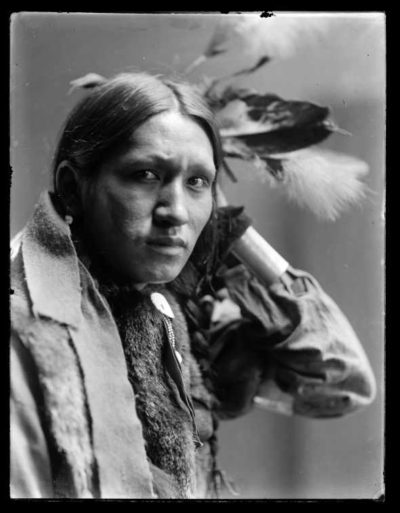
In 1898, William F. “Buffalo Bill” Cody led a spectacular parade down Fifth Avenue in New York. A troupe of hundreds of performers — American Indians in traditional headdresses, cowboys in 10-gallon hats, and military men from Europe, the Middle East, and other countries who were known as the Congress of Rough Riders of the World in colorful regalia — marched down the broad avenue, accompanied by hundreds of horses, buffalo, and other animals.
The parade was designed to entice the public to attend performances of Buffalo Bill’s Wild West Show, which played across the country and Europe in grand outdoor arenas holding as many as 10,000 to 20,000 ticket holders. Between 1883 and 1913, Buffalo Bill’s Wild West toured every year from April through October, preparing a full program of entertainment: feats of horsemanship, marksmanship, and reenactments of Custer’s Last Stand at the Battle of Little Big Horn, the Battle of Summit Springs, the Deadwood Stagecoach robbery, and an “Attack on the Settler’s Cabin.”
Cody and his partners marketed the Wild West program as an educational exhibition and experience, introducing audiences to the American frontier and cowboy life, American Indians, and later, internationally acclaimed military and equestrian teams. Ticketed patrons could visit the Wild West village, the camp where Cody and all of his performers lived at each tour stop.
Cody befriended many of the American Indian men performing with his Buffalo Bill’s Wild West, but the daily programs depicted American Indians in the most stereotypical of situations, relentlessly attacking white American settlers or soldiers.
Gallery

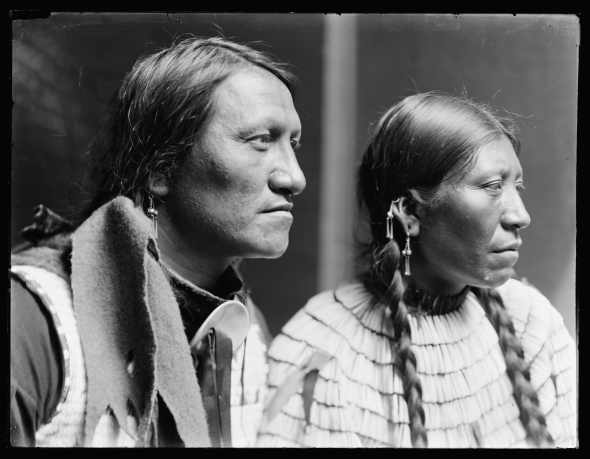
Photo by Gertrude Kåsebier.

Photo by Gertrude Kåsebier.

Photo by Gertrude Kåsebier.
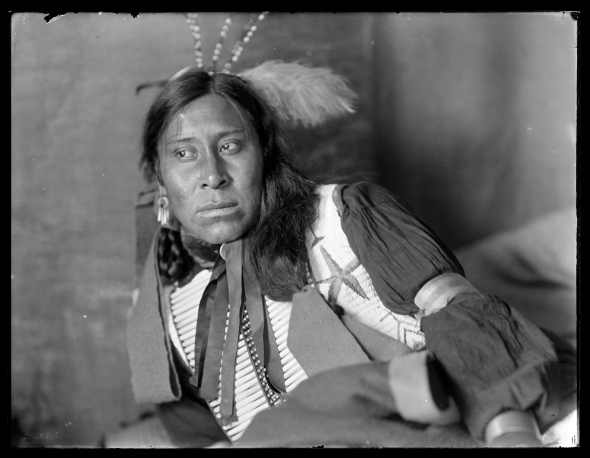
Photo by Gertrude Kåsebier.

Photo by Gertrude Kåsebier.
To read the entire article from this and other issues, subscribe to The Saturday Evening Post.
Somersaulting into America
The letter that would change my father’s life — and eventually lead to his recent induction into the USA Gymnastics Hall of Fame — arrived in 1964, at his high school in Nara, Japan. Addressed to Yoshi Hayasaki, it was from an American.
My father, 17 at the time, could not make out a single sentence typed by Eric Hughes, a professor at the University of Washington in Seattle. He asked a campus English teacher to translate. “It sounds like he is trying to invite you to come to America,” the teacher told my father.
Hughes, as it turned out, had started a men’s gymnastics team at the University of Washington in 1956, a time when the sport in the U.S. lagged behind Japan and the Soviet Union. While on sabbatical in Japan 1964, Hughes scouted for talent. That was when he first spotted my dad, a 5-foot-3 city and regional champion, ranked as one of the top five gymnasts in Japan.
The letter stated that if my dad earned admittance to the University of Washington, he would be guaranteed a scholarship to the school, and could compete on its team. All my father really knew of America at the time came from watching translated episodes of Rawhide. Coaches and teammates could not understand why my dad would even consider competing in another country — in the U.S. of all places — when Japan was already the gymnastics superpower. Everybody was against the idea, including his father.
Still, the thought of America electrified my dad. He had been offered scholarships to Japanese universities, and saw that many former champions became physical education teachers, while others became foot soldiers for corporations. “I saw my future,” he told me. “It was like a blueprint.”
There is a Japanese proverb: “The nail that sticks out will be hammered down.” It is a saying I’ve thought about throughout my own life, as someone who feels like I’ve at times stuck out, even in America. Here, however, it is possible to find your own way, and embrace the road less taken. Back then, in Japan, my dad could practically see the hammer’s face.
For him, America was uncharted territory that seemed to offer an escape, or at least an adventure. Grudgingly, my grandfather assented, telling Dad: “Do not come back until you have accomplished something.”
To read the entire article from this and other issues, subscribe to The Saturday Evening Post.
News of the Week: Gmail, General Mills, and Great Prog Rock
Undo Send

Have you ever sent an email, and a few seconds after hitting the Send button you sigh because you forgot to include something in the email? Or maybe you wanted to send someone a rant about your horrible boss and you accidentally sent the email to the very boss you were talking about because the auto fill put in his name? Now you can grab that email before the other person gets it.
Gmail’s “Undo Send” feature has been available in Google Labs for several years but now Google has made it a regular feature of their Gmail service. You can set it to delay sending your email by 5, 10, 20, even 30 seconds. So really, it’s not a “hey Google, stop that email!” but rather more of a “let me think about this for a few moments before the email is actually sent” (though hopefully you can take those few moments to think about it before you hit send).
Five seconds? If you’re going to use it, I’d suggest setting it to 30. You’ll need all the time you can get when you panic and rush to correct your horrible mistake. If you’ve been drinking late at night, you’ll probably wish it was 30 hours.
Goodbye, Artificial Colors and Flavors
Everybody is getting rid of the artificial in their food these days. Hershey, Nestle, Panera Bread, Pizza Hut, and Subway have all announced that they are changing the recipes of some or all of the food they sell. Now General Mills has announced that by 2016 artificial colors and flavors will be gone from 90 percent of their cereals, a list that includes Cocoa Puffs, Reese’s Puffs, and Cinnamon Toast Crunch (Cheerios and some others are already artificial-free). It’s part of a bigger plan by General Mills to make their products healthier. They’ve also taken the sugar out of their Yoplait yogurt and are reducing the amount of trans fats in some products.
Fans of Trix might not be happy though. While General Mills says that fruit juices and natural coloring can duplicate most of the colors and tastes in the cereal, they don’t have any natural way to get the exact color of the blue and green pieces. Maybe they should sell two different types of Trix. You can call the new, healthier one Trix and the other one Classic Trix. Put it in a retro box and people will buy it like crazy.
RIP, James Horner and Dick Van Patten
If you are a casual watcher of movies, there are probably two composers you know. The first is, obviously, John Williams, who has done the music for movies like the Star Wars series, Superman, Jaws, Jurassic Park, and the Indiana Jones films (among many others), and the second is James Horner, who had an impressive resume as well. He did the music for Titanic, Apollo 13, Braveheart, Glory, Avatar, Aliens, The Perfect Storm, some of the Star Trek films, and a whole lot more over the past 40 years (just take a look at his impressive resume). Some of his best work was for the underrated Robert Redford movie Sneakers .
Horner, a veteran pilot, died Monday in a plane crash in the Los Padres National Forest area of Southern California . He was 61.
Dick Van Patten was probably best known as the dad on ABC’s Eight is Enough, but he had a huge resume too, appearing in such TV shows as I Remember Mama and Rawhide in the 1950s to more recent shows like Arrested Development and Hot in Cleveland. He passed away from complications of diabetes at the age of 86.
What are the 50 Greatest Progressive Rock Albums of All Time?
I don’t follow music as much as I used to. You’ll find me listening to Sinatra or Marshall Crenshaw before I’ll listen to whatever is on the Billboard charts these days. I just took a look at the top 10 on the Hot 100 and it’s like a foreign language to me. What’s a Fetty Wap?
I wonder if younger people will know what progressive rock is. (Actually, do younger people even call new releases “albums” anymore?) Rolling Stone has their list of the 50 best prog rock albums. Some of the groups you’d expect to be on such a list are there, including Jethro Tull, Yes, Pink Floyd, King Crimson, and Genesis, along with some interesting choices, like Frank Zappa and the Mothers of Invention’s One Size Fits All.
Of course, lists like this always miss something and open things up to debate (read the comments section on the article, for example). I’m just happy that U.K. is included, though I would have picked Danger Money over their first album.
It’s Take Your Dog to Work Day

When you work from home and own a dog, every day is Take Your Dog to Work Day. But today is the official day for people who work in offices to bring their canines to work. And I say offices because I don’t think this will work if you wait tables or you’re the lifeguard at a pool.
But what about people who don’t have dogs? Can’t they bring their cat or gerbil or snake to work today? It might be funny to bring a cage with your gerbil and put it on your desk, though I’m going to assume we’re never going to see a Take Your Snake to Work Day.
Upcoming Events and Anniversaries
Wimbledon starts (June 29)
The oldest tennis tournament in the world starts Monday and can be seen on ESPN and ESPN 2 (with highlights every night on The Tennis Channel).
Gone with the Wind published (June 30, 1936)
In 1940, The Saturday Evening Post got an envelope from author Margaret Mitchell containing the sequel to her classic novel … or was it?
The Battle of San Juan Hill (July 1, 1898)
Eyewitness to History has a report from a journalist who observed the battle in Cuba.
President Lyndon Johnson signs the Civil Rights Act (July 2, 1964)
SEP Archives Director Jeff Nilsson on how the country was divided in 1964.
President Garfield shot (July 2, 1881)
CBS Sunday Morning’s Mo Rocca has an interesting story on how the doctors treating Garfield actually helped kill him.
Independence Day (July 4)
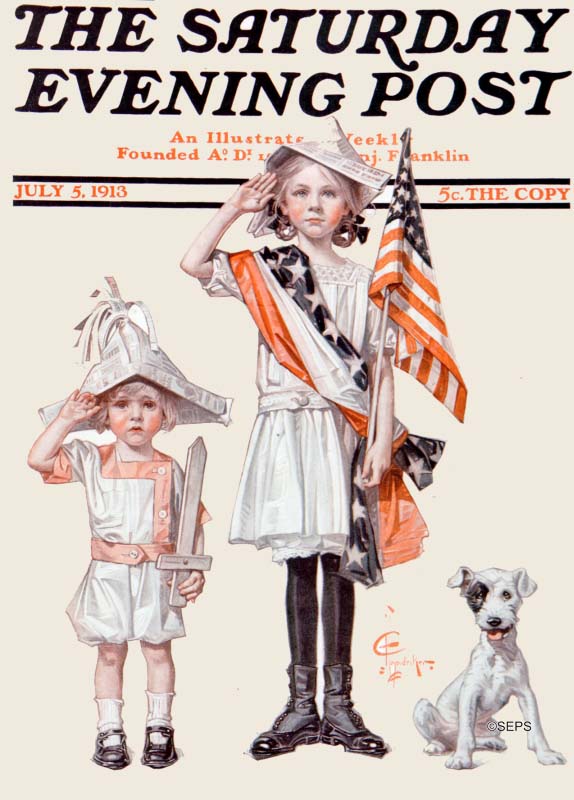
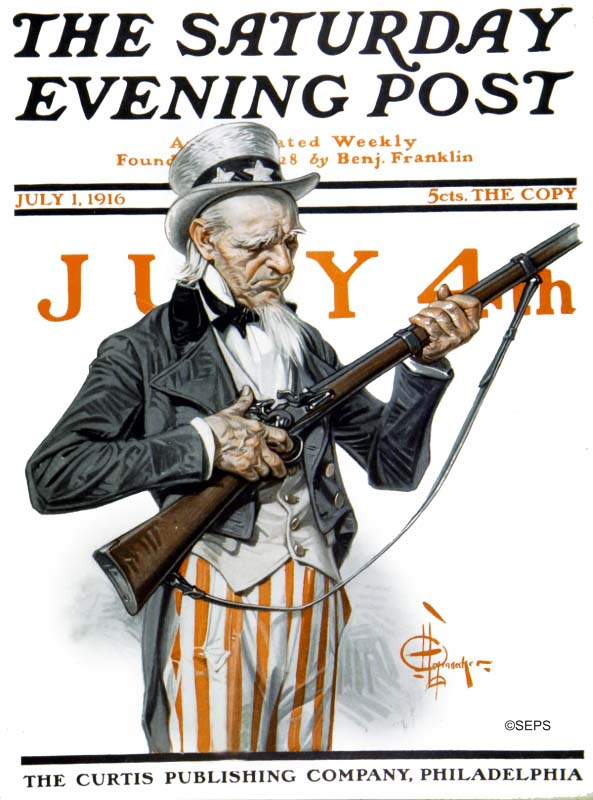
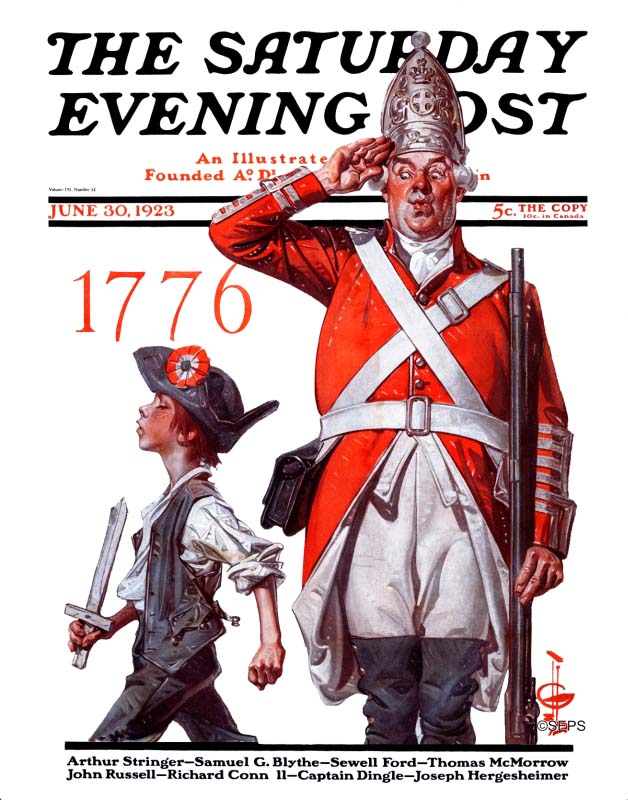
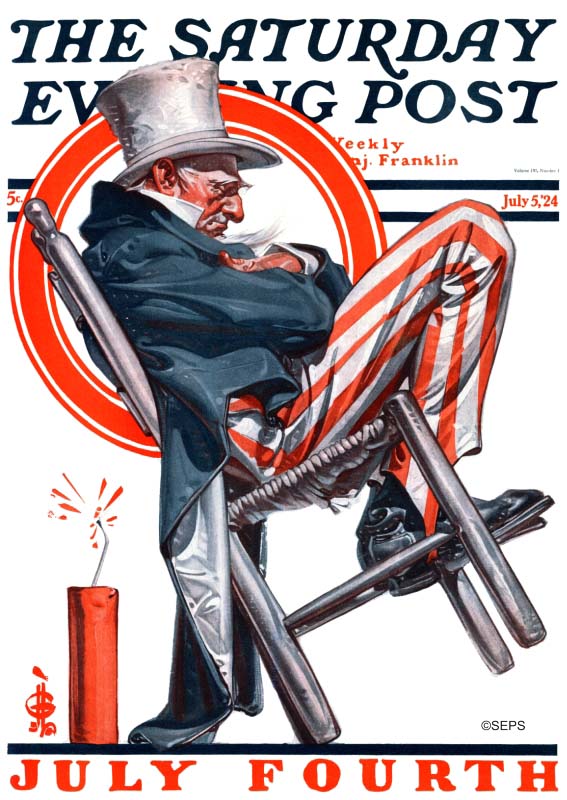
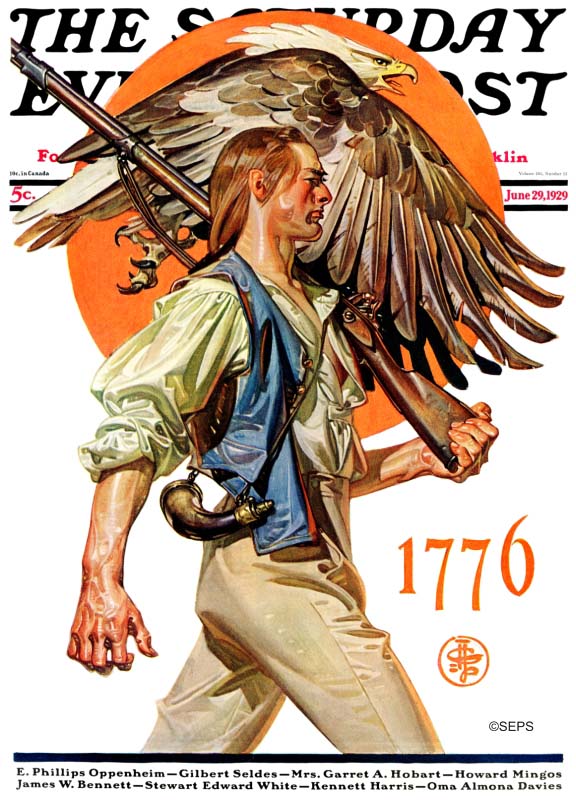
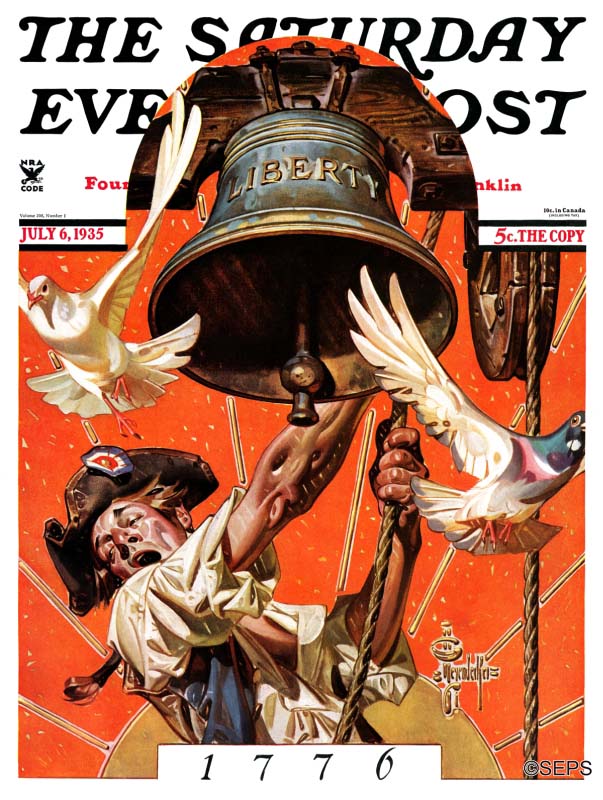
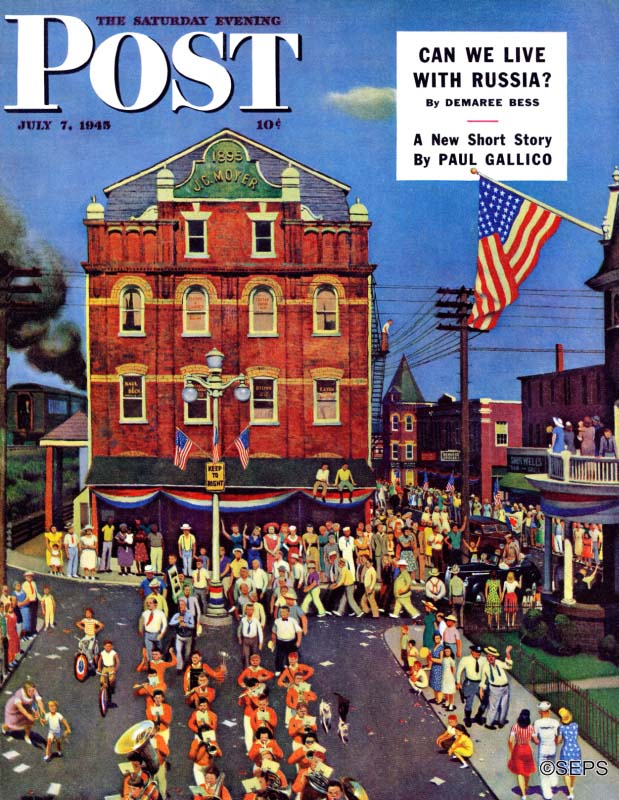
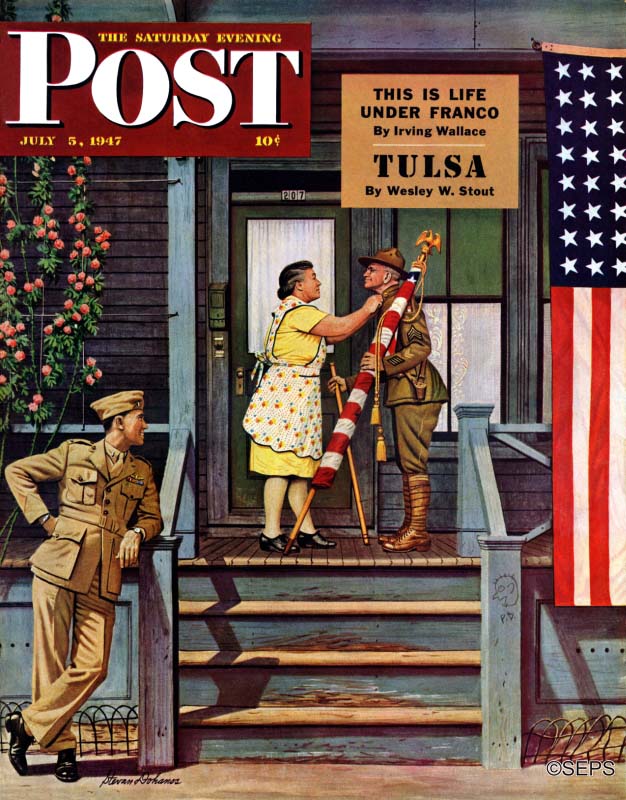
Here’s a collection of July 4th-themed covers that The Saturday Evening Post has done over the years. I particularly like how John Falter depicted the sun in his painting.
Cat People
She knocked again at the door. If necessary, she could knock all day.
In the 15 years that Eleanor Kappleman had been the president of her condo’s board of directors, she never missed a monthly meeting. She cooked dinner seven days a week, played mahjong three days a week, and kept the books for her son’s exterminating business. She brushed her teeth for at least three minutes every night and creamed the creases in her elbows and her knees. Eleanor was a serious person.
But there was no job she took more seriously than enforcing the rules of her community. In three months’ time, the residents would either vote to re-elect her or give the seat to Lotty Plotkin. Lotty Plotkin! A woman who neglected her begonias and left her trash out on the curb! Some days it seemed like the future of South Florida, perhaps the future of the world, rested on Eleanor’s shoulders. It was up to her to tackle the dirty jobs no one else wanted to do.
Through the slit in her living room curtains, she kept track of her neighbors’ comings and goings. If a workman stayed past 5 o’clock, expect a call. If your grandson parked his motorcycle in your driveway, anticipate an email. Forget to bring in your garbage can? Three times and you’d be fined.
Now a new neighbor was tormenting her. Three townhouses down across the street from the Schwartz’s. Somewhere from China or Vietnam or the Philippines — Eleanor could only guess. Bent like a question mark. Papery skin. She appeared to be friendless but you never knew.
The 60-foot walk had become a daily occurrence. It wasn’t easy but someone had to do it. Fisting her hand, Eleanor rapped on Margaret Soon’s door. Her chin bobbed while the flab in her forearm shook. Knocking louder now. The old woman was hard of hearing; hoisting herself up from the couch and inching through the foyer could take at least five minutes maybe 10.
The door opened a few inches, tethered by a chain. “What can I do for you today, Eleanor?”
An eternity spent unlatching the chain. Eleanor pictured the gnarled arthritic fingers. Clawing. Groping. The beady eyes not working too good either. Missing where the metal knob fell into the hole. The door was wide open now. The smell of boiling cabbage, of mildewed sweaters and thrift-shop furniture curled out like a finger.
“So good to see you, Eleanor. Would you like a cup of tea?”
Of all the seniors in the hundred-home development, Margaret Soon was probably the oldest. Living alone, traipsing up and down those stairs, schlepping three blocks in the Miami heat to get her groceries and pulling the cart behind her like she was playing golf. Smiling. Always smiling. Missing half of her teeth and smiling like she won the lottery.
Eleanor narrowed her aim and delivered her speech.
“You’re only allowed three cats, Margaret.” She waved the papers in the elderly woman’s face. “Three cats. That’s what the condo documents say. More than three cats and we fine you. First $50. Then $100. Then $200. You’re gonna bankrupt yourself, Margaret, is that what you want to do?”
When the old woman blinked, Eleanor spoke louder.
“I counted eight cats, this morning, Margaret! Eight feral cats in front of your house!”
Still the blinking.
Eleanor held up eight fingers. “Eight! Eight!” she screamed. “Ocho!”
“You’re going to the boat show?” asked Margaret.
“STOP FEEDING ALL THESE CATS, Margaret!” shouted Eleanor. “IT’S DRIVING US ALL CRAZY!”
Eleanor looked to her right and looked to her left. Good grief! She could have wakened the dead and given herself a stroke to boot. It must have been ninety degrees in the shade. Every sane human being was indoors, pickled in a brine of air-conditioning. Eleanor was ready to reload when the old woman stepped backward. She clutched her hand to her cheek as if she had been hit.
“I leave out a little food. A little water. What’s the harm? I can’t see — what’s the harm.”
A large white cat walked out of the shadows of the old woman’s foyer as if on cue. It leaned against Margaret’s shin, purred. Hunching over, wincing while she bent, Margaret scooped the cat and cradled it in the crook of her arms. Its eyes were the color of cornflowers, the color of the sky on a cloudless day.
“Angel, meet Eleanor. Eleanor, Angel.”
Now it was Eleanor’s turn to step backward. Arguing was so much easier. Mr. Schwartz with his garbage cans rolling down the street. The Hochmans with their teenaged sons who drove too fast. Yelling was easy. Negotiation was hard.
“If it was up to me, Margaret, I wouldn’t mind.” The lies rolled out. Who could look at this woman with her apple face and raisin eyes and tell the truth? “But the board of directors has a strict policy. Three cats inside a house. Period. No feeding of feral cats. End of story.”
The old woman had rheumy eyes, cataract eyes; she was always carrying a handkerchief in a pocket just to wipe them. So it was hard to tell if Eleanor’s arrows had struck their mark. The women faced each other for a full minute. Then, without saying goodbye or have a nice day or maybe you should check your blood pressure at the CVS, Margaret, you’re looking a little peaked, Eleanor turned. Looking back, she should have said something. Instead she walked the 20 yards back to her home.
Even if Eleanor wanted to ignore the problem, others refused to. At least a dozen cats of every size, shape, and color squeezed through the community’s entrance gates or vaulted over them. And on their way to Margaret’s door, they traipsed over her neighbors’ flowers or peed on potted plants. When a stray cat jumped into Herb Edelstein’s gold Camry, an emergency meeting was called. As usual, they met in the card room of the clubhouse. A pot of decaf was percolating. A plate of fresh rugelach sat next to a bowl of perfectly scooped and rounded melon.
“First I had the cockroaches and palmetto bugs. Now it’s these filthy cats!” shouted Mavis Schwartz. “They’re trying to get into my home. I open the door with a broom in one hand and a can of Raid in the other!”
“I’m allergic,” complained Herb. “A single cat can give me asthma. If I had an attack, it would be on your shoulders. A medical emergency. Maybe a lawsuit. My hand to God I tell you that right now.”
The list of complaints was a yard long. People imagined an onslaught of rabid raccoons, of vermin of every shape and size. And all because of the cat food Margaret left in two Tupperware bowls discreetly hidden under her front hedge.
The biggest complainer was Lotty Plotkin. There were homes that needed painting. The monthly maintenance fees needed to be raised. Important business needed attending to! But just like a shifty politician, Lotty zeroed in on an irrelevant issue that gave a few loudmouths heartburn. Margaret, she claimed, had extended her reach. She was aiding and abetting all the feral animals between St. Augustine and Everglades City.
“She’s feeding them from that grocery cart!” screamed Lotty. Her dentures didn’t fit quite right so she sprayed as she spoke. “That woman’s like the Piped Piper — luring every stray cat in Dade County. Either we get rid of the cats …” she pounded a card table theatrically “or we get rid of her!”
There was an abundance of throat clearing and shoe shuffling. Eleanor stood up.
“I’ve done a little Internet research.”
Many of the elderly homeowners didn’t own a computer let alone know how to work one. A dozen faces looked up, listening.
“There are several possible solutions to the problem. Fox urine, for example. Cats seem to hate fox urine.”
“You’ve got to be kidding,” said Lotty. Herb Edelstein snorted. Moogie Schwartz got out of his chair and appraised the remaining cookies.
“Then there’s a device called Cat Stop,” continued Eleanor. “You stick it in your yard. High frequency sounds chase away the cats.”
“And the dogs? What about dogs?” asked Mavis. “It would drive my Bitsy crazy.”
Eleanor set her jaw, closed her eyes, and counted to 10. Mavis’ miniature schnauzer regularly terrorized the mailman. It yipped incessantly. When Eleanor’s grandchildren came to visit, if she saw that dog, she grabbed their sweaty little hands and ran the other way.
“Then there’s the Cat Network,” said Eleanor. “For $25, the Meow Mobile will come to the complex, spay a cat, give it shots, and release it.”
“Can they release them someplace else?” asked Lotty. Working the crowd now. On her feet, walking up and down the aisles. “Like Century Village? Can they release them at Century Village?” She shrugged her shoulders and lifted her palms like a borscht belt comedian. Then that mouth full of horse teeth broke into a grin.
Eleanor smiled back. Whatever Lotty was selling she already had. She stood up a little straighter and made herself a mental note to buy a gavel. She always wanted a gavel. If she had one in her hand, she’d aim it right for Lotty’s skull. “The point is,” said Eleanor. Margaret’s face popped into her head. The rheumy eyes. The knobby hands. “If the cats were healthy, if we can get them spayed and vaccinated, are they really hurting anyone?”
“We’re not the zoo, Eleanor,” said Lotty. “We’re not the ASPCA.”
Eleanor waited a full week to break the news to Margaret. Mr. Lopez, a longtime renter, had died three days earlier. Eleanor, as always, planned on going to the funeral home to pay her respects. This was one part of her job that she hated. When her husband, Morty, got sick, Eleanor spent a whole year watching him deteriorate. Like a piece of fruit left in the sun, he withered, dried up, turned into a husk of his former self. Lopez, like most Cubans, would have an open casket. Eleanor hated open caskets. She figured she’d get both unpleasant tasks out of the way.
Dressed in her cemetery outfit, a tasteful black cardigan with matching slacks and pumps, Eleanor rolled back her shoulders and again marched down the sidewalk. Once more she knocked on Margaret’s door. When it finally opened, the woman looked even older. Her eyes were black specks, pinpoints. The white cat nestled in her arms.
“Margaret, the board of directors is going to start sending you fines. Do you hear me? Fines!”
“Thank you, Eleanor. You look fine as well. Is that a new outfit?”
“This is what I wear to funerals, Margaret. I’m going to a funeral.”
“Did someone die?”
“Of course someone died. It’s not like people have dress rehearsals. Mr. Lopez died. The man in 409.”
“Oh, I’m so sorry. I didn’t know. No one told me. I must bring a bundt. A nice banana bread. Some cake.”
Lopez’s son was the local handyman. Everyone knew Lopez. A parade of wheelchairs and walkers were heading to the funeral but no one had thought of telling Margaret. A flush of guilt coursed through Eleanor. Gossip usually flew through the community. There was a phone tree. Postings. Emails. But some people were on the fringes, standing on the outside, always looking in. Once an immigrant always an immigrant. They talked funny. They acted differently. They sucked up people’s patience, and patience was always in short supply.
“If you don’t mind me asking, Margaret, where are you from?”
The sun peeked out from the clouds. Margaret shielded her face with her hand. “From Milwaukee. My family’s from Milwaukee. You know Milwaukee?”
The woman was a magician, thought Eleanor. The way she twisted everything around. Up was down. Down was up.
“My arthritis always acted up in Milwaukee. It’s such as pleasure to live here. The weather. The water. And I’ve met so many wonderful people.”
Eleanor slowly inched away from the doorway while nodding her head. Margaret could have been a commercial for adult congregate communities.
“The shopping. The malls. The early-bird specials …”
“You bake that bundt cake, Margaret. I’m sure Mrs. Lopez will appreciate it.” Then Eleanor turned around and sprinted toward her home.
They found the dead cats the following week. One was under the Schwartz’s car. Another was hidden under the arboricola bushes. It didn’t take Eleanor’s son long to figure out that someone had put rat poison in the Tupperware bowls. The job wasn’t professional, he told Eleanor. Anyone could have bought the stuff. There were so many suspects Eleanor could only guess who the vigilante was.
Again she had to knock on Margaret’s door. This time she waited longer. Inside a TV was blaring. A light shone in an upstairs window. She knocked so loud her knuckles turned red, the veins in her wrist bulging. People Margaret’s age keeled over all the time. A bad meal. A little upset. It didn’t take much. And who did the old woman have to turn to? From her lookout station behind the curtains, Eleanor had never seen a relative or even a friend walk up Margaret’s driveway. A sheet of sweat rolled down Eleanor’s face. She was one minute from calling the rescue squad to break down the door when it finally opened.
Margaret squinted in the sun.
“I want to tell you that I’m sorry,” said Eleanor. “We didn’t mean to … I didn’t mean to …”
“Angel. My Angel. Something terrible has happened to Angel.”
Of course, thought Eleanor. The food. How hard would it be for a cat to sneak one bite, to lick one sip?
The next month Margaret moved out. She didn’t tell anyone. One afternoon a moving van showed up and a few hours later she was all packed. The neighbors peeked from their windows. First the couch. Then a bed. A set of bureaus. The detritus of a life stored in cardboard containers. No one ever saw Margaret leave. One minute she was there, and the next she was gone. A for-sale sign popped up the following day.
The only item left behind was the grocery cart. It was the practical kind that folded flat. The four wheels needed a little oil. The handle was a little bent. At first glance Eleanor thought about tossing it in the dumpster, but for some reason she parked it in her own garage. A few days later she bought the cat food. And then it was only a matter of time.
Crackers in Bed
Here’s a story for you.
Very early one morning, I couldn’t sleep so I went on Facebook. I was scanning the feed, looking for something to connect to, hold on to, perhaps transport me.
I happened upon a friend’s post of this painting depicting a boy in bed. It immediately drew me in. It’s evening, and he’s sitting up in bed, intently reading. Completely absorbed. So focused on his book that he tilts the lamp to directly shine its light so no text is obscured, and shuts out all distractions. Who painted this? I wondered.
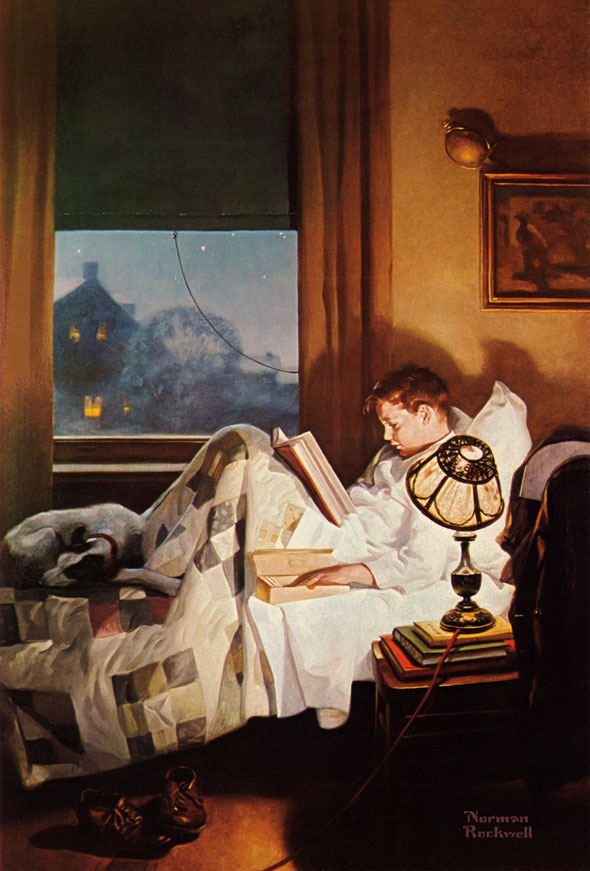
Edison Mazda advertisement, 1920
Norman Rockwell
I had somehow overlooked the signature. It was so early in the morning; my experience was one of falling into the reality of the painting — I was as absorbed by it as the boy was with his book. There seemed to be all these secrets in that room waiting to be revealed.
I started to explore all the details. I noticed the subtle, gentle way the view outside his window was painted; the welcoming lights of the next-door neighbor’s, the first stars peaking out of the sky. The cord of the window shade inexplicably caught in the drapes — this detail fascinated me. A quiet, off-kilter wink that directs your attention back to the boy instead of out the window. I noticed the hilt of the sword stuck behind the painting on the wall above him, difficult to make out at first. An indication of adventure. Some sort of animal and a man are pictured in the painting — the man appears to be backing away from the beast. Deep shadows against the wall create a powerful silhouette of the boy and contrast with the very strong light of the lamp. I almost missed the dog, sleeping contentedly, one with the quilt and the line of the boy’s propped up legs. Then I noticed the worn shoes, one resting on the other, mirroring the dog resting on the boy’s feet.
Those look like Pop’s shoes, the kind he would draw. Pop loved careworn shoes of all kinds. I was puzzled. Again I thought, Who painted this?
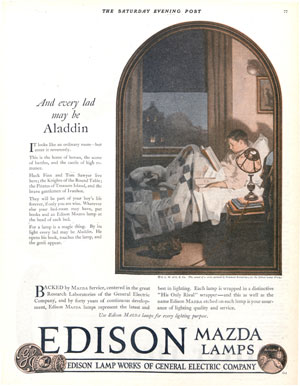
I noticed the books on the side table, and the lamp cord falling into shadow beyond the light’s reach. The dog’s markings reflect the pattern in the quilt mirroring the pattern of the glass lampshade. And what is the boy eating – is that a box of crackers?
The magic of the painting held me for quite a while. I didn’t want to leave the comfort and safety of that room, the boy’s world and that private moment.
I went back to my friend’s page and saw that he had credited the image in another post. It was a Norman Rockwell! How could I not have known?! It was an epiphany. Never before had I seen my grandfather’s work with fresh eyes — for the first time I didn’t bring my history into viewing it. I had complete purity of vision, and I now understood what people have always said to me — that to enter into the magic of one of his paintings, the world he created, is to be truly transported.
This painting is part of the Edison Mazda series that my grandfather painted from 1920 to 1927. I mentioned this series in my last post on Young Valedictorian. I particularly love this series — it speaks to the adventure, enchantment, and safety of childhood.
Happy Sunday.
Warmly,
Abigail
P.S. It is titled And Every Lad May Be Aladdin (Crackers in Bed), Edison Mazda advertisement, 1920. Now we know what’s he’s eating!
Fourth of July
Issues of The Saturday Evening Post in the 1920s and 1930s feature “1776” on the front, marking the year the Declaration of Independence had its final changes made. The Fourth of July has been written in history since 1776, but it wasn’t until 15 to 20 years later that the holiday was actually celebrated.
It would be almost 100 years later — in 1870 — that Congress declared July 4 a national holiday. Americans have continued to celebrate the holiday with red, white, and blue over the years. Later issues of the Post highlight the parades and fireworks that fill this U.S. celebration.
The Fourth of July on the covers of The Saturday Evening Post (click on the covers to see larger image):