Cry for Me, Argentina: In Defense of Bill O’Reilly
As the world’s leading O’Reillyologist, people are asking where do I stand, or sit, on the latest O’Reilly outrage. He is being accused of misstating, embellishing, or as my media-progressive friends prefer to call it, lying, that he was in a war zone in Buenos Aires during the Falkland Islands War of 1982, and other war stories. The air is now filled with reports of further alleged atrocities to the canons of trustworthy TV journalism, making O’Reilly the clear winner of the title exaggerator-general of the nation’s press corps.
In the interests of full disclosure and transparency, you should know that I am the author The Man Who Would Not Shut Up: The Rise of Bill O’Reilly (St. Martin’s Press, 2007), which The New York Times Sunday Book Review praised the author for “Boswellian prodigies of research,” adding, “If the book isn’t a Valentine, it is something of a mash note.”
Somehow I had managed to write what the Times implied was a fair and balanced book, to coin a phrase, about the media’s most loathed and loved loudmouth, in the sense that mine may have been the only book to say anything good about O’Reilly, except the six he had written about himself. I like to think of it now as a youthful blunder, a juvenile indiscretion, a misstep in what otherwise had been my glorious career.
While it was an “unauthorized biography,” he did give me 29 interviews. As a Long Island boy, he had grown up reading my columns in Newsday, and it was a thrill for him to have the personal attention of his local TV critic for 30 minute-a-week sessions over a two-year period, undisturbed by the cyclone-fence and storm-window ads, the other staples of Newsday’s contribution to western civilization.
My audiences with the wizard of the No-Spin Zone reminded me of what William Lamb (later to be Prime Minister Lord Melbourne) said of Macaulay, the famous British historian: “I wish I was as cocksure of anything as Tom Macaulay is of everything.” A maxim ran through my mind as the cable news network el bloviator supremo roamed the world of ideas and issues: Often wrong, but never in doubt.
The faithful take what O’Reilly has to say on the air as gospel, as if the words were handed down to him on the Mount. Even with the benefit of doubt, he still should be taken with a pinch of salt. I gave him the whole salt mine.
Still, I was impressed by the 25 years he had spent learning his craft, rising in the ranks from local newsman in the Wilkes-Barre/Scranton market to the top of the dunghill, aka Fox News Channel. The years preceding The O’Reilly Factor were a period when young TV newspeople were more concerned about the right hairspray and Nielsen ratings than burnishing skill development. It also was unusual for a man to leave a million-dollar-a-year gig anchoring Inside Edition to enroll at the Kennedy School of Government in 1995 to complete his master’s in public administration.
Nobody likes to question the accuracy of Mother Jones — which is right up there with apple pie, mother, and the flag in icons I respect. At the risk of saying anything positive about the disgrace to trustworthy journalism, there is something amiss in the widely held inalienable truth in the Mother’s exposé on O’Reilly’s involvement in that war coverage was in his dreams, as they say.
We talked a lot about the Falklands War because I am a big fan of small wars. My favorite is USA vs. Grenada, BTW, the last war we actually won. I also like the War of Jenkins’ Ear (1739-1748), which featured British and Spanish empires fighting over the ear of a merchant ship captain. And O! What a lovely war was the Pig War of 1859 — British Empire vs. USA over the boundary lines in the San Juan Islands — which ended with no shots and no human casualties. Not to be confused with the Pig War of 1905 between the Austro-Hungarian Empire and Serbia over trade differences.
A rookie CBS News correspondent, O’Reilly chose to not cover the Falklands War from the bar at the Buenos Aires Sheraton Hotel as many other correspondents did. The war had ended with the Argies losing to the Brits. Excitable members of the community were screaming for the head of President General Leopoldo Galtieri; besieging the presidential mansion, the Casa Rosada; pelting police and military with rocks and epithets. The crowd was chanting Nunca la derrota (“never surrender”), hijos de putas (“sons of bitches”). As the riot heated up, O’Reilly and his camera crew were pummeled. “All of us got banged up in the panic,” O’Reilly recalled. There was tear gas.
O’Reilly had it all on tape. And expected to finally make the CBS Evening News for the first time that night. He learned the next day his exclusive network footage, instead, had been used in a piece by the superstar, Bob Schieffer.
He had been what the trade call “big-footed.”
This lesson in the truth and accuracy of TV news so outraged the rookie he grabbed his four tapes, flew to the CBS Latin American bureau in Miami, then on to Black Rock (CBS’ New York headquarters), to complain about the injustice. Dan Rather, then anchor of The CBS Evening News with Dan Rather, rolled his eyes, as if to say, “Wake up, sonny boy, and smell the phoniness.”
The full details of this turning point in O’Reilly’s career are now being questioned by Schieffer’s colleagues, some of whom may have covered the entire war from the bar at the Sheraton Buenos Aires.
I will leave it to the Von Clausewitz’s of the media to determine what officially constitutes a “war zone,” but for O’Reilly, who claims he nearly died of a heart attack when a soldier pointed a gun at him, which could really get the adrenalin flowing, it was more of a war zone than the Battle of the LIE, the parking lot known as The Long Island Expressway, every morning and evening.
I was fascinated reading about Schieffer’s memories of the Falklands War, described in his memoir, This Just In: What I Couldn’t Tell You on TV. What Schieffer said he remembered most about the experience of covering that war was the cuisine of Argentina. The specialty of his favorite Buenos Aires restaurant La Mosca Blanca (The White Fly), Schieffer wrote, “was a steak called bife de lomo, a huge cut of meat that filled a platter large enough to hold the average American family’s Thanksgiving turkey.” Atop the steak, recalled soon-to-be CBS News chief Washington correspondent, moderator of Face the Nation, and anchor of The CBS Evening News Without Dan Rather, cooks would add an enormous mound of fried potatoes. Atop the fries would be two over-easy eggs. Before that they usually had barbecued ribs or some other appetizer. La Mosca Blanca was not the place to cut back at cholesterol, and why the Argentine army had not already died of heart attacks, I never understood.
Well, whom do you believe in the debate now raging between O’Reilly and his former CBS News colleagues, some of whom covered the war from the Sheraton bar? Not that it really matters. It all seems a matter of silly semantics, since O’Reilly has so many more offensive examples of perhaps wishful thinking on his rap sheet.
With all of what is currently going down against O’Reilly, do I as the scholar of his work trust the man? Compared to what?
He was a half-crazed journalist when I was doing the original research on the man at the turn of the century. In the few times I look in on The Factor he sometimes comes across as a total maniac. But I still trust him more than, say, Glenn Beck or Hannity. And even Brian Williams.
After 35 years as a critic of TV news, this is my mantra:
In god we trust
All others pay cash.
For anyone wishing to study further the life of O’Reilly as if it were the Talmud, I recommend the definitive fair-and-balanced biography, The Man Who Would Not Shut Up. A few copies are still available at fine Internet bookstores everywhere.
News of the Week: Computers, Cereal, and Comic Strips
Computer Expert Said the Internet Would Never Take Off
We all make mistakes. Some are big, some are incredibly trivial, but most of the mistakes we make are private, and not many other people find out about them.

Clifford Stoll made a few mistakes in 1995, and he’s still hearing about them. Stoll is a well-known astronomer and computer expert (he helped catch hackers in the 1980s, which he wrote about in the book The Cuckoo’s Egg) who made some predictions about the Internet 20 years ago in Newsweek that haven’t come true. Actually, to say they didn’t come true doesn’t really illustrate how wrong he was. Unfortunately the Web remembers a lot, and Newsweek has the article in its archives, and it’s getting renewed attention because the 20th anniversary of the piece just passed.
Now, predictions about technology and media and science are often wrong, but considering that Stoll’s expertise was specifically computers and he had been using a version of the Internet since the ’70s, these predictions show a particular lack of vision. Stoll said that computers will never replace print newspapers, we’ll never shop online (there won’t even be a secure way to send money over the Internet), and we’ll never read books on computers. To his credit, Stoll now realizes how wrong he was and probably laughs about it.
I think some of his predictions were based not on thinking things through but on his own personal fears about where technology might be taking us. Stoll has always had the opinion that people should come before technology, and I think we can all agree with that vision. And he was probably way ahead of his time. He got the details wrong but you see similar thoughts about the dangers of technology in general even today, by people like Nicholas Carr, Sherry Turkle, and Andrew Keen.
Ya Jerks, Ya Jerks, Ya Jerks!

I don’t condone 8-year-olds using salty language … but this is funny! A young boy called The Bloomington Herald-Times in Indiana to complain because they dropped his favorite comic strips (and probably some of his mom and dad’s favorites too). The boy ended up leaving a voicemail for the editor where he not only rattled off a list of all of the comic strips he and his parents wanted back in the paper, he also called the newspaper employees “jerks,” plus another word I’m not going to print here. But you can hear the voicemail he and his parents left at the paper’s site.
Okay, maybe it’s not great the kid said some of the things he said, but let’s commend him for supporting print newspapers!
Leonard Nimoy
The death of actor Leonard Nimoy actually happened over a week ago but I couldn’t let it go by without mentioning it here. There have been a lot of TV characters over the decades, of course. Some memorable, some not memorable at all. Star Trek’s Mr. Spock (and that’s Mr. Spock, not “Dr. Benjamin Spock” as People magazine called him) was iconic and influential, a character beloved no matter how old you are, and that love extended to the actor as well. This isn’t just another celebrity dying; this is a major part of pop culture going away. I have a theory that all pop culture is personal, and when something in pop culture you truly love dies a little part of you dies too.
Live long and prosper.
— Terry W. Virts (@AstroTerry) February 28, 2015
Bad Gerbils

I once owned a gerbil. His name was Dweezil, after Frank Zappa’s son. One day I went to greet him in his cage and he was all rolled up in a ball in the corner. I tried to wake him but he didn’t move at all, and he also seemed to be hard as a rock. Dweezil was dead, and I felt kind of bad about it. I took him out of his cage and buried him in the yard. But there’s a plot twist! Many years later I read that he probably wasn’t dead after all. Gerbils sometimes curl up in a ball like that and don’t move but will eventually. So basically I buried a live gerbil in the ground. I can imagine how he must have felt when he woke up, not in his comfy cage but instead in the cold ground. I guess I’m lucky he didn’t rise from his grave and seek revenge on me somehow.
This is just my long-winded way to tell you that gerbils, not rats, were probably responsible for the plague that killed millions in Europe during the Middle Ages.
Ice Traps Scientist on Maine Island
While we’re complaining that we have to shovel yet again, we should keep in mind that it could be a lot worse. For example, you could be trapped on an island. This is what is happening to Dr. Diane Corwan, a scientist at the Lobster Conservancy in Maine. The conservancy is on an island in the harbor, and while the harbor ice has mostly thawed the area around the island hasn’t. She’s been trapped there, running low on supplies, for over a month (there are no stores on the island and only a few vacation homes). She’s been working there for 16 winters and she says this winter is the worst she has experienced (before this the longest she had spent there was two weeks). Friends dropped supplies to Corwan from an airplane, including meat and fruit and dog treats for her companion, Sula. (I’m guessing that having her dog with her this whole time has helped immensely.)
What she needs is a big bag of ice melt. A really, really big bag of ice melt.
Tomorrow Is National Cereal Day

You probably had cereal for breakfast at some point this week. Or, if you’re Jerry Seinfeld, you had it for dinner. And yes, there’s a day to celebrate all things cereal and it’s tomorrow.
One of the best cereal sites is Mr. Breakfast. He has a really detailed history of cereal, including an alphabetical list, pictures of cereal boxes, and even video. He also has a list of 90 recipes for cereals you can make yourself. Cereal, I have to admit, is one food I’ve never ever thought of making myself. Unless you consider mixing two cereals in one bowl “cooking.”
For years I missed one of my favorite cereals, Quisp, until I found out you can still get it in some stores and online! Now if Pink Panther Flakes would come back I’d be all set.
Daylight Saving Time This Sunday

Don’t forget to set your clocks ahead one hour (spring ahead, fall back!) around 2 a.m. on Sunday. Here’s a story about DST by humorist Philip Gulley from our January/February 2014 issue.
Upcoming Anniversaries
Barbie launched (March 9, 1959)
Mattel will not only release 78 new Barbie dolls this year, now Barbie will be able to talk to you.
Frankenstein, or, The Modern Prometheus by Mary Wollstonecraft Shelley published (March 11, 1818)
You can read the classic novel for free at Project Gutenberg.
President Franklin Delano Roosevelt gives first “fireside chat” (March 12, 1933)
Here’s a list of every fireside chat that Roosevelt gave.
Albert Einstein born (March 14, 1879)
The scientist explained his Theory of Relativity to The Saturday Evening Post in 1959.
Quiz Night at the Jamaica Inn
The moors are always cold this time of year. I lift a half-frozen hand to make sure the buttons on my coat are fastened right up to the top, which of course, they are. I even try blowing hot air on my fingers to warm them, but it doesn’t work; my breath feels as bitter as the wind.
“Pointless,” I say, to no one. I could turn back, but I don’t want to, not yet.
I’ve always enjoyed my walks, even in this weather. I wander over the gently rolling hills, admiring the fallout from the never-ending battle of atmospheric presshe ures above me, creating bloated gray clouds that threaten an icy shower of rain. Around my feet, grass blades twist and bend at the slightest stroke of the wind. Walking here helps me to relax, sets my mind adrift. I often think about the future.
I’ve lived on the edge of Bodmin Moor for as long as I can remember. My parents left me a cottage when they died. It’s small but cozy, tucked away in one of the forest hamlets you’d only know about if you lived there all your life. When I was little, I’d help my father bring in logs for the fire, although I don’t know how much help I actually was; I’d get a bit carried away you see, picking logs that were too heavy and dropping them. Even so, Father never seemed to mind my clumsiness.
If I try hard enough, I can sometimes still smell Mother’s Sunday stew cooking on the stove, a fresh cut of salted beef from Lem’s farm bubbling in a pot with carrots and potatoes from the garden.
It’s a place filled with all my childhood memories, so I’m really going to miss it when I leave for London in a couple of weeks.
I’ve always wanted to live in London, right in the middle of the hustle and bustle of a big city. And of course, some of the best training hospitals in the country are there (it was my life’s ambition to be a nurse at one point). I casually mentioned the idea to Father once and, bless him, all the colour drained from his face! He started warning me about the blood and guts and other horrible things I’d see working in a hospital; I think he was trying to put me off. If he’d had his way he’d have seen me married to Lem’s oddball son and ready to take over the farm, spending the rest of my days knee deep in muck and endlessly milking cows. But London calls to me. Never got the chance to go though. When Mother became ill it was up to me to look after things at home. I stayed there for years after they passed, looking after the place, making sure the local children didn’t have any opportunities to vandalize it. I guess I was just attached to the place. But now I’ve decided it’s time to move on.
I always follow the same path when I take my walks: half a mile through the forest, then a good two-mile stretch along a stony path worn smooth by many feet, until I get to the fork that splits evenly down the middle. I always take the left path; never the right. It leads unwary travelers to parts of the moors even locals won’t go near, to wild and untamed woods and bogs that disguise themselves as solid ground, mouths open and ready to swallow unfortunate creatures into their bottomless dark bellies. I took the path once, after mother died, grief clouding my sensibilities. I lost my way in the darkness and tripped over a branch that had twisted its way out of the ground. By the time I awoke it was light again, and I found my way home. But I won’t ever go back.
So I take the left path, feeling safe in its familiarity. In the distance, the flat-topped silhouette of the famous Jamaica Inn sits on the horizon like a tomb. I shiver inside my coat, but not from the cold. I’ve never liked that place; always tried to avoid it if I could help it. Father had to travel there a few times when he went to meet certain city folk for business — it was the only real landmark for miles. He’d always come back with a strange look in his eyes saying “Stay away from that place, Sarah. Something ain’t right with it.”
I know all about the Inn’s history with smugglers and highwaymen, and that’s scary enough. But ask any of the village elders and they’ll tell you tales of the vengeful ghosts and hell-bound demons that linger within its walls, and have done for as long as anyone can remember …
The wind changes. Out of the corner of my eye, a floating head appears and hovers against a backdrop of sullen gray cloud. A scream gets lost inside my lungs and fear paralyzes me. The floating head pushes forward against the wind … then I see shoulders, and a body attached to legs making great strides over the grass. A stranger, dressed in shades of green from head-to-toe, an oversized bag slung across his back. The wind whips his short dark hair every which way. As I stare, he looks up and waves, catching me off guard. Beside him, a big shaggy gray dog trots obediently, pink tongue hanging from the side of its mouth.
The stranger moves quickly, slipping on grass which is still damp from the morning’s dew. The dog barks and its tail thwack thwacks against its hind legs. I narrow my eyes. As the stranger approaches, I see that he’s young, perhaps just a few years older than me. He’s pale, with dark circles and prominent cheekbones. But his eyes crinkle in the corners, reflecting his friendly smile. He stops a few feet in front me and grabs the dog by its collar.
“I’m sorry about Tess,” he says, nodding at the dog. “She didn’t scare you did she?”
“No,” I lie. “Not at all.”
The boy nods, leans forward and swings his bag over his shoulders, dropping it on the ground where it lands with a thud. I stare at it. It looks heavy and I wonder how long he’s had to carry it. He grins up at me and it’s infectious; I can’t help but smile back.
“What’s in there?” I ask.
“Equipment, mostly. And a few books and things to keep me amused.” His teeth are a little crooked, but perfectly white. “Of course, Tess’s more than enough to keep me entertained. I’m Peter by the way.”
“Sarah.”
“Well, it’s a pleasure to meet you, Sarah.”
There’s a long silence and, feeling self-conscious, I look away.
“So, you live around here?” asks Peter.
“Yes,” I say quickly. “A few miles that way.” I stick my thumb behind me to show him. He nods and looks around. “Must be nice living out here,” he says, winking. “All this fresh country air.”
“It’s okay,” I say. “But what I really want is to live in a big city.”
He laughs. It carries itself on the wind and sounds lovely.
“I don’t know about that myself,” he says. “I came down from London about a week ago. Glad to get away from it all really.”
“You’re from London?” I ask, eyes widening. “What’s it like?”
He looks surprised. “You’ve never been?”
“I’ve been thinking about moving there,” I explain.
The wind tears past us again and Tess whimpers. Peter pats her on the head. “Poor girl. She’s afraid of her own shadow. I found her sleeping in an alleyway in Bristol and she’s been with me ever since. Named her Tess after a character in a book I read years ago.”
I smile down at Tess. “So, if you’re from London, what are you doing all the way out here?”
“Traveling, mostly. I actually come here quite a lot. I enjoy the peace and quiet. But I’m planning to go back to Europe soon.”
“Go back?”
“Yes.” A strange sadness washes over him for a moment, and then it’s gone just as quickly. “I’m staying over there tonight,” he says, pointing to the Jamaica Inn. A cold hand strokes my spine.
“Really? But what about its history,” I hiss, whispering the last word as though something might overhear me.
“You mean all that nonsense about demons and evil spirits? No, no! It’s perfectly fine; I always stay there when I visit. I mean, there are a few odd characters — locals mainly — but everyone’s quite friendly.” He drops his head and stares at his boots, suddenly fascinated. “Uh, listen … if you’re not busy at all, you’re welcome to come and join me later. Have a drink or something at the bar —” he catches himself, embarrassed. “I mean, we could talk more about London too, if you like?”
I glance at the Inn, dark in the distance on an otherwise bright but cold afternoon. I suddenly recall Lem’s son and how nervous and stuttery he got whenever he spoke to me.
“Perhaps … perhaps I will,” I say. I feel giddy.
“Okay,” says Peter. He gives me one last smile and swings his bag back up onto his back. “I’ll meet you there. Say, 7 o’ clock?”
**
The sign hanging from the Jamaica Inn creaks ominously as I hover outside the front door, too nervous to just walk in. I hear my father’s voice in my head as though he were standing right next to me. Stay away, Sarah. Something ain’t right.
I take a deep breath and push open the door. The musty smell of stale beer and wood overwhelms me. I blink a couple of times and am surprised to find myself in a tiny room with people crammed round small round tables, drinking, laughing or playing cards. In the corner, an elderly man in a tweed waistcoat and matching trousers coughs loudly and addresses the room. “Has everybody got a piece of paper to write their answers on?” A few people shout and wave paper in the air.
“Okay, question number one. Who was the father of Cleopatra’s son, Ptolomy XV?”
“Sarah, over here!” Peter calls, waving to me from the bar. Tess is asleep on the floor by his feet. I smile behind my hair pick my way through the tables. Behind the bar, a stout bald man is wiping glasses with a vacant expression on his face. A young girl with a silver ring in her nose appears in front of us. “Don’t mind him,” she says, “he never notices anything around here. What can I get you?”
Nervously, I look around the room. Two serious men in long coats sit in silence, drinking from wooden steins. One of them is wearing an eye patch. In the middle of the room, a large red-faced woman wearing a brown petticoat like mine is conferring with a man in a suit of armour.
“I’ve never been here before,” I say. The barmaid grins.
“Well, it’s nice to meet you. Are you local? It’s off season for the living right now, so naturally, it’s the busiest time for folks like us.” She pours two drinks and pushes them towards us. “Just bear in mind — we’ve got two live ones over there, so try not to bother them too much.” She points towards a couple in the corner, who are quietly talking and completely oblivious of everything going on around them.
“No problem,” says Peter, grabbing the drinks. The girl smiles and turns around to replace one of the empty bottles on the wall. I notice a large bloody hole in the back of her head, swollen and fleshy against her jet-black hair.
“Question number two: During the first World War, what major event took place on 1st July 1916?”
Next to us, a man in a frilly neck ruff scribbles furiously onto a piece of parchment whilst trying to balance his severed head under his free arm.
“I know this one,” says Peter. He pulls back his dark-green jacket and shows me his blood-stained shirt. “First battle of the Somme; last battle for me.”
I study his wounds with interest. “The moors got me,” I say, pushing my petticoat aside and showing him my bent and twisted leg. “I fell and drowned in the marshes.” We share a small, sad smile and drink in silence.
“You know,” Peter says after a while, “Europe’s got a lot of big cities, some bigger than London, even. I think you’d like it.” He glances at me out of the corner of his eye. “You could come with us if you wanted. Tess and I could use the company.”
I sip my drink and picture the crumbling cottage on the edge of the moors, empty and gray for two centuries now. I think of my mother slipping gently into the light, of my father’s grief when I never came home, and how he himself slipped into the next world before I had the chance to say goodbye. I’ve wandered the moors for so long, hoping to see them again, hoping they’ll show me how to follow them into the light. But now I think it’s time to move on.
1965: Boots on the Ground in Vietnam
On March 8, 1965 (50 years ago this Sunday), the first U.S. combat troops came ashore near Da Nang, South Vietnam. No one could have foreseen that the 3,500 marines who landed that day would eventually be followed by over 2.5 million American soldiers.
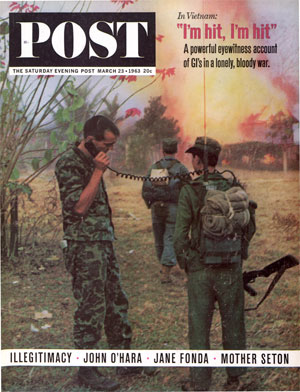
Prior to 1965, America had limited its involvement to providing South Vietnam with military supplies and advisors. On the day the marines landed, 23,000 of these advisors were already in the country. They were men like the ones journalist Jerry Rose met and later described in his 1963 Post article “I’m Hit! I’m Hit! I’m Hit!”. These members of a Special Forces “A” team were helping South Vietnamese peasants defend their villages against communist guerillas who called themselves the Viet Cong (VC).
Ten years and 58,000 American deaths later, the last GI left Vietnam under the terms of a peace accord between the U.S. and North Vietnam. Two years later, in 1975, the South Vietnam defenses crumbled. North Vietnamese tanks rolled into the South Vietnamese capital, just hours after the last Americans were evacuated from the U.S. embassy in Saigon.
Many Americans couldn’t shake the feeling that their country had been defeated and that the conflict hadn’t been worth the costs, particularly in human life. Many felt bitter toward the leaders who had drawn America into Vietnam. The war created a deep political divide in the country. For some Americans, it inspired an abiding distrust of government officials, politicians, and the military.
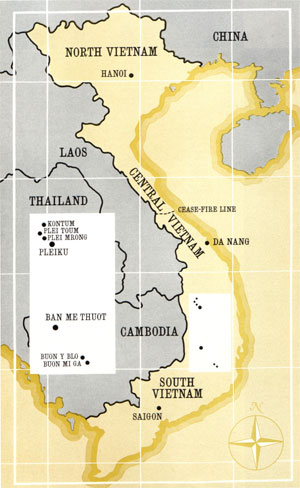
Given the bitterness and regret through which some view the Vietnam War, it’s interesting to read what was being said about America’s involvement in Vietnam before disenchantment and defeatism set in. In the 1963 Post article, Jerry Rose described the courage and determination of those early American advisors and the commitment of South Vietnamese villagers to take up the fight. Rose accompanied them on patrol, observed them under attack, and saw how they responded to a VC attack inside the camp in the middle of the night.
He had faith in the Special Forces officers, but he recognized they were facing hard challenges. One of the biggest was the lack of cooperation from the South Vietnamese forces. When the VC overran their base at Plei Mrong, the advisors sent a Morse code request for reinforcements. But the request was denied. “The Vietnamese Ranger company was needed for the security of Pleiku — a divisional headquarters where thousands of troops were stationed,” Rose wrote. “Similarly, the T-28 [air] squadron at Pleiku could not strike at Plei Mrong because, said the Vietnamese commander, the airstrip at Plei Mrong had no lights. One American pilot said that he’d fly the mission, strip lights or not. No, came the reply, the T-28s were now Vietnamese planes, and the Vietnamese didn’t want any of them lost.”
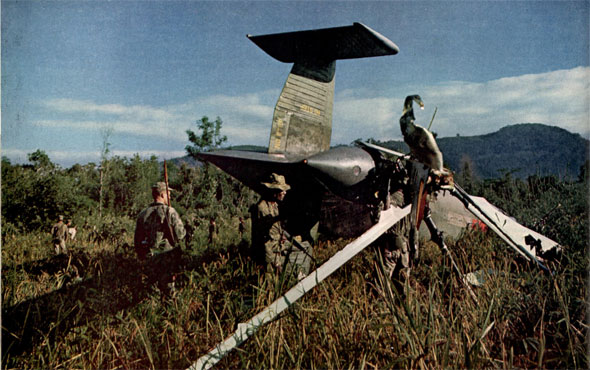
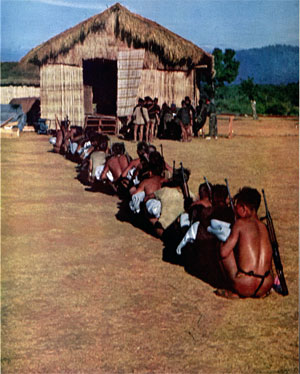
Another challenge was telling friend from foe in this civil war. The morning after the Plei Mrong raid, Rose wrote, an American named Billie Fell was tending to the wounded. Fell recognized one of the men, shot four times through the body, as one of the village defenders. “Having bandaged his wounds, Fell stood up and was about to move on when the man suddenly opened one eye. The eye glinted in the flare light as the wounded man stated proudly in English: ‘Me Number One VC.’”
Despite the challenges, Rose had faith in the advisors. Courageous and professional, they shrugged off any suggestion that they were being heroic. The morning after fighting off the VC attack, Lieutenant Paul Leary joked grimly to Rose, “All I want is the Combat Infantryman’s Badge.” Rose added, “Americans in Vietnam are ineligible because they are theoretically not fighting.”
Two years later as the first American combat forces entered Vietnam, faith in the American mission was still evident in the Post. In a 1965 column, contributor Stewart Alsop wrote his own tribute to another advisor, Captain Robert Alhouse, who was advising a Vietnamese major in the small town Phu Hoa Dong.
Alsop observed the captain’s obvious affection for the locals: “What interested him and what he wanted to talk about was ‘his’ town, which he clearly loved already with a possessive love. To judge by the children, who crawled all over him like ants — he would occasionally brush them off, but they would climb back on — his affection is reciprocated. … He is determined to hold ‘his’ town against the surrounding Communists, and he has no doubt at all that the thing can be done.”
Another American soldier, Sgt. Thomas Alfinito, told Alsop the South Vietnamese soldiers were “damn good fighters and damn fine men. … We just … can’t let them down.”
“The honor of the United States has been committed by three presidents,” Alsop continued, “to the proposition that those ‘damn fine men’ who have fought the Communists so long and so bloodily — as well as the children who crawl like ants over Captain Alhouse — shall not become subjects of the Communist empire. It is impossible to see at all clearly how this war might be won. But, whatever the cost, we cannot permit it to be lost — not unless the United States is willing to accept dishonor as well as defeat.”
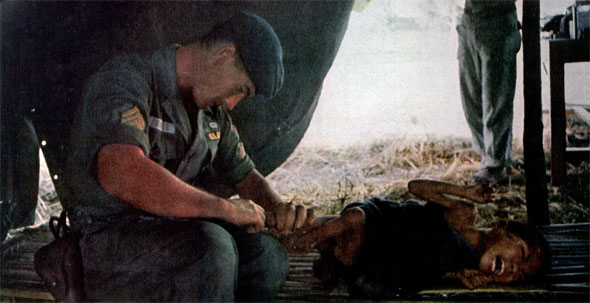
If America was disappointed in the outcome of the Vietnam War, it might be because the country entered the conflict with high expectations. In the years following World War II, the U.S. was still the most powerful nation of the free world. Americans could have easily assumed that victory would quickly follow their entry into Vietnam. Perhaps the failure of the mission to save South Vietnam seems inevitable 50 years later. But it wasn’t obvious in a time when the country still seemed the invincible champion of independent nations.
Sick of Winter Yet?
Not all of us are sick of winter this year. Chances are if you’re in the western third of the U.S., you might even be wondering what happened to it. According to The Weather Channel, more than 20 cities in that lucky third have tied or broken records for the warmest winters in 60-plus years. But if you’ve been stuck indoors waiting for the city plow (we’re thinking of you, Worcester, Massachusetts) winter might be wearing out its welcome.
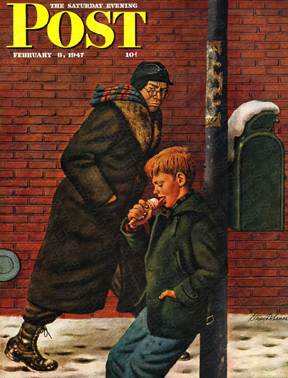
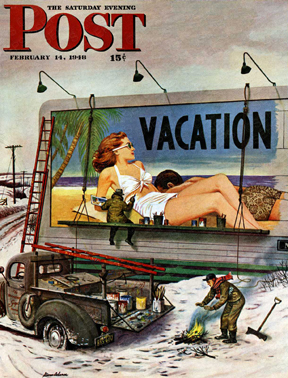
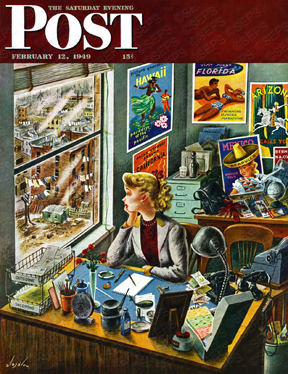
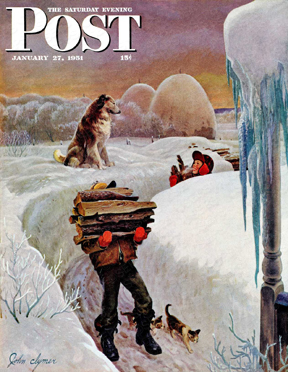
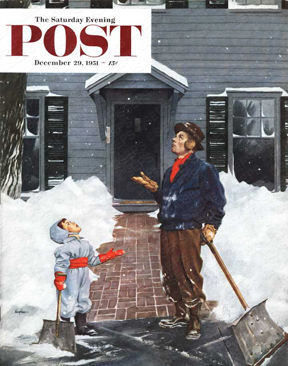
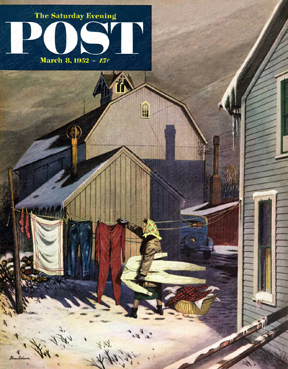
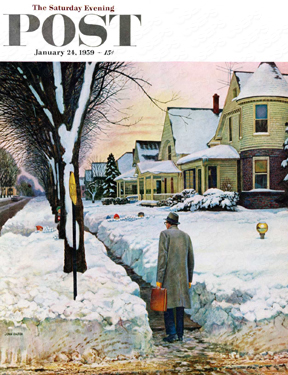
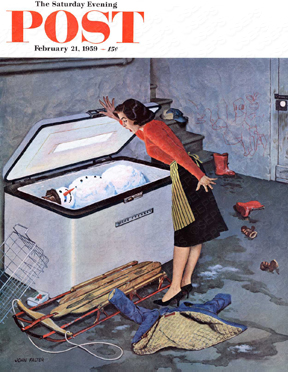
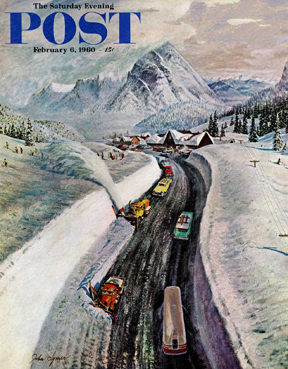
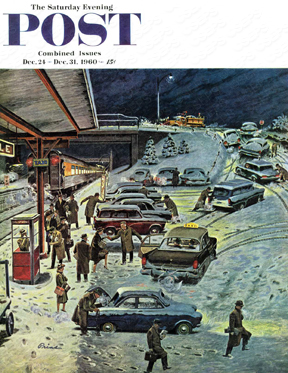
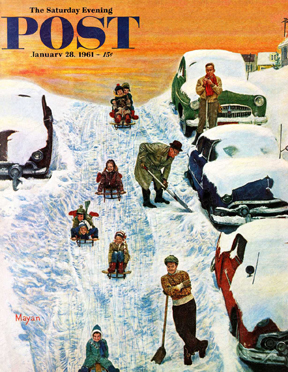
Whether you’ve been buried under it or just plain missing it, you’ll get a kick out of this cover collection dedicated to the season’s coldest conundrum — snow.
Is it over yet? A humorous look at winter on the covers of The Saturday Evening Post (click on the covers to see larger image):

The Parenting Paradox
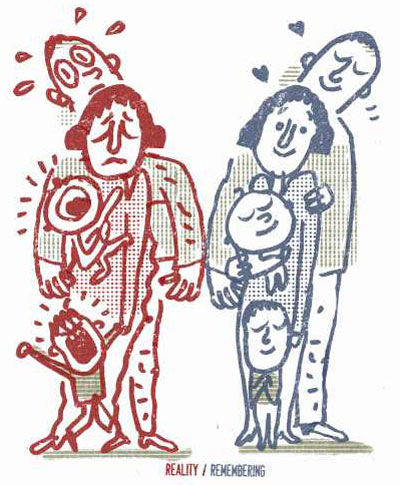
In an evening dads’ class in St. Paul, a fellow named Paul Archambeau has the floor. He’s different from the other fathers in the room. While most are first-time dads — or have, say, a 3-year-old and a newborn — Paul has four children. His youngest is 3, his oldest is 11. “Now that Ben and Isaac are growing up,” he says, “I long for the days when they would sit at the counter and eat Cheerios with their hands. Norah” — his youngest — “can drive me crazy with some of the things she does. But I just know, a year or two or three from now, I’m going to say, ‘Man, that was fun.’” Another father, Chris, whose son is 17 months, looks surprised. “Why do you long for that?” he asks. “Because
I see being able to play catch …”
Says another: “Yeah, I fight the feeling off every day — I can’t wait until he’s older.”
“I don’t know,” Paul admits. “Maybe the finality to it, knowing I’m never going to get those years back. Or maybe because I’m forgetting how hard it was.”
The group debates this for a while.
“But here’s the thing,” says Paul. “I would bet that if someone did a study and asked, ‘OK, your kid’s 3, rank these aspects of your life in terms of enjoyment,’ and then, five years later, asked, ‘Tell me what your life was like when your kid was 3,’ you’d have totally different responses.”
With this simple observation, Paul has stumbled onto one of the biggest paradoxes in the research on human affect: We enshrine things in memory very differently from how we experience them in real time. The psychologist Daniel Kahneman has coined a couple of terms to make the distinction. He talks about the “experiencing self” versus the “remembering self.”
To read the entire article from this and other issues, subscribe to The Saturday Evening Post.
I Was a Psychotic Soccer Mom
I
grew up in Minnesota in the 1960s and ’70s, before the passage of Title IX — the education amendment that provides for gender equity in athletics.
Had I grown up in my daughter’s world, in California over the last 20 years, I might have recognized that I was an athlete. Instead, it’s been the experience of raising my daughter in the more open, post-Title IX world of organized sports that has helped me understand that I really was a jock all along — and prone to sports zealotry.
I fulfilled my high school P.E. requirement with seasonal rotations of badminton and bowling. Outside school, I ran, biked, rode horses, and worked at a stable, where I could stack hay bales with the strongest of the guys. I learned to vault on and off a galloping horse, ride backward or standing upright on the saddle, leap from one horse to another at a full run, and play equestrian capture-the-flag in all kinds of extreme weather. I was part of an equestrian drill team that performed at summertime events like the Corn Days Parade. But I didn’t play team sports, since little was offered for girls outside school. And I never thought of myself as an athlete. In fact, my recreational activities made me something of an oddball. Once when I was jogging, a farmer offered me a lift. He assumed I was in a hurry: Why else would I be running down a country road?
To read the entire article from this and other issues, subscribe to The Saturday Evening Post.
The New Nursing Home
You don’t have to spend much time with the elderly or those with terminal illness to see how often medicine fails the people it is supposed to help. The waning days of our lives are given over to treatments that addle our brains and sap our bodies for a sliver’s chance of benefit. They are spent in institutions — nursing homes and intensive care units — where regimented, anonymous routines cut us off from all the things that matter to us in life.
Given how disliked they are, by patients and families alike, you’d think people would have rebelled. You’d think we would have burned the nursing homes to the ground. We haven’t, though, because we find it hard to believe that anything better is possible for when we are so weakened and frail that managing without help is no longer feasible. We haven’t had the imagination for it.
But in the course of writing my book Being Mortal (from which this is adapted), I did find several people who do, in fact, have the imagination to remake the nursing home and to help people in a state of dependence find value in their existence.
One of them is in the Boston suburbs. Just 20 minutes’ drive from my home, there is a new retirement community called NewBridge on the Charles. It was built on the standard continuum-of-care framework — there’s independent living, assisted living, and a nursing home wing. But the nursing home that I saw on a visit not long ago looked nothing like the ones I was familiar with. Instead of housing 60 people to a floor in shared rooms along endless hospital corridors, NewBridge was divided into smaller pods housing no more than 16 people. Each pod was called a “household” and was meant to function like one. The rooms were all private, and they were built around a common living area with a dining room, kitchen, and activity room — like a home.
To read the entire article from this and other issues, subscribe to The Saturday Evening Post.
Nov/Dec 2014 Limerick Laughs Winner and Runners-Up

There’s an axiom simply absurd
That says boys should be seen and not heard.
But this lad was so weak,
That he just couldn’t speak
After eating the whole of that bird!
—Keith Channing, Saint-Maigner, Puy-de-Dome, France
Congratulations to Keith Channing! For his limerick describing J.C. Leyendecker’s illustration After Turkey Nap (above), Keith wins $25 — and our gratitude for a job well done. If you’d like to enter the Limerick Laughs Contest for our upcoming issue, submit your limerick via our online entry form.
Of course, Keith’s limerick wasn’t the only one we liked! Here are some of our favorite limericks from our runners-up, in no particular order:
In school there had been nothing but rushes
To learn all about ,,, and +++.
But now in his bed,
Soft pillow for head,
His sleep takes away all the fusses
—Val Cheatham, Witchita, Kansas
This chap’s full of great Christmas dinner.
The wishbone is his. He’s a winner,
But if he keeps snoozing,
He could end up losing
His prize to a bone-stealing sinner.
—Janice Canerdy, Potts Camp, Mississippi
The boy is Patrick O’Loring.
He thinks Thanksgiving is boring.
Before mom could serve
The mashers with herbs,
The kid was already snoring.
—Jimmy Peterson, Houston, Texas
The wishbone attests to his meal,
And turkey has lost its appeal.
The laddie is stuffed.
His tummy is puffed.
Nap time has set in for real.
—Fran Million, Fremont, Nebraska
There was a young fellow named Ned,
Who needed to get to his bed.
Though dinner had ended,
With grown-ups long winded,
He had to recline just his head.
—Joan O’Kelley, Hoschton, Georgia
For you and your pal’s wish to come true
You both gotta snap that wishbone in two,
So let’s start by ignoring
The sleeping and snoring—
Grab that wishbone and do more than just chew.
—Terry Free, Andover, Minnesota
This sleepy boy isn’t so tough.
He’s had a hard day — it’s been rough.
If he can’t stay alert,
He’ll miss his dessert.
He’s eaten quite more than enough.
—Joye Greenwalt, Nacogdoches, Texas
The climax of Thanksgiving Day —
His new dreams are well underway.
High hopes he’ll postpone.
He’ll save that wishbone
‘Cause Christmas ain’t that far away.
—Lynnda Cruz, Las Vegas, Nevada
Thought the food for the feast was complete
Till I saw how my nephew could eat.
He kept asking for more.
Had to run to the store.
Then, at last, he dozed off in his seat!
—JoAnn White, Westfield, Massachusetts
This hungry American chap
Ate every last smidgen and scrap.
Now dinner has ended.
(And wasn’t it splendid!)
It’s time for a well-deserved nap.
—Neal Levin, Bloomfield Hills, Michigan
The little boy’s smile was a winner,
As he eyed the remains of his dinner.
A turkey surprise
Too big for his eyes
Made him snooze ’til his tummy got thinner.
—Alison Webster, Birmingham, West Midlands, United Kingdom
Beach Wars
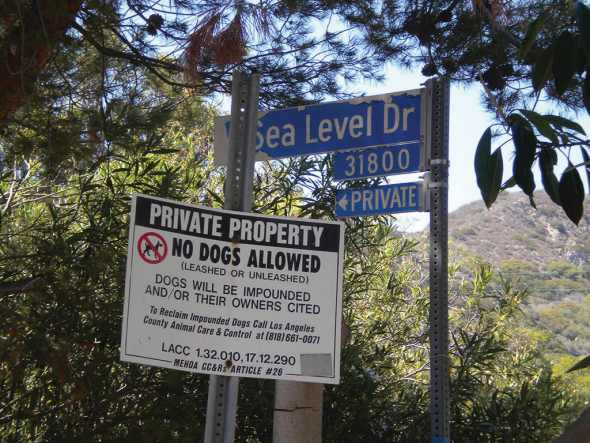
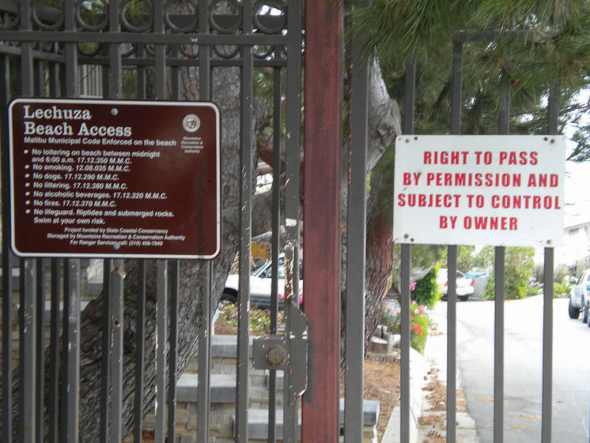
Ben Adair parks on the narrow shoulder of a residential street in Malibu, California. We get out of the car and locate our landmark: a blue-and-white sign half-hidden among the branches of an avocado tree. Turning down a road marked “Private,” we come to a metal gate that says, “Right to pass by permission and subject to control by owner.” It looks locked but isn’t, so we twist open the knob and walk through.
“I feel a little naughty doing this,” I tell Adair, a 43-year-old radio producer who also co-owns a boutique software company called Escape Apps. We stroll along a row of cliffside houses, and he reminds me that what we’re doing is perfectly legal. “It is private property,” he says. “But there’s an easement, so we’re allowed to use it.”
We come to a shady plaza with wooden Adirondack chairs overlooking the Pacific. Climbing down a staircase, we reach Lechuza Beach, which is as stunning as Adair had promised. Bougainvillea and ice plant dapple the 75-foot bluffs. Gulls perch on rock formations that rise from the waves. Two young men toss around a football, but otherwise this state-owned beach is nearly deserted on a sunny Martin Luther King Jr. Day.
“Check this out, man,” Adair says. “It’s a beautiful day in January, a holiday, and you’ve got the beach to yourself.”
What enabled us to find this hidden, idyllic stretch — the scene of legal and political skirmishes since the 1970s, when homeowners installed metal gates without a state permit — was a smartphone app that Adair developed in 2013 with writer Jenny Price. California’s 840-mile coastline, from the high-tide mark down to the ocean, belongs to all of its residents. But reaching those beaches, especially in affluent Malibu, can be daunting for someone who doesn’t know where the access points are, or can’t distinguish the counterfeit no-parking signs from the real ones. That’s where the Our Malibu Beaches software proves helpful: “It gives people the tools,” Price says, “to use these beaches that belong to us.”
Price hopes the 42,000 people who have downloaded the app will help prevent wealthy beachfront owners from treating the coastline like their own “private Riviera.” She and Adair also hope the app will protect those owners by advising visitors where not to walk. Though the duo has no plans to expand into other regions, the California Coastal Commission is independently releasing its own statewide app, developed by former Facebook president Sean Parker as restitution for throwing a lavish wedding at Big Sur without a permit.
But the new technology has triggered a backlash from some homeowners. They worry that it will attract, as one resident told me, “yapping dogs and screaming children,” along with their litterbug parents, to beaches that are ill-equipped to handle more people.
Underneath these conflicting views lie deeper questions that echo far beyond Malibu: Who owns America’s coastlines? How much access does the public deserve? Does buying an expensive waterfront home guarantee quiet and privacy? Must property owners accommodate strangers who can only reach the surf by cutting through private land? Communities from California to Maine are struggling with these issues, which are rooted in almost 1,500 years of legal history. The debate triggers emotional reactions on both sides as homeowners’ wish for tranquility butts up against the public’s right to enjoy what — in most states, at least — is legally everyone’s.
The Roman Emperor Justinian laid the groundwork for modern beach access when he declared in the sixth century, “By the law of nature these things are common to mankind — the air, running water, the sea, and consequently the shores of the sea. No one, therefore, is forbidden to approach the seashore, provided that he respects habitations, monuments, and buildings.” This principle — that we collectively own the coast — found its way into the English, French, Spanish, and Mexican legal systems, which in turn inspired American law.
But every state interprets the principle differently. Most extend property rights to the high-water mark, a few to the low-water mark. Some allow the public to walk across private property for recreation; others restrict those easements to “fishing, fowling, and navigation.” Every year new questions arise. Do scuba lessons constitute “navigation”? Can the government require an easement in exchange for issuing a building permit? When a hurricane rearranges the shape of the beach, does the public’s right of way move too? If so, what happens to houses sitting in that new right of way?
And so, across the country, the battles rage.
In Massachusetts — where the law particularly tilts away from public access — residents of Harwich on Cape Cod are sparring over whether several homeowners can claim exclusive use of Bay View Beach, which has widened by hundreds of feet over the past century because of the construction of a tax-funded jetty. State Attorney General Martha Coakley has said that 200 years of court rulings favor the private property owners — and last April, Harwich’s selectmen abandoned their claim to the beach. A lawsuit between beachfront and back-lot owners continues.
In New Jersey, where some seaside towns use parking restrictions to keep non-residents away, conservation groups like the American Littoral Society and Surfrider Foundation have asked state lawmakers to offer shoreline-protection funds only to municipalities that improve public access.
And in California, venture capitalist Vinod Khosla was rebuked twice last fall for cutting off the only road to Martin’s Beach near Half Moon Bay. The beach is surrounded by dramatic cliffs and has been a favorite spot for surfers, smelt fishermen, and sea-lion watchers. Before Khosla bought the land in 2008, the previous owner charged a small entry fee and operated restrooms and a general store for visitors. Khosla, by contrast, locked the entrance gate and hired private security guards to enforce his no-trespassing sign. In September, a state judge delighted beach lovers by ruling the billionaire had violated the state’s Coastal Act and ordering the gate unlocked. The following week, Gov. Jerry Brown signed a bill directing a state agency to negotiate with Khosla for a public easement or right of way. If negotiations fail, the state may acquire access through eminent domain.
Still, the most famous battleground is Malibu — because of its scenery, its glamorous and wealthy residents, and its starring role in dozens of surfer movies. In one well-known case, music and film producer David Geffen, along with the city, sued the Coastal Commission in 2002 to prevent the opening of a public walkway connecting the Pacific Coast Highway to well-heeled Carbon Beach. Geffen had consented to the easement across his land when he received a construction permit in 1983. The walkway sat behind a locked gate for almost two decades as state officials looked for a nonprofit group to manage it. When they found one, Geffen charged the state with failing to perform an adequate environmental review. He also questioned whether the managing organization was up to the task financially.
Geffen dropped his lawsuit in 2005. Today, during daylight hours, anyone can enter the beach and stroll past palatial homes designed by celebrated American modernist architects Richard Meier and John Lautner.

Yet those who want to open Malibu’s beaches cite ongoing problems. Most of the accessways acquired by the Coastal Commission remain closed. Owners discourage parking with traffic cones, homemade signs, and illegal curb cuts. They post misleading directions along the beach about where the public may walk. At Point Dume Nature Preserve, a state park with 200-foot volcanic cliffs, visitors compete for about 10 parking spaces. And face-to-face confrontations persist. “I still occasionally hear about harassments,” says former Coastal Commission chair Sara Wan, a Malibu resident who was threatened by security guards, then approached by five sheriff deputies, for sitting on a public beach in 2003. “I hear about home-owners who come out and chase people off the beach.”
Most recently, in December a development firm agreed to stop charging a $20 walk-in fee to access the beach below its Malibu restaurant and mobile-home park. The Paradise Cove Land Co. also agreed to open a pier and stop banning surfboards after the Coastal Commission threatened it with $11,250 in daily fines. The company will still charge $40 for parking, though.
Some residents are candid about wanting outsiders to stay away. “I don’t see that every beach has to be open,” says Wendy Wolman Ledner, who is retired from the film and television industry. The public, she says, brings trash, noise, and unsupervised children who injure themselves, turning beachfront owners into first responders. They drape their towels over private decks, she says, and knock on residents’ doors when they need toilets. Ledner believes they’re better served by large county- and state-run beaches that have lifeguards, bathrooms, and parking lots. “If I weren’t one of the chosen — and please understand that I recognize I am very fortunate — and I had to get my water fix, I’d go to a public beach,” she says. “This is our backyard. How many other people have to have their backyards open to the public?”
Jenny Price, who co-developed the mobile app, says there’s a flaw in this argument: In California, the wet-sand beach is not the backyard of the adjacent landowners. “It’s kinda like the people who live next to Central Park saying, ‘You know, this is so close to our house and people leave trash here, so you really need to close off this park.’ People can live in a gated community and not have to deal with the public. But if you want to live next to the beach, that’s a really important public space, and you’re going to have to share it.”
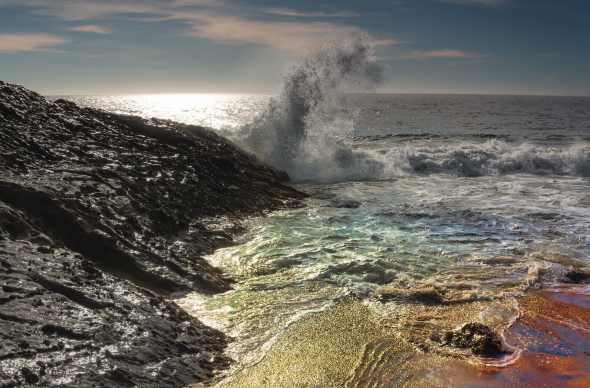
Because they tap into big issues of property rights and social equity, and because so much is at stake for both sides, beach-access battles can divide communities and chill old friendships. That’s what happened in Kennebunkport, Maine, where beachfront owners sued the town to establish who controls a two-mile beach called Goose Rocks.
Unlike California, Maine allows residents to own property down to the low-tide line, and only grants automatic easements for “fishing, fowling, and navigation.” Neighbors or the general public can sometimes earn access for recreation, too — it’s called a “prescriptive easement” — by using the sand openly, continuously, and without explicit objection from the owner for 20 years.
Goose Rocks has been the site of many softball games, swimming lessons, and sand-dollar hunts; one traveler’s diary called it a “tourist resort” as early as 1870. A slice of the beach is owned by the town and a nonprofit conservancy. But much of the recreation has taken place on privately owned sand behind people’s houses, where beachfront owners mingled with back-lot residents and out-of-towners. “I never asked permission, was never given permission, never thought there was any necessity to ask for permission,” Richard Driver, a retired attorney who started coming to Goose Rocks in 1970 and now owns a house several blocks from the water, testified in a 2012 trial.
“It was kind of a secret beach,” says Robert Almeder, a retired philosophy professor who began vacationing there in 1979 and bought a beachfront house in 2005. “It was nice to see people playing on it.” But over the past 10 years, he claims, more people started arriving, and with them came noise, firecrackers, and tents for overnight camping. Hostilities reached a head in 2005 when a beachfront owner tried to order one of her back-lot neighbors off the sand. He refused to leave and police declined to intervene.
“If the right to private property means anything,” Almeder says, “it means you have exclusive control to determine how that property is used.” That includes the “freedom to go up and say: You need to leave now.” In 2009 he and some beachfront neighbors sued Kennebunkport to establish their ownership and property rights.
Back-lot residents felt blindsided by the lawsuit. “I have invested, and my neighbors have invested, tremendous amounts of money into this community,” Driver testified. “We live here, we love this place, and these selfish people come along. … All of a sudden a few of them decide, ‘Well, we want to restrict the beach.’” As hard feelings mounted, Almeder recalls neighbors saying, “‘I can’t be your friend anymore.’”
The town sided with the back-lot owners. It claimed that a century’s worth of recreational use had earned the public a prescriptive easement. After a two-week trial, a local judge agreed and declared Goose Rocks open to the public. In February 2014, though, the Maine Supreme Court overturned the 2012 ruling, saying the town failed to meet the state’s tough standard for obtaining an easement and that the lower court had gone too far in expanding the public’s rights. The high court cited Maine’s tradition of encouraging landholders to be generous with public use in exchange for having their property rights respected.
In December, though, the court authorized town attorneys to argue for beach access on a parcel-by-parcel basis. The lower court, which will hear those arguments, also still has to hear a claim by Kennebunkport officials that the town received title to the beach by royal grant in the 1600s and never relinquished it. For now, then, Almeder and his fellow plaintiffs have the right to evict others from their property.
No matter how the Goose Rocks case shakes down, no one believes it will settle the overarching question of who owns the beach, in Maine or anywhere else. “We’re going to keep litigating these on a case-by-case basis,” says Adam Steinman, a Portland attorney who represents the Surfrider Foundation, a leader in the national effort to improve public access. The beach, he says, “is a unique important resource, a public resource. If that resource is in control of the private few who stand to profit monetarily and socially by excluding the public, they’re going to do so. But that isn’t the way it’s supposed to work. Wherever beach access is at issue, we’re going to continue to fight for those rights.”
Our Life on the Water
Without warning, our boat made a sharp turn. Instead of riding down the eight-foot swells with the wind propelling us from behind, we were now pointing into the waves with the wind coming from ahead. It was as if we’d been skiing down a bunny hill and a rookie mistake caused us to face uphill and slide backward. I jumped into action.
Our ham radio, which allowed us contact with the world beyond our 40-foot catamaran Ceilydh, also created electronic interference disrupting our autopilot, causing wild 90-degree turns. Over the radio, my husband Evan continued reading out the weather report and recording the locations and conditions aboard the dozen other boats also sailing the 2,800 miles from Puerto Vallarta, Mexico, to the Marquesas, French Polynesia, while I began steering us back on course.
We’d been at sea for 16 days straight, and much of the morning’s radio call was spent talking about where we’d make landfall in 48 hours. Evan and our buddy boats, a small group of boat crews, with and without kids, that we’d befriended in Mexico and planned to sail the South Pacific in loose company with, traded tasteless cannibal jokes and debated the pros and cons of one island port over another (frangipani-scented jungle and towering fairytale mountain peaks versus tropical beaches and exotic villages), while I spun the wheel and adjusted the sails. With growing confusion I realized no matter what I did, the boat stayed facing into the liquid hills, shuddering with each wave impact, while the sails flapped uselessly.
“Something’s wrong with our steering,” I called to Evan. He came to the cockpit and repeated my efforts and then joined me at the back of our boat. Our rudders, which control the steering, are found on each hull’s stern. “I can see this rudder,” Evan said as he peered with me into the hypnotic blue depths, seeking out the rectangular shape, “but on the other side there must be an optical illusion, because I can’t see that one.”
“We can’t see it because it isn’t there,” I said.
“Of course it’s there,” said Evan, who had now leaned so far over the stern that the frothy sea licked at his hair. Worried he’d be swallowed by one of the bigger waves, I called our 9-year-old daughter, Maia, out for the tie-breaking decision.
“Definitely gone,” she said after taking a long look over the side.
Shock was quickly replaced by action. By adjusting the sails and turning on the motor you can steer a catamaran with one rudder. But it’s a bit like a car with one-wheel drive; if the course is straight and flat, it’s easy. While I reported our predicament to the other boats over the radio, Evan began balancing our boat so one rudder could do the job of two. Cautiously we got back underway. I reassured Maia that losing a rudder was a manageable problem, and then to prove it I gave her some schoolwork; French lessons and the geography of volcanoes to prepare her for landfall.
Outwardly calm, Evan and I looked over the charts to pick the best harbor for our crippled boat (a town with skilled welders beat out tropical beaches and exotic villages) and sent out emails to alert the French Polynesian Coast Guard and ask advice. The sea wasn’t flat and our course wasn’t straight; waves knocked our boat sideways and my heart lurched in fear. There was a high risk that our remaining rudder could be overpowered by a large wave and break off. Having one wheel was stressful; but no wheels, hundreds of miles from shore, could lead to abandoning our boat.
To read the entire article from this and other issues, subscribe to The Saturday Evening Post.
I Loved My Wife, but I Wished She Would Die
L
ast November, I wasn’t too surprised to hear the topic of an afternoon radio call-in program was Brittany Maynard, a terminally ill California woman who moved to Oregon to take advantage of the state’s death with dignity law and end her own life.
The fact that an attractive young woman made this decision caught the media’s attention and reignited debate on the issue of physician-assisted suicide. Her story also caught my interest, having gone through the slow and painful cancer death of my own wife.
The first caller said that Brittany’s husband should have talked her out of her decision. He was sure that her husband would regret losing her before the last possible moment. The caller said that he would give anything to have one more hour with his wife. I’m sure that is a common attitude, especially if the loved one has died suddenly, but it is not my experience. I would give anything to not have experienced the last week of my wife’s life.
As I see it, Brittany gave her husband a gift. He will not have memories of his beloved gradually losing her mind and control over her bodily functions. He will not have memories of watching the person he loves most moaning in pain. He will not have memories like the ones I have — of vomit and bedsores and things so horrible that I cannot bring myself to type them into this keyboard. He will not have memories of reaching the point where he started wishing that his wife, his partner of 38 years whom he loved with all his heart, would die. Those memories don’t go away; they come back in dreams and nightmares.
To read the entire article from this and other issues, subscribe to The Saturday Evening Post.
Croquet Today

The sport of croquet was born, some say, on the British Isles in the mid-19th century and soon migrated to most other English-speaking countries. But others claim the Romans were playing a game with a small leather ball and curved sticks over 2,000 years ago. Peasants in France played a game in the 1300s with shepherd crooks and some French croquet enthusiasts like to say the word croquet comes from the French word for hook, crochet. Meanwhile, Italians popularized the game of pallamaglio in which a large ball was passed through arches or hoops in alleys, and the winner was the one who achieved this feat in the fewest hits or strokes. Dutch manuscripts from the 1500s describe a similar game called klos.
Mention the word croquet, and many of us recall playing on the front lawns or backyards of our childhood homes. My own introduction to the game was in the 1940s growing up on a farm in the heartland of America in Mahaska County, Iowa. I took great delight in hitting my sister’s ball under the lilac bushes on our front lawn. Years later, when introduced to serious or competitive croquet, I learned that hitting a ball out of the court meant the end of a turn. (Not a very good strategy for winning.)
Little did I know then that King Louis XIV of France and King Charles II of England had also played a similar game. Or that Wimbledon was famous for croquet tournaments before tennis took over. Or that Oxford University has a club for croquet dating to the 1860s. There’s more: In 1894, Frederick Douglass built a croquet court at his home in the Anacostia neighborhood of Washington, D.C. In 1900, croquet made a brief appearance as an Olympic sport in the Paris games. And there was a bit of a scandal years earlier when President Rutherford B. Hayes spent $6 of American taxpayer money on a set of fancy boxwood croquet balls in 1878. Croquet-gate?
To read the entire article from this and other issues, subscribe to The Saturday Evening Post.
Wise Words
“Congress shall make no law respecting an establishment of religion, or prohibiting the free exercise thereof; or abridging the freedom of speech, or of the press; or the right of the people peaceably to assemble, and to petition the government for a redress of grievances. ”
—Constitution of the United States
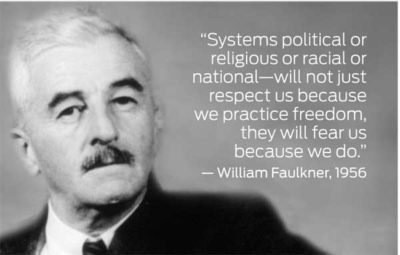
!["Of that freedom [of thought and speech] one may say it is the matrix, the indispensable condition, of nearly every other form of freedom." - Benjamin N. Cardozo, 1937](https://www.saturdayeveningpost.com/wp-content/uploads/satevepost/wise_word_ben_cardozo-400x255.jpg)
Lucky Catch
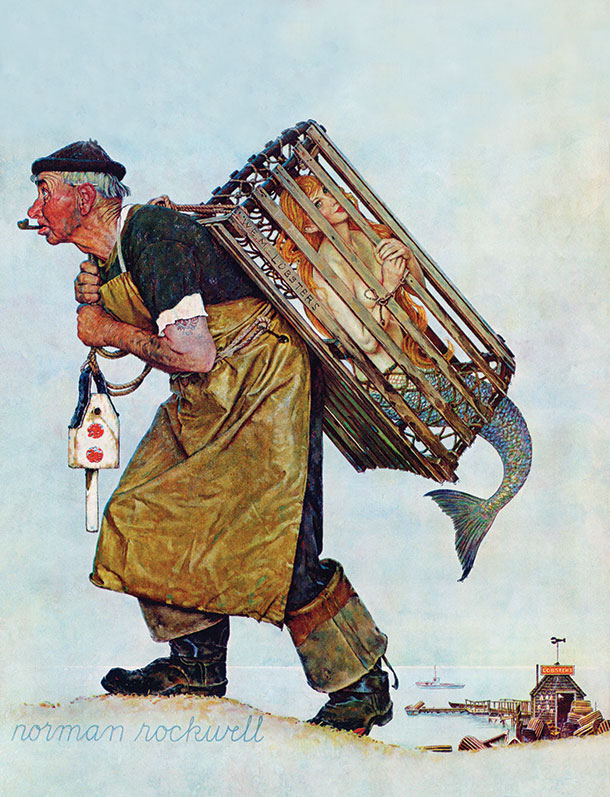
A Rockwell nude? Well, almost. When Mermaid surfaced on the August 20, 1955, cover of the Post, public reaction was swift.
“You have reduced your magazine to one to which any decent American would rather be without or hide because of the obscene picture on the cover,” wrote a reader from Worcester, Massachusetts. “Do not like lobsters, but think mermaid O.K.,” opined another from New Jersey. “What bait is best? Do I need a license?” joked a reader from Three Rivers, Michigan.
Unnerved by the response, Post editors hurriedly polled a sample of readers and were relieved to find that only about one in 20 considered the image obscene. Rockwell’s wholesome reputation could not be so easily tarnished. Most felt, as one Alabama woman noted, “Norman Rockwell couldn’t draw an obscene picture.”
Rockwell said little about this painting, except to note that the idea came from visits as a student to a seaside resort in Provincetown, Massachusetts. Whatever his inspiration, the painter labored over the work with his usual attention to detail. He recruited an 81-year-old Gloucester, Massachusetts, lobsterman to pose for the painting. For the fish tail, Rockwell bought and photographed a 12-pound pollack. But anticipating the scandal that might ensue if he asked one of his neighbors to pose nude, the artist hired a professional model. As the story goes, he packed his then 19-year-old son Peter in the car and drove to New York. “When we got to the modeling studio, there were six young women waiting, each holding a photo of themselves in the nude,” Peter recalls. “In the painting, my father carefully covered the mermaid’s breasts with the bars of the lobster pot, but some still called it lurid and pornographic.”
World Views on Freedom of Speech
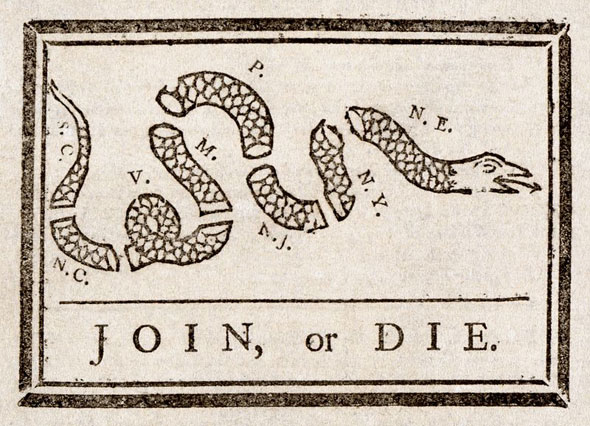
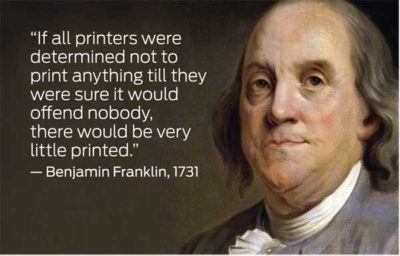
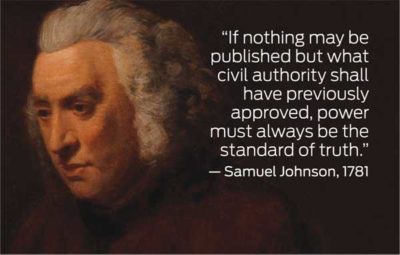
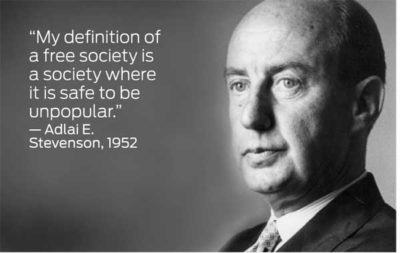
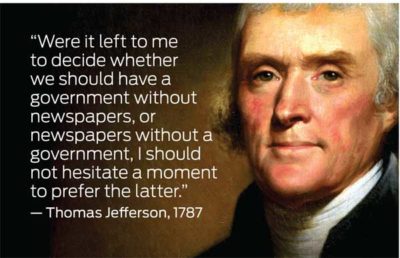
The massacre at the French satirical weekly newspaper Charlie Hebdo put the centuries-old art of political cartooning on front pages around the world. The Post — with roots in Benjamin Franklin’s Pennsylvania Gazette — ran the country’s first political cartoon, urging the colonies to unite against British Rule. “Join, or Die” became a symbol of colonial freedom during the American Revolutionary War.
The French magazine Charlie Hebdo returned to newsstands this week after the attack on its Paris headquarters left 12 people dead on January 7 — including its editor, five staff cartoonists, and two police officers. Response to this tragedy has drawn questions and comments about freedom of speech from cartoonists to world leaders, from scholars to op-ed journalists. A collection below:
U.S. Muslims — In Defense of Free Speech
The Council of American-Islamic Relations (CAIR), the nation’s largest Muslim civil rights and advocacy organization, denounced the deadly attack on the offices of the French magazine Charlie Hebdo. Nihad Awad, national executive director of CAIR, said in a statement:
We strongly condemn this brutal and cowardly attack and reiterate our repudiation of any such assault on freedom of speech, even speech that mocks faiths and religious figures. The proper response to such attacks on the freedoms we hold dear is not to vilify any faith, but instead to marginalize extremists of all backgrounds who seek to stifle freedom and to create or widen societal divisions.
Cartoonists Speak Out — Don’t Give In to Terrorists
The attack on Charlie Hebdo ignited comment from prominent political cartoonists around the world — themselves threatened by extremists for satirizing them. In a recent interview, Danish cartoonist Kurt Westergaard urged the press not to succumb to intimidation: “I hope that the media world will not be scared. It’s very important not to be afraid.” Westergaard said. “I hope we will not give in. You must not surrender your very important freedom of speech.”
“My Right to Be Offended”
Satirist Karl Sharro, who blogs about the Middle East politics and culture, believes the “ability to test the boundaries of good taste, and even to be offensive, is essential to effective satire. But it’s now under threat.” Sharro argues that the assault on Charlie Hebdo is being represented by some as clash of cultures — “a Western one that champions freedom of speech and an Islamic one that does not tolerate offenses to its religious symbols.” But to Sharro, the real story is the steady erosion of “freedom of expression and the rise of the right to be offended.” Will the current culture of taking offense result in even more restrictions on what artists and writers can do and say?
Is Free Speech Dying in the Western World?
In an opinion piece for The Washington Post, Jonathan Turley, professor of public interest law at George Washington University, argues that the decline of free speech in the Western world was not from any single blow but rather “from thousands of paper cuts of well-intentioned exceptions designed to maintain social harmony.” He asks: Can modern society no longer tolerate intolerance?
Use It or Lose It!
In 2009, author Jytte Klausen, a scholar of politics who teaches at Brandeis University, came face to face with censorship when releasing her book The Cartoons that Shook the World containing illustrations of Muhammad — Ottoman prints, Danish cartoons, and a 19th-century engraving by Gustave Dore. “The danger was imagined,” Klausen says in a recent Time magazine article. “My book was censored,” the author says, urging media to not give in to fear. “We’re all next. Editors and producers across the Western world will now be asking themselves: ‘Can I print this?’ They are asking the wrong question,” Kalusen says, “It is a fallacy to think ‘that could be us.’ The readers of the world rely on them to say collectively: ‘Yes, we can.’”
Can’t We Just Agree to Disagree?
“The right to free speech may begin and end with the First Amendment, but there is a vast middle where our freedom of speech is protected by us — by our capacity to listen and accept that people disagree, often strongly, that there are fools, some of them columnists and elected officials and, yes, even reality-show patriarchs, that there are people who believe stupid, irrational, hateful things about other people and it’s OK to let those words in our ears sometimes without rolling out the guillotines.” — Jon Lovett, “The Culture of Shut Up”