Rockwell Video Minute: Walking to Church
Norman Rockwell was often inspired by the great masters: in fact, one of his paintings was a tribute to the Dutch painter of the 17th century, Johannes Vermeer.
See all of the videos in our Rockwell Video Minute series at www.saturdayeveningpost/rockwell-video.
30 Vintage Recipes of Delicious Dairy Delights
Wisconsin dairy farmers share their home-cooked recipes. Find crumb cake, cream cake, strawberry punch, and more from America’s Dairyland, circa 1949.

Dairy Foods Calendar
Originally published in The Country Gentleman, June 1, 1949
June is National Dairy Month. These recipes featuring milk and milk products come from dairy-farm homemakers in Wisconsin and give you 29 good ways to serve your family nature’s best food.
1. Cottage Cheese Jam Tarts
(Makes about 2 dozen)
Sift together 1 cup of sifted flour and 1/4 teaspoon of salt. Cut in 1/3 cup of shortening until the mixture is the texture of coarse meal. Add 1/2 cup of cottage cheese, and work into a smooth ball. Chill 1/2 hour, or until firm. Roll out on a floured pastry cloth 1/8 inch thick. Cut in 3-inch squares. Place a teaspoon of cranberry sauce, or fruit marmalade, in center of each square. Fold over and pinch edges together. Bake on ungreased baking sheet in a hot oven (425° F) 10 minutes, or until lightly browned.
2. Uncooked Salad Dressing
(Makes 1 quart)
With a rotary beater or electric mixer, beat together 2 beaten eggs, one 15-ounce can of sweetened condensed milk, 1/2 cup of melted butter, 1/2 teaspoon of salt, 1/2 teaspoon of pepper, and 1 cup of vinegar. Store in a quart jar in the refrigerator. Thickens overnight and keeps well.
21st-century tip: Sub in coddled (gently cooked) eggs for raw ones.
3. Beets in Sour Sauce
(Serves 4 to 6.)
Add 2 tablespoons of flour to 1 cup of thick sour cream. Cook in top of double boiler until thickened, stirring constantly. Add 1 tablespoon of prepared horseradish, 1 teaspoon of vinegar. Salt and pepper to taste. Add 3 cups of sliced, cooked beets, drained. Reheat, stirring occasionally.
4. Bunnies
Trim the crusts from sliced bread. Spread with butter and nippy spreading cheese. Roll up as for jelly roll, wrap each roll with a slice of bacon, and fasten with toothpicks. Broil in oven or over an outdoor fire. Good for Saturday-night supper, picnic style.
5. Butter Crunch
Melt 4 tablespoons of butter in a heavy saucepan. Stir in 1 cup of brown sugar and 2 tablespoons of flour. Add 1/4 cup of water. Cook over low heat until a drop of the mixture forms a soft ball in cold water (236° F). Quickly pour mixture over 4 cups of corn flakes, mixing thoroughly until well coated. Spread out on large pan to cool. Form into balls and chill. Serve in place of cake or cookies with ice cream.
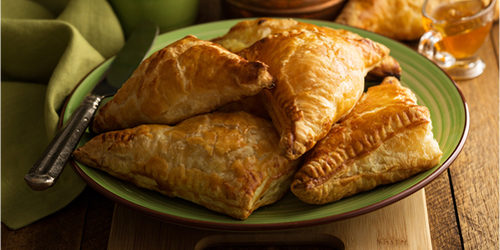
6. Ham-Cheese Turnovers
(Makes 9 turnovers)
Combine 1 1/2 cups of ground cooked ham, 2 tablespoons of finely chopped dill pickle, 1 teaspoon of dry mustard, 1 teaspoon of onion juice, and 1/4 cup of mayonnaise. Sift together 2 cups of sifted flour, 3 teaspoons of baking powder, and 3/4 teaspoon of salt. Cut in 5 tablespoons of shortening. Add 2/3 cup of milk and mix to a soft dough. Turn out on a floured board and roll 1/4 inch thick. Cut into nine 4-inch squares. Brush with melted butter. Place a triangle of thinly sliced cheddar cheese on half of each square. Top with a spoonful of the ham mixture. Fold dough over to form a triangle, and press edges together. Bake on a greased baking sheet in a hot oven (425° F) 25 minutes. Serve hot or cold.
7. Frozen Pineapple Salad
(Serves 6)
Set temperature control on refrigerator at lowest point. Combine 2 cups of thick sour cream with 1 tablespoon of lemon juice and 3/4 cup of sugar. Fold in 1 cup of drained, sweetened, crushed pineapple and 1/4 cup maraschino cherries. Pour into freezing tray of refrigerator and freeze until firm. Cut into squares and serve on lettuce or other greens.
8. Butterscotch Squares
(Makes about 1 dozen squares)
Cook 1/2 cup of butter and 2 cups of brown sugar over low heat until bubbly around edges. Cool. Add 2 eggs, beating well after each addition. Add 1 teaspoon of vanilla and 2 cups of sifted flour, sifted together with 1/4 teaspoon of salt and 2 teaspoons of baking powder. Stir in 1 cup of dry, shredded coconut and 1 cup of chopped nuts. Spread in a greased shallow pan (10 1/2 by 15 inches), and bake in a moderate oven (350° F) 25 minutes.

9. Rhubarb Cream Mousse
(Makes 4 to 6 servings)
Set cold control of refrigerator to coldest point. Mix together 1 cup of mashed, cooked rhubarb and 1/2 cup of sugar. Cool thoroughly and add 1 teaspoon of lemon juice. Fold in 1 cup of heavy cream, whipped. Pour into freezing tray. Freeze until firm (2 to 4 hours). Serve with topping of sweetened whipped cream.
10. Cheese Ring
(Serves 6)
Mix together 3 cups of cooked noodles, 1 cup of grated sharp cheese, 4 beaten eggs, 3/4 cup of milk, 2 tablespoons of tomato catsup, 1 tablespoon of Worcestershire sauce, and salt and pepper to taste. Pour into a well-buttered and floured ring mold. Set in a pan of hot water and bake in a moderate oven (350° F) 40 minutes, or until firm. Unmold on a hot platter; fill center with buttered June peas or creamed mixed vegetables. Garnish with deviled eggs around the ring.
11. Gingerbread with Cheese Filling
Combine 1 cup of cream cheese, 1 cup of chopped dates, 1 cup of chopped nuts, and 1/2 teaspoon of salt. Add enough cream to make mixture of a spreading consistency. Split open hot gingerbread. Spread cheese filling between layers. Serve at once.
12. Dairyman’s Delight
(Makes 6 servings)
Stew a 4-to-5-pound hen until tender (2 to 3 hours). Cut meat from bones, cube, and brown in butter. Add 1/2 pound of cooked noodles, 1/2 of a large green pepper, chopped, 1/3 cup of chopped pimiento, and 1 cup of cooked whole-kernel corn. Stir in 1 cup of chicken broth. Add salt and pepper to taste. Turn into a buttered baking dish, and cover with 1/2 pound of sharp cheese, cut in cubes. Bake in a moderate oven (350° F) 30 minutes.
13. French-fried Cheese Sandwiches
(Makes 4 sandwiches)
Spread 8 slices of white or whole-wheat bread with butter. Lay slices of American cheese on half the slices of bread. Press on top slices, and cut sandwiches in half. Beat 2 eggs, 1/4 cup of milk, and 1/4 teaspoon of salt together until well-blended. Dip sandwiches in egg-milk mixture and fry slowly in butter until golden-brown, and cheese is melted.

14. Peppermint-Marshmallow Ice Cream
(Makes 1 quart)
Set temperature control on refrigerator to coldest point. Scald 1 cup of milk. Add 14 marshmallows and stir until dissolved. Cool. When cold, stir in 1/8 teaspoon of salt, 1/2 teaspoon of vanilla, 1/2 cup of finely crushed peppermint-stick candy, and 1 cup of heavy cream, whipped. Add a few drops of red food coloring to give a delicate pink color. Blend coloring carefully.
Pour into freezing tray. When partially frozen (about 1 1/2 hours) return mixture to bowl. Beat with rotary beater until creamy. Return to refrigerator and freeze until firm. Ground sweet chocolate may be used in place of peppermint for chocolate ice cream.
15. Buttermilk Cupcakes
(Makes 12 large cupcakes)
Cream together 1 tablespoon of butter and 1 cup of sugar. Add 1 beaten egg and 1/2 teaspoon of lemon flavoring. Blend thoroughly. Sift together 1 1/2 cups of sifted cake flour and 1/2 teaspoon of soda. Add to egg mixture alternately with 1 cup of buttermilk, stirring just enough to blend after each addition. Pour into greased cupcake pans and bake in a moderately hot oven (375° F) 25 minutes.
16. Cheese-Stuffed Potatoes
(Serves 4)
Bake 2 large potatoes in a moderately hot oven (375° F) 1 to 1 1/2 hours, or until done. Cut in half, lengthwise. Scoop out insides and mash with milk. Add 1 cup of cottage cheese, 1 tablespoon of chopped chives, 1 1/2 tablespoons of melted butter, 1/8 teaspoon of pepper, and 1 teaspoon of salt. Beat until light and fluffy. Fill potato shells with mixture. Dot with extra butter and sprinkle with paprika. Bake in a moderately hot oven (375° F) 15 to 20 minutes, or until lightly browned and thoroughly heated.
17. Scalloped Salmon
(Makes 4 to 6 servings)
Drain and flake one 1-pound can of salmon. Reserve liquid. Fry 2 cups of 4-inch bread cubes in 2 tablespoons of butter, stirring constantly until evenly browned. Remove from pan and spread half of the cubes in the bottom of a buttered, shallow baking dish. Cover with salmon. Melt 2 more tablespoons of butter and stir in 2 tablespoons of flour. Add 1 1/4 cups of milk. Cook over low heat until thickened, stirring constantly. Stir in salmon liquid. Add 1/4 teaspoon of salt and 1/3 teaspoon of pepper. Pour over salmon and cover with remaining bread cubes. Bake in a moderately hot oven (375°F) 25 minutes.
18. Refrigerator Butter Rolls
(Makes 2 to 3 dozen rolls)
Combine 1 cup of scalded milk, 1/2 cup of butter, 1/4 cup of sugar, and 1/2 teaspoon of salt. Cool to lukewarm. Add 1 cake of yeast, crumbled fine, and 2 beaten eggs. Add 2 cups of sifted flour and beat well. Blend in 2 more cups of sifted flour. Cover and chill in refrigerator several hours, or overnight.
Roll out on a floured board to 1/3-inch thickness. Cut with a 2-inch biscuit cutter and brush with melted butter. Fold each roll in half Aid place on a greased baking sheet. Cover lightly and let rise in a warm place until doubled in bulk. Brush with melted butter. Bake in a hot oven (425°F) 10 to 15 minutes. (This dough will keep in the refrigerator for several days and may be used for coffee cake, sweet rolls, or tea rings.)
19. Sour Cream Potato Soup
(Makes 6 servings)
Cook 3 cups of diced potatoes, 1/2 cup of chopped celery, and 2 tablespoons of chopped onion in a small amount of boiling, salted water until just tender. Do not drain. Press through a sieve. Heat 3 cups of milk in double boiler until warm. Add 3 tablespoons of butter and the sieved potatoes. Mix 1 cup of thick sour cream with 1 tablespoon of flour until smooth. Add to soup. Add salt and pepper to taste. Cook until thickened, stirring constantly.
20. Lettuce with Sour Cream Dressing
(Serves 4 to 6)
Mash yolks of 3 hard-cooked eggs. Add 1/2 teaspoon of sugar, 1/8 teaspoon of pepper, 1 cup of sour cream, and 1 teaspoon of vinegar. Mix thoroughly. Makes about 1 cup of dressing.
To serve, tear a medium head of lettuce into small pieces. Sprinkle with salt and mix with desired amount of dressing. Garnish with finely chopped hard-cooked egg.

21. Eddie’s Ice Cream
(Makes 2 quarts)
Set temperature control of refrigerator at lowest point. Scald 2 2/3 cups of milk. Combine with 1 1/3 cups of sugar, 1 1/3 tablespoons of flour, and 2 beaten eggs. Mix well and cook in the top of a double boiler 20 minutes, or until mixture coats a spoon. Cool. Add 2 2/3 cups of light cream and 1 tablespoon of vanilla. Pour into 2 freezing trays. Freeze until mushy, about 1 hour. Turn ice cream into a large bowl and beat with rotary beater until smooth. Return to refrigerator until firm.
22. Buttermilk Biscuits
(Makes 2 to 3 dozen biscuits)
Sift together 4 cups of sifted flour, 4 teaspoons of baking powder, 1 teaspoon of salt, and 1/2 teaspoon of soda. Cut in 1 cup of shortening until the consistency of coarse meal. Add 2 cups of fresh buttermilk, and mix well. Turn out on a floured board and knead until smooth and easy to handle. Roll out to 3/4-inch thickness. Cut with biscuit cutter and bake on an ungreased baking sheet in a hot oven (425° F) 20 minutes, or until golden brown.
23. Chocolate Sundae Sauce
(Makes about 1 cup of sauce)
In top of double boiler melt 1/4 cup of butter and 1 square of bitter chocolate. Stir in 1 cup of sugar, 3/4 cup of cocoa, 1/8 teaspoon of salt, and 3/4 cup of light cream. Cook over hot water until smooth, stirring occasionally. Remove from heat and add 1 teaspoon of vanilla. Serve warm over ice cream.
24. Spoonbread
(Makes 8 servings)
Stir 1 cup of corn meal into 2 cups of milk, and cook over low heat until a mush is formed. Cool. Add 3 well-beaten eggs, 2 tablespoons of butter, 1 teaspoon of salt, and 1 cup of milk. Beat well and turn into a buttered baking dish. Bake in a moderate oven (350°F) 40 minutes, or until well-browned. Serve from baking dish while hot. Use butter liberally.
25. Chocolate-Chip Pie
Combine 12 finely crushed graham crackers, 2 1/2 tablespoons of melted butter, and 1 1/2 teaspoons of sugar. Press into the bottom and sides of an 8-inch pie pan. Bake in a moderately hot oven (375° F) 5 minutes.
Heat 1/2 cup of milk. Add 15 marshmallows and stir until dissolved. Cool. When cold, fold in 1 cup of heavy cream, whipped, and one 2-ounce square of unsweetened chocolate, shaved fine. Pour into cooled crust and chill until firm. Makes one 8-inch pie.
26. Breakfast Crumb Cake
(Makes 8 servings)
Sift together 2 cups of sifted flour, 1 teaspoon of salt, 1/4 teaspoon of soda, 2 1/2 teaspoons of baking powder, and 1/3 cup of sugar. Cut in 1/3 cup of butter until consistency of coarse meal. Add 1 slightly beaten egg to 1/3 cup of buttermilk. Combine quickly with dry ingredients. Spread in a 9-inch square buttered cake pan and cover with crumb topping.
To make topping, combine 1/2 cup of brown sugar, 2 tablespoons of flour and 1 1/4 teaspoons of cinnamon. Cut in 2 tablespoons of butter. Bake in hot oven (400° F) 25 to 30 minutes.
27. Veal and Peas in Cream
(Makes 6 servings)
Brown 1 1/2 pounds of cubed veal steak and 1 chopped onion in 3 tablespoons of butter in a heavy skillet. Add 1 can of cream of mushroom soup, 1 cup of light cream, and 1 cup of milk. Cover and simmer until tender (45 minutes to 1 hour), stirring occasionally. Add 1 cup of cooked peas and salt and pepper to taste. Cook 2 to 3 minutes longer. Serve over noodles or mashed potatoes.
28. Eggnog Pie
(Makes one 9-inch pie)
Heat 1 cup of rich milk and 1/2 teaspoon of nutmeg in the top of a double boiler. Beat together 3 egg yolks, 1/2 cup of sugar, and 1/8 teaspoon of salt. Add to milk and cook, stirring constantly until mixture coats the spoon. Soak 1 tablespoon of gelatin in 1/4 cup of cold water and add to custard. Let cool. Add 1/2 cup of shredded coconut and 1 teaspoon of vanilla. Fold in the 3 stiffly-beaten egg whites. Pour into a 9-inch graham cracker crust, chill, and top with 1/2 cup of cream, whipped. Sprinkle with grated semisweet chocolate.
21st-century tip: Sub meringue powder for egg whites.
29. Sour Cream Cake
Cream together 1/2 cup of butter and 2 cups of brown sugar. Add the yolks of 3 eggs, and beat. Sift together 2 cups of sifted cake flour, 1/4 teaspoon of salt, 1 teaspoon of cloves, 1 teaspoon of allspice, 1 teaspoon of cinnamon, 1/2 teaspoon of baking powder, and 1/2 teaspoon of soda. Add to creamed mixture alternately with 1 cup of sour cream. Fold in the 3 stiffly-beaten egg whites. Bake in a greased loaf pan in a moderate oven (350°F) 45 to 50 minutes.

30. Strawberry Punch
(Makes 4 servings)
Clean and sieve 2 cups of strawberries. Mix in 1/3 cup of sugar. Chill. Add 2 cups of milk and 1/2 pint of strawberry ice cream, stirring until the ice cream is partially melted. Pour into glasses. Garnish with whole berries.
News of the Week: Bad Jobs, Summer Books, and How to Talk Like a Soda Jerk
But What If I Want to Be a Disc Jockey?

It’s that time of year again, when CareerCast unveils its list of the best and worst jobs. While everyone in the technology or medical fields rejoices and sips champagne, everyone else reaches for the Advil and wonders where it all went wrong.
Here’s the list. Some of the top jobs include Genetic Counselor, Software Developer, and Information Security Analyst. Jobs at the bottom include Taxi Driver, Retail Salesperson, and (sigh) Newspaper Reporter. Though to be accurate, jobs like Newspaper Reporter or Writer or Disc Jockey/Broadcaster have never been secure or high-paying.
This brings up the obvious question: Do you go into a career you love, even if it doesn’t pay a lot and doesn’t have as much of a future, or do you put all that aside and just go into a career that’s growing and pays well? For people graduating from college right about now, there are probably a lot of factors to consider. What excites you the most? How much money do you want to make? And most importantly, how much did your parents pay for your college education, and will they be ticked off if you become a musician?
There’s a book from decades ago titled Do What You Love, the Money Will Follow. I’ve always wanted to believe that, but I think it’s more wishful thinking than anything concrete. Unless, of course, what you love doing is being an Information Security Analyst.
Read This!

We have a guide from Amazon to 10 great new books in every issue of the Post, and I thought I’d highlight six more you might want to read at the beach this summer. You don’t have to read them at the beach, of course. They’ll still work if you’re on your couch.
- Calypso, by David Sedaris. The acclaimed essayist is back with several stories on topics that range from playing board games on vacation to the suicide of his sister Tiffany.
- When Life Gives You Lululemons, by Lauren Weisberger. The author of The Devil Wears Prada (the movie version seems to be on at least one channel every single day, and I have to stop to watch if I come across it) is back with this sequel, which focuses on the Emily Charlton character (played by Emily Blunt in the movie version).
- Little Boy, by Lawrence Ferlinghetti. The poet says that this new novel is “not a memoir, it’s an imaginary me.” Ferlinghetti recently turned 99 years old, and Sterling Lord, the literary agent he first met in the 1950s, is 97.
- Lincoln’s Last Trial: The Murder Case That Propelled Him to the Presidency, by Dan Abrams and David Fisher. The legal analyst and co-author Fisher write about the 1859 Illinois murder trial in which Abraham Lincoln served as defense attorney and how it may have led to his presidential bid.
- Understudy for Death, by Charles Willeford. This crime novel, about a seemingly normal housewife who kills her family, hasn’t been in print in almost 60 years, and Hard Case Crime will release a new version in July. Willeford is also the author of Miami Blues and many other critically acclaimed crime novels.
- Flash: The Making of Weegee the Famous, by Christopher Bonanos. Bonanos wrote the terrific Instant: The Story of Polaroid, so I have high hopes for this biography about legendary New York City crime scene photographer Arthur Fellig.
Hello?

Every few months, I like to complain about smartphones. Sure, the technology is amazing, but I hate what it has done to us.
In this piece for The Atlantic, Alexis Madrigal says that, because a lot of people don’t even answer their phones anymore, telephone culture is disappearing. A lot of what he says is a bit foreign to me, like when he talks about not answering the phone or getting many phone calls. I still answer the phone — having just a landline helps — and if I’m busy or out of the house, I have an answering machine that picks up. It’s also odd that he talks about how he doesn’t answer the phone that much because as much as 80 percent of the calls he gets are robocalls, telemarketing calls, and other types of unwanted interruption.
I was struck by his use of the word phone, because he’s talking about his smartphone. When I say “phone,” I’m still referring to the landline in my kitchen. The generic term phone has become the default term for smartphones, because everyone assumes that everyone else has a smartphone. It used to be that everyone had a landline and a smartphone was the second phone. Now it’s the other way around (if they even have a landline at all).
The people that bug me are the ones who have voicemail on their smartphone but never listen to it. Here’s the scenario: I’ll call a family member to make holiday plans — I won’t mention who it is because it’s my sister — and get their voicemail. I’ll leave a detailed message. They call me back later and ask me what I was calling about. I’ll ask them if they listened to the message and they’ll say, “No, I just scrolled and saw that you had called.” So I have to repeat the entire message to them. I would suggest that these people either listen to their voicemail or get rid of it altogether. In this age of texting, social media, and email, I miss normal telephone conversations and interaction.
I also miss busy signals. That may sound weird, but I really do.
Burn One All the Way, and Check Out That Eighty-Seven and a Half

“Burn One All the Way” refers to a chocolate malted with chocolate ice cream, and “Eighty-Seven and a Half” is an attractive girl sitting at a table with her legs crossed. Those are just two of the many slang terms you’ll read about in this entertaining look from Atlas Obscura at the lost lingo of New York City soda jerks. There are many reasons I wished I had lived in the 1930s, ’40s, or ’50s, and this is one of them. Are there still soda jerks today? Maybe a handful somewhere, doing their thing.
You’ll never guess what “Scandal Soup” is. Come on, guess.
Changes for Miss America
“We will no longer judge our candidates on their outward physical appearance.”
That’s the word from Miss America Organization chairwoman Gretchen Carlson, and it makes me wonder what an “inward physical appearance” would mean. The organization thinks it might be sexist and out-of-date to still judge a woman on how she looks in a bikini and evening gown. Now the entire show will just be all of the contestants sitting at desks, taking the SAT. For the talent competition, they’ll be in jeans and a sweatshirt, performing surgery and figuring out algorithms. Well, not exactly, but Carlson says that they’re more interested in “what comes out of their mouths … when they talk about their social-impact initiatives.” Sounds like a fun show.
When the show airs on September 9, I’ll be curious to see if they really avoid judging the women on their physical appearance. Just because they’re not going to be in bathing suits doesn’t mean the contestants won’t be of a certain weight, a certain height, with nice hair and sparkling white teeth.
I think the question is this: Is it possible to be a feminist, to be a supporter of the #MeToo movement, and still want to see Miss America contestants in bikinis?
Roadside America for Sale
A miniature town opened in Shartlesville, Pennsylvania, in 1953. The creator, Laurence Gieringer, kept adding buildings, trains, and other features until it grew and grew and grew. His granddaughter still owns it, and CBS Sunday Morning visited the display this week. Fascinating.
This may be the first time I’ve ever wanted to be an inch tall.
RIP Kate Spade, Robert Mandan, Bernard E. Trainor, William Phipps, and Jerry Maren
Kate Spade was an acclaimed fashion designer known for her popular handbags and other clothing and accessories. She left the company in 2007 and had changed her last name to Valentine to distinguish the Kate Spade line from her new line of accessories, Frances Valentine. She was found dead in her New York City apartment on Wednesday. She was 55.
Robert Mandan was probably best known for his role as Chester Tate on the ABC comedy Soap. He also appeared on such shows as the Three’s Company spinoff Three’s a Crowd, Private Benjamin, and The Facts of Life, as well as many movies and plays. He died April 29 at the age of 86.
General Bernard E. Trainor was a veteran of the Korean and Vietnam wars who later became a military analyst for The New York Times, ABC, and NBC. He died last Saturday at the age of 89.
William Phipps appeared in dozens of movies, including Crossfire, War of the Worlds, Executive Suite, and Cinderella as the voice of Prince Charming. He also appeared in many TV shows, including The Life and Legend of Wyatt Earp, and did voiceover work in commercials. He died last Friday at the age of 96.
Jerry Maren was the last surviving Munchkin from The Wizard of Oz. He appeared in other movies, too, including Battle for the Planet of the Apes and the Marx Brothers’ At the Circus, as well as on TV on Seinfeld, The Gong Show, The Odd Couple, and in many commercials. He also founded the advocacy group Little People of America. Maren died in May at the age of 98.
Quote of the Week
This week’s quote is an entire obituary, and it deserves an OMG:
80-year-old Minnesota woman 'will not be missed' by children, according to scathing obituary https://t.co/qQqBjyksDA pic.twitter.com/qkl2RCFkSo
— The San Diego Union-Tribune (@sdut) June 5, 2018
This Week in History
Shopping Carts Introduced (June 4, 1937)
The first carts were designed by Sylvan N. Goldman, owner of the Humpty Dumpty supermarkets in Oklahoma City, Oklahoma. Eighty-one years later and people still don’t return them to the carriage corral.
Frank Lloyd Wright born (June 8, 1867)
Here’s a terrific piece by Todd Wilkinson on the famed architect’s long and stormy career.
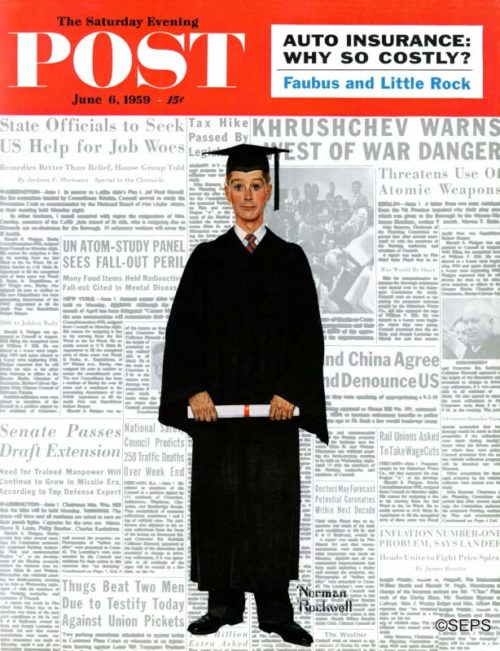
This Week in Saturday Evening Post History: Graduate (June 6, 1959)
Norman Rockwell
June 6, 1959
We should update this classic Norman Rockwell cover, replacing the headlines in the background with more current stories and worries.
It’s National Steakhouse Month
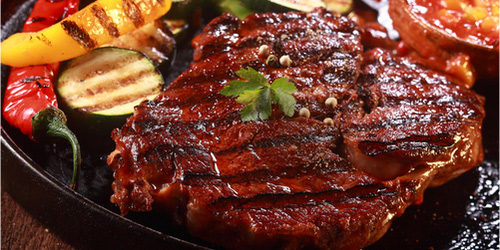
What’s your favorite steakhouse?
My favorite — not that I’ve gone to a lot of them — was the Hilltop Steakhouse in Saugus, Massachusetts. It was a gigantic restaurant, at one time the biggest in the country, with a western theme and various rooms with town names (Dodge City, Sioux City, Virginia City, etc.). I was quite sad when it closed in 2013. It’s being replaced by a shopping center and another restaurant, but it won’t be the same.
One thing that remains is the giant iconic sign. It’s staying where it is and is even getting a makeover.
Next Week’s Holidays and Events
The Belmont Stakes (June 9)
If Justify wins, he will be the 13th winner of the Triple Crown (the Kentucky Derby, the Preakness, and the Belmont Stakes) and the first since American Pharaoh in 2015. The race airs at 4 p.m. ET on NBC.
One of the horses competing is named Gronkowski. You can’t even escape that guy at a horse race.
National Ballpoint Pen Day (June 10)
Some day our signatures will be replaced by fingerprints, retinal scans, or giving a blood sample at the supermarket register. Until then, I’m stocking up on pens.
Why Blind Cyclists Are Taking on the Toughest Race in America
On June 16th, a team of four cyclists will start pedaling on a pier in Oceanside, California, and they won’t stop until they’ve reached the City Dock in Annapolis, Maryland. Team Sea to See will log more than 3,000 miles, crossing through desert, mountains, and plains. The scenery of the journey is superfluous, however, since all four cyclists are blind.
The team is taking part in the Race Across America, or RAAM, a bike race that has been widely declared one of the toughest in the world since it started in 1982. RAAM is longer than any of the European Grand Tours — and excludes their rest days — while remaining open to amateur cyclists and qualifying solo competitors. Racers climb an accumulated 170,000 feet and cross 12 states in under nine days.
Team Sea to See began as an idea between members Jack Chen and Daniel Berlin. Both are regular endurance athletes, but their participation in RAAM is aiming to draw attention to what they perceive as a systemic issue: blind unemployment.
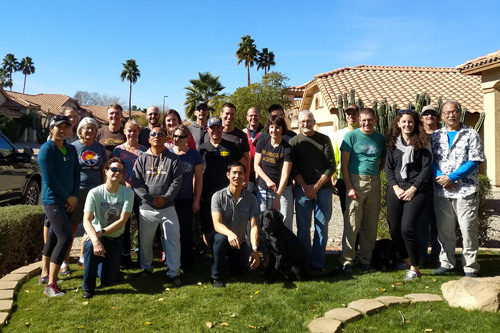
Almost 60 percent of visually impaired people ages 21-64 are unemployed, according to Cornell University’s 2016 American Community Survey. While the latest national unemployment rate is at 3.8 percent, Team Sea to See believes U.S. companies are still missing out on the wide range of skills in the blind population.
“We’re trying to stoke the fire in the minds of hiring managers and companies everywhere that there is an incredible talent pool out there that nobody is tapping into,” Chen says. As an attorney in Google’s New York offices, Chen navigates his way to work in Chelsea with the help of a cane. He is totally blind, with no light perception whatsoever, but he hasn’t let that impede him from hiking the Inca trail, running nine marathons, and climbing Mount Kilimanjaro.
Daniel Berlin is similarly interested in epic adventures, having completed the Iron Man triathlon, two marathon trail runs in New Zealand, and crossing the Grand Canyon. Berlin is the CEO of Rodelle, a vanilla extract and spice company in Fort Collins, Colorado, and — although he perceives some light and contrast in his periphery — he is legally blind.
The most proficient cyclist on the team is Kristina Ament, an Assistant U.S. Attorney for the Department of Justice in Washington D.C., where she lives with her guide dog, Higgins. Ament has been competing in ultra-cycling events for several years, like the 24-hour Bessie’s Creek race outside Houston, but the Race Across America will be her most ambitious race to date. Team Sea to See is rounded out by Kyle Coon, who has worked locally and federally advocating for blind employment. As a teenager, Coon was one of the first blind competitive rock climbers in the U.S. and he is one of only nine blind competitors to complete an Ironman Triathlon in under 12 hours.
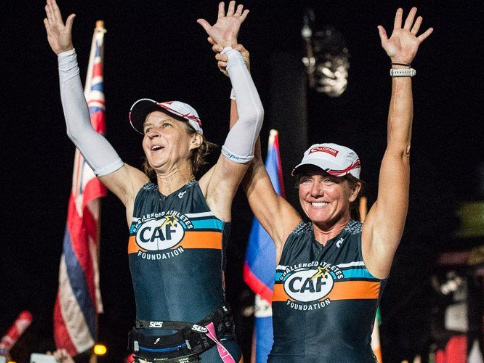
The logistics of a cross-country bike race, Chen says, are incredibly complicated. Team Sea to See will be moving eight tandem bike riders (four competitors and four pilots), 20 crew members, and two RVs from the Pacific to the Atlantic — and that doesn’t include the film crew shooting a feature-length documentary. Preparation is key. The team can’t afford for any of its members to face injury from tripping over equipment, so strict organization will be a priority. For the visually impaired, that includes taping shapes onto gear to mark ownership. Each rider will ride for four hours and rest for four hours, with alternating cyclists constantly pedaling for about a week.
Team Sea to See will roll through most of the terrain types this country has to offer. While sighted cyclists might note the spectacular views and hazy sunrises during such a journey, blind riders will perceive the diverse American landscape differently. They are used to gleaning information about the world around them from their other senses. Chen says the feeling of the sun tells direction, a field of garlic is immediately recognizable, and even the sound of riding through a forest differs from cruising over a mountain. Berlin compares cycling blind to camping at night: “You can hear the snap of every branch, the experience is totally different. But it’s not that you enjoy it any less, you just experience it in a completely different way.”
Given the career achievements of the members of Team Sea to See, each cyclist is living proof of the potential of blind people in the workplace. When employers list the attributes of potential hires, they aren’t looking for someone who can drive themselves to work each day, Berlin says. “Some of the strongest candidates for being able to problem-solve, deal with pressure, interact with others, to listen, are going to be the people who have done that their whole lives because that’s what they depend upon.” Berlin started to lose his sight as a teenager, and he regrets that he hid it from others for years. Maneuvering around steady vision loss to finish school, play football, and work at the Hershey factory gave him a unique perspective and capability, however, that he believes is valuable to his career.

Ament and Chen both navigated years of secondary education without sight — and largely without the current technology that aids blind people in school. While occasional braille textbook translations have been available, programs like Apple’s VoiceOver present renewed opportunities for the visually impaired in the age of the iPhone. Chen says web design and browsing has always been difficult for the blind because of its visual nature. “Tech can change it,” he says, “but the question is whether people are willing to consider the impact of what they build. Interfaces like dynamic-loading websites can be exclusionary to visually impaired people.”
One solution to the disparity of accessible technology could be the inclusion of more blind people in industry decision-making roles. “We see our role as driving awareness,” Chen says of Team Sea to See, “opening up this question, highlighting success, and then being able to partner with organizations on the ground who can match people with job opportunities to create environments where people who are blind can be successful.”
The other side of advocacy for blind employment is government policy. Ament was present at the White House South Lawn when George H.W. Bush signed the Americans with Disabilities Act into law. “I was thrilled that someone recognized the struggles that brought me down for around 20 years, that made me wonder if I was actually inferior or undeserving. I’d had employers tell me and my references that they wouldn’t hire a blind person,” Ament says.
The question now is whether or not the ADA applies to all web interfaces — and how best to enforce it. Ament says it absolutely applies, but a larger conversation about web accessibility needs to happen. That conversation may be getting underway, at least according to Kit Wessendorf, an accessibility engineer with the Paciello Group. Wessendorf says that companies and retailers have been seeking help to make their websites more accessible to vision impaired consumers — particularly after a handful of lawsuits against Target, Disney, and Netflix. “Whenever you try to make your practices more accessible, you’re making it easier and more organized for everyone,” he says.
“For many accessibility professionals, it’s personal,” Wessendorf says, “a person with vision impairment is not the liability that some employers perceive. Plenty of organizations are willing to help build the framework for greater web accessibility.” Wessendorf teaches disability etiquette, techniques for crafting inclusive information and communication technologies, as well as performing access audits.
Ament believes policy can only go so far in the struggle to combat blind unemployment: “The rest has to be done by things like we’re doing, when people are shown evidence that appeals to them on a personal level.”
That’s why the team has decided to take to the streets in an ultimate display of national publicity. Team Sea to See is trying to show as many people as possible that excellence is not only possible for the visually impaired, but right in plain sight. With a fleet of vehicles emblazoned with their logo and mission — and the lasting influence of a documentary film — these cyclists hope to move the meter on public perceptions of blindness across the country.
Follow Team Sea to See on Facebook for updates on their journey.
Top 10 Reads for Summer 2018
Every month, Amazon staffers sift through hundreds of new books searching for gems. Here’s what Amazon editor Chris Schluep chose especially for Post readers this June.
Fiction
The Outsider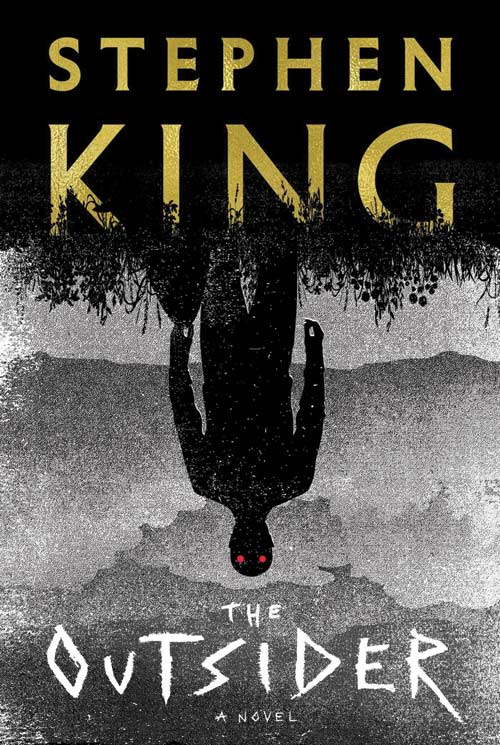
When a boy is found murdered in the town park, all signs point to Terry Maitland, a pillar of the community. King takes us on a suspenseful, shocking investigation of what really happened.
Scribner
The Perfect Couple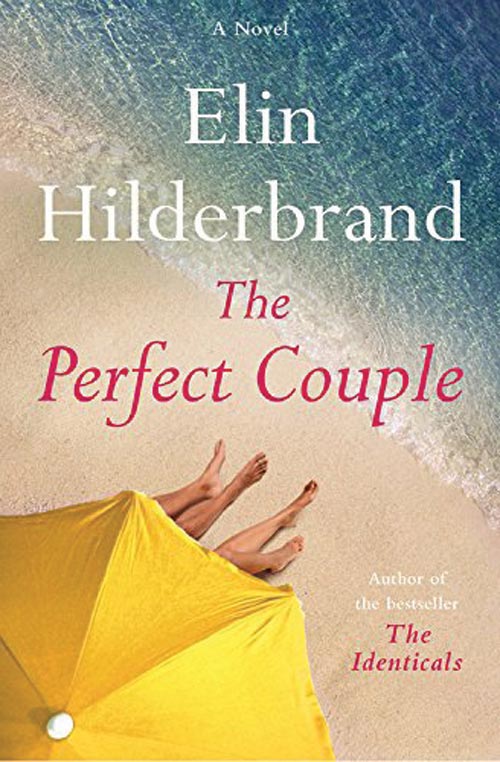
by Elin Hilderbrand
Hilderbrand’s Nantucket novels may be the perfect summer reads. In her latest, she sets out a lavish wedding with one hitch: The bride-to-be has been found dead in Nantucket Harbor.
Little, Brown, and Co.
 Warlight
by Michael Ondaatje
A moving novel set in London during the decade after WWII, featuring a 14-year-old boy and his older sister, by the author of The English Patient.
Knopf
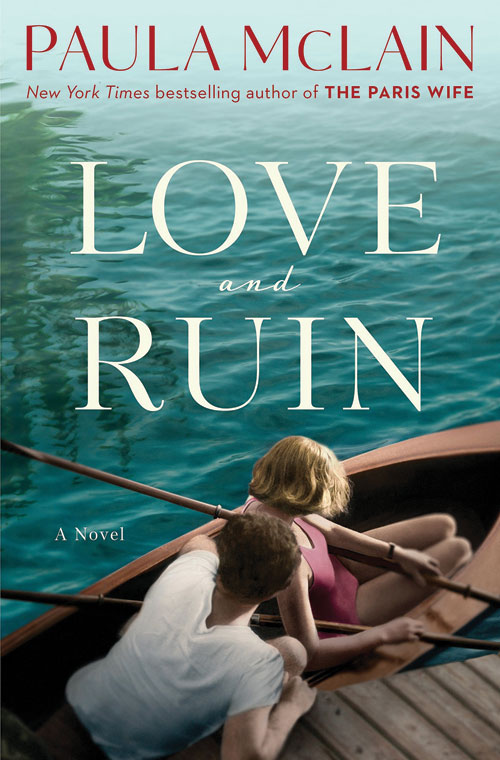 Love and Ruin
by Paula McLain
The author of The Paris Wife returns to the subject of Ernest Hemingway, turning her focus on his passionate, stormy marriage to Martha Gellhorn.
Ballantine Books
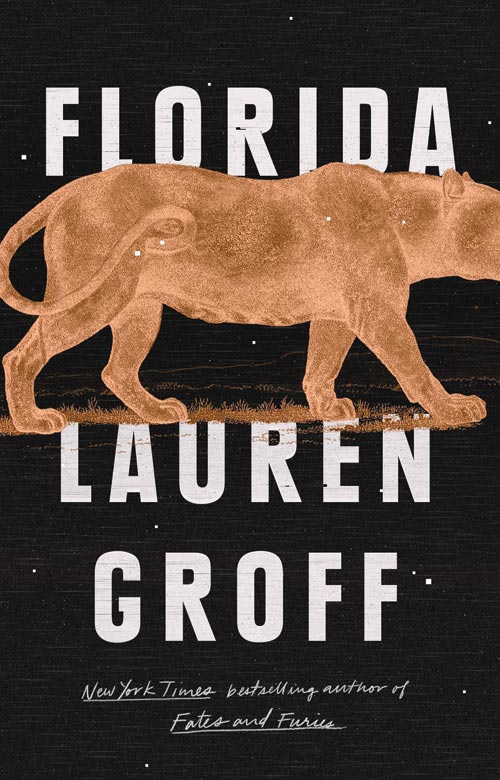 Florida
by Lauren Groff
From the celebrated author of Fates and Furies and The Monsters of Templeton, a collection of perceptive and deeply moving short stories, all set in Florida.
Riverhead Books
Nonfiction
 How to Change Your Mind
by Michael Pollan
The Omnivore’s Dilemma’s author set out to research psychedelic drugs and consciousness, he hadn’t planned to write such a personal book, an elegant blend of science, memoir, history, and medicine.
Penguin
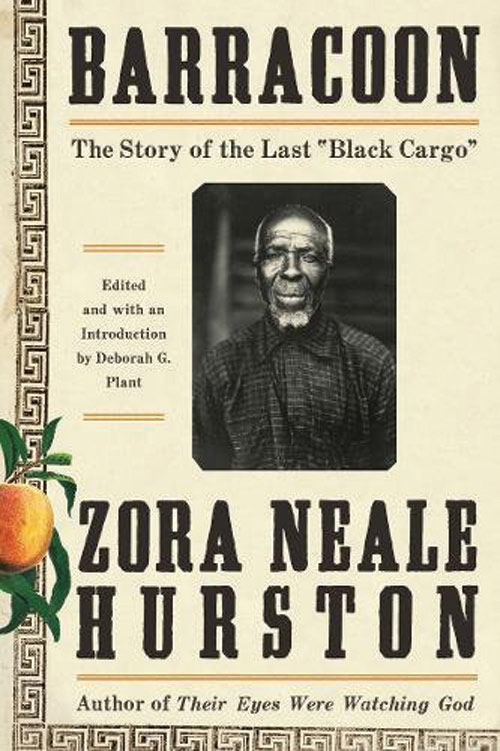 Barracoon
by Zora Neale Hurston
In 1927 and again in 1931, Hurston went to Plateau, Alabama, to interview Cudjo Lewis, one of the last known survivors of the slave trade. This is his story.
Amistad
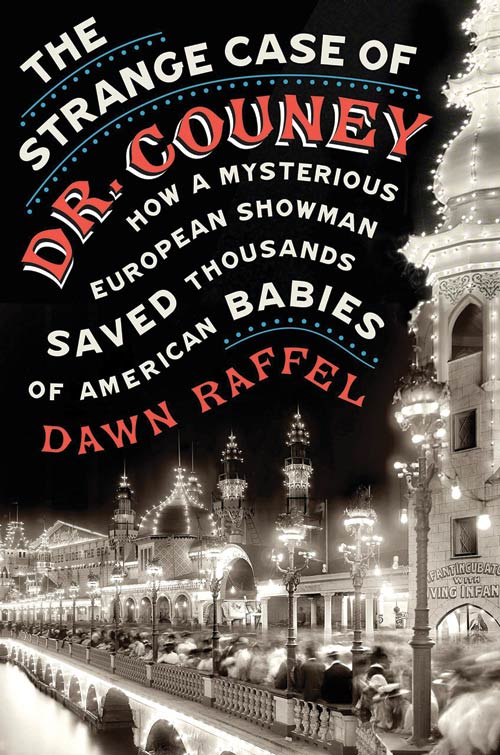 The Strange Case of Dr. Couney
by Dawn Raffel
A hundred years ago, hospitals couldn’t save premature babies. But on boardwalks and at World’s Fairs, a strange carnival showman saved the lives of thousands of infants. A compelling historic mystery uncovered.
Blue Rider Press
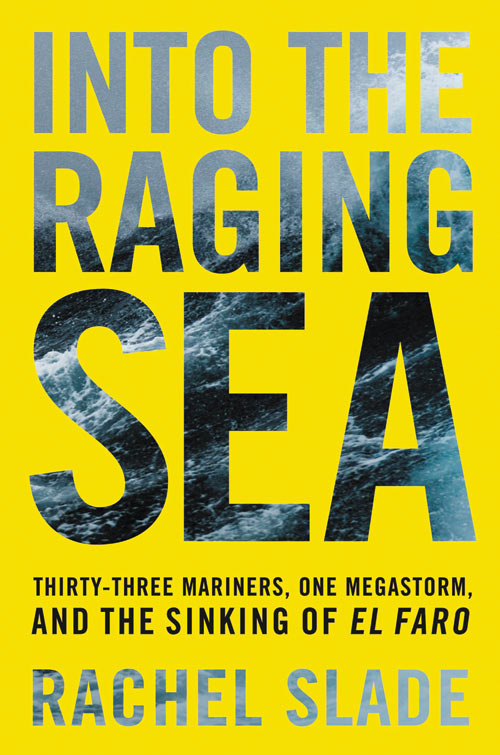 Into the Raging Sea
by Rachel Slade
On the first of October 2015, Hurricane Joaquin barreled into the Bermuda Triangle and swallowed the container ship El Faro whole. This maritime classic explores the events leading up to that tragedy.
Ecco
 Robin
Robin
by Dave Itzkoff
The New York Times culture reporter has written the definitive biography of Robin Williams, one of America’s most beloved and misunderstood entertainers
Henry Holt
North Country Girl: Chapter 55 —A Chicago Courtship
For more about Gay Haubner’s life in the North Country, read the other chapters in her serialized memoir.
The best advice my mother ever gave me was, “Don’t get involved with anyone who has more problems than you do.” After James, with his morbid fear of gaining weight and getting old, who detested the idea of marriage and who had rejected his own child twice, who had lost his fortune and then his mind, I was determined to go out only with normal, problem-less men. Yet the next guy I dated turned out to have an unsavory fetish and a brain-damaged daughter. And Michael Trossman, an artist who flirted with me at a drug-soaked party, had an ex-wife, two kids, and a very complicated love life. Count me out, I thought. But work and loneliness and life conspired to bring me back to Michael and his bohemian digs at 155 Burton Place. A week after the MDA party where Michael and I met, Ann Geddes called me.
“You’ve got a booking at Oui, if you want it. It’s fully clothed, and it’s for promotional material, not anything in the magazine. I think you should take it.”
Oui was a Playboy publication, part of that great empire that devoured pretty young women who were desperate for money or fame. It was meant to appeal to younger readers, guys who grew up sneaking looks at their dad’s not-carefully-enough-hidden collection of Playboys, and who might otherwise be lured over to the more explicit Penthouse magazine.
Playboy’s Playmates were supposed to look like the girl next door if she ran around naked. The Playmates were posed cuddling a puppy or looking at a daisy; you couldn’t tell if they were getting ready to have sex or to bake cookies.
Oui ran racier photos of real and fake European girls, on the assumption that European equals sophistication equals hotter in the sack, girls wearing nothing but wooden shoes or holding a strategically placed baguette. Oui had no investigative journalism, no high-brow fiction, no interviews with presidents and movie stars. It was just pages and pages of sultry, nude women in berets interspersed with arch, sarcastic humor, painfully modeled after National Lampoon and falling short, and sensational, often fraudulent, articles such as “Is This the Man Who Ate Michael Rockefeller?”
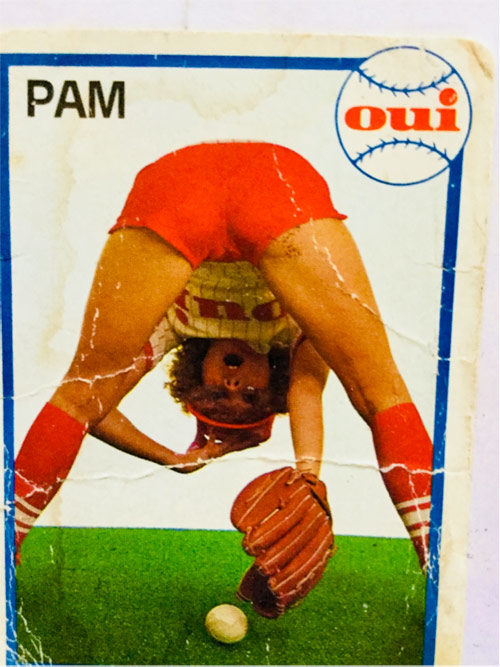
My modeling job for Oui was to pose as the shortstop on an imaginary Oui all-girl baseball team. My uniform was a white and red pinstriped, deeply V-necked shirt and frighteningly small shorts that struggled to cover my butt.
It was my new pal George who handed me my baseball outfit and mitt. He had just been transferred from Playboy to Oui, where he was now the creative director. George had specifically requested me for this shoot.
Oh crap, I thought, here’s a guy who has already seen me naked, given me drugs. I was pretty sure where this was going and I pondered how to keep George at arm’s length and still be the nice, obliging model he would want to book again.
But George was all business in the photo studio, with the exception of darkroom pot breaks. There was not even flirtatious banter. When George came over to pose me, instead of doing it by placing one hand on a breast, the other on my butt like every other photographer did, he held me gently by the elbow.
First I stood with a baseball bat cocked on my shoulder while the photographer shot me from above. George shook the Polaroid, shook his head, probably at the unremarkable view down the front of my shirt, and then repositioned me. I bent over from the waist, baseball mitt on the patch of Astroturf, waiting for that groundball, my upside down face in an idiotic grin and my tight, tiny shorts riding even farther up my behind. George yelled “That’s it!” and we were done.
While signing my modeling voucher, George said, “Oh, we’re having a barbecue tonight, why don’t you come?”
I had planned to go home to my un-air-conditioned apartment, feed Groucho, my dog, drink copious amounts of iced tea, and read a book. But free food, free drinks, free drugs, pretty or smart people partying in those gorgeous apartments…“George, thanks, I’d love to.”
That evening the party was on the roof, the soundtrack was Curtis Mayfield, and while thankfully there was no MDA, the pot was strong. I climbed the ornate cast iron spiral stairs, which wobbled beneath me, and was greeted by a modest view of Chicago’s Near North neighborhood on one side, on the other the Cabrini Green housing project, as scary as Tolkien’s towers. Above this mundane cityscape stretched a twilight sky streaked with Technicolor reds and yellows in the west, deepening in the east to violet blue punctuated with a single star.

George escorted me over to Michael Trossman, who twinkled like that lone star. “The sky looks like a Maxfield Parrish,” I said.

“I knew you guys would get along,” said George proudly. Michael, the incurable romantic, had fallen out of love with Fred’s wife and in love with me.
“I can’t believe you’re a Playboy model,” Michael said. This, although technically true, required narrating my life story over several beers, hot dogs, and joints, a tale that featured how I had landed in Chicago, swept off my feet by James Rodgers.
When I was finished, Michael looked discouraged. “I’m not rich. I make art. It’s hard for me to come up with money for my kids each month.” The unspoken accusation of gold-digging stung. If I were a gold-digger I was the world’s worst: the only gold I had dug in my two years with James was the flimsy GAY pendant about my neck, one bracelet with a clasp for a promised charm that was never bought, and a chain necklace that turned out not to be gold at all.
So I let Michael kiss me. And then, in complete opposition to Anita Loos’ claim, it was just as easy to fall in love with a poor man as a rich one, although it took me a while. There was so much in Michael Trossman that reminded me of my original Michael, my first true love: the sly hidden intelligence, the European background, the moody, thin-skinned sensitivity, even though in looks he resembled him not at all: M. Trossman looked like a young Saul Bellow, M. Vlasdic like a young John Lennon.
Michael Trossman was the Romantic Artist; he had to be either madly in love or reeling from heartbreak. Just as LSD had been the philosopher’s stone that transmuted my teenage infatuation with Michael Vlasdic into a melding of souls, MDA was the elixir d’amour that sent Michael Trossman into a whirlwind of romance, buffeting him from Ronny’s girlfriend to Fred’s wife, to me, his new fixation.
After my escape from a semi-suicidal James and my refusal to play dominatrix in California, I believed I was through with men. I obviously had bad judgment or bad luck when it came to boyfriends. I was determined to spend my nights in my own bed, alone except for Groucho toothlessly drooling on my pillow. But it seems that the minute you decide you don’t want something, life insists that you do.
Michael courted me. He drew funny caricatures of me, signed “To my small girl” with XXX and OOO underneath. He was an enthusiastic amateur musician; he dragged his guitar out of the closet and sang love songs in goofy, off-key voices. Michael took me through his extensive record collection, peering up at me through his glasses to see if I liked what he liked; after years of living in a disco desert, I melted to English art rockers (Queen, Genesis, 10cc) and thrilled to the clamor and riot of punk (The Ramones, The Clash, Television). We sat close together on his couch listening to music, with the soft light beaming through the wall of translucent glass bricks, smoking pot, not needing to talk. I felt my shoulders loosening up and my heart thawing as “I’m Not in Love” filled the Art Nouveau living room.
I am most grateful to Michael for introducing me to music that had been right under my ears: the Chicago blues. Not a chorus or a chord of that soul-trembling sound had ever infiltrated my yuppie Near North enclave. Lightnin’ Hopkins, Hound Dog Taylor, Howlin’ Wolf, Muddy Waters, all alive and playing the blues just a few miles south of us, a whole new world to explore.
A few miles north of Burton Place was Wrigley Field. “I don’t really like sports,” I protested as Michael shoved me into an uptown El on a balmy September day.
Michael shook his head and kissed me and said, “But it’s the Cubs. The Cubbies! The only pro team named after a baby animal.”
As we stood in line for the bleacher seats, a man worked his way down the crowd, handed Michael a plastic razor, and muttered “Gillette Day.”
“Hey,” I sputtered. “Don’t I get a razor?”
“Um, they’re men’s razors.” That was annoying. I challenged the razor guy to describe exactly what made a razor suitable for a man but not for a woman. Why couldn’t I shave my legs with the razor he was passing out to the men? Beaten down, Mr. Gillette grudgingly handed me a razor, and flush with victory, I ordered “Make sure the rest of the women get one too,” and the three other women in line cheered. Michael congratulated me on my tiny feminist victory with a sweet nuzzle on the neck and led me out to the wonders of The Friendly Confines, Wrigley Field.
Coming up from the dim ticket area was like ascending into a different world. The sky stretched out above in an open expanse rarely seen in Chicago. The field was a lush green that every Duluth dad sowing grass seed or smearing sheep shit over his front lawn could only dream of. Across from us, stately and still unlighted, rose the grandeur of Wrigley Stadium, as noble a piece of Chicago history as the Rookery or the Museum of Science and Industry. We found places to sit in the full sun of the bleachers, and Michael pulled out a slightly grimy Cubs cap for me. “My son’s,” he apologized. I put on the cap and bought two beers in waxy cups from the vendor, and then we rose for the National Anthem.
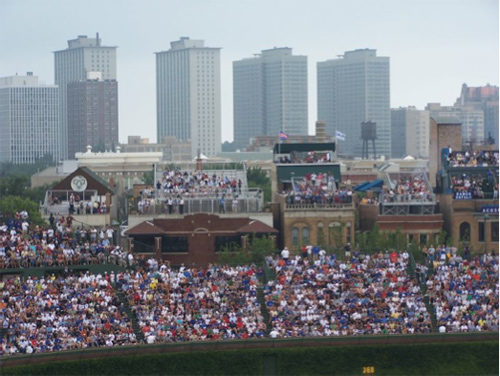
I had yet to give my heart completely to Michael, but that day I fell in love with baseball, played as it should be, during the day, in plein air, even though the Cubs managed to blow a six-to-one lead over the Mets, much to the disgust of the raucous, filthy-mouthed, beer-soused bleacher bums around me. Michael was drinking at the rate of a beer an inning, but I slowed my own consumption after a long, winding, desperate search for the ladies’ room, which was situated as inconveniently as possible. I was sober enough to be alarmed when, in a late inning, I watched a tiny white sphere head skyward at the same time I heard the resounding crack of bat against ball. The sphere arced high and long, then plunged bleacherward as if it had been launched directly at me, getting bigger and closer until it suddenly dropped between my feet; I managed the one semi-athletic achievement of my life catching the ball on the bounce.
I started to say, “Would your kids like…” to Michael when a chorus started up: “Throw it back! Throw it back!” The offending ball had been homered by a Met. Michael shook his head, and I feebly tossed away the only baseball I have ever caught; it dropped into the ivy that enrobed the bleacher wall and may still be there to this day.
Squashed on the El with a thousand resigned Cub fans commiserating another loss, Michael teased out of me that my favorite food was Indian. That night he took me out to dinner, refusing to let me so much as leave the tip. A baseball game and dinner and I knew that he rarely spent a penny on himself, always busy hustling illustration jobs to pay rent and child support. Michael reached across the stained tablecloth and held my hand, and my heart gave an almost painful pang. How could a cheap curry and Kingfisher beer feel more romantic than champagne and steak Diane?
This was a new experience; I had never been wooed before. I made up my mind in the first 45 seconds of meeting a guy if I was going to sleep with him or not, and I had always stuck to my guns. Michael insisted that it wasn’t the MDA talking; he really had fallen in love with me. And as summer died away, the MDA parties with the rotating bedmates at Burton Place went from weekly to monthly and then never again, miraculously without any divorces, break-ups, or stabbings.
But in addition to his fun, funny, creative group of Burton Place denizens, who I adored and who seemed to like me (although maybe they were just glad to have me around since they were running out of wives and girlfriends for Michael to fall in love with), Michael had an ex-wife and two kids. His visitation schedule with his sons was erratic; sometimes he knew when they were coming, sometimes he called to warn me off, and sometimes I would be at his door and hear piping voices and pounding footsteps from above, my signal to turn around and go home.
Michael and I were alone one day at his place when there was a knock on the ground floor door and a woman’s voice yelling “Michael?” Panic shot through Michael’s face; he gestured me toward the bathroom, pushed me inside and shut the door before I realized what was happening. It was his ex-wife making a surprise visit in hopes of finding him with cash in hand. Those Art Nouveau apartments, all curves and rounded corners, carried sound beautifully; sitting on the tile floor I could hear every word she shrieked:
“A Playboy model? Really? I hope you know better than to have her around our sons.” Oh boy, I thought. What the other models had warned about posing for Playboy was true. I could get Rabin and Abbas to sit down over hummus and pita and the newspaper headline would read “Playboy Model Wins Nobel Peace Prize.”
Michael spent thirty seconds defending me before emptying his pockets and easing his ex-wife out the door. He released me from the bathroom, wearing such a miserable, guilt-ridden face I had to kiss it and make it all better. Michael’s German-Russian heritage meant that he did guilt as intensely as he did romance, and he had just locked the woman he claimed to love in the bathroom.
I hugged that big-nosed, balding man, knocking his geeky horn-rimmed glasses askew, and the magic cloak of love settled around me, a feeling identical to, yet complete different from, the one sparked by a tender, tenuous kiss with my first Michael, seven years before.
I tried to say, “I love you.” I could not speak the words; it felt like my giddy heart was swelling all the way up my throat. I had fallen for Michael: he was only slightly crazy, and so talented and funny that I was able to overlook the baggage of his two small children and had almost stopped noticing that he was not good-looking.
Considering History: Remembering World War II Heroism Beyond D-Day
This column by American studies professor Ben Railton explores the connections between America’s past and present.
The June 6, 1944, Allied landing on France’s Normandy Beach—the operation that came to be known as D-Day—was one of the most ambitious military operations ever undertaken, and featured countless stories of striking bravery and heroism. To cite just one example from my home state, Virginia’s state highway 29 has been officially designated the “29th Infantry Division Memorial Highway,” in honor of a unit based out of the state’s Fort Belvoir that served in the vanguard at Normandy, suffered tremendous casualties as a result, and then helped lead the subsequent advance through France and into Germany that produced the final Allied victory over the Nazis.
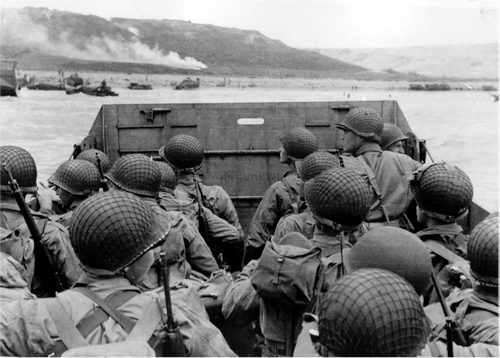
No doubt because of such remarkable stories, as well as the invasion’s central importance to the war effort, D-Day has figured prominently in our national collective memories of the war. From early cultural portrayals like the blockbuster films D-Day: The Sixth of June (1956) and The Longest Day (1962) to more recent ones such as the bravura opening sequence of Steven Spielberg’s Saving Private Ryan (1998) and the acclaimed HBO miniseries Band of Brothers (2001), popular culture has returned to the histories of D-Day and its aftermath time and again.
Those histories, and most especially all those Allied servicemen who took part in them, are certainly well worth commemorating, and the operation’s anniversary provides an opportunity to do so once more. Yet there are many other World War II feats of heroism that extend beyond the Normandy invasion, including a number featuring soldiers of color who (because of the military’s segregated status) were not allowed to take part in the D-Day operation. Adding them to our commemorations deepens our perspective on what every American community contributed to the cause.
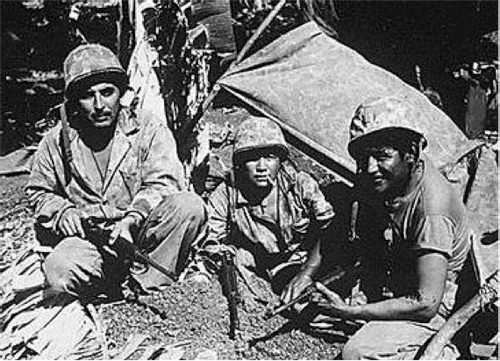
Thanks to director John Woo’s historical film Windtalkers (2002), the stories of the World War II Navajo code talkers — stories that were classified until 1968 and largely unremembered until at least the 1980s — have perhaps begun to enter our collective memories, but nonetheless deserve a far fuller presence in our histories of the war. Recruited in 1941 and 1942 by Philip Johnston, a World War I veteran who had grown up on a Navajo reservation and spoke the language, these Navajo soldiers —some as young as 15 or 16 years old — proved vital to the Allied efforts, especially in the war’s Pacific Theater. Major Howard Connor, a signal officer who served with the 5th Marine Division at the crucial 1945 Battle of Iwo Jima, later argued that, “Were it not for the Navajos, the Marines would never have taken Iwo Jima.”
African American servicemen likewise contributed mightily to the Allied efforts. Despite their absence from combat roles in — and thus most cultural representations of — the Normandy invasion, African American soldiers such as those in the 320th Barrage Balloon Battalion did indeed take part in the D-Day operation. And both before and after June , 1944, African American units played vital roles in combat operations throughout the war. The Tuskegee Airmen, also known as the Red Tails (the title of a 2012 historical film about the unit that deserves wider viewership), flew tens of thousands of missions in North Africa, Italy, and beyond. The 761st Tank Battalion, also known as the Black Panthers, saw extensive combat under General George Patton in the post-Normandy Battle of the Bulge, among many other European operations, and have been called “one of the most effective tank battalions in World War II.”
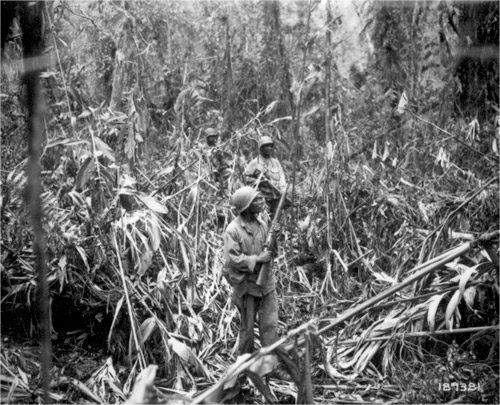
Native Americans and African Americans have played significant roles in every American military conflict from the Revolution on, and these World War II servicemen extended and amplified those profoundly impressive histories. But perhaps the most inspiring and heroic World War II American servicemen of color were the Japanese American soldiers who quite literally volunteered from within the exclusionary internment camps and helped change the course of the war.
In early 1943, roughly a year after President Franklin D. Roosevelt’s Executive Order 9066 had created the internment policy, the administration reversed its concurrent policy prohibiting Japanese Americans from serving in the armed forces. The move was both a practical and a cynical one, both a response to wartime needs and an attempt to counter Japanese propaganda about the camps, and it would have been understandable if Japanese Americans had refused to serve the nation that had defined them as “alien enemies.” But their response was instead literally and figuratively overwhelming: in Hawaii, an initial call for 1500 volunteers led 10,000 Japanese Americans to recruiting offices; while more than 2000 volunteered in that initial surge from within internment camps.
By the war’s end, more than 33,000 Japanese Americans had served in two segregated units, the 442nd Infantry Regimental Combat Team and the 100th Infantry Battalion. The 100th, the first unit to see combat in 1943 (initially in Italy and then throughout Europe), came to be known as the “Purple Heart Battalion,” as it took nearly 10,000 casualties by war’s end. And Commanding General George Marshall said of the 442nd, who fought under his command throughout the pivotal post-Normandy campaigns in 1944, that “They were superb! They showed rare courage and tremendous fighting spirit. Everybody wanted them.”
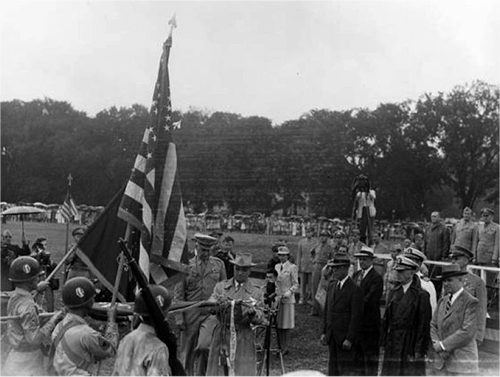
D-Day was a crucial wartime operation, but it has become a great deal more than that. It rightly serves as an occasion through which to remember the service, bravery, and heroism of American World War II servicemen and veterans. Adding the stories of the Navajo code talkers, the war’s African American units, and the Japanese American soldiers of the 442nd and 100th to our national collective memories not only amplifies those commemorations of heroism, but makes clear how much every American community share
The Louisiana Bayou: The Place of Sleeping Water
This photo and description was part of a regular feature in The Saturday Evening Post from the 1950s called “The Face of America,” which captured a rarely seen view of American life.
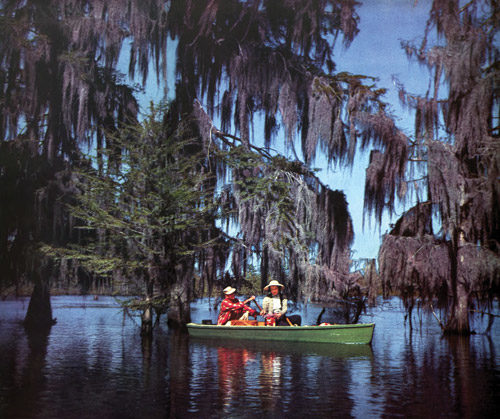
Beneath gray shrouds of Spanish moss, a Cajun couple paddles across the dark, still waters of Bayou Chicot. Overhead, the boughs of gum trees and tall cypresses shield them from the Louisiana sun. It is a pleasant spring Sunday here, about 75 miles (as the crow flies) northwest of Baton Rouge.
Like many of the inhabitants of Evangeline Parish who enjoy boating on the lake, Doc Wiggins and his wife are descendants of the Nova Scotia Acadians whose exile to Louisiana two centuries ago inspired Longfellow to create his ill-fated heroine. From her, the parish took its name. Once a swampy, cutover area, Bayou Chicot is now a well-cared-for state park. To the Choctaw Indians, this kind of waterway was a bayuk, or small river. But to early settlers trying hard to capture the meandering tranquility of the tree-studded lakes, a bayou was known as “the place of the sleeping water.”
—The Face of America, March 9, 1957
“Run of Luck” by Jan Cox Speas
Standing in a quiet corner by the buffet table, Anne Wilson ate a handful of delicious frosted grapes, one by one, and tried to remember the obscure minor poet who had once said that many a dangerous temptation came in fine, gay colors. She had never seen such a lovely room. But the crowd of people milling about it laughed and chattered heedlessly, ignoring the incredible view of the city beyond the wide windows, abandoning their glasses to leave damp circles on the priceless antique furniture, crushing the white carpet, demolishing the lavish buffet like a horde of greedy locusts.
They were obviously accustomed to temptations, Anne thought ruefully, and it took a simple schoolmarm from the suburbs to be impressed. She had recognized a television star or two, as well as a famous blonde from Hollywood, and earlier Nina Fleming had pointed out the producer she had come to town to see and the young actor with two Emmy awards who wanted the lead in Nina’s new show. There were others who were undoubtedly important in Nina Fleming’s world, and some who were not, but, since they wore no labels, Anne had no way of distinguishing the mink from the dyed squirrel. The young man, for instance, who had spoken briefly to her a few minutes ago. She could see him across the room, leaning his shoulders against the wall as he conversed with the man beside him.
Very dangerous. Very tempting. As for the fine, gay colors, Anne could only be grateful that he was dressed in a conservative dark suit. Enough was enough, after all, and a schoolmarm could cope with just so much splendor. He had paused beside her with a casual, “Hello, I’m Gard Mitchell. Can I get you anything? Food? A drink?”
“Nothing, thanks,” she said, privately admiring his tan, the hard bones shaping his face and the ridiculously thick black lashes that seemed almost to hide his gray eyes.
“Don’t you know anybody in this mob? I’ll introduce you around if you like.”
“Please don’t bother. I’m having a wonderful time, really.”
“Standing in a corner all by yourself, eating grapes?” He had a slow, friendly smile. “If you’re the retiring kind, why did you come?”
“I don’t know,” she said with candid amusement. Then she added, “I came with Miss Fleming.”
He looked down at her thoughtfully. “Do I know you?”
“No,” she said gravely.
He waited. Then he said patiently, “I would like to, if you please.”
Someone came by and said, “Scott wants to see you.”
He said absently, “Sure, be right there,” and kept looking down at Anne. “Well?”
He looked as if he might stand there indefinitely, waiting, so she said, “I’m Anne Wilson.”
“Thank you. That wasn’t so hard, was it?” He shook his head and sighed. “Where did you come from, baby dear, out of the nowhere into here?”
“I came with Miss Fleming,” Anne repeated, trying not to laugh.
“I know — you told me.” His gray eyes were a little puzzled, as if he knew very well that she didn’t belong to the elegant black Mainbocher dress. But he smiled at her and said, “Nina’s taste is improving. Look, I’ll be back. Don’t go away.”
Anne didn’t tell him that she wasn’t likely to go anywhere. She had two crumpled one-dollar bills in her purse, a magnificent fortune which must last her until payday, and in any case she doubted if she could stretch it to cover cab and train fare back to New Pelham.
The whole thing was ridiculous, of course. She had gone out to mail a letter, as unsuspecting as the poor fellow in the fairy tale who tilted his jug at dinner one ordinary evening and was stunned to pour out a genie instead of red wine.
The man in the fairy tale, however, was not cursed with a warped sense of humor. He would never have stopped on the sidewalk to stare, entranced, at the woman who came out of a house, carefully placed a lounge chair on the lawn and then stretched out on it with an air of happy contentment.
Anne had known very well that the neighbors frowned on the rude practice of staring at Nina Fleming. While curiosity, envy and mild disapproval were inevitable over the local bridge tables, New Pelham prided itself on a standard of public good manners that disregarded celebrities as if they didn’t exist.
But she couldn’t tear herself away from the fascinating sight of Nina Fleming reclining on a lawn chair in the late afternoon of a gray November day, surrounded by snowy lawns and trees that rattled desolately in a raw north wind.
Then it was too late to turn away. Nina Fleming called, “Please don’t go away,” and walked toward the gate.
“Are you one of my neighbors? I’ve lived here three months and you’re the first person I’ve met, other than delivery boys and the gardener.”
She looked lovelier in person than across the footlights, and younger than a woman her age had a right to look.
“Isn’t the weather atrocious?” she asked in the famous deep, throaty voice.
“You seemed to be enjoying it,” Anne said mildly.
Nina Fleming laughed. “Is that why you were staring? I was only trying to remember where I planted my bulbs. The day I planned the garden I was sitting in that exact spot, so I thought it might jog my memory to do it again.”
A little awed, Anne asked, “Did it?”
“Of course,” Nina Fleming said, and added abruptly, “You have the most extraordinary face. Egyptian, perhaps, with a touch of the Oriental in your bones. It’s really quite interesting.”
Anne thought it wise to keep a discreet silence.
“There, you see,” Nina Fleming said triumphantly. “You’re laughing at me, but only your eyes give you away. I had a fascinating Siamese cat once who had the same sort of inscrutable face.” She gave Anne a brilliant smile. “Please come in for a cup of tea. I baked some delicious coffeecake this morning.”
Looking back, Anne had to admit that she was lost from that moment. The temptation to learn more about Nina Fleming was irresistible; anyone who sat in the snow to recall decisions made on a warm autumn day, and invited a perfect stranger in for tea simply because her face had the look of a Siamese cat, was obviously not in the usual run of celebrities.
But in the end it was Nina Fleming who learned more about Anne. Before the second cup of tea she had somehow discovered that Anne was twenty-two, lived rather quietly at home, had seen her parents off that morning for a weekend visit to Aunt Ethel in Boston and was one of New Pelham’s youngest schoolteachers.
“How delightful,” she said. “Do you really like children? I’ve always wanted a dozen, but I have only one of my own.”
Anne, who vaguely remembered the local rumors about Nina’s love life, but none about a husband or children, tactfully said nothing.
“Perhaps it’s just as well, since I’ve never had time to be the kind of mother a child needs. I wish you could meet my son, Anne. He’s always been lonelier, I think, than he’ll ever admit. You’d be very good for him.”
Anne, touched by the thought of a lonely little boy, probably tucked away in military schools and camps most of his life because his mother had no time for him, said, “I’d like to meet him.”
“Then you shall,” Nina Fleming said. “Why not today?”
Anne, standing there in Nina’s luxurious city apartment, wearing one of Nina’s dresses and smelling delightfully of Nina’s most expensive perfume, had to admit that she had only herself to blame. She could have refused.
But she also had to admit that she was enjoying herself hugely and didn’t regret anything, not even the absence of the sadeyed little boy, apparently still tucked away and forgotten by his mother.
“Anne, what are you doing alone?”
She turned to Nina. “Enjoying myself.”
“I hope so, sweet, that’s why I brought you. But now I have the problem of getting you home again.”
“Don’t worry about it,” Anne said, considering the possibility of asking one of the maids for a small loan. “It’s still early, and I can catch a train.”
“Don’t be foolish. I’ll find somebody to run you out if you insist. But didn’t you tell me that your parents were away? There’s no urgent reason for you to rush back, and I have a much better plan.” Anne asked, “What sort of plan?”
“They want to see me on the Coast,” Nina said vaguely, “about some tiresome decisions they could very well handle without me. But Scott had the marvelous idea of flying out, if only to get away from this weather for a day or two.”
Anne’s eyes widened. “A marvelous idea,” she agreed faintly.
“Admit you think it’s utterly ridiculous,” Nina said and laughed. “But it might be fun. Wouldn’t you like to come along?”
Anne opened her mouth to speak, then closed it.
“It won’t cost you anything. Scott has his own plane, and he keeps a house in Los Angeles open for us to use whenever we’re there. We’ll fly back Sunday.”
“It does sound like fun,” Anne said.
“Do come,” Nina said with a dazzling smile. “I’ll send Gard along to see that you aren’t left behind in the general confusion. He’s such a love, you know, I couldn’t manage without him.”
Anne drew a deep breath and looked across the room. Gard Mitchell. Not a famous name, at least in New Pelham. A hanger-on then? An ambitious young actor who had caught Nina’s interest?
She watched as Nina reached him, spoke to him briefly, then reached up to kiss his cheek. He smiled down at her and put his arm around her waist. A love, Nina couldn’t manage without him.
Anne edged slowly along the wall toward the bedroom, hoping she could find, somewhere among the mink stoles on Nina’s bed, her own battered tweed coat and wool dress. But suddenly she was trapped between a maid with a tray of drinks and Gard Mitchell.
“Nina tells me you’re going out to the Coast with us,” he said. “Are you sure you’re doing the right thing?”
Anne, her mouth open to deny that she was going anywhere, said instead, “No, I’m not at all sure. Why?”
He put one finger under her chin and lifted it. “You might make it,” he said thoughtfully. “It’s just possible that somebody out there will have enough intelligence to see it.” He added, “An interesting face. Very.”
Anne said. “Like a Siamese cat’s.”
“Good bones. Unusual eyes. Did you know they tilt up at the corners when you smile?” He hesitated, said, “Mouth, very — “ and stopped abruptly.
Fascinated, Anne waited. But he took his hand away and scowled at her. “Nina ought to be shot. Why don’t you go home and forget the whole idea?”
Temptation was a sneaky thing. “I expect it’ll come to that eventually,” she said, immensely diverted by the idea that anyone could mistake her for an aspiring Hollywood starlet.
He shrugged. “I know, it’s none of my business. Well, not much can happen over a weekend.”
She could have told him that he was dead wrong, that enough could happen in a few hours to make any normal person’s head whirl. But everything in life was relative, and what seemed fantastic to a schoolteacher from New Pelham was probably the dullest old hat to the inhabitants of Nina Fleming’s world.
The plane, for instance, which seemed incredibly large and luxurious to belong to a private citizen. And the nonchalant passengers, one still carrying a plate of food, who seemed to think it nothing out of the ordinary to fly from a cocktail party to California simply to escape the weather for a day or two.
“You can unbuckle your seat belt now,” Gard said in her ear. “You’re on your way. The next time you put your dainty foot on solid ground it’ll be El Dorado. The Gold Coast. Home of the beautiful and famous and rich. A guinea hen in every pot and an Alfa Romeo in every split-level garage.” He leaned his head back and looked at the ceiling. “If Nina promised to help you, she’ll do it. But most of the way you’ll be on your own, and you’re not hard enough. You don’t know how to push. You ought to know better.”
He sounded tired and cross. “Do you?” Anne asked curiously.
“Do I what?”
“Know how to push.”
“I might,” he said, “but don’t think I’m going to teach you.”
Scott Vaughn stopped in the aisle beside them, a tall man with graying hair, who gave Anne a brief smile and bent to say to Gard, “How long did you say we’d have in Kansas City? Long enough for you to make a couple of calls for me?”
Gard nodded. Anne watched the man move away, big and taciturn, everything about him hinting unobtrusively of money and prestige and power.
“Who is he?” she asked, watching him sit down beside Nina.
Gard sighed. “Don’t you know?” Then he added quite casually, “It may look good, honey, but it’s not for you.”
After a stunned moment Anne laughed. “I only wondered if he’s important.”
“Important enough. He dabbles in oil, television, the theater, a few other odds and ends. But oil comes first, I’d say.”
“Do you work for him?”
He turned in his seat to stare at her.
“I’m sorry,” she said apologetically. “Should I know about you too?”
“No,” he said slowly, “I’m not important. Don’t own a single oil well. I don’t work for Scott either.”
It slipped out before she thought. “Then you belong to Nina.”
He smiled his slow, warm, charming smile. “You might say that,” he said. “But she’s generous; she won’t mind sharing me.” He reached across her to push a button, reclining her seat, and tucked her arm inside his. “Go to sleep. My shoulder is exclusively yours.”
Anne closed her eyes. The whole ridiculous affair had long since gone beyond her control.
When they landed in Los Angeles, Anne blinked sleepily at her first sight of the fabulous Coast. But there was very little to see in the faint gray light before dawn, and Gard’s firm hand guided her down the steps to a waiting limousine. Unable to keep her eyes open, she was asleep again within seconds, and later had only a blurred impression of being led down a carpeted hallway.
Somebody’s low, amused voice asked, “Do you think you can make it the rest of the way?”
“Of course,” she said with dignity, and leaned her head against a wall.
“You had too much to drink,” the voice said firmly. “I’ll come in and see that you get to bed.”
Anne’s eyes flew open. “I didn’t have anything to drink,” she said.
Gard laughed down at her. “Awake now? Straight through the door and turn to your left.”
He pushed her gently inside the room and closed the door. Obediently she turned left, but before she collapsed across the enormous bed she conscientiously removed the borrowed mink coat and expensive dress. When they left Nina’s apartment in New York they hadn’t been able to find the old tweed coat; Anne hoped none of the maids had taken it home by mistake.
She awakened with bright sunlight in her eyes and Nina’s deep voice saying, “I hate to bother you, darling, but your breakfast is on the way.”
Anne sat up in bed.
Nina said, “Feeling better?”
“Much,” Anne said, eying Nina cautiously. “Any new plans for me?”
Nina laughed. “You’re very nice,” she said. “Just have fun — do anything you like. I’ll be tied up for the afternoon, but Gard will look after you. The house and pool are yours, and if you need a car, use any you find with the keys handy.” She closed the door, then opened it again. “Help yourself to any clothes you need.”
It occurred to Anne that Nina’s generosity was not only inexplicable, but definitely suspect. Have fun. Help yourself to my clothes, my house and pool, my cars. And Gard Mitchell. Yes, the first tiny seeds of madness could certainly be detected there.
Later, wearing a swim suit which seemed abbreviated to the brink of disaster, she wrapped a large towel around her and went walking through the grounds in search of the pool.
A fat man with a newspaper hiding his face slept peacefully on a lounge chair, and two gorgeous blondes were draped over the diving board. But the pool was empty, and no one seemed at all interested in Anne Wilson, bikini or not, or in anything so strenuous as swimming.
She didn’t care. It was pure bliss to be swimming in November, and she lapped the pool a dozen times without tiring.
Gard Mitchell arrived. “You’re wasting your time,” he remarked, waiting for her at the top of the ladder. “Nobody’s casting for an Esther Williams spectacufar.” He grinned at her. “Too bad. You look fine, in or out of the water.”
Suddenly aware that the bikini had never been designed for such energetic use, Anne reached for the towel.
“You’re blushing,” Gard said, on a note of surprise, and added, “all over.”
Anne ignored him. Wrapping the towel around her, she stretched out on a yellow mattress and closed her eyes.
“Mind if I join you?”
Anne sighed. “Why not? You’re at my disposal, along with the house and pool and any car with the keys handy.”
“Nina’s idea of hospitality,” he said, sounding amused.
Anne gave it up. He didn’t seem to mind being shared; perhaps he was accustomed to the chore of entertaining any of Nina’s odd friends who couldn’t be left to wander around alone. For a fleeting moment she considered asking him about Nina’s son, that lonely little boy she had gone to New York to meet, but in the end she decided against it.
“What’s with you?” Gard asked. “I thought you’d be up and at ‘em, not sleeping in the sun.”
“I have the afternoon all mapped out,” she said, opening her eyes. “I was only waiting for you to help me.”
“I thought so,” he said with a lack of enthusiasm. “Well, let’s hear it.”
“I want to see everything,” Anne said. “Disneyland. The freeways. Muscle Beach, the Sunset Strip, Farmer’s Market. And Beverly Hills, of course.” The gray eyes rested thoughtfully on her face. “I can go alone,” she said gently, “if you have other plans.”
After another long interval of silence, he stood up abruptly and reached out a hand to pull her up. “Be my guest,” he said, and smiled at her.
He was, Anne decided, a most satisfactory person.
By dusk, when he finally turned the long white nose of Scott Vaughn’s sports car toward Santa Monica and the Pacific, he had shown her all of Los Angeles that could be crowded into a brilliant, sunlit afternoon. More than that, he had seemed to enjoy it, even Disneyland.
Anne gave him a brief, wondering scrutiny. He was whistling under his breath as he drove; in his sweater and chinos he might have been any ordinary young man taking his girl to the beach for the evening.
But she was not his girl, and he was not an ordinary young man, and the lovely bright afternoon was almost over. She sighed, wondering what had become of her sense of humor.
“Tired?” he asked immediately. “We’ll grab a bite to eat and take a quick run up the beach before we head back. I’m afraid it’s too late to admire any muscle men, but the Pacific is something to see in the moonlight.”
It was, indeed. After driving up the coast highway until Malibu and the streams of traffic were left behind, Gard parked the car and they climbed down the rocks to the beach. Then they took off their shoes and wandered along the sand, hand in hand; like two sinners in paradise, Anne thought, and it was a very good thing that the New Pelham P.T.A. was almost 3000 miles away.
Gard turned suddenly, his hands pulling her to a halt. He looked down at her silently in the moonlight, and for a long, unsteady moment she held her breath, waiting. Then he said, “We’d better go. Nina plans to leave at dawn, so you’ll need some sleep.”
Well, there it was. The setting was certainly pure Hollywood, but Anne had a sneaky suspicion that the script would be a sad disappointment to even the most uncritical of movie fans.
When Scott Vaughn’s plane landed in New York, a quiet, subdued crowd looked out of the cabin windows at the cold November snowstorm.
Anne stayed in her seat until the last blonde had left the cabin in a flurry of mink and dramatic farewells, but no one paid her the least attention. Gard sat down, long legs out before him, and closed his eyes, and Nina curled up on a seat, with her hand in Scott’s; they looked settled for the night.
Then Scott said, “Gard, Nina and I plan to stay in town tonight. Will you drive her car home?”
Anne glanced at Gard. It was obvious that he didn’t stand a chance against oil wells and private airliners, but she’d think that anyone with an ounce of pride would make a fight of it.
But he only opened his eyes and said easily, “Sure, be glad to.”
“I’m getting too old for this, Nina,” Scott said. “Next time you might try writing. I’ll buy you an airmail stamp.”
“A drag, wasn’t it?” Nina said sleepily. . .. “Gard, did you and Anne Wilson enjoy yourselves?”
“I did,” Gard said, “but I can’t speak for Anne.”
There was a brief silence. Then three pairs of eyes turned toward Anne.
“Age must have nothing to do with it,” Nina said contritely. “She looks very tired, Scott, and she’s at least twenty years younger than we are.”
Despite everything, Anne found it very difficult to dislike Nina Fleming. “I had a wonderful time,” she said, and added apologetically, “but it is late.”
“And you’re anxious to get home,” Nina said. “Do you mind driving out with Gard?”
Gard didn’t move, but suddenly he seemed to be all there, as if a light had been switched on. “Where is home?” he asked casually.
“New Pelham, of course,” Nina said. “Anne is a neighbor of mine. Didn’t you know? And she must get to bed early so she can face a classroom of children tomorrow. I’ve never seen anyone who looked less like a teacher.”
“No, I didn’t know,” Gard said slowly. Nina smiled at Anne. “I knew you’d be good for him,” she said fondly. “A mother always knows.” Anne found herself with absolutely nothing to say.
“Did you really think I was one of Nina’s admiring gigolos?” Gard asked.
“Gard, that’s a nasty, old-fashioned word,” Nina protested indignantly.
“I like old-fashioned words,” Gard said, “and old-fashioned girls.”
Anne met his steady gray gaze. “Did you really think I had ambitions to be a Hollywood starlet?”
Nina gave a little crow of laughter. “So that’s why you both glowered at me all weekend, and after 1 worked so hard to set it up for you.”
“Don’t be a doting mother,” Scott said. “They can get untangled without your help.”
“I suppose so,” Nina said doubtfully. “But they’ve wasted so much time.”
Gard smiled at her. “No, it wasn’t wasted. Run along now, like a good girl, and let me take it from here.”
She went meekly, turning at the door to say, “Come to see me soon, Anne.”
Anne took a deep breath. “Please come in for a cup of tea. I baked some delicious coffeecake this morning.” She wondered if the fellow who uncorked the genie had ever opened another wine jug without a tremor of misgiving.
Gard, his eyes on her face, said, “Nina means well, you know. It’s just that she’s been happily married to Scott for almost ten years, after being a widow for almost that long, and she can’t resist the temptation to arrange other people’s lives as satisfactorily as her own.”
Anne, considering the perils of temptation, smiled.
Gard stood up. “Where’s your coat?”
“It isn’t mine. Neither is this dress.”
“Don’t worry. You’ll get yours back.”
Since any worry about the exchange of a worn tweed coat for a full-length mink would not logically be hers, Anne said nothing. She was silent, in fact, most of the way to New Pelham, absorbed in the task of trading a few fond fancies for hard facts.
She bade them all an affectionate farewell. The lonely sad-eyed little boy, rejected by a heartless mother. The powerful and sinister millionaire, the shocking decadent life of untrammeled sin.
It was all illusion, pure and simple. Instead she was stuck with Gard Mitchell and a tired middle-aged man who loved his wife, and a fond mother who wanted everyone to be happy.
Gard said, “We’ve arrived.”
The house sat peacefully behind its maples, lights shining across the lawn. The wind was dying and the snow drifted against Anne’s face.
Gard paused on the steps. “Anne, I don’t usually tag along at Nina’s heels. I’m a lawyer with a practice in Boston, and it keeps me pretty busy most of the time.” His hands came out and held her shoulders. “I’m not important. I told you that. Just an ordinary guy without an oil well to my name.” His hands tightened. “The first time I saw you I wanted to tell you how I felt. But Nina’s life isn’t mine, and I like to do my courting on home ground.”
Courting, Anne thought contentedly; what a deliciously old-fashioned word.
“May I come back to see you? This coming weekend?”
“I’ll have to think about it,” she said. “Not a single oil well, did you say?”
He grinned. “Maybe Scott will give us one for a wedding present.”
Anne’s eyes widened. Gard bent his head and kissed her gently. “That’s to seal the bargain. See you next Saturday.”
She watched him go down the walk. Then the door opened behind her, and her mother’s voice said, “We’ve been wondering where you were, dear.” And her father said fondly, “Did you miss us?”
Anne stepped into the light. “Did you have a nice visit?” she asked dreamily. “How was Aunt Ethel?”
They didn’t speak. Anne was suddenly aware of their startled faces staring at her, at Nina Fleming’s mink coat, at her sunburned nose, at her mouth that had obviously just been kissed.
“I can explain everything,” she said. They waited, faces blank with astonishment, for her to go on.
“You see,” she began bravely, “I just went out to mail a letter.”
10 History Facts You’re Probably Getting Wrong
“It ain’t what you don’t know that gets you into trouble,” Mark Twain once wrote. “It’s what you know for sure that just ain’t so.”
To help you avoid a little trouble in the future, we present a handful of historical myths that are commonly believed, but “just ain’t so.”
1. “Caesarean Section” got its name from Julius Caesar, who was born by this method of delivery.
No records indicate Caesar was born by C-section. In fact, doctors in ancient Rome only performed this procedure on mothers who were dead or dying, and Caesar’s mother was reported to still be alive when Caesar was in his 40s. The word “caesarean” is probably an alteration of older Latin words for “cut” or “postmortem birth.”
2. Nineteen women accused of witchcraft in Salem, Massachusetts, were burned at the stake.
No “witches” were burned at the trials, which took place between February 1692 and May 1693. All nineteen women were hanged. Although no Massachusetts women were burned at the stake, it is estimated that many European women were. Of the 40,000-50,000 women who were executed for being witches, burning was the preferred method because it was said to be the most painful.
3. All men in the Revolutionary War era wore wigs.
Wigs became popular in the 1600s when an outbreak of sexually transmitted diseases caused many men to lose their hair. By the 1700s, long hair was still stylish, but wigs were on their way out. A historian at Williamsburg estimates that 5% of the population in colonial Virginia wore wigs.
Soldiers kept their hair long, but they powdered it to make it resemble the powdered wigs of the previous century. George Washington’s hair, which you see represented on the quarter and dollar bill, was all his own.
4. On the night of April 18, 1775, Paul Revere rode through the Massachusetts countryside, shouting “the British are coming.”
The purpose of Revere’s ride was to warn the militias in Concord that the British regular troops were on their way to seize weapons and supplies the patriots had stored there. He was also ordered to warn Samuel Adams and John Hancock in Lexington that the British would probably be coming to arrest them. He did not shout “the British are coming” because it would have made no sense. At this point, most colonists still thought of themselves as British. And he wouldn’t have shouted in general because he was trying to avoid arrest by British regulars on the road.
Revere alerted the militia in Medford and Arlington before reaching Lexington and passing on his warning to Adams and Hancock. Revere proceeded to Concord but was caught by the British, questioned, and released. End of ride.

5. There were no survivors from the Alamo.
After overwhelming the men holding the Alamo in 1836, Mexican troops executed 200 of the surviving soldiers. However, 13 wives and children of Texan soldiers were allowed to leave. The Mexicans also released a slave of William Travis and a Hispanic man who fought with the Texans but convinced the Mexican soldiers he had been a captive.
6. The early days of the American West were a time of widespread lawlessness; shootings were common, as were bank robberies.
The truth of this assertion is hotly debated, with both sides citing quite different figures. However, one statistic shows four Kansas cow towns were more peaceable than their reputations. Between 1870 and 1885, the number of gunshot deaths in Wichita, Abilene, Dodge City, and Ellsworth was 45.
The total number of bank robberies in 15 western states between 1859 and 1900 was probably less than 10. By way of comparison, there were over 4,000 in the U.S. in 2016.
7. Thomas Edison invented the light bulb in 1879.
At least two men were ahead of Edison in the light bulb’s development. In 1802, Humphrey Davy created an electric arc lamp, and in 1840, Warren de la Rue produced a light bulb with a platinum filament.
8. After the Wall Street crash of 1929, many stock brokers committed suicide by jumping out of the windows of their offices.
The suicide rate in Manhattan rose only slightly after the crash. Only two men are reported to have jumped from a tall window. (The rate of suicides was actually higher in the summer months before Black Friday.)
9. Charles Lindbergh was the first man to fly nonstop across the Atlantic ocean.
John Alcock and Arthur Brown flew a Vickers Vimy biplane across the Atlantic in 1919. They took off from Newfoundland and landed in Ireland.
10. Every statue of a military hero on horseback tells the fate of the rider. If one hoof is raised, the rider was wounded in battle. Two hooves raised meant the rider died in battle. And a horse with all hooves down indicated a hero who survived all battles.
This rule of — hoof? — is not dependably true. For example, some of the equestrian statues at Gettysburg follow this code, but not all. In Washington D.C., only a third of 30 statues of heroes on horseback comply with this custom.
Featured image: Shutterstock
Your Weekly Checkup: The Importance of Vaccines
“Your Weekly Checkup” is our online column by Dr. Douglas Zipes, an internationally acclaimed cardiologist, professor, author, inventor, and authority on pacing and electrophysiology. Dr. Zipes is also a contributor to The Saturday Evening Post print magazine. Subscribe to receive thoughtful articles, new fiction, health and wellness advice, and gems from our archive.
Order Dr. Zipes’ new book, Damn the Naysayers: A Doctor’s Memoir.
In 1796, Edward Jenner, the English country doctor often credited with saving more lives than any other person on this planet, initiated the concept of vaccination. He inoculated eight-year-old James Phipps, the son of his gardener, with pus from cowpox blisters on the hands of Sarah Nelmes, a milkmaid infected with cowpox from the udder of a cow called Blossom. Jenner then showed that the cowpox inoculation immunized Phipps against contracting smallpox.
While the adoption of vaccination remains strong in the United States, with less than 1 percent of toddlers not receiving any vaccines, trust in vaccinations appears to be declining, especially in small pockets of people living in insular communities. This puts under-vaccinated children at risk for contracting preventable diseases. The percentage of American adults who say it’s “very important” to have their children vaccinated has fallen, as has the percentage of Americans who strongly believe they have benefited from the development of vaccines over the past 50 years.
Medical quacks and charlatans with no medical knowledge disseminate misinformation to convince others that vaccines are bad or ineffective. The reality is that vaccination, along with the discovery of antibiotics, is one of the major public health success stories in the history of medicine. Despite this, the incidence of vaccine-preventable diseases such as whooping cough and measles, after falling to all-time lows, has begun to increase. This finding is troubling because vaccines work not only by inoculating individuals from contracting a disease but also by creating “herd immunity.” When more than 80% to 90% of a population is vaccinated, chains of infection are likely to be disrupted, stopping or slowing the spread of disease, which protects those few not vaccinated.

In 1998, Wakefield et al. published an article in the prestigious journal, Lancet, linking the measles, mumps, and rubella (MMR) vaccine to a new syndrome of autism and bowel disease. By the time the paper was retracted 12 years later due to flawed ethical and scientific standards, and claims of outright fraud, the damage had been done. Vaccination rates in the United Kingdom fell to 80% in 2003-2004 and are still below the level recommended to ensure herd immunity. In 2008, for the first time in 14 years, measles was declared endemic in England and Wales, with hundreds of thousands of children in the UK currently unprotected. Since 1998, multiple studies have provided strong evidence against the notion that MMR vaccination causes autism, reassuring concerned parents.
Lower rates of vaccination around the world is a primary cause of outbreaks among Americans, as under-vaccinated Americans may become infected while visiting places with weaker herd immunity and carry the virus back to the U.S. International travel also provides the opportunity for infected individuals to come in contact with susceptible Americans.
Readers, take note. Even when the vaccine is not 100% effective, as I wrote in a previous column about the flu vaccine, having some protection is better than none. Do not avoid taking advantage of this fundamental medical advance proven to save lives.
4 Best Apps for Outdoor Junkies
Adventure awaits at your fingertips with these free apps.
1. Yonder
Share outdoor experiences and images, search for the best places to camp and hike, and explore fun activities in your area.
2. AllTrails
Find your perfect hike by length, rating, and difficulty level, or create your own trail through GPS tracking, photos, and text with one of best hiking apps around.
3. GetMyBoat
Test the waters of your favorite vacation spot on your choice of 90,000 water-based experiences in 184 countries. Rent a boat, plan a trip, and keep tabs on the weather.
4. Viber or WhatsApp
Text or phone loved ones while overseas or across the country with just an internet connection and these apps.
Harriet Beecher Stowe Gets a Lesson in Boiled Potatoes
Sure, Harriet Beecher Stowe was an abolitionist and a women’s rights advocate. But did the prolific author who wrote one of the best-selling books of the 19th century know how to boil a potato? According to 1865 Post columnist Madeline, it was a hot debate.
—
Boiling Potatoes
Originally published in The Saturday Evening Post, December 2, 1865
The lady authoress of Uncle Tom, and diverse other popular publications, has been writing a homily on cooking potatoes. I should like to know if Mrs. Stowe does really boil potatoes herself? I do; and I have long since known better than to pare my potatoes raw and then dowse them naked into water red hot — boiling at 290 horse-power. That is one way to boil potatoes certainly, but not the proper one by a very long way. Philosophy, common sense, and a month or two of practical experience over the dinner pot, teach us a great deal better than that.
My dear madam, don’t you know that about six-tenths of all the starch that a potato affords, is deposited so near the surface, that however carefully we may pare the tubers in a raw state, we are sure to throw away the greater portion of that very material that we eat potatoes for? Then, if we toss our potatoes into boiling water, unprotected by their overcoats, we have set in a second, and hopelessly incorporated with the mass, that semi-volatile principle which gives the ill-cooked potato its slightly acrid something insipid, and always objectionable flavor.
Any thoroughly potato-bred Irish woman would as soon think of committing regicide, as boiling her potatoes undressed in the manner recommended by our literary lady cook. And there are no better potatoes, or potato cooks, anywhere in this world than there are in Ireland.
I tell you, fellow-housekeepers everywhere, that the correct way to cook a potato in any country, provided boiling is the determination, is to wash it clean firstly let it lie in clean, cold water 2 hours — 10 is all the better — place it in cold water in the pot, without paring, boil moderately until the test-fork goes smoothly through the potato without encountering a mite of core. Then drain off the water, set the pot over the fire, uncovered, for five minutes, after which whip off Mr. Potato’s jacket in a hurry, and send him to the table in a close cover, pip- ing hot-or if you are not over-fashionable and fastidious, it is preferable to serve “murphy” in his coat.
Please follow this formula a few times, and if you shall find it a pernicious practice, you shall be at liberty to consider Madeline as competent to write a readable romance, as she is to cook a potato.


Healthy Weight, Healthy Mind: Catastrophic Predictions and Labeling Won’t Help You Lose Weight
We are pleased to bring you this regular column by Dr. David Creel, a licensed psychologist, certified clinical exercise physiologist and registered dietitian. He is also credentialed as a certified diabetes educator and the author of A Size That Fits: Lose Weight and Keep it off, One Thought at a Time (NorLightsPress, 2017).
Do you have a weight loss question for Dr. Creel? Email him at [email protected]. He may answer your question in a future column.
In the last few posts we’ve been reviewing thoughts that might interfere with achieving health goals, including all-or-nothing thinking, mind reading, and filter focus. This week we will explore catastrophic predictions and labeling.
Catastrophic Predictions
“If I don’t lose weight now, I never will.”
“Really? Why do you say that? I asked.”
“My doctor told me I’m no longer pre-diabetic; I actually have diabetes. My knees hurt and I take six different medications every day. If that isn’t enough motivation, nothing will ever get my butt in gear.”
The idea that you’ll never lose weight if you don’t do it now is a good example of a catastrophic prediction. This way of thinking creates enormous pressure to change. Although this pressure can yield results in the short run, it doesn’t work well as a long-term perspective. A now-or-never mindset builds resentment and is emotionally exhausting. You may believe that putting intense pressure on yourself to change NOW will eventually lead to healthy habits. But our minds don’t work that way. Think about anything you were pressured to do as a child (play a sport, take piano lessons). If you didn’t begin enjoying yourself or grasp its value early in the process, you probably fizzled out before long. As we will discuss later, choice is much easier to sustain than pressure.
Catastrophic predictions in other areas of our lives also create anxiety. The single mom in the inner city may believe that if her child doesn’t do his homework every single night he’ll end up on drugs or in prison. This thought process causes her to feel anxious, and as a result of her fear, she pressures her son over doing homework. Her approach is not calm and supportive, but instead demanding and authoritarian. Unfortunately, this method probably won’t yield a happy homework time or a love of academic pursuits for her son — unless she can also instill in him the value of an education.
Labeling
“So Bob, tell me why you’ve had trouble getting into a regular exercise routine.”
“That’s an easy question. I’m just lazy.”
Lightheartedly, I responded, “Well, I have to be honest with you — I can’t fix lazy! Let me ask you a few other questions. You have a job, right?”
Bob nods his head. “Yep, two more years ‘til I can retire.”
“Kids?”
“Three of them, and all out of the house. I’ve got two grandkids thanks to my oldest son and his wife.”
“Do you get to spend much time with your grandkids?”
Bob leaned back in his chair and chuckled. “They live nearby and it’s one of the greatest pleasures in my life. I take my 7-year-old grandson fishing almost every weekend in the summer. My 4-year-old granddaughter — now she’s a piece of work — she likes to come over and ride on the tractor with me.”
“So they love spending time with their grandpa!”
“Oh, you betcha.” He leaned forward as though telling me a secret. “Last time after they were over they asked their mom if they could move in with us.” Bob sat back and pushed his glasses back towards his face. “I guess we’d have room. Heck we have ten acres, we could build on if we wanted!”
“It sounds like there’s a lot to take care of at home. Do you mow most of the land?”
“I mow about two acres, the rest is just woods — my granddaughter would tell you she mows the yard.”
“What do you do in your free time?”
“I don’t have much of it, but I like to tinker with my motorcycle.”
“So you don’t just sit around with your feet up and have people wait on you?”
Bob started laughing, “No, no. I see where you’re going.”
“Okay, so we’ve established you are not lazy, so let’s talk about the real reasons you struggle with exercising regularly.”
In situations like Bob’s, the reason he doesn’t exercise may be related to some combination of not enjoying it, lacking time, not knowing what to do, not having a past history of exercising, or not seeing the benefits. Labeling himself “lazy” is inaccurate and does nothing to solve the problem.
Likewise, labeling someone a “jerk” does nothing to define problems with the relationship. Therefore, the relationship probably won’t improve. Saying you failed a test because you’re stupid prevents you from looking at the real reason you didn’t perform well.
In most instances, labeling is a poor way of explaining our behavior. We are unintentionally reasoning our way out of a solution. In other situations, using labels can be a copout. When you label yourself stupid, lazy, disorganized, or lacking willpower, you’re saying you can’t change — and that lets you off the hook for managing your weight. Labeling other people as jerks means you can’t fix the relationship, so why bother trying?
What Do You Imagine?
Mario the Meteorologist on Channel 12 says, “The entire East Coast, from Virginia up to Maine, is blanketed in a carpet of white.” It’s his way of saying that everything is shut down, that he and every other weatherperson on TV missed the call. We were expecting a couple of inches of snow, not a blizzard that dumped 18-plus, but that’s what we got.
I’m stuck inside with my dad. Redfield, Connecticut. A “picture-postcard town” up until mid-December. After that, it all depends on the weather. Only the major roads are plowed, the rest are the responsibility of the residents. This usually means everything from cleared paths to untouched trails of frozen slush. “A frosty wonderland,” as Mario might refer to it on day one, quickly becomes a dismal wasteland. Black bags of frozen garbage waiting for pickup, downed trees and branches, cars abandoned where they slid from the road.
My mom, who had hoped to make it home before New Year’s Eve, is stranded in Philadelphia International Airport where all flights have been cancelled. She’s a bookseller who thought her days of travel were over, but since the economy turned and my dad lost his job as manager of Express Oil and Lube last June, free will has become limited.
“Just my luck,” I tell her on the phone. “One of the few days school would be cancelled and it comes during Christmas vacation.” (This is B.S., of course. I love school, especially eighth grade where we finally stand atop the pile before that plummet into high school hell.)
“Don’t complain,” she says. “We’re all sitting around an airport terminal wishing we could be where you are.”
“It stopped snowing,” I remind her. “What’s the holdup?”
“The runways still have to be cleared, the planes still have to be deiced. Plus I’m not the only person waiting for a flight.”
“Dad’s getting weird,” I say.
“Where is he?”
“Digging out the truck as if there’s someplace to go. You want to talk to him?”
She thinks for a minute, then says, “Just tell him I called.”
A few minutes after I hang up, he comes in and stomps the snow off his boots.
“Like the Arctic out there,” he says.
“Mom called,” I tell him as I hang his coat in the closet. “Still stuck in Philly.”
As if on cue, the lights flicker and the electricity goes out. I check the phone and it’s dead as well. In “Nature’s Backyard” we get crap for cell reception. Last touch with the outside world, gone.
“At least we’re ready for it,” he says for about the 10th time since the snow started.
Despite any complaints, my father loves this. It’s why he insisted on moving here. Civilization reduced to his level. He has the battery-powered lanterns lined up on the kitchen counter, seasoned wood in the fireplace ready to be lit, canned food in the basement if things get really bad.
“You’ve got millionaires around here that are running around in a panic right now. All the money in the world, and what good is it going to do them?”
This is his dream world. A planet where technology suddenly becomes worthless, and the wealthy, too weak to light a match or open a jar, stand helplessly in awe of a man with a crank radio and a Sterno stove.
He gets the fire going, makes a show of warming his hands over the flames, then walks over to the bookcase, slides open one of the lower doors, takes out a bottle of Jim Beam and his shot glass that reads: Free Mustache Rides. I follow him into the kitchen where he pours himself a full one.
My father isn’t a drinker. A cold beer in the summer, a glass of red wine on pasta night. But once in a great while, usually when my mom’s away, he pulls out the serious stuff.
“It’s still afternoon,” I remind him. “Not even four o’clock.”
He smiles. “My reward for keeping us alive.” He throws back half the shot, makes a face like he’s swallowed a Ping-Pong ball whole, then tops off his glass.
Uh oh, I think.
Bottle and glass in hand, he walks into the sunroom, turns his leather-covered rocker toward the big window that faces the woods, sits and watches the winter sky slowly darken. From the kitchen, I can keep an eye on him. I put dishes in the cupboard, hang pots and pans, straighten the place up. At 4:40, by my count, he’s had five shots. When he goes outside, coatless, in order to bring in more firewood, I return the Jim Beam and put his shot glass into the sink.
Back inside, he carefully arranges an armload of wood next to the fireplace. “Stick with me,” he says as he squats and adds another log to the fire, “and you’ll always survive.”
“I’m worried about Mom,” I say, although the truth is I’m worried about him. He could lose his balance, fall into the fire, and then what?
“She’s fine,” he assures me. “Woman’s got a good head on her shoulders.”
I like that he tells me this. It’s nothing that I don’t already know, but it reconfirms the fact that despite his shortcomings, he’s smart enough to still love the woman who, for whatever reason, still loves him.
“I don’t think you should drink anymore tonight,” I tell him.
“You mean in case I have to drive us somewhere?”
That hadn’t occurred to me, but I say, “Yeah.”
“Probably a good call,” he says, as he straightens up and wipes his hands on his jeans. “Now what do you say we barbecue something?”
I’d just as soon open some tuna fish and a box of Saltines, but that wouldn’t be “survival” enough for him. He digs out a package of frozen frankfurters, some frozen buns, paper plates. “We’ll eat these before they thaw and go bad,” he says.
We can just put them outside, I almost say. They’re hot dogs. They could thaw out and my grandkids could still eat them. But you don’t correct this man once he’s on the move. He’s out on the deck in an instant, brushing snow off and away from the gas grill, firing the monster up.
He cooks enough to feed a fleet: the franks, some fish sticks, a freezer-burned pork chop. For dessert we eat Carvel Flying Saucers — two each — before they melt.
It’s dark out now and my dad has strategically placed battery-powered lanterns in the kitchen, the sunroom, the living room. It’s dim and shadowy and eerie. When he heads upstairs, I hope he’s going to bed, but no. He’s back minutes later with the gun.
I hate the gun. It’s a weapon I’m very familiar with, a Mossberg 12-gauge pump shotgun with a laser sight. It’s not intended to shoot targets or hunt ducks. It’s a “home defense firearm,” meant to splatter someone against a wall. It’s kept in my parents’ bedroom closet unloaded, but the shells are close by on the upper shelf under the folded sweaters.
Four years ago, when I was 9 and my father brought this thing home and showed it to me (my mother refused to even look at it), I had an immediate vision. A man breaks into our house, finds the shotgun and the shells, grabs me around the neck as a hostage, and leaves my defenseless parents alone and now childless. It was chilling and my dad picked up immediately on my discomfort.
“What’s up?” he asked.
“I just imagined something,” I told him.
“What?”
I’ve always felt that relating a vision gives it substance. The ability to come true. Like dreaming lotto numbers. And so, to protect us, I lied.
“I picture us on an adventure to find Bigfoot,” I told him. “We’re in charge of a bunch of other people, and it’s our job to keep them safe.” I’d straddle one arm of the couch and tell him to get on the other. “Saddle up your mule,” I’d say.
He loved it. And for the next 18 months, while my grandmother in Virginia took her time dying and my mom shuttled back and forth to watch her, my father and I would play a game he called, “What do you imagine?” The shotgun would appear, I’d visualize every bloody scenario from an accidental discharge while looking down the barrel, to our dog being tragically mistaken for a coyote, but I’d spin a tale instead.
“I see you and me and we’ve returned to the time of the dinosaurs, but we have the gun.” I’d begin piling furniture cushions in the middle of the floor. “The cave dwellers think we’re gods and decide to make us their king and queen.”
“I like that,” my dad would say. “Let’s play it out.”
And we would.
But tonight is different. It’s been too long since we’ve played this, and I’m way too old now.
We’re in the living room, our stomachs full, the fire keeping us warm. “Come on,” he says. “Show me if you still have it. One time. What do you imagine?”
And eventually it unrolls. Like an old home movie. The gun in front of me, shaky and out of focus at first, but clearer as its coils loosen.
“I see us in a saloon in the Old West.”
I see that my mother, unable to contact us by phone, has met three other people who live in this general area.
I go to the hall closet, find the ironing board, set it up.
“I’m the bartender and you’re the man from back East.”
They agree to rent a car together and drive, despite less than ideal road conditions.
I get the bottle of Jim Beam, wipe the shot glass clean with a paper towel, and place them on the ironing board.
“You learn that the town is being run by some pretty lawless hombres.”
At about three o’clock in the morning, while my father and I sleep, they slide off the road less than a quarter mile from here. My mother, who’s been suffering car sickness the entire way, volunteers to walk to the house and bring my dad back with his truck. But the man who’s been driving insists on going himself.
I pour a shot and push it to the edge of the ironing board.
“I’m glad to see you, stranger,” I say in what I hope is a Western accent. “Glad to see you brought your gun. We need help around these parts.”
The man’s footsteps on the frozen gravel walkway wake my father. An intruder, he thinks as he goes into the closet and under the folded sweaters.
My father swaggers up to the bar and takes the drink. “Well you’re safe now, little lady,” he tells me as he puts back the shot.
The man, crumpled, lies bleeding on our front porch. Soon the night will be bright with the lights of emergency vehicles and my mother and I will be left alone, the “deranged murderer” being removed from society forever.
An hour and a few drinks later, my dad is sleeping on the couch. He was hiding among the cactus when he went out. I pick the shotgun off the rug and hide it away on the side of the refrigerator behind the broom. Next, I put away the ironing board, the shot glass, the bottle of “hooch.” I stir the fire and make sure the screen is in place. I lock all the doors.
Tomorrow the lights will be back, and with luck so will my mom.
I take off his sneakers.
One more emergency, one more situation through which he’s helped me survive.
I cover him with a quilt.
He snores like a bear.
News of the Week: Son Evicted, Hurricane Season Begins, and There’s Always Room for Jell-O
Parents vs. 30-Year-Old

I moved out of the house at 23. I don’t think that’s too late in life. Though a lot of younger people are living at home until their late 20s (and every family is different, for different reasons), I couldn’t imagine staying until I hit my 30s.
That’s what this guy did, and his parents sued him for it. Seems they’ve been pleading with the man to get a job for eight years and even offered him money to get his own place. It finally got to the point where they served him with five “please get the hell out of our house” notices and filed a lawsuit against him. The case went to court last week and the judge sided with the parents.
He’s going to appeal the decision, of course. If he stays in the house during the appeal, that’s going to be one awkward dinnertime. But earlier this week, he was offered a job at Villa Italian Kitchen restaurant. And while his parents only offered him $1,100 to move, they’re going to give him a bonus of $1,101. Stay tuned.
Alberto, Beryl, Chris, Debby…
June 1 marks the first official day of the hurricane season, and we already have the first one, named Alberto. Actually, it’s officially “Subtropical Depression Alberto.” That makes it sound like he needs to take medication, but it was still packing winds and a lot of rain for the southeast as I write this.
Other names coming up this season in the Atlantic include Beryl, Chris, Debby, and Ernesto. Here’s the full list. This year’s list is the same as the 2012 list, with one exception: Sara has replaced Sandy, a name that has been retired for obvious reasons.
Scratch-and-Sniff

I’ve never collected postage stamps. It’s something I have a mild interest in and I bet it would be fun, but at this point it just seems like a Herculean task. I mean, they’re stamps, and they’ve been around for decades. Where do you begin?
Maybe with the first scratch-and-sniff stamps. These new stamps from the United States Postal Service picture various multicolored ice pops, but they will all smell the same — and the exact scent is being kept under wraps. Now when you send the electric company a check (do you still send checks?), the people who work there can have the added fun of smelling some outdoor merriment they don’t get to partake in.
I just hope they don’t come out with scratch-and-sniff stamps for U.S. presidents. Nobody wants to know what Millard Fillmore smelled like.
When Bad Things Happen to Good Websites

I’ve seen a disturbing trend online the past few years: writers, artists, even entire companies abandoning their websites and moving completely to social media. This strikes me as not only foolish, but also dangerous. Why give your entire identity and online presence to Facebook and Twitter? What if they go out of business or change their terms of service? You certainly can’t design it the way you want to, and what about people who aren’t on social media?
The latest site to shut down is TV Shows on DVD. It was a great site (one I’ve linked to many times here), but I went there the other day and found this message. Sure, you are still going to be able to follow them on Facebook and Twitter, but it’s not going to be the same.
Look That Up in Your Funk & Wagnall’s
Rowan & Martin’s Laugh-In turns 50 this year. Here’s a look back at the show from Post Archive Director Jeff Nilsson, and here’s a story that CBS Sunday Morning did this week, which includes interviews with producer George Schlatter and star Lily Tomlin:
RIP Alan Bean, Bill Gold, Allyn Ann McLerie, and Patricia O’Grady
Alan Bean was the fourth person to walk on the moon, during the Apollo 12 mission in 1969. He also spent 59 days on the Skylab space station in 1973. He died Saturday at the age of 86.
Here’s Bean’s official site, where you can see his artwork, and here’s the short story that Tom Hanks wrote for The New Yorker in which Bean plays a central part, “Alan Bean Plus Four.”
Bill Gold designed the posters for many classic films, including Casablanca, Yankee Doodle Dandy, The Exorcist, Alien, The Sting, and dozens more. He died Sunday at the age of 97.
Allyn Ann McLerie was a veteran actress who appeared in such movies as Where’s Charley?, The Way We Were, All the President’s Men, Calamity Jane, and They Shoot Horses, Don’t They? She was also a regular on the TV shows The Tony Randall Show and The Days and Nights of Molly Dodd, and performed many times on Broadway. She died last week at the age of 91.
Patricia Grady’s story is a fascinating one. She was an acclaimed stage actress many years ago and appeared in small parts in a few movies and TV shows, but her real claim to fame is how and where she lived. Grady moved into a Greenwich Village apartment with three roommates in 1955, and because they agreed to do chores around the building, they were only charged $16 a month.
Her girlfriends eventually moved out, but Grady stayed. And that’s where she was still living when she was struck and killed by a car in March at the age of 84. At the time of her death, she was paying only $28.43 a month, thanks to rent control laws and a landlord who really liked her. Here’s the story at CNN, and here’s another one in The New York Post.
I’d advise the 30-year-old above that there’s an apartment available in New York City, but the rent for O’Grady’s place is about to increase a lot.
Quote of the Week
“Roseanne’s Twitter statement is abhorrent, repugnant, and inconsistent with our values, and we have decided to cancel her show.” —ABC Entertainment president Channing Dungey, after the star made some (more) dumb remarks online.
This Week in History
Jell-O introduced (May 28, 1897)
I haven’t had it in several years, but I remember liking the lime flavor.
Here’s an ad for the quivering dessert that ran in the Post in 1924, illustrated by Norman Rockwell.
Marilyn Monroe born (June 1, 1926)
The Post’s Pete Martin had a three-part interview with the famous sex symbol in 1956 that focused on the “new” Marilyn Monroe.
This Week in Saturday Evening Post History: Wedding Dress-Up (June 1, 1946)
This cover is by Constantin Alajálov. Weddings are popular in June because the goddess Juno is a protector of all things female. It’s also popular because of the weather, though you would think that October would be even more popular because the bride and groom and guests wouldn’t sweat as much.
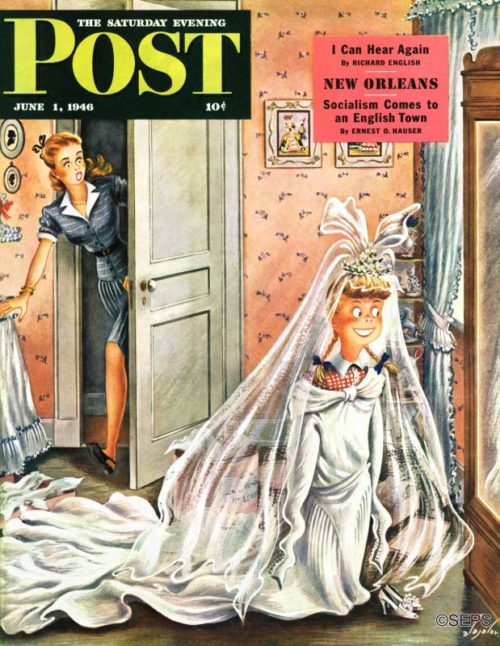
Constantin Alajalov
June 1, 1946
Today Is National Doughnut Day
You don’t need another reason to get a doughnut today, but a lot of places are giving away free food, including Krispy Kreme, which is giving away a free doughnut to each customer, and Dunkin’ Donuts, which is giving away a free doughnut with the purchase of a beverage.
Next Week’s Holidays and Events
National Ketchup Day (June 5)
Or do you say catsup? I don’t think I’ve ever heard anyone call it catsup. My spellchecker doesn’t even recognize the word. Are there still places where you’ll find it spelled that way? Let me know in the comments.
D-Day (June 6)
This refers, of course, to the Allied invasion of France, but it has also become a general military term to describe when a battle or operation is going to take place.