Hospice Girl Friday | ‘Putting the Patient First’
Devra Lee Fishman’s dear friend and college roommate, Leslie, died from breast cancer one month shy of her 46th birthday after a four-year battle with the disease. Being with Leslie and her family at the end of her life inspired Devra to help care for others who are terminally ill. Each week, she documents her experiences volunteering at her local hospice in her blog, Hospice Girl Friday.
Throughout most of the autumn we had a patient in room seven who came to us from home care and who stayed for almost two months. Her name was Bernice Stevens. 73 years old. Kidney Disease.
I did not meet Mrs. Stevens for the first month she was in the hospice unit because she always had family and friends visiting during my Friday morning shifts. As I made my rounds I could hear several voices in her room talking and laughing, so I never went in. Unless someone in the room rings the call bell or comes out to make a request or ask a question, I do not like to disturb the time the patients share with loved ones.
Finally during one of my shifts Mrs. Stevens received a phone call. We always have to check with the patients before transferring calls so I went to her room, knocked as I walked in, and introduced myself first to Mrs. Stevens and then to her visitors.
Mrs. Stevens was sitting up in bed wearing her own pink quilted bathrobe, round wire-framed glasses and a gold chain with a small cross hanging just below her collar bone. A cell phone was on the table next to the bed.
I asked her if she wanted to speak to her niece.
“Would you mind asking her if I can call back, darling?” Her voice was strong with a slight southern drawl.
“Not at all. Do you have her number?”
“Yes.” She nodded toward the cell phone. “And, thank you.”
I didn’t see Mrs. Stevens again until three weeks later. As soon as I walked in to start my shift, a nurse asked if I would sit with Mrs. Stevens for a while. “She’s changed over the last couple of days and seems a little agitated. If you could just sit with her until I can get her pain medication I’d really appreciate it.”
I dropped my bag and hurried to room seven. Mrs. Stevens was wearing a hospital gown and was curled on her left side, facing the window and taking short, shallow breaths. Her right hand clutched the rail of the bed. I pulled the chair up close to her and sat down.
“Hello, Mrs. Stevens. I’m Devra, the Friday morning volunteer, and I’m going to sit with you for a little while.” She looked up at me and fluttered her lips like she was trying to say something. I put my hand on the one that she used to clutch the bedrail, hoping that the physical connection would comfort her, and she surprised me by taking hold of my hand and giving a tug. I asked her if she wanted something. Her lips fluttered for a few more seconds and I finally realized what she was saying: “Read to me…read to me…read to me…”
I glanced around the room for a book. “All I see is the newspaper on your dresser,” I said, standing up, but she tugged me back down and started to flutter her lips again. “The Bible…the Bible…the Bible…,’ she whispered with little puffs of air.
“The Bible,” I repeated, stalling for time as I thought about where I would find one. I gently placed her hand back down on the bed. “I am going to the chaplain’s office to look for a bible.” And look for the chaplain, I thought to myself. Shouldn’t he be reading the Bible to patients? I’m Jewish. That must disqualify me in some way.
The chaplain was not in his office, but I did find a stack of bibles on his bookshelf. All of them had ‘Holy Bible’ written in large gold letters on the front. I grabbed one and hurried back to Mrs. Stevens, mentally preparing myself to sight read the Christian Scriptures. I wondered: Is there a proper way to do this…could I get into religious trouble? Then I told myself all that mattered right now was Mrs. Stevens. I’m sure anybody’s god would understand.
“Found it,” I said as I sat back down. Mrs. Stevens was facing the ceiling with her eyes closed so I leafed through the book, trying to find the Corinthians verse that I’d often heard at weddings. At least that one was familiar to me. As I searched I asked Mrs. Stevens if she had a favorite passage. She opened her eyes for a moment so I put the book near her hands. She flipped a few pages and flattened her hand on the open Bible. I picked up the book, took hold of Mrs. Stevens’ hand, and started reading. For several paragraphs I stumbled over unfamiliar words and names in what seemed to be a random passage about the types and costs of materials used to build a temple. Eventually my apprehensive voice gave way to one of conviction. Out of the corner of my eye I saw Mrs. Stevens turn her head to face me.
After a few minutes the nurse tiptoed in. I paused only long enough for her to say hello and give Mrs. Stevens her pain medication. Soon after the nurse left, I felt Mrs. Stevens’ hand relax as she drifted off to sleep. Just in case she could still hear me, I kept reading until her daughter walked in forty minutes later and asked to take over.
I left the room and found the chaplain, who had just returned from a memorial service. I told him about my experience with Mrs. Stevens because religion was, after all, his department. We shared a laugh as I confessed that I was nervous reading the Bible at first because I am Jewish, but then I realized that my religion didn’t matter. The chaplain smiled and said, “Devra, it’s not that your religion did not matter. In this instance, what mattered most is that Mrs. Stevens wanted to hear you read the Bible to her, and you did that.”
Previous post: A Question of Faith Next post: A Case for Comfort Animals
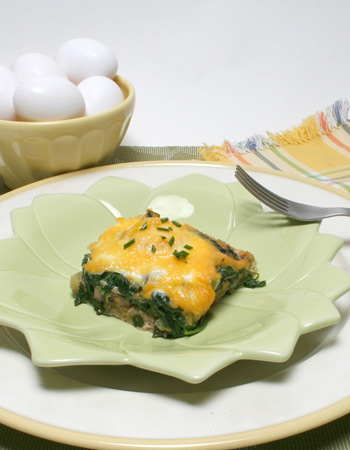
Baked Eggs with Mushrooms and Spinach
Hearty whole-grain bread is layered with a mixture of sautéed mushrooms, spinach, onions, and scallions. Unsweetened almond milk gives this dish rich flavor and can be a smart choice for people who have difficulty digesting lactose. As a substitute for calcium-rich dairy, be sure to look for brands that are fortified with calcium and vitamin D.
Cutting the breakfast casserole into squares around each piece of toast ensures neat portions. So bake up this veggie surprise and enjoy it with loved ones as you linger a little longer over breakfast.
Baked Eggs with Mushrooms and Spinach
(Makes 6 servings)
Ingredients
- 6 (1-ounce) slices whole-grain bread
- Canola oil cooking spray
- 1 tablespoon extra-virgin olive oil
- 1 medium onion, chopped
- 6 green onions, chopped, including green stems
- 2 cups sliced mushrooms (any variety works, shiitake or crimini are especially good)
- Salt and freshly ground black pepper
- 6 cups baby spinach leaves, loosely packed
- 6 large eggs
- ½ cup unsweetened almond milk or low-fat milk
- ½ cup reduced-fat cheddar, part-skim mozzarella cheese or Jarlsberg cheese
- 1 tablespoon chopped parsley or chives
Directions
- Preheat oven to 350°F.
- In toaster, lightly toast bread. Coat a 9″ x 13″ baking pan with cooking spray. Arrange toast in flat layer without overlapping.
- In large skillet, heat oil over medium-high heat. Add onion and sauté 5 minutes. Add green onion and sauté 3 minutes.
- Add mushrooms and cook until they begin to brown, about 2-3 minutes. Season to taste with salt and pepper. Cook another 4 minutes. Stir in spinach and let wilt, about 2-3 minutes.
- Evenly spread mushroom and spinach mixture over toast.
- Crack an egg over each piece of toast. Lightly season with salt and pepper, to taste. Pour milk over eggs and sprinkle with cheese.
- Bake until egg whites are set, about 28-30 minutes.
- Cut into 6 sections and serve hot. Garnish with parsley or chives, or fresh tomatoes and wedges of avocado, or place a sprig of fresh thyme, rosemary, or parsley on top of each serving.
Nutrition Facts
Per Serving
Calories: 209
Total fat: 9 g
Saturated fat: 3 g
Carbohydrate: 19 g
Fiber: 3.5 g
Protein: 13.5 g
Sodium: 309 mg
100 Years Ago: The Mastermind Behind the Mona Lisa Heist
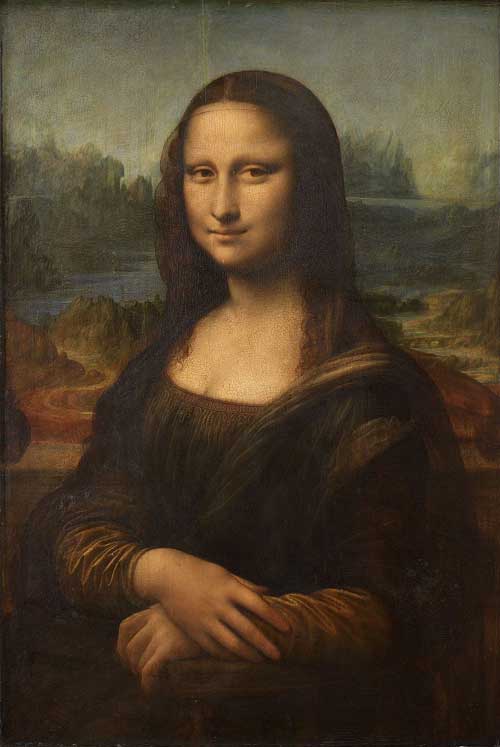
One hundred years ago this week, police in Florence, Italy, announced they had recovered the Mona Lisa, which had been stolen from the Louvre two years earlier. They had also caught the thief–the mastermind behind the world’s most famous art theft.
But the culprit, Vincenzo Perugia, was no criminal genius, and the theft had not been a multimillion dollar art heist. Perugia was an Italian patriot who had wanted to return da Vinci’s painting to his native land, mistakenly believing it had been taken from Italy by Napoleon. (In fact, da Vinci gave the painting to the French king, Francis I, after becoming his court painter.)
At his trial, Perugia described how he’d managed the theft. Having worked at the Louvre for several years, he was familiar with its layout, security, and maintenance staff. He also knew the Louvre was closed to the public on Mondays for maintenance. So he entered the Louvre on Sunday afternoon and locked himself into a broom closet overnight.
The next morning, he donned a worker’s smock and walked, unnoticed, into the Salon Carré, where the Mona Lisa hung. When the gallery was empty of any maintenance workers, he simply took the painting down from the wall and hurried off to a stairway. There, he knocked the painting out of its frame, threw his coat over it, and simply walked away, no doubt fighting the urge to run.
Perugia, now regarded in Italy as a patriot, received a light sentence in an Italian court. The painting toured briefly before returning to Paris. And that, presumably, was the end of the story. No gang. No elaborate heist. No scheme to sell the painting for a fabulous sum. No mastermind. Or was there?
One year later, journalist Karl Decker was sitting in a bar in Casablanca with an old acquaintance: Eduardo, Marques de Valfierno, a successful con man. And a chance remark by Decker prompted Valfiero to admit he was the man who’d planned the theft of the Mona Lisa.
His plan was an elaborate scheme to sell the painting, not once, but over and over, without ever letting go of the painting.
The key to his plan was a skilled forger who could capture “every little trick of the artist who had painted it, duplicating his brush strokes, matching colors so perfectly that copy and original were indistinguishable.” But Valfierno realized that replicating a painting wasn’t the biggest challenge in selling forged art. Many buyers were interested only in the value of the art; few could tell a Murillo from a Rembrandt. The real challenge was explaining to buyers why the stolen painting they had just bought could still be seen in its gallery. Valfierno got around this objection by assuring the buyer it was merely a copy.
Later, he developed a more convincing method to prove the forgeries he sold were ‘authentic.’ He would accompany a buyer to a public gallery and take him to a painting he proposed to steal. When no one was looking, Valfierno told the buyer to lift the picture frame and make a mark on the back of the canvas with a pen. A week later, Valfierno would bring the painting to the buyer, and there, on the back, was the buyer’s original mark.
The trick, Valfierno told Decker, was to access the painting ahead of time, just long enough to slip a forged copy inside the picture frame so that it rested behind the original. When the buyer arrived, he would mark the back of the forgery. After the buyer left, Valfierno simply slipped the forgery out of the frame, leaving the original untouched, which the buyer believed was a copy.
This ploy proved so successful, Valfierno was tempted to think of an even more lucrative scheme. Why not try to sell a truly legendary painting? Why not the Mona Lisa? And why not sell it more than once?
So Valfierno found six separate art collectors in America willing to pay millions for the stolen Mona Lisa. Valfierno’s forger then painted six Mona Lisa forgeries. Early in 1911, the forgeries were brought through New York customs one at a time, to avoid attracting attention. Then Valfierno sent Vincenzo Perugia into the Louvre along with two accomplices.
Perugia needed the extra men, Valfierno told Decker, because the painting “weighed–panel, cradle, frame, shadow box, and glass–nearly two hundred and twenty pounds.”
Once the painting was in Valfierno’s possession, he told his associates in New York to approach the buyers and tell them the painting was on its way. The very public disappearance of the Mona Lisa convinced buyers they had purchased the original. After the money returned from America, the gang split up the loot and separated.
The only problem with the plan was Perugia. He stole the Mona Lisa again, this time from Valfierno, and took it to Italy with the intention of selling it. When caught, he said nothing about Valfierno, his accomplices, the forgeries, or their buyers, fearing it would damage his alibi of being a patriotic thief.
When the original was returned to Paris, the American buyers were free to assume that it was simply another forgery. If not, they were free to go to the authorities, where they would probably be arrested as an accessory to very grand larceny.
It was an intriguing story and, for years, the Post story (“Why and How the Mona Lisa Was Stolen,” June 25, 1932) was accepted as the full explanation. Several sources still claim the theft proceeded according to Valfierno’s plans.
But critics have pointed out several flaws. For example, Valfierno claimed three men were needed to lift the 220-pound Mona Lisa. However, a Louvre source reports that the Mona Lisa weighs only 20 pounds. Perugia could easily have carried off the masterpiece without any help.
Valfierno tells Decker of a tense moment when the theft is stalled because a stolen key doesn’t fit an exit door. But a helpful guard comes along and unlocks it for Perugia and his confederates. This incident is never mentioned in the subsequent investigation.
Valfierno’s brilliant scheme was not an original stroke of genius, either. Back in 1911, a New York paper reported a thief named Eddie Geurin had talked of stealing the Mona Lisa and selling copies to rich collectors.
Once you question whether Valfierno made up the story, you have to wonder whether Decker made up Valfierno. Several articles about the theft show a photograph of an Argentine con man of that name, but you’ll find no information about him other than what Decker wrote.
There is really no information to substantiate the story; we only have the word of Karl Decker. As such, it remains a story.
It would have been discredited as fact by now except that the so many people want to hear the version of the story with a criminal mastermind, whether or not it’s true.
Hospice Girl Friday | ‘A Question of Faith’
Devra Lee Fishman’s dear friend and college roommate, Leslie, died from breast cancer one month shy of her 46th birthday after a four-year battle with the disease. Being with Leslie and her family at the end of her life inspired Devra to help care for others who are terminally ill. Each week, she documents her experiences volunteering at her local hospice in her blog, Hospice Girl Friday.
I was raised Jewish and attended synagogue growing up. I still go to services on the High Holy Days of Rosh Hashanah–the Jewish new year, and Yom Kippur–the Day of Atonement, even though I have never completely connected to the religion. One of the beliefs of Judaism is that our fate is sealed in the book of life during the time between the two holidays, and as Yom Kippur ends we begin the new year with a clean slate after praying for forgiveness of our sins.
This year, Yom Kippur began on a Friday evening. Earlier in the day I went into the hospice for my usual morning shift. There were five patients, but one caught my eye–a man in room four named Asher Zinn. Fifty years old. Non-Hodgkin’s Lymphoma. Jewish.
When I walked into Mr. Zinn’s room he was awake, shirtless, and lying in bed, covered from the waist down by a sheet. I noticed that one of his legs was twice the width of the other, a common side effect of his cancer. A woman in her mid-fifties was sitting in a chair next to his bed and saying goodbye into a cell phone. She was wearing blue plaid pajama bottoms and a college sweatshirt, and she looked like she hadn’t had time to comb her shoulder-length, straight blond hair.
I introduced myself to both of them. The woman said hello and told me her name was Sarah.
Her husband mumbled something.
“My husband’s in pain,” Mrs. Zinn said.
“I’m sorry to hear that,” I replied, looking at the patient. “I’ll go tell your nurse.”
“Wait, I need help with something else,” she said. “Yom Kippur starts tonight and we want to have dinner and services here.”
“Okay,” I said, “I can help with that. First, let me get the nurse.”
While the nurse was in with the Zinns, I found the hospice chaplain and explained Mrs. Zinn’s request. She needed a room for dinner, two candlesticks, and a space with a table to hold the services that her husband so badly wanted to attend. The chaplain suggested they could set up the ceremonial meal in a conference room just off the lobby.
I reported back to Mrs. Zinn and offered to show her the room. To make conversation on the way there, I asked her if they belonged to a local synagogue.
“Several,” Mrs. Zinn said.
As we walked I wondered, but did not dare ask, how long ago her husband was diagnosed. How long did they have to enjoy being newlyweds before their new dream life together became a nightmare? I could not help but think about my own marriage. Like Mrs. Zinn and her husband, my husband and I also found each other late in life and always say we will never have enough time together. Suddenly I was even more grateful for the five healthy and happy years we’ve had so far.
Mrs. Zinn spoke, bringing me out of my thoughts. “On Monday the hospital doctor said my husband might live 24-48 hours, max. But he wants to observe Yom Kippur. This is very, very important to him.”
When we reached the conference room Mrs. Zinn took a quick look around and nodded. I showed her the communal kitchen in the hospice unit and we cleared out a shelf in the refrigerator for the kosher food being delivered that afternoon. When we got back to the room the chaplain was there holding an electric menorah (an eight-cupped candle holder used for Hanukkah).
“This is the closest thing we have to candle sticks,” he said to Mrs. Zinn. “I’m afraid there is a law against lighting candles in the building. You can remove the lights you don’t want to use,” he said, unscrewing a bulb to demonstrate. “Also, you can use the chapel in the main building, which seats about 50 people. There is a large, crystal cross in the corner that we can cover with a sheet. No other religious symbols. Will that do?”
“That’s fine,” Mrs. Zinn said. “How will we get my husband there?”
The nurse, who was still in the room said to Mr. Zinn, “We can’t move you to a chair because your leg is too swollen, so we will have to roll your bed to the chapel for the service.” He nodded slowly in acknowledgement. The nurse turned to Mrs. Zinn and said, “I will make arrangements with his evening nurse.”
“Thank you,” Mrs. Zinn said to her. “Thank you all,” she said, looking to each of us.
“It’s our pleasure,” the chaplain said for all of us. I said goodbye and wished them all an easy fast, a traditional Yom Kippur greeting. As I left I felt envious of the strength of Mr. Zinn’s faith–so adamant that he observe Yom Kippur, knowing his fate was already sealed. I am not sure I would bother.
Later that evening, at my Yom Kippur service, I wondered if whomever was deciding my fate for the year took note of my good deed for the day, or if it did not count because I am not deeply religious. Then it occurred to me that I seem to believe more than I thought. I decided to pay closer attention to the words and the prayers the rabbi and the other congregants were reading aloud, and before the service ended I made a promise to myself to learn more about my religion this year.
The following Friday I found out that Asher Zinn had passed away the day after attending Yom Kippur services in the hospice chapel, his fate eternally sealed in the book of life.
Previous post: Survivor’s Guilt Next post: Putting The Patient First
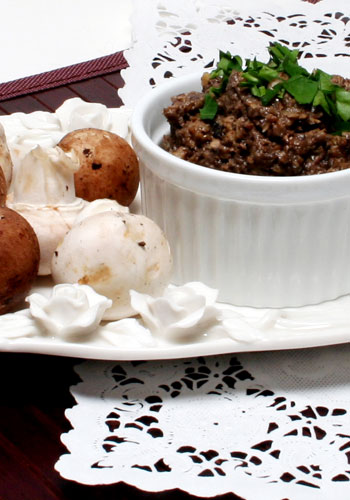
Vegan Walnut Mushroom Pâté
Pâté can be baked and served sliced, or it can be soft and spreadable, like chicken liver mousse. My original recipe, created in the 1980s to seduce gourmets who scoffed at the very idea of meatless pâté, was a loaf that included mushrooms, chestnuts, cashews, grated cheese, black bread whirled to crumbs, and more, baked in a long, rectangular pâté mold.
To suit today’s interests in vegan dishes and easy cooking, I decided to do a spreadable pâté made on top of the stove. Sautéed mushrooms look, taste, and even have a texture that is mildly meaty, so I kept them as the base, in a combination of three kinds, including fresh and dried. I added lots of shallots for moisture as well as flavor. Ground walnuts bring the creamy richness essential to pâté while adding good fat instead of the heart-stopping kind. For flavor depth, I included lots of thyme. For a final touch, I added a splash of soy sauce to bring umami, the indefinable fifth flavor that makes everything taste even better.
Walnut Mushroom Pâté
Makes 1 ¾ cups
Ingredients
- ½ cup chopped walnuts
- ¼ ounce dried porcini or wild mushrooms
- ⅓ cup hot tap water
- 8 ounce crimini mushrooms, stemmed and quartered
- 8 ounce white mushrooms, stemmed and quartered
- ½ cup coarsely chopped shallots
- 2 garlic cloves, coarsely chopped
- 1 tablespoon extra virgin olive oil
- 1 tablespoon dried thyme
- 2 teaspoons reduced-sodium soy sauce
- Salt and freshly ground black pepper
- 2 tablespoons chopped flat-leaf parsley, for garnish
Directions
- Preheat oven to 350°F.
- Spread walnuts on baking sheet. Stir and toast 5 minutes, until nuts are colored and fragrant. Transfer nuts to plate, cool and set aside.
- In small bowl, soak dried mushrooms in water until soft, 20–30 minutes. When soft, squeeze mushrooms until dry, catching liquid in small bowl. Strain liquid through paper coffee filter or fine strainer and set liquid aside. Coarsely chop soaked mushrooms and set aside.
- In food processor, combine half fresh mushrooms with shallots, garlic, and half soaked wild mushrooms. Pulse to chop very fine, 20 times; take care not to overprocess. In large skillet, heat oil over medium-high heat. Add chopped mushroom mixture, mixing to combine with oil. In food processor, finely chop remaining fresh and soaked mushrooms, then add to pan. (Do not clean out food processor.) Cook until mushrooms look wet, 8-10 minutes, stirring often. Add thyme, soy sauce, and reserved mushroom liquid. Continue cooking until mushrooms are golden and cling together, 8 minutes. Set aside.
- Add walnuts to food processor, and then cooked mushrooms. Pulse until mushroom-walnut mixture is nubbly; do not purée. Turn warm pâté into serving bowl and season to taste with salt and pepper. Or season pâté and cool to room temperature, cover tightly, and refrigerate for up to 5 days. Garnish with parsley and serve with toast points, crackers, or pita chips.
Nutrition Facts
Per Serving (1 tablespoon)
Calories: 25
Total fat: 2 g
Saturated fat: 0 g
Carbohydrate: 2 g
Fiber: 0 g
Protein: 1 g
Sodium: 10 mg
Hospice Girl Friday | ‘Survivor’s Guilt’
Devra Lee Fishman’s dear friend and college roommate, Leslie, died from breast cancer one month shy of her 46th birthday after a four-year battle with the disease. Being with Leslie and her family at the end of her life inspired Devra to help care for others who are terminally ill. Each week, she documents her experiences volunteering at her local hospice in her blog, Hospice Girl Friday.
Before my friend Leslie died, I thought hospice was for old people with cancer. According to the Hospice Foundation of America, approximately two-thirds of hospice patients are over the age of 65, which means that one-third are younger than 65. And while many are diagnosed with cancer, I’ve seen just as many patients at my hospice with pulmonary or heart disease, neurological disorders, Alzheimer’s, AIDS, or complications from any number of health issues.
When I check the census at the beginning of each shift I get a quick overview of the current patients: their names, diagnoses, ages, and dates of admission. Also listed for each patient is the name and relationship of the main point of contact. All of this information is helpful as I prepare to make my rounds. I always look at the ages of the patients first, hoping to find that they are older than I am–preferably much older. That way I won’t have to think about my survivor’s guilt–how it could just as easily be me instead of them. But every week there is at least one patient my age or younger (I am 53), and every once in a while, all of the patients are. Those days are the toughest.
One recent Friday there were five patients: a 52-year-old woman with lung cancer; a 33-year-old woman in a diabetes-related coma; a 46-year-old man with HIV/AIDS; a 49-year-old man with end stage kidney disease; and a 51-year-old woman with breast cancer. I felt my stomach start to roil when I read the census. I would have preferred to stay at the volunteer desk and not see any patients for my entire shift, but I swallowed my survivor fear and made my rounds.
My first stop was room five, the woman in a coma. Her mother was there and said they were both fine for the moment so I moved on to the 46-year-old man in room six. He seemed to be sleeping so I tip-toed out and walked into the room of the 52-year-old woman with advanced lung cancer.
Her name was Laura, and she was sitting up in bed when I walked in. She was rocking back and forth with her palms on her lower back and watching The View on her small flat-screen TV. I read in the volunteer notes that she used to be a dancer; she looked tall, lean, and muscular, but she was also bald and jaundiced from her cancer and chemo treatments. If I didn’t already know her age, I would have guessed she was in her 70s. Cancer–or the treatment–does that sometimes. I noted a pile of peanut M&M packets on the nightstand next to her untouched breakfast tray.
“Peanut M&Ms are my favorite candy,” I said to break the ice after I introduced myself. Focusing fully on the patient was difficult because I kept thinking: She’s younger than I am. I could be in that bed.
Laura glanced over at the stash. “My boyfriend keeps bringing those because he knows I love them. I just don’t have much of an appetite anymore.”
I wanted to have more of a conversation with her, and asking about her boyfriend would have been my next move, but when a patient mentions some sort of physical symptom like a loss of appetite, it’s important to try to find out if he or she is experiencing any other discomfort. The nurses visit as often as they can, but a patient’s comfort level can change minute-to-minute so I always try to help by passing along any time-sensitive observations.
“How are you feeling otherwise? Are you comfortable?”
“Pretty much,” Laura said. “My back still really hurts.”
That explained the rocking. Back pain is a common complaint with lung cancer patients, but should be fairly easy to fix so I said, “I’m sorry to hear that. I’ll tell your nurse.”
“Why are you sorry?” she asked. “It’s not your fault. I’m the one who smoked.” She said this without the slightest note of self-pity or anger.
“Fair enough,” I said, trying to sound as neutral as she did. My ‘sorry’ was meant to be empathetic instead of sympathetic, but I knew to follow her lead and then drop it. There was a pause between us, and before I could stop it, a feeling of relief rushed in along with the thought: Maybe I wouldn’t be in that bed after all because I don’t smoke.
On the days when the patients are younger than I am, I marvel at the randomness with which we move through life, as though we’re all playing one big round of musical chairs, dancing around one moment and eliminated from the game the next.
On those same days I also feel a deeper empathy for the patients and their loved ones, and I’ve often sensed the same from the hospice nurses and doctors. I know that cancer, diabetes, HIV, and other diseases do not discriminate by age, yet sometimes I wish they did. I see too many hospice patients who just seem too young to die–possibly because I feel like I am too young to die–and it feels unfair that they could not find a chair when the music stopped. Then again, I have no idea what age is “old enough” to die, so I continue to work through my survivor fear and do my best to help all of the patients in my hospice find some comfort at the end of their too-short lives.
Previous post: The Power of Listening Next post: Coming soon
The First of October
(Shutterstock)
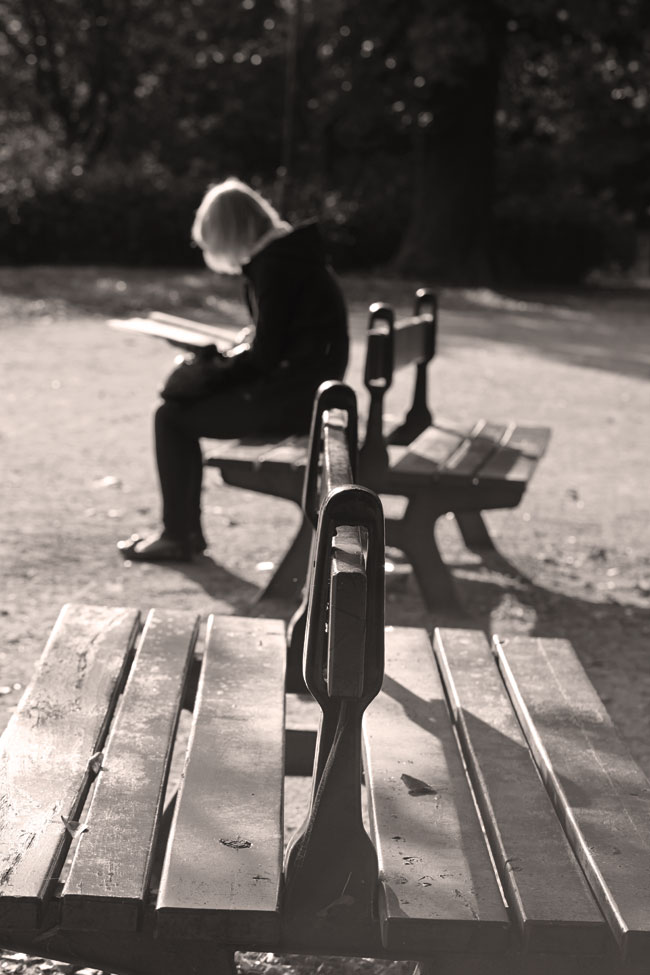
The place looked the same, Penny thought. Two wooden benches, back to back on a hill above the campus, with towering oaks and shrubs and sidewalks that converged there like spokes on a wheel.
She sat on one of the shaded benches and looked down at the access road. It was here she had last seen him, trudging away down the hill to catch his bus. But even that memory wasn’t as deeply etched as another: This was where they’d first met.
Penny Wilson closed her eyes, remembering. In her mind she was back in college again, 40 years ago. She’d been sitting alone that day too, the first day of October, when Ben Thompson entered her life.
“Penny for your thoughts,” he had said.
She had looked up from her textbook to see him sitting behind her, on the other bench. Definitely Joe College, with his blue jeans and sunglasses and football jacket.
“I’m Ben.”
“Penny,” she said, over her shoulder. She had already gone back to her book. But she watched him from the corner of her eye.
“Penny,” he repeated to himself, then brightened. “I must be psychotic.”
“You mean psychic. At least I hope you do.”
“Right. I must be psychic.”
“I doubt it,” she said.
He just grinned. “What’re you reading?” He took off his sunglasses and leaned over the back of his bench to look.
“Organic chemistry.”
“Whoa. What are you, pre-med? Biology?”
She smiled and held up the book. “Just kidding. It’s English lit.”
Ben nodded, and laughed. It was a good laugh, she thought. A happy laugh. They sat there a while in the sunlight, feeling awkward but reckless in a way that only young people can feel.
Suddenly he said, “How about a movie, sometime?”
She studied him a moment. His smile was still in place, dimples an inch deep. He reminded her of a very young Burt Reynolds. Hadn’t he been a football player too?
“When?” she asked.
“Well…I don’t know. Tonight, maybe?”
“I’m studying tonight.”
Penny pretended to go back to her reading. Above their heads, yellow and orange oak leaves rattled in the wind. The sun disappeared behind a cloud and came out again, seemingly brighter than before.
“Did you happen to see the ball game Saturday?” he said. “No, let me guess—you were studying.”
She made a face. “I know you scored a touchdown, if that’s what you’re asking.”
His eyebrows went up. “How’d you know that?”
“My roommate.”
“I like her already. What else did she tell you?”
Penny looked up from her book. “She said it won the game.”
He seemed delighted at that, and Penny found herself smiling too.
After a pause she added, “I’m not planning to study at lunch.”
He looked puzzled.
“It’s 11:30,” she said, pointing to her watch. “That was my way of asking if you’d like to eat with me.”
Another grin. “You bet.” He started to rise to his feet, then winced.
“What is it?”
“I hope you’re not in a big hurry,” he said, blushing.
She gathered her books, came around the back of the bench, and saw the bandaged ankle. And the wooden crutch. With her help, Ben tucked the crutch under his arm and maneuvered himself out of his seat.
“I’m moving a little slow, lately,” he said. She looped his other arm over her shoulder, and they limped down the hill toward the university coffee shop.
“Did they tell you,” she asked, “what that touchdown was going to cost you?”
He hugged her closer. “Maybe it was worth it.”
Penny could still remember his smile as he said that, and the little thrill she had felt. She also remembered the following six months—the best of her life—and then, finally, that spring day when he was called to active duty, and their parting kiss, on this very hill. There had been parting promises, too—she to write to him in Vietnam, he to come back to her afterward. But life got in the way of their plans. Within a year Penny was engaged to someone else. After the wedding she and Terrell Wilson moved upstate, where she finished college and entered law school.
The marriage was a disaster. Six years later she was single again, and starting her own practice. A year after that, a mutual friend said she’d heard Ben Thompson had married too, after coming home a war hero, and was living somewhere out west. He never returned to Bridgeton.
Carrot Soup with Orange and Ginger
For an autumnal garnish, sprinkle soup with roasted pumpkin seeds or add crunch with a few whole-grain croutons. This soup can be served as an appetizer or entrée or paired with a sandwich for a light meal, and it can be enjoyed later as a coveted leftover.
Carrot Soup with Orange and Ginger
Makes 4 servings

Ingredients
- 1 tablespoon extra virgin olive oil
- 4 cups chopped carrots, peeled, cut into ½-inch pieces
- 1 cup chopped yellow onions
- 2 cloves garlic, minced
- 3 cups low-sodium chicken broth (vegetable stock or broth may be substituted)
- 4 large strips orange zest
- 1 teaspoon finely minced fresh ginger
- ½ cup orange juice
- 1 tablespoon fresh lemon juice, optional
- Salt and ground black pepper to taste
- ¼ cup chopped chives (dill may be substituted)
Directions
- In large pot, heat oil over medium-high heat and add carrots and onions. Sauté about 7-8 minutes. Add garlic and sauté additional 2 minutes.
- Add broth and orange zest strips. Cover and bring to a boil. Reduce heat, uncover and simmer until carrots are tender, about 10-12 minutes. Let mixture cool for several minutes. Discard orange zest strips.
- Working in batches, in food processor or blender purée mixture until velvety smooth. Return soup to pot. Stir in ginger and orange and lemon juices. Season with salt and pepper to taste. Over low heat, let soup simmer for 5 minutes for flavors to mingle. Garnish with chives and serve.
Nutrition Facts
Per Serving
Calories: 150
Total fat: 5 g
Saturated fat: 1 g
Carbohydrate: 23 g
Fiber: 4 g
Protein: 6 g
Sodium: 140 mg
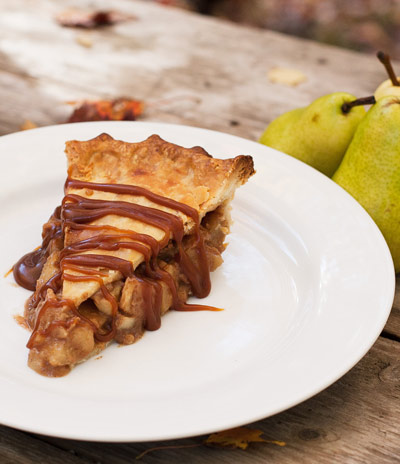
Pear-Caramel Pie
This is a wonderfully comforting fall and winter pie. Pears spiced lightly with cinnamon and ginger are made all the richer by brown sugar and homemade caramel. Make the caramel first so that it has time to cool. Any leftover caramel can be used to garnish each slice of pie or save for future use. The caramel will keep for one week at room temperature in an airtight container or in the refrigerator for a few weeks.
Pear-Caramel Pie
(Makes one 9-inch double-crust deep-dish pie)
Ingredients
Crust
Caramel
- 10.5 ounces granulated sugar
- 4 ounces water
- 9.65 ounces heavy cream
- 1.75 ounces unsalted butter, cubed, softened
Filling
- 3 pounds pears, peeled and medium diced
- 5 ounces brown sugar
- 2 ½ teaspoons ground cinnamon
- ¼ teaspoon ground nutmeg
- 1 teaspoon ground ginger
- ½ teaspoon fine sea salt
- 6 tablespoons all-purpose flour
Egg wash
- 1 beaten egg and a splash of water
Directions
- For crust, roll dough into 2 circles about 12 inches in diameter. Bottom piece should be a little bit bigger, to cover pie dish. Fit bottom into dish and chill until ready to put filling in and top it. Chill top piece as well until ready to assemble pie.
- For caramel, combine sugar and water in large very clean saucepan over high heat. Make sure all utensils used are very clean as impurities can cause caramel to crystallize. Stir with spatula to dissolve sugar. Have pastry brush and cup of water ready to wash down sides of pot. Bring mixture to a boil. Once boiling, wash down sides of pot periodically to prevent crystallization. It should become a deep amber/caramel, which is about 325˚F on a candy thermometer.
- When caramel is right color, slowly whisk cream into sugar syrup, being very careful to avoid steam that will burst up toward your hand. Continue to cook caramel for 2 minutes. Remove pot from heat and stir in butter.
- For filling, peel and cut fruit. Combine with all dry ingredients, tossing until evenly coated. Allow fruit to sit for 30 minutes.
Assembling Pie
- Preheat oven to 450°F
- Pull pie dish and top circle of pie from fridge. Trim overhanging edge of bottom crust with knife.
- Toss fruit again, and then pour it all into pie dish. Pour 1 cup caramel evenly over top of fruit.
- Egg wash rim of bottom crust lightly, and then put on top piece. Crimp edge of pie to seal it. Create a decorative edge by putting thumb and index finger of nondominant hand together and pressing dough together. Press dough into that wedge with other index finger in order to create a point. Do this around entire rim of pie.
- Cut 6 evenly spaced slits on top piece of pie, and egg wash top and edge. Place directly on baking stone, and bake for 1 hour. Top needs to be a deep golden brown and filling should be bubbling. If taking too long, raise pie up on rack so that it gets more direct heat. It may take another 10 minutes to bubble and color. Remove pie from oven and cool for 6 hours or more before serving to allow filling to set.
- Serve warm or at room temperature. Drizzle extra caramel on top when plating each piece. Boom!
Recipe and photo from Baking By Hand: Make the Best Artisanal Breads and Pastries Better Without a Mixer
Top-Rated Holiday Gifts

No one needs another scarf, tie, or festive cheese ball. Tech gear? Well, that’s a whole ’nother story. Here’s an eclectic mix of holiday gifts—any of which are sure to win the love and admiration of the technophile on your shopping list.
One proviso: We’ve left off some
obvious (and very good) choices, like the Apple iPhone and Kindle Fire, since we covered them in recent
issues.

1. Distil Union iPhone Snooze Alarm
This $35 nightstand dock turns an iPhone into a bedside alarm clock, complete with a “slap-happy” snooze bar. Distil Union’s free Snooze App shows the time on the iPhone screen. To silence the morning alarm—or ignore an incoming call—simply slap the rubber snooze bar button. The wooden dock is built to hold an iPhone (4 model or later) alone or in a small iPhone case. Another plus: The built-in cord catch prevents the iPhone’s charging cable from falling behind the nightstand.

2. SanDisk Sansa Clip Zip
Not only does SanDisk’s $50 digital music player have twice the storage of the 2 GB Apple iPod shuffle, it has a 1.1-inch color display for viewing album track titles and art work. (The shuffle doesn’t have a screen.) The Sansa Clip Zip is compatible with most digital audio formats, including AAC (iTunes), and has a built-in FM radio. A clip on the Sansa’s backside makes the player easy to attach to a belt, clothing, or backpack strap. And here’s the kicker: The 4 GB Sansa Clip Zip costs the same as—OK, 99 cents more than—the Apple iPod shuffle.

3. Google Chromecast
Chromecast is a small device that plugs into an HDTV’s HDMI port.
Wait, stifle that yawn! Chromecast ($35) is one of the easiest and cheapest ways to stream Internet video and audio—including Netflix and YouTube—to a big-screen TV. Using Google’s Chrome browser or app, you control Chromecast via a tablet, smartphone, or personal computer (PC). Even better, Chromecast will add features as software developers write more video apps to work with it.

4. Fitbit Flex
This water-resistant wristband is handy for that special someone who’s trying to shed pounds, exercise more, and get healthy. Fitbit Flex tracks calories, distance, and steps during the day, as well as sleep activity at night. It also compiles the wearer’s stats and syncs them wirelessly with a smartphone, tablet, or PC. Graphs and charts show your physical activity and reveal health trends, such as whether you’re burning more calories by walking to lunch every day. Priced at $100, Flex even lets you challenge friends and family to fitness competitions.

5. Bluetooth Headphones
If there’s a music lover on your list, wireless headphones are a great way of saying, “I love you, but please keep your music to yourself.” You could spend hundreds of dollars on high-end Bluetooth headphones, but there are plenty of quality options south of $100. The $45 Kinivo BTH220 headphones are comfortable to wear, fold up easily, and deliver good sound quality for the price. And the MEElectronics Air-Fi Runaway ($99.99 list, but street-priced closer to $60) phones have soft padding, a hidden microphone, enhanced bass, and convenient music and phone controls.

6. Google Chromebook
A laptop for $200 to $350 … that’s actually usable? Reputable PC makers such as Acer, Hewlett-Packard, and Samsung offer Chromebooks, bargain laptops that run dozens of free Google Web-based applications. Built for cloud computing, a Chromebook comes with 100 GB of free space on the Google Drive online storage site for two years, after which you’ll have to buy more room for additional files. For folks who spend most of their computing time inside a Web browser, the Chromebook is an appealing alternative to pricier Mac and Windows laptops.

7. Microsoft Xbox One
Know a serious gamer? Well, if you don’t mind dropping a cool $500, your timing is impeccable. Microsoft is about to launch the Xbox One, the latest version of its popular game console. In addition to stunningly immersive and realistic games, Xbox One comes with Microsoft’s Kinect technology for controlling the device with gestures, movements, and voice commands. The Blu-ray player is handy for watching HD movies on disc too. With an Xbox Live Gold Subscription ($60 per year) you can stream Internet video services like Netflix, and engage in Skype video chats with friends while watching TV. Bottom line: Xbox One is a powerful, if pricey, home entertainment system with something for everyone, even non-gamers.

8. Sony PlayStation 4
If the Xbox One is too pricey, consider the PlayStation 4, which is slightly more affordable at $400. The PS4 also features rich graphics and immersive games. It plays Blu-ray discs, has optional motion-control features, and you won’t have to pay extra, aside from the service fee, to stream Internet video services (e.g., Netflix, Hulu Plus). As with the Xbox One, you can start playing games while they’re downloading.

9. Samsung Galaxy S4
Too many Android phones out there? Check out the Samsung Galaxy S4, a huge handset that somehow manages to be both slim and stylish. The 5-inch HD display shows sharp details and bold colors, and the 13-megapixel rear camera with LED flash captures images that rival those of a good point-and-shoot. The Galaxy S4 does some clever — and vaguely creepy — tricks as well. Smart Pause, for instance, pauses the video you’re watching when your eyes look away, and then resumes playing when they return. The S4 costs $200 with a 2-year AT&T, Sprint, or Verizon Wireless contract, or $600 and up without a contract.
Hospice Girl Friday | ‘The Power of Listening’
Devra Lee Fishman’s dear friend and college roommate, Leslie, died from breast cancer one month shy of her 46th birthday after a four-year battle with the disease. Being with Leslie and her family at the end of her life inspired Devra to help care for others who are terminally ill. Each week, she documents her experiences volunteering at her local hospice in her blog, Hospice Girl Friday.
There was a woman in the hospice’s communal living room when I came in to start my shift. She was wearing navy blue sweatpants, a pale gray t-shirt and slippers. She was slumped on the sofa, facing the television but staring at something much further away. After I put my bags down under the volunteer desk I checked the list of current patients and then asked one of the nurses about the woman on the sofa.
“Her sister is in room three,” the nurse replied. “Fifty-eight years old. Colon cancer. They’ve both been here since yesterday morning.”
Once I settled in, I walked over to the woman and introduced myself. She told me her name was Mary.
“I understand you’re Ann Simpson’s sister,” I said as I perched myself on an arm of the chair next to her, careful not to assume she wanted company.
“I am,” she said as she sat up and straightened out her t-shirt, which had bunched up against the sofa behind her. “She’s my baby sister, and I’ve been taking care of her the whole time she’s been sick, which feels like forever. I’ve gone to every doctor’s appointment, every treatment, and now we’re here.” She swept her eyes around open space and then slowly shook her head.
“How wonderful you’re able to be with her,” I said, acknowledging that caregivers need to know someone cares about them and the effort they make. Mary looked back up at me and nodded. “Yes,” she said. Her mouth hung open like she was going to say more, but she didn’t.
“The nurse said Ann is resting comfortably,” I said. “How are you holding up?”
“I’m fine,” Mary said. “Tired. It’s been a long six months since Ann was diagnosed. And tomorrow is my 60th birthday. I’d hate for her to die on my birthday, but if she needs to go, she needs to go. She’s been through enough.”
Since she answered more than my question, I slid down into the chair and waited for her to continue.
“Ann’s husband is coming over later this morning so I can go home and get some stuff done,” Mary said. “Then I’ll be back to spend the night again.”
I wondered if she wanted to talk some more, so I searched around for a question that would open up more of Ann’s story. “What kind of work did Ann do?” I asked.
“She was a school teacher,” Mary said. “Fifth grade. She loved her kids and her kids loved her. Never had children of her own, so they were her family.” I nodded slowly as she spoke. She continued, staring at a space somewhere between the two of us. The words spilled out as though they had been backed up for a while.
“I work for the power company. My manager has been very understanding and has given me a lot of flexibility so I can take care of Ann.”
We sat and chatted like that for about fifteen minutes. I would have happily stayed there for my entire shift, but Mary said she wanted to check on Ann. I stood with her and told her I would stop by in a little while to see if she needed anything. Maybe I could get her to tell me more about her sister, I thought.
I have always enjoyed learning people’s backstories, but once I became a hospice volunteer I made it a point to learn as much about the patients from their loved ones as I could. Talking about people who are dying helps us to lock in memories of who they were–and who we were–when everyone was healthy and living their everyday lives. I learned this from the experience I had with my friend Leslie, who died in 2006.
I will always cherish the time I spent with Leslie during the four years she fought breast cancer, and it was my honor to be with her at the very end of her life. But when I talk about her now I have to work hard to replace the picture of her as she lay on her death bed with one of the gazillion (she loved to exaggerate so Leslie, this one’s for you) mental images I have of who she was during the nearly 30 years that we were friends. Maybe we’re programmed to more easily recall extraordinary moments, such as the birth or death of a loved one, but I think it’s just as important to remember the string of ordinary images and moments that tell the whole story of how we lived. I want that for myself, and I want that for the people I meet in the hospice.
I made my rounds later in my shift, and when I walked into room three Mary was sitting in an armchair next to Ann’s bed and holding her hand. Ann seemed to be sleeping comfortably, but the blanket covering her moved only slightly as she took shallow, infrequent breaths, indicating that she was nearing the end. Mary watched me as I studied her sister. I wondered if it would help Mary to talk more about Ann, so I asked, “Were the two of you close growing up?”
And with that question, Mary took me back to their childhood (Ann taught Mary how to ride a bike), their weddings (they were each other’s maid of honor) and their families (they’ve lived on the same street for 25 years). Mary also told me she always thought Ann was the prettier one, and she said that the two of them took care of their mother together, who died from Alzheimer’s just last year.
I stayed with Mary and Ann until my shift ended, grateful for the picture Mary drew of the ordinary moments they shared throughout their lives. I hope talking about Ann with me will help Mary bring those memories forward every time she thinks about her beloved sister.
Previous post: Coming Home to Say Goodbye Next post: Survivor’s Guilt
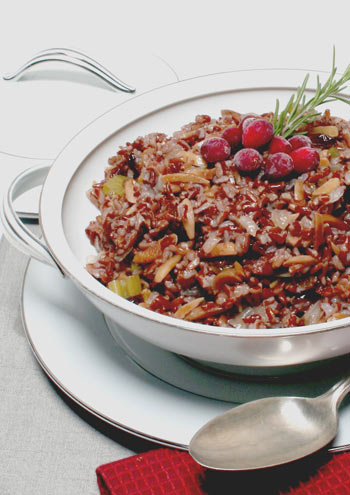
Red Rice Stuffing with Dried Fruit
On Thanksgiving, I am a traditionalist and an adventurer. Maintaining a family tradition, I include the canned small French green peas with pearl onions that my mother always served. And I always start Thanksgiving dinner with soup, but a different one every year. Stuffing is another dish where I am adventurous. (I should say dressing, since it is always baked separately from the bird.)
This year, my dressing will be rice-based. Red rice, to be specific. There are several varieties of red rice. All are aromatic and whole grain. California-grown Wehani is the most dense and chewy. Bhutanese red has a lighter texture but still has that full, nutty flavor. You may also find red rice from South America or France’s Camargue region.
Bhutanese is my favorite rice to use in this recipe because it combines well with the dried fruits, almonds, and other ingredients. But any red rice is good. Simply cook it according to package directions. If you cannot get red rice, most other kinds work nicely, too.
Red Rice Dressing with Dried Fruit
Makes 6 servings
Ingredients
- ¼ cup dried cranberries
- ¼ cup golden raisins
- ¼ cup chopped dried apricots
- ½ cup orange juice
- ¾ cup Bhutan Red rice, or other red rice
- 1 ½ cups fat-free, reduced-sodium chicken broth, divided
- 2 tablespoons extra virgin olive oil
- 1 cup finely chopped onion
- ½ cup finely chopped celery
- ½ cup toasted slivered almonds
- 1 teaspoons stuffing or poultry seasoning
- Salt and freshly ground black pepper
Directions
- Preheat oven to 350°F.
- In small bowl, plump cranberries, raisins, and apricots in orange juice, 20 minutes. Drain and set fruit aside. Reserve juice for baking or for glazing sweet potatoes.
- In medium saucepan, combine rice with 1 cup broth. Add 1 cup water. Bring to boil over medium-high heat. Cover, reduce heat, and cook for 3 minutes less time than on package directions, until rice is slightly less than tender. Fluff with fork, cover, and set hot rice aside.
- In small Dutch oven, heat oil over medium-high heat. Add onions and celery and cook, stirring often, until vegetables are soft, 8 minutes. Add cooked rice, soaked fruit, almonds, stuffing seasoning, remaining 1/2 cup broth and mix to combine. Season dressing to taste with salt and pepper. When broth boils, cover and bake for 30 minutes, until dressing is hot. Fluff with a fork and let dressing sit for 15 minutes before serving.
Nutrition Facts
Per Serving
Calories: 240
Total fat: 9 g
Saturated fat: 1 g
Carbohydrate: 38 g
Fiber: 4 g
Protein: 4 g
Sodium: 125 mg
3-2-1 Pie Dough
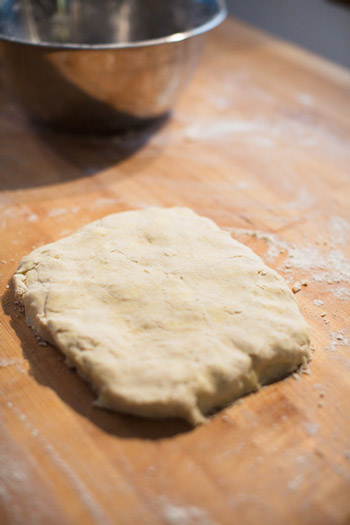
This recipe is perfect because it’s incredibly easy to remember, amazingly easy to produce, and infinitely applicable to treats both sweet and savory. It has saved our butts a few times when we had excess fruit at the end of a summer day. Here’s where the “3-2-1” part fits in: By weight, this dough is three parts flour, two parts butter, and one part ice water. Plus, throw in a teaspoon of fine sea salt for every double-crust pie you’re baking. That’s it. Now you can make any quantity you need.
3-2-1 Pie Dough
(Makes enough pastry for 1 standard two-crust pie)
Ingredients
-
- 12 ounces chilled all-purpose flour
- 1 teaspoon fine sea salt
- 8 ounces cold unsalted butter, cut into medium dice
- 4 ounces ice water
Directions
- Combine cold flour, salt, and cold butter in large bowl. Using fingers, begin to pinch and combine butter and flour, making sure not to hold the butter in your hands too long. Keep working flour and butter between fingers until largest pieces of butter are no smaller than peas. The key is to keep mixture as cold as possible, and if you feel that it is warming up too much, you can refrigerate it.
- Add ice water to flour-butter mixture, and toss together with fingers, eventually pressing it together with hands. You want dough to form with no dry patches or crumbly parts, but you do not want to overwork it so much that you break down butter completely. Otherwise, you will lose flakiness and your dough will become tougher. You want to see streaks of butter running through dough.
- Divide dough into two equal pieces and wrap them in plastic wrap. Chill for at least 1 hour before proceeding or overnight. You could also freeze at this point for future use.
Recipe and photo from Baking By Hand: Make the Best Artisanal Breads and Pastries Better Without a Mixer
Why Kennedy Still Matters
Why do Americans have such a high opinion of John F. Kennedy? The 35th president completed only three years of his term and left behind a pile of unfinished projects and unraveling plans when he died. So why, in opinion polls over the decades, have Americans consistently ranked Kennedy among our greatest presidents?
At the time of his death, his grand design for a united Europe had recently collapsed. In Southeast Asia, the South Vietnamese president he had been supporting with money and troops had just been overthrown and assassinated. And Americans in 1963 could not have forgotten the failed invasion of Cuba by anti-Castro refugees, which had been launched with Kennedy’s approval.
And then, there were Kennedy’s problems at home. “On the day of his death,” wrote Stewart Alsop (“Was John F. Kennedy A Great Man?” Dec. 3, 1966), “all four of his major legislative objectives–aid to education, the civil-rights bill, Medicare, the tax cut—were hopelessly stalled in Congress.”
But consigning Kennedy’s bills to the ‘defeat’ pile, Alsop argued, would be short-sighted: “The four legislative objectives which were so hopelessly stalled in Congress when he died…are all the law of the land now.” They were passed through the efforts of President Johnson and backed by a wave of public support for the late president’s programs. Without Kennedy’s initiative, these laws might never have been introduced or passed.
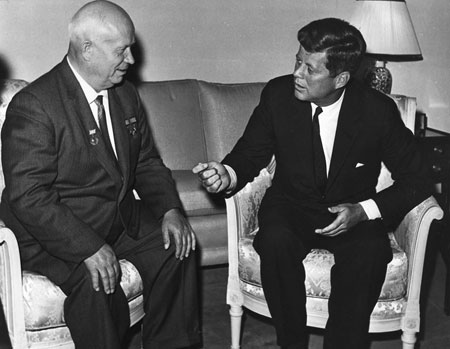
Americans of 1963 would have regarded Kennedy’s handling of the Cuban Missile Crisis as one of his successes. He had demanded that Russia remove the missile bases it had built in Cuba, and threatened the use of force if they refused. At the time, Kennedy was criticized for risking a nuclear war. But he proved himself to be a tough and tactful negotiator, and by establishing some limited rapport with Soviet premier Khrushchev, Kennedy was able to restart talks to halt the nuclear arms race.
In 1962, the two leaders signed the first test-ban treaty, which bound both nations to stop testing nuclear weapons in the atmosphere. The treaty reduced radioactive fallout in the earth’s atmosphere and slowed the development of bigger bombs. Kennedy was particularly proud of the treaty, which he considered a first step toward nuclear disarmament.
Americans today are more likely to give Kennedy credit for advancing the nation’s space program. After the Russians launched the first satellite (1957) and the first man into space (1961), Kennedy asked Congress to fund a multi-billion-dollar space program. Its goal would be “landing a man on the moon and returning him safely to the earth” before the end of the decade. It seemed like an utterly fantastic idea in 1961, but Kennedy’s goal was reached in 1969, with six months to spare.
Kennedy is also given high marks for the Peace Corps, which he launched shortly after entering office. Within a few months, thousands of Americans had volunteer to share their time and technical expertise. In the half century since then, the program has sponsored over 200,000 Americans who have helped improve the quality of life in over 130 countries.
But are the Peace Corps, the space program, and a distant crisis enough to earn Kennedy continued high regard? Perhaps what makes Kennedy admirable today is not what he accomplished but how he inspired. When Joseph Alsop wrote of how Kennedy would be remembered, (“The Legacy of John F. Kennedy,” Nov. 21, 1964), he emphasized how the president, by the example of is character, had introduced a time of “renovation and renewal” for the country.
Of course, Stewart and Joseph Alsop were writing about Kennedy in the days before his many adulterous affairs and his precarious health became public knowledge. These later revelations did much to tarnish Kennedy’s character and caused Americans to reconsider the late president’s judgment and achievements. But with the 50th anniversary of his death, many writers are taking a broader view of Kennedy’s performance as chief executive and distinguishing between his public service and his private life.
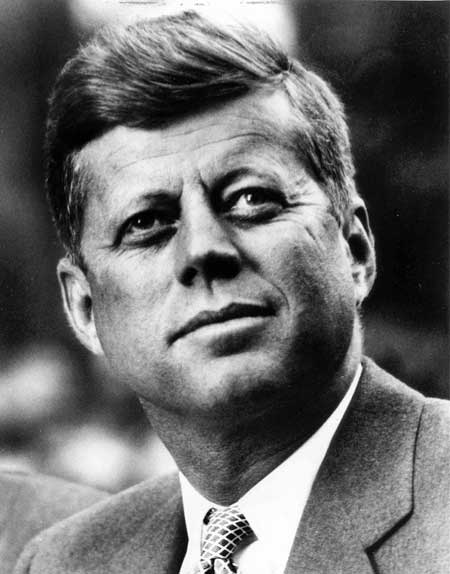
In the 1960s, Joseph Alsop had been impressed by Kennedy’s style and outlook, which had so little in common with the “average, day-to-day America in the mid-’60s. No one could have differed more sharply from the good, average American, who watches television in his off-hours, is content if his is a two-car family, and does not mind bulging a bit in middle age.”
America had lost its edge during the complacent 1950s, Alsop believed. “Our wealth and our machines have made us, as a nation, just a bit soft and fat, and most of us do not mind this in the least. But Kennedy minded…[He]…was decidedly repelled by softness and flabbiness.”
Throughout Alsop’s article, you can hear the dissatisfaction and search for a better life that was the spirit the 1960s. It’s the same spirit that Post reporter Beverly Smith described in “The Prospects of Candidate Kennedy” (Jan 23, 1960)—the “troubled feeling that we have failed to live up to the greatness of our heritage.”
Americans, Alsop believed, identified with Kennedy’s focus, energy, and passion for achievement. “The routine, the ordinary, the merely average displeased and bored him,” wrote Alsop. “He wanted to live…meaningfully, to the utmost limit of his powers.”
Kennedy told Americans that a better life, and a better world, was possible, but it would take conviction, hard work, and a courage that, Alsop wrote, was “exceedingly uncommon” in modern America. “For Kennedy, courage, whether physical or moral, was the first and most essential of the virtues.”
Americans elected Kennedy because he showed the intensity, idealism, and courage they wanted in their lives. They were hungry for a sense of achievement after years of caution, stagnation, and continual fear of devastating attacks on the U.S. In this regard, they were not so different from us, which is why the example and the memory of Kennedy still matter.
Black Friday
Although Beatrice and her children left the house right after the Cowboys game, there were already three people in line at the Wal-Mart when they arrived. Three people, and the Lions had just started playing.

Who gets in line before the end of the Cowboys game? Beatrice thought, setting up her lawn chair. She tugged her beanie down her forehead and sunk her gloved hands into the pockets of her poofy jacket, which made her look heavier than she already was. Her eldest set up his chair next to hers, and then set up chairs for his brother and sister. Her youngest cried that he was cold, and her daughter played with the drawstrings of her jacket’s hood. Some people, Beatrice thought, looking at trio ahead of them. Some people and their priorities.
For lunch, she gave her eldest a few crumpled dollars and had him run over to the Carl Jr.’s, telling him chicken tenders, large fry, large Coke, and extra honey mustard, as well as a reminder to be careful because all the nuts jobs out this time of year. He nodded and took his siblings’s orders and headed over, his breath fogging around him as he shrunk smaller and smaller, passing her Honda on the other side of the empty lot and disappearing into the restaurant.
By the time he came back, there were twelve more people in line. As the new arrivals thumbed through their phones and gave updates on the Lions, Beatrice’s eldest took his seat and handed his mother her food. Her youngest reached for the warm, greased-stained bags in his brother’s lap, while her daughter sat quietly, her hands underneath her bottom. With a fry dangling from his mouth, her eldest handed his sister her food and intentionally kept his little brother’s bag away from him. Her youngest whined as Beatrice dipped a fry into one of the extra honey mustards.
“Just as good as turkey and stuffing,” she said, eating the fry and adding, “Give your brother his hamburger.” Her eldest did as he was told and made fun of his brother for getting a burger on Thanksgiving. “Who gets a burger on Thanksgiving?” he said, and opened his box of tenders.
Beatrice’s family ate quietly, her youngest moistly smacking while he chewed, as if his showmanship added warmth to eating out in the cold. To the frontier life he imagined they were living. In line behind them, more new arrivals played with their phones or talked about the turkey lunches they had to cut short just to stand in line. Two heavyset men threw a foam football back and forth.
As the sun crept along the sky behind the clouds, more cars pulled in and parked, closing the gap between Beatrice and her three-year-old Honda, the car one of the few things her husband had left, along with the payments. The car which she had parked at the end of the lot, near the exit and the bad neighborhood across the street. Parked far away so by the time Beatrice and her family were ready to leave, they wouldn’t have to maneuver past other shoppers pulling in and searching for a place to park at that hour.
She had gotten the idea to park over there when her family had come to the Wal-Mart the night before, an hour until the store was set to close. They had scouted the potential locations where blue-shirted employees might set up the four, 55-inch televisions the store would sell for $1,000 marked down, most likely on an end cap facing Boy’s Clothing. The X-box Kinect, one of the eight systems the store would have, probably under the glass case of video games. When the time came, her eldest would be responsible for sprinting through the store and securing a TV, while her daughter was to head straight to Electronics. Her youngest wasn’t old enough to go off by himself, so she had to hope a few Iron Man figurines would still be available by they time they made it to Toys.
Hospice Girl Friday | Coming Home to Say Goodbye
Devra Lee Fishman’s dear friend and college roommate, Leslie, died from breast cancer one month shy of her 46th birthday after a four-year battle with the disease. Being with Leslie and her family at the end of her life inspired Devra to help care for others who are terminally ill. Each week, she documents her experiences volunteering at her local hospice in her blog, Hospice Girl Friday.
Our volunteer supervisor sent out an urgent request on a Tuesday: ‘We have a rather unusual situation in the IPU tomorrow, and I’m looking for someone who can cover the 12-3 shift…we will receive a patient via air transport from Atlanta. He is from this area and his parents would like to have mechanical ventilation stopped closer to home.’
I could not recall a patient on a ventilator in the six years that I have been a volunteer so I did not know what to expect. I only knew that help was needed. I responded immediately:‘Yes, I am available.’
My supervisor sent more information: The patient was a 27-year-old man being treated for cancer. Chemotherapy paralyzed him and he was put on life-support. The family could not find a local hospital willing to admit him and eventually they were referred to our hospice.
On Friday mornings the inpatient unit is quiet with only a few staff taking care of patients and paperwork. When I arrived for my special Wednesday shift, there were additional nurses and higher-level administrators preparing for the arrival of the patient and his family. I saw small teams of people discussing and rehearsing the plan for the day, carefully reviewing checklists like pilots before a flight. The atmosphere was tense.
My supervisor was standing with the regularly scheduled volunteer at the front desk. I walked over, said hello and asked for an update.
“The plane is delayed,” she said. “We’re expecting the patient around 2 p.m. His father is traveling with him. His mother and siblings should be here any minute.”
“What is our role?” I asked, nodding my head toward the other volunteer.
“One of you will need to man the desk and help out with the rest of the patients,” she said. “The other might be called on to assist the family when they arrive. We’re not exactly sure what to expect.”
I was about to say ‘I’ll help with the family’ when I heard the other volunteer say it first. I was disappointed, as though I were now less important. I wanted to be a part of the experience, not a spectator, and then I remembered that the other patients needed support too.
Just as we finished our conversation, the front door opened and a woman and two teenage girls walked in. The woman was tall, slim, and looked like she was in her mid-40s. She walked up to the desk, smiled and said she was the patient’s mother. She then introduced her daughters and explained that two older sons were on their way from the college they attended together. She was calm and composed, as if she were checking in for a doctor’s appointment. I said hello as the other volunteer walked around the desk to greet them and offer a tour of the facility, which the mother accepted. Her daughters shuffled behind her.
A little after 2 p.m., the patient arrived. As he was wheeled in on a stretcher I was surprised to see that he was conscious and alert. I had to catch my breath as I registered that the decision to remove the ventilator might have been his.
I know the patients I see are terminal and have opted out of curative medicine and heroic measures. For them the dying process takes a natural course as the body shuts down, and hospice care keeps them comfortable during that time. While this young man was just as eligible for hospice care as anyone else, I was moved by his choice to remove his life support, and wondered how his parents—or any parents, for that matter—would cope with that decision.
Once I regained my composure I looked up and saw the patient’s father talking to the mother. He was older, heavier, and used a cane to walk. His sons must have slipped in quietly, because the patient’s four siblings were now sitting on the matching sofas, each pinned to a corner like they were trying to disappear into the cushions. The father broke away and went into the patient’s room. The mother sat down in a chair between the two sofas with her back to me.
“Okay so we’re here to say goodbye to Michael,” she said, scanning the sofas for a connection. No one looked up, but the younger girl started to cry. She hugged herself.
“I need you to be strong and remember we are a family. We will get through this together,” the mother continued as she looked from child to child. Still no eye contact. The crying turned into sobbing. The mother kept talking.
“No one wants Michael to suffer, right? This is his decision and we have to respect it. He is never going to get better, remember, he has cancer.” The sobbing continued as the girl covered her face with her hands. I walked over and placed a box of tissues next to her. The other three children sat as rigid as the furniture.
I hurried back to my desk to try to separate myself from their pain, but the girl’s sobbing was inescapable. I turned toward the nurses and other hospice staff and saw that we were all fighting back tears. None of us spoke while we listened to Michael’s mother try to console her children.
About 20 minutes later another volunteer came in to relieve me. I did not know when Michael’s procedure would begin, but I was grateful to be leaving before it did. (I learned that the ventilator was removed that evening; Michael passed away about 18 hours later.) I was surprised and disappointed that the situation and the family’s grief were too much for me to bear. I thought I was stronger and more able to step outside of my own emotions to help others deal with theirs.
I called my mother on my way home from the hospice. She’s always said that losing a child is every parent’s nightmare, and I wanted to tell her that even though I am not a parent, I finally understand what she means. She told me how precious life is and how lucky we are—my parents, brothers, and I are all alive and well (knock on wood). That day, just hearing my mom’s voice soothed me, as it always has. I hope Michael’s parents, brothers, and sisters find a way to comfort each other, too.
Previous post: Just Being There Next post: The Power of Listening