Orange-Grilled Pork Sandwiches with Apricot Sauce
Marinated in orange, Madeira, ginger, and mustard, this pork proves that open-faced sandwiches aren’t just for kids.
Orange-Grilled Pork Sandwiches with Apricot Sauce
(Makes 4 servings)
Prep Time: 5 minutes
Cook Time: 40 minutes
Marinating Time: 24 hours

Ingredients
- 1 pound boneless single-loin pork roast
- ½ cup apricot preserves
- 6 tablespoons Madeira
- 2 teaspoons Dijon-style mustard
- 1 clove garlic, crushed
- ½ teaspoon black pepper
- ½ cup orange juice
- 1 ½ teaspoons orange zest, grated
- ½ teaspoon fresh ginger, grated
- 4 slices French bread, OR Italian bread, 1-inch thick, toasted
- 4 green onions, chopped
- 4 tablespoons fresh cilantro, chopped
Directions
- In small bowl, stir together preserves, 2 tablespoons Madeira, mustard, garlic and pepper; cover and refrigerate until needed. Place pork in self-sealing bag; add orange juice, remaining 1/4 cup Madeira, orange zest and ginger; seal bag and toss to coat pork. Refrigerate 8-24 hours.
- Prepare banked medium-hot fire in kettle-style grill. Remove pork from marinade, discarding marinade. Grill pork over indirect heat for 20-30 minutes, until internal temperature on a thermometer reads 145°F. Remove roast from heat; let rest about 10 minutes. Thinly slice pork and place on toasted bread; top with apricot sauce; sprinkle with onion and cilantro.
Nutrition Facts
Per serving
Calories: 335
Total fat: 6 g
Saturated fat: 0 g
Carbohydrate: 44 g
Protein: 27 g
Sodium: 290 mg
Recipe and photo courtesy of the National Pork Board.
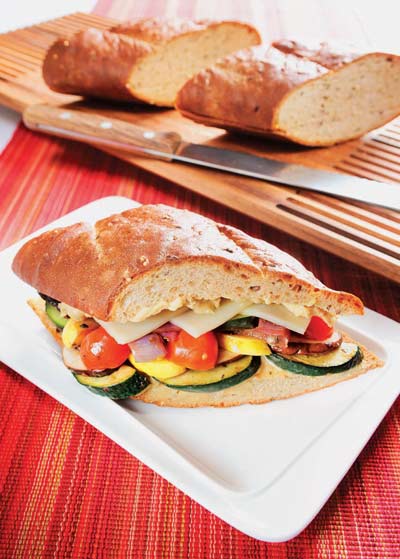
Olive Oil–Cured Summer Vegetable Sandwiches
When I was a caterer, one of my chefs whipped up these succulent vegetables for her own lunch, and they tasted so good that I immediately included them on the menu in a sandwich. They are a wonderful option for vegetarians and perfect for a road trip, sack lunch, or picnic, in which case you should allow the vegetables to cool prior to assembling. My husband Steve loved these and didn’t even miss the meat—a first!
Olive Oil–Cured Summer Vegetable Sandwiches
(Makes 4 sandwiches)
Total Prep and Cook Time
45 minutes
Ingredients
- 1 medium zucchini, halved lengthwise, sliced on an angle into half-moons (about 2 cups)
- 1 medium yellow squash, halved lengthwise, sliced on an angle into half-moons (about 2 ½ cups)
- 1 (8-ounce or 225 grams) package cremini (baby bella) mushrooms, quartered (about 2 ½ cups)
- 1 ½ cups halved cherry tomatoes
- ½ red onion, sliced into rings
- 2 tablespoons sherry vinegar (or balsamic vinegar)
- 1 tablespoon Dijon mustard
- 1 teaspoon honey
- 1 teaspoon dried italian herb seasoning
- ¼ teaspoon salt
- ¼ teaspoon freshly ground black pepper
- 2 tablespoons extra-virgin olive oil
- ¾ cup hummus (original, olive, roasted red pepper, or garlic flavor)
- 4 medium oblong sandwich rolls, slit horizontally (whole-grain preferred)
- 4 sandwich-size slices reduced fat provolone or mozzarella cheese, cut in half
Directions
- Preheat oven to 375°F (190°C or gas mark 5) and line 2 large sheet pans with parchment paper or silicone baking mats.
- Arrange vegetables in a single layer on the pans. In a small bowl, whisk vinegar, mustard, honey, Italian seasoning, salt, and pepper and drizzle in the oil, whisking to emulsify. Drizzle evenly on the vegetables and toss to coat. Bake until tender, about 25 minutes.
- Spread the insides of the buns with hummus. Layer the vegetables on top, finish with cheese, and top with remaining bun halves. Cut sandwiches in half crosswise and enjoy immediately or wrap tightly and chill until ready to eat, within 1 day.
Recipe Note
Try toasting the buns before assembling for added flavor and texture if you will be enjoying them immediately.
Go Clean
Before opting for enticingly exotic-sounding olive oils from a distant country, explore the options available near you. Olives tend to grow well in regions where wine grapes thrive.
Nutrition Facts
Per serving (1 sandwich with ¾ cup vegetables)
Calories: 466
Total fat: 18 g
Saturated fat: 5 g
Carbohydrate: 55 g
Fiber: 11 g
Protein: 23 g
Cholesterol: 15 mg


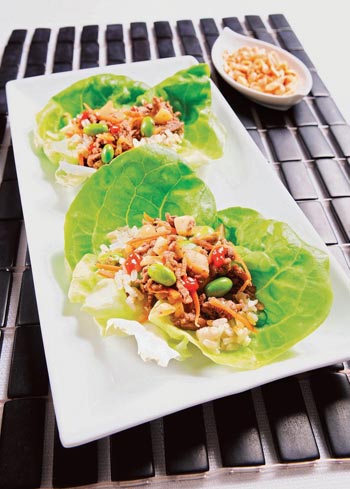
Hoisin Beef & Edamame Lettuce Wraps in a Hurry
This is one of my signature dishes. I’ve honed and served it throughout my cooking career as a personal chef, newlywed, and mom. I present to you the simplest, most flavorful version yet. Feel free to substitute ground chicken, lean pork, or bison for the beef.
Hoisin Beef & Edamame Lettuce Wraps
(Makes 4 servings)
Total Prep and Cook Time: 45 minutes
Ingredients for sauce
- 2 tablespoons reduced sodium soy sauce
- 1 tablespoon hoisin sauce
- 1 tablespoon rice vinegar
- 2 teaspoons Chinese mustard
- 1 teaspoon honey
- ¼ teaspoon freshly ground black pepper
Ingredients for beef
- 1 tablespoon expeller-pressed grapeseed or canola oil
- 1 pound organic or grass-fed ground beef
- ¼ teaspoon freshly ground black pepper
- 1 small onion, diced small (about 1 cup)
- 1 tablespoon minced garlic
- 1 tablespoon sesame seeds
- 2 teaspoons minced ginger
- 1 cup frozen shelled edamame, partially thawed (or peas)
- 1 (8-ounce) can sliced water chestnuts, drained, roughly chopped
- ½ cup shredded carrots
Ingredients for assembly
- 1 head Bibb, butter, or iceberg lettuce, separated into individual cups
- Cooked brown rice
- Reduced sodium soy sauce, sriracha chili sauce, and peanut sauce for drizzling
Directions
- To make the sauce: In a small bowl, stir together sauce ingredients and set aside.
- To make the beef: Heat a large wok or frying pan over high heat and pour in oil. When oil begins to shimmer, add beef in a single layer and break into pieces. Sprinkle in pepper and allow beef to cook undisturbed for 5 minutes to brown. Turn beef; break it into smaller pieces, add onion, and brown for a few more minutes. If needed, add a splash of water to pan and use a wooden spoon to scrape up any brown bits from bottom of pan. Reduce heat to medium. Push meat to one side of pan, add garlic, sesame seeds, and ginger to other side, and cook until sesame seeds turn golden, about 20 seconds. Add edamame, water chestnuts, and carrots and stir-fry for 4 more minutes until vegetables become tender.
- Swirl sauce into beef, and stir-fry for 1 minute.
- To assemble: Serve hot over cool lettuce cups with sauces spooned over top and rice served on side.
Go Clean
Grapeseed oil has a light, neutral taste and can be heated to higher temperatures than most oils, making it perfect for stir-fries. Look for “expeller-pressed” varieties, which rely on mechanical extraction with a small amount of heat instead of chemicals.
Nutrition Facts
Per serving (Not including brown rice, 1 cup beef filling with 3 lettuce cups)
Calories: 374
Total fat: 20 g
Saturated fat: 6 g
Carbohydrate: 19 g
Protein: 29 g
Cholesterol: 70 mg
Pizza Meets Grill
I recently enjoyed a women’s grilling clinic taught by Robyn Lindars, a bundle of energy whose mission is encouraging women to get out of the kitchen and to feel confident about running the grill themselves. Her cookbook and blog (grillgrrrl.com) emphasize cooking low and slow, a smart way to enjoy grilled flavor while minimizing the formation of substances on meats that are not good for us.
Grilled pizza has four steps:
- Be sure the grill grate is clean and oiled so the dough does not stick.
- Divide the dough—store-bought is fine—into portions and set them to rise, following package directions.
- Make the grilled vegetables using a grill basket.
- Place toppings (including grilled veggies) on the piecrust and grill—be sure to close the lid. A covered grill makes the cheese melt quickly and avoids excess charring. It also increases the smoky flavor of the vegetables
If you are an apartment-dweller, take heart. I am too. Using a grill pan gives you all but the final extra hint of smoke flavor on the topping. In every other respect, pan grilling on the stove works well.
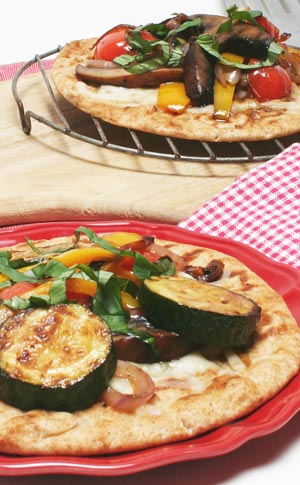
Grilled Pizza with Grilled Vegetables
(Makes 4 pizzas)
Ingredients
- 1 pound prepared whole-wheat pizza dough
- 4 large crimini mushrooms, stemmed, cut crosswise into ½-inch slices
- 2 large plum tomatoes, halved lengthwise, seeded, and cut crosswise into thick slices
- 1 medium orange, yellow or red bell pepper, seeded, cut into ½-inch strips
- 1 medium zucchini, cut into ½-inch slices
- ½ medium red onion, cut crosswise into thin slices
- 2 cloves garlic, cut vertically into 4 slices
- Salt and freshly ground black pepper
- 2 tablespoons extra virgin olive oil, divided
- 1 ½ cups (6 ounces) shredded low-fat mozzarella cheese
- 4 large basil leaves, cut crosswise into thin strips
Directions
- Divide pizza dough into thirds. Set aside one third for later use. Divide remaining thirds in half, for a total of four pieces. Gently form into balls and place in lightly oiled bowls. Cover bowls with dishtowel and let sit until dough is soft and pliable, 30 minutes to 1 hour, depending on how cold it is.
- While dough warms up, for topping, in mixing bowl, combine mushrooms, tomatoes, peppers, zucchini, onion, and garlic. Sprinkle on salt and 4-5 grinds pepper. Add 4 teaspoons of oil, and using your hands, toss until vegetables are coated with oil. Set vegetables aside for 30 minutes.
- When pizza dough is soft, lift 1 piece and pat it into a disk. Holding disk by its edge so dough dangles down, gradually work your fingers around the edge, turning and gently stretching it into 4-inch disk. Place stretched dough on large baking sheet and repeat with remaining 3 pieces. Cover dough and let rest for 10 minutes, until soft enough to repeat, stretching pieces to 7-8 inches. Neat, evenly thick rounds are nice, but do not worry if dough is irregularly shaped and thin in places. Leave dough on baking sheet, covered, while preparing grill.
- Heat gas grill to medium-high or charcoal grill until ash on charcoal is white. Place marinated vegetables in grill basket. Grill, stirring vegetables occasionally, until crisp-tender, 7-8 minutes. Set grilled vegetables aside.
- Turn gas grill to low or move coals all to one side of charcoal grill. Use remaining oil to brush disks of pizza dough lightly on both sides. Arrange dough on grill; for charcoal grill place pieces on side without coals. Grill 5-6 minutes, until dough is puffy on top, and bottom is golden brown with darker spots. Thin areas will be darkest. Using tongs, turn pizza crusts over. Immediately sprinkle ¼ of cheese over each crust, leaving ½-inch edge. Close lid and grill until bottom of crust is golden with darker spots and cheese is just melted, about 1-2 minutes. Remove grilled pizza crusts to individual plates and heap ¼ of grilled vegetables on top of each crust. Sprinkle on basil and serve immediately.
Nutrition Facts
Per serving (1 pizza)
Calories: 370
Total fat: 18.5 g
Saturated fat: 6 g
Carbohydrate: 38 g
Fiber: 7 g
Protein: 592 mg
John F. Kennedy, In Memoriam
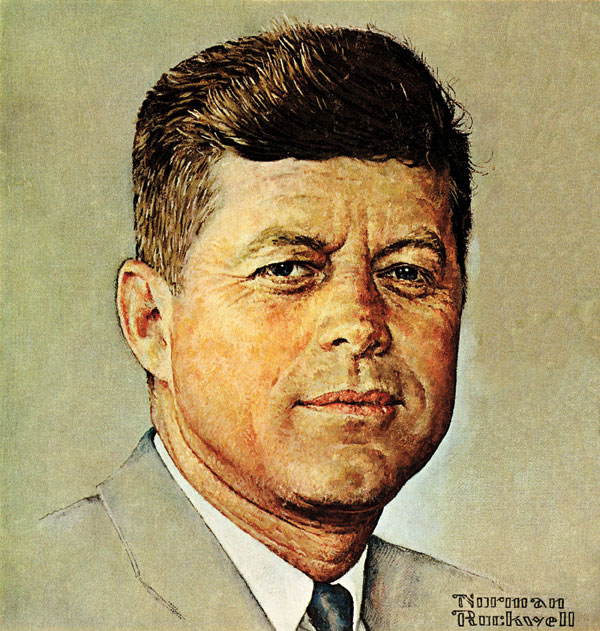
As an entire country lay in mourning in 1963, the Post released a special issue paying tribute to the fallen president just weeks after his death. The portrait of this great man by Norman Rockwell graced the cover. Selected excerpts below.
“A Profile in Family Courage”
By Bill Davidson
At 1:44 p.m. a maid came over to the table and said to the attorney general [Robert Kennedy], “Mr. J. Edgar Hoover is on the White House phone.” He had a conversation of about 15 seconds. There was a look of shock and horror on his face. [Ethel] Kennedy saw that, and rushed to where the attorney general had just put down the phone. He couldn’t speak for another 15 seconds. Then he almost forced out the words, “Jack’s been shot. It may be fatal.”
According to friends, [Jacqueline] Kennedy never once broke down during the dreadful night at Bethesda Naval Hospital or when she returned to the White House. A friend who spent a few moments with her on the morning of November 23 says, “She was composed, though you had the feeling she was barely holding on. But she revealed this only among people she held close. In public, she seemed completely composed. She is the kind of woman whose grief is private.”
But [Jacqueline] Kennedy also did other remarkable, less-publicized things in the first day of her grief. She offered Mrs. Johnson all her help for their move into the White House. Then she called in her brother-in-law, Attorney General Kennedy, and asked him to phone the wife of Dallas detective J.D. Tippitt, who had been killed by Lee Harvey Oswald, the principal suspect in the assassination of her husband. “What that poor woman must be going through,” said [Jacqueline] Kennedy.
“Hate Knows No Direction”
By Ralph Emerson McGill
His staff, the Secret Service and the FBI knew about the danger in Texas—as they knew of it in other states. But when the president appeared, the reception was so warm and generous, and the crowds so huge and friendly, that some of the vigilance was relaxed. The car’s bulletproof glass cover—which perhaps would have deflected the shots—was removed. And so, a trust born of warmth and generosity and friendliness exposed the young president to the deadly assault of a psychopathic hater.
The more shrewd among the peddlers of hate against their country have been careful to avoid open and direct incitement of violence. But their words and other abuse directed at the president and
the government have inspired many whose disturbed minds tend easily toward recklessness and criminal action.
We must now understand that hate, if unchecked by morality, decency, and the determination of civilized men and women, may so weaken us that we will be vulnerable to our enemies.
“A Eulogy: John Fitzgerald Kennedy”
By Arthur M. Schlesinger Jr.
The bright promise of his administration, as of his life, was cut short in Dallas. When Abraham Lincoln died, when Franklin Roosevelt died, these were profound national tragedies; but death came for Lincoln and Roosevelt in the last act, at the end of their careers, when the victory for which they had fought so hard was at last within the nation’s grasp. John Kennedy’s death has greater pathos, because he had barely begun—because he had so much to do, so much to give to his family, his nation, his world. His was a life of incalculable and now of unfulfilled possibility.
Still, if he had not done all that he would have hoped to do, finished all that he had so well begun, he had given the nation a new sense of itself—a new spirit, a new style, a new conception of its role and destiny.
“When The Highest Office Changes Hands”
By Dwight D. Eisenhower
Seen in longer perspective, the facts are that four of 36 presidents have been assassinated, and a president in office and a president-elect have been targets of assassination attempts. These acts all had one thing in common: They were the work of crackpots, of people with delusions arising from imagined wrongs or festering hatreds. In a population as large as ours there is bound to be a certain number of such warped people, but their existence does not indicate that the people of the United States have become lawless.
View a gallery of archival Kennedy images.
Happy to be Hacked

It’s the kind of email no one wants: “Hey Buddy, I think you’ve been hacked.” Forwarded with this message was an email from “me.” It was a promotion for phenomenal weight-loss pills complete with a website for easy ordering.
Of course I had never sent this message, and I was at a loss to know what to do. When a Google search revealed that my email provider had been victimized by “criminal spammers who lived in the Russian Federation,” I panicked. Fortunately, a couple of hysterical phone calls later, I learned that changing my password would probably stop the spam.
In the coming hours, I got dozens of messages, all similar to the first one. Some beneficiaries were amused, some annoyed (as I certainly was)—only one person (a shrink!) believed I was actually endorsing this miracle diet cure. But as with so much else in our Internet age, one experience morphed into another, and I began looking forward to see who else from my past got the bogus email. Some I had forgotten. Many I couldn’t recall at all. And then, a name that jolted me.
“Peter, I’m so glad to hear from you, even if just with a miracle weight-loss notion—I think of you often and am sad that we’re so out of touch.” We had been close, working together for decades, but as happens too often, had gone in different directions and our closeness had evaporated as visits, then phone calls, and finally emails had dwindled away. I guess we hadn’t been such good friends.
Except the joy I felt proved that the friendship was still there. The words brought back so many memories, a warmth and excitement that—as he told me when we met a few days later—he had also felt when seeing my name, only to be deflated when he realized it was spam. “But,” he said, “I figured why not just write back? It’s only email.” And we toasted the evil creeps lurking somewhere behind the former Iron Curtain who unknowingly had reunited us.
Gary Sinise

Photo courtesy garysinisefoundation.org.
Life profoundly changed for Gary Sinise after his Oscar-nominated role in Forrest Gump as the Vietnam vet and double-amputee Lieutenant Dan—a character at first supremely bitter who ultimately finds the courage to come to terms with his disability and even thrive. Wounded vets everywhere responded, and Sinise found himself at the center of a vital cause—to bring attention, appreciation, and help to America’s sometimes-forgotten heroes, the real-life disabled military men and women.
To this day, the busy actor spends countless hours visiting hospitals and meeting severely injured vets. To entertain troops and raise funds to assist the wounded, he tapped his own musical roots to form the Lt. Dan Band, which drives crowds wild. He also formed the Gary Sinise Foundation to organize future veterans programs.
[Watch videos of Gary Sinise & the Lt. Dan Band performing live for the troops.]
Through all this, Sinise has continued his acting career, playing a range of historical figures from Harry Truman to George Wallace. And he just completed a nine-season stint as Detective Mac Taylor in the recently cancelled CSI: NY series on CBS.
Question: Playing Lieutenant Dan in Forrest Gump really changed your life didn’t it?
Gary Sinise: Prior to doing the movie, I had been involved with Vietnam veterans groups, so I wanted to play that part very badly. But afterwards, vets reached out to me, and it just snowballed.
Q: To this day, you seem as committed to veterans issues as to your acting career.
GS: It’s not a side thing that I do. I’ve been all over the world to talk to veterans and active duty service members and visit hospitals and raise money to help our wounded soldiers. I’ve seen some very sad things—the injuries that our men and women have suffered. And the grieving families that have lost a loved one.
Q: Any personal memories of the wounded heroes you’ve met that stay with you?
GS: There are many. I remember a horribly injured marine in intensive care. His wife asked me if I would go and see him. He had lost three of his limbs and most of his other hand. He was burned over 90 percent of his body, and he had suffered a very severe brain injury. She said, “He’s probably not going to know you’re there, but could you do it anyway?” I could see his eyes flickering as I was talking to him. I don’t know if he knew what I was saying, but I was just letting him know that I was there and that I supported him. It was very challenging because he was one of the most severely wounded that I’ve seen—and I’ve seen a lot of very, very badly injured vets. I never forgot him. Later, I called up his wife, and she told me they were moving from place to place, convalescing. I said, “We can build you a house.” That project will be completed this fall, and they’ll be able to move in. His wife is going to have to care for him for the rest of his life, and she’s so heroic and so incredible.
Q: That’s just one of many, what you call “smart homes,” that your foundation is building for disabled vets.
GS: Yes, each one is designed specifically for the particular needs of the individual. You might have a warrior who’s going to be confined to a wheelchair for the rest of his life, but maybe he’s got his arms so he can get around and push buttons and do different things. His needs might be different than somebody who’s totally dependent on the caregiver. We figure out the best way to make life easier with things like kitchens that can be operated with a smartphone and cabinets that drop down to wheelchair height at the push of a button.
Q: No one would have guessed how your life turned out. It’s not a secret that you weren’t exactly a role model as a teen.
GS: No, I was just goofing off. I was a kid absorbed with my own particular interests—playing in bands or looking at girls or whatever, and really not thinking much beyond my small world. I knew the Vietnam War was a bad thing. I saw the news on TV, the body bags coming home. I never thought about the young guys who were wounded until I got to know some veterans. It made me realize there’s a lot more to life than your little piece of it.
Q: When did you figure out that you could act?
GS: It was sort of an accident. I was asked to audition for a play by the high school drama teacher because she was going to do West Side Story and she needed guys that looked like gang members. I wasn’t sure about it, but I saw all the pretty girls going in there to audition and so I sort of just followed them. Thankfully, I had a natural ability to get on stage and goof off and ham it up so I was able to find something that I was pretty good at.
Q: A lot of parents have doubts about their kids becoming actors. How did your mom and dad react?
GS: When I started performing in plays they were thrilled because I wasn’t going to get kicked out of high school. They were worried because I was not a good student. I just could not sit down and study. But my dad was terrible in school too, so what could he say? Actually, they’ve always been very supportive. I went on to help start the Steppenwolf Theater in Chicago while I was working as a gardener, a shipping clerk, doing all kinds of things.
Q: After you became successful, did your parents brag about their son the movie star?
GS: Oh good lord, yes. I still get requests from them for autographed pictures. They live in a small town, and you know that kind of stuff gets them points. My 89-year-old World War II vet uncle recently asked, “Can you send me a picture for Estelle? She works over at the library.”
Breathing Lessons

There are many approaches to mindfulness, but here is a good place to start.
1. Find a quiet place. Sit comfortably and close your eyes. Take a few moments to simply be. Notice whatever is happening inside you and in your environment—sounds, physical sensations, thoughts, feelings—without trying to do anything about it. Continue this for five minutes or so.
2. Now bring your attention to the breath. Simply notice the breath as it moves in and out though your nostrils. Don’t try to manipulate it in any way.
3. The mind will wander. This doesn’t matter. Each time you notice you are no longer observing the breath, this is a moment of mindfulness. Simply bring your attention back to the in-breath and out-breath.
4. Allow thoughts, emotions, and bodily sensations to come and go. Notice that when you allow these “interferences” to arise without pursuing them, that they pass away naturally of their own accord. There is no need to push, resist, or fight with the mind. This only creates more distraction.
5. Stay awhile. Remain sitting with eyes closed for 10 more minutes (15 minutes total). Use an egg timer to keep time for you—this will free you from the need to watch the clock. Once the timer goes off, take two to three minutes to record your experience in a “mindfulness journal.” Repeat this practice once a day for a month. After one month, increase your sitting time to 20 minutes.
In time, you will notice the great benefits of this simple practice, which can be done anywhere at any time. You will become aware of the tendencies of your mind, how it resists certain experiences and tries to hold onto others, how it becomes tangled up in thinking and prevents you from being able to focus. The more sensitive you become to these tendencies, the clearer and more balanced your mental state will be.
Scrap Cake Birthday Card
Create unique handmade birthday greetings with leftovers: Use scraps of wrapping paper, scrapbooking paper, or even recycle old birthday and greeting cards as your materials to build this fun and funky cake card.
Find paper scraps that are in the same color family but with variant patterns to make this card extra funky.
How to Make the Scrap Cake Birthday Card
Materials for front of card
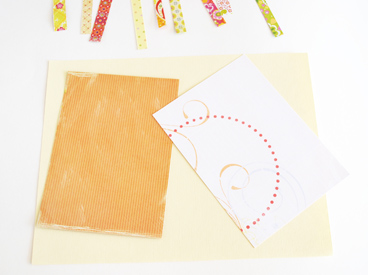
- 1 large solid colored sheet of card stock (8 ½” x 11″)
- 1 handmade or store-bought envelope (5″ x 7″)—Click here for a handmade envelope tutorial at craftingmom.com.
- 1 sheet of decorative paper or card stock (5″ × 7″)
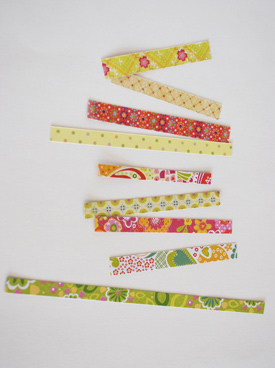
- 10 strips of paper or card stock (¼” wide and 3-5″ long)
- 1 scrap of yellow/orange/red paper or card stock (1″ x 1″)
- Craft glue, such as Tacky Glue
- Double-sided permanent adhesive mounting squares (optional)
- Paper cutter or scissors
Optional materials for inside card
- 1 sheet of decorative paper or card stock (5″ × 7″)
- 1 small scrap of paper (2″ x 3″)
- “Happy Birthday” stamp
- Ink pad
- Corner rounder
Directions for front of card
- Fold the large sheet of card stock in half crosswise to create the base of your card—trim if necessary to fit in your envelope.
- Cut the decorative sheet slightly smaller than half of folded card stock (about ⅛” smaller on each side looks best). This will be the front of your card.
- To create the cake, arrange 9 of the 10 strips horizontally in the order you want them to appear on the card (these will become the cake layers). Set one strip aside for the candle.
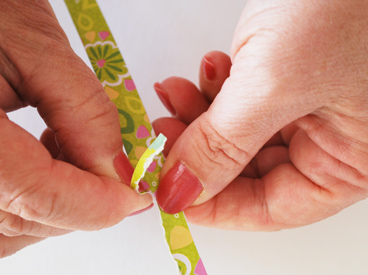
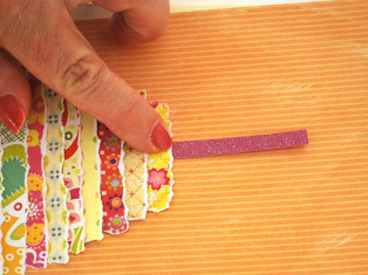
- Pick up the bottom layer of the cake. Holding it vertically, tear a thin piece off the top (as shown below). Then turn the strip horizontally, and tear the right and left sides off of the strip so that it measures about 4″ long. Continue working up the cake layers in this fashion, tearing off the tops of each strip. When tearing off the sides, each scrap should be slightly shorter than the strip below it.
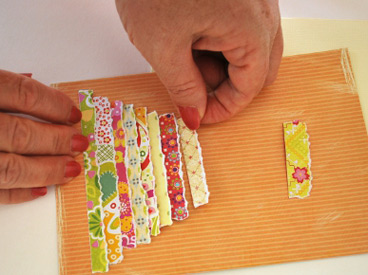
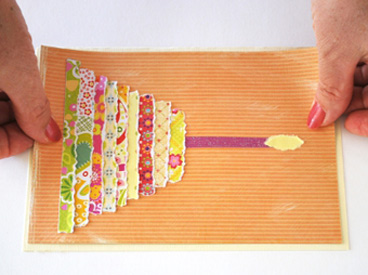
- Beginning with the bottom layer, glue each strip onto the decorative sheet. (TIP: To create a stacked look, glue only the bottom edge of each strip so that the next piece can be tucked under the top of the previous layer.)
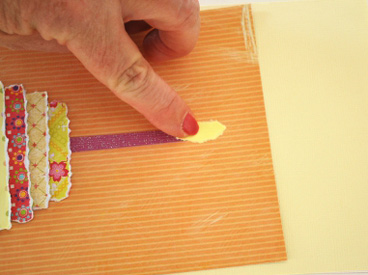
- Cut the scrap you set aside for the candle to about 3″ long. Then, glue the scrap (vertically) onto the front of your card, as shown below.
- Tear the scrap of yellow or orange paper into a flame shape. Glue to the top of the candle.
- Using craft glue or double-sided adhesive, attach the decorative sheet to the front of your card.

Directions for inside card
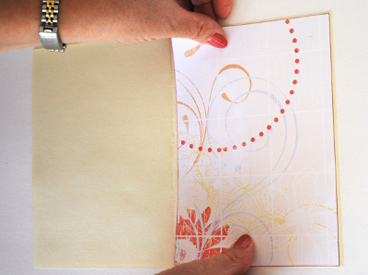
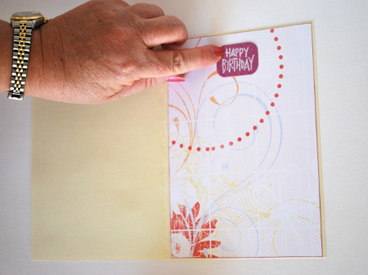
- Cut the decorative sheet slightly smaller than half of folded card stock (about ⅛” smaller on each side looks best). Using glue or double-sided adhesive, attach the sheet to the inside (right side).
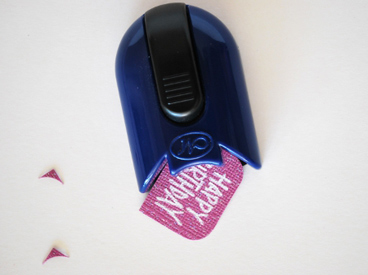
- Using your stamp and ink pad, stamp “Happy Birthday” on the 2″ x 3″ scrap of paper. Round the corners with the corner rounder and attach to the inside of the card using glue or double-sided adhesive.
Cool Cauliflower Salad
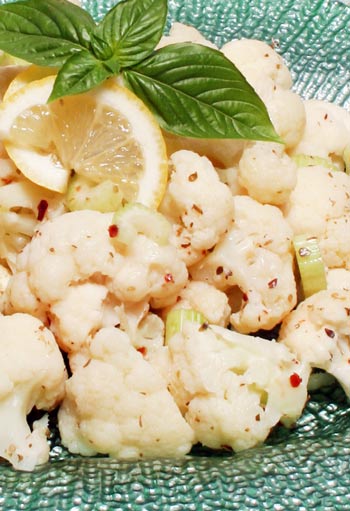
You can use this chilled side to complement almost any summer meal, especially at backyard cookouts. Here’s one meal idea: Add baby red potatoes—cut in half and brushed with a bit of olive oil. Then, sprinkle them with some fresh chopped herbs or dust with dried Italian seasoning, and bake. Serve sides with a slice of lean pork roast.
Cool Cauliflower Salad
(Makes 6 servings)
Ingredients
- 1 medium head cauliflower, broken into florets
- ½ cup celery, sliced into ½-inch pieces
- ¼ cup of water
- 1 tablespoon red wine vinegar
- 1 tablespoon lemon juice
- 1 teaspoon Dijon mustard
- 1 tablespoon extra virgin olive oil
- 2 cloves garlic, minced
- ½ teaspoon Italian seasoning
- ⅛ teaspoon red pepper flakes
- Salt and freshly ground black pepper
Directions
- Steam cauliflower florets 6 to 7 minutes or until desired tenderness. In large bowl, combine cauliflower and celery.
- In small mixing bowl, combine remaining ingredients. Whisk together to mix well. Pour dressing mixture over vegetable mixture and toss gently to thoroughly coat.
- Cover and chill 2 or more hours. Serve chilled.
Nutrition Facts
Per serving
Calories: 50
Total fat: 2.5 g
Saturated fat: 0 g
Carbohydrate: 6 g
Fiber: 2 g
Protein: 2 g
Sodium: 55 mg
Size Matters

When selecting a tablet, you pretty much have two choices: big or small. The bigger models, including Apple’s full-size iPad, have screens that range from 9 to 10 inches diagonally. The smaller slates have 7- to 8-inch displays. So which is best for you?
A smaller tablet weighs less, costs less, and is easier to carry and hold in one hand. But a larger slate has advantages too, particularly if looking for one that can substitute for—or replace—a conventional laptop. The biggest advantage? Its screen, of course. Whether you’re watching a Netflix video, shopping online, or using Google Maps, bigger is better: “No matter what you’re doing, 10 inches of real estate is going to give you a better experience than 7 or 8 inches,” says Stephen Baker, a consumer technology analyst for the NPD Group. If you choose to go big, which tablet should you buy?
If price is a factor, two excellent 9-inch tablets cost nearly half as much as an entry-level iPad: Amazon’s Kindle Fire HD 8.9 ($269 to $514) and Barnes & Noble’s Nook HD+ ($269 to $299). The Fire HD 8.9 features crisp 1920-by-1200-pixel resolution display and an intuitive interface that’s tightly integrated with Amazon’s vast array of online services—music, movies, file storage, and shopping. High-end Fire HD 8.9 models come with reasonably priced 4G LTE from AT&T: $50 for a year of cellular service, albeit with a low 250-megabyte monthly cap. (If planning to watch a lot of movies on the Fire,consider upgrading to a pricier cellular plan or stick with Wi-Fi.)
The Nook HD+ isn’t as well known as its competitors, but it’s a top-notch tablet. With its sharp 1920-by-1280 display, the Nook HD+ is great for reading full-color magazines and e-books, playing games, and watching videos. Unlike the Fire HD 8.9, the HD+ lacks a cellular option, so Wi-Fi will have to do. Nook users can download popular apps, including Facebook, Twitter, Netflix, and Pandora (for streaming music); from either the Nook Apps store or Google Play, the main apps market for Android devices If money’s not an object, it’s hard to go wrong with the Apple iPad ($499 to $929), which features a gorgeous 2048-by-1536 resolution. Weighing up to 1.46 pounds, the iPad is thin and light. With an optional keyboard ($60-$100), it makes a decent, if limited, laptop replacement. Another iPad advantage is its vast selection of tablet -specific apps: more than 300,000.
If familiar with Google’s Android software, you should also consider the Google Nexus 10 ($399 to $499), a 10-inch slate with a best-in-class 2560-by-1600 resolution display. The Nexus 10’s Android interface is fine-tuned for tablets, so users of Android smartphones should take to it right away. Like the Nook HD+, the Nexus 10 doesn’t offer a cellular option, so you’ll need Wi-Fi to connect to the Internet.
If your main criterion is to eliminate the need for a separate laptop, you might want to look at Microsoft’s Surface Pro ($899 to $999). This is a hybrid designed to do double duty and comes with an optional snap-on keyboard ($120 to $130). Sans keyboard, the Surface Pro is a powerful 2-pound touch-screen tablet with a lovely 1920-by-1080, 10.6-inch display. Attach the keyboard, and you’ve got a full-fledged Windows 8 laptop. While the Surface Pro is twice the price of some large tablets, it does the job of two devices.
The Deep South Says ‘Never’
This is the fourth installment in our six-part series, “The Long March on Washington.” In part one, “It’s Our Country, Too,” we looked at the limited wartime opportunities for black Americans in the 1940s. In part two, “Black Neighbors, White Neighborhoods,” we covered integration in neighborhoods throughout the 1950s. In part three, “Black Students, White School,” we reported on integration in the classroom.
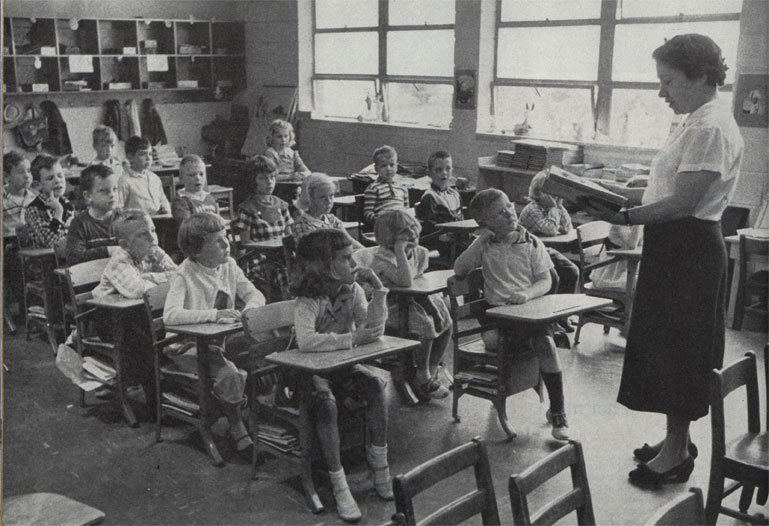
“With all deliberate speed” was how the Supreme Court wanted American schools to integrate their classrooms. But in the years following their Brown v. Board of Education decision, little action had been seen.
By 1957, about 330,000 black children had been admitted to formerly all-white schools, but another 2,475,000 still awaited integration.
The Post looked into the reasons for such little progress in a five-part series, “The Deep South Says Never” by John Bartlow Martin (June-July 1957), which it proudly called “the most exhaustive and penetrating look at the problems of integration yet published in an American periodical.”
The Supreme Court’s decision had outraged many Americans in Southern states with segregated schools. Southern politicians spoke of protests, legal appeals, and outright refusal to comply. But there was yet no organized effort to oppose the federal mandate.
Then, one night in 1953, Robert Patterson, a farmer in Indianola, Mississippi, attended a meeting at his children’s school where he heard officials announce their all-white school would have to admit black students. Patterson was stunned. As he later wrote in a widely distributed letter to “fellow Americans,” “I gathered my children and promised them that they would never have to go to school with children of other races against their will.”
He began seeking like-minded citizens who could build public opposition to the federal order. When he and a handful of associates called a town meeting to address integration, he told Martin, “Everybody of any standing was there.” They agreed to form the Indianola Citizens’ Council, which started a movement that swept across the South to solidify resistance to integration.
At first, the Council aroused little interest among Southern segregationists because the federal government did not try to enforce integration. During this time, Patterson and his friends traveled to other towns, speaking to the towns’ service clubs of the need to organize opposition to integration. Soon, Citizens’ Councils were springing up in adjoining states.
The Councils didn’t content themselves with merely building public support for segregation. They were ready to apply financial influence to silence the voices for integration. As a council member told Martin, “The white population in this county controls the money. … We intend to make it difficult, if not impossible, for any Negro who advocates desegregation to find and hold a job, get credit, or renew a mortgage.”
The Council began applying its influence in June 1955, when black residents in five Mississippi cities petitioned local school boards to admit their children to all-white schools.
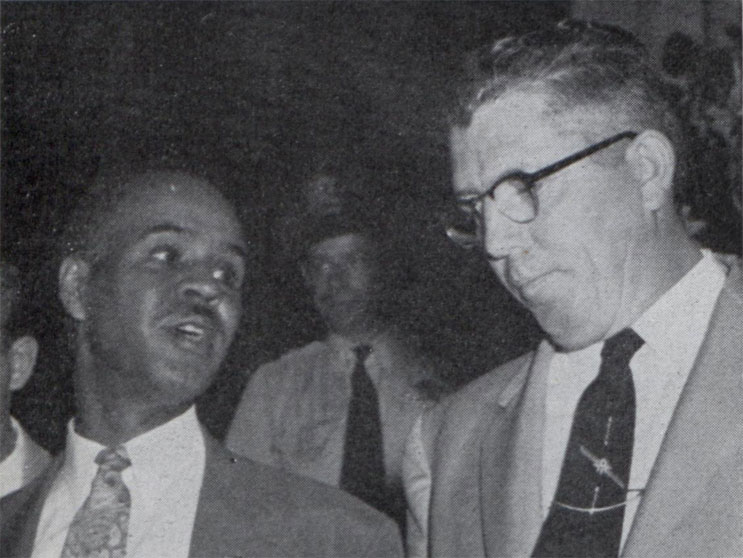
In Yazoo City, Mississippi, for instance, the Citizens’ Council published the names and addresses of all petitioners in the local paper. Roy Wilkins of the NAACP told Martin, “There were about fifty-three signers originally, and when [the Council] got through, only two signatures remained on it. One of them is living by helping his wife sell mail-order cosmetics—couldn’t get any work in town. One man had been a plumber for twenty years in Yazoo City, but he lost his business as soon as his name was in the paper.
“Wholesalers refused to supply a Negro grocer who had signed the petition, and a banker told him to come and get his money. He took his name off the petition, but it did no good. He left town.”
News that the petitions in all five cities were withdrawn encouraged the growth of segregationist groups in other states. By the end of 1955, one survey showed at least 568 local pro-segregation organizations in the South, claiming a membership of 208,000.
Council members were motivated by several reasons, though none admitted racism was among them. Some believed segregation was necessary to keep black men away from white women. (Patterson wrote protectively of “the loveliest and the purest of God’s creatures, the nearest thing to an angelic being that treads this terrestrial ball is a well-bred, cultured Southern white woman or her blue-eyed, golden-haired little girl.”)
Not all southerners supported these extremists. One Southerner told Martin he thought Council members were unintelligent and obsessed with interracial sex. “I once asked a council member, ‘What is your organization’s program?’
“He said, ‘To make people aware of the problem.’
“‘Do you think there is anybody south of the Mason-Dixon’s line that isn’t aware of it?’
“‘No.’
“‘Then what do you do at your meetings?’
“‘Well, we discuss the situation, discuss segregation.’
“‘It must get a little boring.’
“‘Well, yes, but we always get around to miscegenation.’”
Council members also felt they were fighting communism by opposing civil rights for blacks. Integration, they said, was a communist plot to stir up resentment in black Americans, who would rise up to destroy society. Patterson wrote, “If every southerner who feels as I do, and they are in the vast majority, will make this vow (to prevent integration), we will defeat this communistic disease that is being thrust upon us.”
What Patterson couldn’t have known was that the revival of aggressive bigotry in the South was helping to ignite a force in the black community. Black Americans were no longer waiting for the federal government to secure their civil rights, but had started taking action themselves.
Coming Next: The Rise of the Black Activists
Stuffed Vegetable Rolls

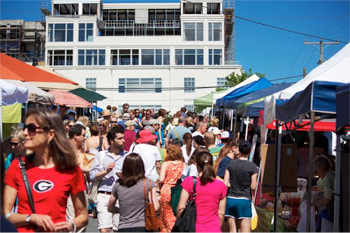
Photo courtesy Matt Baer
My perfect Saturday begins with a trip to the Charlottesville City Market in Charlottesville, Virginia, and ends with a fabulous dinner party with friends and fresh produce. This dish is my go-to for casual entertaining. The rolls can be made ahead of time and are endlessly versatile. By using whatever produce you find at your local market, these little treats will be in season all summer long.
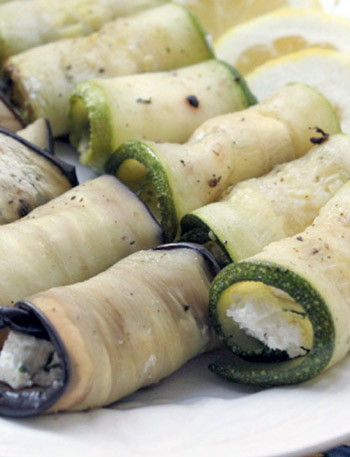
Stuffed Vegetable Rolls
Ingredients
- 1 large eggplant
- 2 medium zucchini
- Extra virgin olive oil
- Salt and pepper to taste
- 4 ounces goat cheese
- Juice and zest of ½ lemon
- 1 tablespoon fresh basil, chopped
- 1 tablespoon fresh parsley, chopped
- Roasted red peppers, sliced
Directions
- Preheat oven to 375°F.
- Slice woody stems off eggplant and zucchini. Then cut lengthwise into long, thin sheets about ¼-inch thick. (This is a perfect time to use a mandolin but a sharp knife also works well.)
- Brush eggplant and zucchini slices with olive oil, and season with salt and pepper. Place slices in single layer on baking sheets. Bake for 15-20 minutes until vegetables are tender but not crisp.
- In a small bowl, combine goat cheese, lemon, basil, and parsley.
- Allow vegetables to cool. Place 1 tablespoon of cheese mixture at the smallest end of each slice, and top with one small slice of roasted red pepper, and roll slice. Serve at room temperature or cold.
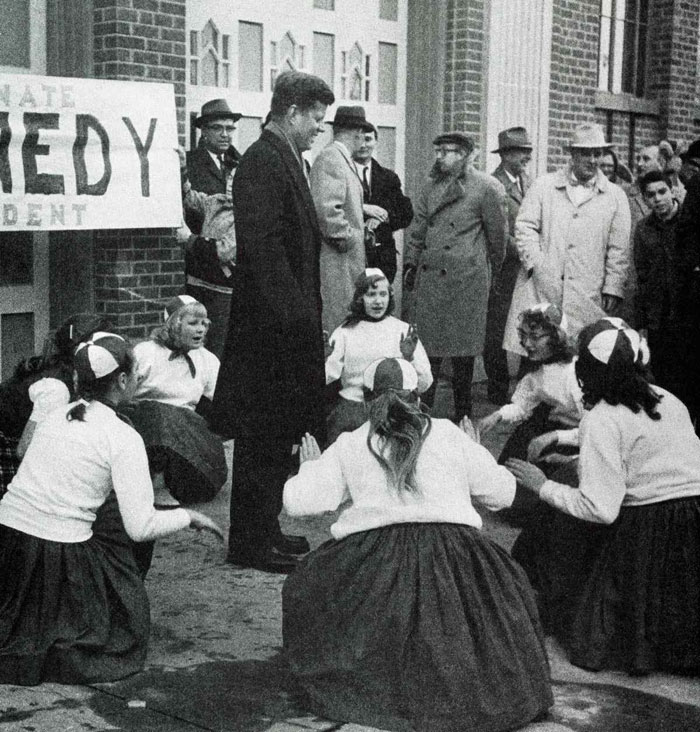
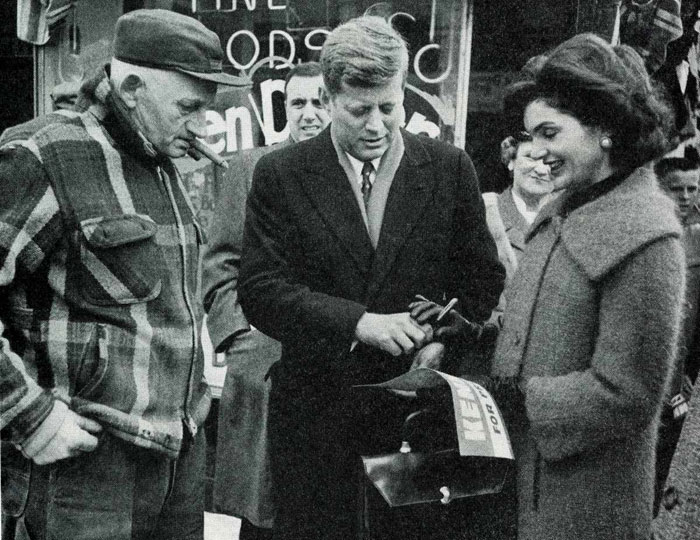
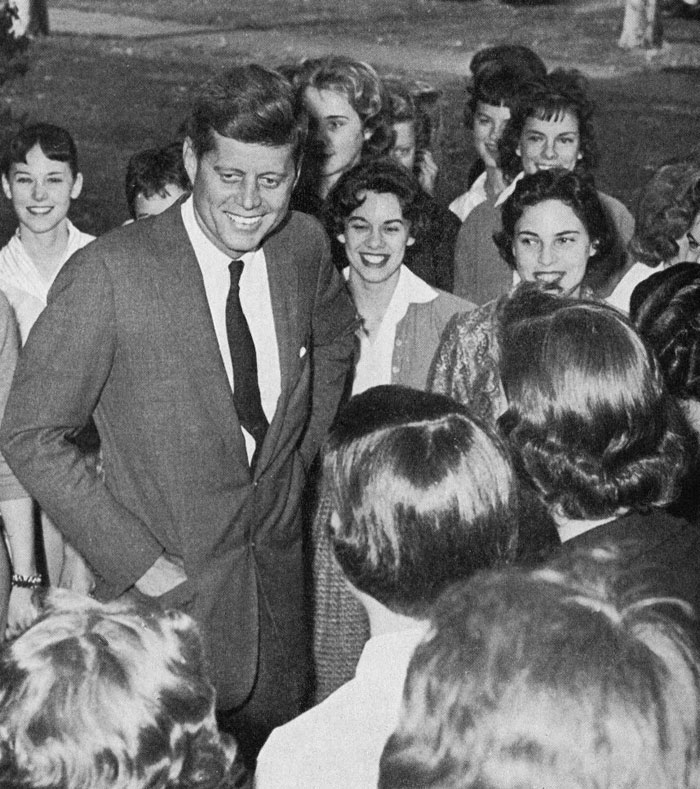
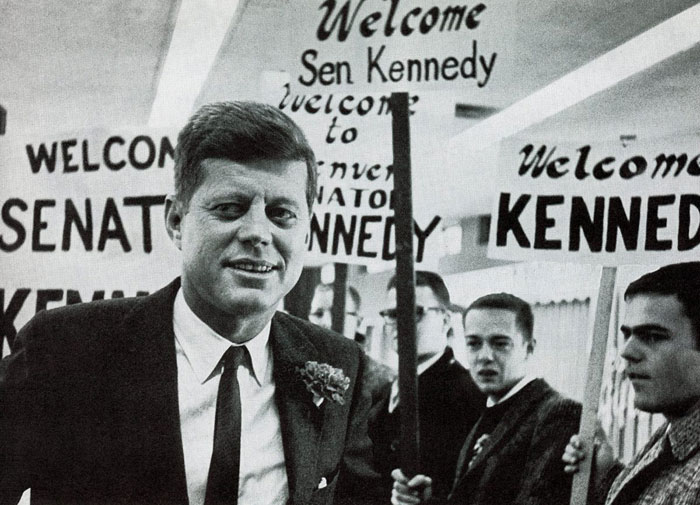
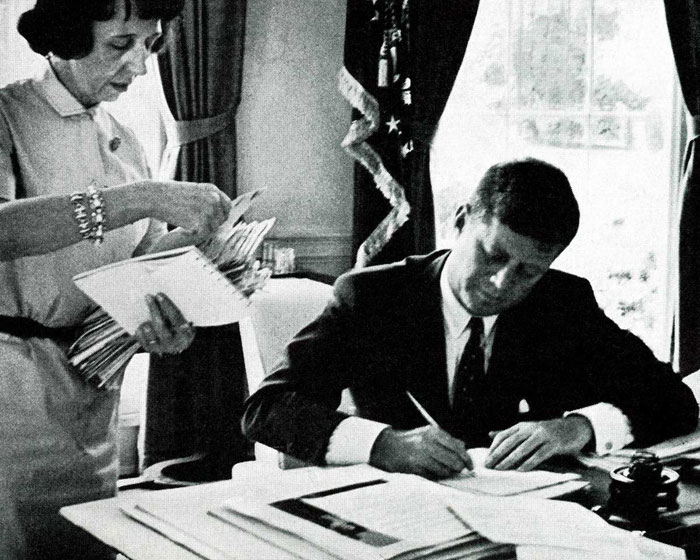
Looking Back at JFK
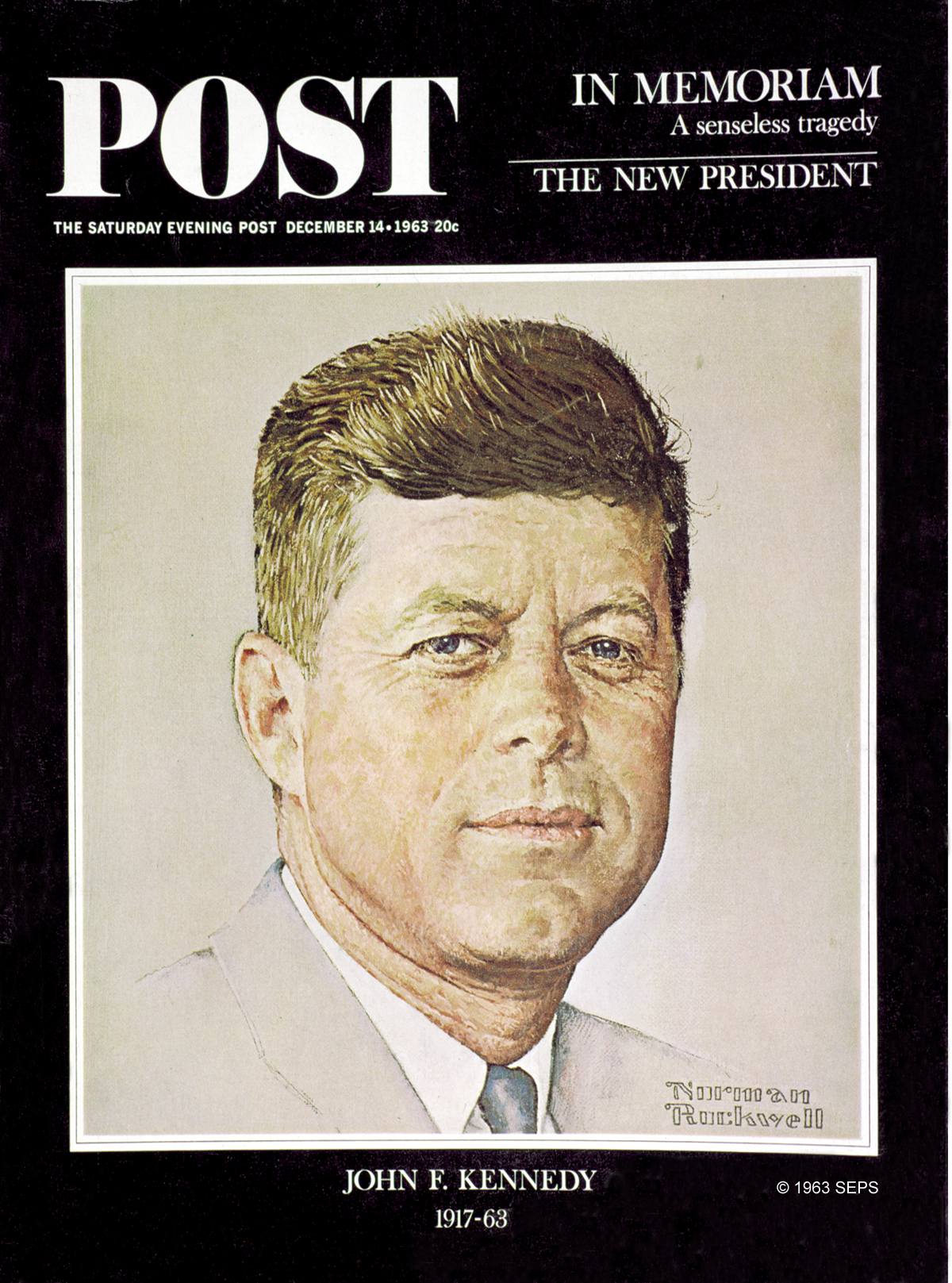
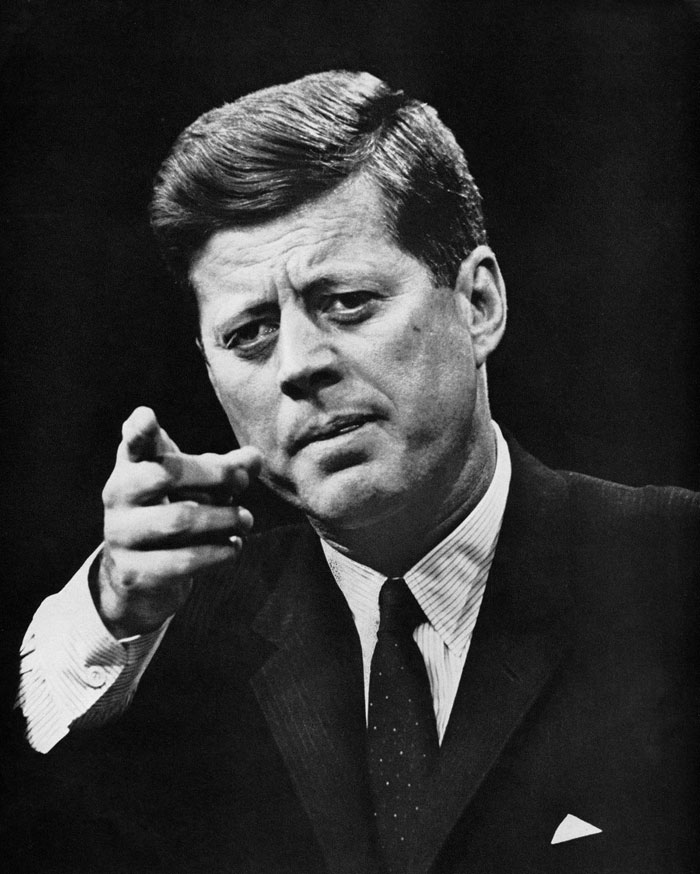
There are no doubts that John F. Kennedy’s looks were a considerable asset in his political career.
He looked young, which he was: elected to Congress at age 30, he was a senator by age 36, and president at 43.
He looked healthy, which he wasn’t: while president, he depended on numerous medicines to manage his back problems and Addison’s disease.
And he looked confident, which he was. Confidence had been in short supply in the 1950s, when Russia had gained the atomic bomb, taken the lead in the space race, and seemed ready to wage an unrelenting Cold War. Then, as the new decade was beginning, Senator John Kennedy arrived on the national scene, talking of America’s greatness and its role as a moral world leader.
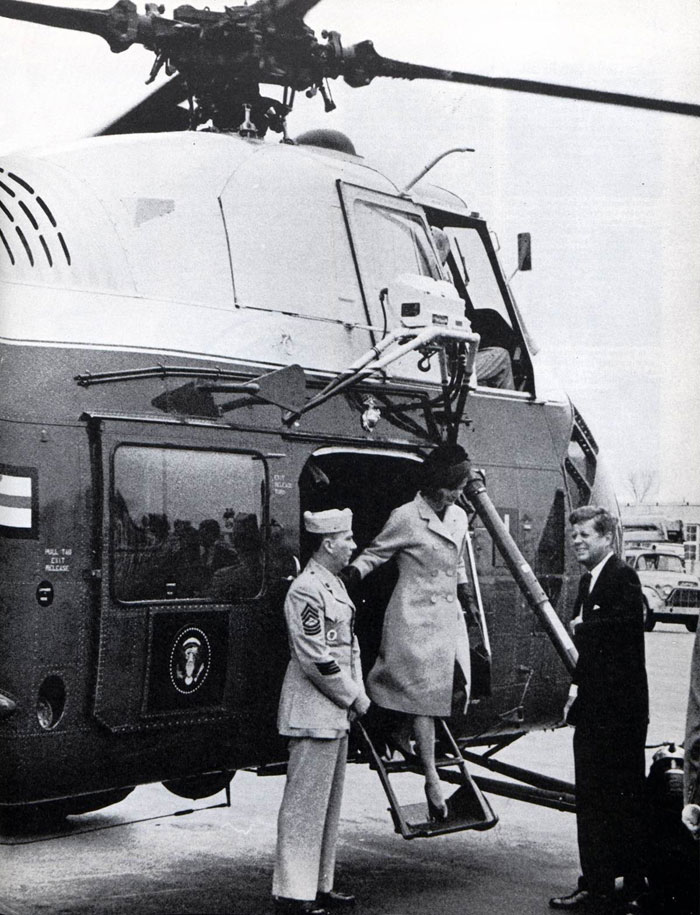
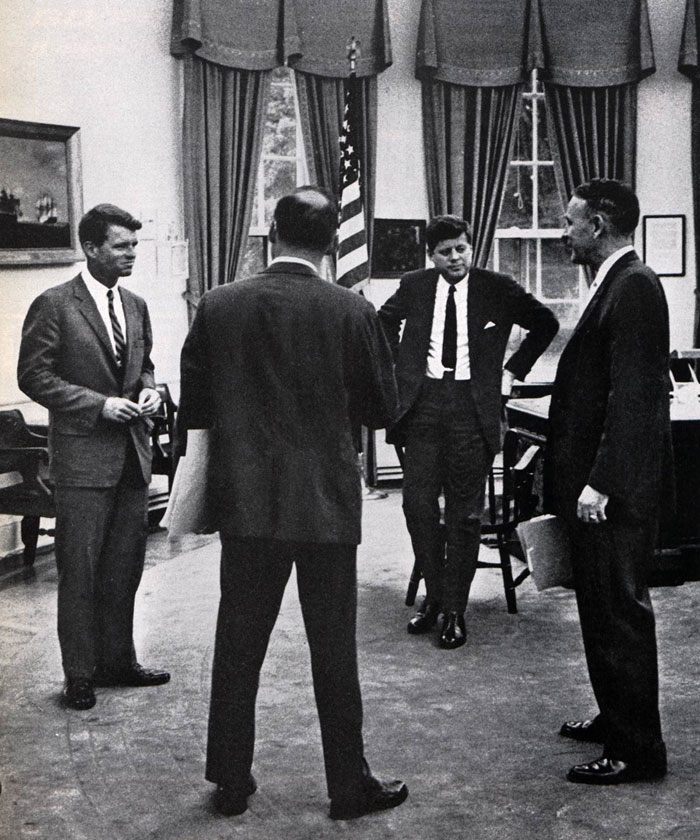
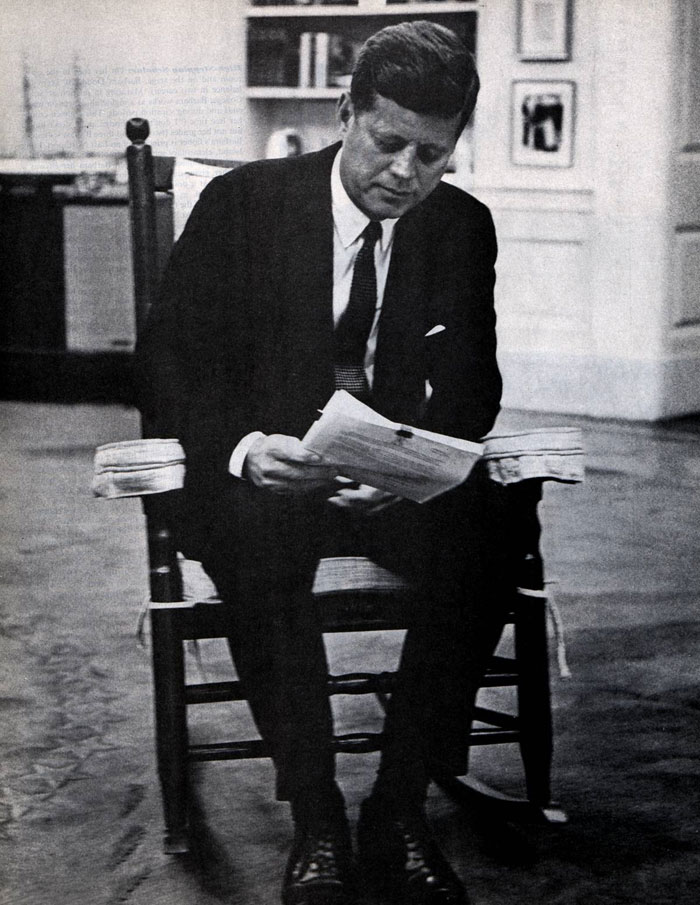
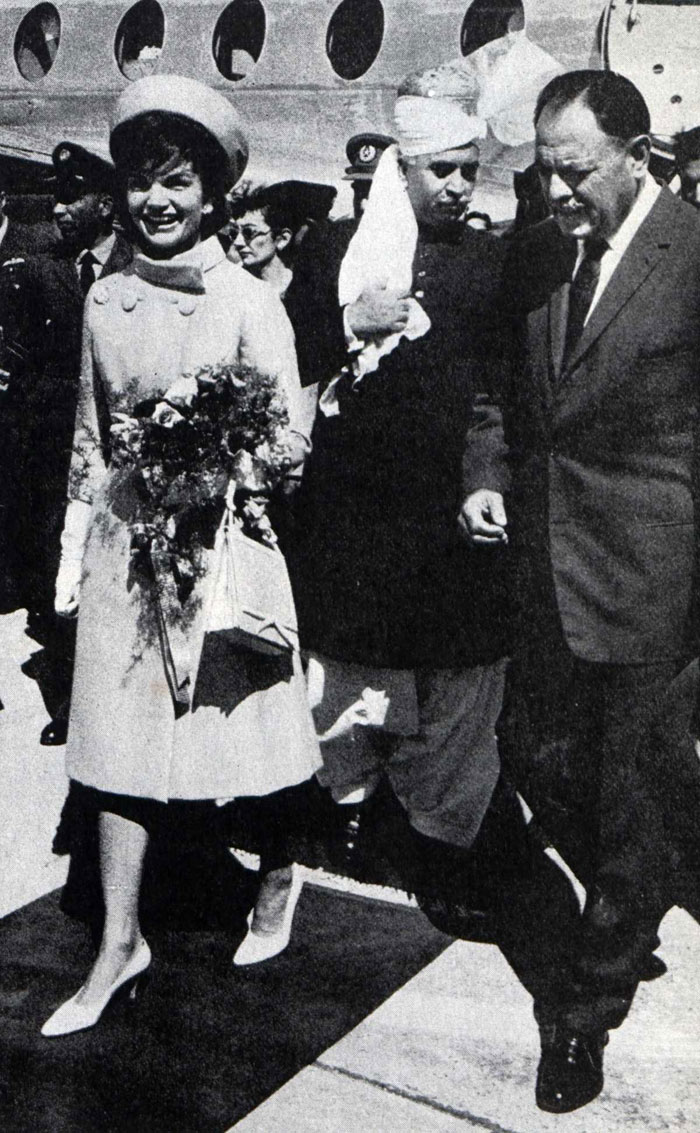
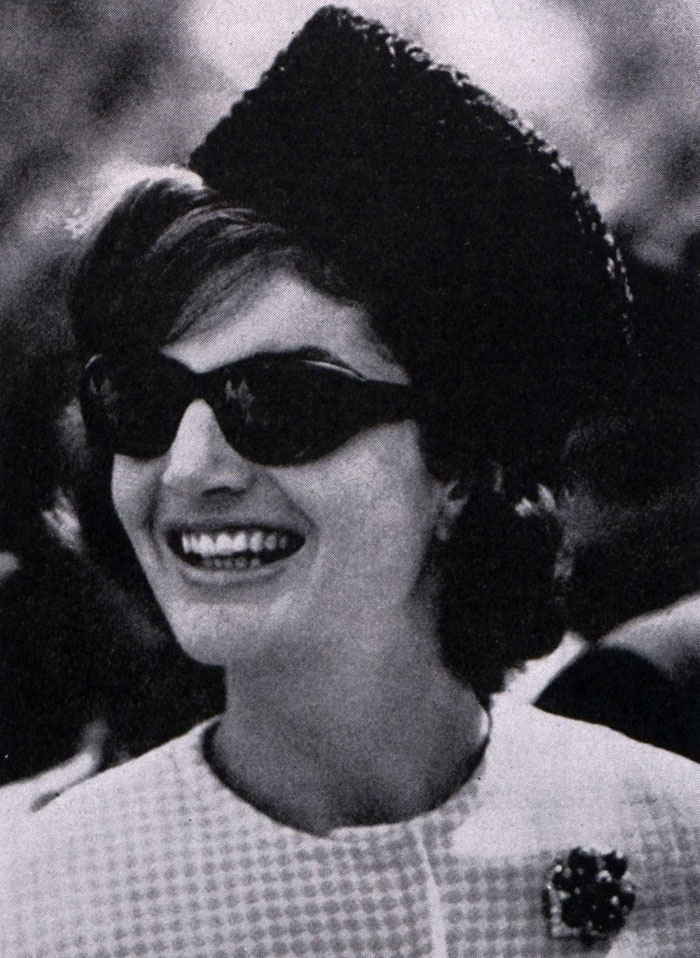
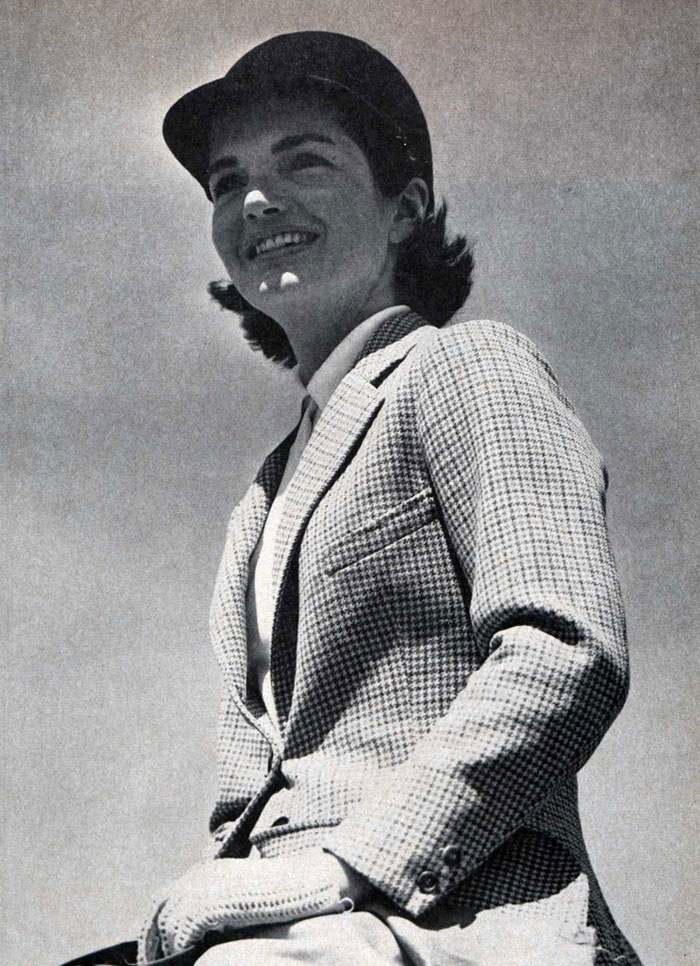
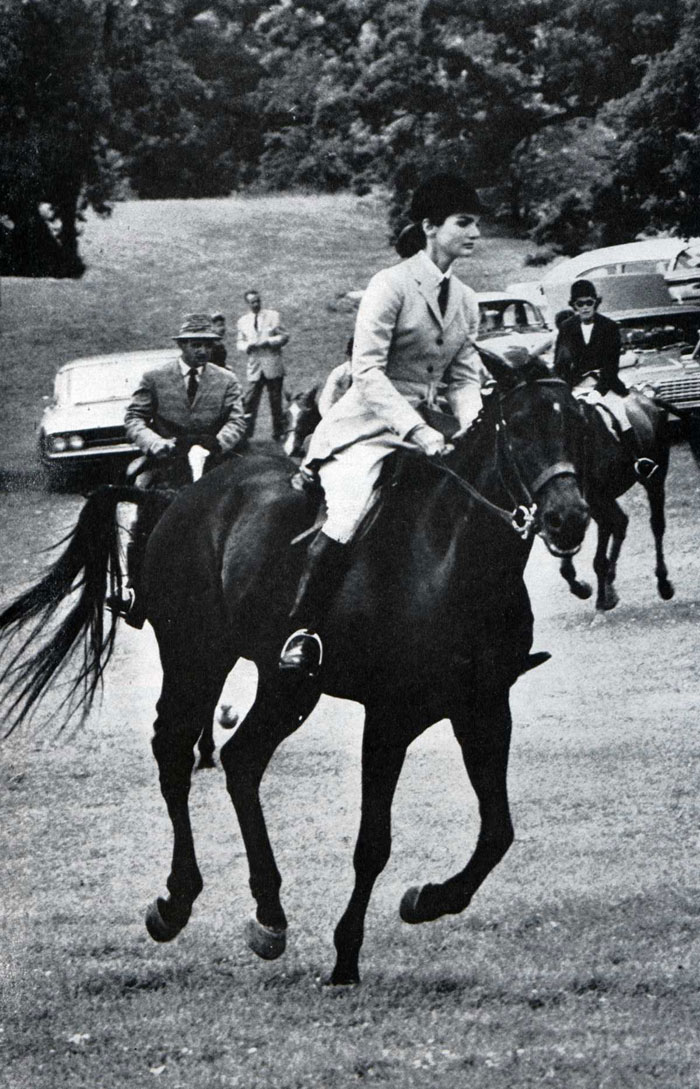
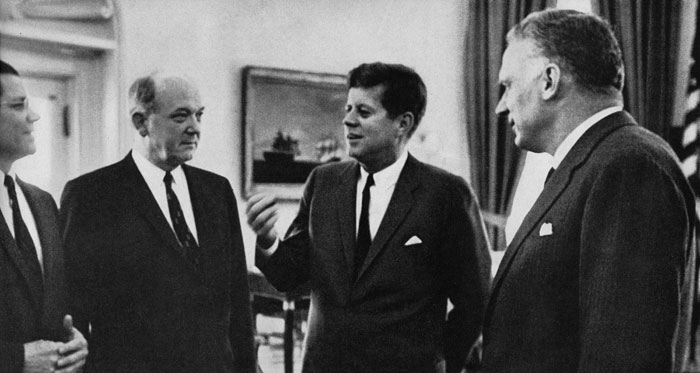
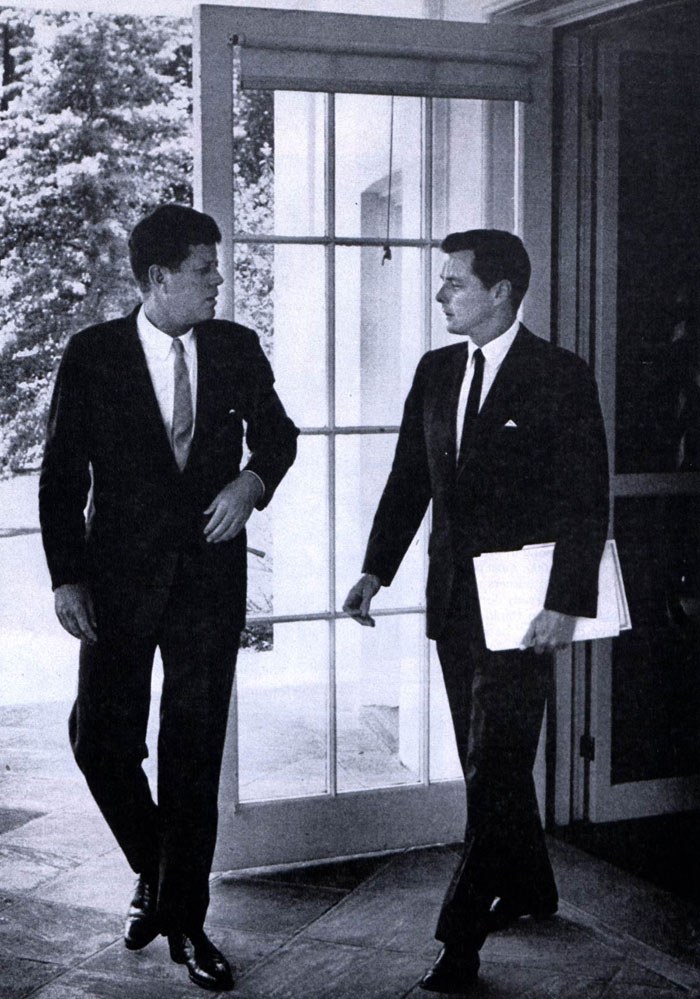
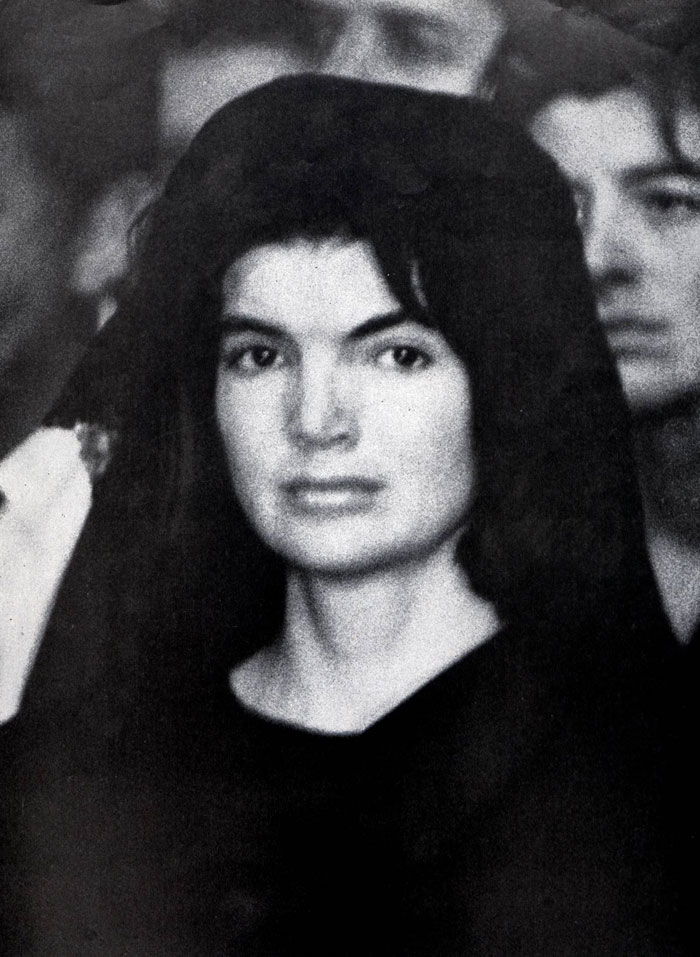
In portraits as well as informal photographs, Kennedy always seemed to convey a unique, patrician energy and an effortless mastery of any situation. His appeal was only compounded by the poise and charming ways of his wife, Jacqueline, another political asset. They made being the president and first lady look easy. They never appeared flustered or annoyed, but gave the impression that everything was turning out the way they expected. Which was why Kennedy’s death was so disheartening. It seemed such a pointless, sordid end for someone who, to many Americans, embodied grace and idealism.
Despite the long shadow he cast in American culture, Kennedy was in the spotlight only a very brief time. These Post photos of JFK , from his campaign for the presidency to his death, cover only three short years. Because we never saw him grow old and exhausted, he will remain as we see him in these photos, an icon of the 1960s, a decade of hope and youth.
Read our new series examining the life and times of John F. Kennedy here:
The Post Reports: Reconstructing Kennedy
For a look at some of the original tributes to Kennedy, taken from the Post’s commemorative issue, click here:
Looking Back at JFK


If You Go: Hudson River Valley
In “Gorgeous!” (September/October 2013), Edward Readicker-Henderson toured the Hudson River Valley in search of historic locales related to the Hudson River School of painters. We asked local experts for the skinny on the hottest hotels and B&Bs should you decide to make the same pilgrimage to the homesteads of Frederick Church and Thomas Cole. Click on the interactive map below for location, contact information, and links (click the name of the establishment), or see our listing at the bottom of the page. Make sure to book early, especially in the fall when the autumn colors bring tourism season to its peak.
View Hudson River School: If You Go in a full screen map
What to See:
Olana Historic Site
Home of Hudson River School painter Frederick Church, this 250-acre estate has stunning views of the Hudson River, historic Persian-inspired architecture, and beautiful gardens.
Thomas Cole House – Cedar Grove
Home to Church’s mentor, Thomas Cole, the house offers views of the Castkill Mountains, guided tours of Cole’s home and studio, gardens for strolling, and guided hikes to the spots where Cole would paint his masterpieces.
Hudson River Museum
View a handful of paintings from the Hudson River School of painters on display at this museum of 19th and 20th century American art. If you’re tired of paintings, check out the planetarium or take a walk along the riverfront.
For more to see and do in the Hudson River Valley, click here.
Where to Stay:
The Rhinecliff Hotel (Near Olana)
4 Grinnell Street
Rhinecliff, NY 12574
845-876-0590
This nine-room boutique country hotel is nestled into the bank along the Hudson River. Just two miles from the historic town of Rhinebeck, boutiques, antiquing, and country fairs provide simple, no-frills entertainment for a leisurely day.
Mount Merino Manor (Neighbors Olana)
4317 State Route 23
Hudson, NY 12534
518-828-5583
Built in the 1870s by a friend of Frederic Church, this B&B has seven rooms, many with sweeping views of the Hudson River and the Catskill Mountains. Numerous windows allow for ample natural night, great for viewing the fall foliage.
Mohonk Mountain House
1000 Mountain Rest Road
New Paltz, NY 12561
855-883-3798
Built in 1869, this stunning Victorian castle resort is often named one of the top places to stay by Fodor and Condé Nast magazine. (It also regularly tops the list of best resort spas in the country!) Owned and operated by the Smiley family since its inception, the resort can accommodate up to 600 guests on its sweeping 260 acres.
The Croff House
5 Willard Place
Hudson, NY 12534
518-828-1688
Winner of the 2013 TripAdvisor Certificate of Excellence, this five-guestroom B&B is located on a quiet cul-de-sac street in historic Hudson, New York. Boutique hotel-style amenities like high quality bed and bath linens and a freshly prepared, gourmet breakfast, meet classic B&B attention to experience with nightly turndown service and quaint porches and gardens for respite.
The Garrison
Route 9
Garrison, NY 10524
845-424-3604
On a mountain overlooking West Point and the Hudson, this four-room inn sits on 300 acres and boasts 360 degree views of the Hudson River and surrounding mountainous landscape. The Garrison is Readicker-Henderson’s choice for best river views, and it’s just around Storm King Mountain and Anthony’s Nose–a favorite spot of the Hudson River painters. Did we mention the 18-hole golf course and critically-acclaimed restaurant (Valley) lauded by the likes of Bon Appetit, Town & Country, Esquire, and The New York Times?
The Roundhouse at Beacon Falls
2 East Main Street
Beacon, NY 12508
845-765-8369
For contemporary elegance, don’t miss this 14-room boutique hotel in Beacon, NY, a town Readicker-Henderson calls the hottest art center in the country (the renowned Dia Museum of Modern Art is there). Ideally located near shops, galleries, and restaurants, the hotel also has two penthouse suites with views of Fishkill Creek and Beacon Falls from the attached private roof decks.
Mary and Paul McCartney’s Great Food
In our September/October 2013 issue, Mary McCartney shares recipes from her new cookbook FOOD: Vegetarian Home Cooking. She also describes the vegetarian kitchen of her childhood. There, Sir Paul and photographer chef Linda McCartney were simply “Dad” and “Mum” preparing and cooking meat-free meals for their family.
For more on the book and the McCartney family’s Meat Free Mondays project, see the videos below. And don’t miss the chance to see Sir Paul himself making music in the kitchen!
FOOD: Vegetarian Home Cooking
Mary McCartney talks about how she remembers eating healthy, vegetarian food with her parents, but doesn’t like vegetables on their own, so she shares tips for improving the flavor without piling on junk. Healthy food disguised deliciously? Count us in.
Meat Free Monday: A Message to the Schools from Paul McCartney
Already promoted in some parts of the world, Meat Free Mondays has a new and avid supporter in Sir Paul, who explains in this video how eating vegetarian isn’t just good for your health—it’s good for the environment, too.
Meat Free Monday Song by Paul McCartney
Because the best endorsements are musical ones–especially when the one doing the endorsing is an ex-Beatle!