North Country Girl: Chapter 53 — Hello Groucho, Good-bye James
For more about Gay Haubner’s life in the North Country, read the other chapters in her serialized memoir.
Even though I was working semi-steadily, I didn’t offer James money. It was never a relationship between equals; my piddling and erratic modeling checks for $90 or $225 would not have made a dent in his problems, only blasted out a hole in his pride.
I was stashing my get away money in case the worst happened, whatever that might be. Maybe James would rob a bank, or kill himself, or go back to selling Cadillacs in Des Plaines. When I moved in with James he was fun, generous, exciting. Now I was living with a hollow man and insanely hoping that the old James was not gone for good.
The market fell, and then continued falling. James turned into a zombie, a zombie who was now having trouble scraping up enough money to pay the rent. I came home one day to a pink “Late Payment” notice shoved under the door, which I placed on the coffee table; it went unmentioned and unmoved.
When James had cash in his pocket, it came from his backgammon winnings. The backgammon club was the only place James went at night; there were no more meals in nice restaurants or disco dancing at Faces. The last night I was ever there, I watched James distractedly pat at his pockets while asking his opponent if he would take his IOU. The winning player gently reminded James that the club did not allow IOUs, all bets were to be paid in cash or check. When James began lifting off his heavy gold chain, the man, whose only jewelry were onyx cufflinks, quickly demurred, murmuring, “Just this once.” After that I couldn’t bear to go back, and spent my evenings alone, pretending to be asleep when James got home, not wanting to know if he had won or lost.
At this point the stress unhinged me. I thought, “You know what will make things better, Gay? A dog,” though I had never had a dog in my life. I didn’t bother asking James, I just went to the closest animal shelter. It was filled with the sounds and smells of dogs, dogs who were locked away in row after row of cages, stacked to the ceiling, each dog looking more pitiable than the next. I was torn; they all looked so undesirable, all destined to be put down. A three-legged dog briefly stole my heart, before I saw the Dog Least Likely To Be Adopted: a hairless, toothless Yorkshire terrier with cataracts.
The pound guy told me that the Yorkie had been owned by an elderly woman who had barely been able to take care of herself and seemed to have completely forgotten that she had a pet; the dog, who would have been long in the tooth had they not fallen out from malnutrition, was recovering from a case of mange that left him mostly bald. I gave the pound guy $20 and he gave me the dog, who I named Groucho, along with a collar, leash and some canned dog food suitable for toothless dogs.
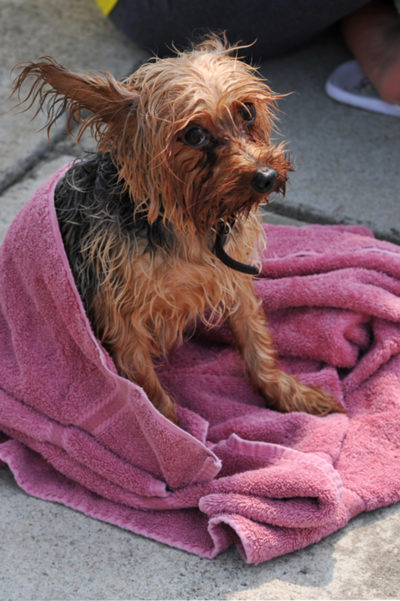
I guess Groucho had not been walked much; when I pulled on the leash, he lay down on his side so I had to drag him out of the animal shelter. I drug him a bit down the sidewalk, then realized I couldn’t do this all the way back home, so I picked him up and carried him. He weighed less than a loaf of bread.
James hated Groucho on sight, not that there was much to like. But Groucho may have been my guiding animal spirit sent to get me out of that awful situation. Pound guy had assured me that Groucho was housebroken; he did poop every time I took him out for a drag. But Groucho also pooped the second I left the apartment, varying where he left those little Tootsie Roll turds that James always managed to step in; if James made it safely out of the bedroom, there would be a tiny poop hiding in the white shag of the living room rug.
“This #$@%ing dog has to go,” James said. I agreed. I had to go with it.
My modeling career was puttering along well enough that I could rent a $140 a month studio, get the phone and electric hooked up, and furnish it from Goodwill.
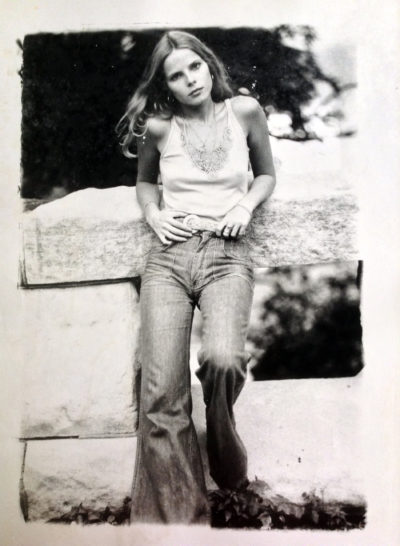
James barely noticed as I packed my clothes and books and Groucho; he was riveted to bottom part of the TV where the stock market ticker slid along with its tale of woe. There was no steamy last kiss, no tears. I pecked his cadaverous, stubbly cheek and said “Goodbye.” “See you around,” said James. But he didn’t. We lived a ten-minute walk apart from each other, yet I never saw him again.
Groucho and I moved into our tiny studio on quiet, leafy Burton Place. Every day when I came home, Groucho would be sitting on my second-hand bed, waiting for me, his tongue lolling out of his toothless jaws. He never pooped in that apartment once.
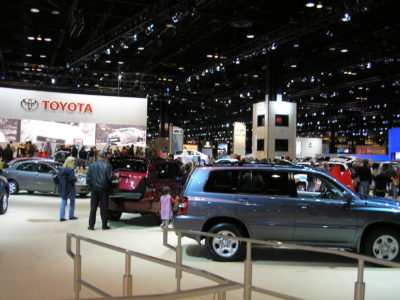
I was landing enough modeling jobs that I had stopped having nightmares about being locked in a coat check. Almost every other month I had a solid week of work at the Chicago Convention Center, handing out brochures at the Furniture Show, running a towel folding machine at the Hotel and Restaurant Trade Show, and at the Auto Show, luring prospective car buyers in range of voracious car salesmen.
Ford Motor Company loved me; I had that beamy, fresh, All-American look, the look of a girl who belonged in the passenger seat of a Mustang. When they hired me I was sure they would put me in a pretty gown and stand me up on a revolving platform next to their newest model, and all I would have to do is grin and wave.
The man from Ford looked at the bevy of models assembled in the basement of the Convention Center, pointed at me, and said “You. You’re gonna be the magician’s assistant.”
He did not see an innate talent for sleight-of-hand; he saw a girl small enough to disappear inside a magic box.
Every car company at the Auto Show had some kind of come-on. Ford had a fifteen-minute magic show, every hour on the hour that brought families into the exhibit and kept the kids entertained while the salesmen swooped down on the parents. I didn’t even get a cute, sparkly magician’s assistant outfit; I wore a plain jane blue dress with “Ford” stitched in white. I stood next to the magician on the postage-stamp-sized stage and handed him scarves and hoops and held his top hat. For the final trick, I stepped into a black box, which looked like an upright coffin. The magician closed the door on me and intoned a few magic words while I scrunched down as fast as possible into the bottom of the box, pulling three mirrored panels away from the back and sides so they encased me in a tiny triangular space. The magician opened the door for a split second, the mirrors reflected the interior’s matte black paint, and poof! I had vanished. Cue applause. I sprung up, the coffin door opened, and I stepped out to take my own quick bow before I headed back out to the convention floor to pass out “Free Show: The Magic of Ford!” flyers.
The next year Ford had a different gimmick: Models, dressed in those same plain jane blue dresses, buttonholed all the grown-ups who walked into the Ford exhibit and asked “Would you like to win $100?”
“What’s the catch?” every suspicious attendee wanted to know.
“No catch at all! Here’s a raffle ticket. Find someone with the same number and you’ll both win $100!”
For the ten days of the Chicago Auto Show the Ford exhibit was complete pandemonium, as people dashed about comparing raffle tickets. Gangs of kids picked up tickets that had been tossed on the floor or begged grown-ups for theirs, and ran riot, yelling numbers at each other and anyone holding a small piece of paper. It was supposed to be for adults only and then only one raffle ticket per person, but it didn’t matter, you could take a thousand tickets and not win.
The game was as rigged as any carny con, and I was the shill, dressed in civvies almost as homely as those dresses by Ford. It was designed to get foot-dragging buyers on to a car lot to close the deal. When one of the salesmen had a hot prospect for a Family Truckster, he sent someone out to find me. My job was to approach the potential car buyers, ask them to read the number on their raffle ticket and then squeal “Wow! That’s my number too!” I immediately handed my ticket to the salesman; the prospects never realized there wasn’t really a match; they were too excited about winning. But instead of a crisp $100 bill, what the suckers got was a certificate in that amount. The $100 was waiting for them at their local Ford dealership. Before they could complain, I would gush, “Oh thank you so much! I can’t wait to go to Skokie Ford and collect my $100!” Then I dashed off and hid in the crowd until the next set of chumps appeared.
Trade shows kept me in Campbell’s soup, Groucho in kibble, and paid the rent, but were anything but glamorous. I spent eight-hour days standing on a concrete floor, next to adding machines or surgical supplies, trying to ignore my throbbing feet, looking as cute and approachable as possible, which was ninety percent of the job. The other ten percent was passing out samples or pins or pens or brochures, and fending off amorous salesmen and conventioneers, “C’mon honey, it’s just dinner. Put a little meat on those bones!” I turned them down with a nice girl smile, and gently removed their hands squeezing for either meat or bones on my butt.
As much as I missed my brief former life of champagne cocktails and Dover sole, of being a regular in places where your drink arrives immediately and there’s a nice woman to hand you a towel in the ladies’, I had no desire to eat a chopped up steak at Benihana’s with the biggest manufacturer of stainless steel cutlery in America. I went home to soak my poor feet, heat up a can of tomato soup, and take Groucho out for a drag.
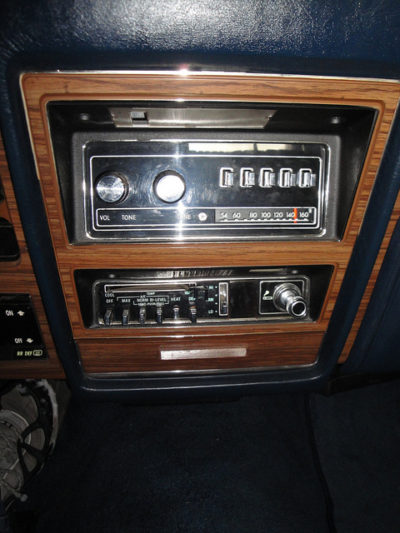
In June, the gigantic Consumer Electronics Show came to Chicago, taking over all three floors of the convention center and every trade show model in town. Sanyo hired me to pose next to a wall of car radios and lure buyers from Radio Hut and Pep Boys into the showroom. The guy in charge of the models taught us a few words of Japanese, none of which were useful in warding off the Japanese executives, who firmly believed that all of us models were hookers paid to entertain them, at the convention during the day and at their hotel at night.
On my first day, I was rescued from one small, insistent Japanese man by an American in a well-cut suit, who took the guy aside and spoke to him in Japanese. The Japanese man glared and shook his finger at me, and I prepared to be fired on the spot. But he walked away and my rescuer came over to talk to me.
“Sorry,” he said. “These guys have already been set up with girls, but Mr. Moto really likes you. I can’t promise he won’t be back. I’m Gerry,” and he stuck out a small, delicate hand. “When’s your break? Can I buy you a sandwich?”
Gerry was just a few inches taller than me and as adorable as a cocker spaniel; he looked like a human Rowlf the Dog from the Muppets. He had soft curly brown hair that he wore just long enough to be hip and a funny little matching mustache that I knew would tickle. His eyes were a startling sky blue, innocent, almost transparent. I wanted to take Gerry home, put him on the couch next to Groucho and snuggle and pet the two of them.
Gerry wasn’t a salesman, he was an engineer who had come along on this Chicago junket in case a buyer had a difficult technical question about a car radio, which never happened, so Gerry just hung around the Sanyo exhibit, looking at me. I looked back and we both smiled.
A sandwich in the basement of the Convention Center turned into evenings out in those wonderfully expensive Chicago restaurants I had been missing. Sanyo gave Gerry a generous expense account, which he spent taking me out to dinner, after making sure that all the Japanese execs were happily set up with their hookers.
“Do not date guys you meet at the conventions,’’ my agent Ann had warned me. “It’s unprofessional and when it ends, poof, you’re out a client.” But Gerry was young and cute and I was tiring of Campbell’s tomato soup. I insisted that he not talk to me during the day, and after dinner I made him come to my apartment. I did not want to run into my Japanese suitor at the Hilton or have to do the El ride of shame at dawn.
Gerry was twenty-eight, and from California, which I thought automatically made you cool. He was funny enough and smart enough and smitten with me, which I always find attractive. He was a born tinkerer, one of those kids who reads Popular Mechanics cover to cover and takes apart every electrical appliance in the house. After being hired by Sanyo, he decided on his own to learn Japanese. Gerry taught me several interesting Japanese curses then warned me never to use them within earshot of the Sanyo executives. (I wish I could remember how to say, “You are a man who has to buy a sheep to service your wife” in Japanese.) The best part was that after five days, Gerry went back to California, leaving Groucho and me with a nice assortment of doggie bags from fancy restaurants.
I was pleased but not surprised when Gerry called to invite me to California for the Fourth of July. Summer is Chicago’s second worst season, when the sodden heat rolls off Lake Michigan accompanied by the smell of alewives, their fishy life cycle complete, dying and rotting by the millions on the shore. My sweet little studio was stifling; I would have gone anywhere that wasn’t a hundred degrees. The one girlfriend I had made, a model I met in an “Acting for Commercials” class (we bonded when we found out that the lech of a teacher had offered both of us free private tutoring, sessions that were very hands on) had married and moved to the suburbs. I didn’t want to spend the Fourth drinking cheap beer in Frank the photographer’s loft, which was as un-air-conditioned in the summer as it was unheated in the winter. I was hot and sticky and lonely.
I wasn’t in love. I wasn’t bedazzled as I had been with James. But I liked Gerry: he was cute, he made me laugh, and was okay in bed. So I said yes and Gerry sent me a ticket. I dozed on the plane out to California, dreaming of devouring hot dogs and hamburgers on the beach, gazing out at my old friend, the Pacific Ocean, and cuddling on a blanket with Gerry as a million fireworks exploded above our heads: a perfect Fourth of July.
100 Years Ago: A President Silences His Critics
Earlier this month, President Trump, angered over critical reporting by journalists, pondered via Twitter whether he should revoke their press credentials. This bitter feud between press and president has raised an old question: Does the president have the right to silence people who criticize him or his policies?
Congress debated that question 100 years ago and believed so strongly in such executive privilege that it passed the Espionage and Sedition Acts to stifle dissent in America.
President Woodrow Wilson expected criticism after he asked Congress to declare war on Germany, sending America into World War I. He had, after all, been elected on his record of keeping the U.S. out of the war. Now he’d committed the country to that contest, and he knew he’d need strong public support for the war effort. He would tolerate no criticism that might discourage military enlistment, the sale of war bonds, or cooperation with rationing programs. He needed loyal Americans — loyal, that is, to his plans.
But there were strong anti-war feelings among pacifists, socialists, and union organizers, as well as immigrants. At the beginning of the 20th century, there were eight million first- and second-generation Germans living in the U.S. Many retained a strong attachment to the land of their birth. Wilson believed they might dampen the war effort with pro-German sentiments, and he feared German agents hid among them, embedded at all levels of American society. German saboteurs had already destroyed a major munitions depot in New York Harbor.
Wilson proposed a bill to silence criticism of the war. The result was the Espionage Act, which became law on June 15, 1917, and prohibited anyone from aiding America’s enemies in wartime or interfering with the armed forces and its recruitment efforts. It also made it illegal to make false statements that disrupted military operations, promoted the enemy’s success, or led to insubordination or disloyalty.
But the Espionage Act didn’t end the dissent. A Montana rancher publicly called President Wilson “a Wall Street tool” and said he’d leave the country rather than go to war. He was tried under the Espionage Act but acquitted on appeal because he didn’t directly affect war efforts. In response, the U.S. attorney general called for a law to broaden the Act’s powers.
So Congress extended government control to affect speech and writing. The Sedition Act of 1918 made it a crime to use “disloyal, profane, scurrilous, or abusive language” about America’s government, its flag, or its armed forces. Making any statement that inspired contempt in others for the government or its institutions was also outlawed.
Theodore Roosevelt protested the law, saying it was “a proposal to make Americans subjects instead of citizens.”
But some legislators thought it didn’t go far enough to root out dissident thinking. A New Mexico congressman was disappointed the Act didn’t provide the death penalty. And an unsigned editorial in The Washington Post stated, “Enemy propaganda must be stopped, even if a few lynchings may occur.”
The Saturday Evening Post editors supported the Act. The government didn’t need a sedition law to protect itself, they said, but it had to show patriotic Americans it wouldn’t allow anyone to criticize their loyalty or the national cause. This explanation probably referred to the mobs of outraged citizens who had attacked and even lynched people suspected of disloyalty.
It was in the Post’s best interest to support the law at the time. Had the editors been critical instead, the Sedition Act would have empowered the postmaster general to block all delivery of the Post, as he had with other publications.
Two thousand cases were tried under the Sedition Act, half of which resulted in conviction. It was invoked most often in Western states, where it was used frequently to prosecute members of what was considered a radical workers’ group, the Industrial Workers of the World (IWW).
The Sedition Act was repealed in 1920 and the offenders were pardoned, though well after the war had ended. The U.S. attorney responsible for the pardons praised the government for detaining a number of dissidents in prison after the war “to set an example of firmness that will go down in history as a warning to those who in the future might be inclined to harbinger and harass the government.”
As much as the president would enjoy being able to legally silence his detractors, their public criticism is still protected by law.
Featured image: Shutterstock
Con Watch: Stealing the Identities of Children
Steve Weisman is a lawyer, college professor, author, and one of the country’s leading experts in cybersecurity, identity theft, and scams. See Steve’s other Con Watch articles.
According to a recent Harris Poll, 48% of American adults believe that they will become identity theft victims in the next year. As startling as this figure is, a study by the Carnegie Mellon CyLab concluded that children are 51 times more likely to become victims of identity theft than adults, and yet many people are unaware of what a serious problem child identity theft poses.
In the last few years, children have become prime targets of identity thieves. A recently released study by Javelin Strategy & Research indicates that a million American children became victims of identity theft last year at a cost of $2.6 billion in total losses to the families. If a thief is able to get identifying information on a child, such as the child’s Social Security number, he can obtain credit in the child’s name. The identity thief never pays back the money accessed through the child’s credit, and the child is burdened with a bad credit report that can have numerous harmful effects: the victim may be turned down when he or she applies for credit, applies for a job, applies for a scholarship, or seeks to rent an apartment. Often the identity theft is not discovered until years after it first happens, which makes it more difficult to remedy.
How to Prevent Child Identity Theft
- Freeze your child’s credit. A credit freeze is a tremendous tool for fighting identity theft because it prevents an identity thief from establishing credit in your name. Unfortunately, the credit reporting agencies only allow credit freezes for minors in the 29 states that have laws permitting parents to put credit freezes on the accounts of their children.
If you live in one of the states that have a child identity theft law and have minor children, you should contact each of the three major credit reporting agencies — Equifax, Experian, and TransUnion — in order to freeze your child’s credit. In order to take advantage of these laws you need to set up a credit report for your child and immediately freeze the account. And while you are at it, you should also freeze your own credit as your best precaution against identity theft.
- Guard your child’s Social Security number. Parents should, as much as possible, try to limit the places that have their child’s Social Security number. Your child’s information is only as secure as the places with the weakest security. Your child’s pediatrician or dentist may request your child’s Social Security number, but they have no legal need for it. Refrain from providing it.
It is an unfortunate fact that must child identity theft is traced back to family members or others who have access to the home. Keep your child’s personal information including his or her Social Security card safe from prying eyes.
- Become familiar with FERPA. The Family Educational Rights Privacy Act (FERPA) helps you protect the privacy of your child’s school records and enables you to opt out of information sharing by the school with third parties. Many school forms ask for personal information about your child. This information, if not properly secured and managed, can result in child identity theft. Parents should ask their child’s school about who has access to the personal information of its students and what security precautions are being taken by the school to protect that information.
Schools are required to provide parents annually with a FERPA notice informing them of their privacy rights in regard to their child’s educational records. Parents should carefully read this notice and be aware of their rights to consent to the disclosure of records and their ability to correct errors in the school records.
Many schools have student directories that may contain your child’s name, address, date of birth, telephone number, email address, and photograph. FERPA requires that parents must be informed of the school’s policy regarding its student directory and inform the parents of their right to opt out of the release of that information to any third parties.
- Check your child’s credit records. Identity Force, Lifelock and other companies provide child identity theft protection services. AllClear ID provides a free service called ChildScan that not only searches credit records tied to your child’s Social Security number, but also checks employment records, criminal records, and medical records to recognize at an early stage if your child has become a victim of identity theft.
What to Do If You Find Evidence of Child Identity Theft
If, despite your best efforts, your child has become a victim of identity theft (which most commonly comes to you attention when your child receives notices of outstanding bills), you should do the following:
- File a police report.
- Contact each of the three major credit reporting bureaus — Equifax, Experian and TransUnion — and ask them to remove all false information and inquiries fraudulently associated with your child’s name or Social Security number.
- Send each of the three agencies a copy of the Uniform Minor’s Status Declaration [PDF] that explains that your child is a minor.
- If you haven’t done so already, put a credit freeze on your child’s accounts.
- Contact any businesses where the child’s information was misused, explain that your child was a victim of identity theft, and ask them to correct their records.
The Art of the Post: The One Thing Alice Provensen Couldn’t Share With Her Husband
Read all of art critic David Apatoff’s columns here.
The great illustrator Alice Provensen died last month at the age of 99. She was famous for the many popular books for children that she wrote and drew with her husband, Martin.

Alice and Martin met during World War II. They fell in love and formed an award-winning team that collaborated closely for the next 40 years. Generations of children have now grown up on their books.
They started by illustrating books written by other authors, such as The Color Kittens and The Fuzzy Duckling, classics from the Little Golden Book series.

Soon the Provensens were writing and illustrating their own books. Some were based on classic stories such as Aesop’s Fables, Mother Goose, Bible tales, and the plays of Shakespeare. They won the Caldecott Medal in 1983 for their book, The Glorious Flight, about the first flight over the English Channel. Their beautifully designed books, The Iliad and The Odyssey and The Golden Treasury of Myths and Legends stand out as classics of children’s book illustration.


As children’s book historian Leonard S. Marcus told The Washington Post when Alice passed away, “Some of their books sold millions of copies. There was a kind of lightness and open space in their work. You could project your own imagination into their world.” They found a secret for success that few children’s book illustrators and authors could equal.

It’s hard to imagine how a creative team could have been any closer than the Provensens. The two came from almost identical backgrounds. They were both born in Chicago and both moved to California when they were twelve. They both attended the University of California, and both received scholarships to train at the Art Institute of Chicago. They both went to work for Hollywood studios (Martin at Disney and Alice at Walter Lantz). They were married in 1944, then moved to Washington where they both worked supporting the war effort.
In 1950 the Provensens purchased an abandoned farm in upstate New York, far from city life. They moved two drawing tables into the barn and started working together, back to back. Their excellent book, A Year at Maple Hill Farm, describes their sweet life on the farm.

Their styles blended together so perfectly that for nearly 40 years no one could distinguish who did the words and who did the pictures. Ms. Provensen recalled for the Orange County Register in 2009, “Sometimes we’d work on the same page. I’d see something, or tell him how to fix something.” In response to questions from Publishers Weekly about the secret of their working methods, Alice simply said, “we were a true collaboration. Martin and I really were one artist.” No one ever saw their works in process.
Living and working together in one room there was very little space for privacy or egos. The two seemed to share everything, completing each other’s thoughts and brush strokes.
Yet, there was one small part of their work that the Provensens chose to keep private from each other. When they were just beginning to come up with an idea, they would sometimes tie a string across the room and hang a sheet or blanket between their two tables. As Alice recalled in her interview with Publishers Weekly, “Once in a while one of us may have had an idea we were just developing that we didn’t want the other person to see just yet…. We would string a curtain up between our desks.”
Even though this barrier was purely symbolic — a flimsy drape that could easily be breached at any time — it still had psychological importance.
In those first sparks of the creative process, when an artist tries to coax an idea into existence, the idea can be so fragile that other words or voices — or even a second set of eyes — might scare it off. Explaining it prematurely to your partner using an existing vocabulary could rob the idea of its creative potential.
Married people can share all kinds of things and never blush once. But the nakedness of a new idea — that can be a little too personal, and sometimes needs to be kept concealed.
Martin passed away in 1987. Now Alice and Martin are back together on the same side of the curtain.

From Indiana, With Love
Robert Indiana has passed away in his Maine island home at 89 years old.
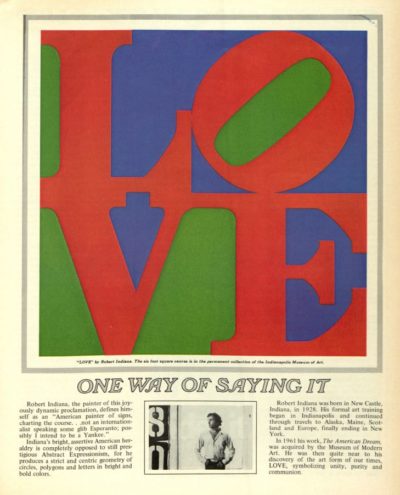
The Hoosier pop artist achieved global recognition for his “Love” series of the 1960s. The iconic image of the word spelled out with a tilted “O” was originally commissioned for a Christmas card by the Museum of Modern Art in 1965, but the design was replicated in prints, sculptures, tapestries, and even on the cover of this magazine last year.
Indiana was opposed to the abstract expressionist movement, according to a write-up in the Post in 1971. His work often displayed the bold colors of 1960s pop culture with stenciled words and American iconography along with themes of consumption. Prominent stars, stripes, and overlapping figures in his artwork give the impression that he is rearranging the American flag, or perhaps creating road signs in an alternate Midwestern universe.
The artist became reclusive in his later years. His “Love” had been replicated and reimagined endlessly over the years (as “Vote” in 1976 and as “Hope” in 2008), and his reputation among New York art circles diminished as a result. In 2013, however, the Whitney Museum of American Art held a retrospective show of Indiana’s lesser-known works, drawing attention to his boldly subversive place in the 1960s art world.
“Love” remains a “symbol of unity, purity, and communion” in its many incarnations, and Indiana’s legacy can be seen from Wichita to Jerusalem.
Your Weekly Checkup: Cybersecurity of Medical Devices
“Your Weekly Checkup” is our online column by Dr. Douglas Zipes, an internationally acclaimed cardiologist, professor, author, inventor, and authority on pacing and electrophysiology. Dr. Zipes is also a contributor to The Saturday Evening Post print magazine. Subscribe to receive thoughtful articles, new fiction, health and wellness advice, and gems from our archive.
Order Dr. Zipes’ new book, Damn the Naysayers: A Doctor’s Memoir.
*****
“Daniel, it’s me, John,” I said over the phone.
“Oof.” I heard him grunt in the background.
“What’s the matter?” I asked.
“This damn defibrillator. It’s shocked me five times in the last hour! Just keeps going off. I barely catch my breath when the next shock hits. I’m going crazy with it, Daniel. You’ve got to make it stop.”
“Call 911 and get to an emergency room. They’ll know what to do.” I heard a crash. “John, did you hear me?”
No answer. “John? John!”
A woman picked up the phone. “I’m John’s wife, Doctor. He just fell to the floor. He’s not moving! My God, I think he’s dead!”
*****
This excerpt from my novel, Ripples in Opperman’s Pond (iUniverse 2013), depicts a man (John) with an implanted electronic defibrillator that has been hacked to deliver repeated shocks to his heart that eventually kill him.
Is this fiction that tells the truth? Can this happen in real life? Could malicious hackers inflict damage or disruption of normal implanted device operation by taking advantage of wireless software communication between health care providers and patients’ devices to jeopardize patients’ health or even kill them?
Along with cyber-attacks of companies and countries, cybersecurity of implanted medical devices such as drug infusion pumps, electronic monitors, pacemakers, and defibrillators has been under recent scrutiny. A report by Muddy Waters Research claimed that electronic medical devices manufactured by St. Jude Medical (now Abbott, St. Paul, MN) were at high risk for device hacking that could lead to rapid pacing and battery depletion. However, researchers attempting to reproduce the Muddy Waters’ claim failed to generate any clinical harm or affect essential device function.
Abbott has provided information on a firmware fix with enhanced cybersecurity for those wishing to pursue it. However, the reality is that no clinical reports of such hacking have been published, and most experts consider the theoretical risk of a cybersecurity breach of an individual patient’s device to be less than the actual risk of the firmware update. While most patients, after considering risks and benefits, reacted conservatively to the news of a potential device risk and decided not to undergo the fix, several thousand patients offered the firmware upgrade opted for it, and underwent reprogramming, generally without problems.
It is important to stress that the cybersecurity risks to health care are not restricted to Abbott, or to implanted medical devices. The risks exist for any healthcare system connected to the Internet, more so for large facilities such as hospitals than for individual patients. Hospitals are prime targets, especially since personal health information can be worth millions of dollars. A cyberattack can disrupt an entire hospital system, compromise medical records and put patients at risk. Many pieces of medical equipment have computing and other needs requiring Internet connectivity that can make them vulnerable to attack. Constant security surveillance is critical. As a case-in-point, recall the 2017 global cyberattack with the WannaCry virus that crippled the UK’s National Health Service and FedEX, and infected more than 300,000 computers in 150 countries. It was dubbed “the biggest ransomware outbreak in history.”
Hacking of individual medical devices may just be a thing of novels. So, those of you with pumps, pacemakers and defibrillators can relax — at least for now. But in the future…?
Why Americans Love Diners
Driving north on Route 95 through Connecticut, I noticed a billboard advertising a local diner. Its immense letters spelled out: “Vegan, Vegetarian, Gluten-Free, and Diner Classics.” I knew a seismic shift had occurred when blue plate specials — hands-down favorites for nearly a century, such as meat loaf, hot turkey sandwiches, and spaghetti and meatballs — were last on a list of diner offerings.
Over their long history, diners have been a subtle part of our built environment and also our inner landscapes. They are as familiar as the language we speak and the comfort food we eat. Everyone loves diners.
There really is no other building like a classic diner: long and low; sheathed in glass, gleaming stainless steel, and colorful porcelain enamel; often ringed in neon and punctuated by a flashy, sometimes flashing, sign, going and glowing at all hours, day and night.
The first diners showed up 145 years ago when Walter Scott served affordable fast food out of his horse-drawn wagon in Providence, Rhode Island. Patrons stood on the street to eat their lunches in the same manner as the customers of today’s ubiquitous food trucks. These eateries were constructed by wagon builders; gradually, a specialized industry developed to mass-produce diners.
These classic diners were factory-built from the 1920s onward, and thus conformed to regular dimensions and proportions in order to be moved — by rail, barge, and truck — from where they were manufactured to where they would operate. As a result, diners have a generic similarity to one another. But, because they are mostly individually owned and made by different manufacturers, they have distinct personalities based upon the people on both sides of the counter.
The diner interior is all business, where form follows function — “as utilitarian as a machinist’s bench.” The customer can see the short-order cook reach into the icebox, work the griddle, and deliver the food in an astonishingly short amount of time. The back bar of the diner, beneath the glass-fronted, changeable-letter menu boards, is a tour de force of stainless steel or colorful tile, with a line of work stations filled with grills, steam tables, sandwich boards, coffee urns, multi-mixers, drink dispensers, and display cases.
The “counter culture” inside diners is a reflection of their wide appeal. Commentators have long fixated on this, describing how this spirit manifests itself.
A 1932 article in World’s Work depicted the all-inclusive range of patrons: “The lunch wagon is the most democratic, and therefore the most American of all eating places. Actors, milkmen, chauffeurs, debutantes, nymphes du pave, young men-about-town, teamsters, students, streetcar motormen, messenger boys, policemen, white wings, businessmen — all these and more rub elbows at its counter.”
Five years later, there was a one-page story in The Literary Digest:
“If you joined diner devotees at a quick ‘cup o’ java,’ you’d find, if it were daytime, that you were rubbing shoulders mostly with horny-handed men in denim. If it were before dawn, you might be rubbing shoulders with men in tails, homeward bound from a night of revelry.” (I love the fact that in 1937 there were people described as “diner devotees.”)
Just as important as the diners’ look and feel is their chow: Always affordable, it has continuously adapted to fit the public’s desires. The norm is home-style cooking, breakfast anytime, and food that is real, local, and sustainable.
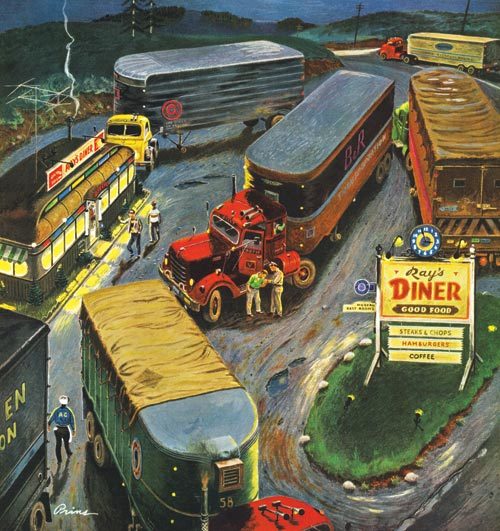
Ben Kimberly Prins
October 10, 1953
© SEPS
C. Oakley Ells in 1932 supplied his diner in Lackawanna County, Pennsylvania, with fresh eggs, milk, and vegetables from his own Ells’ Sunnyside Farms, a stone’s throw down the road. In 2018, Champ’s Diner, in Woonsocket, Rhode Island, identifies on their menu the name of the local farm that provides their eggs.
In San Diego, California, Ray and Herb Boggs operated the Airway Diner. Their July 1942 menu included an avocado cocktail appetizer (35 cents), a natural since San Diego County was the source of most avocados in the country. You wouldn’t find that on a diner on the East Coast at that time. The seafood of the day was grilled Catalina swordfish (85 cents), caught off nearby Santa Catalina Island.
Today the Silver Diner is a locally owned and operated chain of 14 units that set out in 1989 to create a diner for the 21st century. They have continually tweaked their offerings to serve the food that people want to eat. In 2006, Silver Diner was the first chain in the Washington, D.C., area to completely remove trans fats from their menus. Now they feature local farms that supply all-natural, antibiotic- and hormone-free meats and provide non-GMO produce in season.
I’ve studied the world of diners for more than 45 years, beginning when these classic stainless-steel eateries were believed to be a dying breed. But, to paraphrase the supposed Mark Twain quote: “The report of their demise is premature.”
Every year there are articles and TV news magazine stories that proclaim either the death or the rebirth of the diner. I admit I once believed that diners might go extinct. One of my earliest articles was “Diners Are Declining, but Great Ones Remain,” published in The Boston Globe in 1974. Truth be told, more than half of the diners I profiled in that story have been demolished.
But the other half have survived. What accounts for their longevity?
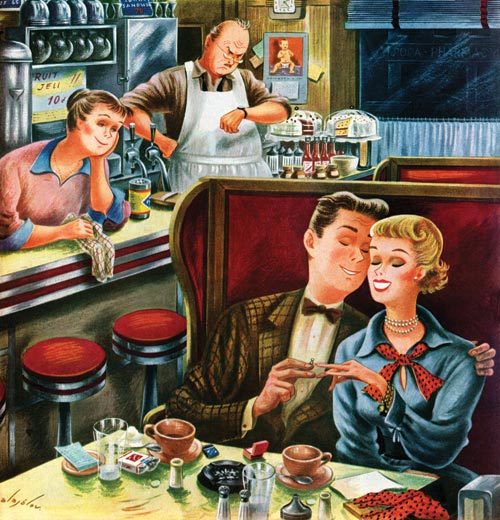
Constantin Alajálov
July 15, 1950
© SEPS
In 1975, the National Trust for Historic Preservation included a session on diners and gas stations in its yearly meeting. The Christian Science Monitor noted the tension in the discussion with “Roadside Architecture: Is It Treasure or Trash?”
By the 1980s, the Henry Ford Museum in Dearborn, Michigan, was restoring Lamy’s Diner, a 1946 streamliner built by the Worcester Lunch Car Company. This became the first of many diners to be installed as icons of our culture in museums. Also notable, vintage diners were resurrected, and new old-style diners — like the Silver Diner — began a comeback.
This was largely fueled by baby boomers seeking the comfort and nostalgia of their youth. The diner was put on a pedestal as an exemplar of what’s good about America: mom-and-pop businesses; fresh, home-style food at a good value; and an individual experience that contrasted with the cookie-cutter fast food chains.
Now, the diner is clearly safe and here to stay. With great regularity, my Facebook feed will advise me of “The 21 Best Diners in America,” according to the Huffington Post; “The Top 12 New England Diners,” says Boston magazine; “13 Picture-Perfect L.A. Diners You’ve Never Heard Of,” proclaims EaterLA.com (and of which, I might add, none are actual diners); and “These Are the Cutest Diners in Every State,” in the eyes of Country Living.
Social media keeps diners in the headlines, in our stream of consciousness, and constantly reminds us why we love these places. There’s a magical something in that word that conjures up a place where you feel at home, can have a great meal for a good price, and walk away satisfied and with a smile on your face.
The diner of the future will continue to change subtly and dramatically simultaneously: an American trait that makes it “feel the same” while ever accommodating the evolving tastes of its customers.
Richard J.S. Gutman is a leading expert on the history and architecture of the diner and has written four books on the subject. This essay is part of What It Means to Be American, a project of the Smithsonian’s National Museum of American History and Arizona State University, produced by Zócalo Public Square.
This article is featured in the May/June 2018 issue of The Saturday Evening Post. Subscribe to the magazine for more art, inspiring stories, fiction, humor, and features from our archives.
Healthy Weight, Healthy Mind: The Problem with Filter Focus
We are pleased to bring you this regular column by Dr. David Creel, a licensed psychologist, certified clinical exercise physiologist and registered dietitian. He is also credentialed as a certified diabetes educator and the author of A Size That Fits: Lose Weight and Keep it off, One Thought at a Time (NorLightsPress, 2017).
Do you have a weight loss question for Dr. Creel? Email him at [email protected]. He may answer your question in a future column.
A friend of mine used to say, “Filter-focus!” when she saw a good-looking guy who grabbed her attention. She would fan herself as she repeated the phrase filter-focus, filter-focus. Her objective was to filter out thoughts about him so she could focus on what she was doing.
At any given moment we’re bombarded by information from at least four of our five senses. As children we’re easily distracted and don’t always filter and focus well. For instance, kids may dart into traffic when they see something interesting. But as we learn and our brains mature, we become better at filtering out a tremendous amount of data by prioritizing. This mostly happens “behind the scenes” without our awareness. This filtering activity often affects our attitudes and behavior.
Depending on our personality and experiences, we can learn to filter out information — or we can prioritize it in ways that cause unnecessary and harmful stress.
Some people filter out accomplishments and focus only on their deficiencies, especially those related to weight. An example would be ignoring the two pounds you lost, while focusing on a package of cookies you ate this morning. This viewpoint leads down a road of frustration and hopelessness, paved with the perceived tragedy of many failures. Don’t get me wrong, we do need to understand and evaluate our mishaps, but only if we also enjoy our positive attributes and success.
Filter-focus fallacy can expand to include our overall moods and life perspective. Choosing to mainly focus on the positive aspects of life changes your outlook on every situation, the people you encounter, and yourself. If you’re accustomed to negativity, the idea of changing to a positive focus may seem “soft” and unrealistic. “The world is a hard place,” these people say. “Better get used to it.”
Yes, bad things happen all around us — but what about the good stuff? If you let your mind process life according to the nightly news, you won’t feel uplifted or positive toward your own life and the people around you. School shootings, murder, scandals, politicians verbally attacking each other, traffic congestion, and impending bad weather, slightly tempered with a sprinkle of a feel-good story or humor — that’s the news, every day. If we want to experience joy, we should avoid seeing our lives from a nightly-news perspective. Furthermore, if we want to stay committed to healthy living, we cannot filter out our achievements and focus only on failures.
When I review a food journal with someone who has filter-focus problems, the conversation often goes something like this:
“Thanks for letting me take a look at this. You did a nice job of consistently tracking your food. Tell me a little bit about what went well and what you’re still struggling with.”
“Well, I’m still snacking too much at night and I know I need to eat breakfast every day, but I don’t. This week has been terrible for exercise because I’ve been working more and I’m just so tired when I get home.”
“Ok, but you did eat breakfast four times this week, which is an improvement, and I notice you’re taking your lunch a bit more instead of going out to eat.”
“Yeah, but I’m still eating out too much. I want to get out of the office and when my co-workers suggest it, I go. I just don’t seem to have much willpower when it comes to lunch, especially on the days when I skip breakfast.”
“I understand you still want to make improvements, but over the past several weeks you’ve been moving in that direction. What do you think you did well that led to you losing weight?”
“Well I’m just kicking myself right now because I wanted to lose five pounds in two weeks and I only lost three. I need to dedicate myself much more to exercise and sticking closer to the plan.”
Despite promptings, this patient could not give herself credit for her accomplishments. If you’ve ever been involved with someone who filtered out your accomplishments and focused on your imperfections, you understand the consequences. No matter what you do it isn’t good enough, and if you succeed at something they remind you of previous failures with statements like these:
“I wish you’d done that a long time ago, I don’t know why it took you so long to figure it out.”
“I see you made the honor roll, but why did you get a ‘B’ in that class. Were you goofing off?”
“Your sales figures topped everyone else’s this month, but you should aim higher than that.”
“If you people really cared about this project you’d be working more overtime.”
Do comments like this motivate you to do your best? Do they spur you on? I doubt it. Instead you feel beaten down. The joy of accomplishment is easily squashed, and after a while you think, “Why bother? Nothing I do will be good enough.”
When we talk to ourselves in the same way, the same feelings emerge. The other harmful aspect of filter-focus is that constructive criticism is no longer effective. When you or someone else finds fault with everything you do, one criticism becomes just like all of the others. On the other hand, when you’re able to focus on what you’ve done well you’re more likely to appreciate a valid critique.
Movies for the Rest of Us with Bill Newcott: Don’t Miss These Great Documentaries
As movies turn themselves over to kids for the summer, Bill Newcott offers some grown-up alternatives. Bill’s reviews three documentaries: Bobby Kennedy for President, including an interview with director Dawn Porter; RBG, the documentary about Ruth Bader Ginsburg featuring an interview with directors Julie Cohen and Betsy West; and What Haunts Us. He also reviews the tale of young love, On Chesil Beach. Bill also takes a look at the best movies now available on home video: A Fantastic Woman, Die Hard, and 2001: A Space Odyssey.
10 U.S. Species That Aren’t Extinct Anymore
Just like the biblical character brought back from the dead, a Lazarus species is one that is thought to be extinct, only to be rediscovered in the wild — sometimes after hundreds of years. Though humankind has wreaked havoc on many native populations, every once in a while a species makes a surprising comeback. Here are some flora and fauna from the U.S. that made a shocking recovery.
1. Giant Palouse Earthworm
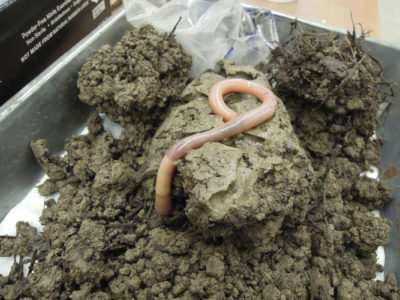
Massive agricultural development in the Palouse prairies of eastern Washington state nearly killed off this native earthworm. After being discovered in 1897, the last sighting of the giant Palouse earthworm was some time in the 1980s — that is, until some soil scientists from University of Idaho found two specimens in 2005. Contrary to old myths, the worms don’t grow to three feet long, but they are larger than average.
2. Ivory-Billed Woodpecker
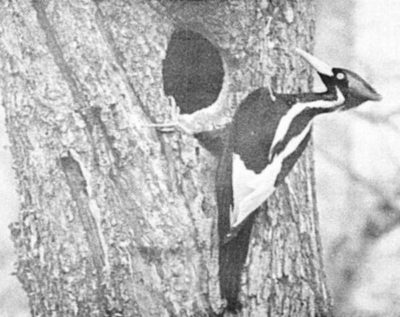
The unicorn of the birding world is a large woodpecker found in swampy hardwood forests of the South. There have been zero confirmed sightings of the bird since 1944, but — starting in 2005 — plenty of unconfirmed sightings and grainy, inconclusive videos have convinced many that the ivory-billed woodpecker still inhabits the Mississippi Delta. In 2008, an anonymous concerned birder even posted a $50,000 reward for anyone who can lead to a live roost.
3. Virginia Round-Leaf Birch

The curious round leaves of this birch were first noted by botanist W.W. Ashe in 1918 in just one site in southwest Virginia. After the Virginia Round-Leaf Birch wasn’t seen again for over 50 years, naturists in the ’70s found a stand of trees just a mile from where Ashe recorded his sighting. Most agreed he had taken down the location incorrectly. The world’s only 41-tree population of the Virginia Round-Leaf Birch existed in this stand (and dwindled to 26) until the tree was protected in 1978, allowing for efforts at propagation that have resulted in about 1,000 trees in various locations today.
4. Black-footed Ferret

North America’s only ferret species was rediscovered in 1981 after it was believed to be extinct. The rare mammals once numbered in the tens of thousands across the West, but disease and decline of the prairie dog (the ferret’s primary prey) drove their numbers down. Reintroductions of black-footed ferret populations have seen moderate success over the years from Mexico to Saskatchewan.
5. Southern Sea Otter

The uniquely thick fur of this California otter’s pelt was prized by the fur traders that nearly hunted them to extinction in the 18th and 19th centuries. Fifty southern sea otters were found in 1938, after an international ban on hunting them was enacted in 1911. Today, the otters’ populations are recovering, but they face new dangers like oil spills and toxic algal blooms caused by warming waters.
6. Blunt Chaff Flower

Before it was rediscovered in 1992, this amaranth flower was thought to be extinct since the 19th century. The only current plants now exist on the big island of Hawai’i on the Kahala mountain — about 50 miles north of current volcanic activity. About 120 to 150 plants exist.
7. 750-Legged Millipede

So far, this millipede that appears to exist only in a 2-square-mile patch of woodlands near Berkeley has been dubbed the “leggiest” in the animal kingdom, beating out a similar species from Puerto Rico with 742 legs. The 750-legged millipede was described in 1928, but it was never seen again until a group of researchers set out to find one in 2006. It’s no wonder they had a hard time: the millipedes are only one to three centimeters long.
8. Mount Diablo Buckwheat

The small, early-blooming wildflower from northern California went unnoticed from 1936 to 2005, when a small patch was found by a graduate student on Mount Diablo. Conservation groups protected the short-season natives and nudged along a still-small population of about 200 plants. Then, there was another discovery in 2015: 1.8 million plants were hiding far off a trail in the nearby Black Diamond Mines Regional Preserve. That ended anyone’s worry that the Mount Diablo buckwheat was at risk of extinction.
9. Robust Redhorse
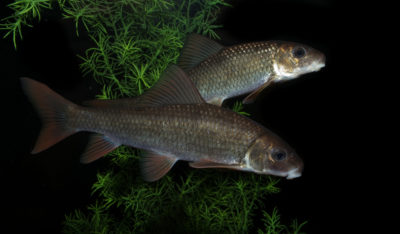
This large sucker fish was first identified in 1870, but it took 122 years to connect the dots on the mystery fish. The original specimen was destroyed, and only a small, isolated population resided in Georgia rivers. A few redhorse were discovered in the 1980s, however, and in 1992 a team of ichthyologists linked the unidentified fish to the original findings. The robust redhorse can grow to 17 pounds, and it has attracted conservation efforts from groups who value the native biodiversity of southeastern rivers.
10. Keck’s Checker-Mallow

Although a small population of this wildflower was found in the southern Sierra Mountains in Tulare County after 53 years of presumed extinction, the patch was on private land with an uncooperative owner. The land was eventually developed, and the flowers assumed destroyed, but, fortunately, another population of 216 Keck’s checker-mallow plants were found in Fresno County. The seeds from this discovery were used to spread the species throughout the Sierras.
News of the Week: New TV vs. Old, Yanny vs. Laurel, and Tigers vs. Teenagers
Everything Old Is New Again
If you read about the new TV shows this week, or you just awoke from a coma, you might be a little bit confused. Magnum, P.I. and Murphy Brown are on the schedule, joining Roseanne, MacGyver, and Will and Grace What year is it again?
This was the week for the annual network “upfronts,” that time of year when the TV networks trot out the stars of their new and returning shows for advertisers and tell us which of our favorite shows have been canceled. I won’t go into detail for each network; you can go elsewhere and read summaries and see trailers for the new stuff for ABC, CBS, Fox, NBC, The CW, and all the other networks at The Hollywood Reporter and Variety. I would like to talk about a few things that stood out.
Last Man Standing is coming back! It’s a solid, funny show, and it was really great to see Fox pick it up after ABC canceled it after six seasons. As I mentioned above, Magnum P.I. and Murphy Brown are both coming back to CBS. Murphy Brown will have the same cast as Murphy hosts a morning news show and goes up against her grown son Avery, who hosts a morning show on a conservative news channel (I wonder where they got that idea …). Magnum will have a whole new cast, with Jay Hernandez as the title character and Perdita Weeks as a female (!) Higgins. It’s still set in Hawaii though, and there will be a couple of Dobermans.
Is it weird that the thing that bothers me most about this new version — besides the fact they shouldn’t have done it in the first place — is that there’s no comma in the title? Believe it or not, they did that on purpose because commas aren’t search engine friendly. No, I’m serious.
If you liked Lost, you might like Manifest, NBC’s new show about a plane that vanishes and then reappears and lands like nothing happened; five years have gone by to the rest of the world, but not to the passengers. Alec Baldwin is going to have a weekly talk show on ABC; CBS has a show titled God Friended Me about a man whose life is turned upside down when he gets friended by God on Facebook (yes); Epix (a network you might not know exists) has a prequel to Batman titled Pennyworth, focusing on Alfred the butler; and ABC has a new romantic spy show that I swear is titled Whiskey Cavalier.
(Please note that 75 percent of these new shows will be gone by the fall of 2019.)
Sorry if you were a fan of Designated Survivor, Kevin Can Wait, or Lucifer, as they’ve all been canceled, along with a bunch of other shows, though Netflix might pick up Designated Survivor. NBC picked up the canceled Brooklyn Nine-Nine from Fox.
No word yet from NBC regarding Timeless. Singer Kelly Clarkson and SNL’s Leslie Jones are leading the charge for it to be renewed.
Do You Hear What I Hear?

Oh no, there’s another “The Dress.”
If you don’t remember the controversy that engulfed the web a few years ago, a picture of a dress had people taking sides. Some people saw the dress as being black and blue, and others saw it as being gold and white. I know it seems impossible that there could be that much of a difference of opinion (after all, black and blue look nothing like white and gold), but it almost caused another civil war. For the record, the dress was indeed black and blue, which is exactly how normal people (like me) saw it.
Now we have an audio version of that controversy. Listen to this clip. Is the voice saying “Yanny,” or is the voice saying “Laurel”?
Here’s the weird thing about this: I listened to it and clearly heard “Yanny.” It wasn’t even close. I was all set to be smug about it and write here that it was “Yanny” and that anyone who heard differently should have a hearing exam. But then I listened to it later, and it changed to “Laurel”! It’s now clearly Laurel for me. I have no idea how or why it changed (I listened to the same clip on the same computer). Unless it has something to do with the pitch or frequency, and my ears got used to it? I’m not even sure if that makes scientific sense, which probably explains why I don’t teach at MIT.
Let me know in the comments below what you hear. And listen to it twice, a few hours apart, and see if it changes.
Tiger at the Prom

I don’t remember anything weird happening at my senior prom, unless you count seeing all of my 18-year-old friends wearing tuxes and lavish dresses when I usually saw them in jeans and casual shirts. Maybe prom has changed in the last 35 years, because now they include wildlife.
A high school in Miami made the controversial decision to have a caged tiger at their jungle-themed prom. The event was held at the Miami International Airport, and the tiger wasn’t alone. There was also a fox, a lemur, and a couple of macaws.
A sister of one of the school’s students posted her displeasure on Facebook. The principal has since apologized (to the parents and students — no word on whether he apologized to the animals).
Goodbye Jerks?

I’m not sure how they can possibly do this, but Twitter is going to crack down on jerks. Through very scientific and precise (cough, cough) behavioral signals, filtering, and algorithms, the social media site is going to try to weed out the negative tweets so they don’t show up as much on your timeline. Oh, I’m sure this won’t be a controversial move at all.
If you’ve ever been on Twitter, you’ve seen that not only are there a lot of jerks, jerkiness seems to be sort of a prerequisite for the site. Using Twitter is like the age-old question about drinking too much: Does it change you into a worse person or does it just make the real you come out?
Read This
PBS has a fun show starting on May 22 called The Great American Read. Host Meredith Vieira will take us through the history of the 100 best-loved books chosen by the public. They’ve set up a web site where you can find out information about each book and take a quiz on how many of the books you’ve read. It should be noted that the list shouldn’t be called 100 “books” because they’re all novels. There’s no nonfiction listed. Maybe that can be the sequel.
It should also be noted that The Da Vinci Code and Fifty Shades of Grey shouldn’t be on the list.
RIP Tom Wolfe, Margot Kidder, Art Shay, Robert N. Hall, Larry Parry, and Kristin Harmon
Tom Wolfe’s classic novels and essay collections include The Right Stuff, The Bonfire of the Vanities, A Man in Full, and The Electric Kool-Aid Acid Test. He came up with the terms radical chic and the me decade and had an enormous influence on a generation of writers. He died this week at the age of 88.
Before he wrote those classic works, he wrote for the Post. In the June 19, 1965, issue, he wrote an essay against the trend of sinning titled “Down with Sin!”
Margot Kidder was probably best known for her role as reporter Lois Lane opposite Christopher Reeve in the Superman films. She also appeared in The Amityville Horror, Black Christmas, and Sisters, as well as TV shows like Nichols and Boston Common. She died Sunday at the age of 69.
Art Shay was an acclaimed photographer famous for many iconic pictures of people like Muhammad Ali, President John F. Kennedy, Marlon Brando, Senator Joseph McCarthy, and Elizabeth Taylor. He died April 28 at the age of 96.
You know that laser bar code reader that almost every supermarket checkout uses? You have inventor Robert N. Hall to thank for that. He actually passed away two years ago at the age of 96, but for some reason, news of his death is only getting out nationally now.
Larry Parry was one of the last survivors of the bombing of Pearl Harbor. He died last Saturday at the age of 97.
Kristin Harmon was an actress and the ex-wife of singer and actor Ricky Nelson. She appeared with him on The Adventures of Ozzie & Harriet. She was the sister of NCIS star Mark Harmon and mother of actress Tracy Nelson. She died in April at the age of 72.
Quote of the Week
“Our bigly-ist hit of the year is Roseanne. Roseanne is the number-one show, as you’ve heard repeatedly, in total viewers and the demo. So everyone who says Hollywood is out of new ideas, we’re not. It’s just that one of our new ideas was to Google, ‘What were our old ideas?’”
—Jimmy Kimmel, hosting ABC’s upfront
This Week in History
Florence Nightingale Born (May 12, 1820)
We always think of Nightingale as a nurse, but she was also a social reformer and writer.
Here’s a gallery of Post covers featuring nurses. I don’t think nurses would light a patient’s cigarette these days.
Sinatra Dies, Seinfeld Ends (May 14, 1998)
I remember saying to someone 20 years ago that now the 20th century can officially end. Both Frank Sinatra and the TV show Seinfeld went away on the same day. The less we think about that misguided Seinfeld finale the better, but this day would be a great one to honor Ol’ Blue Eyes by playing his music.
It was 20 years ago tonight. I miss you so much, Poppa. pic.twitter.com/zRxesE1BEL
— Nancy Sinatra (@NancySinatra) May 14, 2018
This Week in Saturday Evening Post History: Sunday Morning (May 16, 1959)
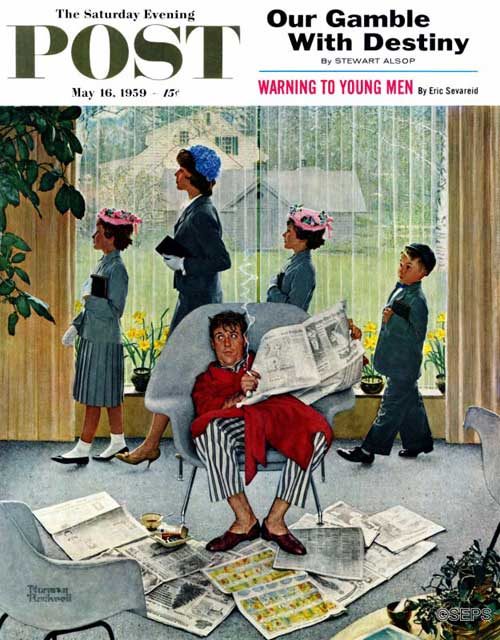
May 16, 1959
© SEPS
There are actually a few Post covers that show men trying to hide so they don’t have to go to Sunday-morning church services. This one is from Norman Rockwell.
It’s National Gazpacho Aficionado Month
I’ve never had cold soup, and it’s not something I’ve ever been in a hurry to try. Cold soup to me just means “hot soup that you left on the table too long.” But the warmer weather is here, and if you’re the type of person who loves soup and you miss it during the summer months, maybe you can try a bowl of something of a cooler temperature. Here are four you might like, including Gazpacho Grande and a Cool Cucumber Soup.
Also, I’m pretty sure Gazpacho Aficionado was the name of a character in one of the James Bond movies.
Next Week’s Holidays and Events
Royal Wedding (May 19)
Hey, did you hear there’s a big wedding in England on Saturday? The media hasn’t been covering it that much, so you may not have heard.
To get you in the mood for all things British, CBS Sunday Morning shows you how to do a proper afternoon tea and lists some of the differences between British English and American English. And Post Archive Director Jeff Nilsson shows us the many articles we’ve published about the royal family over the years.
Century-Old Recipes for Salads and Vinaigrettes
Salads, dressings, and celery fringe from the 19th-century Post.
—
Remember: Lettuce Must Be Crisp

Originally published in The Saturday Evening Post, June 3, 1876
Lettuce is like conversation: It must be fresh and crisp, so sparkling that you scarcely see the bitter in it. Lettuce, like most talkers, is however, apt to run rapidly to seed. Blessed is that sort which comes to a head, and so remains, like a few people we know, growing more solid and satisfactory and tender at the same time, and whiter at the center, and crisp in their maturity. Lettuce, like conversation, requires a good deal of oil, to avoid friction, and to keep the company smooth — a pinch of attic salt, a dash of pepper, a quantity of mustard and vinegar, by all means, but so mixed that you will notice no sharp contrasts, and a trifle of sugar. You can put anything, and the more things the better, into salad, as into conversation; but everything depends upon the mixing.
Vegetable Salad
Originally published in The Saturday Evening Post, May 16, 1868
It is a great mistake to soak lettuces for salad; the process materially injures their flavor; though still, if your vegetables be at all stale, you had better let them lie in water for an hour or two; and small salad, such as cresses, radishes, etc., require very thorough washing. But a fine, freshly-gathered lettuce should be only well rinsed, shaken and well wiped with a soft cloth, then shred into small pieces.
You can add, according to taste, cresses of any kind, or radishes scraped and sliced; also, beet-root, and, if desired, spring onions, chopped fine. A few fresh-gathered leaves of green mint are by many people esteemed a great improvement. If you do not care to make a regular salad dressing, just season lightly with pepper and salt, throw in one tablespoonful of best salad oil, two of vinegar, and a large teaspoonful of moist sugar. Mix all well together with the salad-spoon and fork, and serve.
Lettuce, Sorrel, or Dandelion Salad
Originally published in The Saturday Evening Post, March 16, 1867
This is always sent to the table with the roast piece or with the chicken. First wash the lettuce — and be particular to drain it of all the water, for good salad cannot be made with water. A tablespoonful of oil, and half as much of vinegar; salt and pepper to taste; stir thoroughly.

Professor Blot incidentally remarked that sorrel, a sour-ish vegetable, is the best thing to eat in the spring when prepared similar to lettuce. The dandelion also is an excellent field plant. The latter was designed for our use. In the order of nature, it was the first palatable vegetable that comes forth in the spring season, and man should eat it.
Congress Salad
Originally published in The Saturday Evening Post, July 15, 1865
One day at a chowder party on Nantucket Beach in Massachusetts, I took such material as we had, or could get, and improvised a salad — the grains from two ears of green corn boiled and mashed on a flat stone; half a dozen scarlet radishes whittled into thin shavings; a handful of wild sorrel (Rumex acetosa); the liquor from four great live clams; a gill of vinegar; and mustard, curry, pepper ad libitum.
There were four live Congressmen of the party — among the Sage of Marshfield, who flattered me by pronouncing the mixture the best made-up dish he ever tasted, and christened it Congress Salad.
Winter Cabbage Salad
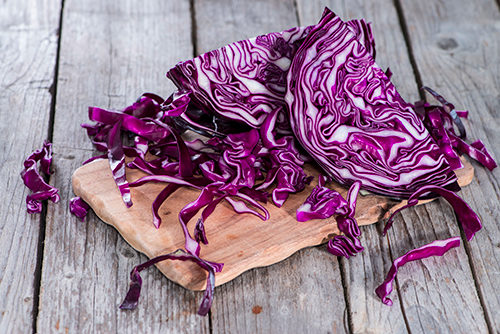
Originally published in The Saturday Evening Post, January 7, 1871
Red cabbage makes a delicious winter salad when lettuces, etc., are scarce, and is very pretty. Cut up half a head of raw, red cabbage into small shreds. Mix with it 4 heads of white celery, also cut small. Decorate with sliced beet-root and the white of a hard-boiled egg. Put half a pint of vinegar on to boil, beat up the yolk of an egg with a little salt and cayenne, pour the boiling vinegar on the yolk, stir it well, and pour it over the cabbage. This is nice with roast beef, hot or cold.
Radish, Celery, or Onion Salad
Originally published in The Saturday Evening Post, April 5, 1873
Radishes. Peel tender radishes, grate them, add salt and vinegar, if desired. This manner of preparing radishes is more healthy for all; especially for persons who have poor teeth, and children who do not take lime to masticate their food. Winter radishes grate nicely, and will be found a fine relish, when fresh salads cannot be obtained.

Celery. Take the blanched celery, cut it as fine as possible, add salt, and send it to the table, where vinegar and egg can be added, if desired. This salad should be served as soon as prepared, as it will be apt to turn brown; ornament the dish with green celery leaves.
Onions can be prepared in the same manner, and will make a fine salad for those who relish them.
How to Dress a Salad
Originally published in The Saturday Evening Post, May 21, 1864
“The vinegar used in salad should always be wine vinegar, not pyroligneous acid.” This latter is the usual kind of thing met with, and is abominable. Chaptal, the great French chemist, directs that “the salad should be saturated with oil, and seasoned with salt and pepper, before the vinegar is added. It results from this process that there never can be too much vinegar, for, from the specific gravity of the vinegar compared with oil, what is more than needful will fall to the bottom of the salad bowl. The salt should not be dissolved in the vinegar, but in the oil, by which means it is more equally distributed through the salad.
“The Spanish proverb says that to make a perfect salad there should be a miser for oil, a spendthrift for vinegar, a wise man for salt, and a madcap to stir the ingredients up and mix them well together. The proverb is perfect with the exception of the last member of the sentence. A patient and discreet man, a painstaking and careful man or woman should be entrusted with the duty of mixing the salad with its seasoning.”
How to Fringe Celery for Garnishing
Originally published in The Saturday Evening Post, January 13, 1866
Take the outer thick white and green stalks, cut them about a finger’s length, then select a good large new cork, stick it full of coarse needles, and carefully draw each piece of celery over the cork, leaving at the end about an inch of the celery stick to remain unfringed; when all the fibrous parts are separated, lay the celery for a couple of hours in cold water to curl and crisp. This is a beautiful garnish for salads, if laid on thickly.
Scotch Sauce
Originally published in The Saturday Evening Post, June 29, 1867
Bruise down the yolks of two hard-boiled eggs in a basin; add a large spoonful of mustard; rub them together with 1 tablespoonful [each] of catsup and tarragon, 2 [tablespoons] of white wine vinegar, and a teacupful of thick cream. These must be all thoroughly mixed together, and, after the salad is cut and arranged in the salad-dish, pour the dressing equally over the whole of it.
Vinaigrette (Raw Egg Optional)

Originally published in The Saturday Evening Post, May 16, 1868
The essential ingredients are: good cider vinegar, pure mustard, fresh eggs, and sweet oil made of olives — not of lard. Begin with a teaspoonful of dry mustard in a soup plate; add nearly an equal quantity of salt, a little vinegar, and beat to a paste; then add the yolk of a fresh egg, and after thoroughly rubbing and mingling all with a silver fork or spoon, add about a half tablespoonful of sweet oil, and stir until it is smooth. It will probably then have a shining, greasy look. Add a few drops of vinegar, and it will, when stirred, at once thicken up, and lose the greasy look entirely.
When all is smooth and uniform, add more oil, and again, a very little vinegar, if necessary, to produce the same effect. Our rule is to add as much oil as we can cause to be entirely taken up, and to stop before either the addition of more oil or vinegar will cease to thicken. The dressing should be smooth as whipped cream, and this, indeed, thoroughly beaten up with the white of the egg or eggs, is an addition to the dressing which increases its delicacy and deliciousness.
In a good salad dressing the oil loses its oiliness, but pervades the whole with its flavor, and while the sharpness of the mustard, salt, and vinegar, entirely disappear, each ingredient adds a peculiar piquancy to the agreeable compound, which by contrast only heightens the crispy freshness of the lettuce, and brings out its flavor. The egg may be omitted, and you will still have a nice dressing, if the oil is good.
Lettuce, watercress, endive, and celery, make fine salads. Dandelion, sorrel, and some other plants are occasionally used. Salads are very appetizing, and may well have a place every day upon the table.
French Salad Sauce
Originally published in The Saturday Evening Post, April 16, 1870
Boil one egg hard. When cold, remove the yolk, put it into a basin, and bruise it to pulp with a wooden spoon. Then add a raw yolk and a teaspoonful of flour, a small teaspoonful of salt, a quarter of pepper. Then add half a spoonful of vinegar, stir it round, pour over a tablespoonful of oil by degrees, then a little more vinegar, and two more of oil, until 8 teaspoonsful of oil and 3 of vinegar are used. Season with half a teaspoonful of chopped onions, two of parsley, and a pinch of cayenne. It will keep sometime if properly cooked.
Summer Road Trips: Bookish Travel
The call of the open road is as booming as ever. As far as domestic leisure travel is concerned, more Americans are opting to go by way of the automobile. Whether it’s due to the flexibility of packing heavy and stopping at will along the way or the nostalgia of highway getaways, road trips are back!
To satiate your bookworm wanderlust, take the great American road trip inspired by great American literature.
1. Walden Pond

The site where transcendentalist Henry David Thoreau spent two years in a log cabin is only a half-hour drive from Boston. The pond once hosted an amusement park with concessions, swings, a dancing hall, and a baseball diamond that burned down in 1902, but now all that remains is a replica of Thoreau’s cabin. The grounds are a Massachusetts state park perfect for swimming, hiking, and contemplating “the tonic of wildness.”
Read “An Unlikely Hero in the Fight for Personal Liberty”
2. Amherst

The property on which Emily Dickinson was born and spent most of her life as a recluse is a portal to the past. Though a prolific poet, Dickinson published very little during her lifetime. It was on this property in Amherst, Massachusetts that she wrote scores of short, solemn poems that would later be acclaimed for their value to literary scholarship. Both Dickinson houses serve as museums of the prominent family, and the gardens on the property grow the same flowers and shrubs that featured prominently in Dickinson’s poetry.
3. Harlem
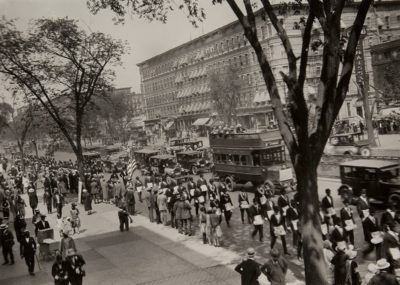
The Manhattan neighborhood known for an African-American artistic flourishment in the 1930s and ’40s was home to literary greats like Langston Hughes, Richard Wright, and Claude McKay. Langston Hughes’s longtime home, now in the National Register of Historic Places, is the site of an arts collective, and Madam C.J. Walker’s building is now a public library branch. The Schomburg Center for African-American Culture, once the site of the American Negro Theater, hosts a large collection of books and artifacts pertaining to the Harlem Renaissance.
Read Langston Hughes in the Post
4. Eatonville
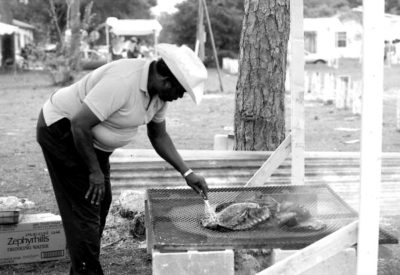
Eatonville, Florida was the home of Zora Neale Hurston as well as the inspiration for much of her work centering around the African-American experience in the South. Each year, The Zora! Festival of the Arts and Humanities celebrates the author’s life with concerts and presentations on the themes of Hurston’s work. A previously unpublished manuscript by Hurston, based on her interviews with a man who came to the country on a slave ship, was recently released after 90 years in the dark.
Read “The Conscience of the Court” by Zora Neale Hurston
5. Key West

Eccentric and lavish, the French Colonial house of Ernest Hemingway sits a few blocks from the southernmost point of the continental U.S. Driving to Key West grants drivers at once stunning views and terrible traffic, and the Hemingway House offers a glimpse into the quirky life of one the country’s most talented writers. He loved his polydactyl cats (the descendants of which still roam the house), and he built a backyard pool at a time when it would have cost over 300,000 in today’s dollars.

6. Monroeville
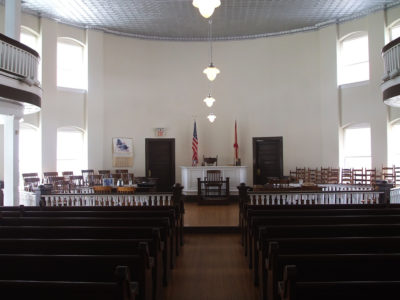
The “literary capital of Alabama” was home to both Truman Capote and Harper Lee (they were neighbors), and it inspired the southern settings of their fiction. Maycomb, the segregated setting of To Kill a Mockingbird, was practically modeled on Monroeville, and each year the town’s theater troupe stages the play adaptation. The first half is played in an amphitheater, and the second half takes place inside the town’s old courthouse. The same courthouse houses a museum featuring Capote’s old letters and childhood possessions.
Read “Capote Writes for the Post”
7. Indianapolis
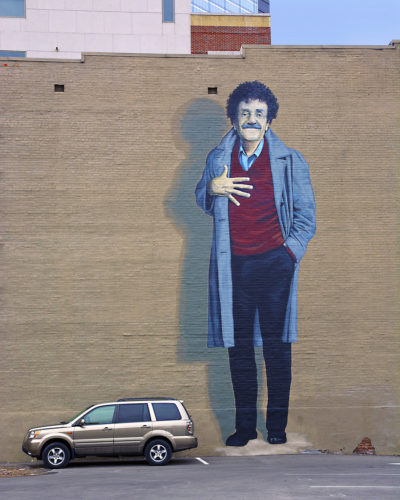
Kurt Vonnegut, Jr. wrote bountifully of his hometown of Indianapolis, “where common speech sounds like a band saw cutting galvanized tin,” and they’ve memorialized him with the Kurt Vonnegut Museum and Library. You can walk down the same streets as the fictional Kilgore Trout and look up at buildings designed by Vonnegut’s father and grandfather, Kurt Vonnegut, Sr. and Bernard Vonnegut.
Read “Vonnegut Lives!”
8. Hannibal
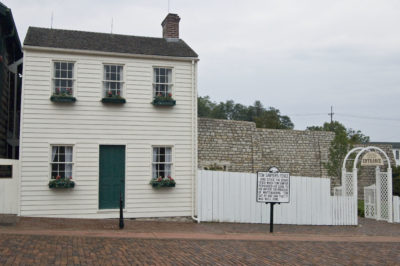
Samuel Langhorn Clemens’s childhood town sits on the Mississippi River, where his work on steamboats gave him his pen name, Mark Twain. The name adorns a substantial amount of attractions in Hannibal, Missouri, too: the Mark Twain Boyhood Home and Museum, the Mark Twain Lighthouse, Mark Twain Cave. You can even ride on the Mark Twain Riverboat for a dinner cruise.
Read “The Surprising and Familiar Mark Twain”
9. Red Cloud

“I wanted to walk straight on through the red grass and over the edge of the world, which could not be very far away,” Willa Cather wrote of the western prairie. The O Pioneers! and My Ántonia author is memorialized with 600 acres of never-before-plowed prairie near her childhood home in Red Cloud, Nebraska. The native grasses and wildflowers return visitors to an untouched version of the Great Plains.
10. Salinas

John Steinbeck molded the working class and migrant characters of his stories from his experiences working on ranches outside his hometown, Salinas, California. The house Steinbeck grew up in stands at the center of town just a few blocks from the National Steinbeck Center museum. Although the author moved away young and travelled often, Salinas Valley is so prevalent in his fiction that the area is often called “Steinbeck country.”
Read “Why Steinbeck Almost Didn’t Win the Nobel Prize”
Going South on an Antique Motorcycle
A woman in our town recently told me I should run for president, which of course would be flattering had she not also told me Elvis was alive and farming in Iowa. Nevertheless, it made me think what I would do if I were president, and I decided I would have the government buy everyone a motorcycle. I’ve been riding motorcycles since 1977 and in that time have not committed a single act of murder, theft, or treason. From this, I can only conclude that the average motorcyclist is a model of rectitude.
I’ve owned 13 bikes, a mix of Japanese and British manufacture, so can declare unequivocally that while Japanese bikes are more reliable, British bikes are more exhilarating, given their tendency to break down 100 miles from home, stranding the rider on a lonely roadside an hour before dark. This summer, I’m riding south along the Mississippi River on my 1974 Triumph Bonneville, a trip I’ve been planning for some time. I use the word riding in the loosest sense, since the chances are good I’ll be marooned beside the river, brought to a halt by one of a dozen maladies that regularly infect a vintage Bonneville. I’m going alone, unable to persuade any of my friends to accompany me on a trip that will likely end in shame, the bike sold for scrap in Louisiana, with me hitchhiking home.
The idea for this odyssey came about when it occurred to me that after writing 22 books, I had never written one about riding 2,000 miles on a 44-year-old motorcycle. I own a brand-new Triumph Bonneville that is utterly reliable. I could, of course, ride it, but it would make for a dull story. Nothing quite hooks a reader like chaos, danger, and suspense, all of which are guaranteed when one goes forth on a vintage Bonneville. To heighten the drama, I’m packing only one change of clothes, making no reservations anywhere, nor consulting any maps, gauging my direction by the position of the sun and the moss on trees.
I’m doing this not only for reasons of livelihood, but also because I’m staring 60 in the face and the time is fast approaching when such journeys will exceed my reach. Plus, when I was 14, I read Huckleberry Finn and realized, even at that tender age, that no man should die without at least one epic journey in his repertoire. After all, one day I’ll be drooling on myself in a nursing home and will need something to think back on and smile.
I mentioned this trip to a man in our town who has lived his whole life with an upraised and dampened finger, testing the wind, looking for storms.
“People these days are crazy,” he warned me. “You shouldn’t do that. You might get killed.”
I have a higher opinion of my fellow citizens, having always relied heavily upon their kindness. I look forward to spending hours each day in gas stations, roadside diners, and tow trucks, getting to know them better. By the end of my expedition, I predict I’ll have an even more favorable view of my countrymen, and will eagerly be planning my next sojourn into America’s heart, riding out to Iowa to see Elvis. Like he said, it’s now or never.
Philip Gulley is a Quaker pastor and the author of 22 books, including the Harmony and Hope series featuring Sam Gardner.
Rockwell Video Minute: Rosie the Riveter
Norman Rockwell honored the contributions of the millions of women working in defense plants during World War II with his iconic painting of Rosie the Riveter.
See all of the videos in our Rockwell Video Minute series at www.saturdayeveningpost/rockwell-video.
North Country Girl: Chapter 52 — The Whipped Cream Wars
For more about Gay Haubner’s life in the North Country, read the other chapters in her serialized memoir.
James and I were back in Chicago where I had found an agency that had agreed to take me on as the World’s Most Unlikely Model. I had stopped trying to style my hair after one disastrous experiment with hot rollers when I was reduced to having to use scissors to cut a curler out from a tangle of hair, I never understood what foundation was for, and I topped off at 5’3”. But according to Silver, the astrologer husband of Ann Geddes, who owned the eponymous modeling agency, my horoscope showed that I would be a great success.
The morning after Ann and Silver elevated me to Professional Model status, I left James holding his head in his hands and took the El to a lonely weird industrial area that lay in the shadow of the gigantic Merchandise Mart. Ann Geddes had sent me here in search of a photographer who would take photos of me for free — photos I could use to create a modeling composite that would land me actual work.
I found a dirty business card reading “Frank Wojtkiewicz, Photographer” stuck in a mailbox slot on one of the more crumbling buildings. There was no doorbell and no one around. I pushed open the rusty steel door and rode a creaky freight elevator up to the third floor. I banged on another steel door, which was thrown open by a big Polish bear of a guy, wearing a torn, grubby t-shirt and holding a can of beer.
Frank grunted, “A model, huh?” and led me into the first loft I had ever seen. In the front huddled a battered fridge (which held nothing but beer and film), a filthy sofa, and a rumpled mattress, glaringly lit by tall metal paned windows overlooking the Chicago River. In the back was Frank’s studio and darkroom.
No, I had no photos to show him, I was hoping that he could take some. Yes, I would like a beer (at 9:30 in the morning). Yes, I had modeling experience (well, I did have one modeling job, by accident). Would I do nude photos? I hesitated and answered truthfully that I didn’t know. I couldn’t think of a reason not to; after all a senior citizen from Des Plaines and a med student and his wife had all seen me naked.
Frank was gruff, unwashed on the outside, marshmallow heart on the inside, a wannabe Screbneski who lived on beer (I never saw him consume solid food), and who had no paying work at all. I don’t know how he stayed alive. But he had lots of time on his hands to shoot pretty girls who came knocking at his door.
Frank set me up under a huge white umbrella and then bustled about fiddling with a bunch of silver reflectors and a gigantic floor fan before shooting off a roll of film. He took a beer and the film into his darkroom and emerged with photos of me that were so flattering it was like looking at someone else.

Frank shot me like a sexy angel, my hair glowing behind me, my skin gleaming like a South Sea pearl, cheekbones I didn’t know I had sculpting my face.
“Wow,” I said, and Frank swaggered a little. It seemed churlish not to take off my shirt. Frank shot another role of film, and somehow these photos were even better. I used one of these photos, cropped below the collarbone that only Frank could find, as my head shot for years, arms crossed demurely over my chest, hair blowing back, wearing nothing but the dainty star necklace James had bought me in Acapulco.

I asked Frank if he could shoot the other photos I needed, to show off my range, my versatility: me holding a coffee cup or steno pad or tennis racket. “Bring beer,” he agreed. These photos were not as inspired, but they did demonstrate that I could stand in front of a camera and smile. I now had professional photos that had only cost me a few six packs. And I had made a new friend whose dirty loft provided a refuge from James’s days of fury.
Within a week, I had 1,000 black and white composites (which I paid for) imprinted with my name and “Represented by Ann Geddes Agency.” I was officially a model.
Which meant exactly nothing. Models from Ford and Wilhelmina were always cast for the most lucrative jobs, television commercials, and ads in national magazines. As the Number Two girl at the Number Three model agency, I was rarely sent off to auditions or go-sees. I sadly let go of my former belief that I would be starring in commercials once or twice a week. But I couldn’t sit and wait for the phone to ring. I needed money and I needed to get away from James and his foul desperation.
I wore out my shoes and my feet criss-crossing Chicago, dropping off my composite at every photographer on Ann’s list in the hopes that he (there was not a single female photographer) would be shooting something that required a small cute girl. I took the El north and south and tried to figure out Chicago’s arcane bus routes, but mostly I walked. I was not going to waste money on cabs.
Every evening I mapped out a route of photo studios and businesses and ad agencies, seeing how many I could hit on the least amount of carfare. My Chicago had previously consisted of a four-block square, extending from our Oak Street apartment to Faces disco to the backgammon club, with occasional trips to Marshall Fields downtown for Clinique lipsticks and Frango mints, or back in the good old days of a year ago, north to Greektown for moussaka.
Now I had to venture forth all over that sprawling city, from suburban Evanston, where I looked longingly at the ivied and brick campus of Northwestern, to close enough to the stockyards to smell them, from the skyscrapers of Miracle Mile to the scarred and scary South Side, previously terra incognita to me.
There was actually a lot of modeling work in Chicago. Sears and Spiegel were there; their tombstone catalogs required scores of models, posing in everything from bikinis to tool sheds. Popeil, famous for the Pocket Fisherman, churned out new low-budget commercials for dubious inventions every week. There were conventions and fashion shows that needed models who could talk or walk. Chicago had major ad agencies, like Leo Burnett and J. Walter Thompson, who very occasionally had to shoot a commercial there instead of LA or New York. There were smaller shops who cast models in trade ads for surgical or restaurant or hair salon supplies (I posed in scrubs and white paper booties, wearing a hair net, and brandishing a blow dryer). And of course there was the gaping maw of Playboy, which chewed girls up by the dozen.

Ann told me, “The more you work the more you work,” and it was true. Before I had gotten to the end of Ann’s list, a photographer cast me in an ad for Diet 7-Up, a shot of the lower half of my face behind a bubbling glass of clear soda, because I knocked on his door the day before, wearing a slash of crimson lipstick. That ad helped me land my second commercial, for the local McDonald’s franchises: I took bite after bite of an endless supply of slightly chilled Filets O Fishes, until the director got the take where the sandwich looked really, really good.
As my portfolio and demo reel filled up, I got more and more bookings, although I never made as much money modeling as I had waitressing at Pracna. I even got to walk the runway once, modeling petite-size wedding dresses, which inoculated me against ever wanting such a thing. All the gowns ended in huge, flowing trains of slippery white or ivory or eggshell satin; it felt like I was towing a small car. At the end of the runway I had to stop and beam like a real bride into the blinding lights, then execute an elegant turn, somehow without stepping on my own train, falling off the runway or colliding into the model behind me.
There were some jobs I should not have taken: greedy for my day rate ($250!) I let my hair be cut in a goofy Dorothy Hamill wedge for a beauty school instructional film, which put me hors de combat till it grew out.
Tri-State Honda hired me to throw out the first ball at the White Sox’s Comiskey Park, after I lied twice: I claimed that I knew how to ride a motorcycle and that I owned a floor-length white dress. I bought the cheapest white polyester gown I could find; my plan was to wear the dress to the ball game, with the tags carefully tucked in, and then return it to the store the next day and get my $50 back.
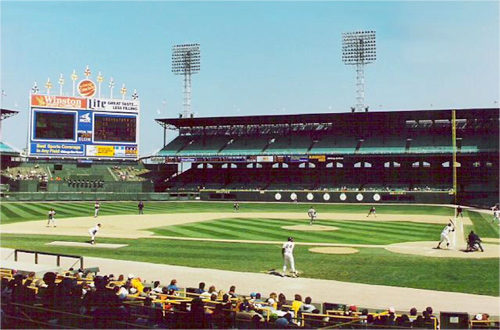
The nice man who delivered the Honda motorcycle to Comiskey Park gave me a quick lesson, slapped me on the butt, yelled “You’ve got it girlie!” and sent me off across the field to the pitcher’s mound. I managed to not dump the motorcycle or run over any White Sox, and actually threw the ball in the direction of home plate. But my white dress didn’t fare as well: there were greasy black oil stains all over the skirt.
Not only was I out $50 on a dress I could never wear again, Tri-State Honda didn’t pay up. The Ann Geddes Agency was not very good at bill collecting.
“I sent them an invoice.”
“Ann, can you send them another?”
“I will, after 30 days.”
Thirty days later.
“Tri-State Honda still hasn’t paid? Ann, please call them!”
“I’ll call after 30 days.”
Seething, I took my anger and frustration and a six-pack of Budweiser to Frank’s loft.
“It’s not fair!’ I cried. “And Ann isn’t helping. Honda is this big company, with all these motorcycles, and they’re taking advantage of me!” I struck my best Little Nell pose. “It’s not about the money, it’s the principle!’
“Oh, it’s about the money,” said Frank. His jaundiced take was that Ann didn’t want to piss anybody off. They were the number three agency in Chicago, and didn’t want a reputation for hounding clients over what was $10 for them. If I wanted my money, I had to get it myself. Frank had an idea; we smoked a joint of very good weed and he told me what to do.
I put on that oil-besmirched dress and went back to Tri-State Honda’s offices armed with several cans of Reddi-Whip. I told the befuddled receptionist that I was the Tri-State Honda White Sox girl and they owed me $100. If I did not get paid immediately, I was going to enjoy some Reddi-Whip, and in the process would most likely get whipped cream on the reception area’s couch and carpet. I assured her that it was very hard to get the smell of soured milk out of fabric. I sat on the couch, removed the red cap, and tilted the nozzle towards my mouth.
Frank was certain this would work, as he had once convinced a would-be model to be photographed wearing nothing but whipped cream and ended up having to toss out his sofa; I guess the stink of old dairy overwhelmed the ever-presence aroma of spilled beer in his loft.
“Can’t they arrest me?” I worried. “Probably not for Reddi-Whip,” said Frank.
The receptionist picked up the phone and the man who had hired me rushed out. I adjusted the nozzle so it pointed away from my mouth and towards the couch. “I’ll get your check,” he yelled.
Unfortunately, that $100 check was made out to the Ann Geddes Agency, leaving me $90 minus the dress and my El fare to and from Comiskey Park.
Frank was right. It was about the money. James’s good days were getting farther and farther apart. Even in those rare times when he was feeling flush again, it was hollow, as if he were acting the part of the old, confident James, the man of the world, successful investor and drug smuggler, the gambler who beat all the odds. I needed money: I had to bulk up my escape fund.