North Country Girl: Chapter 50 — In Search of Lost Daughters
For more about Gay Haubner’s life in the North Country, read the other chapters in her serialized memoir.
I had ditched James and the car of 1,000 Quaaludes, hoping that they would both make it to Chicago safely, and made my own escape to my family in Colorado, a family that now included a stepfather and a dilapidated ski hostel.
The flight from Denver to Steamboat Springs was in the smallest plane I had ever seen. My memory is that directly behind the pilot were four folding chairs welded to the floor that had been jerry-rigged with seat belts. We landed on a runway in a field and were told to grab our luggage, which had traveled in the cabin with us. I followed the pilot down the stairs towards a small brick building, where I could see my mom waving, and I sunk up to my ankles in mud.
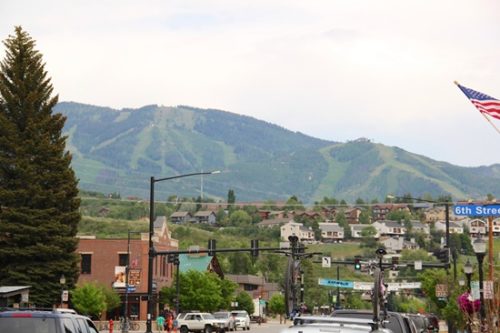
Early spring in Steamboat Springs is mud season. The tiny town was tucked in a valley at the base of the ski mountain. All the snow on the hills and all the ice in the Rocky Mountain rivers had melted, and every square inch of the town that was not paved was a quagmire — and there were a lot of unpaved roads in Steamboat. In a few weeks, flowers and grass and trees would be in full blossom and leafy green, but now the place was a study in grays and browns, although all under the bluest of skies. Snow-peaked mountains were etched across those skies, almost too blinding to admire.
Steamboat Springs was rough and rugged, the anti-Vail; there was no comfortable, enclosed gondola to whisk you to the top of the mountain. It was a place where you skied in jeans instead of fancy designer outfits. It stuck proudly to its roots as a cow town, despite a smattering of hippies living in communes, hippies who were detested by the ranchers and tolerated by the skiers, and who were known to swim naked in the hot springs.
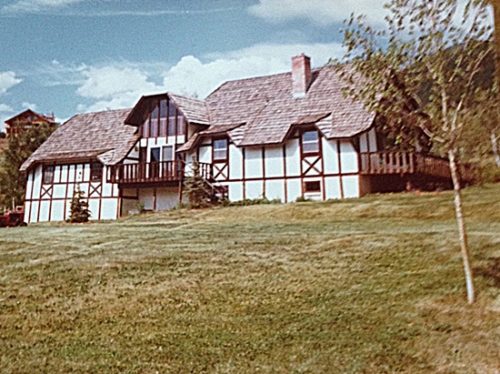
My stepfather, Jerry, had bitten the bullet. He married my mom, sold his postage stamp ranch outside of Denver, and after casting about for new business ventures, bought the Haystack hostel, which he was trying to fix up all by himself in time for the next ski season. Once again, my younger sister Heidi had been uprooted, right after she had finally made her one and only friend at her hateful school. I knew my mom was furious with disappointment. She had imagined that as the second Mrs. Jerome she would be the hostess at an elegant restaurant like the Highland Supper Club Jerry had owned back in Duluth, not checking in unwashed young ski bums at a hostel. I thought I could read the whole tale from the three thick furrows in her brow.
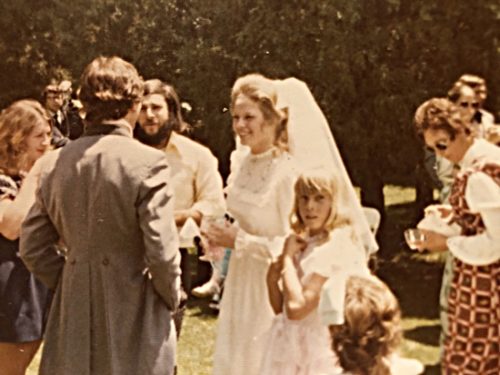
Once I was mud-free and shoveling down a hot homemade meal, my mom sat down across from me and said, “Lani is missing.” My seventeen-year-old sister, a newlywed of less than a year, had run away from her husband Mitchell. “But I know where she is.”
A few weeks before, Mitchell called my mom to say that Lani was acting crazy, she was out of her mind. He didn’t know what to do, but since he had to go to work he had tied Lani to a chair for her own good. Then he hung up.
Mom said, “I thought, I have to go rescue her right away and I was frantic looking for my purse and car keys and the phone rang again.” This time it was Lani; she had freed herself from the ropes and called to say that she wasn’t crazy, she had told Mitchell she was leaving him. He had been routinely beating the crap out of her.
“Lani told me not to drive down. She was going right away, before Mitchell came home. And then she hung up and that was the last I heard from her.”
“And you couldn’t tell me this when I called?” I asked through a mouthful of mashed potatoes. I don’t know what I would have done differently, but I couldn’t believe she hadn’t told me any of this when I phoned her from Texas to let her know I was on my way.
“Well,” said my mom, “there is a second part to the story and I wasn’t sure if you would come here if you knew it. I’m driving to California to look for Lani.”
Over the Easter Break, mom had driven Heidi back to Colorado Springs to see her sorely missed friend from her old school. “I drove by that psychic, the one who helped grandma Nana find her Black Hills gold bracelet a few years ago.” (After glancing at my Nana’s humongous handbag, the astute psychic told her, “I can see it…you will find the bracelet in a purse.” And grandma did.)
“Something told me to go in and see the psychic and she held my hands for a minute and said Lani was living in Los Angeles.” My mother was going to track down her runaway daughter.
Not only that, when my mother revealed her plan to her own mother, grandma Nana instantly volunteered to join the search and was flying in the next day.
Less than 48 hours after I had arrived in Colorado I was off on another cross country car trip, sharing the driving with my mother while my sister Heidi stared glumly out the window and my grandmother read every passing road sign aloud: “Stuckley’s Pecans. Roy’s Big Boy. Bluebird Motel. House of Pancakes. Mystery Spot. Philip’s 66. Candy and Cones. Hole in the Rock. Cowboy Corral Steakhouse…”
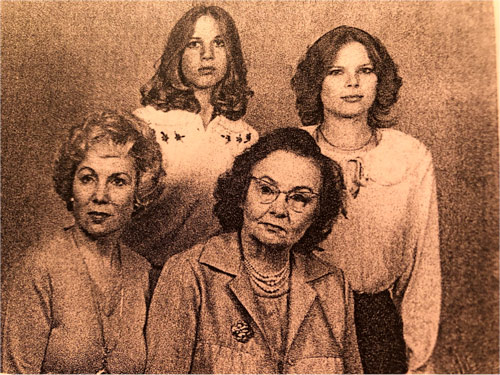
For the long western miles where there were no road signs, my grandmother criticized the driving skills of whoever was behind the wheel, despite never having learned to drive herself. When she thought of it, which was several times a day, grandma Nana hollered, “Gay Lynn! Gay Lynn! How can you drive without your glasses!” refusing to believe in the effectiveness of contact lenses.
After a long signless stretch of road in Utah, we abandoned grandma at a gas station in Green River. We decided twenty minutes was long enough to teach her a lesson. When we returned there was grandma standing forlornly outside the ladies, quivering and clutching her enormous purse. There was no more back seat driving, but the out loud sign reading was unstoppable, and went on till California, where we unloaded grandma Nana on a second cousin living in Loma Linda.

The entire extent of my mother’s plan was that she would spot Lani somewhere and take her back home. All mom knew of Los Angeles was Knott’s Berry Farm and Disneyland; so we searched those places first, in between going on rides and eating boysenberry pie. Lani was not there or anywhere else we went in Los Angeles. After a few days of driving around the sprawling city, my mom sighed, told me to get out the road map, and we headed back to Colorado.

(Lani actually was in Los Angles when we were looking for her. After she freed herself from the chair and made that phone call to our mom, she grabbed a few things and hit the road, hitchhiking west. She found a job peddling office supplies over the phone and within a year was their top sales person.)
Once we were back in Steamboat Springs, I realized I couldn’t stay in that unhappy house, with nothing but mud outside and miserable people inside. My stepfather was dismayed by all the things that were wrong with his new property, most of which had not been pointed out by the seller. My sister Heidi hated her new school and pined for her friend back in Colorado Springs. My mom cycled through a sullen resentment towards her new husband for dragging them up to this muddy cow town, murderous rage at my sister’s abusive husband, and loony plans to drive four hours down the Rocky Mountains to see if the psychic could pin down Lani’s exact location in Los Angles. I made my goodbyes and flew off to Chicago and James.
It was a subdued James who picked me up at O’Hare and greeted me with a distracted peck. Wow, his portfolio must have really gone to hell, I thought, looking up at the departure board and thinking of new escape routes. James waited until we were in the Cadillac, where he could face the road and not me, and said, “I got a phone call from my daughter. She wants to meet me.”
I had managed to bury the fact that James had a daughter a year older than me so deep that it was like hearing it for the first time. Now she became very real, a third presence in the car.
“There’re a couple of guys in Winnipeg who knew I was in Chicago and Elena” —-now the daughter had a name—-“Elena called all the James Rodgers till she found me.”
All her life Elena had begged and begged her mother for information about her father. Her mother finally gave in, revealed to Elena the names of her father’s friends who might know where he was, and then died.
James looked as grim as death himself. I asked, “What are you going to do?”
“We’re driving to Winnipeg. We’re leaving tomorrow morning.”
I didn’t even bother to unpack my pink Samsonite suitcases, just wiped the mud from the Steamboat Springs airport runway off. The next morning was the start of my third road trip of the year, Chicago to Winnipeg, once again on the trail of a lost daughter.
After his escape from a shotgun wedding, James had never returned to Winnipeg, not even for his own parents’ funerals. He dismissed it as provincial, narrow-minded and boring; Winnipeg was everything James was not. I suspect he was also worried if he went back he could still be forced into marriage to the mother of his child. But now that woman was dead, and the daughter he had left behind twenty-two years ago wanted to meet her dad.
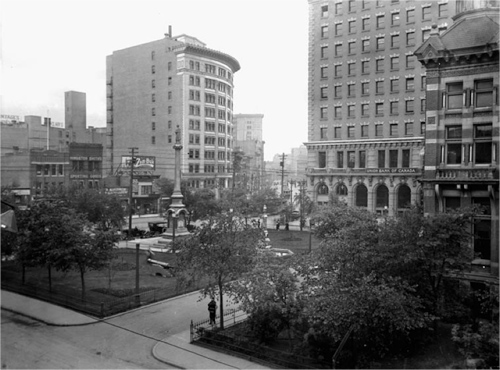
We headed north, driving and driving through the night, until the front right tire ran over something with a thump and startled James awake. “I think you hit a cat,” I said and took the wheel.
We found a hotel in Winnipeg and I collapsed into a now all-too-familiar post-driving exhaustion coma. I woke up to see the latest incarnation of James: quiet, unsure of himself, and far less attractive, staring at the phone. His hand hovered above it, then went through the motions of picking up the receiver and putting it down a few times before he cleared his throat, lit a cigarette, and called his daughter.
Elena wanted to come over to the hotel right away; James put her off, saying he wanted to take her out to a nice dinner. Elena was unable to come up with the name of Winnipeg’s finest restaurant. “No, not a Howard Johnson,” James told her, “I’ll find out and call you back.”
A few hours later, the three of us were at that nice restaurant, sitting in a big red booth, staring at each other. Elena had not expected her father to bring his young girlfriend to this momentous reunion. I almost wished I were still stuck in the mud in Steamboat Springs.
Elena, a year older than me, could have passed for fifteen. Her round, open face, at least the part that wasn’t hidden by her frowsy bangs, was unmarked by experience. She had inherited James’ dark coloring, with a sallower cast, but none of his handsome Mediterranean features. She was solid and stumpy, her hands were baby-like and dimpled, with fingers like Vienna sausages. I could tell James was horrified. It was coming off of him in waves, like stink.
It was a small tragedy played out over vodka drinks for James and me, root beer for Elena. She wanted to be hugged and fussed over. She expected deep apologies, tears, and promises of undying love from then on. What she got (besides the increasingly drunk girlfriend) was James in his car salesman persona: friendly, bursting with advice, and gone tomorrow. He kept up his patter, as Elena had no conversation.
Elena didn’t work, hadn’t been to college. She was as ignorant of the world outside of her hometown as I had been as a seventeen-year-old in Duluth. She had always lived with her mother, who had left her a little bit of money. She guessed that she would now get a job but had no idea doing what.
James was a snob and judgmental and the center of his own universe. He looked at his daughter and saw nothing of himself in her, and so she meant nothing to him. Maybe if she had been thin, or pretty, or smart, or even slightly inquisitive about the world outside Winnipeg, James could have found something to attach himself to. I was caught between this poor girl’s desperate longing for a father and James’s desperate desire to get the hell away from this person who claimed to be related to him.
The literal icing on the cake was when Elena ordered dessert, something James believed only fat people with no self-discipline did. When it arrived, James got up, announced that I was tired after our long drive, peeled off a couple of $100 bills and stuck them under the cake plate, and called for the check. “We’ll be in town a few more days,” he told Elena, her fork halfway to her mouth, her cow eyes downcast. We never saw her again.
5-Minute Fitness: Forward Lunge
Work out your rear and hip flexors for better balance and lower-body strength with this move from twins and former Rockettes Katherine and Kimberly Corp, creators of PilatesOnFifthOnline.com.
Forward Lunge
1. Stand near stable surface for balance if needed.
2. Step forward with left leg, bending left knee only as much as is comfortable.
3. Tighten abdominal muscles to keep hip bones pointing forward.
4. Bend both knees a bit, keeping back knee under shoulder and hip. (The shoulder, hip, and knee should form one vertical line.) Hold for about 3 seconds.
5. Return to upright position and repeat steps 2 to 4, stepping forward with right leg.
Repetitions: Gradually increase to 6 repetitions, 4 times weekly.
Modification: To increase stretch in hip flexors, straighten back leg (as shown) prior to returning to upright position. Be sure to keep hip bones pointing forward.
“The Dope Runners” by LaSelle Gilman
At spring twilight, with fog fingering round the bay heads and twisting over the ridges in creeping pearl-yellow tendrils, Old Hsiao started to pull in his nets. The great bay, an inland sea in itself, spread about his ungainly little boat in a vast glassy sheet on which hull, stubby mast, short boom and stocky fisherman were reflected and foreshortened to slowly dancing shadows. And it was as the last of the small-mesh shrimp nets and floats were drawn up, to be draped over the boom, that he found the yellow buoy and the thing attached to it by a deep-lying line.
All day he had farmed the shallow bottom, reaping the crop of tiny crustaceans from acres of rock, sand, mud and weed. But on the day and night before, a southeast gale had snorted over this protected harbor, roiling it until it lifted a low organ note of surf along the shores, and the catch was nothing special. The buoy with the little waterproofed package at the end of its line was his most spectacular haul.
He sat on the after fish hatch, turning the object over thoughtfully in his wrinkled brown hands. Then his fingers picked it free of its waxed-cord bindings. Slit eyes set in a leathery gnome’s face as crinkled as a brown prune peered down at his find. What he saw caused him to shuffle boots on decking, push the black knitted cap to the back of his head, hunch up the rubber coat collar in bewilderment. He was a simple man of frugal habits who had spent most of his long life on the little shrimp boats of the coast, and it dawned on him slowly what this queer stuff was that had drifted into his net with the vagrant winds and currents from the port city and the Gate.
Around his craft in the violet evening, fog swirled softly, lifting and lowering its erratic curtain to reveal glimpses of the far opposite shore and the faint lacy arch of bridges. Now his acute ear caught the whisper of sand shifting with the ebb tide among stony outcrops at Roqueno Point, and frogs harmonized across the rising flats as the sea retreated.
Presently he slipped the package into his pocket, kicked up his clanking engine and entered the housing to spin the wheel. And as dusk strengthened, the shrimper groped blindly into its moorings at Riggs Cove, unerringly guided by the years of bucking these vague tidal sets and the steady sound of a plaintive sea wind strumming in gnarled cypress and ironwood on the hillside above the anchorage.
There were no other boats in the isolated backwater of the bay shore; he was berthed in solitude along the ancient drying dock. Other shrimpers had prudently departed in their bright fleets long ago from this mist-shrouded pond. But Old Hsiao hung on tranquilly in his snug harbor, content in the ghostly assembly of weather-beaten shacks that marked the once-swarming shrimp camp, satisfied with the company of a handful of stubborn folk who peopled the curving beach.
Tonight he did not wait to unload his catch. He stumped up the sway-backed dock and through the pungent curing shed, and entered the warm lamplight of Pastorino’s Grill. He laid the odd little packet on the wooden counter.
“What you got there, Ole Shoe?” Joe Pastorino demanded, brown Sicilian eyes smiling from the dark-lined and aging face. “You been beachcombing again?” He set a coffee cup before his crony. Behind him steam rose from a pot where rich and creamy chowder simmered in aromatic proof of the former ship’s cook’s art.
“I think dope, mebbe,” Old Hsiao said calmly, sipping from the cup.
“Dope!” Pastorino was shocked and unbelieving. “What you mean, dope?”
His voice brought Young Joe to the swinging kitchen door, standing tall and vigorous like his father, wiping capable hands on an apron. Folks along the looping north bay shore said the Pastorinos were much alike, both as fine cooks and as great talkers, except Old Joe had been up and down and around the world in the galleys of merchant ships, while Young Joe had only been as far away from the cove as Korea, where he’d gone once in an Army suit. But Young Joe had promise, he was building a troller of his own on Kekkonen’s ways, and was even getting a string of crab pots together for winter.
“Dunno,” Lao Hsiao shrugged, opening the package with one casual hand. “Look like funny stuff, huh?”
Young Joe looked.
“Heroin,” he pronounced. “Seen it when the MP’s took a load off some native guys over across. Pure, likely. Lotta money there, grandpa. How you figure it?”
The fisherman shrugged again, and his indifference was genuine. “Mebbe bad fellas bring on cargo ship f’um China, scairt cops catch ‘em. Spose tie it to buoy, drop ovehbo’d at pier befo’ inspection man come. Fellas come back in skiff for find it. Okay, down by Frisco dock. But spose big wind come, waves push, ev’ting drift like yest’dy. Bym bye lost, shrimp net find.” He chuckled, amused by the deductive process.
Pastorino stared in fascination. A hundred grand, there! Maybe two hundred; maybe twice that, even. His jaw thrust out. “Joe! What you wait for? Get by the phone! Call sheriff deputy!”
Young Joe stood hesitating; the eyes of the three remained fixed on the crystalline powder. A lot of money, all right. And who couldn’t use it? Running a fish camp and boat ways, even a dilapidated, peanut-sized operation like Riggs Cove, absorbed cash as sand takes rain. Pots, nets, Manila line, engines, renovating cabins — there was never an end to it. Lao Hsiao’s meager catch didn’t go into fancy cans anymore; when dried, it went into a crude grinder in the shed and was sold for feed for inland trout farms. Juho Kekkonen, the beached square-rigger Finn who built fine boats, sold his trollers one by one down at the city wharves, but he didn’t have a production line because he was an old-country craftsman who smelled of oak and salt, and lived by stem principles. Joe Pastorino catered to occasional sports fishermen and duck hunters who wandered in by chance, renting out the abandoned shanties and the half-dozen skiffs, selling the fine-cooked sea food.
“Joe!”
“Okay,” Young Joe said finally, feeling his father’s glittering eyes upon him. “I’ll call the law.” The Hsiaos and Pastorinos and Kekkonens, of Riggs Cove, didn’t live by peddling poison. He glanced out of the café window along the shore toward the Finn’s cabin. A battered little car was parked beside it.” Katty’s up from the city to visit her pa,” he added, his face lighting up with a sudden inner glow.
“Comes home every weekend after her office job,” Pastorino said impatiently. He watched Lao Hsiao put the packet back in his oilskins. The Old One, people called the fisherman. He’d been around longer than anybody could remember, since before the shrimp boom days.
“Somebody coming,” Young Joe said, still at the window.
A car skidded to a halt at water’s edge. Three figures in belted coats got out. Pastorino glanced out, stirred the chowder pot, bent to put another carton of beer in his icebox. The three men entered and sat down at the counter.
The proprietor’s keen eye told him they were not here to troll for bass or uncoil in the sun on the warm shingle. Each year a few more harried townsmen found their way to the cove, people hunting brief sanctuary from crowds and noise and rush; they stayed for an hour or a week. Young Joe and Katty Kekkonen had their dreams for such escapists: more cabins, more boats, more services, maybe a duck club for autumn hunters. But these three feral men sitting at the counter now were not sportsmen.
They wanted beer, and drank it silently, looking around with their agate eyes and missing nothing. One was older, with a thickened, raddled face. One was younger, with a sharp nose and a tic, and Pastorino’s experience told him by the walk and the clothes and the hands that this was some sort of seagoing man. The third was a person of Lao Hsiao’s own inexpressive race; he had a broad glistening countenance in which the eyes and nose were flattened, and gold fillings in his teeth, and pointed shoes off Grant Avenue.
The older one spoke to the younger one, who went outside and down to the wharf and looked closely at the shrimp boat, and then came back. Pastorino stirred the chowder while they mumbled, noting that his son had not left his place beside the window to use the phone, noting that Old Hsiao was sitting motionless in a dim corner, noting also that the giant Juho Kekkonen, master boat builder and retired blue water hand, and his trim daughter, Katty, were walking toward the café for the evening meal. That made every resident of Riggs Cove present and accounted for. Pastorino absently jiggled a clam knife on his palm.
“Who’s the guy runs the fish boat down there?” the ruddy one suddenly asked, and the cook turned.
“Old fella lives around here,” he said softly.
“Like to see him. Like to hire out the boat for a fishing party.”
“He ain’t got a license for parties. Just fishes shrimp.”
“Shrimp,” the man said. “That’s a good one.” He didn’t laugh. “Okay, we’ll buy some shrimp. Where’s he at?”
The Finn and Katty entered the restaurant. The Pastorino — Young Joe particularly — never failed to marvel that this oversized patriarch with the shaggy white thatch and faded blue eyes had produced so tiny and perfect a gem as the fair-haired Katty. Her heels tapped cheerfully into the room, she slid onto a stool and opened her jacket, turning her gay little-cat face toward Young Joe in a smile of unaffected warmth. Juho sat down like a folding monolith beside her, his glance resting gravely on the three visitors.
“Come on, quit stalling!” the sharp-nosed one said to Pastorino. His restless eyes had been darting about the café like a hungry ferret. “Any of these guys the fisherman?”
“All fishermen,” Pastorino said, after the moment of stillness. “Fish Mediterranean, Baltic, Pacific — “
The nosy man’s twitch increased.
“Which one was out on that boat today? We seen that boat from shore through glasses. Saw it come in this way after the fog. Who runs it?”
His voice was harsh, forced up a rigid throat. His two companions sat still, watching Pastorino.
“Listen,” the proprietor of the grill said, the clam knife still jiggling in his hand. “Listen — “
“I got boat,” Lao Hsiao said from his comer.
They swung around on the stools like a brother act to look at him. He sat quietly, smoking a cigarette, and met their intense gaze.
“A Chinaman,” the old one said. He flicked a glance at his flat-faced friend.
“Whada you know!”
The Asiatic member of the visiting trio nodded. “Might have guessed it,” he said matter-of-factly. “Thought there was something familiar about the cut of that boat through the glasses. Don’t know what; maybe a touch of junk in it.”
Everyone knew what he meant, except perhaps the raddled man. Lao Hsiao’s craft was seaworthy, but of mongrel line. He was not a disciple of progress. He found his depths with a lead line, sampling the bay floor and reading the sand and mud of the bottom like a chart, drifting with tide and current over cold subsea valleys and pastures to harvest the unpredictable myriads of shrimp. He was by inheritance a junk master.
The sharp-nosed one stood up. “Where’s that yellow buoy you picked up this afternoon?” he asked Lao Hsiao, and there was the thin tension of the tortured victim in his demand.
The others — the obvious drug runner from Chinatown and the nondescript receiver who drank beer thirstily — might want return of the floating package for expected profits, but the thin seaman wanted it for itself alone. When the Old One did not reply, he stepped forward with a jerk.
“Cough it up, old man!” he grated. “You got it. I knew, when the storm blew it away from the dock and into the stream, that it’d drift up the bay with making tide. I spotted it at noon with glasses from the shore road, moving north. Lost it in the fog, found it again, lost it. When I located it again, you was there with your net. Don’t give me that dead eye! Talk up fast!” He thrust his hand into the pocket of his coat.
Young Joe, half crouching by the window, waited no longer. He sprang, as he had been taught to spring on combat patrols. But his jump was anticipated. The blotchy man stuck out a foot and tripped him. As he fell forward, the moon-faced runner leaned down and clipped him smartly behind the ear with the hard edge of his hand. Young Joe landed with a crash, shuddered, lay still. Katty screamed wildly.
“Shut up!” the thin one yelled at her in fury, shaken by the shrill cry. “Shut up, you! You want trouble too?”
She clutched the stool on which she sat beside her father, her slippers barely touching the floor, and was silent, so white that her lips were a crimson splash, her blue eyes enormous with horror.
But Juho Kekkonen, who had sailed before the mast in every sea on earth and had bucked hard oceans and hardmen all his life, was not shutting up on orders from a shriveled little junky. He had been unmoved and quiet until now, watching and listening, his pipe cold on the counter. When Young Joe went down he kept his iron control. But when the skinny fellow shouted and gestured a threat at Katty, the Finn rose with a roar that shook Pastorino’s Grill, and started, like a lumbering bear, to encompass his enemy.
The unstrung seaman shot him, his stubby gun firing through the pocket of his coat. The bullet spun Kekkonen about and slammed him against the counter. He stumbled over a stool and went to the floor. Katty caught the rolling head before it could strike the deck, and eased him down. She made no loud sound this time. She crooned over him, wrestling his heavy wool sweater down off his shoulder and arm to expose the ugly hole drilled by the shot through her father’s mighty biceps. She ripped linen from the sleeve of her own blouse, bound the spouting wound, ran to the counter for a towel to cover the scarlet bandage. She did not look at the gunman, who stood watching guardedly.
“Nice going, Harry,” the raddled man said with mild sarcasm. “Hollering and shooting is great on a quiet night in the sticks. If the law in that little burg along the road a ways don’t hear you, the Feds clear down in ‘Frisco will.”
“He was looking for it,” Harry said bitterly. He picked at the blackened hole in his coat, apparently more concerned about the damage to his garment than to the big buttinsky lying on the floor with the dame hanging over him. He turned back to Lao Hsiao, who had remained placidly where he was.
“All right,” he said. “You savvy Chinaman lingo, huh? . . . Charlie, you tell him so he’ll get it straight.”
He spoke to the Cantonese on the counter stool. The dapper runner stood up and approached Old Hsiao. He used a clacking tongue. Hsiao looked bland, shrugged, replied with a short phrase. It was answered sharply. It was not the sort of conversation anyone else in the room could follow. And suddenly the raddled man lunged to his feet for the first time. It had dawned on him that he and the thin one were the only persons listening, since the dame and her old man didn’t count now, and the young punk was out cold on the floor.
“Hey!” he growled. “Where’s that damn cook? Where’s that wop behind the counter?”
There was no immediate answer to that. Joe Pastorino, Sr., had vanished into the kitchen, and from the kitchen into the night. No one had noticed him depart. But he was most definitely gone.
“Took off to call the cops!” the thin seaman said, shivering like a fiddle string. “Probably a mile down the road by now, looking for a phone. They’ll be all over this joint in half an hour, maybe less.”
His lips were drawn back in a trembling snarl, and he whirled toward Lao Hsiao. But the Grant Avenue boulevardier — the man who looked like a pasty waiter with a night off from a chop-suey house — gestured him away. He reached out a hand wordlessly, and the Old One laid the package in it.
“This shrimper knows what’s good for him,” Charlie said in his phlegmatic voice.
“He seen the light, that’s all,” the ruddy one snapped. “Now listen, both of you. We got in here by car, but we can’t get out that way. They’ll block the roads first thing.” He paused, musing, and took a long draught of beer. “Harry, you get on that wall phone over there and call Corey downtown. You don’t need to gabble much; he’ll get it. He ought to be back by now from hunting around the docks in that cruiser he’s always yammering about. Just tell him to run that speedboat up here with his tail in the air. Fast, you understand? He knows the lay of the bay good enough. Tell him near Riggs Cove, meet us on the water off that rocky headland just south of this place where we seen the fish boat today from the road. You know?”
“Roqueno Point,” Lao Hsiao said unexpectedly. They looked at him, startled and uncertain.
“Yeah, that’s it,” the thin one called Harry said. “Seen it on the map. He ain’t kidding, Ed.”
“Okay,” said the boss man, after a moment’s hesitation. “Roqueno Point. Tell Corey meet us off that soon as he can, and it better be quick. We’ll be in this guy’s boat, tell him.”
“Taking a chance using the phone,” jumpy Harry said.
“Better than running a roadblock,” Ed said. “Only way out.” He glanced at old Kekkonen, groaning beside the counter, and at the bent back of the girl, and then up at the Cantonese. “Charlie, walk that boatman down the wharf to his tub and get ‘er turning over. Except for that slob who beat it, we got to take everybody along, so they don’t tell where we went or how. We’ll leave ‘em on the fish boat when we transfer to Corey’s launch, that’s all. We’ll be home time they get back here. Never mind the car; it’s somebody else’s anyhow.”
Harry got busy on the telephone. His end of the conversation was casual, also as cautious as the emergency permitted. But obviously the speedboat enthusiast called Corey was an intelligent mariner. Right! Roqueno Point, swathing fog or sparkling clear.
But Lao Hsiao, trudging stolidly down the wharf in front of his vigilant countryman, saw that the fog was lifting gradually. Keeping rendezvous with a launch off the point would offer little difficulty. Aboard the boat, he started the engine and they waited in patience to cast off. Both were reticent types.
In Pastorino’s Grill, Juho Kekkonen was sitting up while Katty put final touches to his bandaged arm, and Young Joe was stirring painfully. Ed kicked him into dazed wakefulness and bound his hands behind him with Joe’s own belt, hoisting him to his feet.
“No funny business, kid,” Ed warned as he lurched. “You got sense yet or do I knock some more into you?”
Joe ignored him, staring at Kekkonen’s arm. He recognized the marks of violence, but did not recall the act. He walked unsteadily to Katty, but the strap restrained him from taking her in his arms.
“You all right, honey?” he asked.
“I’m all right, Joe,” she said, trying to smile. “Just be easy. Pop’s doing fine, even if he doesn’t look it.”
Joe asked no more questions, but pressed his face down against Katty’s and kissed her. “Don’t let these bums scare you,” he advised. “They just act tough.” But he felt no conviction. Ed motioned them out toward the wharf.
As they stumbled along it to the boat, Katty hurriedly whispered the details to Joe. He nodded, reserving his doubts about big Ed’s intentions. These were treacherous and savage people, by the nature of their work, and taking hostages on this weird voyage was not reassuring.
The lines were dropped, the engine thudded and the craft swung, gliding out of the cove. Lao Hsiao was at the wheel and Charlie at his elbow. A thin rain swept over the ridge and swallowed the shoreline. They seemed very alone. But as the brief squall passed, they could see the tip of Roqueno Point rising in starlight to the south, a rock-studded crest crowned with cypress twisted and stunted by gales from the sea. All this that lay before them was Lao Hsiao’s happy hunting ground.
The prisoners sat on a hatch, Ed stood guard, and Harry prowled the boat for weapons. He found nothing, then went forward into the bow to keep a lookout across the shimmering bay. The visibility improved, and their captors kept a close watch on the shore road for moving lights.
Lao Hsiao looked back from the door by the wheel. He cast a reflective eye over his draped net on the boom, saw that Kekkonen had recovered his mobility, and suggested mildly that the net be folded properly in its place before it fell overboard.
Kekkonen considered. He and Old Hsiao and Pastorino the elder, those three were more at home on water than on land. Because they were old now, they lived ashore together. The long voyages were over; they were beached in Riggs Cove by an accidental but fortunate joining of far-flowing currents from the earth’s ends. They understood one another. The Finn began to arrange the net, working slowly with one arm, ignoring big Ed. The nets lay across the boom so that they would slide smoothly over the stem when the retaining line was loosened. Precision was needed in such maneuvers.
They were approaching the rendezvous. Harry came aft.
“Hey, Ed,” the seaman said,” I forgot there’s an ebb tide. She’s running out fast and this is shallow water. There’s a hell of a big mud flat off there, sticking out from the point.”
“Stop worrying,” Ed told him. “This Chinaman ain’t going to run himself aground, and Corey knows his business.”
He broke off, gaze fixed ahead. Idling over the easy swells was the vague loom of the launch, slipping along the side of a mist curtain, a shark shape gleaming faintly in the dim light. It moved to intercept their course. The figure in the open cockpit hailed. It was the obedient Corey, on the dot. With the shrimper slowing at the edge of the flats, the boats drifted together, a line was flung and caught.
“You okay, Ed?” Corey asked, his voice muffled. Ed said he was. Everybody and everything was okay, he said. Get the hell aboard the launch, he told Charlie and Harry, and then they would get going. He looked at Joe.
“We’ll take the young lady along with us as far as town,” he said,” just in case you got any bright ideas or maybe somebody tries to cut us off. Keep your shirt on and she’ll be home on the bus in the morning.”
Joe started for him with his hands still fastened behind, and all Ed had to do was give him a hard push, tumbling him over the hatch. Joe got to his feet with difficulty.
“I’m not afraid, Joe,” Katty said. “I’ll go. It’s better than everybody getting hurt or something, isn’t it?”
They lowered her over the gunwale into the launch; Corey steadied her, and Ed and Harry piled down after her. Charlie went last, clutching the waterproof package. He had barely gone over the side when Kekkonen began working on Joe’s bonds, setting him free, and Joe stood rubbing his chafed wrists, seething with his inability to retaliate. The boats had come together facing bow to stem, and as Corey flipped off the holding line and reached for his instruments, Juho Kekkonen pulled the retaining knot on the shrimp net. He acted on an order, unspoken but quite clear to him, from Lao Hsiao.
The net slipped unobtrusively into the sea, trailing out behind on the warp without a splash. Instead of sinking to the bottom, it was drawn along just under the surface, following like a long and tangled tail on its cork floats.
The shrimper’s engine began its laborious grinding again, and the bow swung slowly under rudder pressure. Lao Hsiao peered back, saw the position of his net, and smiled. Alongside them, the launch roared suddenly into life, moving out into a headlong dash toward the safety of the distant city.
The Old One’s boat picked up speed, describing a wide arc that cut across the course of the launch. He passed before its bow and it began to knife under his own stem on a fast tangent. He straightened out, pushed the engine up a notch, and waited.
Things abruptly began to happen to the receding launch. Like a surprised bass that has taken a lure and heads for cover, it was snapped around, throwing all five figures in the cockpit off their feet. It swung crazily, jerking like a maddened pendulum. And then, as if the bass were hooked by the tail instead of the mouth, it fell into line behind the shrimp boat and followed, drawn stern first. There was a furious boiling of white water under its yawing counter as the propeller, thoroughly fouled in the big trailing net that had been dragged beneath its keel and into the rotating blades, fought vainly to bite into the current.
Kekkonen let go a fierce yell, Joe began to grin, but Lao Hsiao was too intent on finishing the job to reveal his own sentiments. And as he spun the wheel again, glass shattered in the window beside his head. He heard the shot, fired from the reeling launch, and once more revolved the wheel, glancing over his shoulder. Kekkonen and Joe had flattened to the deck, and Hsiao saw chips dancing off the hatch cover where more bullets ricocheted. The twitchy seaman forty yards astern continued to fire until his clip was empty. Clinging desperately to the bucking craft, he could still lunge to the sway, and trigger the gun. But the shrimper never gave him a steady moment to aim.
Joe pointed toward the mud flat. Beyond the ripples of milky water where the brown bank slanted there stood a square of rushes, a blind he had built the autumn before for duck hunters. It was only a dim wraith, etched in star shine.
“Got a shotgun cached in there!” he yelled, and slithered overboard, striking out for the flat. Kekkonen stared, recalling vaguely that Joe kept a gun concealed in the blind protected by a waterproof box. The closed seasons never cramped his instincts.
Playing the struggling launch on the strong and heavy trawl lines, the Old One hauled it inshore while the speedboat propeller ceased all protest, so enmeshed had it become in the tough strong net that wound and bound the shaft. The nosy gunman was trying to reload and keep his feet, a complex and apparently impossible performance. And holding the momentum he had gained, Old Hsiao swung his boat again.
Like the writhing tip of a whip that is cracked, the launch tore sideways through shoaling water, flung far out of the shrimper’s wake, and lifted on a frothing swell. It struck the slope of the mud hank with a soft crunch and slid up it, coming to rest high but not dry in the ooze so recently left by the dropping tide. It lay canted over on its beam, dragging a deep furrow through the mud on the end of the straining trawl warp and broken net. Kekkonen stepped aft and, with several blows of a hatchet kept handy there, severed the thick line and cut it free.
Lao Hsiao circled his churning boat again, keeping just out of range, and cruised along the bank to inspect his handiwork. It was inspiring. The four seagoing gentlemen had been snapped violently out of the launch to plow their own individual furrows in the slime. Katty, however, was not with them. She had slipped overboard just before the launch struck, and was now wading cautiously ashore in the direction of the duck blind. Young Joe had already landed and reached the little shelter, and presently she climbed in with him among the tules.
The runners of dope were now running for their freedom, but it was an arduous journey. They scrambled to their feet, attempting to dash across the open expanse toward cover of the rocky point. The mud was not bottomless, neither was it solid, and they sank in it to their knees. They sprawled and wallowed and floundered up. Their anguished cries echoed over the bay.
This route took them within a few yards of the blind. Young Joe rose from his ambush, hailing them, and when they responded to his challenge by veering off in panic, he let them have both barrels with light birdshot. He reloaded and fired rapidly again. Katty stood up beside him, pointing. Pinpricks of light were twinkling along the shore road behind the point, slowing and turning beach ward to the reverberating blasts of the gun. Old Joe’s dash for the law had not been wasted.
The fugitives halted, hands in air, and the haggard man threw his gun far out into the mud. Katty went carefully forward to relieve the tortured quartet of other possible weapons. They stood wriggling ponderously, unable to rub burning portions of stung anatomy, while she frisked them.
Lao Hsiao nodded complacently at Juho and set his boat on a heading for Riggs Cove. Young Joe and Katty had begun to march their bag through the flats toward shore, and dim figures of a posse were already running out from the road.
The official reports and examination of the package did not end until midnight. But eventually the swarms of highway patrolmen and sheriff’s people ceased their buzzing and left Pastorino’s Grill, taking with them the mud clogged prisoners. Old Joe fired up the stove once more and set out the beer. Katty admired the new bandage the police doctor had put on her father’s arm, and sought to console Young Joe for his aching neck.
“You heard what they were saying about the rewards?” the excited young man said. “You know what that can do for us?”
“What?” Katty demanded, enraptured.
“Get a new boathouse for Juho. Fix up this restaurant. Remodel the cabins. Get new rental skiffs. Put Riggs Cove back in business as a going resort. That’s what.”
Kekkonen stirred, waving his pipe stem. “Buy Ole Shoe new shrimp net,” he said solemnly. “Net costs a lot.”
“With that,” Old Joe declared,” he can buy a new boat.”
Lao Hsiao sat in his corner and smiled blandly. “Got plenty money for buy boat. Don’ want. Old boat damn good. Got money in bank, save long time. Spose Gov’mint money ain’t so much. What you want, Joe? T ‘ousand? Two, free t’ousand dolluh? Okay, Joe, you fix up joint good. Lotsa people read newspapuh, come this side bymbye for see, stay for fish. You an’ Katty fix ‘er all up, huh? You an’ Katty, Joe.”
They stared at him. It had been an unprecedented outflowing of words for silent Lao Hsiao. And they were stunned by the disclosure of such wealth, amassed unbeknown in their midst. Even the verbose Pastorinos could think of nothing adequate to say.
After all, they reflected, they knew very little about the quiet little Asian with whom they had lived so peacefully and for so long. His race’s repute for secrecy and inscrutability crowded their thoughts, and they looked at him shyly, as at one suddenly set apart from them, where, before, he had been just another of the aging fishermen, a sturdy friend taken for granted.
The Old One grinned. “Hyiiee! Lotsa damn fun spend money sometime. Save too long. Us ole fellas, we don’ know bout fun spending money no more. Joe an’ his Katty show!”
“Do You Mind If We Listen?” A Short History of Government Surveillance and the Fourth Amendment
This month marks the fifth anniversary of Edward Snowden’s leak of thousands of classified documents that revealed a number of secret surveillance programs run by the U.S. government. They were intercepting Americans’ phone and internet data on a massive scale, without their knowledge and without warrants. Snowden’s actions created a storm of controversy around the legal and ethical issues of government surveillance. How much of our private information are government agencies entitled to?
When the Fourth Amendment became part of the Bill of Rights in 1791, it prohibited “unreasonable” searches and seizures of property without a proper warrant. But as definitions of property and ways to communicate evolved, no one knew for certain how the Fourth Amendment would be affected. When you made a phone call, for example, was the government allowed to listen in?
In 1928, a man was convicted of bootlegging alcohol based on evidence gathered from a tap on his phone line. The case was appealed to the Supreme Court, which decided that the privacy of phone calls wasn’t protected by the Fourth Amendment. Law officers had seized no property, they pointed out. They hadn’t even entered the defendant’s house. The incriminating telephone conversation existed beyond the protection of the home. That ruling stood for nearly 40 years.
By 1967, the Court’s thinking had changed. That year, the justices heard the case of a man convicted of phoning illegal bets across state lines from a public phone booth. They reversed his conviction, deciding that the Fourth Amendment didn’t just prohibit physical intrusion by the government. It was meant to protect people, not property.
The Saturday Evening Post editors took a different position that year, suggesting that worrying about Big Brother was a sign of paranoia, and that the police should be allowed to eavesdrop because it would be likely to lead to “the prevention or solution of crimes.”

But popular and judicial sentiment was going the other way. In 1972, the Supreme Court reaffirmed their earlier decision, unanimously declaring that the Fourth Amendment prohibited the government from warrantless spying on domestic groups, even when they threatened domestic security. The average citizen was also becoming more aware of the issue, as privacy and wiretaps were in the news that year after the arrest of agents of the Republican Party who were trying to bug the phones in the Democratic Party headquarters at Watergate.
Concluding that government spying had “undermined the constitutional rights of citizens,” the Senate Select Committee on Intelligence was created to regulate surveillance activities. In 1977, the Foreign Intelligence Surveillance Act (FISA) was passed. FISA gave Congress oversight into the surveillance activities of the U.S. government while also maintaining the secrecy needed to carry out these covert operations. A special FISA court was set up to consider requests for surveillance warrants.
Matters might have settled there had it not been for the attacks of September 11, 2001. Congress passed the USA PATRIOT Act that, among other things, expanded domestic surveillance capabilities.
Meanwhile, President George W. Bush authorized a secret intelligence-gathering program through the National Security Agency, circumventing FISA’s authority. In 2005, The New York Times published an exposé of the NSA’s program, which included extensive warrantless tapping of telephones and emails of U.S. citizens. The agency had collected tens of millions of phone records with the help of phone-service providers. In 2007, attorney general Alberto Gonzales told Senate leaders that the NSA program would not be reauthorized.
Two years later, Congress amended FISA with the Protect America Act, which made it easier for government agencies to obtain eavesdropping warrants directed at people “reasonably believed” to be outside the United States. Telecom companies were given immunity from subsequent prosecution for cooperating with the NSA’s program.
In 2013, Edward Snowden, a CIA contractor, leaked classified information about government surveillance. Americans learned that the scope of the government’s electronic spying was far beyond what they imagined. Every day, the NSA received millions of records of phone traffic. It had direct access to Google and Yahoo email accounts, and was connected to the servers of nine major internet firms, including Facebook, Microsoft, and Yahoo.
A federal judge ruled that the NSA’s collection of metadata from phone records violated the Fourth Amendment. He ordered the government to destroy all information gathered, but the action was stayed pending appeal by government attorneys.
Bipartisan reformers, in reaction to these revelations, pushed for a law that limited access to surveillance information. But their efforts failed in January of this year, when the Senate voted for a six-year extension to the NSA’s current surveillance program.
What do most Americans think about the fact that the government might be collecting their internet and phone data? A Pew Research study from 2015 shows opinions are conflicted: 74 percent of respondents said they should not give up privacy and freedom for the sake of safety, while 73 percent said American monitoring of suspected terrorists is okay. Spy on the bad guys, but not on me.
As both threats and technology evolve, we will no doubt continue to wrestle with the balance of privacy versus security, and citizens, lawmakers, and judges will continue to revisit what rights are — or are not — protected by the Fourth Amendment. As scholar Laura K. Donohue expressed it to the Washington Post, surveillance has curious status: “legal — but it’s unconstitutional.”
Featured image: Shutterstock
Tracking Down the Guru Who Developed Transcendental Meditation
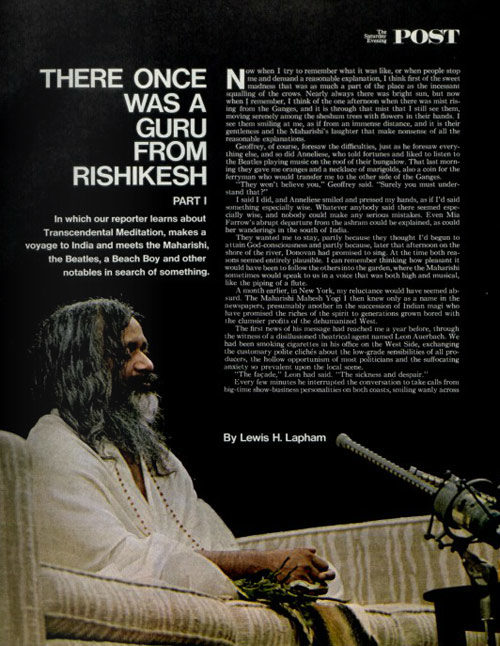
In 1968, Post writer Lewis Lapham tracked down the Maharishi Mahesh Yogi, inventor of transcendental meditation. He also found himself meditating with the Beatles.
In 1968, Lewis Lapham journeyed to Rishikesh, India, to track down the Maharishi Mahesh Yogi, developer of transcendental meditation, which was becoming very popular among Hollywood’s jet set. He wasn’t the only one to make the pilgrimage. The Maharishi’s other visitors made up a who’s who of hip young celebrities, including Mia Farrow, Donovan, Mike Love of the Beach Boys, and the Beatles.
George Harrison proved most adept at transcendental meditation among the Fab Four; it was more challenging for the other band members. But for his part, Paul McCartney shared a dream he’d had that explains the origin of the Yellow Submarine, though not everyone was buying the interpretation:
Somebody asked George about his meditation, and he said his mantra was an English word. He further astounded everybody by saying be assumed the Beatles all had the same mantra. He didn’t know for sure, but his appeared in Lennon’s song, “I Am the Walrus.”
Paul McCartney [then] said he’d had a dream. To Anneliese Braun, an elfin woman to whom everyone applied on such matters, he explained that in his dream he’d been trapped in a leaking submarine of indeterminate color. When all appeared lost, however, the submarine surfaced in a crowded London street.
Anneliese clapped her hands in the enthusiastic way she had, like a child seeing his first snowfall. How very nice, she said, wondering if McCartney understood. He smiled and said he didn’t think he quite got all of it.
“Why,” she said, “… it’s the perfect meditation dream.”
The voyage in the submarine she interpreted as the descent toward pure consciousness through the vehicle of the mantra, the leaks represented anxiety, and the emergence in the street indicated a return to normal life, which was the purpose of all good meditation.
The other people present applauded, and in the ensuing silence at the far end of the table, I heard somebody say, “I’m sure it’s Wednesday, but they’re trying to tell me it’s Saturday.”
Read Lapham’s complete two-part report on his time with the Maharishi below.
Your Weekly Checkup: Caffeine and the Heart
“Your Weekly Checkup” is our online column by Dr. Douglas Zipes, an internationally acclaimed cardiologist, professor, author, inventor, and authority on pacing and electrophysiology. Dr. Zipes is also a contributor to The Saturday Evening Post print magazine. Subscribe to receive thoughtful articles, new fiction, health and wellness advice, and gems from our archive.
Order Dr. Zipes’ new book, Damn the Naysayers: A Doctor’s Memoir.
During more than 50 years of practicing cardiology, I have counseled hundreds, if not thousands, of patients complaining of palpitations and heart rhythm problems to reduce or eliminate intake of caffeinated beverages, particularly coffee. Caffeine, the major ingredient in coffee, is a known stimulant that triggers the body’s fight or flight response, with an outpouring of adrenaline and other substances. Three fourths of my physician colleagues proffer the same recommendation. Despite caffeine’s stimulating action, recent evidence suggests we may have been wrong.
An extensive review of multiple studies concluded that, barring about 25% of individual cases that exhibit a clear temporal association between heart rhythm episodes and caffeine intake, coffee and tea appear to be safe. A regular intake of up to three cups of coffee a day may even protect against heart rhythm disorders [PDF]. One large study of 228,465 participants showed that the incidence of atrial fibrillation decreased by 6 percent for every three cups of coffee a day. Another study of 115,993 patients showed a 13 percent reduction in the risk of atrial fibrillation.
One report concluded that drinking three to four cups of coffee daily compared with no coffee intake reduced death and cardiovascular disease by almost 20 percent. Coffee was also associated with a reduced risk of some cancers and neurological and liver disorders. Interestingly, patients with Parkinson’s disease had significantly lower serum concentrations of caffeine and its metabolites than subjects without the disease, despite consuming the same amount of caffeine. It’s not known whether this response might be due to the drugs they were taking or a specific effect of early Parkinson’s disease on caffeine metabolism.
Energy drinks are in a different class. They often contain caffeine at significantly higher concentrations than coffee and tea, along with other energy-boosting substances, such as guarana, sugar, ginseng, yohimbine, and ephedra. Guarana, particularly, has a higher caffeine concentration than coffee and contains theophylline, which also has stimulant properties. Multiple reports relating the temporal association between ingesting energy drinks and heart rhythm problems, including sudden death, are of major concern. Energy drinks may also increase the risk of blood clots. My recommendation is to avoid all energy drinks.
Some caution about accepting these positive results is advised since extrapolating data from healthy volunteers in the studies to individual patients can be risky. Differences in individual susceptibility to the effects of caffeine, various health conditions, and drugs could trigger caffeine-induced heart rhythm problems, so those with a clear temporal association between coffee intake and heart rhythm episodes should abstain. A transient blood pressure rise can occur in susceptible individuals. Also, caffeine tolerance developed by regular long-term coffee drinkers may explain some of the lack of association with heart rhythm problems. For example, I enjoy a double espresso after dinner each night and still fall quickly asleep (the wine helps!), but I have been drinking coffee regularly for many years and would not recommend this for new coffee drinkers.
In conclusion, those of you who are coffee and tea lovers can rest assured that, along with dark chocolate and red wine, caffeine intake is likely to be safe, and maybe even beneficial.
But wait! This column is mostly about caffeine and the heart. What about caffeine and cancer? See next week’s column.
Go Bananas with These 101-Year-Old Recipes
Once considered “the poor man’s fruit,” banana prices are on the rise in 2018. If you’re going to splurge on the botanical berry, why not make it count? Here are 13 ways to “daintily prepare and serve” the cooked banana, circa 1917:
—
When Food Costs Soar
Originally published in The Country Gentleman, April 14, 1917
Every wise housekeeper is on the outlook nowadays for ways and means of cutting the high cost of living. With eggs soaring in the 40s and butter in the same locality and the high prices of other things, it behooves womankind to put on thinking caps.
Bananas, frequently spoken of as “the poor man’s fruit,” are well deserving of this title, as they may be purchased at a reasonable price at all seasons of the year. Comparatively few people, however, know the value of the cooked banana, which is truly delicious, when daintily prepared and served as a dessert, vegetable, or supper dish.
Banana Fritters

Beat the yolk of one egg and add half a cupful of flour into which has been sifted a teaspoonful of baking powder; add a teaspoonful of sugar, a teaspoonful of olive oil, and lastly, the well-beaten white of the egg. Cut bananas in two lengthwise, then crosswise, squeeze lemon juice over each piece, dip in fritter batter, and fry in hot fat. Drain on paper, sprinkle with powdered sugar, and serve hot.
Fried Bananas
Select firm and rather slender fruit, peel and cut into sections about three inches long. Fry in hot butter, and as the bananas cook, sprinkle with a little sugar and roll about carefully in the frying pan until a light brown all over. Transfer to a hot dish, pouring over them any butter that may remain in the pan. Serve at once.
Bananas Fried in Deep Fat
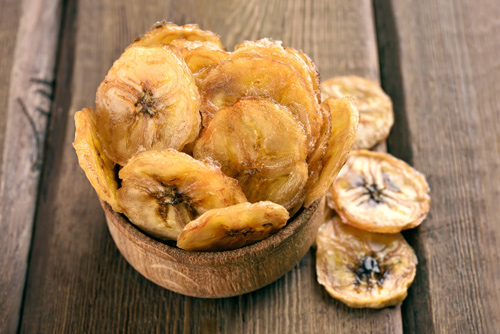
Remove the peel and coarse threads from four or five bananas and cut the fruit in thin slices. Dip these slices in milk, then dredge lightly with salt, paprika or pepper, and flour. Cover the bottom of the frying basket with the slices and immerse in hot fat. Cook until light brown. Let the slices drain on a piece of brown paper before sending to the table. These can be served as the main food at supper or lunch.
Baked Bananas
Remove skins from six bananas and cut in halves lengthwise. Put in a glass baking dish. Mix two tablespoonfuls of melted butter, one-third of a cupful of sugar, and two tablespoonfuls of lemon juice. Baste the bananas with half the mixture. Bake 20 minutes in a slow oven, basting frequently during baking with the remaining half of the mixture.
These are very much like candied sweet potatoes and can be served in place of them.
Banana Croquettes

- 1 cupful of sweet milk
- 1 egg
- 1 cupful of flour
- 1/4 teaspoonful of salt
- 1 teaspoonful of baking powder
- 1 banana
- 1 teaspoonful of sugar
Slice the banana thin and stir it into the batter. Drop one spoonful at a time and fry in deep lard. Serve as a vegetable, or a sweet with maple sirup.
Banana Cakes to Be Served with Meat
Select a good-sized banana for each person to be served. Mash each banana with a fork, sprinkle with salt, mix with cracker crumbs, pat out on a board, cut in squares, and brown in a very little fat.
Note: When mixing, be careful to break the fibrous part of the banana so that the pulp is of the proper consistency for making into cakes.
Banana Loaf
Select a small loaf or sponge cake or of angel food, and cut a well in the center. To do this, press a thin tumbler through the center of the loaf, almost to the bottom, then remove the crumbs within the circle left by the tumbler. Fill this hollow with sliced bananas and whipped cream sweetened to taste.
Bananas Baked Whole
Remove peel, dip in lemon juice, roll in fine sifted crumbs. Place in baking pan and bake 15 minutes in hot oven. Serve with whipped cream, sweetened, and flavored with cinnamon.
To vary sliced bananas served with cream and sugar, use lemon sirup over them — the juice of half a lemon and two teaspoonfuls of sugar. This quantity is sufficient for two small bananas.
Banana Pie
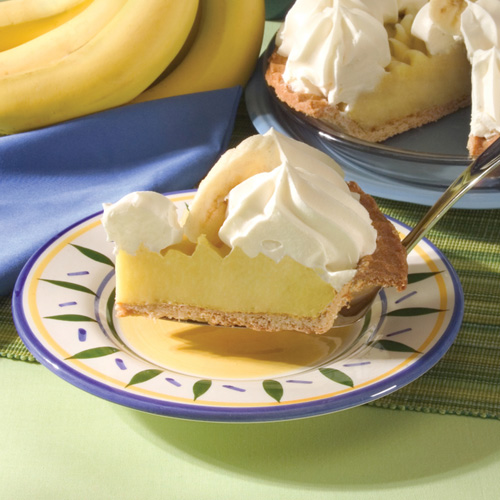
Line a pie tin with rich crust. Make a nice custard after your favorite recipe; flavor it with lemon, and add one large banana, chopped fine. Fill the crust with the custard and banana and bake until well set. Let it cool, then pile on top a meringue made from whites of eggs, powdered sugar, and lemon juice. Place in oven until a delicate brown.
Another Banana Pie
- 1 cupful of sugar
- 1 teaspoonful of butter, not melted
- 2 eggs
- 2 tablespoonfuls of flour
- 3/4 cupful of boiling water
- vanilla
Line a deep plate with rich crust and bake to a delicate brown. For filling, cream together the sugar and butter, and then beat in the yolks of eggs and flour, add water and cook, stirring constantly until thick. Add a little vanilla to taste. After cream is cool, slice bananas and fill bottom of pie, covering with cream, then another layer of bananas and another of cream. Put in oven and bake. Cover with beaten whites of the eggs and bake to a delicate brown.
Peaches or oranges may be substituted for the bananas, sugaring them for about one hour before using.
Banana Pudding
- 2 bananas, cut small
- 1/2 loaf of bread, crumbed
- 1/4 of a cupful of sugar
- 2 tablespoonfuls of butterine [imitation butter made with animal fat]
- 1 egg
- 1 cupful of milk
Mix all together and bake 30 minutes.
Scalloped Bananas
Cut half a dozen bananas into half-inch slices. Cut some bread into small pieces, and put a layer of this into the bottom of a buttered baking dish. Add a layer of bananas and half a tablespoonful of lemon juice. A sprinkle of sugar may be used. Repeat these layers until all have been used, having bread as the top layer. Sprinkle the top with sugar, and bake for 30 minutes in a quick oven.
Banana Puffs
For puffs
- 2 eggs
- 1 cupful of milk
- 1 cupful of sifted flour
For pulp
- 2 or 3 large bananas
- 1 orange
- 1 teaspoonful of sugar
Beat the whites of the eggs to a stiff froth. To the yolks add the milk, which should be very cold, and a pinch of salt. Mingle thoroughly with a batter whip, and add slowly one cupful of sifted flour, beating vigorously. Lastly add the whites of eggs, lightly folded or chopped in, and then pour this batter into hot gem irons, and bake in a quick oven. If right, they will double their size and be nearly hollow. Fill with banana pulp.
To make this pulp, remove the skin from two or three large bananas, press through a wire strainer, add a teaspoonful of sugar, and the juice of one orange. Beat thoroughly with a fork.

Healthy Weight, Healthy Mind: The Bad Smell of Stinkin’ Thinkin’
We are pleased to bring you this regular column by Dr. David Creel, a licensed psychologist, certified clinical exercise physiologist and registered dietitian. He is also credentialed as a certified diabetes educator and the author of A Size That Fits: Lose Weight and Keep it off, One Thought at a Time (NorLightsPress, 2017).
Do you have a weight loss question for Dr. Creel? Email him at [email protected]. He may answer your question in a future column.
In this article, we’re exploring how the relationship of thoughts, feelings, and behavior affect our eating and exercise habits. Thinking takes center stage.
Before we get started let’s clarify a few concepts and terms. Each of us has thoughts we can’t entirely control. Sometimes we know certain thoughts are ridiculous and we can easily dismiss them and ask ourselves, “Where did that come from?” We won’t be scrutinizing those thoughts. Instead, I want to focus on thoughts that matter — the ones that influence behavior and shape our attitudes and beliefs.
Beliefs are simply thoughts we accept as true. If your mind was a garden, thoughts would be seeds that quickly developed into seedlings. Beliefs and attitudes are the mature plants. Therefore, thoughts are full of potential to help us and provide a sense of well-being. Too often, however, they derail us — and that’s where this chapter can help. Let’s look at three clients whose thinking directly affected their attempts at weight loss:
- John needed to make changes in his diet before being approved for bariatric surgery. As I explained the MyPlate principles of healthy eating, John snapped back at me, “I’m not doing that. Nobody eats that way!”
- A client named Karmen told me her personal trainer said she was obese because she’d ruined her metabolism. According to him, regular, intense workouts were the only way to solve her weight problem.
- Becky’s mother always told her she’d never find a good man if she was overweight. Now 32 years old, 75 pounds overweight, and still single — Becky felt unlovable.
Can you see how John, Karmen, and Becky handicapped their weight management efforts before they even started? John’s belief that only freaks would eat a balanced diet was like putting up a huge DETOUR sign on the road to weight loss. Karmen was overwhelmed by thinking her metabolism was forever ruined, and only a lifelong extreme exercise program would treat her condition. She was bound to give up. Becky’s mother primed her to feel lonely and hopeless in pursuit of a relationship. She quickly dismissed any man who showed interest in her, yet paid close attention if anyone seemed put off by her weight. Eating would become her friend, her solace.
These three examples above show how thinking can have a clear, direct relationship to weight. However, sometimes the beliefs that affect eating and physical activity are more subtle and indirect:
- At work, Steve’s philosophy was, “If I don’t do this, it won’t get done.” At the same time, he had high standards for work and wouldn’t delegate tasks to others. This led to 14-hour days with no time for exercise. Being strapped for time and chronically sleep deprived, he often ordered carry-out and drank caffeinated sugar- sweetened beverages all day long.
- For years Sarah tried not to even think about her family, but she couldn’t get them out of her mind. Her alcoholic father’s relapse made her both angry and sad. Her sister’s lifestyle choices led to financial problems, and Sarah felt obligated to help. Sarah seemed to always feel upset, and to keep those emotions under control she distracted herself in some way — often by eating something she knew she shouldn’t.
- Lisa often thought about how terrible it would be if she disappointed her boss, her husband, or her kids. She believed she needed to be everything for everyone, and this led to anxiety she couldn’t control. She felt anxious much of the time and eating became her Xanax.
The First Steps Toward Change
The first step toward thinking differently is to recognize beliefs and feelings behind the behavior we want to change. Examining situations and their outcome helps pinpoint our problematic behavior. For example, let’s consider Lisa from the last paragraph and imagine how she might respond to the following scenario:
Lisa’s boss asks for a volunteer to lead a fundraising project (situation). Lisa thinks, “My boss will be disappointed in me if I don’t do it,” (thought) and despite her already overcommitted schedule, she feels pressure (emotion/feeling) to take on the task. For Lisa, this becomes a question of which option is most unpleasant: the anxiety of not volunteering versus the anxiety and stress of accepting extra work she doesn’t want. Either way, she feels stressed because her thinking has created a lose-lose situation.
Lisa could think differently: “I’m not sure what my boss expects, but even if he does want me to do this (and I have no evidence that he does), it’s unreasonable for me to be everything for everybody. Other people in the office can benefit from taking a turn. The people who truly care about me will still feel that way even if I don’t always do exactly what they want.” She could also talk to her boss in private about his expectations. Thinking differently helps Lisa feel less anxious about her situation. Her new thinking may feel awkward at first but allows her to make the brave choice of saying “no” to more responsibility.
News of the Week: The Time 100, Time Travelers, and 21 (Supposedly) Overrated Books
Influential People
For the 14th year in a row, I just missed making the Time list of the 100 most influential people in the world. This year I came in at 107, and so was not invited to the big party they had Tuesday night announcing the list. I was busy that night anyway. I had pasta and watched Jeopardy in my sweatpants.
The list is divided into different groups: “Pioneers,” which includes the kids who survived the Parkland school shooting; “Artists,” which includes Roseanne Barr and Jimmy Kimmel; “Leaders,” which features President Trump and Meghan Markle; “Icons,” which includes Jennifer Lopez and Kesha; and “Titans,” a category that features Roger Federer and Oprah Winfrey.
I’m not sure why Cardi B is considered a “Pioneer” and not an “Artist,” but I’m sure Time has its reasons. Also, I thought Cardi B was a prescription heart medication.
The Grandfather Paradox
Speaking of time…
I’m not a scientist (or an Icon or Pioneer), so maybe I’m wrong, but I don’t think that time travel can exist. Let’s say you went back in time to stop yourself from accidentally drinking some expired milk. If you stop yourself from drinking the milk, then it didn’t happen, and if it didn’t happen, then how did you know about it in order to go back in time to change things? Of course, this can be explained by alternative timelines and other things that we’ve heard about in science fiction, but it still doesn’t seem to me that it could logically work.
But it’s a fantastic narrative device that movies and TV shows keep using, from Star Trek and Quantum Leap to one of my favorite current shows, Timeless. And according to Slate’s “Watch Smarter” series, there are movies and TV shows that get time travel right and some that get it completely wrong. They say that Back to the Future gets it wrong, while The Terminator gets it right.
But their examples, to me, seem a bit contradictory or open to opinion, insomuch that nobody knows how time travel would work (and wouldn’t we be visited by time travelers right now if it does exist in the future?). Read some of the comments on the piece and you’ll see how some readers disagree with Slate’s findings.
If I had a time machine, I’d go back to a certain Tuesday night in 2003 and prevent Mark Zuckerberg from getting drunk.
Nancy Is Back!
Actually, the comic strip Nancy never really went away. It was drawn by Ernie Bushmiller until 1982, and then by other artists until earlier this year. A new artist, with the pseudonym Olivia Jaimes, took over the strip a few weeks ago, and a lot of fans aren’t happy at all with the new direction the strip has taken.
Nancy and Sluggo are now a little more modern and hip. They’re always on their smartphones, watching Hulu, and dealing with social media and video games. There seems to be a change in the tone of the strip as well. Luckily, they’re still dressed the same, Nancy with her skirt and the bow in her hair and Sluggo dressed like a 1930s hobo.
I’m just happy that newspaper comic strips still exist and people are actually invested enough to argue about them.
Overrated?
Every day, there are dozens of terrible, inaccurate, misguided, and just plain dumb articles posted online. This, from GQ, is one of them.
It’s titled “21 Books You Don’t Have to Read,” so you know right away that it’s going to make you grit your teeth. It’s a list of overrated books, with helpful suggestions on what you should read instead. Don’t read Catcher in the Rye by J. D. Salinger, read Olivia: A Novel by Dorothy Strachey instead! Forget about that lame Adventures of Huckleberry Finn by Mark Twain and dive into Narrative of the Life of Frederick Douglass, An American Slave, by Frederick Douglass! The Bible? That’s sooooo several centuries ago. Instead, read The Notebook by Agota Kristof!
It’s a weird, clickbait-ish piece, because it not only dumps on a lot of classic books, explaining how they’re “overrated” and/or not well-written, but also discourages people from reading them in the first place. As if the philistines at GQ know what you “should” read.
I happen to live in a world where you can actually name 21 books that everyone should read without also listing 21 that you shouldn’t. More reading, not less.
Who Was Mister Peepers?
I don’t talk about politics a lot in this column (that seems like the road to madness), but President Trump did allegedly do something recently that I thought was worth mentioning in a pop culture context. Reports say that he has nicknamed Attorney General Jeff Sessions “Mr. Magoo” and Deputy Attorney General Rod Rosenstein “Mister Peepers.” Most of us know who Mr. Magoo was, but I bet a lot of people under the age of 50 aren’t quite sure about this Mister Peepers guy. I heard one anchor this week call him a cartoon character.
Actually, Mister Peepers was a character in the NBC comedy of the same name, played by Wally Cox (later the voice of Underdog). Mister Peepers aired from 1952 to 1955. Here’s an episode:
RIP Verne Troyer, Bruno Sammartino, Avicii, Reid Collins, Lee Holley, and Bob Dourogh
Verne Troyer was best known for his role as Mini-Me in the Austin Powers films. The actor also appeared in other movies, including Fear and Loathing in Las Vegas. He died last week at the age of 49.
Bruno Sammartino was a Hall of Fame professional wrestler who later became an announcer. He died last Wednesday at the age of 82.
Avicci was a DJ and electronic dance music star known for his song “Wake Me Up.” He died last week at the age of 28.
Reid Collins was a veteran newsman and anchor who worked for CBS News from the mid-’60s to the mid-’80s and then joined CNN as an anchor. He died last week at the age of 88.
Lee Holley was a cartoonist known for his strip Ponytail, which focused on the life of a teenage girl. He also worked on the Dennis the Menace strip, and drew many classic characters for Warner Brothers. He died March 26 at the age of 85.
Bob Dorough was a jazz musician who composed and performed the classic Schoolhouse Rock! songs for ABC. He died Monday at the age of 94.
Quote of the Week
“I’m perfectly willing and happy to step aside or help transition it into something new.”
—Simpsons voice actor Hank Azaria, on the controversy over the cartoon’s depiction of convenience store owner Apu
This Week in History
Red Baron Shot Down (April 21, 1918)
He wasn’t just a frozen pizza or Snoopy’s arch-enemy. He was a real World War I German flying ace named Manfred von Richthofen. He was killed in battle over northern France.
“New” Coke Debuts (April 23, 1985)
The new soda formula was launched with a massive ad campaign that included TV commercials featuring Bill Cosby and Max Headroom. Coke fans quickly let the company know that they didn’t want Coke changed, and just a few months later, the company “reintroduced” the original formula as “Coke Classic.”
This Week in Saturday Evening Post History: Weatherman Was Right (April 27, 1946)
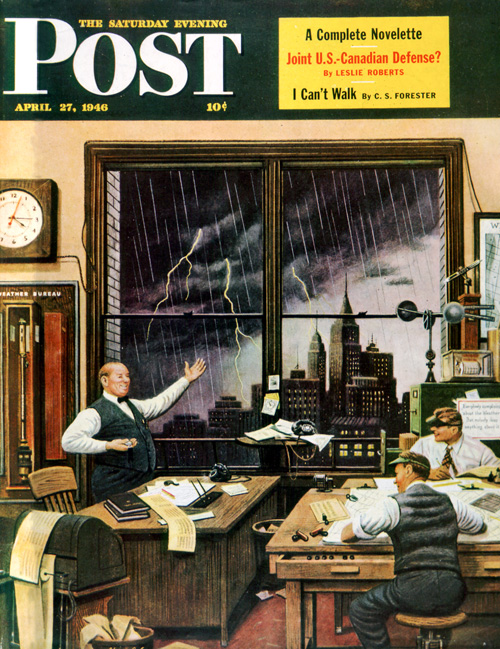
Stevan Dohanos
April 27, 1946
The meteorologists on this Stevan Dohanos cover seem very happy that their prediction of rain and lightning came true. April showers bring May flowers and all that.
Antiques Roadshow and the Post
I watch PBS’s Antiques Roadshow every week. I’m not only interested in the history of the items that people bring to be appraised; I also look for items that might be connected to something I own, a place I’ve worked, or where I was born. Just last month, they featured a painting of an area that’s about two blocks from where I live. The funny thing about it was, even though the area looks completely different now and didn’t feature anything I recognized, I knew it was my town the second they showed the painting.
On this week’s episode filmed in Green Bay, Wisconsin, a man brought in a bugle (in this video at the 38:30 mark) that was owned by his great-great-great-grandfather Seth Flint, who was General Ulysses Grant’s escort bugler. Flint actually wrote an article for the Post back in 1930 about his adventures, titled “I Saw Lee Surrender,” which you can read here.
Raisins, Raisins, Raisins!
This is a very exciting time to be a raisin. Not only is this Monday National Raisin Day, next week is National Raisin Week. So here are some recipes that feature pickles.
Just kidding! Here’s a recipe for Cinnamon Raisin Bread, and we also have a whole page filled with retro pie recipes from the ’50s, including an Orange-Raisin Pie.
Next Week’s Holidays and Events
Older Americans Month begins (May 1)
The Administration on Aging heads this celebration every May. This year’s theme is “Engage at Every Age.”
Bird Day (May 4)
This is a confusing day, because while Bird Day falls on May 4, International Bird Day is on April 13. And if that wasn’t enough to remember, International Migratory Bird Day is held the second Saturday in May.
None of these celebrations should be confused with Larry Bird Day, which was announced by Indiana’s then-governor Mike Pence on November 9, 2013.
January/February 2018 Limerick Laughs Winner and Runners-Up
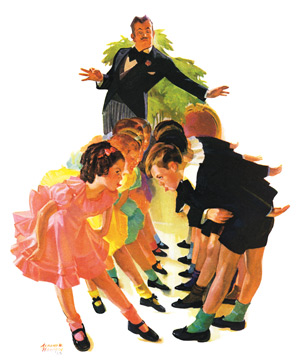
The students were taught by a master
But the dance class became a disaster
Cried one little mister,
“I’m paired with my sister!”
“So can’t we please dance any faster?”
Congratulations to Linda Neukrug of Walnut Creek, California! For her limerick describing Albert W. Hampson’s illustration Cotillion, which appeared as a Post cover on May 23, 1936, Linda wins $25 and our gratitude for a job well done.
If you’d like to enter the Limerick Laughs Contest for our upcoming issue, submit your limerick via our online entry form.
Linda’s was only one of a bunch of great limericks! Here are some of our favorites from our runners-up, in no particular order:
We’re lined up, all in our places
To practice polite social graces.
Some day this dance
May lead to romance,
But today we’d rather make faces.—Christine Coates, New Berlin, New York
They went to the junior cotillion,
Where she wore a dress of vermillion.
But what are the chances
These kids have more dances?
I’d say about one in a million.—Pat Cunningham, Cheektowaga, New York
They’ve probably practiced all day
To perform in this delicate way,
But the two kids in front
Add their own little stunt
To an otherwise perfect display.—Chet Cutshall, Willowick, Ohio
Dad said, “Just so that we are clear,
You will dance with your sister this year,
Or lose, if you like,
The use of your bike,”
Which explains the real reason I’m here.—Paul Desjardins, West Kelowna, British Columbia
The children’s performance was fine,
Their costumes and dancing divine.
One had to award ’em
High marks for decorum
… Except at the front of the line.—Michelle Gordon, Airway Heights, Washington
The French master’s class in the dance
Quite often would spark a romance.
But Sally and Sonny
Are nobody’s honey!
Which shows in their combative stance.—Lynn Johnson, Green Valley, Arizona
This girl who is dressed up in pink
Doesn’t know quite what to think:
Does this boy really hate her
Or wish he could date her?
She’ll obsess about this with her shrink.—Neal Levin, Bloomfield Hills, Michigan
“Excuse me, there’s no time to laugh.
Bow and curtsy and straighten the calf.
This is a cotillion;
You will look like a million
Or my salary will likely be half.”—Dolores M. Sahelian, Mission Viejo, California
In the ballroom, the young are taught graces
And how to trade spats for embraces,
But whether waltz or quadrille,
There are boys and girls still
Who wish only to trade nasty faces.—Rebecca Shulman, New Hope, Pennsylvania
Movies for the Rest of Us with Bill Newcott: The Tribeca Film Festival
Movie critic Bill Newcott reviews the hottest movies from the Tribeca Film Festival, including documentary Love, Gilda and The House of Tomorrow starring Ellen Burstyn. Bill also reviews the latest home video releases, including Film Stars Don’t Die in Liverpool with Annette Bening, Hostiles with Christian Bale, and 12 Strong with Chris Hemsworth. Plus, don’t miss the 40th (!) anniversary of Grease, out in a new Blu-ray anniversary edition.
See all of Bill’s movie reviews.
The Bicycle
A little past five, I stood at the stove. Footsteps sounded on the front porch, a whir of wheels, the rattle of a chain, and the snap of a lock. The front door opened, and someone crossed the living room. Wearing a quilted down vest and a helmet, Laurel stood in the archway.
“Good evening, darling,” I said.
“Hi, Wes.”
“Nobody is going to steal a bicycle in Hapsburg.”
“Better safe than sorry.”
Laurel shook loose her long brown hair. She leaned over the stove and took a deep breath. “That smells good. What is it?”
“Split pea soup with onion and garlic.”
“What are the orange bits?”
“Grated carrot.”
She was flushed and smiling, teasing me.
“It’s traditional,” I said, “like chocolate chips in a cookie. You know me, I’m all about tradition.”
“Except when you’re not.”
Her cheek was so close, I couldn’t resist a peck.
“You’re wearing the new chef’s apron,” she said.
“Since you bought it for me.”
“After you bailed me out. To make amends.”
“There’s nothing to make amends for.”
“Then consider it a token of my appreciation. You didn’t say ‘I told you so.’”
“I’m still not. But I do want to know.”
“In return for my cooperation,” Laurel recited, “the campus police let me off the hook. I gave names and addresses of the other protesters.”
“You squealed.”
“What else could I do? The college library still fired me. There’s a clause in the employee guidelines about destruction of property.”
I held the spoon so she could taste the soup.
“The apron makes you look so clean and …”
“Like I know what I’m doing?”
“That too. You smell like fresh laundry.”
“Speaking of which …”
“I know, the hamper is full and the laundromat is lonely.”
“Chores. That was our agreement.”
“Anyway, you are a good cook, so enough false modesty.” She stepped back, unzipped her vest, and sat backward in a chair to face me.
“How was the first day at the new job?” I stirred the pot of soup. As we talked, I chopped vegetables and set the skillet over a flame.
“Wonderful! The public library is exactly what you expect in a small town, old and quirky, with lots of windows and natural oak. My boss Hazel Lampwick is a dear! She grew up here, always wanted to be a librarian. I would guess she’s 40-ish.”
“The same age as me. We went to school together.”
“Really and truly?”
“No lie.”
“Miss Lampwick asked me to read aloud in the afternoon to the preschoolers. So, in addition to my menial tasks, I’m the new story lady. I started to read a book, but a squirmy little boy interrupted me after the first sentence. ‘We already read that one,’ he said. I tried another book, and he cut me off again.”
“So what did you do? Smack him?”
“No, Wes! I made up a story.” Laurel’s eyes shone.
“Aren’t you supposed to promote the written word?” I finished chopping and was about to sauté the vegetables.
“There’s no job description.”
“Besides, you told me you’re a terrible liar.”
“Telling a story is not the same as lying. It’s an art form.”
“An old Southern tradition.”
“Are people from Missouri allowed to tell stories?”
“Missouri is a border state.”
“Anyway, as I rode home on my bicycle, I passed the courthouse green, and I had to stop. Sunlight was fading, and clouds were turning a dull purple. Small birds flew as a flock around and around.”
“Swallows.”
“Lights came on in the houses. It was like watching a movie. I watched a man come home from work. I imagined his wife inside cooking dinner, children setting the table. They had to set an extra place for a visitor. Then it hit me — I was going home, too. Except instead of Mrs. Whatsit, you were in the kitchen.”
“And the children stayed at the library.”
Laurel laughed.
“You should write about what you saw.”
“Oh, Wes, the subject is too much like my college poems. I don’t want to write something moody.”
“Then don’t. Paint the picture and tell the story.”
“I don’t even know what the story is.”
“Surprise yourself. Do it tonight, while the experience is fresh.”
“Should I include the bicycle?”
“Beats me. I never rode one.”
“Seriously?”
“I grew up dirt poor, Laurel. We lived in an old plank house with a rock fireplace. There was one bedroom for grownups. Children slept in the attic.”
“Where was this?”
“Out in the county.”
“Did you at least have indoor plumbing?”
“We fetched water from a spring and used a privy to answer the call of nature.”
“Your childhood home makes Missouri look progressive.”
“To make matters worse, my parents passed away in their 30s. I was the youngest. My sister helped raise me as long as she could. She got married, and then it was every man for himself. I got my first job as a teenager, when I was still in school.”
“Where are your siblings now?”
“Gone or moved away.”
“Are you the last of the Grubbs?”
“Not hardly. There’s always more lurking in the backwoods of Virginia. But you see how we couldn’t afford extras.”
“Like new clothes and fancy toys.”
“And bicycles.”
“And that’s why you never learned to ride.”
“Now it’s too late.”
“Don’t say that! Better late than never. I’ll teach you.”
“On what?”
“You can ride my bicycle.”
“What if I crash and wreck it?”
“Wes, this isn’t like you. After supper, we’ll go outside for your first lesson. I’ll hold the handlebar and run alongside. You’ll see. It’s as easy as …”
“Falling off a log?”
After supper, Laurel dragged me out to the porch, unlocked her bicycle, and lifted it down the steps to the street. The last gasp of daylight was gone by then. A streetlamp flickered from an old utility pole that oozed tar and leaned like it was tired. Perched on the skinny bicycle seat, high above those skinny wheels, I tilted and wobbled.
“Feet on the pedals, look straight ahead.”
“I feel like a bear in a circus.”
“Once you get moving, it’s easier to balance.”
“It’s too dark to see where we’re going.”
“There’s no traffic in the street at this hour. We’ll be fine.” She panted as she ran.
Laurel lost her grip, and I spurted ahead. I struck a pothole, went down, and landed on my left elbow.
“No!” Laurel wailed as she scrambled to where I lay. “Are you hurt?”
“It’s a good thing I’m right-handed.”
“This is all my fault!”
“Give me a hand up. Ouch!” The agony was beginning.
“Your sleeve is ripped.”
“What about the bicycle?”
“It looks okay. Maybe a scratch on the paint.”
“How bad is my elbow?”
“Something white is showing. I think the bone is exposed.”
“What about blood?”
“Not too much.”
“That’s good, because I can’t stand the sight of blood. Especially when it’s mine. Can you look in the medicine cabinet?”
“I don’t know anything about first aid.”
“Maybe there’s some iodine or hydrogen peroxide.”
“Should I call a doctor? Boil some water?”
“Sharpen a knife for the amputation …”
“Wes!”
“Just kidding, Laurel.”
“How can you make jokes at a time like this? What should I do?”
“If you want to do me a favor, darling, you can drive me to the emergency room.”
“Where is it?”
“The next town over. Here’s the key to my truck. I’ll give you directions.”
By the time we reached the regional medical center, my arm was throbbing and my mind was fuzzy. A plump young woman in a nurse outfit made wary eye contact with Laurel. She took my blood pressure, pulse, and so on.
“Dr. Zahiri will be with you in a moment.”
A dark, wiry young man with a black mustache poked me in the ribs and looked in my ears. He told me to breathe, listened through a stethoscope, checked my vision, and stuck a wooden paddle in my mouth.
“What brings you here upon this dreary midnight hour?”
“My elbow.”
“Oh, that.” He prodded my elbow until I screamed with pain.
“My dear sir, what is a little discomfort in the pursuit of medical science? You would not wish me to think you are a baby.”
“Yes, I would!”
“Notwithstanding! A summary physical examination having been concluded, let us proceed to a preliminary diagnosis. You have hurt your arm. The left one, to be precise. And how did this unfortunate turn of events come about?”
“I fell off a bicycle in the street.”
“Allow me to express my condolences.”
“How bad is it?” Laurel asked.
“Oh, not so bad, as these things go. No bones are broken, but if my train of thought is leading to a correct destination, the elbow is banged up pretty good. We must now proceed to a course of medical treatment. May I?”
“Appropriate touching only.”
“I shall prescribe two drugs, antibiotic and analgesic.” He talked nonstop as he cleaned and dressed the wound. “The arm will swell over the next several hours to a red balloon. This sling will allow the circulation of the blood. It must stay on for a week. During that week, there must be no driving under the influence and no heavy lifting.”
“I work in a warehouse.”
“My dear sir, for the next seven days, you will do nothing of the kind! I absolutely forbid it! Allow the injured arm to heal.”
“Yes, sir.”
“Now that we have disposed of the immediate complaint, it is my unpleasant duty to inform you that you are a very sick man. Undoubtedly, you suffer from high blood pressure, irregular heartbeat, and enlargement of the thorax.”
“What?” Laurel was alarmed.
“Hard living has taken its toll. After untold years of abuse and neglect, your heart may give way at any moment. You must immediately abandon the use of alcohol, tobacco, psychotropic drugs, and every vice that gives the illusion of pleasure.”
“I already did that.”
“Then there is no hope for you.”
“I want a second opinion.”
“Ah, Mr. Grubb, you are in denial.” He patted my shoulder affectionately. “It is perfectly natural, a defense by the mind against the stark reality of the body. Young lady, you must persuade your father to rest.”
“But he’s not …”
“Try to make his last moments on earth as peaceful as possible. One week!”
Normally, I leave the house each morning before Laurel is awake, but I had a bad night. By dawn I knew I wasn’t going anywhere. I lolled in bed, as Laurel got ready for work. She paused bedside and fretted.
“Can I fix breakfast for you?”
“Don’t bother. I couldn’t eat anything right now.”
“I could at least make coffee. Where do you keep the coffee maker?”
“It’s okay, darling.”
“What about your pain medicine?”
“That I could swallow. Where is that little bottle?”
“I hate leaving you here alone. I could stay and …
“There’s nothing you can do, sweetheart. I’m going to lie here all day and gaze out the window and moan something pitiful.”
“I feel sorry for you.”
“I feel sorry enough for two, so there’s no point in hanging over me. You go on to the library. By the time you get home, I’ll either be cussing or dead.”
“Don’t say that! Wait, did you believe what Dr. Zahiri said?”
“He was exercising his vocabulary. Notwithstanding! Now, shoo, or you’ll be late for work.”
I took a painkiller, turned on the TV, and collapsed on the futon. My forearm was swollen like Popeye the Sailor. Dr. Zahiri was right about the swelling. Did that mean he was right about my heart?
Laurel got home a little past five. She rushed to the kitchen with her helmet still on.
“Good evening, darling.”
“Hi, Wes. You already started supper?”
“Warmed-up split pea soup with the cornbread I made. It never goes stale.”
“How so?”
“Cornbread starts out dry and crumbly and stays that way. It’s traditional.”
“I could have stopped on my way home for take-out at Forbidden Garden.”
“We need to use up leftovers.”
“Were you able to get around?”
“I’m not crippled, just discombobulated.”
“You do look tired.”
“I was busy being miserable. I may lose my job, I can’t play guitar with my arm in a sling, and the pain is … a pain.
“Poor thing! Even with pills, it’s still there?”
“Like a dull thud. How was your day?”
“Too much down time. I thought about you. To distract myself, I wrote this.” She handed me a sheet of lined notebook paper.
“You wrote a poem?”
“About the courthouse green. You suggested it.”
“So I did. In the commotion, I forgot.”
“Tell me what you think.”
“Should I be brutally honest?”
“I might cry. Either way.”
I held the paper in my good hand. Laurel’s handwriting was clear. The title was “Evening.”
Swallows circle the courthouse green,
Black speckles in a sky of mauve,
While light drains from the air unseen,
And stillness rules the grove.
Now that the molten sun has set,
Gables and chimneys and the crown
Of trees merge in a silhouette,
An emblem of the town.
Windows are lit, the kitchen hums,
A glass is poured to cheer the guest.
The table waits, the supper comes,
The family is blessed.
“The end is a surprise,” I said.
“What?”
“The family seated at the table.”
“It’s not my family.” She grimaced.
“You don’t like your parents.”
“Virginia is a healthy distance from Missouri, and I aim to keep it that way. It’s a generic family, an ideal.”
“Can it be more? Maybe it’s the painkiller talking, but I want to know. Can it be us?”
“I don’t see myself as a mother.”
“You like children.”
“So long as they’re somebody else’s. And I’m not much of a housekeeper.”
“That makes two of us. Do you want a younger man?”
“You’re asking hard questions, Wes.”
“Look, Laurel. We had a hot night last summer, and you moved in. We never talked much. Maybe this is as good a time as any.”
“Go ahead.”
“When I was your age, I wanted to get married. Over the years, I had girlfriends. Once or twice we got close to making it official. But they always left.”
“Because of your drinking?”
“That’s why I quit.”
“Was that the only reason?”
“I made mistakes. Alcohol makes the mistakes occur more often. I’m still in favor of food and sex and good times.”
“So I noticed.”
“We’re having ourselves a good old time, Laurel. Is that all it will ever be?” I dropped to one knee. “Or will you marry me?”
“Oh, no! Are you having a heart attack?”
“I’m proposing to you. Can you help me up, darling?”
Laurel helped me off the floor, and we both sat. She was quiet for a while.
“Wes, you’ve been good to me. I can’t leave you in the lurch after what happened.”
“I didn’t ask for a nurse.”
“And I wasn’t volunteering.”
“So the accident doesn’t change a thing.”
“I wouldn’t say that.”
“Then what would you say?”
“I didn’t date boys in high school, because I wasn’t ready. I chose a women’s college because I still wasn’t ready. Listening to other girls talk about what they did with boys made me cringe. I graduated, academic life was over, and I had to move from the apartment. I had to face real life. Ready or not, here I come!”
“So one fine night, you went to the café …”
“… and there you were. As real as anything.”
“I try.”
“But we are an unconventional couple.”
“Meaning what?”
“You’re the chief cook and bottle washer. What am I? A plaything? A young career woman on track to a future in library science? The next Miss Lampwick? All I know is I’m not making plans the way my parents do. They forever plot and plan, and where does it get them? I’m living day to day. I’m 21 years old, half your age. I have time to decide.”
“Granted.”
“You said you’re the youngest, the only one left from your family. If you want to start a family, which involves planning …”
“I’m slipping past the age for that.”
“Aren’t children expected?”
“Not by me. A marriage isn’t what your parents did.”
Laurel was about to grant this point, when something rattled and hissed on the stove. The soup pot was boiling over. I jumped up to turn down the flame.
“So much for seize the moment,” I said. “What else can go wrong? When it comes to women, I never win.”
As I fussed at the stove, Laurel sneaked up behind me and wrapped her arms around me. She whispered in my ear.
“This time you win.”
I jumped again.
“Sorry? Did I squeeze your arm too hard?”
“It’s okay. I’ll live.” I revolved in her arms.
“Do we have to get married in the Methodist church where you sing in the choir?”
“Only if you want.”
“To be brutally honest, no.”
“Then we’ll go to City Hall.”
“A civil ceremony?”
“You pick the day.”
“Do we need rings and a bouquet? Do we have to dress up?”
“A minute ago, you said you’re not into making plans.”
“True, but this is a wedding.”
“A wedding is when you invite relatives and friends and hire a caterer and a band and put on a big show. Is that what you want?”
“No. I don’t care about impressing anyone. If my parents object, we can throw a party for them later. Or let them plan the party. Tell me what you want.”
“It’s real simple, darling. All I want is you.”
Post Travels: Summer in the Polar Bear Capital of the World
Churchill, Manitoba is a small place. One gas station, one supermarket, and though there a handful of stop signs, you won’t find a traffic light. Polar bears outnumber the 900 or so people that call this accessible stretch of the Arctic home, and every summer, thousands of beluga whales flood into Hudson Bay. Mother Nature runs the show in Churchill, but those who visit often find themselves with a front row seat to a place like nowhere else in the world. (All photos courtesy of Dana Rebmann.)
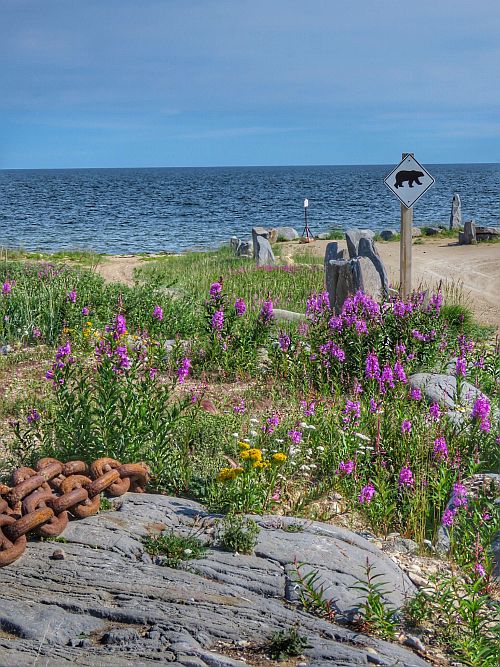
Although sightings are not as common during summer, it’s always polar bear season in Churchill.
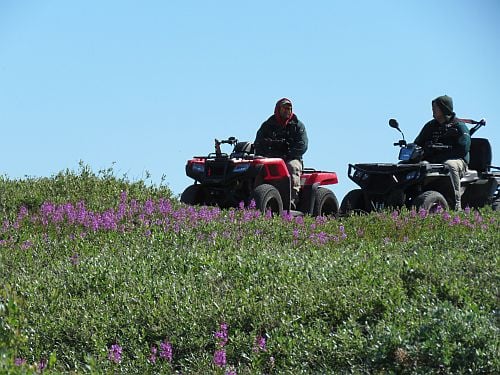
Guards on polar bear lookout at Prince of Wales Fort National Historic Site. It’s amazing how many good hiding places there are in Churchill, even for big, furry bears.
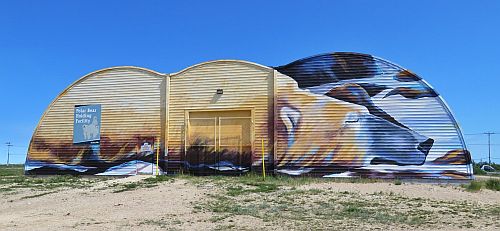
Churchill boasts what’s said to be the only polar bear jail in the world. It can hold 28 bears — more if mothers brought their cubs to town.

There are many stories surrounding its fate, but a look at the shipwrecked MV Ithaca is a scenic stop in between bear spotting activities.
Most visitors come to see the polar bears, but beluga whales know how to steal the show. And it’s not unheard of for whale watching tours to spot bears wandering along the shoreline.
Tundra Buggy all-terrain vehicles roam the trail network in the Churchill Wildlife Management Area (WMA). The back deck, or “patio” can be used anytime the Tundra Buggy is stopped to get a better look at wildlife that can include likes of polar bears, bald eagles, and caribou, just to name a few. Half school bus, half monster truck, vehicles are equipped with a bathroom.

Trying to take an afternoon nap, every now and then this polar bear would poke his head out of the bushes. Although the big, white Tundra Buggy was surely tough to miss, it was almost as if he was reminding us that he knew we were there.

Never wander out alone, but don’t miss the opportunity to see a summer sunset in Churchill.
Con Watch: Vacation Rental Scams
Steve Weisman is a lawyer, college professor, author, and one of the country’s leading experts in cybersecurity, identity theft, and scams. See Steve’s other Con Watch articles.
Recently, the Delaware attorney general issued a warning about scams involving vacation rental properties. Many people will be renting a summer vacation home in the days and weeks ahead in order to get that perfect place at the beach, mountains, or some other popular vacation venue. While it is generally safer to work directly with licensed real estate agents and brokers, there are many excellent websites such as VRBO and HomeAway where you can find wonderful vacation homes without having to incur the costs of a real estate agent. Many people will also go to Craigslist, Airbnb, and other similar sites to find their perfect vacation rental. These websites can be easy and efficient ways to locate a great vacation home. Unfortunately, they are also a great way for scam artists to steal money from unwary vacationers.
What to Know When Using Vacation Rental Sites
Anything popular with the public is also popular with scammers, and reports are increasing about scams involving people paying a non-existent room or a place that the scammer does not own. Many of the victims do not find out that they have been scammed until they show up at the rental only to learn that it is not for rent and their money is gone.
The scam usually starts with a listing that looks quite legitimate, and there is a good reason for that. The listing is often a real online listing that has been copied by the scammer who merely puts in his or her own name and contact information. The price is usually quite low, which attracts a lot of interested people. Because there are so many people competing for the low-priced property the vacationer is told he or she has to act fast and wire money to the owner, who is often outside of the country. Wiring money is a scammer’s first choice for a payment method because it is impossible to get your money back after you discover that you have been defrauded.
Another telltale sign that the listing is a scam occurs when the “homeowner” asks to communicate with the victim outside of the rental website’s communication system.
Tips to Avoid Vacation Rental Scams
- First, as always, if the price is too good to be true, it usually is.
- Be wary of vacation home owners who live outside of the country. Peruse any on-line listings for vacation rentals carefully for improper grammar and misspellings. Many vacation scams originate overseas where English may not be the primary language of the scammer.
- Never send your deposit, security deposit, or rent by a wire transfer or a cashier’s check. Use a credit card, PayPal or some other payment system from which you can retrieve your funds if the transaction is fraudulent.
- Only communicate with owners through the rental website and make payments through the site’s payment system.
- Verify the legitimate owner of the property. There are several ways to do this.
- Look up who is listed as the owner from the online records of the tax assessor’s office of the city or town where the property is located. If it doesn’t match the name of the person attempting to rent you the home, it may be a scam.
- Google the name of the owner with the word “scam” next to his or her name and see if anything comes up to make you concerned.
- Search online to see if you can find a duplicate listing for the home indicating a different owner than the person offering to rent it to you.
- If the property is listed with a legitimate real estate agency, contact them to find out who the owner is.
- Always get a written lease agreement for any vacation rental and make sure that you understand all of the terms of the agreement.
Summer vacations can create wonderful memories, but those memories can be painful if your summer vacation involves getting scammed. Fortunately, by taking a few simple precautions you can relax and enjoy your time off. You’ve earned it!
Wrap Up a Summertime Lunch with Curtis Stone
Chicken Veggie Wraps with Yogurt Caesar Dressing

(Makes 4 servings)
Dressing:
- ¾ cup low-fat Greek yogurt
- ¼ cup grated Parmesan cheese
- 1 ½ tablespoons fresh lemon juice
- 1 tablespoons Dijon mustard
- 1 tablespoons extra-virgin olive oil
- 2 anchovies
- 1 garlic clove
Wraps:
- 2 yellow corn cobs, husk removed
- 4 teaspoons. olive oil, divided
- 4 chicken thighs, boneless, skinless (about 1 lb.), fat trimmed
- 4 flour tortillas, lightly toasted on grill
- 3 heads Baby Gem lettuce, leaves separated
- ½ English cucumber, cut into thin strips
In blender, mix yogurt, cheese, lemon juice, Dijon, oil, anchovies, and garlic until smooth. Season with salt and pepper. Prepare barbecue for medium-high heat. Coat corn with 2 teaspoons oil and season with salt and pepper. Grill corn, turning occasionally, for 18 minutes or until well charred. Cut kernels off cobs into large bowl.
Meanwhile, coat chicken with 2 teaspoons oil and season with salt and pepper. Grill chicken for 5 to 6 minutes per side or until cooked through. Rest 5 minutes. Thinly slice chicken.
Lay tortillas on a work surface. Top with corn, chicken, lettuce, and cucumber. Drizzle dressing into wrap as desired. Fold bottom third of tortilla over filling and roll up tortilla.
Make-Ahead: Dressing can be made up to 2 days ahead, covered and refrigerated.
Per serving
Calories: 647
Total Fat: 27 g
Saturated Fat: 7 g
Sodium: 967 mg
Carbohydrate: 54 g
Fiber: 5 ½ g
Protein: 46 g
Diabetic Exchanges: 3 starch, 4 lean meat, 1 ½ vegetables, 3 fat
Middle Eastern Wrap
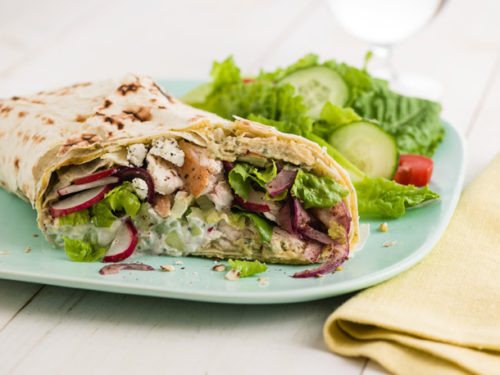
(Makes 8 servings)
- ½ hothouse cucumber, peeled, seeded, diced
- 1 cup low-fat plain yogurt
- 1 tablespoon fresh lemon juice
- 1 teaspoon dried mint
- ½ red onion, very thinly sliced (about 2 cups)
- 2 teaspoons sumac
- Hummus (recipe below)
- 4 flatbreads or large pita breads, warmed
- 2 grilled boneless skinless chicken breasts, thinly sliced (optional)
- ½ head romaine lettuce, outer green leaves discarded, inner crispy leaves thinly sliced
- 6 radishes, thinly sliced
- 4 ounces feta cheese, coarsely crumbled
In small bowl, create tzatziki sauce by mixing cucumber, yogurt, lemon juice, and mint. Season tzatziki with salt. In another small bowl, toss onions with sumac to coat. Season with salt. Spread hummus over flatbreads or pita. Top with chicken (if using), lettuce, radishes, feta cheese, onion mixture, and tzatziki. Fold up sandwiches and cut in half. Serve immediately.
Hummus
(Makes 2 cups)
- 1 garlic clove, peeled
- 2 cups cooked chickpeas
- 2 tablespoons chopped fresh cilantro
- ¼ teaspoon ground cumin
- ½ teaspoon salt to taste
- Juice of 1 lemon (about 3 tablespoons)
- ¼ teaspoon toasted sesame oil
- ¼ cup extra-virgin olive oil
- 3 teaspoons (approx.) water
In food processor, mince garlic. Add chickpeas, cilantro, cumin, and ½ teaspoon of salt and blend until a coarse puree forms. Scrape down sides of bowl. With machine running, gradually add lemon juice and sesame oil through feed tube, scraping bowl as needed. Gradually add olive oil, blending until smooth and creamy. Drizzle in water, 1 teaspoon at a time, until desired consistency is achieved.
Per serving
Calories: 330
Total Fat: 13 g
Saturated Fat: 4 g
Sodium: 484 mg
Carbohydrate: 36 g
Fiber: 5 g
Protein: 17.5 g
Diabetic Exchanges: 2 starch, 1 ½ lean meat, 1 vegetable, 2 fat
Cover Collection: Hop on a Bike!
It’s as true today as it was in 1934. Nothing is better on a warm spring day than riding through the neighborhood on your bicycle.

Amos Sewell
June 23, 1951

Albert Staehle
June 23, 1945
Douglas Crockwell
August 16, 1941
Douglas Crockwell
March 20, 1937

John Newton Howitt
April 28, 1934
George Hughes
June 12, 1954

Thornton Utz
June 18, 1955

Alex Ross
July 24, 1943