Cover Collection: Winter Mischief
The days are short, but that doesn’t mean a shortage of fun! The mischievous kids featured on our vintage covers know how to make the most out of a fresh snowfall.
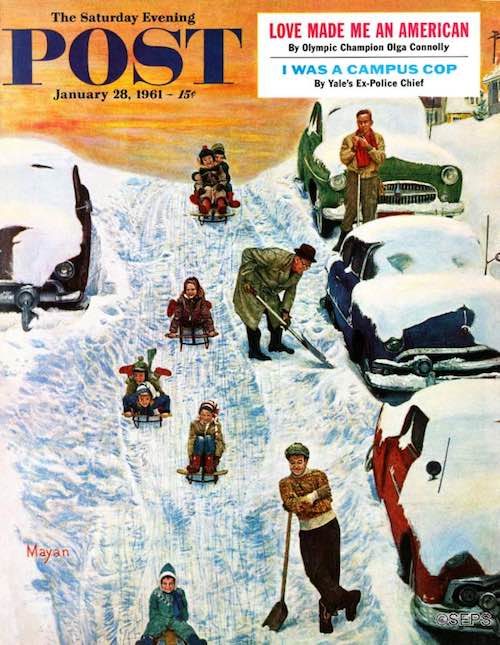
Earl Mayan
January 28, 1961
A blizzard zeroed in on Icicle Avenue last night, and this morning—gangway!—the sleds are taking over. This is the sort of weather that makes a person appreciate the sled’s advantages over the automobile. For instance, a sled doesn’t need antifreeze or windshield scrapers. There are no speed or age limits for sledding. Sleds are easy to start, even on the coldest mornings. (Especially on the coldest mornings.) You can drive a sled no-handed, and if you run into a snowdrift, why, what could be more fun?
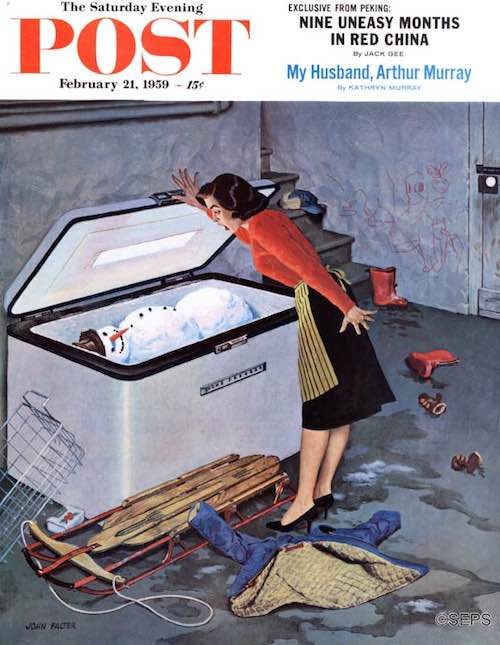
John Falter
February 21, 1959
For a split second mother thought she saw a real man lying there, stark and grinning. Readjusting her senses (mothers get to be fast readjusters), she thought, Oh, come now, one doesn’t fin d real men in freezers, does one? This is a snowman, I fear. Next thing on the agenda is to remove Mr. Smiley from his mausoleum. As mother icily summons her son and they messily lug sections of Smiley out the basement door, mother can reflect upon how funny this will seem to her week after next. Alternate plan: artist John Falter says there is a pile of displaced freezer food off stage at the left; why not lug that outdoors to keep cool and save funny Mr. S. for papa to enjoy, and remove, when he comes home? In that case, papa could reflect that a father’s work is never done
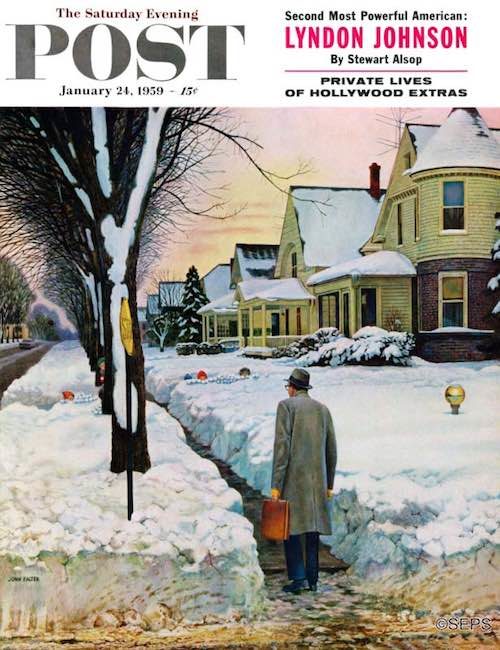
John Falter
January 24, 1959
This hard working man’s tactical problem is whether to cross the street in a flanking movement, or charge the foe and take what is coming to him, which is plenty. What would artist John Falter himself do? He says, “This scene (except for that ornamental ball, which I contributed) is a pleasant, typical Midwestern town I recently visited, named Bad Axe, Michigan.” He says, “I would charge the foe. I think.”
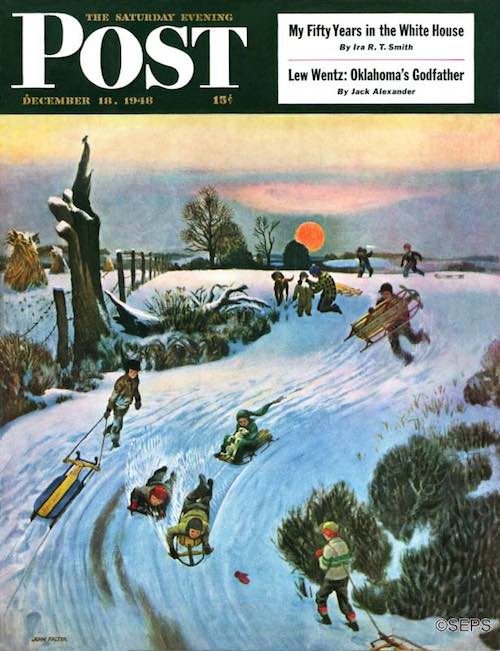
John Falter
December 18, 1948
John Falter’s sledding hill is an imaginary one he designed as a boy, long before he had any idea of becoming an artist. Where he grew up in Nebraska, the countryside was fairly flat. When Falter was the age of some of the boys in his picture, he used to imagine a hill like this one—steep enough, long enough (although you can’t see that part) and with a sporting curve near the start of the runway. He got around to painting the scene last fall while visiting Atchison, Kansas, when the temperature was ninety. The blue-and-tan sled belongs to a boyhood friend—and the friend’s son. Falter recalled it from his own childhood; it was still in good shape.
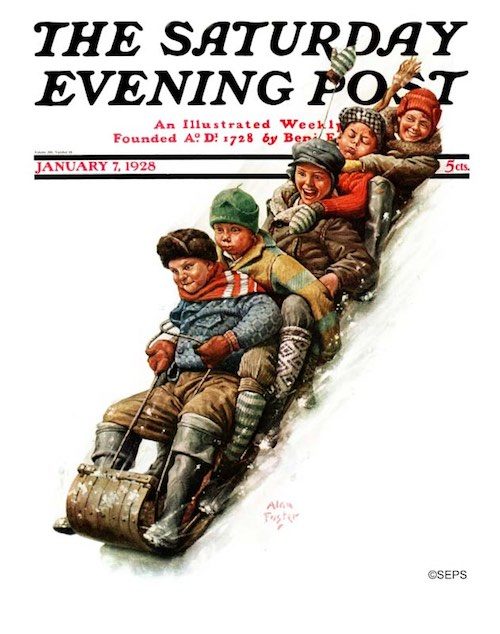
Alan Foster
January 7, 1928
Why sled alone when you can quintupple the fun? Many of Alan Foster’s 30 covers for the Post were joyful and Rockwellian in nature: kids playing sports, going on a hayride, or getting in trouble in school…or making the most of a snowy day. About three-fifths of these kids seem to be having a blast; the others aren’t so sure.
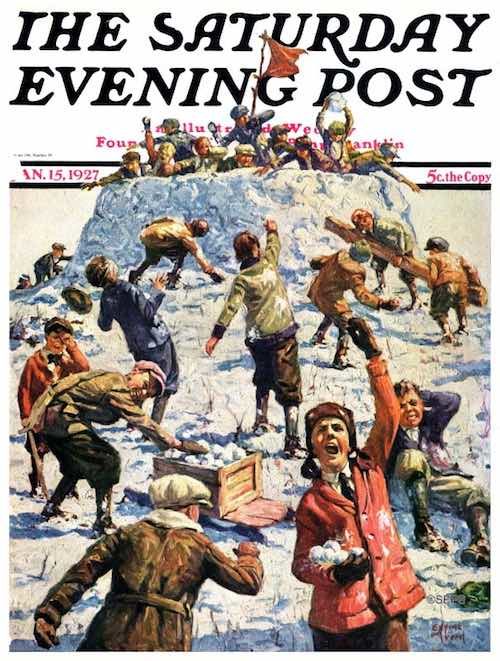
Eugene Iverd
January 15, 1927
Based on this tumultuous snowy scene, it’s unsurprising to find out that this artist grew up in Minnesota. George Erickson, who painted under the “brush name” Eugene Iverd, was one of the best-known illustrators in the 1920s, painting for Campbell’s Soup and The Saturday Evening Post. This particular painting reminds us of Lord of the Flies, even though Golding’s book wasn’t published until 1954, 27 years later. (Maybe Iverd’s painting inspired him.)
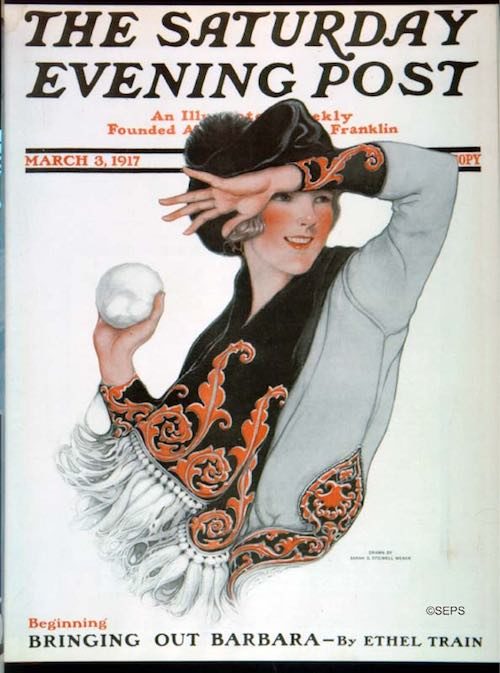
Sarah Stilwell Weber
March 3, 1917
Artist Sarah Stilwell Weber was particularly adept at creating movement and flow that gave the impression of coming and going. You had the distinct impression that the subject would dance off the page in the next moment (or nail you with a snowball). She was one of the first female cover artists for The Saturday Evening Post, completing her first cover in 1904.
Should We Start Preparing for an Apocalypse?
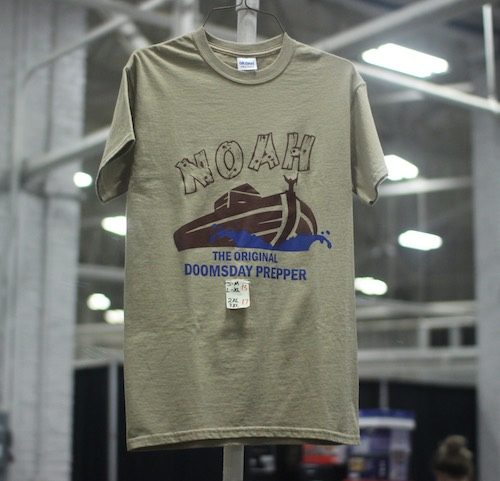
What would be your downfall in the first 180 days after an apocalyptic event? Dehydration? Injury? A pacemaker malfunction? Much depends on the flavor of the cataclysm, and of course, whom you ask.
Bob Gaskin speaks to an overflowing crowd about society-ending events at the Indianapolis Survival and Greener Living Expo. Gaskin is a Marine and the founder of Black Dog Survival School. Attendees have come to hear his advice on prepping, and many of them take notes.
According to Gaskin, the end of the world as we know it could be caused by a variety of circumstances, but he believes it will likely happen soon. An economic collapse, EMP (electromagnetic pulse), natural disasters, or nuclear war could all trigger the end of ‘polite society,’ he says. A ubiquitous theory among preppers is that the electrical grid will be taken out for weeks or months, causing a breakdown of industry and services.
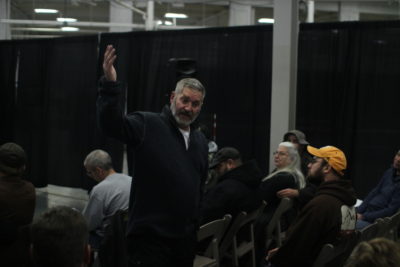
Gaskin is also a vendor at the expo, but he isn’t plugging his products. He stresses the importance of learning survival skills like cold-weather camping and defense in addition to material preparations. “We’ve bought more stuff instead of learning to overcome the things we fear,” he says.
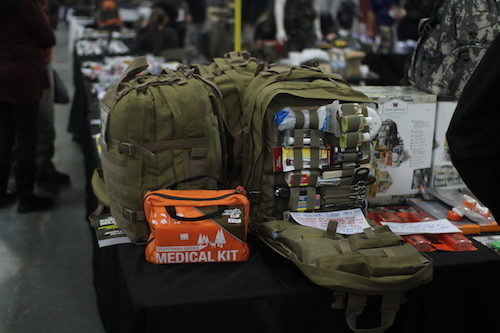
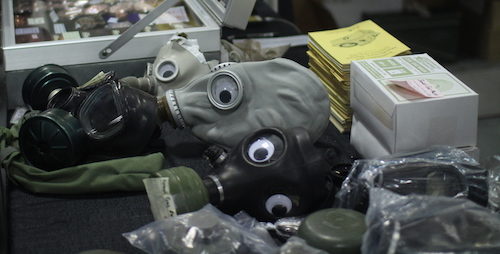
The event is thrown by RK Prepper Shows, which puts on survival expos throughout the South and Midwest. Its vendors sell guns, knives, medical kits, MREs (Meals Ready-to-Eat), radiation detectors, and a host of other prepper paraphernalia. Seminars on water purification and seed-saving are scheduled as well.
Television shows like Doomsday Preppers and Doomsday Bunkers — both premiered in 2012 — depict preppers as paranoid types ripe for ridicule. In typical reality T.V. fashion, the shows’ characters are paraded for round mockery, causing the Times‘ Neil Genzlinger to denounce “how offensively anti-life these shows are, full of contempt for humankind.” Gaskin thinks as much about the media’s portrayal of preppers as well. In fact, survivalists of all stripes express that you’d have to be erroneously optimistic to not prepare. Are they setting themselves up to have the last laugh?
Tim McDaniels, a professor who specializes in decision sciences and risk analysis at the University of British Columbia, says it is sensible for anyone to be prepared for likely hazards. The time and resources invested in “prepping” can turn preparedness into a lifestyle, however, and it can be difficult to predict if stockpiling rations at such a scope will ever be worth the trouble. McDaniels said, “You can imagine conditions in which prepping might pay off, but the preparations of any one person or family or community have limited duration. There’s nothing you can do to protect yourself forever from these kinds of failures or disasters. We can’t create ultimate long-term protection.”
Professor McDaniels lives in Vancouver, therefore he has a contingency plan for earthquakes. This sort of preparedness wouldn’t make sense for someone living in Kansas or Florida, however. He says the way in which you prepare for disasters should be tied to your region.
That’s perfectly reasonable, but what about an all-encompassing disaster? Take an electromagnetic pulse, for example.
An EMP is thought to be capable of mass power outages. Proponents of EMP-preparation have said this could be caused by a nuclear weapon detonated high in the atmosphere. Newt Gingrich has popularized the theory over the years, but several scientists have called such an attack unlikely or theorized that an EMP could not produce such drastic or sustained damage to the power grid.
A solar flare, however, might do the trick. This space weather event is characterized by a release of energy from the sun — another kind of EMP — and it has happened before. The Carrington Event, on September 1, 1859, was a solar flare that produced visible auroras around the world. Telegraph networks sustained damage, but it was nothing compared to the chaos that could ensue if a similar event were to happen today. The energetic particles and coronal mass ejection from a solar flare could disable “everything that plugs into a wall socket,” according to NASA. The implications on travel, industry, medical services, and virtually everything else would be devastating in our technological society. A similar flare occurred in July 2012, but it missed the earth. The odds of one hitting the Earth by 2022 was calculated as 12 percent in 2014, and we will probably only get an advance warning of about 12 hours if it does. Maybe it wouldn’t be such a bad idea to store away some canned beans.
The big question, according to Professor McDaniels, is how long it would take to recover from such a solar storm: “We have an integrated grid that helps us cope with switch failure or downed transmission lines. The integrated grid means that those problems can spill over from one utility to another, but it also means we have power from elsewhere to rely on. If we had a massive problem like where the electrical grid of North America is tremendously adversely affected by some sort of space-based radiation, who knows what the recovery is for that.” NASA estimates the cost of the Carrington Event with today’s electrical reliance could be over $2 trillion.
Keeping some necessities stored is obviously a good idea, but for how long could you possibly defend them if push came to shove?
In David Williams’ recent novel, When the English Fall, an Amish community finds themselves uniquely prepared to weather a devastating solar flare because they never relied on electricity in the first place. The story’s Amish protagonist discovers, however, that unless all of society’s basic needs are being met, the have-nots will soon come after the haves with violent intent. In a similar situation, how would the most well-prepared individuals protect themselves from the desperate masses?
Bob Gaskin’s prepping philosophy is different than many in the game: he doesn’t believe in turning people away in a post-apocalyptic future. To prove this, he gives out his Tennessee address during his presentation. “We don’t just prep for ourselves,” he says, “Food, water, fire, shelter, first aid, hygiene for a couple hundred people that we haven’t even met yet.” This is in stark contrast to the secretive, ammo-wielding stockpiler that is stereotypical of the prepping community.
Some preppers have plans for avoiding marauders. Of course, firepower would help, but it might be a losing game. Another strategy would be to draw as little attention to oneself — and one’s stash — as possible. “If other houses are looted, you make your house look looted,” says a nuclear prepper, “If other people are starving, act like you’re starving too.”
There are many contingencies to consider, of course, like climate change, cyberattacks, and epidemics. All in all, there appears to be no shortage of potential apocalypses. Even if the title “doomsday” isn’t warranted, compounding natural disasters can wear out government relief with the right timing.
Just this year, the Federal Emergency Management Agency found itself overloaded with the victims of Hurricanes Harvey, Irma, and Maria. Puerto Rico’s power grid is operating at around 70 percent three months after Hurricane Maria hit the U.S. territory, and reports from CNN and The New York Times have found that over 1,000 deaths could be attributable to the storm. FEMA’s director, Brock Long, has expressed the need for Americans to become more prepared for disasters, particularly after 2017’s devastating hurricane season. FEMA’s online guide for emergency preparedness covers in-depth recommendations — from shutting off utilities to evacuation to cleanup — for the most probable emergencies.
Whether the future holds a cataclysmic solar flare or a particularly alarming thunderstorm, it is important to have some sort of plan. If you find comfort in preparing a bug-out bag and a desert shelter made of shipping containers, you’re not alone.
The prepping community, like any other, serves to unite its members with common goals and philosophies. For Gaskin, prepping, survival training, cold-weather camping — it’s all about love: “I do stuff like this because I love my wife, children, and grandchildren.” In this sense, prepping is a devoted — albeit grave — labor, a gesture of posterity for the people most important to you.
There is also, seemingly, a love of the lifestyle. The survivalist industry has given way to plenty of fun gadgets, from water purification straws to biomass camp stoves. Presumably, no one in their right mind hopes to one day subsist on reconstituted beef stroganoff and daily water allotments. But, like camping and homesteading, there can be a thrill in self-reliance. Prepping might seem futile if it wasn’t so fun.
Tips for Basic Preparedness
- Learn first aid and CPR. The American Red Cross provides training and certification.
- Know how to shut off your utilities.Water, gas, and power may require disconnection in the event of disaster.Make sure everyone in the household is aware of proper procedure.
- Keep a basic preparedness kit in the home, office, and car. Maintain the kit as needed, and keep in mind your unique needs.
- Have an evacuation plan. This should include a plan for receiving emergency alerts and communication with loved ones.
- Store important documentson a secure drive or cloud. Identification, medical records, and insurance policies for the whole family can bekept securely easily with a variety of storage and cloud apps.
Visit www.ready.gov for more information.
North Country Girl: Chapter 33 — The End of Childhood
For more about Gay Haubner’s life in the North Country, read the other chapters in her serialized memoir. This is the last chapter in the series.
Michael Vlasdic’s mother, the German professor, was always obliging; that summer, she taught a full load of classes, leaving Michael’s house delightfully parent-free for hours and hours. I loved Michael. I never wanted to leave his arms. To be with him, I had spent the past six months fretting over my personal monthly calendar — is it safe to have sex this day? The day after? After every “safe” day I was convinced I was pregnant and doomed right up until my trusty body proved otherwise.
Now the 60s made a further encroachment in Duluth: Planned Parenthood came to town. Until then, the only doctor I knew was my pediatrician, Dr. Bergman, who had seen me in my white Carters undies and examined me for pinworm.
The girl grapevine went into full swing. “I heard if you’re sixteen you can get birth control at Planned Parenthood and they don’t tell your parents,” said a wide-eyed Wendi Carlson. I was one of their first customers. I was so desperate to have as much sex as possible with Michael, to be free of the tyranny of the menstrual cycle, that I turned up at their downtown office and bravely asked to see a doctor. I was ushered into the exam room of a very nice woman doctor, another thing I had only seen on TV. I cringed through my first pelvic exam, even though the nice doctor complimented me on my “textbook cervix.” When my legs were back together and on the ground, the doctor handed me a prescription that read “To regulate flow” and told me to come back in a year.
I had drugs and Michael and his empty house and no more worries about being knocked up. It was a fun summer. I tried to be mindful of the time on my work day when I had to punch in at The Bellows at four to make sure that those idiots who showed up for a steak dinner at five would have a fresh crisp salad. But we were insatiable. One afternoon, as I felt Michael poking me in the leg, ready for a third bout, I raised my kiss-swollen face up off the bed and saw to my horror that it was a quarter to four. Michael was pulling me down; of course he didn’t understand why I had to be at The Bellows on time. Unlike everyone else I knew, Michael did not have a summer job. He refused on principle to work for the man. “Who cares if you’re a few minutes late?” he grumbled. “It’s not like you’re doing anything important.”
The real German, I was determined to keep the salads running on time. I threw on my clothes, not bothering to wash. Michael grudgingly offered to walk me the ten minutes down to The Bellows. Walk? I need to go at a quick trot to get there on time.
I was two blocks away from the restaurant, waiting at the corner to cross the busy-for-Duluth Superior Street. Traffic finally slowed as a bus pulled up and stopped. I started to dash across the street, certain Michael was beside me. But he had seen the car behind the bus veer left to go around it. I did not. I felt a bang and landed on the hood of a cab, looking into the horrified face of the driver. The next thing I knew I was on the ground and Michael was standing over me, red-faced and sobbing, as the bus driver and the cab driver both shot out of their vehicles. I assured everyone I was fine, and got up to continue on to work. No one was going to let that happen; I was guided over to the curb by several hands and forced to sit. Soon an ambulance showed up, and even though I was still protesting — who would make the salads and defrost the shrimp? — I was loaded inside. Before they shut me in, I called over Michael, who bent over me for my last words, which were to call The Bellows and explain that I had been hit by a car.
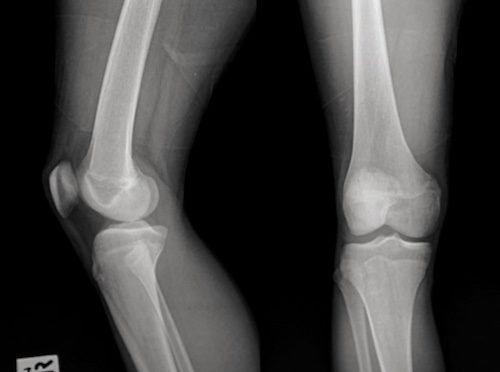
At St. Luke’s Hospital I was X-rayed and palpitated and asked if I knew the name of the president and what day of the week it was. I did, and nothing was broken; when my father showed up (who had called him?) they were ready to release me. I pulled my jeans on over the yellow and purple bruise that covered my left leg from knee to hip, pushed myself off the examination table and fell over. I could not put any weight on that leg.
My father drove me home in silence, then helped me onto the living room couch, the first time he been in the house since the day he left. He stayed until my mother finally bustled in, furious at having been summoned home by some stupid kid thing, and even angrier that my dad got to act the part of the responsible parent. As soon as he was gone, she lit in to me: how in the world does anyone get hit by a car? Couldn’t I see it coming? She was also suspicious of where I had been all that afternoon; it was July, I was not doing homework at Michael’s house.
In a few days I had recovered enough to lean against the big stainless steel sink at The Bellows, peeling shrimp and cracking oysters; and to figure out ways to make love on Michael’s narrow bed without his weight, however slight, on my injured thigh. Michael kissed the bruises, fading into less corpse-like shades, and told me how sorry he was, how he had just been about to warn me when I went teacups over kettles on the hood of the taxi. He did not feel badly enough to go out and look for a job himself; I kept working and kept spending my paycheck on drugs.
Summer ended and that golden age of youth, senior year, started. Saturdays were still reserved for Michael and acid, but every Friday I was with my friends in the White Delight, cruising up and down Duluth, in search of where the action was. Our senior year parties became wilder, more abandoned, with more booze, more drugs, and dozens of kids in various stages of intoxication. We huddled around house-sized bonfires on the lake shore, tossing empties into the flames and laughing hysterically at nothing. We smashed into the Anderson’s basement; the crescendo of “Stairway to Heaven,” still new to our ears, made conversation impossible and unnecessary.
There were a few casualties. Betsy James had a fight with her boyfriend, and took off on his motorcycle; he found her a block away pinned under it, with a broken leg and a large patch of her skin left on the asphalt. Craig Whiteman, one of East’s few greasers, polished off a six-pack of Grain Belt at a party and accepted a dare to break into old lady Congdon’s mansion. No one knew that Dorothy Congdon was a champion skeet shooter who slept with a loaded shotgun beside her.
My band of sisters grew closer together as high school graduation neared. We had forged a sacred bond, at a time when our hearts and souls were soft and malleable, and our feelings strong and blood hot. Our friendship was built on years sharing our teenage loves and disappointments, laughing, drinking, sometimes crying, and always caring deeply. We knew that college and jobs, new lovers and new friends, would soon disrupt the centrifugal force that kept us together, though we vowed not to let that happen.
Michael and I also believed with the fervor of a religion that we were destined to be forever together, the fever dream of first love. But while I had despaired every time my period was half a day late, Michael romanticized the possibility of us having a baby. He longed for an addition to his tiny two-person family and got all misty-eyed listening to Crosby, Stills, and Young’s “Our House.” We shared a dream of a small apartment in Minneapolis, filled with sex and drugs, college textbooks and cats, where we would fall asleep in each others’ arms, but my dream definitely did not include a baby.
While my heart was sworn to Michael, the rest of me was stirring with other desires. Being safely on the Pill turned a key in my mind, which opened up a new world of sexual possibilities. Emily Dickinson wrote “There is no frigate like a book, To take us miles away,” and for years books had been my only escape from my stolid small town life and boring middle-class family. I could get lost again and again in the exploits of Bilbo Baggins and Gandalf, Arthur and Merlin, Dorothy and Alice, and all those other plucky young heroines. Then I discovered that drugs could shanghai my mind, transport me to different realms. Now I realized that there was another vehicle that could take me away on adventures: my own body.

I started looking at other boys with a hungry curiosity. What would it be like having sex with them? How would they smell, how would they touch me? Would the sex be better or just different? And maybe just different would be exciting enough. According to Time magazine, which still made its weekly appearance in our mailbox, the sexual revolution was in full swing. I was a willing recruit to any revolt. Even my own mother, still pretty at thirty-seven and post-divorce slim, had seduced a former stalwart of the Catholic Church and father of six, and was busy trying to get him to dump his wife and marry her.
The culture, my body and mind, and the nice people at Planned Parenthood were all encouraging me to expand my sexual horizons; the only reason not to was that Michael, my sensitive, moody lover, would be hurt. So I never told him about the others. I was callow and callous, and from a distance of many years, I can see that I was not the adventuress I thought I was — just an asshole.
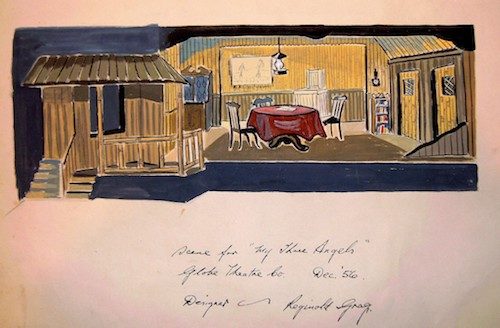
There was Jonathan, who had been making me laugh since seventh grade advanced math. He was a behind-the-scenes stagehand for all our aspirational high school plays, painting flats, adjusting the lights, and cracking up everyone in earshot. The plays our high school put on were ancient chestnuts, chosen for their ability not to offend anyone: starting with “My Three Angels” (misspelled on every poster as “My Three Angles”), about a trio of fugitives from Devil’s Island, through “You Can’t Take It With You,” with its cast of thousands.
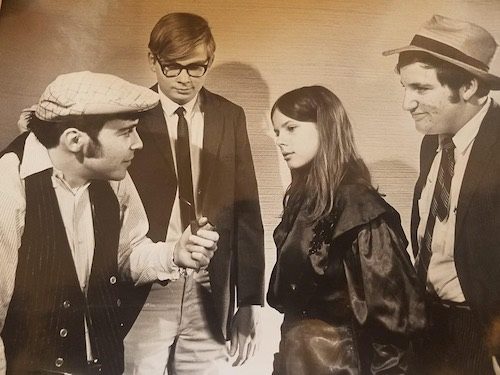
That play provided my one chance for glory on the stage. I had been trying out in vain for a part in one of East’s plays since I was a sophomore. Our creepy drama teacher Mr. Canfeld had given every single leading role for the past three years to milquetoast Grace Myers; rumor had it that she let him feel her up. On my ninth audition for him, Mr. Canfeld felt sorry for me, ignored my lack of acting ability, and cast me as Olga, the White Russian countess, who shows up in the final act to deliver her three lines. After our second and closing performance, cast and crew gathered in somebody’s parent-less house for one of the epic theater parties. Drunk and high, Jonathan and I were talking, then giggling like lunatics, then kissing. We locked ourselves in a bathroom so we could take some of our clothes off. As I had hoped, it was different and it was fun, like taking a roller coaster ride together. Miraculously, Jonathan and I became better friends.
One sub-zero Saturday night, Michael Vlasdic and Needle both sick with the flu, Roger and I ended up alone, driving aimlessly around Duluth in search of a party. Sitting next to him on the front seat, like boyfriend and girlfriend, I realized I liked his craggy profile and scooted over a little closer, feeling a pleasurable tingling. When Roger put his arm around me, a bolt shot through my body to where his hand rested on my shoulder; we both felt the electricity through our winter woolens. Without saying a word, Roger steered for Skyline Drive, the favorite parking place for Duluth teens. We stretched out as much as we could in the back seat and committed our double betrayal, he of his friend, me of my soulmate. When we were done, we felt a bit bad and swore it could never happen again. But it did, and it was furtive and secret and thrilling.
I had always had a little crush on handsome, sleepy-eyed Jack France, who showed up occasionally at Open Mind meetings to read his angsty poetry. He was like me, a flitter among groups, a smart athlete who got high. Now I side-eyed him in Mr. Burrows’ class, where he sat alone in the back, gazing out the window. I wondered what it would be like to kiss him.
I found out on a yellow Bluebird bus making its bumpy way back from Telemark, Wisconsin, after a day of spring skiing. Nancy Erman had organized a school ski trip, one of the last hurrahs of our senior year. We skied stripped down to sweaters and blue jeans, luxuriating in the sunshine that was almost warm. There was such joy in the day, in our forever young bodies that we sent hurling recklessly down the slopes, again and again, until the lifts slowed and stopped and it was time to go home. Jack and I had skied together that day, and it didn’t take much wrangling on my part to end up sitting next to him on the tot-sized school bus seat. Jack shook out a package of Lucky Strikes from his pocket and lit a cigarette. Then we kissed. I thought I was the world’s best, most experienced seventeen-year-old kisser; I was knocked for a loop. Jack’s kisses shrunk the entire world down to the two of us, nothing but slightly chapped lips and gentle exploring tongues and the taste and smell of tobacco which reminded me of fall’s burning leaves. On the bus, in parkas and long johns and snow-soaked Levi’s, there was nothing more we could do than kiss, and the kisses were everything.
Jack and I never went any further. For years, every time we ran into each other, Jack and I would end up in dark corners where we shared those deep soulful kisses, sometimes for hours, until he took off one autumn on a solo cross-country bike trip to Seattle, where he leapt off the George Washington Memorial Bridge.
Being with Jonathan, Roger, and Jack was fun, it was sex with no agenda, no strings attached. It wasn’t about love, or negotiating a relationship, or even about my desperate desire to be thought of as pretty and sexy and cool.
I was beginning to regret the plans that Michael and I had made, that we’d go off together to the University of Minnesota in Minneapolis and live happily ever after. I was going to spend my first year in a dorm; he would stay with a friend of his mother’s who had offered him almost free rent and board. Eventually we would find an apartment and move in together. In the pleasant mist of these daydreams, I didn’t think about how we would pay the rent; his mother had no money, I knew neither of my parents would subsidize my living in sin, and Michael had never shown the slightest desire to find a job. I had left the salad and the shrimp at The Bellows behind; my vast restaurant experience got me hired as a waitress at The Flamette, where despite my dropping a full glass pitcher of maple syrup my first day and my inability to carry more than two plates at a time, I was making enough to buy drugs and squirrel away some spending money for college.
East High had no guidance counselors to talk to about universities; the only adult who had spoken to me about college was my grandmother, who offered to pay my tuition if I went to St. Scholastica, a Catholic woman’s school right there in Duluth. No thank you.
I filled out the application for the University of Minnesota, wrote the essay, tore out and filled in a check for $15 from my mother’s checkbook (she had finally gotten her own bank account), and sent the package off to Minneapolis, never doubting that I would get in and never considering applying to any other schools. The housing catalog that came with my acceptance letter featured a brand new, co-ed dorm, the only dorm that allowed 24-hour visitation from the opposite sex — as long as you had your parents’ permission. I checked the box for Middlebrook Hall on my housing form, forged my mom’s name on the permission slip, and fell into a fantasy of unlimited sex with unlimited college boys, with an occasional guest appearance by Michael Vlasdic.
For once the reality matched the daydream. My perky, adorable, All-American college roommate, Nancy Lowe, went back to her suburban home every weekend to work at the local pizza place and have sex with her own boyfriend, leaving me a wonderfully empty dorm room for entertaining. I was sandwiched between boys; at Middlebrook Hall the sexes alternated floors. My new friend Liz Hepper, who I had met in her dorm room closet, where she was chugging a bottle of Southern Comfort, introduced me to a herd of funny, smart boys from her hometown of Rochester, including a pharmacy major who had very good drugs. There were so many boys in my dorm, and they were all so interesting and cute. And out on the huge campus there were 20,000 more, surrounding me in class, eating dinner in the cafeteria, napping or reading or throwing Frisbees on the still-green campus lawns.
Despite all our plans, despite my absent roommate and the 24-hour visitation, despite how much I thought I looked forward to the first time I could sleep with him, entwined and spooned and inhaling his sweet spicy scent, Michael and I never spent a single night in my skinny dorm bed.
Before the first week of college was out, I called Michael and broke up with him, in the worst way possible, over the phone.
There was another important phone call that first month of my freshman year. My mother called to tell me that she was moving to Colorado Springs. She did not tell me that she was moving in pursuit of the ex-Catholic father of six, who had finally left his wife; he had also left Duluth to live on a small ranch in Colorado. I was instructed to come back home that weekend to box up anything I did not want sold or thrown out; my mother and sisters were downsizing from a six-bedroom stately home to a two-bedroom apartment.
I wandered through 101 Hawthorne, most of the rooms already empty of furniture. Almost everything was gone from my old bedroom, where I had spent so many nights tripping, transfixed by the golden glow from the streetlight streaming through the trees. A few summer clothes hung in my closet; I put them in my suitcase, looking forward to catching some boy’s eye in my cute Indian-print sundress in the spring.
I went back down to the TV room, where our bookshelves were, and where two large cardboard boxes sat gaping. “Put what you want to keep in one,” said my mother. I pulled from the shelves the books that had been my youthful frigates: Alice’s Adventures, the Tennile drawings only slightly defaced from Crayolas wielded by my sister Lani. The Wizard of Oz. The Lion, the Witch, and the Wardrobe. The Fairy Tales of Hans Christian Anderson, minus “The Little Mermaid” and “The Little Match Girl.” I opened up the books Michael had given me, The Hobbit and The Lord of the Rings trilogy, each frontispiece signed “I love you” illustrated by his round smiling face. My heart gave a small twist as I stowed them in the moving box. Next came the never-paid-for plays of William Shakespeare, three heavy tomes, The Histories barely cracked. I added The Guide to Minnesota Fauna and Flora, which had been handed to me by the outdoorsy old lesbian who had dragged me around Duluth’s fields and woods. Here was Angelique and the Sultan, with steamy seduction scenes on every page, never returned to Kathy O’Dell. A ragged paperback sci-fi novel, The Blind Spot, that I had read three times in a row, on that trip to Mexico, lacking any other English-language reading material that was not dental-related. And of course the fruit of my junior year with Mr. Burrows, the two volumes of American history and literature, typed out night after night, with my name printed on the spine in gilt letters.
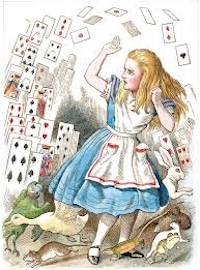
I sealed my cherished books up in a moving box and told my mother that was all I wanted shipped to Colorado. That Christmas break, in my mom’s ticky-tacky Colorado Springs apartment, I sat in the living room, hemmed in by our old furniture: the mahogany dining table for six, the gold and cream French Provincial sofa and matching end tables, and the immense cabinet TV. I opened a cardboard box identified as “Gay’s Books” in black marker. It contained stained Junior League cookbooks, several years of Reader’s Digest Condensed Books, a collection of Harold Robbins paperbacks, a single addendum to the World Book, dated 1960, and a battered Webster’s dictionary. My childhood was gone.
January/February 2018 Limerick Laughs Winner and Runners-Up
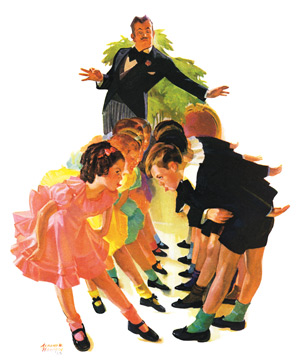
The students were taught by a master,
But the dance class became a disaster.
Cried one little mister,
“I’m paired with my sister!”
“So can’t we please dance any faster?”
Congratulations to Linda Neukrug of Walnut Creek, California! For her limerick describing Albert W. Hampson’s illustration Cotillion, which appeared as a Post cover on May 23, 1936, Linda wins $25 and our gratitude for a job well done.
If you’d like to enter the Limerick Laughs Contest for our upcoming issue, submit your limerick via our online entry form.
Linda’s was only one of a bunch of great limericks! Here are some of our favorites from our runners-up, in no particular order:
We’re lined up, all in our places
To practice polite social graces.
Some day this dance
May lead to romance,
But today we’d rather make faces.—Christine Coates, New Berlin, New York
They went to the junior cotillion,
Where she wore a dress of vermillion.
But what are the chances
These kids have more dances?
I’d say about one in a million.—Pat Cunningham, Cheektowaga, New York
They’ve probably practiced all day
To perform in this delicate way,
But the two kids in front
Add their own little stunt
To an otherwise perfect display.—Chet Cutshall, Willowick, Ohio
Dad said, “Just so that we are clear,
You will dance with your sister this year,
Or lose, if you like,
The use of your bike,”
Which explains the real reason I’m here.—Paul Desjardins, West Kelowna, British Columbia
The children’s performance was fine,
Their costumes and dancing divine.
One had to award ’em
High marks for decorum
… Except at the front of the line.—Michelle Gordon, Airway Heights, Washington
The French master’s class in the dance
Quite often would spark a romance.
But Sally and Sonny
Are nobody’s honey!
Which shows in their combative stance.—Lynn Johnson, Green Valley, Arizona
This girl who is dressed up in pink
Doesn’t know quite what to think:
Does this boy really hate her
Or wish he could date her?
She’ll obsess about this with her shrink.—Neal Levin, Bloomfield Hills, Michigan
“Excuse me, there’s no time for laugh.
Bow and curtsy and straighten the calf.
This is a cotillion;
You will look like a million
Or my salary will likely be half.”—Dolores M. Sahelian, Mission Viejo, California
In the ballroom, the young are taught graces
And how to trade spats for embraces,
But whether waltz or quadrille,
There are boys and girls still
Who wish only to trade nasty faces.—Rebecca Shulman, New Hope, Pennsylvania
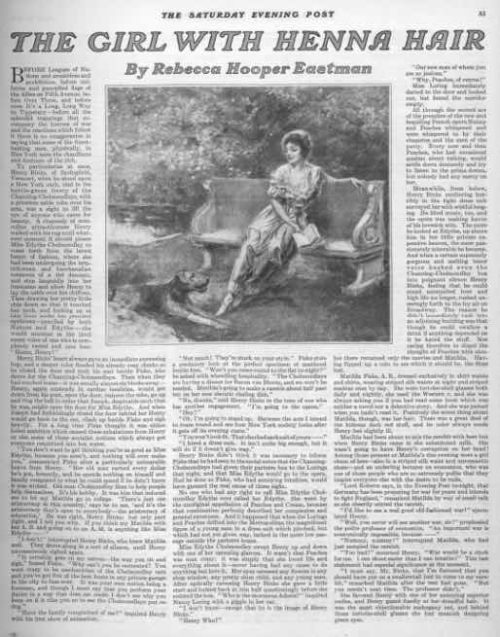
“The Girl with Henna Hair” by Rebecca Hooper Eastman
Suffragette Rebecca Eastman wrote articles, fiction, and drama for a host of publications at the turn of the century. Her work was largely forgotten, save her novel The Big Little Person, which became a silent film in 1919. Eastman’s story “The Girl with Henna Hair” appeared in the Post in 1919, and its witty treatment of WWI-era society romance offers a subtle glimpse into the class culture of turn-of-the-century New York.
Before Leagues of Nations and armistices and prohibition, before uniforms and panoplied flags of the Allies on Fifth Avenue, before “Over There,” and before even “It’s a Long, Long Way to Tipperary” — before all the splendid trappings that accompany the horrors of war and the reactions which follow it there is no exaggeration in saying that some of the finest looking men, physically, in New York were the chauffeurs and footmen of the rich.
To particularize at once, Henry Binks, of Springfield, Vermont, when he stood upon a New York curb, clad in the bottle-green livery of the Channing-Cholmondleys, with a priceless sable robe over his arm, was a sight to fill the eye of anyone who cares for beauty. A rhapsody of masculine attractiveness, Henry waited with his rug until whatever moment it should please Miss Edythe Cholmondley to come forth from the latest haunt of fashion, where she had been undergoing the terpsichorean and bacchanalian torments of a the dansant, and step languidly into her limousine and allow Henry to lay the sable over her chiffons. Then drawing her pretty little chin down so that it touched her neck, and looking up at him from under her penciled eyebrows — penciled by both Nature and Edythe — she would murmur in the tired sweet voice of one who is completely rested and care free: “Home, Henry!”
Henry Binks’ heart always gave an immediate answering hop, and a deeper color flooded his already rosy cheeks as he closed the door and took his seat beside Fiske, who drove for the Channing-Cholmondleys. Then when they had reached home — it was usually almost six blocks away — Henry, again unsteady in cardiac localities, would get down from his post, open the door, remove the robe, go up and ring the bell in order that Joseph, despicable snob that he was, might open the door for Miss Edythe. And when Joseph had forbiddingly closed the door behind her Henry would go back to the car, climb up beside Fiske and sigh heavily. For a long time Fiske thought it was either foiled ambition which caused these exhalations from Henry or else some of those socialist notions which always got everyone concerned into hot water.
“You don’t want to get thinking you’re as good as Miss Edythe, because you aren’t, and nothing will ever make you,” commented Fiske after a particularly unbearable heave from Henry. “Her old man earned every dollar he’s got, honestly, and he spends nothing on himself and family compared to what he could spend if he didn’t know it was wicked. Old man Cholmondley likes to help people help themselves. It’s his hobby. It was him that induced me to let my Matilda go to college. There’s just one aristocracy in this country,’ says he to me, ‘and it’s the aristocracy that’s open to everybody — the aristocracy of education.’ He was right, Henry Binks; but only part right, and I tell you why. If you think my Matilda with her A.B. and going on to an A.M. is anything like Miss Edythe — ”
“I don’t!” interrupted Henry Binks, who knew Matilda well. They drove along in a sort of silence, until Henry unconsciously sighed again.
“It certainly gets on my nerves — the way you sit and sigh,” fumed Fiske. “Why can’t you be contented? You were crazy to be mechanician of the Cholmondley cars and you’ve got five of the best boats in any private garage in the city to fuss over. It was your own notion being a footman, and though I must say that you perform your duties in a way that does me credit I don’t see why you keep on if it riles you so to see the Cholmondleys put on dog.”
“Have the family complained of me?” inquired Henry with his first show of animation.
“Not much! They’re stuck on your style.” Fiske stole a predatory look at the perfect specimen of manhood beside him. “Won’t you come round to the flat tonight?” he asked with wheedling hospitality. “The Cholmondleys are having a dinner for Baron von Blentz, and we won’t be needed. Matilda’s going to make a rarebit about half past 10 on her new electric chafing dish.”
“No, thanks,” said Henry Binks in the tone of one who has another engagement. “I’m going to the opera.”
“Hey?”
“Oh, I’m going to stand up. Between the acts I intend to roam round and see how New York society looks after it gets off its evening coats.”
“You won’t look fit. That checked sack suit of yours — ”
“I hired a dress suit. It isn’t quite big enough, but it will do if it doesn’t give way.”
Henry Binks didn’t think it was necessary to inform Fiske that he had seen in the social notes that the Channing-Cholmondleys had given their parterre box to the Lorings that night, and that Miss Edythe would go to the opera. Had he done so Fiske, who had annoying intuition, would have guessed the real cause of those sighs.
No one who had any right to call Miss Edythe Cholmondley Edythe ever called her Edythe. She went by the unoriginal appellation of Peaches and Cream, because that combination perfectly described her complexion and general sweetness. And it happened that when the Lorings and Peaches drifted into the Metropolitan the magnificent figure of a young man in a dress suit which pinched, but which had not yet given way, lurked in the quiet low passage outside the parterre boxes.
Miss Edythe Cholmondley swept Henry up and down with one of her caressing glances. It wasn’t that Peaches was man crazy; it was simply that she loved life and everything about it — never having had any cause to do anything but love it. Her eyes caressed any flowers in any shop window, any pretty slum child, and any young man. After optically caressing Henry Binks, she gave a little start and looked back at him half questioningly before she entered the box. “Who is the enormous Adonis?” inquired Nancy Loring with a giggle in her ear.
“I don’t know — except that he is the image of Henry Binks.”
“Henry Who?”
“Our new man of whom you are so jealous.”
“Why, Peaches, of course!”
Miss Loring immediately darted to the door and looked out, but found the corridor empty.
All through the second act of the premiere of the new and beguiling French opera, Nanny and Peaches whispered and were whispered to by their chaperon and the men of the party. Every now and then Peaches, who had occasional qualms about talking, would settle down demurely and try to listen to the prima donna, but nobody had any mercy on her.
Meanwhile, from below, Henry Binks sweltering horribly in the tight dress suit surveyed her with wistful longing. He liked music, too, and the opera was making havoc of his lovesick wits. The more he looked at Edythe, up above him in her little private expensive heaven, the more passionately miserable he became. And when a certain supremely gorgeous and melting tenor voice hushed even the Channing-Cholmondley box into poignant silence, Henry Binks, feeling that he could stand unrequited love and high life no longer, rushed unseeingly forth to the icy air on Broadway. The reason he didn’t immediately rush into an adjoining building was that though he could swallow a drink if anything depended on it he hated the stuff. Not caring therefore to dispel the thought of Peaches with alcohol there remained only the movies and Matilda. Having flipped up a coin to see which it should be, the films lost.
Matilda Fiske, A.B., dressed exclusively in shirt waists and skirts, wearing striped silk waists at night and striped madras ones by day. She wore tortoise-shell glasses both daily and nightly, she used the Western r, and she was always asking you if you had read some book which was neither a novel nor a detective story. And she was pained when you hadn’t read it. Positively the worst thing about Matilda, though, was her hair. There was a great deal of the hideous dark red stuff, and its color always made Henry feel slightly ill.
Matilda had been about to mix the rarebit with beer, but when Henry Binks came in she substituted milk. She wasn’t going to have Henry’s corruption on her head! Among those present at Matilda’s this evening were a girl chum of hers — also in a striped silk waist and unromantic shoes — and an underling lecturer on economics, who was one of those people who are so extremely polite that they inspire everyone else with the desire to be rude.
“Lord Roberts says, in the Evening Post tonight, that Germany has been preparing for war for years and intends to fight England,” remarked Matilda by way of small talk as she cheerily stirred the rarebit.
“I’d like to see a real good old-fashioned war!” ejaculated Henry.
“Well, you never will see another war, sir!” prophesied the polite professor of economics. “An important war is economically impossible, because — ”
“Nummy, nummy!” interrupted Matilda, who had just sampled the rarebit.
“Too bad!” mourned Henry. “War would be a cinch for me. I can shoot easier than I can breathe!” This last statement had especial significance at the moment.
“I must say, Mr. Binks, that I’m flattered that you should have put on a swallowtail just to come to my rarebit,” remarked Matilda after the rest had gone. “But you needn’t next time. The professor didn’t.”
She favored Henry with one of her annoying superior smiles, and Henry gazed fixedly at her dreadful hair. It was the most objectionable mahogany red, and behind those tortoise-shell glasses she had meanish designing green eyes.
“That professor looks like a licked cur!” remarked Henry heartily by way of adieu; Matilda’s hair, eyes and clothes being entirely on his nerves by now.
Looking at Matilda, he decided, was about as pleasant as listening to the teeth of a comb grating on a window pane.
The next day, late in the afternoon, when Miss Edythe Cholmondley — her hair was straw yellow and fluffy — came daintily down the red-carpeted steps from her the dansant she found her Henry waiting as usual, superb in bottle green; but no limousine and no Fiske.
“Excuse it, miss, but we were almost out of gas,” apologized Henry. “Fiske is very much ashamed. He will be back at once.”
Miss Cholmondley didn’t look disturbed at Fiske’s absence because she had for some time been looking for a chance to ask Henry Binks a leading question.
“Where were you born, Henry?” she asked, propounding it, and at the same time burrowing her neck deliciously with her chin.
“Springfield, Vermont, miss.”
“Is it a pretty place, Henry?”
“Sometimes in the year it’s pretty. The homeliest time is the muddy season, when the mud comes right up to the hubs.”
“And I suppose it’s prettiest of all at apple-blossom time? For of course you do have apple trees in Vermont, Henry?”
“You couldn’t mention a kind of apple we haven’t got on our farm. Back of the barn there’s an orchard of Maiden’s Blush.” Henry warmed to his subject. “You should see that orchard round the last part of May, with lilacs growing round the edges, over the stone wall.” He paused and panted.
“I suppose the sky looks so close that you could almost reach up and pull down a little piece of white cloud for a pillow?”
“I never thought of it before, but the sky is awful close in the spring.”
“Just like a mother bending over all those cunning little new things — bending over them and watching them, Henry.”
The car having rolled noiselessly up to them Henry Binks opened the door in ecstasy, laid the sable robe across Georgette knees, and heard the music of those sweet tired words, “Home, Henry!” as in a beatific dream.
“Home, Henry!” Adorable phrase!
Unfortunately for the purposes of a fiction writer Henry Binks was not afflicted with ambition. He liked automobiles, and he liked tinkering with them, and he always would. Maybe someday if it came handy he might own a garage, but he really didn’t care much who owned the garage as long as he could fuss round the latest thing in a gasoline engine. New engines and “Home, Henry!” — those two things were all he needed to satisfy his poetical cravings.
That night, late, as he sat in his room alone, staring at the front page of his evening paper, he rehearsed again and again those few short words they had had about mud and apple blossoms.
“Society Girl Elopes With Her Chauffeur!” he read at last, in headlines, and a crimson blush consumed him. It made things so common, it lowered Edythe Cholmondley indescribably somehow to have the fact so flamingly announced that it was at all possible for a society girl to elope with her chauffeur. If Henry had been a little more worldly, and much more ambitious, and a little less decent and sincere, he would have thrust out his chest and said: “This other man got away with it. Why not I?”
Indeed he might have gone on and said many other things to himself if he had not been too modest and perhaps too slow. He could perfectly well have argued, for instance: “I am every bit as good looking as any of the young men she dances with. Indeed, I’m better looking than most of them, because I live in the fresh air and don’t drink too many cocktails.”
Henry Binks could also have said if he had happened to remember it: “There isn’t anything better in the corpuscle line in this country than the old New England blood that flows through my veins. Wasn’t my grandfather a governor of Vermont? Didn’t my Uncle Henry Binks — ”
But because he found contentment in the machinery of motor cars and was happy in his content Henry Binks didn’t trouble himself to think he was better than he was or even to estimate exactly how good he was. All the estimating he bothered with was considering how far short the rest of her sex fell when compared with Edythe Cholmondley. He loved her — oh, yes, he realized that — but he could see her every day and worship her from afar; and what more did he want?
Edythe Cholmondley’s life was so full of pleasant happenings that it didn’t seem odd to her that she always felt in a hurry to get away from those afternoon dances in order to see Henry Binks again. Neither did she think it queer that she looked at his back steadily all the while she was in the car, and never gave Fiske’s shoulders even a passing glance. She wasn’t often stirred by any longing to talk to Henry; it was enough to see him or to know that she could see him whenever she wanted to merely by calling her car. Whenever she wanted to see Henry she saw Henry. No wonder Henry was satisfied, for Miss Edythe never missed a day.
Blissfully they both thought that everything would always go on just as it was going, forever; or at least as long as they wanted it to. Rather abruptly, however, the Channing-Cholmondleys ceased inviting German barons to dine, and at the same time things stopped going on as they always had.
Henry Binks was one of those who stood on curbs and assured excited strangers that America had no call to take the European war personally. Never having been abroad and never having thought at all in international terms he considered Belgium farther from his ken than Mars, which he had seen all his life. Despite the fact that he read with distaste what was going on it didn’t seem any more real to him than the horrors of Libby Prison in his history; or the sufferings of the ancient Egyptians. The names of those French and Belgian towns where such awful things were happening didn’t sound like regular places, such as Bridgeport and Worcester.
Henry woke up with a bang when America declared war, and putting all selfish thoughts of the poetry of machinery and the maddening rapture of unrequited love behind him he got ready to sail for France among the first.
The last time he went for Edythe Cholmondley in the official capacity of her footman he thought she looked decidedly white and doubly alluring.
“You are leaving us, Henry?” she asked as he held open the door.
“Yes, miss.”
Her lips trembled a little and she looked down on the usual red carpet which stretched over the sidewalk.
“Before you go, Henry, I want to give you something,” she said. “I’ve looked round the shops and I couldn’t see anything I thought you’d like. So I want you to suggest something.”
“There is nothing you could give me that I want — except one thing,” he said quietly, but with a quick glance at the too oblivious Fiske. “And as it isn’t fitting for me to ask for it I shall have to go without it.”
Blood of the governor of Vermont, where were you? You should have dared!
“I don’t know whether I have decided on the right thing or not,” she said in staccato tones, because it was strange how unexpectedly and easily one cried, these days. “But — for some absurd reason, Henry, I thought you might like this! Don’t open it until you get on board. And then, if you don’t want it throw it to the mermaids. Good-by, Henry.”
“Good-by, miss.” With their eyes they kissed each other. “Are we going anywhere else tonight?”
With the same respect as usual he laid the sable rug on her knees.
“Nowhere else tonight.” She tried to add “Home, Henry!” but as she made a wretched failure of it she managed to pretend that the effort was a cough.
Her first unhappiness, which was also his, was the greater of the two, because she was not going to fight, as he was, with the serene cool knowledge that he was and always had been a splendid shot. She would just stay at home and watch things get slowly worse, while he went into the thick of it and became a hero.
Henry Binks, of Springfield, Vermont, had never known such happiness as the fevered joy that transfused his soul when he opened Edythe Cholmondley’s little gift the minute Fiske was otherwise engrossed. It was her picture, and a little four-leaf clover under the glass.
“Henry,” said the tiniest letter he had ever received, “I send you my picture and wish you luck. The four-leaf clover is remarkable because it is the only one I ever have found. So you see I pass on all my luck to you. E.C.”
On account of many qualities that had never distinguished him in peace, Henry Binks, like many others, became distinguished in war. His lack of imagination, his lack of nerves and his calm confidence and splendid hatred inspired men who fought with him. Even covered with mud, and weary, Henry Binks was still too handsome to be described in a dispassionate and convincing manner. He was Henry Binks, and there never was and there never has been anyone quite so prepossessing; or so helpless about bettering himself. He didn’t want to better himself! If he should survive the German explosives he hoped to get back to the Channing-Cholmondleys again, and he wrote as much in his one letter to Peaches:
Dear Miss Cholmondley: I cannot help thanking you for the picture and the four-leaf clover, which so far has brought me so much luck that they’ve all taken to calling me the boy with the enchanted life. When we get this mess cleaned up over here I’m coming home with a brand-new idea for an aeroplane engine. I’ll work it out between times, because you know without my saying it that I want to come back to you.
I invented the engine idea one day when I got trapped in a shell hole, and I can tell you I was afraid I would be bumped off before I had a chance to tell anyone. I’ve drawn it all out; and I’m mailing one copy to you and one to Miss Matilda Fiske, so that there will be a double chance of my getting the idea safe home. And if the Huns should prove too much for even your four-leaf clover I want to leave you all there is in the idea as a mark of my feeling for you. There may not be anything in it though. Remember me respectfully to your folks, and believe me,
Truly yours, HENRY.
Though he had never asked her, and didn’t want her to do it, and half wished he had never been halfway polite to her, Matilda Fiske wrote to Henry systematically twice a week, on her typewriter, and told him the news. How he yawned as he read those businesslike epistles, and how he writhed at the remembrance of her waists and hair! At last, however, Matilda typed him that she had an opportunity to come to France with her college unit, and have her expenses paid, and that she would see him soon.
After that as he never heard from her again he decided that something serious had happened to Matilda, and he regretted it. Even though she might have made the supreme sacrifice, his teeth were on edge when he thought of her. Sometimes, though rarely, he would be overcome with remorse over the way he had snubbed her. After all she had been a faithful old dog of a highbrow.
The principal reason Henry Binks sorrowed when hostilities ceased was that he hoped to be the first American to walk through the central aperture of the Brandenburg Thor. So anxious was he to get to Berlin with his gun that he meditated continuing the war on his own hook, so to speak; but he impulsively gave this up when he was ordered home among the first. Suddenly he felt ill with longing to see the Statue of Liberty.
“Home!” Why, just saying the word made him quiver! And as for “Home, Henry!” — well, his eyes went so moist he couldn’t see her picture through the blur.
When he came up the bay, a captain, and received a thrilling welcome on the dock he decided not to go straight to Vermont that day, to see his parents, but to hang round New York a while. It was such a funny feeling to be saluted on the Avenue! One or two of Miss Edythe’s former swains were unconsciously subservient to him. Well, of course, he’d have to take off his uniform in a few days, and get back to the garage and go and see somebody about his engine.
Yes, New York was a pretty nice place, except for the new system of Subways, which irritated Henry’s nice sense of planning. He couldn’t go into the Subway without getting lost, and popping out at the wrong place, and having to pay another fare. Endless passages and flights of steps and conflicting arrows bewildered him.
One day when he emerged to the street to discover that he was, as usual, lost, he found himself looking straight into the blue eyes of Edythe Cholmondley. Two little gray-gloved hands came to lie in his brown-gloved ones, and a peace-blossom blush took liberties with her neck and cheeks.
“Captain Binks!” she cried in sweet familiar tones, no longer tired. “Why didn’t you let us know?”
“Well, I was going to drop in on Mr. Cholmondley at the office this afternoon, but this is where your new Subway landed me,” he said, almost fluently for him.
“Of course you have had the most wonderful adventures, winning the war for us! Will you come to tea at five o’clock today, and tell me all about it?” she asked. It was then about 2 p.m.
“Yes!” assented Captain Henry Binks with brevity.
In his joy at her invitation he was afraid if he tried to say more that he would make some gross error, which would cause her to uninvite him. Heavens, she was more beguiling than ever! Could there be anything lovelier on earth than the way those yellow curls strayed out on her forehead?
“I want to hear everything about the war,” she continued volubly. “The family wouldn’t let me go. They said I was too young; though I put on old clothes and made one committee think I was 30. Don’t forget, now, Captain Binks. Five o’clock!”
And she stepped gracefully into her little car and drove away, smiling back at him briefly.
Henry Binks, Captain, U.S.A., stared after her unbelievingly. Call? Yes, it was true — he had promised to call at the Channing-Cholmondleys. He, their former footman, was going to pay a social call. It was both wonderful and awful. The thought of sitting defenseless in a chair before his divinity terrified him. She would be equipped with a formidable battery of a tea tray. She had said tea and she had meant tea. He had seen plays with tea trays in them, plays in which people said glibly how many lumps, and whether or not it should be lemon, and didn’t lose the drift of the conversation or spill anything on the rug. Let alone tea taking, he didn’t even know how to make a call. He forgot all about being in love with Miss Edythe Cholmondley; indeed he wished for the moment that he had never seen her. Being democratic was all right, but even in democracies you wanted to choose your own circle.
To reassure himself he took her well-worn picture from his pocket and smiled at it fondly as he remembered a certain dangerous night when after three sleepless days he had gone to sleep in the midst of giving an order, and in that brief moment had dreamed, with delicious irrelevance, of holding Miss Edythe Cholmondley tight in his arms and of kissing her wealth of yellow hair. And he had heard her say as she lay against his shoulder:
“This is really home, Henry. This is what I always thought and meant when I said ‘Home, Henry!'”
And now he was afraid to go and see her! Perhaps when he got there it would be all right. Perhaps he ought to give back the four-leaf clover, now that he was through with it. For doubtless she had given it to him for the duration of the war. He would never be through with her picture, however, even if he was at the moment a little out of humor with it.
Fortunately, he was unaware that he had been a bone of contention with the Channing-Cholmondleys. He little thought that when Mr. Cholmondley had read aloud of his promotion and Miss Edythe Cholmondley had said at once that she would ask him to call if he came home alive, chaotic language had rent the atmosphere of a family who prided themselves on never interrupting each other. This episode had naturally whetted Edythe’s desire to have him call.
Not daring to be a single second late Henry Binks mounted the ChanningCholmondley’s well-known steps at exactly one minute of the zero hour, and pressed the button. It was something of a relief to be admitted by an unfamiliar maid instead of the hated Joseph.
“Folks home?” inquired Henry, knowing at once by the maid’s rapid shift of manner that he had made his first blunder.
“Captain Binks? Yes; Miss Cholmondley expects you,” said the maid, forgiving Henry because he was so handsome.
She showed him upstairs into a huge and cavernous drawing-room, in which there were at least 25 different places to sit, comfortably or uncomfortably, as you chose. Disdaining chairs and sofas Henry stood and waited. And waited. And waited. The maid, of course, had evaporated noiselessly, and almost immediately materialized again to say that Miss Cholmondley would soon be down. Outside, somewhere in the vast halls, a pompous clock ticked pompously, and chimed with startling sweetness, once, at a quarter past the hour. Otherwise the house was as a tomb. Henry grew more and more apprehensive and seriously meditated making a quick get-away. Did they always keep men waiting like this? His putties creaked louder and louder; it seemed to him that the very sound of his breathing was uncouth. Well, in a few hours it would all be over.
In his subconscious mind curiously enough he realized all the time that if she ever came down he could take Miss Edythe Cholmondley in his arms, make love to her and carry her off — if he only knew how to begin. But he didn’t know how; and there was no way of finding out. Moreover, he wouldn’t have the slightest idea what to do with her when he had carried her off. Really that was the whole trouble, when he thought of it.
At last she came in on him suddenly, and caught him wiping damp beads from his forehead on his clean pocket handkerchief. She walked straight up to him, not afraid at all, took his hand by way of greeting, dropped it at once, walked two miles to the nearest uncomfortable chair, and waited for him to catch up. Then as Henry had foreseen they sat and faced each other.
“What kind of clothes have you got on?” he blurted.
He was used to seeing women in uniform overseas, but he had never pictured Miss Edythe in a uniform. Hers was most businesslike and unfeminine, and she wore sensible shoes, like the ones Matilda had thrust before him so offensively in the old days. Under her coat, judging from the visible collar and cuffs, she must be wearing a mannish shirt waist. Ugh! Worst of all, her boyish little hat concealed every strand of the dear yellow hair.
“This is my regular uniform,” she said. “I’ve been working at home here, day and night.” And then by way of a starter she asked: “What does it feel like to be in a real battle?”
“It can’t be described,” he said heavily. Her eyes weren’t so very pretty after all, when you had time to look at them carefully.
In came the maid with the dreaded tea wagon.
“How many lumps?”
“A couple.”
“Lemon?”
“No; milk.”
Miss Cholmondley poured out the cream, and then passed him the cup. Before he had decided which hand to hold it in, the maid passed him a huge silver dish divided into compartments, in each of which were dainties that went delectably with tea. Henry surveyed the food exhibition carefully.
“No,” he said at last. “No, thanks.”
“Captain Binks, one of your ancestors was a governor of Vermont, wasn’t he?” she asked tirelessly after he had parried her every question about war, and she hadn’t seemed in the least interested in his new engine. He had counted on that engine too!
“So they say.”
He had been holding his cup as if it was a game to see how long you could balance a full cup of liquid in a trembling hand without spilling a drop in your saucer.
“I don’t believe you like tea,” she said at last, after she herself had encouragingly sipped two cups.
“Tea’s all right,” he remarked as he put down the untasted cup with relief.
It was the queerest thing, but he felt like being twice as boorish as he really was. The situation was so unnatural that he couldn’t help behaving much worse than he felt. Give her back that four-leaf clover? Bosh! Why be so sentimental over a piece of hay? Distance certainly had lent enchantment! Now that he had her here all to himself so romantically, now that he was her returned hero, now that he had risen from the place of her footman to a seat in her proud drawing-room and all that sort of thing — he felt as if he had had a surfeit; yes, an overdose of Miss Edythe Cholmondley. The girl gave him one last generous chance.
“Do you remember that long-ago afternoon when we talked about apple blossoms?” she urged. Obstinately she hated to relinquish her romantic dream.
“Yes, I do; and my folks wrote me that a blight had passed over that orchard and the trees I told you about are all dead.”
“But there are other trees, I hope? I’m sure I have seen apples on the market.”
“I don’t know.”
Perhaps if she had been wearing her chiffons he would not have felt so completely disenchanted.
“Did Matilda Fiske die?” he asked suddenly.
“No indeedy! Matilda went overseas and worked in hospitals under fire until she was wounded and had to be sent home. Fiske said today that she is better than she ever was. She goes round talking to clubs. She told about her experiences at that club where mother gave the Roman Revel just before the war. Matilda’s quite eloquent, they say. I’ve almost been jealous of her.”
“You’re a crackajack — compared to Matilda,” he said enthusiastically. He might just as well have said: “Bad as you are you might be a little worse!”
“Well, I must be skipping along,” he announced suddenly.
And then, just to show that he could, he stood up very straight and smiled down at her, looking so like her old dream days of him that she caught her breath in rapture.
“It’s too bad,” he said with quick self-possession. “It’s awfully too bad, Miss Cholmondley.”
“Yes, Henry, it is too bad.”
“And yet, though it’s mighty disappointing, it’s a whole lot better than as if we found we did care. That would have been complicated and unpleasant.”
“Oh, Henry, you are nice after all!” she cried delightedly.
She threw her unbecoming cap down on a chair, and then her yellow hair crowned her in the usual upsettingly pleasant way.
“I’ve certainly had a lot of fun thinking I was in love with you,” he admitted gratefully.
“And I suppose I’d better hand back your picture and your luck.”
“It always is done, Henry.”
He handed them to her with something of the grace with which he formerly wrapped her in the sable robe, and looked at her quizzically when she dropped them in the fire.
“You really are a gentleman, Captain Binks,” she sighed. “I shall always thank heaven for that.”
“I’ve been rude — ever since I came,” he said. He strode to the tea wagon, and drank the cold tea as if it was delicious. Then composedly he helped himself to a rolled sandwich and ate it with relish, even with a gay abandon, as if he had eaten hundreds of her sandwiches.
“Yes, it was a very nice dream,” he agreed. “It is too bad that we both realize it is time to wake up.”
“It’s all right!” she affirmed stoutly. “I like happy endings, and this really is one, because, whereas before I was in love with you, and half ashamed of it, now I am proud that I simply — like you. You must come again to tea,” she added cordially when the maid came to show him out.
“I shall come again very soon,” he assured her; though they both knew that he wouldn’t.
His train for Vermont left at midnight, but before he went home to be lionized and to pooh-pooh lionizing he knew that he ought to call on Matilda Fiske. Of course Matilda would tell him didactically about the war. She would know all about the war; she would know more than Foch, and she would outline what Foch should have done. Probably she was at work writing a book of advice to the Allies. And her hair would be worse than ever.
Matilda, who answered the telephone herself, commanded him to come right up and stay to dinner; and he accepted in the tone he had used in France when replying to his superior officer.
Despite the scarcity of maids, a chic and obsequious one admitted Henry and ushered him into the living room, which looked less crowded with mission furniture than he had remembered it. There was a real wood fire instead of a gas log, and a pot of real live primroses on one of the tables. When Matilda came in, which she did at once, she wore a gown of ravishing peacock blue, half low in the neck, with floating sleeves; and she wore peacock-blue silk stockings, and shining black slippers with frivolous heels and huge buckles. The green eyes, which you would have thought would have sworn at the dress, harmonized with it, like strange unusual music. But queerest of all, that discordant hair had turned beautiful. That hair was simply gorgeous!
“Matilda!” he gasped. “What have you done to yourself?”
“I haven’t done anything except leave off my glasses, and try to get away from anything that savors of a uniform.”
“But you — your hair! It’s so different.”
“Didn’t you know that henna hair had come into fashion? Sit down, Henry, and talk, but don’t talk war. Anything but war! I want to forget about that war — for an hour or two. What have you been doing since you landed?”
“Besides getting lost in the Subway, I’ve been to Edythe Cholmondley’s to tea. In fact, I just came from there.”
She looked at him intently.
“Dad always said that you were in love with Edythe Cholmondley,” she remarked with a peculiar quality in her voice.
“I thought I loved her myself, until this afternoon.”
Yes, the war certainly had changed the world. Here he sat talking about love with Matilda!
“I always knew she wasn’t suited to you,” said Matilda judicially. “Though you need a wife to look after your interests more than anyone I know, Henry, you don’t want a little nestling chicadee that’s all fluffy feathers and sentiment. You need someone to help you push yourself, and pummel some ambition into you, regularly. You could get anywhere at all, Henry dear, if you only had the right girl to make you believe in your own importance. You want cheering from the side lines, dear, and a trainer who believes in you.”
Right then and there, with no warning at all and without knowing at all how it happened, he was holding Matilda in his arms and kissing her hungrily.
“Why — I didn’t know I cared anything about you,” he stammered, later. “I thought you irritated me.”
“It’s about the same thing,” she said comfortingly. “But I’ve been in love with you since the first minute I saw you. Dad knew that too. In fact, the only thing dad doesn’t seem to know is that I’m sorry he insists on driving the Cholmondleys — when it isn’t necessary for him to do anything.”
“That means nothing to me,” said Captain Binks hilariously. “Matilda, I’ve got the greatest little old idea for an engine, and — ”
“Sit down and tell me all about it,” she invited him.
Three hours later she murmured as they watched the dying fire:
“I’ve got the greatest little old ideas about furnishing a home. Just think of our having a home, Henry!”
Your Weekly Checkup: My New Year’s Resolution — Exercise!
We are pleased to bring you “Your Weekly Checkup,” a regular online column by Dr. Douglas Zipes, an internationally acclaimed cardiologist, professor, author, inventor, and authority on pacing and electrophysiology. Dr. Zipes is also a contributor to The Saturday Evening Post print magazine. Subscribe to receive thoughtful articles, new fiction, health and wellness advice, and gems from our archive.
“Whenever I get the urge to exercise, I lie down until the feeling passes.” This quote, repeated often, is attributed to Paul Terry, founder of the Terrytoons animation studio. The precise source is less important than the thrust of the message: although said in jest, its impact is harmful to your health!
Despite the fact that study after study has validated the benefits of exercise, many Americans still sit all day at work, watch TV at night, and drive short distances instead of biking or walking. They do not realize that even mild exercise such as walking slowly or performing household chores like vacuuming, washing windows, or folding laundry can be beneficial. Two recent studies, one from Harvard investigators and the other from the Karolinska Institute in Stockholm, examined the exercise patterns of a large number of people, and found that the most active folks reduced their mortality by 50 to 70 percent compared with the least active, sedentary participants.
One of the most exciting recent discoveries about the benefits of exercise comes from the Liverpool John Moores University in the United Kingdom. They found that a single exercise session can offer immediate protection to the heart through a mechanism called “ischemic preconditioning.” Exposing the heart repeatedly to short episodes of inadequate blood supply (ischemia), such as might occur during strenuous exercise, protects the heart to resist a longer, more serious episode of ischemia. The investigators found that a single vigorous workout provided cardioprotection lasting 2-3 hours, while repeated exercise sessions weekly yielded even greater and longer protection. The benefits of exercise can help mitigate the negative impact of other risk factors such as diabetes, obesity, and high blood pressure.
What should you do for 2018?
- Pick an activity you enjoy and are likely to continue: dancing, bowling, golf, walking the dog, or playing with your children or grandchildren.
- Start small: maybe 10 minutes initially, and gradually increase the duration and intensity over time.
- Exercise with friends: If you need motivation, plan to exercise with friends at a fixed time, four or five days a week. Knowing your colleagues are waiting is more likely to keep you in the game.
- Write it down: maintain a diary that details what you do, and your response to it. Finding that you can exercise longer with greater ease is a superb incentive to continue to even greater heights.
Exercising enables you to take control of your own health and well-being, reduce stress, maintain mental acuity and productivity, and decrease the risk of heart disease and some forms of cancer. Make it your number one New Year’s resolution!
Heroes of Vietnam: Shot Down in V.C. Territory
The following is a selection from Heroes of Vietnam, a special edition of The Saturday Evening Post that honors the valor of America’s fighting forces in a war that nearly tore this country apart. To order your copy, go to saturdayeveningpost.com/vietnamheroes.
Originally published June 4, 1966
The workhorse fighter of the air war in Vietnam is the Douglas Skyraider, an ancient holdover commissioned just after World War II. It can carry a huge and varied load of ordnance: napalm, white phosphorus, high-explosive bombs from 100 to 1,000 pounds, rockets, and anti-personnel weapons.
Burdened with all this ordnance — up to 7,000 pounds of it — a Skyraider can still hang above an advancing ground force for two hours or more, while high-speed jets have to strike within a few minutes. Infantrymen are a notoriously cynical group of people where the Air Force is concerned, but a sizable minority of them will say that they are alive because of a strike at the right time by an A-1E, as the plane is known.
One of the men who fly the Skyraider in Vietnam is Air Force Maj. Bernard Francis Fisher, 39, of Kuna, Idaho. “After flying jets, it’s not much of a thrill,” 28 he says. “But it is a real stalwart bird and will take a lot of punishment.” Another is Maj. Dafford Wayne Myers, 46, of Newport, Washington, who says, “It’s about as much fun as flying a dump truck.”
Fisher is a freckled, sandy-haired Mormon who does not drink, smoke, or curse, although he is remarkably at his ease in a squadron of men who do all three. Myers, who got the nickname “Jump” while a soda jerk in high school, is a chain-smoking nonconformist who once made his living running billiard parlors and wears low-quarter shoes, in de ance of regulations that require flight boots.
Both men are superb pilots. Myers flew P-38s in combat in the Paci c for two years during World War II. Fisher, who got his commission in 1951, won the Distinguished Flying Cross last October for nding a downed pilot in a Viet Cong stronghold and pro- tecting him with such ri elike accuracy with his stra ng that a helicopter got in and picked the pilot up.
Myers commands a detachment of the 602nd Fighter Squadron from a tent encampment of an airstrip at Qui Nho’n in the central highlands. Fisher is 80 miles away, at the First Air Commando Squadron at Pleiku. During the battle of A Shau Valley, they were strangers in that brisk and impersonal radio-code world of the fighter pilot — where Myers was known only as Surf 41 and Fisher as Hobo 51.
A Shau is a desolate place, strategic in this particular war and not much good for anything else. The U.S. Special Forces camp there was a key spot for harassing the infiltration of North Vietnamese regulars across the Laotian border into South Vietnam. On March 9, 1966, it was defended by 17 U.S. troops, one company of 140 Nungs (mercenaries), and 250 ragtag Vietnamese irregulars, plus their wives, mistresses, and children.
The battle of A Shau began at 2 a.m., as the North Vietnamese began digging trenches below the south wall of the fort. Two hours later, an intensive mortar barrage hit the fort, and it continued all day at the rate of three rounds a minute. The first infantry assault, against the south wall of the fort, began just after sunup. Capt. Tennis Carter shot 16 of the attackers. “After that we all switched to automatic, and nobody kept count.” The first assault was repulsed that morning, and the North Vietnamese retreated to their trenches below the walls.
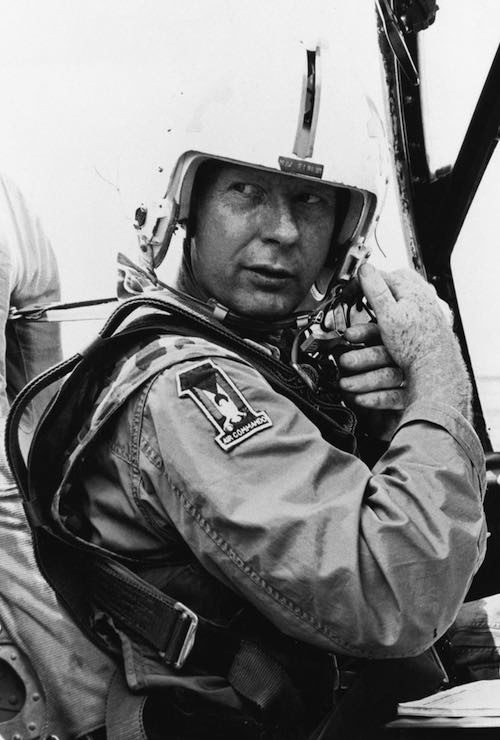
From the air that day, A Shau was a thick cushion of clouds. Early in the morning an Air Force AC-47 got shot down. Three of the crew were killed manning a perimeter defense around the plane before Air Force helicopters picked up three survivors.
In the prefab operations shack alongside the airstrip at Pleiku, Maj. Bernard Fisher was handed a slip of paper with a set of map coordinates to a target of top priority — A Shau Valley, a place Fisher had barely heard of. He flew there on top of the clouds by radio beam.
Once he got down through the clouds to the valley floor, he began his strafing passes around the perimeter of the fort. He went back up and down again three times that afternoon, bringing behind him one med-evac helicopter, which got some of the badly wounded men out of the fort. Behind him came two more flights of A-1Es for bombing and strafing runs, two C-123s for supply drops, and two B-57s with rockets and napalm.
At 6:00 the next morning, an Air Force colonel woke Fisher up by telephone to tell him that he was putting him in for the Silver Star for this extraordinary achievement. The recommendation would get lost in the events of that day, March 10.
After the colonel got him up, Fisher wrote a long letter home to his wife. Then he took off at 10:05 on a routine bombing-and-straffing mission with Capt. Francisco (Paco) Vazquez, 29, flying another A-1E just off the tip of his wing. They had been airborne only 10 minutes when Control radioed a new set of coordinates. “I just jotted it down and said ‘A Shau,’ and Control said ‘yes.’ Then I started to worry about the weather, because I knew it was just as thick up there as it had been the day before.”
That morning, when Fisher and Vazquez reached the clouds above A Shau, they found four other Skyraiders milling around looking for a hole. Fisher found it, a light spot in the clouds almost exactly where he had found an opening the day before. He led the five other planes down. Two of the Skyraiders took up a holding pattern, and the other three planes followed Fisher down a narrow valley to the fort at A Shau.
Pilots call this valley “the tube.” It is less than a mile across. is was where the AC-47 had been shot down the day before. By the morning of March 10, the ridgelines along the tube were studded with at least 20 antiaircraft weapons positions. Fisher, and every other pilot who came into A Shau that day, had to dive down 8,000 feet through the clouds, pull out at tree-top level beneath the clouds, and then run this six-mile tube to get to the camp itself. ey felt the bullets thudding into their planes, but they had no room to maneuver until they ran the tube.
It was at this time, in midmorning of March 10, the South Vietnamese irregulars, who made up more than half the strength of the garrison, raced to defect to the enemy and turned their guns on the Americans and Nungs. With the help of the defectors, the North Vietnamese stormed the south wall and overran it.
“I came down to about 50 feet and I got them on my FM channel,” says Fisher. “I said, ‘Where do you want the ordnance?’ they said, ‘Hit the south wall.’ So I told Paco to set them up for strafe.” Just behind Fisher and Paco was Jump Myers, and just behind Myers was his wingman, Capt. Hubert King. King was almost through the tube when he took a blast of automatic-weapons fire that missed killing him by inches. He took his Skyraider straight up through the clouds and headed home. That left Fisher and Paco and Jump Myers, who kept hitting the south wall. Paco Vazquez says that “that radio operator in the fort calling us in was the coolest daddy in the world. They were all holed up in the north bunker, and the V.C. were all around them, but when he called for ordnance and told us where to put it, it was like he was ordering a bag of groceries.”
Myers had just pulled out of his second strafing pass when he got hit by a burst of fire from an automatic weapon. “I hadn’t been over A Shau more than ve minutes when I got it,” he recalled. “It was a good solid hit that shook the whole plane and rattled my teeth.
“Almost immediately the engine started sputtering and cutting out, and then it conked out for good. The cockpit filled up with smoke. I got on the radio and said, ‘I’ve been hit and hit hard.’ Bernie [Fisher] came right back and said, ‘You’re on fire and burning clear back to your tail.’ I was way too low to bail out, and I said, ‘I’ll have to put her down on the strip.’ I never saw the runway because of the smoke blowing back in my face, but I got a rough fix on my position by looking over my left shoulder out the canopy. From that point on, Bernie talked me down.
“I held my breath for as long as I could, but then I started eating a lot of smoke. Bernie said, ‘You look pretty good … get your gear down and jettison your ordnance.’ I was still carrying 12 fragmentation bombs and two white phosphorus that might have gone off on impact. I pulled the manual-release switch and dumped them just short of the runway. Bernie said, ‘ at looks good, that looks good,’ but about five seconds later he said, ‘You’re too hot, you’re too hot, get your gear up — you’ll have to belly her in.'”
Myers yanked up his landing gear without ever having seen the strip through the smoke. The wheels were still coming up as Myers touched down, and they crumpled under the plane. His bombs had dropped clear, but his belly tank of high-octane fuel, which should have jettisoned with the ordnance, had gotten hung, and it exploded with a roar when he hit the strip. Surf 41 was a ball of flame that skidded 100 yards down the runway and slammed up into a dirt embankment.
Myers has seen pilots burned alive: “It is my only fear about flying, the one death I’ve always dreaded. I had thought a thousand times what I would do trapped in an aircraft on fire, and that morning I just went through the motions.” The first thing was to push the hydraulic button to open the panel on his left. But when he did, roaring flames rushed in, and he slammed it shut again. “I decided two things,” says Myers, who by all odds should have been dead by this point. “I had to strip down to my flying suit and leave my survival gear behind if I was to have any hope of diving through the flames. And I was going to go through the right window panel because it couldn’t possibly be any worse than the left.
“The guys flying overhead tell me I was in that little fire bomb for at least a minute. It seemed to me like an eternity before I could get all the gear off. My biggest fear was that lever to open the right window might have jammed on impact. But from now on everything went my way. The canopy popped right open. The way the plane had swerved around, it was catching a strong breeze down the runway and it opened a path through the flames that seemed to me like that path through the Red Sea. I ran out along the wing and jumped off and squatted down in a patch of weeds.
“I still thought I was a dead man, because I knew the strip was under enemy control. They don’t take prisoners in the middle of a battle. I remember thinking, How is Betty going to manage with all those kids?
“Then Bernie rolled in from the east to take a look, not more than 25 feet off the runway. I jumped up out of the weeds and gave him a two-handed wave. I was trying to signal him I was okay and also to get the hell out of there. When he made his first pass to look for me, that was the first time I realized how much firepower the enemy had in that valley. It was like a shooting gallery.”
“When Jump headed into the strip,” says Fisher, “I got on the radio to Control and told them we had a pilot down, and to get a chopper in there real fast. When he hit the runway and exploded, I was sure he was dead. And then I saw him scrambling off the end of the wing with smoke pouring out of his ying suit. I was sure he was burned real bad.
“What you want to do when a pilot is down,” says Fisher, “is to lay the ordnance in real close, even though you are taking some risk of hitting your own man. I could see the enemy on top of the embankment, between Jump and the fort, and so I laid down a string of 300-pounders. I was still in a hard left bank, to keep away from the mountains and under the clouds, and I laid down 400-pounders on the other side, the east side, of the runway.”
At this point Paco Vazquez, Fisher’s wingman, was flying strafing runs prudently paced to avoid the shrapnel from Fisher’s bombs. en he felt the thump of bullets against his plane. He got on the radio and told Fisher: “We’re getting hit hard from the east ridge.” Fisher told him: “Well, go get them.” Paco gave the eastern ridgeline everything he was carrying under his wings: ten 100-pounders and two white phosphorus bombs. The belly of Paco’s plane was near the tops of the trees along the ridge when he let loose his string, and then he pulled up sharply through the clouds to get away from his own shrapnel, turned and dived back down blind to the valley floor. Luckily he found it.
Circling over the runway, Fisher had now made his decision. “Control told me the chopper was having trouble finding the hole. Well, that was what cut it. I told Control that I was going in and get the pilot. They told me they did not advise it, but that I could make the decision myself. I didn’t think the pilot could survive until a chopper got there, and I didn’t think a chopper had much chance of getting down through that ring of re and out again. So I told them I was going in, and asked them to give me suppression re.”
This flight, Hobo 27 and 28, was led by Capt. Jon Lucas, 28, of Steubenville, Ohio, with Capt. Dennis Hague, 28, of Kellogg, Idaho, flying wing. “I told Bernie, ‘We’ve got the cannon and the bombs, and we’ll cover you,'” says Lucas. “I called Dennie and told him, ‘Set ’em up for strafe, we’re going in.’ Bernie said, ‘Do you see the aircraft?’ and I said, ‘It’s burning pretty bad.’ He told me the pilot was hiding in the weeds to the west of the plane, and that I was clear to strafe any place except there and the north bunker of the camp, where the survivors were still holed up. Bernie said, ‘I’m getting a lot of fire from the east side of the strip.’ Paco, Bernie’s wingman, came down through the clouds about then, after his bomb run, and he fell in as third man in the string. So we hit the east side of the runway and really hosed it down.”
Skyraiders move too fast to see a prone human form in khaki or camouflage — and they are always prone when the Skyraiders make a pass. It was days later that the pilots learned from camp survivors what kind of job they had done east of the runway. “At least a company of North Vietnamese had massed there to cross the strip and assault the east wall of the camp,” says Capt. Carter of the Special Forces. “The Skyraiders just wiped out this whole company, which was not dug in. It took all the pressure o the east wall, and it had a lot to do with us getting out alive.” And, of course, in storming across the runway to hit the east wall, the enemy would have had plenty of time to kill Jump Myers.
Lucas, Hague, and Vazquez were flying a tight-left pattern around the runway. There was no room for evasive action. “We just had to stay in there and take the fire from the ridges,” says Vazquez, “in order to put down the suppressive fire to cover Jump and Bernie.” They were flying what pilots call a “loose string,” meaning that they were so evenly spaced in their tight-left bank that one or another of them was hitting the target every 15 seconds.
Jump Myers was crawling on his belly in the dirt just west of the runway. “I buried my mission cards and a big yellow pencil that I thought looked too bright, and I muddied up my patches — that’s standard survival training. My next thought was to get away from the plane, because if the enemy sent a search party that would be the first place they’d look for me.
“The strip had been carved out of a hill by bulldozers, and that had made an embankment about 10 feet high just west of the runway. That was what I was hiding against. There was at least a company of enemy on top of the bank, but they couldn’t see me. Also, I had landed in such a ball of flames that I think they thought I was dead.
“My only glimmer of hope then was to find some real good cover and hole up for two or three days until the battle was over. The last thought in my mind was rescue. I knew a chopper could never survive the ground fire, and it simply never occurred to me that somebody would be crazy enough to put an A-1E down on that strip. It was too short to begin with. The steel planking was all buckled up into spikes by mortar rounds, and it was littered with rocket pods, 55-gallon fuel drums and the debris from my plane. My only thought right then was to signal the other A-1Es somehow to get out of there before they all got shot down.”
“I dropped that last string west of the runway to keep their heads down,” says Fisher, “and also because I wanted to come into that short strip just as light as possible. All I remember going through my mind was, Can we do it? and Yes, I think we can.
“I was coming in from the north end, when I saw I was too hot, so I put her down on the strip for just a couple of hundred feet. I saw Jump wave at me, and then I just gave it the power and took off again. I bent it around real tight in a teardrop turn and came in from the south, holding it right at 95 knots. That’s the key speed for short-field landings. I touched down 200 feet in, which was as close as I could cut it and still clear the trees. I put the flaps up and started hitting the brakes even before the tail came down. I rode the brakes so heavy I was worried about burning them out.
“Then I saw the end of the runway coming up way too fast. I knew that if I hit the brakes any harder I might burn them out or tip the bird over on her nose. That was the first time all day I was scared. I had to make a decision: Do I really slam on the brakes and probably tip her over, or do I take a chance on the overrun o the end of the strip? I decided to take a chance on the overrun. It was grass and soft dirt, and littered with these empty fuel drums, but it worked out real fine.
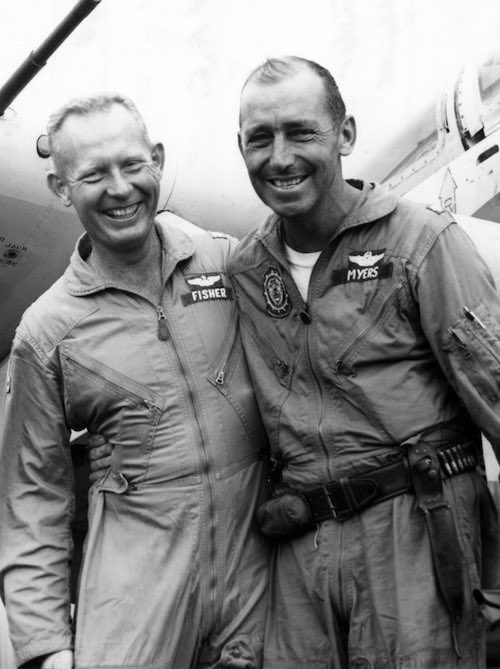
“After using up about 20 yards of the overrun, I hit the left brake hard and swung the bird around in a big cloud of dust and taxied back down about two-thirds of the runway looking for Jump. He waved to me from the weeds, and I stopped as quick as I could, about 200 feet past him. I looked out the rearview mirror, and when I didn’t see him come running, I figured he was hurt real bad. So I hit the parking brakes and unstrapped and climbed into the right seat to go and get him.”
At this point, the other three A-1E pilots were flying strafing runs 50 feet o the ground and so close to the runway that what the pilots call “metal”— the expended cartridges and linkage from their 20-millimeter cannon — was showering down on Myers in his hiding place against the bank. The lead pilot was still Jon Lucas, although he had just been hit hard from the east ridge, was on fire, and his cockpit was full of smoke.
“I told him, ‘You’re burning,'” says his wingman, Dennis Hague. “‘Better get the hell out.’ He said, ‘Can’t leave Bernie yet. We’ll make one more pass.’ I expected the bird to blow up in his face any second. I said, ‘I’m Winchester! [code for out of ammunition].’ He said, ‘Me too, but they [the enemy] don’t know that.’ So we all made the last pass dry.” For this bit of gallantry and leadership, Capt. Lucas has been recommended for the Silver Star.
From his spot in the weeds, up against the embankment, Jump Myers still could not believe what was happening. “Even after I had seen him touch down, and pull up, and make his teardrop and come in to land from the south, I was thinking, Well, they got another one. It wasn’t until he had taxied back past me and waved and hit the brakes that I knew what was up. I said, ‘Why, that crazy S.O.B. has come in here to get me out.’ I started running for the plane.”
From the air, that run looked agonizingly slow, although it took only 10 or 15 seconds. “I kept yelling, ‘Hump it, man, hump it, you’re never going to make it at that rate,'” says Paco Vazquez.
It seemed a long time to Bernie Fisher too. While he was scrambling out of his harness to go out and get Myers — he had not yet seen him running down the strip — bullets were thumping into his plane, one of them only two feet from his head.
To Jump Myers, who set a record for the sprint at Williams Air Force Base, Arizona, back in 1943, the run seemed an eternity. He was dashing down the middle of the runway in full view of every North Vietnamese who happened to look his way. “The gun fire was deafening, the bullets were whining all around, and I thought it was all aimed at me. My shoulder blades were really puckering. is was the second time that day I thought I was dead. I can tell you I made that run as fast as any old man of 46 ever could.”
“I was just about to jump out the right side and go get him,” says Fisher, “when I saw these two big red eyes leaping up at me over the back edge of the wing. ey were so red from the smoke that they looked like neons.”
“I grabbed one handhold on the side of the plane,” says Myers, “and then just scrambled across the wing on my hands and knees. Bernie still had the engine running fast enough so that the wash almost blew me o the wing. So I kept as low as I could, and I didn’t worry about procedure — I just dived into the right side of the cockpit head first. My head and shoulders hit the right seat, and my legs were ailing all around Bernie and the instrument panel. He grabbed me by the back of the ying suit and set me right side up again.”
At this point Capt. Lucas was just coming around for his last (and dry) strafing pass, his own plane still billowing smoke. “Bernie just whipped the butt end of the plane around and really cobbed the power,” says Lucas. “We were all sweating it, because he only had two-thirds of a runway that was too short in the first place for any sane man to put an A-1E into.”
“The takeoff went real nice,” says Fisher. “I just took her right up through the hole in the clouds and leveled off on top at about 8,000 feet.
“I knew I had taken a lot of hits, and I thought about putting into the nearest strip. But the engine was running real fine, and it’s always nice to get home, so I headed for Pleiku, which was 45 minutes away.
“Jump couldn’t talk to me because he didn’t have a radio headset. He signaled me for a cigarette, and I shook my head, because I don’t smoke. He gave me a couple of hugs and held up a finger, meaning ‘number one.’ He was a mess. He got mud all over everything he touched, and the smoke from his flying suit stunk up the whole cabin. But we couldn’t help turning to each other and laughing all the way home.”
That afternoon, the Special Forces survivors — 13 out of the 17 were still alive, and all 13 were wounded — got orders to evacuate the camp. That day and for the next two days, the choppers scoured the area and picked up scattered groups of survivors.
By this time Bernie Fisher and Jump Myers were enjoying the traditional advantages of the pilot who survives: a soft bunk, clean sheets, and an officers’ club. When they landed at Pleiku just after 1 p.m. on March 10, Myers was whisked o to the flight surgeon, who gave him some drops for his red eyes and told him that otherwise he was in splendid shape. Then they were both ushered in to see Maj. Gen. Gilbert Meyers, deputy commander of the 7th Air Force, to which all Air Force pilots in Vietnam belong. The general gave them his warmest congratulations, although Jump Myers says, “I was sure he was staring at my low-quarter shoes the whole time.”
“What can you do with a guy like Bernie?” says Jump Myers. “I would like to furnish him with a year’s supply of whiskey. But he doesn’t even drink coffee. So I bought him a Nikon camera — he’s the biggest camera bu in the Squadron — and had it engraved, A Shau, March 10, 1966. For the first few days I felt like a dead man walking. I couldn’t believe it. And then I got over that, and it’s great to be alive.”
Excerpted from “It’s Great to Be Alive” by Richard Armstrong, June 4, 1966.
This article is featured in the January/February 2018 issue of The Saturday Evening Post. Subscribe to the magazine for more art, inspiring stories, fiction, humor, and features from our archives.
Healthy Weight, Healthy Mind: Getting Started with Weight Loss
We are pleased to bring you this regular column by David Creel, PhD, RD, who is a weight management specialist and the author of A Size That Fits: Lose Weight and Keep it off, One Thought at a Time (NorLightsPress, 2017). See all of David Creel’s articles here.
Most people who want to lose weight try diet after diet, feeling worse after each successive failure. The weight almost always creeps back, along with discouragement and anger at themselves. Their hope quickly fades.
Statistics show that the probability of achieving and maintaining a ten percent weight loss without bariatric surgery is one-in-six. But I promise you that losing weight and keeping it off isn’t based on luck.
I don’t believe people are doomed to obesity. Although losing weight is never easy, I believe each of us has the ability to make permanent changes that result in a healthier weight. In these columns, which are based on my book, I plan to share the nutrition, exercise, and psychological principles I believe matter most.
Healthy living doesn’t look exactly the same for each person. Instead of a rigid, restrictive diet plan, we’ll explore how thoughts, emotions, and past experiences can work in your favor. Stories and patient experiences will help you change your thinking and strengthen specific skills, including:
- maintaining persistence
- eating mindfully
- setting goals
- managing the food environment
- quieting emotional eating
- preventing relapse
Let’s get started with the first weight loss fundamental.
Calories In, Calories Out
If I asked you to tell me in simple terms why someone is in debt, what would you say? Admittedly, finances can be complicated, but let’s cut to the core of it: people are in debt because they spend more money than they earn. They may spend too much, earn too little, or both.
By comparison, obesity is also a complex condition we can explain in simple terms. We gain weight when we absorb more calories than we burn. We lose weight when expend more calories than we consume. Like debt, many factors influence the calories-in-calories-out equation. Our genetics are certainly a factor, but rarely can we isolate one gene that makes us gain weight. Instead, a combination of genes may impact our physiology and our response to obesity-promoting environments. Even the bacteria in our guts may influence appetite or how efficiently we use the calories we consume.
Although not likely, it’s possible to lose weight eating doughnuts for breakfast, white-bread bologna sandwiches for lunch, and ice cream for dinner. As long as the calories you absorb from these foods are less than the calories burned, you, and your not-so-happy digestive and circulatory systems, will lose weight. That’s one reason the discussion about which diet is best (Atkins, Paleo, South Beach, Zone, etc.) isn’t so important. Calories matter more than the source of those calories.
A multi-site study published in the New England Journal of Medicine showed that two-year weight loss did not differ among people who followed four different reduced-calorie diets. Over 800 subjects were randomly assigned to eat one of the following:
- a low-fat/average protein diet
- a low-fat/high protein diet
- a high-fat/average protein diet
- or a high-fat/high protein diet
Their carbohydrate intake was 35 to 65 percent of the calories they consumed, depending on the combination of fat and protein. Each participant’s diet was set 750 calories below what he or she needed to maintain weight at the beginning of the study. Not only was weight loss similar between groups, their hunger and levels of satisfaction were the same with each diet.
These results, along with other studies, suggest there is no single, optimal diet for weight loss. This is great news for people who want to lose weight, because you can choose from a variety of nutritional practices, based on your own preferences and lifestyle. Here’s the most important question to ask:
Is the reduced-calorie diet I want to follow both healthy and sustainable?
If your answer is, “yes,” then I encourage you not to call it a diet. Being on a diet sounds like a short-term project. Instead, I hope you’ll learn to eat in a way you can continue for the rest of your life. Think of it as your eating style.
Next week, we’ll get into some very practical advice on foods to eat.
Come back each week for more healthy weight loss advice from Dr. David Creel.
Heroes of Vietnam: The Village That Fought Back
 This article and other features about America in Vietnam can be found in the Post’s Special Collector’s Edition, The Heroes of Vietnam. This edition can be ordered here.
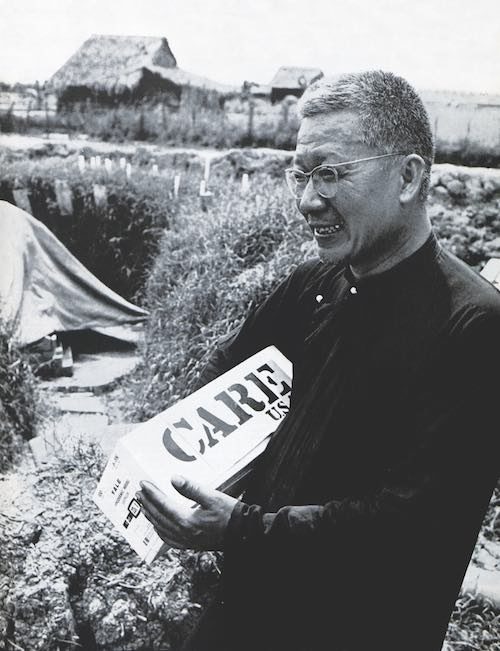
When I arrived, members of the small “self-defense corps,” which protects Binh Hu’ng from the guerrilla raiders, were drawn up smartly in military formation. I was startled and deeply touched. Many of them raised their hands in a familiar three-fingered salute. They were former Boy Scouts, and it was the only military gesture they knew. Something else about them was far more impressive. These volunteer soldiers were cheerful, despite the certain knowledge that before another year is out, two-thirds of them probably will be killed in action.
The leader of Binh Hu’ng village is the Rev. Augustine Nguyên Lac Hoa, a stocky, bespectacled Catholic priest who was once a lieutenant colonel in the Chinese Nationalist Army. He led the group — originally 375 settlers — out of South China, into Cambodia, and finally to the mud flats and mangrove swamps of South Vietnam, where their settlement has more than tripled in size. When I asked Father Hoa why his self-defense soldiers volunteered for so bleak a life and almost certain death, he smiled warmly and replied, “Man was born to do something.”
Vietnamese authorities recently estimated that 500 loyal villagers are killed every month in the fight against these guerrillas. But they say guerrilla casualties are even higher. If other villages are as resourceful as Binh Hu’ng, this is probably true.
For three months in 1959, Binh Hu’ng was peaceful. Then the Viet Cong guerrillas attacked. Lacking weapons, the settlers fought back with Boy Scout staves and knives. It seems almost incredible, but when the Viet Cong struck, the weapon-poor villagers promptly counterattacked. They had to close with the enemy quickly to make their knives and staves effective. The Binh Hu’ng villagers lost a few men, but they captured several American-made M-l rifles and a Browning Automatic Rifle (BAR) from the guerrillas.
From that time on, the attacks were incessant. Father Hoa knew that knives and staves supplemented by a few rifles and a BAR were no match for guerrilla firepower. He appealed to President Ngô Ðinh Diêm and got funds — $12 per month per man — and a scattering of weapons for a 300-man self-defense force. The weapons, some of them predating World War I and as varied as the armies of the world, were left over from stockpiles taken from the Binh Xuyên, a private army of racketeers and adventurers which the government disarmed in 1955. Father Hoa would have liked American weapons, but United States military aid cannot be given legally to such an irregular force.
Father Hoa searched throughout free Vietnam for experienced guerrilla fighters. He promised them a life of hardship with frequent combat, little pay, and probable death. Gradually he recruited 300. Officers and men received the same pay. When I visited Binh Hu’ng, the force had grown to 340 “regulars” and 80 recruits in training. Father Hoa pays the extra 40 “regulars” out of his own pocket. The 80 recruits get nothing, only food from the village.
Although they get virtually nothing in return for defending Binh Hu’ng, the corpsmen are tough and canny fighters. And they make the most of their limited weapons. The heaviest of these are two mortars, a 60 mm and an 81 mm, which have been calibrated to zero-in all the approaches an attacker can use against the village.
The villagers rarely wait patiently to be attacked. Self-defense soldiers move out into the surrounding area to strike the guerrillas when Viet Cong troop concentrations are discovered. Patrols push out daily in search of the communist forces.
Although one thinks of remote villagers in a primitive land as dwelling behind a natural curtain of ignorance, the self-defense troopers are remarkably well informed. A flow of information comes to them from daily Voice of America broadcasts and from the Free Pacific Press, which beams Vietnamese-language broadcasts and publishes newspapers and magazines in English, Chinese, and Vietnamese from Cho’ Lo’n. The troops spend two hours every day discussing the meaning of the news. Afterward there is a lively discussion of a single political subject.
Two months before my visit, the troops started talking about “What Freedom Means to Me.” They were still going strong on the subject when I left. The light in their eyes when they talked about freedom showed that it was not mere oratory. Freedom is precious to them, a personal thing. This apparently is what gives them confidence that they will defeat the Viet Cong guerrillas, and a greater confidence that free men everywhere will win out against communism. Repeatedly they asked me for assurance that the United States would stand firm in its policy in Asia, and particularly in Laos.
When I was preparing to leave Binh Hu’ng, these same grinning soldiers clustered around the village helicopter landing pad to say goodbye. They predicted that, with the dry season starting, the Viet Cong guerrillas would be able to move about more freely. “It will really be war now,” one of them said. We shook hands in parting. “Next year,” said one of the smiling troopers, “you will see somebody else here. Two hundred of us will be dead then.”
They drew up in a smart military formation as the helicopter’s blades started rotating. Then they saluted. It was the three-fingered Boy Scout salute again!
Postscript: A year later, the Post sent journalist Don Schanche to Binh Hu’ng to find out what happened to those determined warriors. In the year since the American officer’s visit, they had lost not 200 men, but 8. They counted 500 V.C. dead. Schanche concluded that “the Binh Hu’ng soldiers had all but eliminated the Viet Cong menace in their area.” One of the locals is quoted as saying his village was now “the safest place in Vietnam.”
—”The Report the President Wanted Published,”
May 20, 1961
Movies for the Rest of Us with Bill Newcott: 5 Movies You Should Have Seen in 2017
Join our movie review video podcast, Movies for the Rest of Us with Bill Newcott. This week, Bill reviews excellent movies you might have overlooked in 2017.
Most Popular Contemporary Fiction of 2017
The Saturday Evening Post continues to discover and publish the works of new, talented authors. Take a look at our most read contemporary fiction short stories.

1. “Crack” by Myles McDonough
Winner of the 2016 Great American Fiction Contest: At Highland Hospital, Zelda Fitzgerald found refuge from the world — but not from Scott. Read more »

2. “Over-Town” by Terry Sanville
Doris might never have come to the island if it weren’t for Jack. But with her husband gone, will she stay on Catalina or return to the mainland life she left behind? Read more »

3. “Just for Me” by K. Anne Smith
K. Anne Smith explores the value of objects after the loss of a loved one. Read more »

4. “The Absence of Sound” by N. West Moss
A quiet man who works at the New York Public Library contemplates the space created by absences, both recent and in the past. Read more »

5. “Man of Letters” by Robert McGuill
A succession of unread letters forces a father to examine the strained relationship he has with his son. Read more »

6. “Recluse” by Chet Martin
Years of caring for a brother who won’t leave his room has driven Hattie to desperation. With hopes of urging him outside, she enlists the help of a female suitor, a ghost, and the literary genius of Edgar Allan Poe. Read more »

7. “Pigeons” by Sophia Veltfort
Despite growing doubts over her long-distance relationship, a young woman moves in with her boyfriend’s mother after her New York City sublet falls through. Read more »

8. “Getting Home” by Mark Fabiano
How could Michael explain to his son that when you do nothing, bad things can happen, but also sometimes, even when you stand up and do all you can, things still can go bad? Read more »

9. “Long Past Time” by James Reed
With the news of his ex-mother-in-law’s death, a man faces disturbing questions about his failed marriage to a woman who had always seemed a stranger.
Read more »

10. “A Colossal Mistake” by Frank Morelli
“In a field planted heavily with beefcakes, the rotten tomato is easy to spot.”
Read more »
News of the Week: Goodbyes to 2017, Resolutions for 2018, and Lost Letters from 1944
A List of Lists
According to a scientific poll that I just made up, 99.4 percent of all people love lists. We love thinking about and debating the best this and the best that of all time, or the worst this and that, or the most overrated and underrated. And the end of a year makes us happy because that’s when we get an avalanche of lists, lists, lists.
NPR has a great interactive list of the best books of the year, and the staff of The Atlantic picks their favorite books too. The magazine also lists their 50 favorite podcasts of 2017. There are approximately 9 million best-of TV lists, including these from David Bianculli at NPR, The New Yorker’s Emily Nussbaum, and Vulture‘s Matt Zoller Seitz. The New York Times has its list of the best movies, and here’s USA Today’s list.
Looking for “worst” lists because they can be the most fun to read? The A.V. Club picks the 20 worst films of the year, Time has the 10 worst songs of the year, and TVLine has their picks for the 10 worst TV shows. Matt Zoller Seitz isn’t going to be happy that the show he picked as the very best of 2017 is one of the worst on TVLine‘s list.
We have some lists here at the Post too, including our most popular articles of the year, the best cartoons, and our most popular cover collections of 2017.
My favorite Post cover of the year is on the November/December issue, and it’s actually from 1957.
In 2018, I Will …
There’s only one thing more annoying than people who tell you what their New Year’s resolutions are, and that’s the people who tell you that they don’t make New Year’s resolutions. Apparently these people live golden, flawless lives and don’t need to make any changes.
I get it. You don’t want to make resolutions because it’s a lot of pressure, it’s too formal, too cliché, and besides, “everybody does it.” But isn’t it natural to take stock of your life at the end of a year, to look back at what has happened the past 12 months and think of what the new year holds? It’s the end of December and you’re organizing things for January, planning, hoping. Even if you’re not consciously thinking “these are my resolutions” and writing them down, you’re still thinking of making changes in the new year.
What do you think is the most popular resolution for 2018? You might think it’s to lose weight, save money, or exercise more (hey, those have been my top three every year since 1997!), but it’s actually something else, according to this Marist poll.
If you want to know how you can stick to your resolutions, Fast Company has some tips. Hint: It actually does help if you write them down.
The X-Files Is Back (Again)
The X-Files reboot from last year was met with a mixture of excitement and (ultimately) disappointment. A couple of the episodes were good, but I think overall, fans wanted something a little bit more or even different. Judging by this trailer for the new season that starts January 3 on Fox, the show knows that. Looks pretty good!
RIP Rose Marie, Dick Enberg, and Dominic Frontiere
Rose Marie was a star for 90 years (!), since she was a little girl, singing and dancing and acting on stage and in movies as “Baby Rose Marie,” but she’s probably best known to TV fans for her role as writer Sally Rogers on The Dick Van Dyke Show. She had a critically-acclaimed documentary about her life released this year titled Wait for Your Laugh. She died yesterday at the age of 94.
Dick Enberg was a legendary sportscaster who covered 28 Wimbledons, 10 Super Bowls, Major League Baseball games, and endless college football games. He died last week at the age of 82.
Dominic Frontiere composed many themes for classic TV shows, including The Outer Limits, The Rat Patrol, The Flying Nun, The Invaders, That Girl, and Vega$, as well as many movie themes. He died last Thursday at the age of 86.
The Best and the Worst
Best: My favorite stories of the week both involve letters from World War II.
In Greenfield, Massachusetts, Francesca Passiglia found a love letter inside the walls of her home while it was undergoing renovations. It was dated April 19, 1944, from a man named Walter to a woman named Betty. Passiglia asked the Greenfield Police Department to help her solve the mystery of Walter and Betty and the department (of course) turned to Facebook. They found out who Betty was, but they’re still looking for Walter. It seems Betty dated two Walters in the ’40s.
And CBS News Sunday Morning had a great segment on Donna Reed and the letters that overseas soldiers wrote to her during World War II. After Reed died in 1986, her daughter found them. There were 350 in all and Reed had saved them for 40 years:
Worst: The worst (and oddest) news of the week? Nestl\0xE9 has announced they’re getting out of the chocolate business! That’s like McDonald’s announcing they’re not going to sell cheeseburgers anymore. The company has decided to concentrate on their other products, including bottled water, coffee, cereal, and frozen foods.
This Week in History
Vincent Van Gogh Cuts Off His Ear for Some Reason (December 23, 1888)
Why did the artist do that? Turns out, nobody really knows the answer. He could have gone crazy, been mad at a rival, or maybe he simply didn’t like having two ears. A more recent theory claims that Paul Gauguin (yes, the artist) lopped it off with a sword during an argument, and that van Gogh claimed to have done it himself to protect his friend. With friends like that …
Rod Serling Born (December 25, 1924)
Did you know that there’s a new Twilight Zone coming next year? You’re going to have to pay for it, though, as it will join Star Trek Discovery on CBS’s All Access streaming service.
This Week in Saturday Evening Post History: More Snow? (December 29, 1951)
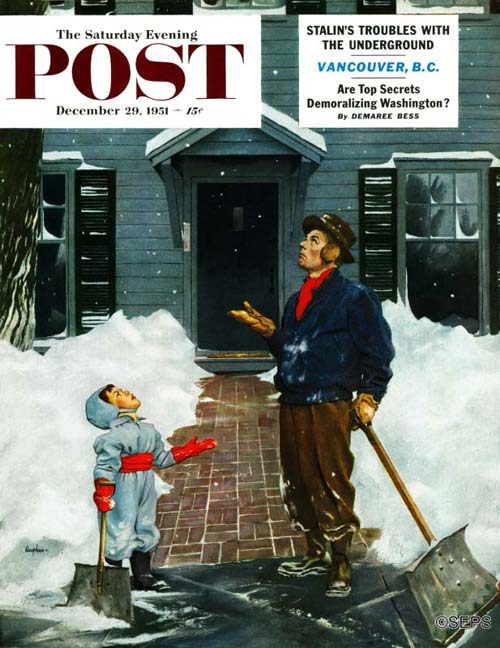
George Hughes
December 29, 1951
We’ve all been there — maybe you are there this week — in that moment when we finally finish shoveling the walkway and we notice it has started to snow once again and we’re going to have to shovel again in a few hours. This George Hughes cover captures that moment.
A Lot of People Are Saying This Right Now
Please, no more leftovers. pic.twitter.com/iXPk2K81Lm
— PEANUTS (@Snoopy) November 25, 2017
National Champagne Day
It makes sense that December 31, New Year’s Eve, is also National Champagne Day, since it’s probably the one day of the year that most people drink Champagne. In many countries, you can’t use the word Champagne on bottles unless the grapes were produced in the Champagne region of France, though there are some exceptions.
Esquire has a list of 11 great Champagne cocktail recipes, including the French 75, the Black Velvet, the Atomic Champagne Cocktail, and Ernest Hemingway’s Death in the Afternoon.
If you do open a bottle on New Year’s Eve while watching the ball drop in Times Square, please make sure you point it away from your guests’ faces. That could just ruin the whole night.
Happy New Year!
Next Week’s Holidays and Events
National Hangover Day (January 1)
If you celebrated National Champagne Day just a little too much, here are some remedies for the way you’re feeling, including eating a big breakfast, getting plenty of sleep, and staying hydrated.
The top suggestion on that list is “limit your alcohol intake,” but if that were the case, you wouldn’t be reading that list.
College Bowl Games (January 1)
If you haven’t been watching college football the past couple of weeks, you’ve missed the R+L Carriers New Orleans Bowl, the AutoNation Cure Bowl, the Cheribundi Tart Cherry Boca Raton Bowl, the Famous Idaho Potato Bowl, and the Starbucks Listerine National Bowl. Okay, I made up that last one, but the others are real.
Here’s a list of the games you can watch on New Year’s Day.
Open Season at the Café Rumba
I freeze in the doorway of Café Rumba. I’m too old for salsa, I have to be. My hips haven’t swayed for a long time, unless you count pushing open the door to the doctor’s office when my hands were busy with Mother’s wheelchair, and the last time I checked, such motion does not inspire unbridled passion in the opposite sex. I put on my favorite black pumps tonight, the ones with just a hint of sheen, but now I fear they are too formal for this dance-and-let-dance affair. I also have on my favorite crushed velvet dress, perfect for a winter wedding but, again, perhaps ill-advised for a steamy milonga. The dress shimmers in low light — that’s why I like it so much — though there is a tipping point that makes my pear shape look more like runny plum. Please God, don’t let the room get so hot that I regret my choice. Salsa, I’m told, generates a lot of heat, thermal and otherwise.
Mother hated this dress on me. And if she were still here, she would have let loose plenty of opinions about my coming here tonight, too. “There’s no call to be so gussied up on a Wednesday, Nancy, even for a dance,” I can hear her wheezing from her station at the card table in the living room. “It’s not becoming on a woman your age. Do you want those Latin men to mistake you for a streetwalker?”
Only Mother would have believed any outfit selection of mine could lure men in our mild-mannered town into a pay-by-the-hour motel. We don’t have those anyway in Nordeast; we’d have to go to the Holiday Inn by Route 494 instead, and that would eat up a working girl’s whole commission. What I would have had more trouble explaining was that it didn’t matter what I wore — the point was that I was going out. Out of the house. Alone.
Beyond the bouncer in the double doorway, I see the salsa diehards warming up. Their very practice swivels look sultry. One woman in the corner — who, come to think of it, looks older than me — is putting on her shoes. She is dressed in black from head to toe, hair dyed to match, and she’s not so much sitting in the folding chair as draping herself upon it. She reaches down her taut calf and, with a languid flourish, pulls the ankle strap tight. The effect stuns me. There’s more sex in that movement than I’ve experienced in total over my lifetime, and that includes my 21-year marriage to Darren, with whom I was quite satisfied for 14 of those years and miserable for the 7 leading up to the divorce, and also that one fling in college that involved an inadvisable amount of wine but still makes me blush whenever I think about it.
Despite the cold, I start to drip sweat.
The dancers look nowhere near as tame as the clip art figures on the flyer I first saw on the Curves community board last Tuesday and then again in the teachers’ lounge on Thursday. The simple 8½-x-11 sheet detailed the free lessons-cum-open dance sessions happening weekly at Café Rumba, “the hottest ticket in town.” Toner streaks cut through the early-’90s image of two tango dancers frozen in a swoon. What caught my eye both times, besides the incongruity of tango dancers on a salsa advertisement, was the promise in Comic Sans at the bottom of the sheet: “Find your passion … for passion!”
I mulled over that phrase all weekend. Were the flyer creators assuming a base level of passion in everyone? Could passion be taught? Unleashed? Did hopeless cases exist? Was I one of them? I relayed this train of thought to Cynthia on our Monday-morning walk, and she rolled her eyes at me. “Nancy, would it kill you to go and — I don’t know — try it? No one’s around to stop you anymore. You want it, you do it. And for god’s sake, please don’t overthink anything written in Comic Sans. Ever.”
Cynthia was right, of course. She usually is. Which is why I rushed my dress to the dry cleaners and left school right on time today. Oh, and took a small nip of Irish Mist from the liquor cabinet. Anything to keep me from overthinking.
“Ma’am?” The bouncer raises his eyebrows at me and tilts his head at the growing line of hoofers behind me ready to escape the bleak midwinter. Most of them are hopping from one cold foot to the other, careful to avoid the dirty slush along the sidewalk outside the club.
“So sorry, here you are.” I hand him my license and he dutifully inspects it — a run-of-the-mill procedure for which I am suddenly, wildly grateful because it lets me pretend for a moment that I don’t look every day of my 51 years, with extra wear thrown in after Mother’s two strokes. He nods and hands it back to me. Over his shoulder, I see that Sexy Shoe has taken to the floor with a much younger man. They are drooling their legs across the parquet, no music yet, simply moving with each other.
I smile at the expressionless bouncer and edge around him through the second door, already propped open, defeating its proper Midwestern purpose of blocking relentless drafts. People made bulkier by their winter coats pen me in. I ricochet off one woman barreling through the crowd who screeches over her shoulder at her huffing companion, “Stan, hurry! I see an open chair!”
Café Rumba used to be Vinelli’s Garage. Of the crowd gathered here, I am likely among the 12 percent old enough and native enough to remember that bit of trivia. Daddy used to bring me along when the Chevy came due for an oil change or the brakes started squeaking again. I’d sit on a wobbly bench near the multi-paned garage doors at the front and watch the grease monkeys at play. And I always made sure to keep my ruffled socks and starched jumper well out of range of the oil slicks, or Mother would wear out me and Daddy with another awful tirade upon our return.
Tonight, the only oil in sight is the pomade I thought went out of style in 1957 but is evidently enjoying a resurgence within the Twin Cities’ immigrant community. Whoever renovated the place — a local family, the Padins I think I saw in the paper — has whitewashed the three-car-wide interior and added a dated drop ceiling that looks as if someone first walked across the panels with an aerator. They don’t go in much for adornment. A Blessed Mother painting hangs by the doorway, and small tea lights feebly flicker on craft-store sconces against the walls. Otherwise, the whitewash runs uninterrupted. Its simplicity offsets what I’m suspecting is the chief reason for Café Rumba’s skyrocketing popularity in town: Who needs décor when you have a throbbing mass of people eager to see and be seen, to touch and be touched?

I glance behind me at the distinctive garage doors, now transformed into the front windows. The panes are already fogging up in confusion over the viscous heat within and nippy bite without. Inching my way over to where the wobbly bench used to be, I watch the entry line snaking its way down Fitzgerald Avenue. It files inside steadily — the bouncer has found his groove — and within minutes, everyone’s soggy hand-knit caps and Vikings scarves are tipping the coat racks and obscuring the chairs. I hide my purse behind one such mound. God forbid it and my car keys walk away tonight — Cynthia is away for a couple days, and I’m not sure who else I could call to come fetch me.
“Bienvenidos a la Café Rumba!” The D.J.’s smooth voice coats the din, puts coasters underneath the clacking heels, adds a bit of slick to the pompadours. The crowd pipes down imperceptibly. From my vantage point along the perimeter, I watch eye communication fly across the room. Already, potential partners are sizing each other up, filling unspoken dance cards. I furtively peek around. No one is peeking back.
“Who’s in the mood for a little …” — here the D.J. pauses for dramatic Latin effect — “…SALsa?” I’ve never heard the dance name pronounced that way before, as if someone were sighing the A to a lover in a clandestine embrace, as opposed to the sharp, nasal A I use when asking the 15-year-old Superfresh employee where the Pace brand is in the condiment aisle. The exotic pronunciation works magic on the crowd; they cheer and clap and crowd a little closer to the turntable at the far edge of the parquet, back near where the garage manager’s office used to be. Grinning, the D.J. waves his arm to the right of the room and says, “Please welcome your … instructors!”
To my surprise, Sexy Shoe and her barely legal partner move to the center of the floor, cutting through the throng like heated butter knives. People step aside for them, in awe of their cat-like ability to prowl while walking. Once in the middle, Barely Legal fixes his eyes on his partner’s face and takes her in his arms. She in turn lifts her sharp chin but lowers her lashes, combining “come hither” and “I have mace” messages to admirable effect. They strike me as locked and loaded, a phrase I hear the seventh-grade boys use in the library when they’re playing gunfight amid the stacks instead of picking out books for the week. This pair’s interpretation of the phrase, however, is the real deal; they carry danger in the curve of their backs and gunpowder in the nearness of their torsos. Despite already standing 20 feet from them, with hedgerows of bodies in between, I back away. I’m hot enough as it is — no need to push it.
The D.J. starts the music, a number full of Spanish guitar and wailing vocals. Their eyes never straying from each other, Sexy Shoe and Barely Legal carve out the dance floor with hips and heels. The appreciative crowd whoops in segments, an aural wave, whenever they sway past. The couple is now swinging around to my corner of the room, ready to begin the formal lesson. The people in front of me reflexively step back and bump me. The backs of my knees hit the folding chair. I teeter and jut an arm toward the window for support.
Someone grabs my elbow. “Whoa there. Steady now.”
The voice is deep, rounded, without the prairie-flat intonations that wallpaper my life here. I look up at my steady-er. An older gentleman, maybe 10 or so years on me, a soft kind of plump, but well-dressed enough to hold it all in. A respectable head of brown hair and full beard with trailing brushstrokes of gray at his temples and in the mustached creases around his smile. The neatnik in me wants to reach out and incorporate the silver streaks with my fingers, as if they were splashed there during an art lesson. I don’t, of course; personal space is to be respected, even at a salsa lesson.
In the same breath, we notice he still has me by the elbow. He laughs, one woof of a HA!, and says, “Let me release you before this unruly mob misunderstands my intent.”
I titter. Titter! Only women in Austen novels do that. Soon I’ll be turning about the garden and overhearing younger women vowing to one another that they will never turn into a divorced, childless, and — gasp! — boring matron like Lady Nancy. The man drops his hand. I extend mine. We shake. His grip feels much the same as it did on my elbow, assured and warm. In the center of the room, Sexy Shoe and Barely Legal are sharing instructions I can’t hear.
“I’m Robert, formerly of ‘not from around here.’” He holds my palm a beat beyond his introduction.
“I’m Nancy, formerly of ‘not anywhere but here.’” As much as I want to leave my hand there, I must withdraw. The sweat working its way down my arm will surely ruin the moment I’m hoping we just had.
“Have you come here before?”
I flirt with lying. But then my better (and apparently sexless) angels catch up with me. “Not since I was a kid, when this was still a mechanic’s shop. Is this your first salsa outing?”
“Here? Yes. Ever? No. I spent probably a year’s worth of future retirement income on lessons a while back after my wife passed away. A worthwhile investment, though, because it proved this old fart does have hips.” To illustrate his point, he swivels with the vigor of a man at least 20 years younger.
I choke back another titter and say, “Oh my.” Cynthia pipes up in my head as clearly as if she’d followed me across town: Oh my, Nancy? Oh my? Do you have any color in your life? Then Mother: Never trust a man who says he’ll take you dancing. Your father told me we would go, but we never did. I turn them both off and focus on Robert. “I have to confess, I’m envious you came armed with skills. I’m a complete newbie. You’ll be a hot ticket in the old town tonight.”
Sweet mercy, I’m rusty.
He woofs again, twice — HA! HA! “Well, we’ll have to see if your prediction bears out, though I’m feeling pretty good about the evening already.” He grins down at me. More sweat pops out of pores I didn’t know existed. “Care to limber up with me?”
With no further preamble he lays both hands at my waist. Nothing aggressive. Nothing untoward. Just gentle and confident, a well-liked belt I’d stuffed at the back of my sock drawer and forgotten about until this moment.
“Now put your hands on my shoulders,” he says. I rest my fingertips there so as not to disgust him with my liquidity. “Do you feel the rhythm in the music? Quick quick slow, quick quick slow. Say it with me, it’ll help you find it. Quick quick slow, quick quick slow…”
As he chants it, almost under his breath, he maintains his light pressure on my hips, pushing me back as he steps forward. I catch a whiff of Old Spice. My tentative step connects with the floor.
“Good! Now same thing back again. Quick quick slow, quick quick slow…”
He pulls me forward while he backs up. I sneak a peek at my feet, but he catches me. “Uh-uhn, no floor-gazing! Trust me. If I’m doing my job right, you’ll never have to think about what you’re doing. You’ll just be free to sail around the floor and be your gorgeous self.”
He smiles. I sweat more. We sway in time with the music, quick quick slow, quick quick slow, moving infinitesimally closer on every count of slow. I can do this. All it takes is basic rhythm, a good partner, the right attitude. One foot, one step, one try at a time. Nothing to fear but fear itself, Daddy used to say, but the only thing I fear in this moment is the song ending and my courage evapor—
I land on Robert’s toe. Hard. With my heel. To his credit, he barely flinches, though his eyes do squinch a bit. Sexy Shoe and Barely Legal whirl through my peripheral vision as the music speeds up beyond our cozy rhythm, while the apologies tumble out of me unchecked.
“I am so sorry! How clumsy of me, that must have hurt, I promise it won’t happen again —”
He woof-laughs. “It comes with the territory, dear partner! We’ll chalk it up to beginner — yow!”
In my flustered state, I have stepped on his other toe. He winces hard this time. Shame races up my neck and inflames my face. I am now not a runny but an oozing red plum, squashed on the dance floor, unfit for consumption.
Then I spot her out of the corner of my eye: Sexy Shoe swiveling her head toward us from her central post. Her severe chin snaps. Her razor-edged cheekbones sharpen. Even her coiled black bun tightens. She rotates on the petite ball of her right foot, and the flexible salsa shoe, glued to her form after what I’m sure is several lifetimes’ worth of instruction, slides along with her, eager to catch her footfalls. With each languorous step, her neck extends, her torso elongates, her legs stretch, and her toes — her pointed, wicked toes — exhibit more of a backbone than I as a vertebrate have ever had.
Sexy Shoe’s glittering eyes meet mine over all the bobbing, shaking heads. The music continues to roll through the speakers, the D.J. continues to croon sweet Spanglish nothings into his mic, but I feel as if I’ve been slapped across the face with a high heel. She is aware of me. She recognizes my kind: the reluctant impostor, the ineffective dilettante, the wannabe “passionista” who even under threat of torture couldn’t identify her life’s blood. She must smell my sweat-sopped dress and read it as weakness — weakness that should be eliminated from the floor as quickly as possible to ensure survival of the sexiest.
She is now beside me. Her stony resolve chills the once-warm aura Robert and I had created. Raising a pencil-dark eyebrow at me, she cocks her head and brushes Robert aside with one imperious wave that says, Be gone.
Robert swallows. “Well, how about that. I’ll… I’ll wait over here.” He drops my arm — he’s been holding it since I became transfixed by the roar of this woman’s movement — and retreats to the coats along the wall.
Her eyes have not left me. One skinny arm slithers up. I stare at it. Her eyebrow clicks down three notches to a stern furrow. She smacks my arm into place against hers, joining us palm to palm, skin on skin. Her other arm encircles my ample midsection until her hand rests on my shoulder blade. With a snap! the space between us evaporates. She has made us one beyond my consent, and only now will she move to dance.
“Follow me.” Her voice is coated with cigar smoke.
Good rule-abider that I am, I wait for more direction. None comes. She stares deeply into my eyes, just as she did with Barely Legal. How can he stand it? It’s only been eight seconds and my eyeballs are about to melt.
I blink.
She doesn’t.
And we’re off.
Sexy Shoe lunges forward, full pressure on my outstretched arm. I can’t help but move with her; her arms are an iron corset. I strain to find quick quick slow, quick quick slow in the thrumming music, but there is no longer any room for calculation. Instinct holds the reins.
Forward forward backward, backward backward forward, sideways sideways rock. Her hand grips my back, its pressure and intent clear through the crushed velvet and my Spanx control top. We whip to the right. My feet grapevine on their own. We whip to the left. Her arched arm swoops over my head and twirls me toward the gaping crowd. I can’t make out any faces — they’re a mass of melted crayons, blurred and smoothed, coloring the edge of the room.
Sexy Shoe is wrapped around me now, or so it feels. She has subsumed me through sheer, blunt will. We are no longer in the café or of the café. We are a packed soccer arena in Barcelona cheering full-throated, feeding off our own excitement, building concentric radiating waves to coax a win. We are a blaring horn section at a musicians’ club in Little Havana, stage lights glinting off our wailing instruments, riffs reverberating through the lounge. We are a hidden plaza in Brazil not yet relinquishing its daytime heat to the cool moon, pulsing with subliminal energy, known only to couples who rendezvous, laughing, in the shadowy alleys leading up to it.
And I. I am all the verbs I so rarely make real. I am shake, shimmy, strut — actions I can’t remember remembering, so I must learn them all again in a matter of moments, except I don’t really have to learn after all, because somewhere deep down I know them already, much to my flushed surprise.
One final horn blast, and I’m suddenly upside down. She has dipped me. This little bony thing has somehow tipped over my not-insubstantial frame without dropping me, and is still boring out my eye sockets with her glinting ones. Did she ever break her gaze? Was I too ecstatic to notice?
The whole room, now hanging from the ceiling, is hooting and clapping. The inverted D.J. pauses the music so the crowd can celebrate my public exhilaration. What would Mother say? Probably nothing — by now she’d have fainted from the shock. Cynthia would cheer. But they’ll never really know, will they? Here I am in a part of town I never visit, sweating from hairline to heels, in the arms of a tiny, magnetic woman for whom timid dancing is tantamount to sin, and the skin-tingling epiphany of it all is that I have fallen — quick, quick, no slow — for this blood-pulsing, heart-pounding, inside-out scenario. I have moved across a dance floor tonight, yes. But the trembling in my body and mind tells me I have moved much further than that.
Sexy Shoe drags me up. The room tilts back to a starburst version of the one I was in before, and now I’m looking down at the dark crown of her head. She releases me. My back and arm throb from the impression. The D.J. cuts in: “Brava, señoras! Now everyone, are we ready to take it faster?” The crowd yells in agreement and moves back to its blob-like formation, their arousal a heartbeat within the opening bars of the thumping music.
Robert shoulders his way back through the crowd behind Sexy Shoe. He is laughing. For a minute, I have to recall who he is.
“That was amazing! You’re a salsa star! Ready to get back out there?” he says over the rising volume. Sexy Shoe narrows her eyes at the sound of his voice and pivots so quickly that her skirt flays my thighs. She slaps her hand to Robert’s chest just as he reaches us.
“No,” she commands. “Good dancers try on many partners. Let her practice.”
To underscore her point, she pulls the nearest man off the wall, a young Hispanic gentleman who looks to be about 20, and pushes us together as if we were rusted mannequins — right arm holding up my hand, other hand on my back, enough breathing room but not too much. We smile shyly at each other. She surveys her work. Nods once. “Okay. Now go.”
Like that, she is gone, dissolving back among the dancers, slinking away toward fresh prey. My new partner leads me to the dance floor where our feet fall in line with the movement around us. Robert, a bit forlorn, watches me from the sidelines. I’ll be back, I mouth to him over my partner’s gyrating shoulder. And I will, I think. Maybe. Just not yet.
The Post would like to extend special thanks to its staffers who helped with the selection of finalists, as well as to its distinguished panel of guest judges who shared their time and talents, including Peter Bloch, Ed Dwyer, Holly Miller, William Jeanes, Estelle Slon, Michael Knight, and previous Great American Fiction Contest winners Lucy Bledsoe, Linda Davis, M. West Moss, Celeste McMaster, and Myles McDonough.
This article is featured in the January/February 2018 issue of The Saturday Evening Post. Subscribe to the magazine for more art, inspiring stories, fiction, humor, and features from our archives.
Festive and Fun Holiday Cocktails and Appetizers
With the New Year right around the corner and everyone’s minds focused on their waist-trimming resolutions, we’ve compiled a list of festive, fun cocktails and appetizers for your New Year’s Eve party that won’t add another notch to your belt.
Oven Baked Zucchini Chips
Oven baked zucchini chips will keep your carb cravings at bay. With nutty parmesan and a mix of seasonings, these light and airy “chips” are portable and easy to eat with a cocktail in hand.

Skinny Buffalo Chicken Dip
This skinny buffalo chicken dip will be the star of your party. By making simple changes, like using Greek yogurt instead of sour cream, you’ll retain the flavor but lose the calories. Pair it with veggies instead of crackers or chips and you’ve got a low-calorie treat that tastes every bit as decadent as you would hope.
Greek Layer Dip
The classic Mediterranean flavors in this dip will complement any holiday party. Using heart-healthy hummus and olives, fresh vegetables like tomatoes and cucumber, and low-fat feta, no one will be wishing for a high-calorie version. Adding fresh herbs like parsley and dill will send this dip over the edge. Serve with sliced veggies or toasted pita bread.

Cranberry Ginger Spice Sparkling Holiday Cocktail
Cranberries are a must-have on any holiday table, but cranberry juice is filled with sugar and can overload your cocktail with sweetness. This Cranberry Ginger Spice Sparkling Holiday Cocktail will give you the tart cranberry flavor without too much added sugar. The classic combination of rosemary and cranberries will be sure to put some excitement in your holiday party.

Blueberry Mint Fizz
Blueberries may make you think of summer, but combining them with mint and club soda turns them into a festive fruit cocktail for the season. Agave syrup to taste lets you control how the calories in your cocktail, and with the sweet and light flavors of the mint and blueberries, you most likely won’t be reaching for it.
Peppermint Mocha White Russian
It’s hard to think of a flavor more festive to the season than peppermint. Peppermint cocktails tend to be both full of fat and sugar, but this toned down Peppermint Mocha White Russian has some easy swaps (Cool Whip for whipped cream) that leave you with all the flavor and none of the guilt.

North Country Girl: Chapter 32 — Bamboozled at East High
For more about Gay Haubner’s life in the North Country, read the other chapters in her serialized memoir. The Post will publish a new segment each week.
As if we were still in elementary school, we teenagers delighted in anything that was a disruption in the school day. One poor kid, not the brightest light in the harbor, made a series of phone calls to the East office, claiming he had placed a bomb in the school, freeing the rest of us outdoors into the grey chill of a Duluth spring, no time to fetch coats or mittens from our lockers. Standing where somebody decided was a safe enough distance from a bomb, we kept warm by huddling in our little cliques, reveling over being sprung from chemistry or French II or metal shop.
Since the fake-bomb-threat miscreant had been spotted at the school’s one and only pay phone immediately before each evacuation, we all knew who he was, but our lips were sealed. The last time he called in a bomb threat, he must have been unhinged by the many thumbs up shot his way by passing students; he stuttered out to the school secretary, “And this isn’t (miscreant’s name)!” We never saw him after that.
Assemblies also broke up the school day; unlike the thunderous pep rallies held in the acoustically challenged gym, during assemblies you could have a whispered gossip or flirtation with the person next to you or even go to sleep.
One morning the crackly voice of Mr. Srdar, the principal, came over the ancient mesh loudspeakers mounted in every classroom. “Attention students: There will be a special assembly at ten o’clock tomorrow. All students are required to attend.” Rumors flew: was a friendly policeman in uniform coming to talk to us about drugs? Did they finally figure out which teacher was sleeping with his students? The worst scenario was yet another visit from Junior Achievement, touting the virtues of capitalism and on the prowl for future Titans of Industry. If that were the case, at least we could all catch an hour nap.

The next day we trooped into East’s auditorium and reverted to rowdy eight-year-olds; the big room rang with shouts, laughter, and whistles. The principal shushed us down into a quiet roar, and we jostled for seats, seats whose wooden bottoms had been worn so slick and shiny by generations of teenage bottoms that if you slumped or fell asleep you were in danger of sliding to the floor.
Mr. Srdar stood at the podium someone had thoughtfully placed on the left side, where it caught the watery spring light. He introduced the day’s special guest, who would speak to us about the famine in Africa.
This was unexpected and shut us up. We looked from side to side, acknowledging that every single one of us, even kids who couldn’t find the world’s second largest continent on a globe, had been implored to “Think of the starving children in Africa” when staring down a plate of grey meatloaf, calf’s’ liver, or boiled-to-death broccoli, which was supposed to make the disgusting mess more appetizing.
An earnest young man in khakis stepped up to the podium, introduced himself, and spoke about the war in Biafra, waving around a copy of National Geographic. He described the starving children he had seen, their stomachs bloated, their eyes dull. He said when the children’s hair turned red it was a sign that they were dying. Their bodies were not taking in enough nutrients to create the dark hair pigment: a little red-haired African child was a walking corpse.
He was good, so good that no one questioned why he had no photos, only a copy of a magazine, or why, if he was just back from Africa, he was as pale as any Minnesotan in March.
When he made a little choking noise in his throat, and dropped his head, girls all around me started to weep, searching in their bags for Kleenex to blot their tears and blow their noses. Even a few of the boys were squirming and blinking. This went on for a while, the young man droning on with his dramatic descriptions of dying kids and keening mothers. I wondered what the hell is going on here?
Then came the pitch. This nice young man was raising money for the starving children of Africa (no, we still couldn’t just send them our spinach and fish sticks) through a brand new kind of fund-raiser: a Walk-A-Thon, a 20-mile trek through Duluth. To participate, we had to ask our parents, parents’ friends, aunts, uncles, grandparents, any available adult with money in pocket, to sponsor us at so much a mile — preferably a dollar.
He said, “Imagine you’re holding a little African in your arms. Imagine that baby’s scrawny limbs, the distended belly barely covered in rags, the head that seems too large topped with a scruff of tightly curled, rust-colored hair. That baby is looking at you with big brown eyes, pleading for help. If you do not participate in the Save Africa Walk-a-Thon, you are dumping this poor dying baby out of your lap and letting that baby die.“
Even the football players were sniffing now, and some girls were red-faced from bawling. Mr. Srdar dabbed his own wet eyes with a big white hankie, congratulated the young man on the noble work he was doing, and assured him that he could count on East High students.
The Walk-A-Thon was scheduled for that Saturday. We were told the meeting place and instructed to bring our sponsors’ money with us. We were not given sign-up sheets, collection envelopes, buttons, pamphlets, or t-shirts. None of us thought this was odd as we went about pestering parents, family friends, and relatives for money.
I knew better than to ask my own mom, certain what her response would be to giving away money to perfect strangers. My dad and one set of grandparents were Missing In Action, the other grandparents hundreds of miles away. I walked over to Lakeview Avenue, my old block, and knocked on the McCauleys’ door; they were an older couple who were always good for a couple of boxes of Thin Mints or Samoa Girl Scout cookies. I was not nearly as eloquent as the young man and had a hard time explaining why Mrs. McCauley should give me the immense sum of twenty dollars so I could go on a walk. She pulled a crumpled one from a change purse, I took it, thanked her, and headed over to Michael Vlasdic’s house.
Michael was not walking. He had no interest in any extracurricular activities besides listening to records, taking drugs, and screwing me. Always a good sport, Mrs. Vlasdic gave me a twenty and told me I was a gutes Maedchen.
On a bright spring morning, a sympathetic mother delivered me and a passel of my friends to the Walk-a-Thon starting point, where the young man stood with a clipboard, writing down kids’ names, taking their money, handing out blurry mimeographed maps, and thanking us for saving all those babies’ lives.
We were somewhere in West Duluth, a neighborhood I hadn’t been in for years, and then only to visit the small and smelly Duluth Zoo, where an irate, aggressive and way too close squirrel monkey had once tried to snatch my mom’s beehive hairdo off her head. As I squinted at the blurry map, trying to make sense out of all the random rights and lefts, the young man blew a whistle and we headed off en masse.
The first five miles weren’t so bad, we were with our friends, we were outside in the fresh sun of spring, joking and laughing, and extremely proud of ourselves. We were the better angels, the generation that was going to save the world. The next month, on April 22, a bunch of us do-gooders would be down on Park Point beach, celebrating the first Earth Day, saving the planet by creating rickety sculptures of driftwood while tripping on LSD.
By mile 10, there was no more laughter, only silent plodding. We wore flimsy sneakers and carried nothing; running shoes, bottled water, and energy bars had yet to be invented. I don’t know if anyone made it past the fifteen-mile mark. At that point I hobbled home, fell on the couch, and gingerly took off my Keds and ankle socks to reveal swollen, throbbing, blister-covered feet, while my mom yelled at me for being gone all day without calling.
What hurt even worse was finding out that our nice young man was not saving babies, but lining his own pockets. Too late Mr. Srdar got a phone call from a high school in St. Cloud, telling him to be on the lookout for a traveling flimflam man, who like Professor Harold Hill in The Music Man, went from one innocent small town to the next, selling us nothing, not even big trombones or ratatat drums.
Even though I had watched Michael Vlasdic tear up during that hornswoggle of a speech, now he was miffed that I had given away his mom’s twenty dollars, which would have bought four hits of acid.
Since my father had left, my own cash flow had trickled down to nothing. My mom did not have a bank account in her name. It took several phone calls and several weeks before my dad would reluctantly show up to place some actual cash in my mom’s hand. She would then, almost as reluctantly, peel off a few bills for me. From that pittance I had to pay for my share of gas and booze on Friday nights with my pals, and for the drugs Michael and I took on Saturday.
But suddenly it was summer, school was out, and I was sixteen, old enough to find a job. The Flamette, a diner that was swarmed with tourists in the summer, hired high school girls. My friends Nancy, Betsy, and Debbie waitressed there, I looked on, jaw agape, as they competitively counted up their tips after work. I filled out a Flamette application, leaving the “Experience” section blank, and was shown the door.
I next applied to be an A&W carhop; the manager took one look at my scrawny arms and knew that I would immediately dump a tray laden with those heavy glass mugs of root beer and ice cream over myself or a customer.
I lowered my sights to restaurant kitchen work. When we were still a family, my father had spent enough money at the Bellows Steak House that the manager recognized me as I sat in the waiting area on a June afternoon, clutching my application form. He hired me as a salad girl. I would work four nights a week and make $1.90 an hour.
My work night started at four o’clock. My primary duty was preparing the mix for the big salad that came with every dinner and that was ninety percent iceberg lettuce. In the basement prep kitchen I’d give each head of lettuce a good thunk on the bottom and twist out the core as instructed by the scary chef. He had also shown me how to operate the electric lettuce shredder without losing a finger, but I was too terrified of that whirling, deadly contraption to put a hand anywhere near it. Instead I stood across the room and tossed heads of lettuce towards the blades, again and again, gathering the bits that went all over the floor and adding them to the giant plastic salad bin.
I assembled salad after salad so that they could be delivered, cold and crisp, to diners who would smother them with French, Thousand Island, or Roquefort. It was my job to keep the tripart salad dressing servers filled; I never washed those servers, just gave them a quick wipe with a kitchen rag to clean off the crust along the sides of the silvery cups and the top of the ladles.
My other task was making shrimp cocktails, and boy, Duluthians loved their shrimp cocktails. After the eight hundred salads were made and chilling, I pulled a huge bag of shrimp out of the freezer and dunked it in a sink filled with lukewarm water. I spent the next hour peeling and deveining shrimp, stopping to pull out salads for early bird diners and hoping that they wouldn’t order the shrimp cocktail as basically they would get shrimp-flavored ice cubes.
The nadir of my night was when some brave or deluded soul ordered a platter of oysters or clams on the half shell. While unordered shrimp ended up in the next night’s scampi, the restaurant had no use for leftover bivalves, so I could not defrost them in advance. I had to struggle with each frozen shell, holding it under running water, attacking it with an oyster knife, and cutting my own hands to pieces. Then I had to slice a lemon.
Finally, towards the end of the night, with a few hateful customers lingering in the dining room trying to decide if they should have one more Grasshopper or Golden Cadillac or Brandy Alexander, the kitchen would quiet and slow. The cooks scraped black squares of pumice up and down the grill while the waitresses snuck back to my little area to grab a forbidden smoke. I was in awe of these creatures, with their elaborate updos, kabuki eyebrows and eyeliner, and pockets bursting with ones. They paid me no attention at all, I was a mere salad girl, covered in shreds of lettuce and smelling of shrimp.
Every week I cashed my paycheck at the Bellow’s and immediately set out to buy drugs, a task that pathologically shy Michael Vlasdic had relegated to me. Even with my onerous work schedule, the freedom of summer meant that Michael and I could trip several times a week. There were kids from East High who could be counted on to have acid, my old admirer Stan now one of them. I could call John Bean; although I was always afraid that he would bring along Doug Figge, he never did. If no one I knew had LSD, I took the bus downtown to the scary, sinister pool hall, where the greasers from Central and Denfeld High hung out, a place that was so forbidden to a nice East High girl that it went unmentioned.
Fortunately, I never had to actually go into that dimly lit den of perdition. I’d poke my head in the doorway, and some long-haired guy in a white tee would nod, follow me out, and lead me to the back alley.
I hated buying drugs at the pool hall, convinced that I was going to be raped, robbed, and murdered by one of the dodgy seventeen-or eighteen-year-old dealers. I pleaded with Michael, “I’ll give you the money, but please, can you go make the buy?” Michael blanched at the idea of talking to a stranger, even one who sold drugs; but I was tired of risking my life. He reluctantly took my money and I felt like the worst girlfriend in the world.
That evening I let myself into the Vlasdic’s house. Michael was lying on the living room floor, staring at the ceiling. I shook him, “Michael. You bought acid right?” He nodded. “Ah, can I have mine?” He shook his head, pointed at his open mouth, and closed his eyes. I disgustedly left him there to trip on his own, went back home straight as a stone, and kept control of the money and the drugs from then on.
Most Popular Cover Collections of 2017
1. Salute to the 50 States

Sailboats
John Clymer
November 28, 1959
From the lighthouses of Maine to the majestic Cascades of Oregon, The Saturday Evening Post has represented every state on its cover. Here are 50 of our favorites. (Apparently they were your favorites, too!)
2. Back to School
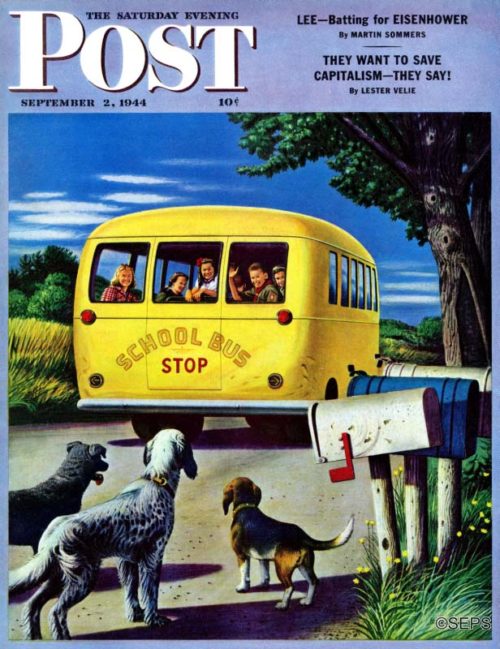
Stevan Dohanos
September 2, 1944
Classrooms may have changed from pencils to PowerPoint, but our magazine has always been there to witness sending our kids back to school.
3. Tee Time
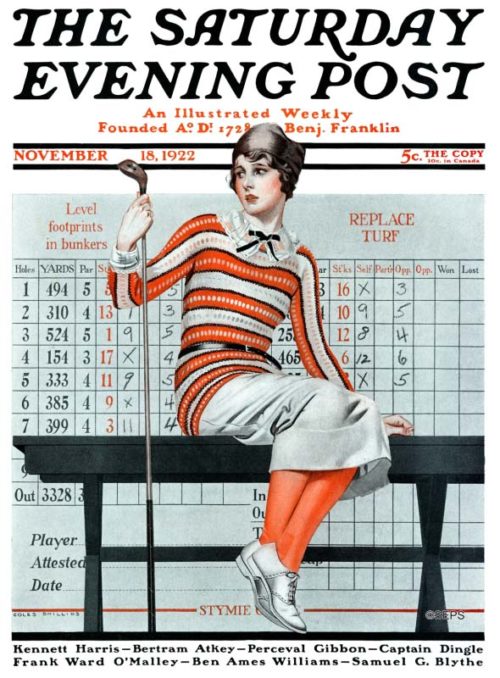
Coles Phillips
November 11, 1922
These covers show that golf is much more than a good walk spoiled. (It s a good day spoiled.)
4. Fall Video Gallery: Vintage Baseball Covers
Artist John Falter brought the fall season to life through his many covers for The Saturday Evening Post. This video highlights some of our favorites.
5. The Best Santas Ever
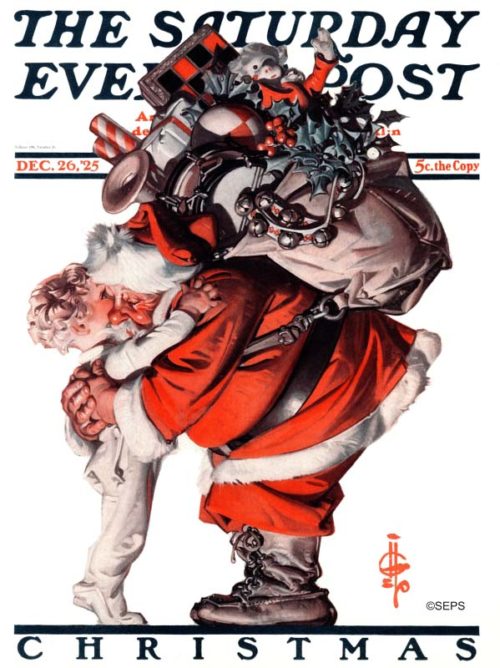
J. C. Leyendecker
December 26, 1925
Over the decades, we’ve featured iconic images of Santa Claus on our December covers. Famed illustrators Norman Rockwell and J.C. Leyendecker created some of the most cherished depictions of St. Nick.
6. Time for Pie
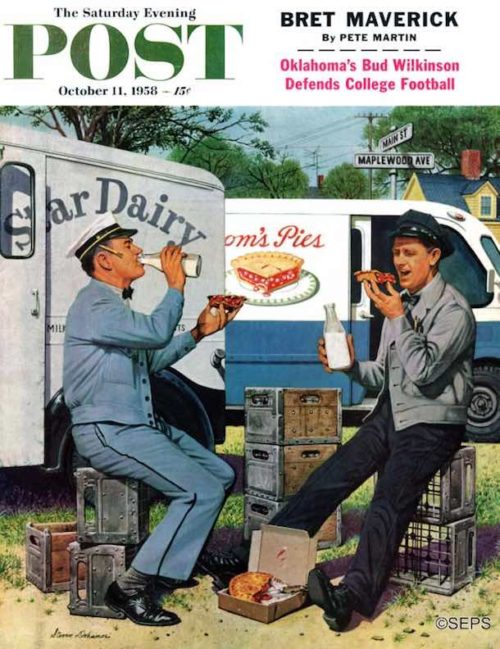
Stevan Dohanos
October 11, 1958
Pie follows closely on the heels of turkey as the quintessential Thanksgiving dish. These pies plus recipes will inspire your pursuit of pastry.
7. Presidents
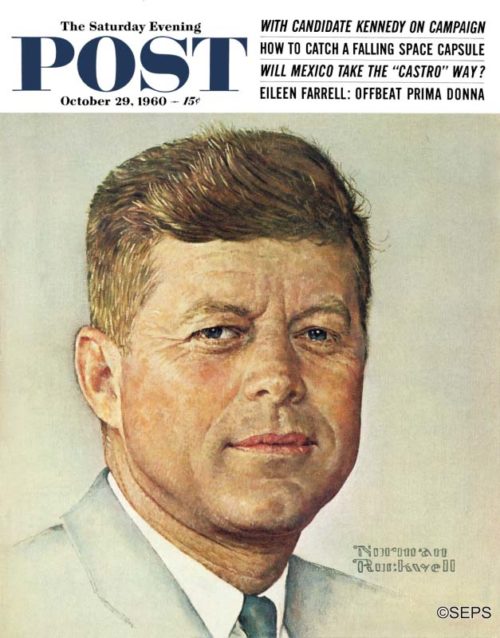
By Norman Rockwell
October 29, 1960
From Grover Cleveland to Richard Nixon, The Saturday Evening Post featured many U.S. presidents on its covers in its nearly 200-year history.
8. Celebrating America
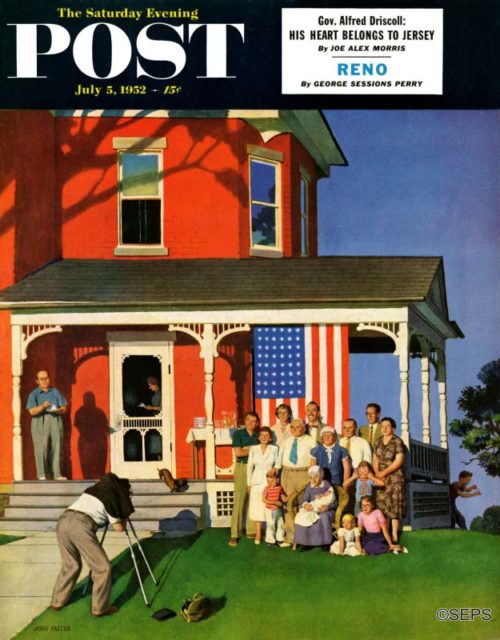
John Falter
July 5, 1952
With fluttering flags and steadfast soliders, the Post has honored the land of the free and the home of the brave.
9. Travel Nightmares
George Hughes
July 7, 1956
These illustrations of jaunts gone wrong might make you re-think that summer road trip.
10. Congrats, Graduates!
McClelland Barclay
June 7, 1930
This moment of accomplishment has made frequent appearances on our covers, starting more than a hundred years ago.