Curtis Stone’s Cool-down Summer Recipes
Veggie Flatbread Sandwich with Feta-Yogurt Spread

(Makes 4 servings)
The cool flavors of cucumber, lemon, and mint make this sandwich a great choice for a light lunch in the summertime, and the tangy feta cheese provides a nice bite. For added protein, I throw in a sliced hard- boiled egg or leftover grilled chicken or lamb.
- 6 ounces feta cheese
- ½ cup plain Greek yogurt
- 4 purchased naan or other flatbread, warmed
- ¼ English (hothouse) cucumber, thinly sliced
- ½ small red onion, thinly sliced
- 1 avocado, halved, pitted, peeled, and sliced
- 1 tomato, sliced
- ⅓ cup fresh mint leaves, coarsely torn
- 1 lemon
In food processor, combine feta and yogurt and process until smooth and creamy. Season to taste with salt and pepper.
Spread the feta-yogurt mixture over flatbreads. Arrange cucumber, onion, avocado, and tomato slices over one-half of each bread. Season with salt and pepper. Top with mint. Finely grate some lemon zest over filling and then halve lemon and squeeze some juice over. Fold bread over filling, cut sandwiches in half, if desired, and serve.
Make-Ahead: The feta-yogurt spread can be made up to 5 days ahead, covered, and refrigerated.
Per serving
- Calories: 327
- Total Fat: 18 g
- Saturated Fat: 9 g
- Sodium: 620 mg
- Carbohydrate: 31 g
- Fiber: 6 g
- Protein: 12 g
- Diabetic Exchanges: 2 fat, 2 starch, 1.5 meat, 1 vegetable, .25 milk
Chilled Yellow Watermelon Soup with Summer Berries

(Makes 4 servings)
I first made this elegant and refreshing soup for an episode of Take Home Chef that we filmed in Santa Fe, and since then I haven’t let a summer slip by without making it. The contrast of the vibrant berries against the pureed yellow watermelon (peak season: June to August) makes for a stunning-looking soup, but red watermelon will do just fine, too.
- 1 small yellow watermelon (4 to 5 pounds), rind and any large seeds removed and flesh coarsely chopped
- ⅓ cup firmly packed fresh mint leaves
- ⅓ cup fresh lime juice
- 6 ounces fresh small strawberries (about 1 cup), hulled and halved, quartered if large
- 4 ounces fresh blueberries (about 1 cup)
- 4 ounces fresh raspberries (about 1 cup)
- 2 ounces fresh blackberries (about ½ cup)
- Powdered sugar, for dusting
In blender, combine watermelon, mint, and lime juice and blend until mint is finely chopped. Strain soup through fine-mesh sieve into medium bowl. Cover and refrigerate for about 2 hours, or until well chilled. Mix all berries together and then mound in the center of four wide soup bowls. Dust with powdered sugar. Carefully pour chilled soup around fruit and serve.
Make-Ahead: The soup can be made up to 6 hours ahead and kept refrigerated.
Per serving
- Calories: 127
- Total Fat: 1 g
- Saturated Fat: 0 g
- Sodium: 9 mg
- Carbohydrate: 32 g
- Fiber: 6 g
- Protein: 2 g
- Diabetic Exchanges: 2 fruits
Also see Simply Summer Recipes from Curtis Stone from the July/August 2017 issue of the Post. Subscribe to the magazine for more art, inspiring stories, fiction, humor, and features from our archives.
North Country Girl: Chapter 5 — Congdon Elementary
For more about Gay Haubner’s life in the North Country, read the other chapters in her serialized memoir. The Post will publish a new segment each week.
Congdon was a big red brick pile built in 1929 and unchanged since. My second grade class still had wooden desks with ornate cast iron sides, holes in the upper right hand corner for inkwells, and decades of names scratched into the surface, even though making yet another mark on your desk was a major sin, practiced exclusively by boys. Heating vents honey-combed the building, just big enough for a child to crawl through. Everyone knew of a former student who had traveled the vents from the basement to the second floor. As the smallest kid in my class, I was egged on by my peers to repeat this journey; I bravely crept in about three feet before scurrying back out to the light.
The school had a huge gym, which was transformed into a performance space for Congdon’s annual Christmas Concert, where students sang “Silent Night” and “Up on the Rooftop” and a hundred other carols while standing around a twenty-foot Christmas tree, surrounded by concentric circles of parents perched on ancient and shaky folding chairs. We practiced for weeks for this concert. The handful of Jewish kids were left on their own for hours on end in their classrooms, to read or draw or twiddle their thumbs.
One side of the gym was a high, deep stage; it was expressly forbidden to jump on the stage and hide behind the red velvet curtains. I only saw the stage used once, when we were trotted down to the gym for a slide show of some woman’s trip to Korea, Thailand, and Cambodia. What a wonder! Someone from Duluth had actually gone to Asia! (A few years later, my paternal grandparents went to Hong Kong; my grandmother smuggled back an entire custom-made wardrobe by wearing all her new suits and dresses and coats on top of each other.)
The gym was a place of dread for me. I hated every gym class, including square dancing (which seems to have been a mandatory part of PE at all elementary schools in the country then), but apparatus day set me quaking in fear. When not in use, the “apparatus” was hung about the walls of the gym like instruments of torture. The rings weren’t so bad, I could hang by my knees forever, enjoying the rush of blood to my head, until I was kicked off by the next kid in line. But there were also climbing bars, which required chin-ups at the top, the ropes (how could it have been thought okay to send kids ten feet up in the air clinging to a rope so splintery it would have been rejected by the most horny-handed sailor, below only a mouldering two-inch-thick gym mat held together with duct tape to soften the fall?), and worst of all, the horse. My version of a vault was to run up to the horse, come to a dead stop, then heave myself over, struggling to land on my feet instead of my head.
All of our gym activities were overseen by our classroom teachers, who were uniformly unmarried, over fifty, and in varying degrees of unfitness, the worst being Miss Johnson, my fifth grade teacher, who was Mrs. Sprat fat. Our principal, Miss Brown, was of the same graying spinster ilk. The only masculine figure at Congdon was Mr. Swan, the janitor, who took the gym apparatus up and down, flooded and swept the Congdon ice rink in winter, and who could usually be found smoking a vile cigar down in the boiler room, poking at the roaring coal-burning furnace. Any classroom accident or breakage required someone to go down to that dungeon and bring back Mr. Swan with his mop and bucket. I always tried to hide beneath my raised desktop rather than have to face that scary man in his den. For any other errand, when a teacher asked for a volunteer, my hand shot up first.
A school telephone system had once been in place, as there were rudimentary black Bakelite and brass phones on the classroom wall, but they had long ceased to function, so students were sent as messengers back and forth, a wonderful chance to dawdle in the deserted halls, take a long gulp of cold water from the fountain, and hang around the principal’s office in hopes of seeing some bad boy brought in by the scruff of his neck to face Miss Brown.
Supply Monitor was the most prestigious and sought-after job, responsible for fetching chalk or construction paper each morning from the school’s supply room. I was often awarded this plum position; I was well-behaved, quiet, and a model student, which did not win me any friends.
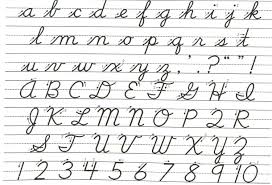
I sailed through second grade, except for two subjects. We were now expected to stop printing in pencil and learn cursive writing, including the weird capitals S, Q, and G that bore no resemblance to their print counterparts. All of the letters in a word were supposed to flow from the pen, all connected smoothly at the bottom, with the top of lower-case letters exactly touching the dotted line bisecting each row. Not only did this require a level of manual dexterity I would never have, we also had to write with a fountain pen. Each student was given a brightly colored plastic pen, perfect to chew on, and a small supply of cylindrical ink cartridges. I was unable to insert the cartridge in the pen without exploding blue ink everywhere. My mother would shake her head at my stained dresses and my unvarying “C” in penmanship, which would probably have been a D if I didn’t get A’s in everything else.
 I also could not learn to tell time. Periodically during the school day we were required to look at the wall clock and write down the time. After weeks of failing to identify 10:30 or 1:45, it was discovered that I couldn’t see the hands of the clock. I was now the youngest, smallest, and only second grader with glasses. From the meager selection of children’s glasses at the eye doctor, I had picked out pale blue cat’s eyes, with silver sparkles at the corners to make a bad situation even worse.
A few Congdon kids went home for lunch, most of us ate in the cafeteria at long wooden tables. Four days a week I got the “hot lunch,” which I retrieved on a tray from a small opening in the front of the cafeteria that gave way into a dimly lit kitchen ruled by mysterious lunch ladies. There was “lunch money” and “milk money,” which we had to remember to bring to school every Monday. Milk money went to buy waxy containers of milk to drink if you brought your soup and sandwich in a tin lunchbox that proclaimed your favorite TV show. This milk always tasted funny compared to our milk at home, which was delivered in glass bottles topped with paper discs labeled Springhill Dairies. Two or three times a year, there would be the miraculous appearance of cartons of chocolate milk, which we fell upon like wolves. On Fridays, to accommodate the few Catholic students who could not eat meat, lunch was always tuna noodle casserole, the noxious smell of which made me so nauseated I could barely eat my sandwich of red jelly on white bread.
Featured image: Shutterstock
Cover Gallery: America’s Wildlife
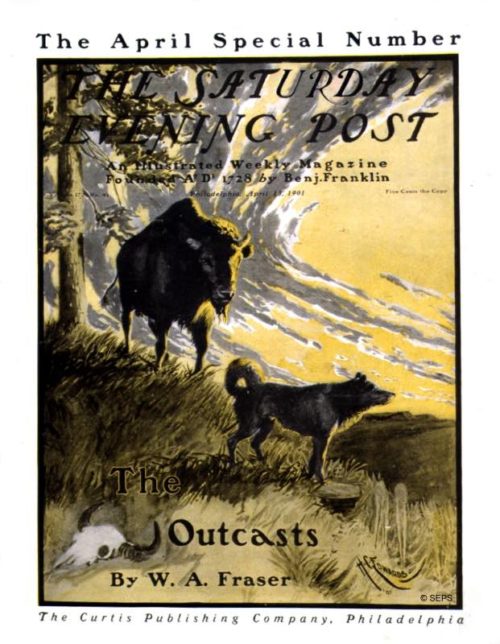
Harry C. Edwards
April 13, 1901
Harry C. Edwards painted four covers for the Saturday Evening Post. This 1901 cover featuring a lone wolf and single bison is his only Post cover to have wildlife as its main subject.
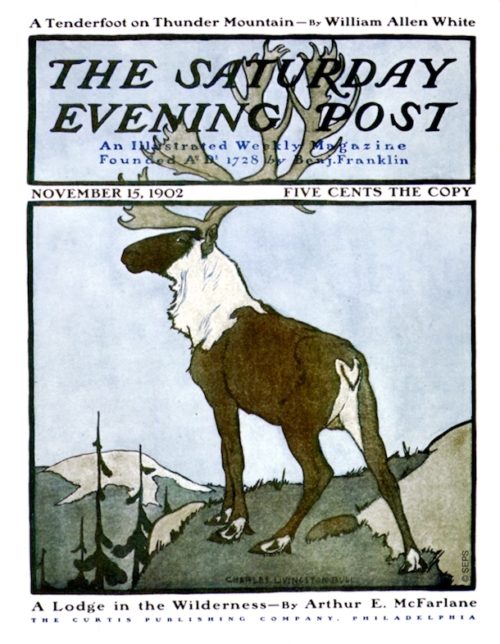
Charles Bull
November 15, 1902
This 1902 cover was Charles Bull’s first Post cover. Bull was one of the most prolific wildlife cover artists for the Post and a famous nature illustrator of the time.
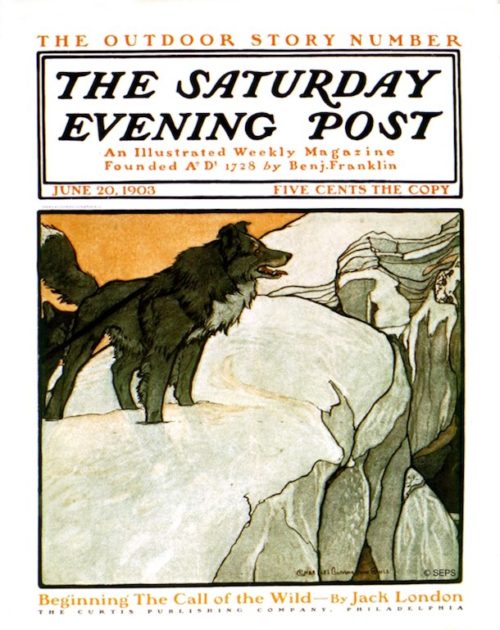
Charles Bull
June 20, 1903
This Charles Bull Post cover features sled dogs in the icy wilderness. It accompanies the cover story about beginning Jack London’s “The Call of the Wild,” a novel where the main character is a sled dog in Alaska.
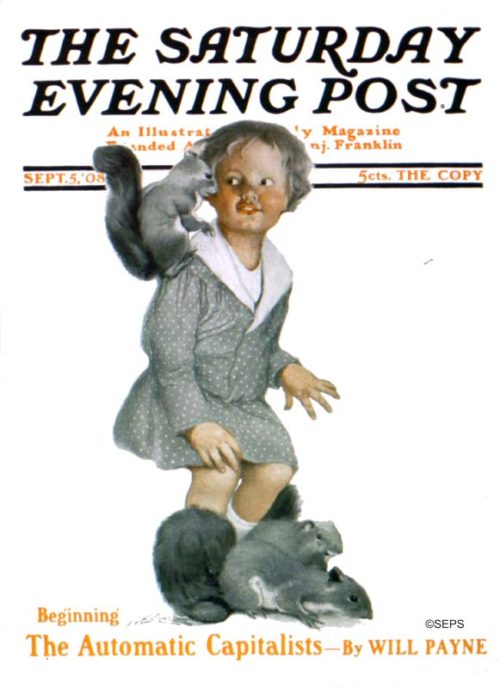
Sarah Stilwell-Weber
September 5, 1908
Sarah Stilwell-Weber painted this Saturday Evening Post cover. She painted the majority of her covers between 1904 and 1921. This cover of a little girl playing with squirrels stuck to Stilwell-Weber’s specialty of painting small children.
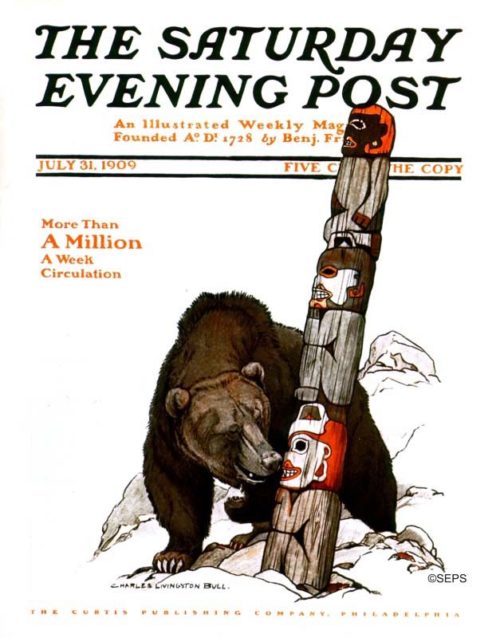
Charles Bull
July 31, 1909
Though Charles Bull was primarily known as a nature illustrator, he spent part of his time as a taxidermist for the National Museum in Washington, D.C. Some of his illustrations were drawn from this experience.
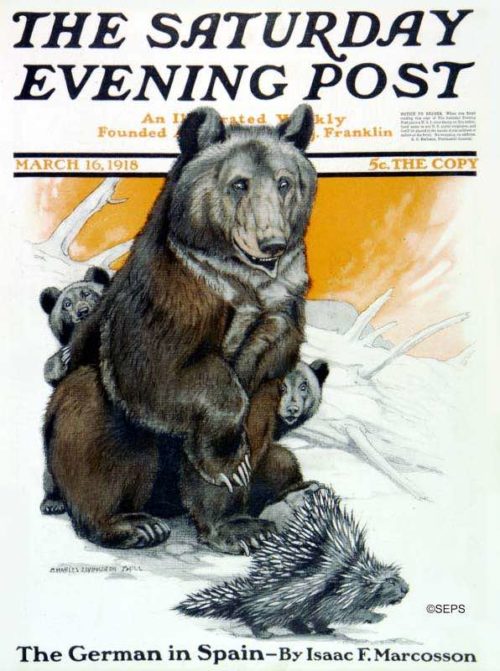
Charles Bull
March 16, 1918
The orange-red background on this Post cover is the same color Charles Bull used in his previous cover on April 21, 1917. Bull was commissioned to paint the 1917 cover as a declaration of war, and for the next year and a half, war dominated the Post’s covers.
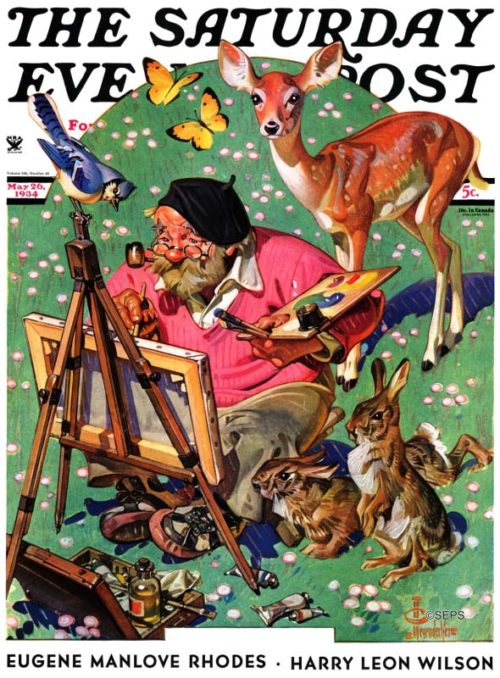
J.C. Leyendecker
May 26, 1934
J.C. Leyendecker’s work for the Post began in the early 1900s. His work always presented a variety of styles, from contemporary to colonial to medieval. This cover is similar to his August 26, 1933 cover with its human and animal subjects in a bright green field.
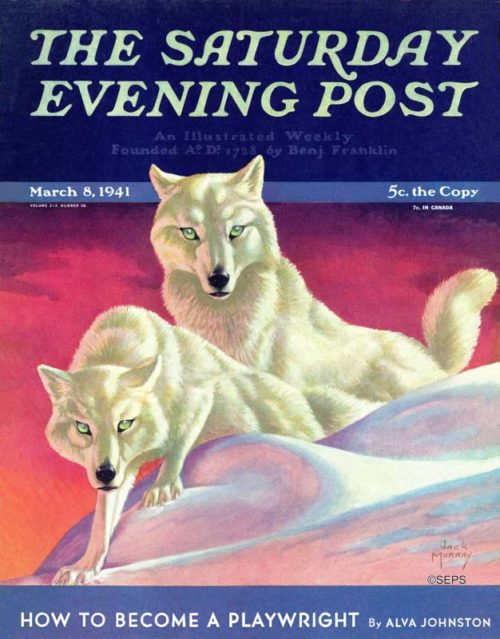
Jack Murray
March 8, 1941
Jack Murray showed an interest in wildlife at a young age, and that showed in the work he did for the Saturday Evening Post. This 1941 is similar to his other covers, all of which featured wildlife and bright-colored backgrounds.
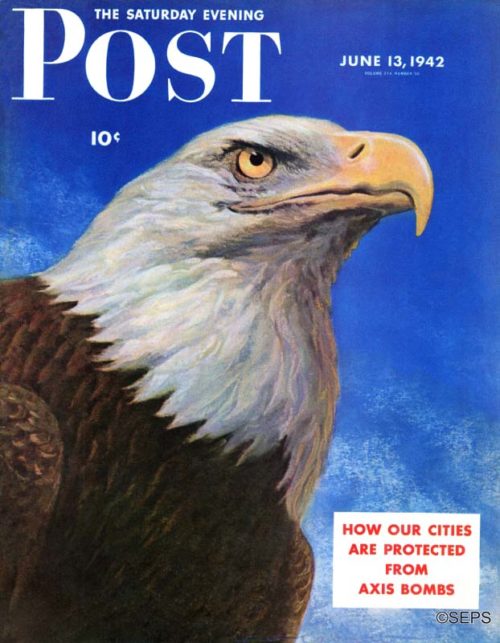
W.W. Calvert
June 13, 1942
This is one of five covers that W.W. Calvert painted for the Post. This is his only cover with a bald eagle as the main subject, while the others feature dogs.
The Psychedelic Poster Craze of the 1960s
For centuries, the poster has been a useful tool for advertising coming attractions, warning of dangers both physical and spiritual, and publicly calling for political change. But it wasn’t until the 1960s that the idea of using posters for decoration really took off. For just a few bucks, a young person could instantly change the entire mood of a bedroom as political ideals shifted, new rock ’n’ roll bands came to prominence, or new social causes found footholds.
As Herbert Gold discovered in 1968, the poster makers of San Francisco would say their posters were an art, not a business. Yes, but they were a business, too, and a lucrative one at that. Gold’s March 23, 1968, Post article “Pop Goes the Poster” gives readers a closer look at the artists, artistry, and commerce of 1960s poster art.
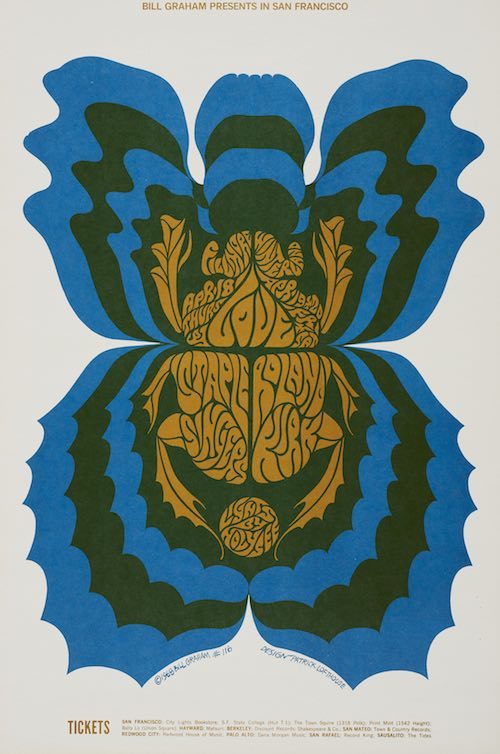
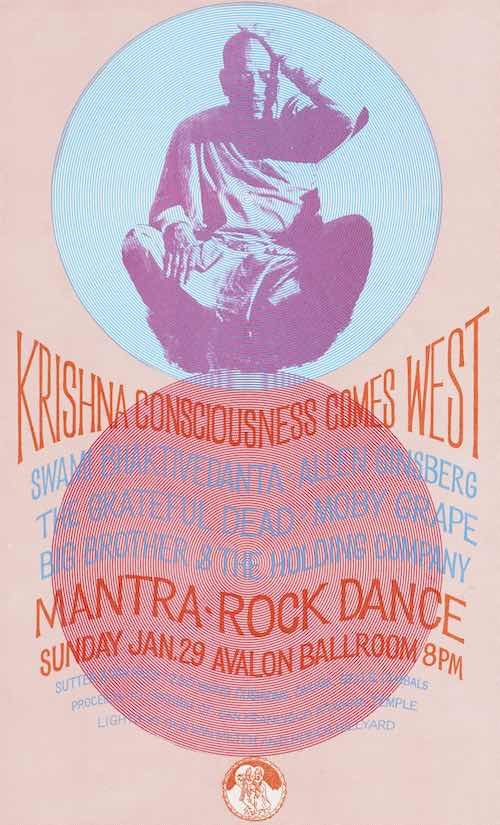
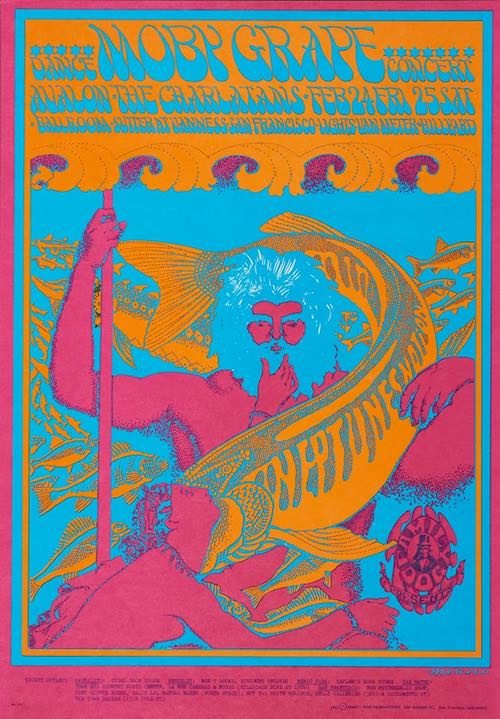
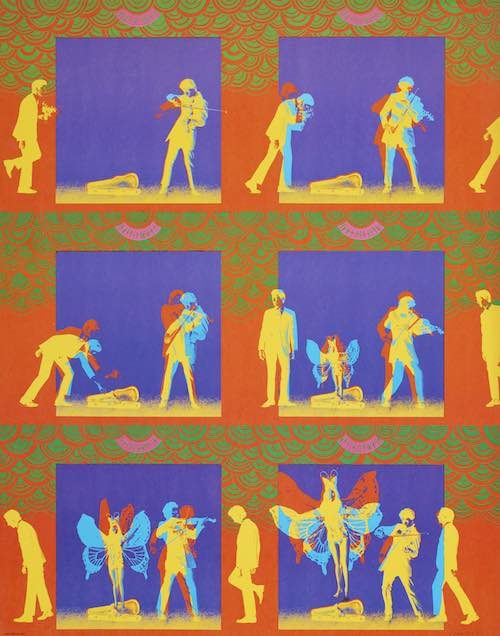
Interspersed with that article are examples of some of the eye-catching psychedelic posters of the time that are featured in the exhibit “The Summer of Love Experience: Art, Fashion, and Rock & Roll” on display through August 20, 2017, at San Francisco’s De Young Museum.
Pop Goes the Poster
By Herbert Gold
Originally published March 23, 1968
Freaky, funny, and fashionable, these are the signs of our times
Sätty, the experimenter in poster art, is talking. “I am only on the first or second step of two hundred.” Modestly he lowers his eyes. “Others must carry on my work. I need to communicate with others — a hundred million people in this country under 25.”
He lives with his wife in a white and airy apartment overlooking the San Francisco Bay. He meditates and creates in an underground North Beach studio with incense, alcohol flames, rock music, a collection of clocks, a sort of altar, and a bed under a concrete stairway, surrounded by mirrors. As a child in Germany, he was shuttled back and forth under the bombs. He says he has a piece of shrapnel in his head and sometimes wears an eye patch. There is pressure on his nerves.
The San Francisco poster makers — Sätty, Paul Olsen, Wes Wilson, Mouse, Victor Moscoso, and a dozen or so active others — may look like flower children, but their passion has become a mini-industry. Wes Wilson’s early posters sold over 300,000 copies in the first months of the craze. Companies like East Totem West, Funky Features, Astro, The Food, Sparta, and American Newsrepeat use jobbers and wholesaling agencies.
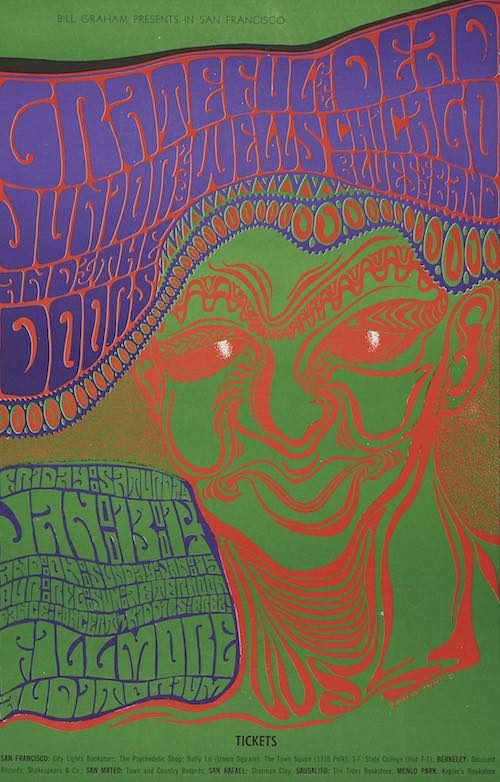
What does this mean in financial terms? Well, say the poster makers, it’s an art, not a business. Yes, but it’s a business, too. “Half the population is under 25.”
Take the Haight-Ashbury poster, because it’s a sort of business, even the art people will admit. It’s a photo of Haight-Ashbury street signs fuzzed up and flowered up to look dreamy. It has sold about 80,000 copies at two dollars each. Profit? Well, the profit is shared among designer, producer, jobber, seller, but the producer alone has made about $40,000. It’s a friendly, flowery souvenir of the Haight. After which, perhaps, aesthetic criticism is in order.

“Which do you like best?” asked an indulgent daddy of his high-school daughter, touring the hip-life with him.
“The one with the American flag and the leaves.”
“Yes, that’s nice,” said Daddy, and to the salesman, “Roll it up for me, please.”
The salesman beamed. “Do you know what these leaves are?”
The girl winked. “Aw,” she said, “Sure. Pot.”

Sätty, formerly an industrial designer, is one of the most passionately experimental and daring artists, hiring presses to do overprinting and improvisational exercises — printing a visual equivalent of rock sound. He superimposes one poster on another to make collages of color, shape, and idea. He’s doing his thing, creating the moving wall, the disposable environment.
In Paris, 20 years ago, Raymond Duncan, an old-time Bohemian in Greek robes, said, “You want to paint? Show it on walls. Paste and pin it. Want to be a poet? Commit poetry on the walls.” He is the unacknowledged prophet of the San Francisco artists, Mouse and Wes Wilson, who pioneered the revival of poster art a few years ago. They did not invent it: Toulouse-Lautrec and Cro-Magnon Man got there ahead of them. But today, for job-shifting, house-changing, marriage-altering youth, this art which is immediate, impermanent, expressive, and neat has a powerful appeal. It’s like having a continuous movie on the walls. And the mood can be changed for a couple of bucks, from politics (anti-Johnson, anti-war, anti-cops, pro-love) to astrology to fan worship (Brando, Joan Baez, Bob Dylan, Che Guevara) to rock dance-band announcements to souvenirs of times and places to, well, pure art.
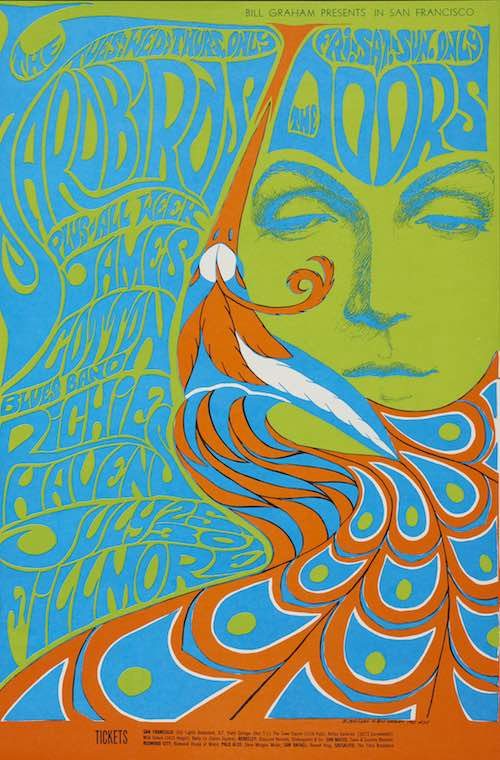
American Newsrepeat Co. is into good deals. A former manager of an improvisational-theater group and a former dress-factory superintendent decided that politics, smoking, peace, drugs and enlarged belly buttons might come to express a way of life. Join — a bulbous-nosed old man dressed as Uncle Sam, pointing a finger — has sold hundreds to soldiers in Vietnam, thousands to bases in the U.S., 50,000 in all. Join the Army, a picture of a company of over a hundred hippies, is doing brisk business. Hallelujah the Pill and Better Living Through Chemistry have enjoyed academic approval; planned-parenthood clinics have taken them seriously, and they are appearing in textbooks. Let Us Be Clear is a philosophic poster which they have made to be given away. They are also doing a No Smoking poster, to be given free. “We made IS because it looked nice. People buy it and then they write to us and ask what it is. We say. ‘It is.’ You see, it’s a total affirmation of the present.” IS is a poster with just a large “IS” printed on it.
Funky Jack Leahy is a Princeton dropout of good family in Palo Alto. Funky Sam Ridge is a former law student, disk jockey, TV cowboy, and administrative assistant to Assemblyman John Burton. Funky Paul Olsen is a squeaky-voiced retired college student who did pop and op art and, at age 24, was developing a small following among Bay Area art collectors. These three met at a gathering of the Artists Liberation Front, a short-lived Bay Area organization, and got to talking about how dance posters were giving way to art, how visual rock ’n’ roll was the thing.
And so Funky Features was born. The company is not the biggest of the poster producers, but it grosses $25,000 a month. Jack, Sam and Paul have a fleet of delivery trucks — the Batmobile, the U.S. Grape truck, Sam’s vintage Mercedes, Paul’s junky Jag, Jack’s MG, plus the girl friends’ sports cars and some miscellaneous psychedelic vehicles that weave their way from a Haight-Ashbury warehouse to downtown shops and onward.
Sam Ridge of Funky Features has put 20,000 miles on his car in the past few months, crisscrossing the country to bring the real poster product to places where only plastic art was known before. To the Mole Hole in Chicago, the Infinite Poster and the Intergalactic Trading Post and Underground Uplift Unlimited in New York, the Kazoo in Los Angeles, George’s Folly and Truc in Boston, Head Shop South in Coconut Grove, Florida, the Emporium in Miami Beach, to shops in college towns and semi-college towns all over the Midwest. … In walks Funky Sam with boots, beard, and candy-striped pants, saying, “I’m the only man over 30 the kids can trust. Now I don’t sell W.C. Fields Personality Posters — for that you have to go to Martin Geisler in New York — and I don’t sell plastic hippie stuff either — I’m a-selling of that good old rock baroque, I’m selling pretties and meanings, it’s the psychedelic cultural revolution. We bill on the tenth of the month. I’m here to work for the common evil, brothers. Oh yea, if you want political posters, there’s Dick Kasak in New York, too. You’ll note our Zodiac line — well, we’re not greed heads. We turned down huge orders from J.C. Penney’s and Woolworth’s. They wanted to cover certain parts of anatomies, tame our artists. Nyet. This is Obscenity Junction where we bend your minds. Here’s our folding display. …”
Well, maybe he doesn’t say all that right off. But that’s his general approach. And Funky Features is now a successful small business. These crazy hippies, it seems, don’t need to work for the “establishment.” The total volume in posters is now perhaps $2 million a year and involves record companies, chain stores, printers, painters, book-card-ye-gift shops.
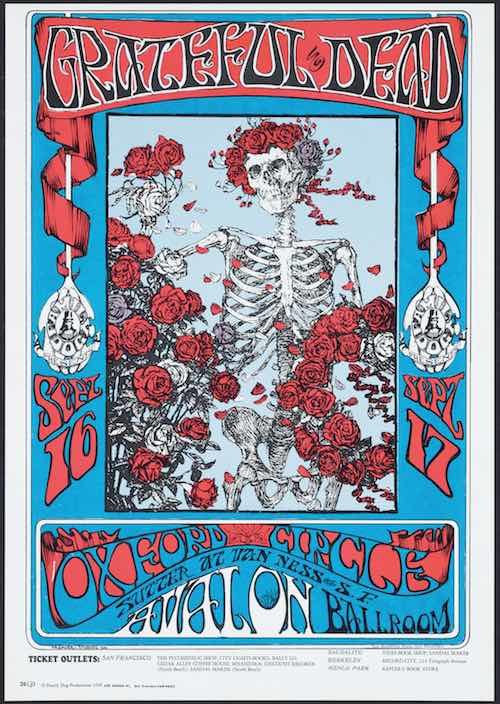
So whatever happened to the bullfight poster? Manolete with glue on his back is out, man. It’s the Jefferson Airplane now, and A Day in the Life, and the marijuana warning, and the Do It to Communism banner. Each semester brings a flood of new poster-buyers into the dormitories, believing in the Zodiac and Che Guevara. Poster is son of button, big brother of the bumper sticker, weird indoor step-cousin of the billboard, teeny-bopper daughter of the painting, city-slicker cousin of the print. And a sparkling orphan prince all by itself.
The poster makers of San Francisco have a mystical sense of mission (and perhaps cash, too). They recall that Mount Tamalpais was the magic mountain for the Indians, and the beatnik and hippie movements knew their finest flowering in the blue-and-white watery city by the bay. San Francisco Rock is the Acapulco gold of rock ’n’ roll. San Francisco posters, the Nouveau Frisco style and its offshoots, are the vanguard of the poster art.
Funky Paul has just designed the poster that may turn out to be the superposter of all time. When you study it carefully, you find the design stating, in psychedelic lettering, with involuted, drug-free, mystical, shock-rock whorls of color: “THIS POSTER SELLS FOR TWO DOLLARS.”
If you happen to be a wholesome American consumer under 25, you’ll love it, he says. And there are a hundred million of you.
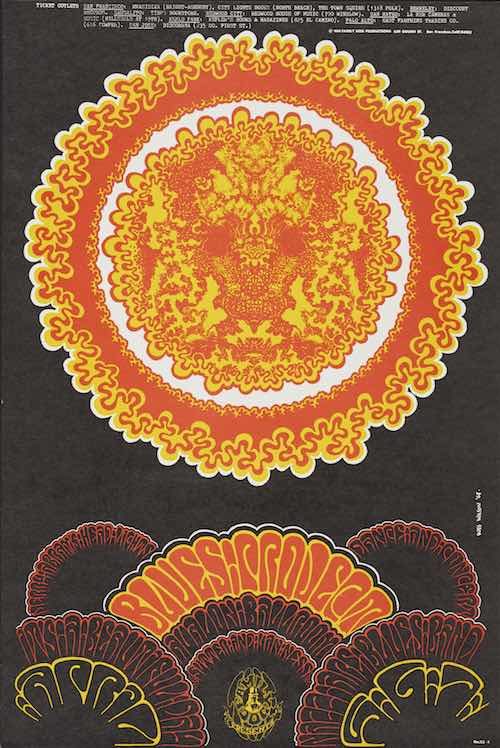
This article is featured in the July/August 2017 issue of The Saturday Evening Post. Subscribe to the magazine for more art, inspiring stories, fiction, humor, and features from our archives.
“A Woman Is Only a Woman” by Pelham Grenville Wodehouse
On a fine day in the spring, summer or early autumn there are few spots more delightful than the terrace in front of the Manhooset Country Club. It is a vantage point peculiarly fitted to the man of philosophic mind, for from it may be seen that varied, never-ending pageant which men call golf in a number of its aspects. To your right, on the first tee, stand the cheery optimists who are about to make their opening drive, happily conscious that even a topped shot will trickle a measurable distance down the steep hill. Away in the valley, directly in front of you, is the lake hole, where these same optimists will be converted to pessimism by the wet splash of a new ball. At your side is the ninth green with its sinuous undulations which have so often wrecked the returning traveler in sight of home. And at various points within your line of vision are the third tee, the sixth tee, and the sinister traps about the eighth green, none of them lacking in food for the reflective mind.
It is on this terrace that the Oldest Member sits, watching the younger generation knocking at the divot. His eye is calm and dreamy, the eye of a man who, as the poet says, has seen golf steadily and seen it whole. He sips absently from the glass on the table beside him. His gaze wanders from Jimmy Fothergill’s 220-yard drive down the hill to the silver drops that flash up in the sun as young Freddy Woosley’s mashie shot drops weakly into the waters of the lake. Returning, it rests upon Peter Willard, large and tall, and Elmer Todd, small and slender, as they struggle up the fairway of the ninth.
Love — says the Oldest Member — is an emotion which your true golfer should always treat with suspicion. Do not misunderstand me. I am not saying that love is a bad thing, only that it is an unknown quantity. I have known cases where marriage improved a man’s game, and other cases where it seemed to put him right off his stroke. There seems to be no fixed rule. But what I do say is that a golfer should be cautious. He should not be led away by the first pretty face. I will tell you a story that illustrates the point. There have been, no doubt, a thousand others of exactly the same kind; but this one came under my immediate notice, and I can speak of it at first hand. It is the story of those two men who have just got onto the ninth green — Peter Willard and Elmer Todd.
There is about great friendships between man and man — said the Oldest Member — a certain inevitability that can only be compared with the age-old association of cabbage and corned beef. No one can say when it was that these two wholesome and palatable foodstuffs first came together nor what was the mutual magnetism that brought their deathless partnership about. One simply feels that it is one of the things that must be so. Similarly with men. Who can trace to its first beginnings the love of Damon for Pythias, of David for Jonathan, of Park for Tilford? Who can explain what it was about Acker and Merrill that first attracted Condit? We simply say “These men are friends,” and leave it at that.
In the case of Peter Willard and Elmer Todd, one may hazard the guess that the first link in the chain that bound them together was the fact that they took up golf within a few days of each other, and contrived, as time went on, to develop such equal form at the game that the most expert critics are still baffled in their efforts to decide which is the worse player. I have heard the point argued a hundred times without any conclusion being reached. Supporters of Peter claim that his driving off the tee entitles him to an unchallenged preeminence among the world’s most hopeless foozlers, only to be discomfited later when the advocates of Elmer show by means of diagrams that no one has ever surpassed their man in absolute incompetence with the spoon. It is one of those problems where debate is futile.
Few things draw two men together more surely than a mutual inability to master golf, coupled with an intense and ever-increasing love for the game. At the end of the first few months, when a series of costly experiments had convinced both Peter and Elmer that there was not a tottering graybeard or a toddling infant in the neighborhood whose downfall they could encompass, the two became inseparable. It was pleasanter, they found, to play together and go neck and neck round the eighteen holes than to take on some lissom youngster who could spatter them all over the course with one old ball and a cut-down cleek stolen from his father, or some spavined elder who not only soaked it to them good but was apt, between strokes, to bore them with personal reminiscences of the Seminole War. So they began to play together early and late. In the small hours before breakfast, long ere the first faint piping of the waking caddie made itself heard from the caddie shed, they were halfway through their opening round. And at close of day, when bats wheeled against the steely sky and the pros had stolen home to rest, you might see them in the deepening dusk going through the concluding exercises of their final spasm. After dark they visited each other’s houses and read golf books.
If you have gathered from what I have said that Peter Willard and Elmer Todd were fond of golf, I am satisfied. That is the impression I intended to convey. They were real golfers, for real golf is a thing of the spirit, not of mere mechanical excellence of stroke.
It must not be thought, however, that they devoted too much of their time and their thoughts to golf — assuming, indeed, that such a thing is possible. Each was connected with a business in the metropolis; and often, before he left for the links, Peter would go to the trouble and expense of calling up the office to say he would not be coming in that day, while I myself have heard Elmer — and this not once, but frequently — say, while lunching in the clubhouse, that he had half a mind to get New York on the phone and ask how things were making out. They were, in fact, the type of men of whom America is proudest, the backbone of a great country, toilers in the mart, untired business men, keen red-blooded men of affairs. If they played a little golf on the side, who shall blame them? So they went on, day by day, happy and contented. And then the woman came into their lives, like the serpent into the links of Eden; and perhaps for the first time they realized that they were not one entity, not one single indivisible something that made for topped drives and short putts, but two individuals in whose breasts Nature had implanted other desires than the simple ambition someday to do the dog-leg hole on the second nine in under double figures. My friends tell me that, when I am relating a story, my language is inclined at times a little to obscure my meaning; but if you understand from what I have been saying that Elmer Todd and Peter Willard both fell in love with the same woman, all right, let us carry on. That is precisely what I was driving at.
I have not the pleasure of an intimate acquaintance with Grace Forrester. I have seen her in the distance watering the flowers in her garden, and on these occasions her stance struck me as graceful. And once at a picnic I observed her killing wasps with a teaspoon and was impressed by the freedom of the wrist action of her back swing. Beyond this I can say little. But she must have been attractive, for there can be no doubt of the earnestness with which both Peter and Elmer fell in love with her. I doubt if either slept a wink the night of the dance at which it was their privilege first to meet her.
The next afternoon, happening to encounter Peter in the bunker near the eleventh green, Elmer said:
“That was a nice girl, that Miss What’s-her-name.”
And Peter, pausing for a moment from his trench digging, replied: “Yes.”
And then Elmer, with a pang, knew that he had a rival, for he had not mentioned Miss Forrester’s name, and yet Peter had divined that it was to her that he had referred.
Love is a fever which, so to speak, drives off without wasting time on the address. On the very next morning after the conversation which I have related, Elmer Todd called Peter Willard up on the phone and canceled their golf engagements for the day on the plea of a sprained wrist. Peter, acknowledging the cancellation, stated that he himself had been on the point of calling Elmer up to say that he would be unable to play owing to a slight headache. They met at tea time at Miss Forrester’s house. Elmer asked how Peter’s headache was, and Peter said it was a little better. Peter inquired after Elmer’s sprained wrist, and was told it seemed on the mend. Miss Forrester dispensed tea and conversation to both impartially.
They walked home together. After an awkward silence of twenty minutes Elmer said:
“There is something about the atmosphere — the aura, shall I say? — that emanates from a good woman that makes a man feel that life has a new, a different meaning.”
Peter replied: “Yes.”
When they reached Elmer’s door Elmer said: “I won’t ask you in tonight, old man. You want to go home and rest and cure that headache.”
“Yes,” said Peter.
There was another silence. Peter was thinking that, only a couple of days before, Elmer had told him that he had a copy of Sandy MacBean’s How to Become a Scratch Man Your First Season by Studying Photographs coming down by parcel post from town, and they had arranged to read it aloud together. By now, thought Peter, it must be lying on his friend’s table. The thought saddened him. And Elmer, guessing what was in Peter’s mind, was saddened too. But he did not waver. He was in no mood to read MacBean’s masterpiece that night. In the twenty minutes of silence after leaving Miss Forrester, he had realized that “Grace” rimes with “face,” and he wanted to sit alone in his study and write poetry. The two men parted with a distant nod. I beg your pardon? Yes, you are right — two distant nods. It was always a failing of mine to count the score erroneously.
It is not my purpose to weary you by a minute recital of the happenings of each day that went by. On the surface the lives of these two men seemed unchanged. They still played golf together, and during the round achieved toward each other a manner that, superficially, retained all its ancient cheeriness and affection. If — I should say, when — Elmer topped his drive, Peter never failed to say “Hard luck!” And when — or, rather, if — Peter managed not to top his, Elmer invariably said “Great!” But things were not the same, and they knew it.
It so happened, as it sometimes will on these occasions, for Fate is a dramatist who gets his best effects with a small cast, that Peter Willard and Elmer Todd were the only visible aspirants for the hand of Miss Forrester. Right at the beginning young Freddy Woosley had seemed attracted by the girl and had called once or twice with flowers and chocolates, but Freddy’s affections never centered themselves on one object for more than a few days, and he had dropped out after the first week. From that time on it became clear to the whole of Manhooset that if Grace Forrester intended to marry anyone in the place it would be either Elmer or Peter; and a good deal of interest was taken in the matter by the local sportsmen. So little was known of the form of the two men, neither having figured as principal in a love affair before, that even money was the best you could get, and the market was sluggish. I think my own flutter of twelve golf balls, taken up by Percival Brown, was the most substantial of any of the wagers. I selected Elmer as the winner. Why, I can hardly say, unless that he had an aunt who contributed occasional stories to the Woman’s Sphere. These things sometimes weigh with a girl. On the other hand, George Lucas, who had half a dozen of ginger ale on Peter, based his calculations on the fact that Elmer wore knickerbockers on the links and that no girl could possibly love a man with calves like that. In short, you see we really had nothing to go on.
Nor had Elmer and Peter. The girl seemed to like them both equally. They never saw her except in each other’s company. And it was not until one day it came out that Grace Forrester was knitting a sweater that there seemed a chance of getting a clue to her hidden feelings.
When the news began to spread through the place that Grace was knitting this sweater, there was a big sensation. Had it happened during the war there would of course have been nothing in it, for in those days all the Manhooset girls were knitting sweaters for our brave troops, who notoriously fear nothing. But in peacetime the thing seemed to us practically to amount to a declaration.
That was the view that Elmer Todd and Peter Willard took of it, and they used to call on Grace, watch her knitting, and come away with their heads full of complicated calculations. The whole thing hung on one point — to wit, what size the sweater was going to be. If it was large, then it must be for Peter; if small, then Elmer was the lucky man. Neither dared to make open inquiries, but it began to seem almost impossible to find out the truth without them. No masculine eye can reckon up purls and plains and estimate the size of chest which the garment is destined to cover. Moreover, with amateur knitters there must always be allowed a margin for involuntary error. There were many cases during the war where our girls sent sweaters to their sweethearts which would have induced strangulation in their young brothers. The amateur sweater of those days was, in fact, practically tantamount to German propaganda.
Peter and Elmer were accordingly baffled. One evening the sweater would look small, and Elmer would come away jubilant; the next it would have swollen over a vast area, and Peter would walk home singing. The suspense of the two men can readily be imagined. On the one hand, they wanted to know their fate; on the other, they fully realized that whoever the sweater was for would have to wear it. And, as it was vivid pink and would probably not fit by a mile, their hearts quailed at the prospect.
In all affairs of human tension there must come a breaking point. It came one night as the two men were walking home.
“Peter,” said Elmer, stopping in midstride. He mopped his forehead. His manner had been feverish.
“Yes?” said Peter.
“I can’t stand this any longer. I haven’t had a good night’s rest for weeks. We must find out definitely which of us is to have that sweater.”
“Let’s go back and ask her,” said Peter.
So they turned back and rang the bell and went into the house and presented themselves before Miss Forrester.
“Lovely evening,” said Elmer.
“Superb,” said Peter.
“Delightful,” said Miss Forrester, looking a little surprised at finding the troupe playing a return date without having booked it in advance.
“To settle a bet,” said Elmer, “will you please tell us who — I should say whom — you are knitting that sweater for?”
“It is not a sweater,” replied Miss Forrester with a womanly candor that well became her; “it is a sock. And it is for my cousin Juliet’s youngest son Willie.”
“Good night,” said Elmer.
“Good night,” said Peter.
“Good night,” said Grace Forrester.
It was during the long hours of the night, when ideas so often come to wakeful men, that Elmer was struck by an admirable solution of his and Peter’s difficulty. It seemed to him that were one or the other to leave Manhooset the survivor would find himself in a position to conduct his wooing as wooing should be conducted. Hitherto, as I have indicated, neither had allowed the other to be more than a few minutes alone with the girl. They watched each other like hawks. When Elmer called Peter called. When Peter dropped in Elmer invariably popped round. The thing had resolved itself into a stalemate.
The idea which now came to Elmer was that he and Peter should settle their rivalry by an 18-hole match on the links. He thought very highly of the idea before he finally went to sleep, and in the morning the scheme looked just as good to him as it had done overnight. And I am bound to say that I myself consider that it was a masterly solution. I am not one of those people who object to games of chance.
Elmer was breakfasting next morning, preparatory to going round to disclose his plan to Peter, when Peter walked in, looking happier than he had done for days.
“‘Morning,” said Elmer.
“‘Morning,” said Peter.
Peter sat down and toyed with a slice of bacon.
“I’ve got an idea,” he said.
“One isn’t many,” said Elmer, bringing his knife down with a jerk shot on a fried egg. “What is your idea?”
“Got it last night as I was lying awake. It struck me that if either of us was to clear out of this place the other would have a fair chance. You know what I mean — with her. At present we’ve got each other stymied. Now how would it be,” said Peter, abstractedly spreading marmalade on his bacon, “if we were to play an 18-hole match, the loser to leg it out of the neighborhood and stay away long enough to give the winner a chance to find out exactly how things stood?”
Elmer started so violently that he struck himself in the left eye with his fork.
“That’s exactly the idea I got last night too.”
“Then it’s a go?”
“It’s the only thing to do.”
There was silence for a moment. Both men were thinking. Remember, they were friends. For years they had shared each other’s sorrows, joys and golf balls and sliced into the same bunkers.
Presently Peter said: “I shall miss you.”
“What do you mean, miss me?”
“When you’re gone. Manhooset won’t seem the same place. But of course you’ll soon be able to come back. I shan’t waste any time proposing.”
“Leave me your address,” said Elmer, and I’ll send you a wire when you can return. You won’t be offended if I don’t ask you to be best man at the wedding? In the circumstances, it might be painful to you.”
Peter sighed dreamily.
“We’ll have the sitting room done in blue. Her eyes are blue.”
“Remember,” said Elmer, “there will always be a knife and fork for you at our little nest. Grace is not the woman to want me to drop my bachelor friends.”
“Touching this match,” said Peter. “Strict Royal and Ancient rules, of course?”
“Certainly.”
“I mean to say — no offense, old man — but no grounding niblicks in bunkers.”
“Precisely. And, without hinting at anything personal, the ball shall be considered holed out only when it is in the cup, not when it stops on the edge.”
“Undoubtedly. And — you know I don’t want to hurt your feelings — missing the globe counts as a stroke, not as a practice swing.”
“Exactly. And — you’ll forgive me if I mention it — a player whose ball has fallen in the rough may not pull up all the bushes and grass within a radius of three feet.”
“In fact, strict rules.”
“Strict rules.”
They shook hands without more words, like two knights of King Arthur’s Round Table making an appointment to joust at the next tournament. And presently Peter walked out, and Elmer, with a guilty look over his shoulder, took down Sandy MacBean’s great work from the bookshelf and began to study the photograph of the short approach shot, showing Mr. MacBean swinging from Point A, through dotted line B C, to Point D, his head the while remaining rigid at the spot marked with a cross. He felt a little guiltily that he had stolen a march on his friend, and that the contest was as good as over.
I cannot recall a lovelier summer day than that on which the great Todd-Willard 18-hole match took place. It had rained during the night, and now the sun shone down from a clear blue sky onto turf that glistened more greenly than the young grass of early spring. Butterflies flitted to and fro; birds sang merrily. In short, all Nature smiled. And it is to be doubted if Nature ever had a better excuse for smiling; for matches like that between Elmer Todd and Peter Willard do not occur every day.
Whether it was that love had keyed them up or whether hours of study of Braid’s Advanced Golf and the Badminton Book had produced a belated effect, I cannot say; but both started off quite reasonably well. Our first hole, as you can see, is a par four, and Elmer was dead on the pin in seven, leaving Peter, who had twice hit America with his mashie in mistake for the ball, a difficult putt for the half. Only one thing could happen when you left Peter a difficult putt, and Elmer advanced to the lake hole one up, Peter, as he followed, trying to console himself with the thought that many of the best golfers prefer to lose the first hole and save themselves for a strong finish.
Peter and Elmer had played over the lake hole so often that they had become accustomed to it, and had grown into the habit of sinking a ball or two as a preliminary formality with much the same stoicism as that displayed by those kings in ancient and superstitious times who used to fling jewelry into the sea to propitiate it before they took a voyage. But today, by one of those miracles without which golf would not be golf, each of them got over with his first shot, and not only over but dead on the pin. Our pro himself could not have done better.
I think it was at this point that the two men began to go to pieces. They were in an excited frame of mind, and this thing unmanned them. You will no doubt recall Keats’ poem about stout Cortes staring with eagle eyes at the Pacific, while all his men gazed at each other with a wild surmise, silent upon a peak in Darien. Precisely so did Peter Willard and Elmer Todd stare with eagle eyes at the second hole lake, and gaze at each other with a wild surmise, silent upon a tee in Manhooset. They had dreamed of such a happening so often and wakened to find the vision false that at first they could not believe that the thing had actually occurred. They doubted their senses. To see themselves lying there dead made them wonder if they could be alive.
“I got over!” whispered Elmer in an awed voice.
“So did I!” muttered Peter.
“In one!”
“With my very first!”
They walked in silence round the edge of the lake, and holed out. One putt was enough for each, and they halved the hole with a two. Peter’s previous record was eight, and Elmer had once done a seven. There are times when strong men lose their self-control and this was one of them. They reached the third tee in a daze, and it was here that mortification began to set in.
The third hole is another par four, up the hill and past the tree that serves as a direction pole; the hole itself being out of sight. On his day Elmer had often done it in ten and Peter in nine, but now they were unnerved. Elmer, who had the honor, shook visibly as he addressed his ball. Three times he swung and only connected with the ozone; the fourth time he topped badly. The disks had been set back a little way, and Elmer had the mournful distinction of breaking a record for the course by playing his fifth shot from the tee. It was a low, raking brassey shot which carried a heap of stones twenty feet to the right and finished in a furrow. Peter, meanwhile, had popped up a lofty ball which came to rest behind a stone.
It was now that the rigid rules governing this contest began to take their toll. Had they been playing an ordinary friendly round, each would have teed up on some convenient hillock and probably been past the tree with their second, for Elmer would in ordinary circumstances have taken his drive back and regarded the strokes he had made as a little preliminary practice to get him into midseason form. But today it was war to the niblick, and neither man asked or expected quarter. Peter’s seventh shot dislodged the stone, leaving him a clear field, and Elmer with his eleventh extricated himself from the furrow. Fifty feet from the tree Elmer was 18, Peter 12; but then the latter, as every golfer does at times, suddenly went right off his game. He hit the tree four times, then hooked into the sand traps to the left of the hole. Elmer, who had been playing a game that was steady without being brilliant, was on the green in 26, Peter taking 27. Poor putting lost Elmer the hole. Peter was down in 33, but the pace was too hot for Elmer. He missed a two-foot putt for the half, and they went to the fourth tee all square.
The fourth is an elbow hole, curving along the road, on the other side of which are picturesque woods. It presents no difficulties to the expert, but it has pitfalls for the novice. The dashing player stands for a slice, while the more cautious are satisfied if they can clear the bunker that spans the fairway and lay their ball well out to the left, whence an iron shot will take them to the green. Peter and Elmer combined the two policies. Peter aimed to the left and got a slice, and Elmer, also aiming to the left, topped into the bunker. Peter, realizing from experience the futility of searching for his loll in the woods, drove a second, which also disappeared into the jungle, as did his third. By the time he had joined Elmer in the bunker he had played his sixth.
It is the glorious uncertainty of golf that makes it the game it is. The fact that Elmer and Peter, lying side by side in the same bunker, had played respectively one and six shots might have induced an unthinking observer to fancy the chances of the former. And, no doubt, had he not taken seven strokes to extricate himself from the pit, while his opponent by some act of God contrived to get out in two, Elmer’s chances might have been extremely rosy. As it was, the two men staggered out onto the fairway again with a score of eight apiece. Once past the bunker and round the bend of the road, the hole becomes simple. A judicious use of the cleek put Peter on the green in 14, while Elmer with a Braid iron reached it in 12. Peter was down in 17, and Elmer contrived to halve. It was only as he was leaving the hole that the latter discovered that he had been putting with his niblick, which cannot have failed to exercise a prejudicial effect on his game. These little accidents are bound to happen when one is in a nervous and highly-strung condition.
The fifth and sixth holes produced no unusual features. Peter won the fifth in 11 and Elmer the sixth in 10. The short seventh they halved in nine. The eighth, always a tricky hole, they negotiated after the fashion of a couple of men rolling peanuts with toothpicks to settle an election bet, Elmer, sinking a long putt with his twenty-third, just managing to halve. A dingdong race up the hill for the ninth found Elmer first at the pin, and they finished the first nine with Elmer one up.
As they left the green Elmer looked a little furtively at his companion.
“You might be strolling on to the tenth,” he said. “I want to get a few balls at the shop. And my mashie wants fixing up. I shan’t be long.”
“I’ll come with you,” said Peter.
“Don’t bother,” said Elmer. “You go on and hold our place at the tee.”
I regret to say that Elmer was lying. His mashie was in excellent repair and he still had a dozen balls in his bag, it being his prudent practice always to start out with 18. No! What he had said was mere subterfuge. He wanted to go to his locker and snatch a few minutes with Sandy MacBean’s How to Become a Scratch Man. He felt sure that one more glance at the photograph of Mr. MacBean driving would give him the mastery of the stroke and so enable him to win the match. In this I think he was a little sanguine. The difficulty about Sandy MacBean’s method of tuition was that he laid great stress on the fact that the ball should be directly in a line with a point exactly in the center of the back of the player’s neck; and so far Elmer’s efforts to keep his eye on the ball and on the back of his neck simultaneously had produced no satisfactory results.
It seemed to Elmer, when he joined Peter on the tenth tee, that the latter’s manner was strange. He was pale. There was a curious look in his eye.
“Elmer, old man,” he said.
“Yes?” said Elmer.
“While you were away I have been thinking. Elmer, old man, do you really love this girl?” Elmer stared. A spasm of pain twisted Peter’s face.
“Suppose,” he said in a low voice, “she were not all you — we think she is.”
“What do you mean?”
“Nothing, nothing.”
“Miss Forrester is an angel.”
“Yes, yes. Quite so.”
“I know what it is,” said Elmer passionately. “You’re trying to put me off my stroke. You know that the least thing makes me lose my form,”
“No! No!”
“You hope that you can take my mind off the game and make me go to pieces, and then you’ll win the match.”
“On the contrary,” said Peter. “I intend to default the match!”
Elmer reeled.
“What!”
“I default.”
“But . . . But . . .” Elmer shook with emotion. His voice quavered. “Ah!” he cried. “I see now! I understand! You are doing this for me because I am your pal. Peter, this is noble! This is the sort of thing you read about in books. I’ve seen it in the movies. But I can’t accept the sacrifice.”
“You must!”
“No, no!”
“I insist!”
“Do you mean this?”
“I give her up, Elmer, old man. I — I hope you will be happy.”
“But I don’t know what to say. How can I thank you?”
“Don’t thank me.”
“But, Peter, do you fully realize what you are doing? True, I am one up, but there are nine holes to go, and I am not right on my game to-day. You might easily beat me. Have you forgotten that I once took forty-seven at the dog-leg hole? This may be one of my bad days. Do you understand that, if you insist on defaulting, I shall go to Miss Forrester to-night and propose to her?”
“I understand.”
“And yet you stick to it that you are through.”
“I do. And, by the way, there’s no need for you to wait till tonight. I saw Miss Forrester just now outside the tennis court. She’s alone.”
Elmer turned crimson.
“Then I think perhaps . . .”
“You’d better go to her at once.”
“I will.” Elmer extended his hand. “Peter, old man, I shall never forget this.”
“That’s all right.”
“What are you going to do?”
“Now, do you mean? Oh, I shall potter round the second nine. If you want me, you’ll find me somewhere about.”
“You’ll come to the wedding, Peter?” said Elmer wistfully.
“Of course,” said Peter. “Good luck!”
He spoke cheerily, but when the other had turned to go he stood looking after him. Then he sighed a heavy sigh.
Elmer approached Miss Forrester with a beating heart. She made a charming picture as she stood there in the sunlight, one hand on her hip, the other swaying a tennis racket.
“How do you do?” said Elmer.
“How are you, Mr. Todd? Have you been playing golf?”
“Yes.”
“With Mr. Willard?”
“Yes. We were having a match.”
“Golf,” said Grace Forrester, “seems to make men very rude. Mr. Willard left me without a word in the middle of our conversation.”
Elmer was astonished.
“Were you talking to Peter?”
“Yes, just now. I can’t understand what was the matter with him. He just turned on his heel and swung off.”
“You oughtn’t to turn on your heel when you swing,” said Elmer; “only on the ball of the foot.”
“I beg your pardon?”
“Nothing, nothing. I wasn’t thinking. The fact is, I’ve something on my mind. So has Peter. You mustn’t think too hardly of him. We have been playing an important match, and it must have got on his nerves. You didn’t happen by any chance to be watching us?”
“No.”
“Ah! Then you didn’t see me at the lake hole. I wish you had seen me at the lake hole. I did it in one better than par.”
“Was your father playing?”
“You don’t understand. I mean I did it in one better than even the finest player is supposed to do it. It’s a mashie shot, you know. You mustn’t play it too light or you fall in the lake; and you mustn’t play it too hard, or you go past the hole into the woods. It requires the nicest delicacy and judgment — such as I gave it. You might have to wait a year before seeing anyone do it in two again. I doubt if the pro often does it in two. Now directly we came to this hole today I made up my mind that there was going to be no mistake. The great secret of any shot at golf is ease, elegance and the ability to relax. The majority of men, you will find, think it important that their address should be good.”
“How perfectly silly. This is a democratic country. What does it matter where a man lives?”
“You don’t absolutely get me. I refer to the waggle and the stance before you make the stroke. Most players seem to fix in their minds the appearance of the angles which are presented by the position of the arms, legs and club shaft, and it is largely the desire to retain these angles which results in their moving their heads and stiffening their muscles so that there is no freedom in the swing. There is only one point which vitally affects the stroke, and the only reason why that should be kept constant is that you are enabled to see your ball clearly. That is the pivotal point marked at the base of the neck, and a line drawn from this point to the ball should be at right angles to the line of flight.”
Elmer paused for a moment for air, and as he paused Miss Forrester spoke.
“This is all gibberish to me!” she said.
“Gibberish!” gasped Elmer. “I am quoting verbatim from one of the best authorities on golf.”
Miss Forrester swung her tennis racket irritably.
“Golf,” she said, “bores me pallid. I think it is the silliest game ever invented!”
The trouble about telling a story is that words are so feeble a means of depicting the supreme moments of life. That is where the artist has the advantage over the historian. Were I an artist, I should show Elmer at this point falling over backward with his feet together and his eyes shut, with a curved dotted line marking the progress of his flight and a few stars above his head to indicate moral collapse. There are no words that can describe the sheer, black horror that froze the blood in his veins as this frightful speech smote his ears.
He had never inquired into Miss Forrester’s religious views before, but he had always assumed that they were sound. And now here she was polluting the golden summer air with the most hideous blasphemy. It would be incorrect to say that Elmer’s love was turned to hate. He did not hate Grace. The repulsion he felt was deeper than mere hate. What he felt was not altogether loathing and not wholly pity. It was a blend of the two.
There was a tense silence. The listening world stood still. Then, without a word, Elmer Todd turned on his heel and tottered away.
Peter was working moodily in the twelfth bunker when his friend arrived. He looked up with a start. Then, seeing that the other was alone, he came forward hesitatingly.
“Am I to congratulate you?”
Elmer breathed a deep breath.
“You are” he said. “On an escape!”
“She refused you?”
“She didn’t get the chance! Old man, have you ever sent one right up the edge of that sand trap in front of the seventh and just not gone in?”
“Very rarely.”
“I did once. It was my second shot, from a good lie with the light iron, and I followed well through and thought I had gone just too far, and when I walked up there was my ball on the edge of the trap, nicely teed up on a chunk of grass, so that I was able to lay it dead with my mashie-niblick, holing out in six. Well, what I mean to say is, I feel now as I felt then — as if some unseen power had withheld me in time from some frightful disaster.”
“I know just how you feel,” said Peter gravely.
“Peter, old man, that girl said golf bored her pallid. She said she thought it was the silliest game ever invented.” He paused to mark the effect of his words. Peter merely smiled a faint, wan smile. “You don’t seem revolted,” said Elmer.
“I am revolted, but not surprised. You see, she said the same thing to me only a few minutes before.”
“She did!”
“It amounted to the same thing. I had just been telling her how I did the lake hole today in two, one under par, and she said that in her opinion golf was a game for children with water on the brain who weren’t athletic enough to play mumblepeg.”
The two men shivered in sympathy.
“There must be insanity in the family,” said Elmer at last.
“That,” said Peter, “is the charitable explanation.”
“We were fortunate to find it out in time.”
“We were!”
“We mustn’t run a risk like that again.”
“Never again!”
“I think we had better take up golf really seriously. It will keep us out of mischief.”
“You’re quite right. We ought to do our four rounds a day regularly.”
“In spring, summer and autumn. And in winter it would be rash not to practice most of the day at one of those indoor schools.”
“We ought to be safe that way.”
“Peter, old man,” said Elmer, “I’ve been meaning to speak to you about it for some time. I’ve got Sandy MacBean’s new book, and I think you ought to read it.”
“Elmer!”
“Peter!”
Silently the two men clasped hands. Elmer Todd and Peter Willard were themselves again.
And so — said the Oldest Member — we come back to our original starting point – to wit, that though there is nothing to be said definitely against love, your golfer should be extremely careful how he indulges in it. It may improve his game or it may not. But if he finds that there is any danger that it may not — if the object of his affections is not the kind of girl who will listen to him with cheerful sympathy through the long evenings while he tells her, illustrating stance and grip and swing with the kitchen poker, each detail of the day’s round, then, I say unhesitatingly, he had better leave it alone. Love has had a lot of press-agenting from the oldest times; but there are higher, nobler things than love. A woman is only a woman, but a hefty drive is a slosh.
Second Chapters: Adam Gaynor’s Big Second Act
In 1993 Adam Gaynor had a miniature nervous breakdown. He was starting to think he might be crazy for pursuing his dream of being a successful musician. At 30 years old, after working at a pizza joint, a video store, a day camp, and Sports News Network, he found himself as the night receptionist at the famous Criteria Recording Studios in Miami. Gaynor was speaking to his mother on the phone during his crisis: “She said, ‘Adam, this is your dream. You don’t want to wake up at 50 years old and think, why didn’t I try harder?’”
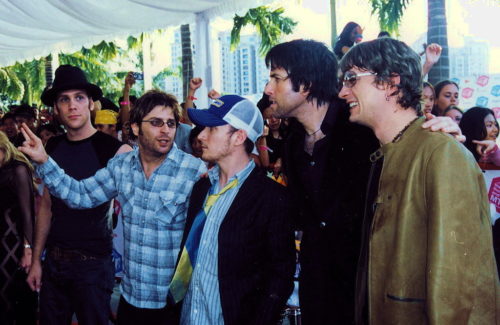
Two years later, in 1995, Gaynor was recruited to join a band that became Matchbox 20, and he spent 10 years touring the world as a rhythm guitarist with the top-charting alternative rockers. His position at the recording studio put him in “the right place at the right time.” Within a few years their songs “3 AM,” “Push,” and “Real World” were radio hits. But these days, when he wakes up, 53-year-old Gaynor has a new dream. Maybe he’s not so crazy after all.
Adam Gaynor believes he can inspire kids and adults to fulfill their own dreams with a message of love and hard work. This is where his company, Creationville, Inc., comes in. The startup is Gaynor’s foray into the world of animated media and merchandise.
Gaynor has big plans, but they all boil down to one mission: “I hope I can create iconic characters,” he says. Gaynor is inspired by the worlds created by Walt Disney and Tim Burton, and he hopes Creationville, with its offbeat monsters, will encourage kids and their parents to dream big and work hard.
The first step is Edgar Pingleton.
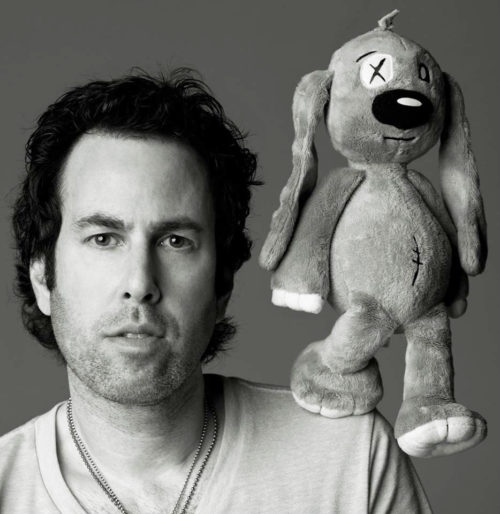
Edgar is one of Gaynor’s creations. He is feasibly a rabbit — but possibly a dog —with visible scars and a misplaced eye. Gaynor says, “He teaches kids the idea that it’s okay to give and receive unconditional love from something that’s not perfect. Edgar looks a little worn, like he’s been through a lot of stories in his lifetime, but he still has this happy disposition.”

Gaynor is the CEO and Art Director for Creationville, and he has spent years racking his imagination to undertake his unique vision for the company. This vision includes an arsenal of creatures like Skratch and ChinBoo, an antithetical pair of cute monsters, and Kursed, an animated series about a boy living in a town of the undead. The series will combine pop music with situation comedy in a world reminiscent of The Twilight Zone.
Starting a new venture was, for Gaynor, a decision he had to make about what came after the band: “Do I want to build this company, or do I want to sit and watch Court TV all day?” He knew exactly what he did not want out of his life: parties, indolence, self-destructive behavior, the common trappings of ex-rock stars. “I think no matter where you come from or what is in your past, you have to be accountable for your next move,” Gaynor says.
The Matchbox 20 years were pivotal for Gaynor. It was then that he realized his own potential for success. Gaynor said he appreciates the dedication of career musicians, rockers like Keith Richards and Bob Dylan with “music in their DNA,” but he always felt he had more than music to contribute to the world. Long bus rides with the band afforded Gaynor time to experiment with photo-editing software and flex his creative muscle thinking up stories and characters.
“I know it sounds stupid, but you’re conditioned to a different life,” Gaynor says regarding star treatment on the road. He grew accustomed to getting service and following rules. His schedule was given to him every day as well as his meals, laundry, and anything else he wanted. “If you wanted a goldfish, you’d write it on a piece of paper, and it shows up.” Gaynor says that he wasn’t out-of-touch, but transitioning out of that lifestyle and into one of “going to the post office for yourself” was an enlightening experience.
“The transition is deciding who you are as a human, what you want to do with your life, and realizing the things in your past are part of your foundation while they don’t define you.” Gaynor is grateful to have had the luxury of time to figure out exactly what he wanted to do. One of his greatest takeaways from being in a band played endlessly on the radio was discovering the level of success he can aspire to in all of his pursuits.
Creationville is no exception. Gaynor is thinking big: books, movies, games, and merchandise. He also understands that the media landscape of today is strikingly different than it was 20 years ago. In the recording industry the platforms for exposure have changed. Gaynor says, “It’s all about social media and going viral.” His approach of “being in the right place at the right time” would not necessarily work in 2017, but he still believes talent can and will shine through.
Given his history as a “bad student with trouble focusing,” Gaynor wants to spread his message: “I’m no different than anyone else. If I can achieve something great, there is no reason why anyone else can’t do the same thing.” He stresses that it’s all about hard work and an earnest approach. Gaynor claims he always believed he would be successful. When he was 12 years old he played guitar along to The Eagles’ record, Desperado, and he had an epiphany: he sounded just like the band. Gaynor thought he could have a future in music, and he was right. Now he wants to start all over again. He is eager for Creationville to launch this year, and, as he often jokes, to find out whether he is “a mad genius or just completely mad.”
Was the Pop Music of the 1960s the Most? Or Just a Mess?
[Editor’s note: Alfred G. Aronowitz’s “Pop Music: The Most? Or Just a Mess?” was first published in the July 15, 1967, edition of the Post. We republish it here as part of our 50th anniversary commemoration of the Summer of Love. Scroll to the bottom to see this story as it appeared in the magazine.]
Eight stories over Hollywood’s Sunset Strip and 6,000 miles from his native Liverpool, press agent Derek Taylor looked out his window and muttered that it was the 20th of the month and none of his accounts in the pop-music business had paid him yet. It was the beginning of 1967, and the pop-music world that Taylor had felt so conveniently at his fingertips suddenly seemed to be moving beyond his grasp. In London, there were rumors that the Beatles would never perform again in public. In New York, Herman was said to be looking for a TV job — without his Hermits. The Young Rascals, once heralded as the American group most likely to succeed the Beatles, had just returned from a European tour that lost $22,000. Mod shops were thinking about stocking cowboy shirts. Groupies were torn between reading Hermann Hesse’s mystical Siddhartha and the monosyllabic teenybopper bible, 16 Magazine.
Outside Taylor’s window, the afternoon glowed the way Marilyn Monroe’s hair did when she rode down the Sunset Strip in a convertible. In a couple of hours, the glow would vanish, and the Strip would become a battleground, the cops versus the mini-masses, long-haired, bell-bottomed teenagers who have become the shock troops of Hollywood’s psychedelic revolution. Once upon a time Derek Taylor was the press officer for one group, the Beatles, but now he was the publicity man for a dozen Top 40 recording stars. He knew the pop-music world as well as anyone, but still confessed his bewilderment. “The industry,” he said, “is booming. It should do a billion dollars this year. But it is not in good shape.”
By the middle of 1967, America’s pop-music scene has become as incomprehensible to the people who dreamed it all up as it is to the people who are sleeping through it. A new generation of music critics is hard at work trying to institutionalize the confusion by grinding out such vague descriptive labels as acid rock, raga rock, jug rock, Broadway rock, Latin rock, shock rock, and rock ’n’ wreck. They also have come up with old time, good time, soul, blue-eyed soul, psychedelic surf, and flower power. It is as if some magician had started pulling tricks out of a hat and found, to his amazement, that the hat contained more surprises than his magic could account for. Composers and performers are blending baroque fugues with science-fiction tape-recorder sounds. Teenage analysts are writing long treatises about the difference between the metallic sound of the Rolling Stones and the kinetic sound of the Four Tops. An English group called the Who is smashing its instruments into hemidemisemisplinters as a regular part of its act. The Beach Boys have spent an astonishing 90 hours in a recording studio to grind out one 45-rpm single. A pop audience that once cheered the extraordinary Beatles is now rooting for the ordinary Monkees. Herb Alpert and the Tijuana Brass have become the Lawrence Welk of the Acid Age. And San Francisco has proclaimed itself the new Liverpool.
With the sale of single records dropping significantly from the previous year, the radio stations that program the Top 40 can no longer claim they are accurately reflecting the musical tastes of their audience. That audience is buying more and more albums, which the Top 40 stations rarely play. The shrieking mobs which once flung themselves at Bob Dylan, besieged the Beatles, and rushed the stage of the Rolling Stones, are three years older now. Their teenage scream has become a Golden Oldie. In place of the original teenyboppers, there are now teenyweenyboppers with a roster of new heroes — the Jefferson Airplane, the Doors, the Moby Grape, and Country Joe and the Fish — to baffle not only their parents but also their older sisters. The younger generation suddenly has found that it has its own generational gap. Meanwhile, a new wave of salesmen is figuring out ways of extracting dollars from the word psychedelic.
It has been 15 years now since rock ’n’ roll was laughed off as just another fad. Frank Sinatra called it “the martial music of every side-burned delinquent on the face of the earth.” The police in Atlanta, Georgia, ruled that teenagers couldn’t dance to it without written parental consent. Roman Catholic leaders in Boston called for a boycott of it, to be enforced by a censor. And the head of the White Citizens Council in Alabama saw it as part of a Negro plot to “mongrelize America.”
But what the older generation thinks is increasingly irrelevant to what the younger generation does. The music that was supposed to go in one ear and out the other now has become the major form of communication among the young.
“Rock is absorbing everything,” explains 18-year-old Paul Williams, the editor and publisher of Crawdaddy!, a rock-’n’-roll magazine. “But that doesn’t eliminate everything else. It just means the people who are into rock are becoming more open-minded toward what’s really good, and they get very turned on to other assorted things, like Billie Holliday, John Handy, even early baroque. As a result, contemporary jazz and classical composers must try to measure up.”
The boundary lines between jazz, classical, and pop are becoming increasingly indefinable. Jazz innovator Ornette Coleman is conducting symphony orchestras in his own compositions. Folk singer Odetta is recording high-camp songs like the ancient Shirley Temple hit “On the Good Ship Lollipop.” Old-time jazz altoman Cannonball Adderley is placing singles on the Top 40 charts. New-time jazz tenorman Charles Lloyd is playing in rock clubs. The Fugs, a group of Lower East Side poets with indelicate lyrics and a name that some disc jockeys won’t even pronounce, have succeeded in getting a $25,000 contract with Atlantic Records and an album on the best-seller charts. Ravi Shankar, India’s most celebrated classical musician, has become, at the age of 47, an American folk hero of sorts and an English pop star, with teenyboppers in his audiences and Beatle guitarist George Harrison sitting at his feet. Harrison is a dedicated student of Shankar’s instrument, the sitar. In India, the sitar is a holy instrument. In England and America, the sitar is used on rock-’n’-roll records. “It is silly, it is childish, it is a gimmick,” comments Shankar with a smile that spreads across his face like a rope climbing into air.
“Everybody is articulating in a different way,” says New York disc jockey Murray (The K) Kaufman. One of the pioneers of hysterical rock-’n’-roll programming, Murray is trying out his new subdued voice on New York’s WOR-FM, which is threatening to revolutionize radio by playing pop music for adults in the same dignified format that FM usually reserves for classical music. “We’re creating a new frame of reference,” says Murray, “for the Bob Dylans, the Peter, Paul and Marys, the Ian and Sylvias, the Lovin’ Spoonfuls, and particularly the Beatles, because the excitement of a couple of years ago, that kind of radio, is passé, and what they’re saying musically and lyrically now is so different and so honest. They’re really poets who are reflecting a new attitude which demands a new form of presentation on the air.”
However rampant the confusion, one aspect has remained constant. For most kids, the pop-music business is still what it always was: a fairy tale.
In the square-ruled towns and dead-end-street suburbias of America, the guitarist is on his way to replacing the football player as the local teenage idol. The sale of guitars and amplifiers has more than doubled since the advent of the Beatles. Every neighborhood has its rock-’n’-roll group, and every rock-’n’-roll group has its share of the neighborhood’s screaming Beatlemania remnants. And in the corners of drive-in America, a new storefront is making its gypsy appearance. With a musical clef painted on the door, with little more than eggcrate liners tacked on the wall for soundproofing, the store calls itself a recording studio.
The music business is the only place in which storefront churches still can be turned into overnight cathedrals. Berry Gordy Jr.’s Motown Records is a typical example. The electronic miracle of Gordy’s astonishingly successful Motown Sound is still emanating from what was once a photographer’s shop on Detroit’s West Grand Boulevard. It was only in 1959 that Gordy, with a $700 family loan, reconverted that shop into a company which now has an estimated value of $15 million. The Supremes, the Miracles, the Four Tops, the Temptations all were launched from that shop.
It was into one of these neighborhood recording studios near Saginaw, Michigan, that 22-year-old Rudy Martinez brought his band of musicians one day last year to record a song he had written. The recording cost Martinez $50, which is approximately what RCA Victor would pay for a small filing cabinet. The Martinez group was well known in the local firehouse halls and Friday night gyms where the children of immigrant Mexican auto workers held their dances, so Martinez took his recording to Saginaw’s Joe Gonzalez. A dabbler in real estate, owner of the Mexican Food Products Co., and operator of a motel, Gonzalez had a lucrative sideline — putting out Mexican records on his Pa-Go-Go and Be-Go labels. Gonzalez released Martinez’s recording on Pa-Go- Go, and it immediately started up the sales charts in the cities of Michigan’s Bay area. Soon it began to stir up gossip among the young men in the quicksilver suits who run the nation’s pop-record industry from New York. It was on a Friday afternoon that Neil Bogart, 23-year-old director of sales and promotion and first lieutenant in charge of everything at Cameo-Parkway Records, decided to call up Gonzalez. Joe wasn’t home, he was attending to some business in McAllen, Texas, and his wife, Lillie, answered the phone. Bogart offered her a $500 deal for Martinez’s recording, and she accepted. Over the next several hours she also accepted an offer of $1,500 from Roulette Records, a second offer of $1,750 from Bogart, and a second offer of $2,500 from Roulette. She turned down a couple of $2,000 offers from Laurie Records and M-G-M Records, but they were still ringing her phone. By five o’clock Bogart realized he had better do business with Joe. Equipped with two blank checks and a set of contracts, he flew to Texas and closed the deal for $2,500. By Monday morning, the tape was at a pressing plant in Philadelphia. By Monday afternoon, Bogart had an order for 13,000 copies of the record from his Detroit distributor. By the end of the year, the song, “Ninety-Six Tears,” had sold more than one million records, and Rudy Martinez and his group had become famous under the enigmatic name of ‘? and the Mysterians.’
For millions of young people like Rudy Martinez, this is what the record business is all about. Pop music has become the pill you swallow to dream the American dream. It has become the only possible profession for someone with no other ambition than to be a teenage millionaire.
The Lovin’ Spoonful, four countrified city boys, were ladling out their “good-time music” on Kama-Sutra Records to an America so in need of good times that M-G-M Records confidently paid them a $1 million advance in its rush to sign them to a recording contract that won’t go into effect until 1970. The Mamas and the Papas, a quartet that somehow manages to be both grotesque and angelic, has become so rich so fast that, just on a whim, they bought out New York’s Carnegie Hall to produce their own concert, flew in from Los Angeles for the night, arrived to find sidewalk scalpers hawking tickets at three times the fixed price, and then winged home again, falling asleep on the plane to mutual nods about what a nice time they’d had. James Brown, an ex-shoeshine boy who has become the king of rhythm and blues, has been vapor-trailing across America in his private jet, traveling to 335 one-nighters a year, and collecting more than $1 million at the box office. Nancy Sinatra, Frank’s 27-year-old daughter, the convenient discovery of a record company owned by her father, and the protest balladeer of all the underprivileged girls of Bel Air, has already collected three gold singles, which is two more than Frank Sinatra ever got in his entire 26-year career. (When the two of them recorded a love duet together — “Something Stupid” — hip teenyboppers immediately started referring to it as “the incest song.”)
And then there are the Monkees. Picked out of a group of 437 youths who answered a newspaper ad, publicized with a $250,000 fund, backed by expert musicians and blessed with some of America’s most experienced songwriters, all of whom were instructed to “make it sound fresh, like early Beatles,” the four Monkees in six months became the most popular group in the world.
For the Monkees, that wasn’t good enough. Esthetically they were prisoners in the palace the Beatles had built, and commercially they received a minuscule share of the profits. “The amusing thing about all this,” taunted the magazine Crawdaddy!, “is its supreme unimportance — after it’s all over, and they’ve outsold everyone else in history, the Monkees will still leave absolutely no mark on American music.”
Recently, Don Kirshner, the man who helped lay the cornerstone of the Monkee empire, was fired by his partners from his jobs as Monkee music supervisor and president of Colgems, the firm that produces Monkee records. Kirshner, once known as the Man With the Golden Ear, immediately sued for $35.5 million.
To increasing numbers of musicians, the pop-music business may be a serious art form. To millions of fans, it may be a fairy tale. But to the men who run it, the pop-music business is still a business. There is a story of one record company’s attempt to manufacture a group by picking five expert musicians off the streets of Greenwich Village. The quintet signed a contract guaranteeing them more than $100,000 in advances. But after three successive flops, the company lost interest, and the group broke up. Its members are now back on the streets of the Village, claiming they never saw more than a flash of the $100,000.
“There are so many groups now, and the competition is so rough,” reports one manager, “that anyone starting out has to expect to be treated like dirt. When my group signed a contract, we were supposed to get $2,500 immediately. The company only gave us $1,500. One of them said, ‘We don’t give a damn about the contract.’ If they don’t give a damn now, how can I expect them to pay off the royalties when and if we hit?”
Whether you are at the bottom or at the top, just to keep going requires the same messianic energy. “All these people who think it’s just fun and games,” says Bob Dylan, “if they ever get famous, they’ll find out it’s not.”
Three years ago, before the British captured the pop charts, and pop began captivating much of the world, some 200 new record releases a week would arrive at the average radio station. There wasn’t enough time available to play more than three or four new ones. Currently, the number of new record releases has grown to about 260 a week. But there still isn’t enough time to play more than three or four. Like Rudy Martinez’s $50 fantasy, success in the business comes in the most unexpected ways because it is hardly to be expected at all. And even when it does come, it may not seem worth the dues.
“You wonder, ‘Have I really made it?’” says one British pop star. “And then you wonder, ‘Am I going to keep on making it?’ And you think, ‘Well, if I’m so blasted gloomy now, could I feel any worse without the money?’ What’s the big thing about having a bunch of teenyboppers screaming outside your window or trying to crawl into your bed? And for this, you spend your life imprisoned on airplanes and in hotel rooms being slave-driven and cheated by cold-blooded businessmen who don’t give a damn what kind of hell you have to go through to keep their pockets jingling.” Worn out by compromises, driven to the brink of emotional bankruptcy by the demands of their fame, some of the best of the British groups are giving up. As for the Beatles, John is beginning an acting career, Paul is writing the musical score of a movie, George is listening to his sitar records, and Ringo is planning a big family. Last fall promoter Sid Bernstein offered Beatle manager Brian Epstein a $1 million guarantee for a Beatle performance in New York’s Shea Stadium this summer. “In view of the circumstances,” Epstein replied, “it’s silly right now to discuss it.”
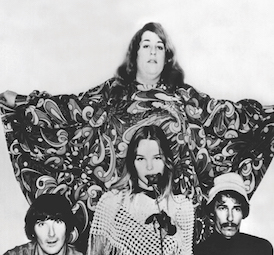
When Bernstein promoted the Beatles’ performances in Shea Stadium last summer, the show grossed $250,000, but Bernstein ended up with a net loss of $680. “The Beatles are quite wise not to come back,” said David Crosby of the Byrds, another group which is weary of touring, sick of being screamed at, and would rather record albums at home. “If the Beatles toured America now there’d be a lot of empty seats. The same with the Stones. The kids aren’t going to pay all that money for another 29-minute show in a ball park. They’ve seen those four dots before.”
There are some American groups, like Paul Revere and the Raiders, that are capable of going on the road and drawing well, but even they are beginning to look at their music and wonder if it’s good enough. “Look down the list,” says one rock-’n’-roll booking agent. “It’s all the same story. Mitch Ryder and the Detroit Wheels, another giant of personal appearances, have disbanded, and Mitch Ryder is touring with a 10-piece orchestra. Herman’s Hermits? Still strong but dwindling. The Supremes wouldn’t look at a one-nighter; they’ll do the good nightclubs and good TV. Petula Clark, who may be the No. 1 female vocalist, is working in a movie. Simon and Garfunkel? Colleges and concerts, probably the best duo around. Donovan? He’s Alexander the Smooth, England’s Bob Dylan. He has a lot of hit records and a big underground following, but he just canceled an American tour.”
As for Dylan, probably the most influential voice in contemporary music, the industry is still waiting for his next move. In Woodstock, New York, where he is convalescing from a broken neck suffered in a motorcycle accident, Dylan remains mysteriously incommunicado. He is writing at least 10 new songs a week, rehearsing them with his band, and completing a one-hour TV special. He also is growing a beard.
From San Francisco, where music is being mixed with psychedelic light shows, and dance halls like the Fillmore Auditorium are packing thousands into what its owner calls “a party scene,” the new sound of groups such as the Moby Grape, the Jefferson Airplane, and the Grateful Dead, featuring a 200-pound bearded singer named Pig Pen, is making its claim on the pop-music future. In London, Beatles’ manager Brian Epstein is concentrating on the Lomax Alliance, the first major Anglo-American pop group, and the Bee Gees, whom he optimistically labels the biggest thing since the Beatles. In New York, the management firm of Albert B. Grossman, fueled by the power of clients such as Bob Dylan, and Peter, Paul and Mary, is pushing folk-rock singer Richie Havens, and the Paupers, a new quartet from Toronto, which is becoming one of the music capitals of North America.
“It’s as if everybody’s done everything,” said one rock guitarist, “and it’s getting harder and harder to think of new things to do.”
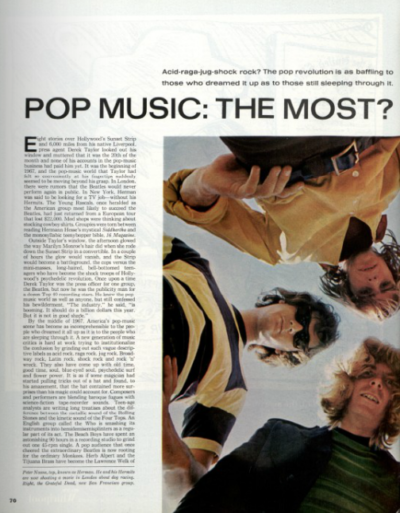
There are some observers who look upon the current aches of the business as mere growing pains. And a good case can be made for signs of approaching adulthood. Pop has begun to throw off the flummery of Moon and June, and increasingly is singing songs of life, death, existence, heroism, and mystery. It may be in danger of becoming too self-conscious, but there is no denying its positive virtues: Never before has music been so complete an expression of its time or been so knowing of the needs of its audience. The fans who once trampled one another just to see their heroes are now listening to them.
Where is pop going? Well, this year the record industry should gross, as Derek Taylor said, about $1 billion, a tidy sum in any industry, whatever the surface confusion. And beneath that surface there are stirrings. There is a push among the best of the rock and pop stars toward quality. The competition among the best — Bob Dylan, the Beatles, the Rolling Stones among them — is no longer for money. They already have enough of that. The competition is in music.
By the summer of 1967, even press agent Taylor had decided to give up his dozen Top 40 clients to concentrate on quality. “I became bored,” he explained. “I became bored with a performer’s pet loves, and pet hates, and what he eats for breakfast. The best artists in the business — the aristocracy — are moving into positions of power. They’re making fewer and fewer compromises with commercialism. There’s hardly anything interesting happening outside this exclusive circle. But what’s happening inside may be the most remarkable story of our time.”
This article is featured in the July/August 2017 issue of The Saturday Evening Post. Subscribe to the magazine for more art, inspiring stories, fiction, humor, and features from our archives.
Was Lou Gehrig the Toughest Baseball Player Ever?
This article and other features about baseball can be found in the Post’s Special Collector’s Edition, Baseball: The Glory Years. This edition can be ordered here.
As always, the yankees were the team to beat for the pennant, and, for once, they were being beaten. The Tigers held a lead of two and a half games. There was a strange uneasiness on the Yankee bench before the first game on July 12, something more than the strain of overhauling the Tigers. The cause leaked out presently.
Gehrig would not play this day. Gehrig, who had not missed a game in 10 seasons, had been forced out of the lineup by a severe attack of lumbago. The depressed Yankees warmed up listlessly. Suddenly they came to life. Gehrig, disregarding doctor’s orders, hobbled stiffly on the field in uniform.
It was obvious that Gehrig was racked with pain when he went up to hit against Tommy Bridges in the first inning. But ailing or well, Gehrig still was the most dangerous hitter in baseball. Bridges walked him. In the fourth inning Gehrig stumbled to the plate, slashed a solid single, then dragged himself to the clubhouse.
On July 13 a taxi drove up to the players’ gate at Briggs Stadium a few minutes before game time. The milling, murmurous crowd saw Gehrig, in full uniform, crawl out of the cab. Doc Painter, the Yankee trainer, had helped Gehrig dress at the hotel and literally wheeled him to the ball park.
For perhaps the first time in major-league history, a left-hander was in the lineup at shortstop. Gehrig was to lead off, keep his record intact, then retire. And Gehrig launched the Yankees to eventual victory by hitting vic Sorrell for a single.
The climax came the next day. Gehrig, his back strapped with yards of adhesive, swore he would play the entire game against Schoolboy Rowe, who was in the middle of a 16-game winning streak.
Rowe was the greatest pitcher in the league that year, but Gehrig was the greatest competitor. He faced Rowe four times, and got four hits. Hampered by the adhesive which restricted him from taking a full cut, Gehrig merely pushed his bat at the ball. And three of his hits were ringing doubles off the left-field wall.
During those three days Gehrig, measured by ordinary standards, should have been in bed. Gehrig, “baseball’s Gibraltar,” went to bat seven times, and got six hits and a walk when his team needed him most urgently.
— “Baseball’s Gibraltar” by Stanley Frank, April 17, 1943
Joe College Is Dead: The Root of Student Unrest in the 1960s
[Editor’s note: Arthur Schlesinger Jr.’s “Joe College Is Dead” was first published in the September 21, 1968, edition of the Post. We republish it here as part of our 50th anniversary commemoration of the Summer of Love. Scroll to the bottom to see this story as it appeared in the magazine.]
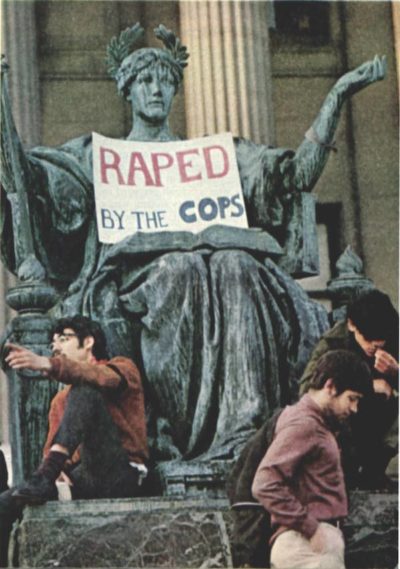
Miriam Bakser, © SEPS
Throughout our history, our sons and daughters have been the bearers of our aspirations, commissioned by birth to fulfill our dreams. Today, more than ever before in any country, the indispensable climax of the children’s preparation — and the parents’ hope — is college. “Going to college” is now considered the key to life — the key not only to intellectual training but to social status and economic success.
The United States today has nearly 6 million college students — 46 percent of all young people from 18 to 21. By 1970 we are expected to have 7.5 million — which means that our student population will have more than doubled in the single decade of the ’60s. Yet, the more college students we have, the more baffling they seem to become. For years, adults saw college life in a panorama of reassuring images, derived from their own sentimental memories (or from the movies) — big men on campus, fraternities and sororities, junior proms, goldfish swallowing, panty raids, winning one for the Gipper, tearing down goalposts after the Big Game, homecoming. College represented the “best years of life,” a time of innocent frivolity and high jinks regarded by the old with easy indulgence. But the familiar stereotypes don’t work anymore. The new undergraduate seems a strange, even a menacing, phenomenon, consumed with mysterious resentments, committed to frenetic agitations.
Many adults look on college students today as spoiled and ungrateful kids who don’t know how lucky they are to be born in the greatest country on earth. Even men long identified with liberal views find the new undergraduate, in his extreme manifestations, almost unbearable. The hard-working student, Vice President Hubert Humphrey tells us, “is being replaced on our living-room televisions by the shouter of obscenities and hate.” President Nathan M. Pusey of Harvard speaks of “Walter Mittys of the left … [who] play at being revolutionaries and fancy themselves rising to positions of command atop the debris as the structures of society come crashing down.” George F. Kennan talks of “banners and epithets and obscenities and virtually meaningless slogans … screaming tantrums and brawling in the streets.” Yet the very magnitude of student discontent makes it hard to blame the trouble on individual malcontents and neurotics. A society that produces such an angry reaction among so many of its young people perhaps has some questions to ask itself.
Obviously most of today’s students came to college to prepare themselves to earn a living. Most still have the same political and economic views as their parents. Most, until 1968, supported military escalation in Vietnam. Most believe safely in God, law and order, the Republican and Democratic parties, and the capitalist system. Some may even tear down goalposts and swallow goldfish, if only to keep their parents happy.
Yet something sets these students apart from their elders — both in the United States and in much of the developed world. For this college generation has grown up in an era when the rate of social change has been faster than ever before. This constant acceleration in the velocity of history means that lives alter with startling and irresistible rapidity, that inherited ideas and institutions live in constant jeopardy of technological obsolescence. For an older generation, change was still something of a historical abstraction, dramatized in occasional spectacular innovations, like the automobile or the airplane; it was not a daily threat to identity. For our children, it is the vivid, continuous, overpowering fact of everyday life, suffusing every moment with tension and therefore, for the sensitive, intensifying the individual search for identity and meaning. The very indispensability of a college education for success in life compounds the tension; one has only to watch high-school seniors worrying about the fate of their college applications.
Nor does one have to be a devout McLuhanite to accept Marshall McLuhan’s emphasis on the fact that this is the first generation to have grown up in the electronic epoch. Television affects our children by its rapid and early communication to them of styles and possibilities of life, as well as by its horrid relish of crime and cruelty. But it affects the young far more fundamentally by creating new modes of perception. What McLuhan has called “the instantaneous world of electric informational media” alters basically the way people perceive their experience. Where print culture gave experience a frame, McLuhan has argued, providing it with a logical sequence and a sense of distance, electronic communication is simultaneous and collective; it “involves all of us all at once.” This is why the children of the television age differ more from their parents than their parents differed from their own fathers and mothers. Both older generations, after all, were nurtured in the same typographical culture.
Another factor distinguishes this generation — its affluence. The postwar rise in college enrollment in America, it should be noted, comes not from any dramatic increase in the number of youngsters from poor families but from sweeping in the remaining children of the middle class. And for these sons and daughters of the comfortable, status and affluence are, in the words of student radical leader Tom Hayden, “facts of life, not goals to be striven for.” This puts many students in a position to resist economic pressures to buckle down and conform. As another radical has written, “Our minds have been let loose to try to fill up the meaning that used to be filled by economic necessity.”
The velocity of history, the electronic revolution, the affluent society — these have given today’s college students a distinctive outlook on the world. And a fourth fact must not be forgotten: that this generation has grown up in an age of chronic violence. My generation has been through depressions, crime waves, riots and wars; but for us episodes of violence remain abnormalities. For the young, the environment of violence has become normal. They are the first generation of the nuclear age — the children of Hiroshima. The United States has been at war as long as many of them can remember — and the Vietnam war has been a particularly brutalizing war. Most students have come to feel that the insensate destruction we have wrought in a rural Asian country 10,000 miles away has far outrun any rational assessment of our national interest. Within the United States, moreover, they have lived with the possibility, as long as many of them can remember, of violence provoked by racial injustice. Even casual crime has acquired a new dimension. Some have never known a time when it was safe to walk down the streets of their home city at night. Above all, they have seen the assassinations of three men who embodied the idealism of American life. The impact of this can hardly be overstated. And — let us face it — our national reaction to these horrors has only strengthened their disenchantment: brief remorse followed by business as usual and the National Rifle Association triumphant.
The combination of these factors has given the young both an immediacy of involvement in society and a sense of their individual helplessness in the face of the social juggernaut. The highly organized modern state undermines their feelings of personal identity by threatening to turn them all into interchangeable numbers on IBM cards. Contemporary industrial democracies stifle identity in one way, Communist states in another, but the sense of impotence is all-pervasive among the young. So too, therefore, is the desperate passion to reestablish identity and potency by assaults upon the system.
Such factors have set off the guerrilla warfare of students against the existing structures of society not only in the United States but throughout the developed world. (Student unrest in underdeveloped countries is more predictable and has different sources.) Uprisings at Berkeley and Columbia are paralleled by uprisings at the Sorbonne and Nanterre, in the universities of England and Italy, in Spain and Yugoslavia and Poland, in Brazil and Japan and China. Every country can offer local grievances to detonate local revolts. But these are only the pretexts for the rebellion. They are the visible symbols for what the young perceive as the deeper absurdity and depravity of their societies.
American undergraduates first fixed on racial injustice as the emblem of a corrupt society. But in the last two years, resistance to the draft has provided a main outlet for undergraduate revolt.
Until very recently, most college students supported the war in Vietnam — so long as other young men were fighting it. It used to exasperate Robert Kennedy when he asked college audiences in 1966 and 1967 what they thought we should do in Vietnam — hands waving for escalation — and then asked what they thought of student deferment — the same hands waving for a safe haven for themselves. At last, as the draft began to cut deeper, the colleges began to think about the war; and the more they thought about it, the less sense it made.
No one should underestimate the magnitude of this new anti-draft feeling. In 1968, I have not encountered a single student who still supports military escalation in Vietnam. Not all students who hate the war burn draft cards or flee to Canada. Many — and this may be as courageous a position as that of defiance — feel, after conscientious consideration, that they must respect laws with which they disagree, so long as the means to change these laws remain unimpaired. Yet even they regard with sympathy their friends who choose to resist. One who is himself prepared to go to Vietnam said to me, “Every student wants to avoid the draft. Every student, realizing that the method to this end is very individual, respects any method that works — or attempts that do not.”
The anti-draft revolt somewhat diminished this year after President Johnson’s March 31st speech, the Paris negotiations and the McCarthy and Kennedy campaigns. But it will resume, and with new ferocity, if the next President intensifies the war. In April, The New York Times carried a four-page advertisement headed: “We, Presidents of Student Government and Editors of campus newspapers at more than 500 American colleges, believe that we should not be forced to fight in the Vietnam war because the Vietnam war is unjust and immoral.” In June, a hundred former presidents of college student bodies joined campus editors to declare, “We publicly and collectively express our intention to refuse induction and to aid and support those who decide to refuse. We will not serve in the military as long as the war in Vietnam continues.”
However, if we Americans blame the trouble on the campuses just on the war (or, to take another popular theory, on permissive ideas about childrearing), we will not understand the reasons for turbulence. After all, the students of Paris were not rioting against a government that threatened to conscript them for a war in Vietnam; nor are the students of Poland, Spain, and Japan in revolt because their parents were devotees of Dr. Spock. The disquietude goes deeper, and it was well explained by, of all people, Charles de Gaulle. The “anguish of the young,” the old general said after his own troubles in June with French students, was “infinitely” natural in the mechanical society, the modern consumer society, because it does not offer them what they need, that is, an ideal, an impetus, a hope, and I think that ideal, that impetus, and that hope, they can and must find in participation.
Not every American student exemplifies this anguish. It appears, for example, more in large colleges than in small, more in good colleges than in bad, more in urban colleges than in rural, more in private and state than in denominational institutions, more in the humanities and social sciences than in the physical and technological sciences, more among bright than among mediocre students. Yet, as anyone who lectures on the college circuit can testify, the anguish has penetrated surprisingly widely — among chemists, engineers, Young Republicans, football players, and into those last strongholds of the received truth, the Catholic and fundamentalist colleges.
How to define this anguish? It begins with the students’ profound dislike for the impersonal society that produced them. The world, as it roars down on them, seems about to suppress their individualities and computerize their futures. They call it, if they vaguely accept it, “the rat race,” or, if they resist it, “The System” or “The Establishment.” They see it as a conspiracy against idealism in society and identity in themselves. An outburst on a recent Public Broadcast Laboratory program conveys the flavor. The System, one student said, hits at me through every single thing it does. It hits at me because it tells me what kind of a person I can be, that I have to wear shoes all the time, which I don’t have on right now. … It hits at me in every single way. It tells me what I have to do with my life. It tells me what kind of thoughts I can think. It tells me everything.
Another student added, with rhetorical bravado, “Regardless of what your alternatives are, until you destroy this system, you aren’t going to be able to create anything.”
The more typical expression of this mood is private and quiet. It takes the form of an unassuming but resolute passion to seize control of one’s own future. My generation had the illusion that man made himself through his opportunities (Franklin D. Roosevelt); but this era has imposed on our children the belief that man makes himself through his choices (Jean-Paul Sartre). They now want, with a terrible urgency, to give their own choices transcendental meaning. They have moved beyond the Bohemian self-indulgence of a decade ago — Allen Ginsberg and Jack Kerouac. “We do not feel like a cool swinging generation,” a Radcliffe senior said this year in a commencement prayer. “We are eaten up by an intensity that we cannot name. Somehow this year, more than others, we have had to draw lines, to try to find an absolute right with which we could identify ourselves. First in the face of the daily killings and draft calls … then with the assassinations of Martin Luther King and Senator Kennedy.”
The contemporary student generation can see nothing better than to act on impulses of truth: “Ici, on sponlane,” as a French student wrote on the walls of his college during the Paris insurgency. They are going to tell it, as they say, like it is, to reject the established complacencies and hypocrisies of their inherited existence. One student said to me:
Basically, the concept of this “do your thing” bit, as ludicrous as it sounds, may be the key to the matter. What it means is similar to Mill’s On Liberty because it allows anybody to do what he wants to do as long as it does not intrude on anyone else’s liberty. Therefore, nobody tries to impose anything on anybody, nor do they not accept a Negro, a hippie, a clubby, etc. I really believe that today we see beyond superficial appearances and thus, in the end, will have a society of very divergent styles, but it will be successfully integrated into a really viable whole. . . . We test out old thoughts and customs and either dispose of them or retain them according to their merits.
Along with this comes an insistence on openness and authenticity in personal relationships. A 1968 graduate — a girl — puts it clearly:
I think in personal conduct people admire the ability to be vulnerable. That takes a certain amount of strength, but it is the only thing which makes honesty and openness possible. It means you say the truth and somehow leave open a part of your way of thinking. Of course, you cannot be vulnerable with everyone or you would destroy yourself — but it is the willingness to be open, not just California-cheerful open, which is almost a mask since it is on all the time, and therefore cannot be truthful. It is a little deeper than that. … It means being strong enough to reveal your weaknesses. This willingness to be vulnerable — and those you are vulnerable with are your friends — coupled with ability to be resilient, to be strong but supple, those are good qualities, because inherent in them are honesty and humor, and the good capacity to love.
This is the ethos of the young — a commitment not to abstract pieties but to concrete and immediate acts of integrity. It leads to a desire to prove oneself by action and participation — whether in the Peace Corps and VISTA or in the trials of everyday existence. The young prefer performance to platitude. The self-serving rhetoric of our society bores and exasperates them, and those who live by this rhetoric — e.g., their parents — lose their respect.
It is understandably difficult for parents, who have worked hard for their children and their communities, to see themselves as smug and hypocritical. But it is also understandable that the children of the ’60s should have grown sensitive to the gap between what their parents say their values are and what (as the young see it) their values really are. The gap has been made vivid in the way the land of freedom and equality so long and unthinkingly condemned the Negro to tenth-class citizenship. “It is quite right that the young should talk about us as hypocrites,” Judge Charles E. Wyzanski Jr. recently said at Lake Forest College. “We are.”
And more often than they know, parents themselves unconsciously reveal to their children a cynicism about the system or a disgust for it. Every father who bewails the tensions of the competitive, acquisitive life, who says he “lives for the weekend,” who conveys to his children the sense that his life is unfulfilled — they are all, as Prof. Kenneth Keniston of Yale has put it, “unwittingly engaged in social criticism.” Sometimes these frustrated parents find compensation in the rebellion of their young. There is even what one observer has described as the “my son, the revolutionary” reaction of proud parents, like the mother of Mark Rudd, the Columbia student firebrand who emerged in the spring of 1968 as the Che Guevara of Morningside Heights.
Today’s students are not generally mad at their parents. Often they regard their father and mother with a certain compassion as victims of the system that they themselves are determined to resist. In many cases — and this is even true of the militant students — they are only applying the values that their parents affirmed; they are not rebelling against their parents’ attitudes but extending them. Revolt against parents is no longer a big issue. There is so little to revolt against. Seventy-five years ago parents had unquestioning confidence in a set of rather stern values. They knew what was right and what was wrong. Contemporary parents themselves have been swept along too much by the speed-up of modern life to be sure of anything. They may be square, but they are generally too doubtful and diffident to impose their squareness on their children.
Parents today are not so much intrusive as irrelevant. Mike Nichols caught one student’s-eye view of his elders beautifully in The Graduate, with his portrait, so cherished by college students today, of a shy young man freaked out by the surrounding world of towering, braying, pathetic adults. A girl who finished college last June sums it up:
People like their parents as long as their parents do not interfere a whole lot, putting pressure on choice of careers, grades, personal life. … I think freshmen tend to discuss and dislike their parents more than seniors. By then, supposedly, you have some distance on them, and you can afford to be amused or affectionate about them. For instance, if your parents are for Reagan or were for Goldwater, you know the space between you and them on it, and the impossibility of crossing it, so you let them go their imbecilic way and stand back amused. Other people say that they really like their parents. But nobody wants to go back home. For any length of time, it is usually a bad trip.
One student even looks forward to an ultimate “communion of interests” between today’s students and their parents, only “with the younger half having gone through more (which may be necessary in this more complicated, difficult, tense, scary world) to get to the same place.”
No, the boys and girls of the 1960s, unlike the heroes and heroines of Dreiser, Lewis, Fitzgerald and Wolfe, are not targeted against their parents. Their determination is to reject the set of impersonal institutions — the “structures”— which also victimize their parents. And the most convenient “structure” for them to reject is inevitably the college in which they live. In doing so, they construct plausible academic reasons to justify their rejection — classes too large, professors too inaccessible, curricula too rigid, and so on. One wonders, though, whether educational reform is the real reason for student self-assertion, or just a handy one. One sometimes suspects that the fashionable cry against Clark Kerr’s “multiversity” is a pretext, and one doubts whether students today would really prefer to sit on a log with Mark Hopkins.
This does not mean that “student power” is a fake issue. But the students’ object is only incidentally educational reform. Their essential purpose is to show the authorities that they exist as human beings and, through a democratization of the colleges, to increase control of their lives. For one of the oddities about the American system is the fact that American higher education, that extraordinary force for the modernization of society, has never modernized itself. Harold Howe II, the federal Commissioner of Education, has pointed out that “professors who live in the realm of higher education and largely control it are boldly reshaping the world outside the campus gates while neglecting to make corresponding changes to the world within.” Students cannot understand “why university professors who are responsible for the reach into space, for splitting the atom, and for the interpretation of man’s journey on earth seem unable to find the way to make the university pertinent to their lives.”
An “academic revolution” has taken place in recent years; but in some senses it has only made the problem worse. As analyzed by David Riesman and Christopher Jencks in their recent book by that name, it involves the increasing domination of undergraduate education by the methods and values of graduate education. Many professors are more concerned with colleagues than with students, thus increasing the undergraduate longing, in the words of Riesman and Jencks, for “a sense that an adult takes them seriously, and indeed that they have some kind of power over adults which at least partially offsets the power adults obviously have over them.”
Academic government, in most cases, is strictly autocratic. Some colleges still operate according to rules appropriate to the boys’ academies that most of our colleges essentially were in the early 19th century. A Harvard professor, modifying a famous phrase, once described his institution as “a despotism not tempered by the fear of assassination.” As a Columbia student recently put it, “American colleges and universities (with a few exceptions, such as Antioch) are about as democratic as Saudi Arabia.” The students at Columbia, he adds, were “simply fighting for what Americans fought for two centuries ago — the right to govern themselves.”
What does this right imply? At Berkeley students boldly advocated the principle of cogobierno — joint government by students and faculties. This principle has effectively ruined the universities of Latin America, and no sensible person would wish to apply it to the United States. However, many forms of student participation are conceivable short of cogobierno — student membership, for example, on boards of trustees, student control of discipline, housing and other nonacademic matters, student consultation on curriculum and examinations. These student demands may he novel, but they are hardly unreasonable. Yet most college administrations for years have rejected them with about as much consideration as Sukarno, say, would have given to a petition from a crowd of Indonesian peasants.
One can hardly overstate the years of student docility under this traditional and bland academic tyranny. It was only seven years ago that David Riesman, as a professor noting undergraduate complaints about college and society, wrote, “When I ask such students what they have done about these things, they are surprised at the very thought they could do anything. They think I am joking when I suggest that, if things came to the worst, they could picket!” But the careful student generation of the ’50s was already passing away. Soon John F. Kennedy, the civil-rights freedom riders, then the Vietnam war, stirred the campuses into new life. Still college presidents and deans ignored the signs of protest. The result inevitably has been to hand the initiative to student extremists, who seek to prove that force is the only way to make complacent administrators and preoccupied professors listen to legitimate grievances. “Our aim,” as an Oxford student leader put it, “is to completely democratize the University. We shall look for cases on which we can confront authoritarianism in colleges, faculties, and the University.” Or, in the words of Mark Rudd of Columbia: “Our style of politics is to clarify the enemy, to put him up against the wall.”
The present spearhead of undergraduate extremism is that strange organization, or nonorganization, called Students for a Democratic Society. S.D.S. began half a dozen years ago as a rather thoughtful movement of student radicals. Its Port Huron statement of June, 1962, a humane and interesting if interminable document, introduced “participatory democracy” — that is, active individual participation “in those social decisions determining the quality and direction of his life” — as the student’s solution to contemporary perplexities. In these years S.D.S. performed valuable work in combating discrimination and poverty; and this work generated a remarkable feeling of fellowship among those involved. But the Port Huron statement no longer expresses official SDS policy; and SDS itself has become an excellent example of what Lenin, complaining about left-wing Communism in 1919, called “an infantile disorder.”
This is not to suggest that SDS is Communist, even if it contains Maoist and Castroite (or Guevaraite) factions. The basic thrust of SDS is, if anything, syndicalist and anarchistic, though the historical illiteracy of its leadership assures it a most confused and erratic form of anarcho-syndicalism. The anarchistic impulse extends to its organization — the infatuation with decentralization is so great that there is none (the joke is “the Communists can’t take over S.D.S. — they can’t find it”) — as well as to its program. The infatuation with the creative power of immediate action is so great that there is none.
Anarchism, with its unrelenting assault on all forms of authority, is a natural adolescent response to a world of structures. As a French student scribbled on the wall of his university at Nanterre, “L’anarchie, c’est je.” But the danger of anarchism has always been that, lacking rational goals, it moves toward nihilism. The strategy of confrontation turns into a strategy of provocation, intended to drive authority into acts of suppression supposed to reveal the “hidden violence” and true nature of society. Confrontation politics requires both an internal sense of infallibility and an external insistence on discipline. Soon the SDS people began to show themselves, as one student put it to me, “exclusionary, self-righteous, and single-minded. I feel that they, along with certain McCarthy people, are the one group that does not think that everybody should do their thing, but rather do the SDS thing.” In time SDS virtually rejected participatory democracy. Prof. William Appleman Williams of Wisconsin, whose own historical writing stimulated this generation of student radicals, ended by calling them “the most selfish people I know. They just terrify me. … They say, ‘I’m right and you’re wrong and you can’t talk because you’re wrong.’”
In 1967, SDS began to discuss in its workshops how confrontation politics — seizing buildings, taking hostages, and so on — could be used to bring down a great university and selected Columbia as its 1968 target. The result was the uprising last April, which brutal police intervention transformed from an SDS Putsch into a general student insurrection. At Columbia, the SDS leaders displayed no interest in negotiating the ostensible issues. Their interest was power. “If we win,” said Mark Rudd, the SDS leader, “we will take control of your world, your corporation, your university and attempt to mold a world in which we and other people can live as human beings. Your power is directly threatened, since we will have to destroy that power before we can take over.” For the sake of power, they were prepared, as a liberal Columbia professor put it, to “exact a conformity that makes Joe McCarthy look like a civil libertarian.”
As the SDS leaders get increasing kicks out of their revolutionary rhetoric, they have grown mindless, arrogant and, at times, vicious in their treatment of others. In recent months, the young men who incite riot and talk revolution have encouraged acts of exceptional squalor — not only the denial of free speech but the rifling of personal files, the destruction of the research notes of an unpopular professor — in fact, a general commitment not to university reform but to destruction for the sake of destruction. Their influence is to turn students into what John Osborne, one of Britain’s “angry young men” of the ’50s, has called “instant rabble.” Their effect is to betray the function of the university, which is nothing if not a place of unfettered inquiry, and to repudiate the western tradition of intellectual freedom.
What sort of factor will SDS be in the future? No one, including its own national office, can be sure how many members SDS has. J. Edgar Hoover, who is not addicted to minimizing the enemy, told Congress on February 23 that in 1967 SDS had 6,371 members, of whom 875 had paid dues since January 1. Whatever the number, it is an infinitesimal fraction of the American college population. Yet this fact should not induce undue complacency in the country clubs. Many students who would never dream of joining SDS or of approving its tactics nevertheless share its sense of estrangement from American society. This spring the Gallup Poll reported that one student in five had taken part in protest demonstrations — a statistic that suggests not only that a million students may he counted as activists but that the proportion has probably doubled since the estimates of student rebels in the spring of 1966 as 1 in 10 (Samuel Luhell) and 1 in 12 (the Educational Testing Service). All studies, moreover, indicate that the activists are good students and that they abound in the best universities.
What is significant is not only the rather large number of student activists today but their success in winning the tacit consent of the less involved. This does not mean that the majority applauds the gratuitous violence that has swept through many institutions. But activists very often appear to mirror general student concerns and anxieties on a wide range of issues, social and political as well as academic.
A recent episode at Antioch explains why the majority goes along with the activists. Although on other campuses it is considered a paragon of democracy — its students, for example, can attend the meetings of its board of trustees — this fine old experimental college in Yellow Springs, Ohio, evidently still has problems of its own. A year ago the board of trustees met before an audience of some 75 students. One member began to read the report of the committee on the college investments. As he droned along, a student suddenly jumped up and shouted, “This is all a lot of ———“ A second student then arose and said, with elaborate irony, “You shouldn’t talk that way. These wonderful trustees are giving of their time and substance to help us out.” Next, in quick succession, half a dozen other students got up and called caustic single sentences at the startled trustees. At this point, the lights went out. When they came on 30 seconds later, the trustees were confronted by a tableau: one masked student standing with his foot on the chest of another masked student prostrate on the floor. The boy on the floor said, “Massa, is it all right if I use LSD?” The standing student replied, parodying a phrase cherished by academic administrators, “It is all right if you follow institutional processes.” A series of similar Qs and As followed. The lights went out again; there were sounds of scurrying; and, when the lights came on, all but a dozen students had gone.
A moment of silence followed. Then the trustee who had been reading the report from the committee on investments resumed exactly where he had left off. This was too much for a colleague, who broke in and said reasonably, “Mr. Chairman, I don’t think that we ought to act as if nothing had happened.” The chairman asked what he proposed, and the trustee suggested that they invite the students who had remained to tell them what this demonstration had been all about. The students still in the room responded that, while they had not approved of the demonstration, they were now delighted that it had forced the trustees to listen to them. “You may not like what you saw,” one student remarked. “But now you are discussing things that you would never be discussing on your own initiative.” And for the first time the Antioch board of trustees permitted on its agenda some of the problems that were worrying the Antioch students.
This story illustrates a disastrous paradox: The extremist approach works. “I feel like I just wasted three and a half years trying to change this university,” a Columbia senior said after the troubles last spring. “I played the game of rational discourse and persuasion. Now there’s a mood of reconstruction. All the log-jams are broken — violence pays. The tactics of obstruction weren’t right, weren’t justified, but look what happened.” The activists understand what has until recently escaped the attention of the deans — that a small number of undergraduates, if they don’t give a damn, can shut down great and ancient universities. As a result, when the activists turn on, the administrators at last begin to do things which, if they had any sense, they would have done on their own long ago — as Columbia is revising its administrative structure for the first time (The New York Times tells us) since 1810. Commissioner of Education Howe says, “Perhaps students are resorting to unorthodox means because orthodox means are unavailable to them. In any case, they are forcing open new and necessary avenues of communication.” Both Berkeley and Columbia will be wiser and better universities as a result of the student revolts. One can hardly blame the president of the Harvard Crimson for his conclusion:
All the talk in the world about the unacceptability of illegal protest, all the use of police force and all the repressive legislation will not change the fact that attention is drawn to evils in our universities in this way. As long as students have no legitimate democratic voice, attention is drawn only in this way.
The students’ demand for a “legitimate democratic voice” in the decisions that control their future is part of a larger search for control and for meaning in life. The old sources of authority — parents and professors — have lost their potency. Nor does organized religion retain much power either to impose relevant values or to advance the quest for meaning. Nominal affiliation persists, but religious belief in the traditional sense is no longer widespread in college. A Catholic girl recently said that among students she knew, “there definitely is no interest in any doctrine about the supernatural. The interest is in human values.” An eastern sophomore says: “Nobody thinks about religion but probably respect people who have religion because it is so rare.”
As students, finding little sustenance in traditional authorities, seek out values on their own, their search often takes forms that an older generation can only regard as grotesque or perilous. Thus drugs — a device by which, if people cannot find harmony in the world, they can instill harmony in their own consciousness. For many young people, drugs offer the closest thing to a spiritual experience they have; their “trips,” like more conventional forms of mysticism, are excursions in pursuit of transcendental meanings in the cosmos.
The invasion of the life of the young by drugs is relatively recent; and it provides a good illustration of the interesting fact that there is conflict not only between the generations but within the younger generation itself. “When I was a freshman in 1960,” a venerable figure of 25 just out of law school, tells me, “drugs were really a fringe phenomenon. Today pot is the pervasive form of nightly enjoyment for students. How can parents understand this if a person like myself, hardly four years older than my sister, isn’t able to understand it?” His sister, who has just graduated from college, reports, “You see, the people who have been coming in as freshmen since even my first year, ’64, and with a big boom in ’66, have been turned on. Once again, as last year, the biggest pushers are in the freshman class.”
As for the drugs themselves, marijuana is a staple. It causes little discussion in its purchase, use or nonuse. On the large campuses, “everybody” has smoked it at one time or another, or at least this is a common student impression. A more precise estimate — from Dr. Stanley F. Yolles, director of the National Institute of Mental Health — is that “about two million college and high-school students have had some experience with marijuana. Fifty percent of those who have tried it experienced no effects.” Presumably, most of the rest find in the chemical expansion of consciousness an occasional means of relaxation or refreshment — what liquor provides for their parents. It is hard to persuade students (and many doctors) that “grass” is any more lethal than tobacco or alcohol, and parents achieving a high on their fourth martini are advised not to launch a tipsy tirade against marijuana.
LSD, on the other hand, is quite another matter, and its vogue has notably waned in the last year or so. Students, reading about its possible genetic effects and hearing about the “bad trips” of their friends, simply reject it as too risky. College students, it should be added, are very rarely hippies; when drugs begin to define a whole way of life, studies must go by the boards. A few students may now be turning from “acid” to “speed” (Methedrine). But an interesting departure, reported from Cambridge, Mass., is the resurgence of simple, old-fashioned drinking. “Younger kids who really started right off with grass often missed the whole alcoholic thing, and now they stop you on the street and say, wow, they got drunk and what a trip it was.” No doubt this development will reassure troubled parents.
Love is another medium in which the young conduct their search for meaning. Against Vietnam they cried, “Make love, not war.” “The student movement,” one girl observed, “is not a cause. … It is a collision between this one person and that one person. It is a I am going to sit beside you. … Love alone is radical.”
Here attitudes have relaxed, though it is not clear how much the change in sexual attitudes has produced a change in sexual behavior — to some degree, certainly, but not so much as some parents fear. A poll this spring at Oberlin showed that 40 percent of the unmarried women students had (or claimed to have) sexual relations. Dr. Paul Gebhard, who succeeded the late Dr. Alfred Kinsey as director of the Institute for Sex Research at Indiana University, observes that sexual relations among college students are “more fun nowadays,” especially for women, and create less guilt. One girl undergraduate says, “I am convinced there is a greater naturalness and acceptance and much less uptightness about sex in the present college era than in the one earlier.”
Unquestionably the pill has considerably simplified the problem. “No longer is it [again a girl is speaking], oh I can’t sleep with anyone because sex is sinful or risky or whatever; it is rather, do I want to sleep with this person and, if I do, how will it affect me or the relationship. … The emphasis is on satisfying, whole, friendly, honest relationships of which sex is only a part. Where sex is accepted as an extension of things, then nobody really talks about it that much, except as a pleasant thing.”
The new naturalness has encouraged the practice known to deans as “cohabitation” and to students as “shacking up” or “the arrangement” — that is, male and female students living together in off-campus apartments. Rolling with the punch, colleges are now experimenting with coeducational student housing. Nearly half the institutions represented in the Association of College and University Housing Officers now have one form or another of mixed housing. What may be even more shocking to old grads is the vision of the future conveyed by the report that at Stanford the Lambda Nu fraternity proposes next year to go coed.
Though students today favor a code of behavior that is personal, not modeled on that of parents, pastors or professors, they have not abandoned heroes. Nearly all regard John F. Kennedy with admiration and reverence. Many this year followed and then mourned his brother; many others followed Eugene McCarthy (and cut their hair and beards in order to be ‘clean for Gene’); many like John Lindsay. Among writers, the situation is more puzzling. The press reports an enthusiasm on the campuses for J.R.R. Tolkien and The Lord of the Rings; but I must confess sympathy for a perceptive girl who says:
When I stand in lunch lines, I see people holding Tolkien in their hands, but they aren’t the people I know. I guess that people like it because it hands them a whole society and set of symbols and passwords which they can use to describe themselves, set off the cliques. It gives people a whole world of the imagination without having to use their imagination.
The German writer Hermann Hesse with his novels about romantic quests for self-knowledge is having a current whirl — The New Republic reports an electronic-rock group on the west coast calling itself Steppenwolf.
But the testimony is general that the old, whether in public affairs or in literature, don’t count for very much in the colleges. “The models for today’s students,” a sophomore writes, “probably come more from their contemporaries than any other group — the latest draft-card burners, people with the guts to live the way they want despite society’s prohibitions, etc. — or from older people who sympathize with them and give intellectual prestige to their feelings.”
Above all, students find in music and visual images the vehicles that bring home reality. “THE GREAT HEROES OF THIS DAY AND AGE,” a girl affirms in full capitals, “ARE BOB DYLAN AND THE BEATLES.” Dylan “gave us a social conscience and then he gave us folk-rock and open honest talk about drugs and sex and life and memory and past.” One student thinks Dylan “may have a profounder influence than the Beatles because he is American and sings about America — and his evocative powers are profound, to affect those poor people and us. John Wesley Harding is a wandering, obscure, and sad album, but it is also gentle and tender and necessary.”
As for the Beatles, “Well, they taught us how to be happy. We evolved with the Beatles.” The evolution was from a simple happiness to a more complex form of sensibility — from the first, Beatle songs, with their insistent beat, to the intricate electronic songs of today and their witty, ambiguous lyrics.
“When you really listen to Sergeant Pepper, it can be an exhausting, amazing, frightening experience. Especially A Day in the Life, which is a hair-raising song because it is about our futures, too, and death.”
What these heroes stand for, in one way or another, is the affirmation of the private self against the enveloping structures and hypocrisies of organized society. They embody styles of life that the young find desirable and admirable and that they seek for themselves. “Let there be born in us,” the Radcliffe commencement prayer this year concluded, “a strange joy that will help us to live and to die and to remake the soul of our time.”
Yet college students have no easy optimism about the future. “People don’t talk about the future,” says one. “That’s too depressing because it means growing old and having responsibilities and the eventual capitulation to the System, because it won’t change.” “Mostly students know what they don’t want to be,” says another. “They don’t want to be tied down to a hopeless, boring regimen; they don’t want to give in to the Establishment after spending most of their youth avoiding it; they don’t want to profit through special-interest groups and to the detriment of people in need. Mostly, they want to make the society they live in better, richer for all, more fun. The problem is that they lack the plans to accomplish the ends.”
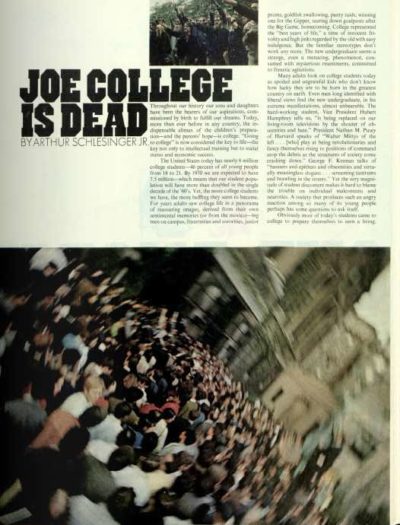
For the moment they are determined, in the words of the student orator at the Notre Dame commencement this year, not to be satisfied to “play the success game.” More college graduates every year embark on careers of public and community service. The acquisitive life of business holds less and less appeal. Yet one can hardly doubt that a good many — perhaps most — of these defiant young people will be absorbed by the System and end living worthy lives as advertising men or insurance salesmen. Hal Draper, an old radical musing on the 800 sit-inners arrested at Berkeley at the height of the Free Speech Movement, wrote, “Ten years from now, most of them will be rising in the world and in income, living in the suburbs from Terra Linda to Atherton, raising two or three babies, voting Democratic, and wondering what on earth they were doing in Sproul Hall — trying to remember, and failing.”
One must hope, for the sake of the country, that some of this fascinating generation do remember — not the angry and senseless things they may have done, but the generous hopes that prompted them to act for a better life. But who can say? Certainly not their elders. Yet the attempt at understanding may even be a useful exercise for the older generation. I discovered this in talking to students for the purposes of this piece. And I treasure a note from one who patiently cooperated. “Even as I distrust anybody of the older generation who tries to write about the younger,” the letter said, “I think it will be interesting to see how you figure it out.”
This article is featured in the July/August 2017 issue of The Saturday Evening Post. Subscribe to the magazine for more art, inspiring stories, fiction, humor, and features from our archives.
Love and Haight: The 50th Anniversary of the Summer of Love
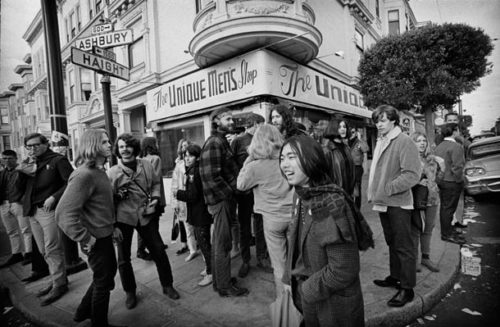
How best to sum up an acid-inflected, flower-powered, whirligig of a long-ago summer in San Francisco? How to understand the lasting impact of that summer, which took root in a full-on Age of Aquarius neighborhood and blossomed into a counterculture that splattered across the planet?
Perhaps it’s fitting to begin by describing its final day.
On October 6, 1967 — exactly one year after California lawmakers voted to ban the drug LSD — several hundred young bohemians gathered in the City by the Bay for what had been advertised as “The Death of the Hippie” funeral. Surviving film footage depicts a surprisingly carnival-like atmosphere. There was dancing in the streets. Someone played “Taps.” Sullen pallbearers carried aloft a large coffin that bore a single inscription: “Hippie, Son of Media.”
And that, ladies and gents, is how — officially and weirdly — the so-called Summer of Love concluded. Groovy.
The woman who organized the mock funeral, Mary Kasper, explained that following a season of merriment, music, confusion, and ultimately chaos in the streets of her city’s Haight-Ashbury district, “we wanted to signal that this was the end of it … don’t come here because it’s over and done with.”
Where once The Haight was iridescent with tie-dyed fabrics, colorful blooms, psychedelic storefronts, and a heady pharmaceutical culture, it had become, by October of ’67, a gritty tourist attraction. Worse, it had devolved into a magnet for thieves who’d descended from all around to prey on the vulnerable longhairs who had overstayed their welcome.
The Summer of Love, as initially conceived, was a brilliant marketing scheme. It was intended from the outset to be a convulsion of music, sex, and radical nonconformism. Come to The Haight to “turn on, tune in, drop out,” as Timothy Leary, the high priest of West Coast psychedelia, often exhorted his acolytes.
So, you might fairly ask, was the allure for young Californians the easy access to mind-altering drugs and sex?
Or the throbbing psychedelic music?
Or was it the gathering of the district’s anti-Vietnam War activists?
Yes.
Against the backdrop of a country in turmoil, here would be an aphrodisiacal admixture that some 100,000 people would find too tempting to pass up.
The whole thing sprang to life easily enough in the vibrant tapestry of The Haight, but by the time of the symbolic Hippie Funeral, the Summer’s mixed-up, mixed-media message had wafted across America and far beyond. The hippieverse had metastasized into a veritable, if not universally embraced, worldwide phenomenon.
From New York to London to parts of Asia, the hippie lifestyle was observed by onlookers with a combination of amusement and condemnation. It was a thing of kaleidoscopic beauty, to be sure, but some also thought it was a thing reeking of despair.
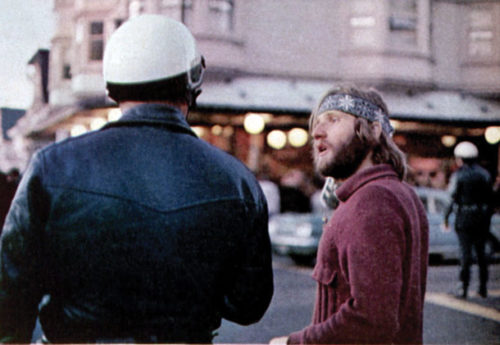
Ted Streshinsky, © SEPS
Today, 50 summers on, the questions remain: “What the hell was that all about? Was it, like, too far-out, bro?”
Those were the first questions I put to Dan Lewis, a Northwestern University social-policy professor and proud former hippie. Lewis will oversee the school’s Summer of Love Conference, taking place this July in San Francisco. “Over the years, I’ve been trying to make sense of that period,” Lewis told me when we talked. “There have been all these snarky, nasty, make-fun-of-kids-who-were-stoned people,” he said with an undisguised tone of contempt.
No matter what you may think of the Summer of Love, said Lewis, who runs Northwestern’s Center for Civic Engagement, what happened during that brief season has had a lingering influence on our way of life. For example, it led to the development of Silicon Valley.
Excuse me? You heard that right. According to Professor Lewis, some of the research (not his) that will be presented at the conference will trace “a lot of early thinking about information and communal groups and how that evolved into the Whole Earth Catalog, and then the internet, and then into cyberculture and eventually Silicon Valley.” The hippies are to blame for our smartphones! Well, sort of. And for the record, Lewis swears he no longer drops acid.
Actually, without too much of a stretch, you can make a pretty credible case for the argument: The deployment of social media on a global scale, pioneered by Facebook, was foreshadowed by what happened in 1967 at the intersection of Haight and Ashbury streets, where once stood the funky Unique Men’s Shop.
When I asked around among people who were there at the time — all of whom boasted that they still retain their hippie ideals, if not the iconic wardrobes — the underlying theme of that summer was not free love or LSD or rebellion against the distant war as expressed in the music. It was, fundamentally, a simple, sweet sense of community.
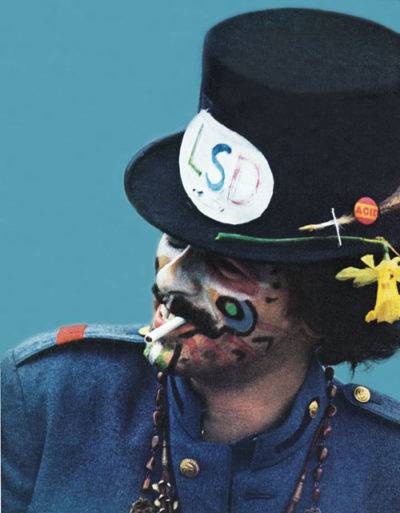
Ted Streshinsky, © SEPS
Among the astonishing catalogue of memorable songs that marked the summer of ’67 (“Good Vibrations,” “Like a Rolling Stone,” “White Rabbit,” “Bad Moon Rising,” “Light My Fire,” and “Sgt. Pepper’s Lonely Hearts Club Band” are but a sample), I was told over and over again that it was the Youngbloods’ “Get Together” that most perfectly captured the spirit of The Haight:
Come on people now,
Smile on your brother,
Everybody get together,
Try to love one another right now
Consider: It may have taken a while, but it was left to Mark Zuckerberg — not yet born in ’67 — to figure out how to connect latter-day hippies — and practically all other living persons — into a true worldwide community where everyone could in fact “get together.” Facebook, one might contend, is the natural evolutionary product of what the Youngbloods and their fans started.
In part because the hallucinogens raised consciousness (though not always mental acuity), hippies left us other gifts besides their remarkable music. The notion of recycling, for example. Scott Guberman, who plays in a Bay Area band with Phil Lesh of The Grateful Dead, told me that “the idea of recycling garbage came from the Summer of Love. The hippies were always concerned about sustainable living.” The whole organic movement, too, according to Guberman. But wait, there’s more. Credit the hippies for yogurt’s success in America because, Guberman told me, they “popularized” the treat.
It’s somewhat easier to link the lifestyle of the hippies to medical research now under way to use hallucinogens to help people quit smoking, break free of addictions, overcome depression, and more. For a long time, as a backlash to the recreational uses of these drugs, it was very difficult to get access to them for such research, but in recent years, that’s been changing. According to The New York Times, for example, such reputable institutions as New York University and Johns Hopkins University are studying the potential of psilocybin, the active ingredient in psychedelic mushrooms, to help terminal cancer patients face up to and accept their mortality.
If, in 1967, hippies “perceived these illegal drugs as a sacrament which was taken to achieve spiritual enlightenment,” as William Schnabel wrote in his book Summer of Love and Haight, they could never have imagined how legalized forms of these same substances would one day be sought by thousands of ailing patients. The apothecary that was The Haight helped give birth to these important scientific breakthroughs.
It also, unfortunately, led to serious issues with abuse of opioids. Sheila Weller, who has written extensively about the Summer of Love in Vanity Fair, said to me in a text message that “the mindset has endured a lot. … Taking drugs became hip, and the kids who could rebound and go back to their lives and their educations were the middle- and upper-class kids. The lower-class kids have spawned a second or third generation of opioid addicts.”
Lost in all of this is a small but telling irony. A free clinic that opened in The Haight in 1967 — it was designed to help heroin addicts — has recently been absorbed into a multimillion-dollar medical conglomerate named (wait for it) HealthRIGHT 360. Very corporate.
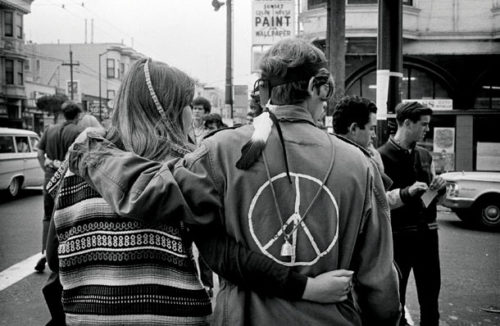
Jim Marshall Photography LLC
In many ways, the ’60s was a pivotal decade in American history — let’s just stipulate to that point and move on — but 1967 was the year of ultimate highs (pun intended). The celebrating and the innovating were likely connected, less by networking than by LSD and the Panama Gold grass, which could be easily had at the “happenings” and “Be-ins” in the shadow of the Golden Gate Bridge.
“All the creativity, the experimentation, the music — hell, ’67 was when we saw the rise of FM free-form radio and its influence,” Neal Mirsky, a longtime rock-radio program director, told me when we sat down to discuss the era. “It’s the first time we even looked at popular music as art. It was just such a transformational time in a lot of ways.”
The Haight, not surprisingly, was a sort of ground zero for all that. Writing not long ago about a concert that occurred one night in the neighborhood’s famed Fillmore Auditorium, San Francisco Chronicle critic Joel Selvin observed, “Everybody who found their way there knew how wonderful the whole thing was and immediately embraced everybody else as fellow members of a special secret society.”
Vivian Murray, who was a high school kid hanging in The Haight during the summer of ’67, remembers that, for her crowd (and presumably Janis Joplin, who briefly lived in the same apartment building), the Summer of Love was driven not so much by utopian ideals but rather by an inchoate urgency to break away from The Man. In essence, to join that special secret society. “It was just our way of gaining freedom. The music scene had a huge effect. We’d escape into that.”
Alas, Murray, who went on to work a series of jobs, including in property management, doesn’t think the spirit of that summer will ever be resurrected. “We were into peace and love. Today’s kids are into video games: action, violence!”
In an effort to hold on to those memories, Murray maintains a Summer of Love shrine in her Washington State home — a room decorated with period furnishings and art. “And I still have my hippie beads,” she told me proudly. Old hippies die hard.
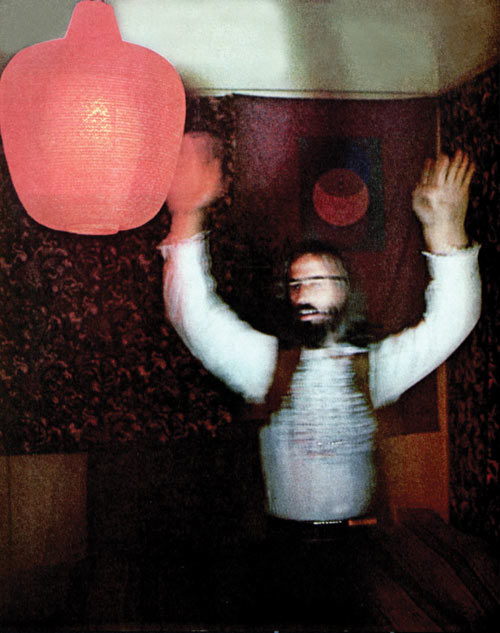
Ted Streshinsky, © SEPS
Witness Joe Tate, who was lead guitarist in Salvation, a psychedelic rock band that performed around San Francisco in the ’60s. Tate, who today continues to dress “like an unkempt hippie,” currently lives north of the city, in Sausalito. He boasted, “I still feel the same way about everything. I didn’t turn into a conservative. I see injustices every day.”
“Any chance of a hippie resurgence someday?” I asked. Unlike Vivian Murray, Tate is decidedly optimistic. “It could happen,” he said. Turns out he’s one among probably many thousands who’d welcome a hippie redux. When a British-based group organized for the purpose of celebrating the Summer of Love’s 50th anniversary — there are scores of such groups, thanks to the internet — it posted all its plans. On Facebook, of course. The final agenda item was an immodest throwback to 1967: “Save the world.”
Neato.
Cable Neuhaus writes about popular culture for the Post and other publications.
This article is featured in the July/August 2017 issue of The Saturday Evening Post. Subscribe to the magazine for more art, inspiring stories, fiction, humor, and features from our archives.
Movies for the Rest of Us with Bill Newcott: The Exception
Award-winning film critic and writer Bill Newcott has been covering Hollywood for more than 40 years. He is the creator of AARP’s Movies For Grownups franchise and the movie critic for The Saturday Evening Post.
Saturday Evening Post movie critic Bill Newcott reviews The Exception with Christopher Plummer, as well as new DVD and Blu-ray releases The Zookeepers Wife, This Beautiful Fantastic, and Wilson.
Listen to all of Bill’s podcasts.
The Querulous Nightingale
I arrived in Washington the same day that James Forrestal went out the window.
My first visit to the capital would have been otherwise forgettable. Union Station was less crowded on a Sunday morning than I’d ever found a stateside train station. Never a churchgoing man myself, I still felt a nostalgia for the chiming bells I periodically passed on the way from the train to the Mayflower Hotel.
They told me I’d been abroad too long.
“Welcome to the Mayflower. How may I help you?” the old man behind the desk greeted me.
“Douglas, room for one.” As he searched the reservation list with his finger, I took a moment to examine the lobby’s chandelier and the reliefs that surrounded it, the carved figures emerging a few inches from the wall.
“Here it is. Douglas. Room’s paid for two weeks; if you plan to stay longer, let us know beforehand. We have a few months until the busy season, so you should be fine.”
I nodded as he rang the bell and produced a bellhop not much younger than me. I could tell from the way his left arm hung limp that he’d seen combat; only a field medic would have both been able to save the arm and lacked enough time to set it properly.
“Take your bags, sir?”
I held up the sole bag I carried. “I’ll bring this up myself.”
“Then right this way, sir.” The bellhop had a slight hitch in his step, which, combined with the arm, reminded me of a production of Richard III I’d seen before the war.
“Mind if I smoke?” he asked.
“I’ll join you.” I intended to light his cigarette before my own, but he produced a match and struck it with his good hand before I could remove my matchbook from my suit pocket. He managed the elevator with similar dexterity but must have noticed my glancing at his arm.
“Best years of our lives, right?” He smiled and took another puff. “Got this from one of Hirohito’s snipers on Tarawa in ’43. They had to load us on a raft and float us out to a ship for treatment. Took long enough that the bullet moved around and there was nerve damage.”
“You get the guy who did it?”
“Him and two of his sidekicks.”
“Paid back with interest. Well done.”
“You look like you served.”
I nodded, but took a long drag on my Lucky rather than divulge any more information. When we got to my floor, I told the bellhop I would take myself the rest of the way. He handed me a copper key, and I passed him a dollar, making eye contact and shaking his hand firmly as I did so.
The room provided more space than I would ever need, with a bed thrice the size of any of the spartan arrangements to which I’d grown accustomed, and a fabric armchair like the one my father sat in whenever he would listen to his serials.
I threw my suitcoat and hat on the oak writing desk and took off my shoes, which had given me a small but painful blister on my right heel. On the nightstand sat a bottle of Kentucky bourbon, serving as a paperweight for the brown-paper envelope with Welcome Home scrawled on it by an anonymous woman’s pen. There wasn’t much chance of finding a bar open on Sunday.
Out of habit, I checked the bourbon to make sure the wax seal was unbroken before pouring myself a glass. The oaky flavor met my tongue like a reunited friend, but the stuffy room had left the bottle too warm. In my stocking feet, I took the ice bucket down the hall to fill it.
Though the rooms on both sides of mine seemed empty, as promised, I heard low voices coming from the next room down. Just two French-Canadian women discussing lunch plans; nothing to worry about. I found the ice, then returned to my chambers to pour myself a drink.
From the window, I had my first view of the White House. It looked smaller than it had always seemed in The March of Time, but what struck me was its condition. Time away had made my homeland feel prefabricated, as if I were looking at a sanitized replica of the very ruins in Thessaly or Epirus that I’d played a small role in keeping part of the free world.
At that moment, Truman was probably taking some important meeting inside those sandstone walls, Louis Johnson was still settling into his new job, and, I would soon learn, his predecessor’s broken body was being examined somewhere in Bethesda.
Monday arrived later for me than it should have, my internal clock having yet to reset and my memories of the night before a haze of bourbon and the contents of the package left for me.
The hotel shower with its cleansing force felt like a luxury, and even the commode provided comfort I hadn’t experienced in some time, though this had more to do with the quiet and solitude than the facilities. When I finished toweling myself, I found a sheet of paper had been slipped under the door, telling me the time and place of my evening appointment. I checked the hallway, but whoever delivered it had already gone.
The city was busier, with men in suits on their way to work, a pattern into which my small bag and I blended easily. The note had given me several hours to kill, and I thought the guise of a tourist was that least likely to prompt notice of an unattached man free on a workday. I carried my camera around my neck, and made a show of taking a panorama of images — the Washington Monument, the Lincoln Memorial, the Capitol dome in the distance — all the while surveying the evening’s meeting place and taking mental notes. I knew the value of understanding one’s surroundings.
Having already thrown the last of my drachma in a trash can far from the hotel, and sure nobody was close enough to see, I took the old identification cards I carried and wrapped them around my next Lucky. As the matchhead burned them away, their ashes spread over the reflecting pool like tiny birds on the wing.
I took supper in a small diner near the Old Ebbitt, choosing the stool farthest from the door, at the end of a long and nearly empty counter. After ordering, I purchased a The Evening Star from the rack up front, and opened to the Clifford Berryman cartoon while sampling the too-thick coffee.
Flipping through the afternoon paper was how I first heard the news about the old warhorse’s plunge out the window of a hospital few knew had become his home. Of course, I’d heard rumors about his mental state and his paranoia, as everyone in our line of work had, but never knew how much of that to believe.
“Put ’em in a box, tie ’em with a ribbon, and throw ’em in the deep blue sea,” the waitress said as she refilled my coffee.
“I’m sorry?”
“That’s the song,” she said, indicating the Wurlitzer in the corner. “You looked like you were trying to figure out what it was. It’s Doris Day.”
“Thank you. I’m afraid I don’t know much about music.” I returned to my paper, looking for more clues about the Forrestal story as I dipped my toast in the mix of runny eggs and burnt potatoes the waitress had brought over. I could feel her eyes on me while I read, but kept my head down to avoid any unneeded conversation.
While paying my bill, I considered the turning desert display next to the register, and opted for two pieces of fresh Turkish delight and a small block of halva to take back to my hotel.
“Who’s that man in the paper you keep looking at?” the waitress asked as she counted my change. “Somebody important?”
“Paper says his name was James Forrestal,” I said, feigning ignorance. “He was the first secretary of defense. He just killed himself.”
“Sounds like you don’t know much about government either.” It could have sounded mean, but she smiled when she said it, showing off. “Henry Knox had that job for George Washington.”
“Knox was the first secretary of war,” I said. “This man was the first secretary of defense.”
“Sounds like the same job to me. What’s the difference?”
“The difference is all the difference.”
With several hours remaining before my scheduled rendezvous, I returned to the Mayflower to shower and rest. I nodded a greeting to the bellhop, but bypassed the elevator to take the stairs. I again checked the doors surrounding mine for noise and, finding none, let myself in.
Closing the door, I did not expect to see my room already occupied.
The man sitting in the desk chair wore sunglasses, and his left leg jutted out at an unnatural angle. Though I pulled my gun from my suit’s inner pocket, his was already aimed directly at the doorway where I stood. The older man perched on the bed rose when I entered, and smiled.
“Urge him with truth to frame his fair replies,” he said, lighting a cigarette.
“And sure he will, for wisdom never lies,” I responded. The man with the weapon put his away, and I followed suit. “What are you doing here?”
“We moved your debrief to a more secure location.”
After I first saw the gun, I thought of the whispers about former operatives being eliminated, and kept my guard. “Can I smoke?” I asked, waiting for a nod before taking out my Luckys and lighting one.
“Now, we’ve reviewed your file, and are familiar with your work for the agency,” the older man said. “As you know, we’re not technically supposed to operate on American soil, so everything we say here stays between us.”
“Understood. I —”
“We want to get to know you a bit before handing out any new assignments,” the other interrupted. “To do that, we want to get more familiar with what led you to the agency, why you wanted the job, why you’re a fit. Most men with your background went the career-military route after the war, but not you.” He named the most recent assignments in my file, as if I were unfamiliar with them, feigning admiration while I smoked and nodded to show I was paying attention.
Eventually, they gave me a chance to explain how I’d watched the same war films most men my age had, and eagerly joined the war only to find the reality of combat a less glorious enterprise. I detailed how, both philosophically and tactically, I preferred eliminating individual targets who had earned it rather than dozens of ordinary men whose only mistake was being born on the wrong soil.
I liked to think of myself as a precision instrument, and my experience confirmed that impression.
The older man kept his questions informational, while the one with the wonky leg peppered me with confrontational queries: “How did you feel about keeping the world safe for democracy by putting a king in charge?” “What would you have done if Wallace won last fall?” “How do we know so much time talking to the DSE didn’t turn you a little pink?”
I answered every question, with cold but professional precision. Smokers were always easier to read; whatever disguises their faces formed when speaking had a tendency to relent slightly while they focused on their habit. I insisted on asking a few of my own questions, about the possible next stations, how our work had been perceived on the homefront, if these men had heard anything about any of my men who had already come home. Both insisted they either didn’t know or couldn’t tell me any of those things.
Then I settled on a question I’d been thinking about for most of the day.
“Last words have always fascinated me,” I said. “Since you know the password, you must be in position to know. What were Forrestal’s last words?” Neither answered. “Surely, if it were a suicide, he left a note; and surely you must know what it said. Unless you’re not who you say you are.”
The older man fielded this one. “He was copying a translation of a Sophocles play, and left off at ‘No quiet murmur like the tremulous wail, of the lone bird, the querulous nightingale.’ One of the experts from Annapolis said it’s about suicide.”
“I know the play. It’s about the suicide of Ajax, after he goes mad, butchering and torturing sheep and cattle.”
“That makes sense,” the older man said. “Forrestal went mad almost as soon as he was fired. It was only a matter of time.”
I thought about what he said for a few minutes, then asked permission to pour myself a drink from the bourbon bottle. I offered a beverage to each of my interviewers, who agreed only after they saw me swallow my own serving.
The following afternoon, I sat with my sole bag outside Union Station, waiting for the California-bound train I planned to inconspicuously exit at one of its refueling stops.
Smoking the last of my cigarettes, I thought about why last words had always mattered to me. I’d grown to dislike the kind of war movies I grew up watching. They had no realism, and offered only two ways to die. Men were shot and fell to the ground like pieces of wood, dead but clean, or they received a slow death that let them deliver their final thoughts, urgently and masterfully, then fall silent the instant they finished imparting their wisdom.
In my war experience, nobody knew when their last moment was coming. Usually, soldiers’ last words were screams of pains or vain calls for their mothers.
Despite the interviewers’ assumptions, my post-war activities for the agency hadn’t turned me pink. Only angry.
I was grateful to my contact for the file detailing how the other members of my team had been murdered within a few days of their own Washington debriefs, and warning me about my visitors — had they pantomimed grief for my compatriots instead of ignorance, I might not have deciphered their intentions. Though I had never admired Forrestal, who always seemed extreme and obsessed, I saw no reason for what happened to him and wanted to gauge what my would-be executioners thought. Whether he was killed directly, or driven to ending his own life, didn’t ultimately matter.
The bourbon had proven as useful as the file, enticing enough that the pair closely watched me drinking mine, without noticing my hand dropping the powder in the bottle. I’d left them both in the closet of one of the empty rooms next to mine, wondering if anyone would find them before the hotel’s busy season.
I took out my camera and shot one last image of the view down Massachusetts Avenue, while I sat on the station’s steps and finished the last of the Turkish delight, the mint gel cooling the tobacco flavor in my throat.
News of the Week: Batman, Books Overdue, and Beatles from Best to Worst
RIP Adam West, Glenne Headly, and A.R. Gurney
Adam West will always be the best Batman to me, partly because of nostalgia and partly because I think many of the big-screen movies are too dark and underwhelming. In addition to that iconic role on the 1966–68 ABC series, West appeared in many other TV shows, including The Detectives and a long-running role as Mayor West on Family Guy. West died last Friday at the age of 88.
Here’s a terrific story from the May 7, 1966, Saturday Evening Post that examines the phenomenon surrounding Batman.
West had a home in Ketchum, Idaho, and here’s what it said in the town’s phone book:
https://twitter.com/svskier1/status/873615007128338432
Glenne Headly was that actress you probably couldn’t name off the top of your head but you remember from many movies, including Dick Tracy, Mr. Holland’s Opus, Dirty Rotten Scoundrels, and many others. She was also in TV shows like ER and Lonesome Dove and was filming the new Hulu show Future Man. She also died last Friday, at the age of 62.
A.R. Gurney was an acclaimed playwright best known for his plays “Love Letters,” which has been performed thousands of times. He also wrote “The Cocktail Hour,” “The Dining Room,” “The Middle Ages,” and “Who Killed Richard Cory?,” among other plays. He died Tuesday at the age of 86.
Must Be a Really Great Book
I hate to admit this (so much that I hope you just skip this paragraph and scroll down a bit), but I haven’t been to my local library in almost 20 years. With the internet and my spending way too much money on books, I find no need to go. But that doesn’t mean I don’t support them, and it doesn’t mean I don’t think other people should go. Support your local library!
I do remember as a kid being really embarrassed when I had an overdue book. I’d hate going up to the librarian and having her look at the back of the book and see it was a day or two or seven overdue, and I’d have to pay whatever the fine was (a nickel a day maybe?). I thought of that after reading this story about a book that was returned to the Noah Webster Library in West Hartford, Connecticut. Usually, an overdue book being returned to a library wouldn’t make the news, but this book was supposed to be returned by September 29, 1965.
That’s not a typo. It was supposed to be back at the library 52 years ago. At least the borrower enclosed a note of apology.
Flags
My favorite story of the week concerns 11-year-old Preston Sharp of Redding, California, who was upset that not all of the veterans buried at his grandfather’s cemetery had their tombstones decorated with a flag and decided to do something about it:
Every Single Beatles Song, Ranked
I’m no longer a fan of best and worst lists. They used to be fun, back when not everyone was doing them, but so many publications and sites do them now that they’re basically meaningless. I mean, how many “Best Sci-Fi Movies of All Time” or “Best Sitcoms of All Time” lists do we need?
But if a list is extensive enough, they inadvertently become a one-stop history lesson for the subject, like this list from Bill Wyman that ranks all 213 Beatles songs. All lists are ripe for arguments and discussion, and this one is no exception. It’s sort of silly to think that such a list could be 100 percent accurate (is there really a difference between number 77 and number 89?), but it does show how many fantastic songs John, Paul, George, and Ringo recorded.
I have to say that even though I don’t like lists, I’m happy to see “Here, There, and Everywhere” in the top ten. What a great song.
The Formosa Is Back
If you’ve seen L.A. Confidential or Swingers, you’ve seen the Formosa Cafe in Los Angeles. Because it was located near the studios, it was a favorite hangout of many celebrities, from Frank Sinatra, Dean Martin, and Lana Turner to Brad Pitt, Jodie Foster, and Johnny Depp. It was set for demolition in 1991, but public outcry helped to preserve it. Several years ago, it was gutted and remodeled, but people hated that too, so it was rebuilt to look a lot like the original. Now it’s under new ownership and, according to Los Angeles Magazine, it’s going to reopen with all of its vintage charms intact. The reopening is scheduled for summer 2018.
This is one of the historic places I’d love to visit. Some people want to see Hoover Dam, I want to go to a bar in L.A.
I Bet Some of These Stars Hung Out There Too
Speaking of the golden age of Hollywood, the Post has a new special edition with the very same title. The Golden Age of Hollywood is a collection of great articles on people like Marilyn Monroe, Debbie Reynolds, Bogie and Bacall, John Wayne, Charlie Chaplin, Judy Garland, Cary Grant, Marlon Brando, and many other classic film stars. Here’s how to order.
This Week in History
Warren Harding Becomes First President on the Radio (June 14, 1922)
The 29th president spoke at a memorial for “Star-Spangled Banner” poet Francis Scott Key in Baltimore.
John Bartlett Born (June 16, 1820)
The first edition of Bartlett’s Familiar Quotations was privately published in 1855 and is now in its 18th edition.
This Week in Saturday Evening Post History: “Icing the Wedding Cake” (June 16, 1945)
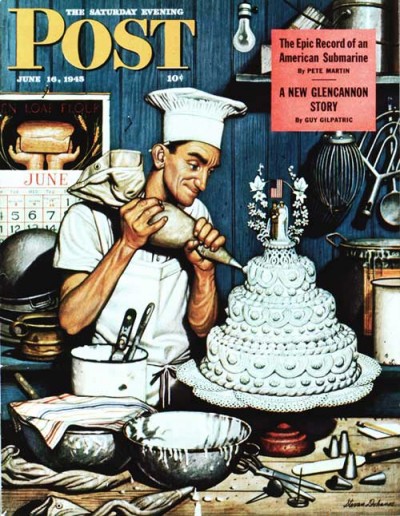
Stevan Dohanos
This is a great cover by Stevan Dohanos, filled with lots of little details that make it feel realistic. I love the calendar in the background. I don’t know if there was an actual calendar in the room that looked like that when Dohanos painted the picture, but a food-centered calendar, one with a loaf of bread as the picture for the month of June, looks like something a cook would have on his wall.
Today Is National Fudge Day
Here are three recipes for various types of fudge — Peanut Butter Fudge, Walnut Pumpkin Fudge, and Gimme S’More Low-Fat Fudge, which replaces a lot of the fat and calories via low-fat semisweet chocolate chips and graham crackers.
But you can pig out on the first two recipes if you want because tomorrow happens to be Eat All Your Veggies Day.
Next Week’s Holidays and Events
Father’s Day (June 18)
After dad opens up the ugly tie you bought him and you make him breakfast in bed, read him this poem from Charles Osgood titled “Father of the Year.”
Juneteenth (June 19)
As the official site says, Juneteenth is the oldest known celebration commemorating the end of slavery. It became a state holiday in Texas in 1980 and its nationwide popularity is growing every year.
First Day of Summer (June 21)
Ah, summer. Hot days, the beach, people in flip-flops, sunlight until almost 9 p.m. I hate it. To help get through the next three months, here’s a classic story Ray Bradbury wrote for the Post titled “Summer in the Air,” tips on how to keep your pets safe from heat stroke and injuries, and here’s a great piece by Jeff Nilsson on how air conditioning went from being a luxury to a necessity. I haven’t had air conditioning in 26 years.
A Father Remembered: The Acting Coach
Theater was my father’s religion, and Shakespeare’s works were his Bible. Using Hamlet or Othello or King Lear as a moral compass, Dad set me up with some precise ideas about how a person should behave in the world.
As a young man, my father studied at the Goodman Theatre in Chicago. He came to New York at the height of the Depression, but within months he landed parts in daytime radio serials such as Myrt and Marge, Valiant Lady, and The Goldbergs. He was sometimes doing two or three live performances in a day, zipping across town from one studio to the next in taxis.
His dream was to perform on Broadway, and he would brim with emotion as he described the great stage actors he’d seen, such as the Lunts and a young Olivier. As for his radio work, that was just something he had to do to pay the bills.
By the time I was born, he had exited show business for a more stable career, but, as far as we kids knew, that was just a technicality. He would always be an actor at heart. Where other dads might sing in the shower, ours would recite from Hamlet. “What is Hecuba to him, or he to Hecuba, that he should weep for her?” he would declaim in his stage voice — big enough to carry to the cheap seats, but in this case echoing through our New York apartment and, if the bathroom window was open, into the courtyard as well. He was bigger than life.
At a young age, I decided that I, too, would become an actor. My first big performance was in a school play. Our fifth-grade class had spent the whole semester studying the ancient Greeks. We had read young-adult versions of The Iliad and The Odyssey, and now we were performing an adaptation of an Aristophanes play, in which a farmer travels to heaven astride a giant dung beetle to discuss the follies of war with, well, you know, the big guy, Zeus. I was the leader of the chorus, and one day during rehearsal I slipped and fell. Amazingly, this got a big laugh.
We performed the play for the entire school — parents, too. I mugged my way through my scenes and, for my big finale, I upended myself spectacularly to roars of laughter. I was hilarious!
Mom came backstage to give me a hug, but Dad had left the theater early. It wasn’t until I got home that I had any inkling there was a problem. Still aglow from my smashing success, I rushed into the living room, only to find him seated in his chair, wearing his reading glasses and holding a large volume on his lap. He didn’t look up when I came in. A frown creased his forehead.
“Sit down,” he ordered, beckoning me to a second chair he had pulled up beside him. Seems I had violated just about every code of conduct in the actor’s book, from scene stealing to shameless overacting. He opened up The Complete Works of Shakespeare and turned to Hamlet’s advice to the players, Shakespeare’s master class on the actor’s craft.
He began reading: “Speak the speech, I pray you, as I pronounced it to you, trippingly on the tongue. … O, it offends me to the soul to hear a robustious periwig-pated fellow tear a passion to tatters. … I would have such a fellow whipped.”
This, my friends, is the short version. The soliloquy actually goes on a bit. He read me the whole thing. Then he had me read it — the equivalent in our house of being taken to the woodshed. Finally he let me go.
I was deflated, but it was a lesson that would stick with me, and, as I would realize in later years, Shakespeare’s words apply not just to the stage, but to life. In short: Be funny, but don’t be a clown; be smart, but don’t be a smart aleck.
I can’t say I’ve always followed this wise counsel, but when I feel the urge to show off, Hamlet’s advice to the players is always right there on my bookshelf.
Steven Slon is the Post’s editorial director. Follow him on Twitter.
This article is featured in the May/June 2017 issue of The Saturday Evening Post. Subscribe to the magazine for more art, inspiring stories, fiction, humor, and features from our archives.
Photo Gallery: Alyssha Eve Csük Finds Beauty in Decay
For more of Alyssha Eve Csük’s photography, read our profile from the July/August issue.
Alyssha Eve Csük grew up in Bethlehem, Pennsylvania, home of one of the largest steel mills in the world, Bethlehem Steel. Her grandfather worked at the mill for 36 years, until his death. Years later, the ruins of the sleeping giant excited her imagination, and the photographer returned to turn her lens on the abandoned industrial giant that Csük has called “an emerald city of jewels.”
In a brief interview, Csük talked about her work transforming industrial ruins into abstract art.
The Saturday Evening Post: What sparked your interest in the project?
Alyssha Eve Csük: As an artist, I am fascinated by places that embody bygone industry, in particular sites where I can explore the ravages of time. And I am charmed by the industrial era — the design and form components, along with the history and overall more simple way of life.

Courtesy Alyssha Eve Csük

Courtesy Alyssha Eve Csük

Courtesy Alyssha Eve Csük
AEC: During my first days exploring the defunct Bethlehem Steel mill, I was immediately drawn to the colors, the patinas. I found that the erosive effects of the elements transformed the facades of the mill, slate, and scrap into textural canvases. To me these textural surfaces are similar to moss, where colors are more alive and vibrant after a good rain. Often, the shimmering surfaces seemed to whisper at me. I’d see these colorful patinas and find in them what seemed like watercolor or oil portraits.
Courtesy Alyssha Eve Csük

Courtesy Alyssha Eve Csük
Courtesy Alyssha Eve Csük
SEP: How do you discover beauty in decay, restore life to the lifeless?
AEC: Careful study, patience, observation, and a natural instinct for strong design enabled me to capture painterly abstract photographs that lay bare unlikely beauty in unexpected places. The images are all straight photography — no manipulation.

Courtesy Alyssha Eve Csük
Courtesy Alyssha Eve Csük
Courtesy Alyssha Eve Csük
AEC: My photographs embody the Japanese aesthetic concept of Wabi-Sabi — a worldview centered on the acceptance of transience and imperfection — particularly the Sabi part, which means “the bloom of time.” It connotes a natural progression of an extinguished gloss that once sparkled — beauty or serenity that comes with age, when the life of the object and its impermanence are evidenced in its patina and wear.

Courtesy Alyssha Eve Csük
Courtesy Alyssha Eve Csük
Courtesy Alyssha Eve Csük
SEP: What is your next project?
AEC: I will continue to work on a project called Treescapes — trees in the landscape all shot on film with a Linhof 617. And I may be getting access to a NASA launch pad site — I am absolutely fascinated by anything to do with space exploration.

Courtesy Alyssha Eve Csük

Courtesy Alyssha Eve Csük

Courtesy Alyssha Eve Csük

Courtesy Alyssha Eve Csük

Courtesy Alyssha Eve Csük
See more of Csük’s work at csukphotography.com.
Read about Jonathan Waldman’s adventure with Csük as they ventured over the fence to explore the Bethlehem Steel Works in “Rust: Photography Adventures in an Abandoned Steel Mill.” Available online August 8, from the July/August 2017 issue of the Post.
Cover Gallery: Happy Father’s Day!
We’re celebrating dads and everything they teach us.
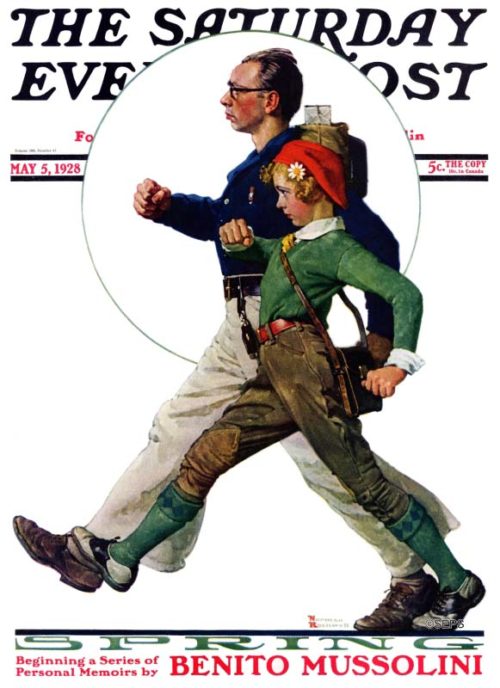
Norman Rockwell
May 5, 1928
This father and daughter duo was painted by the Post’s most famous artist, Norman Rockwell. With their matching strides, these two are ready for their Spring walk.
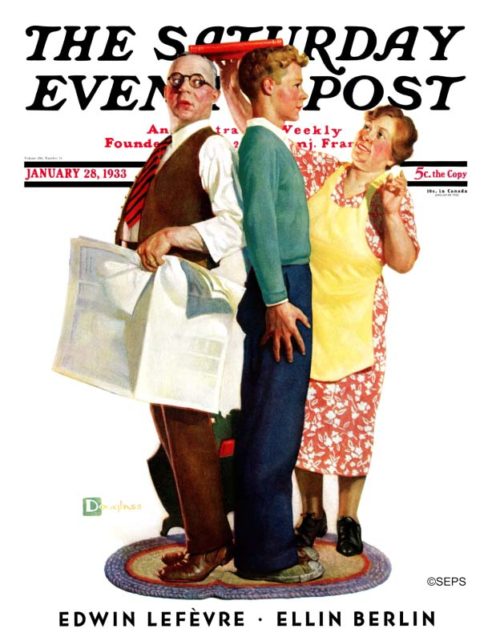
Douglas Crockwell
January 28, 1933
This 1933 cover was done by Post artist Douglas Crockwell. If the name didn’t confuse readers, this cover certainly did. Many people thought it was a Rockwell because of its close attention to detail, like the mother’s patterned dress.
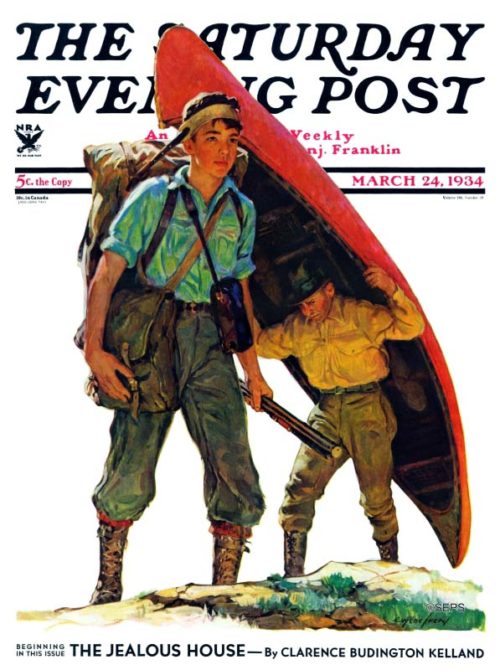
Eugene Iverd
March 24, 1934
This cover was painted by Eugene Iverd. Iverd typically painted children or boys at play, like this father and son ready to go canoeing. He also painted landscapes, which he signed with his birth name, George Erickson.
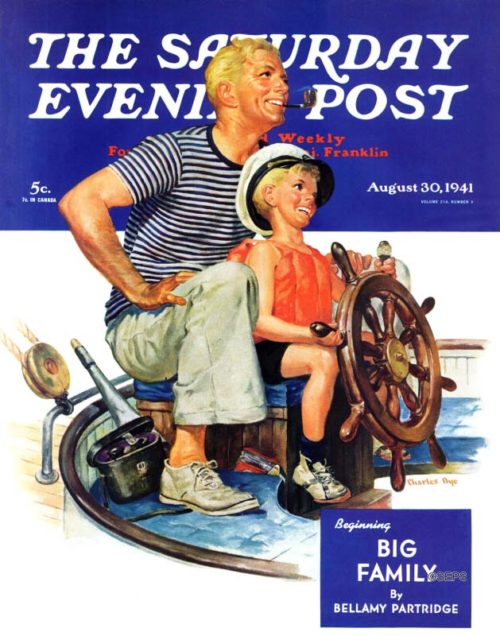
Charles Dye
August 30, 1941
These father and son sailors are the subjects of Charles Dye’s only cover for the Saturday Evening Post.
Fred Ludekens
August 19, 1944
These two ranchers fit in perfectly with Fred Ludekens’ other Post covers. Horses were typically a major theme in his cover art, as well as people hard at work.
Constantin Alajalov
November 2, 1946
“That your baby you’re drawing?” a spectator asked artist Constantin Alajalov. “Yes,” said Alajalov, in a nice mixture of pride and modesty. He sketched another. “That one, too?” the onlooker asked in surprise. “Yes,” said Alajalov, and sketched in a third. The spectator wouldn’t ask about that one, and when the artist began sketching the fourth, the onlooker left.
Amos Sewell
September 17, 1949
Amos Sewell has set this theme for his first Post cover at the Shelter, a refuge for homeless dogs conducted in Jamaica. Long Island, by the S.P.C.A. After Sewell had finished sketching and photographing detailshe found himself thinking awfully hard about one particular dog in the ”for-adoption” pen. But he resolutely pulled himself together and went back home alone-to the four Sewell cats.
Amos Sewell
March 24, 1951
Sewell’s theory about this pleasant scene is that Shorty was adopted, not purchased, his previous home probably having been one of the SPCA’s shelters for homeless dogs. Shorty will hereafter have two homes, the big house where his favorite human beings live, and his own house, where he can retire when he wishes to be quite alone for unhindered rest or meditation.
Richard Sargent
June 4, 1955
While dad bares his lily-white flesh, little does he dream that presently a sun shower will invigorate him.
George Hughes
December 31, 1955
George Hughes painted this pre-New-Year party scene, where even the little one can participate in the celebration.