The wait is over. Wild salmon season kicks off in May, as prized kings and sockeyes make their way into fish markets and restaurants nationwide. Fresh from the icy waters of Alaska, wild Pacific salmon boasts five varietals — king, sockeye, coho, keta, pink — each with a distinctive flavor profile. With its versatility, ease of cooking, and healthy fats, salmon is one of America’s top go-to seafood choices. I buy wild salmon whenever I can, preferring its flavor to the farm-raised kind.
Making great salmon begins at your local fish market or grocery. Use your senses. Fresh fish should never smell fishy — more like the ocean. When buying whole salmon, make sure the eyes are bright, gills red, and skin vibrant and shiny. Look for fillets that are moist, not dried out or discolored, and of even thickness so they cook evenly and consistently.
Overcooking is the most common mistake with fish. Cook salmon until it is still rosy in the center, then let it rest uncovered for 3 minutes. If preparing with skin on, make sure you get it nice and crispy; otherwise, the result is rubbery and inedible.
Poached Salmon with Green and Yellow Bean Salad grew out of a trip to the Hollywood Farmers’ Market, where I couldn’t resist the yellow wax beans and red radishes. My wife, Lindsay, and I love the Grilled Salmon with Orzo, Feta, and Red Wine Vinaigrette as a main-course salad any day of the week and for any occasion.
Poached Salmon with Green and Yellow Bean Salad. Photo by Quentin Bacon
Remove leaves from tarragon; reserve stems. Coarsely chop enough leaves to make 2 teaspoons. Slice 1 lemon into thin rounds. In 12-inch fry pan, combine lemon rounds, tarragon stems, and one-third of shallots and add enough cold water to come two-thirds of way up sides. Cover and bring water to simmer over medium-high heat. Season salmon with salt and pepper to taste. Lay fillets in pan and add hot water if needed to submerge them completely. Cover, reduce heat to low, and cook salmon, without simmering, for about 7 minutes, or until opaque with rosy center. Using slotted spatula, transfer salmon fillets to 4 plates.
Meanwhile, in another 12-inch fry pan, combine beans with ½ cup water. Cover and steam over medium-high heat for about 3 minutes, or until crisp-tender. Uncover and cook for 30 seconds, or until liquid is reduced by half. Remove pan from heat. Add butter, remaining shallots, chopped tarragon, and zest and juice from remaining lemon and toss until butter melts. Season with salt and pepper. Divide beans among the plates. Garnish with radishes and serve.
Make-Ahead: For chilled poached salmon, salmon can be poached 4 hours ahead, cooled, covered, and refrigerated.
Per serving
Calories: 292
Total Fat: 14 g
Saturated Fat: 5 g
Sodium: 165 mg
Carbohydrate: 9 g
Fiber: 3 g
Protein: 32 g
Diabetic Exchanges: 5 meat, 2 fat, 1 vegetable
Grilled Salmon with Orzo, Feta, and Red Wine Vinaigrette. Photo by Quentin Bacon
Grilled Salmon with Orzo, Feta, and Red Wine Vinaigrette
(Makes 4 servings)
1 ½ cups orzo
3 tablespoons red wine vinegar
3 tablespoons finely chopped shallots
2 garlic cloves, finely chopped
⅓ cup extra-virgin olive oil
2 ounces fresh baby spinach (about 3 cups not packed)
1 ½ cups grape tomatoes, halved
½ cup pine nuts, toasted
¼ cup thinly sliced fresh basil leaves
4 5-ounce skinless salmon fillets
Olive oil, for coating fish
1 cup crumbled feta cheese (4 ounces)
2 tablespoons chopped fresh chives, for garnish
Prepare an outdoor grill for medium-high cooking over direct heat.
To make orzo salad: Bring large saucepan of salted water to boil over high heat. Add orzo and cook, stirring often, for about 8 minutes, or until just tender. Drain orzo in sieve and set aside. In medium bowl, whisk vinegar, shallots, and garlic together. Gradually whisk in olive oil. Season to taste with salt and pepper. In large bowl, toss warm orzo, spinach, tomatoes, pine nuts, and basil with vinaigrette. Season to taste with salt and pepper. Set aside at room temperature.
To cook salmon: Coat salmon with olive oil and season with salt and pepper to taste. Oil cooking grate. Place salmon on grill with top-right corner of each fillet facing 2 o’clock position and cook for 4 minutes without moving salmon. (This will help give salmon a good sear of nice grill marks and help it release from grate.) Using thin metal spatula, starting at corner of each fillet nearest you, flip fillets over. Grill for about 2 minutes or until fish is opaque with slightly rosy center when flaked in thickest part with tip of small knife. Remove from grill.
Mound salad in center of large serving platter or four dinner plates. Sprinkle with feta. Top with salmon, sprinkle with chives, and serve.
Make-Ahead: The orzo can be cooked up to 1 day ahead, cooled, covered, and refrigerated.
Per serving
Calories: 615
Total Fat: 38 g
Saturated Fat: 8 g
Sodium: 406 mg
Carbohydrate: 30 g
Fiber: 5 g
Protein: 40 g
Diabetic Exchanges: 1 ½ starch,
1 ½ vegetable, 5 lean meat, and 4 fat
This article is featured in the May/June 2017 issue ofThe Saturday Evening Post.Subscribe to the magazine for more art, inspiring stories, fiction, humor, and features from our archives.
In 1862, the U.S. was embroiled in a Civil War, but there was also an entirely different battle going on in North America, as France fought Mexico at Puebla.
The French emperor, Napoleon III, saw Mexico as an ideal acquisition that would give France a foothold in the western hemisphere. French General Charles Lorencez decided to attack Mexican troops entrenched at Puebla.
It should have been an easy win, as 6,000 French soldiers attacked 2,000 Mexican troops on May 5, 1862. But the French assaults were repeatedly thrown back by the Mexicans, who inflicted heavy losses. The French lost 462 men, the Mexicans just 83.
American newspapers must have assumed what seemed the most likely outcome: That the Mexican government had fled Puebla and the French were advancing on Mexico City.
Not until May 31, 1862, was the Post able to set the record straight with this item under the heading “Mexican Affairs.”
The column from the May 31, 1862, issue of the Post. (Click to Enlarge)
Semi-official advices from sources favorable to Mexico, with dates from the City of Mexico to the 12th, from Jalapa to the 8th, and from Vera Cruz to the 12th inst., received at Washington, show the falsity of much that has been published.
The Constitutional Government has not abandoned the City of Mexico, nor is it likely to do so. The French and Mexicans had a battle at Humbres de Aculzingo, the result of which is not clear.
[The French captured the first line of Mexican defenses, causing the Mexicans to withdrawto Puebla.]
The French claim a victory, but would seem to have lost more men, especially in officers, than the Mexicans. Up to the last dates indeed the French had not occupied Puebla, which is only an easy two days’ march from Humbres.
General Zaragoza, the Mexican General-in-Chief, had defeated Marquez on his way to join the French, and was preparing to fight the French before Puebla. Great preparations were making in the City of Mexico for resistance to the invaders in case Puebla was lost. Gen. Ortega had arrived there with 6,000 volunteers from the state of which he is governor. Forces from other states were rallying to the defence of the capital.
As soon as the French left Soledad and Cordova, both places were occupied by Gen. Llave, the Constitutional Governor of the state of Vera Cruz, within the limits of which they are situated. He had cut off the invading army’s communication with the coast. Gen. Llave was also marching upon Orizaba. Almonte had vainly expected pronunciamentos [public declarations of opposition by troops, usually the preparation for a military coup] in his favor in the interior, in places not under French bayonets.
Mr. Corwin in the treaty which he has negotiated offers a loan from the United States to the Government of [Benito] Juarez of $10,000,000. Mr. Allen, our Consult at Minatitlan, had brought the treaty to Washington.
This item was followed in the next issue with this brief but important notice.
The column from the June 7, 1862, issue of the Post. (Click to Enlarge)
Mexico.
The steamer Orizaba brings news from the city of Mexico, via Acupulco, to the 8th ult. On that day the French army commenced retreating from before Puebla towards Amesa. It appears that there had previously been some fighting.
The following is the dispatch announcing the news to President Juarez:
“Puebla, May 8 — Word was received at the city of Mexico on the 7th p.m. that we have triumphed.
“The French has since commenced retreating. We offered them battle this morning, forming our troops in front of their camp, but they refused to accept our challenge, and have turned their backs to their foolish hardihood and unpardonable credulity.
“Please receive the compliments of General Sara Gasa [Zaragoza] and myself. Yours, forever (signed) Ignacio Migl.”
Americans would have welcomed the news. They dreaded the possibility of France establishing itself in the New World and involving itself in American politics, especially since the French government sympathized with the Confederacy and were ready to exchange military aid for southern cotton.
President Lincoln personally supported Mexico’s struggle for liberty, and he didn’t relish the idea of confronting both the Confederacy and a French colonial force. This probably explained the federal loan of $10 million to Mexico.
In time, that initial victory at Puebla was undone. The French rallied their forces and moved beyond Puebla to occupy Mexico City and install a puppet government. Napoleon III installed Mexico’s first emperor, Maximilian I.
But by 1866, Napoleon III realized he couldn’t suppress the continued Mexican resistance — and, with our Civil War ended, ongoing pressure from the U.S. He withdrew his troops and, within months, Maximilian I was led before a firing squad.
The execution of Maximillian I of Mexico in 1867. (Wikimedia Commons)
It is Mexico’s determination to remain independent, demonstrated to the world in 1862, that is celebrated on Cinco de Mayo.
Art that was created for newspapers and magazines was designed to be seen once or twice and thrown away. But today these pictures have been rediscovered by experts and are enjoying a whole new respectability. Art that was once used to sell life insurance or dishwashing detergent is ending up in art museums long after the products they originally promoted have disappeared.
Such pictures were once dismissed as “too commercial” by the fine art community. As some fine art movements became more self-absorbed and esoteric, they also became less comprehensible or relevant to most people’s lives. The art world began taking a second look at the popular arts, such as magazine illustration, commercial art, and cartooning.
A commercial element in a picture actually helped to keep art tethered to reality. Commercial illustrators could not afford the luxury of self-indulgence. They had to relate to their audience. This meant they were more likely to develop technical skills, employ recognizable images, and value traditional beauty. These qualities may have made them unfashionable in today’s fine art world, but it made their art more meaningful and attractive to the public.
The new critical respect for illustration was undoubtedly helped by the fact that commercial art was beginning to bring high prices at fine art auctions. When a Norman Rockwell cover from The Saturday Evening Postsold at Sotheby’s for $46 million in 2013, fine art critics rubbed their eyes and began to recognize the artistic merit in commercial illustration.
The latest splendid example of this “second look” at commercial illustration is now appearing in a major exhibition at the Delaware Art Museum, where, in its first one-man show in the U.S., the work of English illustrator W. Heath Robinson is on display. The show includes nearly 70 works on loan from the Heath Robinson Museum in London.
Robinson (1872-1944) was a gifted artist with a whimsical sense of humor. His artwork appeared in magazines in the United States and in England, as well as in a series of children’s books and more classical literature. He created advertising art for nearly 100 different corporate clients, ranging from Shredded Wheat and pickle relish to cars and trains. But he was perhaps most popular for his playful cartoons, which earned him a wide and loyal following. The Heath Robinson Museum reports:
Robinson is best known as the creator of weird mechanical devices and strange gadgets, usually held together with knotted string. … In his early drawings, he set out to satirise the pomposity, fussiness and self-importance of ‘experts’. He soon found that over-complicated machinery would serve as a metaphor for the bureaucracy and arcane processes that such people invent. Much of Heath Robinson’s humorous work centres on the human condition, and the weakness and self-importance of man rather than the gadgets and contraptions themselves.
Just like Rube Goldberg’s crazy inventions in the United States, Robinson’s “gadgets and contraptions” were wildly popular with the public in England. Goldberg and Robinson both struck a chord with readers who were still getting adjusted to “the machine age.” Readers loved cartoons that made fun of automation.
But Robinson’s talents went far beyond cartooning. The assortment of lovely pictures on display in Delaware shows the range of Robinson’s gift, from personal watercolors and landscapes, to book illustrations, to cartoons, to mural designs. Regardless of the category in which he worked, his drawings and paintings all demonstrate Robinson’s trademark sense of design and his rare talent for line and composition. They also make clear that Robinson was a perfectionist who did not compromise his high standards because of a deadline or because his work was to appear in a humble venue.
Robinson worked all his life as a landscape painter and recorded scenes from his travels.
Most artists would handle a conventional subject, such as this profile of a woman, in a predictable way. But notice now Robinson has given his subject a special flourish with an imaginative design.
One rarely finds drawings with such charm and grace in today’s fine art scene. Many artists have largely ceased even to care about these factors. But this highly worthwhile show reminds us of their continuing importance and vitality.
After dark on Saturday night one could stand on the first tee of the golf course and see the country club windows as a yellow expanse over a very black and wavy ocean. The waves of this ocean, so to speak, were the heads of many curious caddies, a few of the more ingenious chauffeurs, the golf professional’s deaf sister — and there were usually several stray, diffident waves who might have rolled inside had they so desired. This was the gallery.
The balcony was inside. It consisted of the circle of wicker chairs that lined the wall of the combination clubroom and ballroom. At these Saturday night dances it was largely feminine; a great babel of middle-aged ladies with sharp eyes and icy hearts behind lorgnettes and large bosoms. The main function of the balcony was critical. It occasionally showed grudging admiration, but never approval, for it is well known among ladies over 35 that when the younger set dance in the summer time it is with the very worst intentions in the world, and if they are not bombarded with stony eyes stray couples will dance weird barbaric interludes in the corners, and the more popular, more dangerous girls will sometimes be kissed in the parked limousines of unsuspecting dowagers.
But after all, this critical circle is not close enough to the stage to see the actors’ faces and catch the subtler byplay. It can only frown and lean, ask questions and make satisfactory deductions from its set of postulates, such as the one which states that every young man with a large income leads the life of a hunted partridge. It never really appreciates the drama of the shifting, semi-cruel world of adolescence. No; boxes, orchestra circle, principals and chorus are represented by the medley of faces and voices that sway to the plaintive African rhythm of Dyer’s dance orchestra.
From 16-year-old Otis Ormonde, who has two more years at Hill School, to G. Reece Stoddard, over whose bureau at home hangs a Harvard law diploma; from little Madeleine Hogue, whose hair still feels strange and uncomfortable on top of her head, to Bessie MacRae, who has been the life of the party a little too long — more than ten years — the medley is not only the center of the stage but contains the only people capable of getting an unobstructed view of it.
With a flourish and a bang the music stops. The couples exchange artificial, effortless smiles, facetiously repeat “la-de-da-dadum-dum,” and then the clatter of young feminine voices soars over the burst of clapping.
A few disappointed stags caught in midfloor as they had been about to cut in subsided listlessly back to the walls, because this was not like the riotous Christmas dances. These summer hops were considered just pleasantly warm and exciting, where even the younger marrieds rose and performed ancient waltzes and terrifying fox trots to the tolerant amusement of their younger brothers and sisters.
Warren McIntyre, who casually attended Yale, being one of the unfortunate stags, felt in his dinner coat pocket for a cigarette and strolled out onto the wide, semi-dark veranda, where couples were scattered at tables, filling the lantern-hung night with vague words and hazy laughter. He nodded here and there at the less absorbed and as he passed each couple some half-forgotten fragment of a story played in his mind, for it was not a large city and everyone was Who’s Who to everyone else’s past. There, for example, were Jim Strain and Ethel Demorest, who had been privately engaged for three years. Everyone knew that as soon as Jim managed to hold a job for more than two months she would marry him. Yet how bored they both looked and how wearily Ethel regarded Jim sometimes, as if she wondered why she had trained the vines of her affection on such a wind-shaken poplar.
Warren was 19 and rather pitying with those of his friends who hadn’t gone East to college. But like most boys he bragged tremendously about the girls of his city when he was away from it. There was Genevieve Ormonde, who regularly made the rounds of dances, house parties and football games at Princeton, Yale, Williams and Cornell; there was black-eyed Roberta Dillon, who was quite as famous to her own generation as Hiram Johnson or Ty Cobb; and, of course, there was Marjorie Harvey, who besides having a fairy-like face and a dazzling, bewildering tongue was already justly celebrated for having turned five cart wheels in succession during the last pump-and-slipper dance at New Haven.
Warren, who had grown up across the street from Marjorie, had long been wildly in love with her. Sometimes she seemed to reciprocate his feelings with a faint gratitude, but she had tried him by her infallible test and informed him gravely that she did not love him. Her test was that when she was away from him she forgot him and had affairs with other boys. Warren found this discouraging, especially as Marjorie had been making little trips all summer, and for the first two or three days after each arrival home he saw great heaps of mail on the Harveys’ hall table addressed to her in various masculine handwritings. To make matters worse, all during the month of August she had been visited by her Cousin Bernice from Eau Claire, and it seemed impossible to see her alone. It was always necessary to hunt round and find someone to take care of Bernice. As August waned this was becoming more and more difficult.
Much as Warren loved Marjorie, he had to admit that Cousin Bernice was sorta hopeless. She was pretty, with dark hair and high color, but she was no fun on a party. Every Saturday night he danced a long arduous duty dance with her to please Marjorie, but he had never been anything but bored in her company.
“Warren” — a soft voice at his elbow broke in upon his thoughts, and he turned to see Marjorie, flushed and radiant as usual. She laid a hand on his shoulder and a glow settled almost imperceptibly over him.
“Warren,” she whispered, “do something for me — dance with Bernice. She’s been stuck with little Otis Ormonde for almost an hour.”
Warren’s glow faded.
“Why — sure,” he answered half-heartedly.
“You don’t mind, do you? I’ll see that you don’t get stuck.”
“‘Sall right.”
Marjorie smiled — that smile that was thanks enough.
“You’re an angel, and I’m obliged loads.”
With a sigh the angel glanced round the veranda, but Bernice and Otis were not in sight. He wandered back inside and there in front of the women’s dressing room he found Otis in the center of a group of young men who were convulsed with laughter. Otis was brandishing a piece of timber he had picked up, and discoursing volubly.”
“She’s gone in to fix her hair,” he announced wildly. “I’m waiting to dance another hour with her.”
Their laughter was renewed.
Why don’t some of you cut in?” cried Otis resentfully. “She likes more variety.”
“Why, Otis,” suggested a friend, “you’ve just barely got used to her.”
“Why the two-by-four, Otis?” inquired Warren, smiling.
“The two-by-four? Oh, this? This is a club. When she comes out I’ll hit her on the head and knock her in again.”
Warren collapsed on a settee and howled with glee.
“Never mind, Otis,” he articulated finally. “I’m relieving you this time.”
Otis simulated a sudden fainting attack and handed the stick to Warren.
“If you need it, old man,” he said hoarsely.
No matter how beautiful or brilliant a girl may be, the reputation of not being frequently cut in on makes her position at a dance unfortunate. Perhaps boys prefer her company to that of the butterflies with whom they dance a dozen times an evening, but youth in this jazz-nourished generation is temperamentally restless, and the idea of fox trotting more than one full fox trot with the same girl is distasteful, not to say odious. When it comes to several dances and intermissions between she can be quite sure that a young man, once relieved, will never tread on her wayward toes again.
Warren danced the next full dance with Bernice, and finally, thankful for the intermission, he led her to a table on the veranda. There was a moment’s silence while she did unimpressive things with her fan.
“It’s hotter here than in Eau Claire,” she said.
Warren stifled a sigh and nodded. It might be for all he knew or cared. He wondered idly whether she was a poor conversationalist because she got no attention or got no attention because she was a poor conversationalist.
“You going to be here much longer?” he asked, and then turned rather red. She might suspect his reasons for asking.
“Another week,” she answered, and stared at him as if to lunge at his next remark when it left his lips.
Warren fidgeted. Then with a sudden charitable impulse he decided to try part of his line on her. He turned and looked at her eyes.
“You’ve got an awfully kissable mouth,” he began quietly.
This was a remark that he sometimes made to girls at college proms when they were talking in just such half dark as this. Bernice distinctly jumped. She turned an ungraceful red and became clumsy with her fan. No one had ever made such a remark to her before.
“Fresh!” — the word had slipped out before she realized it, and she bit her lip. Too late she decided to be amused, and offered him a flustered smile.
Warren was annoyed. Though not accustomed to have that remark taken seriously, still it usually provoked a laugh or a paragraph of sentimental banter. And he hated to be called fresh, except in a joking way. His charitable impulse died and he switched the topic.
“Jim Strain and Ethel Demorest sitting out as usual,” he commented.
This was more in Bernice’s line, but a faint regret mingled with her relief as the subject changed. Men did not talk to her about kissable mouths, but she knew that they talked in some such way to other girls.
“Oh, yes,” she said, and laughed. “I hear they’ve been mooning round for years without a red penny. Isn’t it silly?”
Warren’s disgust increased. Jim Strain was a close friend of his brother’s, and anyway he considered it bad form to sneer at people for not having money. But Bernice had had no intention of sneering. She was merely nervous.
II
When Marjorie and Bernice reached home at half after midnight they said good night at the top of the stairs. Though cousins, they were not intimates. As a matter of fact Marjorie had no female intimates — she considered girls stupid. Bernice on the contrary all through this parent-arranged visit had rather longed to exchange those confidences flavored with giggles and tears that she considered an indispensable factor in all feminine intercourse. But in this respect she found Marjorie rather cold; felt somehow the same difficulty in talking to her that she had in talking to men. Marjorie never giggled, was never frightened, seldom embarrassed, and in fact had very few of the qualities which Bernice considered appropriately and blessedly feminine.
As Bernice busied herself with toothbrush and paste this night she wondered for the hundredth time why she never had any attention when she was away from home. That her family were the wealthiest in Eau Claire; that her mother entertained tremendously, gave little dinners for her daughter before all dances and bought her a car of her own to drive round in never occurred to her as factors in her hometown social success. Like most girls she had been brought up on the warm milk prepared by Annie Fellows Johnston and on novels in which the female was beloved because of certain mysterious womanly qualities, always mentioned but never displayed.
Bernice felt a vague pain that she was not at present engaged in being popular. She did not know that had it not been for Marjorie’s campaigning she would have danced the entire evening with one man; but she knew that even in Eau Claire other girls with less position and less pulchritude were given a much bigger rush. She attributed this to something subtly unscrupulous in those girls. It had never worried her, and if it had her mother would have assured her that the other girls cheapened themselves and that men really respected girls like Bernice.
She turned out the light in her bathroom, and on an impulse decided to go in and chat for a moment with her Aunt Josephine, whose light was still on. Her soft slippers bore her noiselessly down the carpeted hall, but hearing voices inside she stopped near the partly opened door. Then she caught her own name, and without any definite intention of eavesdropping lingered — and the thread of the conversation going on inside pierced her consciousness sharply as if it had been drawn through with a needle.
“She’s absolutely hopeless!” It was Marjorie’s voice. “Oh, I know what you’re going to say! So many people have told you how pretty and sweet she is, and how she can cook! What of it? She has a bum time. Men don’t like her.”
“What’s a little cheap popularity?”
Mrs. Harvey sounded annoyed.
“It’s everything when you’re eighteen,” said Marjorie emphatically. “I’ve done my best. I’ve been polite and I’ve made men dance with her, but they just won’t stand being bored. When I think of that gorgeous coloring wasted on such a ninny, and think what Martha Carey could do with it — oh!”
“There’s no courtesy these days.”
Mrs. Harvey’s voice implied that modern situations were too much for her. When she was a girl all young ladies who belonged to nice families had glorious times.
“Well,” said Marjorie, “no girl can permanently bolster up a lame duck visitor, because these days it’s every girl for herself. I’ve even tried to drop her hints about clothes and things, and she’s been furious — given me the funniest looks. She’s sensitive enough to know she’s not getting away with much, but I’ll bet she consoles herself by thinking that she’s very virtuous and that I’m too gay and fickle and will come to a bad end. All unpopular girls think that way. Sour grapes! Sarah Hopkins refers to Genevieve and Roberta and me as gardenia girls! I’ll bet she’d give ten years of her life and her European education to be a gardenia girl and have three or four men in love with her and be cut in on every few feet at dances.”
“It seems to me,” interrupted Mrs. Harvey rather wearily, “that you ought to be able to do something for Bernice. I know she’s not very vivacious.”
Marjorie groaned.
“Vivacious! Good grief! I’ve never heard her say anything to a boy except that it’s hot or the floor’s crowded or that she’s going to school in New York next year. Sometimes she asks them what kind of car they have and tells them the kind she has. Thrilling!”
There was a short silence, and then Mrs. Harvey took up her refrain:
“All I know is that other girls not half so sweet and attractive get partners. Martha Carey, for instance, is stout and loud, and her mother is distinctly common. Roberta Dillon is so thin this year that she looks as though Arizona were the place for her. She’s dancing herself to death.”
“But, mother,” objected Marjorie impatiently, “Martha is cheerful and awfully witty and an awfully slick girl, and Roberta’s a marvelous dancer. She’s been popular for ages!”
Mrs. Harvey yawned.
“I think it’s that crazy Indian blood in Bernice,” continued Marjorie. “Maybe she’s a reversion to type. Indian women all just sat round and never said anything.”
“Go to bed, you silly child,” laughed Mrs. Harvey. “I wouldn’t have told you that if I’d thought you were going to remember it. And I think most of your ideas are perfectly idiotic,” she finished sleepily.
There was another silence, while Marjorie considered whether or not convincing her mother was worth the trouble. People over 40 can seldom be permanently convinced of anything. At 18 our convictions are hills from which we look; at 45 they are caves in which we hide.
Having decided this, Marjorie said good night. When she came out into the hall it was quite empty.
III
While Marjorie was breakfasting late next day Bernice came into the room with a rather formal good morning, sat down opposite, stared intently over and slightly moistened her lips.
“What’s on your mind?” inquired Marjorie, rather puzzled.
Bernice paused before she threw her hand grenade.
“I heard what you said about me to your mother last night.”
Marjorie was startled, but she showed only a faintly heightened color and her voice was quite even when she spoke.
“Where were you?”
“In the hall. I didn’t mean to listen — at first.”
After an involuntary look of contempt Marjorie dropped her eyes and became very interested in balancing a stray corn flake on her finger.
“I guess I’d better go back to Eau Claire — if I’m such a nuisance.” Bernice’s lower lip was trembling violently and she continued on a wavering note: “I’ve tried to be nice, and — and I’ve been first neglected and then insulted. No one ever visited me and got such treatment.”
Marjorie was silent.
“But I’m in the way, I see. I’m a drag on you. Your friends don’t like me.” She paused, and then remembered another one of her grievances. “Of course I was furious last week when you tried to hint to me that that dress was unbecoming. Don’t you think I know how to dress myself?”
“No,” murmured Marjorie less than half aloud.
“What?”
“I didn’t hint anything,” said Marjorie succinctly. “I said, as I remember, that it was better to wear a becoming dress three times straight than to alternate it with two frights.”
“Do you think that was a very nice thing to say?”
“I wasn’t trying to be nice.” Then after a pause: “When do you want to go?”
Bernice drew in her breath sharply.
“Oh!” It was a little half cry.
Marjorie looked up in surprise.
“Didn’t you say you were going?”
“Yes, but — “
“Oh, you were only bluffing!”
They stared at each other across the breakfast table for a moment. Misty waves were passing before Bernice’s eyes, while Marjorie’s face wore that rather hard expression that she used when slightly intoxicated undergraduates were making love to her.
“So you were bluffing,” she repeated as if it were what she might have expected.
Bernice admitted it by bursting into tears. Marjorie’s eyes showed boredom.
“You’re my cousin,” sobbed Bernice. “I’m v-v-visiting you. I was to stay a month, and if I go home my mother will know and she’ll wah-wonder — ”
Marjorie waited until the shower of broken words collapsed into little sniffles.
“I’ll give you my month’s allowance,” she said coldly, “and you can spend this last week anywhere you want. There’s a very nice hotel — ”
Bernice’s sobs rose to a flute note, and rising of a sudden she fled from the room.
An hour later, while Marjorie was in the library absorbed in composing one of those noncommittal, marvelously elusive letters that only a young girl can write, Bernice reappeared, very red-eyed and consciously calm. She cast no glance at Marjorie but took a book at random from the shelf and sat down as if to read. Marjorie seemed absorbed in her letter and continued writing. When the clock showed noon Bernice closed her book with a snap.
“I suppose I’d better get my ticket.” This was not the beginning of the speech she had rehearsed upstairs, but as Marjorie was not getting her cues — wasn’t urging her to be reasonable; it’s all a mistake — it was the best opening she could muster.
“Just wait till I finish this letter,” said Marjorie without looking round. “I want to get it off in the next mail.”
After another minute, during which her pen scratched busily, she turned round and relaxed with an air of “at your service.” Again Bernice had to speak.
“Do you want me to go home?”
“Well,” said Marjorie, considering, “I suppose if you’re not having a good time you’d better go. No use being miserable.”
“Don’t you think common kindness — ”
“Oh, please don’t quote Little Women!” cried Marjorie impatiently. “That’s out of style.”
“You think so?”
“Heavens, yes! What modern girl could live like those inane females?”
“They were the models for our mothers.”
Marjorie laughed.
“Yes, they were — not! Besides our mothers were all very well in their way, but they know very little about their daughters’ problems.
Bernice drew herself up.
“Please don’t talk about my mother.”
Marjorie laughed.
“I don’t think I mentioned her.”
Bernice felt that she was being led away from her subject.
“Do you think you’ve treated me very well?”
“I’ve done my best. You’re rather hard material to work with.”
The lids of Bernice’s eyes reddened.
“I think you’re hard and selfish, and you haven’t a feminine quality in you.”
“Oh, my Lord!” cried Marjorie in desperation. You little nut! Girls like you are responsible for all the tiresome colorless marriages; all those ghastly inefficiencies that pass as feminine qualities. What a blow it must be when a man with imagination marries the beautiful bundle of clothes that he’s been building ideals round, and finds that she’s just a weak, whining, cowardly mass of affectations!”
Bernice’s mouth had slipped half open.
“The womanly woman!” continued Marjorie. “Her whole early life is occupied in whining criticisms of girls like me who really do have a good time.”
Bernice’s jaw descended further as Marjorie’s voice rose.
“There’s some excuse for an ugly girl whining. If I’d been irretrievably ugly I’d never have forgiven my parents for bringing me into the world. But you’re starting life without any handicap — ” Marjorie’s little fist clenched. “If you expect me to weep with you you’ll be disappointed. Go or stay, just as you like.” And picking up her letters she left the room.
Bernice claimed a headache and failed to appear at luncheon. They had a matinee date for the afternoon, but the headache persisting Marjorie made explanation to a not very downcast boy. But when she returned late in the afternoon she found Bernice with a strangely set face waiting for her in her bedroom.
“I’ve decided,” began Bernice without preliminaries, “that maybe you’re right about things — possibly not. But if you’ll tell me why your friends aren’t — aren’t interested in me I’ll see if I can do what you want me to.”
Marjorie was at the mirror shaking down her hair.
“Do you mean it?”
“Yes.”
“Without reservations? Will you do exactly what I say?”
“Well, I — “
“Well nothing! Will you do exactly as I say?”
“If they’re sensible things.”
“They’re not! You’re no case for sensible things.”
“Are you going to make — to recommend — “
“Yes, everything. If I tell you to take boxing lessons you’ll have to do it. Write home and tell your mother you’re going to stay another two weeks.”
“If you’ll tell me — “
“All right — I’ll just give you a few examples now. First, you have no ease of manner. Why? Because you’re never sure about your personal appearance. When a girl feels that she’s perfectly groomed and dressed she can forget that part of her. That’s charm. The more parts of yourself you can afford to forget the more charm you have.”
“Don’t I look all right?”
“No; for instance, you never take care of your eyebrows. They’re black and lustrous, but by leaving them straggly they’re a blemish. They’d be beautiful if you’d take care of them in one-tenth the time you take doing nothing. You’re going to brush them so that they’ll grow straight.”
Bernice raised the brows in question.
“Do you mean to say that men notice eyebrows?”
“Yes — subconsciously. And when you go home you ought to have your teeth straightened a little. It’s almost imperceptible, still — “
“But I thought,” interrupted Bernice in bewilderment, “that you despised little dainty feminine things like that.”
“I hate dainty minds,” answered Marjorie. “But a girl has to be dainty in person. If she looks like a million dollars she can talk about Russia, ping pong or the League of Nations and get away with it.”
“What else?”
“Oh, I’m just beginning! There’s your dancing.”
“Don’t I dance all right?”
“No, you don’t — you lean on a man; yes, you do — ever so slightly. I noticed it when we were dancing together yesterday. And you dance standing up straight instead of bending over a little. Probably some old lady on the side line once told you that you looked so dignified that way. But except with a very small girl it’s much harder on the man, and he’s the one that counts.”
“Go on.” Bernice’s brain was reeling.
“Well, you’ve got to learn to be nice to men who are sad birds. You look as if you’d been insulted whenever you’re thrown with any except the most popular boys. Why, Bernice, I’m cut in on every few feet — and who does most of it? Why, those very sad birds. No girl can afford to neglect them. They’re the big part of any crowd. Young boys too shy to talk are the very best conversational practice. Clumsy boys are the best dancing practice. If you can follow them and yet look graceful you can follow a baby tank across a barbwire skyscraper.”
Bernice sighed profoundly but Marjorie was not through.
“If you go to a dance and really amuse, say, three sad birds that dance with you; if you talk so well to them that they forget they’re stuck with you you’ve done something. They’ll come back next time, and gradually so many sad birds will dance with you that the attractive boys will see there’s no danger of being stuck — then they’ll dance with you.”
“Yes,” agreed Bernice faintly. “I think I begin to see.”
“And finally,” concluded Marjorie, “poise and charm will just come. You’ll wake up some morning knowing you’ve attained it, and men will know it too.”
Bernice rose.
“It’s been awfully kind of you — but nobody’s ever talked to me like this before, and I feel sort of startled.”
Marjorie made no answer but gazed pensively at her own image in the mirror.
“You’re a peach to help me,” continued Bernice.
Still Marjorie did not answer, and Bernice thought she had seemed too grateful.
“I know you don’t like sentiment,” she said timidly.
Marjorie turned to her quickly.
“Oh, I wasn’t thinking about that. I was considering whether we hadn’t better bob your hair.”
Bernice collapsed backward upon the bed.
IV
On the following Wednesday evening there was a dinner dance at the country club. When the guests strolled in Bernice found her place card with a light feeling of irritation. Though at her right sat G. Reece Stoddard, a most desirable and distinguished young bachelor, the all-important left held only Charley Paulson. Charley lacked height, beauty and social shrewdness, and in her new enlightenment Bernice decided that his only qualification to be her partner was that he had never been stuck with her. But this feeling of irritation left with the last of the soup plates, and Marjorie’s specific instruction came to her. Swallowing her pride she turned to Charley Paulson and plunged.
“Do you think I ought to bob my hair, Mr. Charley Paulson?”
Charley looked up in surprise.
“Why?”
“Because I’m considering it. It’s such a sure and easy way of attracting attention.”
Charley smiled pleasantly. He could not know this had been rehearsed. He replied that he didn’t know much about bobbed hair. But Bernice was there to tell him.
“I want to be a society vampire, you see,” she announced coolly, and went on to inform him that bobbed hair was the necessary prelude. She added that she wanted to ask his advice, because she had heard he was so critical about girls.
Charley, who knew as much about the psychology of women as he did of the mental states of Buddhist contemplatives, felt vaguely flattered.
“So I’ve decided,” she continued, her voice rising slightly, “that early next week I’m going down to the Sevier Hotel barber shop, sit in the first chair and get my hair bobbed.” She faltered, noticing that the people near her had paused in their conversation and were listening; but after a confused second Marjorie’s coaching told, and she finished her paragraph to the vicinity at large. “Of course I’m charging admission, but if you’ll all come down and encourage me I’ll issue passes for the inside seats.”
There was a ripple of appreciative laughter, and under cover of it G. Reece Stoddard leaned over quickly and said close to her ear: “I’ll take a box right now.”
She met his eyes and smiled as if he had said something surpassingly brilliant.
“Do you believe in bobbed hair?” asked G. Reece in the same undertone.
“I think it’s unmoral,” affirmed Bernice gravely. “But, of course, you’ve either got to amuse people or feed ‘em or shock ‘em.” Marjorie had culled this from Oscar Wilde. It was greeted with a ripple of laughter from the men and a series of quick, intent looks from the girls. And then as though she had said nothing of wit or moment Bernice turned again to Charley and spoke confidentially in his ear.
“I want to ask you your opinion of several people. I imagine you’re a wonderful judge of character.”
Charley thrilled faintly — paid her a subtle compliment by overturning her water.
Two hours later, while Warren McIntyre was standing passively in the stag line abstractedly watching the dancers and wondering whither and with whom Marjorie had disappeared, an unrelated perception began to creep slowly upon him — a perception that Bernice, cousin to Marjorie, had been cut in on several times in the past five minutes. He closed his eyes, opened them and looked again. Several minutes back she had been dancing with a visiting boy, a matter easily accounted for; a visiting boy would know no better. But now she was dancing with someone else, and there was Charley Paulson headed for her with enthusiastic determination in his eye. Funny — Charley seldom danced with more than three girls an evening.
Warren was distinctly surprised when — the exchange having been effected — the man relieved proved to be none other than G. Reece Stoddard himself. And G. Reece seemed not at all jubilant at being relieved. Next time Bernice danced near, Warren regarded her intently. Yes, she was pretty, distinctly pretty; and tonight her face seemed really vivacious. She had that look that no woman, however histrionically proficient, can successfully counterfeit — she looked as if she were having a good time. He liked the way she had her hair arranged, wondered if it was brilliantine that made it glisten so. And that dress was becoming — a dark red that set off her shadowy eyes and high coloring. He remembered that he had thought her pretty when she first came to town, before he had realized that she was dull. Too bad she was dull — dull girls unbearable — certainly pretty though.
His thoughts zigzagged back to Marjorie. This disappearance would be like other disappearances. When she reappeared he would demand where she had been — would be told emphatically that it was none of his business. What a pity she was so sure of him! She basked in the knowledge that no other girl in town interested him; she defied him to fall in love with Genevieve or Roberta.
Warren sighed. The way to Marjorie’s affections was a labyrinth indeed. He looked up. Bernice was again dancing with the visiting boy. Half unconsciously he took a step out from the stag line in her direction, and hesitated. Then he said to himself that it was charity. He walked toward her — collided suddenly with G. Reece Stoddard.
“Pardon me,” said Warren.
But G. Reece had not stopped to apologize. He had again cut in on Bernice.
That night at one o’clock Marjorie, with one hand on the electric light switch in the hall, turned to take a last look at Bernice’s sparkling eyes.
“So it worked?”
“Oh, Marjorie, yes!” cried Bernice.
“I saw you were having a gay time.”
“I did! The only trouble was that about midnight I ran short of talk. I had to repeat myself — with different men of course. I hope they won’t compare notes.”
“Men don’t,” said Marjorie, yawning, “and it wouldn’t matter if they did — they’d think you were even trickier.”
She snapped out the light, and as they started up the stairs Bernice grasped the banister thankfully. For the first time in her life she had been danced tired.
“You see,” said Marjorie at the top of the stairs, “one man sees another man cut in and he thinks there must be something there. Well, we’ll fix up some new stuff tomorrow. Good night.”
“Good night.”
As Bernice took down her hair she passed the evening before her in review. She had followed instructions exactly. Even when Charley Paulson cut in for the eighth time she had simulated delight and had apparently been both interested and flattered. She had not talked about the weather or Eau Claire or automobiles or her school, but had confined her conversation to me, you and us.
But a few minutes before she fell asleep a rebellious thought was churning drowsily in her brain — after all, it was she who had done it. Marjorie, to be sure, had given her her conversation, but then Marjorie got much of her conversation out of things she read. Bernice had bought the red dress, though she had never valued it highly before — and her own voice had said the words, her own lips had smiled, her own feet had danced. Marjorie nice girl — vain, though — nice evening — nice boys — like Warren — Warren — Warren — what’s-his-name — Warren —
She fell asleep.
V
To Bernice the next week was a revelation. With the feeling that people really enjoyed looking at her and listening to her came the foundation of self-confidence. Of course there were numerous mistakes at first. She did not know, for instance, that Draycott Deyo was studying for the ministry; she was unaware that he had cut in on her because he thought she was a quiet, reserved girl. Had she known these things she would not have treated him to the line which began “Hello, Shell Shock!” and continued with the bathtub story — “It takes a frightful lot of energy to fix my hair in the summer — there’s so much of it — so I always fix it first and powder my face and put on my hat; then I get into the bathtub, and dress afterward. Don’t you think that’s the best plan?”
Though Draycott Deyo was in the throes of difficulties concerning baptism by immersion and might possibly have seen a connection, it must be admitted that he did not. He considered feminine bathing an immoral subject, and gave her some of his ideas on the depravity of modern society.
But to offset that unfortunate occurrence Bernice had several signal successes to her credit. Little Otis Ormonde pleaded off from a trip East and elected instead to follow her with a puppy-like devotion, to the amusement of his crowd and to the irritation of G. Reece Stoddard, several of whose afternoon calls Otis completely ruined by the disgusting tenderness of the glances he bent on Bernice. He even told her the story of the two-by-four and the dressing room to show her how frightfully mistaken he and everyone else had been in their first judgment of her. Bernice laughed off that incident with a slight sinking sensation.
Of all Bernice’s conversation perhaps the best known and most universally approved was the line about the bobbing of her hair.
“Oh, Bernice, when you goin’ to get the hair bobbed?”
“Day after tomorrow maybe,” she would reply, laughing. “Will you come and see me? Because I’m counting on you, you know.”
“Will we? You know! But you better hurry up.”
Bernice, whose tonsorial intentions were strictly dishonorable, would laugh again.
“Pretty soon now. You’d be surprised.”
But perhaps the most significant symbol of her success was the gray car of the hypercritical Warren McIntyre, parked daily in front of the Harvey house. At first the parlor maid was distinctly startled when he asked for Bernice instead of Marjorie; after a week of it she told the cook that Miss Bernice had gotta holda Miss Marjorie’s best fella.
And Miss Bernice had. Perhaps it began with Warren’s desire to rouse jealousy in Marjorie; perhaps it was the familiar though unrecognized strain of Marjorie in Bernice’s conversation; perhaps it was both of these and something of sincere attraction besides. But somehow the collective mind of the younger set knew within a week that Marjorie’s most reliable beau had made an amazing face-about and was giving an indisputable rush to Marjorie’s guest. The question of the moment was how Marjorie would take it. Warren called Bernice on the phone twice a day, sent her notes, and they were frequently seen together in his roadster, obviously engrossed in one of those tense, significant conversations as to whether or not he was sincere.
Marjorie on being twitted only laughed. She said she was mighty glad that Warren had at last found someone who appreciated him. So the younger set laughed, too, and guessed that Marjorie didn’t care and let it go at that.
One afternoon when there were only three days left of her visit Bernice was waiting in the hall for Warren, with whom she was going to a bridge party. She was in rather a blissful mood, and when Marjorie — also bound for the party — appeared beside her and began casually to adjust her hat in the mirror Bernice was utterly unprepared for anything in the nature of a clash. Marjorie did her work very coldly and succinctly in three sentences.
“You may as well get Warren out of your head,” she said coldly.
“What?” Bernice was utterly astounded.
“You may as well stop making a fool of yourself over Warren McIntyre. He doesn’t care a snap of his fingers about you.”
For a tense moment they regarded each other — Marjorie scornful aloof; Bernice astounded, half angry, half-afraid. Then two cars drove up in front of the house and there was a riotous honking. Both of them gasped faintly, turned, and side by side hurried out.
All through the bridge party Bernice strove in vain to master a rising uneasiness. She had offended Marjorie, the sphinx of sphinxes. With the most wholesome and innocent intentions in the world she had stolen Marjorie’s property. She felt suddenly and horribly guilty. After the bridge game, when they sat in an informal circle and the conversation became general, the storm gradually broke. Little Otis Ormonde inadvertently precipitated it.
“When you going back to kindergarten, Otis?” someone had asked.
“Me? Day Bernice gets her hair bobbed.”
“Then your education’s over,” said Marjorie quickly. “That’s only a bluff of hers. I should think you’d have realized.”
“That a fact?” demanded Otis, giving Bernice a reproachful glance.
Bernice’s ears burned as she tried to think up an effectual comeback. In the face of this direct attack her imagination was paralyzed.
“There’s a lot of bluffs in the world,” continued Marjorie quite pleasantly. “I should think you’d be young enough to know that, Otis.”
“Well,” said Otis, “maybe so. But gee! With a line like Bernice’s —
“Really?” yawned Marjorie. “What’s her latest bon mot?”
No one seemed to know. In fact, Bernice, having trifled with her muse’s beau, had said nothing memorable of late.
“Was that really all a line?” asked Roberta curiously.
Bernice hesitated. She felt that wit in some form was demanded of her, but under her cousin’s suddenly frigid eyes she was completely incapacitated.
“I don’t know,” she stalled.
“Splush!” said Marjorie. “Admit it!”
Bernice saw that Warren’s eyes had left a ukulele he had been tinkering with and were fixed on her questioningly.
“Oh, I don’t know!” she repeated steadily. Her cheeks were glowing.
“Splush!” remarked Marjorie again.
“Come through, Bernice,” urged Otis. “Tell her where to get off.”
Bernice looked round again — she seemed unable to get away from Warren’s eyes. “I like bobbed hair,” she said hurriedly, as if he had asked her a question, “and I intend to bob mine.”
“When?” demanded Marjorie.
“Any time.”
“No time like the present,” suggested Roberta.
Otis jumped to his feet.
“Swell stuff!” he cried. “We’ll have a summer bobbing party. Sevier Hotel barber shop, I think you said.”
In an instant all were on their feet. Bernice’s heart throbbed violently.
“What?” she gasped.
Out of the group came Marjorie’s voice, very clear and contemptuous.
“Don’t worry — she’ll back out!”
“Come on, Bernice!” cried Otis, starting toward the door.
Four eyes — Warren’s and Marjorie’s — stared at her, challenged her, defied her. For another second she wavered wildly.
“All right,” she said swiftly, “I don’t care if I do.”
An eternity of minutes later, riding downtown through the late afternoon beside Warren, the others following in Roberta’s car close behind, Bernice had all the sensations of Marie Antoinette bound for the guillotine in a tumbrel. Vaguely she wondered why she did not cry out that it was all a mistake. It was all she could do to keep from clutching her hair with both hands to protect it from the suddenly hostile world. Yet she did neither. Even the thought of her mother was no deterrent now. This was the test supreme of her sportsmanship; her right to walk unchallenged in the starry heaven of popular girls.
Warren was moodily silent, and when they came to the hotel he drew up at the curb and nodded to Bernice to precede him out. Roberta’s car emptied a laughing crowd into the shop, which presented two bold plate-glass windows to the street.
Bernice stood on the curb and looked at the sign, Sevier Barber Shop. It was a guillotine indeed, and the hangman was the first barber, who, attired in a white coat and smoking a cigarette, leaned nonchalantly against the first chair. He must have heard of her; he must have been waiting all week, smoking eternal cigarettes beside that portentous, too-often-mentioned first chair. Would they blindfold her? No, but they would tie a white cloth round her neck lest any of her blood — nonsense — hair should get on her clothes.
“All right, Bernice,” said Warren quickly.
With her chin in the air she crossed the sidewalk, pushed open the swinging screen door, and giving not a glance to the uproarious, riotous row that occupied the waiting bench went up to the first barber.
“I want you to bob my hair.”
The first barber’s mouth slid somewhat open. His cigarette dropped to the floor.
“Huh?”
“My hair — bob it!”
Refusing further preliminaries, Bernice took her seat on high. A man in the chair next to her turned on his side and gave her a glance, half lather, half amazement. One barber started and spoiled little Willy Schuneman’s monthly haircut. Mr.O’Reilly in the last chair grunted and swore musically in ancient Gaelic as a razor bit into his cheek. Two bootblacks became wide-eyed and rushed for her feet. No, Bernice didn’t care for a shine.
Outside a passerby stopped and stared; a couple joined him; half a dozen small boys’ noses sprang into life, flattened against the glass; and snatches of conversation borne on the summer breeze drifted in through the screen door.
“Lookada long hair on a kid!”
“Where’d yuh get ‘at stuff? ‘At’s a bearded lady he just finished shavin’.”
But Bernice saw nothing, heard nothing. Her only living sense told her that this man in the white coat had removed one tortoiseshell comb and then another; that his fingers were fumbling clumsily with unfamiliar hairpins; that this hair, this wonderful hair of hers, was going — she would never again feel its long voluptuous pull as it hung in a dark-brown glory down her back. For a second she was near breaking down, and then the picture before her swam mechanically into her vision — Marjorie’s mouth curling in a faint ironic smile as if to say:
“Give up and get down! You tried to buck me and I called your bluff. You see you haven’t got a prayer.”
And some last energy rose up in Bernice, for she clenched her hands under the white cloth, and there was a curious narrowing of her eyes that Marjorie remarked on to someone long afterward.
Twenty minutes later the barber swung her round to face the mirror, and she flinched at the full extent of the damage that had been wrought. Her hair was not curly, and now it lay in lank lifeless blocks on both sides of her suddenly pale face. It was ugly as sin — she had known it would be ugly as sin. Her face’s chief charm had been a Madonna-like simplicity. Now that was gone and she was — well, frightfully mediocre — not stagy; only ridiculous, like a Greenwich Villager who had left her spectacles at home.
As she climbed down from the chair she tried to smile — failed miserably. She saw two of the girls exchange glances; noticed Marjorie’s mouth curved in attenuated mockery — and that Warren’s eyes were suddenly very cold.
“You see” — her words fell into an awkward pause — “I’ve done it.”
“Yes, you’ve — done it,” admitted Warren.
“Do you like it?”
There was a half-hearted “Sure” from two or three voices, another awkward pause, and then Marjorie turned swiftly and with serpent-like intensity to Warren.
“Would you mind running me down to Derry’s shop?” she asked. “I’ve simply got to get a hat there before supper. Roberta’s driving right home and she can take the others.”
Warren stared abstractedly at some infinite speck out the window. Then for an instant his eyes rested coldly on Bernice before they turned to Marjorie.
“Be glad to,” he said slowly.
Bernice did not fully realize the outrageous trap that had been set for her until she met her aunt’s amazed glance just before dinner.
“Why, Bernice!”
“I’ve bobbed it, Aunt Josephine.”
“Why, child!”
“Do you like it?”
“Why, Ber-nice!”
“I suppose I’ve shocked you.”
“No, but what’ll Mrs. Deyo think tomorrow night? Bernice, you should have waited until after the Deyos’ dance — you should have waited if you wanted to do that.”
“It was sudden, Aunt Josephine. Anyway, why does it matter to Mrs. Deyo particularly?”
“Why, child,” cried Mrs. Harvey, “in her paper on The Foibles of the Younger Generation that she read at the last meeting of the Thursday Club she devoted fifteen minutes to bobbed hair. It’s her pet abomination. And the dance is for you and Marjorie!”
“I’m sorry.”
“Oh, Bernice, what’ll your mother say? She’ll think I let you do it.”
“I’m sorry.”
Dinner was an agony. She had made a hasty attempt with a curling iron, and burned her finger and much hair. She could see that her aunt was both worried and grieved, and her uncle kept saying, “Well, I’ll be darned!” over and over in a hurt and faintly hostile tone. And Marjorie sat very quietly, intrenched behind a faint smile, a faintly mocking smile.
Somehow she got through the evening. Three boys called; Marjorie disappeared with one of them, and Bernice made a listless mechanical attempt to entertain the two others — sighed thankfully as she climbed the stairs to her room at half past ten. What a day!
When she had undressed for the night the door opened and Marjorie came in.
“Bernice,” she said, “I’m awfully sorry about the Deyo dance. I’ll give you my word of honor I’d forgotten all about it.”
“‘Sall right,” said Bernice shortly. Standing before the mirror she passed her comb slowly through her short hair.
“I’ll take you downtown tomorrow,” continued Marjorie, “and the hairdresser’ll fix it so you’ll look slick. I didn’t imagine you’d go through with it. I’m really mighty sorry.”
“Oh, ‘sall right!”
“Still it’s your last night, so I suppose it won’t matter much.”
Then Bernice winced as Marjorie tossed her own hair over her shoulders and began to twist it slowly into two long blond braids until in her cream-colored negligee she looked like a delicate painting of some Saxon princess. Fascinated, Bernice watched the braids grow. Heavy and luxurious they were, moving under the supple fingers like restive snakes — and to Bernice remained this relic and the curling iron and a tomorrow full of eyes. She could see G. Reece Stoddard, who liked her, assuming his Harvard manner and telling his dinner partner that Bernice shouldn’t have been allowed to go to the movies so much; she could see Draycott Deyo exchanging glances with his mother and then being conscientiously charitable to her. But then perhaps by tomorrow Mrs. Deyo would have heard the news; would send round an icy little note requesting that she fail to appear — and behind her back they would all laugh and know that Marjorie had made a fool of her; that her chance at beauty had been sacrificed to the jealous whim of a selfish girl. She sat down suddenly before the mirror, biting the inside of her cheek.
“I like it,” she said with an effort. “I think it’ll be becoming.”
Marjorie smiled.
“It looks all right. For heaven’s sake, don’t let it worry you!”
“I won’t.”
“Good night, Bernice.”
But as the door closed something snapped within Bernice. She sprang dynamically to her feet, clenching her hands, then swiftly and noiselessly crossed over to her bed and from underneath it dragged out her suitcase. Into it she tossed toilet articles and a change of clothing. Then she turned to her trunk and quickly dumped in two drawerfuls of lingerie and summer dresses. She moved quietly, but with deadly efficiency, and in three-quarters of an hour her trunk was locked and strapped and she was fully dressed in a becoming new traveling suit that Marjorie had helped her pick out.
Sitting down at her desk she wrote a short note to Mrs. Harvey, in which she briefly outlined her reasons for going. She sealed it, addressed it and laid it on her pillow. She glanced at her watch. The train left at one, and she knew that if she walked down to the Marborough Hotel two blocks away she could easily get a taxicab.
Suddenly she drew in her breath sharply and an expression flashed into her eyes that a practiced character reader might have connected vaguely with the set look she had worn in the barber’s chair — somehow a development of it. It was quite a new look for Bernice — and it carried consequences.
She went stealthily to the bureau, picked up an article that lay there, and turning out all the lights stood quietly until her eyes became accustomed to the darkness. Softly she pushed open the door to Marjorie’s room. She heard the quiet even breathing of an untroubled conscience asleep.
She was by the bedside now, very deliberate and calm. She acted swiftly. Bending over she found one of the braids of Marjorie’s hair, followed it up with her hand to the point nearest the head, and then holding it a little slack so that the sleeper would feel no pull she reached down with the shears and severed it. With the pigtail in her hand she held her breath. Marjorie had muttered something in her sleep. Bernice deftly amputated the other braid, paused for an instant, and then flitted swiftly and silently back to her own room.
Downstairs she opened the big front door, closed it carefully behind her, and feeling oddly happy and exuberant stepped off the porch into the moonlight, swinging her heavy grip like a shopping bag. After a minute’s brisk walk she discovered that her left hand still held the two blond braids. She laughed unexpectedly — had to shut her mouth hard to keep from emitting an absolute peal. She was passing Warren’s house now, and on the impulse she set down her baggage, and swinging the braids like pieces of rope flung them at the wooden porch, where they landed with a slight thud. She laughed again, no longer restraining herself.
“Huh!” she giggled wildly. “Scalp the selfish thing!”
Then picking up her suitcase she set off at a half run down the moonlit street.
Do dictatorships always have the advantage over democracies in war?
It seems likely. After all, military autocrats like Kaiser Wilhelm, Adolph Hitler, and Saddam Hussein were able to command vast armies, obtain almost unlimited weapons, and suppress any opposition. They could spend years planning and training for war.
For instance, Kaiser Wilhelm led Germany in its defeat of the Russians in the east and held down the British and French armies in the west in 1917.
This success, as British publishing magnate Lord Northcliffe pointed out in “Democracy Is a Bad War-Maker,” was the outcome of years of Germany’s preparations for military conquest. Germans had become accustomed to the Prussian military culture and would take orders and make sacrifices for victory.
Democracies, on the other hand, lacked a military focus. Their expertise was peacekeeping, both at home and abroad. When war comes, Lord Northcliffe said, they waste valuable time arguing, politicking, and hammering out agreements. And, he claimed, they mistake energy and enthusiasm with organization.
Lord Northcliffe was Alfred Harmsworth, publisher of the influential Times and Daily Mail, two of Britain’s most influential newspapers. He had used his influence to force the British government into remedying the ammunition shortages that had plagued its army. In the process, he caused the downfall of Prime Minister Herbert Henry Asquith and the country’s top admiral.
Now Northcliffe was looking at American preparations for war, and he recognized a pattern. He wrote, “you are making the same mistakes as the rest of us [Britain, France, and Russia] did at the beginning of the war.”
Organization was essential for victory, he said. War had become “an exact science.” Armies that didn’t learn the new sciences of military management and modern tactics would be defeated.
The U.S. government had yet to learn this. It had already placed large orders for military equipment that Britain already knew would be obsolete. Northcliffe, who eventually worked with the American military forces, urged more farsighted military planning, which would recognize the unprecedented scale of food, ammunition, and material the Americans forces would need.
The enemy wasn’t hindered by inexperience. Kaiser Wilhelm could change weaponry and tactics as the needs arose. Military dictatorship was the ideal form of government for waging war.
The notion that democracies are less effective at war is an old one. But some historians note that democracies are, in fact, generally more successful in war because they limit themselves to conflicts they know their people will support. They also typically have broader, deeper support from their citizens. Dictatorships, as North adds, can’t command dedication, self-sacrifice, or initiative in its soldiers, and these three missing components will eventually defeat them.
This article and other features about baseball can be found in the Post’s Special Collector’s Edition, Baseball: The Glory Years.This edition can be ordered here.
*Editor’s note: We’re presenting this 1950 article with only minor cuts for length. For accuracy, we chose not to change certain words that might be unacceptable in a contemporary piece, but were in common use at the time.
Now that Jackie Robinson is one of the established stars of baseball, and Negro players are becoming commonplace in the major leagues, it is hard to realize that there was such a storm over the entrance of this pioneering player into organized baseball four seasons ago.
In fact, the general public never did realize just how violent a storm it was. Jackie Robinson came into the Brooklyn organization over the expressed opposition of much of base- ball’s top brass. There were official prophecies of rioting and bloodshed. And various ballplayers engaged in undercover protest movements. Some of this got into print, but much of it never went beyond the inner councils of the Brooklyn club. I served as assistant to Dodger President Branch Rickey during much of this period, and I feel that the full story should be told, not only for the enlightenment of the Brooklyn club in the days of heavy credit financing. He was consulted not only as a banker but as a former New York City police commissioner, a civic leader and a man with a deep knowledge of social affairs.
“We are going to beat the bushes, and we will take whatever comes out,” Rickey said, with a twinkle in his eye. “And that might include a Negro player or two.”
The banker eyed the baseball man for an instant, and then emitted a characteristic grunt. “I don’t see why not,” he said. “You might come up with something.”
After this, Rickey tested the various stockholders and board members of the Dodgers. This was the first step in a carefully drawn plan for tapping the ignored talent pool of Negro baseball players. Despite subsequent hue and cry to the contrary, this was not a long-range sociological scheme. The motivating force was and always had been better baseball players. Naturally, Rickey was conscious of the sociological importance of the move. But he had watched Negro athletes come to the front in sports like boxing and track and field. He simply felt that if they could be great athletes in other sports, why not in baseball?
By the middle of 1944 he had a fair idea of what Negro talent was available in the Caribbean countries, Central and South America, and Mexico. He was now scrutinizing the so-called Negro Leagues in the United States. He soon concluded that they were not leagues in the recognized sense of the word. The teams played an inconsistent number of ball games in league competition; those with the better rosters would play between 40 and 45 league games a year, while the poorer teams had as few as 25. The Negro teams played as many as 10 and 12 exhibition games each week — sometimes three in a single day. They did not have uniform player contracts. In fact, there were no contracts at all, except for a few box-office stars like Satchel Paige and Josh Gibson.
Many big-league baseball clubs were profiting from Negro baseball. They rented their baseball parks to the booking agents for big Negro games at a guaranteed per-game minimum of $1,000, with the option of taking 25 percent of the gross receipts. Since the booking agents exacted an additional 15 percent of the top, the Negro teams were left with only 60 percent of the gross. Little wonder that they had to engage in those marathon schedules of exhibition games.
Not even Rickey’s trusted scouts knew at this time that he had any intention of bucking the color line. They were further thrown of the track in 1945 when, after the German surrender, Rickey spearheaded a move to form the United States League, a new Negro organization which was to have teams in key cities, including Brooklyn. For himself or for the Ebbets Field owners, he reserved a franchise and formulated plans for the Brooklyn Brown Dodgers. Brooklyn scouts George Sisler, Wid Matthews, and Clyde Sukeforth turned in many reports on colored candidates, but with the understanding and assumption that they were scouting for the Brooklyn Brown Dodgers.
Meanwhile big-league club owners in general had become most conscious of the Negro question. At a joint meeting of the two leagues in Cleveland in the spring of 1945, a four-man board was proposed to make a thorough study and prepare a report. Larry MacPhail was selected from the American League and Branch Rickey from the National League. They were to choose two outstanding Negro figures to collaborate on the study and report.
This was a period when there was acute awareness of the Negro question everywhere, particularly among politicians. New York State expressed itself through the Ives-Quinn Law, a nondiscrimination project sponsored by Governor Dewey. In New York City, Mayor La Guardia formed the Anti-Discrimination Committee. Councilman Ben Davis, who was one of the 11 communists sentenced last fall by Judge Medina, was up for re-election in 1945 and made a special appeal to sports-minded voters. He issued a lurid but effective pamphlet showing two Negroes on the cover. One was a dead soldier lying in the leaves, obviously in Europe; the other pictured figure was a Negro baseball player. The caption read, “Good enough to die for his country, but not good enough for organized baseball!” Mayor La Guardia made a special appeal to baseball leaders and asked that the Rickey- MacPhail four-man committee for study be replaced by a 10-man panel to serve as subcommittee to the Mayor’s Anti-Discrimination Committee. Rickey and MacPhail had not yet selected the two outstanding Negro leaders to complete their panel, so they agreed to abandon the plan and become part of the mayor’s subcommittee.
Rickey now decided that the time had come to accelerate his own Negro program. He combed his numerous reports on Negro prospects for a ballplayer who would meet the primary conditions of his plan — a Negro ballplayer who would measure up both on and of the field. Two very strong reports had been turned in on the late Josh Gibson, the veteran catcher who had hit so many amazing home runs in Negro games played in the Washington Senators’ ball park. But he was decidedly a veteran, and the reports on his activities of the field were not encouraging. Another prospect was a giant of a youth named “Piper” Davis, an in elder with the Birmingham Black Barons. His speed and throwing arm were good, but his hitting did not have high promise. The ancient pitcher, Satchel Paige, was never considered as a candidate.
All in all, the best prospect seemed to be a shortstop on the Kansas City Monarchs by the name of Robinson. A Sisler report declared unequivocally that he could run exceptionally well; that he had a slightly better-than-average arm, although not a good one, and that he had tremendous possibilities as a hitter. Sisler also expressed the belief that Robinson’s ultimate position would be on the side of the in field that required the shorter throw, the first-base side. Matthews’ report stressed Robinson as a hitter with a high potentiality, who protected the strike zone better than any rookie Matthews had ever seen. He concurred with Sisler that Robinson was very fast, and he also agreed, much to Branch Rickey’s dismay, that the boy might not have a strong arm. Throwing is the No. 2 factor in the Rickey scouting system, which has three chief yardsticks: Can he run? Can he throw? Can he hit with power? Despite the reservations about his throwing, Robinson was Rickey’s choice. And so a third scout, Clyde Sukeforth, was dispatched with orders to “ bring him in!”
Robinson’s expressed reaction to the first approach by Sukeforth — made in Chicago in late August of 1945 — was one of acute distrust. It seems that many impractical jokers had made a point of representing themselves among colored players as big-league baseball scouts. And several Negroes had made unrewarding trips to big-league training camps for what they believed were bona de tryouts. Branch Rickey had entertained a pair of them at the Dodgers’ Bear Moun- tain training camp during March of that year. Three Negro players had managed tryouts with the Boston Red Sox in the spring of 1945, but this was tied to a Sunday-baseball bill before the Massachusetts legislature. A legislator swapped his Sunday-baseball vote in Boston for a condition relating to compulsory tryouts for Negroes. An enterprising colored newspaperman, Wendell Smith, heard about it and wrote for a trial with the Red Sox in behalf of three colored players.
On April 16, 1945, the Negroes worked out with the Sox at Fenway Park. Hughie Duffy, a former great out elder, supervised the trial and pronounced it “all right.” Nothing was ever heard from the triumph. It is interesting at this point to note the identity of the three players. They were Marvin Williams, 20 years old, a second baseman from Philadelphia; Sam Jethroe, 26, of Erie, Pennsylvania; and Jackie Robinson, 26, of Pasadena, California. It is of further note that today Robinson’s contract is virtually beyond price, while the contract of Jethroe was purchased from the Dodgers’ organization last fall by the Boston Braves for a sum in excess of $150,000. Only Williams never made the big time.
So it was hardly surprising that Jackie Robinson was skeptical when Clyde Sukeforth first approached him in Chicago. There was skepticism on Sukeforth’s side too. Jackie had just injured that questionable throwing arm, tumbling headlong on his shoulder during a game. But Sukeforth felt that Robinson was good enough to bring in. He had checked well in all departments, particularly of the field.
Robinson had a good American-boy background — poor parents, working his way through school, tremendous athletic achievement, college experience at UCLA, Army service with an honorable discharge as a lieutenant in the cavalry, professional-football experience, track and field achievements, and a record as one of the great basketball stars on the Pacific Coast.
Jackie Robinson, accompanied by Clyde Sukeforth, appeared in Branch Rickey’s office in Brooklyn on the afternoon of August 29, 1945. Rickey rose from his chair behind the mahogany desk as they entered. He came out from behind the desk, held out his hand and said, “Hello, Jackie.”
Robinson was wary. He had heard a lot about Rickey, and much of it was unflattering. What did the man want? What, if anything, would he give in return? Finally, Rickey spoke.
“Do you have a girl, Jackie?” he asked unexpectedly.
Robinson opened his mouth to answer, but the words wouldn’t emerge. Finally he said, “I don’t know.”
“What do you mean, you don’t know?” Rickey retorted.
“Well,” Robinson stammered, “the way I’ve been traveling around the country and not writing as I should — well, I don’t know if I have a girl or not.”
“Of course you have a girl,” Rickey scoffed, “and you need one. You ought to marry her quick as you can. But sit down. Make yourself comfortable. We have a lot of things to talk about, and we’ve got plenty of time to do it.”
With that, Robinson settled into an overstuffed leather chair that somehow failed to relieve his uneasiness.
“Are you under contract to the Kansas City Monarchs?” Rickey challenged.
“No, sir,” Robinson replied. “We don’t have contracts.”
Rickey nodded and his bushy brows mashed into a scowl. He toyed with his ever-present cigar, trying to find the right words for the beginning.
“Do you know why you were brought here?” he asked suddenly.
Robinson’s head moved from side to side. “Not exactly,” he murmured. “I heard something about a colored ball team at Ebbets Field. That it?”
“No. at isn’t it. You were brought here, Jackie, to play for the Brooklyn organization. Perhaps on Montreal to start with, and — ”
“Me? Play for Montreal?” the player gasped.
Rickey nodded. “If you can make it, yes. Later on — also if you can make it — you’ll have a chance with the Brooklyn Dodgers.”
Robinson could only nod at this point.
“I want to win pennants and we need ballplayers!” Rickey whacked the desk for emphasis. “Do you think you can do it? Make good in organized baseball?”
“If — if I got the chance,” Robinson stammered.
“There’s more here than just playing,” Rickey warned. “I wish it meant only hits, runs, and errors — things you can see in a box score. You know, Jackie,” he mused, “ a baseball box score is really a democratic thing. It doesn’t say how big you are, or how your father voted in the last election, or what church you attend. It just tells what kind of a ballplayer you were that day.”
“Isn’t that what counts?” the player ventured.
“It’s all that ought to count! Maybe someday it’s all that will count. That’s one of the reasons why you’re here, Jackie. If you’re a good enough ballplayer, we can make a start in the right direction. But it will take a lot of courage.”
“Yeah,” Robinson whispered. “It sure will.”
Sukeforth said, “It might take more courage for the Brooklyn management than for you, Jackie. Have you thought of that?”
Robinson shrugged. “I haven’t thought of anything. It’s all so sudden. It kinda hits me between the eyes.”
Rickey turned to Sukeforth. “Do you think he can take it, Clyde?”
“He can run. He can field. He can hit,” the scout said.
“But can he take it?”
“That I don’t know.”
Then began an extraordinary scene. Rickey leaned close to Jackie and spoke with a crescendo of feeling. “You think you’ve got the guts to play the game, no matter what happens? They’ll throw at your head!”
“Mr. Rickey,” Robinson said bitterly, “they’ve been throwing at my head for a long time.”
Rickey’s voice rose, “Suppose I’m a player in the heat of an important ball game!” He drew back and prepared to charge at the Negro. “Suppose I collide with you at second base! When I get up, I yell, ‘You dirty black —’” He finished the excoriation, and then said calmly, “What do you do?”
Robinson blinked. He licked his lips and swallowed. “Mr. Rickey,” he puzzled, “do you want a ballplayer who’s afraid to fight back?”
“I want a ballplayer with guts enough not to fight back!” Rickey exclaimed almost savagely. He paced across the floor again and returned. “You’ve got to do this job with base hits and stolen bases and fielding ground balls, Jackie. Nothing else!”
He moved behind his big desk again and faced the cornered Robinson. He posed as a cynical clerk in a Southern hotel who not only refused sanctuary but handed out invective. What would Robinson do? He posed as a prejudiced sports writer, ordered to turn in a twisted story. How would Robinson answer the sports writer? He ordered the player from imaginary dining rooms. He jostled him in imaginary hotel lobbies, railroad stations.
“Now I’m playing against you in the World Series!” Rickey stormed, and removed his jacket for greater freedom. “I’m a hotheaded player. I want to win that game, so I go into you, spikes first. But you don’t give ground. You stand there and you jab the ball into my ribs and the umpire yells, ‘Out!’ I are — all I see is your face — that black face right on top of me. So I haul off and I punch you right in the cheek!”
An oversized white st swung through the air and barely missed Robinson’s sweating face. The dark eyes blinked, but the head didn’t move.
“What do you do?” Rickey roared.
The heavy lips trembled for an instant, and then opened. “Mr. Rickey,” he whispered, “I’ve got two cheeks — is that it?”
Rickey nodded and blinked away the mist from his eyes.
There were still many details to talk about. They’d be busy for another couple of hours. But Rickey already had a deep conviction that this boy would be the right man both on and off the field. When Robinson left Rickey’s office, after three of the most amazing hours that he had ever experienced, he had agreed to accept a bonus of $3,500 and a salary of $600 a month, and had agreed to sign a Montreal contract if and when it was proffered to him for signature. And Rickey had promised that it would be offered before December 1, 1945. The salary of $600 per month was $100 more per month than he was receiving for playing with the Kansas City Monarchs.
Although Rickey planned to consummate the deal by December 1, he hoped to keep it quiet until after the first of the year and use it as fodder for the baseball writers. But events were to force his hand. First, there was that baseball subcommittee of the mayor’s Anti-Discrimination Committee, on which Rickey and the Yankees’ Larry MacPhail represented organized baseball. MacPhail was satisfied with the status quo in Negro baseball, whereas Rickey had the outstanding Negro player already in his hip pocket.
Until Robinson was actually signed, Rickey could hardly expose his secret, which had already cost his organization $25,000 in scouting expense. Yet he could scarcely take an active part in the deliberations and suffer the compromise that would result from sitting quietly by and letting MacPhail build up an enormous argument for helping Negro baseball by the simple process of letting it alone. Presently Rickey solved the situation as it grew hotter by resigning from the mayor’s subcommittee.
This resignation did not deter MacPhail in his avowed plan to get out a report of some kind, so long as it favored doing little or nothing about the Negro baseball situation. And so, without the authority of the subcommittee as a whole, MacPhail issued a premature report which challenged the Negro Leagues to “get their house in order” and then apply for admission to organized baseball.
Several members of the subcommittee not only failed to concur but openly denounced the premature report. A sports-writer member, Arthur Daley, of e New York Times, was particularly resentful.
But this was only one phase of a furor which seemed to heighten as the November Election Day moved closer. Governor Dewey’s Ives-Quinn Law Commission of five descended upon New York City in late September and summarily called upon the three presidents of the major-league baseball clubs operating in New York City to sign a pledge that they would not discriminate on the basis of race, color, or creed in the hiring or firing of employees within the confines of the Empire State.
For once, Larry MacPhail’s explosive nature was beaten to the fuse. It was the Giants’ Horace Stoneham who hit the ceiling first. He was an emphatic spokesman for the three clubs in denouncing the Albany committee, individually and collectively, for daring to try such coercive tactics. The Ives-Quinn Commission members returned to Governor Dewey without signed ammunition for the coming election.
Then Mayor La Guardia undertook to force the issue. Apparently he had a tip on the Robinson deal. Whether or no, in mid-October the mayor made a specific request of Rickey to let him, La Guardia, announce over his radio program that “baseball would shortly begin signing Negro players, and that it was the direct result of the Mayor’s Committee on Anti-Discrimination.” He assumed that the favor would be granted without further discussion.
However, Branch Rickey wasn’t having any of this. He sent word back to the mayor that he would like another week. Rickey then wired Robinson to proceed east and fly directly to Montreal, far from the New York political arena. There, on the afternoon of Tuesday, October 23, 1945, Jackie Robinson signed a contract to play for the Montreal Royals.
The first official protest against the signing was registered before midnight. It came from T.Y. Baird, white co-owner of the Kansas City Monarchs. In an Associated Press dispatch he declared that he would appeal to the new baseball commissioner, A.B. Chandler. He was quoted as saying, “Robinson signed a contract with us last year and I feel that he is our property. If Chandler lets Montreal and Brooklyn get by with that, he is really starting a mess.”
Three days later, however, Baird wired Rickey that he had been “misquoted and misinterpreted,” and “would not do anything to hamper or impede the advancement of any Negro ballplayer.”
Meanwhile from distant points came hastily arranged comments which are interesting to review at this time.
The late W.G. Bramham, commissioner of minor-league baseball, contributed the following: “Father Divine will have to look to his laurels, for we can expect Rickey Temple to be in the course of construction in Harlem soon.”
Bramham augmented this glib remark two days later with a more sober expostulation — to wit, “It is those of the carpet-bagger stripe of the white race, under the guise of helping, but in truth using the Negro for their own selfish ends, who retard the race. It is my opinion that if the Negro is left alone and aided by his own unselfish friends of the white race, he will work out his own salvation in all lines of endeavor.”
Bob Feller, of the Cleveland Indians, having pitched three times to Jackie Robinson in an exhibition game, felt qualified to o er the following critique: “ Good field — no hit. Sucker for an inside pitch.” A few days later Feller enlarged with, “Jackie will be in a tough spot. I’m not prejudiced against him, either. I hope he makes good, but, frankly, I don’t think he will.”
Rogers Hornsby, one of baseball’s immortals, when questioned, said, “The way things are, it will be tough for a Negro player to become part of a close-knit group such as an organized ball club. I think Branch Rickey was wrong in signing Robinson to play with Montreal and that it won’t work out.”
From Birmingham, Alabama, came a crisp comment from Brooklyn’s most popular player, Dixie Walker, “As long as he isn’t with the Dodgers, I’m not worried.”
Virtually all newspaper opinion and interpretation was favorable to the idea of bringing a Negro into organized ball. But nobody seemed to take Rickey’s action at its face value. It was variously called the result of political pressure, a box-office novelty, a post-war publicity stunt. There was great surprise some weeks later when Rickey announced the signing of four more Negro baseball players: John Wright, a pitcher; Don Newcombe, a pitcher; Roy Campanella, a catcher; and Roy Partlow, a left-handed pitcher.
Rickey took quite a beating that first winter from some of the sports-page critics. His motives, his sincerity, his integrity, and even his methods were attacked. His repetitious insistence that he was after good ballplayers and believed he had them was ridiculed.
But the big test was not the printed word. Rickey felt that the great problem would come at Daytona Beach and other Florida towns where Brooklyn and Montreal were scheduled to play during the 1946 training season. All municipal regulations relating to permission or prohibition in the matter of colored athletes were examined. Neither Brooklyn nor Montreal was to violate any existing codes of conduct. Rickey dispatched his then presidential assistant, Bob Finch, to Daytona Beach shortly after the first of the year for the purpose of locating Robinson and his bride, Rachel Isum, and the second Negro with the Montreal team, pitcher John Wright.
Finch arranged to have the Robinsons and Wright quartered at the home of E.B. Brock, a well-to-do Florida Negro. The two players were to don uniforms at the house.
Not the least of Rickey’s concerns was his Montreal manager, Clay Hopper, a respected citizen of Greenwood, Mississippi. Hopper had been lifted by Rickey from Class B management and installed in Triple-A company at Montreal. Hopper had shown unusual skill in developing high-classification minor-league rookies.
Hopper had taken the news of Robinson’s signing with discreet and stoical silence. Now, at Sanford and Daytona Beach, he viewed the player for the first time. Not even Branch Rickey realized the depth of the problem to Clay Hopper. His unruffled demeanor gave no hint of the turmoil that must have tried his Southern soul. There is no record of bad manners or outward sign of antipathy toward Robinson or Wright.
Not until the man from Mississippi was seated next to Rickey one day during a game at Daytona Beach did Hopper weaken. They were watching Robinson star in an intrasquad contest, and Hopper had felt Rickey’s enthusiastic elbow several times in his ribs as Robinson went far afield for ground balls. The fourth and hardest jab punctuated a near-fantastic fielding gem by the Negro. “No other human being could have made that play!” Rickey exulted.
Hopper whirled about and grabbed Rickey’s coat lapels in his clenched fists. With his narrowed eyes close to Rickey’s, he exclaimed with deepest emotion, “Mistuh Rickey, do you think he is a human bein’?”
—“The Truth About the Jackie Robinson Case” by Arthur Mann, May 13, 1950
As the mist on the battlefield clears,
And the enemy regiment nears,
This lass in her nook
Foreshadows the look
Of Where’s Waldo? by 60-odd years!
Congratulations to Jeff Foster of San Francisco, California! For his limerick, Jeff wins $25 and our gratitude for his witty and entertaining poem describing Penrhyn Stanlaws’ February 18, 1928, cover Snowball Fight (above). If you’d like to enter the Limerick Laughs Contest for our next issue of The Saturday Evening Post, submit your limerick through our online entry form.
We received a lot of great limericks. Here are some of the other ones that made us smile, in no particular order:
This red-hatted miss will aim true.
A snowball to her — nothing new.
Her eyes show her mettle;
There’s a score here to settle.
Aren’t you glad she’s not targeting you?
—Diane Swan, Barre, Vermont
They laughed and they let her “pretend;”
The boys thought she could not contend.
A delicate flower?
They’d soon know her power;
They’d never again condescend.
—Rebekah Hoeft, Redford, Michigan
When she throws as if pitching a batter,
Her snowball will make quite a splatter.
She’ll “powder” his nose
And make sure that he knows
That with snowballs, size really does matter.
—Chris Bauer, Los Molinos, California
“There’s Sue (with her dumb, stupid bow)!
And that two-timing nincompoop Joe.
If I throw this just right
Using all of my might
I can clobber them both with one throw!”
—Guy Pietrobono, Washingtonville, New York
Although she joined in just for kicks,
She soon realized it’s the pits
When the fight is to throw
Balls made out of snow
Constructed by hands without mitts.
—Paul Desjardins, West Kelowna, British Columbia
My snow fort is ready to go,
Filled with balls roundly packed out of snow.
All I need is a chump
I can hit with a thump.
It’s all in the prep, as you know.
—Louise DeDera
That girl in the red and white stripes,
I know her — she’s one of those types
Who tend to believe in
This way to get even
To settle her grumbles and gripes.
—Neal Levin, Bloomfield Hills, Michigan
A brazen young lady named Shammer
Threw snowballs that hit like a hammer.
But that came to a stop
When she hit a big cop,
And Miss Shammer wound up in the slammer.
—Philip Simmons, Greenville, South Carolina
My advice — in a snowball fight, mind you —
Is to make sure that no one’s behind you.
If you just want to stay
Out of trouble, I’d say
Dress like Waldo, and no one will find you!
An Arbor Day observance would seem incomplete without a celebration of the majestic American chestnut. The tree is ingrained in our heritage, from the sweet, nutritious nuts “roasting on an open fire” to the sturdy, rot-resistant lumber that built our railroads and fences. From Maine to Mississippi, the American Chestnut once comprised up to 25 percent of the Appalachian forests. Early settlers admired these hardwoods that stood nearly 100 feet tall — that is, until we wiped them out.
The chestnut blight was first noticed by a forester in the Bronx Zoo in 1904. By the 1950s, the fungal disease had spread to Georgia, girdling every American chestnut in its path — an estimated four billion trees. The fungus was thought to have been introduced by way of chestnuts imported from Japan in the 1870s. These Asian varieties were resistant to the disease that devastated the eastern forests of the United States.
In a 1925 Post article, “Adventures in Planting,” Robert Gordon Anderson grimly predicted the chestnut blight: “Starting in New England some years back, it swept over the Hudson like an invisible prairie fire and so on to the West, making our American chestnut almost as extinct as the dodo; it will probably vanish quite as completely within the next 75 years.” As it turns out, Anderson’s prescient account underestimated the virulent fungus by about 50 years.
One question remains: Are there any American chestnuts left?
Many of the infected trees sent up shoots from surviving root systems after their demise. Unfortunately, these suckers succumbed to the same fungus after about 10 years — or 20 feet of growth. There are, however, many accounts of thriving American chestnuts in Michigan, Wisconsin, and the Pacific Northwest. These humble stands of trees could not possibly compare to the swaths of forests that once towered over a significant part of the country, but it’s a start.
The American Chestnut Foundation is a national nonprofit that collaborates with State University of New York to attempt a reintroduction of the tree to its original habitat. To accomplish this, the ACF is involved in continual research of the best way to utilize fungus-resistant properties of the Chinese chestnut in a hybridization with our beloved American chestnut. The research is slow-going because trees are slow-growing, but SUNY thinks they may have found the answer in transgenic trees. These are chestnuts that have been genetically altered by inserting one wheat gene into the genome of the American chestnut. That gene can help the tree fight oxalic acid — the toxin produced in chestnut blight.
An American chestnut in North Carolina, 1914 (United States Forest Service)
Ruth Goodridge of ACF says they hope to crossbreed their hybrids with SUNY’s transgenic trees once approval is obtained from the USDA, EPA, and FDA. Since the organizations will be completing applications later this year, that approval could come by 2021.
“We hope to plant them everywhere. This is about the restoration of an ecosystem,” Goodridge said. She noted their interest in promoting biodiversity with American chestnuts, hoping to develop not only a blight-resistant tree, but also one that does not succumb to root rot, a malady more common in the South.
The chestnut blight was a devastating effect of globalization, but isn’t an isolated incident. Goodridge points to Dutch elm disease and the hemlock woolly adelgid as other examples of foreign pests and diseases that affect our forests in a big way. “We’re not just trying to save some old tree. This research could help prevent occurrences like this in the future.”
The prospect of American chestnuts stretching for miles again is an exciting one, but the only people likely to enjoy that view are the generations to come. If you want to view old-growth American chestnuts, there are some surviving specimens.
Perhaps the best way to commemorate the tragic tale of the American chestnut, however, is to appreciate the diverse species of trees that still cover this country: maples, oaks, tulips, and pines. You can start by planting one today.
The annual Time 100 list celebrates “the 100 most influential people in the world.” But I think these lists are just an excuse for a publication to hold a big party where the people on the list have to come wearing fancy dresses and suits.
So who made this year’s list? Who is considered influential in 2017? Well, the obvious people are in the “Leaders” category, including President Trump, Pope Francis, and General James Mattis. But you’ll also find “Celebrities” like Emma Stone, “Icons” like writer Margaret Atwood, and “Titans” like Amazon’s Jeff Bezos. Each person on the list has a little essay written by another famous person that accompanies their photo, such as Buzz Aldrin’s essay on Bezos and Oprah Winfrey’s essay on writer Colson Whitehead.
I don’t know if I learned anything from the list, except for the fact that ex-San Francisco 49ers quarterback Colin Kaepernick is considered an “Icon.”
The Saturday Evening Post could probably come up with a list like this every year, but the people on it would all be dead presidents, artists, and writers, and the red carpet arrivals would be really boring.
Call Me
I’ve ranted several times in this column about the tyranny of smartphones and my love for landlines (you can also read Ron Carlson’s excellent essay about his love for them in the March/April issue). Robin Bernstein loves landlines too, and says in this Boston Globe essay that she still has one and she’s not apologizing for it.
Her reasons are not only emotional and nostalgic (and those are reasons enough to hold on to something in your life), but also logical. Landlines are more dependable and reliable than smartphones. They sound better, and they’re better for actual conversations. They’re the “sensible shoes” of the phone world, and there are many reasons to hope they never go away.
I still remember the big, black rotary phone that we had in the kitchen when I was a kid. Younger people today wouldn’t have liked the fact that it was heavy, you rented it from the phone company, and it wasn’t portable because it was attached to the wall by a wire, but I still think that’s the best phone I’ve ever used, and I miss it.
RIP Jonathan Demme, Erin Moran, Dick Contino, Cuba Gooding Sr., Kate O’Beirne, Chris Bearde, Kathleen Crowley, Robert Pirsig, Albert Freedman
Jonathan Demme was an acclaimed director, writer, and producer who could direct almost anything, from an episode of Columbo in the ’70s; to movies like Silence of the Lambs (one of the very few movies to win Oscars in all the top categories), Melvin and Howard, and Philadelphia; to concert films like Stop Making Sense and Storefront Hitchcock. He died earlier this week at the age of 73.
Erin Moran played Joanie, Richie’s sister, on Happy Days and the short-lived spinoff Joanie Loves Chachi. She also appeared in shows like Daktari, Family Affair, Gunsmoke, My Three Sons, The Love Boat, and Murder, She Wrote. She died last week at the age of 56.
Dick Contino was not only a famed accordionist, he was in one of the classic movies Mystery Science Theater 3000 took on, Daddy-O (“Must be Harry-O’s father.”). He was also in The Beat Generation, Girl’s Town, and I Was a Teenage Beatnik and was the subject of a James Ellroy novella, Dick Contino’s Blues. He passed away last week at the age of 87.
Cuba Gooding Sr. was the father of the Academy Award-winning son of the same name. You might remember him singing this great song with his band The Main Ingredient:
Kate O’Beirne was a writer and editor for The National Review for many years. She also worked in the Department of Health and Human Services under President Reagan and was a regular panelist on the CNN politics show The Capital Gang. She died Sunday at the age of 67.
Chris Bearde created The Gong Show and was a writer on Rowan & Martin’s Laugh-In and other shows. He also produced That’s My Mama and variety shows like The Andy Williams Show, The Bobby Vinton Show, and The Sonny and Cher Comedy Hour. And he co-wrote Elvis Presley’s famous 1968 comeback special on NBC. Bearde died Sunday at the age of 80.
Kathleen Crowley was an actress who appeared in sci-fi/horror films like Target Earth and Curse of the Undead, as well as the classic drama Downhill Racer. She also appeared in dozens of TV shows, such as Perry Mason, The Donna Reed Show,77 Sunset Strip, Bourbon Street Beat, Hawaiian Eye, Route 66, Batman, and seemingly every TV western ever produced. She died Sunday at the age of 87.
Robert Pirsig wrote the experimental novel Zen and the Art of Motorcycle Maintenance. It was rejected by 121 publishers but is now considered a classic. He died Monday at the age of 88.
Albert Freedman was the producer who got Charles Van Doren on the game show Twenty-One in 1956 and later coached Van Doren on the questions he would be asked on the show. This led to the infamous quiz show scandals and Freedman’s eventual blacklisting from television. (Hank Azaria played Freedman in the movie Quiz Show.) He later went on to work for Penthouse. He died on April 11 at the age of 95.
For Sale: Marilyn Monroe’s House
I could have sworn that the house where Marilyn Monroe died had been torn down years ago, but apparently it wasn’t. In fact, if you have $6.9 million, you can buy her Brentwood, California, hacienda. It has four bedrooms, three bathrooms, a swimming pool, new additions to the kitchen and other areas, and a rather interesting history.
It was also once owned by Hill Street Blues actress Veronica Hamel, but I doubt that’s a real selling point.
For Sale: Muddy Jeans, Never Used. $425.00
If you can afford Marilyn’s house, you can probably afford these jeans, though I wouldn’t suggest buying them. They’re called PRPS Barracuda Straight Leg Jeans, and they’re absolutely filthy. I’m not insulting them, they’re actually filthy. They look like someone dropped a hot fudge sundae on them and then never washed them. They come that way, for all of you jeans-loving consumers who are too lazy to do any actual work that would get your pants all dirty and muddy.
I used to think that buying jeans that came with a hole already in the knee was ridiculous, but these jeans easily top those. Soon you will be able to buy jeans that are so ripped and dirty and frayed and filled with holes that the moment you take them out of the box, you immediately throw them away and buy another pair.
This Week in History
William Shakespeare Born (April 23, 1564)
I bet you’ve always wondered what happened when William Shakespeare tried bubble gum for the first time. Al Graham has the answer.
Library of Congress Established (April 24, 1800)
The Library of Congress is the nation’s oldest federal cultural institution. Its website is one you probably don’t think about visiting, but you really should. It has a ton of fascinating information.
This Week in Saturday Evening Post History: “Romance Under Shakespeare’s Statue” (April 28, 1945)
Romance under Shakespeare’s Statue April 28, 1945 Mead Schaeffer
Speaking of the Bard, this cover is by artist Mead Schaeffer. He had to paint it twice because the Vermont set was so cold his canvas froze. He put his daughters in the picture: one daughter is the woman on the bench with the man, and the other is the nurse near the baby carriage.
National Blueberry Pie Day
What’s your favorite pie? Mine is a really boring choice: apple. Actually, I don’t know why I call apple a “boring” choice. It’s predictable and obvious, but a lot of favorite things in life are predictable and obvious. My favorite movie is It’s A Wonderful Life, and I love pizza.
But this isn’t about Jimmy Stewart or pepperoni, it’s about blueberry pie. Today is National Blueberry Pie Day. Here’s a classic recipe from Allrecipes, and here’s a Cream Cheese Blueberry Pie from Taste of Home.
You ever notice that when a pie-eating contest is depicted in a movie or a TV show, the contestants are always eating blueberry pie? That’s probably because it’s easier to show blueberries on someone’s face than apple or pecan. And it’s funnier, too.
Next Week’s Holidays and Events
Star Wars Day (May 4)
Why is it Star Wars Day? “May the fourth be with you!” Here’s the trailer for the next film in the series, The Last Jedi, which opens this December:
I don’t know if you’ve figured it out for yourself, yet, but you can’t trust grown-ups. Even the ones you think you can trust. Like your parents. It’s not like they actually lie to you, mostly, but they try to make you think about stuff the way they want you to think about it. It’s really just to make things easier for them. At the same time, you have to kind of admire the way they’re always playing the angle on you. Getting you to do things you really don’t want to do, and you never even know it. Smart.
Like last month, when I started digging around for my old catcher’s mitt. My old man gave it to me a couple years ago. It was really just a kid’s mitt — it was pretty flat, with no pocket at all. But Mr. Porter, the fourth grade gym teacher at Cherry School, said he was going to start up a Little League baseball team.
I’m actually not a bad player for my size — it’s just that my size is so small. Every single kid in the fourth grade is taller than me. In group pictures I always have to sit in the front row with the girls. That irritates the heck out of me, because Leon and his buddies always call me girlie names and give me a hard time.
Anyway, since none of the other kids ever wants to catch in pickup games, I thought maybe I could make the team as a catcher. Besides, catchers get to wear a mask and all those pads and stuff, which is kind of cool. They might make me look bigger. Plus, Yogi Berra was my favorite player and he was a catcher for the Yankees. I just read his biography. Believe it or not, his first name is really Lawrence.
About my mitt. I guess I must have left it lying around a lot. Anyway, Mom told me about a hundred times, “David Abbott, if I have to pick up that darn blah blah blah blah throw it out!” And then one day she did! It was just a kid’s mitt, and I didn’t miss it much. But then I needed it again. I started griping about how unfair it was to just toss something like that when it’s your kid’s favorite thing, a gift from his father. If I didn’t have it, I’d never get to play Little League. I’d never have any friends. I’d be a failure in life. Angling for a new one, of course.
One night, we were sitting around watching The Ed Sullivan Show. I was moaning about my mitt when my old man said, “You know, sometimes if you pray hard enough, God will give you what you want. Why don’t you try praying for your old mitt?” That sure sat me up straight. Yeah, he was always going on about God and trying to make me go to church. Even though he always slept in Sunday mornings. But whenever I asked him to name anything God had done since a bazillion years ago to prove he was still around, he’d get ticked off. I’d get the true believer speech.
“A true believer blah blah blah didn’t need deeds blah blah just has faith.”
Ha. To me, true believer was spelled s-u-c-k-e-r. I went to church, but only because he’d ground me if I didn’t. But there he sat, smirking at me over the top of his beer can, actually daring me to try it for myself!
Naturally, I had to take him up on it. I didn’t know how he expected to pull this off, but I didn’t see as I had anything to lose. When the mitt didn’t show, maybe he’d back off on the God thing for a while. For more than a week, I prayed every night for that mitt. I tried hard to stay serious. But if there really was a God, I knew he was getting a chuckle out of it.
Then one Saturday, as I was pawing around at the bottom of my little brother’s toy box, hoping to come up with a piece of red crayon — there it was! My old catcher’s mitt! Holy Toledo! I got goose bumps up and down my arms. Did this mean there really was a God? And worse — was I going to wind up a hunk of stew meat in the devil’s pot for all the grief I’d given my old man about it?
I knew the mitt hadn’t just been buried there all this time. I’d been through that toy box top to bottom a hundred times since my mom pitched it out. It was put there by someone. But by who? That was now the $64,000 question.
I went flying downstairs, mitt in hand. “Look what I found!” I shouted.
My old man pulled himself away from the television long enough to rub it in. “Well!” he said. “Your prayers must have been answered. I told you that happens sometimes. I hope you’ll be properly thankful.” He jabbed his cigar at me in emphasis.
“You put this there, didn’t you?” I demanded.
“No, I did not,” he said. “You told me yourself that your mother threw it out a long time ago.”
True. That was a stopper.
“Are you telling me that God put it there?”
“I’m not telling you anything. I didn’t put it there. You’re the one who did the praying — you tell me.” He sat there with his feet up, sucking his cigar and looking smug.
No matter how hard I tried, I couldn’t get anything else out of him. I gave Mom a shot. She stuffed her hands into the little pockets of her faded blue apron and said, “You’ll just have to listen to your father on this one. I don’t know anything about what God does or doesn’t do.”
I didn’t know what to believe. If my mom said she threw it out, she threw it out. But here it was. And my old man said he didn’t do it, and he probably wouldn’t tell me an outright lie. At least not one he could get caught in. And if there really was a God, my immortal soul was on the chopping block for all those years of cussing and joking about him. To me, the whole idea of a God just didn’t add up. But a heck of a lot of smart people went to church on Sunday.
Maybe they were right, and I was standing out in left field.
I spent the rest of the day worrying about going to hell and trying to put a pocket in that pancake of a mitt. I soaked it with water and put an apple where the pocket should have been. I folded the mitt around the apple, then tied it up tight with twine and put it in the sun to dry.
I pulled the Bible off the bookcase and tried to read a couple of pages. It was boring, and it had lots of weird words. I couldn’t make any sense out of it.
My agony ended the next day. Mom was in the basement doing laundry. My pipsqueak brother and I were eating lunch at the table in our tiny kitchen. He was busy trying to rub the freckles off the back of his hand. Nobody else in the family had freckles. My old man was always joking with my mom about the mailman having freckles, too, but I couldn’t figure why she thought it was so funny.
“Hey, Davy?” he said.
“What, Squid?”
“I know about your catcher’s mitt.”
“Yeah, it just turned up again — isn’t that really weird?”
“No, I mean I saw Mama find it.”
I froze, with half a baloney sandwich in my mouth. I had a feeling I wasn’t going to like this. I swallowed the whole thing without chewing.
“Okay, what?”
“I was up in the attic, looking in the old boxes, and I heard Mama coming. I hid in the blanket pile where she couldn’t see me. She went to the big black trunk and took out the mitt.”
I was stunned. I didn’t believe it at first, but the squid wasn’t bright enough to make that up on his own. It had to be true.
“Davy?” he said.
“Huh?”
“You okay?”
“Of course I’m okay. Whaddaya think? Anyway, you’re not supposed to be in the attic. How the heck did you get up there?”
“I sneaked up. I did the thing with the broomstick.”
Rats. I’d showed him how to lift a hook off the little screw eye with a broom handle. Maybe that wasn’t so smart after all.
“Don’t tell — I’ll get in trouble.”
“No kidding. You’re a regular Sherlock Holmes.”
“You’re not gonna tell, are you?”
“No, but you better not go up there any more — you were just lucky this time. Don’t forget about the belt!”
He turned pale. “I won’t, I won’t!”
I walked back into the living room and picked up the Bible I left out. I put it back on the bookshelf.
So, I’d been played for a sucker by my own loving parents. That seemed a little low, even for grown-ups. On the other hand, I had a catcher’s mitt I didn’t have yesterday. And I still might play Little League. And any interest I had in church and any fear of roasting my butt on a spit in hell were gone like a fart in a windstorm.
The concept of the “first hundred days” reduces a large, complex undertaking — the achievements of a president — to a deceptively simple scale.
Franklin D. Roosevelt first used the term on July 24, 1933, to describe the early accomplishments of his administration. In a radio address to the nation, he said it was time to look back at “the crowding events of the hundred days which had been devoted to the starting of the wheels of the New Deal.”
FDR’s accomplishments were impressive. He called the 73rd Congress into session early, and before his first week was over, presented his Emergency Banking Act.
At the time, banks across America were failing at a fearful rate. Fourteen hundred banks had shut their doors in 1932. Before 1933 ended, another 4,000 banks would close. The Emergency Banking Act closed every bank in America for one week, enough time for the public panic to subside. When the banks reopened, Americans began re-depositing their savings.
The Act was only the beginning of Roosevelt’s initiatives over the first 100 days. Before Congress adjourned, the administration also
took U.S. currency off the gold standard, effectively allowing the government to print and distribute money to the struggling banks
imposed regulations on U.S. banks that separated commercial banking from investment banking, and prohibited banks from using their assets in stock market speculations
established an insurance program for bank accounts (the Federal Deposit Insurance Corporation)
introduced new regulation of the stock market (creating the forerunner of the Securities and Exchange Commission)
created an agency that paid farmers not to raise crops, in order to raise the prices they got for their produce
launched the Civilian Conservation Corps, which eventually put 250,000 young men to work on conservation projects
started a program (the Tennessee Valley Authority) to provide electricity to impoverished rural Americans and raise their standard of living
created a controversial program that placed pricing controls on businesses in an effort to raise the cost of goods
began the Public Works Administration to create jobs building schools, hospitals, airports, dams, and other public projects
provided training and direct relief to the unemployed
If it seems impossible for a president to accomplish all this in 100 days, it is. Roosevelt couldn’t have done this on his own, and he knew it. He relied on three other factors.
The first was Congress. Most of the changes came through legislation, not executive orders. Roosevelt knew he could rely on the support of other Democrats who made up the majority in both houses. (The 73rd Congress had 311 Democrat, 117 Republican, and 5 Farmer-Labor representatives in the House; and 59 Democratic and 36 Republican senators, plus one from the Farm-Labor Party.)
Second, there was a national sense of urgency. One in five Americans was out of work. Employed Americans feared their job or savings might disappear overnight. Congressmen knew they had to act, even to try unconventional means. Southern Democrats sometimes objected to Roosevelt’s program, but progressive Republicans from western states stepped in to throw their support behind the president.
Third, Roosevelt had strong support from the American public, which had just elected him by 472 electoral votes to President Hoover’s 59. (Hoover lost the popular vote in 1932 by the same sizeable percentage he’d won it in 1928: 17%.) They had voted for, and would support, any new measures.
Other presidents haven’t had those advantages. When President Johnson entered the White House, he enjoyed a honeymoon phase with the press and the public. It enabled him to push the Civil Rights Bill, which had been hung up in Congress. He introduced a wide range of bills, hoping to beat Roosevelt’s record, but he failed.
President Reagan’s first 100 days got off to a promising start when 52 Americans being held hostage in Iran were released on the same day he took office. He also proposed $41 billion in budget cuts and major tax breaks during his first three months. President Obama took action on an ambitious number of foreign and domestic issues, including a $700 billion stimulus bill, but he still fell short of FDR’s record of change.
Roosevelt still holds the record for accomplishment in his first 100 days in terms of major legislation passed, but considering that it took a financial disaster and a desperate sense of national urgency to achieve so much, perhaps it’s just as well we never see his record beaten.
A Look at the Post’s Occasional Lapses in Judgment
When Americans became concerned about FBI eavesdropping on private citizens, the editors of the Post dismissed such fears as paranoia.
There has been a lot of arguing recently about who is to blame for the large amount of electronic eavesdropping done by the FBI, but it seems worth asking why there should be any blame at all. It seems only reasonable that most of the information the police would like to get by eavesdropping is information that would lead to the prevention or solution of crimes. Is it not possible that our unthinking anxiety about “Big Brother” eavesdropping on us is a sign not of civic virtue but of paranoia?
—“Why Get Bugged about Bugging?” Editorial, January 14, 1967
This article is featured in the March/April 2017 issue of The Saturday Evening Post. Subscribe to the magazine for more art, inspiring stories, fiction, humor, and features from our archives.
People talk about the special bond between mothers and sons, but some of these ‘40s and ‘50s moms don’t look so sure.
Growing Boy Frances Tipton Hunter September 16, 1939
Any mother can relate to the problem of the growth spurt, as painted by Frances Tipton Hunter, who created 18 covers for The Saturday Evening Post. Hunter was particularly interested in drawing children and animals. She also illustrated a series of paper dolls in the 1920s for the Ladies’ Home Journal, which proved to be extremely popular.
More Clothes to Clean George Hughes April 17, 1948
[From the editors of the April 17, 1948, issue of the Post] The old, old losing fight to keep a boy in clean clothes, when in five minutes he can get dirtier than a grease monkey, is noted here by an artist taking his first crack at a cover. He is George Hughes, one of the country’s best-known illustrators, whose work in that field is highly familiar to Post readers.
Returning Home from College Stevan Dohanos June 5, 1948
[From the editors of the June 5, 1948, issue of the Post] Stevan Dohanos’ two sons, Peter and Paul, were in an Eastern boys’ school and about this time last year, getting-out time, he took the family car up to help them move home. A passenger car, he learned, is no proper vehicle for such a job. It calls for a light truck or van. Brooding about this, and what it meant for the future, Dohanos mentioned his trip to a friend with a son or sons in college. They told him his real moving jobs are still ahead, when he tries to load the contents of one college room. The artist made his sketches on the Yale campus, but rearranged things to suit his purposes. The boy is George Ritter, of Westport, Connecticut, no Yale man. The artist didn’t use a Yale man, on the remarkable theory that none would like to cut class.
Readying for First Date George Hughes October 16, 1948
[From the editors of the October 16, 1948, issue of the Post] It’s that suspenseful occasion when a young man puts on his first tuxedo to go out to a formal party—or more commonly, first puts on his father’s tuxedo or one borrowed from an older brother. Looking around for models, it occurred to artist George Hughes that some of his neighbors would serve excellently. The boy getting ready to dazzle them at the dinner dance, if he doesn’t forget and wear moccasins, is Tommy Rockwell, son of artist Norman Rockwell. The woman essaying the puzzling job of tying somebody else’s tie is Tommy’s mother. That is Tommy’s room, in Arlington, Vermont, and Hughes was much impressed—he thought it remarkably tidy, as boys’ rooms go. Temporarily tidy, at least, and you can’t ask more than that.
New Blue Suit George Hughes February 25, 1950
[From the editors of the February 25, 1950, issue of the Post] “Outfitters to Young Gentlemen,” proclaims the suit box, in a blundering effort to make the victim of its contents feel as swell as he looks. The young character does not wish to look like a young gentleman. What, he wonders in horror, will the gang down the street think when he bursts upon their gaze and is recognized as the guy they had always thought of as a normal, gun-toting cowboy? Will they clasp their hands as mother is doing, only with a less complimentary ecstasy? One ray of hope plays on the dark scene. In the next few weeks other misguided mothers will get this same new-suit fever, and on Easter Sunday many young cowpokes, in similar outrageous disguises, will be comforted by their companionship in misery.
Missing Shoe Jack Welch September 8, 1951
[From the editors of the September 8, 1951, issue of the Post] This mother’s face is charming upside-down, but if you will also stand on your head, you will find that she wears a choleric expression. She is mad at her son, which is unreasonable, for she herself has lost his shoe. He took it off last June, and is it not a woman’s duty to take care of her men’s clothing? We know where the shoe is: it is either in the Apache hide-out under the forsythia bush, in the cowpoke’s corral in the vacant lot down the street, or Fido is preserving it in his kennel as an objet d’art. Junior will go to school in sneakers, and nobody will care except his mother, who doesn’t go to school. Next week she very likely will think all this is funny, and what the moral of Jack Welch’s theme is, we don’t know.
Suiting Her Sons Richard Sargent September 20, 1952
[From the editors of the September 20, 1952, issue of the Post] Inventors are so smart at dreaming up new types of cloth, why doesn’t some bright fellow concoct a rubber-base fabric, so that the suit of an expanding boy can occasionally be put on a stretcher and thus increase in pace with its master? When this idea goes into production, we get a 10 per cent cut or somebody gets sued. Meanwhile, Dick Sargent’s distraught homemaker can take a few gussets in that stationary suit and hang it on Son #2, but then the boy will promptly outgrow it. Oh, for the deflated old days when it wasn’t necessary to stop eating for a while to finance a new suit or stop buying suits to eat. Well, better times ahead, mother! Soon the lads will be big enough to hand down their clothes to their father.
Space Traveller Amos Sewell November 8, 1952
[From the editors of the November 8, 1952, issue of the Post] Little Johnny Tomorrow has just walked past young Mr. Today, making the latter look aged and out of date. It reminds us of a sad occasion when an airliner captain asked a little passenger if this was his first time up. “Fourteenth,” said the lad. ‘Can’t ever get up higher ‘n five, ten thousand feet in these old planes, though. How’s the United States ever going to build a space platform if you fellas can’t make altitude?” The captain, epitome of modernism, turned green and crept away to rev up his creaky old engines; and the boy should have been spanked for insolence, except that actually he had his feet on the ground. When artist Sewell’s youngster gets tired of wearing that helmet, the hostess could put it on somebody who is snoring.
Crashing Mom’s Card Party Richard Sargent December 20, 1952
[From the editors of the December 20, 1952, issue of the Post] What is lovelier than the glow of care-free joy in the faces of happy children? Will the lady on the cover have the time to defend her food and change those expressions to the pinched melancholy of starvation? She will if she can make it across the room in time. It will be fairly cruel if she imprisons the lads in the kitchen with nice, healthy, disillusioning peanut-butter sandwiches, but not as cruel as the time Dick Sargent set up that enchanting pastry in his dining room to paint. He has sons. The mouths of the sons began to water. They watered for a week. Two weeks. Three. Then the sons were released at the pastry. They ate it so fast they apparently did not notice it was petrified, claims the fiendish father.
Messy Room, Neat Boys George Hughes October 22, 1955
[From the editors of the October 22, 1955, issue of the Post] Mother is making rapid progress at teaching the boys to maintain a tidy room; if George Hughes had painted this the day school opened, the detail would have given him a lame arm. Now, here is portrayed an intelligent female who in her delicate way molds the character of men; so, when her boys are seniors in college, they will be 27 per cent tidier than now. Then they will get married and never leave so much as a pipe cleaner lying about—for six weeks. After that they will revert to human beings, and what they don’t chuck around will be what they haven’t got. A woman’s picking-up-stuff is never done. Why doesn’t this mother shock the boys into tidy conduct by simply leaving their shambles untouched? Because they like it this way. She’d better go buy herself a new hat.
Happy Mother’s Day Richard Sargent May 11, 1957
[From the editors of the May 11, 1957, issue of the Post] Johnny’s happy shout of “Mother, I’ve brought something for you!” is an understatement. Dick Sargent certainly can paint the most delicious-looking mud; did he use maple fudge for a model? Now then, when mother regards her ex-clean carpet and the adoration in the eyes of her seldom-so-soiled son, what type of emotion will possess her? Although a mother’s ups and downs often come simultaneously, and situations like this are all in the day’s work and love, the temperature of her reaction will depend partly on whether she’s a phlegmatic soul or pop-offy soul. Yet it’s a good bet that before she undertakes to make things come clean, she will administer to her son, fudge and all, a good, sound—kissing. Afterthought: if Fido decides to shake himself, all bets are off.
Formal Hug Amos Sewell February 15, 1958
[From the editors of the February 15, 1958, issue of the Post] It’s typical of the male sex that Johnny is realizing how much his favorite lady means to him only when she is about to go away—and that’s enough psychology for this week. So John wants to cling to her, which will overlay a stunning new chocolate pattern on her dress, a chic addition to what seems to be a golden-fingerprint motif already put there by designer Amos Sewell. Without meaning to be unreasonable about this, is Miss Sitter going to come to the rescue or wait until the television program ends? Johnny’s situation is a bit pathetic as mamma delivers what football fans will recognize as a beautiful straight-arm; yet he does have loving parents, a swell home, luscious food, brisk entertainment and a pretty girl to dine with—what more can a young fellow ask?
Scuba in the Tub Amos Sewell November 29, 1958
[From the editors of the November 29, 1958, issue of the Post] It looks as if artist Amos Sewell’s cover urchin is entering a bathtub of his own free will, and is therefore outwitting himself. Johnny’s decision to try out his diving gear has made him forget to remember that using water for the purpose of getting clean is bitterly repugnant to him. Mother could remind him of this, but why burden his little mind with confusing thoughts? So down Johnny will dive into the mysterious depths, seeking treasure on the floor of the sea, and down there he may well find a bar of soap. Then if mother and son excitedly agree that Johnny has found a rare specimen of submarine life worth maybe a trillion dollars or more, they will be sharing just a little white lie from which, as mother makes with the soap, great good will come.
Which president issued the most executive orders? Who was the oldest at the beginning of his term? Which ones had mustaches? We tell the story of American presidents in these eight charts. Click on each one to see more detail.
Click on each chart to enlarge it. Charts created by Brian Sanchez.
“A Structure for Deoxyribose Nucleic Acid” wasn’t the sort of title destined to grab the attention of the world’s press. Yet this article, published in Nature magazine on April 25, 1953, marked a turning point in biological science.
In the article, James Watson and Francis Crick described the structure of DNA and theorized how it faithfully reproduced itself in all living cells. Their discovery became the foundation for our modern understanding genetics and heredity.
Watson and Crick’s paper was the culmination of efforts dating back nearly a century. DNA had first been identified in 1869, and its components identified in 1919. A third scientist proved genetic material was carried on DNA in 1943. And in the 1950s, two more scientists’ studies of the DNA’s molecular structure enabled Watson and Crick to propose their double-helix configuration.
Eight years after the Nature article appeared, the Post published “The Messages of Life” by James Bonner, a professor of biology at the California Institute of Technology.
The article doesn’t show its age too obviously. Of course, biogenetics has progressed since 1961. For example, scientists know RNA does far more than simply direct enzyme production, as Bonner described. And researchers are more concerned with DNA’s role in making proteins, not enzymes.
Still, Bonner offers a clear, comprehensible explanation of the foundations of DNA studies and genetic science. If you are still uncertain what DNA does and how it affects your biological inheritance, you couldn’t do better than to read Bonner’s article.
Old San Francisco, which is the San Francisco of only the other day, the day before the earthquake, was divided midway by the Slot. The Slot was an iron crack that ran along the center of Market Street, and from the Slot arose the burr of the ceaseless, endless cable that was hitched at will to the cars it dragged up and down. In truth, there were two Slots, but, in the quick grammar of the West, time was saved by calling them, and much more that they stood for, The Slot. North of the Slot were the theaters, hotels and shopping district, the banks and the staid, respectable business houses. South of the Slot were the factories, slums, laundries, machine-shops, boiler-works and the abodes of the working class.
The Slot was the metaphor that expressed the class cleavage of Society, and no man crossed this metaphor, back and forth, more successfully than Freddie Drummond. He made a practice of living in both worlds and in both worlds he lived signally well. Freddie Drummond was a professor in the Sociology Department of the University of California, and it was as a professor of sociology that he first crossed over the Slot, lived for six months in the great labor ghetto and wrote The Unskilled Laborer — a book that was hailed everywhere as an able contribution to the Literature of Progress and as a splendid reply to the Literature of Discontent. Politically and economically, it was nothing if not orthodox. Presidents of great railway systems bought whole editions of it to give to their employees. A manufacturers’ association alone distributed fifty thousand copies of it. In its preachment of thrift and content it ran Mrs. Wiggs of the Cabbage Patch a close second.
At first, Freddie Drummond found it monstrously difficult to get along among the working people. He was not used to their ways, and they certainly were not used to his. They were suspicious. He had no antecedents. He could talk of no previous jobs. His hands were soft. His extraordinary politeness was ominous. His first idea of the role he would play was that of a free and independent American who chose to work with his hands and no explanations given. But it wouldn’t do, as he quickly discovered. At the beginning they accepted him, very provisionally, as a freak. A little later, as he began to know his way about better, he insensibly drifted into the only role that he could play with some degree of plausibility — namely, that of a man who had seen better days, very much better days, but who was down in his luck, though, to be sure, only temporarily.
He learned many things and generalized much and often erroneously, all of which can be found in the pages of The Unskilled Laborer. He saved himself, however, after the sane and conservative manner of his kind, by labeling his generalizations as “tentative.” One of his first experiences was in the great Wilmer Cannery, where he was put on piecework making small packing-cases. A box factory supplied the parts, and all Freddie Drummond had to do was to fit the parts into a form and drive in the wire nails with a light hammer.
It was not skilled labor, but it was piecework. The ordinary laborers in the cannery got a dollar and a half a day. Freddie Drummond found the other men on the same job with him jogging along and earning a dollar and seventy-five cents a day. By the third day he was able to earn the same. But he was ambitious. He did not care to jog along, and, being unusually able and fit, on the fourth day earned two dollars. The next day, having keyed himself up to an exhausting high tension, he earned two dollars and a half. His fellow workers favored him with scowls and black looks and made remarks, slangily witty and which he did not understand, about sucking up to the boss, and pacemaking, and holding her down when the rains set in. He was astonished at their malingering on piecework, generalized about the laziness of the unskilled laborer, and proceeded next day to hammer out three dollars’ worth of boxes.
And that night, coming out of the cannery, he was interviewed by his fellow workmen, who were very angry and incoherently slangy. He failed to comprehend the motive behind their action. The action itself was strenuous. When he refused to ease down his pace and bleated about freedom of contract, independent Americanism and the dignity of toil they proceeded to spoil his pacemaking ability. It was a fierce battle, for Drummond was a large man and an athlete; but the crowd finally jumped on his ribs, walked on his face and stamped on his fingers, so that it was only after lying in bed for a week that he was able to get up and look for another job. All of this is duly narrated in that first book of his, in the chapter entitled “The Tyranny of Labor.”
A little later, in another department of the Wilmax Cannery, lumping as a fruit distributor among the women, he essayed to carry two boxes of fruit at a time and was promptly reproached by the other fruit-lumpers. It was palpable malingering; but he was there, he decided, not to change conditions, but to observe. So he lumped one box thereafter, and so well did he study the art of shirking that he wrote a special chapter on it, with the last several paragraphs devoted to tentative generalizations.
In those six months he worked at many jobs and developed into a very good imitation of a genuine worker. He was a natural linguist and he kept notebooks, making a scientific study of the workers’ slang or argot until he could talk quite intelligibly. This language also enabled him more intimately to follow their mental processes and thereby to gather much data for a projected chapter in some future book which he planned to entitle Synthesis of Working-Class Psychology.
Before he arose to the surface from that first plunge into the underworld, he discovered that he was a good actor and demonstrated the plasticity of his nature. He was himself astonished at his own fluidity. Once having mastered the language and conquered numerous fastidious qualms he found that he could flow into any nook of working-class life and fit it so snugly as to feel comfortably at home. As he said in the preface to his second book, The,Toiler, he endeavored really to know the working people; and the only possible way to achieve this was to work beside them, eat their food, sleep in their beds, be amused with their amusements, think their thoughts and feel their feelings.
He was not a deep thinker. He had no faith in new theories. All his norms and criteria were conventional. His “Thesis on the French Revolution” was noteworthy in college annals, not merely for its painstaking and voluminous accuracy, but for the fact that it was the driest, deadest, most formal and most orthodox screed ever written on the subject. He was a very reserved man, and his natural inhibition was large in quantity and steel-like in quality. He had but few friends. He was too undemonstrative, too frigid. He had no vices, nor had any one ever discovered any temptations. Tobacco he detested, beer he abhorred, and he was never known to drink anything stronger than an occasional light wine at dinner.
When a freshman he had been baptized Ice-Box by his warmer-blooded fellows. As a member of the Faculty he was known as Cold-Storage. He had but one grief, and that was Freddie. He had earned it when he played fullback on the Varsity eleven, and his formal soul had never succeeded in living it down. Freddie he would ever be, except officially, and through nightmare vistas he looked into a future when his world would speak of him as Old Freddie.
For he was very young to be a doctor of sociology — only twenty-seven, and he looked younger. In appearance and atmosphere he was a strapping big college man, smooth-faced and easy-mannered, clean and simple and wholesome, with a known record of being a splendid athlete and an implied vast possession of cold culture of the inhibited sort. He never talked shop out of class and committee-rooms, except later when his books showered him with distasteful public notice and he yielded to the extent of reading occasional papers before certain literary and economic societies.
He did everything right — too right; and in dress and comportment was inevitably correct. Not that he was a dandy. Far from it. He was a college man, in dress and carriage as like as a pea to the type that of late years is being so generously turned out of our institutions of higher learning. His handshake was satisfyingly strong and stiff. His blue eyes were coldly blue and convincingly sincere. His voice, firm and masculine, clean and crisp of enunciation, was pleasant to the ear. The one drawback to Freddie Drummond was his inhibition. He never unbent. In his football days the higher the tension of the game the cooler he grew. He was noted as a boxer, but he was regarded as an automaton, with the inhuman action of a machine judging distance and timing blows, guarding, blocking and stalling. He was rarely punished himself, while he rarely punished an opponent. He was too clever and too controlled to permit himself to put a pound more weight into a punch than he intended. With him it was a matter of exercise. It kept him fit.
As time went by Freddie Drummond found himself more frequently crossing the Slot and losing himself in South of Market. His summer and winter holidays were spent there, and, whether it was a week or a week-end, he found the time spent there to be valuable and enjoyable. And there was so much material to be gathered. His third book, Mass and Master, became a textbook in the American universities, and almost before he knew it he was at work on a fourth one, The Fallacy of the Inefficient.
Somewhere in his make-up there was a strange twist or quirk. Perhaps it was a recoil from his environment and training or from the tempered seed of his ancestors, who had been bookmen generation preceding generation; but, at any rate, he found enjoyment in being down in the working-class world. In his own world he was Cold-Storage, but down below he was Big Bill Totts, who could drink and smoke and slang and fight and be an all-around favorite. Everybody liked Bill, and more than one working-girl made love to him. At first he had been merely a good actor, but as time went on simulation became second nature. He no longer played a part, and he loved sausages — sausages and bacon, than which, in his own proper sphere, there was nothing more loathsome in the way of food.
From doing the thing for the need’s sake he came to doing the thing for the thing’s sake. He found himself regretting it as the time drew near for him to go back to his lecture room and his inhibition. And he often found himself waiting with anticipation for the dreary time to pass when he could cross the Slot and cut loose and play the devil. He was not wicked, but as Big Bill Totts he did a myriad things that Freddie Drummond would never have been permitted to do. Moreover, Freddie Drummond never would have wanted to do them. That was the strangest part of his discovery. Freddie Drummond and Bill Totts were two totally different creatures. The desires and tastes and impulses of each ran counter to the other’s. Bill Totts could shirk at a job with a clear conscience, while Freddie Drummond condemned shirking as vicious, criminal and un-American, and devoted whole chapters to condemnation of the vice. Freddie Drummond did not care for dancing, but Bill Totts never missed the nights at the various dancing clubs, such as The Magnolia, The Western Star, and The Elite; while he won a massive silver cup standing thirty inches high for being the best-sustained character at the butchers’ and meatworkers’ annual grand masked ball. And Bill Totts liked the girls, and the girls liked him, while Freddie Drummond enjoyed playing the ascetic in this particular, was open in his opposition to equal suffrage and cynically bitter in his secret condemnation of co-education.
Freddie Drummond changed his manners with his dress and without effort. When he entered the obscure little room used for his transformation scenes he carried himself just a bit too stiffly. He was too erect, his shoulders were an inch too far back, while his face was grave, almost harsh, and practically expressionless. But when he emerged in Bill Totts’ clothes he was another creature. Bill Totts did not slouch, but somehow his whole form limbered up and became graceful. The very sound of the voice was changed and the laugh was loud and hearty, while loose speech and an occasional oath were as a matter of course on his lips. Also Bill Totts was a trifle inclined to late hours, and at times, in saloons, to be good-naturedly bellicose with other workmen. Then, too, at Sunday picnics or when coming home from the show either arm betrayed a practiced familiarity in stealing around girls’ waists, while he displayed a wit keen and delightful in the flirtatious badinage that was expected of a good fellow in his class.
So thoroughly was Bill Totts himself, so thoroughly a workman, a genuine denizen of South of the Slot, that he was as class-conscious as the average of his kind, and his hatred for a scab even exceeded that of the average loyal union man. During the water-front strike Freddie Drummond was somehow able to stand apart from the unique combination, and, coldly critical, watch Bill Totts hilariously slug scab longshoremen. For Bill Totts was a dues-paying member of the Longshoremen’s Union and had a right to be indignant with the usurpers of his job. Big Bill Totts was so very big and so very able that it was Big Bill to the front when trouble was brewing. From acting outraged feelings Freddie Drummond, in the role of his other self, came to experience genuine outrage, and it was only when he returned to the classic atmosphere of the university that he was able, sanely and conservatively, to generalize upon his underworld experiences and put them down on paper as a trained sociologist should. That Bill Totts lacked the perspective to raise him above class-consciousness Freddie Drummond clearly saw. But Bill Totts could not see it. When he saw a scab taking his job away he saw red at the same time and little else did he see. It was Freddie Drummond, irreproachably clothed and comported, seated at his study desk or facing his class in Sociology 17, who saw Bill Totts and all around Bill Totts, and all around the whole scab and union-labor problem and its relation to the economic welfare of the United States in the struggle for the world-market. Bill Totts really wasn’t able to see beyond the next meal and the prize-fight the following night at the Gayety Athletic Club.
It was while gathering material for “Women and Work” that Freddie received his first warning of the danger he was in. He was too successful at living in both worlds. This strange dualism he had developed was, after all, very unstable, and as he sat in his study and meditated he saw that it could not endure. It was really a transition stage; and if he persisted he saw that he would inevitably have to drop one world or the other. He could not continue in both. And as he looked at the row of volumes that graced the upper shelf of his revolving bookcase, his volumes, beginning with his Thesis and ending with “Women and Work,” he decided that that was the world he would hold on to and stick by. Bill Totts had served his purpose, but he had become a too-dangerous accomplice. Bill Totts would have to cease.
Freddie Drummond’s fright was due to Mary Condon, president of the International Glove-Workers’ Union No. 974. He had seen her first from the spectators’ gallery at the annual convention of the Northwest Federation of Labor, and he had seen her through Bill Totts’ eyes, and that individual had been most favorably impressed by her. She was not Freddie Drummond’s sort at all. What if she were a royal-bodied woman, graceful and sinewy as a panther, with amazing black eyes that could fill with fire or laughter-love, as the mood might dictate? He detested women with a too-exuberant vitality and a lack of — well, of inhibition. Freddie Drummond accepted the doctrine of evolution because it was quite universally accepted by college men, and he flatly believed that man had climbed up the ladder of life out of the weltering muck and mess of lower and monstrous organic things. But he was a trifle ashamed of this genealogy. Wherefore, probably, he practiced his iron inhibition and preached it to others, and preferred women of his own type who could shake free of this bestial and regrettable ancestral line and by discipline and control emphasize the wideness of the gulf that separated them from what their dim forebears had been.
Bill Totts had none of these considerations. He had liked Mary Condon from the moment his eyes first rested on her in the convention hall, and he had made it a point, then and there, to find out who she was. The next time he met her, and quite by accident, was when he was driving an express wagon for Pat Morrissey. It was in a lodging house in Mission Street, where he had been called to take a trunk into storage. The landlady’s daughter had called him and led him to the little bedroom, the occupant of which, a glovemaker, had just been removed to a hospital. But Bill did not know this. He stooped, upended the trunk, which was a large one, got it on his shoulder and struggled to his feet with his back toward the open door. At that moment he heard a woman’s voice.
“Belong to the union?” was the question asked.
“Aw, what’s it to you?” he retorted. “Run along now, an’ git outs my way. I wants turn ‘round.”
The next he knew, big as he was, he was whirled half around and sent reeling backward, the trunk overbalancing him, till he fetched up with a crash against the wall. He started to swear, but at the same instant found himself looking into Mary Condon’s flashing, angry eyes.
“Of course I b’long to the union,” he said. “I was only kiddin’ you.”
“Where’s your card?” she demanded in businesslike tones. “In my pocket. But I can’t git it out now. This trunk’s too damn heavy. Come on down to the wagon an’ I’ll show it to you.”
“Put that trunk down,” was the command.
“What for? I got a card, I’m tellin’ you.”
“Put it down, that’s all. No scab’s going to handle that trunk. You ought to be ashamed of yourself, you big coward, scabbing on honest men. Why don’t you join the union and be a man?”
Mary Condon’s color had left her face and it was apparent that she was in a white rage.
“To think of a big man like you turning traitor to his class. I suppose you’re aching to join the militia for a chance to shoot down union drivers the next strike. You may belong to the militia already, for that matter. You’re the sort — ”
“Hold on now; that’s too much I — ” Bill dropped the trunk to the floor with a bang, straightened up and thrust his hand into his inside coat pocket. “I told you I was only kiddin’. There, look at that.”
It was a union card properly enough.
“All right, take it along,” Mary Condon said. “And the next time don’t kid.”
Her face relaxed as she noticed the ease with which he got the big trunk to his shoulder and her eyes glowed as they glanced over the graceful massiveness of the man. But Bill did not see that. He was too busy with the trunk.
The next time he saw Mary Condon was during the laundry strike. The laundry workers, but recently organized, were green at the business, and had petitioned Mary Condon to engineer the strike. Freddie Drummond had had an inkling of what was coming and had sent Bill Totts to join the union and investigate. Bill’s job was in the washroom, and the men had been called out first that morning in order to stiffen the courage of the girls; and Bill chanced to be near the door to the mangle-room when Mary Condon started to enter. The superintendent, who was both large and stout, barred her way. He wasn’t going to have his girls called out and he’d teach her a lesson to mind her own business. And as Mary tried to squeeze past him he thrust her back with a fat hand on her shoulder. She glanced around and saw Bill.
“Here you, Mr. Totts,” she called. “Lend a hand. I want to get in.”
Bill experienced a startle of warm surprise. She had remembered his name from his union card. The next moment the superintendent had been plucked from the doorway, raving about rights under the law, and the girls were deserting their machines. During the rest of that short and successful strike, Bill constituted himself Mary Condon’s henchman and messenger, and when it was over returned to the university to be Freddie Drummond and to wonder what Bill Totts could see in such a woman.
Freddie Drummond was entirely safe, but Bill had fallen in love. There was no getting away from the fact of it, and it was this fact that had given Freddie Drummond his warning. Well, he had done his work and his adventures could cease. There was no need for him to cross the Slot again. All but the last three chapters of his latest, Labor Tactics and Strategy, was finished, and he had sufficient material on hand adequately to supply those chapters.
Another conclusion he arrived at was that, in order to sheet anchor himself as Freddie Drummond, closer ties and relations in his own social nook were necessary. It was time that he was married, anyway, and he was fully aware that if Freddie Drummond didn’t get married Bill Totts assuredly would, and the complications were too awful to contemplate. And so enters Catherine Van Vorst. She was a college woman herself, and her father, the one wealthy member of the faculty, was the head of the philosophy department. It would be a wise marriage from every standpoint, Freddie Drummond concluded when the engagement was entered into and announced. In appearance, cold and reserved, aristocratic and wholesomely conservative, Catherine Van Vorst, though warm in her way, possessed an inhibition equal to Drummond’s.
All seemed well with him, but Freddie Drummond could not quite shake off the call of the underworld, the lure of the free and open, of the unhampered, irresponsible life South of the Slot. As the time of his marriage approached he felt that he had indeed sowed wild oats, and he felt, moreover, what a good thing it would be if he could have but one wild fling more, play the good fellow and the wastrel one last time ere he settled down to gray lecture rooms and sober matrimony. And, further to tempt him, the very last chapter of Labor Tactics and Strategy remained unwritten for lack of a trifle more of essential data which he had neglected to gather.
So, Freddie Drummond went down for the last time as Bill Totts, got his data, and, unfortunately, encountered Mary Condon. Once more installed in his study it was not a pleasant thing to look back upon. It made his warning doubly imperative. Bill Totts had behaved abominably. Not only had he met Mary Condon at the Central Labor Council, but he had stopped in at a creamery with her, on the way home, and treated her to oysters. And before they parted at her door his arms had been about her and he had kissed her on the lips and kissed her repeatedly. And her last words in his ear, words uttered softly with a catchy sob in the throat that was nothing more nor less than a love-cry, were, “Bill — dear, dear Bill.”
Freddie Drummond shuddered at the recollection. He saw the pit yawning for him. He was not by nature a polygamist, and he was appalled at the possibilities of the situation. It would have to be put an end to, and it would end in one only of two ways: either he must become wholly Bill Totts and be married to Mary Condon, or he must remain wholly Freddie Drummond and be married to Catherine Van Vorst. Otherwise, his conduct would be horrible and beneath contempt.
In the several months that followed, San Francisco was torn with labor strife. The unions and the employers’ associations had locked horns with a determination that looked as if they intended to settle the matter one way or the other for all time. But Freddie Drummond corrected proofs, lectured chases and did not budge. He devoted himself to Catherine Van Vorst and day by day found more to respect and admire in her — nay, even to love in her. The streetcar strike tempted him, but not so severely as he would have expected; and the great meat strike came on and left him cold. The ghost of Bill Totts had been successfully laid, and Freddie Drummond with rejuvenescent zeal tackled a brochure, long-planned, on the topic of Diminishing Returns.
The wedding was two weeks off when, on one afternoon, in San Francisco, Catherine Van Vorst picked him up and whisked him away to see a Boys’ Club recently instituted by the settlement workers with whom she was interested. They were in her brother’s machine, but they were alone except for the chauffeur. At the junction with Kearny Street, Market and Geary Streets intersect like the sides of a sharp-angled letter V. They, in the auto, were coming down Market with the intention of negotiating the sharp apex and going up Geary. But they did not know what was coming down Geary, timed by Fate to meet them at the apex. While aware from the papers that the meat strike was on and that it was an exceedingly bitter one, all thought of it at that moment was farthest from Freddie Drummond’s mind. Was he not seated beside Catherine? And besides, he was carefully expounding to her his views on settlement work — views that Bill Totts’ adventures had played a part in formulating.
Coming down Geary Street were six meat wagons. Beside each scab driver sat a policeman. Front and rear, and along each side of this procession, marched a protecting escort of one hundred police. Behind the police rear-guard, at a respectful distance, was an orderly but vociferous mob several blocks in length, that congested the street from sidewalk to sidewalk. The Beef Trust was making an effort to supply the hotels and, incidentally, to begin the breaking of the strike. The St. Francis had already been supplied at a cost of many broken windows and broken heads, and the expedition was marching to the relief of the Palace Hotel.
All unwitting, Drummond sat beside Catherine talking settlement work as the auto, honking methodically and dodging traffic, swung in a wide curve to get around the apex. A big coal wagon, loaded with lump coal and drawn by four huge horses, just debouching from Kearny Street as though to turn down Market, blocked their way. The driver of the wagon seemed undecided, and the chauffeur, running slow but disregarding some shouted warning from the policemen, swerved the auto to the left, violating the traffic rules in order to pass in front of the wagon.
At that moment Freddie Drummond discontinued his conversation. Nor did he resume it again, for the situation was developing with the rapidity of a transformation scene. He heard the roar of the mob at the rear and caught a glimpse of the helmeted police and the lurching meat wagons. At the same moment, laying on his whip and standing up to his task, the coal-driver rushed horses and wagon squarely in front of the advancing procession, pulled the horses up sharply and put on the brake. Then he made his lines fast to the brake-handle and sat down with the air of one who had stopped to stay. The auto had been brought to a stop, too, by his big, panting leaders.
Before the chauffeur could back clear, an old Irishman, driving a rickety express wagon and lashing his one horse to a gallop, had locked wheels with the auto. Drummond recognized both horse and wagon, for he had driven them often himself. The Irishman was Pat Morrissey. On the other side a brewery wagon was locking with the coal wagon, and an east-bound Kearny Street car, wildly clanging its gong, the motorman shouting defiance at the crossing policemen, was dashing forward to complete the blockade. And wagon after wagon was locking and blocking and adding to the confusion. The meat wagons halted. The police were trapped. The roar at the rear increased as the mob came on to the attack, while the vanguard of the police charged the obstructing wagons.
“We’re in for it,” Drummond remarked coolly to Catherine.
“Yes,” she nodded with equal coolness. “What savages they are!”
His admiration for her doubled on itself. She was indeed his sort. He would have been satisfied with her even if she had screamed and clung to him, but this — this was magnificent. She sat in that storm center as calmly as if it had been no more than a block of carriages at the opera.
The police were struggling to clear a passage. The driver of the coal wagon, a big man in shirt sleeves, lighted a pipe and sat smoking. He glanced down complacently at a captain of police who was raving and cursing at him, and his only acknowledgment was a shrug of the shoulders. From the rear arose the rat-tat-tat of clubs on heads and a pandemonium of cursing, yelling and shouting. A violent accession of noise proclaimed that the mob had broken through and was dragging a scab from a wagon. The police captain was reinforced from his vanguard and the mob at the rear was repelled. Meanwhile, window after window in the high office building on the right had been opened and the class-conscious clerks were raining a shower of office furniture down on the heads of police and scabs. Waste-baskets, ink-bottles, paper-weights, typewriters — anything and everything that came to hand was filling the air.
A policeman, under orders from his captain, clambered to the lofty seat of the coal wagon to arrest the driver. And the driver, rising leisurely and peacefully to meet him, suddenly crumpled him in his arms and threw him down on top of the captain. The driver was a young giant, and when he climbed on top his load and poised a lump of coal in both hands a policeman, who was just scaling the wagon from the side, let go and dropped back to earth. The captain ordered half a dozen of his men to take the wagon. The teamster, scrambling over the load from side to side, beat them down with huge lumps of coal.
The crowd on the sidewalks and the teamsters on the locked wagons roared encouragement and their own delight. The motorman, smashing helmets with his controller-bar, was beaten into insensibility and dragged from his platform. The captain of police, beside himself at the repulse of his men, led the next assault on the coal wagon. A score of police were swarming up the tall-sided fortress. But the teamster multiplied himself. At times there were six or eight policemen rolling on the pavement and under the wagon. Engaged in repulsing an attack on the rear end of his fortress the teamster turned about to see the captain just in the act of stepping on to the seat from the front end. He was still in the air and in most unstable equilibrium when the teamster hurled a thirty-pound lump of coal. It caught the captain fairly on the chest and he went over backward, striking on a wheeler’s back, tumbling to the ground and jamming against the rear wheel of the auto.
Catherine thought he was dead, but he picked himself up and charged back. She reached out her gloved hand and patted the flank of the snorting, quivering horse. But Drummond did not notice the action. He had eyes for nothing save the battle of the coal wagon, while somewhere in his complicated psychology one Bill Totts was heaving and straining in an effort to come to life. Drummond believed in law and order and the maintenance of the established; but this riotous savage within him would have none of it. Then, if ever, did Freddie Drummond call upon his iron inhibition to save him. But it is written that the house divided against itself must fall. And Freddie Drummond found that he had divided all the will and force of him with Bill Totts, and between them the entity that constituted the pair of them was being wrenched in twain.
Freddie Drummond sat in the auto quite composed, alongside Catherine Van Vorst; but looking out of Freddie Drummond’s eyes was Bill Totts, and somewhere behind those eyes, battling for the control of their mutual body, was Freddie Drummond, the sane and conservative sociologist, and Bill Totts, the class-conscious and bellicose union working-man. It was Bill Totts looking out of those eyes who saw the inevitable end of the battle on the coal wagon. He saw a policeman gain the top of the load, a second and a third. They lurched clumsily on the loose footing, but their long riot-clubs were out and swinging. One blow caught the teamster on the head. A second he dodged, receiving it on the shoulder. For him the game was plainly up. He dashed in suddenly, clutched two policemen in his arms, and hurled himself a prisoner to the pavement.
Catherine Van Vorst was sick and faint at sight of the blood and brutal fighting. But her qualms were vanquished by the sensational and most unexpected happening that followed. The man beside her emitted an unearthly yell and rose to his feet. She saw him spring over the front seat, leap to the broad rump of the wheeler and from there gain the wagon. His onslaught was like a whirlwind. Before the bewildered officer on top the load could guess the errand of this conventionally-clad but excited-seeming gentleman he was the recipient of a punch that arched him back through the air to the pavement. A kick in the face led an ascending policeman to follow his example. A rush of three more gained the top and locked with Bill Totts in a gigantic clinch, during which his scalp was opened up by a club, and coat, vest and half his starched shirt were torn from him. But the three policemen were flung wide and far, and Bill Totts, raining down lumps of coal, held the fort.
The captain led gallantly to the attack, but was bowled over by a chunk of coal that burst on his head in black baptism. The need of the police was to break the blockade in front before the mob could break in at the rear, and Bill Totts’ need was to hold the wagon till the mob did break through. So the battle of the coal went on.
The crowd had recognized its champion. Big Bill, as usual, had come to the front, and Catherine Van Vorst was bewildered by the cries of “Bill! Oh, you Bill!” that arose on every hand. Pat Morrissey, on his wagon-seat, was jumping and screaming in an ecstasy: “Eat ‘em, Bill! Eat ‘em! Eat ‘em alive!” From the sidewalk she heard a woman’s voice cry out, “Look out, Bill — front end! “Bill took the warning, and with well-directed coal cleaned the front end of the wagon of assailants. Catherine Van Vorst turned her head and saw on the curb of the sidewalk a woman with vivid coloring and flashing black eyes who was staring with all her soul at the man who had been Freddie Drummond a few minutes before.
The windows of the office building became vociferous with applause. The mob had broken through on one side the line of wagons and was advancing, each segregated policeman the center of a fighting group. The scabs were torn from their seats, the traces of the horses cut and the frightened animals put in flight. Many policemen crawled under the coal wagon for safety, while the loose horses, with here and there a policeman on their backs or struggling at their heads to hold them, surged across the sidewalk opposite the jam and broke into Market Street.
Catherine Van Vorst heard the woman’s voice calling in warning. She was back on the curb again and crying out:
“Beat it, Bill! Now’s your time! Beat it!”
The police for the moment had been swept away. Bill Totts leaped to the pavement and made his way to the woman on the sidewalk. Catherine Van Vorst saw her throw her arms around him and kiss him on the lips; and Catherine Van Vorst watched him curiously as he went on down the sidewalk, one arm around the woman, both talking and laughing, and he with a volubility and abandon she could never have dreamed possible.
The police were back again and clearing the jam while waiting for reinforcements and new drivers and horses. The mob had done its work and was scattering, and Catherine Van Vorst, still watching, could see the man she had known as Freddie Drummond. He towered a head above the crowd. His arm was still about the woman. And she in the motor car, watching, saw the pair cross Market Street, cross the Slot and disappear down Third Street into the labor ghetto.
In the years that followed no more lectures were given in the University of California by one Freddie Drummond and no more books on economics and the labor question appeared over the name of Frederick A. Drummond. On the other hand, there arose a new labor leader, William Totts by name. He it was who married Mary Condon, president of the International Glove-Workers’ Union No. 974, and he it was who called the notorious cooks and waiters’ strike, which, before its successful termination, brought out with it scores of other unions, among which, of the more remotely allied, were the chicken-pickers and the undertakers.


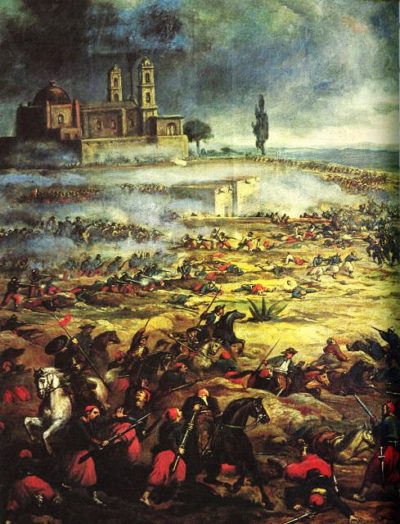
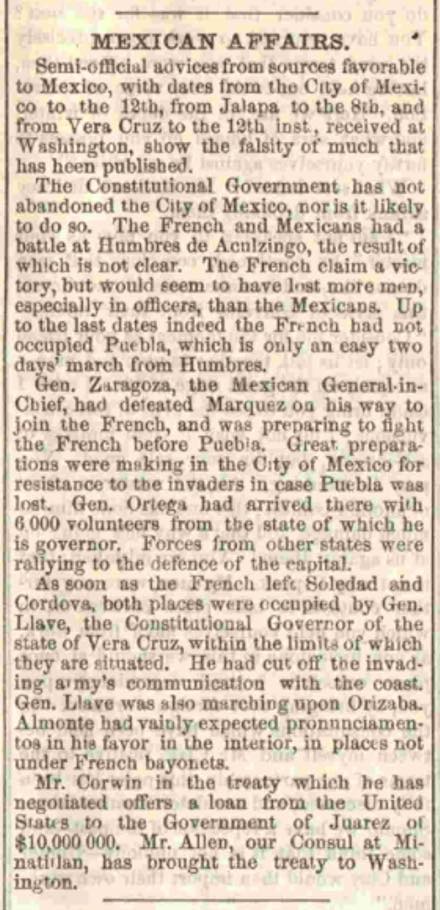
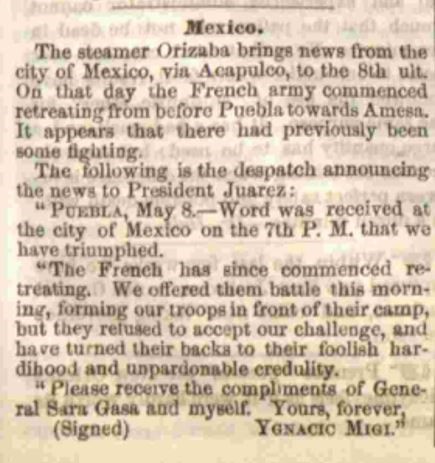

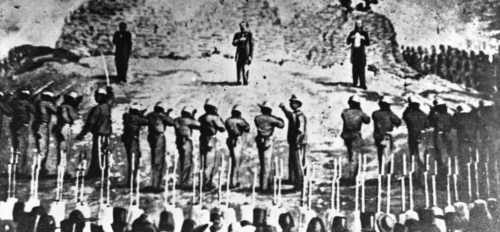


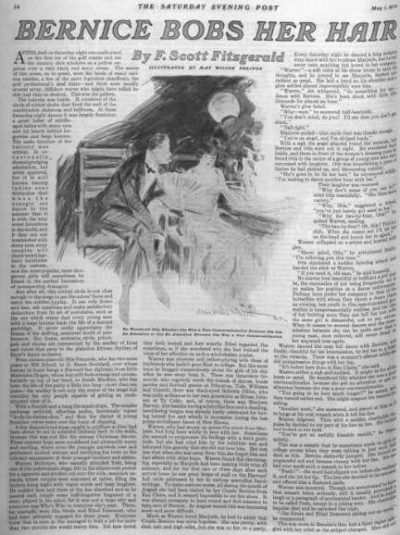
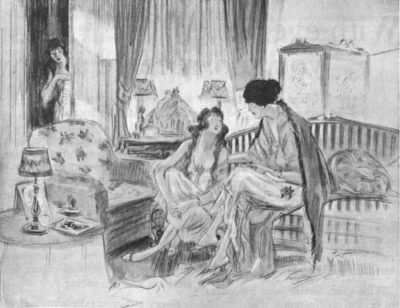 After an involuntary look of contempt Marjorie dropped her eyes and became very interested in balancing a stray corn flake on her finger.
 Do dictatorships always have the advantage over democracies in war?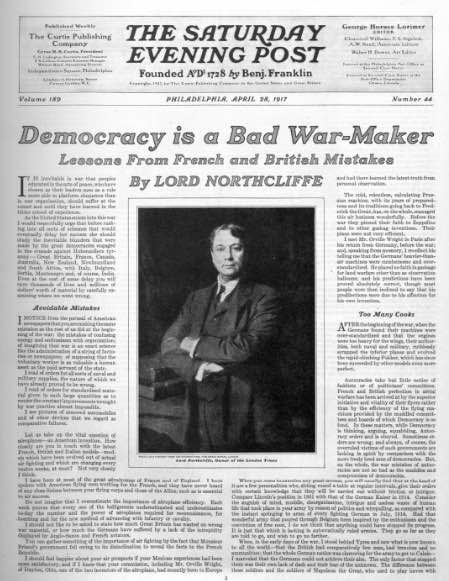

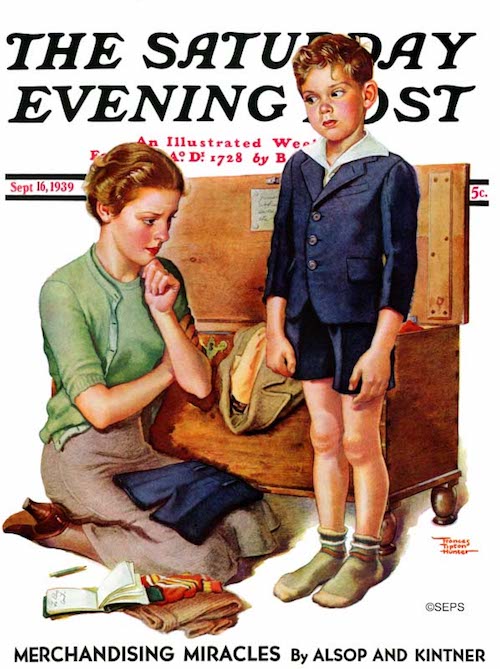





 “Belong to the union?” was the question asked.