“The Refugees” by Edith Wharton
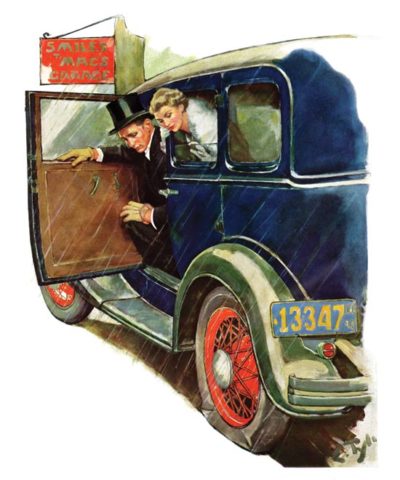
Edith Wharton is known best as an author who wrote about high society: her novel The Age of Innocence made her the first female recipient of the Pulitzer Prize for Fiction in 1921. However, Wharton was also involved in refugee relief during World War I. Her story “The Refugees” was published in the Post in 1919, and it proposes a situation in which two well-meaning caregivers mistake one another for Belgian refugees in 1914 London.
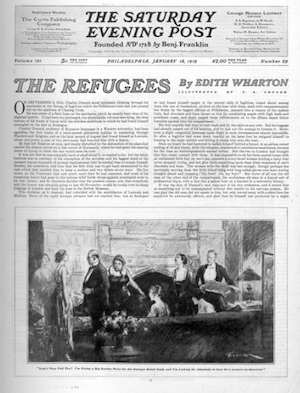
On September 8, 1914, Charley Durand stood helplessly blinking through his spectacles at the throng of fugitives which the Folkestone train had just poured out on the platform of Charing Cross.
He was aware of a faint haze on the spectacles, which he usually kept clear of the slightest smirch. It had been too prolonged, too abominable, too soul-searching, the slow torture of his hours of travel with the stricken multitude in which he had found himself entangled on the pier at Boulogne.
Charley Durand, professor of Romance languages in a Western university, had been spending the first weeks of a hard-earned sabbatical holiday in wandering through Flanders and Belgium, and on the fatal second of August had found himself at Louvain, whose university a year or two previously had honored him with a degree.
He had left Belgium at once and, deeply disturbed by the dislocation of his plans, had carried his shaken nerves to a lost corner of Normandy, where he had spent the ensuing weeks in trying to think the war would soon be over.
It was not that he was naturally hard or aloof about it, or wanted to be; but the whole business was so contrary to his conception of the universe and his fagged mind at the moment was so incapable of prompt readjustment that he needed time to steady himself. Besides, his conscience told him that his first duty was to get back unimpaired to the task which just enabled him to keep a mother and two sisters above want. His few weeks on the continent had cost much more than he had expected, and most of his remaining francs had gone to the various relief funds whose appeals penetrated even to his lost corner; and he therefore decided that the prudent course, now that everybody said the horror was certainly going to last till November, would be to slip over to cheap lodgings in London and bury his nose in the British Museum.
This decision, as it chanced, had coincided with the annihilation of Louvain and Malines. News of the rapid German advance had not reached him; but at Boulogne he had found himself caught in the central eddy of fugitives, tossed about among them like one of themselves, pitched on the boat with them, dealt with compassionately but firmly by the fagged officials at Folkestone, jammed into a cranny of the endless train, had chocolate and buns thrust on him by ministering angels with high heels and powdered noses, and shyly passed these refreshments on to the fifteen dazed fellow travelers packed into his compartment.
His first impulse had been to turn back and fly the sight at any cost. But his luggage had already passed out of his keeping, and he had not the courage to forsake it. Moreover, a slight congenital lameness made flight in such circumstances almost impossible. So after a fugitive had come down heavily on his lame foot he resigned himself to keeping in the main current and letting it sweep him onto the boat.
Once on board he had hastened to isolate himself behind a funnel, in an airless corner reeking of oil and steam, while the refugees, abandoned to unanimous seasickness, became for the time an indistinguishable animal welter. But the run to London had brought him into closer contact with them. It was impossible to sit for three mortal hours with an unclaimed little boy on one’s lap, opposite a stony-faced woman holding a baby that never stopped crying, and not give them something more than what remained of one’s chocolate and buns. The woman with the child was bad enough; though perhaps less perversely moving than the little blond thing with long soiled gloves who kept staring straight ahead and moaning “My furs! Oh, my furs!” But worst of all was the old man at the other end of the compartment, the motionless old man in a frayed suit of professorial black, with a face like a sallow bust on a bracket in a university library.
It was the face of Durand’s own class and of his own profession, and it struck him as something not to be contemplated without dire results to his nervous system. He was glad the old man did not speak to him, but only waved away with a silent bow the sandwich he awkwardly offered; and glad that he himself was protected by a slight stammer, which agitation always increased, from any attempt at sustained conversation with the others. But in spite of these safeguards the run to London was dreadful.
On the platform at Charing Cross he stood motionless, trying to protect his lame leg and yet to take up as little room as possible, while he waited for the tide to flow by and canalize itself. There was no way in which he could help the doomed wretches; he kept repeating that without its affording him the least relief. He had given away his last available penny, keeping barely enough to pay for a few frugal weeks in certain grimy lodgings he knew of off Bedford Square; and he could do nothing for the moment but take up as little space as possible till a break in the crowd should let him hobble through to freedom. But that might not be for another hour; and meanwhile helplessly he gazed at the scene through misty spectacles.
The refugees were spread out about him in a stagnant mass, through which, over which almost, there squeezed, darted, skimmed and criss-crossed the light battalions of the benevolent. People with badges were everywhere, philanthropists of both sexes and all ages, sorting, directing, exhorting, contradicting, saying “Wee, wee,” and “Oh, no,” and “This way, please. Oh, dear, what is ‘this way’ in French?” and “I beg your pardon, but that bed warmer belongs to my old woman”; and industriously adding, by all the means known to philanthropy, to the distress and bewilderment of their victims.
Durand saw the old professor slip by alone, as if protected by his silent dignity. He saw other stricken faces that held benevolence at bay. One or two erect old women with smooth hair and neat black bonnets gave him a sharper pang than the disheveled; and he watched with positive anguish a mother pausing to straighten her little boy’s collar.
Suddenly he was aware of a frightened touch on his arm.
“Oh, monsieur, je vous en prie, venez! Do come!”
The voice was a reedy pipe, the face that of a little elderly lady so frail and dry and diaphanous that she reminded him in her limp, dust-colored garments of a last year’s moth shaken out of the curtains of an empty room.
“Je vous en prie!” she repeated, with a plaintive stress on the last word. Her intonation was not exactly French, but he supposed it was some variety of provincial Belgian, and wondered why it sounded so unlike anything he had been hearing. Her face was as wild as anything so small and domesticated could be. Tears were running down her thin cheeks, and the hand on his sleeve twitched in its cotton glove. “Mais oui, mais oui,” he found himself reassuring her. Her look of anxiety disappeared, and as he drew the cotton glove through his arm the tears seemed to be absorbed into her pale wrinkles.
“So many of them obviously want to be left alone; here’s one who wants to be looked after,” he thought to himself, with a whimsical satisfaction in the discovery, as he yielded to the gentle pull on his arm.
He was of a retiring nature, and compassion, far from making him expansive, usually contracted his faculties to the point of cowardice; but the scenes he had traversed were so far beyond any former vision of human wretchedness that all the defenses of his gentle egotism had broken down and he found himself suddenly happy and almost proud at having been singled out as a rescuer. He understood the passionate wish of all the rescuers to secure a refugee and carry him or her away in triumph against all competitors; and while his agile mind made a rapid sum in division his grasp tightened on the little old lady’s arm and he muttered to himself: “They shan’t take her from me if I have to live on dry bread!”
With a victim on his arm — and one who looked the part so touchingly — it was easier to insinuate his way through the crowd, and he fended off all the attempts of fair highwaymen to snatch his prize from him with an energy in which the prize ably seconded him.
“No, no, no!” she repeated in soft, piping English, tightening her clutch as he tightened his; and presently he discovered that she had noticed his lameness, and with her free hand was making soft fierce dabs at the backs and ribs that blocked their advance.
“You’re lame too. Did they do it?” she whispered, falling into French again; and he said chivalrously: “Oh, yes — but it wasn’t their fault.”
“The savages! I shall never feel in that way about them — though it’s noble of you,” she murmured; and the inconsequence of this ferocity toward her fellow sufferers struck him as rather refreshingly feminine. Like most shy men he was dazzled by unreasonable women.
“Are you in very great pain?” she continued as they reached the street.
“Oh, no — not at all. I beg you won’t — The trouble is — ” he broke off, confronted by an unforeseen difficulty.
“What is your trouble?” she sighed, leaning her little head toward him.
“Why — I — the fact is I don’t know London; or England; jamais été,” he confessed, merging the two languages in a vain effort at fluency.
“But of course — why should you? Only trust me.”
“Ah, you do know it, then?”
What luck to have found a refugee who could take care of him! He vowed her half his worldly goods on the spot.
She was busy signaling a hansom, and did not answer.
“Is all this your luggage?”
A porter had followed with it. He felt that he ought to have been asking her for hers, but dared not, fearing a tragic answer. He supposed she had been able to bring away nothing but her shabby cloak and the little knobby bag that had been prodding his ribs ever since they had linked arms.
“How lucky to have been able to save so much!” she sighed as his bags and boxes were laboriously hoisted to the hansom.
“Yes — in such a struggle,” he agreed; and wondered if she was a little flighty as she added: “I suppose you didn’t bring your mattress? Not that it matters in the very least. Quick, get in!” she shrieked out abruptly, pushing him past her into the hansom, and adding as she scrambled in and snapped the doors shut: “My sister-in-law — she’s so grasping — I don’t want her to see us.”
She pushed up the lid and cried out a name unfamiliar to her companion, but to which horse and driver instantly responded.
Durand sank back without speaking. He was bewildered and disconcerted, and her last words had shocked him. “My sister-in-law — she’s so grasping.” The refugees, then, poor souls, were torn by the same family jealousies as more prosperous mortals. Affliction was supposed to soften, but apparently in such monstrous doses it had the opposite effect. He had noticed on the journey symptoms of this reciprocal distrust among the herded creatures. It was no doubt natural; but he wished his little refugee had not betrayed the weakness.
The thought of the sister-in-law they were deserting — perhaps as helpless and destitute as his own waif — brought a protest to his stammering tongue.
“Ought — oughtn’t we to take her with us? Hadn’t we better turn back?”
“For Caroline? Oh, no, non, no!” She screamed it in every tongue. “Cher monsieur, please! She’s sure to have her own. Such heaps of them!”
Ah — it was jealousy then; jealousy of the more favored sister-in-law, who was no doubt younger and handsomer, and had been fought over by rival rescuers, while she, poor pet, had had to single one out for herself. Well, Durand felt he would not have exchanged her for a beauty — so frail, fluttered, plaintive did she seem, so small a vessel to contain so great a woe.
Suddenly it struck him that it was she who had given the order to the driver. He was more and more bewildered and ashamed of his visible incompetence.
“Where are we going?” he faltered.
“For tea — there’s plenty of time, I do assure you; and I’m fainting for a little food.”
“So am I,” he admitted; adding to himself: “I’ll feed the poor thing, and then we’ll see what’s to be done.”
How he wished he hadn’t given away all but his last handful of shillings! His poverty had never been so humiliating to him. What right had he to be pretending to help a refugee? It was as much as he could do to pay the hansom and give her her tea. And then? A dampness of fear broke over him, and he cursed his cowardice in not having told her at once to make another choice.
“But supposing nobody else had taken her?” he thought, stealing a look at her small pointed profile and the pale wisps of hair under her draggled veil. Her insignificance was complete, and he decided that he had probably been her last expedient.
It would be odd if it proved that she was also his. He remembered hearing that some of the rich refugees had been able to bring their money with them, and his mind strayed away to the whimsical possibility of being offered a post with emoluments by the frightened creature who was so determined not to let him go.
“If only I knew London,” he thought regretfully, “I might be worth a good salary to her. The queer thing is that she seems to know it herself.”
Both sat silent, absorbed in their emotions.
It was certainly an odd way to be seeing London for the first time; but he was glad to be traveling at horse pace instead of whirling through his thronged sensations in a motor cab.
“Trafalgar Square — yes. How clever of you! Les Lions de Milord Nelson!” she explained.
They drove on, past palaces and parks.
“Maison du Grand Due. Arc de, Triomphe de marbre,” she successively enlightened him, sounding like a gnat in a megaphone. He leaned and gazed, forgetting her and himself in an ecstasy of assimilation. In the golden autumn haze London loomed mightier and richer than his best dreams of it.
II
The hansom stopped and they entered a modest tea room not too densely crowded.
“I wanted to get away from that awful mob,” she explained, pushing back her veil as they seated themselves at a table with red-and-white napkins and a britannia sugar bowl.
“Crumpets — lots of crumpets and jam,” she instructed a disdainful girl in a butterfly cap, who languished away with the order to the back of the shop.
Durand sat speechless, overwhelmed by his predicament. Tea and crumpets were all very well — but afterward, what?
He felt that his silence was becoming boorish, and leaned forward over the metal teapot. At the same instant his protégée leaned, too, and simultaneously they brought out the question:
“Where were you when it broke out?”
“At Louvain,” he answered; and she shuddered.
“Louvain — how terrible!”
“And you, madame?”
“I? At Brussels.”
“How terrible!” he echoed.
“Yes.” Her eyes filled with tears. “I had such kind friends there.”
“Ah, of course. Naturally.”
She poured the tea and pushed his cup to him. The haughty girl reappeared with sodden crumpets which looked to him like manna steeped in nectar. He tossed off his tea as if it had been champagne, and courage began to flow through his veins. Never would he desert the simple creature who had trusted him! Let no one tell him that an able-bodied man with brains and education could not earn enough in a city of this size to support himself and this poor sparrow.
The sparrow had emptied her cup, too, and a soft pink suffused her cheeks, effacing the wrinkles, which had perhaps been only lines of worry. He began to wonder if after all she was much more than forty. Rather absurd for a man of his age to have been calling a woman of forty an old lady!
Suddenly he saw that the sense of security, combined with the hot tea and the crumpets, was beginning to act on her famished system like a dangerous intoxicant, and that she was going to tell him everything — or nearly everything. She bent forward, her elbows on the table, the cotton gloves drawn off her thin hands, which were nervously clenched under her chin. He noticed a large sapphire on one of them.
“I can’t tell you — I can’t tell you how happy I am!” she faltered with swimming eyes.
He remained silent, through sheer embarrassment, and she went on: “You see, I’d so completely lost hope — so completely. I thought no one would ever want me. They all told me at home that no one would — my nieces did, and everybody. They taunted me with it.” She broke off and glanced at him appealingly. “You do understand English, don’t you?”
He assented, still more bewildered, and she went on: “Oh, then it’s so much easier — then we can really talk! No — our train doesn’t leave for nearly two hours. You don’t mind my talking, do you? You’ll let me make a clean breast of it? I must!”
She touched with a clawlike finger the narrow interval between her shoulders and added: “For weeks I’ve been simply suffocating with longing.”
An uncomfortable redness rose to Charley Durand’s forehead. With these foreign women you could never tell; his brief Continental experiences had taught him that. After all, he was not a monster, and several ladies had already attempted to prove it to him. There had been one adventure — on the way home to his hotel at Louvain, after dining with the curator of prehistoric antiquities — one adventure of which he could not think even now without feeling as if he were in a Turkish bath, with no marble slab to cool off on.
But this poor lady! Of course he was mistaken. He blushed anew at his mistake.
“They all laughed at me — jeered at me; Caroline and my nieces and all of them. They said it was no use trying — they’d failed, and how was I going to succeed? Even Caroline has failed hitherto — and she’s so dreadfully determined. And of course for a married woman it’s always easier, isn’t it?”
She appealed to him with anxious eyes, and his own sank behind his protecting spectacles. Easier for a married woman! After all, perhaps he hadn’t been mistaken. He had heard of course that in the highest society the laxity was even worse.
“It’s true enough” — she seemed to be answering him — “that the young, good-looking women get everything away from us. There’s nothing new in that; they always have. I don’t know how they manage it; but I’m told they were on hand when the very first boatload of refugees arrived. I understand the young Duchess of Bolchester and Lady Ivy Trantham were down at Folkestone with all the Trantham motors — and from that day to this, though we’ve all had our names down on the government list, not one of us — not one human being at Lingerfield has had so much as an application from the committee.
“And when I couldn’t stand it any longer, and said I was going up to town myself, to wait at the station and seize one of the poor things before any of those unscrupulous women had got him they said it was just like me to make a show of myself for nothing. But, after all, you see Caroline sneaked off after me without saying anything, and was making a show of herself too. And when I saw her she evidently hadn’t succeeded, for she was running about all alone, looking as wild as she does on sales days at Harrod’s. Caroline is very extravagant, and doesn’t mind what she spends; but she never can make up her mind between bargains, and rushes about like a madwoman till it’s too late. But oh, how humiliating for her to go back to the hall without a single refugee!”
The speaker broke off with a faint laugh of triumph, and wiped away her tears.
Charley Durand sat speechless. The crumpet had fallen from his fork and his tea was turning gray; but he was unconscious of such minor misfortunes.
“I don’t — I don’t understand,” he began; but as he spoke he perceived that he did.
It was as clear as daylight; he and his companion had taken each other for refugees, and she was passionately pressing upon him the assistance he had been wondering how on earth he should manage to offer her!
“Of course you don’t, I explain so badly. They’ve always told me that,” she answered eagerly. “Fancy asking you if you’d brought your mattress, for instance — what you must have thought! But the fact is I’d made up my mind you were going to be one of those poor old women in caps who take snuff and spill things, and who have always come away with nothing but their beds and a saucepan. They all said at Lingerfield: ‘If you get even a deaf old woman you’re lucky.’ And so I arranged to give you — I mean her — one of the rooms in the postmistress’ cottage, where I’ve put an old bedstead that the vicar’s coachman’s mother died in, but the mattress had to be burnt. Whereas of course you’re coming to me — to the cottage, I mean. And I haven’t even told you where it is or who I am! Oh, dear, it’s so stupid of me; but you see Kathleen and Agatha and my sister-in-law all said ‘Of course poor Audrey’ll never get anybody’; and I’ve had the room standing ready for three weeks — all but the mattress — and even the vicar’s wife had begun to joke about it with my brother. Oh, my brother’s Lord Beausedge — didn’t I tell you?”
She paused, breathless, and then added with embarrassment: “I don’t think I ever made such a long speech in my life.”
He was sure she hadn’t, for as she poured out her confession it had been borne in on him that he was listening not to a habitual babbler but to the uncontrollable outburst of a shy woman grown inarticulate through want of listeners. It was harrowing, the arrears of self-confession that one guessed behind her torrent of broken phrases.
“I can’t tell you,” she began again, as if she had perceived his sympathy, “the difference it’s going to make for me at home — my bringing the first refugee; and its being — well, someone like you.”
Her blushes deepened, and she lost herself again in the abasing sense of her inability to explain.
“Well, my name at any rate,” she burst out, “is Audrey Rushworth; and I’m not married.”
“Neither am I,” said her guest, smiling.
American fashion, he was groping to produce a card. It would really not be decent in him to keep up the pretense a moment longer, and here was an easy way to let her know of her mistake. He pushed the card toward her, and as he did so his eye fell on it and he saw, too late, that it was one of those he had rather fatuously had engraved in French for his Continental travels:
CHARLES DURAND
PROFESSEUR DES LANGUES ROMANES À L’UNIVERSITÉ DE LA SALLE
DOCTEUR ES LETTRES DE L’UNIVERSITÉ DE LOUVAIN
She scanned the inscription and raised a reverent glance to him. “Monsieur le Professeur? I’d no idea! Though I suppose I ought to have known at once. Oh, I do hope,” she cried, “you won’t find Lingerfield too unbearably dull!” She added as if it were wrung from her: “Some people think my nieces rather clever.”
The professor of Romance languages sat fascinated by the consequences of his lag blunder. That card seemed to have been dealt out by the finger of Fate. Supposing he went to Lingerfield with her — just to see what it was like?
He had always pined to see what an English countryseat was like; and Lingerfield was apparently important. He shook off the mad notion with an effort. “I’ll drive with her to the station,” he thought, “and just lose myself in the crowd. That will be the easiest way of all.”
“There are three of them — Agatha, Kathleen and Clio. But you’ll find us all hopelessly dull,” he heard her repeating.
“I shall — I certainly shan’t — I mean, of course, how could I?” he stammered.
It was so much like her own syntax that it appeared to satisfy her.
“No — I pay!” she cried, darting between him and the advancing waitress. “Shall we walk? It’s only two steps.” And seeing him look about for the vanished hansom: “Oh, I sent the luggage on at once by the cab driver. You see, there’s a good deal of it, and there’s such a hideous rush at the booking office at this hour. He’ll have given it to a porter — so please don’t worry!”
Firm and elastic as a girl, she sprang through the doorway, while, limping silently at her side, he stared at the decisive fact that his luggage was once more out of his keeping.
III
Charley Durand, his shaving glass told him, was forty-five, decidedly bald, with an awkward limp, scant-lashed blue eyes blinking behind gold spectacles, a brow that he believed to be thoughtful and a chin that he knew to be weak. His height was medium, his figure sedentary, with the hollows and prominences all in the wrong places; and he wore ready-made clothes in protective colors, and square-toed boots with side elastics, and stammered whenever it was all-important to speak fluently.
But his Sister Mabel, who knew him better than the others, had once taken one of his cards and run a pen through the word “Languages,” leaving simply “Professor of Romance”; and in his secret soul Charley Durand knew that she was right.
He had in truth a dramatic imagination without the power of expression. Instead of writing novels he read them; instead of living adventures he dreamed them. Being naturally modest he had long since discovered his limitations, and decided that all his imagination would ever do for him was to give him a greater freedom of judgment than his neighbors had. Even that was something to be thankful for; but now he began to ask himself if it was enough.
Professor Durand had read L’abbesse de Jouarre and knew that in moments of extreme social peril superior persons often felt themselves justified in casting conventional morality to the winds. He had no thought of proceeding to such extremes; but he did wonder if, at the hour when civilization was shaken to its base, he, Charley Durand, might not at last permit himself forty-eight hours of romance.
His audacity was fortified by the fact that his luggage was out of his control, for he could hardly picture any situation more subversive than that of being separated from his toothbrush and his reading glasses. But the difficulty of explaining himself if he went any farther in the adventure loomed larger as they approached the station; and as they crossed its crowded threshold, and Miss Rushworth said “Now we’ll see about your things,” he saw a fresh possibility of escape, and cried out: “No, no! Please find places. I’ll look for my luggage.”
He felt on his arm the same inexorable grasp that had steered him through the labyrinth of Charing Cross.
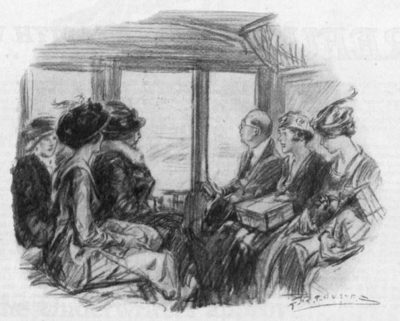
“You’re quite right. We’ll get our seats first; in such a crowd it’s safer!” she answered gayly, and guided him toward a second-class compartment. He had always heard the aristocracy traveled second class in England. “Besides,” she continued as she pounced on two window seats, “the luggage is sure to be in the van already. Or if it isn’t you’d never find it. All the refugees in England seem to be traveling by this train!”
They did indeed — and how tell her that there was one less in the number than she imagined? A new difficulty had only just occurred to him. It was easy enough to explain to her that she had been mistaken; but if he did, how justify the hours he had already spent in her company? Could he tell the sister of Lord Beausedge that he had taken her for a refugee? The statement would seem too preposterous.
Desperation nerved him to unconsidered action. The train was not leaving yet — there was still time for the confession.
He scrambled to the seat opposite his captor’s and rashly spoke: “I ought to tell you — I must apologize — apologize abjectly — for not explaining sooner — ”
Miss Rushworth turned pale, and leaning forward caught his wrist in her thin claws.
“Ah, don’t go on!” she gasped.
He lost his last hold on self-possession.
“Not go on?”
“Don’t you suppose I know? Didn’t you guess that I knew all along?”
He paled, too, and then crimsoned, all his old suspicions rushing back on him.
“How could I not,” she pursued, “when I saw all those heaps of luggage? Of course I knew at once you were rich, and didn’t need” — her wistful eyes were wet — “need anything I could do for you. But you looked so lonely, and your lameness, and the moral anguish. I don’t see, after all, why we should open our houses only to pauper refugees; and anyhow it’s not my fault, is it, if the committee simply wouldn’t send me any?”
“But — but” he desperately began; and then all at once his stammer caught him, and an endless succession of b’s issued from his helpless throat.
With exquisite tact Miss Rushworth smiled away his confusion.
“I won’t listen to another word; not one! Oh, duck your head — quick!” she shrieked in another voice, flattening herself back into her corner.
Durand recognized the same note of terror with which she had hailed her sister-in-law’s approach at Charing Cross. It was needless for her to add faintly: “Caroline.”
As she did so a plumed and determined head surged up into the window frame and an astonished voice exclaimed: “Audrey!”
A moment later four ladies, a maid laden with parcels and two bushy Chow dogs had possessed themselves of all that remained of the compartment; and Durand as he squeezed himself into his corner was feeling the sudden relief that comes with the cessation of virtuous effort. He had seen at a glance that there was nothing more to be done.
The young ladies with Lady Beausedge were visibly her daughters. They were of graduated heights, beginning with a very tall one; and were all thin, conspicuous and queerly dressed, suggesting to the bewildered professor bad copies of originals he had never seen. None of them took any notice of him, and the dogs after smelling his ankles contemptuously followed their example.
It would indeed have been difficult during the first moments for any personality less masterful than Lady Beausedge’s to assert itself in her presence. So prevalent was she that Durand found himself viewing her daughters, dogs and attendant as her mere fringes and attributes, and thinking with terror “She’s going to choose the seat next to me,” when in reality it was only the youngest and thinnest of the girls who was settling herself at his side with a play of parcels as sharp as elbows.
Lady Beausedge was already assailing her sister-in-law:
“I’d no idea you meant to run up to town today, Audrey. You said nothing of it when you dined with us last night.”
Miss Rushworth’s eyes fluttered apprehensively from Lady Beausedge’s awful countenance to the timorous face of the professor of Romance languages, who had bought a newspaper and was deep in its inner pages.
“Neither did you, Caroline — ” Miss Rushworth began with unexpected energy; and the thin girl next to Durand laughed.
“Neither did I what? What are you laughing at, Clio?”
“Neither did you say you were coming up to town, mother.”
Lady Beausedge glared, and the other girls giggled. Even the maid stooped over the dogs to conceal an appreciative smile. It was evident that baiting Lady Beausedge was a popular if dangerous amusement.
“As it happens,” said the lady of Lingerfield, “the committee telephoned only this morning.”
Miss Rushworth’s eyes brightened. She grew almost arch. “Ah — then you came up about refugees?”
“Naturally.” Lady Beausedge shook out her boa and opened the Pall Mall Gazette.
“Such a fight!” groaned the tallest girl, who was also the largest, vividest and most expensively dressed.
“Yes; it was hardly worthwhile. Anything so grotesquely mismanaged!”
The young lady called Clio remarked in a quiet undertone: “Five people and two dogs to fetch down one old woman with a pipe.”
“Ah, you have got one?” murmured Miss Rushworth, with what seemed to the absorbed Durand a fiendish simulation of envy.
“Yes,” her sister-in-law grudgingly admitted. “But, as Clio says, it’s almost an insult to have dragged us all up to town. They’d promised us a large family, with a prima donna from the Brussels Opera — so useful for Agatha’s music; and two orphans besides. I suppose Ivy Trantham got them all, as usual.” She paused, and added more condescendingly: “After all, Audrey, you were right not to try to do anything through the committee.”
“Yes; I think one does better without,” Miss Rushworth replied with extreme gentleness.
“One does better without refugees, you mean? I dare say we shall find it so. I’ve no doubt the Bolchester set has taken all but the utterly impossible ones.”
“Not all,” said Miss Rushworth.
Something in her tone caused her nieces to exchange an astonished glance and Lady Beausedge to rear her head from the Pall Mall Gazette.
“Not all,” repeated Miss Rushworth.
The eldest girls broke into an excited laugh. “Aunt Audrey — you don’t mean you’ve got an old woman with a pipe too?”
“No. Not an old woman.” She paused and waved her hand in Durand’s direction.
“Monsieur le Professeur Durand, de l’Universite de Louvain — my sister-in-law, my nieces. He speaks English,” she added in a whisper.
IV
Charley Durand’s window was very low and wide, and quaintly trellised. There was no mistaking it, it was a “lattice” — a real one, with old bluish panes set in sturdy black moldings, not the stage variety made of plate glass and papier mâché that he had seen in the sham cottage of aesthetic suburbs at home.
When he pushed it open a great branch of yellow roses brushed his face, and a dewy clematis gazed in at him with purple eyes. Below lay a garden, incredibly velvety, flower-filled, and enclosed in yew hedges so high that it seemed, under the low twilight sky, as intimate and shut in as Miss Rushworth’s low-ceilinged drawing room, which, in its turn, was as open to the air and as full of flowers as the garden.
But all England, that afternoon, as his train traversed it, had seemed like some great rich garden roofed in from storm and dust and disorder. What a wonderful place, and what a miracle to have been thus carried into the very heart of it! All his scruples vanished in the enchantment of this first encounter with the English country.
When he had bathed and dressed and descended the black-oak stairs he found his hostess waiting in the garden. She was hatless, with a pale scarf over her head, and a pink spot of excitement on each withered cheek.
“I should have preferred a quiet evening here; but since Caroline made such a point of our dining at the hall — ” she began.
“Of course, of course! It’s all so lovely,” said her guest recklessly. He would have dined at Windsor Castle with composure. After the compact and quintessential magic of the cottage nothing could surprise or overwhelm him.
They left the garden by a dark-green door in a wall of old peach-colored brick, and walked in the deepening twilight across a field and over a stile. A stile! He remembered pictures and ballads about helping girls over stiles, and lowered his eyes respectfully as Miss Rushworth’s hand rested on his in the descent.
The next moment they were in the spacious shade of a sort of Forest of Arden, with great groups of bossy trees standing apart, and deer flashing by at the end of ferny glades.
“Is it — are we — ”
“Oh, yes. This is Lingerfield. The cottage is on the edge of the park. It’s not a long walk if we go by the chapel and through the cloisters.”
The very words oppressed him with their too-crowding suggestions. There was a chapel in the park — there were cloisters! Lingerfield had an ecclesiastical past — had been an abbey, no doubt. But even such associations paled in the light of the reality. As they came out of the shadow of the trees they recovered a last glow of daylight. In it lay a gray chapel delicately laced and pinnacled; and beyond the chapel the arcade of the cloister, a lawn with one domed cedar, and a gabled Tudor house, its bricks still rosy in the dusk, and a gleam of sunset caught in its many-windowed front.
“How — how long the daylight lasts in England!” said Professor Durand, choking with emotion.
The drawing room into which he had followed Miss Rushworth seemed full of people and full of silence. Professor Durand had never had on a social occasion such an impression of effortless quiet. The ladies about the big stone chimney and between the lamp-lit tables, if they had not been so discordantly modern in dress and attitude, might have been a part of the shadowy past.
Only Lady Beausedge, strongly corseted, many-necklaced, her boa standing out from her bare shoulders like an Elizabethan ruff, seemed to Durand majestic enough for her background. She suggested a composite image of Bloody Mary and the late Queen.
He was just recovering from the exchange of silences that had greeted his entrance when he discovered another figure worthy of the scene. It was Lord Beausedge, standing in the window and glancing disgustedly over the evening paper.
Lord Beausedge was as much in character as his wife; only he belonged to a later period. He suggested stocks and nankeen trousers, a Lawrence portrait, port wine, fox-hunting, the Peninsular War, the Indian Mutiny, every Englishman doing his duty, and resistance to the Reform Bill. It was portentous that one person, wearing modern clothes and reading a newspaper, should so epitomize a vanished age.
He made a step or two toward his guest, took him for granted, and returned to the newspaper.
“Why — why do we all fidget so at home?” Professor Durand wondered vaguely.
“Gwen and Ivy are always late,” said Lady Beausedge, as though answering a silence.
Miss Rushworth looked agitated.
“Are they coming from Trantham?” she asked.
“Not him. Only Gwen and Ivy. Agatha telephoned, and Gwen asked if they might.”
After that everyone sat silent again for a long time without any air of impatience or surprise. Durand had the feeling that they all — except perhaps Lord Beausedge — had a great deal to say to him, but that it would be very slow in coming to the surface. Well — so much the better; time was no consideration, and he was glad not to crowd his sensations.
“Do you know the duchess?” asked Lady Beausedge suddenly.
“The duchess?”
“Gwen Bolchester. She’s coming. She wants to see you.”
“To see me?”
“When Agatha telephoned that you were here she chucked a dinner somewhere else, and she’s rushing over from Trantham with her sister-in-law.”
Durand looked helplessly at Miss Rushworth and saw that her cheeks were pink with triumph. The Duchess of Bolchester was coming to see her refugee!
“Do people here just chuck dinners like that?” he asked with a faint facetiousness.
“When they want to,” said Lady Beausedge simply. The conversation again came to a natural end.
It revived with feverish vivacity on the entrance of two tall and emaciated young women, who drifted in after Lord Beausedge had decided to ring for dinner, and who wasted none of their volubility in excusing their late arrival.
These apparitions, who had a kind of limp loveliness totally unknown to the professor of Romance languages, he guessed to be the Duchess of Bolchester and Lady Ivy Trantham, the most successful refugee raiders of the district. They were dressed in pale frail garments and hung with barbaric beads and bangles, and as soon as he saw them he understood why he had thought the daughters of the house looked like bad copies — all except the youngest, whom he was beginning to single out from her sisters.
He was not sure whether, during the rapid murmur of talk that followed, someone breathed his name to the newcomers; but certainly no one told him which of the two ladies was which; or indeed made any effort to draw him into the conversation. It was only when the slightly less tall addressed the taller as Gwen that he remembered this name was that of the duchess.
She had swept him with a smiling glance of her large, sweet, vacant eyes, and he had the impression that she, too, had things to say to him, but that the least strain on her attention was too great an effort, and that each time she was about to remember who he was something else distracted her.
The thought that a duchess had chucked a dinner to see him had made him slightly giddy; and the humiliation of finding that once they were confronted she had forgotten what she had come for was painful even to his disciplined humility.
But Professor Durand was not without his modest perspicacity, and little by little he began to guess that this absence of concentration and insistence was part of a sort of leisurely holiday spirit unlike anything he had ever known. Under the low-voiced volubility and restless animation of these young women — whom the daughters of the house intensely imitated — he felt a great, central inattention. Their strenuousness was not fatiguing because it did not insist but blew about like thistle down from topic to topic. He saw that his safety lay in this fact, and reassurance began to steal over him as he understood that the last danger he was exposed to was that of being too closely interrogated.
“If I’m an impostor,” he thought, “at least no one here will find it out.”
And then just as he had drawn this sage conclusion, he felt the sudden pounce of the duchess’ eye. Dinner was over and the party had regrouped itself in a great book-paneled room, before the carved chimney piece of which she stood lighting her cigarette like a duchess on the cover of a novel.
“You know I’m going to carry you off presently,” she said gayly.
Miss Audrey Rushworth was sitting in a sofa corner beside her youngest niece, whom she evidently found less intimidating than the others. Durand instinctively glancing toward them saw the elder lady turn pale, while Miss Clio Rushworth’s swinging foot seemed to twinkle with malice.
He bowed as he supposed one ought to bow when addressed by a duchess.
“Off for a talk?” he hazarded playfully.
“Off to Trantham. Didn’t they tell you? I’m giving a big garden party for the Refugee Relief Fund, and I’m looking for somebody to give us a lecture on Atrocities. That’s what I came for,” she added ingenuously.
There was a profound silence, which Lord Beausedge, lifting his head from the Times, suddenly broke.
“Damn bad taste, all that sort of thing,” he remarked, and continued his reading.
“But Gwen, dear,” Miss Rushworth faltered, “your garden party isn’t till the nineteenth.”
The duchess looked surprised. She evidently had no head for dates.
“Isn’t it, Aunt Audrey? Well, it doesn’t matter, does it? I want him all the same. We want him awfully, Ivy, don’t we?” She shone on Durand. “You’ll see such lots of your own people at Trantham. The Belgian Minister and the French Ambassador are coming down for the lecture. You’ll feel less lonely there.”
Lady Beausedge intervened with authority: “I think I have a prior claim, my dear Gwen. Of course Audrey was not expecting anyone — anyone like Professor Durand; and at the cottage he might — he might — but here, with your uncle, and the girls all speaking French — ” She turned to Durand with a hospitable smile.
“Your room’s quite ready; and of course my husband will be delighted if you like to use the library to prepare your lecture in. We’ll send the governess cart for your traps tomorrow.” She fixed her firm eyes on the duchess. “You see, dear, it was all quite settled.”
Lady Ivy Trantham spoke up: “It is not a bit of use, Aunt Carrie. Gwen can’t give him up.” Being apparently unable to master the professor’s name the sisters-in-law continued to designate him by the personal pronoun. “The committee has given us a prima donna from the Brussels Opera to sing the Marseillaise and the what-ye-may-call-it Belgian anthem, but there are lots of people coming just for the Atrocities.”
“Oh, we must have the Atrocities!” the duchess echoed. She looked musingly at Durand’s pink, troubled face. “He’ll do them awfully well,” she concluded, talking about him as if he were deaf.
“We must have somebody who’s accustomed to lecturing. People won’t put up with amateurs,” Lady Ivy reinforced her.
Lady Beausedge’s countenance was dark with rage.
“A prima donna from the Brussels Opera! But the committee telephoned me this morning to come up and meet a prima donna! It’s all a mistake her being at Trantham. Gwen!”
“Well,” said the duchess serenely, “I dare say it’s all a mistake his being here.” She looked more and more tenderly on the professor.
“But he’s not here; he’s with me at the cottage!” cried Miss Rushworth, springing up with sudden resolution. “It’s too absurd and undignified, this — this squabbling.”
“Yes; don’t let’s squabble. Come along,” said the duchess, slipping her long arm through Durand’s as Miss Rushworth’s had been slipped through it at Charing Cross.
The subject of this flattering but agitating discussion had been struggling, ever since it began, with a nervous contraction of the throat. When at length his lips opened only a torrent of consonants rushed from them, finally followed by the cryptic monosyllables: “I’m not!”
“Not a professional? Oh, but you’re a professor — that’ll do!” cried Lady Ivy Trantham briskly, while the duchess, hugging his arm closer, added in a voice of persuasion: “You see, we’ve got one at Trantham already, and we’re so awfully afraid of him that we want you to come and talk to him. You must.”
“I mean, n-n-not a r-r-ref — ” gasped out the desperate Durand.
Suddenly he felt his other arm caught by Miss Clio Rushworth, who gave it a deep and eloquent pinch. At the same time their eyes met, and he read in hers entreaty, command and the passionate injunction to follow her lead.
“Poor Professor Durand — you’ll take us for red Indians on the war trail! Come to the dining room with me and give you a glass of champagne. I saw the curry was too strong for you,” this young lady insinuatingly declared.
Durand with one of his rare flashes of self-possession had converted his stammer into a strangling cough, and released by the duchess made haste to follow his rescuer out of the room. He kept up his racking cough while they crossed the hall, and by the time they reached the dining room tears of congestion were running down behind his spectacles, and he sank into a chair and rested his elbows despairingly on a corner of the great mahogany table.
Miss Clio Rushworth disappeared behind a tall screen and returned with a glass of champagne. “Anything in it?” she inquired pleasantly, and smiled at his doleful gesture of negation.
He emptied his glass and cleared his throat; but before he could speak she held up a silencing hand.
“Don’t — don’t!” she said.
He was startled by this odd echo of her aunt’s entreaty, and a little tired of being hurled from one cryptic injunction to another.
“Don’t what?” he questioned sharply.
“Make a clean breast of it. Not yet. Pretend you are, just a little longer, please.”
“Pretend I am — ”
“A refugee.” She sat down opposite him, her sharp chin supported on crossed hands. “I’ll tell you why.”
But Professor Durand was not listening. A momentary rapture of relief at being found out had been succeeded by a sick dread of the consequences. He tried to read the girl’s thin ironic face, but her eyes and smile were inscrutable.
“Miss Rushworth, at least let me tell you — ”
She shook her head kindly but firmly. “That you’re not a German spy in disguise? Bless you, don’t you suppose I can guess what’s happened? I saw it the moment we got into the railway carriage. I suppose you came over from Boulogne in the refugee train, and when poor dear Aunt Audrey pounced on you you began to stammer and couldn’t explain.”
Oh, the blessed balm of her understanding! He drew a deep breath of gratitude, and faltered, smiling back at her smile: “It was worse than that. Much worse. I took her for a refugee too. We rescued each other!”
A peal of youthful mirth shook the mighty rafters of the Lingerfield dining room. Miss Clio Rushworth buried her face and sobbed.
“Oh, I see — I see — I see it all!”
“No you don’t — not quite — not yet!” he gurgled back at her.
“Tell me then; tell me everything!” And he told her; told her quietly, succinctly and without a stammer, because under her cool kindly gaze he felt himself at last in an atmosphere of boundless comprehension.
“You see, the adventure fascinated me; I won’t deny that,” he ended, laying bare the last fold of his duplicity.
This, for the first time, seemed to stagger her.
“The adventure — an adventure with Aunt Audrey?”
They smiled at each other a little. “I meant, the adventure of England — I’ve never been in England before — and of a baronial hall. It is baronial? In short, of just exactly what’s been happening to me. The novelty, you see — but how should you see? — was irresistible. The novelty, and all the old historic associations. England’s in our blood, after all.” He looked about him at the big, dusky, tapestried room. “Fancy having seen this kind of thing only on the stage! Yes, I was drawn on by everything — by everything I saw and heard from the moment I set foot in London. Of course if I hadn’t been I should have found an opportunity of explaining; or I could have bolted away from her at the station.”
“I’m so glad you didn’t. That’s what I’m coming to,” said the girl. “You see, it’s been — how shall I explain? — more than an adventure for Aunt Audrey. It’s literally the first thing that’s ever happened to her.”
Professor Durand blushed to the roots of his hair.
“I don’t understand,” he said feebly.
“No. Of course not. Any more, I suppose, than I really understand what Lingerfield represents to an American. And you would have had to live at Lingerfield for generations and generations to understand Aunt Audrey. You see, nothing much ever happened to the unmarried women of her time. Most of them were just put away in cottages covered with clematis and forgotten. Aunt Audrey has always been forgotten — even the refugee committee forgot her. And my father and mother, and her other brothers and sisters, and my sisters and I — I’m afraid we’ve always forgotten her too.”
“Not you,” said Professor Durand with sudden temerity.
Miss Clio Rushworth smiled. “I’m very fond of her; and then I’ve been a little bit forgotten myself.” She paused a moment and continued: “All this would take too long to explain. But what I want to beg of you is this — let her have her adventure, give her her innings, keep up the pretense a little longer. None of the others have guessed, and I promise to get you away safely before they do. Just let Aunt Audrey have her refugee for a bit, and triumph over Lingerfield and Trantham. . . . The duchess? Oh, I’ll arrange that too. Slip back to the cottage now — this way, across the lawn, by the chapel — and I’ll say your cough was so troublesome that you rushed back to put on a mustard plaster. I’ll tell Gwen you’ll be delighted to give the lecture
Durand raised his hands in protest but she went on gayly: “Why, don’t you see that the more you hold out the more she’ll want you? Whereas if you accept at once and even let her think you’re going over to stop at Trantham as soon as your cough is better she’ll forget she’s ever asked you. . . Insincere, you say? Yes, of course; a little. But have you considered what would have happened if you hadn’t choked just now and had succeeded in shouting out that you were an impostor?”
A cold chill ran down Charley Durand’s spine as his masterful adviser set forth this forgotten aspect of the case.
“Yes — I do see. I see it’s for the best.”
“Well — rather!” She pushed him toward a window opening on the lawn. “Be off now — and do play up, won’t you? I’ll promise to stick by you and see you out of it if only you’ll do as I ask.”
Their hands met in a merry grasp of complicity, and as he fled away through the moonlight he carried with him the vision of her ugly vivid face, and wondered how such a girl could ever think she could be forgotten.
V
A good many things had happened before he stood again on the pier at Boulogne.
It was in April, 1918, and he was buttoned into a too-tight uniform, on which he secretly hoped the Y.M.C.A. initials were not always the first things to strike the eye of the admiring spectator.
It was not that he was ungrateful to the great organization which had found a task for him in its ranks; but that he could never quite console himself for the accident of having been born a few years too soon to be wearing the real uniform of his country. That would indeed have been romance beyond his dreams; but he had long ago discovered that he was never to get beyond the second-best in such matters. None of his adventures would ever be written with a capital.
Still, he was very content; and never more so than now that he was actually in France again, in touch and in sound of the mighty struggle that had once been more than his nerves could bear, but that they could bear now with perfect serenity because he and his country, for all they were individually worth, had a stake in the affair and were no longer mere sentimental spectators.
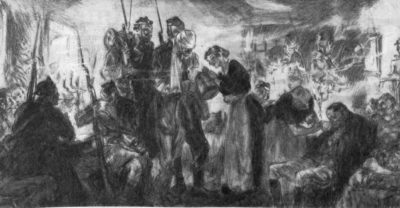
The scene, novel as it was because of the throngs of English and American troops that animated it, was still in some of its details pathetically familiar. For the German advance in the north had set in movement the native populations of that region, and among the fugitives some forlorn groups had reached Boulogne and were gathered on the pier, much as he had seen them four years earlier. Only in this case they were in dozens instead of hundreds, and the sight of them was harrowing more because of what they symbolized than from their actual numbers.
Professor Durand was no more in quest of refugees than he had been formerly. He had been dispatched to Boulogne to look after the library of a Y.M.C.A. canteen, and was standing on the pier looking vaguely about him for a guide with the familiar initials on his collar.
In the general confusion he could discover no one who took the least interest in his problem, and he was waiting resignedly in the sheltered angle formed by two stacks of packing cases when he suddenly remembered that he had always known the face he was looking at was not one to forget.
It was that of a dark thin girl in khaki, with a slouch hat and leggings, and her own unintelligible initials on her shoulder, who was giving firm directions to a large orderly in a British Army motor.
As Durand looked at her she looked at him. Their eyes met, and she burst out laughing.
“Well, you do have the queerest-looking tunics in your army!” she exclaimed as their hands clasped.
“I know we do — and I’m too fat. But you knew me?” the professor cried triumphantly.
“Why, of course! I should know your spectacles anywhere,” said Miss Clio Rushworth gayly. She finished what she was saying to the orderly, and then came back to the professor.
“What a lark! What are you? Oh, Y.M.C.A., of course. With the British, I suppose?” They perched on the boxes and exchanged confidences, while Durand inwardly hoped that the man who ought to be looking for him was otherwise engaged.
Apparently he was, for their talk continued to ramble on through a happy labyrinth of reminiscences spangled with laughter.
“And when they found out — weren’t they too awfully horrified?” he asked at last, blushing at the mere remembrance.
She shook her head with a smile. “They never did — nobody found out but father, and he laughed for a week. I wouldn’t have had anyone else know for the world. It would have spoiled all Aunt Audrey’s fun if Lingerfield had known you weren’t a refugee. To this day, you’re her great adventure.”
“But how did you manage it? I don’t see yet.”
“Come round to our canteen tonight and I’ll tell you.”
She stood up and shoved her cigarette case into the pocket of the tunic that fitted so much better than his.
“I tell you what — as your man hasn’t turned up come over to the canteen now and see Aunt Audrey.”
Professor Durand paled in an unmartial manner.
“Oh, is Miss Rushworth here?”
“Rather! She’s my chief. Come along.”
“Your chief?” He wavered again, his heart failing him.
“Really — won’t it be better for me not to? Suppose — suppose she should remember me?”
Miss Rushworth’s niece laughed. “I don’t believe she will, she’s so blind. Besides, what if she did? She’s seen a good many refugees since your day. You see, they’ve become rather a drug on the market, poor dears. And Aunt Audrey’s got her head full of other things now.”
She had started off at her long swift stride, and he was hurrying obediently after her.
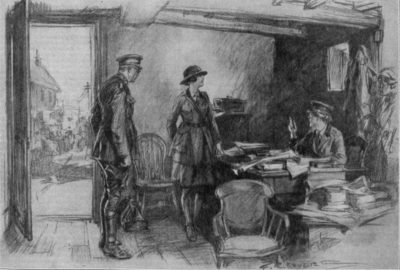
The big brown canteen was crowded with soldiers who were being variously refreshed by young ladies in trig khaki. At the other end of the main room Miss Clio Rushworth turned a corner and entered an office. Durand followed her.
At the office desk sat a lady with eyeglasses on a sharp nose. She wore a colonel’s uniform, with several decorations, and was bending over the desk busily writing.
A young girl in a nurse’s dress stood beside her, as if waiting for an order, and flattened against the wall of the room sat a row of limp, disheveled, desolate beings — too evidently refugees.
The colonel lifted her head quickly and glanced at her niece with a resolute and almost forbidding eye.
“Not another refugee, Clio — not one! I absolutely refuse. We’ve not a hole left to put them in, and the last family you sent me went off with my mackintosh and my electric lamp.”
She bent again sternly to her writing. As she looked up her glance strayed carelessly over Professor Durand’s congested countenance, and then dropped to the desk without a sign of recognition.
“Oh, Aunt Audrey — not one, not just one?” the colonel’s niece pleaded.
“It’s no use, my dear. Now don’t interrupt, please… Here are the bulletins, nurse.”
Colonel Audrey Rushworth shut her lips with a snap and her pen drove on steadily over the sheets of official letter paper.
When Professor Durand and Clio Rushworth stood outside of the canteen again in the spring sunshine they looked long at each other without speaking.
Charley Durand, under his momentary sense of relief, was aware of a distinct humiliation.
“I see I needn’t have been afraid!” he said, forcing an artificial laugh.
“I told you so. The fact is, Aunt Audrey has a lot of other things to think about nowadays. There’s no danger of her being forgotten — it’s she who does the forgetting now.” She laid a commiserating hand on his arm. “I’m sorry — but you must excuse her. She’s just been promoted, again and she’s going to marry the Bishop of the Kamerun next month.”
7 Reasons to Hang on to Your Landline Phone
Landline telephones seem to be falling out of popularity and into obscurity.
According to a survey by the CDC in 2015, over 47% of American homes used only cellular phones. Folks — especially those ages 25 to 34 — are ditching their landlines, but that doesn’t mean you have to follow suit.
There are still plenty of reasons to justify keeping a landline in your home.
1. Cost. Depending on your phone service provider, the cost of a landline might not add up to much on your bill when it is coupled with TV and internet. In fact, some plans can be more expensive if you nix the home phone.
2. Emergencies. Landline phones should work even when you experience a power outage. This could come in handy if you live in an area prone to hurricanes or other inclement weather.
In the event of an emergency that requires a call to 911, the operator will quickly track a call from a landline, but a cellular device cannot necessarily be traced. This may seem absurd in the era of GPS technology, but, according to the FCC, emergency call centers can only track a cellular call to the nearest cell site. Even if the operator can deduce a more specific location from a cellular call, multi-story buildings can present a further challenge to emergency response, whereas a call from a landline phone is easily traced.
3. Quality. Consumer Reports found that sound quality on a cordless home phone was better than any cellular device. This can be a pertinent asset if you spend a significant amount of time on the phone or if you suffer from hearing loss.
4. Simplification. Many people may find they enjoy the ability to use a telephone without the trappings of modern technology. Your landline doesn’t provide a way to play Candy Crush or check your e-mail, but that might be okay at a time when “60 percent of college students admit they may be addicted to their cell phone,” according to a Baylor University study.
5. Security. Home security systems use your telephone line to connect to an emergency call center. Although there are more options for wireless security services, these present similar challenges that cell phones do during storms or in areas with bad signal.
6. Teaching responsibility. If you have children who aren’t quite old enough to have cell phones, maintaining a landline can be a good option for giving them some responsibility and teaching phone manners. Instead of borrowing your cell phone to contact their friends you can encourage them to use the landline. They will have some access without possessing the world at their fingertips.
7. No contract. Many phone service providers offer landline service without a contract. This can be refreshing to anyone who has been trapped in an expensive cellular contract.
RELATED: “The Lost Art of the Phone Call”
The World Isn’t Finished (and Neither is the Car)
Ellen Pyle
November 24, 1934
This article and other features about the early automobile can be found in the Post’s Special Collector’s Edition: Automobiles in America!
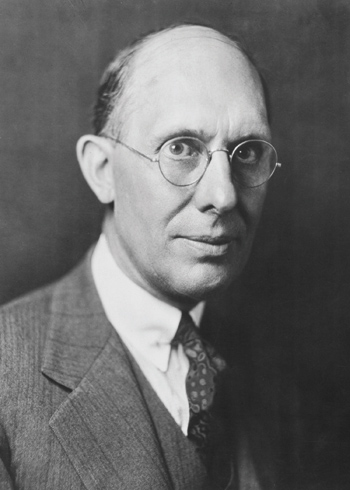
Charles F. Kettering was head of research for General Motors from 1920 to 1947. The holder of 186 patents, he was best known for inventing the electrical starter, leaded gasoline, Freon gas (essential for air conditioning), and a system for using color paints in mass-produced cars. In this article written for the Post during the dark days of the Depression, Kettering invites readers to take the long view, reminding them that life (and the auto business) is constantly changing for the better. It was an important message from a chronic optimist.
A man said to me the other day, “I don’t see what you can do to improve the automobile. It looks like perfection to me.” I said, “I hope it isn’t, because my job is gone if it is.” And that’s a fact. Most of our jobs would be gone if the products of the industries in which we are engaged should be adjudged perfect. Because then it would just be a question of employing enough men to produce the perfect thing. In the reorganization of business on this basis, not more than 30 percent of us would have employment.
In these days, as always, the most important fact from every angle is that the world isn’t finished. This holds in every realm — in business, in matters of unemployment and economic recovery, in the organic world, the psychological, the spiritual, the personal, and all others. Growth is the essence of life, and evolution functions in business as in biology. New standards evolve, and new human needs, new products, new jobs, just the same as new living forms do. Of course my work has been limited largely to the automotive field. But that’s a big world in itself, touching many others and exemplifying many truths. If the world had ever stood still, we might still be in the age of the dinosaurs and pterodactyls. But there aren’t any of these creatures around. The principle of the thing, as Darwin showed, is that the world moves on, that Nature is never satisfied with existing forms, but is always trying for new ones. The world has moved on from the first living cell to the modern man. It is moving on toward higher living forms and better social conditions. It will continue to move on toward a higher standard of living for everybody, toward a greater degree of beauty, strength, and perfection in all things.
The Future Is Bright
We in the automobile business believe that time is no kinder to us than to anybody else. But we think we try to recognize it more. We bring out yearly models on the theory that business and social conditions progress as producers hit a constant rate of improvement. We believe that for the next 10 or 20 years at least we can bring to you an improved and a better automobile. I think I can illustrate the basis for my belief by considering the three basic materials with which we work — rubber, petroleum, and steel.
I always admired the man Dunlop, because I think that anybody that had the nerve to propose a rubber tire to run on the ground when everybody knew that steel was the only thing that would do, must have been a man of distinct nerve and bravery. He planted the idea, and the simple rubber tube that he made progressed through various stages of evolution, until, a half-dozen years or so ago, the industry turned out the balloon tire. The lifespan of a tire went from 3 and 4 thousand miles up to 15 and 20 thousand. We began to experience a new ease in riding and a new safety in driving.
We owe a great debt to the rubber people. Yet I don’t think their job is finished. And they don’t either. In the future, we can expect tremendous improvement, not merely trivial additions, but evolutionary — and I might say, revolutionary — developments in tires.
In regard to petroleum, we have always known it to be a marvelous fuel, but in the past four or five years we have begun to recognize that the possibilities of developing power from the internal combustion engine are just on the verge of development. It is a fact that our best automobiles today deliver under normal driving conditions only about 7 or 8 percent of the total energy in the fuel. There is actually enough energy in one gallon of trade gasoline to propel a small car from Chicago to Detroit, some 300 miles, instead of the 20 miles attained.
In steel, we used to believe that the elastic limit was about 80,000 pounds per square inch, which is to say that if we pulled a square inch of the best steel we used to have with 80,000 pounds’ pressure, it would go back to its original position. The place where steel fails to go back is called its elastic limit. But then we came along with better steels, and the elastic limit went up to 100,000 pounds per square inch, and finally to 125,000 pounds, and today we are using steels under pressures of 300,000 pounds per square inch and they are standing up perfectly. Nobody knows where the limit will finally be found, if indeed it is ever to be found. Ten years from now, we shall be thinking thoughts and dreaming dreams not even in our conscious thought now.
Nourishing an Idea
Ideas always do go on to a harvest. They are like corn — first the seed, then the blade, then the stalk, then the flowering, then the grain in the ear. The parallel holds in many ways. When a man travels, observes, wonders, and questions about things, that is like plowing the land, the seed bed of his mind. Then the seed must be planted. Of course the rains may come and wash out the seed, or the hogs root it up, or the sun bake and dry the kernel. If the shoot does push through, the weeds may choke it, or the high winds rip it out of the ground, or the drought kill it. But if a man keeps on planting corn he will eventually reap a harvest.
I’ve seen this work out so many times. One submits an idea to a committee. If the committee is in an unprogressive industry not used to new ideas, it will probably brush that new idea into the wastebasket; nevertheless, one will have plowed a little ground, made it ready for the planting of the idea. One goes on submitting it, and the committee keeps on pushing it off the table, and pushing it off and pushing it off, until, perhaps, after two or three or four years, somebody says, “Hey, wait a minute. There’s something in that.” Then one may be sure that the seed of the idea has sprouted, that the shoot has pushed through the ground. All one has to do then is to keep the weeds down, work the land and the crop. The seed will yield a harvest of a thousandfold or more.
That is Nature, and one may be sure of the harvest, though if it is a big idea he is planting, much time may be required. The idea of the automobile was simple enough, but it took a long time for it to grow into its present magnitude. The world seldom sees that harvest until it starts to materialize, because it’s a new thing that the world has never heard of and doesn’t believe in. But when people do begin to see the harvest, they rally round and get all enthused and start making the thing a whole lot bigger than it really is. With one voice they all say, “How blind we were not to see this thing in the first place.” They start out to make a hero of the man who promulgated the idea, and build monuments to him after it is too late to do him any good.
The Nature of Work
In business, as in all things, we must swing back to the old position of being guided by Nature. Because life is just that way: That is all. As ideas are like seed corn, so wealth itself is like the harvested ears. One has to work to produce wealth. You can’t wave a wand and take it out of a hat. In order really to prosper, you have to study your land, perhaps fertilize it, then plow it, plant it, scratch the crust, work the crop, keep the weeds down and guard against insects, blight, and marauders. After the sun has warmed and rains watered, there is the labor of harvest. The man who follows this life and knows that it’s his job, is happy in it.
Of course, here’s where the business of living really begins to come in. You know the story of the old mule that used to pull the slag oar out at the ironworks. The company became prosperous, and decided that they ought to have a little steam locomotive to pull the slag car. They turned the mule out to pasture. The first day he seemed to enjoy it; the second day he hung around the gate; when the man came to work on the third day, they found the old mule leaning up against the slag car. Maybe the mule didn’t exactly enjoy pulling the slag car, but it was his job and he was lost without it. Most men, like the mule, like to do what is in them to do. The farmer has to have his hands on the plow handles; the sailor must live around the sea; the painter must paint; the mechanic work with his monkey wrench; the racing driver work to win the Indianapolis races.
What is more, there is a certain natural rhythm in work, as one can see by watching a blacksmith at his anvil, or a sower flinging the seed with a motion nicely tuned to his stride, or several hoe hands working in the field in natural unison of movement. It is only when one gets out of this natural way of life, and gets all excited about the possibility of adding up figures in the monetary realm, that a man runs into trouble.
—“The World Isn’t Finished,”
The Saturday Evening Post, April 23, 1932
Logophile Language Puzzlers: Palettes, Nonplussed, Julia Roberts
How well do you know the English language? Here are three puzzlers about vocabulary and usage from the Logophile. Do you know the answers?
- Vincent needs to cleanse his palette, so he reaches for
- toothpaste
- lemon sorbet
- turpentine
- Which boy is nonplussed?
- Tom gapes at the pile of hay, unable to speak. How will he ever find the needle in there?
- Jerry smirks and reaches for the magnet in his pocket.
- What characteristic do sequoias, pneumonia, and Julia Roberts share that sycamores, influenza, and Eric Roberts do not?
Answers and Explanations
1. c. turpentine
English contains three homophones that are easily and quite often confused:
- Palate is the roof of one’s mouth or, metaphorically, one’s sense of taste. As any experienced wine taster knows, the common phrase cleanse your palate refers to act of washing away the flavor residues of what has been previously eaten or drunk to avoid tainting the flavor of the next culinary treat. However, in the question, Vincent didn’t want to cleanse his palate.
- A pallet is the small wooden platform that goods are stacked on for storage and shipping. They keep those goods above any dampness on the floor and leave a space for a forklift to get under the stack and lift it up. Pallet can also refer to a mattress stuffed with straw or a makeshift bed.
- Palette, the word used in the question, is the thin, oblong wooden board — usually with a thumbhole — that painters use to hold and mix paints while they work.
To cleanse his palette, Vincent needs to clean old paint off a piece of wood. Of the three choices, (c) turpentine will work best.
2. a. Tom
The word nonplussed is all too often misused. It was originally an English use of the Latin phrase non plus, “no more,” and meant “a state at which no more can be done or said; a state of perplexity or befuddlement.” Nonplus was also occasionally used as a verb, and perhaps this is where the surviving adjective nonplussed originated from.
Someone who is nonplussed is puzzled or shocked to the point of inaction. It has a long list of fun synonyms, including befuddled, gobsmacked, dumbfounded, and flummoxed. The answer to question 2, then, is a.
Possibly because nonplussed begins with that negating prefix non-, people sometimes mistakenly believe that it means its opposite: unfazed, nonchalant, or unperturbed.
3. They use all the five regular vowels, AEIOU, exactly once.
This happens in the English language more often than you might expect. Other common words that use each vowel exactly once are education, nefarious, questionably, subordinate, and tenacious.
Abstemiously and facetiously are especially noteworthy. Not only do they use all six vowels, AEIOUY, exactly once, but those vowels appear in alphabetical order.
These three questions first appeared in the March/April 2017 issue of the Post. Not a subscriber? You can start a new subscription here.
News of the Week: Tom Hanks Types, Bette and Joan Fight, and Everyone’s Confused about Johnny Appleseed
Uncommon Type
Tom Hanks loves his typewriters (he owns over 100 of them), and now he has a book coming out about the machines. Well, sort of. His collection of short stories, titled Uncommon Type: Some Stories, will feature 17 tales that somehow involve typewriters. It hits bookstore shelves (and virtual bookstore shelves) in October.
The book came about after Hanks wrote a short story, “Alan Bean Plus Four,” for The New Yorker in 2014.
In other Tom Hanks news this week, he sent an espresso machine to the White House press corps.
Feud: Bette vs. Joan
This looks like a fun series. It’s a behind-the-scenes look at the legendary rivalry between Hollywood stars Bette Davis and Joan Crawford and the filming of their classic horror drama Whatever Happened to Baby Jane? It stars Susan Sarandon as Davis and Jessica Lange as Crawford, along with Judy Davis, Stanley Tucci, and Alfred Molina. It premieres this Sunday night on FX. Here’s the trailer.
Feud, by the way, is going to be an anthology series. The second season will be called Feud: Charles and Diana and will focus on the royal couple.
RIP Bill Paxton, Judge Joseph Wapner, Howard Leeds, and John Gay
One name missing from the “In Memoriam” segment at The Oscars last Sunday was Bill Paxton, who died the day before and couldn’t be included in the montage (Jennifer Aniston did mention him in her introduction, however). It’s amazing how many classic films this solid, dependable actor appeared in: Titanic, Aliens, Apollo 13, Twister, True Lies, Frailty, Tombstone, The Terminator, and Predator 2. He also starred in the Showtime series Big Love and appeared on shows like Agents of S.H.I.E.L.D. and Hatfields & McCoys. He’s currently starring in the CBS drama Training Day and later this year can be seen in the Tom Hanks movie The Circle.
Paxton died from complications after heart surgery. He was 61. Here’s a young Paxton on a helpful stranger’s shoulders, waiting to see President Kennedy in Texas in November 1963.
Actor & Fort Worth native Bill Paxton atop his father's shoulders at a speech J. F. Kennedy made in Fort Worth the day he was assassinated. pic.twitter.com/zkioMu9sWe
— Traces of Texas (@TracesofTexas) February 27, 2017
Judge Joseph Wapner really started this whole “judge show” craze back in 1981, when he presided over The People’s Court. He stayed with the show until 1993. Before that, he was a judge for many years in the L.A. Superior Court and a municipal judge. Wapner passed away Sunday at the age of 97.
Howard Leeds was a veteran producer on such shows as The Brady Bunch, My Living Doll, The Bill Dana Show, The Ghost and Mrs. Muir, Diff’rent Strokes, and The Facts of Life, and a writer for those shows and others, including Meet Millie, The Red Skelton Hour, Bewitched, My Three Sons, Barney Miller, and Silver Spoons. He died at the age of 97 on February 11, though his death was first announced this week.
John Gay wrote the screenplay for the films The Courtship of Eddie’s Father, No Way to Treat a Lady, The Power, Separate Tables, and Run Silent, Run Deep, along with TV-movie remakes of Dial M For Murder, Captains Courageous, Shadow of a Doubt, and The Hunchback of Notre Dame. He also wrote for shows like General Electric Theater, Playhouse 90, Kraft Theater, and the mini-series Fatal Vision.
Like Leeds, Gay passed away earlier this month but it wasn’t announced until this week. He was 92.
Newspaper Owner Can’t Give It Away
What do you do if you own a newspaper and want to retire but you can’t even give the newspaper away to someone? You sell it.
That’s what happened with the owner of the New Hardwick Gazette in Connecticut. Last year Ross Connelly held an essay contest. For only a $175 entry fee, you could enter the contest, with the winner getting ownership of the paper. But not enough people entered the contest to make it a success (he wanted 700 entries but only received 140). But one couple, Ray and Kim Small, saved the day (and the paper) by buying it outright. They took over the reins two weeks ago and promise to serve the community and keep the paper’s focus on local news.
By the way, Ray Small was actually one of the people who entered the contest.
This Week in History
“Buffalo Bill” Cody Born (February 26, 1846)
William Cody has often been called “America’s First Superstar” because of his long-running Buffalo Bill’s Wild West and Congress of Rough Riders of the World shows.
Charles Lindbergh’s Baby Kidnapped (March 1, 1932)
The body of the famed aviator’s infant son, Charles Jr., was found on May 12. Bruno Richard Hauptmann was convicted of the kidnapping and murder after one of the most sensational trials in history. Saturday Evening Post Archives Director Jeff Nilsson has a fascinating look at the man who helped solve the case by examining the ladder Hauptmann used.
This Week in Saturday Evening Post History: Rockwell’s “The Rookie” Cover (March 2, 1957)
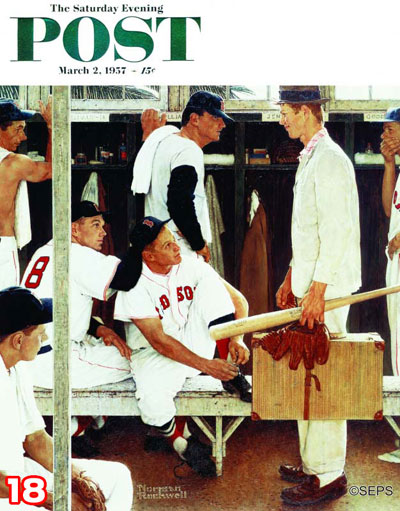
March 2,1957
It’s March, and that means we’re very close to baseball’s opening day. This March 2, 1957, cover by Norman Rockwell takes a look inside the Boston Red Sox locker room. The rookie in the suit is Massachusetts baseball star Sherman Stanford. The guys in the uniforms were real Red Sox team members, including the guy standing in the middle. That’s Ted Williams, even though Rockwell had to use a stand-in because Williams couldn’t make it to the studio that day.
National Pound Cake Day
Some things just go great together: peanut butter and jelly, cookies and milk, Norman Rockwell and The Saturday Evening Post. When I was a kid, I had another combo that I loved: pound cake and Pepsi.
I used to eat that all the time. I’d get a package of Sara Lee All-Butter Pound Cake (the one in the rectangular silver carton) and a bottle of Pepsi and pretty much eat the entire thing in one sitting while watching television. I don’t know how this combo came about (maybe my mom didn’t buy milk that week?), but it was delicious. I should try it again some time.
Tomorrow is National Pound Cake Day. Here’s a recipe for Lemon Pound Cake with Raspberry Sauce, and here’s one for Zion Canyon Lavender Pound Cake. You could make this classic Mama’s Pound Cake from Paula Deen or this Million Dollar Pound Cake. Note: The recipe is actually free.
Or you could just buy some from the fine people at Sara Lee. Nobody doesn’t like them! (And don’t forget the Pepsi.)
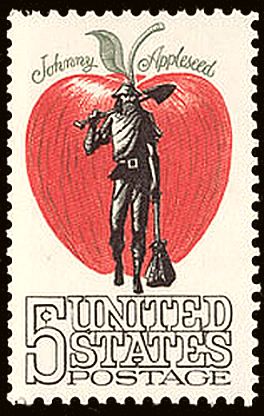

Next Week’s Holidays and Events
International Women’s Day (March 8)
This annual event “celebrates the social, economic, cultural, and political achievement of women.” And of course this year’s theme has a hashtag: #BeBoldForChange
Johnny Appleseed Day (March 11)
I bet you didn’t know there was a controversy involving Johnny Appleseed Day (if confusion over these holidays can be classified as a “controversy”). Some people celebrate it on September 26 because that was the birth date of John “Johnny Appleseed” Chapman, an American settler born in 1774. Others celebrate it on March 11 because he died on that day in 1845 (though even that is in dispute — some say March 18 and some say it was even a different year, 1847). But hey, why can’t we celebrate his life twice a year?
The Vulture’s Guitar
I found the body on a morning in April. It was early and the sun had just started to rise. Against the gray sky, vultures flew high above the stump of the tree where the corpse and guitar rested. It wasn’t a good sign to wake up to so many buzzards out in the field. I thought the man might’ve been my father. I decided to make sure, and trudged through the snow toward the stump.
What remained of the old man was thawing out like everything else. What brought the buzzards must’ve been the smell. It would’ve gotten much worse if I’d found the body later. If he’d died on someone else’s property, someone who’d retired to Bovina rather than grew up there — which he had about a 50-50 chance of doing — everyone in town would’ve heard about it. And because of the guitar, everyone would’ve thought it was my father, and they would’ve come and asked questions, and my mother would’ve been livid.
More than anything in the world, my mother hated questions. Maybe she had too many voices in her head already questioning things. To hear her own questions echoed by others might’ve given them an existence she wasn’t willing to face. In this case, it might’ve been that she didn’t want to answer over and over again, “No, it wasn’t him. He’s off dead somewhere else. This was a different old fool with a guitar.” Then she’d have to confront the possibility that he really was dead.
My father was 71 when he took off on his motorcycle on his yearly road trip across the country to various Halls of Fame. He took his guitar with him. That was almost a year ago. But it wasn’t the same guitar out in the field, and it wasn’t the same man. I would’ve recognized the guitar.
After the body was taken away, my mother tried to get rid of the guitar as well. I told her I wanted it. “The vultures were still flying over it after the body was taken,” she said. “You know that means something, Davie.” I said she was being superstitious. But I knew what she was picturing: my father on the side of a long, desolate highway, his big Harley on top of him, and some young, naive kid coming along and taking his guitar.
“He died on our property, Ma. And you can’t steal from a dead man. Soon as he died, it became the vultures’ guitar.”
“That’s what I’m saying. What’re you planning to do with a vulture’s guitar, Davie?”
“I’m gonna play it.”
When I was a kid my father would sit on the front porch and play guitar for hours. It was his place, the porch, noticeably different from the rest of the house because my mother refused to sweep it. If he wanted it swept, he’d have to do it himself. He never did. Needlepoint tips of newly cut grass lay strewn about on the porch in spring; the carcasses of dead bugs were left forlorn in summer; in autumn it was the mud from his boots; and snow, slush, and spiders made their home there in the wintertime. None of it mattered to him. The only difference any of it made for him was in the summer the strings on the guitar went flat, and in the winter they went sharp.
That November, the Fosters had their annual town-wide party. Despite my mother’s protests, I took the guitar. Everyone in town was there: the Farmingdales, the Mackeys, the Deweys, the Smiths, the Skalskis, the Jacobsons, the retired Pelz couple, the retired Goldberg couple, the retired Perrin couple, and so many dogs you never saw the same one twice. The party started in the evening. As usual, people arrived a little early. Everyone dressed warm. The air was decorated with thousands of white Christmas lights. The children lit sparklers.
The Perrin couple brought their granddaughter who was visiting from the city. She barely spoke to anyone, and I could tell she thought the place was something of a ghost town. And while that wasn’t true, it wasn’t exactly wrong either. Nothing ever changed in Bovina. People came and people went, and in some cases they never returned, but that was about it. About an hour into the party I played a song on the dead man’s guitar and afterward tried to talk to the girl. But I’d inherited too much of my mother’s reticence. After introducing myself, I didn’t have much else to say. Like everything else in that town, I was something that hadn’t changed in a long time.
Some two or three hours later, after night had fallen and darkness swept over everything beyond the reach of the Christmas lights, we heard the roar of an engine. Everyone turned their heads as the noise got louder; headlights started to appear on the road in front of the house. I looked to my mother and saw her mouth working, her jaw clenching, small incoherent mutterings gargling from the back of her throat. The engine sounded like a Harley.
The driver stopped in front of the Fosters’ house and parked his motorcycle. He took off his helmet and carried it with him as he started toward us. Strapped over his shoulders was a long, hard guitar case. I recognized the case.
“An old man I thought was you died out in the field earlier this year,” my mother said to him. “Last winter.”
“Thought, or hoped?”
She ignored him. “Died right there next to the stump of that tree Davie felled before you left. Died beside his guitar, which is something I thought you’d be stupid enough to do.” She paused. “Davie still has the guitar.”
My father turned to me. “What’s wrong with you?” he asked. “You should’ve left it there. Or burned it. A man dies with his guitar, it’s because he wants that guitar to die with him. You know I can make you a guitar.”
“I didn’t know you’d be back,” I said.
It snowed that night — the first snow of the season.
The next morning, before the sun rose, I took the guitar out into the field. The snow from the night before had melted and the ground was still cold and wet. I leaned the guitar against the stump, lit a match, and dropped it inside the sound hole. It didn’t light. I wasted three more matches like this before going to the shed and getting the can of gasoline.
As it started to burn, a turkey vulture landed some 30 yards off where the field met the woods. Another one landed beside it and then a third flew down, landing beside the first two and bringing in its enormous black wings. They watched as the fire began to engulf the guitar. I wondered if you could see the flames reflected in their eyes. It seemed possible that you couldn’t, and that scared me. When the guitar finally burst into flames, I went back inside.
For a few nights after that I thought I heard the guitar being played out in the field. I had the foolish thought that it was the vultures, that they were out there playing it, somehow. But it was just my father on the porch. Soon enough the mud and slush and spiderwebs returned. I reminded him over and over to make me that guitar. He did, eventually. It was a pretty, dark little thing.
Why March Is the Worst
I was visiting with some friends not long ago and the conversation turned to their youthful adventures with alcohol. I don’t drink, so sat quietly listening to their stories, having nothing to add that wouldn’t make me seem prudish. Eventually, one of my friends asked if I had ever been drunk. No, I told him, never had been. I did confess to a weak moment on my 40th birthday when the idea of getting drunk, just once, tempted me, but then I remembered something Garrison Keillor had said and decided against it: “March is the month God created to show people who don’t drink what a hangover is like.” The last thing I need is more March in my life.
It’s an odd coincidence that the worst month of the year, March, is smack dab up against the best month of the year, April. March is soggy winter, cold and gloomy, mud, gray skies, rain down the neck, slush over the tops of shoes. April is the bud on the dogwood, crocuses in the Vornholts’ side yard, pansies planted in the town flowerpots by Ray from the street department. March is the fevered, tossing nightmare. April is waking up and realizing the nightmare wasn’t true, that all is good with the world. April is God’s apology for March, the divine kiss on the existential boo-boo.
Every February, glimpsing March on the horizon, I say to my wife, “Let’s go somewhere warm and sunny next month.”
“I have to work,” she says.
“You have lots of sick days saved up,” I point out. “Let’s go to Tucson and you can phone in sick each morning. They’ll never know.”
“You’re my minister,” she says. “You shouldn’t be encouraging me to lie.”
My wife is too religious for my own good.
We’re still nine long years away from retirement, so are stuck with nine more Marches, which makes me want to leap off the tallest building in our town. Unfortunately, that’s only two stories tall, so I’d probably just break a few bones and lie there on the sidewalk feeling like March, dull and depressed. Ray from the street department, installing the flowerpots, would step over me.
Ray is in high spirits in March. The big snows have come to an end, so he can sleep through the night. No more rising at three to clear the streets. He takes the plow off the town truck, so if snow should arrive uninvited, it has to find the exit door without any help from Ray. He drives the sweeper up and down the streets, removing the sand he spent the previous three months spreading, stopping to inspect each storm drain, anticipating April’s showers. Before our town bought a sweeper, those same showers swept away the sand, but now Ray has interrupted nature’s cycle, which is mostly what he does the year round — removing the snow and then the sand, clipping the grass, rearranging earth, trimming the tree, lighting the dark.
I suppose if I had Ray’s job, I would enjoy March more than I do. He spends the entire month boxing it about the head and shoulders, a jab here, a hook there, until March is stretched out flat on the canvas. I don’t have Ray’s agility and fortitude, so March sneaks in an uppercut and knocks me cold. Every single year.
I come to in April, nudged back to life by the scents and sounds of spring. I feel as if I escaped my winter’s shell and think this is how cicadas must feel, emerging from their husks to go forth and dance and mate and whatever else it is cicadas do once they have shed their brittle armor. It is joy beyond measure to leave behind my wintry cover, to pull off my long johns and shave my beard, to burn the last few pieces of firewood in the kitchen stove, and having moved the clock forward in March, witness the expanded light of April.
There are those people who drink to forget March, but I’m not one of them, fearing I would forget April too, which is more tragedy than I could bear.
Philip Gulley is the author of A Place Called Hope.
This article is featured in the March/April 2017 issue of The Saturday Evening Post. Subscribe to the magazine for more art, inspiring stories, fiction, humor, and features from our archives.
Ben Franklin Used Fake News
It may seem like our political climate, in which politicians and journalists are accused of inventing phony stories, is unprecedented. Yet there are similarities to past events, and some of the perpetrators of early political chicanery may surprise you.
For example, in 1782, while still representing the United States in Paris, Benjamin Franklin printed a fake edition of an actual Boston newspaper, The Independent Chronicle. Amid the fictitious ads and articles, Franklin inserted a made-up story about the massive slaughter of white settlers on the frontiers of New York. Native Americans, in the service of the British forces, had collected 700 scalps from men, women, children, and even infants, Franklin lied.
When the news reached America, it was reprinted in papers throughout New England. The story helped stiffen American resistance to the British, who were now seen as using Indians to terrorize settlers. Released in Paris, the story also helped sway European opinion against England.
Franklin’s “fake news” was just the start of a long tradition in American politics.
As we noted in “Crude Language on the Campaign Trail,” presidential campaigns have often been marked by fabricated stories and synthetic scandals. Even after the race, the slander often continued.
In 1939, Stephen T. Early, Franklin D. Roosevelt’s secretary, shared several examples of disinformation campaigns directed against the president.
Roosevelt enjoyed broad support among voters, particularly in the early years of his presidency. But he remained a controversial leader for many Americans. Some of his opponents hoped to blacken his reputation with reports of corruption or dishonesty in the White House.
In a file he marked “Below the Belt,” Early gave examples of these fake news stories. Some hinted at sinister, international conspiracies implicating Roosevelt, a foreign-born Supreme Court justice, and labor leaders, among others. One story claimed President Roosevelt had prevented the capture and trial of the true kidnappers of the Lindbergh baby. The kidnappers, it argued, were protected by the president and were still kidnapping and murdering.
Early wondered, as many Americans do today, “just how gullible do these muckrakers think the American people are?”
Roosevelt, however, refused to be baited by these stories. When a publisher reported that the president had fallen into a coma, he offered to print a retraction if the White House issued a denial. All he got was silence. Roosevelt refused to reward him with more media attention.
Unfortunately, in our era of 24-hour information, ignoring even flagrant fake news doesn’t seem to be an option. What and whom are we to believe? In both the literal and figurative sense, we are left to our own devices.
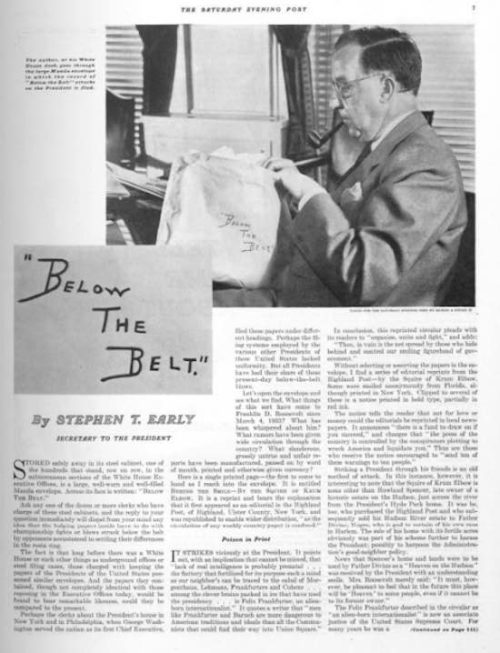
“The Monster and the Infant” by Paul Gallico
Although he is most remembered for his novels The Poseidon Adventure and The Snow Goose, Paul Gallico began his career as a sportswriter for the New York Daily News. Gallico was published in the Post continually throughout the 1940s and ‘50s. His story “The Monster and the Infant,” (1942) about a high-stakes golf championship, showcases Gallico’s folk tale writing style. Above all, he considered himself a storyteller.
Originally published on September 19, 1942
Funny how the mind works, isn’t it? You’ll see something in the papers that brings up memories and, bingo, back you go, living it all over again, as though you were sitting in a movie and seeing it on the screen.
It was just like that when I picked up The Morning Blade the other day and saw that picture on the front page and the story that went with it. It took me back eight or ten years, and presto! there I was on the eighteenth tee at Braewick, for the finals of the National Amateur Championship.
The handsome Infant, chalk-faced from strain and worry, was just setting to hit that life-or-death drive. Behind him, his back turned, a sour look on his big red face, stood the Monster. Down the fairway running between woods to the green stretched ten thousand spectators in an ugly mood.
There were the worried golf officials trying to calm the gallery while state troopers and harried marshals penned them behind ropes. There was that blot on an otherwise beautifully manicured landscape, by the name of J. Sears Hammett. And there was also yours truly, William Fowler, Esq., getting ready as usual to hold that sack.
Brother, it sure took me back, and I can’t say I enjoyed the trip. Because that was one tournament where your Uncle William took it right on the chin.
I know. You’ve heard that one before. And then it goes on to tell how in the end I wind up signing the star golfer for my outfit, A. R. Mallow & Co., makers of Far-Fli Woods, Tru-Distance Irons, and the Thunderbolt golf ball, straighten out the course of true love, and foil the villain, the same being that aforementioned understudy to a cottonmouth, J. Sears Hammett.
Not this one, chum. Maybe it’s time I let you in on one of my lemons.
Remember the finals of the Amateur back at Braewick between Francis Ogden Medford, of the Social Register and Boston’s Back Bay, and Ted Wilson, the high school kid from Lincoln Cross, Iowa? I thought you would. But what you don’t know is that it cost the good name of William Fowler, plus two hundred and fifty pesos in cold cash. For two years after, my best friends wouldn’t speak to me. And I used to be a pretty popular guy before upsetting those frijoles.
Why, I couldn’t even pick up a golf game with the club dubs, I was that shunned. Me, the sassiest advertising-promotion manager in the golf-equipment business, a pariah. And all because if it hadn’t been for my — Well, never mind that now. Let’s get on to the gruesome details.
What was I doing at the Amateur Championship? Just buzzing around to meet old friends, follow the matches, and help out with the lying in the locker room afterward. It was supposed to be a kind of vacation. Some vacation!
Those were still the dear, daffy days when we could run a temperature over a couple of comparative strangers beating a genuine rubber ball cross country with assorted hardware, and our idea of a hero was someone who could tank a putt from thirty feet when the chips were down. And did the country get heated up over young Teddy Wilson!
When the tournament started on Monday morning with the qualifying rounds, nobody had ever heard of Ted Wilson or Lincoln Cross, Iowa. By five o’clock of the same afternoon, that situation had been considerably remedied when he steamed in with a 67-68 for 135, to win the medal by five strokes and break the course record twice. And by Thursday, when he had ripped his way into the quarter-finals by knocking off four of the best amateur golfers in the game, there wasn’t anyone in the U. S. A. and possessions who didn’t know all about Ted Wilson. The newspapers took care of that.
You couldn’t blame them. He was a story. Sixteen years old, with dark, curly hair, apple cheeks, a sensitive kisser coupled to a square fighting chin, and those deep-set gray-green eyes under long lashes that had the hearts of females in the gallery from seven to seventy doing nip-ups, he was Young America. That was Ted Wilson — everybody’s kid, or what everyone hoped his kid would be like someday.
He was as poor as a church mouse’s second cousin, and supported his widowed mother in Lincoln Cross, Iowa, caddying, and doing odd jobs after school. I’m only refreshing your memory, since you read it all in the newspapers at the time: How he got to the tournament by hitchhiking across the country, sleeping in barns on the way, and arriving at Braewick with a canvas sack of rusty clubs, eleven dollars, and two clean shirts.
He got a room for two bucks a week about five miles from Braewick, and walked to and from the golf course every day. He lived on hamburgers and milk, and wouldn’t take a gift or a handout from anybody. Every night he washed out his shirts and ironed them in the morning before going to the club. Wow! Did the sob sisters go to town on him!
And those clubs of his! No two alike; they were patched, taped, warped, and held together with wire. He’d never had a new ball in his life, and used twenty-five-cent repaints. He played in sneakers because he couldn’t afford spikes. He would have carried his own bag if they had let him, but the day after he got there, old Pete the Grouch, assistant caddiemaster of Braewick, took his bag for nothing. He was that kind of a kid. Everybody fell in love with him.
And golf? Brother! It was just like the days when Bob Jones first popped over the horizon. From the first moment I saw that beautiful swing I followed him around in a kind of daze, hoping that maybe if I watched him long enough, some of his golf might come off on me. The first three days of that tournament were just like a beautiful dream for your Uncle William. Fun, no worries, and supergolf.
And then, blooie went the dream!
It went up with a loud bang when The Blade came out Thursday morning, the day of the quarter- finals, carrying an interview with Ted by Una Odell, one of the damper sob sisters. I still have the clippings, and I quote:
I asked him whether he intended to go to college when he finished high school.
“Gee, Miss Odell,” he said, and his wonderful deep gray eyes turned serious for a moment, “I’d like to go to college, but I can’t. We’re too poor. If I win the championship I’m going to turn professional right away and get a job, if I can. Golly, Miss Odell, I’ve just got to win it.” And here a look of tragic sadness came over his handsome young face, and his childlike mouth quivered a little. “We haven’t been able to pay the interest on the mortgage since dad died, and we’ll lose the house if I can’t make some money. But if I win the title, maybe I can get a good job with some club, and…”
Maybe! That was just putting it mildly. The facts in Una’s bilge were straight. The balloon went up shortly after. There were three telegrams on my plate when I came down to breakfast that morning:
IF WILSON WINS DO NOT FAIL TO SIGN FOR A.R. MALLOW & CO. STAFF. WORTH THOUSANDS IN PUBLICITY TO US. A.R. MALLOW, PRESIDENT.
EXERT ALL INFLUENCE OFFER EVERY ASSISTANCE TED WILSON WIN CHAMPIONSHIP MAKE ANY OFFER WITHIN REASON. ADVISE AND HELP HIM, INSTILLING FEELING OF GRATITUDE TOWARDS OUR COMPANY. WHOLE COUNTRY TALKING ABOUT HIM. IMPERATIVE YOU SIGN HIM IF HE WINS. WILL PAY SALARY AND BONUS ALSO MORTGAGE ON HOUSE. STRONGLY URGE YOU LEAVE NO STONE UNTURNED. WE ARE PREPARING ADVERTISING CAMPAIGN BASED ON WILSON. GO TO IT. A.R. MALLOW, PRESIDENT.
RE MY FIRST TWO WIRES. DON’T FAIL. MALLOW.
That was the Old Man for you. What he didn’t know about golf tournaments, if laid end to end, would reach from here to California. “See that he wins.” Huh! The Amateur Championship! What was I supposed to do, slip Mickeys into the soup of his opponents, or jog their elbows when they went to putt?
I tucked away a double of ham and eggs and coffee to give me strength and went out to try to tie an option on the kid in case he should come through. I found him finally off in a corner of the locker room, surrounded by the one guy in the world who can give the itch to poison ivy, J. Sears Hammett, advertising-promotion manager of the Fairgreen Company, our biggest rivals in the golf-equipment manufacturing field.
He had the youngster pinned up against a locker and was giving him that codfish eye and grade-B clabber smile. Before I could get in a word, he said, with that nasty, horse-cough laugh of his, “Ha-argh, ha-arrgh! If it isn’t my old friend, Bill Fowler, late again as usual. I’ve just finished telling my young friend here what Fairgreen is going to do for him. Too bad about you, Fowler. Asleep at the switch. Ha-argh! He’s practically signed with me, haven’t you, Teddy? Ah, what happy times we have over at Fairgreen.”
The kid blushed under the fuzz on his cheeks and stammered, “Well, gee, sir, I — I didn’t exactly. I mean — ”
I could see right away that Hammett was bluffing, but the kid was too decent and well-mannered to show him up in front of me.
Hammett waved a finger at him. “Ah-ah! Now, Teddy. I shall hold you to your word. Remember what I promised you.”
“Oh, boloney,” I said. “I don’t know what he promised you, Ted, but Mallow wants you if you win this thing and we’re prepared to double any offer this man made you right now, and what’s more — ”
“Gee, sir,” Wilson began, “that’s wonderful, but — ”
Hammett began to wave his arms and howl. “Don’t you listen to him, Teddy. You admit I spoke to you first. That’s as good as a contract. We’ll — ”
“Hammett, you’re a cockeyed — ” was the best I could come up with, when Ted extricated himself from the corner, saying: “Say, look, you’re both very kind, but I can’t sign with anybody until I win and the tournament’s over, or I’ll get in Dutch with my amateur standing. I just can’t. I have to go out and play golf now. I’ll see you both later. G’by.” And he ran down the aisle of the locker room and out the door.
I said to Hammett, “You’re a fine lug, trying to bully a sweet kid like that.”
“Ha-arrrgh! I suppose you think you’re going to get him.”
“You can just bet we’re going to get him.”
“Ahem. I take it you would wager on it.”
“Ya-a-as. I wanna bet. Make it easy on yourself.”
“I don’t bother with chicken feed, Fowler. Care to risk two hundred and fifty?”
“You’ve got a bet.”
“Okay, Mr. Sucker. Two hundred and fifty you don’t sign Teddy Wilson. Be seeing you out on the golf course. So long, sap!”
I guess I’ve told you there’s something about J. Sears Hammett that puts me right off my chump. When I’m face to face with that patent leather louse, getting that buck-tooth sneer out from under those six bristles he wears for a mustache, my brain addles like an egg dropped into a concrete mixer.
And this was no exception. Two minutes after he had gone out, I was still standing there banging myself on the brain box with the heel of my hand, and moaning: “Stung! Stung again!”
I had just realized what Hammett had put over. Like a copper-riveted, triple butt-welded boob, I had bet two hundred and fifty of my hard-earned piastres that we would sign up Wilson. And he hadn’t even won the tournament yet. He still had his two toughest matches to play. If he lost, nobody would sign him. I had given Hammett even money on a five-to-one shot, because even if he came through, I still had to put the deal over with him. That’s Fowler.
Maybe you think it was too early in the morning to start inhaling tall ones, but brother, I needed a couple. Of all the prize clowns, yours truly topped the bill. After the medicine had taken hold I went out to look at the bracketing on the scoreboard to see what my chances were of Ted Wilson winding up with the championship. It didn’t take much of a look, either. It was sure to be Ted Wilson against the Monster in the finals.
Of course you may not know him by that name, but just as the sports writers nicknamed Wilson the Infant, they hung the tag of the Monster onto Francis Ogden Medford, millionaire bachelor, socialite, blueblood amateur sportsman from Boston’s Back Bay. Nobody liked Mister Social Register Medford.
Most of my information on Medford came from the sports writers, whom he avoided and invariably refused interviews. They pegged him as a platinum-plated snob and stuffed shirt. And just hanging around the tournament, I could make out that he wasn’t exactly an ideal companion on a golf course.
He was as hard as nails, and a pretty tough customer, I guess, because he piloted a Spad in France in the last war. You had to hand him that.
At the start of a match he never more than nodded to an opponent. He shook hands at the finish, and if anybody got more than a grunt out of him at any other time during a round, it was scored as a double eagle. But I never saw a guy concentrate more on the game. His application was terrific. He played like a machine, and he played all out to win, which is all right in my book, except that I like to think of golf as a kind of sociable game.
But not Brother Medford. He didn’t seem to have any friends around the clubhouse, and as soon as it was over he would climb into his sixteen-cylinder chariot, piloted by a couple of Senegambians in livery, and buzz off to parts unknown. I told you he had a hot golf game, didn’t I? He’d been runner-up several times in previous amateur championships.
I was asleep at the switch again, and J. Sears Hammett snagged the Infant at noon recess and bought him lunch. I passed them on the terrace and Hammett was filling the kid full of chicken salad, ice cream, cake and lemonade. As I went by, J. Sears gave me that triple-fang smile which meant that he was feeling cocky, and said, “Haw-haw, Fowler. Sorry I can’t ask you to join us, but there’s no room. Anyway, Teddy and I want to talk over his contract with Fairgreen. So long, old boy, and never mind the check when you pay off. I’ll take cash. Haw-haw!”
I had one of my pure strokes of genius when I saw what he was feeding the kid, and went to the locker room shop and bought a box of indigestion tablets. It was a good thing I did, too, because halfway around in the afternoon the Infant got sick as two pups and blew four holes in a row, going three down to the Canadian champion. I went up to him and slipped him a couple of tablets. He felt better right away and began to pick up again.
He said, “I’m mighty grateful to you, sir. I don’t know what I’d have done if you hadn’t come along.”
Maybe you think that didn’t make me feel good. I stuck with the boy the rest of the round and did what I could to help him out by keeping too-enthusiastic galleryites and sob sisters off his neck. He just squeaked through with a birdie on the eighteenth to go into the finals the next day.
Fellow students, do you remember the papers that Saturday morning when Francis Ogden Medford, of Boston, and Ted Wilson, of Lincoln Cross, Iowa, met for the amateur championship? They pulled out all the stops, didn’t they? Without actually calling Medford a safecracker and second-story man, they made it clear that the forthcoming battle for the Amateur Golf Championship was the final and decisive struggle between wealth and poverty, freedom and tyranny, Good against Evil.
Of course, you couldn’t blame the press entirely. The contrast was right there before your eyes: Medford equipped with the best that money could buy — forty-dollar shoes, sharkskin slacks and Irish linen shirt, as immaculately groomed as a wealthy man can be. His personal African toted a tooled-leather sack of mallets that had been handmade and designed especially for him, each one a masterpiece of matching and balancing; he played the best and fastest ball on the market, each one neatly stamped with his initials, F.O.M.
And there, on the other hand, was the Infant, in sneakers, khaki pants and cotton shirt, with a torn canvas bag of miscellaneous warped, mismated hardware, and a handful of cheap, repaint golf balls that wouldn’t go over two hundred and thirty yards if you fired them out of a trench mortar. The papers didn’t miss any of that either.
The last time the country got as steamed up over who was going to win a big sports event was when Helen Wills played Suzanne Lenglen. Only this one was going on right under our noses, where the folks could get out and hiss the villain.
They did too. In the key of F. By the time the Infant and the Monster had finished the morning round of eighteen all square and had called a truce to take aboard some groceries, that golf match was a shambles and the unhappy officials had sent out a hurry call to the state troopers and fly cops to come over to the golf course and maintain law and order for the last holes that would decide the championship.
I can give you a picture of it in one line. Not even the gamblers were rooting for Medford.
Wilson and Medford played ding-dong golf in that morning round, but the gallery was brutal. There were nearly ten thousand of them out there, and they believed all the stuff they had read in the papers. Besides, they were seeing it with their own eyes: Medford, surly, taciturn, big and beefy, tough, conceding nothing, applying the rules and making them stick, never so much as by a smile or a gesture acknowledging anything the Infant did, while Ted battled on valiantly, the perfect little sportsman, applauding Medford’s good shots, and there were plenty, and conceding putts as much as a foot away from the hole. The Monster conceded nothing. He made Ted putt them out from two inches away. When we got onto that first tee after lunch for the final round, that gallery was loaded for Siberian bear.
Hammett and I were following the match together. He wasn’t exactly the kind of companion I would pick unless I were locked in the cooler with him, but we both had the same objective, which was to root that kid through.
Then the series of stymies happened. The Monster laid the Infant three stymies in four holes, and won them all. Of course it was only a coincidence, because anyone who knows anything about golf can tell you that if a man can putt well enough to lay three dead stymies he can also putt well enough to drop them into the can, which is a lot more conclusive. But that wild-eyed mob booed and hooted and yelled.
Hammett was trying to show off to the Infant by shouting with the rest: “Make him stop that! Bad sport! For shame!” to the kid’s distress. The behavior of the gallery toward his opponent was upsetting him.
I said to Hammett, “Oh, shut up, and don’t be an ass! You’re making Ted nervous. This isn’ t a prize fight. It’s supposed to be amateur golf.”
“Amateur golf, my eye,” said Hammett nastily. “It’s business, and I’m protecting my client. Of course, if you want to pull for Medford — ”
What was the use?
Ted was one down on No. 9 and lay on the green with a chance for a half, The Infant addressed his ball to putt, when he suddenly straightened up and stepped back.
“I’ve got to call a stroke on myself,” he said. “I moved the ball more than half a turn.” Nobody had seen it happen but the Infant himself.
Hammett was livid. “The young idiot,” he stormed. “He could have got away with it. We’ll soon cure him of tricks like that at Fairgreen.”
I was sick to see Ted lose that stroke and the hole, too, but, doggone it, I was proud of him! That’s golf. If you start out by not cheating yourself, you’ll never cheat anybody else.
Out of the silence that fell over the crowd as they realized what the boy had done, came a man’s voice.
“I’ll bet the Monster’s going to take it, too, the big bum.”
Of course they didn’t know that Medford had no choice in the matter. But the Monster didn’t make matters any better by failing even to acknowledge the kid’s fine gesture. He simply picked up his ball, turned his back, and walked off to the next tee.
That angry gallery really got articulate. “Boo-o-o! Why, he didn’t even say thank you! Oh, you big fat snob!” You could tell they’d been reading those newspaper stories. A woman threatened Medford with her parasol and screamed, “Aren’t you ashamed of picking on a fine boy like that?”
After that, some of the coppers and marshals formed a ring around Medford and the match got on a little faster. The Infant really began to pour on the golf, pulled up even, and went one up on the Monster at the sixteenth, when he tanked a thirty-footer for a bird and the crowd went nuts.
I was beginning to figure already how I would get his name on the dotted line for A.R. Mallow & Co., when he ran into a piece of tough luck on the dog-leg seventeenth. He tried to carry the corner of some houses with that cheap ball, and pulled a little. The fore caddie didn’t see it fall, and the ball was lost.
It was lost, too, because ten thousand people tried to find it. You never saw such a trampling as that landscape caught. I saw the Monster glance at his wrist watch and say something to the referee, who nodded, immediately called time, and ordered the Infant to play another ball, which of course he did, a nice spanking shot, which, however, wasn’t going to do him much good.
When word got around the gallery that Medford had notified the officials that the five minutes allowed under the rules to find a lost ball had expired, that mob really began to boil. I had never seen cops on a golf course at a championship match before, but, believe me, comrades, I was glad to see them now. They did a lot of circulating around and the sight of the uniforms cooled the populace off a bit. Still, that didn’t help our side. Ted lost the hole and the two men walked up to the eighteenth tee all square.
That eighteenth was a sight too. The fairway was lined solidly on both sides with people, and they were banked twenty deep around the green, four hundred yards away. And you couldn’t hear a sound as the Monster stepped up to drive.
Strangely, this time, the gallery didn’t make any noise or try to rattle him. I guess the drama of the match had got them. But, boy, you could just feel it. Ten thousand souls concentrated on hating one man and wishing him into trouble.
They got their wish too. The Monster made the only bad shot of his entire round. He hit a whistling hook that curved for the thick woods on the left. The crowd scattered in all directions to let it go in, running right over the fore caddies posted there. And that ball went bye-bye too.
Then the Infant teed up his ball. Even before I heard the yell of delight from the partisans, I knew from the clean “snick” that it was a honey. It was low, hard and perfectly placed. It left him with an easy mashie shot to the island green.
The Monster strode down the fairway, headed for the rough. You’d have thought there was poison oak, smallpox and mustard gas in that woods the way the crowd kept away from the spot where the ball might be. The only ones looking for it were the caddies, officials, Medford, and young Ted. But the citizens had plenty to say.
“There, how do you like some of your own medicine now? . . . Hope you don’t find it… Hey, kid, let him find it himself, if he can… Two minutes! Two minutes!”
Somebody had made note of the time the search began and the spectators took up the chant: “Two and a half minutes! Three minutes… Three and a half!”
There was a lot of tangled underbrush at that particular spot in the woods. Hammett and I walked past it through the edge of the rough on our way to the green just as the crowd let out a joyous roar of “Four minutes!”
One more minute, and the kid was in. With that position, he was a sure thing to get a four to Medford’s five. Some of the color had come back into his face, as the seconds ticked off. Well, you couldn’t blame him. It was the luck of the game. He had taken it on the chin at the last hole. Now it was his turn to get a break when he most needed it.
The mob chanted, “Four and a half minutes.” The kid’s face was working. He was trying so hard not to look happy about it. The Monster was preparing to go back to the tee and drive another.
And that was when I saw the ball.
It was buried almost out of sight in a tuft of thick grass in the rough in a wide space between trees that gave a difficult but clear shot to the green. It hadn’t been found because no one had seen it hit a tree and bounce back.
Hammett saw me goggle and stare and spotted it at the same time. It was the Monster’s ball, all right, because down through the grass we could see the red stamped initials, F.O.M.
Hammett grabbed me by the arm hard. “Hah!” he whispered. “By gad! Teddy’s won. They’ll never see it there.”
I guess I was just the biggest fool in the world that day. But, you know, golf is a funny game. You either love it or you don’t. And if you do love it you like to see it played the way it’s written.
I knew it was only a matter of seconds before time would be called, but I certainly managed to think about a lot of things while they ticked off. Sure, I knew all about Medford and his money and social position, and that it was just a cup he was playing for, maybe to bolster his own ego. And I remembered Ted, too, and how much he needed that victory, and what it would mean to lose. I even had time to toss a thought at my bet with Hammett and the value it would be to Mallow & Co., in publicity, to snag the Infant.
But, dammit, they were playing for the amateur championship of the United States, and that’s more than just a bunch of words. It was an honor to hold it. And no matter what kind of a slob he might be, as long as he stuck to the rules and played the game, Francis Ogden Medford was just as much entitled to a fair chance to win it if he could as Teddy Wilson.
Anyway, we’d all gone cockeyed on that newspaper publicity. What did I really know about Medford? Bob Jones used to play with that sick expression around his mouth, and it was nothing but just plain nerves. Maybe Medford was a snob, but that was his business, too, though I’ve seen a lot of shy men accused of the same thing. And he was no more responsible for the position into which he was born than as Ted. He had taken an awful horsing around from that gallery without a single beef.
But the point I couldn’t get away from was that those two weren’t out there to see whether Ted Wilson could get a job as a professional and lift the mortgage on the old homestead, or Medford add another pot to his collection. They were there to settle who was the best amateur golfer in the country that day.
Yes. You guessed it. I did the sappy thing. I yanked away from Hammett, raised my arm, and shouted, “Found!”
Just in time, too, because already the crowd was beginning to chant, “Five minutes! Yah, yah, Medford.”
The Infant turned as white as his shirt. Gee, I felt rotten. Medford didn’t even say, “Thank you.” He just walked up to the ball in a kind of daze and began studying the lie. After a while he pulled out a No. 3 iron, whaled with all the power of his burly body, and spanked it out of there and up onto the green a foot from the cup.
My pal, J. Sears Hammett, sure was a help at that moment. He ran up to the Infant, pointing at me and screaming, “He did it! There’s the man who did it! That’s your fine friend. I told him to keep quiet. That’s the kind of a deal you’ll get from that Mallow outfit!”
The kid, with a tired and kind of sick look on his face, just said, “Oh, please, leave me alone,” and walked away.
He still had plenty of guts. He went up to his ball and hit a good shot up to the green, but it wasn’t good enough. He took two putts to the Monster’s one, and that was that. Francis Ogden Medford was the new amateur champion.
There was only a bare handful of people stayed around for the cup presentation ceremonies. And for just a moment, when Medford accepted the trophy, that curdled expression left his face and he smiled like a human being. He turned to the Infant, stuck out his hand, and said: “You played a fine game. Thank you.”
The kid grinned like a sportsman and replied: “Thank you, sir. I enjoyed playing with you. I learned a lot.”
Medford smiled again, and patted Ted’s shoulder awkwardly. His big beefy face was redder than ever. If it hadn’t been Medford, I’d have sworn he was blushing.
I wired Mallow and asked to be allowed to sign the boy anyway, because he was such a comer, and stuck around the wire tent until the answer snapped back:
R. MALLOW & CO. NOT INTERESTED IN RUNNERS-UP. FEEL YOU HAVE FALLEN DOWN ON THE JOB. A. R. MALLOW.
And so that tournament melted away into the litter of torn programs, sandwich wrappers, squashed drinking cups and paper admission badges. I told you it was one of my lemons, didn’t I?
That’s how it ended. Except that as I stood waiting for a cab to get back to town, Francis Ogden Medford’s thirty thousand-dollar special Mercedes Hispano Snoozer went growling down the gravel driveway. There was somebody sitting next to the Monster for a change. I got only a flash of him as the car went by, and for a moment I thought it looked like the Infant. But of course it couldn’t have been.
The golf world never heard of the kid any more. It was too bad, but it often happens that way. They zoom up out of the unknown like skyrockets, take a licking, and that’s the end of them.
So that’s why I got such a kick out of that picture in the newspaper I started telling you about. It was a photograph taken in Washington recently, and showed Brig. Gen. F.O. Medford pinning the Distinguished Flying Cross to the chest of Capt. Ted Wilson of the U. S. Army Air Force for his share in dropping steel posies on Hirohito on the occasion of that little social call the boys made over Tokyo.
The Infant was taller and older, but he seemed just the same — a fine, wonderful kid, but the Monster, as he gazed at him and the medal he had just given him, looked as though he would bust right out of his uniform with pride. You would have thought you were looking at father and son.
Well, in a way, you were. There was a yarn went with the picture. A reporter had dug up the story of how Medford and Wilson had once met for the amateur golf championship and the way the match had ended. But he had dug a little farther than that, and told how the millionaire sportsman had become interested in the boy who had given him such a close battle and in the end had practically adopted him, looking after him and sending him through college.
The boy had given up golf to further his education. When the war broke out shortly after he graduated, young Wilson enlisted in the Air Force. Medford, too, returned to active duty and rose to be a flying general.
And so the story really ended in Washington with that look of glowing pride on the face of the Monster, and the Infant standing there so straight and happy with that little bronze cross.
I couldn’t help but wonder what would have happened if I hadn’t called that ball that day. The kid would have won, and probably signed with us, and been just another pro, touring the citrus circuit in the winter for coffee and cakes. Gee, I was glad I’d been a sap and hollered. I didn’t even care any more about that two-five-oh I had to hand over to J. Sears Hammett on that dismal afternoon.
Ogden Nash on the Car as Rite of Passage
This article and other features about the early automobile can be found in the Post’s Special Collector’s Edition: Automobiles in America!
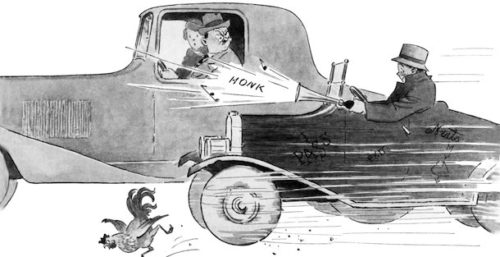
In this charming 1934 essay, the great American poet and humorist treats on the “in-between” generation — those who grew up while the horse and buggy was giving way to the automobile, and trusting in neither.
Psychiatrists differ among themselves as to just what is the most important step in the progress of the human male toward the complete life. They differ noisily, they differ bitterly, pausing occasionally to split the profits resulting from the argument, then resuming anew, as psychiatrists will. “The first kiss,” says Vienna. “The first shaving lotion,” says Berlin. “The first tail coat,” says London. New York holds out for the first weekly salary check, while Baltimore meekly suggests that the first approach of paternity may mean a lot.
The only conclusion to be drawn from this futile bickering is that psychiatry is not only in its infancy, as the doctors themselves admit, but lingers in the halcyon days before horseless carriages, when people could think of no better ways to pass the time than osculation, self-adornment, self-support, and matrimony. Lurking in the furthermost leather recesses of their secluded and luxurious consulting rooms, lost in morbid contemplation of the horrific and scandalous details that fill their case books, psychiatrists have failed to remark a fact now so well established as to be obvious to any mind but their own — that modern man begins to live life to the utmost only after he has driven his first car its first 1,000 miles. Take the case of Mr. Migg.
Mr. Migg belongs to the unhappy generation that was psychologically squashed between the tailboard of the buggy and the acetylene headlights of the Pope Toledo. Children born five years earlier than he, arrived with a curry comb in one hand and a bridle in the other; five years later, they wore goggles and were equipped with drivers’ licenses. To this in-between generation belongs the doubtful privilege of instinctively distrusting both the horse and the automobile.
People proud of their modernity spoke rudely of horses during Mr. Migg’s childhood; they wondered how they had ever put up with horses; their skittishness, their viciousness, their sloth, their undependability; Mr. Migg received the ineradicable impression that a horse was a combination of tapeworm, tiger, and tornado. He was definitely off horses. Once in his youth he gave a horse an apple because a girl asked him to and stood over him till he did it. He thinks it was the bravest act of his life, for he expected to lose his arm at the elbow. True, he still has his arm, but only, he is convinced, because that horse at that moment was gorged with elbows.
On the other hand, the very people who were selling their horses down the river, trading in their whips for monkey wrenches, and turning their stables into garages, planted in Mr. Migg’s mind a leeriness of automobiles which it has taken many years to uproot. The conversation of the pioneer motorist was prideful, but it reeked of disaster. It seemed to Mr. Migg that automobiles were always breaking down or blowing up. If he had to go from one place to another, he thought, give him the good old choo-choos every time.
Years passed. Automotive engineers spent thousands of sleepless nights figuring out ways to make life easier for the motorist. Finally one automotive engineer said to another automotive engineer, “I’ve got it;” and the other automotive engineer said, “What?” and the first automotive engineer said, “Let’s fix it so the motorist can motor sitting down.” Everybody thought that was a splendid idea and wondered why no one had ever thought of it before. The first step was to move the gasoline tank out from under the front seat. There was some stiff opposition to this move, as many people complained that getting out and lifting up the front seat every 10 gallons or so gave them a needed opportunity to recover hairpins, love letters, odd change, latch keys, and other small objects which they had been wondering where they were for days. Public reaction, on the whole, however, was favorable, and the automotive engineers went ahead. Lights, for example. It used to take two people to turn the lights on. One to stand twisting the jigger on the acetylene tank on the running board, and another to stand with a lighted match by the headlights. It could be done by one man, but he had to be exceptionally fast on his feet. If he took too long to cover the ground between the tank and the headlights, he was likely to be blown into the livery stable when he applied the match. This elaborate process finally struck some automotive engineer as being highly inconvenient. He was probably a slow-moving man with sore feet; at any rate, he succeeded in correcting it, and the rest of us can now turn on the lights without first stopping the car.
The designers were overcoming Mr. Migg’s prejudices one by one. When they fixed it so that you could start the engine without going out front and winding it up, he succumbed. He even speculated timidly on the possibility of some day learning to drive. It took several years for this idea to blossom, but eventually, on entering college, he borrowed his roommate’s car, somehow passed a Massachusetts driver’s test, and three hours later, turning out to avoid a truck, drove rapidly into the side of the Odd Fellows’ Hall in Portsmouth, Rhode Island. He left his roommate to cope with the Odd Fellows and took a train back to Boston.
The next time he straddled a steering rod was, as in the episode of the horse and the apple, at the instigation of a lady. She would like to go for a drive in the country, she said. Mr. Migg could think of no one who would not be better off for a drive in the country, and he said so. It was only then that he discovered that the lady did not drive. She could, she said, get her brother to drive, if Mr. Migg wouldn’t mind sitting in the backseat. Mr. Migg said he loved driving. They set off in a stream of traffic that failed to diminish as they left the city limits behind. Nevertheless, all went swimmingly till, halfway up a steep hill, the lady decided that she liked the looks of a little road leading off to the left. Chivalrous as always, Mr. Migg stuck out his hand, racked the gears to shreds, stalled the motor, and coasted backwards to the foot of the hill through a shrieking maze of infuriated 10-ton trucks. “I guess you’re not used to this car,” she said kindly. Mr. Migg agreed, and started up the hill again. After a few more failed attempts, she said she thought she remembered hearing that there were bandits or wild dogs or something along that road to the left and she’d just as soon go straight home.
He passed the next few years pleasantly in qualifying for a driver’s license in New York State. He finally obtained it, and almost immediately found himself the head of a family three states away. Cause and result? Mr. Migg hesitates to say. He only knows that he found that he and his wife would have to get a car, and get one immediate.
Once having bought his own car, he could think of nothing else but getting those first 1,000 miles under his belt. Mr. Migg begs for errands to drive. He drives to the mail box and the drug store and the grocery store, none of them farther distant from the house than a clean three-base hit, and he wishes he could drive from the living room into the dining room. When you’re trying to cover 1,000 miles at 27 miles an hour every inch counts. If the Miggs have the choice of several movies, they go not to the best but to the farthest. Old ladies far out in the country whom they haven’t seen in years are being surprised every day by little visits from the Miggs. They never lose a chance to take people home from parties, particularly if they live well out of the way. They are getting quite a reputation for being friendly and obliging.
Mr. Migg still winces when he has to pull over to let a homemade sports roadster go by. But he checked the mileage this morning. Only 57 more to go. Only 57 miles from manhood. He notices that the speedometer registers up to 95.
—“The First Thousand Miles,”
The Saturday Evening Post, February 24, 1934
Master of the Seascape Christopher Blossom
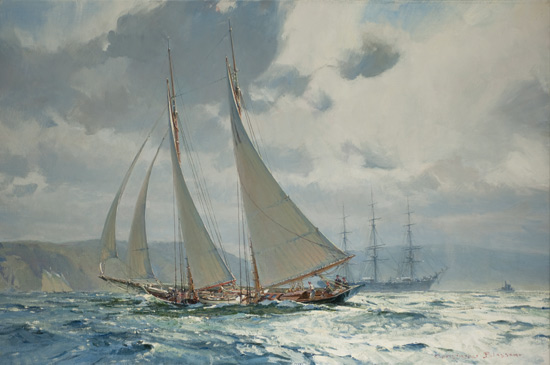
Christopher Blossom has dreamed of tall wooden ships his whole life.
Enchanted by their mystique, he has watched the great vessels wend in and out of ports near his home in coastal Connecticut. He’s studied the lore of cutters, frigates, men-of-war, schooners, and other craft, and he’s brought their dramatic stories to life. A sailor for nearly as long as he can remember, Blossom grew up, too, around legendary people considered the tall ships of their own time — illustrators who painted the visual narratives of American life and history for the popular magazines of their day.
For Blossom, counted today among the greatest marine artists of his generation, those esteemed illustrators included his own late father, David Blossom, grandad Earl Blossom, and a broad circle of friends whose resonant work resides in museums and prominent personal collections. “Landing assignments with The Saturday Evening Post was considered the most prestigious, and winning the cover was a huge achievement,” Blossom says. “When I was young, I didn’t realize just how big it was for people of my father’s and grandfather’s eras. So many of my friends were the children of great illustrators, and when their parents’ work appeared in the popular magazines you saw at newsstands, you didn’t think about the fact that millions of people were seeing those pictures around the world.”
No one is more familiar with Blossom’s legacy than J. Russell Jinishian, owner of an eponymous art gallery in Fairfield, Connecticut, that represents the biggest names in contemporary marine and sporting art. Jinishian authored a book, Bound for Blue Water: Contemporary American Marine Art, that chronicles the best painters of the last 50 years. He puts Blossom at the very top.
“You have to understand that Chris is part of a very unusual lineage. The sons and daughters of most reputable artists tend to become anything but artists. Chris is third-generation, and his work sets the standard,” Jinishian says. “I liken the Blossoms to the Wyeth family [N.C., Andrew, and Jamie] in terms of talent and dedication to craft. I can’t think of anyone else in a third-generation art family who has risen to the top of the field, as Chris has, in both marine art and as a plein-air painter.”

Blossom’s portrayals of near-mythic ships have earned him favorable comparisons to master marine painters John Stobart and Montague Dawson. A prime example of Blossom’s talent is a piece titled U.S. Brig Porpoise Transiting Deception Pass, June 1841. It portrays the good ship Porpoise finding its way through coastal waters around the San Juan Islands near Seattle, a course purported to be perilous and unnavigable. Blossom puts the viewer into a fateful scene that proved the premise wrong.
Striking is the calming tranquility of the painting, summoning emotions in the viewer driven as much by the effect of color and light as by the setting and subject. Indeed, Blossom uses narratives to pique our attention, but it is his command of his medium that cements a sensual connection. His paintings read visually as places we somehow recognize in our minds’ eyes. “What I am trying to paint is a particular kind of atmosphere and mood that comes through in the way you present light,” he says, noting that it might be a sanguine sunset or a storm with high seas and muted illumination. “Mood is everything. It doesn’t matter where or when in terms of an exact place. The sensation you feel is universal, and that’s what gives it veracity.” This is also why, critics say, Blossom’s paintings evince a sense of timelessness.
Born in 1956, Blossom, perhaps surprisingly, had no inclination to paint during his early teenage years. His passion was sailing. Still, as a youngster, he posed in costumes for paintings made by illustration icons, including Harold von Schmidt, a noted Post illustrator who then was in the final years of his life. “Von Schmidt would have these big Western-style barbecues every Fourth of July upstate in Connecticut,” remembers Blossom, “and many great illustrators and their families would go there to eat and shoot off fireworks.”
Von Schmidt died in Westport, Connecticut, in 1982. During his prime, he was a contemporary of Norman Rockwell and John Clymer. And he had solid friendships with N.C. Wyeth, Harvey Dunn, and Dean Cornwell, prized students of Howard Pyle, considered the godfather of the Golden Age of Illustration. Many of Pyle’s protégés had pieces published in the Post.
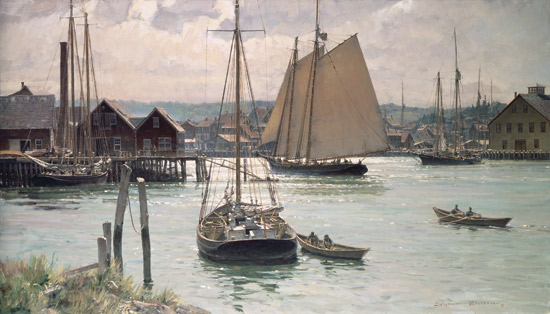
Blossom’s grandfather Earl (1891–1970) had joined the Post’s stable of go-to illustrators when Pete Martin, whom he had known in Chicago, was named the magazine’s art director. Under tight deadlines, Earl Blossom delivered paintings that illustrated fictional potboilers, a Post hallmark. Later, Earl Blossom became a star with Collier’s, and its art director there once told a reporter, “He’s a masterful artist. You never have to tell him what to do.”
Such creativity was passed down through the Blossom clan. Chris Blossom’s dad, David (1927–1995), also completed illustrations for the Post, though he is most recognized perhaps for his movie posters, especially those featuring Clint Eastwood in the Sergio Leone “spaghetti Westerns” The Good, The Bad and the Ugly; A Fistful of Dollars; and For a Few Dollars More. He also did a tremendous number of book covers and was known for doing Outdoor Life covers.
Young Chris and his brothers, David and Peter, got to know illustrators like Paul Calle, Clymer, Tom Lovell, and others who literally lived next door. Next to Rockwell, Clymer was one of the most prolific Post cover artists ever, and later, in the late 1980s after he had resettled in Jackson Hole, Wyoming, he told me that he considered Blossom a promising talent to watch.
Although Blossom was raised with his father constantly working behind the easel, the idea of making painting a career didn’t readily enter his mind until he was nearly out of high school. When Blossom did start to draw and paint, the combination of innate talent and insight absorbed through exposure to the giants of pictorial painting turned him into something of a wunderkind. He was a student at the Parsons School of Design. At age 20, he won a scholarship in a national competition sponsored by the Society of Illustrators.
Blossom’s father had earlier introduced his son to maritime painter John Stobart, a transplant from England, and they became friends. It was not uncommon for them to stop by Stobart’s studio and see what vivid paintings he was working on.
During those impressionable years, Blossom became influenced by Impressionist painters John Singer Sargent, Joaquín Sorolla, Anders Zorn, and Russian Isaak Levitan. Famously, Levitan once observed, “What can be more tragic than to feel the boundlessness of the surrounding beauty and to be able to see in it its underlying mystery … and yet to be aware of your own inability to express these large feelings.”
Blossom’s work does not stand accused of suffering from repressed passion or an inability to make visible the unseen, though his play on the past is not sentimental or cheaply nostalgic.
For a time out of college, Blossom worked as a commercial illustrator, and the toils of having to work quickly, distilling the essence of subjects down to engaging visual statements, became a training ground just as it had for the Blossom elders.
For those who dismiss painters with a commercial illustration background as second-tier, Jinishian notes, “Michelangelo was an illustrator, and he invented, out of thin air, the scenes we equate with being the highest form of art. One of the criticisms people have used over time to try and diminish the talent of the great illustrators who worked for the Post and other magazines is the argument that, because they didn’t actually witness the scenes they painted, it was conjuring. But guess what: As far as anyone knows, Michelangelo never saw the moment of creation that he depicted on the ceiling of the Sistine Chapel. Nobody ever said, ‘Mike, that’s a made-up thing you’re painting.’”
Some of Blossom’s paintings carry an intensity reflected in the stormy ocean conditions being portrayed, where textured effulgent waves are rising and falling, putting water over the gunwales. You can almost see the wind being tacked. Maybe the only things missing are an actual spray of sea salt blown into the viewer’s eyes, the briny smell of the cold Pacific, and the taste of ocean air on the tongue.
A decade ago, Blossom and his wife took a year off and sailed up and down the Eastern seaboard from Maine to the Bahamas and back. He produced a stack of plein-air paintings along the way and returned to his studio refreshed. “The power of nature is pretty awesome,” he says. “To assume that you can push the limits of risk and never get caught is a fallacy.”
Skippering boats on the open sea is exhilarating for Blossom because there’s a very small safety net, set within the overwhelming forces of nature. “The thing I find most interesting about cruising is the exhilaration of exploring and the self-sufficiency which requires that you troubleshoot problems, think things through, and adapt. Yes, we have better weather information, but you’re still on your own. You are independent and isolated in the way that an astronaut might be.”
It’s a metaphor, he notes, that can also be applied to painting. After years of winning other honors, his greatest achievement to date came in 2010, when he won the top prize at the Prix de West Exhibition in Oklahoma City for his painting Sunrise in the Golden Gate; Downeaster Benjamin F. Packard.
At Prix de West, across a span of years, Blossom prestigiously has received the coveted Robert Lougheed Award four times. The accolade is bestowed by fellow artists for best grouping of three or more paintings. (Lougheed was another illustrator who, early in his career, contributed to the Post before becoming a figure in Western art.)
While some say winning Prix de West marked Blossom’s formal arrival in the pantheon of contemporary Western artists, friends like painter Jim Morgan say it only confirms a talent that he has demonstrated for years in his forays across the inner continent of North America and Europe. Blossom is, by his own admission, a modern Romantic Realist.
Morgan himself is a widely respected oil painter known for his portrayals of wildlife and landscapes, most often Western scenes terrestrial, the influence of the Pacific overlooked. Far from the dust of a rodeo ring, Indian pueblo, or vaulting jawlines of the Rockies, this vision, too, is an important visual aspect of the American West. The nautical tradition encompasses galleons of Spanish conquistadors, exploratory British flagships, cutters carrying Asian laborers to build the transcontinental railroad, and vessels ferrying gold miners north to the Klondike à la Jack London.

Blossom may be only an itinerant Westerner, but he has tens of thousands of miles and hours under his belt in the red rock deserts, inner mountain ranges, and Pacific coastline. He has also spent countless hours prowling the Atlantic, but he does not compartmentalize one from the other. “In fact, I view my maritime work as landscape with water and vessels,” Blossom says.
“Chris’ wonderfully unique marine paintings are as much a portal into the development of the American West as a Moran, Russell, or Remington, but from the perspective of the sea,” Morgan explains. “There seems to be a deep gene pool of imaginative, deliberate, thoughtful, no-accident fine art. The creative apple seems not to have fallen far from the family tree. Chris is continuing the fine tradition of great artists.”
A Utahan, Morgan has reverence for Blossom’s ties to the grand illustration heritage of the East. He has joined Blossom on treks, via horseback, into the Western wilderness. “Chris is solidly on the creative high ground of great representational art being done today. He has few peers anywhere,” Morgan says. “No matter if the inspiration for painting is a red rock desert canyon or the high seas, it is undoubtedly of the highest quality. Subject matter aside, Chris’ art has no boundaries.”
Scott Usher, the CEO of Greenwich Workshop, which has made available a number of Blossom paintings as limited-edition prints, credits the artist’s tenacity and instinct with consistently producing head-turning work, but he notes that on top of it, “there’s this 15 percent factor of pure magic.”
Blossom ponders aloud what intrigues him about the Rocky Mountains. “Conveying distance is something that has always intrigued me. Out on the ocean, you deal with a lot of distance, but there is no scale to put it in perspective. Out west, you can see for 100 miles. Color is brilliant because the air is clear and not humid or hazy. For me, it was eye-opening, and communicating it a challenge.”
What does Blossom prefer — the mighty Atlantic or spying peaks that rise a mile and a half above sea level? “The mountains are far more impressive. Ships make for fascinating subjects, but they are beautiful things humans have created. Mountains are elemental and have a monumentality, a sense and a presence that can’t be re-created with our hands. As artists, we can only try to catch a sense of them,” Blossom says. “I understand why so many illustrators, as their profession started to die with the advent of the camera, headed west.”
“The thing that distinguishes his work, and makes it interesting, is that he’s always looking for new and unusual approaches to presenting his subjects. He could make a lot of money painting a popular setting over and over again — which some artists do — but that’s not the way he is wired,” Jinishian says. “The simple fact is that he has a way of seeing the world that is different from other artists. His art is the way he processes the world, and his paintings are like he is, loaded with creative intelligence, but very lean, with no fat.”
An exemplar of Blossom’s authenticity is Pilot Boat Mary Taylor Off Sandy Hook 1849, which celebrates a boat designed by the same shipbuilder who constructed the racing yacht America, first winner of the America’s Cup sailing trophy in 1851. Another painting, Loading Lumber in Port Blakely, portrays a seaside town in Washington State that, in the 1870s, was home to one of the largest sawmills in the country. Using floating log booms as design elements, he delivers a mesmerizing composition that is also a reference point for pondering history.
“I covet his paintings as very subtle things of singular beauty,” Jinishian says. “For him to end up on the cover of The Saturday Evening Post just has a rightness about it.”
As Blossom demonstrates in his scenes, what’s old can brandish relevance anew as we sail off into his sunsets. Just as Blossom has returned to his roots of illustration for inspiration, so, too, does the Post.
Todd Wilkinson has been writing about art, nature, and the West for nearly 30 years. His last story for the Post was on Western artist Howard Terpning for the Sept/Oct 2015 issue. His most recent book is Grizzlies of Pilgrim Creek: An Intimate Portrait of 399, the Most Famous Bear of Greater Yellowstone, with photographs by Thomas D. Mangelsen.
This article is featured in the March/April 2017 issue of The Saturday Evening Post. Subscribe to the magazine for more art, inspiring stories, fiction, humor, and features from our archives.
A Quick Guide to Impeachment
February 24 is the anniversary of President Andrew Johnson’s impeachment in 1868. Many Americans are more familiar with Bill Clinton’s impeachment than with Johnson’s, but our un-scientific survey revealed that even well-informed people are a little fuzzy on what impeachment actually is and how it works, exactly. Here’s a quick overview:
What Is Impeachment?
Impeachment means indictment — specifically, a charge of serious misconduct against a high official by a legislature. Article II of the Constitution says the president, vice president, and “civil officers of the United States” can be impeached. Whether or not members of Congress are included in “civil officers” is still debated.
Two presidents have been impeached, but neither were convicted.
What Exactly Is an Impeachable Offense?
The Constitution defines impeachable offenses as “treason, bribery, or other high crimes and misdemeanors.” But these are broad, debatable terms.
Constitutional lawyers define “high crimes and misdemeanors” as anything that breaks existing law, is an abuse of power, or, as Alexander Hamilton wrote, is “the abuse or violation of some public trust.”
Gerald R. Ford gave a working definition of an impeachable offense: “whatever a majority of the House of Representatives considers it to be at a given moment.”
In practice, articles of impeachment have cited acts that exceed the constitutional limits of the powers of an office, behavior at odds with the function and purpose of an office, or use of an office for improper purposes or personal gain.
How Does the Impeachment Process Work?
The House Indicts
The House of Representatives begins the impeachment process. The House Judiciary Committee starts the process by sending to the House articles of impeachment, a resolution that spells out why impeachment is justified. The House then debates and votes on that resolution. An official is impeached only if two-thirds of the House approves the articles of impeachment. But the House can’t take action beyond this vote, and the impeached official isn’t removed from office.
The Senate Convicts and Expels
The impeached official now faces a trial in the Senate. The Chief Justice of the Supreme Court acts as judge in the proceedings, and the Senators are the jury. After hearing the evidence, the Senators meet privately and discuss their verdict. If two-thirds of the Senators agree, the impeached official will be convicted and removed from office. The Senate may even pass a resolution forbidding the official from ever again holding public office.
Who Has Been Impeached?
- Moves toward impeachment were made against John Tyler (1841-1845) when Congress resented his use of the presidential veto, but the resolution against him failed.
- Andrew Johnson (1865-1869) was impeached for his lenient attitude toward the defeated Confederate states, which allowed many of its pre-war officials to return to office. The triggering event was his dismissal of Edwin Stanton, Lincoln’s Secretary of War, who opposed Johnson’s policies. Johnson was impeached by the House, tried in the Senate, and acquitted by a single vote.
- Congress was debating the impeachment of Richard Nixon (1969-1974) over the Watergate scandal when he resigned.
- Bill Clinton (1993-2001) was charged in 1998 with perjury and obstruction of justice in the investigation of his affair with a White House intern. He was impeached by the House but acquitted by the Senate.
Extra Credit: The First Impeachment Hearings
Americans are naturally troubled by the prospect of a presidential impeachment. In March 1868, when President Andrew Johnson was being impeached, the Post reassured readers that impeachment was a necessary, vital part of our democratic process. It contrasted, perhaps unfairly, the orderly process of trying the U.S. president to the armed turmoil shaking the governments of Mexico and Santo Domingo (now the Dominican Republic). But it expressed ultimate faith in the American people and their Constitution.
Not Mexico
For a short period dining the first excitement of the Impeachment, we began to doubt whether we were living in the United States or in Mexico — but the sober second thought of the people soon rectified the blunders of foolish partisans.
The House of Representatives has an undoubted right to impeach the President, or the Acting President, whichever his true position may be. Its members have the right to judge for themselves of the propriety of their course.
The Senate has the undoubted right — nay more it is its duty — to sit in judgment on the charges that are brought by the House — and acquit, or find guilty, as a majority of two-thirds sees proper. If the Senate finds President Johnson guilty of high crimes and misdemeanors, he must, and doubtless will, without any hesitation, conform to that judgment.
It may be said, that both House and Senate may act in the spirit of mere partisans, and alike accuse and condemn without sufficient evidence. Undoubtedly they may. But the Constitution supposes that they will not. If they do act as mere partisans, their punishment will be the rebuke of the people.
In the Autumn, the Republican party goes before the People — with its candidate for the Presidency, its candidates for Congress. The fair or unfair manner in which the Impeachment trial has been conducted, will be an important element in the canvass. In fact, the Impeachers themselves will be then put on their trial, before the great Jury of the People of the United States.
And thus there is no need of soldiers and bayonets — no need to make these United States a Mexico or St. Domingo. Ultimately all these vexed questions must be decided by the people. Ultimately the will of the people will prevail. Both the contending parties profess to desire this. Let all then be done peaceably, legally, and in order. It will be no recommendation to either party, in the great Presidential and Congressional campaign of the coming Autumn, that it has needlessly broken the peace, and plunged the Union into civil strife.
Editorial, March 7, 1868
Featured image: Impeachment ticket for President Johnson (U.S. Senate)
Open Times

Blake reaches in his pocket and fingers a blue rubber band, the thick sort with resistance. He can already see the expectant faces, hopeful faces waiting for answers to impossible questions. How do you cope with stress? Do you ever lose control? He spreads his fingers.
It’s early, just before he needs to make rounds, and he attempts a few guiding notes, some lyrical words. He browses through online databases looking for quotes that aren’t completely misguided. He writes.
My scalpel is a telephone, a way of communicating with another human being. No. My blade is a paintbrush. It’s a light, a tiny flashlight. No. My work is to navigate the map of the human body, to reveal stories that are buried beneath the skin. No.
Blake circles the words map and buried before noticing a couple standing a few feet away. Public displays of affection are tolerable some days. Not today. Today, purple clouds are closing in around them, the only three in the park so early in the morning, settled near the basketball courts. He crosses out paintbrush because the line seems too pretentious and shifts on the hard bench as thunder rolls above. The storm charges forward.
Blake closes his notebook — those precious few words contained. Writing a presentation for third-year med students, something that will inspire some and scare off those who should be saved before they’re too far in debt, is a real pain. He never imagined he’d ever have to return to the horrendous lecture halls he’d barely survived.
The couple kisses with sloppy tongues, showing off their youth, as the rain begins. With less than two hours before he needs to deliver his speech, Blake nestles the notebook in his bag and makes his way to his new, custom-built BMW 230i convertible. It’s the kind of car a younger version of himself could never imagine owning. It’s a car he can barely imagine himself owning now. Every time he walks toward it, there is the feeling that he’s won something, game-show style, and he can’t help but swagger.
His stomach revs with the engine. His machine glides through the storm. It pauses in front of Scarlet Café, which is closed, and then Blue Coffee, which is also closed. Blake is an OSU grad, hardly a Michigan fan, but the service at Blue is better.
He idles for a few minutes, peering in the windows to make out a scrawny guy, who he thinks manages the place, refilling straws. Blake wonders if he has time to wait. It’s an 8-minute drive to work, and his first appointment is in 15. He could get there in 7, but he’s cutting it close as it is, waiting for inspiration to come.
No café is open until 5:30 a.m., even though this is the med center, a part of town populated by doctors who are crepuscular animals known for their staggering caffeine dependence.
With no immediate access to decent coffee, he moves a block down and stops at the gas station, jogs toward the small shop without umbrella, and watches, disdainfully, as the off-brand coffee percolates. “One minute,” the gas station attendant says with a smile. Blake has one minute. Not much more.
He hovers around a warming oven filled with donuts, watches the icing dripping from thin metal racks, and eyes the rows of lottery tickets across the aisle. There is a cluster of women, three of them, buying scratch-offs, scratching them with quarters, then buying more or cashing in for a few bucks. They look related, these three. They look as though they inhabit a different planet, all loud pastels against a backdrop of gray.
Blake watches one of the three, a middle-aged woman in ripped jeans with a touch of jaundice, lift her arms like a superhero. She squeals, “Forty dollars, forty dollars, ya’ll!” Her friends check the ticket, recheck their own tickets, and congratulate her without any apparent sincerity. The woman turns to Blake. “You! You’re my lucky charm. I won right when you passed. Bless you. Bless you. Can I buy your coffee? Will you walk by again, just like that while I scratch this last one?”
“No worries,” he says, smiling but not moving.
“I see. Well, can you stand there awhile, while I scratch off a few more?”
The coffee is ready. Blake can make out the grounds floating on the top of murky liquid. He glances at his smartwatch. “One more, then I have to go.” There is a short bottle of liquid next to him that promises a cornucopia of vitamins, along with a healthy dose of caffeine. It appears to be marketed as a panacea, with so many promises listed on the label that there is no room for readable text. He places it, along with a pack of gum fortified with Vitamin B2, on the counter.
“You a doctor?” the youngest of the women asks as he unrolls a few dollars from his money clip to pay. Her ball cap is bejeweled and spells out U.S.A.
“Have a good day, ladies,” he says, leaving them to tease out the mystery. His phone vibrates. He rushes out without getting his change, hearing another yelp of joy as he walks out and wondering what kind of jackpot was achieved.
Blake’s machine is efficient on wet roads, far more so than the Jeep he used to drive when he was still paying off loans. The tires do their work, angling and gripping and getting him to the dozen-decker parking lot without so much as a slip or skid. He takes one of the first reserved spots. Glancing in the rearview, he sees the gray in his beard. He downs the syrupy contents of the small bottle and scrambles to open the driver’s side door in enough time to spit it out. He jogs toward his office to collect his thoughts, his mouth watering around the acerbic remnants of the toxic energy drink.
The hospital café isn’t open till 8 a.m., and he has only a few minutes to sign in. He must check on two patients, then deliver his speech. The idea hits him that there should be drones delivering quality coffee to doctors at the press of a button, and he jots this note down. 5:30 a.m. exactly, and as he strides down the linoleum halls, he calls Blue Coffee, requesting a special delivery. He’ll order coffee for the whole floor so it doesn’t look so self-indulgent. He assures he’ll tip well.
As he waits, he finds a French press and searches his office for some leftover grounds. Nothing. Ani, one of his favorite baristas and usually the cashier at Blue Coffee, says she’ll check with her boss but will try to make it happen.
“So long as you can get me that coffee before 7 a.m. I have a speech to deliver,” he explains, angling the phone on his shoulder as he checks the break room, only to find some instant coffee — hardly enough for a cup.
After the third hold song, Ani returns. “I got it approved,” she says. “I’ll be there in a jiff.”
From Room 8A, Blake and his patient watch the rain as they go down a series of follow-up questions. Mr. Heller explains that he is in a lot of pain and would kindly like some Xanax. Blake assures him that the pain is temporary, and that the incision appears fine. “It’s healing just fine,” he says, assuredly, then offers a smile-nod combo that he tends to offer when refusing Xanax. He tells Mr. Heller to watch the rain a moment. “How’s your breathing?” he asks. “Really pay attention.”
A fill-in nurse, someone named Trudy, concurs. Mr. Heller breathes. He breathes slower, watches the rain, and, finally, closes his eyes.
“No one else can do that,” the nurse whispers on their way out. Blake worries she’s right.
The thing about Blake is, he knows how to focus — no matter caffeine withdrawal or whatever else. But as soon as he’s out of 8A, he’s wondering where Ani is. He checks his watch. Only 7,034 steps. Did he give her clear enough instructions? Does she have the common sense to take one of the good, RESERVED spots in the lot as opposed to walking a damn block from the visitors’ area?
Patient No. 2 is not an easy one. Mrs. Sebastian Willow, who insists being referred to as such, is what lesser doctors refer to as a frequent flyer. This is her third carpal surgery, second wrist. Blake counts backwards from 100 as he suits up. He’s filling in for yet another new surgeon who didn’t sign up on his round.
The precision of an endoscopic surgery for carpal on a woman with the tiniest wrists he’s seen in his lifetime is not something he’d been looking forward to, but it is something he will execute with precision and grace. Five, four, three, two … one. He enters the room to meet with two assistants and his station set up to perfection. The tiny tools that were once fumbled and dropped with his clumsy, big hands, are now a part of him, an 11th finger or a mechanical extension. He cuts away the flesh and navigates around the thin line to avoid nerve damage. He feels the pressure release, subtle, or thinks he does, as he places tiny incisions. This woman will be back to texting in a few hours.
Ms. Sebastian Willow will be checked out as soon as her paperwork is complete, Blake explains. He provides her with aftercare instructions and tells her to stay off Facebook for a while.
“Instagram okay?”
The coffee should be here. Blake made good time. He has almost 20 minutes to spare before his presentation and, still with no idea what to say, he figures he could give an account of the very surgery he just completed. Perhaps he could frame an entire speech around a surgery. His head screams at him, somewhere along the forehead just above the eyebrows. It screams out in withdrawal.
Speed-walking to the front desk, Blake glances down at his watch to see 11,000 steps. Most people are just waking up. He asks if someone has been around to deliver coffee, and Anita, the receptionist with phenomenally big hair and watery eyes, says no.
Blake’s headache seems to be wrapping around his head, scarf-like, now. He rushes down the hall, toward the parking lot, wondering if he could make it back to the gas station in time to return for his speech. He recalls the anxiety attacks he used to have in front of groups, the terror of being unprepared. He imagines himself in the audience of students, bored and eager all at the same, waiting to be a doctor. He remembers the invincibility of promise, endless promise. He tells Anita to wish him luck.
“Sweetie,” she says, with a maternal sweetness. “You got this, whatever it is.”
He lets out a breathy laugh as Ani, resplendent Ani, arrives with a tray full off coffee and one single small cup that promises to hold a quad espresso just for him. He wants to tip her $100. He reaches out his arms in joy as though ready to hug her as she sets the tray down on the counter.
He pulls out a $50 and hands it to her, which he thinks will leave her $10 for the trip. She smiles and turns on a heel, waving goodbye and explaining that she wants to beat the storm on the way back.
“Thank you,” he calls out. He sees she drops something, the cash! And he calls out, gesturing quickly to get her attention before she is out of earshot. Just as she turns, his hand gestures down. The tiny cup, the glorious one, falls to the ground. The small plastic lid bounces off and lands beneath a chair. The golden-brown liquid turns to a small puddle near Blake’s feet.
As the puddle spreads, a woman in a wheelchair screams out in pain. There is an emergency laparoscopic call to action. Blake counts backwards from 100. He realizes he’s the only one on-call right now and will have to meet with the students late.
The life of a surgeon, he’ll say, is such that you cannot over-prepare. Now is the only time you’ll have. Take advantage of it. The things, the lifestyle, the fancy car you may be able to afford, are all simply ways to get you back to the core, this hospital, where you will live to save others from pain.
Blake stands in front of over 100 med students and recounts his morning. “I’ve hit 21,000 steps since 4 a.m., I’d really like a cup of coffee, and I’ve met with three patients, executing two surgeries, one of which was an emergency.” He goes on. He examines their eyes, pulling a small rubber band out of his pocket. “I count down from 100 whenever I need to find my center. I stretch this small rubber band with each count.”
Four students drop out that week. Blake receives a single note, which Anita delivers with a smile. “It has a gift card in it, I think!”
When Blake opens it, he is in his office. It’s a Friday, and he’s fully caffeinated. It is a thank-you note from a student who says she is third year. The small plastic card containing a mantra: “Go on,” and the handwritten note, resplendent in barely readable doctor scrawl, simply says, “I carry a rubber band now. I’m ready.”
“Sure are,” Blake says. He reaches in his pocket, stretches the band, and takes a breath. The clock, such an archaic and beautiful thing, ticks, and he thinks about how precise the gears must fit to balance time. He looks down at his smartwatch and sees 28,439 steps. He writes the number down in a small notebook before standing to stretch, walking slowly toward his perfect car. He heads home to a quiet apartment, where he will sit with a novel, pausing now and again to acknowledge the hope he feels for the world.
News of the Week: Presidents, Pluto, and the Perfect Snacks for Oscar Night

And the Greatest President of All Time Is…
… Millard Fillmore! That’s right, according to a new survey that ranks our nation’s leaders over the years, the greatest president of all time is Millard Fillmore.
Okay, I’m lying (or maybe I’m just providing “alternative facts”). C-SPAN conducted a Presidential Historians Survey to rank the U.S. presidents. It’s probably not a surprise that Abraham Lincoln tops the list, followed by George Washington and Franklin Delano Roosevelt. But what about John F. Kennedy placing above Ronald Reagan? Or Barack Obama placing 12th even though he just left office?
William Henry Harrison isn’t last, even though he was only in office for 31 days. (He didn’t listen to his mom when she told him to wear a coat at the inauguration and died from pneumonia.) This is one of those surveys that’s built for an argument.
We once had a president named Chester Arthur. I always forget that.
NASA Wants to Make Pluto a Planet Again
Poor Pluto. One day you’re a planet, the next you’re not. But it’s another day, and maybe you’re going to be one once again.
Scientists at NASA are thinking about changing the definition of what a planet is, which means that Pluto — which was demoted to “dwarf planet” status in 2006 — could become a planet once again. Alan Stern, the principal investigator on NASA’s New Horizons, calls the demotion of Pluto “b***s***.” NASA scientists swear like sailors.
This isn’t the only space news from the space agency this week. They also announced that they’ve found several Earth-sized planets 40 light-years away, and some of them might contain water and could sustain life.
I wonder if Pluto’s upgrade means that other objects in our galaxy will also have to be upgraded to planet status. Seems only fair. They could name them Mickey and Goofy.
90 Years of NBC
 The Peacock Network’s special this week answered the question: “Is it possible for a three-hour history of a TV network to move along quickly and still be incredibly boring?” The answer would be yes.
Kelsey Grammer hosted the event (that you can watch online), which was billed as “The Paley Center Salutes NBC,” even if there didn’t seem to be much Paley Center involvement beyond the title. It’s just a stiff Grammer talking about the network and introducing clips centered on genres (comedy, drama, variety show, news, etc.) and interviews with stars.
It would have been better to have a chronological history of the network (they had three hours!) and to have given less time to shows that debuted in the past 20 years (and in some cases are still on). It’s great to see clips from the shows of the ’40s, ’50s, and ’60s, but there weren’t enough of them. (And did anyone really want to see Jennifer Lopez’s thoughts on the network just because she’s currently starring in Shades of Blue?) It was also oddly filmed. The interviews with the celebrities were filmed in such a way that they cut off the sides of faces of people like Helen Hunt and Paul Reiser. I bet they were mad about that.
By the way, they didn’t mention Bill Cosby or The Cosby Show that much. Not sure why.
75 Years of The New York Times Crossword Puzzle
I keep forgetting to do The New York Times crossword. Does that make sense? I love crosswords, and the Times’ puzzles are the gold standard, but for some reason I don’t think of doing them. I don’t think of doing any crosswords, actually. I watch Wheel of Fortune every night, though.
This year marks the 75th anniversary of the puzzles in The New York Times. The paper has a great feature on them, including a timeline (the paper initially didn’t want to run crosswords and called them “a sinful waste of time”), a profile of the various editors the crossword section has had (they’ve only had four in 75 years), and a reprint of the very first crossword that appeared in the paper in 1942. Let me know if you figure out what an “obovoid pome” is.
CBS Sunday Morning had a great profile on current New York Times crossword editor Will Shortz this week that talked about his big obsession (besides crossword puzzles). It’s table tennis:
RIP Norma McCorvey, Warren Frost, Richard Schickel, Clyde Stubblefield, and Alan Colmes
You know Norma McCorvey under her other name: Jane Roe. She was the plaintiff in the famous 1973 Roe v. Wade Supreme Court case that made abortion legal. In her later years, she actually became pro-life and regretted her decision. McCorvey passed away at the age of 69.
Warren Frost joined the Navy when he was 17, was at Normandy on D-Day, and later became a teacher at the University of Minnesota. Oh, he also played Susan’s father on Seinfeld (Kramer burned down his cabin), Doc Hayward on Twin Peaks (his son Mark created the show), and was in such movies as Slaughterhouse-Five, War of the Colossal Beast, and The Mating Game and TV shows like Matlock, The Larry Sanders Show, The Stand, and Playhouse 90. He’ll also appear in the Twin Peaks sequel that premieres on Showtime in May.
Frost died last week at the age of 91.
Richard Schickel was the film critic at Time for 38 years, and before that was the film critic for Life. He also wrote 37 books, penned reviews and essays for The Los Angeles Times Book Review, and directed many documentaries.
He passed away Saturday at the age of 84.
You probably heard Clyde Stubblefield playing drums at some point recently because a short drum pattern he performed in 1969 in the James Brown song “Funky Drummer” has been sampled in many pop and hip-hop songs over the years, including George Michael’s “Freedom ’90,” Public Enemy’s “Fight the Power,” and Sinead O’Connor’s “I Am Stretched on Your Grave.” Some estimates say it has been used in over 1,000 songs.
Stubblefield passed away last weekend from kidney failure at the age of 73.
Alan Colmes was the liberal part of the Fox News show Hannity & Colmes for many years. After that show ended, he continued his Alan Colmes Show radio program and appeared on the network on various shows, including The O’Reilly Factor. He was also the author of several books.
Colmes died yesterday at the age of 66 after a brief illness.
This Week in History
Japanese Internment Begins (February 19, 1942)
The aforementioned Roosevelt ordered the deportation and incarceration of over 110,000 Japanese and Japanese descendants on the West Coast, Midwest, and South. Saturday Evening Post Archives Director Jeff Nilsson has a fascinating history of the order and discusses a 1939 SEP article by Magner White. Star Trek actor George Takei often talks about his experience in one of the camps.
President Andrew Johnson Impeached (February 24, 1868)
The Democrat missed being removed from office by only one vote, and if C-SPAN did a list of the best vice presidents, he probably wouldn’t be on it.
This Week in Saturday Evening Post History: Sunday Paper Cover (February 21, 1948)
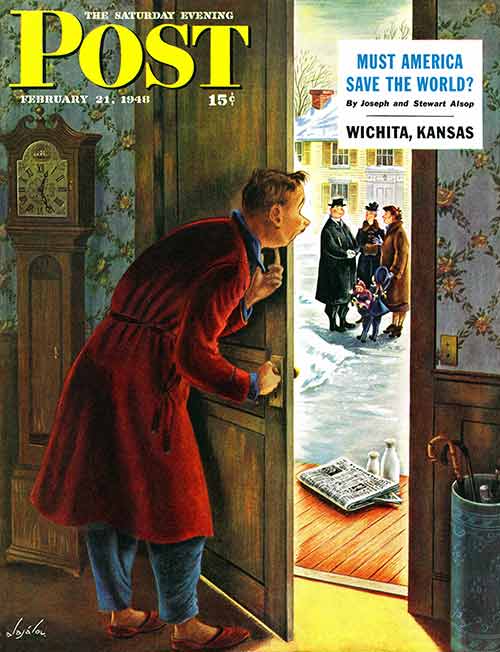
“Sunday Paper”
From February 21, 1948
It took me a while to figure out what’s happening in this terrific cover by Constantin Alajálov. The man is hiding behind the door because it’s Sunday and he just ditched church. Who’s outside his door? The minister, of course, and now the guy can’t get to his paper and bottled milk.
The cover probably doesn’t make sense to a lot of younger people today. Is not going to church really such a big deal? And why the heck would anyone get bottled milk delivered to their house?
Oscar Night
There are two ways to celebrate the Academy Awards, which air on ABC this Sunday starting at 7 p.m. Eastern (though the red carpet show starts — and I’m not kidding — at 1:30 on E!). You can dress up in a tux and roll out a red carpet in your living room and serve things like filet mignon and martinis, or maybe you’re more of a popcorn-and-pizza type of person. I’m going to assume the latter.
The Pocket Change Gourmet has several recipes for the night, including Queso Dip, Spiced Nuts, and Academy Award Oscar Cupcakes, while Food & Wine has seven — seven! — ways you can eat popcorn. You might also need a good recipe for guacamole and salsa. Or you could just get on the phone and order Domino’s. Hey, if you can use their wedding registry, you can have it on Oscar night.
I haven’t seen any of the nominated films, but I’m just going to assume La La Land is going to win everything.
Next Week’s Holidays and Events
Mardi Gras (February 28)
This day is also known as Fat Tuesday, and the first one was held in 1857. Even though the celebration starts today, the parades actually started in January.
Ash Wednesday (March 1)
The ash is from the palm branches blessed on last year’s Palm Sunday, and they are pressed into the foreheads of worshippers in the sign of the cross. I remember this from Sunday school.
National Salesperson Day (March 3)
The term salesperson encompasses a large group of people, from insurance salespeople and retail store clerks to the little ones who sell Girl Scout cookies and writers who want you to buy their writing, so this sounds like a day for all of us.
From the Archive: Critics from 1978 Pick the Best from 50 Years of Movies
Post editors from 1978, pooling 50 years of favorites, joined distinguished film critics Rex Reed and John Simon and the American Film Institute in daring to choose the best movies, actors and actresses of all time: You may not agree with the choices but they call up happy hours spent in the dark.
The American Film Institute picks the 50 best movies. The top 10 are:
- The African Queen (1952)
- Casablanca (1942)
- Citizen Kane (1941)
- Gone With the Wind (1939)
- The Grapes of Wrath (1940)
- One Flew Over the Cuckoo’s Nest (1975)
- Singin’ in the Rain (1952)
- Star Wars (1977)
- 2001: A Space Odyssey (1968)
- The Wizard of Oz (1939)
The next 40 are:
- All About Eve (1950)
- All Quiet on the Western Front (1930)
- All the President’s Men (1976)
- Ben Hur (1959)
- The Best Years of Our Lives (1946)
- The Birth of a Nation (1915)
- Bridge on the River Kwai (1957)
- Butch Cassidy & the Sundance Kid (1969)
- Cabaret (1972)
- Chinatown (1974)
- City Lights (1931)
- Strangelove (1964)
- Fantasia (1940)
- The General (1927)
- The Godfather (1972)
- The Godfather, Part II (1974)
- The Graduate (1967)
- High Noon (1952)
- Intolerance (1916)
- It Happened One Night (1934)
- It’s a Wonderful Life (1946)
- Jaws (1976)
- King Kong (1933)
- Lawrence of Arabia (1962)
- The Maltese Falcon (1941)
- Midnight Cowboy (1969)
- Modern Times (1936)
- Nashville (1975)
- On the Waterfront (1954)
- Psycho (1960)
- Rocky (1976)
- Snow White & the Seven Dwarfs (1938)
- The Sound of Music (1965)
- The Sting (1973)
- A Streetcar Named Desire (1951)
- Sunset Boulevard (1950)
- To Kill a Mockingbird (1962)
- The Treasure of the Sierra Madre (1948)
- West Side Story (1961)
- Wuthering Heights (1939)
Best Movie
Gone With the Wind: Although there have been more artistic triumphs, it is the film I’ve seen most and I have never been even slightly bored or disappointed. Forty years later, it is still freshly minted.
Rex Reed
Badlands is the only completely successful film made in Hollywood by an individual — Terrence Malick — whose vision is realized in every aspect of the movie. In other words, the triumph of the individual over the corporate system.
John Simon
The Wizard of Oz: Its irrepressible good humor, its innocence, its compartmentalization of good and evil, its exuberant songs and dances which fit perfectly within the willing, oh-so willing, suspension of disbelief, its characters, its stars, its child, its dog, its allegorical interest make it that great rarity, a family favorite, a signal of joy to moviegoers and television watchers all over the world.
Editors
Best Actor
Spencer Tracy was all things to all people; he knew his craft brilliantly, yet created the illusion that what you were seeing was effortless.
Rex Reed
Fredric March was the most graceful, intelligent, and versatile actor in American movies, as good at dramatic as at comic roles, as fine as leading man as he was as character actor. Yet he has been unjustly overshadowed by flashy performers of far less substance.
John Simon
Sir Alec Guinness takes you into his confidence with an intimacy so pleasant and yet with a sweep so grand — from The Lavender Hill Mob to Star Wars, from Great Expectations to The Bridge on the River Kwai — that his acting becomes an analysis of your possibilities, your past, your sense of all that the world has accomplished. This is the triumph of a great actor, the giving of his audience to itself.
Editors
Best Actress
Audrey Hepburn never made a wrong move, she made even bad movies memorable, and she spanned three decades without ever losing her “star” status. Or — Judy Garland who did the same thing!
Rex Reed
Jane Fonda (in Klute, They Shoot Horses, Don’t They?, and Coming Home): A splendid comedienne, a perceptively incisive dramatic actress, a woman of loveliness that is not of the usual Hollywood sort, and an artist who keeps growing from part to part.
John Simon
Elizabeth Taylor’s stunning beauty, her precise articulation, her sense of real stardom have made literature of a number of her films — National Velvet, Cat on a Hot Tin Roof, Who’s Afraid of Virginia Woolf? — literature in which she performs in comfortable equality with the stories’ creators: Enid Bagnold, Tennessee Williams, Edward Albee.
Editors
Rex Reed, Syndicated columnist
BEST SUPPORTING ACTOR
Clifton Webb never achieved the leading-man status he deserved, but he brought class to films at a time when it was badly needed.
BEST SUPPORTING ACTRESS
Thelma Ritter: Although she never won an Oscar, she was continually nominated for adding magic and mirth to films in which even the stars were often negligible. She was (and still is) more memorable than the films she appeared in.
DIRECTOR
Fred Zinnemann avoided the “auteur” stamp and turned out many different kinds of movies, each speaking artistically on its own terms. Each time the theme of the small person triumphing in a harsh world came through valiantly, from From Here to Eternity to The Member of the Wedding.
ANIMAL MOVIE
Lassie Come Home (and all of the sequels in that M-G-M series): Still the best of the animal films and even today, it gets me in the tear ducts every time.
COMEDY
Some Like It Hot enlarged the “war between the sexes” theme in ways most audiences never contemplated before.
EPIC
Bondarchuk’s Russian War and Peace taught me how new uses could be made of extras. The crowds took on a personality of their own to create an astonishing canvas of an era. So did the battles.
MUSICAL
Singin’ in the Rain proved Hollywood does it better than anyone else. It also used color, music, choreography, writing, and visual splendor to the fullest without losing a grip on its story line. It all added up to masterful entertainment.
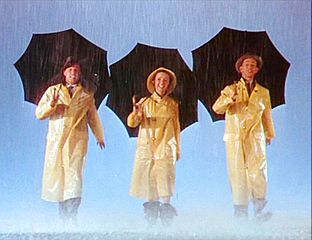
MYSTERY
Citizen Kane enlarged our scope of what the film medium can do, told a riveting story, and was so original in concept everyone has been copying it ever since.
LOVE STORY
Mrs. Miniver glorified good people who believed in achieving inner success through their deeds rather than through their sexuality.
WAR
The Best Years of Our Lives: Without one shot of a gun going off or a limb being blown up, it investigated the hearts, emotions, minds, and doubts of the men who make wars happen. It also told the story of American heroism better than any other film about the war years, without ever visiting the battlefront.
WESTERN
Two favorites here. Stagecoach: While it enlarged our view of a time and place, it demonstrated brilliant cinematic use of a diversity of characters in a tight situation; and Shane: It took the time to develop emotional attitudes in its characters instead of using Western myths as clichés.
John Simon, Film critic for New York magazine
BEST SUPPORTING ACTOR
Leslie Howard in Gone With the Wind: The only way one can pick the best supporting actor in 50 years — a rather absurd thing to have to do — is to free associate. The first name that comes into your mind must have a special, almost mystical, significance.
BEST SUPPORTING ACTRESS
Claire Trevor in Key Largo: Same as above. This is the first supporting performance by an actress that presented itself to me.
DIRECTOR
Stanley Kubrick is the only American director who is represented by two movies in what follows.
ANIMAL MOVIE
The Roots of Heaven: Most animal films are about the lovableness or heroism of a particular animal; The Roots of Heaven was about something bigger — the need to preserve endangered species — and made a convincing case against the vileness of elephant hunters, and, by implication, other kinds of game hunters.
COMEDY
Dr. Strangelove: or How I Learned to Stop Worrying and Love the Bomb is a rare absurdist comedy with very serious implications. It is screamingly funny while making its highly important anti-nuclear war statement.
EPIC
Lawrence of Arabia: Despite some flaws (notably some cutting after release, as well as additions for the re-release), this is the only epic film with genuine intellectual and artistic values as well as true filmmaking skills.
MUSICAL
Top Hat: The Rogers-Astaire films had good music, excellent dancing, and none of the pretentiousness of movies like Singin’ in the Rain. I’m not sure whether Top Hat was the best of them, but it represents them well and is the best remembered.
MYSTERY
Strangers on a Train: The master of mystery was, as any child knows, Hitchcock. Which of his many solid mysteries was the best may remain a mystery forever, but this one had the most provocative plot, believable characters, and tremendous suspense.
LOVE STORY
The African Queen is more than just a charming romance — the story of love coming to unlikely middle-aged people and transforming them, through genuine mutual respect, into finer, socially responsible human beings.
WAR
Paths of Glory: Among many so-called antiwar films, it may be the only one that — without forsaking the bounds of believability — shows the true dirtiness of war. There is no sense of heroism, nobility, or whatever; only horror.
WESTERN
No choice in this category. The Western is basically an infantile genre. It either idealizes false values, while also insulting the Indians, or else it is an anti-Western, scoring easy points by inverting to usual Westerns, which is facile and also infantile.
Editors, The Saturday Evening Post
BEST SUPPORTING ACTOR
Villains are, by definition, not heroes, not stars, and although Sidney Greenstreet was a superb and successful stage actor and played several good-guy roles in the movies, and although Peter Lorre had a likewise outstanding career, both were most memorable as villains (especially in Casablanca and The Maltese Falcon), no-goods who had to get theirs in the end. But they were both so very good at being very bad.
BEST SUPPORTING ACTRESS
Agnes Moorehead: Her real tragedy was that no one saw how pretty she was. Never one to sulk, she conquered character roles, putting on a shrewish hue, listening to the role instead of her own vanity, creating a workable relation — one that audiences could sympathize with and understand — with the dark side of the human condition.
DIRECTOR
Ingmar Bergman: While American movies were veering dangerously toward a Doris Day/light comedy repertory, the Swedish moviemaker introduced an incisive probe into the mystical human spirit, creating such beautiful films as Wild Strawberries, The Seventh Seal, and Cries and Whispers on a pathetic budget to show Hollywood that there was such a thing as more taste than money.
ANIMAL MOVIE
National Velvet was a horse race which the audience won. Child stars “Butch” Jenkins (who retired at age 10), Mickey Rooney, and Elizabeth Taylor under the superb professionalism of Angela Lansbury and Anne Revere turned Enid Bagnold’s classic children’s story into a pride of faith and hope.
COMEDY
The Graduate: A good moviemaker, Mike Nichols, at his best, and a wonderful actor, Dustin Hoffman, at better than his best, which is considerable. You just cannot stop laughing, all the time knowing that you shouldn’t be laughing, Benjamin’s problems aren’t funny, they’re so real and tragic it hurts, but so funny, lord. I mean, plastics? Plastics?
EPIC
Apparently an epic movie is one that has battle scenes and an intermission. Both parts of The Godfather are a little shy on battle scenes (not on killings, certainly, but on mass fights), and a sequel may not be quite the same as a second act. But both movies were unusually long, and considered together — television even went so far as to sort things out, chronologically — they certainly qualify. It is (they are?) an epic, and of a new, more honest, less grand, and thus more powerful ilk.
MUSICAL
High Society — The Philadelphia Story with Cole Porter’s songs; Louis Armstrong’s brilliant and contagious happiness; the glacially pretty Grace Kelly; Mr. Cool, Bing Crosby; Frank Sinatra; and one of the straightest, best songs of any movie, “True Love” — offers classy entertainment completely devoid of snobbery.
MYSTERY
Two choices here, necessarily. Lady from Shanghai, because its technical achievements — camera angles, lighting, superb editing, all the Orson Welles trademarks — are so immense and intense that the mystery is as much in how such a movie could come into being as in the nevertheless hypnotic plot. And, for Bogart’s sake, The Maltese Falcon. One of his finest performances, in the kind of role he handled best. The Sam Spade, Philip Marlowesque private eye who is stabbed in the back by everyone including the beautiful girl, especially the beautiful girl. Who survives, but loses everything, including any idea of why or what he has lost.
LOVE STORY
D. H. Lawrence’s novel, Women in Love, was transformed by Ken Russell into a rich tapestry of love and class where the body and affection ruled inheritance and wealth. Glittering scenes and carefully researched literary associations make the movie a visual as well as an intellectual reward.
WAR
M.A.S.H., because although the war is there it’s nothing mystical, nothing necessarily more — or less — serious than life, sex, death, or football, all of which get their fair share before the lights come back on.
WESTERN
McCabe and Mrs. Miller because, for one thing, it is beautifully filmed. It is impressionistic, warm and soft, even at its most violent. Director Robert Altman makes you believe the entire movie was shot by the yellow glow of kerosene lamps. He focuses on his characters, on Warren Beatty and Julie Christie, who are themselves beautiful, and refreshingly — for the genre — fallible, human.
From the July/August 1978 issue of The Saturday Evening Post
8 Most Embarrassing Presidential Gaffes
Today, everything an American president says is dissected and analyzed. For anyone under such scrutiny, gaffes are inevitable, and every thoughtless, off-hand comment or tasteless remark is captured and broadcast even before the president realizes what he just said. But all such gaffes are not equally horrid.
Here is a list of the eight most regrettable utterances from the highest office.
1. No Crooks Here
Asked in an interview if there were any situation in which the president, in the best interest of America, could commit an illegal act, Richard Nixon replied, “Well, when the president does it, that means that it is not illegal.” In hindsight, he was a little off on that one.
2. What Cold War?
Debating Jimmy Carter in 1976, Gerald Ford declared, “There is no Soviet domination of Eastern Europe.” Asked if he truly meant that the nations held behind the USSR’s Iron Curtain weren’t dominated by Soviets, he repeated himself, asserting that Poland, Romania, and Yugoslavia were free of Soviet interference. It destroyed all of Ford’s credibility in foreign affairs.
3. Unsound Check
Prior to a 1984 radio broadcast, Ronald Reagan was asked to speak into the microphone for a sound check. Joking, he said, “My fellow Americans, I’m pleased to tell you today that I’ve signed legislation that will outlaw Russia forever. We begin bombing in five minutes.” A recording of his statement was leaked, and Soviet forces were briefly put on alert.
4. Language Tango
In 1998 testimony before a grand jury, Bill Clinton was questioned about his improper relationship with White House aide Monica Lewinsky. In defending as truthful his statement that “there’s nothing going on between us,” he responded, “It depends on what the meaning of the word is is. If the — if he — if is means ‘is and never has been,’ that is not — that is one thing. If it means ‘there is none,’ that was a completely true statement. … Now, if someone had asked me on that day, are you having any kind of sexual relations with Ms. Lewinsky, that is, asked me a question in the present tense, I would have said no. And it would have been completely true.” His attempt at hair-splitting did not prevent his later impeachment by the House of Representatives.
5. Whose Finger Is on the Button?
Harry Truman, who liked to express himself in terse, direct statements, was asked whether the U.S. would consider using atomic weapons against the Chinese in Korea. He replied, “The military commander in the field will have charge of the use of weapons, as he always has.” Unfortunately, the commander was the impulsive, headstrong General Douglas MacArthur. Many Americans feared the General would start the next world war through the use of atomic bombs. The administration quickly issued a correction, but it didn’t erase the worries.
6. Bad Lip Reading
At the 1988 Republican Convention, candidate George H.W. Bush pledged to resist Congressional pressure to raise taxes. “They’ll push, and I’ll say no, and they’ll push again, and I’ll say, to them, ‘Read my lips: no new taxes.’” Two years later, those lips had to eat those words as Bush raised taxes, helping to drop his approval rating from 79% to 56%.
7. You’re on Candid Camera
A reporter once asked Dwight Eisenhower what important decisions his vice president, Richard Nixon, had helped him make. Eisenhower, with uncharacteristic candor, replied, “If you give me a week I might think of one.” It was such a revealing remark that the Democrats replayed it in campaign ads against Nixon in 1960.
8. Gutter Ball
On The Tonight Show with Jay Leno, Barack Obama was asked about a recent bowling event. “I bowled a 129,” he replied. Leno replied sarcastically, “That’s very good, Mr. President.” And the president added, “It’s like the Special Olympics or something.” Even before the taped show could be aired, the White House recognized the insult to participants in the Special Olympics, and campaign of apologies began.
Featured image: Rcihard Nixon (Photo by Ollie Atkins, National Archives)