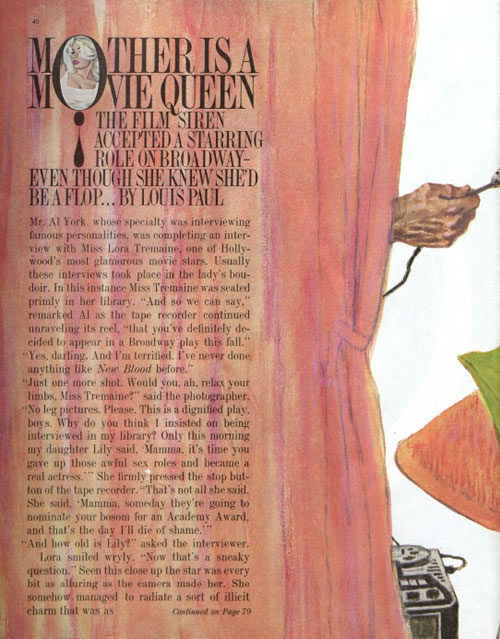
Summer is for steamy romance. Our new series of classic fiction from the 1940s and ’50s features sexy intrigue from the archives for all of your beach reading needs. Read “Mother Is a Movie Queen,” in which Hollywood star Lora Tremaine is convinced to accept a part in her first ever Broadway performance… by her own daughter. In her attempt to transition from seductive Hollywood roles to professional Broadway productions, she could find a new beau along with a fresh career.
10 Tips for Saving Time at Thrift Stores
Thrifting is for the adventurous, the off-beat, and — for the most part — the unhurried.
But when you shop resale, you’re potentially saving garments from joining the 85 percent of clothing that ends up in landfills. The thrill of the hunt is spreading to more shoppers each year. Some people thrift to find vintage, unique threads, and others are searching for high-end brands they couldn’t otherwise afford. Online resaler thredUP compiled surveys and industry data to find that around 40 percent of millennials thrifted last year, and the resale market is expected to double from 2017 to 2022.
If you’re new to the idea, thrifting can seem overwhelming. Flea markets, consignment shops, secondhand stores, and antique shops all require a unique strategy to get the best deals, but some cardinal rules can help you cut through the clutter and score your treasures in less time.
Thrift Seasonally

When it comes to secondhand stores, the inventory is driven by donations. If you visit stores in the spring and summer — when people tend to clear out their unused possessions — you might have a better chance at finding your holy grail of vintage kitsch. In college towns, thrift stores are loaded up with unwanted appliances and furniture at the end of each semester.
Shop by Locale
Just as the characteristics of neighborhoods differ, so will the contents of their thrift stores. For high-end electronics and brands, shop at stores in wealthier areas. If you’re looking for trendy surprises, go to an artsy district.
Browse Often
Resale inventory changes quickly, so your chances of landing a sweet deal are better if you stop in every once in a while. It could take weeks or months, but finding your dream dresser or a tags-on linen jacket will make it all worth it.
Thrift through the Week
Since stores get a bulk of their donations over the weekend, the perfect time for shopping is usually Tuesday through Thursday. At this point, they’ve had a chance to process their inventory, and the next weekend rush hasn’t yet come to pick over the good stuff.
Have a Plan

Getting sucked into the unexpected wonders of Goodwill is easy, but you’re going to need a strategy if you don’t want to waste your entire afternoon. The sheer volume of the store might be too much to take in at once, so focus on shoes or jeans if that’s what you need. Look at shirts and pants a size below and above your own, since sizes can fluctuate for older clothing and different brands. Most veteran thrifters place everything that’s a “maybe” in their cart and discard everything they don’t absolutely need at the end.
Check Clothes
Remember that you’re often dealing with previously worn clothing. That means it could have rips and stains that aren’t apparent at first glance. Before you fall in love with that Rag & Bone dress, check it inside and out for any non-negotiable damage.
Bring a Tape Measure
Measure twice, and buy once. Make sure you know the dimensions of the space you’re trying to fill so you can quickly decipher whether a piece of furniture is going to work. It should go without saying that you’ll need the proper transportation.
Test Electronics
If it has a cord, plug it in to make sure it works.
Keep Track of Discounts and Sales
Follow your favorite stores on social media or join their mailing list to stay up-to-date on weekly specials. Military discounts, senior discounts, and other sales can turn a regular bargain into a spectacular buy.
To Buy or Not to Buy

Buy: Ties, frames, solid wood furniture, vinyl, books, shoes, baskets, t-shirts, vases, baby clothes
Avoid: undergarments, swimwear, pillows, stuffed animals.
The Saturday Evening Post History Minute: Our 100-Year-Old Trade War with China
In 1905, U.S. restrictions on Chinese immigration led to a boycott of American goods that ultimately reshaped the world’s economy.
See more History Minute videos.
“Mother Is a Movie Queen” By Louis Paul
Mr. Al York, whose specialty was interviewing famous personalities, was completing an interview with Miss Lora Tremaine, one of Hollywood’s most glamorous movie stars. Usually these interviews took place in the lady’s boudoir. In this instance Miss Tremaine was seated primly in her library. “And so we can say,” remarked Al as the tape recorder continued unraveling its reel, “that you’ve definitely decided to appear in a Broadway play this fall.”
“Yes, darling. And I’m terrified. I’ve never done anything like New Blood before. ”
“Just one more shot. Would you. all. relax your limbs, Miss Tremaine?” said the photographer. “No leg pictures. Please. This is a dignified play, boys. Why do you think I insisted on being interviewed in my library? Only this morning my daughter Lily said, ‘Mamma, it’s time you gave up those awful sex roles and became a real actress.’ ” She firmly pressed the stop button of the tape recorder. “That’s not all she said. She said, ‘Mamma, someday they’re going to nominate your bosom for an Academy Award, and that’s the day I’ll die of shame.”‘
“And how old is Lily?” asked the interviewer.
Lora smiled wryly. “Now that’s a sneaky question.” Seen this close up the star was every bit as alluring as the camera made her. She somehow managed to radiate a sort of illicit charm that was as difficult to describe as it was easy to look at. “Let’s just say Lily’s in her teens. She’s been in the little-theater movement on the Coast here for several seasons. Her dad — we’re separated, as you know — helped to finance her in a couple of things that sort of expired. Anyway, she thinks it’s high time I did a Broadway play, and so I finally accepted Martin Latimer’s offer.”
“And in all these Hollywood years you’ve never been in a stage drama?”
“No. And I’m petrified. But don’t put that in your piece. In fact, dear, I’d like to see a copy of this article before it appears. Not that I don’t trust you, Al. But — ”
“I’ll have a transcript in the mails in about two weeks.”
“In that case send it on to the Park South Hotel, New York.” She gave one of her famous smiles. “If you boys like Scotch,. just help yourself. A feller in Edinburgh makes it up for me special.”
Later Miss Lily Tremaine came up dripping from the swimming pool, a towel flung around her. She was slender, somewhat tense, with a tomboyish figure and an air of deep gravity. “How did it go?”
Lora shrugged. “I talked about your father, naturally. And my other marriage when I was just a stupid kid.”
“And not about the play!”
“Of course I talked about the play. But you’ve got to toss in a little human stuff too.” Lora sighed. “I don’t know why I let you wangle me into this. What do I know about Broadway? Even Ted Loes, my manager, has his doubts.”
“Mamma, this lead in New Blood will start you on a whole new career. The play has terrific social implications, the idea of a rich society matron scheming to marry off her son to the daughter of the family cook — ”
“It don’t sound very real-life to me.”
“But it is real life. Every day you read how some royal prince has been marrying a commoner to bring fresh blood into the family. Actually it’s a sort of Strindberg plot — ”
“Strindberg. Strindberg — what studio does he work for?”
“Really, mamma! Strindberg was a famous Swedish playwright.”
“Well, unless he had a lot of screen credits I wouldn’t recognize the name.” Reaching over, she patted her little blond spaniel. “By the way, I’m taking Taffy with us. He’ll be a comfort. You know I’ve never liked New York. Cities look better lying on their sides. The way New York stands up balanced on its back legs makes me dizzy.”
“Honestly, you’re a character.”
“I’m myself, if that’s what you mean. I’ve been studying the lines of this play. I can’t seem to get inside Mrs. Broughton, of the Boston Broughtons. It’s hard to visualize myself as a society dame.”
“Now don’t tell me you’ve got an inferiority complex!”
“It’s possible.” Lora shrugged. “I’ve been so busy bringing you up and running what I was born with into a million-dollar trust fund that I haven’t had time to figure out my complexes.” She took the towel and began drying her daughter’s back and shoulders. “You’re the talented one in the family. You remind me of your father. I mean his good side. He was -Furthermore, I don’t like flying. Especially these jets. Why can’t we take the Super Chief?”
“Mother, where have you been all these years!”
“You know where I’ve been. In my dressing room practicing how to be enticing in front of the mirror. All I hope is that Taffy don’t get airsick.”
“’Doesn’t,’ mamma.”
“Can’t I talk bad grammar privately when we’re alone, honey? Remember, I got married when I was fifteen, and it kind of put a crimp in my education.”
A few days later, comfortably quartered in a suite at the fashionable Park South Hotel, Lora was telling her daughter, “The closer it gets to two o’clock, the sicker I feel.”
“But you’ve talked with the producer, Mr. Latimer. You saw how charming he was. You’ve seen Gig Bixby, the director. You’ve met Harriet Hart, who has the big part of the cook. They’re utterly thrilled at having you in the play.”
Lora anxiously examined herself in the large, beveled mirror. “Is this jersey suitable? I don’t bulge too much?”
Lily gazed at her mother’s figure critically. “Let’s admit it, mamma. You automatically bulge. But never mind that. Just concentrate on rehearsal.”
“All right. But I wish you’d change your mind and come with me.”
“Mother, once you get into it you’ll love it!”
The handsome, statuesque actress pulled on her gloves. “I’ll probably love heaven if I ever get into it. But that don’t mean I’m in a hurry to kick the bucket.”
Lily had to laugh. “I still say you’re a character, mamma.”
On the empty stage of the dimly lighted theater the company had assembled in working clothes, and they cast curious sidelong glances at the star as she entered.
Following the usual introductions, Miss Tremaine exchanged a nervous joke or two with the producer, a rather elegant man with a pleasant touch of white at the temples. “I can’t tell you how I felt when you agreed to do this play,” he said.
“Good. Then I won’t have to tell you how I felt.”
The cast finally gathered around a long, scarred oak table while the director made a few observations. There was nothing elegant about Bixby, who looked as though he’d slept in his clothes.
“I happen to feel that the better we understand the purpose of a drama,” he said, “the more likely we are to convey this meaning to the audience. Now you all remember the old story of the tricky little gold digger who gets her hooks into the son of some upper-crust family. Father eventually exposes her by writing a walloping check so young Reggie can marry one of those pudding-faced daughters of the rich.” He flipped through the pages of the play script. “Well, if you’ve read New Blood, you know it’s something more than a variation on this threadbare theme. It’s no longer a question of buying off the little gold digger. On the contrary, she’s needed to put back some vigor into the family blood stream. So we have in Mr. Clary’s play a dramatization of this proposition, the campaign of the wealthy Broughtons to arrange a match between their playboy son and the cook’s sprightly daughter. The young couple is willing enough, but it’s not quite that simple. Mrs. Quinlan, the cook, is dead set against any such union. ‘I’d rather Marie stayed single the rest of her days than marry that night-club rounder and drunkard, Monty Broughton,’ she declares indignantly. ‘Remember, their children will be my grandchildren, and I’m damned if I want any such mixture as this in my family. The rich are good enough to work for, madam. But to marry — ‘
“Well, you get the point. Obviously there’s more to this play than mere surface story. It’s the way these two parts are played that is crucial. The head-on collision between Mrs. Broughton, the socialite, and Mrs. Quinlan, the cook, represents the differences in our democratic way of life itself. Can they come to terms? Are Judy O’Grady and the colonel’s lady really sisters under the skin? That’s the question.
“Now, the burden of these portrayals lies squarely on the shoulders of Lora Tremaine and Harriet Hart. Miss Tremaine, as you all know, is one of our foremost picture stars. And while this is something of a new departure for her, I think we have a right to expect great things. As for Harriet Hart, her selection to play the cook was, in my opinion, an inspiration. Bill Garrett as Monty and Alice Chalmers as the cook’s daughter round out an experienced group of performers. Now this has been a long speech, and it’s time we got on with the reading. So please settle back and feel free to interrupt at any point in the procedure.”
When Lora returned to the hotel, Lily said, “Well, mamma? How did it go?”
“Rotten.” The actress tossed her gloves on the sofa. “I’m more confused now than when I started.”
“Why, mamma? What went wrong?”
“Nothing. I just got lost after the first six minutes.”
“But you have to expect it to be a little different from pictures, mamma.”
“Do I have to expect funny looks and snide remarks behind my back?”
“Oh, now you’re just imagining things.”
“Well, before it’s too late maybe I’ll imagine myself right out of this play. How I ever let myself be talked into this crazy venture is a mystery!’
“But, mother, you’ve got talent!” exclaimed Lily passionately. “I know you better than anybody in the world. I want to be proud of you!”
“You don’t have to shout, dear. I hear good. I’ve just got an awful feeling this whole thing is going to turn out to be a disaster.”
The girl gestured in a characteristic way with her finger. “You listen a minute, mamma. How do you think I feel when people refer to you as ‘The Shape’? How long can you go on playing the sexy dame, the femme fatale in these vulgar films? It ruined your life with papa — ”
“Leave your father out of this.”
“And now it’s coming between us. Here’s your chance to play a strong dramatic part, to show you’re a real actress, and you’re fighting it. Can’t you try?”
“O.K. But I feel out of place, like a whale in a teacup. You’ll just have to come to rehearsals and explain things to me as we go along, baby.”
On stage the following afternoon the property man had arranged some chairs to represent the Broughton living room. “Let’s take it from Mrs. Broughton’s first entrance,” said the director. “Miss Tremaine, haven’t you got your play script?”
“I’m a quick study. I know the lines.”
“Good. We’ll run through this bit with your son Monty to get the feel of the dialogue. You’ve met Bill Garrett, of course.”
The young actor was staring at her with a mixture of awe and respect. She blinked. “Don’t I know you from somewhere, sonny? From way back?”
He shrugged, smiling.
“No, I guess not. Well, let’s get on with it.” She turned to the director. “What do I do?”
“Do?” Bixby’s brows went up. “Just go ahead.”
Lora gulped. “‘You were intoxicated again last night, Monty. I simply will not have it, do you understand? You’re a disgrace to the Broughton name.'” The scene continued. Lora read her lines in a low, husky voice.
During a breather Bixby took her aside. “You’re underplaying. There’s no microphone. You’ve got to project right up to the last seat in the balcony.”
The next time, she cried out in a heavy exaggerated way, ” ‘You were drunk again last night, Monty. I just won’t have it, see! You’re a disgrace to the whole damn family –‘ ”
“Don’t ad lib, Lora. Read the lines. And bring down your voice.”
For several days this sort of thing continued. Young Bill Garrett and Lily had struck up a pleasant acquaintance. He described the difficulties of a boy from a suburban town getting a start as an actor, and she talked about her work in the amateur theater. Bixby, concerned, suggested night sessions. Breaking for dinner, he said, “Lily, I wish you’d tell your mother not to strain so hard. She keeps going from one extreme to the other.”
“Give her time, Mr. Bixby. Mamma will come around.”
“Incidentally,” said Bill Garrett, “it so happens that I’ve got a couple of stools reserved at Jensen’s drugstore around the corner. How about one of their famous corned-beef blue plates?”
“Yes, you go along,” said Lora, coming up. “You know I never eat when I’m rehearsing.”
“You’ll be all right?”
“Sure. Harriet Hart has been telling me about the time she opened in the play version of Salome. John the Baptist’s head rolled off the charger into an old lady’s lap — Anyway, you go on.”
“Now there’s a real woman,” commented young Garrett as they emerged into the daylight of Forty-eighth Street.
“I don’t know.” Lily shook her head. “She doesn’t seem to be taking direction. That really isn’t like mamma.”
Back on the rehearsal stage the director and producer, along with the author, were sitting on camp chairs with their heads together. “Let’s face it,” Bixby was saying. “That woman can’t act.”
The producer shrugged. “You said we needed a box-office name.”
“What good is her name if the play closes in Wilmington?”
Clary, the white-haired playwright, felt his unshaved chin. “I wasn’t too happy about her in the first place.”
“No, but you thought she’d be boxoffice too,” Latimer declared. “People have always paid good money just to see Lora Tremaine do nothing.”
“That’s the trouble,” said Clary. “She’s doing something all the time. What she moves, and the way she moves it, takes your mind off the lines. You always feel she is uncomfortable in the part. There’s not an ounce of Mrs. Broughton in her system. Let’s admit it, we’ve done a major bit of miscasting.”
“Well, it’s too late to change now,” said the producer. “And don’t forget where a large part of the production money is coming from.”
Meanwhile, Lora and Harriet Hart had been exchanging reminiscences. “It’s my daughter,” Miss Tremaine was saying.
“For a long time she’s been after me to do something arty on Broadway. Her father, a Los Angeles lawyer, and I just don’t see eye to eye on my career, and so we’ve been separated for the last couple of years. Maybe I’ve spoiled Lily a little to make up for things. I’m probably making another mistake about this Broadway play, but she’s so hungry to see her mother in something dignified that I agreed against my better judgment.” She sighed. “They all know I’m no actress.”
Miss Hart said, “Well, let’s give it the old Method treatment. I’ll fire the lines in your face with both barrels, and you come back like you hated my guts. O.K.?”
“I’ll try. But I still don’t know what this play is about. Personally I agree with Mrs. Quinlan, the cook. I wouldn’t want Monty in my family either.”
When the cast was reassembled, Bixby said, “Act one, scene two. Lora and Harriet. I’d like to start on a low key and work up gradually so there’s a nice feeling of climax when the cook finally says, `You go to hell, madam,’ and storms out. . . . All right, Harriet. Come in.”
It went along until Bixby interrupted. “No, you’re just squabbling.” He ran his hands through his hair. “This is a charged-up meeting. Let’s feel something electric beneath the words.”
Lily and Bill stood together watching intently as the two actresses repeated the scene. Suddenly, in a burst of temper, Bixby exclaimed exasperatedly, “Damn it, Lora, quit wriggling your hips!”
The actress turned. The color was drained from her features. When she spoke, it was in a low, restrained voice. “Do excuse me. I’ll be leaving now.”
“Mother, please!” cried Lily. “You were wriggling your hips. Can’t you do what the director tells you?”
“Would somebody find my coat?”
Bill Garrett hastily fetched it for her.
“Mother, if you walk out now I’ll never forgive you!”
Young Garrett, the actor, came downstage. His eyes were blazing. “Why, you spoiled little brat, you don’t deserve a mother like Lora Tremaine.” He turned and said furiously, “Ever since these rehearsals started you’ve all paid her compliments to her face and made slighting remarks behind her back. Well, what did you expect, Sarah Bernhardt?”
“Darling, you shouldn’t get so excited,” said Lora in a husky voice. “But thanks anyway. Would you put me in a cab?”
“I’d like nothing better.”
The following day, at noon, a group of rueful-looking stage people called at Miss Tremaine’s suite at the Park South Hotel. “I don’t think she’ll see you,” said Lily in the small sitting room. “She’s been talking on the phone with her manager. He’s flying out to take her home.”
“She can’t fly home, Miss Tremaine,” declared Martin Latimer. “We’ve got an iron-clad contract.”
“You don’t know mamma. She has lawyers who can break any contract.”
“Well, at least ask her to let us apologize,” said Bixby. He nodded at Bill Garrett. “Maybe she’ll speak to Bill.”
“Maybe she will,” said Lily bitterly. “So let him go in and tell her again how her daughter is a spoiled brat who doesn’t deserve a woman like Miss Tremaine for a mother.”
“Let’s not rake over the past,” said Harriet Hart. “We were tired and wrought up.” She raised her voice. “Lora, dear. Do come out.”
“Well, what’s all the fuss?” asked the film star, emerging from her bedroom.
“Darling, listen,” said Harriet earnestly. “You mustn’t take stage people literally. During rehearsal what sounds like an insult is only our jangled nerves talking.”
“No doubt about it,” said Bixby, “Bill Garrett was right. We’ve been acting like stinkers, and I’m the biggest.”
“No, the mistake was mine,” said Lora firmly. “I’m just somebody who was brought up in the sticks. I’ll never be a Broughton of Boston-if I try till my dying day. So I’m simply stepping out.”
Young Garrett said, “I — I wish you wouldn’t, Miss Tremaine.”
She turned. “How come you to agree with these others? Yesterday you were riled up. What changed your mind?”
“Yesterday I forgot one thing. I forgot that if our play folds, about forty innocent people will be thrown out of work, people who are being hounded by landladies for their back rent.”
“Maybe,” Harriet Hart suggested, “we could get together mornings and work the two parts by ourselves.”
“You don’t Seem to understand,” murmured Lora. “I was doing this for Lily. She’s too young to know you can’t make a sow’s ear into a silk purse.”
Lily’s lip trembled as an unbidden tear ran down her cheek. “Don’t say that, mamma. Don’t say that in front of all these people! It wasn’t for myself. I thought — I thought if you acted in s-something serious, if you were a b-big success in a fine play, it might change things between you and papa, bring us all together again. I th-thought — ” Unable to control her emotions, she ran sobbing from the room.
After a long silence Bill Garrett spoke up. “I have a feeling we’ve all been saying the wrong thing except Lily. Will you come back, Miss Tremaine. Please?”
She hesitated, then said; “I’ll let my daughter decide. If she thinks I ought to take another stab at it, I’ll try. . . . Lily! Stop sulking and come out here.”
Clary, the author of New Blood, who had not said a word during all this, was staring into space as though in a trance.
“Our literary friend,” commented Bixby, “seems to be off in some private world of his own.”
“Wha — what?”
“Are you here,” asked the producer, “or somewhere else?”
“Somewhere else,” admitted the playwright.
“And where,” inquired Lora, amused, “do you get your material from, darling, if you don’t pay attention to what goes on in life?”
“I often wonder,” said Clary vaguely.
“I’ve been thinking.” Lily had returned with reddened eyes and slipped her warm hand into her mother’s. “But before I say what I’ve been thinking, let me repeat an observation I made at rehearsals,” Clary went on. “I said then, and I say now, that in Lora Tremaine’s case we’ve done a major bit of miscasting.”
“Look,” said Bixby. “We’ve just about got Lora in the mood to return to the play. What are you trying to do, louse the whole thing up again?”
“Not necessarily. With Lora and Harriet in the leading roles, I figure New Blood could be one of the biggest things on Broadway. The trouble is, nobody’s ever taken a real close look at these two women.” He paused. “Did I hear you say you’re a quick study, Lora?”
“Yes. Why? I know everybody’s lines, by heart. I’ve got a photographic mind or something.”
Clary glanced around as though mentally setting a stage. “Then try your entrance from that door. Come barging in out of a hot kitchen as though you’d just finished baking a pecan twist.”
Lora stared at him. “Me?” she asked. “You mean I’m to play the cook?”
“Exactly. Switch parts. I can’t imagine what we were thinking of. You’re Mrs. Quinlan to a T — voice, gestures, the works. . . . Harriet, do you have Mrs. Broughton’s lines?”
“Sure.”
“Then let’s go.”
The air suddenly shot sparks as Lora, now assuming the cook’s part, declared, — You listen to me. I’d rather Marie stayed single the rest of her days than marry that idiot son of yours, Mrs. Broughton. Just remember, their children will be my grandchildren, and I’m damned if I’ll have any such mixture as this in my family. Oh, you rich are all right to work for. But to marry — ‘ The dialogue crackled back and forth as Miss Hart, assuming the haughty socialite’s role, rose to the occasion. At the scene’s end, when Lora turned, then flicked her head back and said, ” ‘You go to hell, madam,” and strode from the room, a burst of applause broke out spontaneously from the little audience.
“Terrific!” cried Bixby. “Mark my words, we’re going to see the birth of a fresh, new dramatic star.”
“Well, don’t leave out Harriet,” said Lora, beaming. “She can play both parts. That’s what I call an actress.”
Lily and Bill Garrett had decided to walk back to the theater together. “You’re very quiet,” she was saying.
“I’m sorry. I was thinking of what I said yesterday. You know, that loud speech about your not deserving a mother like Lora. I–I’ve been sort of revising my opinion.”
“I should hope so.”
“I’ve decided I was talking about the wrong party. It’s your father, whoever the devil he is, who doesn’t deserve a woman like Lora Tremaine.”
“You’ve always stuck up for mamma from the very beginning. Why?” asked Lily curiously.
“The answer’s simple.” Garrett was smiling. “Remember when your mother first spoke to me? She said, kind of puzzled, ‘Don’t I know you from somewhere, sonny? From way back?” He held her arm as they waited for a traffic light. “Well, she was right. Only it was too long ago for her to remember. Her folks lived on our block. I was just a small kid then. I used to see her when she’d come home after some night-club engagement or other. To us kids she was an actress, a glamorous star.”
After a little intake of breath, Lily said, “I knew there was something, the way you’d steal an odd glance at her every once in a while — ”
“She’d drive up in a big car, and there’d be piles and piles of packages, presents for her ma and pa. One time — ” He had to laugh. “Once she gave us kids bags of candy, and I slept with mine under my pillow. We never knew exactly what she did on those road trips, but whatever it was, it was bringing comfort and happiness to her folks. And in this play I realized she was still using her talents for somebody else’s sake. That’s why I blew my top and said you didn’t deserve such a mother.”
“I’m going to cry in a minute,” Lily told him.
His fingers felt for hers. “Don’t. Remember, we all belong to the world of make-believe. In the end it turns to comedy, and the curtain comes down on a laugh — or maybe a kiss.” He stopped and leaned close to her.
“A kiss? Here, in broad daylight — with everybody watching?”
“If you intend to be an actress you might as well get used to audiences.”
He kissed her again and again as the passing crowds stared at them. She finally had to draw away.
“I feel kind of heady,” he said. “Let’s go and have a gypsy tell our fortunes.”
“Why?”
“Well, if she doesn’t say a big, tall, handsome fellow named William Garrett is about to come permanently into your life, we’ll call the police and have her arrested as a faker.”
“Mr. Garrett, is this your daffy way of proposing?”
“Let me put it this way. How else can I go about getting Lora Tremaine for a mother-in-law?”
When they at last arrived at the theater, they found Miss Tremaine in tears. “Now what’s the matter, mamma?” Lily exclaimed.
“N-nothing,” she sobbed.
“Look. People don’t sit down and bawl for nothing, mother. What happened?”
“Nothing, I tell you. Just this telegram.”
“Who is it from?” Lily demanded.
Lora dabbed at her eyes. “Here. I guess you’d better read it.”
“Dear Lora,” the wire read. “Have just been speaking to Martin Latimer on the phone. Informs me you have changed roles and are superb as Mrs. Quinlan in New Blood. I said this was great news, but no surprise to me. Have always insisted you could act, so I backed this play with half its production money two months ago to show I meant it. Will be on hand. opening night to yell bravo. Give my little girl a big hug and kiss, and say I hope all three of us will be celebrating your success together. Meanwhile, love. George Tremaine.”
“Now she’s crying!” Bill Garrett scratched an ear, nodding at Lily. “What is this, anyway — East Lynne?”
“I doubt it,” said Lora, gazing at the young man quizzically. “Here, let me have your handkerchief — mine’s soaked.” She reached up and rubbed his lips. “I doubt if there’s any character in East Lynne who enters with his mouth all smeared up with lipstick.”
“I can explain that, mamma,” said Lily.
“O. K. Start explaining.”
8 Things You Didn’t Know About the Marines
The phrase “The United States Marine Corps” immediately conjures a number of images and ideas. Toughness. Honor. Tradition. And while that reputation can be traced back to 1775, the “Act for establishing and organizing a Marine Corps” was signed by President John Adams on this date, July 11, in 1798. On its 220th anniversary, we look some of the longstanding traditions that make the Marines the Marines. Some are reflected in the modern culture of this military branch, while others are just downright peculiar.
1. The Marines Have Two Birthdays
The modern Marine Corps descended from the Continental Marines assembled under the Continental Marine Act of 1775, which was initiated by the 2nd Continental Congress on November 10th of that year. Though the Continental Marines were disbanded at the end of the Revolution, the United States Marine Corps still commemorates November 10th as their official creation.
The Marines were “reborn” in 1798. The creation of the United States Navy and Marine Corps grew out of clashes with the French navy during the French Revolutionary Wars. An act of Congress formed the Navy in 1794, with Marines recruited to serve on newly created ships by 1797. Adams signed the “Act for establishing and organizing a Marine Corps,” authorizing a battalion of 500 privates along with a major and other officers. Revolutionary War veteran William Ward Burrows was made an initial major. Marines would serve in the Quasi-War, that undeclared war between the new French Republic and young United States that occurred between 1798 and 1800.
2. Why the Marines are “Marines”
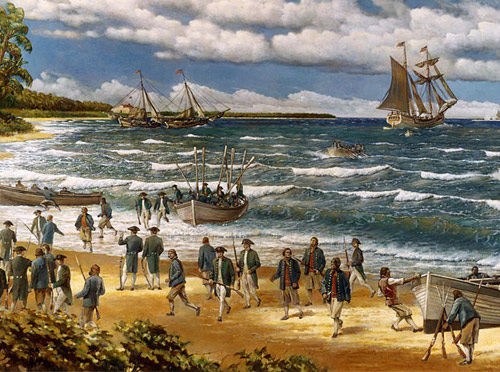
The term Marine came from the type of infantry that supports naval operations. The Marines of the American Revolution typically mounted amphibious assaults, landing from tall ships to conduct raids in locations like British ports in the Bahamas. During the Barbary Wars against piracy that ran from 1800 to 1815, Marines frequently fought in ship-to-ship battles, boarding vessels to capture them.

3. Thomas Jefferson Chose the D.C. Barracks Site
In 1801, President Thomas Jefferson and Burrows, now Lieutenant Colonel Commandant of the Marine Corps, chose the site of the Marine Barracks in Washington, D.C. A National Historic Landmark, it is still in use today as the official residence of the Commandant, the home of the U.S. Marine Drum and Bugle Corps, and the main ceremonial location for the Corps.
4. The Dress Blues Were Overstock
Sometimes a uniform is carefully designed and thought out over time. And sometimes, you take what you can get. The familiar ceremonial “dress blues” of the Corps adopted their look from an overstock of blue jackets with red trim that Burrows received upon his original appointment to major.
5. The First Marine Sword Was a Gift
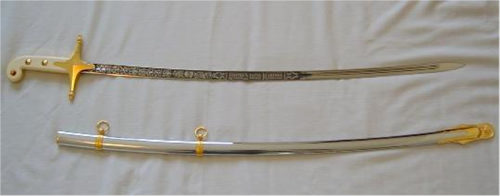
While battling Barbary pirates in Africa, First Lieutenant Presley O’Bannon, eight other Marines, and over 300 mercenaries of Arab and European origin mounted an assault on Tripoli in an attempt to liberate the captured crew of the U.S.S. Philadelphia. Though they did not take the city, deposed Prince Hamet Karamanli allegedly presented a Mameluke sword to O’Bannon after the Battle of Derna. The sword story sparked the tradition of Marine officers wearing swords in dress blues.
6. Why Tripoli Is in the Marine Hymn
The other lasting legacy of the action was the inclusion of the lyrics “to the shores of Tripoli” in the Marines’ Hymn by Thomas Holcomb in 1942. The Hymn is the oldest of any of the songs that represent the U.S. Armed Forces. The original music was written in 1867 by Jacques Offenbach, but it wasn’t adopted as the official music of the Corps until 1929.

7. There Are a Lot of Active Marines
Today, the USMC boasts 186,000 active Marines with around 38,500 reserves. Roughly 7.6% of today’s Marines are women. Of the more than 22 million veterans living in the United States as of 2014, less than 1% were Marines.
8. They Perform MANY Jobs
Over 336 MOS (military operational specialist) codes, or job types, are presently available in the Marines; paths include everything from infantry to avionics to 60 different categories of linguistics. Even as new avenues for duty continue to expand, it’s safe to say that, even after more than 200 years, the Marines continue to pursue high standards in their service to the country.
North Country Girl: Chapter 60 — Me Too
For more about Gay Haubner’s life in the North Country, read the other chapters in her serialized memoir.
Some names have been changed.
With ridiculously unfounded optimism, I had sent off my resume to Viva magazine (notorious sister publication to Penthouse), and had been miraculously summoned to an interview with Bernie Exeter, the managing editor, who ever more miraculously, offered me a job. I just had no idea what the job was.
“Oh, I thought I told you. The job is secretary to Kathy Keeton, Viva’s publisher,” Bernie said.
I squeezed out a smile to hide my disappointment: I had expected to be offered at least editorial assistant. I had not a single secretarial skill and no idea of what a publisher did, but it was a job at a magazine, a magazine I loved. And my artist boyfriend Michael and I were stone broke, with no idea of where next month’s $400 rent would come from.
“Sure, yes, when do I start?”
“Right away. Let’s meet Kathy first.” Bernie hauled me up by my arm and my head swam. What was happening? Bernie seemed nonchalant about hiring me to work for someone else. What if this woman hated me on sight? We headed down the hallway, Bernie clasping my elbow as if I were a reluctant three-year-old. A glass enclosed cubicle held a sullen brunette woman who waved us into a large corner office.
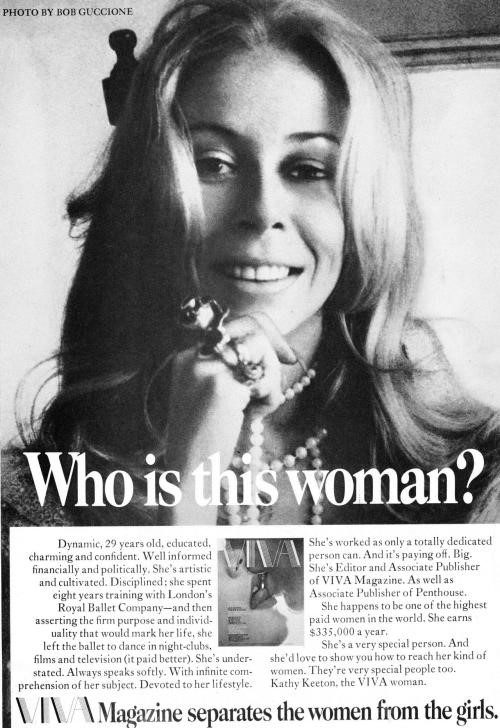
The gray industrial hall carpet ended at the door of this office, and a thick swath of white shag, soft as fleece, began. The office was lit by little gilded lamps set on little gilded tables. Before a white and gold brocade loveseat was a low gilded coffee table and a silver tea service. Behind a white and gilt spindly-legged French Provincial desk sat an older blonde, her long hair held back in what looked like a painfully tight pony tail. She was dressed in an outfit that made my own inappropriate garb (sleeveless tunic, harem pants) seem as conservative as a lawyer; she wore leg-hugging ivory silk pants and a plunging halter top that looked like two scarves tied together, showcasing breasts that had no visible means of support despite their impressive size. I had often read the phrase “dripping with gold and diamonds;” now I got to see it in real life.
“Gay Haubner, this is Miss Keeton, the publisher of Viva.” I flinched at Bernie Exeter’s faux pas, as Miss Keeton, without rising or acknowledging the slight, offered me a jewel-encrusted, perfectly manicured hand.
“Miss Keeton, it’s a pleasure to meet you,” I said, trying to will saliva into my mouth.
“She’ll be great as your new secretary,” Bernie said, as he passed her my portfolio. Kathy glanced at it, asked me several questions about Oui’s circulation and ad sales, none of which I could answer, and handed the portfolio back to me.
She said, “I hope you can start right away, ah, Gay?” I nodded confirmation that was my name. Bernie Exeter, bowing and scraping, dragged me off by my elbow again, and I spent the next hour in a small interior office covered on every surface with files and papers, added my own filled-out forms to those piles, and found out that I would make $12,500 a year, and have health insurance and two weeks’ vacation. I was a grown-up.
I spent the next day smashed in with the sullen woman in the secretarial fishbowl, who took me though my duties, the most important of which was to always address my new boss as Miss Keeton.
Miss Keeton rarely wrote letters. My bad dream the night before of having to take dictation in shorthand, which I did not know, and then losing my pencil and then discovering I had no pants on, thankfully was not a premonition.
Because of her other job title, Miss Keeton did, however, receive a lot of mail, letters with “Kathy Keton, Penthouse Associte Pubisher,” written in block letters or childish scrawls on envelopes stamped with a prison or army base as the return address. Hundreds of strange lonely men just picked her name off the Penthouse masthead and assumed that she could arrange dates for them with Penthouse Pets or that that Kathy would become their pen pal.
And there were the phone calls. Back in those days when even a professional office phone system was only a slight improvement over two tin cans and a string, there was no voice mail, no direct numbers. The airhead at the switchboard, who had her job solely because she was the girlfriend of the Penthouse treasurer, automatically put through all the calls to Kathy Keeton, even the collect ones from penitentiaries.
“But you have to answer every call,” the sullen woman instructed. “And,” she added with a shudder, “you have to be nice to them.”
“Also,” she said, “the religious nuts who call threatening to kill Miss Keeton or blow the place up? Don’t worry about it. Nothing’s happened yet. Those guys, though, yeah you can hang up on them.”
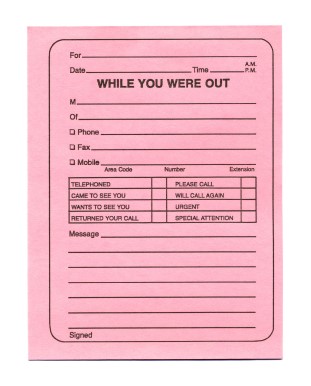
I was given a few additional instructions that did not have to do with dealing with crank calls and letters. By noon I was on my own. Miss Keeton was out that day, so all I had to do was keep track of the few legitimate callers, writing down their name, phone number, and message on a small pink “While You Were Out” slip and skewering the paper onto a wicked looking spindle, an oddly satisfying action.
In the afternoon, a few members of Viva’s staff who passed by my enclosure stopped to introduce themselves. I met the “smart cookie” new senior editor, Gini Kopecki, who was dressed in non-designer jeans, wore not a lick of makeup, and had long hair of an indeterminate color parted down the middle. I met Debby Dichter, the assistant managing editor, diminutive and dark and frantic, who came by every hour with her arms full of loose glossy magazine page proofs for Miss Keeton. I met the art director, Rowan Johnson, a shaggy South African, who showed up roaring drunk at 3:30 under the impression that he had a lunch date with Kathy.
At five, I picked up my purse to go home, infinitely pleased with myself for landing this job and already wondering how long it would take me to be promoted to editor.
Bernie Exeter blocked my exit.
“Let’s go for a drink and you can tell me about your first day,” he said. I wanted to go home and celebrate with Michael in our new apartment, a minuscule one-bedroom hidden away in a Chelsea mews, the second floor of a carriage house, with six-foot ceilings and a floor that slanted so much a dropped orange would roll from kitchen to living room.
“Sure,” I said, “That would be great.”
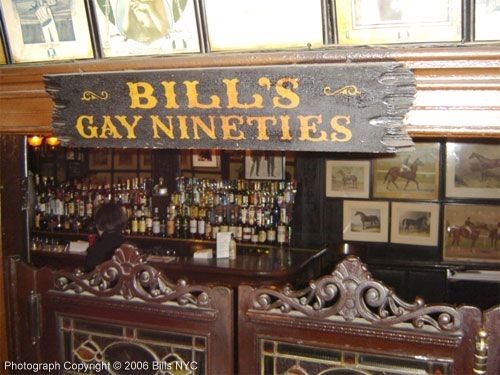
We went around the corner to Bill’s Gay Ninties, a below-sidewalk-level bar that was weirdly outdated even in 1977. Bill’s Gay Nineties was decorated like a phony saloon at a Colorado tourist attraction, a really down-on-its-luck tourist attraction that only survived because it happened to be up the road from the Cave of the Winds or Estes Park. It was a maze of small rooms, with dingy red-flocked wallpaper and dusty chandeliers, staffed by bored waiters in striped shirts, suspenders, and sleeve garters. The bartender had muttonchops and a handlebar mustache.
One drink, I thought, and some gushing about how grateful I am, and I can go home. Bernie let me rattle on and on, and even though I didn’t want it, a second drink appeared before me. I was struggling to get to goodbye, see you tomorrow, to escape from this creepy place, where gray businessmen drank alone and “Sweet Georgia Brown” crackled out of a shitty speaker.
“So,” said Bernie Exeter, “You like the job.” I thought I had made that clear over the past half hour.
“Oh, yes I can’t tell you how much I appreciate what you…”
“You can show me.”
I knew what was coming.
“Why do you think I hired you, Gay?”
Because I can write? Because I put down good money, month after month, to read Viva? Because I dress like Miss Keeton’s poor relation?
Somehow my second drink had disappeared and a third one had taken its place.
“I hired you because I want to go to bed with you. So if you like your job and want to keep it, you know what to do.” Bernie Exeter sat back and looked at me, a raven eying a semi-squashed bug.
This was not the first time I had received a tit-for-tat offer, though never so explicitly. I couldn’t even flutter my eyelashes or act as if I didn’t understand what was going on, my usual response.
“But…but…I have a boyfriend!” was the only thing I could come up with. This got a laugh and a reprieve.
“Okay,” said Bernie Exeter, finishing his drink and then mine. “Maybe not tonight. I’ll give you a few days. Remember, there are plenty of other girls who want this job.”
I stumbled out of Bill’s Gay Nineties and found my way to the subway and the sweet Chelsea apartment that had claimed all of our savings. Michael threw open the door, beer in hand, and swept me up in a ridiculously happy hug. “How was it? Is it great?”
“Yeah it’s really, ah, good.”
I tried desperately to think of something amusing or interesting that had happened, but all I could visualize was an image of that message spindle, with me impaled between pink paper slips. “Kathy — Miss Keeton — wasn’t there. I met some nice people. The guy who hired me took me out, I think I drank too much. I have to go to bed.”
All night I lay in bed like a plank of wood reliving the past two days and wondering what I had done wrong. That stupid outfit. I should have worn a business-like skirt and a white blouse with a peter pan collar, like the brunette I replaced. With a bra underneath! I had to go buy a bra. No. That wasn’t it. It was because my writing portfolio was full of nude photos from my Oui magazine gigs; Bernie Exeter must have thought I was coming on to him. Maybe it was something I said? I looked up at the ceiling, which was a few feet about my head, and tried to recall every word I had spoken to Bernie Exeter. I felt guilty and ashamed.
But I went back to the Viva office the next day, back to my little fishbowl. I had decided that when Bernie Exeter came by, twirling his mustachios and demanding his droit de seigneur, I would clutch my bosom and shout no, no, a thousand times no. I figured they’d have to pay me for two days anyway, and did long division on a scrap of paper to see how much that would be. At ten, Miss Keeton showed up and requested a cup of tea and a pack of Virginia Slims. At noon, Bernie Exeter appeared and glowered at me as I handed him the tower of magazine pages Miss Keeton had spent the morning marking up with red pen. At five, I checked the halls to see if the coast was clear and skedaddled home, where I lay awake a second night.
A few days passed. I tried to avoid Bernie Exeter. If I heard his voice in the corridor, I picked the phone and held a one-way conversation while scribbling “crap crap crap” on a message slip.
Somehow I still had a job. I met the other editors and the extremely well-dressed and desperate Viva advertising saleswomen, and a sweaty, unhappy circulation manager. Rowan Johnson, the drunken art director, introduced himself to me several times. I spent a few frantic minutes searching for Miss Keeton when Bob Guccione called, and then was mortified to finally find her in a stall in the ladies. I opened sticky letters from Joliet and waited for one long-winded dirty phone caller to run out of steam so I could say, “Thank you for calling!” and hang up. I reminded Miss Keeton of appointments with her hair dresser, dermatologist, astrologer, interior decorator, and jeweler. I fetched packs of Virginia Slims and made cups of tea. After Miss Keeton left for the day, I went into her office to remove and file every paper from her desk; she liked to start fresh every morning. I looked at that empty white desk and wished my mind were as blank.
Why Joe Pyne’s Mr. Nasty Show Was Good for the Soul
When Joe Pyne’s ’60s-era talk show came along, filled with vitriol, it seemed to take TV to a new low. But novelist John Gregory Dunne found the experience cleansing.
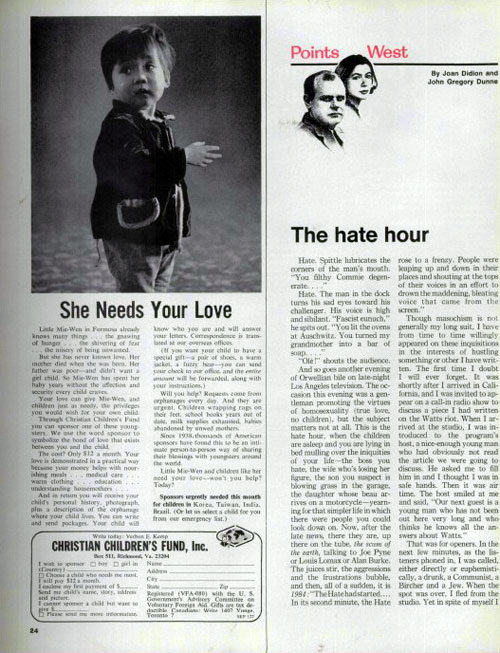
—from “The Hate Hour” by John Gregory Dunne. Originally published in the December 2, 1967, issue of The Saturday Evening Post
After watching one of these shows — and it does not matter whether I loathed the guest, the host, or both — I feel somehow drained and less misanthropic. Not long ago, for example, I had a terrible day. I had migraine and my daughter sliced her finger with a razor blade and I got a rejection slip and a cop gave me a speeding ticket, my third this year, which means that I will probably lose my license, and in Los Angeles that is like being a functional paraplegic.
That night I watched Joe Pyne. His guests included a lady who complained that television sportscasters never carried drag-racing results, a man who blamed the current racial unrest on Franklin Delano Roosevelt, and a veteran who said we ought to drop the Big Bomb on Vietnam. The vet said he did not fight World War II to throw this one away. It turned out that he had been a Navy mailman.
I was outside the zoo looking in again. Life did not seem so bad after all. I went to bed and slept well.
This article is featured in the July/August 2018 issue of The Saturday Evening Post. Subscribe to the magazine for more art, inspiring stories, fiction, humor, and features from our archives.
Electric Power. Electrifying Vision. Happy Birthday, Nikola Tesla.

“Genius is never understood in its own time.” That quote, attributed to Bill Watterson, could easily apply to Nikola Tesla. Born on this day in 1856, Tesla struggled for recognition and credibility at various points in his life. His reputation, however, grew geometrically after his death. So much so that he inspired the names of bands and electric cars, has been cast as a comic book hero, influenced new genres of fiction, and was portrayed on film by fellow genius David Bowie.
This unlikely story started in Austria. Tesla was born an ethnic Serb, son of an Eastern Orthodox priest and a mother with mechanical aptitude and incredible memory. This gift for recall and mental calculation soon became evident in Tesla himself; his teachers accused him of cheating for his ability to do integral calculus in his head.
Tesla’s school and university years were marked by turmoil. Battling health concerns like cholera and exhaustion, a gambling problem, and his own propensity to overwork, Telsa impressed those around him with his mind and high grades. Though he passed nearly twice as many exams as he need to graduate, e eventually lost his scholarship to Austrian Polytechnic due to the gambling and never graduated. He went on to work for the Budapest Telephone exchange, making improvements with his own ideas, before taking a job in Paris with Continental Edison.
While at ConEd, Tesla used his knowledge of engineering and physics to improve machines and processes, such as making repairs to damaged dynamos on ocean liners. He was assigned to building new dynamos and to general troubleshooting around Europe. When his boss Charles Batchelor was called back to the U.S. to manage Edison Machine Works in New York City, Batchelor brought Tesla with him. Thought he worked hard and was reportedly well regarded by Thomas Edison in one of their few interactions, Tesla left the job after six months. Tesla’s departure has been debated, though most scholars ascribe it to a mix of unpaid royalties that he thought he deserved and Edison’s reluctance to fund some of Tesla’s ideas.
After Edison, Telsa began a run of involvement with utilities as he worked on an arc lighting system and what would become his AC induction motor. He formed his own company, Tesla Electric Light and Manufacturing, but his partners split, leaving him broke. He formed Tesla Electric Company in Manhattan with new partners in 1887. The new partners helped him secure a patent on the AC motor, and it brought him to the attention of Westinghouse Electric. Tesla licensed some of his work to them and signed on as a consultant for $2,000 a month (a payout that would be worth more than $50,000 a month today). Unfortunately, competition between all of the various electric utilities (known as the “War of the Currents”) hurt Westinghouse’s cash flow. Tesla was forced to renegotiate his royalty deals, though his patent licensing had already made him wealthy.

By 1889, Tesla got to work in a group of labs he set up in Manhattan. This kicked off a very productive period for the inventor. In 1891, he became an American citizen and patented his famous Tesla coil, the transformer circuit known for its distinctive shape. During this period, Tesla conducted experiments in wireless lighting, as well as continuing development on different approaches to powering motors and generating electricity. He became a favorite at trade shows and exhibitions, demonstrating his work for journalists and spectators. In 1893, Tesla consulted with the Niagara Falls Cataract Construction Company on how best to mine power from the falls.

The Nikola Tesla Company formed in 1895, featuring a number of the allies and supporters that Tesla had accumulated as partners and board members. They aimed to market and patent his inventions, though it would ultimately be the licensing of patents to others that generated the most revenue.
Tesla’s interest in wireless power continued. He dabbled in X-Rays, claimed to have discovered “cosmic rays,” and focused on radio waves. He demonstrated a radio-controlled boat in Madison Square Garden in 1898, causing a minor sensation among disbelieving onlookers. Tesla tried to sell the U.S. Armed Forces on the advantages of radio-controlled torpedoes, but they passed at the time. After World War I, remote radio control in military applications became a regular practice.
The inventor’s obsession with wireless power later led him to build a lab in Colorado, as he theorized that the higher altitude and lower pressure air would be more conducive to his signals. He built massive coils that wouldn’t have fit in his Manhattan spaces. Between 1899 and 1900, Tesla reported detecting unusual signals that many believed to be extraterrestrial in origin, though some believe that he might have actually accidentally intercepted signals generated by his future nemesis Guglielmo Marconi‘s radio tests in Europe.

Tesla’s radio transmission pursuit resulted in his building the Wardenclyffe tower, an experimental wireless transmission station, in New York; he financed the project with money invested by J. Pierpont Morgan. As Tesla worked, Marconi managed to send a signal first. Although Tesla alleged that Marconi had stolen his designs, investors flocked to Marconi. Tesla ran into money trouble from mounting debts and health problems and eventually lost the Wardenclyffe facility to foreclosure. Tesla sued Marconi in 1915; Tesla lost that particular, but it did open other avenues by which patents that Marconi had been awarded were restored to Tesla and others in 1943.

For years afterward, Tesla would struggle with money and recognition, a period documented in numerous biographies like Tesla: Inventor of the Electric Age by W. Bernard Carlson. Although he continued to win awards and honors, his role in the creation of radio would be diminished. He ran through seemingly endless cycles of chasing investments and losing funds. He lived in series of hotels, sometimes simply leaving rather than paying. By 1934, he was living in the Hotel New Yorker, but Westinghouse continued to pay him $125 a month and his rent (though whether this was out of kindness or a settlement has been debated).
In 1931, on the occasion of Tesla’s 75th birthday, he was featured on the cover of Time. This kicked off an annual tradition where Tesla would hold court for the press on his birthday, showing off inventions, telling stories of his roughly 300 patents, and offering new theories. One of the most famous was his announcement in 1934 that he’d created a “death ray” for border defenses; he didn’t show plans at the time, but they were later discovered in 1984. It was never actually demonstrated nor proven to work.
Tesla died alone in his hotel room on January 7, 1943. He was found by a maid two days later. Two days after that, the FBI descended to seize his belongings under the Alien Property Custodian mandate that was in effect due to World War II. The cataloging of the items fell to M.I.T. professor John G. Trump, future uncle of Donald Trump. The public marked Tesla’s passing in many ways, including a eulogy read on the radio by New York City mayor Fiorello La Guardia. More than 2,000 people attended a state funeral on January 12.
In the years that followed, Tesla’s reputation grew. His contributions to radio gained more attention due to work from scholars and scientists. The hard-rock band Tesla not only named themselves after the inventor, but would include biographical information in their album liner notes; their double-platinum 1989 album, The Great Radio Controversy, specifically recounted the Tesla/Marconi battle. Telsa also become a prominent figure in the Steampunk fiction movement; his inventions and theories melded perfectly with the Victorian science-fiction aesthetic. The inventor has also become a favorite character in comics and films. David Bowie played him in Christopher Nolan’s 2006 hit The Prestiege, and he was depicted, along with Edison and others, as a founder of Disney’s Tomorrowland in 2015. Matt Fraction and Steven Sander’s comedic 2006 graphic novel The Five Fists of Science depicts Tesla as a hero fighting the forces of evil alongside Mark Twain. And, of course, there’s Tesla, Inc., the company that specializes in electric vehicles and is slated to produce more than 150,000 cars this year.
While Tesla spent years fighting for funding and recognition, it now appears that his name is firmly ensconced in both history and culture. Whether you consider the radio or electricity or, now, pop culture, the brilliant man left his mark.
Move Fast and Break Laws: The Scooter Wars Coming to a City Near You
A scooter war is underway.
A handful of companies have been invading cities like Los Angeles, Denver, Nashville, and Indianapolis with technology that could either revolutionize urban transportation or quickly run out of power. The vehicle in question is a scooter, similar to the ones every child lobbied their parents to buy in 2001. But these scooters have motors, travel 15 miles per hour, and are connected to a smartphone app for easy rental.
For relatively new California startups Bird Rides and LimeBike, the electric scooter presents a new opportunity in the sharing economy. Sharp-looking smartphone apps guide users to the nearest dockless scooters — conveniently parked on every sidewalk in town — and after a base price of one dollar, the ride is 15 cents per minute. Riders just drop the scooter wherever they want at the end of their ride.
The only problem is they might not be legal.
In May, the Nashville Department of Public Works started confiscating scooters parked in the “public right-of-way,” particularly on sidewalks. Similar local backlash has occurred in Denver and San Francisco. Since the scooter companies have operated under the “ask-for-forgiveness-not-permission” philosophy that characterized the introduction of Uber and AirBnb, virtually every city in which they now exist has scrambled to introduce regulations for the new industry.
Theoretically, Bird riders are to wear helmets, use bike lanes (when possible), and park scooters next to bike racks out of the way of pedestrians. In reality, countless stories circulate about helmetless and underage riders zooming around on city sidewalks. Dallas, Texas experienced its own dockless crisis in the quick rollout of a massive bikeshare program that led to endless complaints and a neighborhood banning the bikes. The big question is whether or not the eventual outcomes, less cars and more mobility, are worth this initial chaos.
The new electric scooter industry markets itself as attempting to solve the “last mile” problem of public transportation. This refers to the inability of most transit systems to deliver people to a final destination. Professor Ahmed Elgeneidy, who teaches urban planning at McGill University, says the scooters could increase the catchment area for public transportation, but there are still problems to be solved. He says, “A major issue I’m seeing is that they are thrown into a region without planning. The capital cost is low, so once they make their money, a lot is thrown away, like the heaps of bicycles from bike shares in China.”
The CEO of Bird Rides, Inc., Travis VanderZanden, released a public statement pledging specifically to avoid this problem by implementing “daily pickup, responsible growth, and revenue sharing.”
VanderZanden has also promised one dollar per scooter per day to local governments “to build more bike lanes, promote safe riding, and maintain our shared infrastructure,” and he challenged rival companies to make the same promise. The move came off to many as an evasion from regulation, particularly after the company faced a criminal complaint and a $300,000 settlement in Santa Monica.
Elgeneidy points out that Uber willingly violated local laws in many cities at its onset, and Bird appears to be acting outside of many city requests to suspend operations. “Governments should be proactive,” Elgeneidy says, “anything that can get people out of cars is good, but it should be implemented in a way that aligns with public interest.”
While technological innovation can solve modern problems, a common criticism of tech startups is that they tend to solve the problems of their own demographic: wealthy, able-bodied twentysomethings. In The Washington Post, Ronald Klain decries the privatization of public transportation: “Who decided that our urban transportation grid needed scores of buzzing scooters and free-range bikes, instead of (for example) newer and cleaner buses or better-functioning subways? Who weighed the respective claims of youth-friendly scooter-filled sidewalks against the desires of senior citizens or the disabled for more accommodating passage in our public spaces?”
The answer: a savvy group of techies has made those big decisions, and unless municipalities charge themselves with finding a better way, they could be making more.
A Second Chance for People with Criminal Records
At age 25, Rahsaan Sloan was sentenced to 15 years in federal prison for a gang-related felony. Instead of falling into depression and loneliness at losing his wife and missing his kids growing up, Sloan took every opportunity to educate and improve himself — he signed up for college courses, worked as a parenting teacher, and basically grabbed every possibility that could prepare him for his release. When that day finally came, 12 ½ years later, he entered a strange new world of smartphones and teenage daughters, but he felt ready to rebuild his life. It wasn’t long before he was hired at Dave’s Killer Bread, a bakery near Portland, Oregon, that does not discriminate against applicants with criminal histories.
“It feels good to finally be in a position where my work and attitude speaks for itself; it’s not about my past,” Sloan says. “The job has changed our lives forever. It’s turned me back into a provider who can take care of my family.” He cherishes things that most people take for granted: to help pay his son’s college tuition; to attend his daughter’s track meets; even just to hear her talk on the phone with her friends and light up when she says, “My dad is going to be there.”
While things are looking up for Sloan, many others aren’t so lucky. With a felony record that acts as a scarlet letter when it comes to obtaining housing, education, social services, loans, and yes, a decent-paying job, two-thirds of released inmates are rearrested within three years. But growing awareness about the exorbitant costs and devastating impacts of mass incarceration — especially on African-American communities — is prompting people on all sides of the criminal justice system to ask how we can be smarter, and not just harsher, when it comes to breaking the cycle of crime.
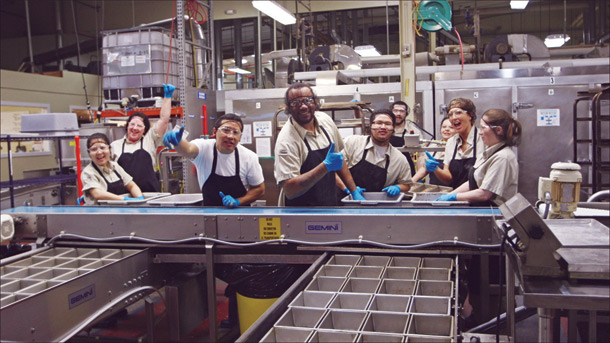
Since 2005, Dave’s Killer Bread has been at the forefront of the most important piece of the re-entry puzzle: helping people with records get jobs. Cofounded by Dave Dahl, who was welcomed back into his family’s bakery after 15 years of being in and out of prison, the company and its Dave’s Killer Bread Foundation is on a mission to spread the business benefits of fighting this stigma. Today, 30 to 40 percent of its Oregon staff has a criminal record. Not only does the federal government offer insurance bonds and tax credits for every felony-background employee hired, there’s emerging evidence that these workers may outperform their non-record counterparts in terms of lower turnover and faster promotion. Sloan is a case in point. Since landing his first “real job” less than two years ago, he’s been promoted three times and now makes $23 an hour as a lead trainer. Managers seek his advice on how to engage fellow “second-chance employee partners,” and he was invited to speak in front of business leaders at a Second Chance Summit that the foundation hosted last year in Seattle.
“When you open your door
to these folks who are the right fit for the job, you are going to get some of the most dedicated, motivated, loyal employees you’ve ever seen in your workforce.”
to these folks who are the right fit for the job, you are going to get some of the most dedicated, motivated, loyal employees you’ve ever seen in your workforce.”
“When you open your door to these folks who are the right fit for the job, you are going to get some of the most dedicated, motivated, loyal employees you’ve ever seen in your workforce,” says the foundation’s executive director, Genevieve Martin.
Butterball Farms has a similar story. The Michigan-based butter company has been hiring what it calls “returning citizens” for more than 20 years, initially to fill vacancies during a tight job market. When an automation project forced the company to lay off 80 workers, some of whom had records, Butterball’s chief talent officer Bonnie Mroczek reached out to other businesses in the Grand Rapids community for possible placement. She was shocked at the number who wouldn’t even consider any applicant with a felony conviction.
“That really surprised us because we didn’t think we were doing anything that unique,” Mroczek says. “I think employers make decisions based on perceptions and fear, and not facts. We realized we needed to start sharing our story.”
In 2014, the company launched the 30-2-2 initiative: an effort to get 30 local businesses to hire two formerly incarcerated employees and track their performance for two years. As of late 2017, 338 companies were tracking more than 1,760 employees. Anecdotal data shows lower turnover rates for workers with criminal records — 12 percent compared with 22 percent for the general population. A similar 30-2-2 program has since been launched in New Orleans, one of the prison capitals of the U.S.
“We give people an opportunity, but what we get back from them is much greater than the opportunity we gave,” Mroczek says.
While the Equal Employment Opportunity Commission (EEOC) encourages employers to weigh the nature of the offense against the responsibilities of the job when considering candidates with criminal records, many companies still operate like the ones Mroczek encountered in Grand Rapids: They carry out the decades-old habit of discarding felony applications without a second glance. But with nearly one in three American adults — or more than 70 million people — estimated to have some form of arrest or conviction record, the public is waking up to the fact that this is a population too big to ignore. Doing so drains the economy of qualified workers and billions of dollars, without making the country any safer. “We are undermining human potential. And we’re doing it all in a way that has a significant, if not savage, disparate impact on poor people and minorities,” Democratic Senator Cory Booker stated in an interview. “There’s a better way to go.”
For reasons like these, 31 states, the District of Columbia, and more than 150 cities and counties have adopted “ban the box” (or “fair chance”) hiring policies aimed at getting more people like Rahsaan Sloan back into the workforce. Such laws remove the criminal history question on applications — “Have you ever been convicted of a felony?” — and delay background checks until later in the hiring process, usually until after a conditional offer is on the table. Last year, seven states added ban-the-box policies, and an Obama-era initiative for federal jobs was reintroduced in the House as the Fair Chance Act with some bipartisan support.
“The box is the first thing you see,” says Mark Fujiwara, who became the communications coordinator for Legal Services for Prisoners with Children after spending a year in prison himself. “If you check it, the application is usually going to get tossed. But immediately there’s self-censorship. You say, ‘Oh, I’m not going to get it, so I may as well not even apply.’ It’s the chilling effect.”
Although some studies suggest that such policies might hurt young black men without criminal records — delaying background checks might lead employers to illegally discriminate against those they think are more likely to have criminal histories — proponents of fair-chance policies are convinced that removing the box is a crucial step toward dignity and social justice. “The judge didn’t say you’re going to get three years locked in a box and then a lifetime of not getting a job,” says Fujiwara.
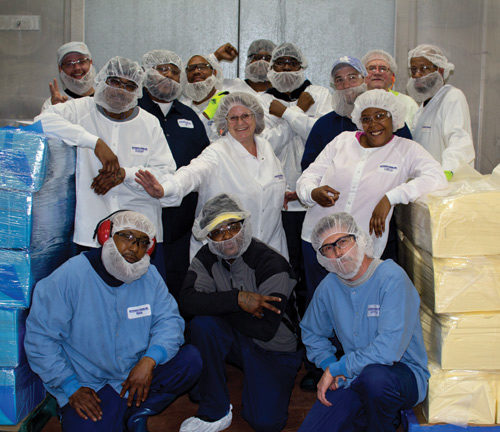
Joseph Phelps knows more than most human resource employees about the corrections system. Before getting a job at Johns Hopkins Hospital in Baltimore, he spent 22 years as a Baltimore police detective. The hospital removed the box on job applications in 2014 — the same year as the city — and now, if an applicant’s criminal record shows up later in the hiring process, it’s Phelps’ job to come up with a way to fairly evaluate that applicant.
The hospital’s guidelines for evaluating criminal backgrounds mirror those of the EEOC: considerations like how the conviction relates to the job, how old the person was at the time of the crime, and how much time has passed since. (The probability of a repeat offense declines steadily over time.) Since 2012, Phelps has given the green light to hire more than 700 candidates with criminal records — a couple of whom he remembers from his days on the force — and “knock on wood, there haven’t been any problems,” he says.
“If someone is putting in the effort [to apply for a job] knowing they have a background, that person deserves a look and an opportunity,” Phelps says. “People in life are dealt some tough cards, and I’ve always felt that folks deserve a second chance.”
While Johns Hopkins, Butterball Farms, and Dave’s Killer Bread have all been talking about “second chances” for at least a decade, this wasn’t a conversation making it into mainstream news until recently, says Genevieve Martin. Swelling incarceration costs — currently estimated at around $80 billion per year — and the untapped employment potential of the people coming out have thrust the issue into the fore, uniting people from all sides of the political spectrum, from liberal CNN commentator Van Jones to the conservative billionaire Koch brothers, in the fight for criminal justice reform.
“Policy makers may have thought they solved the crime problem by locking up more people and developing harsher sentences, but actually, incarceration only works up to a point. Once the pendulum swings too far, you have a new problem of simply locking up far too many people unnecessarily,” says Vikrant Reddy, senior research fellow at the Charles Koch Institute. “Even those people who do need to be behind bars have completely diminished skills when they come out, so they remain a public safety threat, and we have to do something about that problem.”
If we continue to build barriers that do not allow people to be successful, they’re going to make poor choices to survive, Martin says. “But by opening doors and putting people back to work, they become part of the economy again. They’re part of what we want our communities and our nation to be, which is working, productive, stable, and safe.”
Serena Renner’s last article for the Post was “The Colorado Experiment” (May/June 2015), about Colorado’s initiative to legalize recreational marijuana, available online at saturdayeveningpost.com/colorado-experiment.
This article is featured in the July/August 2018 issue of The Saturday Evening Post. Subscribe to the magazine for more art, inspiring stories, fiction, humor, and features from our archives.
Your Weekly Checkup: Preparing for Death
“Your Weekly Checkup” is our online column by Dr. Douglas Zipes, an internationally acclaimed cardiologist, professor, author, inventor, and authority on pacing and electrophysiology. Dr. Zipes is also a contributor to The Saturday Evening Post print magazine. Subscribe to receive thoughtful articles, new fiction, health and wellness advice, and gems from our archive.
Order Dr. Zipes’ new book, Damn the Naysayers: A Doctor’s Memoir.
Now that I’ve entered the third quarter of the game of life, I’ve often wondered how long I’ll live. It’s not a thought I considered during the first half. Since 1900, the average life expectancy around the globe has more than doubled, largely due to better public health, sanitation, and food supplies, and now approaches 80 years in most developed countries. Ten years ago, the oldest human being on the planet died at age 122. But is that a likely age for the rest of us? Probably not, yet more and more people are living to become centenarians. Genetic studies are analyzing how and why that happens, and ultimately we may be able to add years to our lives.
Regardless, it’s a given that we’re all going to die sometime, and most of us are unprepared for it. My wife and I came close three months ago in Muenster, Germany, when a suicide van plowed into the outdoor café where we were enjoying an afternoon beverage. Sitting two tables away from the van’s path and the human carnage it created made me realize how precious and fragile our lives are, and how one’s fate can turn on a dime. It’s important we not leave loved ones to grapple with residua of our messy lives, even as they wrestle with their own grief at our passing.
It may not be a pleasant topic, but here are some issues to consider so that your passing is as easy as possible for those who outlive you.
- Buy a burial plot or make arrangements with a funeral home for cremation.
- Make sure you and your significant other have up-to-date wills. Update names to recognize divorces, remarriages, additional children, etc.
- Designate a power of attorney. A will is useful only after you die, but you should designate someone to exercise your power of attorney should you become incapacitated prior to death.
- Consider a trust to shield income for the care and support of elderly or special-needs family members.
- Decide how you want to handle your end-of-life care by writing a health care directive to be administered by your appointed power of attorney.
- Give away, sell, or trash possessions you no longer want or use. Clean house now. Don’t leave your survivors with that burden.
- Make sure your loved ones, especially the designated power of attorney, have access to your passwords, accounts, safe, and important papers. You should leave instructions in the cloud as well as in hard copy.
- Decide how visible and public you want your illness and death, and how you want people to be notified. Some will opt for a social stage, while others want privacy.
- Talk to your loves ones about your funeral. It may be a difficult conversation, granted, but there are many details, both religious and secular, to be decided: where/what to have; who to attend; who to deliver eulogies; type of music; prayer; and so forth.
Attending to these issues will help ensure you will rest in peace — or at least your loved ones will.
Healthy Weight, Healthy Mind: Disputing Your Dysfunctional Beliefs
We are pleased to bring you this regular column by Dr. David Creel, a licensed psychologist, certified clinical exercise physiologist and registered dietitian. He is also credentialed as a certified diabetes educator and the author of A Size That Fits: Lose Weight and Keep it off, One Thought at a Time (NorLightsPress, 2017).
Do you have a weight loss question for Dr. Creel? Email him at [email protected]. He may answer your question in a future column.
I hope you agree that it’s a good idea to change thoughts and beliefs that stand between us and weight management. But how can we do it?
The first thing to remember is that thinking is automated. If we do nothing, we continue to think and behave the same way. Changing our thoughts requires practice and persistence. Earlier you read about the ABCs — activating events that lead to beliefs, followed by a consequence, such as an emotion.
One way to practice changing thoughts is to add a D to our ABCs. The D stands for dispute. What are we disputing? We are disputing beliefs that lead to undesirable reactions to situations. Here’s an example:
Activating Event:
Joanie vowed to begin eating better but a co-worker brought her wonderful lemon bars to work on Friday. Joanie ate four of them.
Belief:
I totally blew it today — I have absolutely no self-control! Since today was a disaster, it doesn’t really matter what we eat for dinner. We might as well order a pizza with extra cheese tonight — and go ahead and add those dessert bread stick thingies too. I can always get back on track at the beginning of next week.
Consequence: Frustrated with herself for not handling the lemon bar situation well, Joanie feels hopeless about managing day-to-day food choices. She loses focus on her goals and overeats for the rest of the weekend.
Dispute:
Let’s look at Joanie’s dysfunctional beliefs and how we can dispute them. Thinking she’d already blown it for the day and had absolutely no self-control are perfect examples of all-or-nothing thoughts that have a tone of failure and hopelessness. The idea that she should go ahead and eat more because she ate too much earlier is emotional reasoning. After having her wallet stolen, would Joanie withdraw money from the bank and set the money on fire? If she accidentally dropped a glass and it broke on her kitchen floor would she break more dishes, because ten broken glasses are the same as one? When a patient describes it-doesn’t-matter feelings, I’m often reminded of the lyrics from my favorite Kenny Wayne Shepherd song. It’s like:
…blue on black, tears on a river, push on a shove, it don’t mean much… whisper on a scream — doesn’t change a thing.
That’s how we feel when emotions run high. But feelings are not reality. The extra calories we eat after a snacking mishap aren’t the same as a whisper on a scream. They matter. More importantly, these beliefs interfere with your ability to handle slips. Thinking this way ultimately continues the diet-relapse cycle. Just as setting money on fire after getting your wallet stolen is illogical, so is continuing to make poor food choices just because you made one poor choice.
The belief I can always get back on track at the beginning of next week is a classic procrastination strategy that gives Joanie permission to think and act irrationally because she’ll start fresh at some time in the future. The procrastination thought helps her feel a little better because she has an obscure plan to get back on track. Procrastinating gives Joanie a little psychological space to forget about messing up earlier, so she can eat the pizza and dessert breadsticks without overwhelming guilt. But if Joanie took time to think rationally about her situation, she’d realize that going off the rails for the entire weekend leads to feelings of regret. So how could Joanie think about the lemon bar incident? Consider these ideas:
Disputing “I’ve already blown it for the today.”
Although I’m not happy about eating the lemon bars, I haven’t ruined my day. That extra 600 calories is a minor contributor to my weight, especially if I eat reasonably the rest of the evening.
Disputing “I have absolutely no self-control.”
That’s not true. I have a lot of self-control in many areas of my life. I often refuse buying things to stay within our budget. I don’t tell people off every time I have a negative thought about them, and when it comes to food, I’ve been making good choices more than not-so-good ones for weeks.
Disputing “It doesn’t matter what I eat for dinner, we might as well order a pizza.”
In actuality what I eat the rest of the evening does matt it only feels like it doesn’t. Making better choices the rest of the day will help me recover from slips more easily in the future. Possibly, Joanie really wants the pizza and dessert breadsticks for dinner. If that is the case, fine, but let that decision arise from rational thoughts that allow her to fully consider the pros and cons. The pizza meal should be her conscious choice, not an emotional reaction.
Disputing “I can always get back on track at the beginning of next week.”
Hold on, that isn’t a recovery plan — it’s a sneaky way of giving myself permission to stay on a path I’ll regret later. What can I do right now to get back on track? I’ll take a five-minute walk and think about the best way to handle food choices for the rest of the day.
The last part of the ABCs (and now D), is to add E. E reminds us to evaluate. At this stage, we examine how facing dysfunctional beliefs about weight management will change our emotions, and then alter our behavior in a positive way.
Did thinking different about a situation help calm your feelings?
Did you behave in a different way, with less drama and a better outcome?
If you’ve already begun reacting to situations in a more sensible, thoughtful way, then the thought changing exercises are working. If not, don’t feel discouraged. Take time to examine which thoughts are still holding you back. Remember that emotions are not a switch we turn on and off. Even if we begin thinking differently, our emotions can linger awhile. Just because you recognize something isn’t true doesn’t mean you immediately stop reacting emotionally to the initial thought. Combining the thought restructuring exercises above with deep breathing or moderate exercise may help settle your emotions.
Civil War Hospital Sketches from Louisa May Alcott

This article and other stories of the Civil War can be found in the Post’s Special Collector’s Edition, The Saturday Evening Post: Untold Stories of the Civil War.
American novelist Louisa May Alcott wrote about her experiences as a Sanitary Commission nurse in a series of letters for the abolitionist Boston Commonwealth. The letters, published as Hosptial Sketches in 1863, earned Alcott her first public attention as an author and praise for her sensitivity and wit.
The Post published excerpts from Hospital Sketches, a few weeks after Gettysburg, when Union hospitals were overflowing with casualties from the battle. On these pages, Alcott describes caring for soldiers from Fredericksburg in December 1862.
* * *
They’ve come! they’ve come! Hurry up, ladies — you’re wanted.”
“Who have come? The Rebels?”
This sudden summons in the gray dawn was some- what startling to a three days’ nurse like myself, and, as the thundering knock came at our door, I sprang up in my bed, prepared “To gird my woman’s form, And on the ramparts die,” if necessary; but my room- mate took it more coolly, and, as she began a rapid toilet, answered my bewildered question, — (“Bless you, no child; it’s the wounded from Fredericksburg; forty ambulances are at the door, and we shall have our hands full in 15 minutes.”)
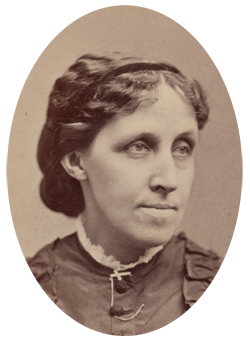
The sight of several stretchers, each with its legless, armless, or desperately wounded occupant, entering my ward, admonished me that I was there to work, not to wonder or weep; so I corked up my feelings, and returned to the path of duty.
I chanced to light on a withered old Irishman, wounded in the head. He was so overpowered by the honor of having a lady wash him, as he expressed it, that he did nothing but roll up his eyes, and bless me, in an irresistible style which was too much for my sense of the ludicrous; so we laughed together, and when I knelt down to take off his shoes, he wouldn’t hear of my touching “them dirty crayters”.
Some of them took the performance like sleepy children, leaning their tired heads against me as I worked, others looked grimly scandalized, and several of the roughest col- ored like bashful girls. One wore a soiled little bag about his neck, and, as I moved it, to bathe his wounded breast, I said,
“Your talisman didn’t save you, did it?”
“Well, I reckon it did, ma’am, for that shot would a gone a couple a inches deeper but for my old mammy’s camphor bag,” answered the cheerful philosopher.
Another, with a gun-shot wound through the cheek, asked for a looking-glass. When I brought one, regarded his swollen face with a dolorous expression, as he muttered —
“I vow to gosh, that’s too bad! I warn’t a bad looking chap before, and now I’m done for; won’t there be a thunderin’ scar? and what on earth will Josephine Skinner say?”
He looked up at me with his one eye so appealingly, that I assured him that if Josephine was a girl of sense, she would admire the honorable scar.
The next scrubbee was a nice-looking lad, with a a bud- ding trace of gingerbread over the lip, which he called his beard, and defended stoutly, when the barber jocosely sug- gested its immolation. He lay on a bed, with one leg gone, and the right arm so shattered that it must evidently fol- low: yet the little Sergeant was as merry as if his afflictions were not worth lamenting over; and when a drop or two of salt water mingled with my suds at the sight of this strong young body, so marred and maimed, the boy looked up, with a brave smile, though there was a little quiver of the lips, as he said,
“Now don’t you fret yourself about me, miss; I’m first rate here, for it’s nuts to lie still on this bed, after knocking about in those confounded ambulances that shake what there is left of a fellow to jelly. I never was in one of these places before, and think this cleaning up a jolly thing for us, though I’m afraid it isn’t for you ladies.”
“Is this your first battle, Sergeant?”
“No, miss; I’ve been in six scrimmages, and never got a scratch till this last one; but it’s done the business pretty thoroughly for me, I should say. Lord! What a scramble there’ll be for arms and legs, when we old boys come out of our graves, on the Judgment Day: wonder if we shall get our own again? If we do, my leg will have to tramp from Fredericksburg, my arm from here, I suppose, and meet my body, wherever it may be.”
The fancy seemed to tickle him mightily.
Donation notes to Soldiers
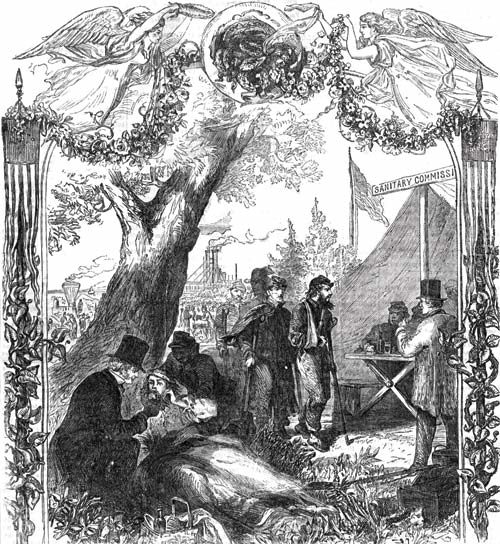
Alcott volunteered with the Sanitary Commission, created in 1861 to help organize donations and volunteers. Throughout the war, the Post published Commission news, including the excerpt below.
— Originally published March 26, 1864 —
Some of the marks on the items sent to the sanitary Commission show the thought and feeling at home:
On a homespun blanket, worn, but washed as clean as snow, was pinned a bit of paper which said: “This blanket was carried by Milly Aldrich (who is ninety-three years old) down hill and up hill, one and a half miles, to be given to some soldier.”
On a bed quilt was pinned a card, saying: “My son is in the army. Whoever is made warm by this quilt, which i have worked on for six days and most all of six nights, let him remember his own mother’s love.”
On another blanket was this: “This blanket was used by a soldier in the war of 1812 — may it keep some soldier warm in this war against Traitors.”
On a pillow was written: “This pillow belonged to my little boy, who died resting on it; it is a precious treasure to me, but i give it for the soldiers.”
On a pair of woolen socks was written: “These stockings were knit by a little girl five years old, and she is going to knit some more, for Mother says it will help some poor soldier.”
On a bundle containing bandages was written: “This is a poor gift, but it is all i had: i have given my husband and my boy, and only wish i had more to give, but i haven’t.”
News of the Week: Heat Wave! Meteorites! Coffee Is Good for You (Again)!
Stop Saying “It’s Not the Heat, It’s the Humidity”

(This is another rant about the weather. If you don’t want to read it, you can scroll down to where I talk about meteorites and zip codes.)
All I want to do is sit in front of a fan and eat Popsicles.
This heat wave has been supernaturally unbearable. Several days of temps at 90 or above and dew points near 70. (The old saying is wrong, it’s both the heat and the humidity.) That’s not even air, that’s soup. And I don’t mean a thin broth; it’s more like walking through a Chunky soup that eats like a meal. I went to the supermarket the other day and the parking lot was like a giant cookie sheet in an oven. It has gotten to the point where I can’t even watch news reports about the weather because they all show people sitting in the hot sun or, worse yet, wearing suits and walking around. It makes me uncomfortable.
I hope it’s better where you are, but if you live in a part of the country that’s affected by the high temps and humidity, don’t overdo any activity, drink lots of water, check on your pets, and try to stay in a place where there’s air conditioning. We’re supposed to get a short reprieve this weekend, but then early next week it’s back into the nastiness. It’s like living on the sun.
I’m thinking about going to the liquor store tonight. Not for liquid refreshment; I’m going to ask if I can live in their walk-in cooler until Labor Day.
Watch This

There was a lot of space news this past week, from a story that explains how the wreckage of just five or six planets created the asteroid belt, to NASA releasing this terrific new photo of Jupiter. But the most fun news is that the space agency is looking for a meteorite, and you can watch them do it.
On March 7, a large meteorite broke apart above the Earth and fell into the Pacific Ocean. It weighed two tons, and the pieces are probably 330 feet down, but NASA wants to retrieve them for study. You can watch a livestream of the search conducted by the Nautilus here and read about the preliminary findings of the expedition here.
Chestnut and Hot Dogs
Joey Chestnut broke his own record at Nathan’s Hot Dog Eating Contest on July 4. He ate 74 hot dogs (with buns!) in 10 minutes. It’s a new world record and the 11th time in 12 years that Chestnut has won. Miki Sudo won the women’s division by eating 37. The “sport” is now televised live on ESPN, like basketball and tennis. I still don’t understand how it’s physically possible to eat 74 hot dogs and buns in just 10 minutes. Forget about LeBron or Federer, Chestnut is the ultimate athlete.
I’ve said this before but I still want to know: Is there someone out there named Joey Hot Dog, and every year he enters a chestnut-eating contest?
WWII Vet Has All of His Money Stolen
This is a rather depressing story, but it has a happy ending.
Richard Overton, a World War II veteran and, at 112 years old, the oldest man in America, recently had his bank account wiped out by scammers. Thieves got hold of his account information and Social Security number and used them to buy savings bonds.
The story has a happy ending, though. Overton’s bank replaced the funds that were taken from his account.
One side note to this story: Overton reached the age of 112 despite his habit of smoking 12 cigars a day, enjoying alcohol, and drinking a ton of coffee.
Java, Dirt, Joe, Mud, Jitter Juice

Maybe Overton is on to something.
Researchers in the United Kingdom studied over 500,000 people between the ages of 38 and 73 to see how the consumption of coffee affected their health. Turns out the benefits of coffee outweigh any risks.
I wouldn’t get too excited, though. If you like coffee and you don’t have a medical condition that prevents you from drinking it, then fine, keep drinking it. I know people who drink four, six, eight cups a day. Just be aware that in approximately seven weeks there are going to be news reports touting a study that says drinking coffee causes iguanas to grow a fifth leg or something similar. Though the often-talked-about cancer risk doesn’t seem to be as big a problem as once thought, as Dr. Zipes explains.
In related news, here’s a bunch of great vintage coffee ads from the Post.
RIP Stanley Anderson, Gillian Lynne, and Derrick O’Connor
Stanley Anderson appeared in such movies as Spider-Man and Armageddon and TV shows like L.A. Law, The Drew Carey Show, and Seinfeld (he played the judge in the finale). He also did a lot of voiceover work for political ads. He died Sunday at the age of 78.
Gillian Lynne started out as a dancer and went on to be the choreographer for such classic Andrew Lloyd Webber productions as Cats and The Phantom of the Opera. She died Sunday at the age of 92.
You’ll remember Derrick O’Connor as the evil henchman in Lethal Weapon 2. He also had roles in movies like Daredevil and Hope and Glory and many TV shows, including Alias, Stringer, and Murder, She Wrote. He died last Friday at the age of 77.
Quote of the Week
“The two most common elements in the universe are hydrogen and stupidity.”
—Harlan Ellison, in a line that has been making the rounds again since his death last week. Here are some more memorable quotes from the acclaimed writer.
This Week in History
Zip Code Debuts (July 1, 1963)
I don’t remember a world before zip codes existed, so the history of how they came about is fascinating to me. CBS Sunday Morning did a story about it this week for the 55th anniversary. I want one of those cardboard Mr. Zip figures.
Nick at Nite Launches (July 1, 1985)
Can someone explain to me how a channel that has always been devoted to classic TV shows like The Donna Reed Show, The Adventures of Superman, and The Mary Tyler Moore Show can now run disgusting tripe like Two and a Half Men and Mom?
Luckily we still have MeTV, Cozi, and Antenna TV.
This Week in Saturday Evening Post History: First Day at Camp (July 3, 1954)
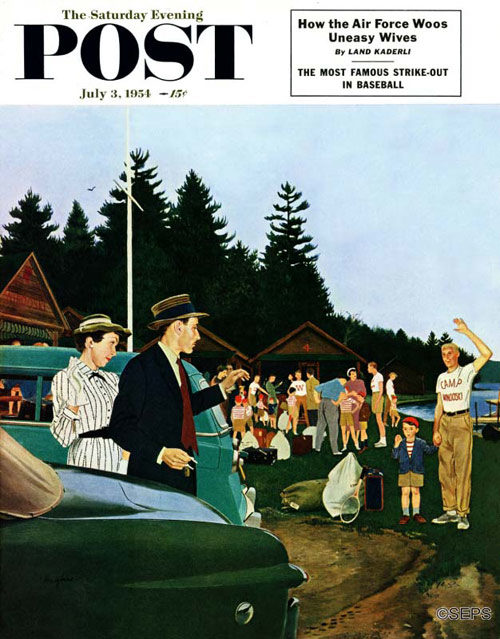
George Hughes
July 3, 1954
I never went to camp when I was a kid. I sometimes wonder if I missed out on something, but then I remember that camp involves all of the things I hate about summer, and I realize I lucked out that my mom never sent me to one. I do like this George Hughes cover, though.
Saturday Is World Chocolate Day

Every day is World Chocolate Day, really, but maybe you can celebrate the day by trying a chocolate you’ve never tried before. I was always a milk chocolate person — and for the most part I still am — but I love a Dove or Ghirardelli dark chocolate once in a while, too. Though I have to admit that I usually go for something that has a pretty high cocoa content, like 60 or 72 percent.
Some recipes: Here’s a Deep Dark Chocolate Cake from the Hershey Make It Chocolate! cookbook; here’s a Quick Creamy Chocolate Pudding, also from Hershey; and here’s a recipe for a Chocolate Milkshake from Betty Crocker.
A suggestion: With this heat, I’d go for the milkshake. You won’t have to turn on your oven.
Next Week’s Holidays and Events
Friday the 13th (July 13)
This is the second and last time we’ll have a Friday the 13th in 2018. If you’re planning your 2019 schedule, the date will show up twice then, too.
Is the Water You’re Swimming in Safe?
There are few summer pastimes that compare to the bliss of a cannonball into a cool lake. But if you think the dangers of swimming are limited to drowning, you’re ignoring the sometimes invisible hazards that can lurk in the depths.
The Centers for Disease Control and Prevention recently issued reports on disease outbreaks in both treated and untreated bodies of water from 2000-2014. Although Americans swim hundreds of millions of times each year without incident, we also see dozens of self-reported outbreaks caused by bacteria, viruses, and parasites, and warming waters — over time — can bring about new risks. Taking precautions before taking a dip can prevent the spread of disease for everyone.
The parasite Cryptosporidium is a leading cause of waterborne illness in the U.S. It accounts for 79 percent of cases of illnesses in the CDC’s report of chlorinated waters. The danger of this bug is that it is encased by a hard outer shell that allows it to survive in chlorine-treated pools for up to 10 days. The best practice is to keep it out of the water in the first place, according to Michele Hlavsa, an epidemiologist and Chief of the CDC’s Healthy Swimming Program. That means refraining from swimming if you or your child have recently had diarrhea. The report shows the most frequent settings for outbreaks are hotels, possibly because pool maintenance is undertaken by staff with many other responsibilities, Hlavsa says. You can check with pool staff to find out their inspection score from the CDC. Hlavsa recommends buying test strips to measure chlorine and pH levels as an added pool precaution.

Untreated waters, like lakes, rivers, and beaches, present a much wider variety of risks. Water that is crystal clear isn’t necessarily safe for swimming, Hlavsa says. Norovirus, E. coli, and Shigella outbreaks peak in July. A growing risk is the presence of harmful algal blooms: “In recent years, harmful algal blooms have been observed with increasing frequency and in more locations in the United States, possibly because of increasing nutrient pollution and warming water or improved surveillance.” Evidence suggests that harmful algal blooms are happening more often and for longer periods of time in a variety of American waters due to field runoff and climate change. Hlavsa recommends steering clear of discolored, smelly, foamy, or scummy water and obeying all posted advisories when using untreated recreational waters. She also says to avoid swimming wherever discharge pipes can be found and after a heavy rainfall that can contaminate waters.

The most terrifying parasite in the water is also among the rarest: Naegleria fowleri. Known as the “brain-eating amoeba” that enters through the nose in warm freshwater, Naegleria fowleri kills individuals within two weeks of infection. Each year brings only 0-8 cases of the parasite, but Hlavsa says the locations of recent cases have been alarming: “It used to be found only in southern states, but recently we’ve seen cases in Virginia, where we haven’t seen it for decades, and Minnesota and Indiana, where we’ve never seen it before.” The reasons for the amoeba’s northward migration aren’t clear. In fact, little is known about why some become infected and others do not, since cases are so rare. Since the amoeba can only enter the body through the nose, wearing nose clips is a good precaution against this killer bug.
The statistics in the CDC’s reports are at the low end of realistic numbers for recreational water disease outbreaks. Because of differing capacities around the country to properly identify and report illness, exact numbers would be impossible to obtain. The tendency for swimmers to be travelling during their use of recreational waters also makes it difficult to pin down an outbreak to its source.
Like anything else, swimming has its risks, but that doesn’t mean you should completely eschew the water. Only ten deaths from disease outbreaks in recreational waters were reported from 2000-2014. When compared with the more than 100 fatalities from fireworks in the same time span, the perils of taking a plunge might not seem so bad.
The Umpire
Nash had broken the cardinal rule of umpiring — keep your eyes on the game. He saw the baserunner driving toward home, his cleats making tiny puffs of dirt as he went. He heard the heavy thump of the ball hitting the catcher’s mitt and the cheers of parents in the stands. But at the pivotal moment when arms and legs tangled, his attention was elsewhere. It had drifted like an unmoored boat to the center fielder, who was watching the play with such eager, childlike wonder that Nash’s focus wavered to marvel at it.
When he looked back down at home plate, the catcher was holding the ball, and Nash had no idea what the call was. With every eye on him, rather than deferring to his partner, he punched the air with an exaggerated flourish and yelled, “You’re out!”
He knew immediately he’d gotten it wrong. The catcher’s surprise was obvious even behind his mask. The runner sprang up, bright red. His helmet came off in the collision, and his hair stuck out in frizzy lumps, nearly the same color as his face.
“I was safe!” he shouted. “By a mile. What are you looking at?”
The aggrieved coach stormed out of the dugout, cursing and yelling. Nash didn’t know him well, only that his name was Gary, and he had a reputation for taking the games a mite too seriously.
Nash told him to watch his language. Gary wasn’t tall, but he was stout and strong, built like a tree stump. His bald head made him seem tough. He got right up in Nash’s face, still yelling. His breath was sour, and flecks of spittle sprayed Nash’s face. Nash warned him again to sit down. Gary snorted.
“They always get the worst bush-league morons to ump these games.”
This angered Nash much more than the profanity. Gary was wrong. Nash was a great ump. Despite no children of his own, he took time to learn the kids’ names, and gave them words of encouragement if they struck out or dropped an easy fly ball. He treated the games seriously, while keeping in mind it was Little League, not the World Series. Contrary to the stereotype of the fanatic sports dad, he rarely encountered parents like Gary.
After informing Nash that he would be filing a formal protest with the league, Gary finally headed back to the dugout. But on his way there, he turned, clucked condescendingly, and shook his head.
“Wasn’t even close, Ump. Wasn’t even close.”
Something about the way he said it got under Nash’s skin. Nash threw him out. Gary laughed, made a big show of collecting his things, and went to wait in his car until the game was over.
Afterward, when the players and parents had left, Nash gathered the bases with his partner Chase, a lanky college kid who played shortstop for his school’s Division III team.
“I really blew that call, huh?”
“You had a better view than I did.”
“Don’t bullshit me, Chase.”
Chase grinned. “Okay. You blew it, big time.”
“I got distracted for some reason.”
“Don’t beat yourself up. Happens to everybody.”
It didn’t happen to Nash. He missed calls from time to time, of course, but never because he wasn’t paying attention. Mistakes irritated him, like a burr in his shoe. He was thinking about it as he bid goodbye to Chase, he was thinking about it as he loaded the equipment into his trunk, and he was thinking about it as Gary emerged suddenly from a behind a car.
Most people would have cooled off during the time out; Gary had gotten even more riled up. He screamed and cursed at Nash, crowding him against the side of his car. What had been comical in front of a field full of players and parents became less funny in a deserted parking lot. Nash put his hands up and said, “Please calm down.”
“Admit you got it wrong. Admit it.”
Nash was about to, just to get this maniac away. The words were on his tongue when some prideful flame sparked inside him.
Instead of admitting his mistake, he told Gary to go to hell.
Nash didn’t see the punch, just a white flash followed by a wash of colors. His body clanged against the door of the car and his feet nearly gave out from under him. He put a hand over his injured eye, gasping. Then Chase was there, shoving Gary backward, screaming that he was calling the police.
Gary’s nostrils flared, and he started toward Chase. A car door flung open, and one of the players got out and ran over to them. The boy was sobbing, and he tugged Gary’s shirt.
“Dad, stop! Please, Dad, stop!”
The boy was still wearing his cap, and his white pants were stained with dirt and grass. His cheeks were ruddy and streaked with tears.
Gary looked down at his son as if waking from a trance. He sniffed, took the boy roughly by the arm, and led him away without another word.
Nash spent the next few minutes assuring Chase he was fine, that he didn’t need to go to the hospital, and he didn’t want to involve the police.
“Kid has it bad enough, raised by a guy like that. He doesn’t need his dad sent away to prison.”
“He’d probably be better off.”
“Thanks for your help.”
“Anytime, partner. We umps have each other’s back. That guy’s banned for life. Pathetic, trying to relive his youth through his kid.”
Nash nodded. Not being a father, it was hard for him to imagine what could lead to such an outburst.
“Get some ice on that eye,” Chase advised. “Otherwise it’s gonna swell up like an eggplant.”
It took him longer than usual to get home. He drove slowly, his vision blurred. Nash worked during the day as a mail carrier. He woke at four every morning to make his rounds. Already he was imagining what people on his route would say when they saw him. Eunice, the old lady who waited on the porch with her begonias. David Lee at the dry cleaners on Second. The pretty bank teller who always smiled when he came in. Quite a shiner you’ve got there. I’d hate to see the other guy. The thought of it embarrassed him.
By the time he arrived, the blurriness was almost gone. Nash and his wife had recently refurbished the outside of their house. Contractors installed bright new siding, ornate ceramic shutters, a long bay window above the garden. Sometimes he nearly drove past it, thinking it was the wrong house.
Ladybird met him at the door, as usual, tail beating against his thighs, but Nash wasn’t in the mood to be slobbered on. His wife, Laura, was in the den, reading a book. He called hello and went to the kitchen, hoping he could sneak upstairs before she saw his face. But she heard him rummaging around the freezer for something to put on his eye and came over to investigate.
Laura was small, Spanish by origin, olive skin, dark curly hair. She saw his face and raised her eyebrows, looking more curious than empathetic.
“Angry coach?”
He turned away, unable to hide his expression. She watched him for a moment, confused. Then she put a hand over her mouth.
“Oh Nash, I’m so sorry. I was joking. I really thought you got hit by a foul ball or something. What happened?”
“Just a disagreement”, he said, holding a bag of frozen cauliflower against his eye. He paused, then added: “You think this looks bad, you should see the other guy.”
The lie surprised him. He wasn’t prone to embellishment or exaggeration. It was more than a black eye. His entire worth as an umpire had been impugned. His careful dedication, his calm impartiality. All blotted out by one right hook.
“These parents today, they’re crazy. I can’t believe the league lets this happen. You put in so much time and effort for these kids. What’s going to happen to the asshole who hit you?”
“Don’t worry, it’s taken care of.”
He liked the sound of that, taken care of. Like he was a made man, with shooters to avenge him.
Laura bit her lip, watching him with big brown eyes. Tenderly, she peeled away the bag from his skin and kissed the ridge of his eyebrow.
“My brave man. Let me get you some Advil.”
Laura had been adamant before she married him that they would never have kids. Nash was okay with it, at the time. He loved her. If she had asked him to raise a gorilla instead of a child, he would have. It made their lives easier, having no children to spend for. They didn’t worry about bills, could travel when they pleased.
She’d only ever hinted as to why. Her mother had miscarried three times. Her father was a drifter. Her childhood sounded lonely and miserable. Nash thought maybe she didn’t want to pass that trauma on. They’d been married 10 years, and rarely discussed it.
Laura came back with the pills and Nash gulped them down, even though the pain was already mostly gone. He examined his reflection in the chrome refrigerator. It didn’t look too bad.
“I’m sorry I made fun. You poor thing. Come upstairs to bed.”
“In a bit. I’m just going to unwind for a few minutes.”
She nodded. He heard her go up the stairs, light footsteps on the heavy wood.
Wearily, he tossed Ladybird a Milk-Bone and went into the study. He sat and faced the enormous antique cabinet that had been in Laura’s family for centuries. It had taken four strong men to lift it inside. There were trophies on top of the cabinet. Trophies from his days playing college ball; trophies from Laura’s time as a gymnast. Tiny metal batsmen and dancers spray painted gold.
Nash was proud of his baseball awards, but they didn’t really matter to him. He had always known he wasn’t good enough to be a ballplayer. But he was good enough to be an ump.
They didn’t give trophies for umpiring. A good umpire was ignored by everyone, forgotten in the flow of the game. Nash had never craved recognition. He only wanted to do his tasks, however simple, as best he could. As a mailman, as an ump, and as a husband.
In this low moment, Nash thought back to a better one. A few years ago, a friend called him out of the blue. One of the umps for the local Double-A team had broken his leg. It was the playoffs, and they needed a last-minute replacement. The game was starting soon. Nash drove an hour, speeding the whole way, afraid he would be too late. But he made it. There was a crisp black uniform waiting for him in the locker room. He put it on and shook hands with the other umpires and then he was running out onto the field, the smell of fresh cut grass and a warm spring breeze on his face. Under the lights, the night sky glowing. He listened to the crack of the bat and the thump of ball in glove as the players finished their warm-ups. Nash took his spot at third base and hunched forward alertly with his hands on his knees. The pitcher stretched on the mound. The sold-out crowd roared. A moment from a dream. Even now it gave him goosebumps.
He was tense, standing there on third. He’d been waiting for this his entire life. On the first pitch, the batter smashed a would-be triple down the line. The right fielder made an incredible throw. Nash saw it all in slow motion; the glove coming down fractions ahead of the runner. He yelled, “Out!” and punched the air. The runner got up, dusted himself off, and nodded. That’s what Nash remembered clearest about that day — the runner’s respectful little nod. His nerves disappeared. He called a flawless game, and when it was over, the white-haired home plate umpire clapped him on the shoulder and said, “Great job, kid.”
After that night, Nash considered umping professionally. The same friend who called him about the game told him about a program in Florida. A five-week training course for aspiring umpires. From there, the best were chosen for another round, then another, then, if you were lucky, a stint in the minors. He’d talked it over with Laura. She told him he should go, but he could tell she didn’t want him to. The program wasn’t cheap. It would be five weeks of lost wages, when they weren’t doing nearly as well as they were now. Even if he made it to the minors, he would be riding buses around the country for barely any money. He and Laura would be apart. And the hard truth was, there were fewer spots for major league umpires than for players. Reaching the top was all but impossible. So he stayed home.
But now, staring at trophies he’d won nearly half his life ago, he wondered. He wondered if his child would be proud to have a mailman for a father. Or would they be prouder if he was an umpire?
Nash turned off the study lights and headed for bed. On his way up the stairs, he thought of the center fielder who had distracted him, the boy’s saucer eyes and gaping mouth. There was something pure about that face. Something that returned Nash to his own childhood, when a play at the plate meant everything in the world. Why had it taken him so long to realize what seemed obvious now? How could he tell her he did want kids, after all?
Through the cracked bedroom door he saw Laura curled on the comforter, snoring. He felt neither resentment nor anger, but instead a stark sense of inevitability. The comfortable life they’d made, the 10 years of — mostly — happy marriage, it had all been built on unstable fault lines. It was a rift he did not know how to mend. Nash lingered in the hallway, listening to the soft noises Laura made as she slept. Everything would change once he crossed the threshold. He wanted to stay in this small moment, where the two of them had not yet come apart. He wanted to wait here a little while longer.
A Century of Fried Chicken
Decades of options for fried chicken from 1884 to 1982 — which one will you try?
—
1880s: ‘Scorch Off Hair’
Pick and clean, scorch off hair, wash, and cut up. Rub each piece with salt and sift a little pepper over. If very young, it may be put in the skillet and fried at once. Otherwise turn a small teacupful of water over, cover tight, and boil 20 minutes. When the water has dried out, put in a heaping spoonful of fried meat gravy, set the skillet on the top of stove, and fry till brown.
If gravy is desired, mix one egg with a dessertspoonful of flour and a cupful of milk — first making the flour smooth as for starch — and pour over the chicken when done, setting the pan in the oven long enough to cook the egg. —“Bill of Fare for Winter,” The Country Gentleman, January 17, 1884
1890s: ‘Have Your Pan Ready with Boiling Lard’
Take small spring chickens — large chickens will not be satisfactory — separate the joints, dip them each in egg, then in corn meal or white meal. Meanwhile, have your pan ready with boiling lard, and never put in additional lard while cooking the chicken. Lay as many pieces of chicken in the pan as will lie comfortably without squeezing. Fry a light brown, first on one side, then on the other; have a hot dish in which to put the chicken — keep hot. Make the sauce with the remains of the frying by putting a little cream, pepper and salt, and mixing nicely; throw in a little chopped parsley and pour the sauce around the chicken.
—“Useful Receipts,” The Saturday Evening Post, January 7, 1893
1910s: Pair with Baking Powder Biscuits
Salt the pieces and roll them in flour. Have the skillet hot, with plenty of lard at smoking heat. Allow the chicken to brown quickly on all sides. Then reduce the heat, add a little water from time to time and cook until very tender — an hour is not too long for a good-sized bird. When done make a rich cream gravy. Baking-powder biscuits are the best accompaniment for this dish.
—“Excellent Ways of Cooking Chicken” by Elizabeth L. Gilbert, The Country Gentleman, June 29, 1912
 1920s: A Wealth of Butter
We dress the chickens to be fried here the day before and leave them on ice. The next day we cut them up, saving out the giblets and bony pieces to make a stew for the next meal. If we are opulent in butter, which is usually the case here, we salt and lightly pepper the nice pieces, dust them in flour, and place them to fry in a skillet of hot fat or butter. We do this quickly, turning the pieces until they are golden brown.
—“Good Things to Eat” by Corra Harris, The Country Gentleman, October 1, 1928
1930s Faux Fry
Who doesn’t like fried chicken — if it is tender, juicy, and easy to eat? While the method of cooking to be described is not true frying, it offers simpler cooking and meat that has every appearance of fried chicken. Many eating places famous for their fried chicken use this method of preparing it.
Cut up the chicken into serving pieces, two halves for small chickens and quarters for larger sizes, or as for fricassee — 4 to 8 servings — for the largest bird.
If the bird is to be halved or quartered, first break the major joints. This makes for easier eating, more uniform and more satisfactory cooking. The pieces are flattened and stay flattened during the cooking.
Working from the inside, snap the two joints in the wings and the legs. This technique severs the cartilaginous tissue in those joints. One of these joints is the one which attaches the wing and legs to the body. The second joint in the leg attaches the thigh to the drumstick. In the wing, the second joint to be severed attaches the upper part of the wing to the second joint.
 For each 1 1/2 pounds of bird, use 1/3 cup of flour, 1/2 teaspoon of salt, and dash of pepper, if desired, and rub thoroughly into the surface of each piece. This coating is important to absorb surface moisture which keeps the meat juicy and avoids disagreeable spattering in frying. The pieces are then ready for frying, although many people prefer to have it dipped into beaten egg and crumbs after the flour coating.
Start cooking in fairly hot fat deep enough — about 3/4 to 1 inch layer — so that the pieces need to be turned only once to give a nice browning on outside. In frying, the larger pieces should be fried first, and better results come if the pieces are not crowded in the pan both in the frying and oven cooking. Transfer to covered casserole or roasting pan and cook in a slow to moderate oven, 300 to 350°F, from 1/2 to 1 1/2 hours depending upon the size.
The browning process may be done several hours, or even a day, in advance of the baking and serving time. It has the advantage of removing every trace of frying near or at mealtime. If the flavor of butter is desired, brush the surface with melted butter just before serving. Gravy may be made from the fat drippings left from the baking pan, adding more from the frying pan, if necessary.
—“Savory Surprises with Spring Chickens” by Kathryn Bele Niles, The Country Gentleman, May 1, 1938
1930s French Fry
French-frying chicken is a full-time job, but with a thermometer clipped to the side of the kettle of deep fat you can be surer of temperatures. First step in this kind of frying is to quarter or halve the chicken. Then dip in thin batter or in egg and crumbs. The batter makes a smoother coating, less likely to slip off and be left behind in the frying kettle. A mixture of one egg beaten up with three quarters of a cup of milk, one cup of flour on the scant side, and a teaspoon of salt is a good cover batter for chicken.
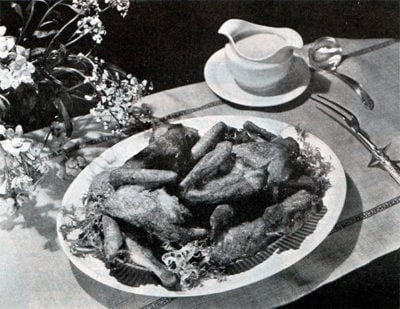 When you are ready to dip and slide the chicken in gently, have the kettle of deep fat heated to about 350° F. Again “hot but not smoking” is the word for it.
The moisture in the chicken makes the hot fat bubble and boil. So leave a safe margin at the top of the kettle and have a care for your own skin. A pair of kitchen tongs may prevent a burn on the hand, and they are easy on the chicken. With tongs, you can turn and lift each piece without piercing the brown crust and letting out juice.
Chicken completely immersed in deep, hot fat fries quickly. Started at 350°F, quarters of medium-sized young chicken are usually done in 10 to 15 minutes if you keep the temperature of the fat between 300 and 325°F.
That’s why restaurants feature this kind of fried chicken in their cooked-to-order service. But if more convenient, it can be finished slowly in the oven. I find it best, though, when it moves out of the frying kettle onto the plate with only a brief pause on thick absorbent paper to drain and get a sprinkling of salt and pepper.
—“Chicken — The American Way” by Ruth Van Deman, The Country Gentleman, July 1, 1939
1940s Crispy Coating
Roll pieces of young chicken in seasoned flour. Fry in deep hot fat (350°F) until brown, turning frequently. Finish cooking in covered pan in slow oven (325° F) — about 25 minutes. Spread out chicken and uncover for last 10 minutes’ baking for that crispy coating!
—“Six Things to Be Thankful For” Continental Can Company advertisement, The Saturday Evening Post, November 11, 1941

1940s Herb Mix
It’s something of an adventure to delve into the secrets of herbs and spices and flavorings. The artistry of cooking becomes a reality. Monotony of flavor is exchanged for tangy piquancy. So, in an experimental mood, let’s serve up some highly appetizing dishes, herb-seasoned to taste. You’ll want to try … a good quarter of a teaspoon of ground mace, nutmeg, or ground ginger to your country-fried chicken.
—“Seasoned to Taste,” The Country Gentleman, April 1, 1946
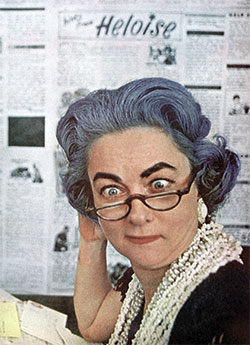
A Hint from Heloise
Nothing is printed in her column unless Heloise has tried it and knows that it works. In Hawaii, she hired neighbors to come and help with the testing. Once they fried chicken 50 different ways in every kind of utensil on the market. (They decided you can’t beat an old cast-iron pot with a few drops of yellow food coloring added to the shortening ‘for a golden crust that looks like an artist painted it.’)
—“Dishrags to Riches: The Saga of Heloise” by Maxine Cheshire, The Saturday Evening Post, March 2, 1963
1940s Southern-Fried Chicken
The chicken fried in the Midwest is usually a large semi-adult bird, little short of the classification of hen. The Southern fried chicken is a barnyard subdeb, rarely more than 10 to 12 weeks old and weighing from a pound and a half to two pounds. Midwestern housewives moving to the South and buying frying-sized chickens at Southern markets are usually afraid they have been sold quail. That the younger, tenderer bird is the better suited for frying would seem to be unanswerable. Yet bad cooks have made it of ill repute with too much grease and weird coatings of batter. Actually, it requires merely a rolling in flour or a mixture of flour and meal, and frying in an adequate amount of hot fat. A suitable recipe for fried chicken may be had as follows:
- 1/2–2-pound fryer cut into pieces for frying
- 1–1 1/2 teaspoons salt
- 1/2 teaspoon pepper
- 1 cup flour
- 6–8 tablespoons bacon drippings or cooking fats or oil
Wash pieces of chicken well. Salt and pepper and roll each piece in flour, coating well — this will give the chicken the brown crust. Heat fat in skillet, add chicken, but do not place pieces on top of each other. Place lid on skillet so that steam will escape — this will prevent the outer crust from getting soggy. Sauté underside 15 minutes on medium heat until a golden brown. Then turn and brown the other side 15 minutes longer. Remove chicken from skillet when very tender and place on brown paper to absorb excess fat.
A two-and-a-half-pound chicken should be cooked 20 minutes on each side.
—“What’s Wrong with Southern Cooking?” by Ralph McGill, The Saturday Evening Post, March 26, 1949
1950s Dad’s Favorite
Because he’s “a great guy,” the three Myers boys help cook dad’s favorite foods for this special Father’s Day dinner.
Different Fried Chicken
- 2 (3- to four-pound) fryers
- 4 cups tomato juice
- 1/4 cup chopped green pepper
- 1 or 2 garlic cloves
- 1 teaspoon dry mustard
- 1 teaspoon salt
- fat for frying
 Batter:
- 1 1/2 cups sifted flour
- 1 teaspoon salt
- 1 1/4 cups strained, seasoned tomato juice (from above sauce)
- 1 egg beaten
- Cut fryers into serving pieces.
- Combine tomato juice, green pepper, garlic, and seasonings in a large saucepan, and bring to a boil. Add chicken, cover pan, and cook over moderate heat 20 minutes.
- Heat fat for frying to 350°F.
- Make batter by combining flour and salt. Add tomato juice and mix until smooth. Add beaten egg and mix lightly.
- Remove chicken from sauce, drain, and dip pieces in batter. Fry in deep fat for 8 to 10 minutes, or until nicely browned. Drain on absorbent paper.
—“Dad’s Favorite Dishes” by Sara Hervey, The Country Gentleman, June 1, 1953

The Saturday Evening Post
December 12, 1959
1970s Shaker-Fried Chicken
- 2 spring chickens, quartered (broilers, fryers, 2 1/2 pounds each)
- 3 tablespoons soft butter
- 1 tablespoon fresh minced parsley
- 1 teaspoon minced fresh marjoram or 1/4 teaspoon dried marjoram
- 1/4 cup flour
- Salt and pepper
- 2 tablespoons butter
- 2 tablespoons lard
- 1 cup light cream
Select chickens weighing 2 1/2 pounds or a little over; smaller ones lack flavor and cook up waxy. Wash well and quarter. Rub thoroughly with soft butter and sprinkle generously with parsley and marjoram. Let stand for 1 hour at room temperature. Then roll in flour to which salt and pepper have been added. Melt the butter and lard in a heavy skillet and brown the chicken on all sides. Pour cream over it and let simmer, covered, for 20 minutes. Serves 6.
Fast-Fried from Colonel Sanders
In 1977, the Kentucky Fried Chicken mogul let us in on his secret for fast fried chicken — but he kept the 11 herbs and spices to himself:
“They say you can’t cook chicken in seven minutes, that it doesn’t get done, doesn’t get hot enough. They’ve got all these charts about the temperature and the time. I don’t know a damn thing about those charts, but I do know when the kitchen used to get to 120 degrees it was too damn hot for me to fry chicken.”
“Now, chicken is like a vegetable. It’s fresh and it’s delicate and it doesn’t like to sit around too long in a fryin’ pan. Still, it’s got to get hot enough to cook. Which means it takes too much time, destroys the delicate flavor. And, too, I don’t like the idea of keeping people waiting — you know, there’re other things to do — so along about 1939, after I’d tried everything else, I started preparing chicken in a special pressure cooker. The chicken fried quickly, it didn’t use a lot of oil, and it didn’t dry out inside because of the short cooking time which sealed in the natural goodness. I worked up the herbs and spices to bring out the flavor of the chicken — it’s the same formula they use in all 5,000 Kentucky Fried Chicken shops all over the world, and nobody’s improved on it yet.”
—“How to Make a Million After You’re 65” by Colonel Harland Sanders, The Saturday Evening Post, March 1977 and “The Man in the White Flannel Suit” by Starkey Flythe Jr., The Country Gentleman, December 1977
—“Shakertown: A Spirit Restored” by Linda C. Daniell, The Country Gentleman, September 1, 1977
1980s Low-Cal Crispy Baked Chicken
This chicken has the crispness and taste of fried chicken without the calories or cholesterol.
- 1 (2 1/2- to 3-pound) broiler/fryer, cut up
- 3/4 cup ground oat flour
- 1/2 cup corn meal
- 1/2 cup unprocessed wheat bran
- 1/2 cup raw wheat germ
- 1/2 teaspoon garlic powder
- 1/2 teaspoon onion powder
- 1/2 teaspoon sage
- 1/2 teaspoon thyme
- 1/2 teaspoon paprika
- 1/2 cup milk
- 1 egg
- 1/4 cup safflower oil, preferably cold-pressed
In plastic bag, combine all dry ingredients. In shallow bowl, combine milk and egg. Dip chicken, one piece at a time, into plastic bag to coat thoroughly. Dip into milk/egg mixture; coat again with dry mixture. Place in large shallow baking pan; drizzle oil over chicken. Bake at 400°F for 45 to 50 minutes or until tender and golden brown. Serves 4.
Tip: This coating mixture can also be used for fish.
—“Eat Your Way to Better Health” by Michele Gutter, The Saturday Evening Post, January/February 1980
1980s Crispy Fried Chicken for the Summer Picnic
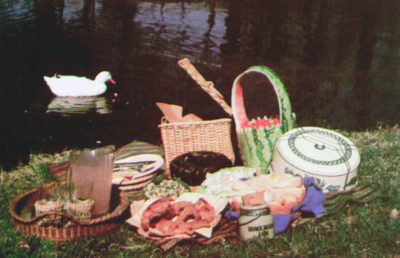 This recipe gives you what you really should want — chicken that is “fried to the bone.”
- 2 cut-up frying chickens (about 3 pounds each)
- 1 cup flour
- Salt and pepper to taste
- Paprika
- Dash of garlic powder
- 1 stick (1/2 cup) melted butter plus
- vegetable oil to equal the depth of 1 inch in frying pan or electric skillet
- Wash chickens and dry carefully in paper towels to remove excess moisture. Cut away excess fat.
- Pour flour in a paper bag and drop chicken pieces, a couple at a time, into the bag and shake until chicken is well coated.
- Season chicken liberally with salt, pep- per and paprika, and add a dash of garlic powder.
- Heat oil and butter over moderate heat (350–375°F). Fry chicken pieces, uncovered, half a chicken at a time. Do not crowd the skillet.
- Fry chicken about 30 minutes on each side, turning once, until golden brown. Lay chicken pieces on paper toweling to drain. Serves 8.
—“Man the Menu” by Jane E. Lasky and Janice Wald Henderson, The Country Gentleman, June 1, 1982