
This series by American studies professor Ben Railton explores the connections between America’s past and present.
Easily overlooked amidst the plethora of prominent Supreme Court decisions in recent weeks was a June 27th decision that could have significant effects on American educators. In Mahmoud v. Taylor, the Court’s majority ruled that the religious freedom of parents trumps school readings and curricula, and specifically that parents can remove their children from classrooms that include books with LGBTQ+ content. Beyond the potentially divisive effects of that specific focus, educators and their allies fear that the ruling will make it possible for students and parents to opt out of any class and lesson with which they disagree.
The U.S. has a longstanding history of such challenges to educators, and it so happens that this week marks the 100th anniversary of one of the most famous prior attacks. On July 10th, 1925, the “Scopes Monkey Trial” began in Dayton, Tennessee, seeking to determine whether high school science teacher John Thomas Scopes had taught evolution in violation of a new state law. That sensationalized but hugely serious trial exemplifies both the effects of these attacks on educators and broader debates over religion and indoctrination that endure to this day.
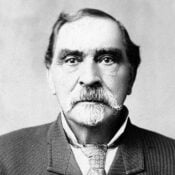
The March 1925 state law under which Scopes was tried, the Butler Act, contains two striking ironies: First, the state representative who introduced the bill, John Washington Butler, had briefly worked as a teacher when he was young. Second, Butler later admitted, “No, I didn’t know anything about evolution when I introduced [the bill]. I’d read in the papers that boys and girls were coming home from school and telling their fathers and mothers that the Bible was all nonsense.” That the author of this hugely influential law knew very little about both the subject on which it focused and the classroom experiences it was ostensibly responding to is a very telling detail.

Once the legislature passed the bill, it had to be signed into law by the governor, Austin Peay. Peay was in the midst of his second of three consecutive terms as governor (he would tragically die in office during the third), a groundbreaking period during which he achieved a great deal of vital reform in the state, leading to his ranking as Tennessee’s best governor in a 1981 poll of 52 historians. Ironically enough, his most significant such reforms were those that sought to improve the state’s struggling educational system. When Peay took office that system was the worst in the country by several measures, and he worked to change that, building new schools, lengthening the school year, increasing teacher pay and benefits, and more.

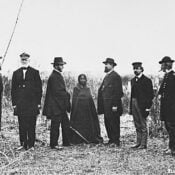
It didn’t take long after the law’s passage for both local and national forces to push back. On the national level, the ACLU placed an ad in the Chattanooga Times requesting the help of one or more educators in test cases challenging the law’s constitutionality. But it was a local scientist and civic leader, the engineer George Rappleyea, who organized the group of community leaders — including school superintendent Walter White and activist young lawyer Sue Hicks — that would select and reach out to high school biology teacher and football coach John Scopes to see if he was willing to serve as the criminal defendant in such a test case. Scopes, just 24 years old and having recently completed his first year of teaching, agreed, even though — in yet another irony behind this case — he might have been innocent of the charges: He would later tell local reporter William Kinsey Hutchinson that he had omitted the chapter on evolution from his work with William Hunter’s A Civic Biology textbook.

In any case, Scopes was brought to trial in Dayton, where he was defended by the ACLU’s General Counsel Arthur Garfield Hays along with the legendary defense attorney Clarence Darrow. The presiding state judge, Judge John Tate Raulston, was a Christian who openly quoted the Bible and began each day of the trial with a prayer, so the outcome did not seem to be in much doubt. Indeed, the trial lasted only eight days, and the jury returned its verdict of guilty in just nine minutes, levying a $100 fine against Scopes. The verdict was upheld by the Tennessee Supreme Court a year later. But brief as it was, the “Scopes Monkey Trial,” as it had come to be known, was nonetheless a genuine nationwide sensation, with nearly 1,000 people packing the courtroom daily, including reporters from 100 newspapers; it also became the first American trial to be broadcast live on the radio, at a staggering cost of $1,000 a day.
Recruited volunteer that he may have been, Scopes was greatly affected by the trial and verdict, and perhaps especially by the negative publicity that they brought him. He was barred from teaching in the state and relocated his young family to Kentucky; when he subsequently enrolled in a geology Master’s program at the University of Chicago, his local Tennessee ally Frank Thorne wrote to a professor there requesting, “Please do what you can to protect him from the importunities of Chicago reporters.…He is a modest and unassuming young chap, and has been subjected to a great deal more limelight than he likes.” Scopes would soon admit to Thorne that “I am tired of fooling with them,” and would leave teaching entirely, running an unsuccessful 1932 at-large campaign as a Socialist Party candidate for the U.S. House of Representatives before settling into a career as an oil expert for various companies.
Such effects on teachers, individually and collectively, comprise one key layer to these kinds of attacks on educators. But the Scopes trial also featured a prominent example of another layer: the concept of “indoctrination,” and more exactly the question of who is doing the indoctrinating. The concept is frequently used as part of laws and policies limiting educators, as illustrated by Butler’s quote about children being taught to challenge and disobey their parents. But at the trial, defense attorney Clarence Darrow used a multi-day cross-examination of the prosecuting attorney, the famous Populist politician and orator William Jennings Bryan, to make the case that it was conservative Christianity that sought through laws like the Butler Act to indoctrinate others into its worldview.

In January 1924, Bryan had delivered the lecture “Is the Bible True?” in Nashville; copies of the lecture had been sent to Tennessee legislators including John Washington Butler, a longtime admirer of Bryan. Bryan used the same arguments as a linchpin of his case against Scopes, and it was on this question of the literal truth of the Bible that Darrow particularly grilled Bryan during his famous cross-examination. Eventually Bryan was reduced to responding, “I do not think about things I don’t think about.” To quote the final verse from the greatest cultural work inspired by the Scopes trial, Bruce Springsteen’s “Part Man, Part Monkey” (1990): “Well did God make men in a breath of holy fire?/Or did he crawl on up out of the muck and mire?/Well the man on the street believes what the Bible tells him so/Well you can ask me, mister, because I know.” The more we attack our educators, the less we all know.
Become a Saturday Evening Post member and enjoy unlimited access. Subscribe now


_and_George_Washington_Rappleyea_(r)_(2898291163).jpg)
_(2898243103).jpg)