
Jean Harlow might have been killed by her hair.

One of the defining figures of American films in the 1930s, Harlow became known as Hollywood’s original “Blonde Bombshell” for her platinum blonde hair. Even though she was a natural blonde, she and her team wanted a more striking silver shade, achieved by removing all the natural melanin pigments. Decades later, Harlow’s hairdresser revealed that the mixture Harlow used contained hydrogen peroxide, sodium hypochlorite bleach, ammonia, and Lux flakes. Not only did this destroy her hair — making it dry and prone to falling out — but the toxic chemicals also likely harmed her health. While Harlow officially died from kidney failure, many believe that her quest for color played a big role in her health decline.
Harlow’s cosmetic plight is just one story in a longer, more complicated history of women putting their health at risk in pursuit of glamour, and we show little signs of stopping. These five beauty products have turned the common saying “beauty is pain” into reality.
1. Electric Corsets

Even regular Victorian corsets had the potential to cause damage if laced too tightly, reducing lung capacity and causing constipation and muscle atrophy in the back if worn regularly. Electric corsets were another story altogether. Fitted with a small battery or a coil, these products were part of the trend of electrifying everyday objects — rings, belts, hairbrushes, toothbrushes, and more — and became increasingly popular in the 1880s, shortly after electricity became widely available. An advertisement for Dr. Scott’s Electric Corset in 1883 claimed that “their therapeutic value is unquestioned, and they quickly cure, in a marvelous manner, Nervous Debility, Spinal Complaints, Rheumatism, Paralysis, Numbness, Dyspepsia… and all other diseases peculiar to women.”
To the contrary, this device was often uncomfortable — causing breathing difficulties, organ compression and displacement, and circulation problems — and there is no scientific proof of its effectiveness. Rather, the invention capitalized on the fascination with a new phenomenon and the desire to cure prominent health problems during the Victorian era.
2. Tho-Radia Creams, Toothpastes, and Soaps

Tho-Radia, the French pharmaceutical company founded in 1932, was known for creating products that contained radium. Marie and Pierre Curie’s discovery of radium and the success in treating certain cancers through early radiotherapy inspired its use in beauty and skin products. The company believed that very small doses of the element would rejuvenate the skin by stimulating living cells. In reality, radium is a highly dangerous substance, and its contact with skin risks radiation sickness, cancer, and even death. Eventually, regulations were put in place to limit the use of the radioactive chemical in cosmetics. Tho-Radia rebranded and continued their line of products, but without the radium, until sales declined and the company dissolved in 1968.
3. X-ray Hair Removal

The discovery of X-rays in 1895 had a significant impact on science. First used to look at the human body or burn away skin disease and tumors, X-rays only became a beauty tool when medical experimenters noted the side effect of hair loss. Compared to other hair removal options of the time — creams, tweezers, and razors — X-rays seemed to be the perfect solution: painless, odorless, and with a five-year guarantee.
The trend gained popularity during the 1920s, and with that came greater issues. Women found that the product caused wrinkles and lesions, or worse. In 1929, the Journal of the American Medical Association revealed the dangers of X-rays, stating that “in their endeavor to remove a minor blemish, they have incurred a major injury.” A study in the 1970s reported that 35 percent of radiation-based cancers in women were connected to X-ray hair removal.
4. Mercury in Skin Products
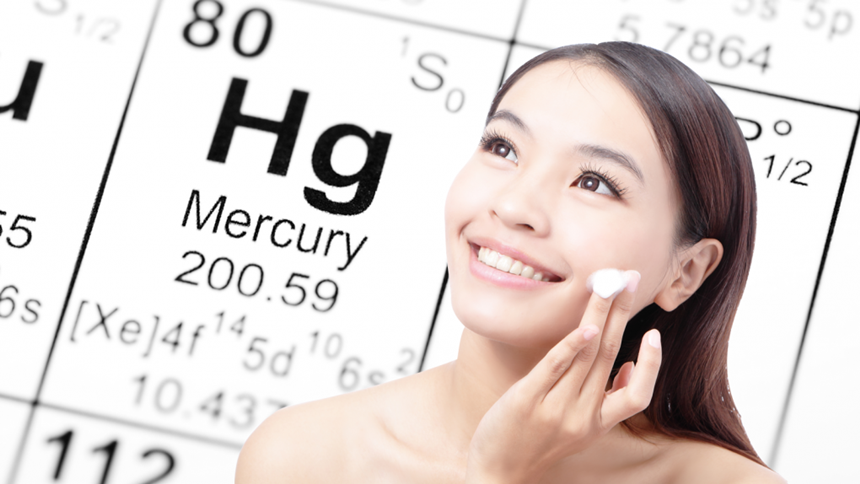
Unfortunately, skin products containing mercury — which can cause great neurological and physical harm to humans through inhalation, ingestion, and skin contact — remain a modern trend, not a historic one. Some skin creams, beauty and antiseptic soaps, and lotions, particularly those labeled “anti-aging” or “skin lightening,” could contain a small dose of mercury that can damage skin if used regularly. These products are usually manufactured abroad and sold illegally online, marketed for removing age spots, freckles, blemishes, and wrinkles. Their regular use can cause not only skin damage but also tremors, changes in vision and hearing, depression, and more. The mercury can even affect those who live in proximity with someone who uses such products, either through inhalation or physical contact with items like washcloths or towels.
5. Dimple Maker

The Dimple Machine — a metallic wire that framed one’s jaw and pressed two knobs into the cheeks to create artificial dimples — was created in 1936 by Isabella Gilbert from Rochester. In 2023, a similar product called the Dimple Maker became a viral beauty trend on Tik Tok. By compressing the skin and fat in one’s cheek, which squeezes the surrounding tissue, the Dimple Maker creates a temporary dent. If worn tightly or for too long, Dimple Makers can cause problems, restricting blood flow to part of the face, leading to necrosis and a temporary lump inside the cheek. A more serious risk could be nerve damage caused by excessive pressure, leading to paralysis of facial muscles.
The most frightening thing about harmful beauty products is that they aren’t a thing of the past. As society evolves, so too does the obsessive desire to meet ever-changing beauty standards, and taking a risk to do so isn’t considered strange; we often view it as normal. Chasing beauty without regarding its harms could be as small as shaving despite getting cut, using a viral Dimple Maker, or buying an anti-aging cream from a suspicious online website, but some beauty routines might cause more damage than you might expect — both underneath the surface and above it.
Become a Saturday Evening Post member and enjoy unlimited access. Subscribe now




Comments
Wow is right on all 5 of these dangerous beauty tools. They’re equally fascinating from a historical perspective and horrifying. The desire for the results of what they promised often overrode misgivings about using them, and the non-disclosure of their possible dangers (either known or suspected by the manufacturers) led many women down a very seductive yet treacherous path in the quest for beauty.
WOW! What lengths some women (men too) go to in order for self-fullfillment or to attract one or the other opposite sex. I have also heard there was once another ingredient in toothpaste that was eventually replaced by flouride to fight cavities and improve smiles with whiter teeth. I can’t remember the name of that ingredient but I think SNP published something or some old ads hawking its use back in the day.